
Rome, Hadrian’s Villa and Villa d’Este
Rome, Hadrian’s Villa and Villa d’Este were the third leg of the Athens to Rome trip. Rome is well known; therefore, I will only mention a few outstanding experiences.
Rome
Rome’s many monuments and churches are amazing, but it was Titus’ Arch which really got to me.
The arch depicts the defeat of the country of Judah and the bringing to Rome the artifacts (Menorah and Shofar) of the Temple in Jerusalem. The items were being carried by the Hebrew slaves, who also built the monument.
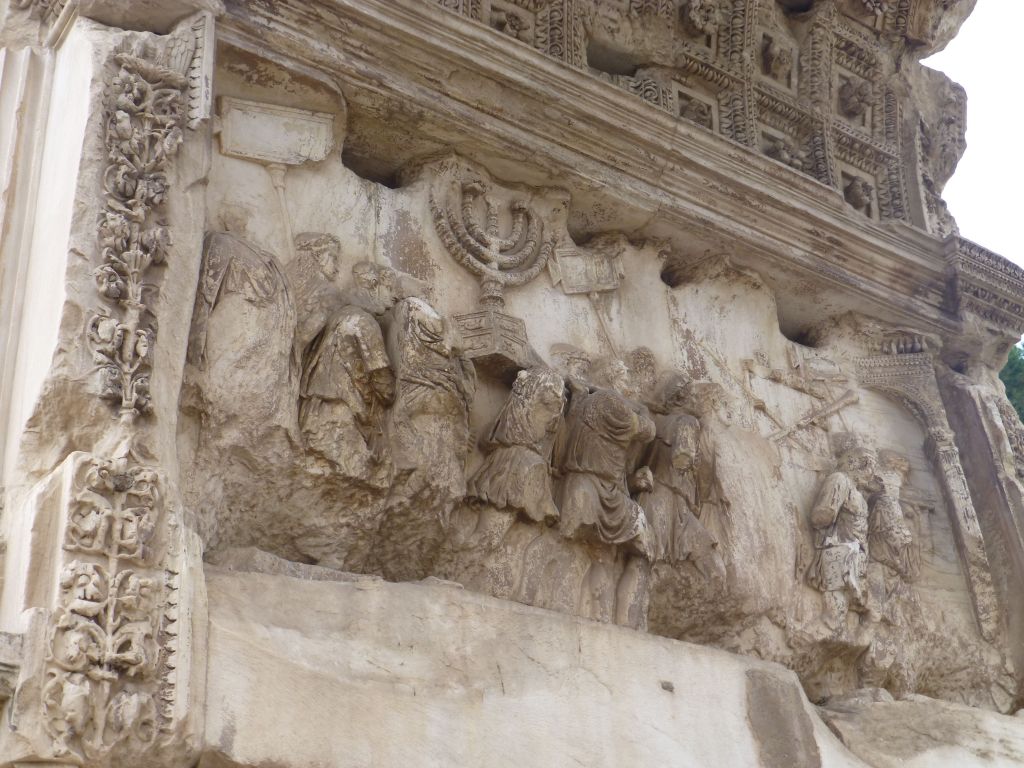
I had seen representations of that relief before in books, and always assumed it was in a museum. I was not prepared to see it on my walk in the Forum. Somehow it made the destruction of the temple all so real. Titus brought back 50,000 Hebrew slaves. Many of today’s Jews in Rome are descended from these slaves.
Keeping with the Jewish theme, we went to see the Jewish Ghetto, established in the 1500s. At that time, Pope Paul IV decided that it is “absurd” (his words) to have Jews and Christians live together. Jews were allowed to be moneylenders or deal with second hand goods. They were only allowed to have one synagogue but the residents had come from many countries and traditions, such as Spain, and Sicily and had different worship customs. Therefore, they built 5 temples within one structure. The ghetto lasted till the 1800s when Italy unified and the Pope lost his reigning power over Rome. The current synagogue, built in the early 1900s also houses a museum.
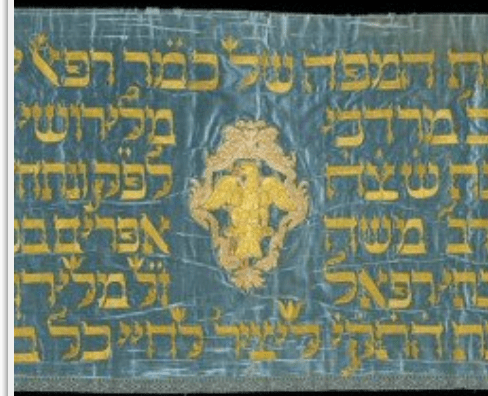
It has beautiful Torah robes that the women of the Ghetto embroidered from rich cloths (second hand ones).
We were also able to see both the Spanish and Roman 16th century synagogues.
One cannot talk about Rome and not mention the Coliseum, the Vatican, the Pantheon or the Trevi fountain. I will give brief impressions of these wonders.
Pictures, and descriptions didn’t prepare me for its wow factor of the Coliseum. It is amazing!
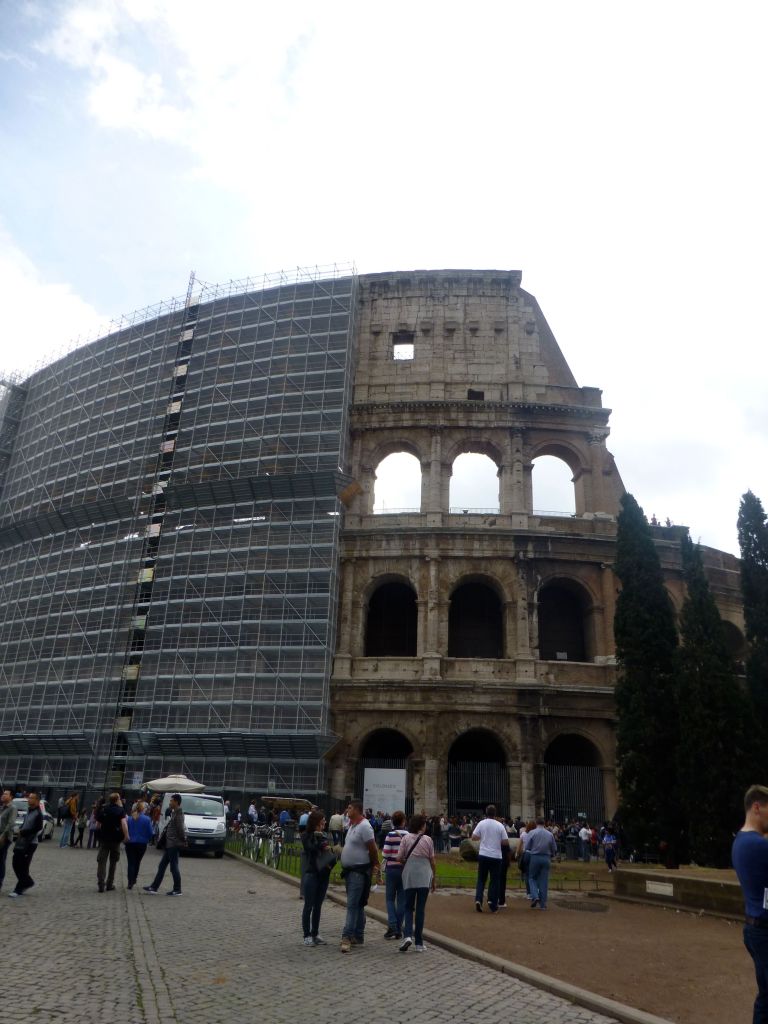
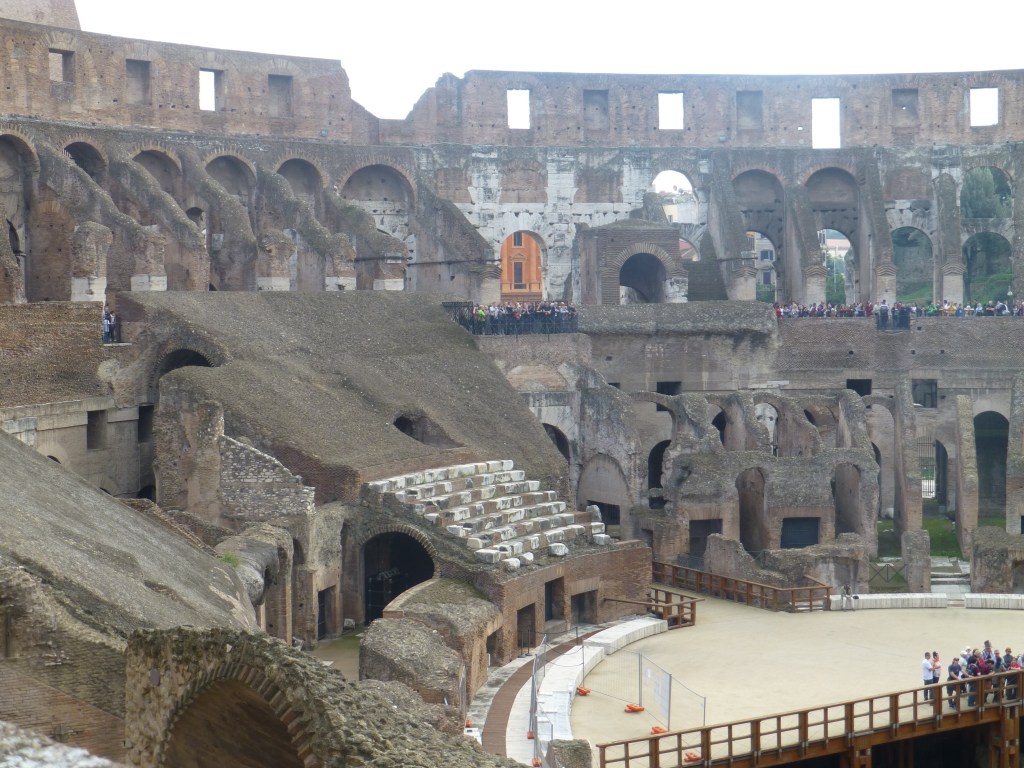
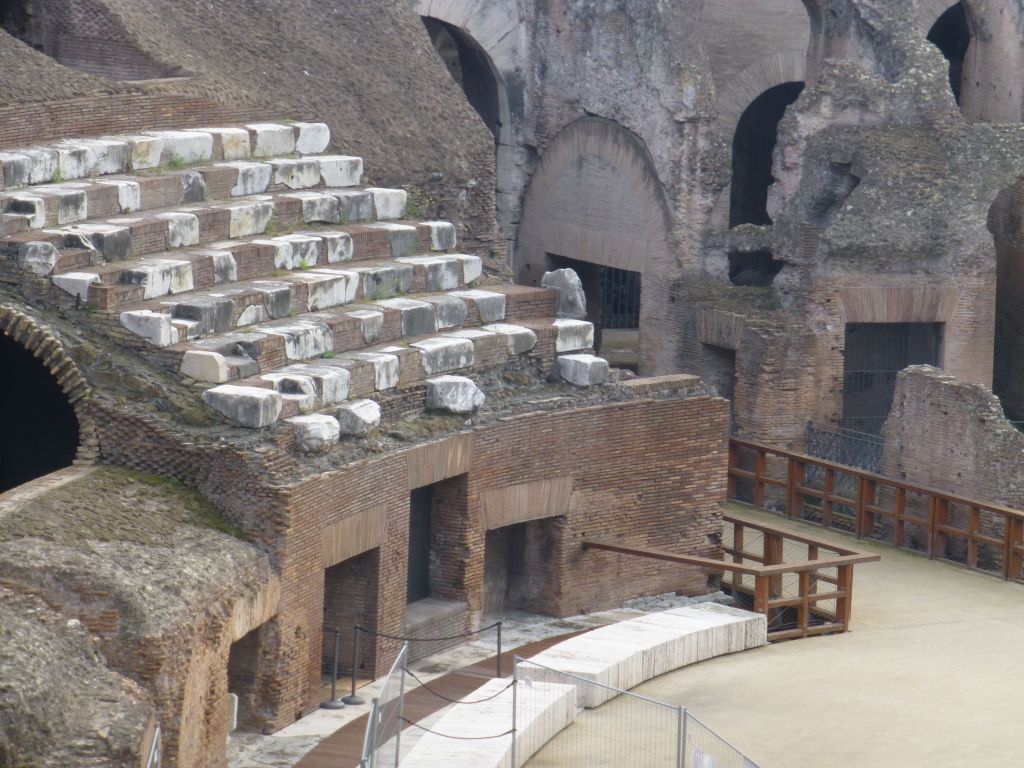
About 1/3 of the original actually remains and that 1/3 is unbelievable. Much of the marble and decorations were chiseled off to be incorporated into churches, therefore, the brick work looks like it has been bombed. There is a bit of marble left where the seats of the VIPs were. We could see the arches where gladiators entered and the “dead” door where they exited when defeated. We could see the rooms below where the animals were kept, and the various levels where people from different status sat.
No matter one’s religious affiliation, the Vatican should not be skipped. Ironically, the name Vatican has nothing to do with Christianity. It is the name of an Etruscan God, Vaticanus. The hill was called Vatican Hill in Roman times. The Vatican is its own nation. At the time of my visit, it had 830 citizens and another 800 people came each day to work. Neither residents nor the day workers have to pay taxes. The Vatican has its own Prime Minister, judges, post office, and Euro currency.
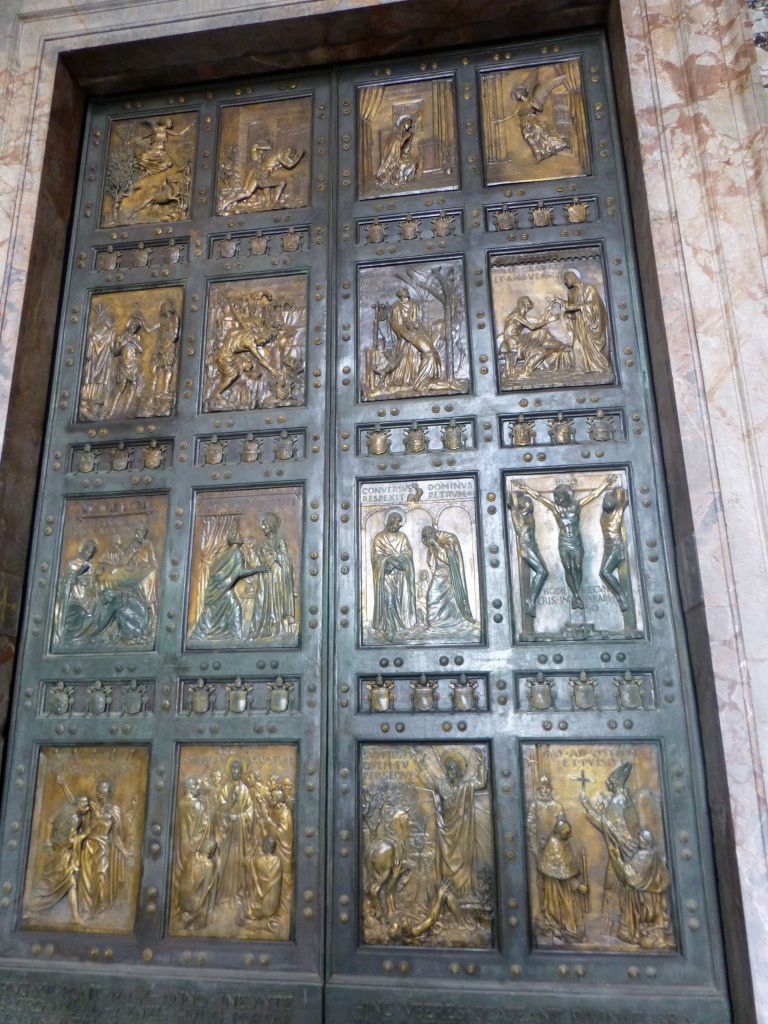
We saw a small portion of the Vatican Museum, the magnificent Sistine Chapel and the awesome St. Peter’s Basilica. We had a guide, who made reservations ahead of time and knew a side way to get up to the museum, saving us precious time. Guarding the Vatican are the Swiss guards who are dressed in the Renaissance outfits that Michelangelo created. To the right is the door to St. Peter’s Basilica.
Throwing coins into the magnificent Trevi fountain is another must. Legend has it that if you throw a coin into the fountain, you will be able to return to Rome. The right way to throw the coin is with the right hand over the left shoulder, thereby crossing the heart. I heard that some 3,000 euros are thrown in a day.
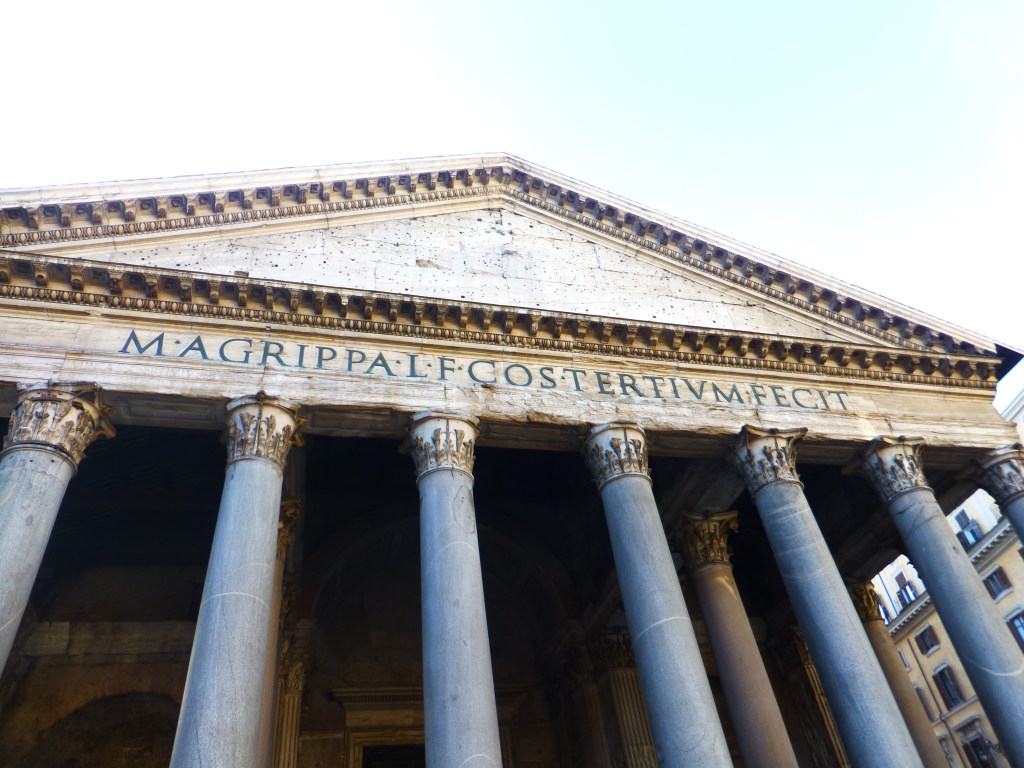
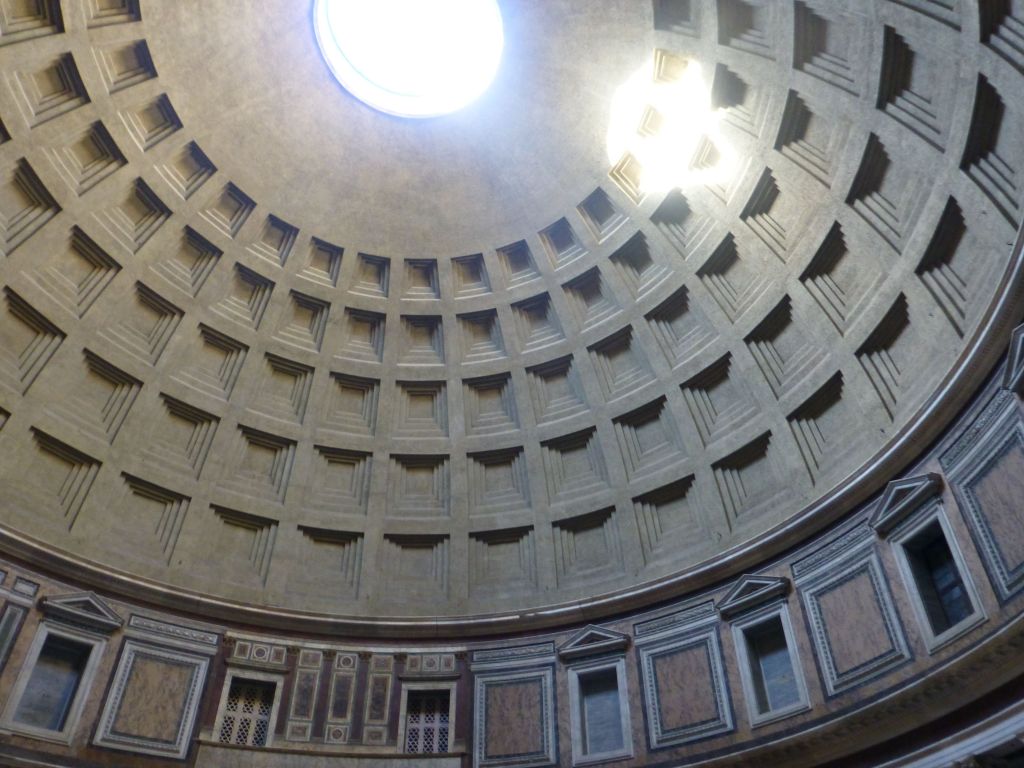
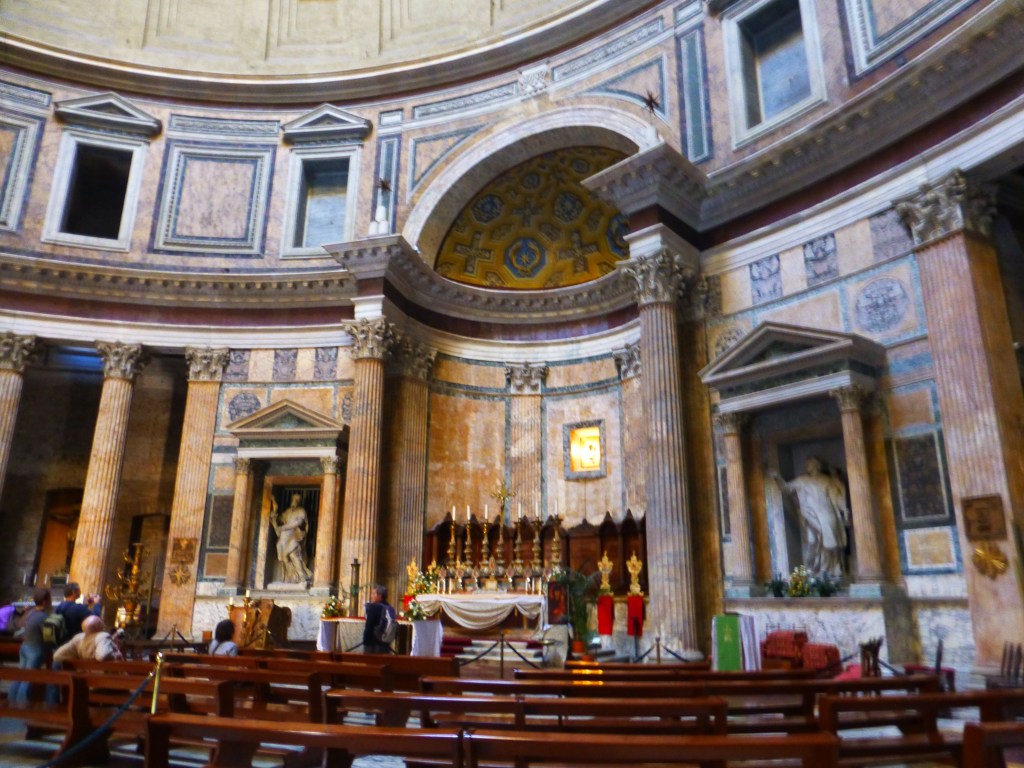
The Pantheon started life as a pagan temple. It is the first example of a round building with a very high beautiful dome. The dome is not covered so if it rains, the rain comes into the Pantheon and drains down. Just don’t stand in the center on a rainy day. Unlike other pagan temples, the Pantheon survived almost intact because it was converted to a church. The pagan god statues were removed and saints put in their place, but the columns, wall decoration and feel survives.
I “discovered” Bernini’s sculptures during my visit to the Borghese Gallery. Some of my favorites were: 1. David getting ready to fight with a very determined look on his face while his body expresses his task. 2. “Apollo and Daphne” Apollo was pursuing Daphne – she did not want to be pursued and called her father for help. He turned her into a tree. Bernini captured the transformation: from the back she looks human but as you walk around the sculpture, you see that her feet, hands and front of body are being transformed into a tree. It is a truly beautiful and moving sculpture. 3. “The Rape of Proserpine.” Pluto tries to abduct her and she is crying and his hands are digging into her thigh. This ability to show softness in marble is incredible.
Borghese family was very wealthy. One of the Borghese was a Pope and he named his nephew, Cardinal – as was the custom. In the late 1500s or early 1600s, Cardinal Borghese built the house, got the artwork for the gallery and built the large park surrounding the gallery. The gallery walls and ceilings are every bit as wonderful as the art.
Reserved timed tickets are a must. You are only allowed 1 hour and 50 minutes with your ticket. The Gallery is so incredible that you need every minute of that time. If I had more time in Rome, I would go multiple times because it is impossible to take it all in. The 2 hours flew by.
Though Bernini’s statues and buildings are an important part of Rome, Michelangelo’s work is also on view.
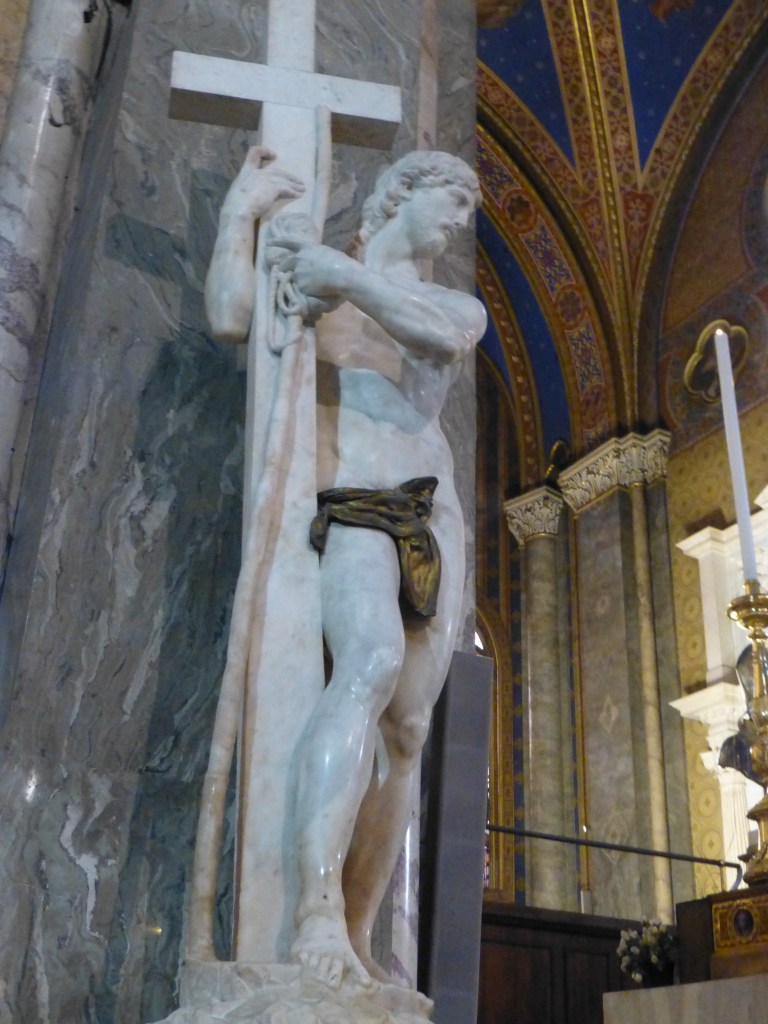
A little-known church, Santa Maria Sopra Minerva, has a Michelangelo statue of Jesus. This church would be on everyone’s guide book in another city, but here in Rome, it competes with a huge number of other magnificent churches. It had maybe a dozen visitors while we were there. The marble statue of Jesus is beautiful and peaceful. At some point, the church leaders decided that the naked Jesus needed a bronze loincloth. The loincloth is still there.
Day trip to Hadrian’s Villa and Villa d’Este.
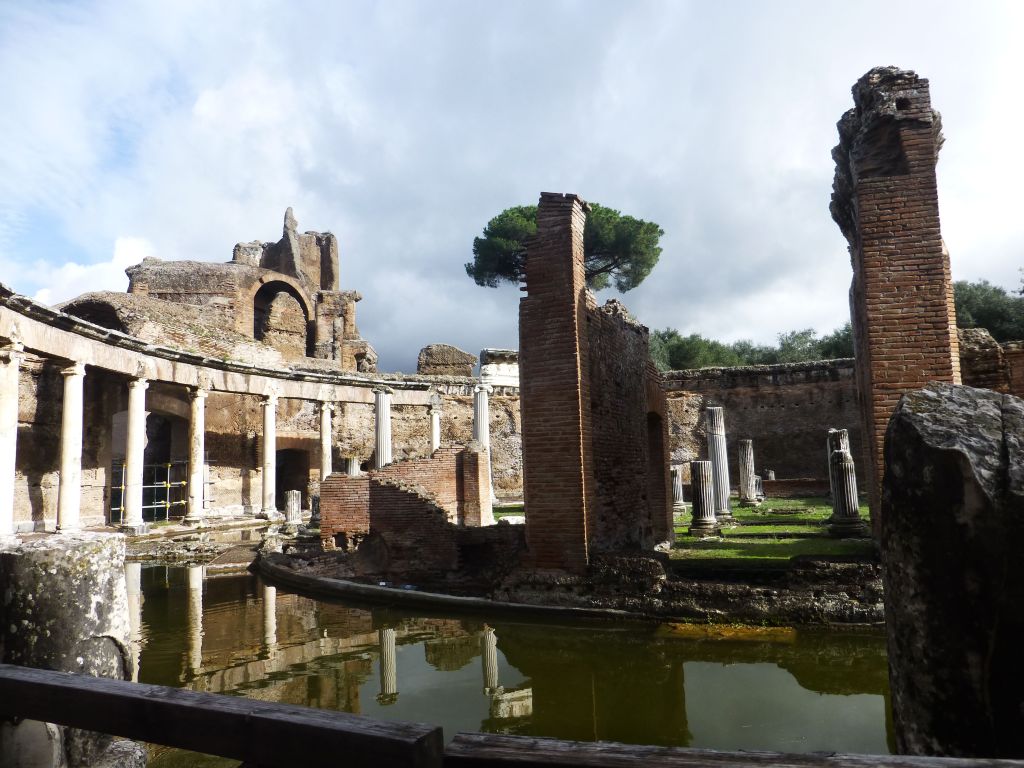
Hadrian’s Villa was built by Emperor Hadrian between 118 and 134 CE near the town of Tivoli and was used as a summer villa by himself and Antonini, his successor. Today it is in ruins but they are magnificent ruins in a park like environment with olive trees all around. There are a couple of large pools and some statues still standing, though most are in museums around the world.
My favorite part of the Villa was Hadrian’s private house on the island he built. There was a small mote around it and a drawbridge. When he escaped to the island he had privacy.
Villa d’Este, built by Cardinal d’Este, in the 1500’s, is magnificent. The rooms are large and the walls are covered with frescos. The ceilings and the walls are beautiful, but that does not even come close to the beauty of the gardens.
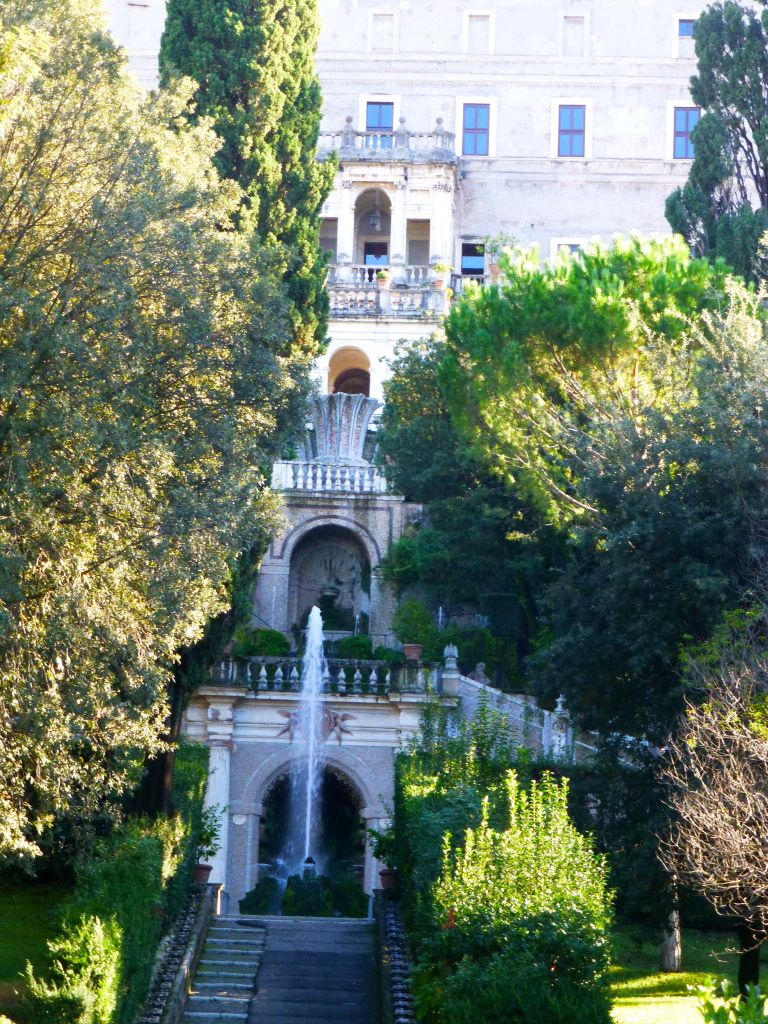
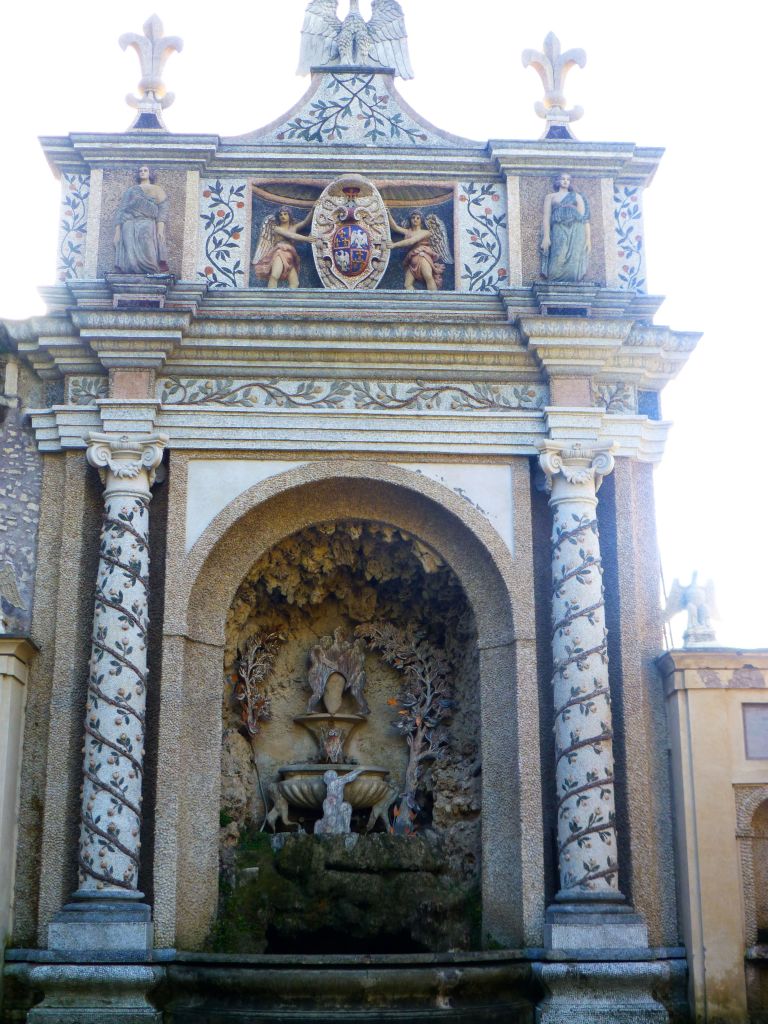
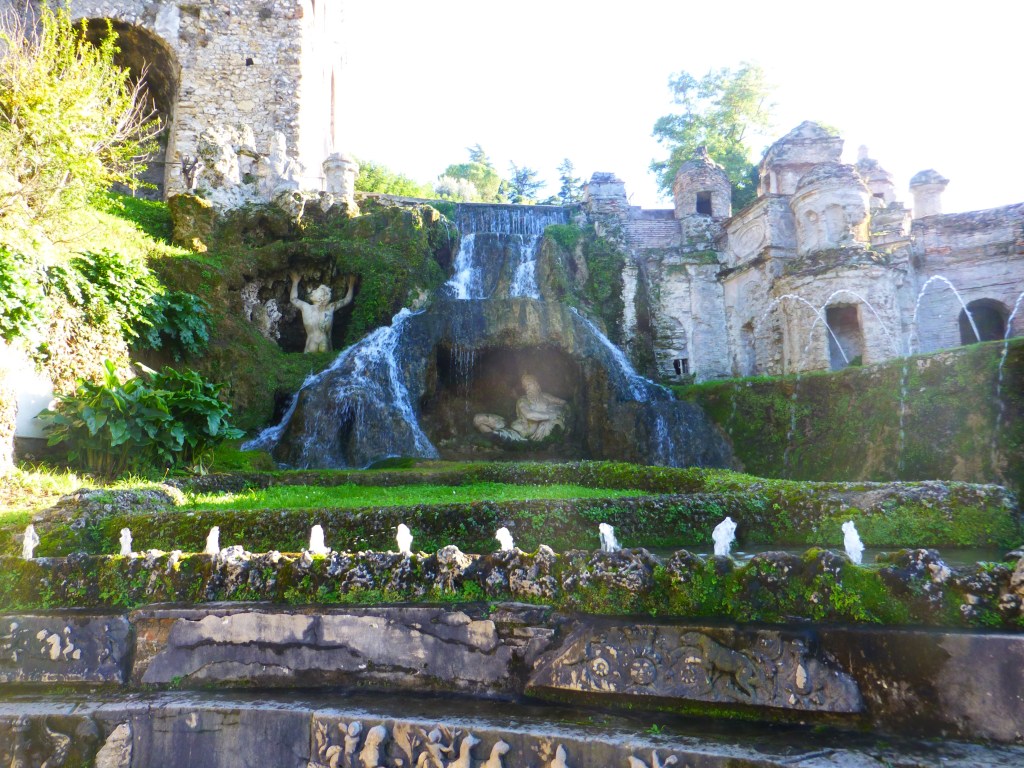
Cardinal d’Este loved fountains and there are numerous fountains, all different. Many of the fountains have statues and interesting designs. The garden is terraced and is planted with lots of trees and bushes. On one walkway, there are 100 fountains all in a row. It is impressive!!! I wish I could have spent a full day there.
Final Comments:
- A great guide can elevate the experience
- Our guide made reservations ahead of time for many of our excursions. The fact that she knew a side way to get up to the Vatican museum, saved us precious time.
- She also knew the oft not visited locations that were fantastic.
- Rome is not to be missed. I did get to return to Rome on my trip with my daughter, Maggie. See post 43.
 Nili's Adventure