
Five months traveling in Central America was wonderful, but by fall that year I was ready for another adventure, this time Athens and Rome book marking a Windstar cruise between these cities.
Athens and Greek Islands
Athens
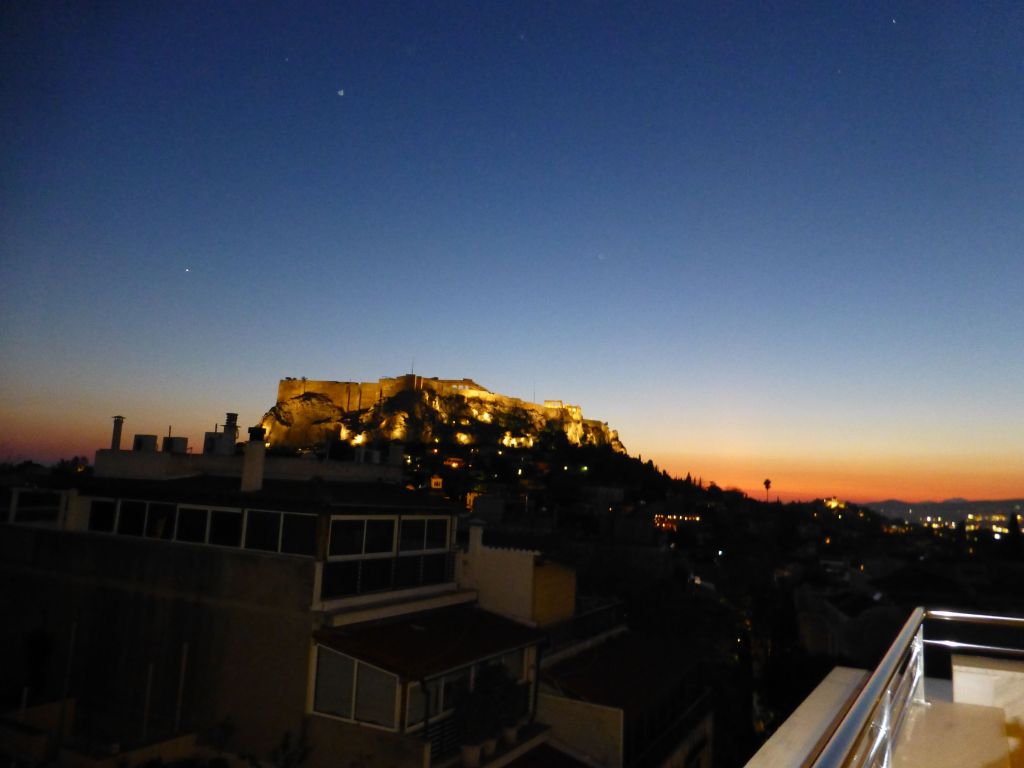
We began this adventure in Athens at the Electra Palace Hotel, only 10-minute walk from the Acropolis and very convenient to everything. We could even see the Acropolis from our balcony!!!! As I sat on the balcony at sunset, the Acropolis glowed.
There are many wonderful things to do in Athens, but I will only mention my favorites.
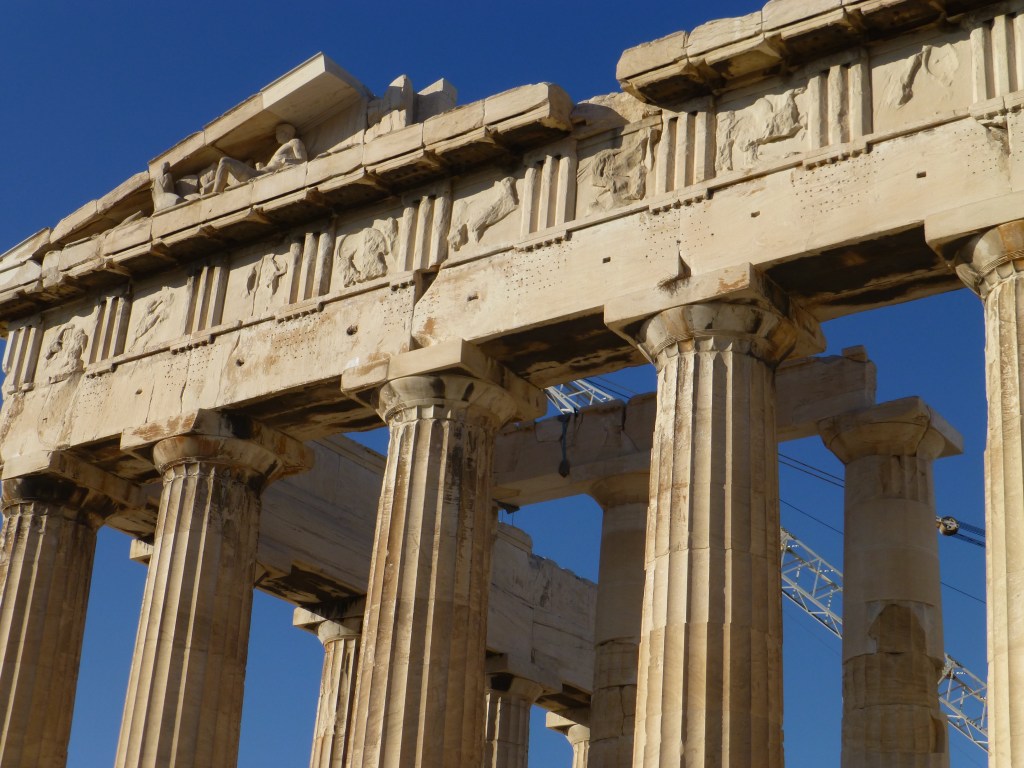
The Acropolis: As we walked up the hill, we were amazed at the first structures of the Acropolis. But even more so, at the next level, when we were greeted by the Parthenon. Yes it was not all there and yes it suffered greatly from years of mistreatment, but what was there was magnificent.
The columns were immense and so incredibly beautiful. Each column was a bit different in design. Today the marble has a tan/pink tint but when new, it was white. I can only imagine what it looked like with the sculptures and painted figures.
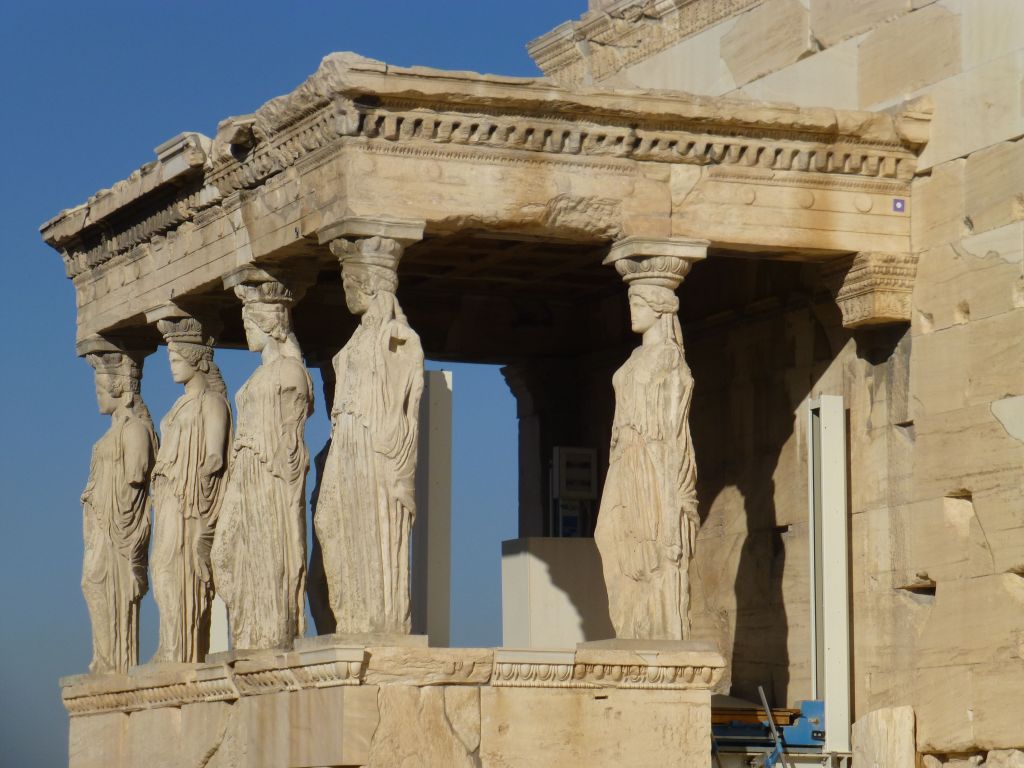
The building across from the Parthenon has six beautiful ladies acting as the pillars. The ones at the Acropolis are replicas, with 4 of the originals in the Acropolis Museum, one in France and one in England. They suffered a lot over the last 50 years and are safer in a museum.
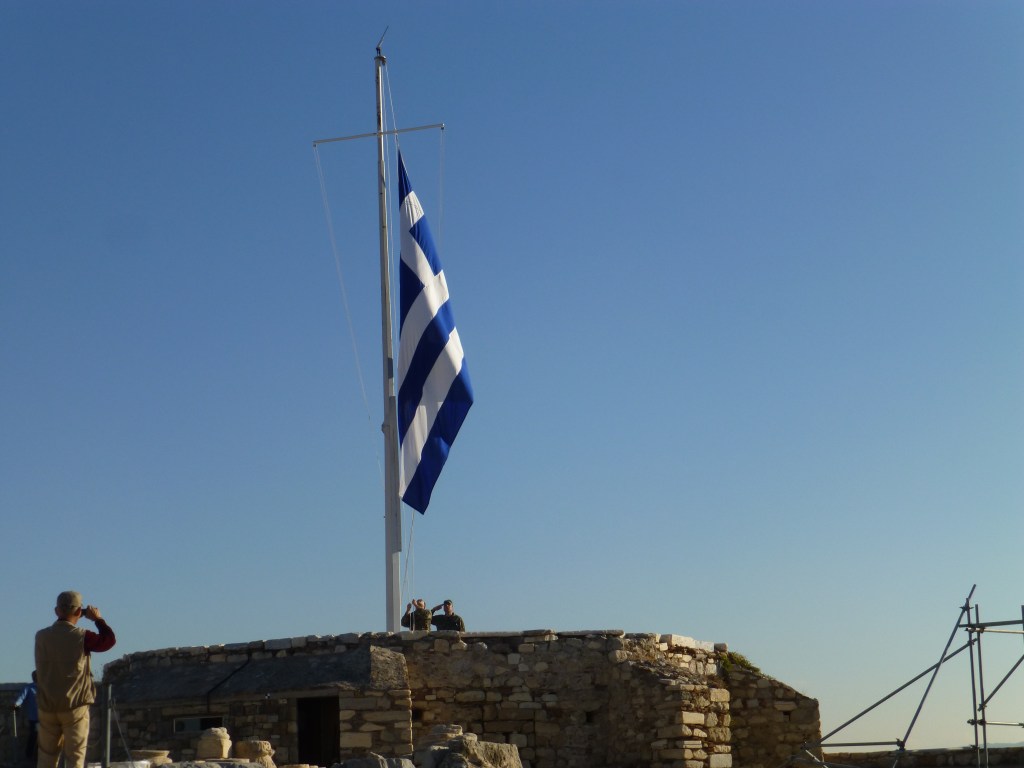
On the Acropolis grounds there is a terrace with a flag pole with a moving history: When the Nazis came, they told the soldier on the terrace to take down the Greek flag and put up the German flag. He took down the flag, wrapped it around him and jumped to his death. A few days later, a couple of boys climbed up the wall (it is incredibly steep) and took down the German flag and put back the Greek flag. That was the beginning of the resistance.
The Acropolis Museum was terrific. It is built over excavations of ancient Athens and you can still see the excavations when walking into the museum.
There were wonderful exhibits of the remains of the Parthenon statuary. The statues are so lifelike – how do they make marble flowing? What’s missing are Elgin marble statues, they are in the British museum.
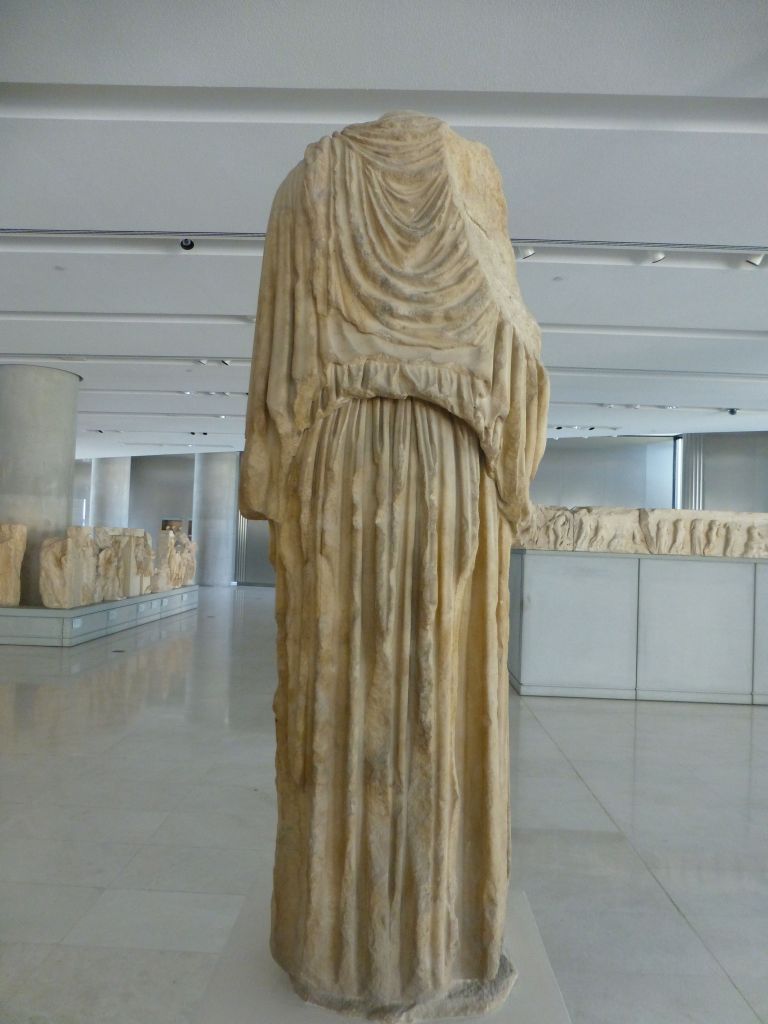
We were lucky to be in Athens for a very special concert at the museum given on my birthday, by the Hungarian embassy. Two young ladies played Hungarian music, mostly Jewish Hungarian music on the piano and violin. It was just beautiful. When the concert was over, we followed everyone to the level below – the one with the lovely statues. Everyone stopped and turned around to look at balcony where the concert had been held and the ladies played an encore above us. It was magical. We were able to hear a concert and re-visit the artifacts.
Agora: Is the town center where all the greats like Socrates and Plato hung out. Our first stop was the little museum, which is housed in a re-built old market place.
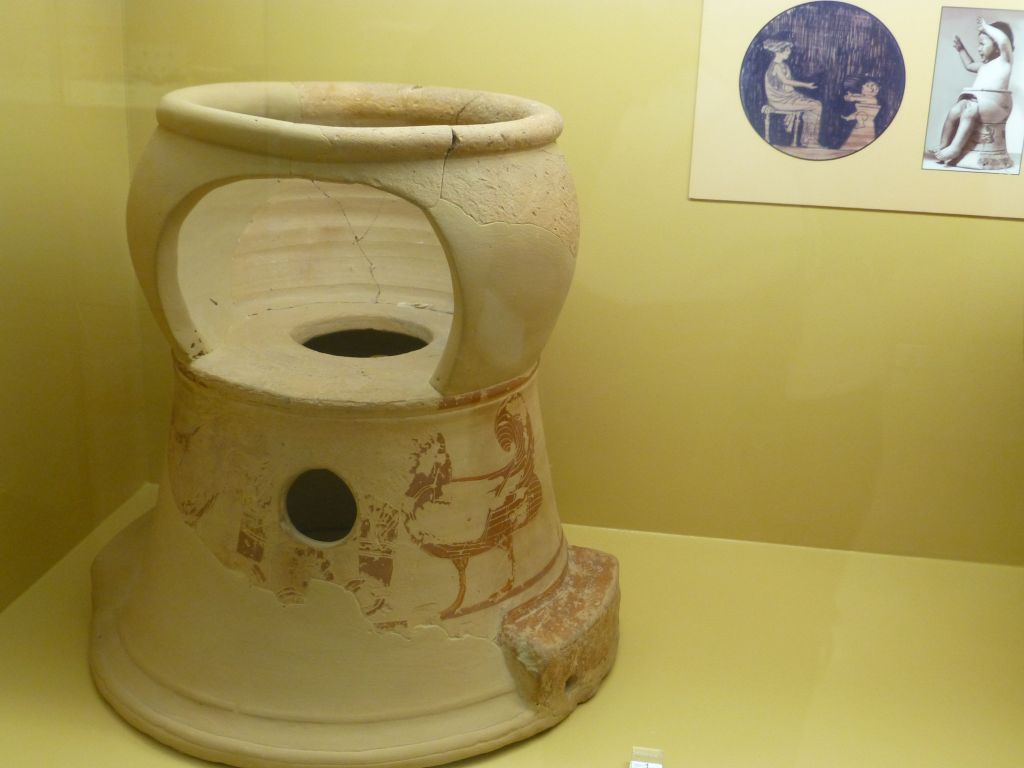
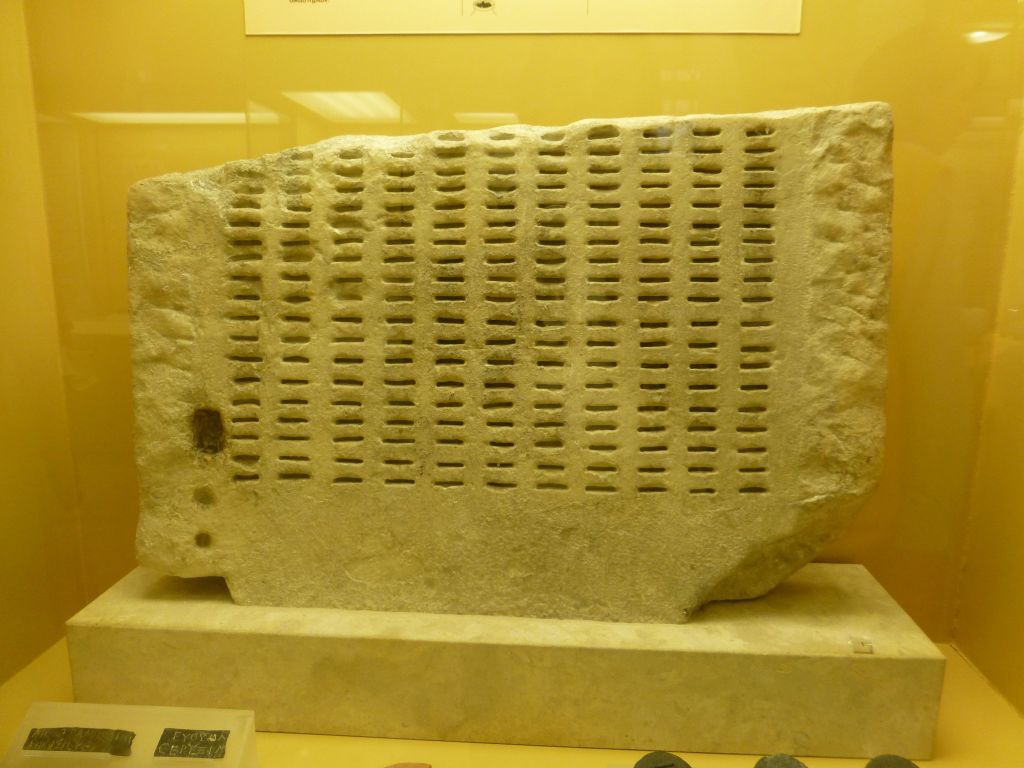
The museum had artifacts from 3,000 BCE. That’s 5,000 years ago. There were a number of unique items that we had never seen before; a child’s potty seat, a water clock that timed the political speeches (it took 6 minutes for the 1.7-gallon jug to drain) and the Grecian ballot box and voting chips.
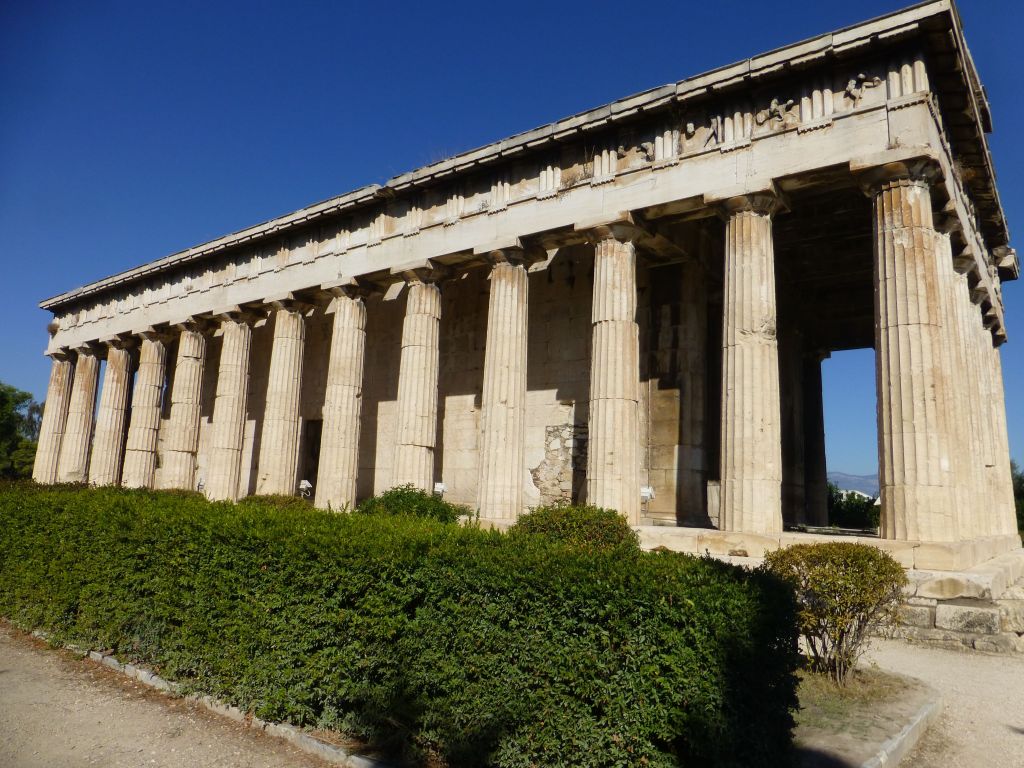
We continued in the Agora to look at the drainage system and then to the almost perfectly preserved Temple of Hephaistos. It was built about the time of the Parthenon (450 BCE) but was a much smaller structure. It is a Doric temple with the heavy columns and an inner structure.
Because it was less important, it was left alone. It did convert to a church when the Christians came but unlike the Parthenon, it was never a mosque. Because it had been left alone, there were still some reliefs on its parapet.
The Tomb of the Unknown Soldier is a must, if only to watch the Evzone infantry soldiers dressed in traditional dress, march around in a bizarre fashion with legs raised high. Their kilts have 400 pleats to represent the 400 years under Turkish domination.
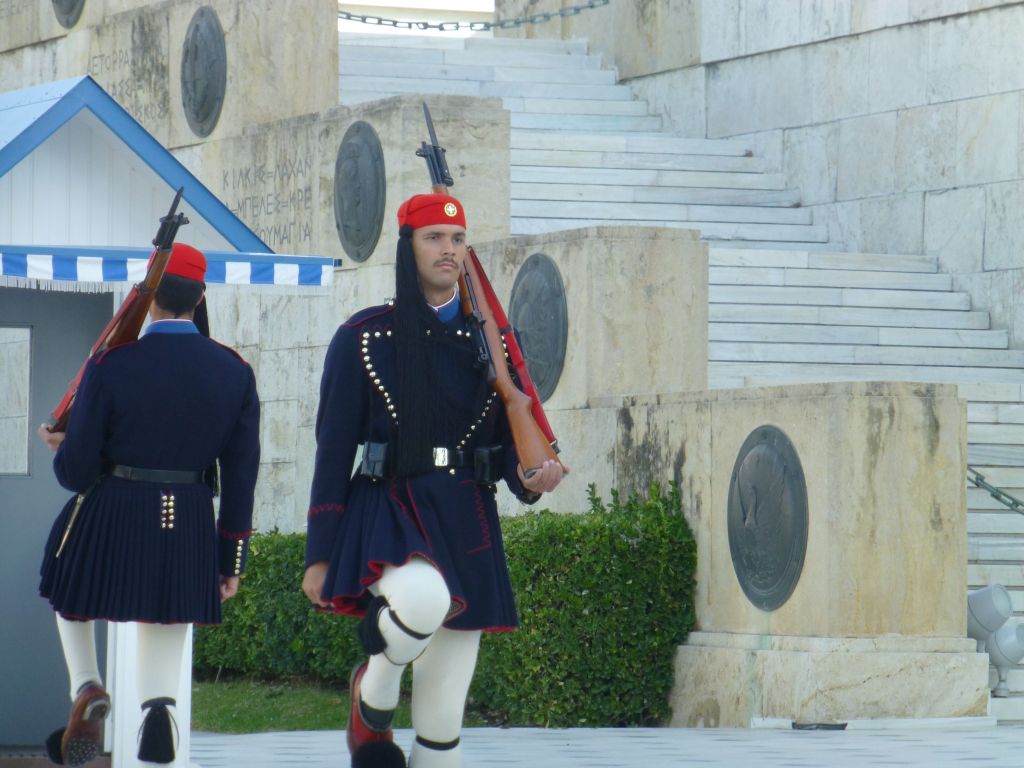
A walk down Ermou Street, -a pedestrian walkway, with lots of lovely shops and tons of cafes on the side streets was fabulous. About half way on Ermou Street we ran into a charming medieval church (11th or 12th century) in the middle of the pedestrian street, I mean literally in the middle of the street.
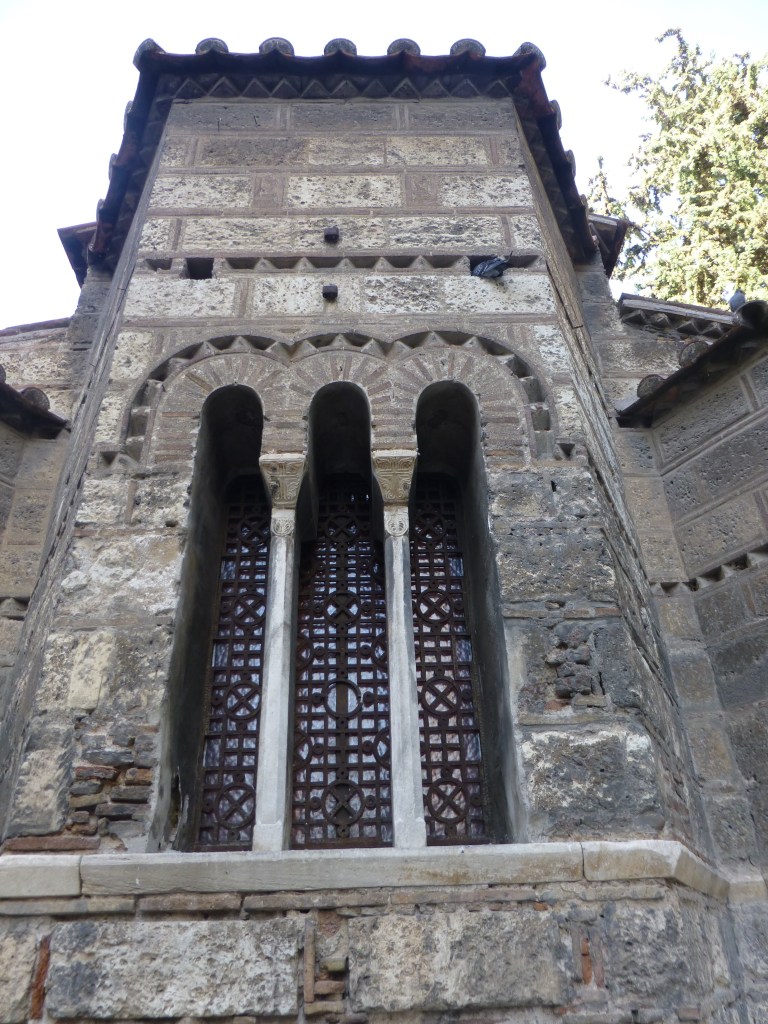
It is the Church of Kapnikarea. The exterior blocks are pilfered from earlier buildings, including the Parthenon. Like most churches in Greece, this is an Eastern Orthodox Church. It is square and very small, with the dome in the center. The parishioners stand up during the church service; there are only a few seats for the infirm.
Just outside the church is a statue to Archbishop Damaskinos. He spoke up for the Jews against the Nazi’s and was almost executed. Jews built the statue, as a thank you after WWII.
Hydra, Poros and Aegina – 3-island tour from Athens
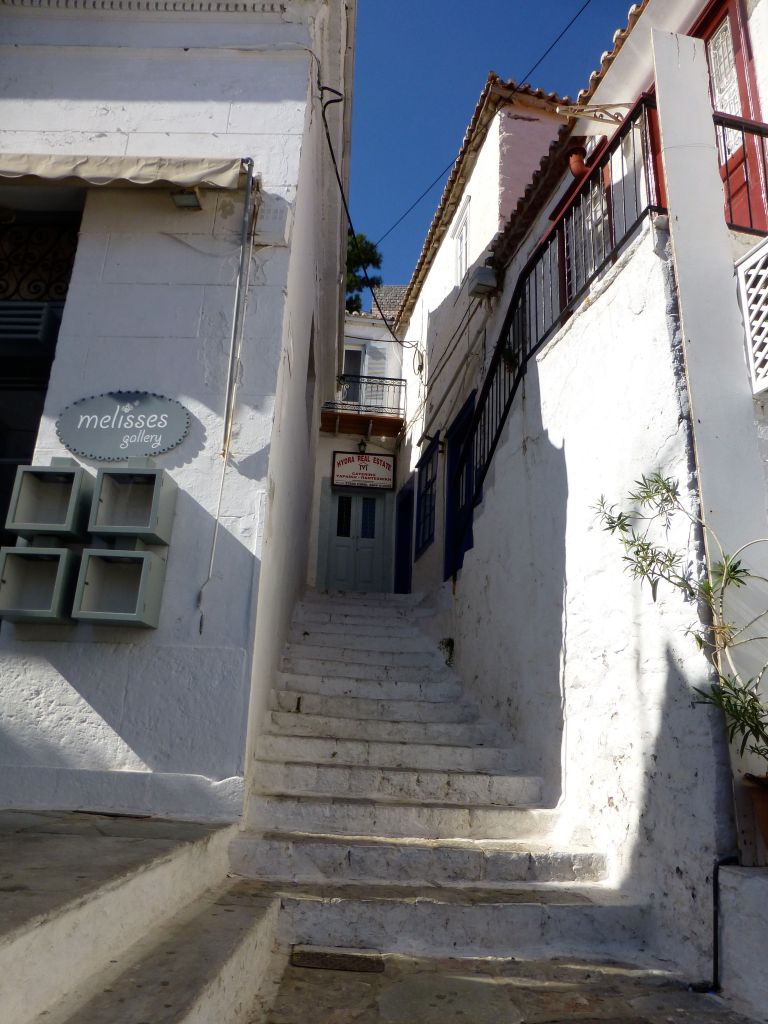
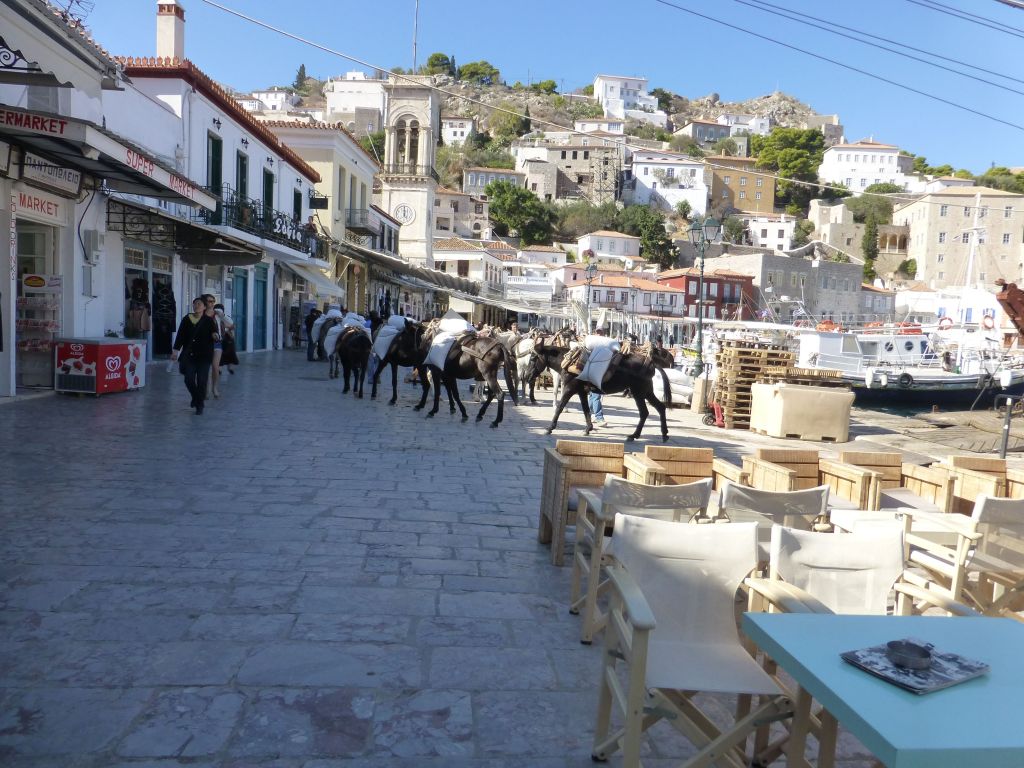
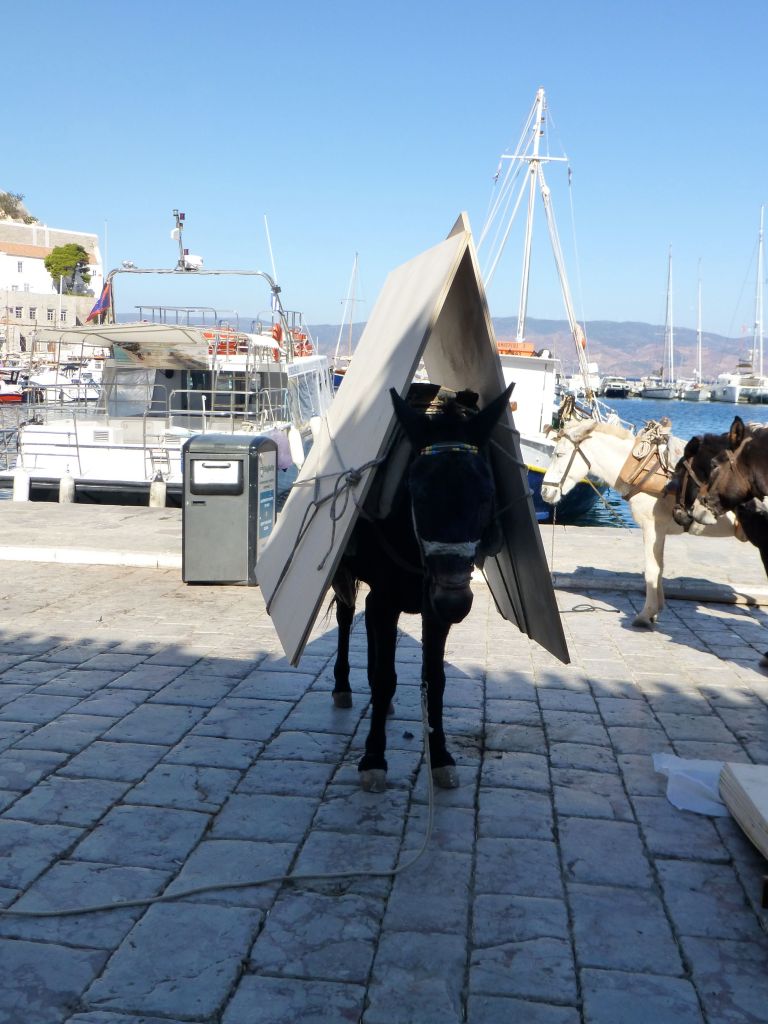
Hydra was my favorite island – it is an enchanted place. The approach to the port, was extremely picturesque. The tiny port was busy with a freight boat being unloaded on the backs of donkeys. Donkeys are a must because this small rocky island does not seem to have any roads. We visited the fort, watched port activity, and walked along the quay. The allotted hour was spent very pleasantly in the sunny morning. The other two islands were lovely but did not compare to Hydra and therefore omitted from this narrative.
Windstar Athens to Rome:
We really enjoyed our Windstar Panama cruise; therefore, we chose to go from Athens to Rome with the same ship. I will only write about the stops at Monemvasia, Gythion, Mt. Elba and Vulcano Island.
Monemvasia, Greece
Our first port, Monemvasia is a town in Peloponnesia, which belongs to Greece. Peloponnesia is the ancient home of the Spartans, the warriors that fought Thebes. Spartans settled Monemvasia, south of Sparta, in the late sixth common century when they fled the Barbarian invasions. They built their houses along the sea below a towering mountain. This is what is now the old town. They also built fortifications, houses and a church on the mountain (the upper town). The old town was very limited in size, squeezed between the mountain and the sea, so there is now a new town across a causeway.
I like to avoid crowds; therefore, we left the boat as early as possible and were in the Old Town by 8am. Then before the crowds and the hot sun, we started our 1000 foot climb to the Upper town, which is all in ruins now. There were stairs of sorts from stones, which have been worn smooth from centuries of climbers.

We took our time and enjoyed the climb, stopping every so often to look at the sea or up to the fortifications or the church. Although it looked impossibly high when we started, as usual, one step at a time did it. The picture to the left is just half way up.
At the top we were rewarded with a glorious view of the sea, the lower town, which is built in Tuscan crème color tiles, the fortifications and the exterior of the church.
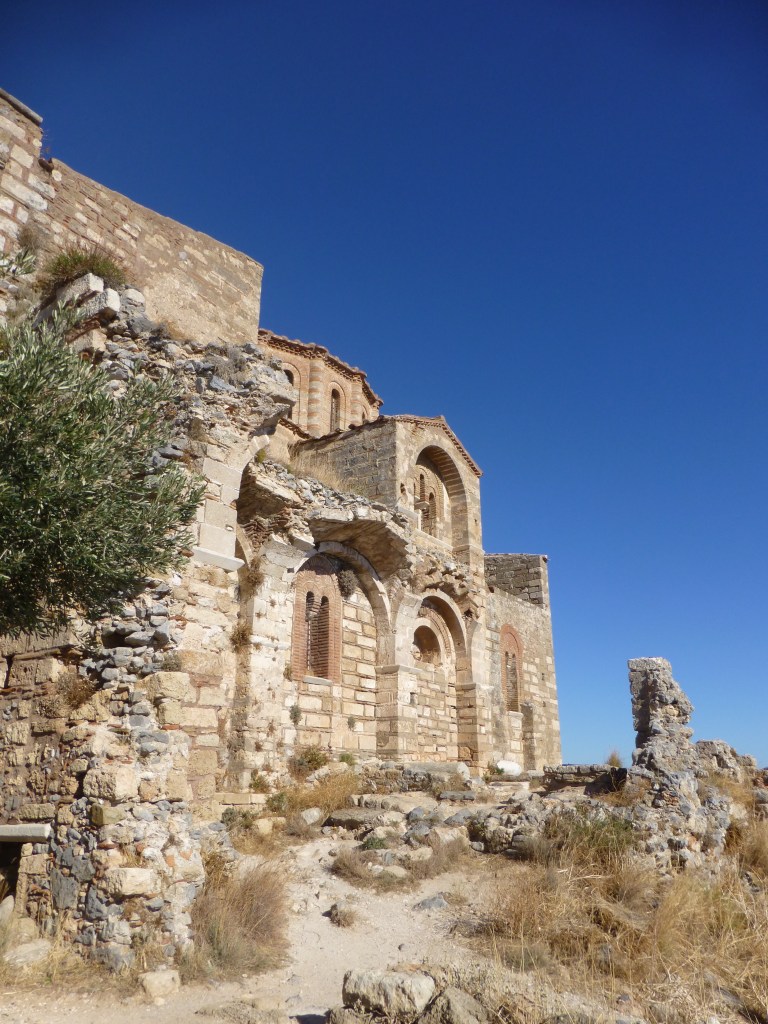
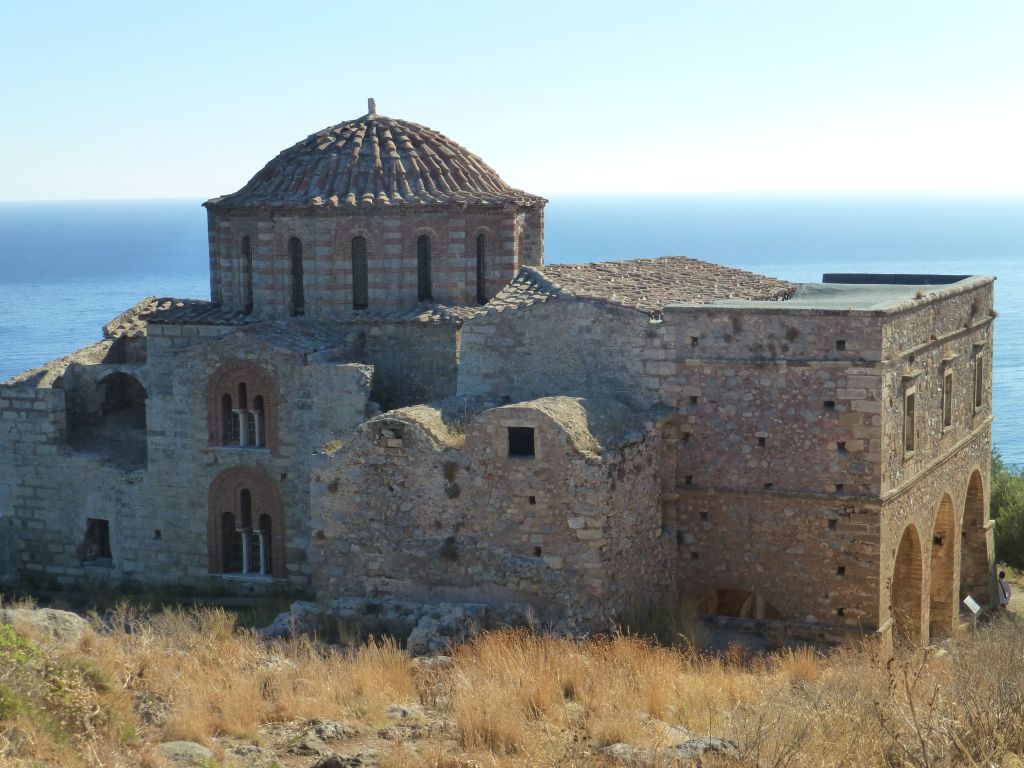
Unfortunately, the church was closed because of vandals. The town cannot afford to have a guard to protect it, so they just locked it up. The church was built in the 12th century and is said to resemble the Aya Sofia in Istanbul. The exterior was lovely with the arched Byzantine windows.
We returned to the lower town and rested in a lovely cafe. We had a delicious spinach pie (open faced) and a cup of tea. It was very peaceful because no cars are allowed.
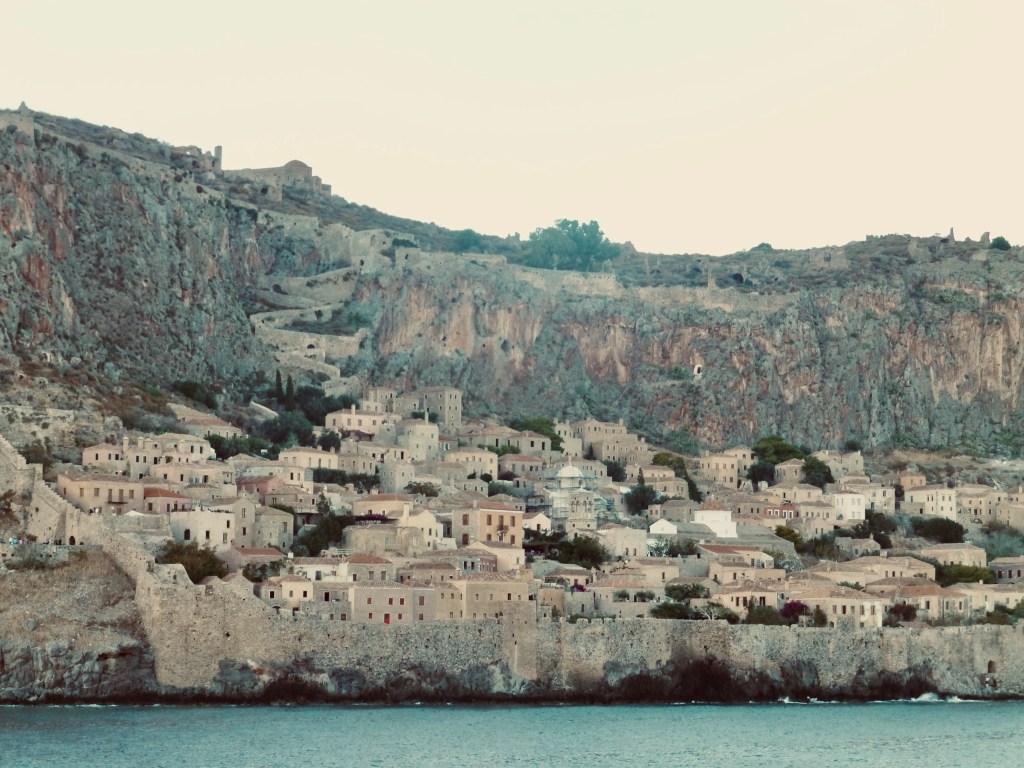
Back at the boat, they raised sails to the music of Vangelis’ 1492. We slowly sailed past the old city and I could see the trail we took to the top. It is a bit to the left above the town.
Gythion, Greece
We had signed up for the Dykos Cave tour followed by a visit to the town of Areopolis. It was a delightful tour. We drove through beautiful Kalamata olive groves. Now when I eat Kalamata olives I remember Greece.
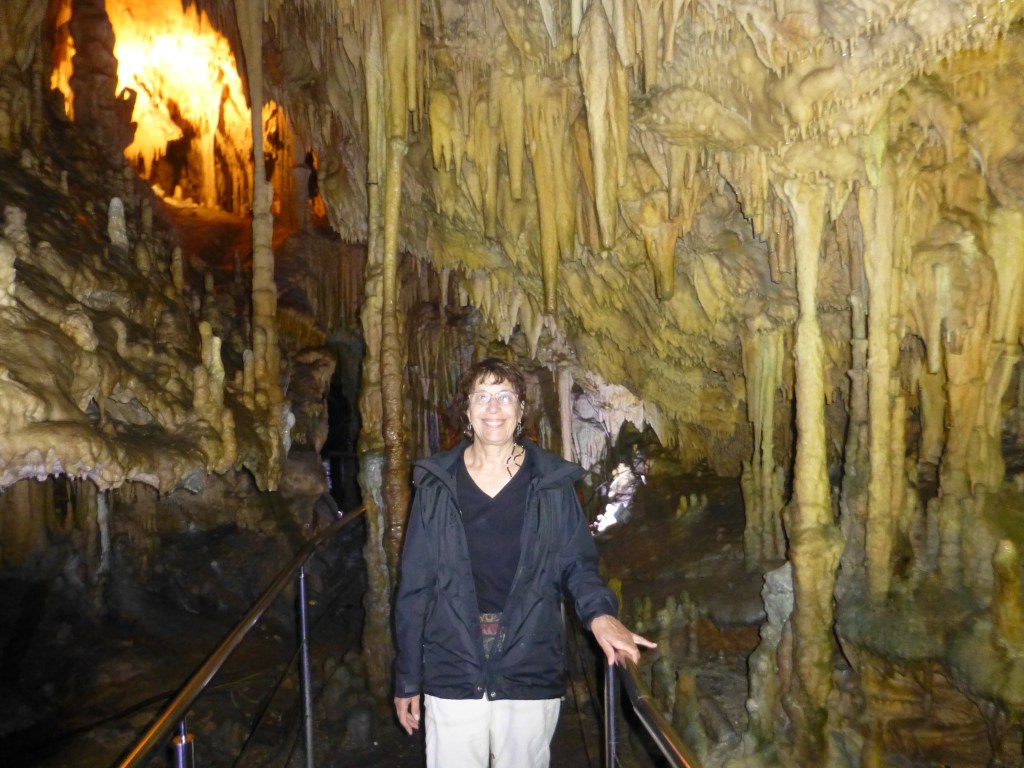
We took a boat ride through the wonderful caves. Apparently they are some of the largest caves of their kind. Scientists think they go all the way to Sparta. At the end of the boat ride, we walked another 5-10 minutes in order to see more stalagmites.
Our next stop was Areopolis, a small village nearby. We were very lucky and hit on the Oxi holiday, which is a celebration to commemorate, Greece’s unwillingness to allow Mussolini to cross into Greece without a fight – they said NO! or OXI in Greek. The Greeks fought and eventually the Germans had to bail out the Italians to conquer the Greeks. This delayed the German invasion of Russia, which helped the Allies win the war, so we should all celebrate the 28th of October.
To celebrate this national holiday, each little town and village has a parade. We were there in time for the Areopolis parade, which consisted of 4 school groups walking to recorded music. The pre-school group wore army fatigues for the boys and nurses’ uniforms for the girls.
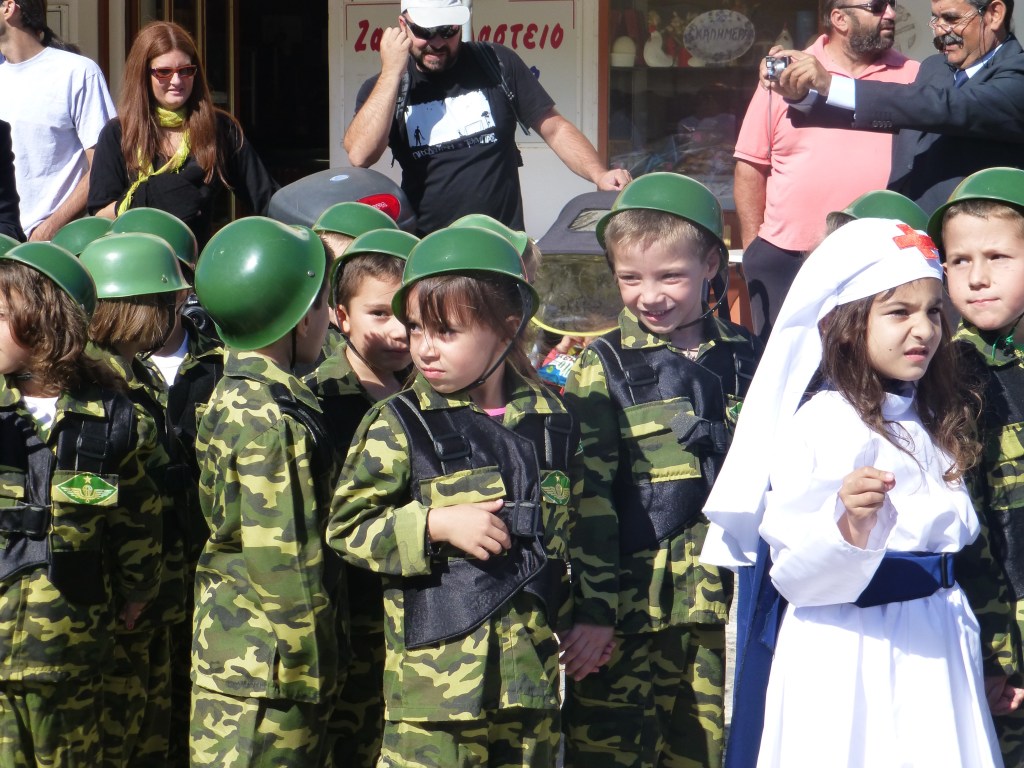
The other three school groups wore their blue pants, white shirts and blue blazers for the parade. Blue and white are the colors of the Greek flag.
After the parade we walked in the town to a bakery, where the owners had set a table with olive oil, two types of bread, olives and cheese for us to snack on. Fabulous food. We dipped the bread in the olive oil and munched and munched.
Sicily: Mt. Elba
We landed in Naxos/Giardini on the Island of Sicily. Our 7 1/2-hour volcano jeep tour was wonderful and I won’t even complain about the fact that clouds kept covering the volcano and that it got quite chilly.
There were 11 of us on the tour, 3 jeeps, with the guide in the first jeep (where I was lucky enough to be). She gave explanations via a walkie-talkie to the other two jeeps while we were driving. Mt. Etna is the biggest active volcano in Europe. In the 2 years before my visit, there were 39 eruptions; 14 of them in the current year with the latest 4 days before our visit. Because it was active so recently, we were not allowed to go to the top.
The town below is not at much risk. It is quite a distance from the active sections, also, the volcano is monitored carefully and the lava flow can be diverted.
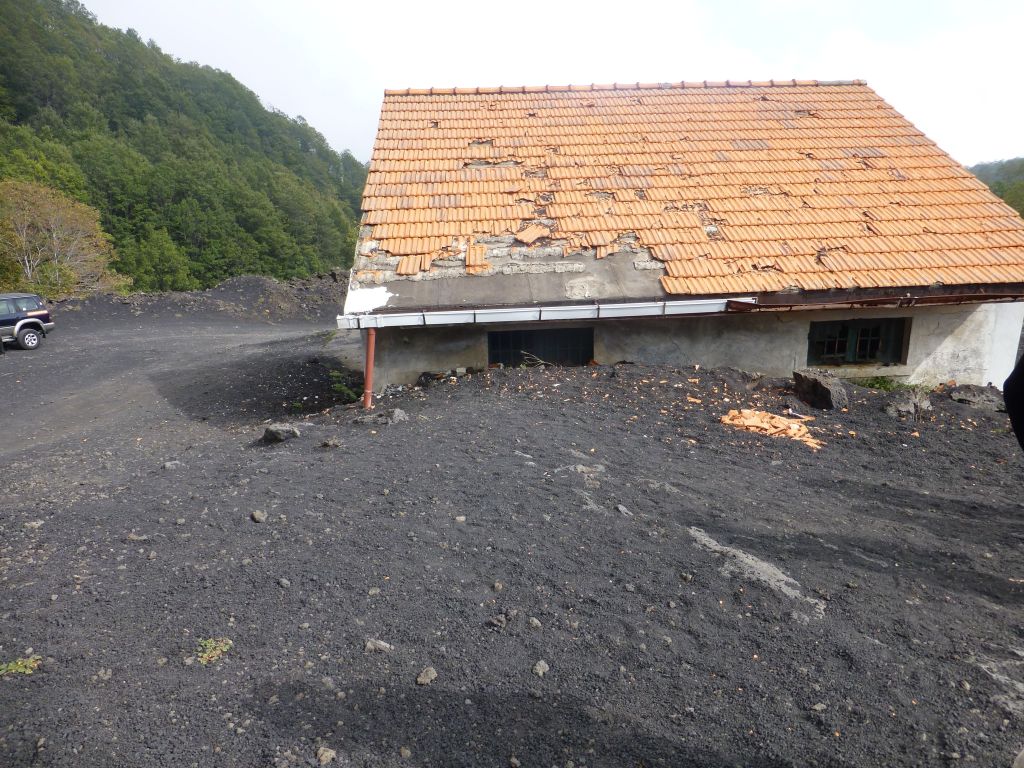
Some of the really big eruptions were in 1971 and 1979. But obviously the town that existed where we stopped had to relocate.
Lava fields and lava tubes: Our first sight of lava fields was breath taking. Lava normally slows as it cools, but lava tubes are created by lava that doesn’t cool.
The lava actually bores through the ground and creates caves. The lava tube we visited was created in 1929.
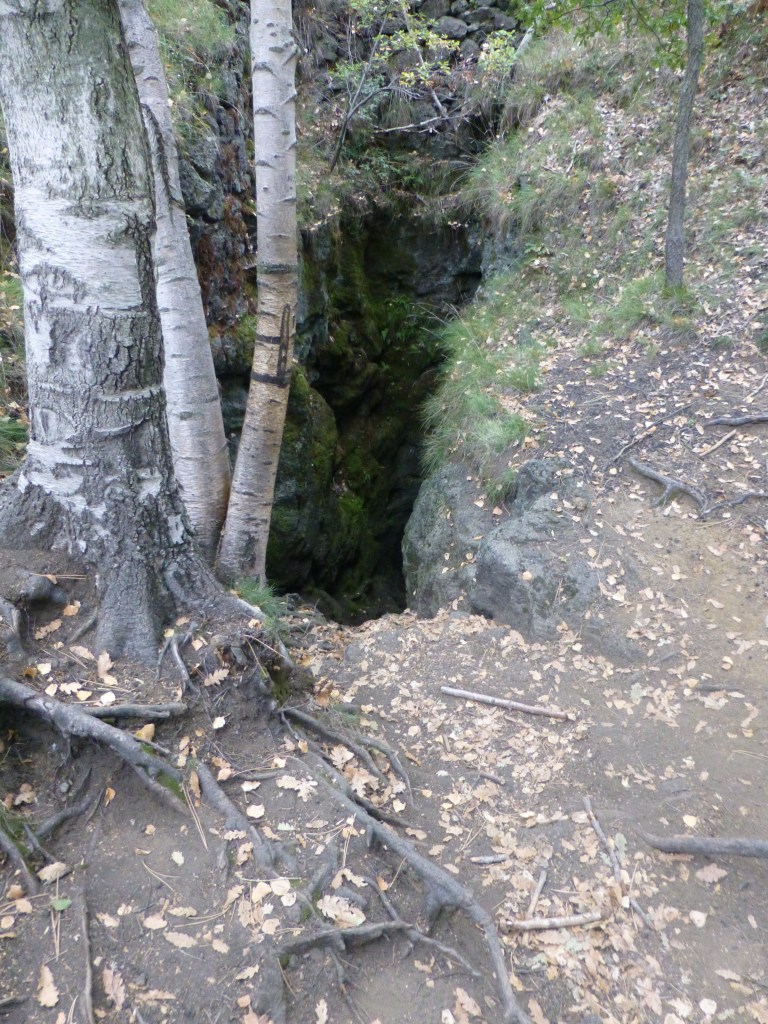
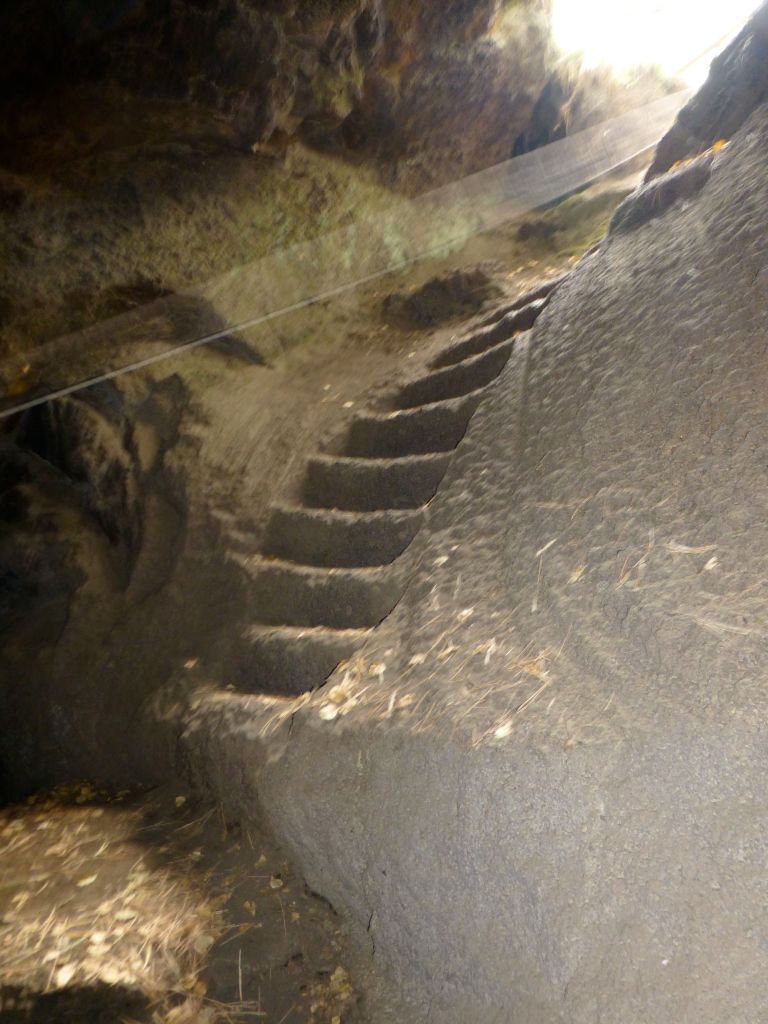
Going down into the lava tube was a bit treacherous because the steps were uneven and it was dark. The drivers helped by stretching a rope between them to use as a railing and by holding lights for us. Being inside the cave (lava tube) was awesome.
Vulcano Island volcano.
We were not able to climb Etna but we made up for it by climbing the volcano in Vulcano Island. We reached Vulcano Island (by boat), then we hiked up the mountain – about 2700 feet. The views as we climbed were wonderful. We could see the whole Island and the surrounding islands as well. One of those islands was formed only 168 CE. People living at that time actually watched it being formed and reported it.
After about half hour of climbing we were at the rim of the volcano.
Unfortunately, the wind was blowing just the right way so that the Sulphur steam was blowing right at us! Uncomfortable, but it was exciting to look down at the volcano and see it steaming.
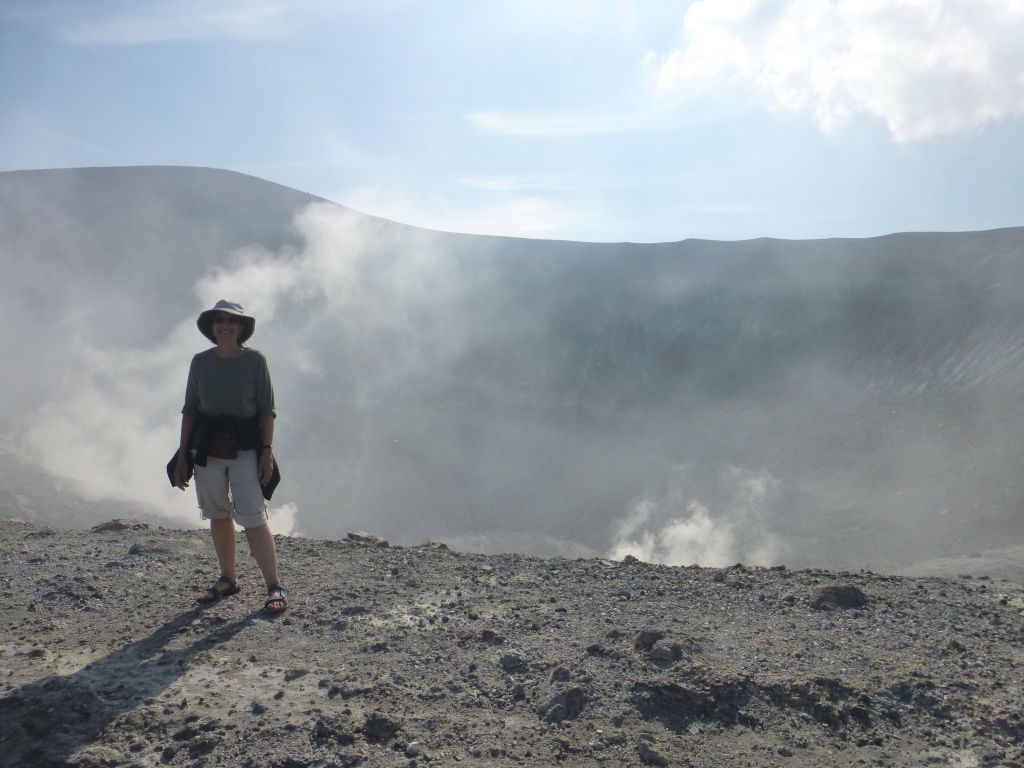
With the sky clear and sunny, it was fabulous. The walk down was actually quite easy because the lava stones gave good footholds.
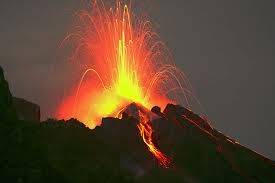
That evening we sailed by Stromboli, which is an active volcano. We were recipients of a most fascinating, exciting show. Every couple of minutes, the volcano would spew out fire. Red flames would shoot out straight up in the air and then sparks would fall everywhere just like fireworks.
We sailed very slowly and we watched it for about 45 minutes. I had never imagined it would be so beautiful.
Rome, Hadrian’s Villa and Villa d’Este
Rome, Hadrian’s Villa and Villa d’Este were the third leg of the Athens to Rome trip. Rome is well known; therefore, I will only mention a few outstanding experiences.
Rome
Rome is amazing but the thing that really blew me away was seeing the Titus arch on my walk in the Forum.
The arch depicts the defeat of country of Judah and the bringing to Rome the artifacts (Menorah and Shofar) of the Temple in Jerusalem. The items were being carried by the Hebrew slaves, who also built the monument.
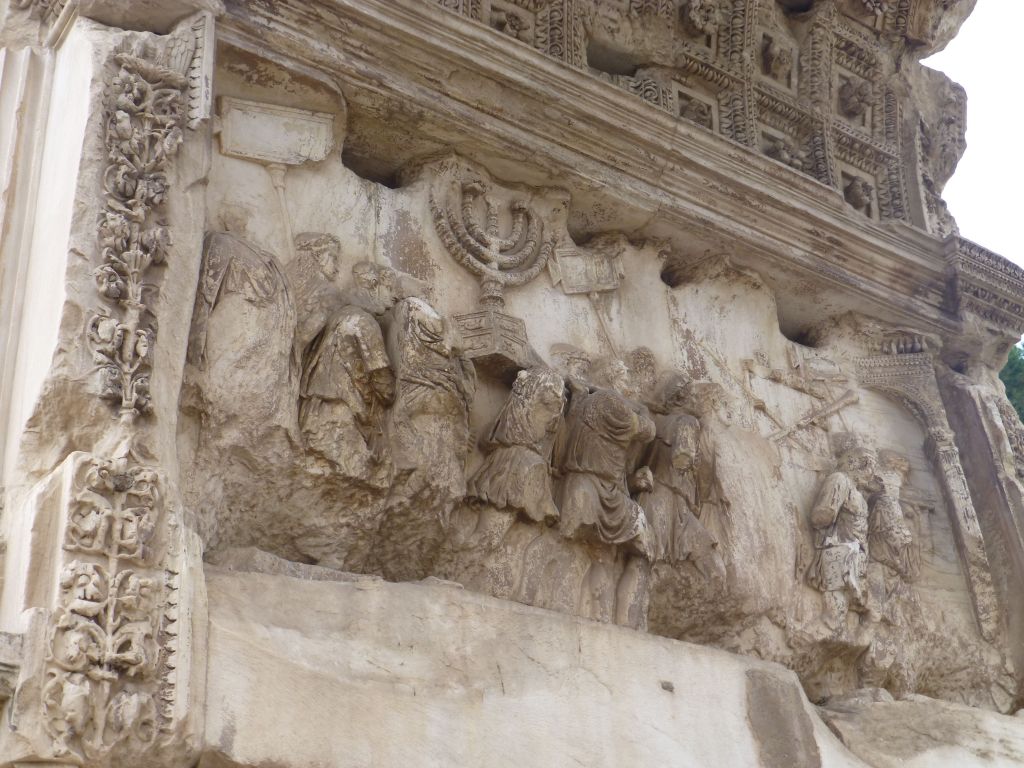
I had seen representations of that relief before, and always assumed it was in a museum. I was not prepared to see it on my walk in the Forum. Somehow it made the destruction of the temple all so real. Titus brought back 50,000 Hebrew slaves. Many of today’s Jews in Rome are descended from these slaves.
The Jewish Ghetto was established in the 1500s when the Pope Paul IV decided that it is “absurd” (his words) to have Jews and Christians live together. Jews were only allowed to be moneylenders or deal with second hand goods. They were only allowed to have one synagogue but the residents had come from many countries and traditions, such as Spain, and Sicily, therefore, they built 5 temples within one structure. The ghetto lasted till the 1800s when Italy unified and the Pope lost his reigning power over Rome. The current synagogue, built in the early 1900s also houses a museum.
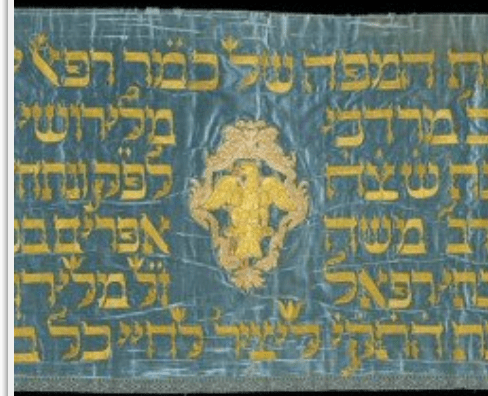
It has beautiful Torah robes that the women of the Ghetto embroidered from rich cloths (second hand ones).
We were also able to see both the Spanish and Roman 16th century synagogues.
One cannot talk about Rome and not mention the Coliseum, the Vatican, the Pantheon or the Trevi fountain. I will give brief impressions of these wonders. Pictures, and descriptions didn’t prepare me for its wow factor of the Coliseum.
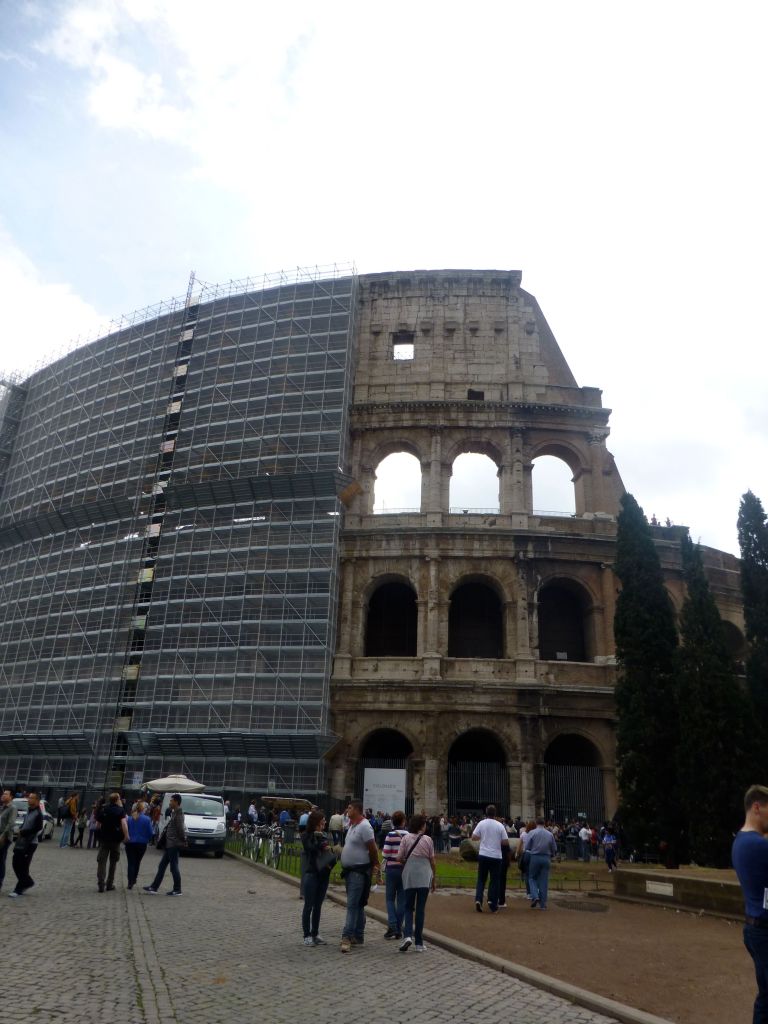
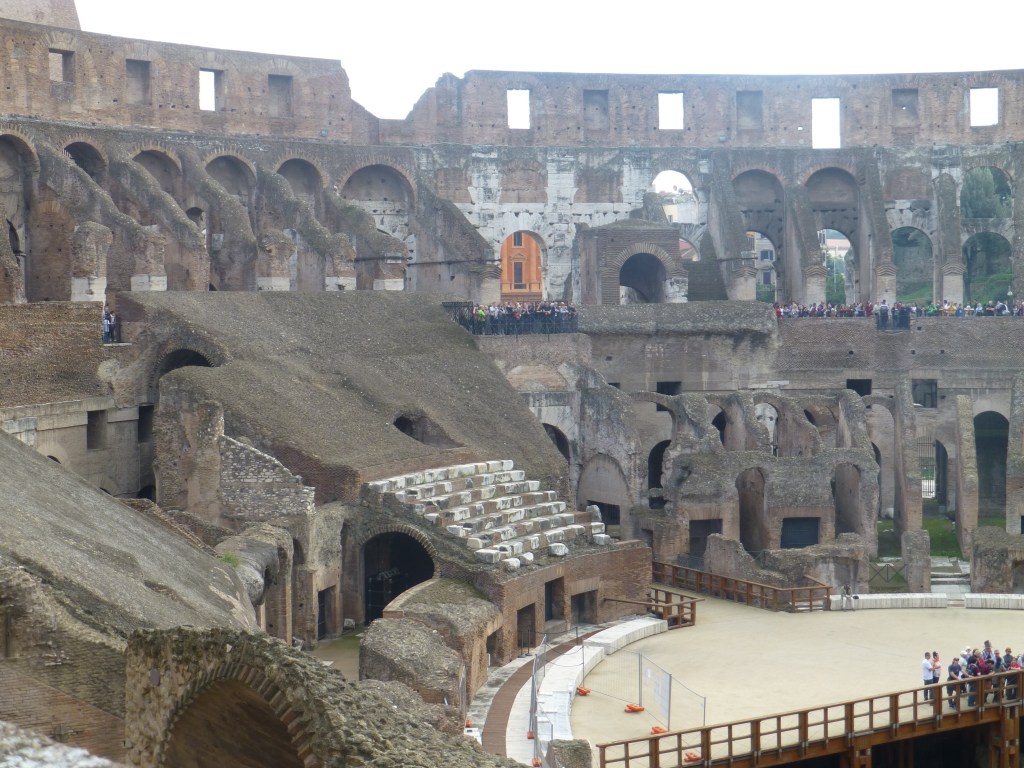
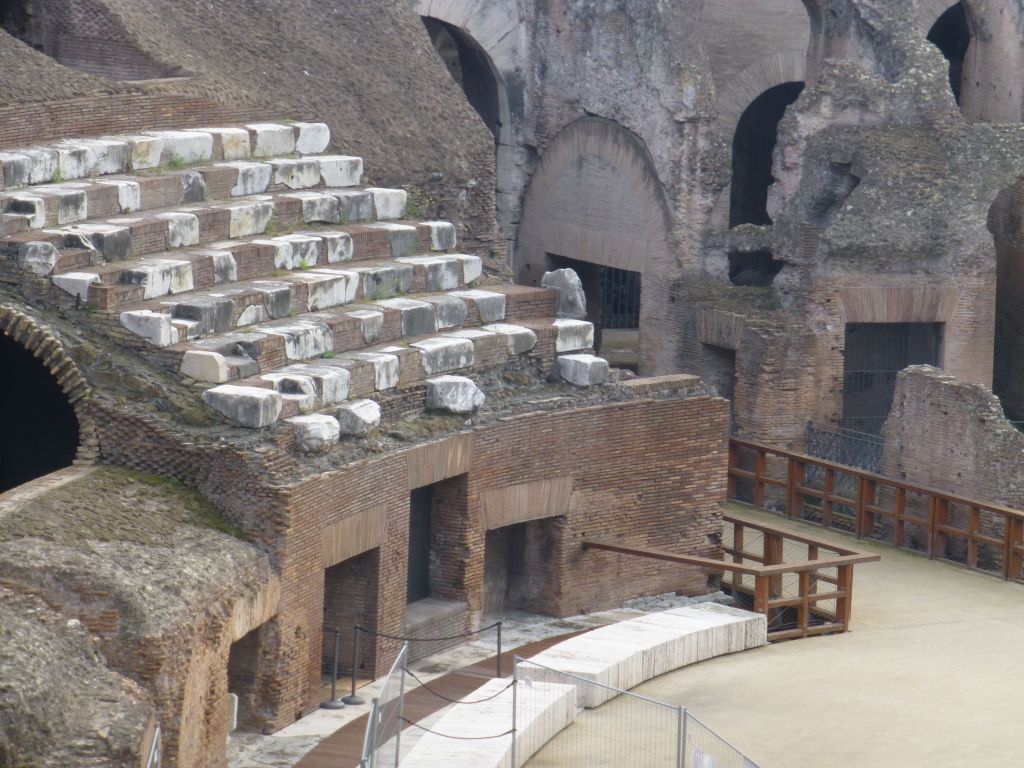
It is amazing. About 1/3 of the original actually remains and that 1/3 is unbelievable. Much of the marble and decorations were chiseled off to be incorporated into churches, therefore, the brick work looks like it has been bombed. There is a bit of marble left where the seats of the VIPs were. We could see the arches where gladiators entered and the “dead” door where they exited when defeated. We could see the rooms below where the animals were kept, and the various levels where people from different status sat.
No matter one’s religious affiliation, the Vatican should not be skipped. Ironically, the name Vatican has nothing to do with Christianity. It is the name of an Etruscan God, Vaticanus. The hill was called Vatican Hill in Roman times. The Vatican is its own nation. At the time of my visit, it had 830 citizens and another 800 people came each day to work. Neither residents nor the day workers have to pay taxes. The Vatican has its own Prime Minister, judges, post office, and Euro currency.
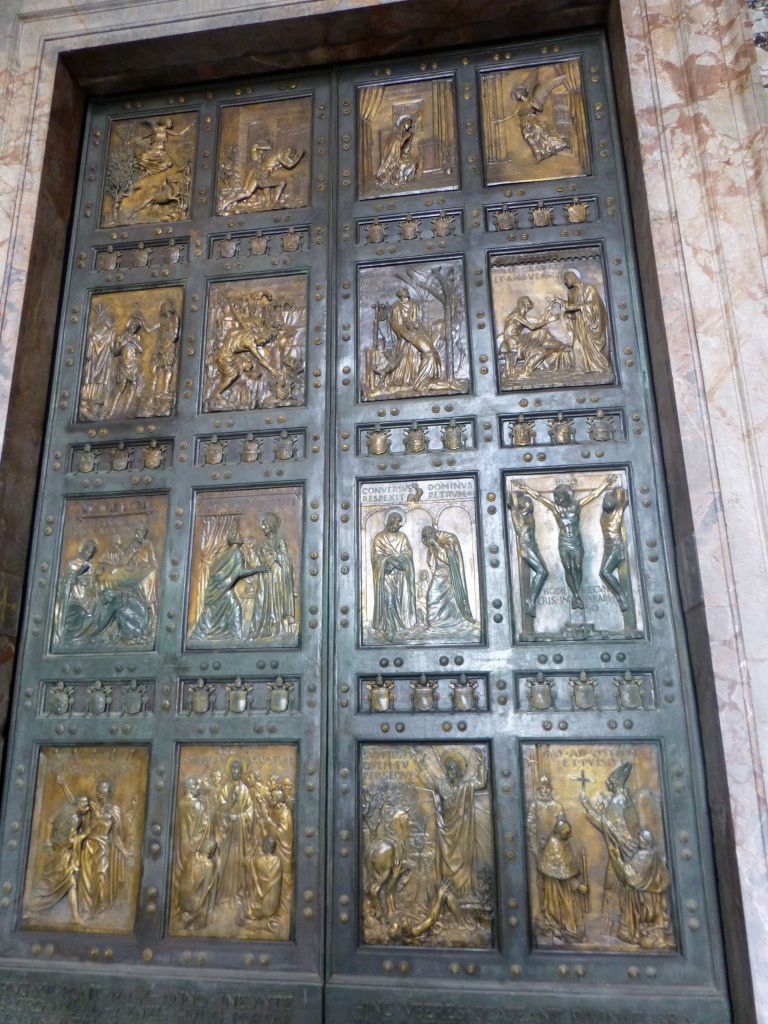
We saw a small portion of the Vatican Museum, the magnificent Sistine Chapel and the awesome St. Peter’s Basilica. We had a guide, who made reservations ahead of time and knew a side way to get up to the museum, saving us precious time. Guarding the Vatican are the Swiss guards who are dressed in the Renaissance outfits that Michelangelo created. To the right is the door to St. Peter’s Basilica.
Throwing coins into the magnificent Trevi fountain is another must. Legend has it that if you throw a coin into the fountain, you will be able to return to Rome. The right way to throw the coin is with the right hand over the left shoulder, thereby crossing the heart. I heard that some 3,000 euros are thrown in a day.
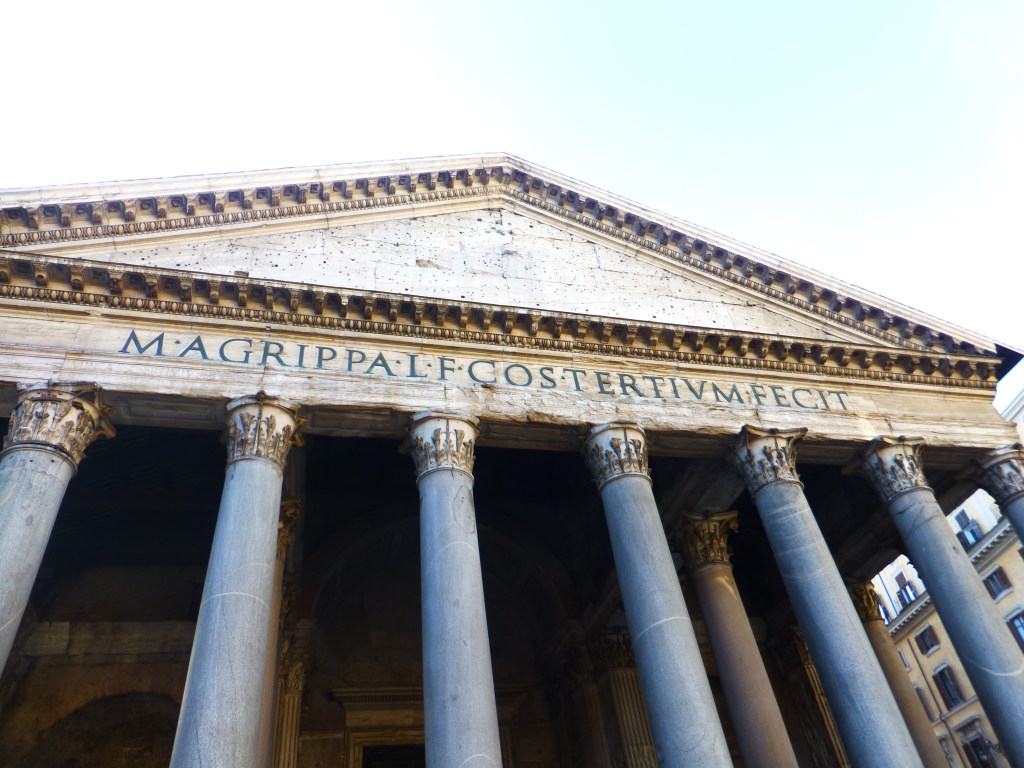
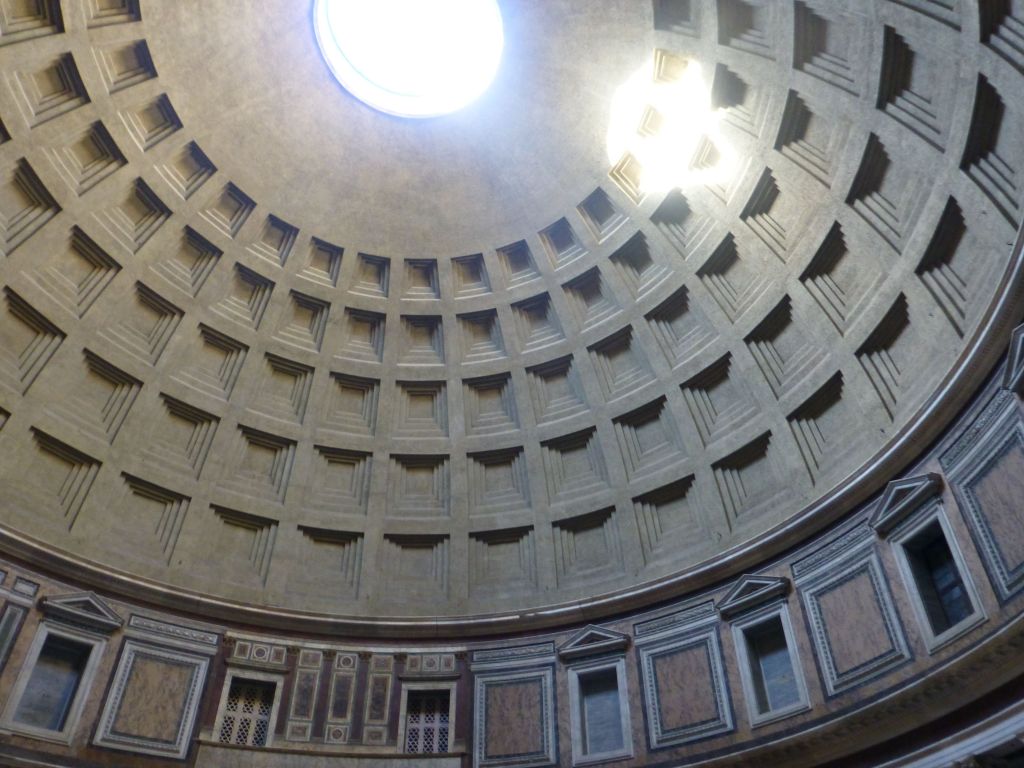
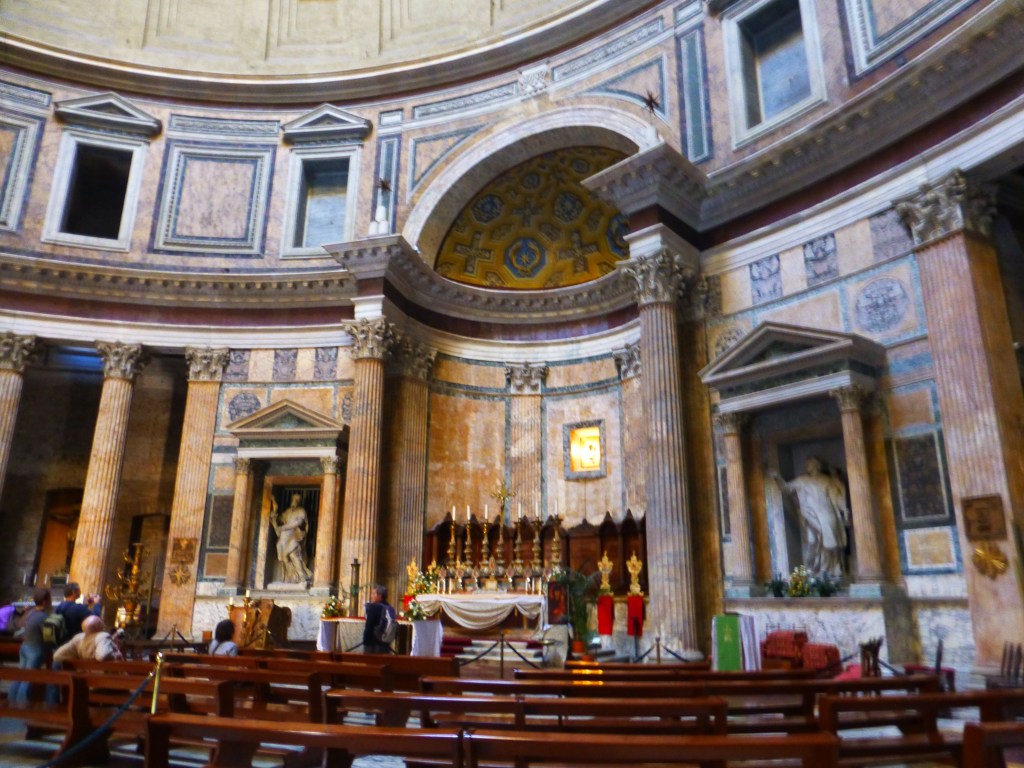
The Pantheon started life as a pagan temple. It is the first example of a round building with a very high beautiful dome. The dome is not covered so if it rains, the rain comes into the Pantheon and drains down. Just don’t stand in the center on a rainy day. Unlike other pagan temples, the Pantheon survived almost intact because it was converted to a church. The pagan god statues were removed and saints put in their place, but the columns, wall decoration and feel survives.
I “discovered” Bernini’s sculptures during my visit to the Borghese Gallery. Some of my favorites were: 1. David getting ready to fight with a very determined look on his face and his body expresses his task. 2. “Apollo and Daphne” Apollo was pursuing Daphne – she did not want to be pursued and called for help to her father. He turned her into a tree. Bernini captured the transformation: from the back she looks human but as you walk around the sculpture, you see that her feet, hands and front of body are being transformed into a tree. It is a truly beautiful and moving sculpture. 3. “The Rape of Proserpine.” Pluto tries to abduct her and she is crying and his hands are digging into her thigh. This ability to show softness in marble is incredible.
Borghese family was very wealthy. One of the Borghese was a Pope and he named his nephew Cardinal – as was the custom. Cardinal Borghese built the house, got the artwork for the gallery and built the large park surrounding the gallery in the late 1500s or early 1600s. The gallery walls and ceilings are every bit as wonderful as the art.
Reserved timed tickets are a must. You are only allowed 1 hour and 50 minutes with your ticket. The Gallery is so incredible that you need every minute of that time. If I had more time in Rome, I would go multiple times because it is impossible to take it all in. The 2 hours flew by.
Though Bernini’s statues and buildings are an important part of Rome, Michelangelo’s work is also on view.
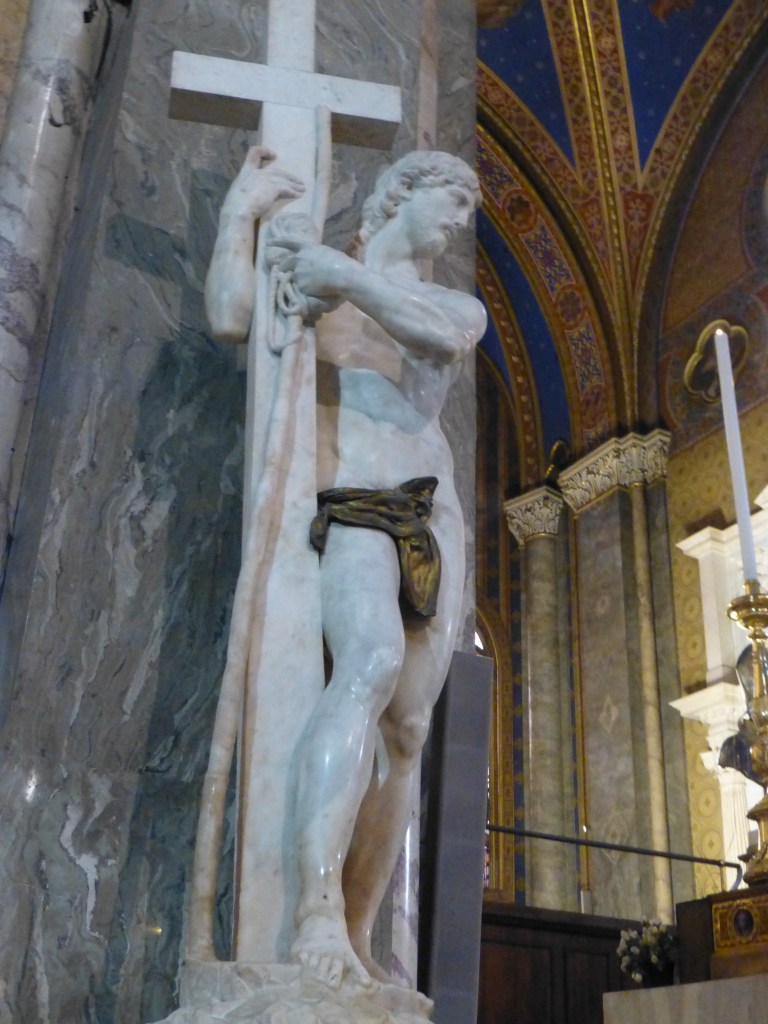
A little-known church, Santa Maria Sopra Minerva, has a Michelangelo statue of Jesus. This church would be on everyone’s guide book in another city, but here in Rome, it competes with a huge number of other magnificent churches, it had maybe a dozen visitors while we were there. The marble statue of Jesus is beautiful and peaceful. At some point, the church leaders decided that the naked Jesus needed a bronze loincloth. The loincloth is still there.
Day trip to Hadrian’s Villa and Villa d’Este.
Hadrian’s Villa was built by Emperor Hadrian from 118 and 134 CE near the town of Tivoli and was used as a summer villa by himself and Antonini, his successor. Today it is just ruins but they are magnificent ruins in a park like environment with olive trees all around. There are a couple of large pools and some statues still standing, though most are in museums around the world.
My favorite part of the Villa was Hadrian’s private house on the island he built. There was a small mote around it and a drawbridge. When he escaped to the island he had privacy.
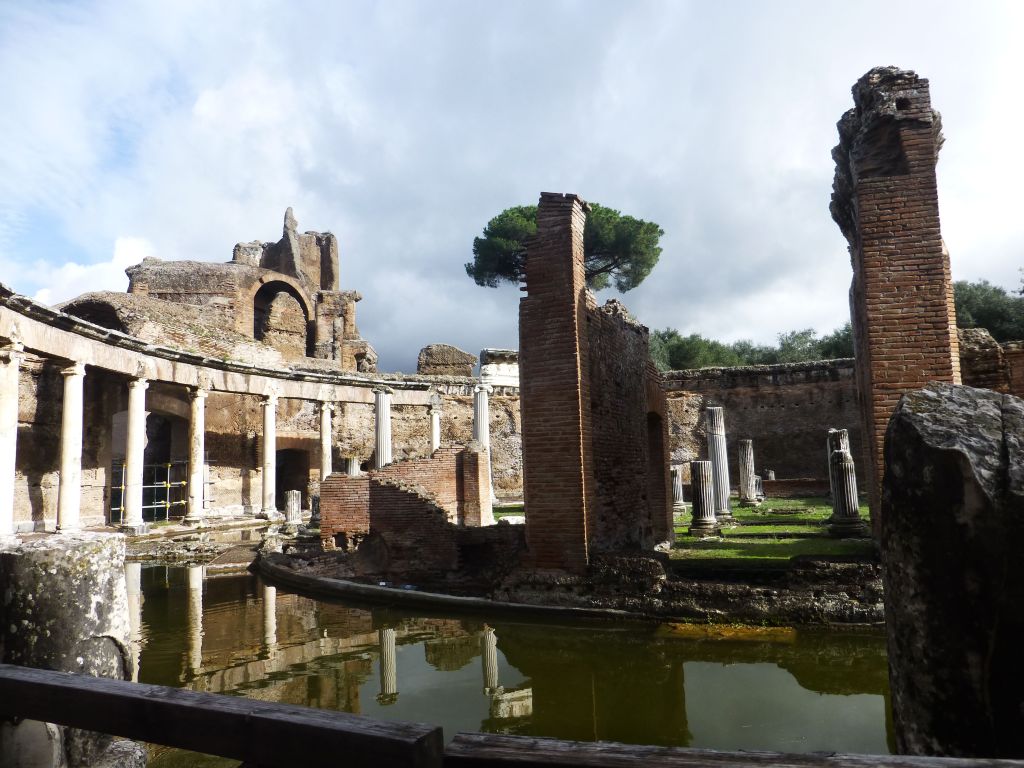
Villa d’Este, built by Cardinal d’Este, in the 1500’s, is magnificent. The rooms are large and the walls are covered with frescos. The ceilings and the walls are beautiful, but that does not even come close to the beauty of the gardens.
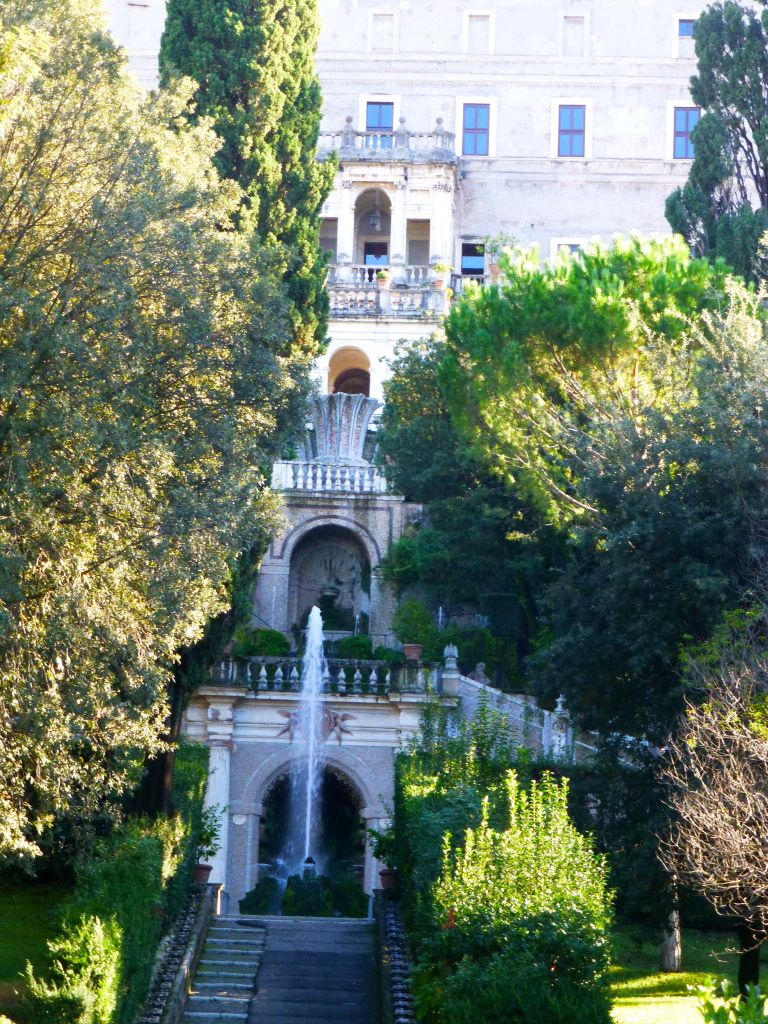
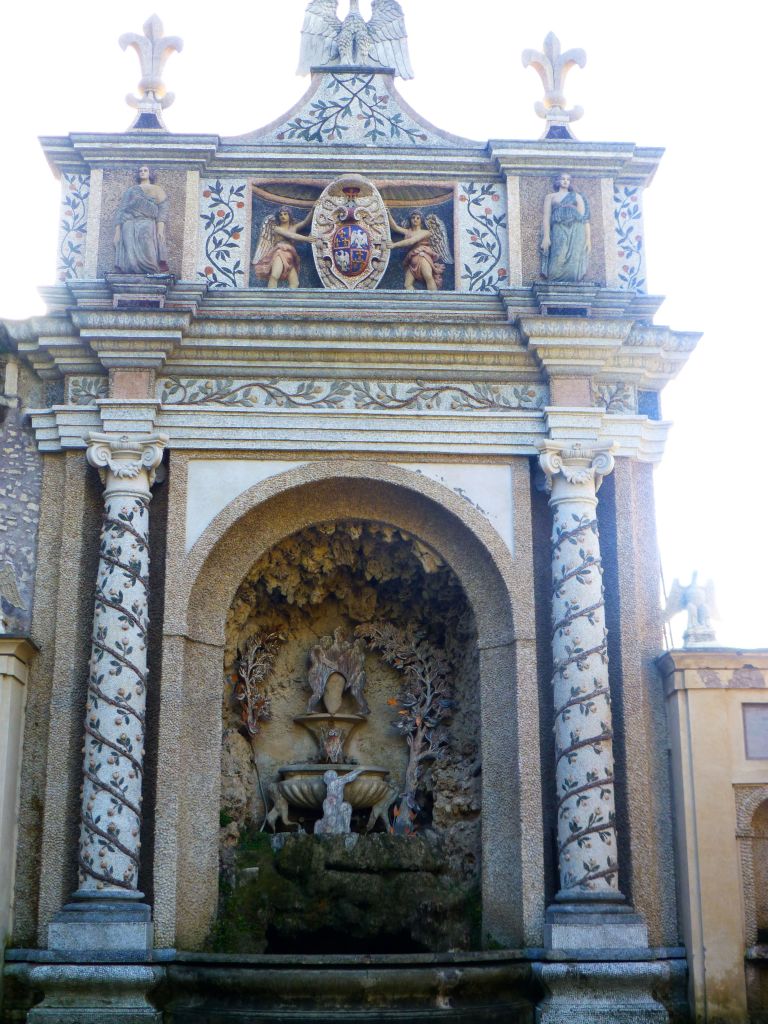
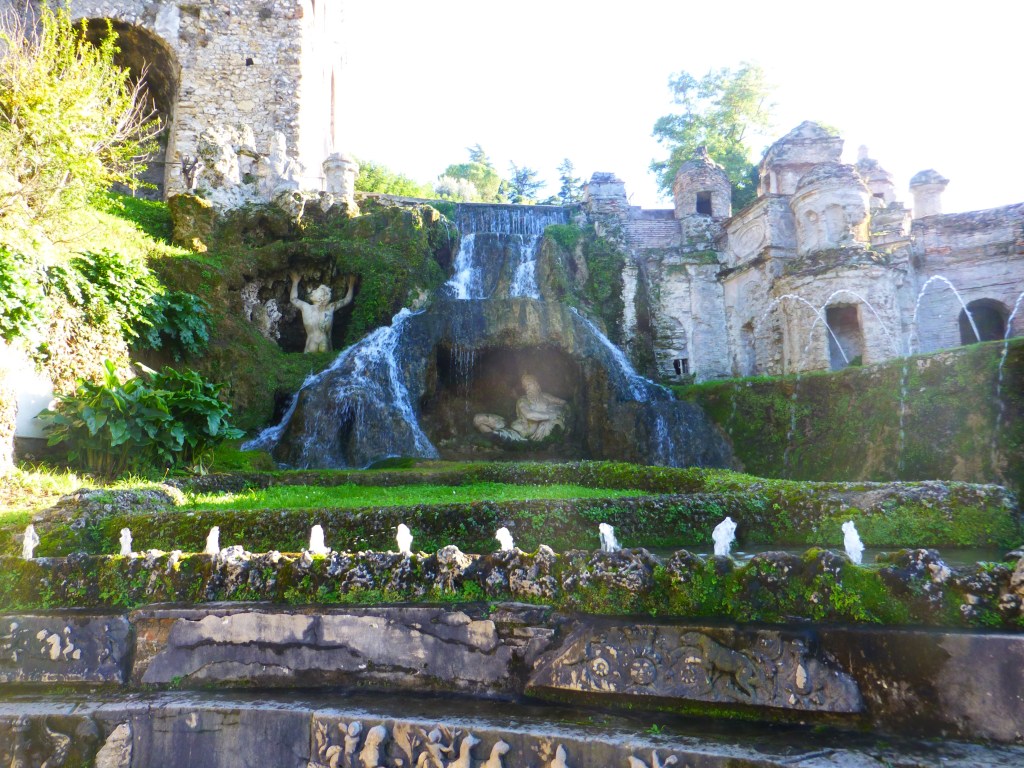
Cardinal d’Este loved fountains and there are numerous fountains, all different and many with statues and interesting designs. The garden is terraced and is planted with lots of trees and bushes. On one walkway there are 100 fountains all in a row. It is impressive!!! I wish I could have spent a full day there.
Rome will definitely be on the return list.
Final Comments:
- For some reason, I had avoided going to Rome on previous trips. It is not to be missed.
- Our guide made reservations ahead of time and knew a side way to get up to the museum, saving us precious time.
- She also new the oft not visited locations that were fantastic.
 Nili's Adventure
Thanks, reminds me why I want to go back someday! Sent from my iPad
LikeLike