
Mexico, Honduras and Guatemala:
After a brief trip to the U.S. to regroup, we headed back to Central America for another seven weeks. During this part of the trip, we visited 10 exciting archaeological sites, and 9 magnificent Spanish colonial cities, as well as focused on Mayan culture. We also had awesome beach time.
Mexico
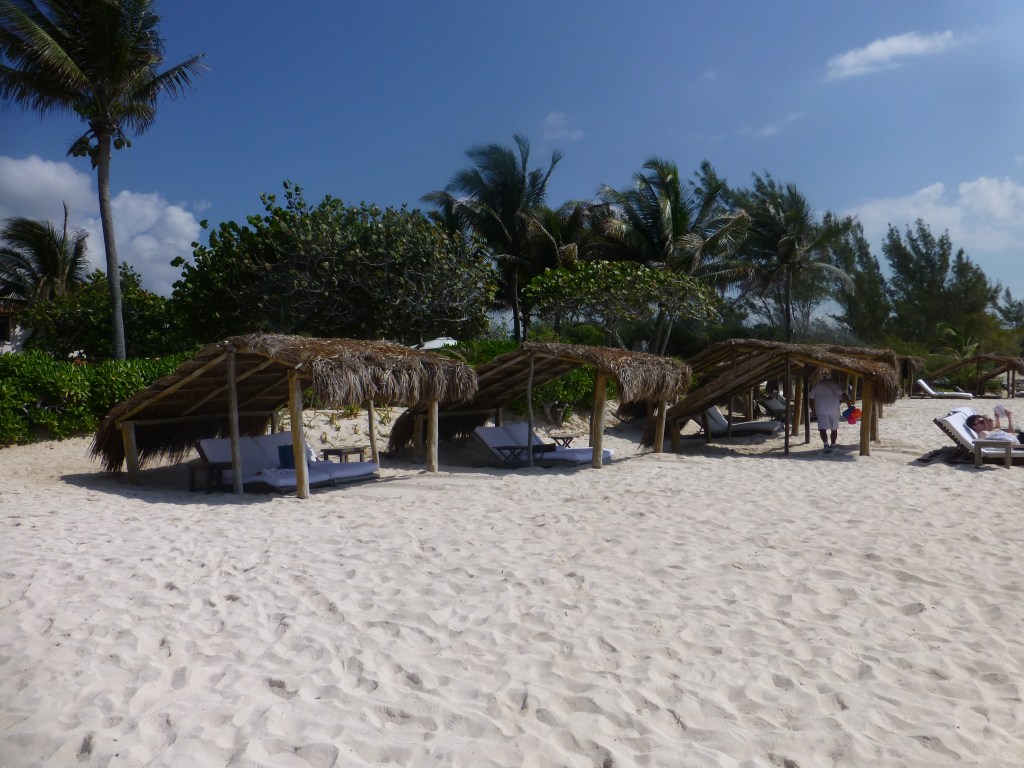
We spent the first week at the Mayan Riviera, in a small (26 room) jungle resort right on the beach. Lovely sitting in the beach cabana, looking at the clear water and gentle waves. I participated in yoga classes, walked the beach and swam. It was warm and sunny but pleasant. One evening we saw the full moon reflection in the water. It was a perfect place to begin another 7 week trip.
Chichen Itza/Ek Balam, and Uxmal/Kabah are the most important Mayan sites. Most tourists come from Cancun or Merida (2 hour bus ride each way) and spend a few hours at these sites. We were lucky to be able to stay at the lodges adjoining each of these sites and therefore, we were able to start touring at 8 AM when they opened and beat most of the tour buses. We practically had the sites to ourselves and toured during the cooler part of the day.
Chichen Itza is famous for its huge Mayan pyramid. This large complex, has many excavated temples and structures.
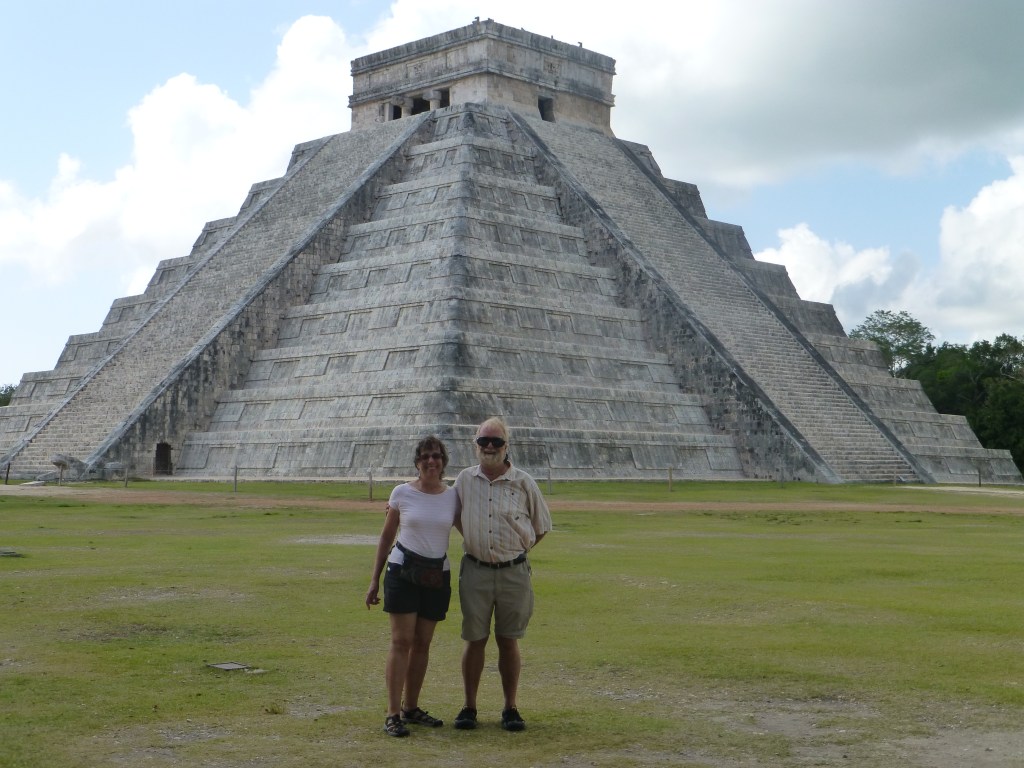
The large pyramid is built to mathematical specifications with nine levels, 91 stairs on each of the 4 sides to add up to 364 days a year – the top layer makes up the final day. It is from about 1000 to 1200 CE.
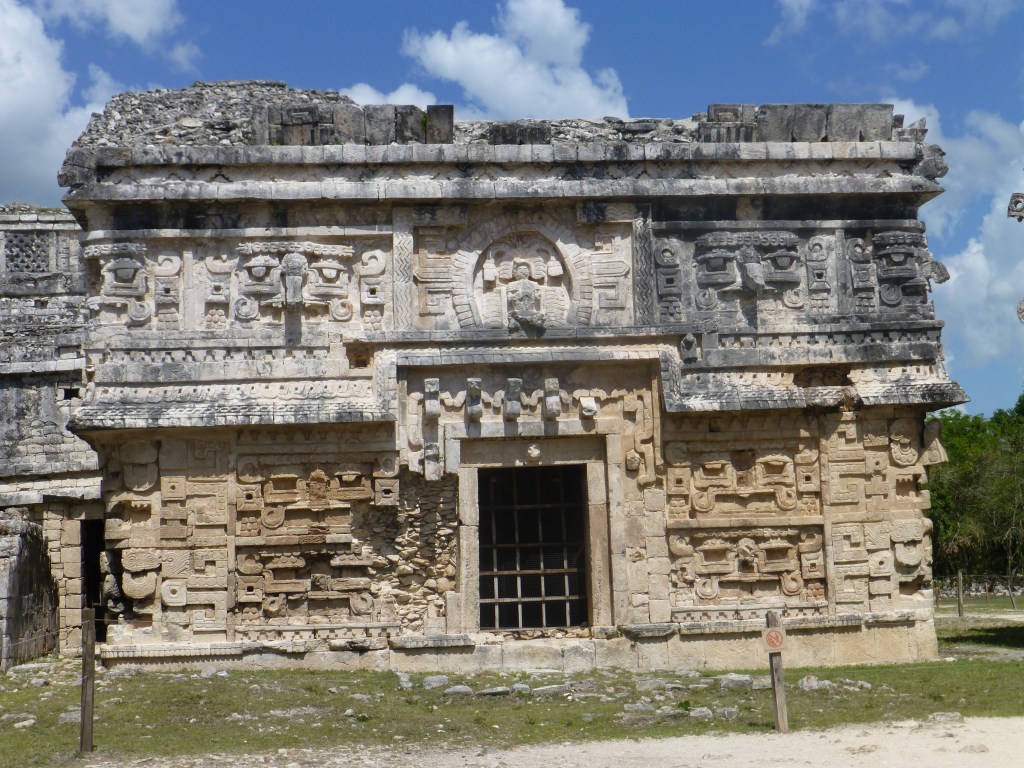
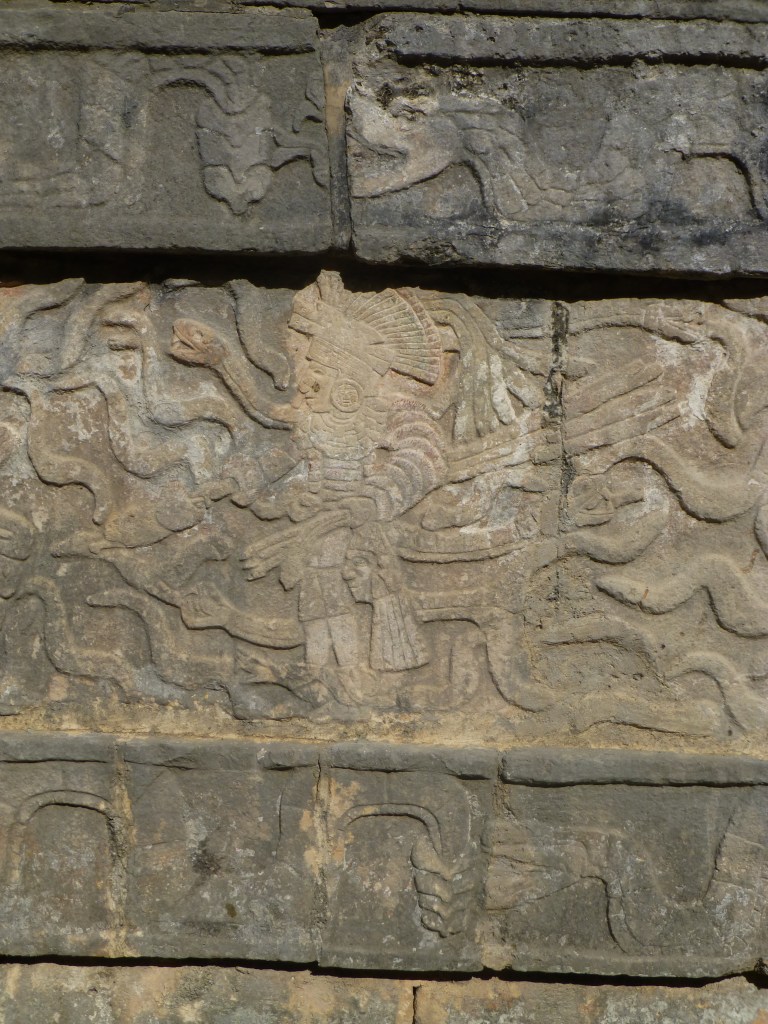
However, the structures shown above with carvings of snakes, birds, people are from an earlier time. Some of the original color and stucco has remained.
Near Chichen Itza is Ek Balam, which, although smaller, is no less impressive.
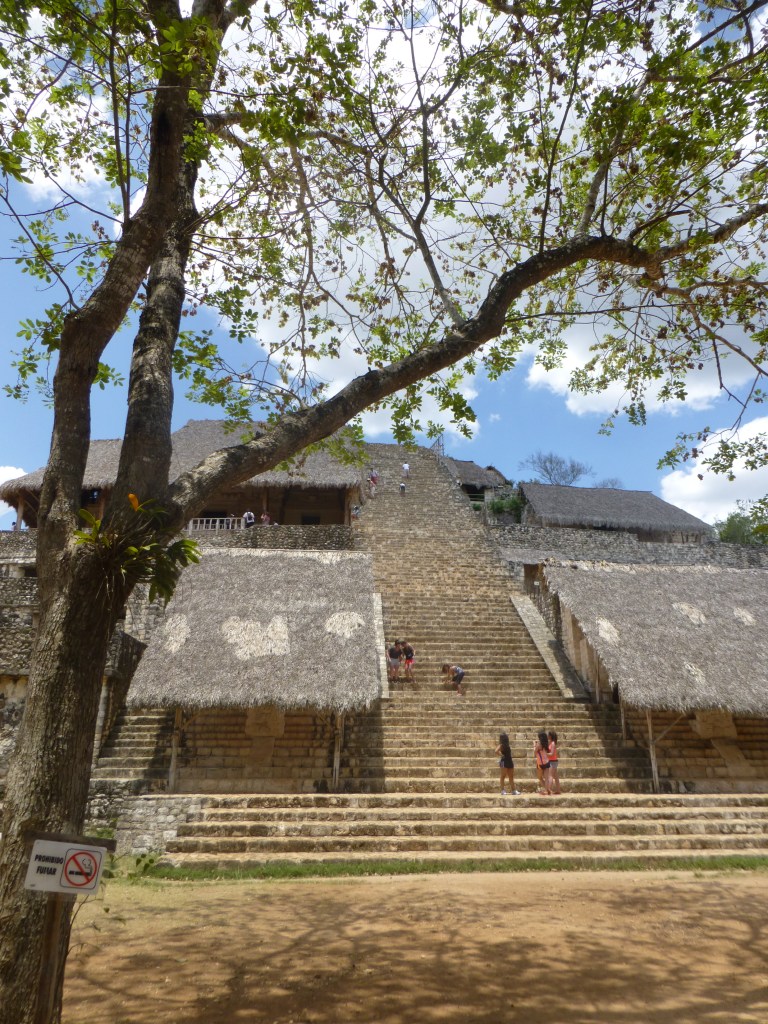
Here, unlike Chichen Itza, we could climb the structures in order to see the fabulous carvings. Climbing the pyramid was a bit scary because the steps are very narrow. I saw some tourists come down the steps on their behind. I walked diagonally.
But it was worth the steps to see these carvings at the top level.
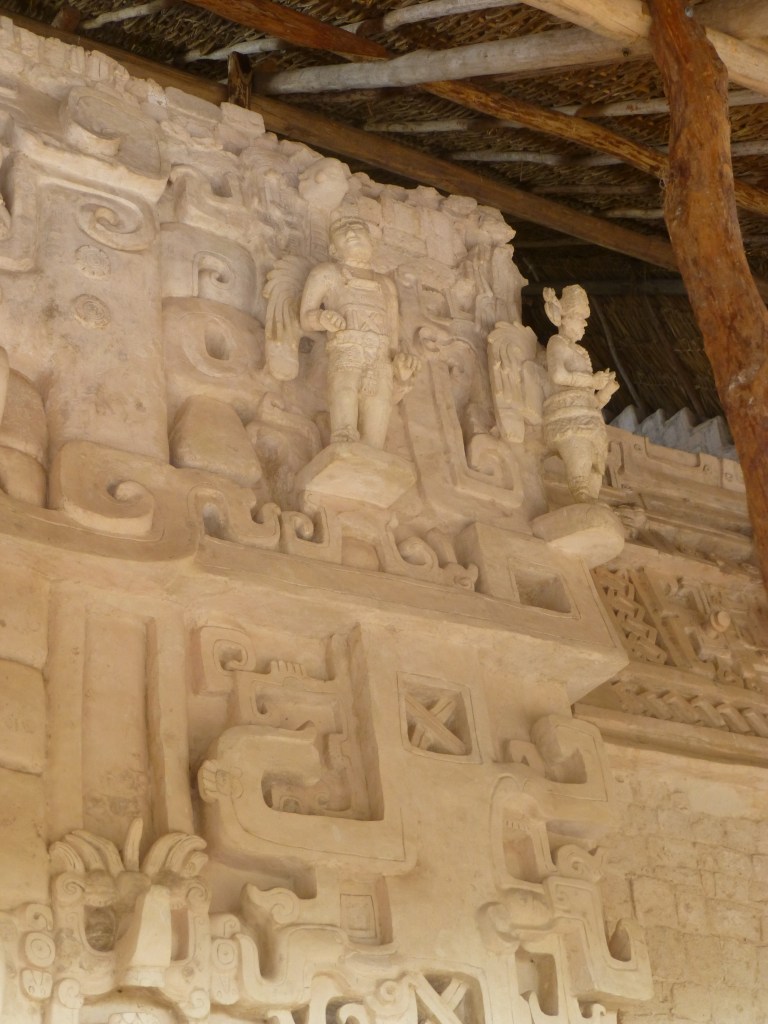
Uxmal is older than Chichen (600-900 CE). The main pyramid is smaller with only 3 levels. There were a number of pyramids just partially excavated. We were able to climb some structures to get a better look at the carvings.
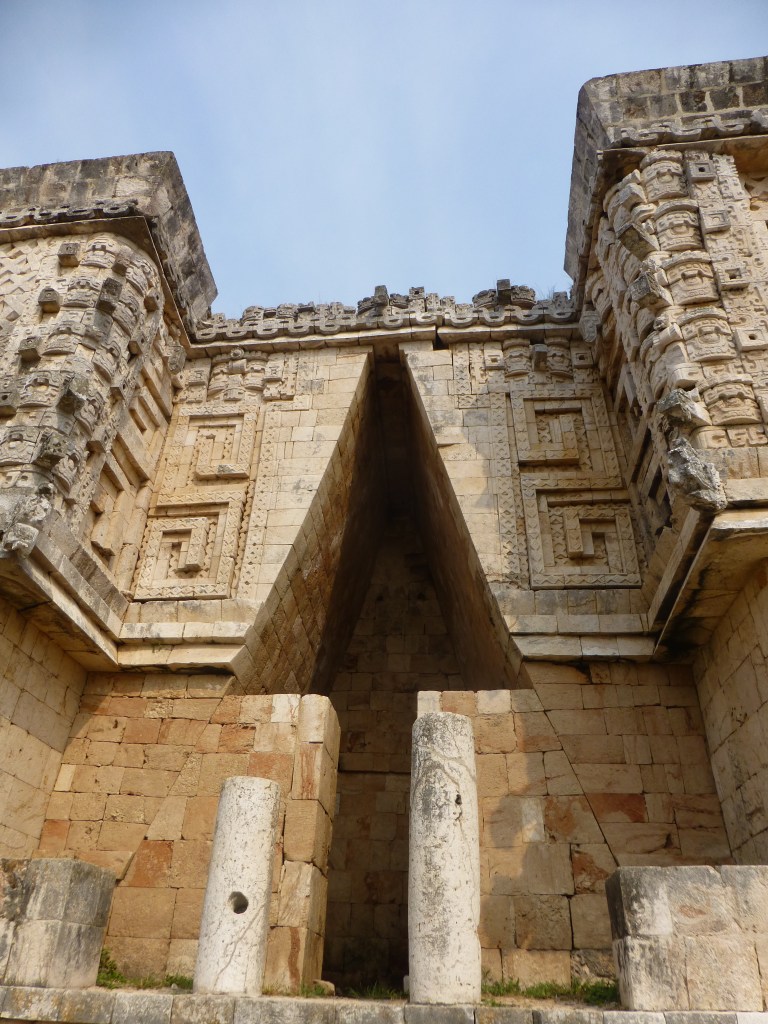
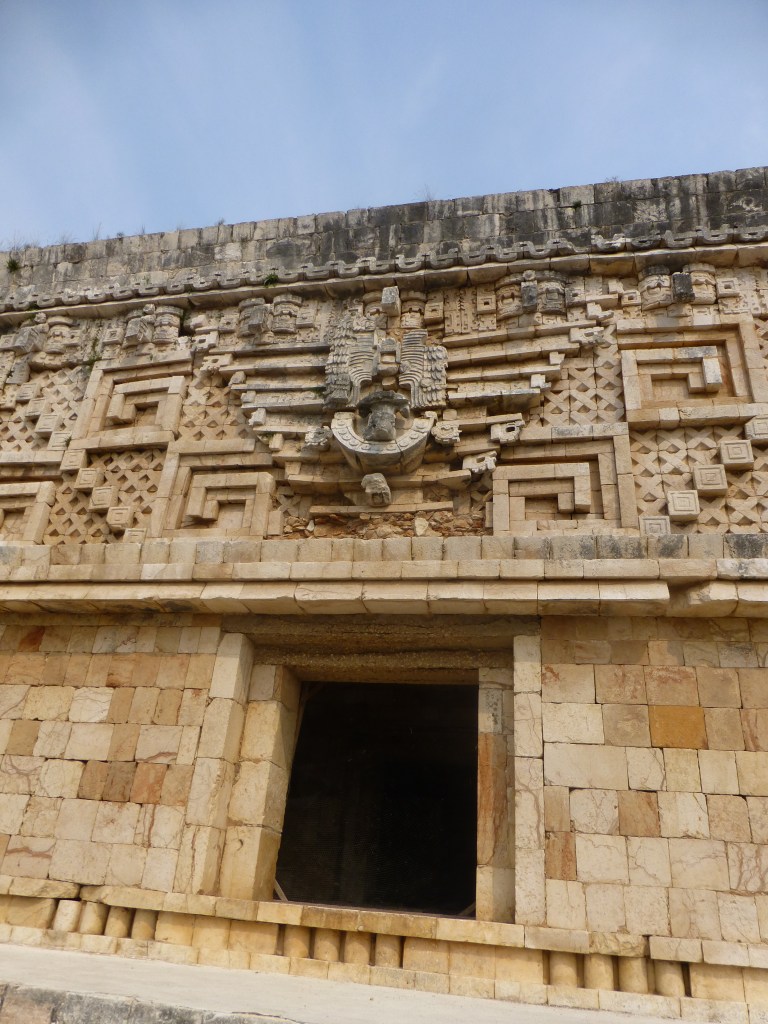
The doorways, and ornamentations are beautiful, especially a set of snakes which interlace from 2 directions. Again, we stayed at a lodge just across the street from Uxmal. We were the first ones into the site and for the first 2 hours, were joined by only about 20 people. We had great picture opportunities with out hordes of people. We spent a relaxed time walking around and when we left at 10:15, the buses were pouring in.
Kabah, 25 km away from Uxmal, is mostly un-excavated. But the buildings which were excavated are fantastic.
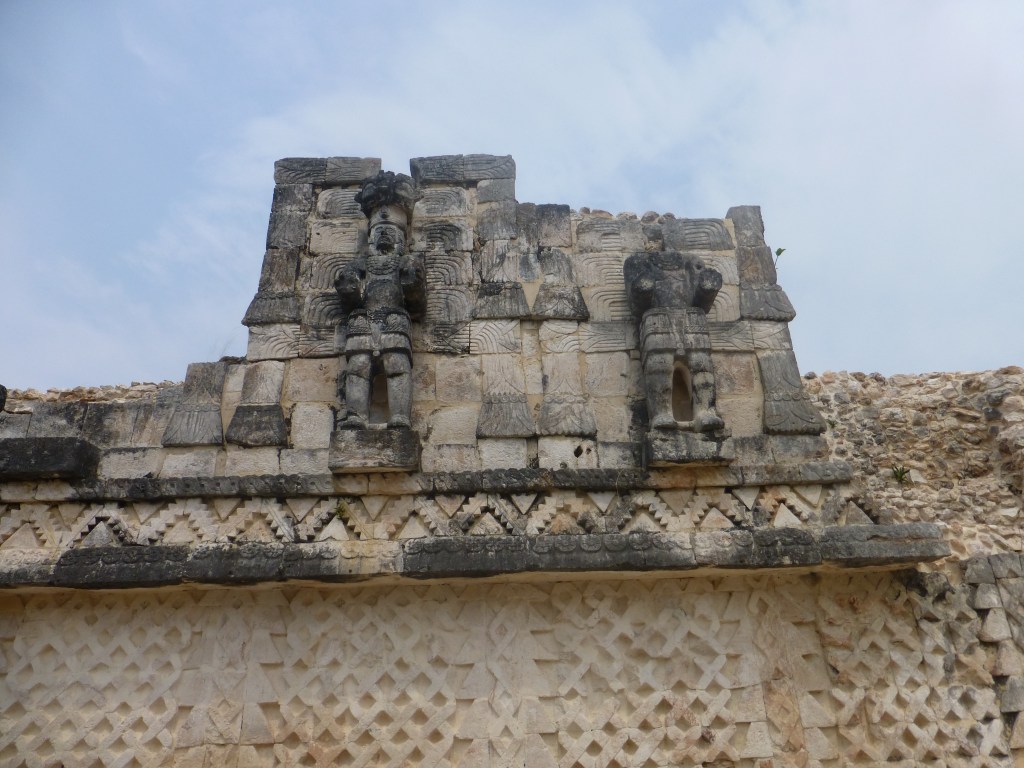
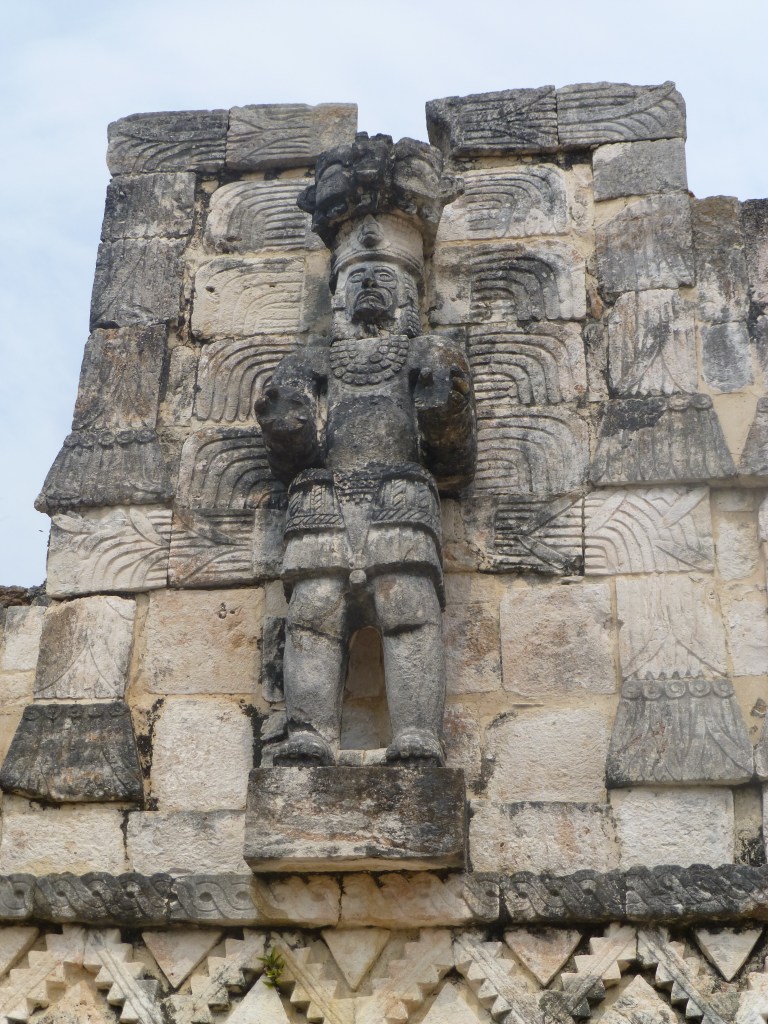
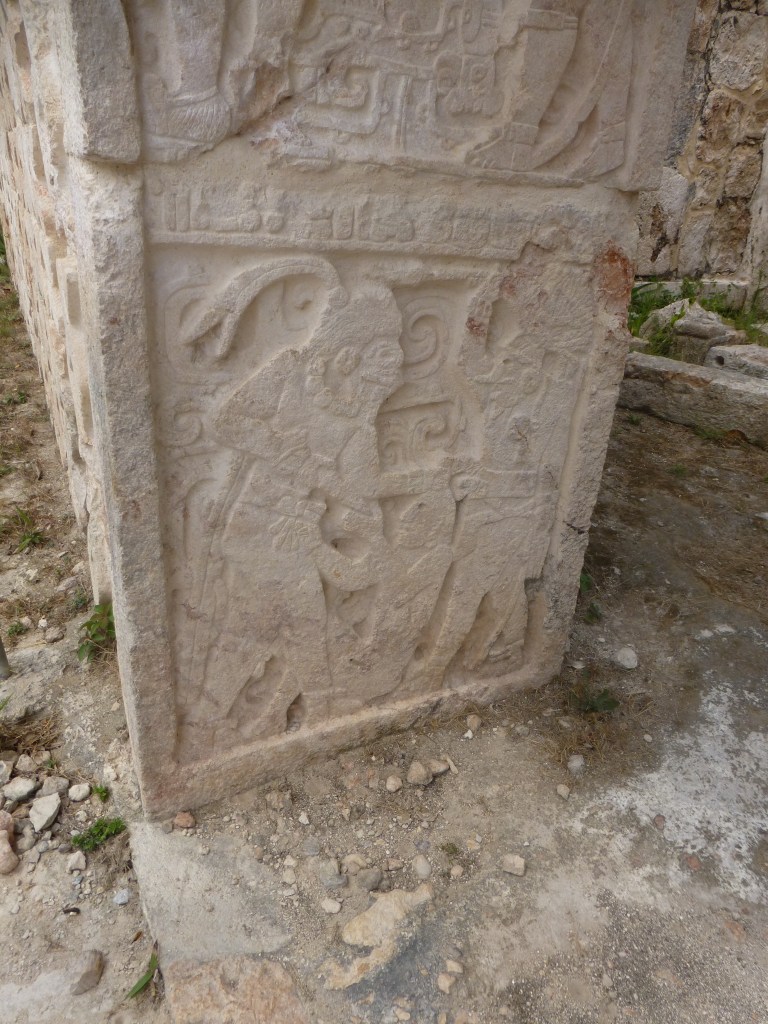
One of the buildings has 2 magnificent statues of men. The better-preserved figure is called “scar face” because he has tattoos on his cheeks. His legs are muscular from climbing hills. The other figure’s face is lost. Below the statues are relief carvings of warriors and their prisoner. Incidentally, we had the site to ourselves.
One of the fun things about traveling is having unexpected experiences. At our next destination, Merida, we walked along Paseo de Montejo to look at the beautiful Spanish colonial houses.
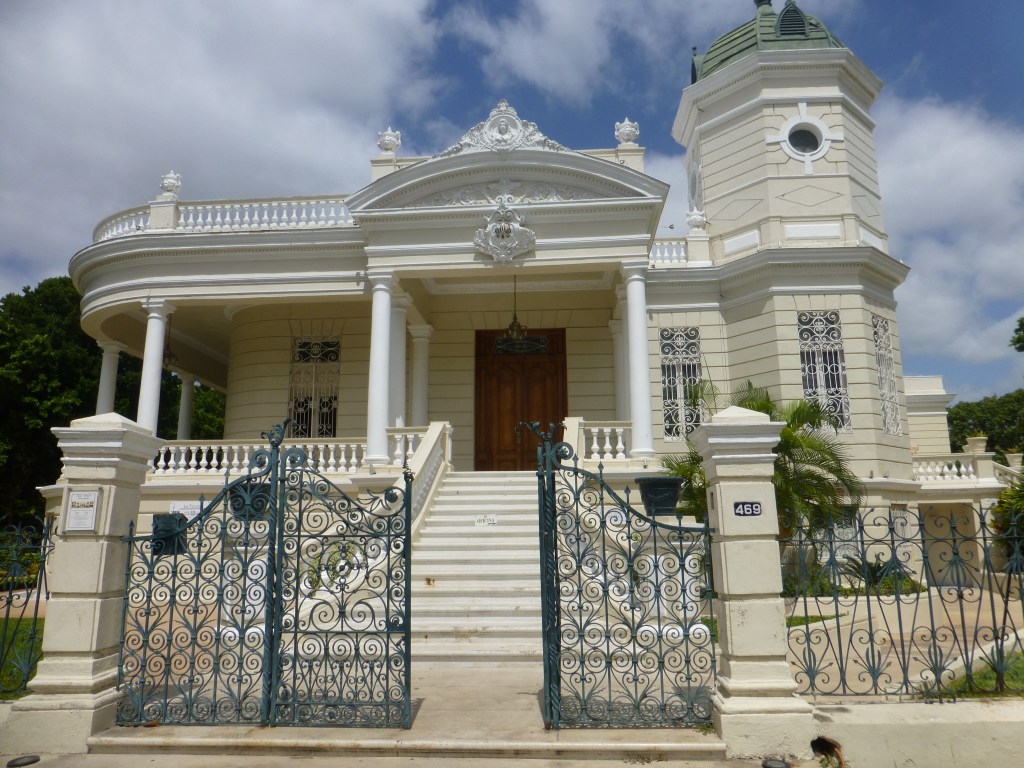
At one house I saw a sign for house tours. I inquired at the office, but were told that there would be no tours that day but that we can look around at the grounds. A few minutes later the owner offered to take us around (the tour guide was on vacation).
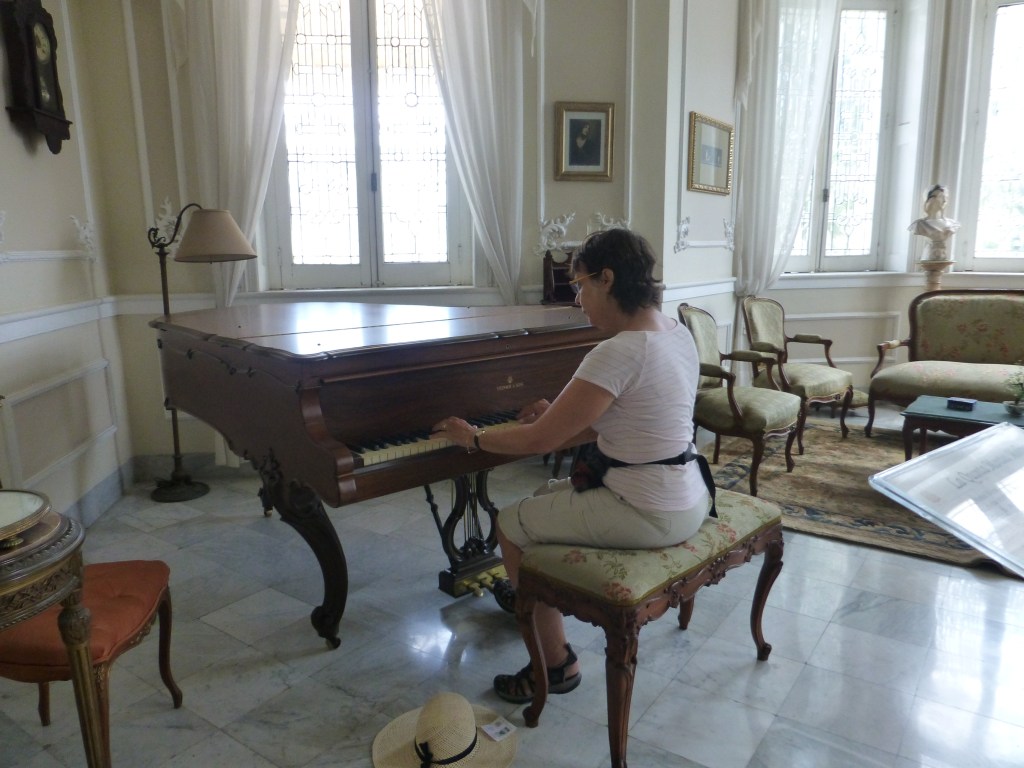
In the living room was a beautiful 1920 Steinway grand piano. I mentioned that I played and that the down side of traveling was missing my piano. She invited me to play on this marvelous instrument. The tour was full of family stories. We ended the tour with hot chocolate in the office.
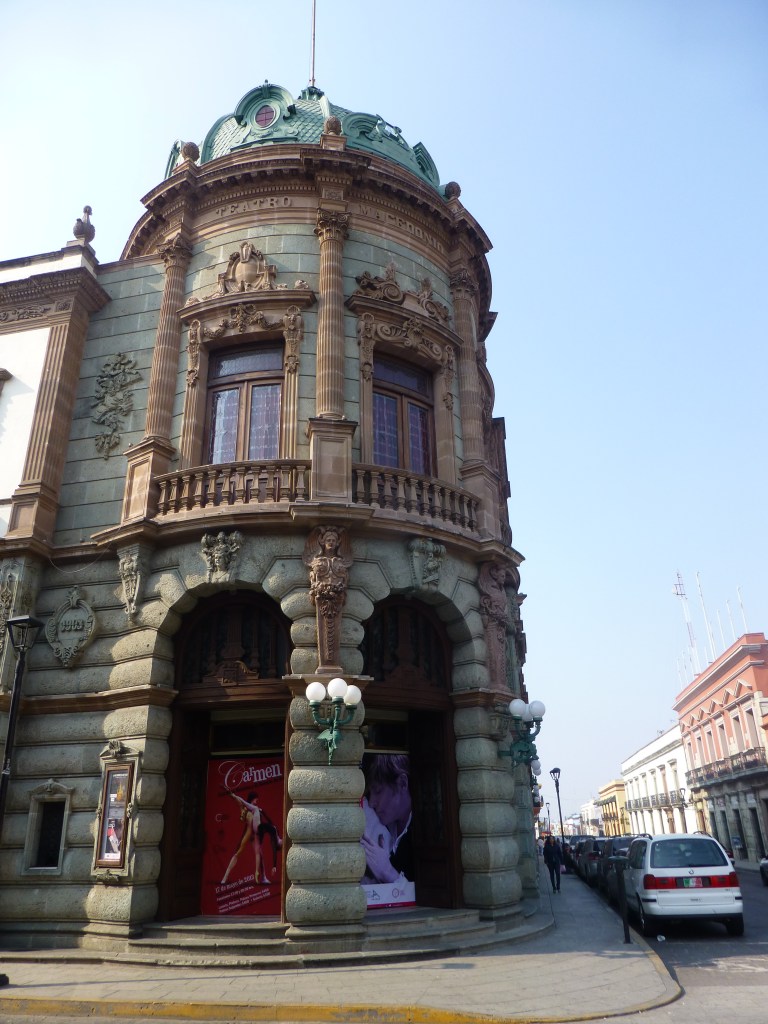
We also attended a ballet performance by the Cuban Ballet Co. in the opera house. The magnificent opera house was delightful.
Oaxaca
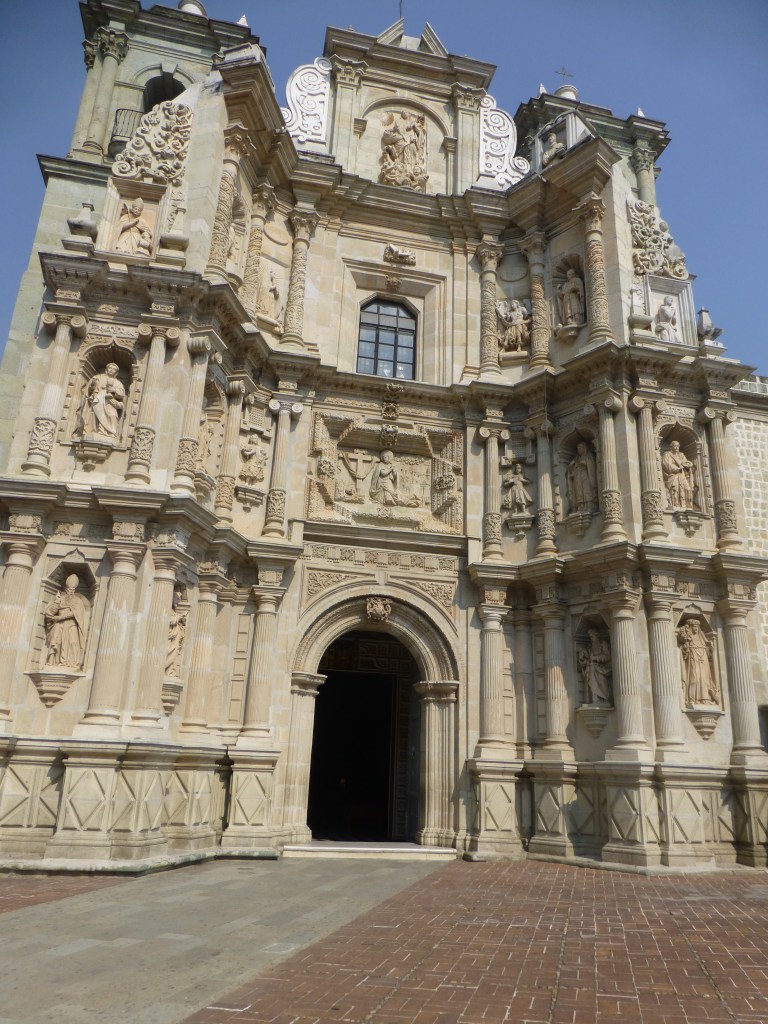
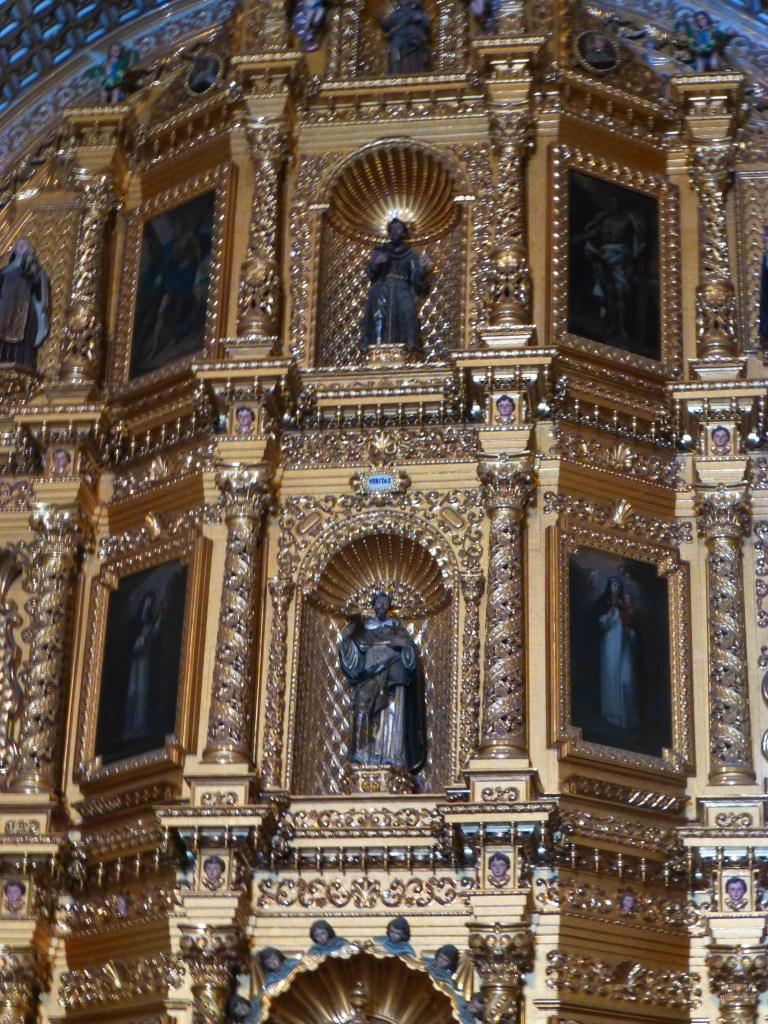
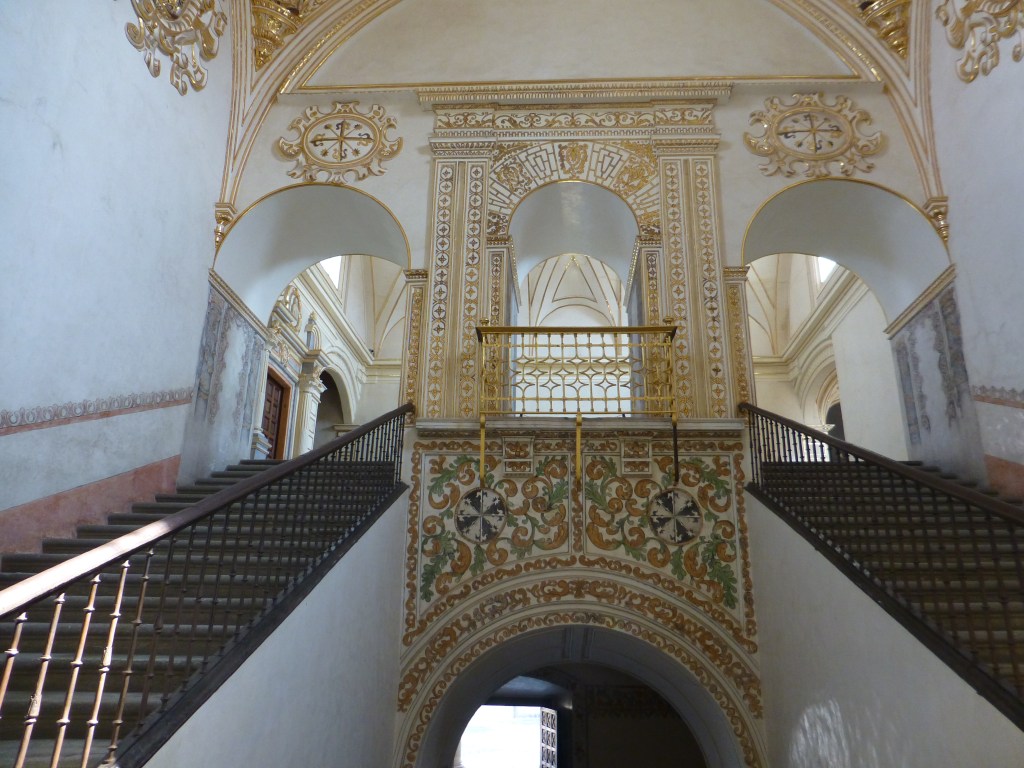
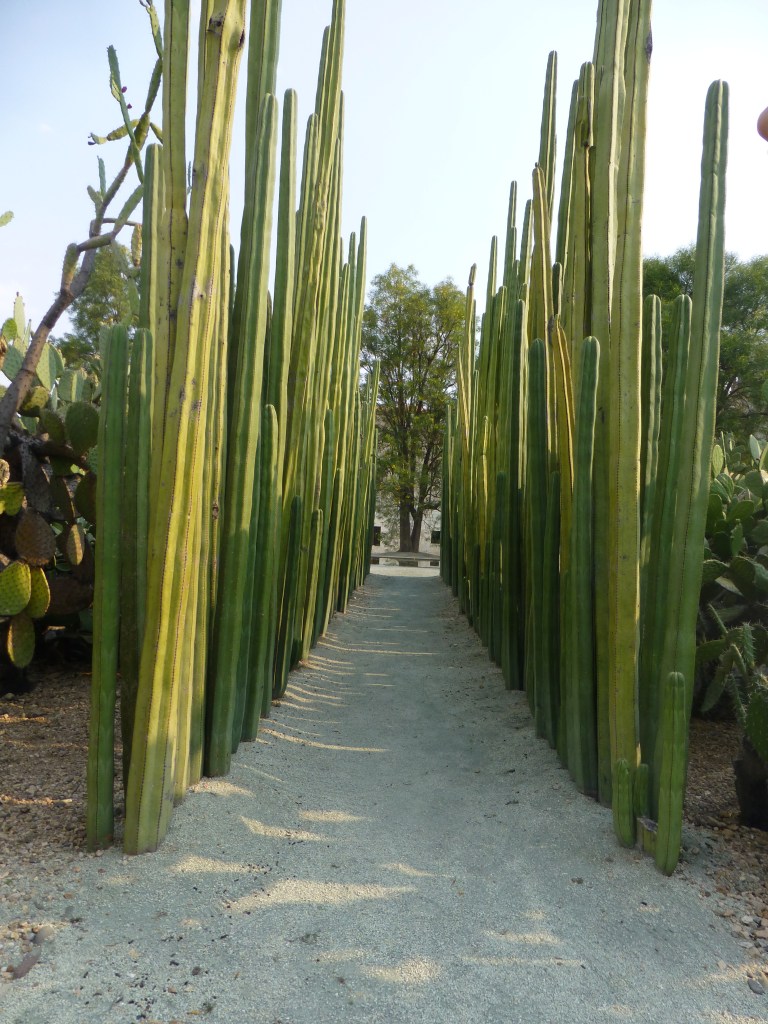
There is much to see in Oaxaca including the cathedral, the Santo Domingo church, the convent/botanic gardens, and the Soledad Church (pictured above).

However, just sitting in the square and watching the locals dance on Tuesday evenings, or the kids play with balloons on Sunday was a treat. We were glad we had 4 nights in Oaxaca to have time to enjoy local culture.
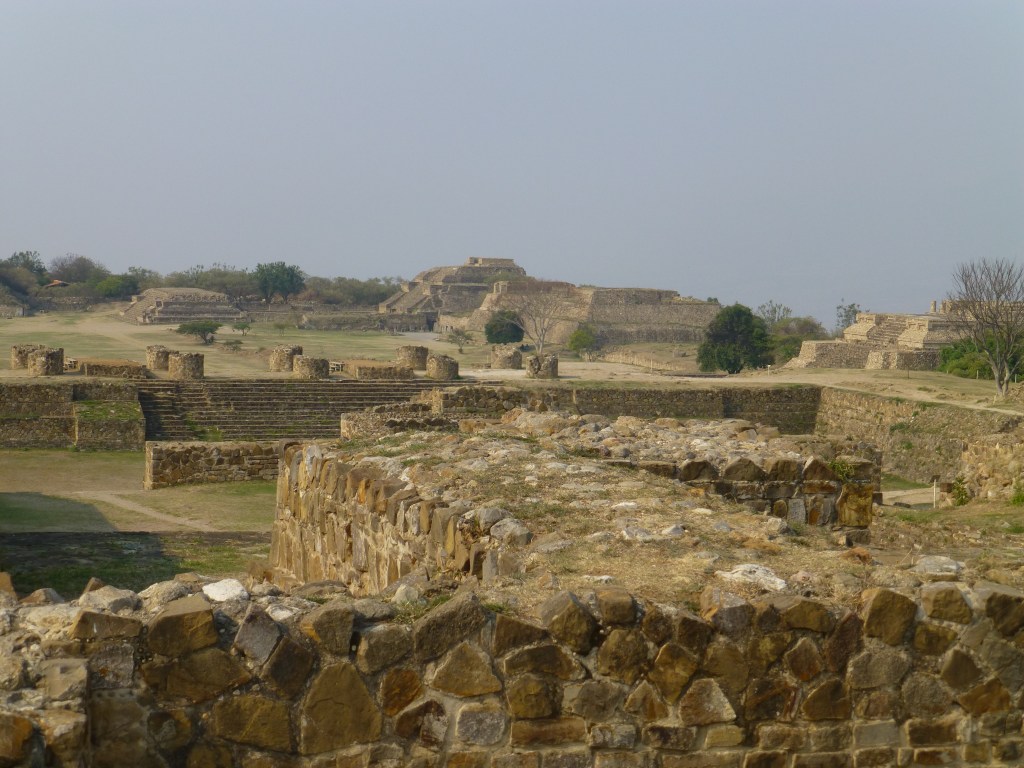
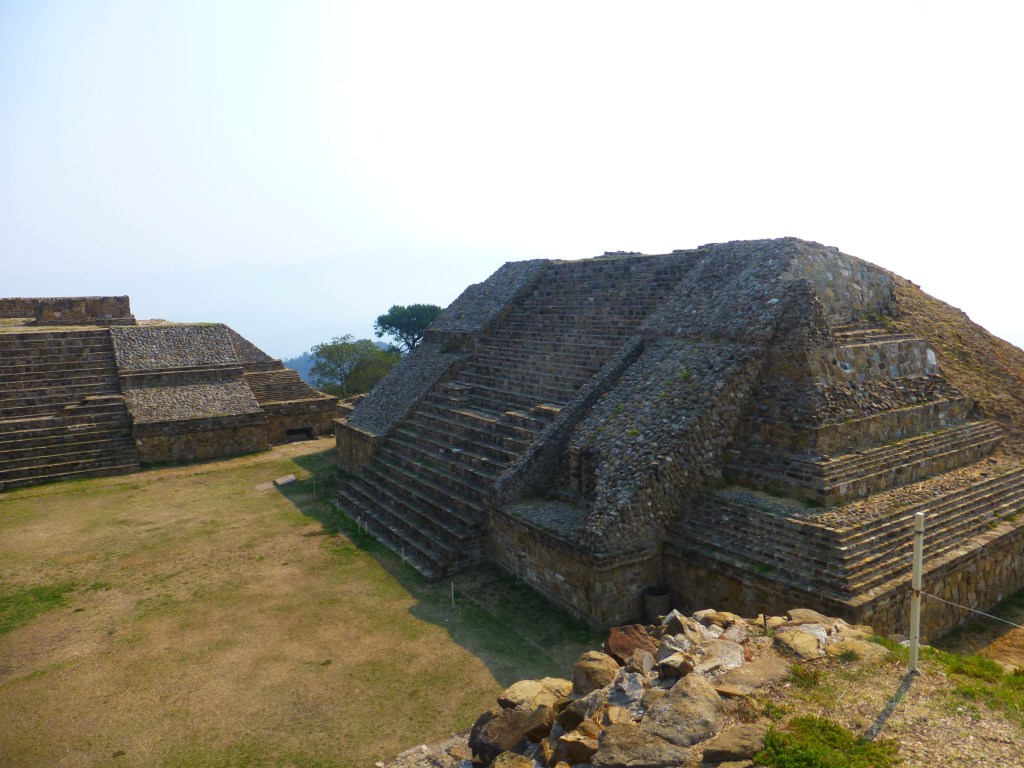
About 10 miles from Oaxaca is the Mt. Alban archaeological site. This is an early site of the Zapotec people with wall carvings dating back to 600 BCE. Mt. Alban has mountain temples rather than pyramids.
Mexico City was a delightful surprise. We spent an entire day on our own in Chapultepec Park, going to The Castle, the zoo, and the botanic gardens. It is a wonderful place.
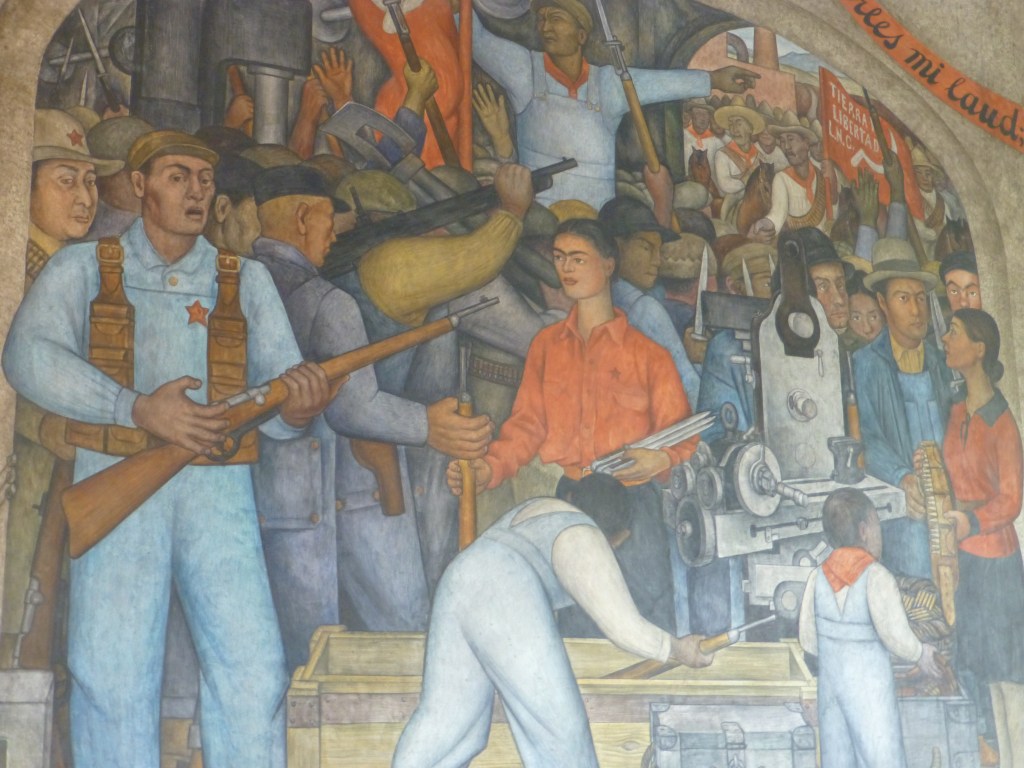
In addition to the standard sights, we visited the Education Building’s 3 floors with Diego Rivera murals. His wife, Freda Kahlo is the woman in orange.
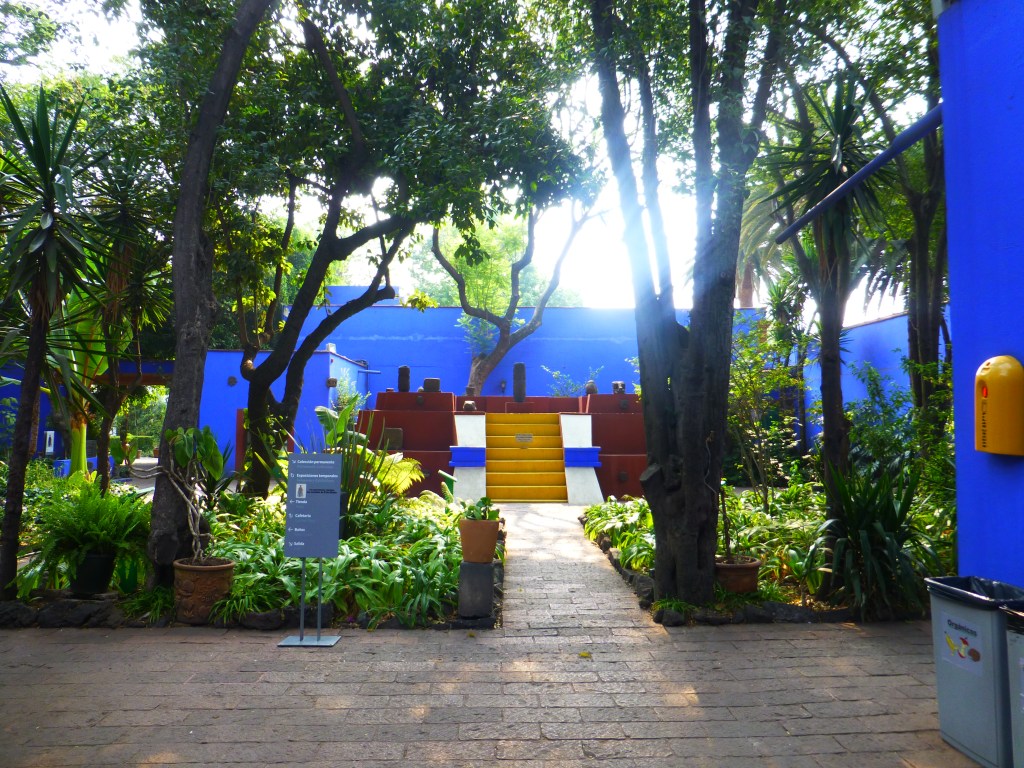
We also went to the Kahlo and Rivera studios and Kahlo’s family home. To the right is Kahlo’s home. She loved this brilliant blue.
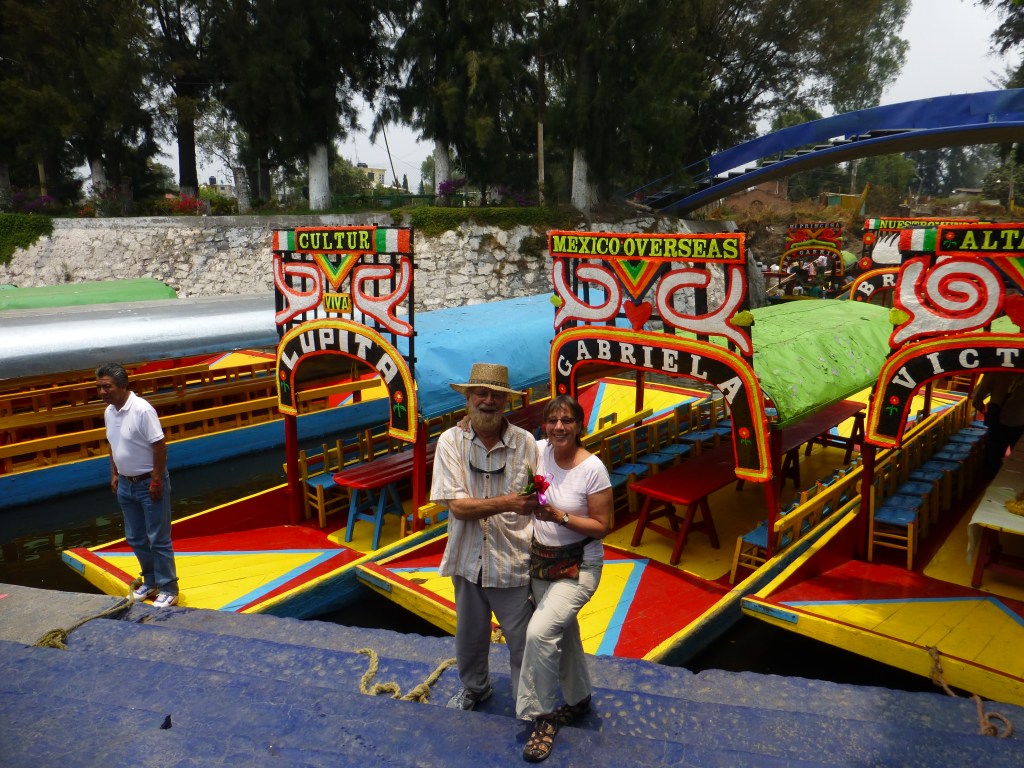
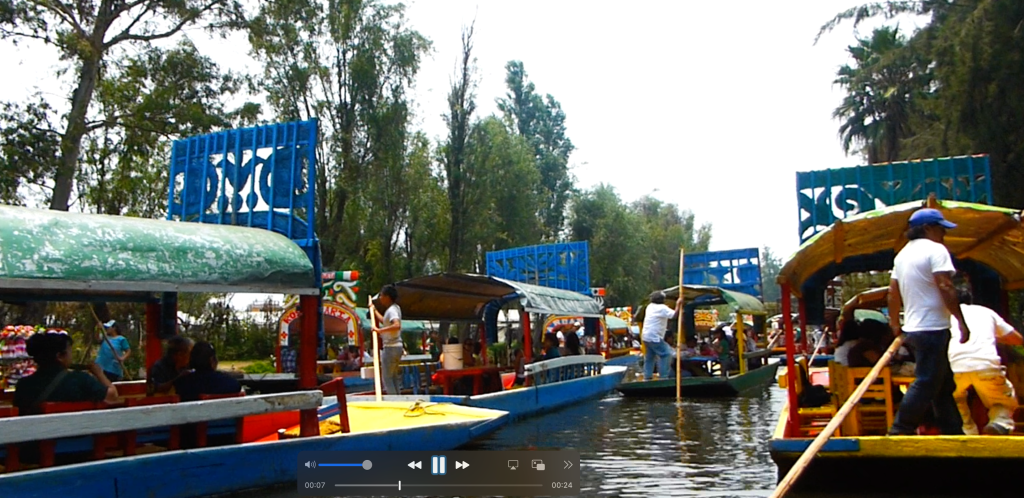
We spent an afternoon in Xochimilco suburb, joining the locals on their Sunday afternoon boat jaunt. The canals were wall-to-wall boats, with food being cooked to order and musicians strolling from boat to boat.
My time in Mexico also included the lovely towns of San Miguel and Queretaro.
Guatemala/Honduras
While in Guatemala, we took a side trip to Copan, Honduras to visit the archaeological site.
Copan, Honduras
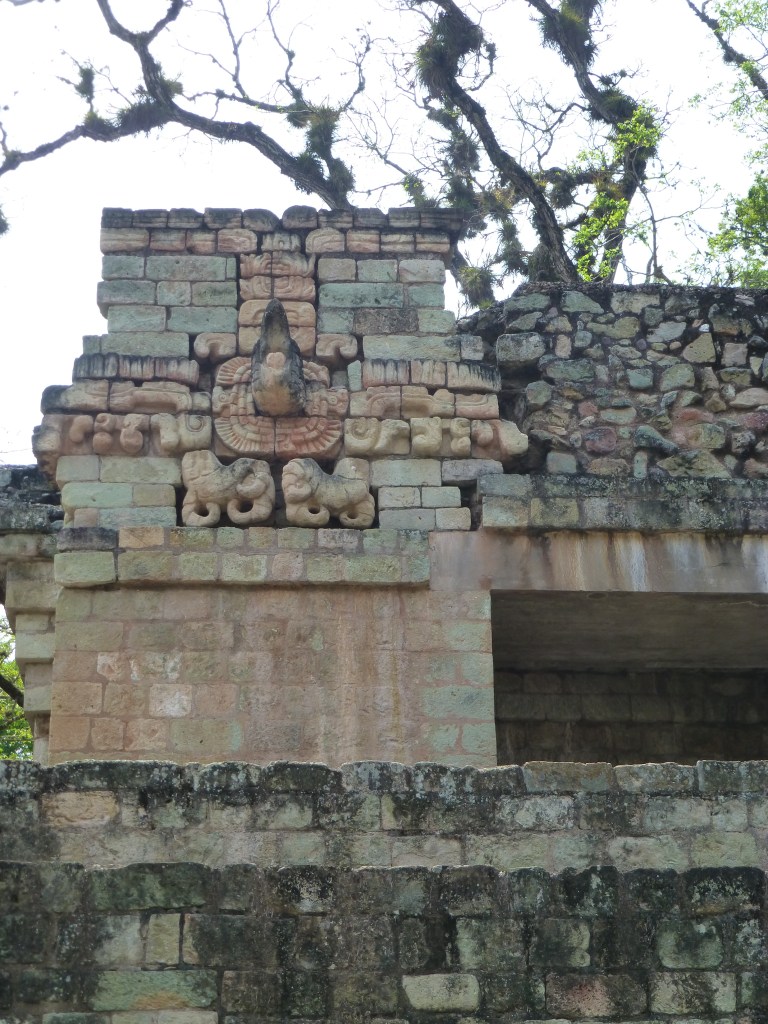
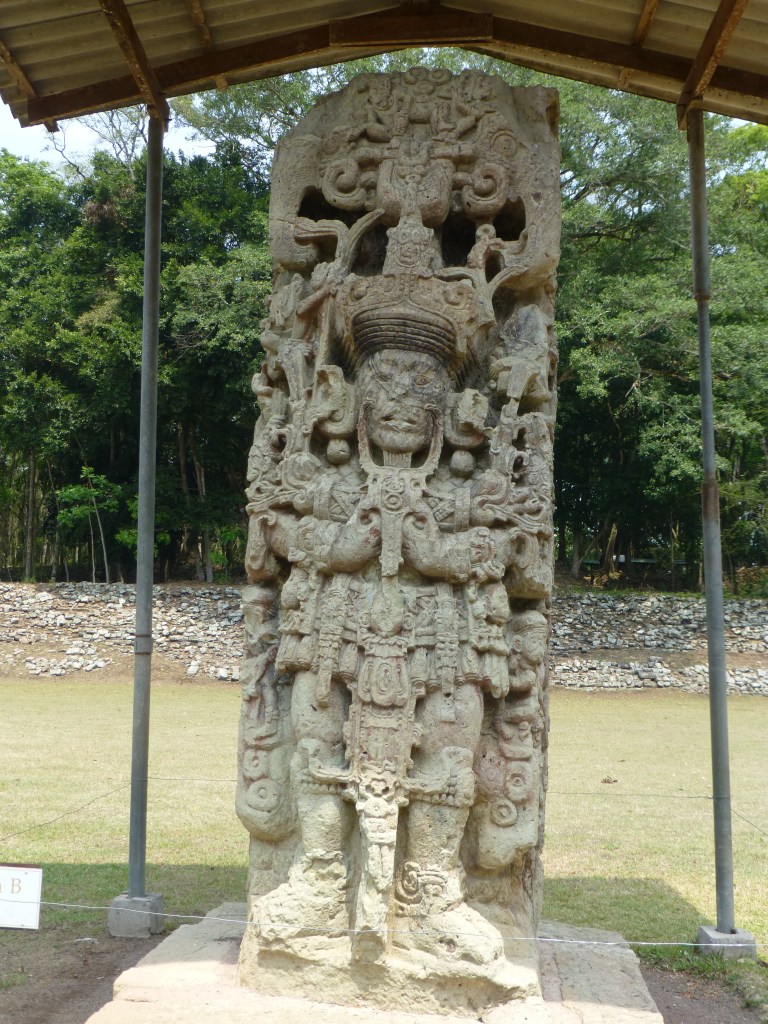
Copan archaeological site is amazing. The area was abandoned about 1000 years ago and the forest took over. There are still 4,500 mounds to excavate. The site has many steles with 3 dimensional carvings that took my breath away. It took two men one and a half years to carve one stele. Some of the stele are in the Copan museum, with replicas at the site. The ones that are original, are now protected with a roof to prevent further erosion.
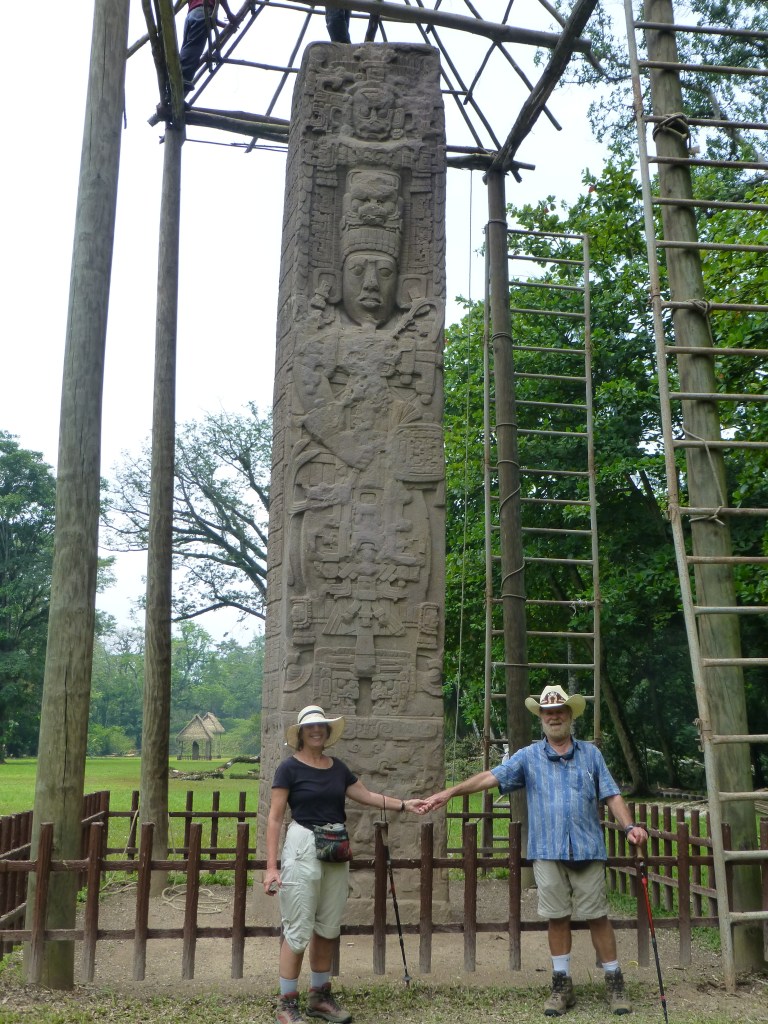
Our guide gave us the choice of driving back to Guatemala City directly or driving an extra two hours in order to stop at another archaeological site, called Quirigua (pictured on the left). Incredible is the only word I can find to describe the Steles we saw there.
Antigua, Guatemala
We spent a few days in Antigua, a UN Heritage site. The city, the old capital, suffered from many earthquakes. The last one, in 1773, was very severe and killed about 1,200 people out of the 60,000 residents. It was almost abandoned, however, some people have retuned and are trying to restore the town.
The cathedral is just a shell and has been repaired just enough to be safe for tourists to visit.
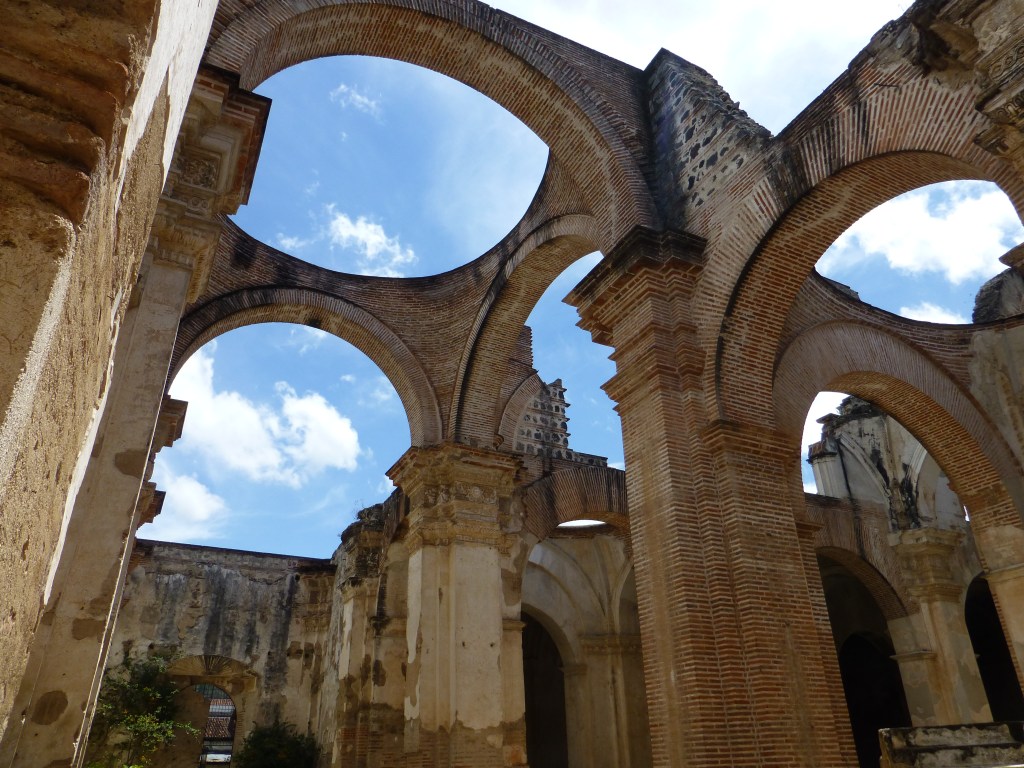
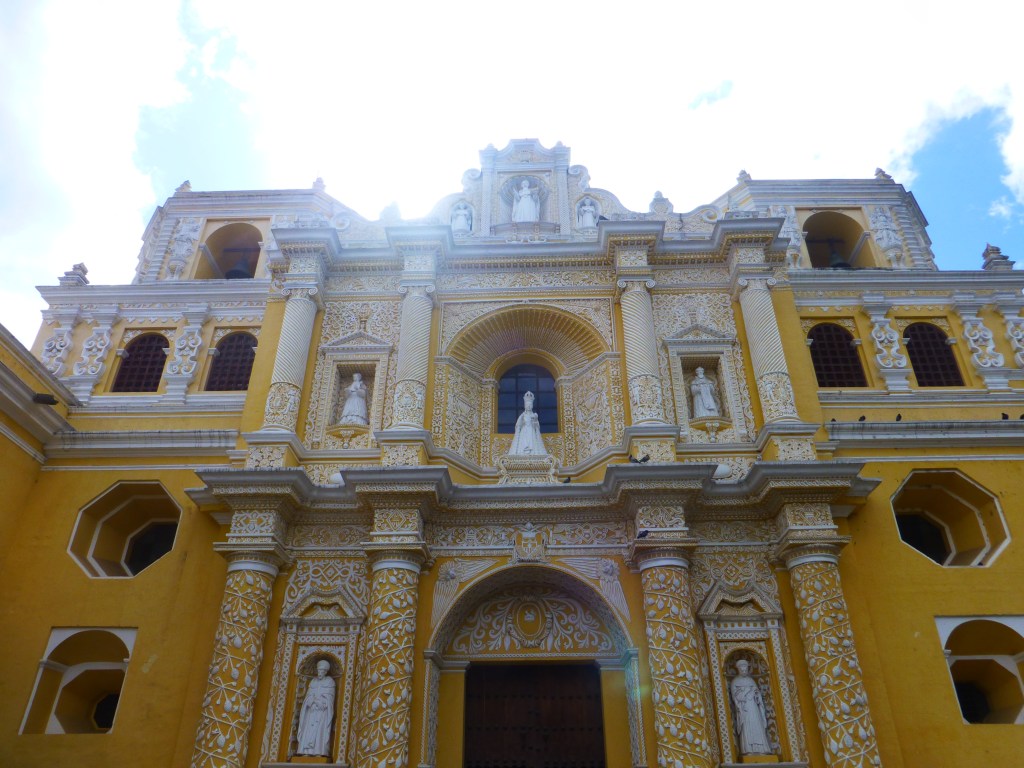
The beautiful Merced Church, originally built in 1548, was remodeled in 1767 to withstand earthquakes. It survived. It is a lovely Baroque style church with stucco/plaster decorations. The designs are a mix of Mayan and Catholic symbols.
Chichicastenango, Guatemala
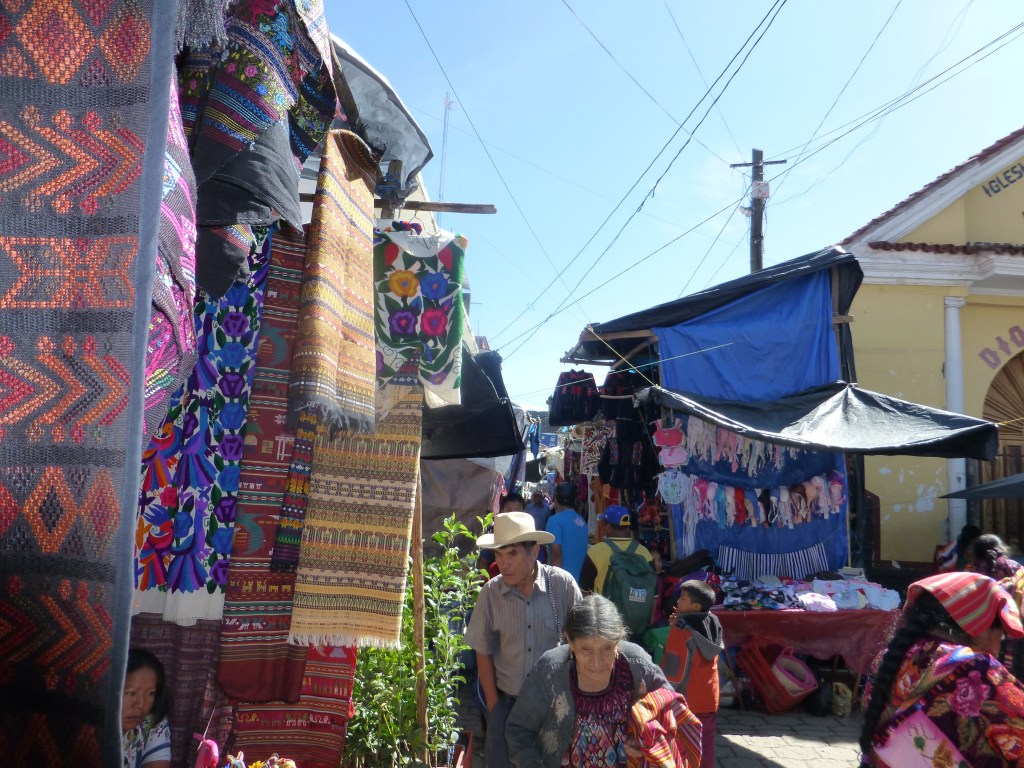
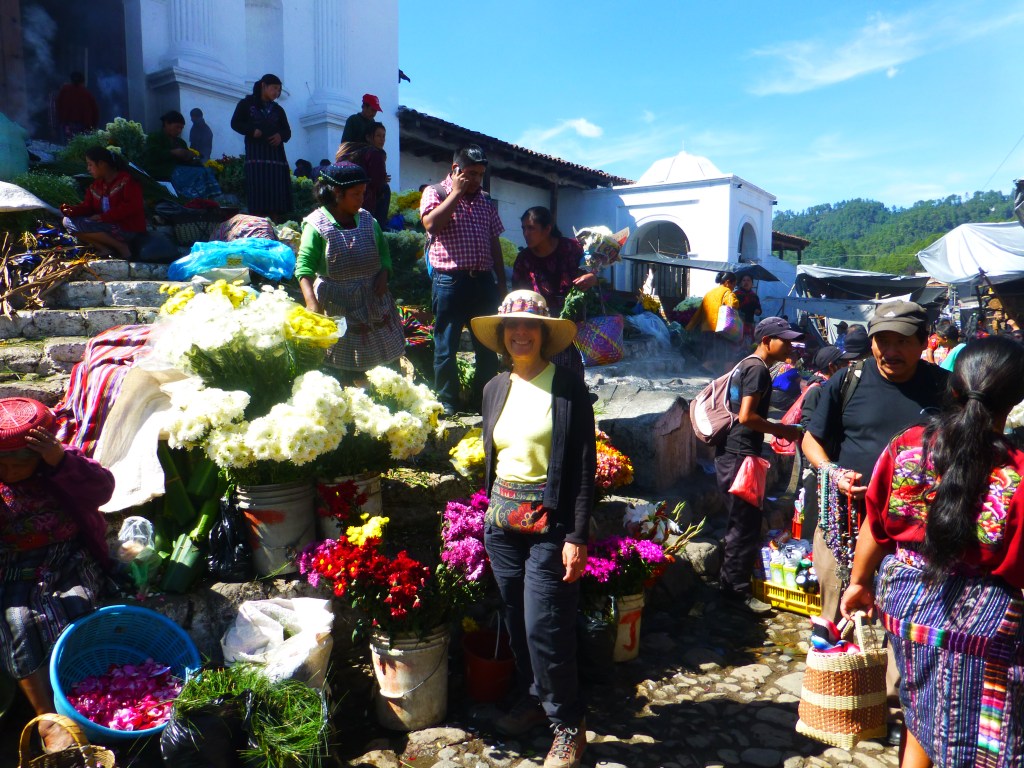
Chichicastenango’s attraction is the twice a week market. Merchants and buyers from near and far villages come to buy and sell. They walk or pile into the back of pick-up trucks with fresh food, live chickens and textiles. The market is fascinating not only for the variety of items for sale, but for the indigenous Mayans. The women and some of the men wore their native Mayan dress, which changes by locale. Mayans make up at least 70% of Guatemala’s population.
But even more exciting was learning about the Mayan rituals by actually watching them being performed. The locals are Catholic, but they also keep their ancient rituals.
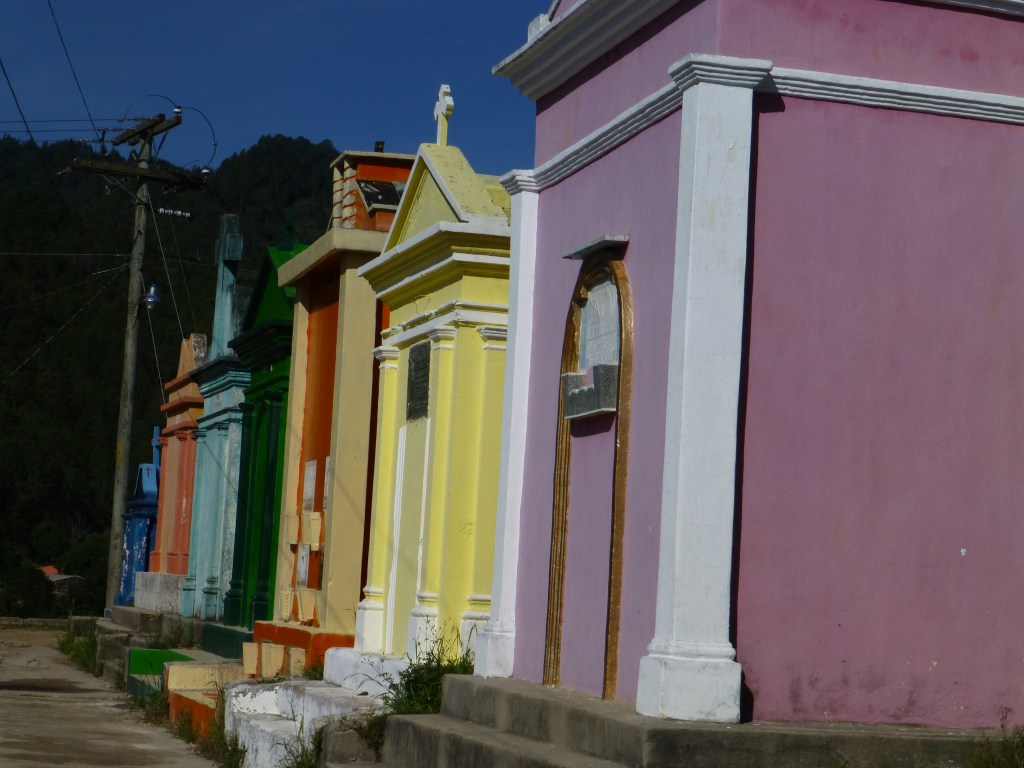
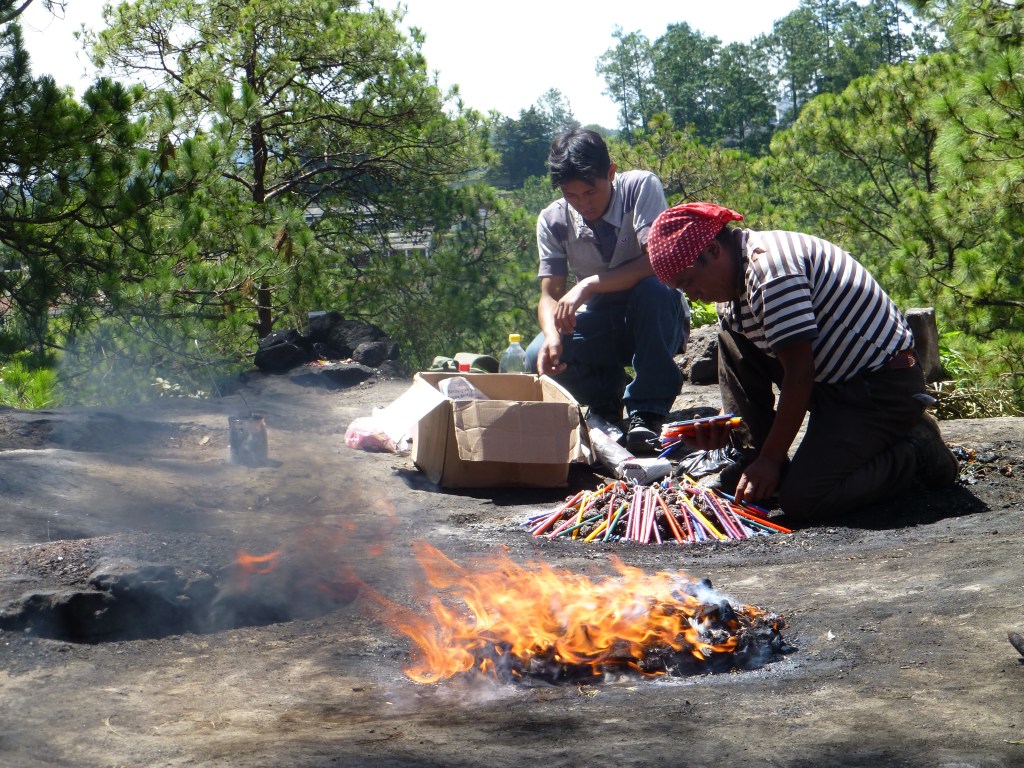
We saw these rituals performed in the church in town (on special altars), in the very colorful cemetery, by the graves of their ancestors, and up on the holy hill. The rituals involve burning long tapered candles, pouring various liquids on them and the use of incense in prayer.
Most tourists just come to Chichicastenango for the day but we spent two nights: arriving the afternoon before the market, to see the transformation from a quiet town to a hob of activity the following morning. We were also able to stay to see the rituals and the breakdown of the market.
Tikal, Guatemala
Tikal is a HUGE site, located in the jungle. At its height, it had 100,000 people living in the area. There are temples, palaces and noblemen dwellings. The wood houses of the common men did not survive.
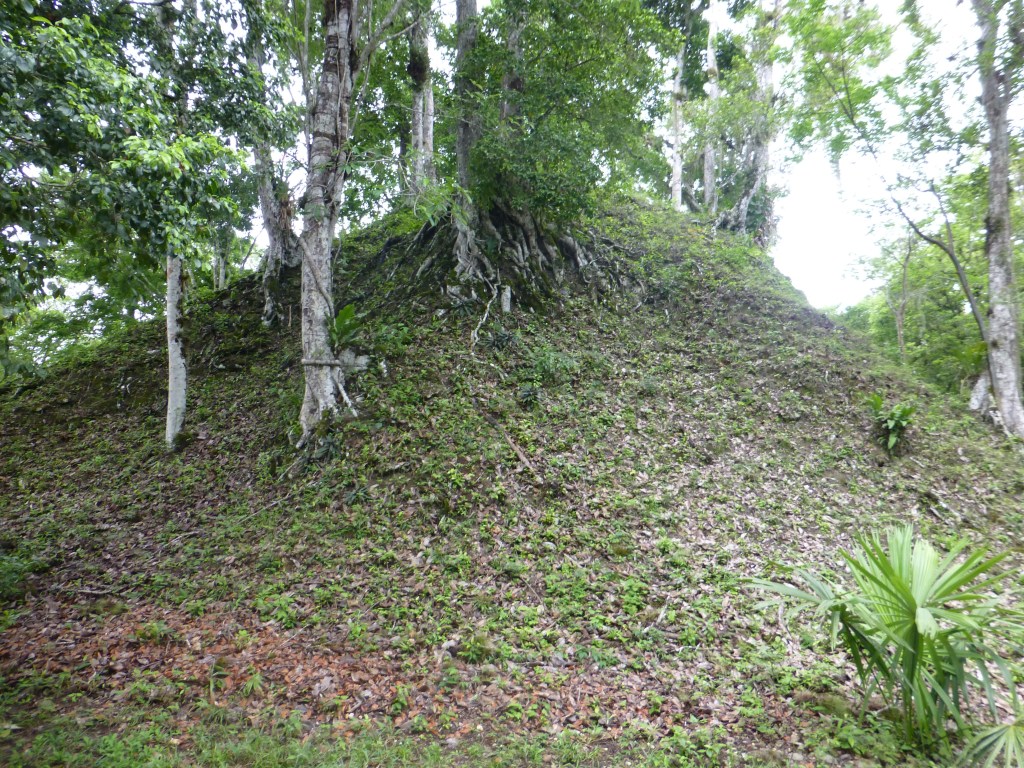
Much of the site is still uncovered as you can see in the picture to the left.

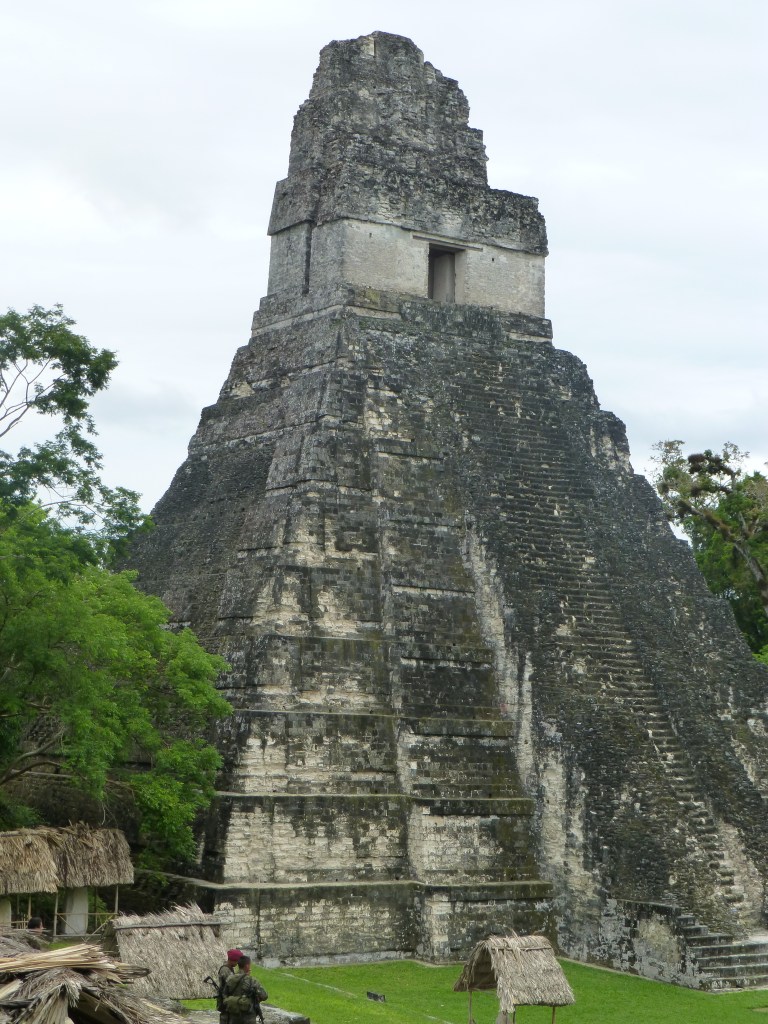
We were able to climb pyramid #4, which is the tallest is Meso America. From the top we could see the other pyramids jutting out of the jungle. In addition to the magnificent temples, we saw spider monkeys and heard the howler monkeys.
The adventures were over and we were so happy that we were able to experience all of these wonderful cultures and places.
Final Comments:
- Learning about other cultures is enriching. I have a deeper respect and appreciation for the Mayans.
- The temples were amazing.
- The rituals were very interesting to watch and to learn about.
- Having extra time in each location, allowed us to have time at the sites without the crowds.
- The extra time also gave us a richer experience and the ability to have some down time.
- The variety and the richness of the countries in Central America is amazing.
 Nili's Adventure