
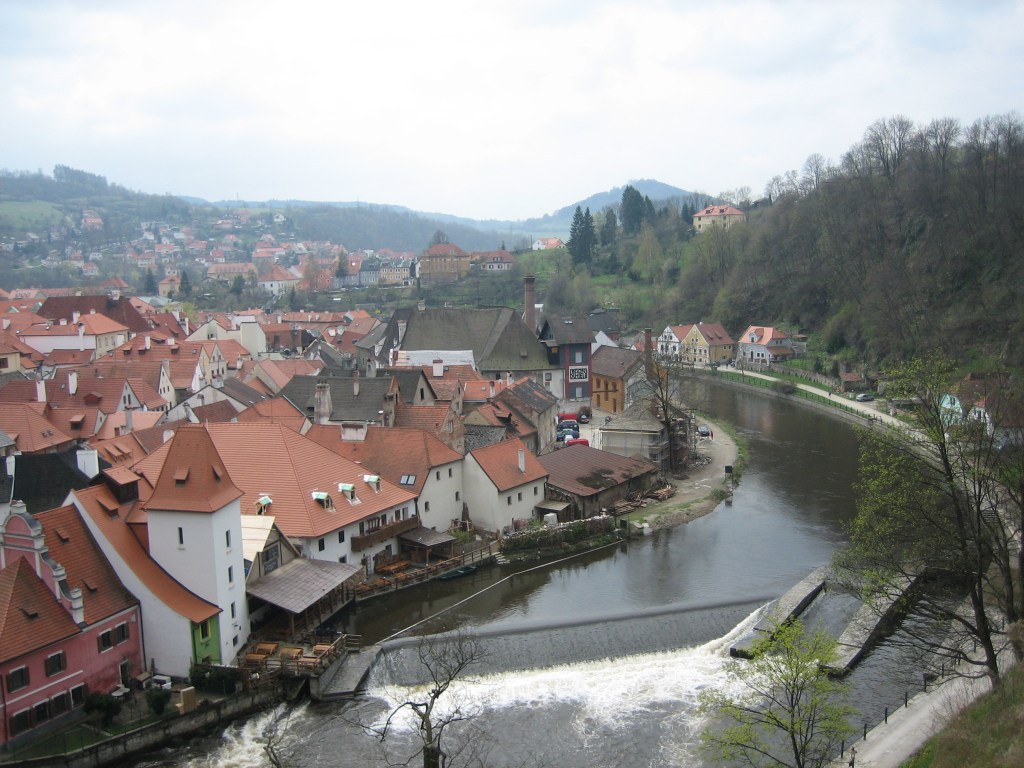
It was time to head back to Europe, this time visiting four Central European cities: Krakow, Prague, Budapest and Vienna. These four cities have interesting histories and amazing architecture. They have similarities, but also are different enough to make visiting all four very satisfying. We went on our own, rather than on a tour and consequently had a wonderful adventure, a Passover Seder in Krakow. See below.
Krakow, Poland
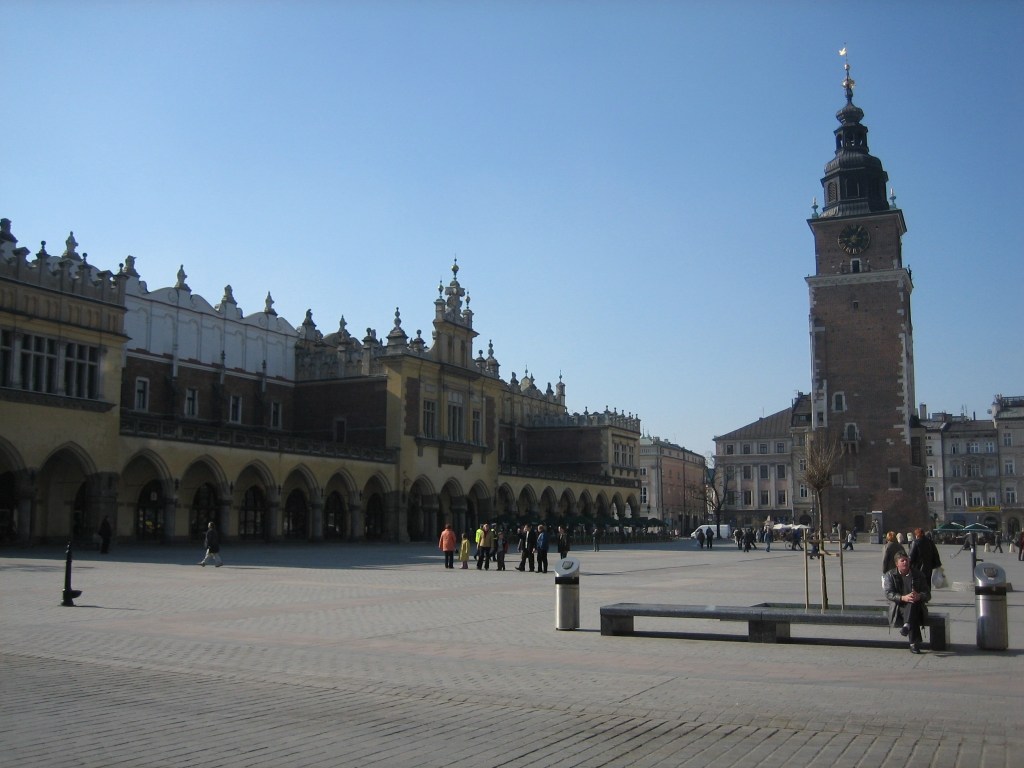
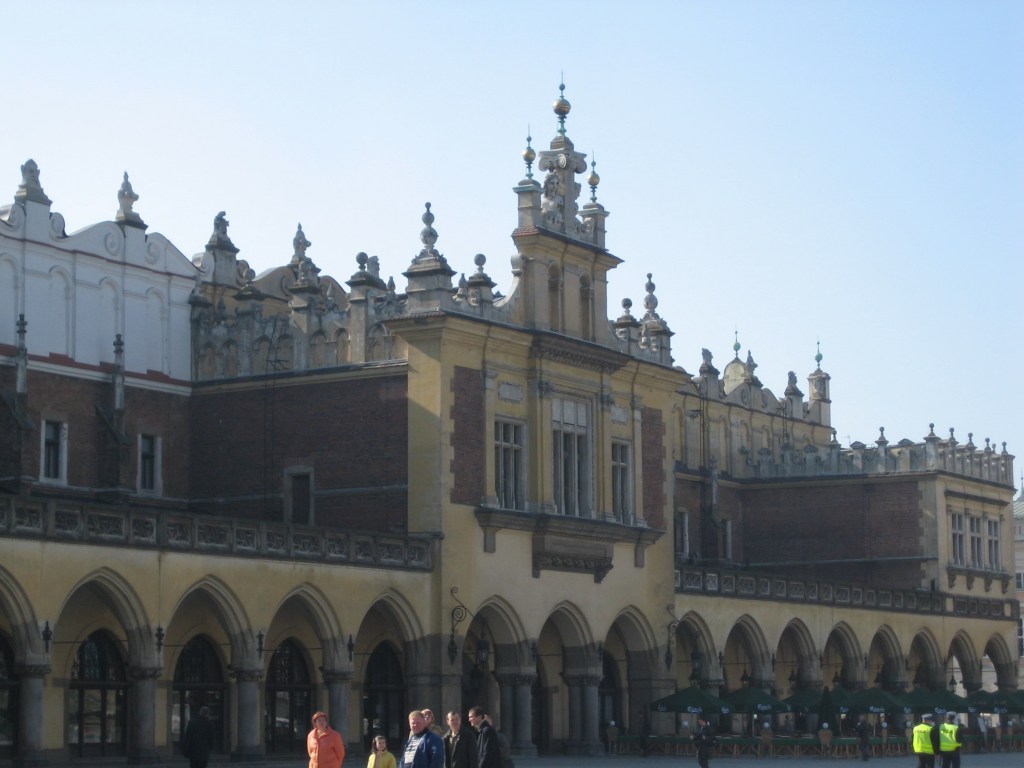
Krakow is a small city with a lovely market square in the center of town. There are shops and restaurants all around the square. It is a lively place, full of street musicians and fun. The focus of the square is St. Mary’s Basilica, built in the 14th century.
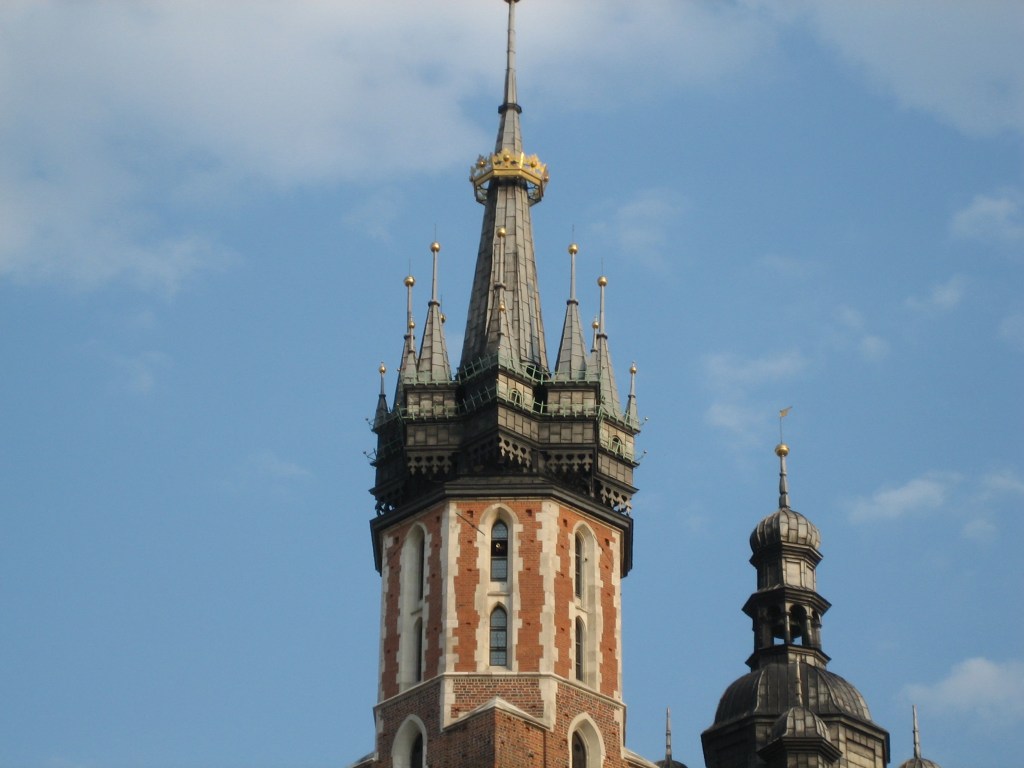
The church tower was a look out point against invaders. A trumpeter would play a particular tune when an invasion was imminent. During the Mongols invasion, the trumpeter was killed mid song. Therefore, until now, on the hour, the same tune is played but ends abruptly at the point when the trumpeter was killed by the Mongols.
While we were visiting St. Mary Basilica, a bride walked down the aisle with her father.
As in most of Europe, the Jews of Krakow lived in an area separate from the Christians referred to as the Ghetto. It was near the town square. Before WWII, Krakow had a thriving Jewish population of about 60,000. Two of the synagogues are open to the public. However with only about 100 Jews living in Krakow today, the synagogues are for tourists and are maintained by charging an entrance fee. The main temple was for the wealthy families and is extremely beautiful. The other temple was much simpler and was for the working man.
Today the ghetto area is very lively with many restaurants, serving Jewish and Middle Eastern food and Klezmer music entertainment. Unfortunately, I could not get a reservation, therefore I can’t comment on the quality of either.
A Passover Seder in Krakow
Timing is everything. We were in Krakow during Passover. While we were walking in the Jewish ghetto area, Jerry saw a flyer for a Passover seder the following evening, at the Galicia Jewish Museum. We immediately registered, and it was a once in a life time experience.
This was the first community Seder attempted and it was obvious. About 40 of us sat at four tables. Our table had an American from New Jersey who lives in Krakow and owns a book store; a couple from Haifa who decided not to stay in Israel for their Seder because they were tired of family squabbles; the museum director, Chris; a Polish Christian couple, and a Jewish female Brit who is the polish woman’s English teacher. The Polish woman had spent a year in Israel and the Israeli woman from Haifa recognized her. They were delighted to see each other. The lively conversation at our table was mostly in English with some Hebrew (no Polish – I don’t know any Polish).
Now for the Seder: The reading of the Haggadah (the ritual book) alternated between Polish and Hebrew, with explanations in Polish and English. The museum provided two Haggadot: A Polish/Hebrew and an English/Hebrew. The English/Hebrew one was photocopied from a book and the copy machine collated the pages in reverse order. Until we figured this, we were all terribly lost. We rearranged the Haggadah and things made much more sense.
When it came time for the ritual hand washing (the leader of the Seder usually does it for the whole group), we all went to wash our hands. Two sinks and 40 people took quite a long time.
Then came the ritual foods. The “greens” were potatoes (traditionally Polish because real greens are not available yet in April). The horseradish, freshly ground, was nice and sharp. The traditional (normal) Seder dinner consists of an egg in salt water, matza ball soup, then a main course (brisket, potatoes and vegetables). Dessert is usually a flourless cake. This meal started of with the egg followed up by a potato and egg soup, which was delicious. This was followed by a desert of banana with chocolate sauce. I have no idea what happened to the main part of the meal. Maybe they just couldn’t get it together for so many people or whoever was supposed to bring it, didn’t. None of us mentioned anything, but we all laughed when the desert came with no dinner.
We finished off with the songs. It was a fabulous evening – we met wonderful people and enjoyed the conversation. It was a unique Seder experience.
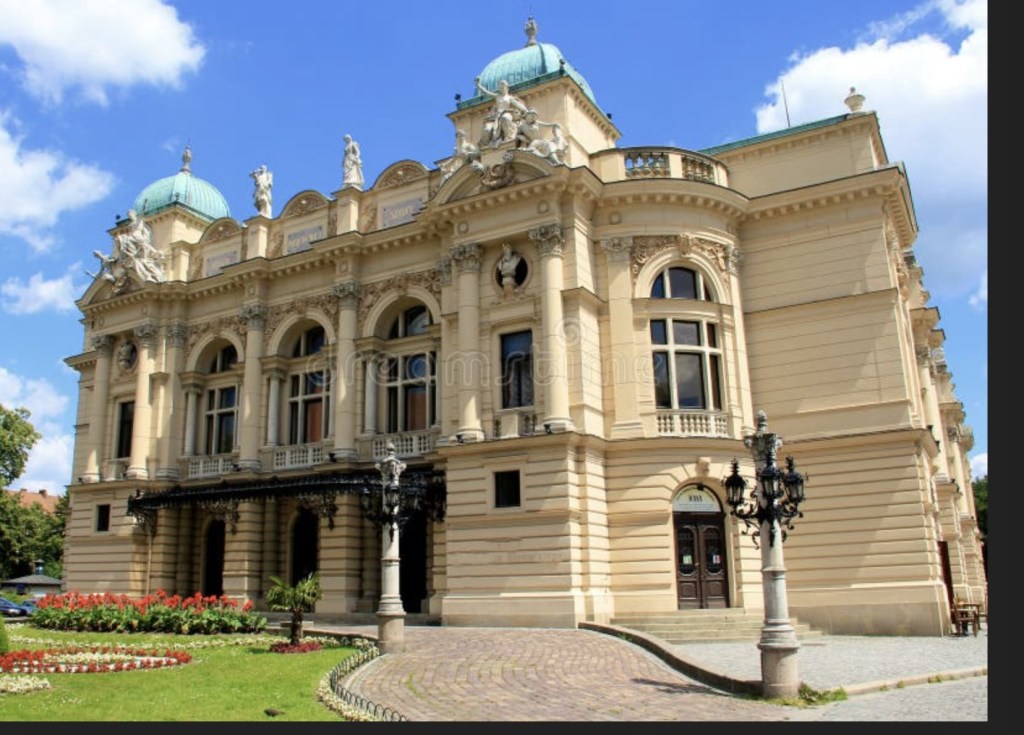
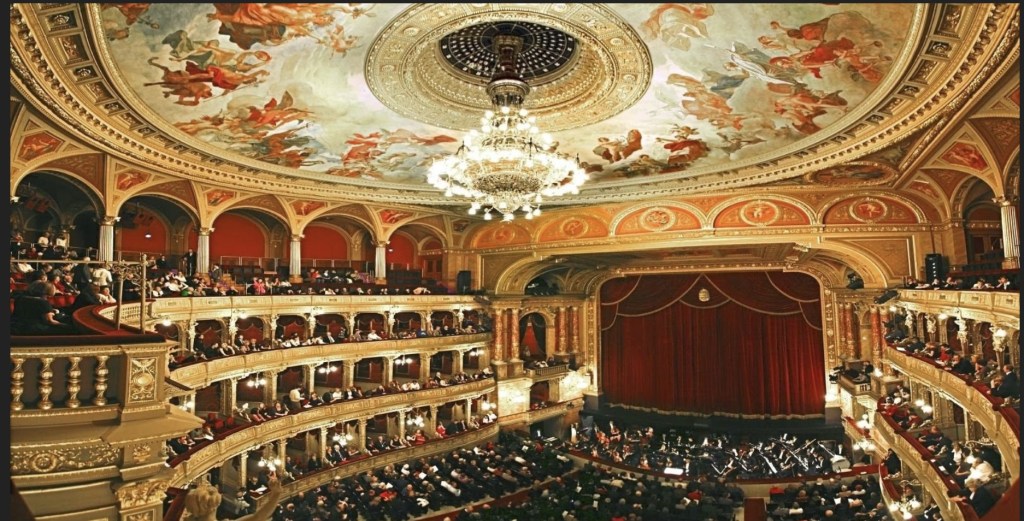
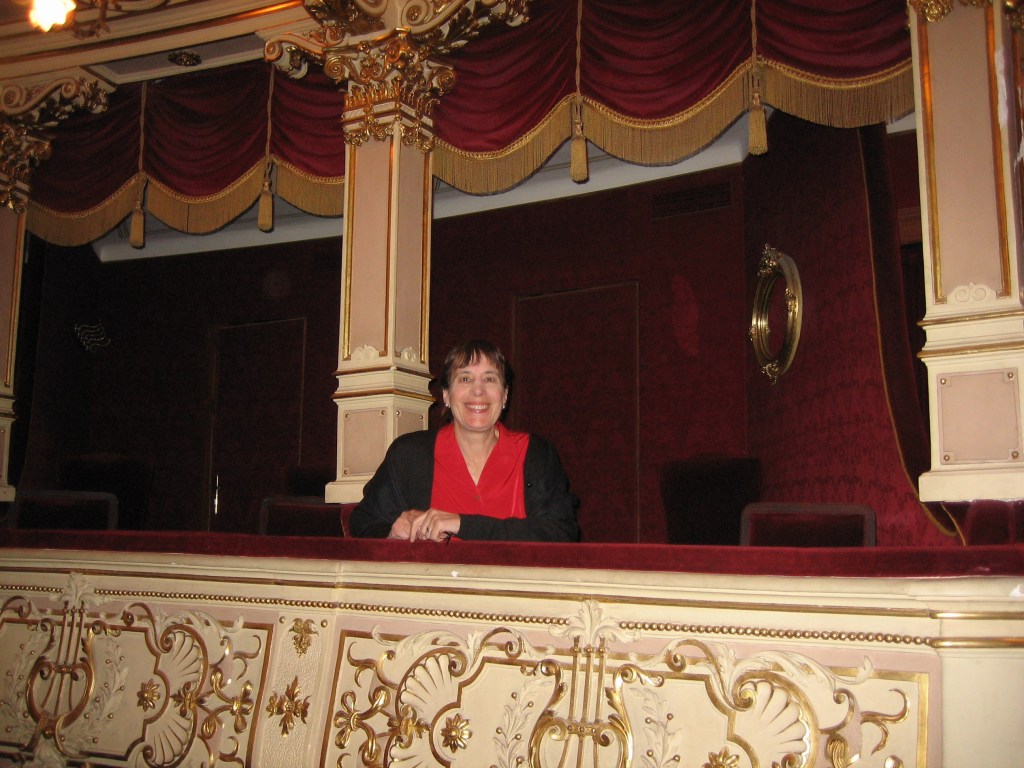
Another fun experience in Krakow was going to the opera. The opera house, a small replica of the Paris Opera House, is absolutely delicious (looks like a wedding cake). The house is tiny – 700 seats. The curtain is a beautiful painting. The chandelier and ceilings are magnificent. On the second floor there is a large room for people to congregate during the intermission. It is sumptuous with red velvet chairs and a lovely chandelier. They allow the audience to bring champagne back to the seats and they serve the drinks in real glasses. The only drawback to the house was the bathroom situation. There is one stall on each level for each sex. The lines were ridiculous. We sat in a box on the first box level. These fabulous seats cost about $17 each.
The opera was Barber of Seville. Luckily, I know the opera well because the Super Titles were in Polish. The opera was performed extremely well. The roles were all cast perfectly. The acting, was excellent and the level of singing was impressive. It is such a fun opera that I had a smile on my face the whole time. The audience was excellent and really appreciative.
Krakow exceeded expectations.
Prague
In my opinion Prague is the MOST beautiful city I have seen. Both the architecture and the art on the buildings are magnificent. The river Vltava dissects Prague: one side of the river is the “old town” and the other has the castle and St. Vitus Cathedral.
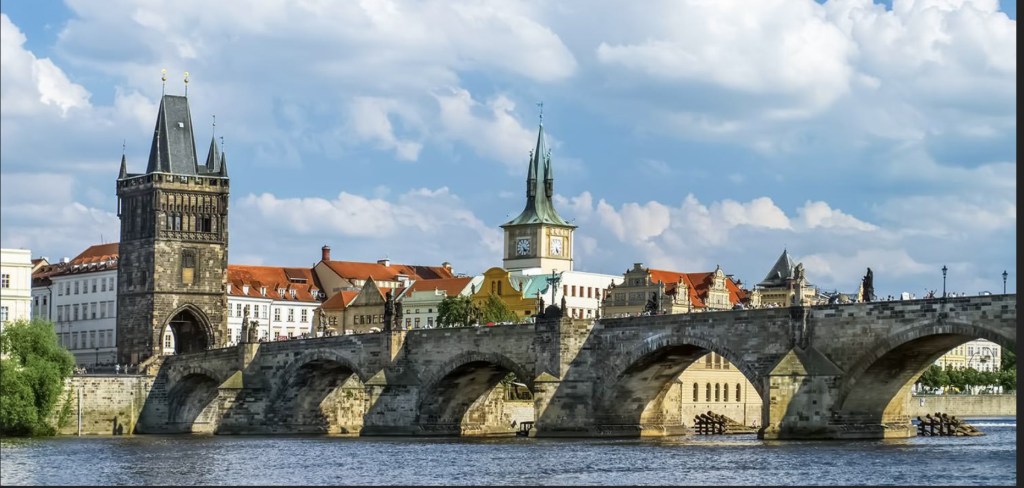
There are a number of bridges that cross the Vltava, but the oldest bridge (built in 1350 CE), the Charles Bridge, is for pedestrians only. Some 20 statues of Saints line the bridge. Some of the statues are replicas in order to preserve the originals. Vendors and performers also line the bridge.
The Jewish Quarter was extremely interesting. Prague had a good size Jewish population before WWII and many synagogues. However, now, only one synagogue, the New/Old Synagogue is still being used for worship. The rest of the synagogues are museums.
Let’s start with the New/Old: why the name? There was a synagogue in Prague built in the 12th century. When this new synagogue was built in the 13th century it was the new synagogue.
But today the really old one is gone so this is the oldest one in Prague, hence the name. It is very small and made of stone. I sat there for quite a while to get the feel of 700 years of worship in it. I would have loved to go to services there but unfortunately, I was not there on a Friday night.
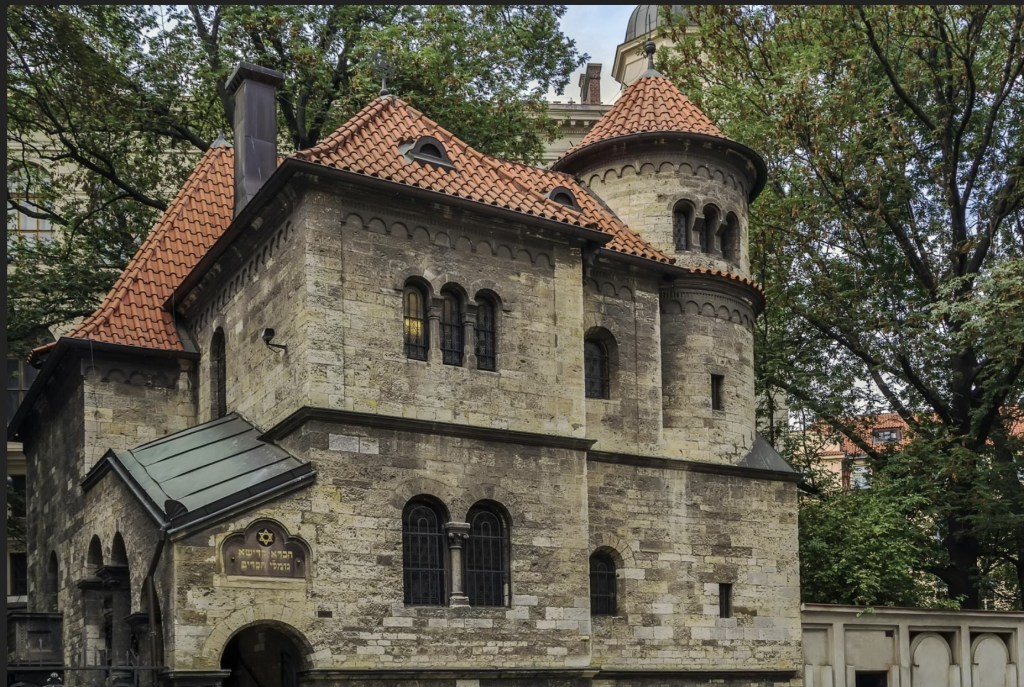
The Pinkas Synagogue from the early 1500s has its walls covered with the names of the Czech and Slovak Jews who perished by Hitler. It was very moving to read the names. The Maisel Synagogue was built a few years later, in the late 1500s. It has lovely banners of the old Jewish guilds such as the silver smiths.
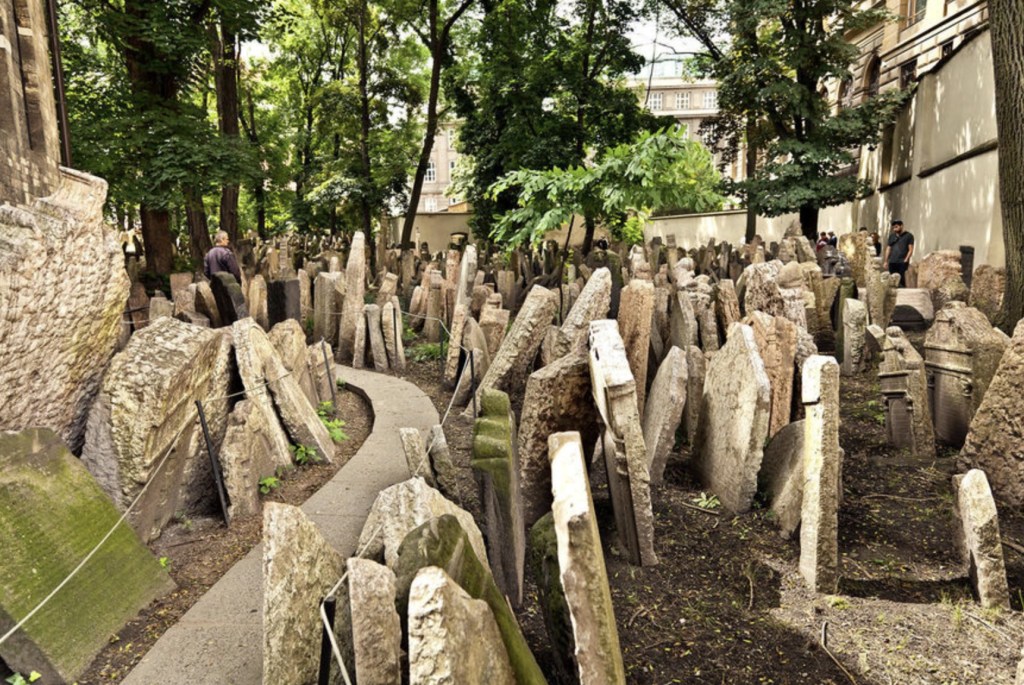
The old cemetery is totally full of head stones because the cemetery could not expand and after 700 years, people had to be buried one over the other.
Prague is an Art Nuovo city. The buildings are covered with these beautiful paintings (picture on the right). Even the post office has beautiful murals along its walls. The Czech painter, Mucho, is best known for Art Nuovo. Prague has a delightful museum showing his art.
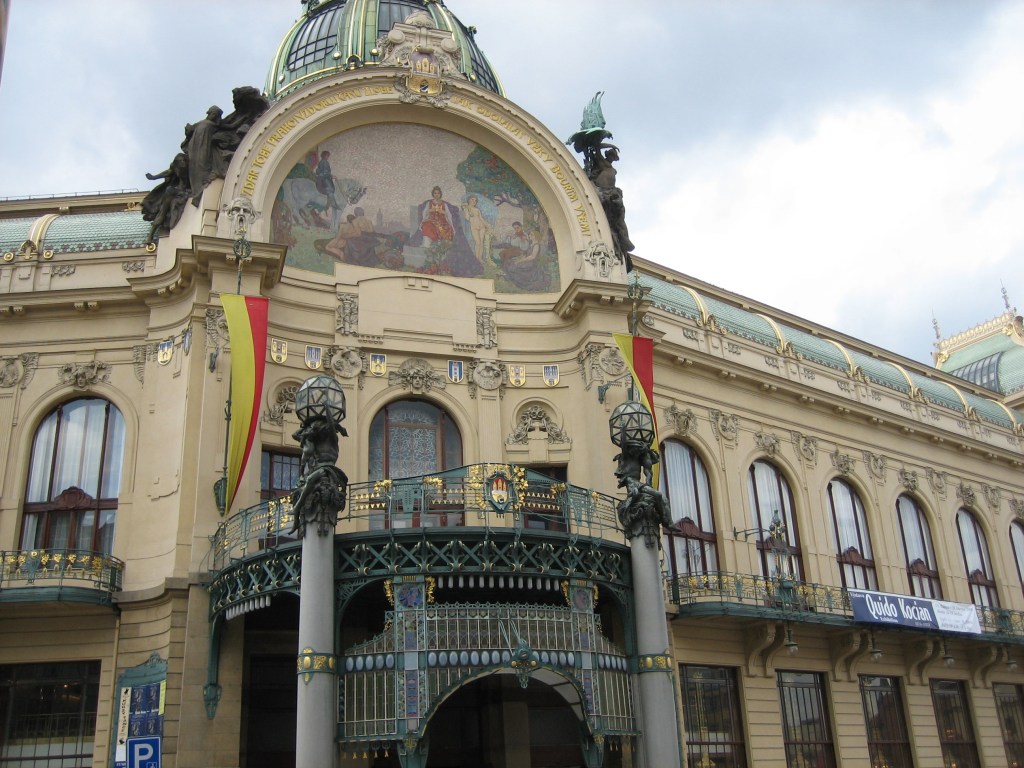
Prague is also a musical city. There are multiple classical concerts each day and I tried to go to many of them. Most of the concerts include Mozart because he lived in Prague for a bit and composed there. The Prague opera house is also modeled after the Paris Opera house (like the one in Krakow). It is a bit larger than Krakow’s house, and just as beautiful. This time I heard Carmen.
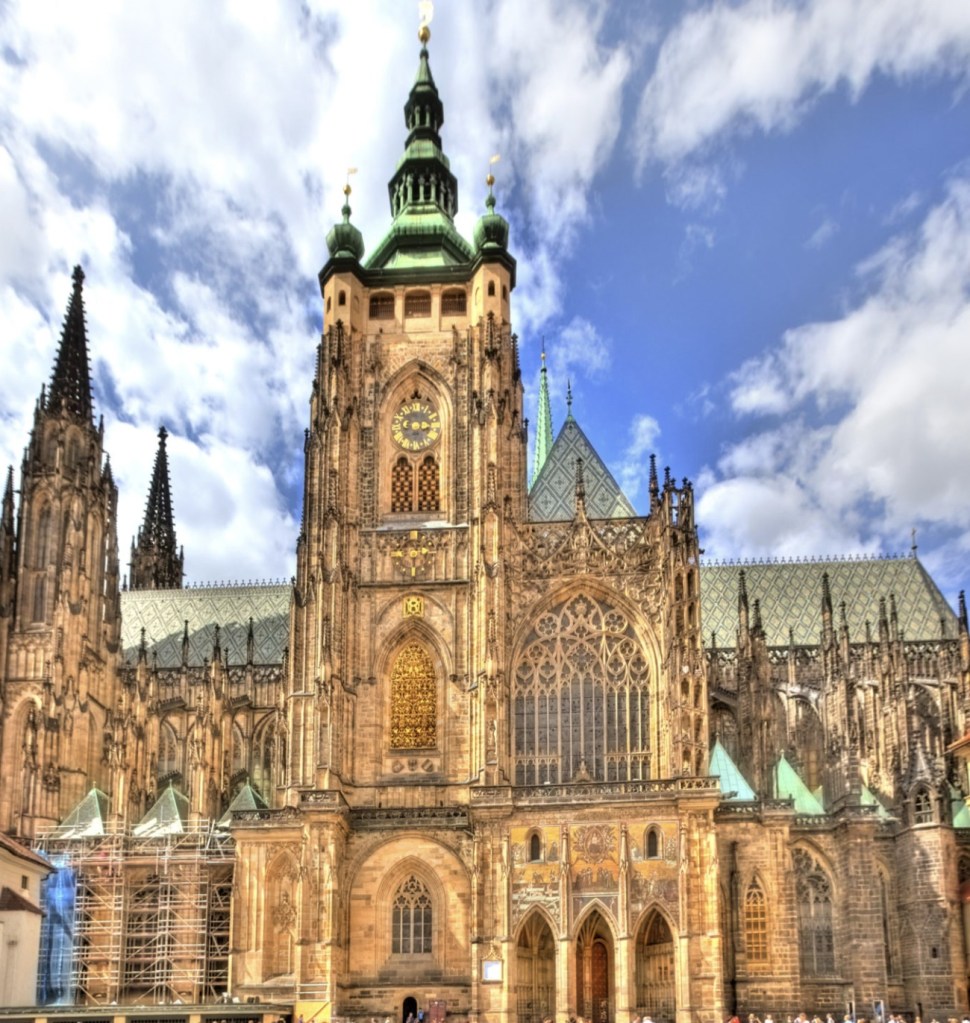
St. Vitus Cathedral was started in 1344 and finally finished in 1929. It has a beautiful stained-glass window created by Mucho. But most fun was climbing up the tower (280 steps) for a wonderful view of the city. The castle is lovely but unfurnished.
Ceske Krumlov
We took a day trip to Ceske Krumlov, which has the second largest castle in Czech Republic. The castle, founded in 1250 CE, is fully furnished in two different periods – 200 years apart.
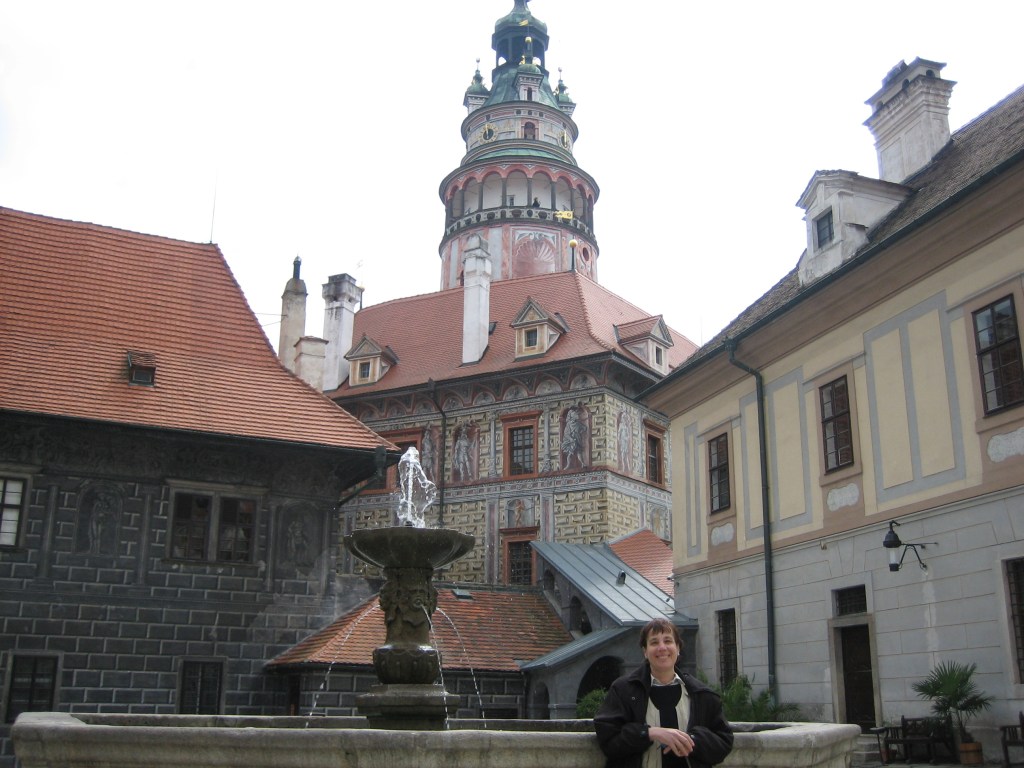
The first owners of the castle were the Rozembergs. Their coat of arms was a red 5 petal rose. They were very powerful and lived in this town from 1302 to 1602.
The town fell into disrepair especially during the communist years. It is being restored and at the time of my visit, about 80% of the buildings had been restored. The buildings have distinct geometric renaissance decorations on them. The tower is magnificent.
 Nili's Adventure
It is such a pleasure to read your trip adventures.It makes me want to go to those cities again. Love you, Elisheva. Sent from my Galaxy
LikeLike
Makes me want to return as well.
LikeLike