
Windstar Cruise: Greek Islands and Kusadasi, Turkey
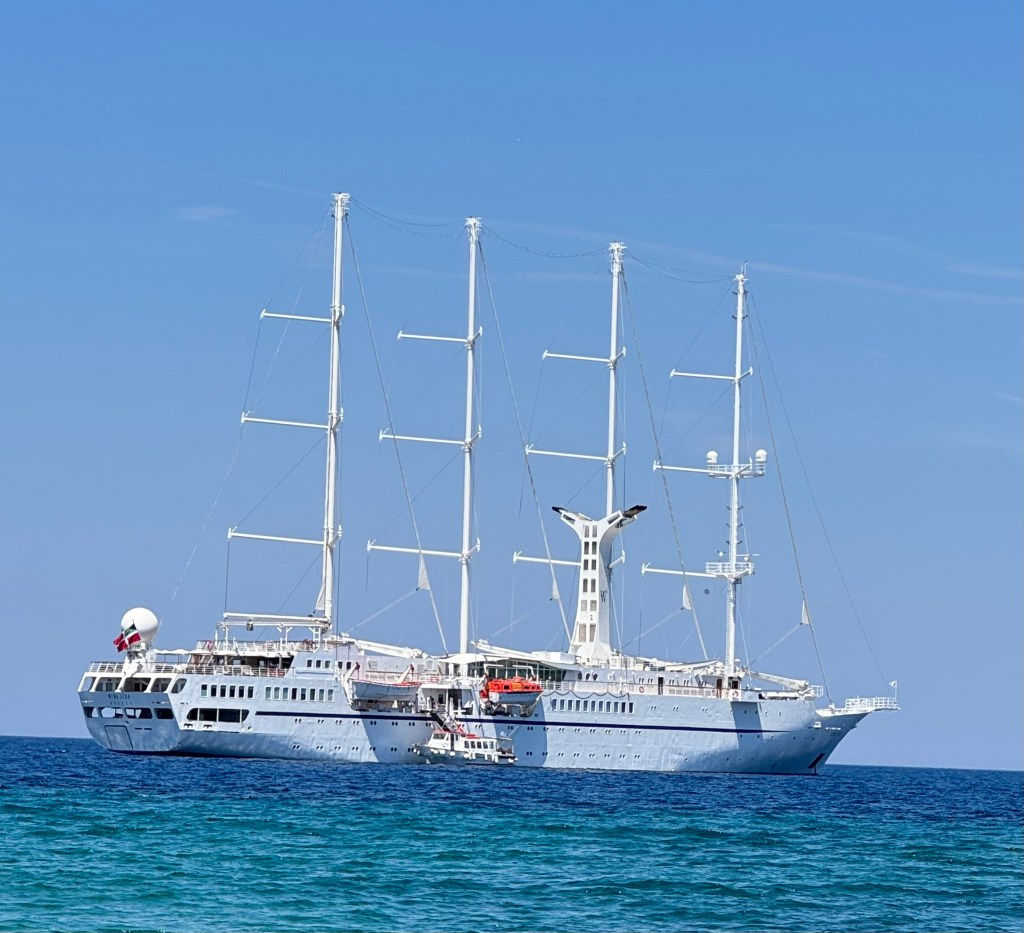
We spent a week on the Wind Star visiting locations in Greece as well as Kusadasi/Ephesus in Turkey. We signed up for tours in Ephesus and Santorini. In the other four ports, we walked on our own. The boat anchored at all the ports except in Kusadasi.
Mykonos
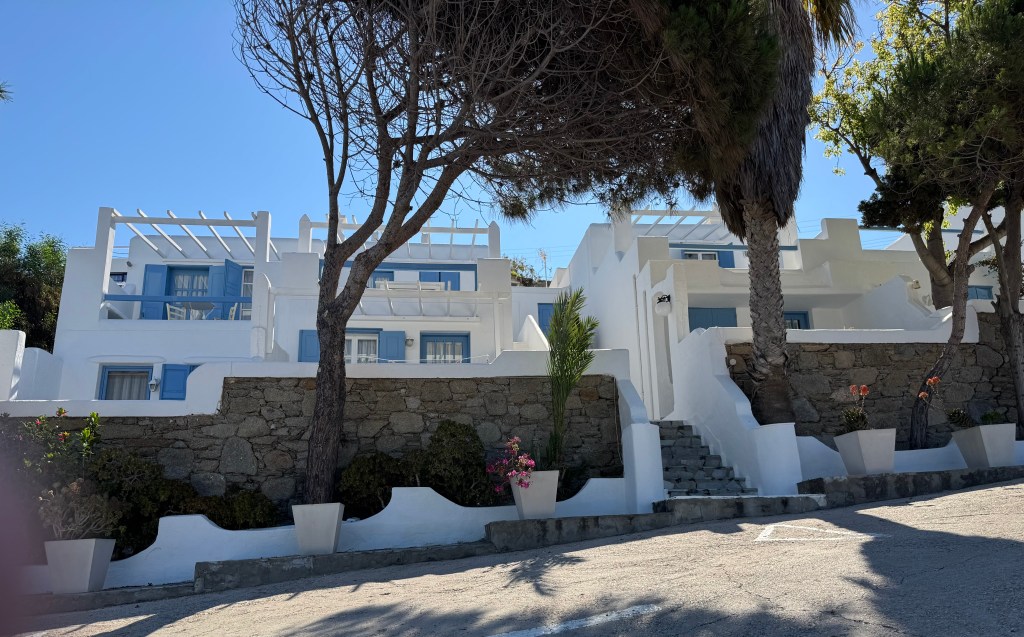
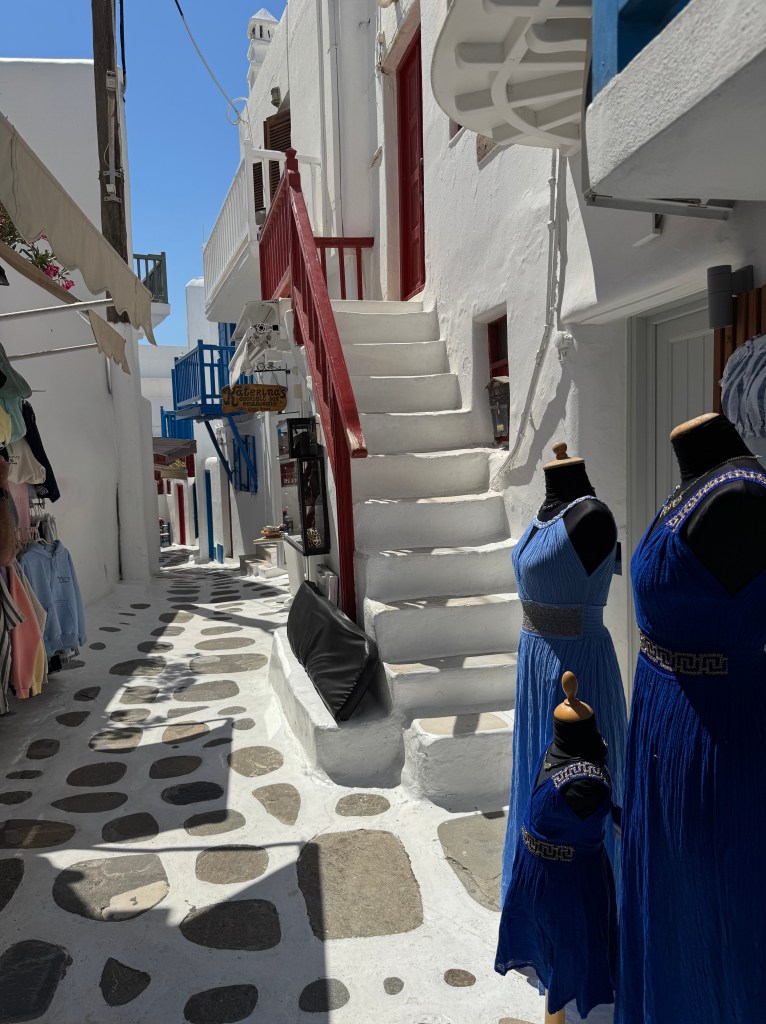
Like many Greek islands, Mykonos is picture perfect. The houses are all white washed and the doors and windows are painted blue (with some small variations). It was a delight.
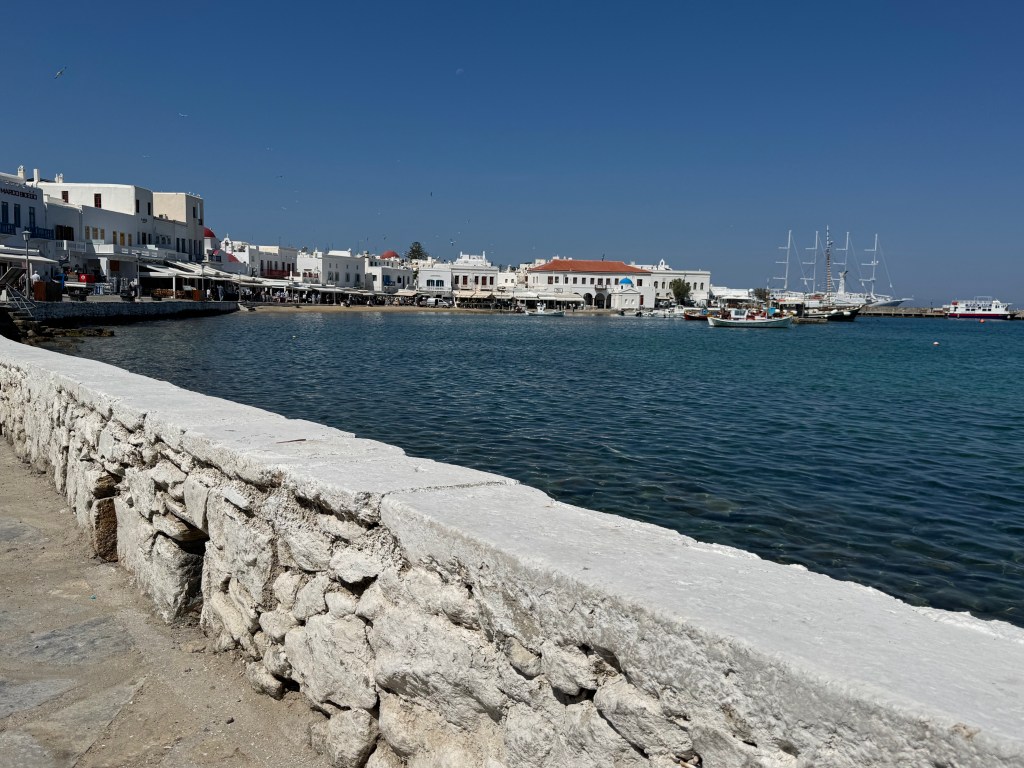
The walk along the water was lovely with many shops and restaurants.
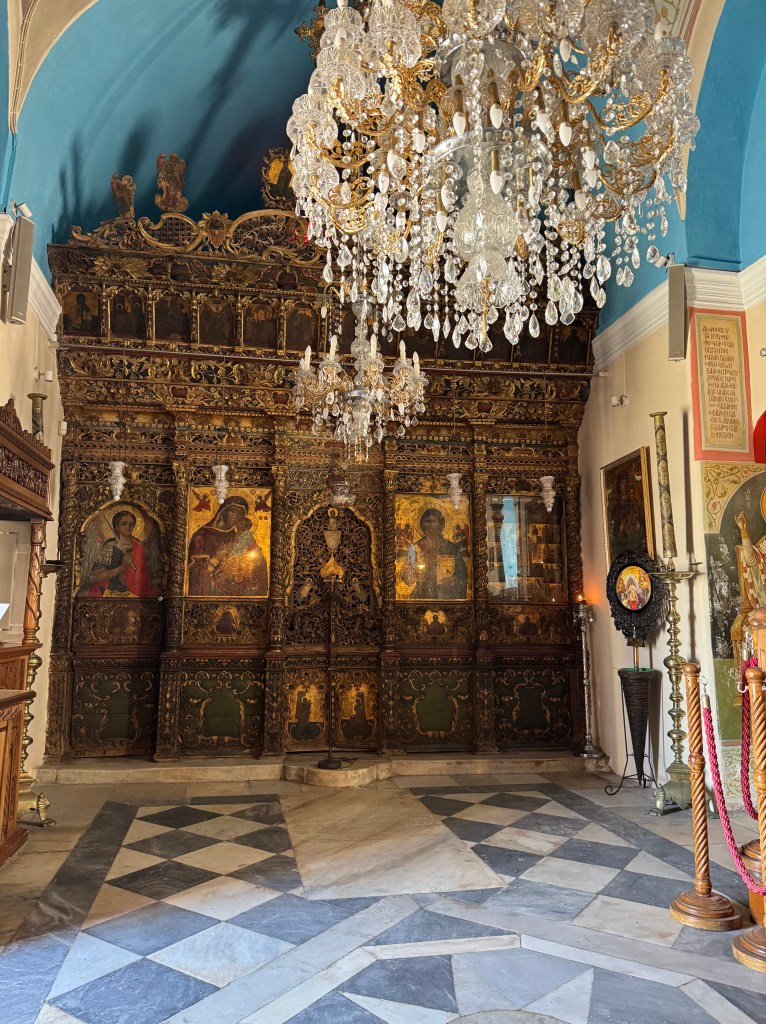
We came to an old Orthodox church with beautiful icons. This time I could take photos.
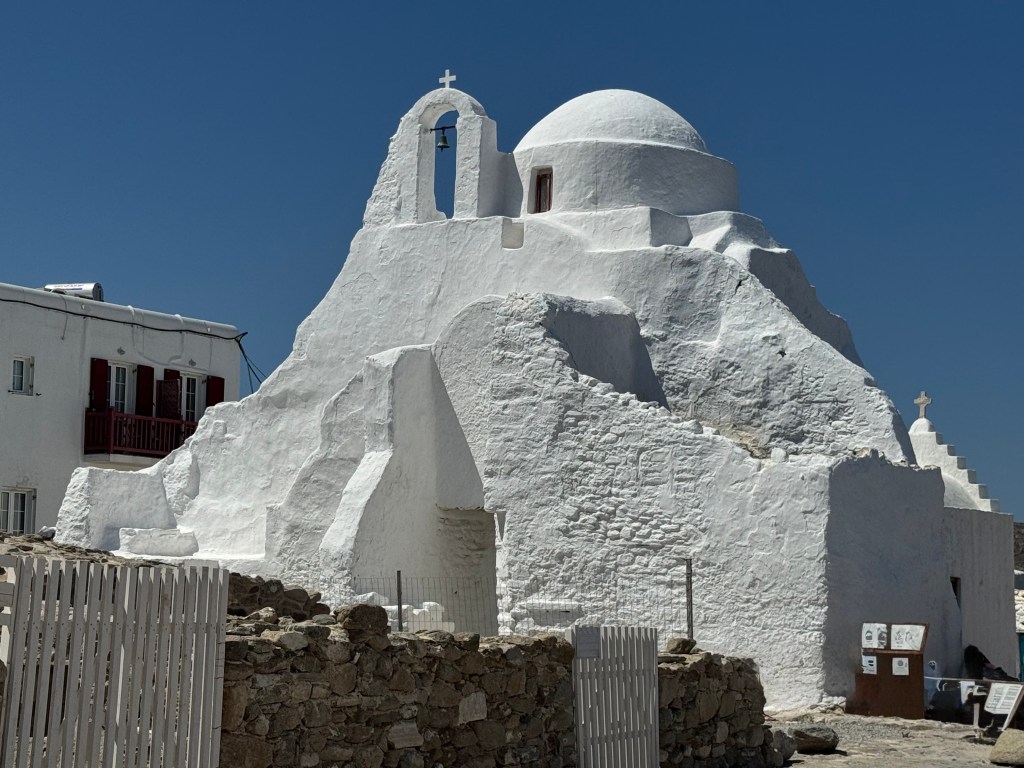
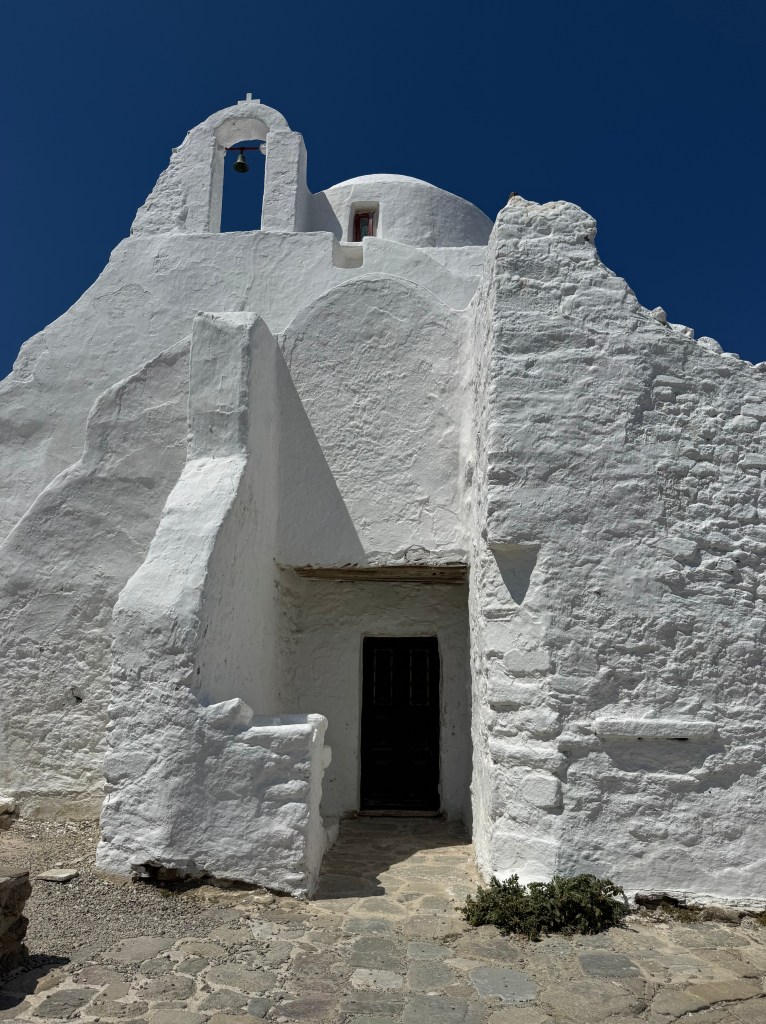
We continued and saw the ruins of an old palace and the intact church next to it. The church was locked but was very photogenic.
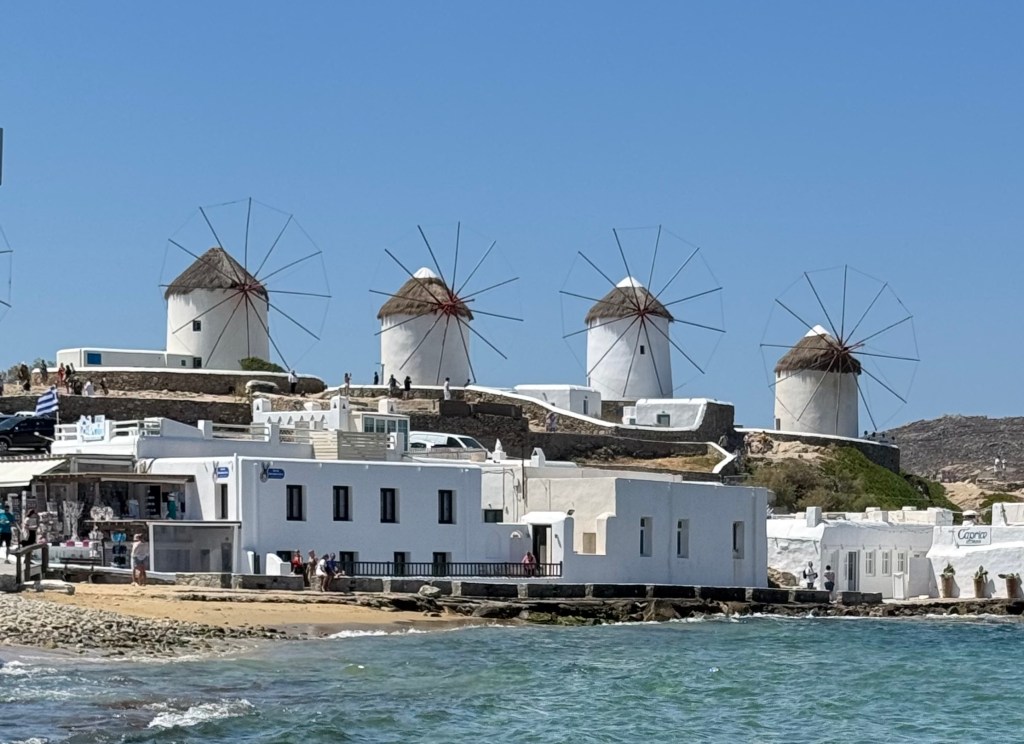
We took photos of the famous wind mills.
It was time to rest, we had been walking about 3 hours by then. A very pleasant restaurant had seats right by the water, and we ordered tzatziki, and a spinach pie. Delicious.
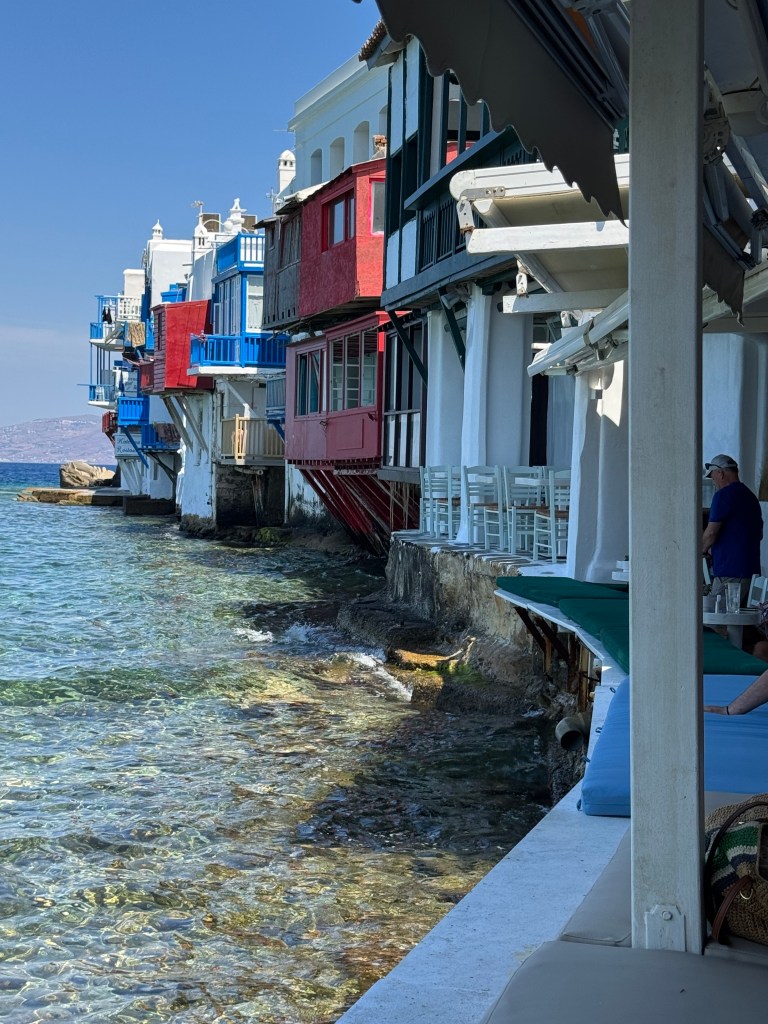
The restaurant was part of the Venice of Mykonos, buildings on stilts. Great picture opportunity of some of the other building right on the water.
On the way back we walked inland a bit in the narrow winding streets and enjoyed ourselves tremendously.
Kusadasi/Ephesus, Turkey
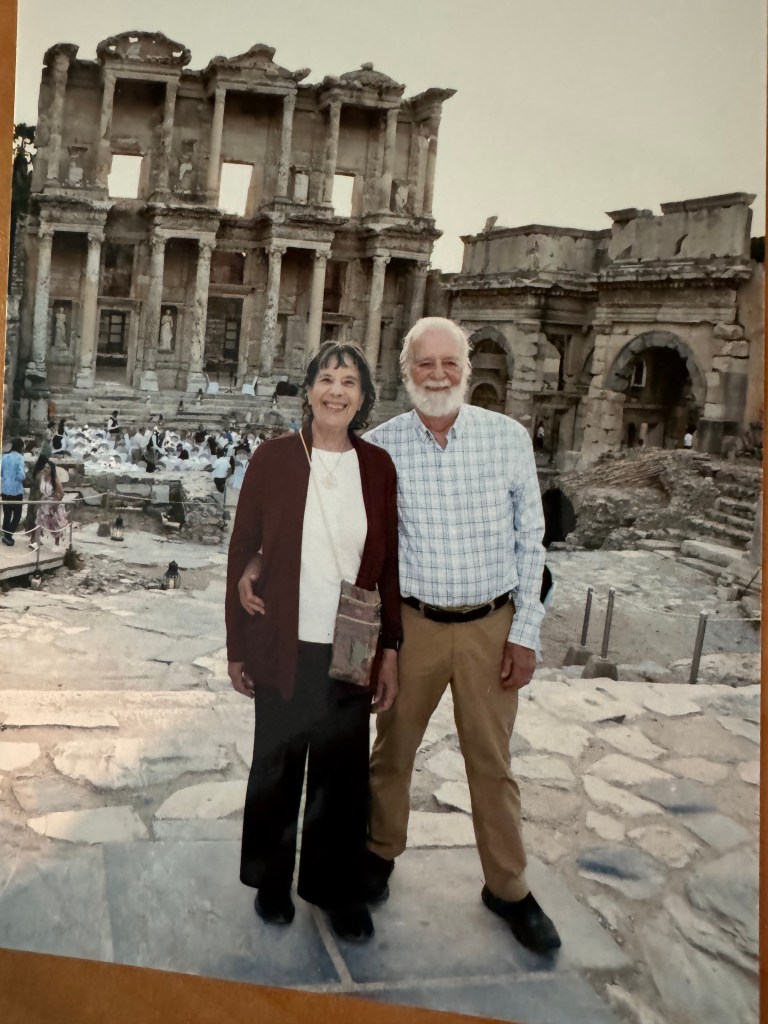
We had one day in Kusadasi Turkey, just across the Aegean Sea from Greece. We toured the ancient city of Ephesus, about 1/2 hour from the dock. Our group of 8 had a fabulous guide, Zach, who is a retired teacher and his English was excellent.
There are remains from the Hittite, Greek and Roman periods in Ephesus. The site was dedicated to the Goddess Artemis/Diana. Ephesus was an important trade route city. It was also an important early Christian center.
The Archaeological site:
Only a small part of the area has been excavated. The digging started around 1860, but those digging did a terrible job especially doing reconstructions. In 2015, UNESCO designated Ephesus as a World Heritage Site, which has improved excavations with professional archaeologists and volunteer students. The oldest part, which is being excavated is only a small part of the ancient city, which went up one slope and 1/2 way on the other slope. Maybe 10% of the area has been excavated.
Obviously the Roman ruins are above the Greek and Hittite ones, which complicates excavations. Why was this large city abandoned around 7th century CE? Originally, Ephesus was a port. Over the centuries, the area started silting up, and became marshy and full of malaria. The inhabitants left.
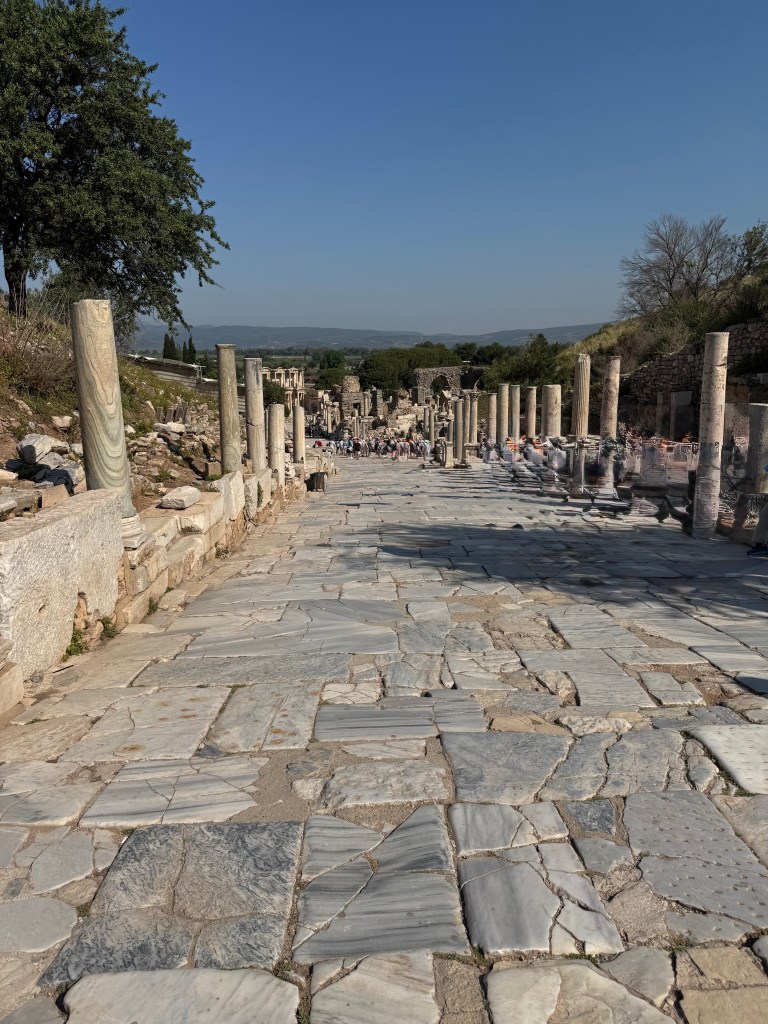
We started to walk through the ruins on the old Roman marble walkway, which are a bit slippery from centuries of use.
The ruins are fantastic, but I will only describe my favorites.
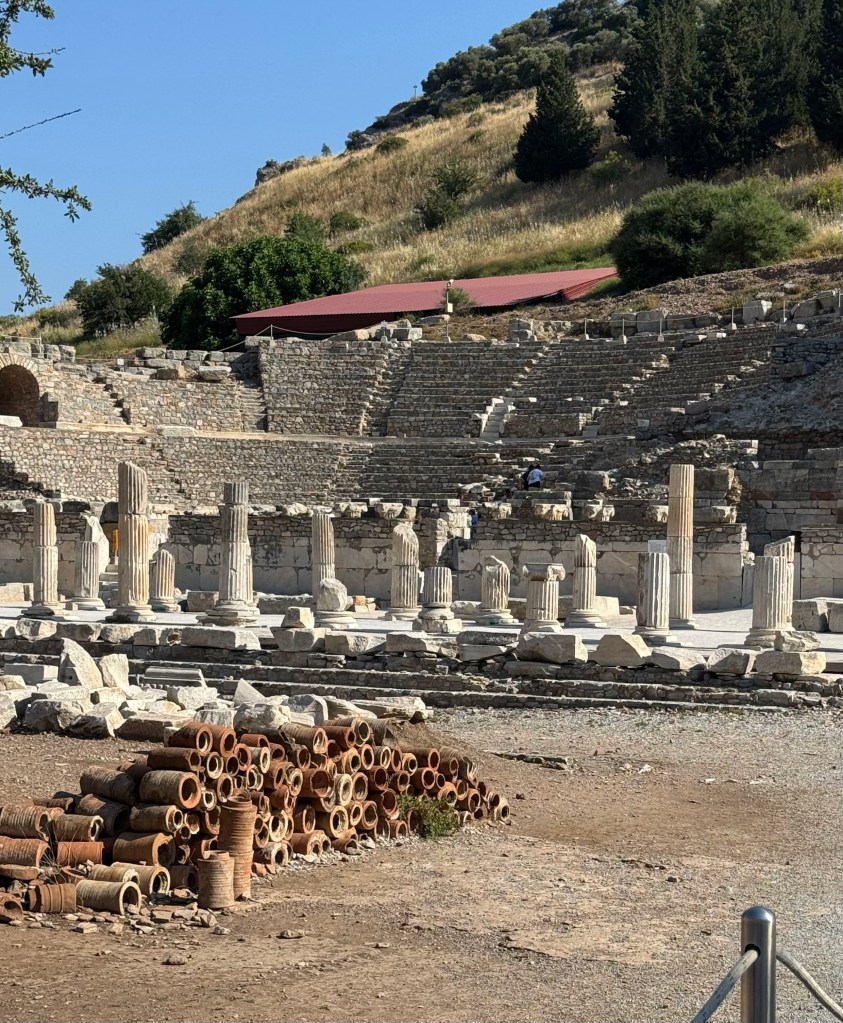
- The old Roman baths and the clay pipes which were used to heat the baths.
- Two theaters, one under reconstruction. The theater seats are new because the original marble was re-purposed.
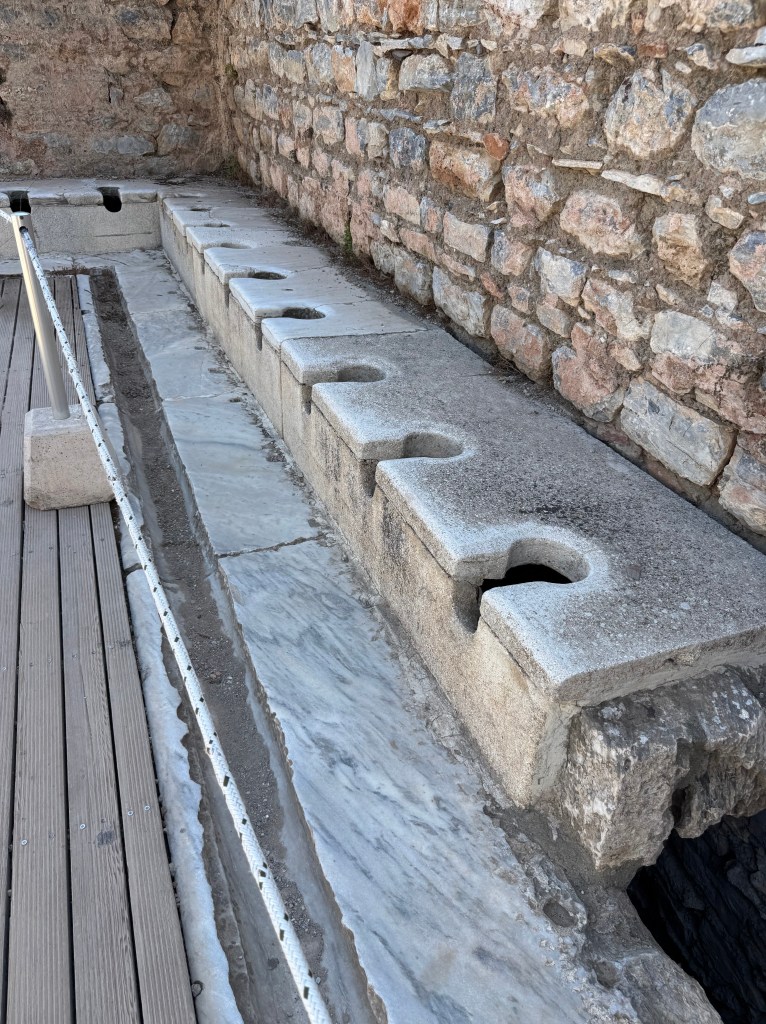
- A Roman relaxation area with side-by-side latrines. You could get a membership to have your own latrine for the year. They had water piped underneath, making it very sanitary. Sort of an ancient bidet.
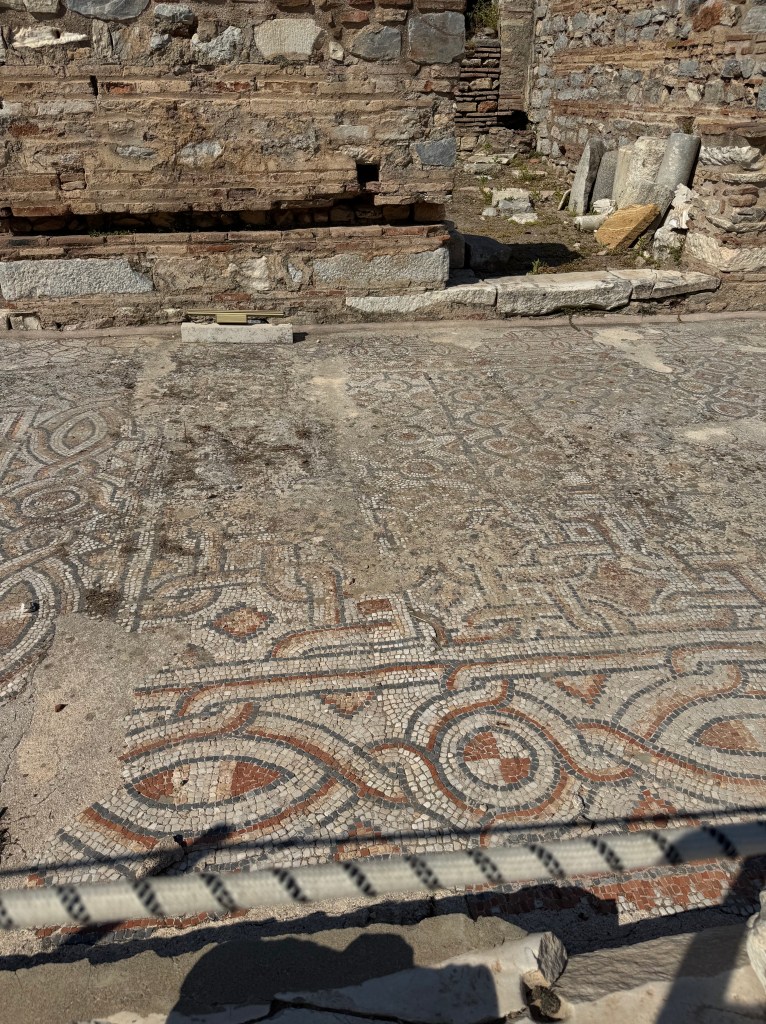
- Structures for Jewelry stores with beautiful mosaics in front of them.
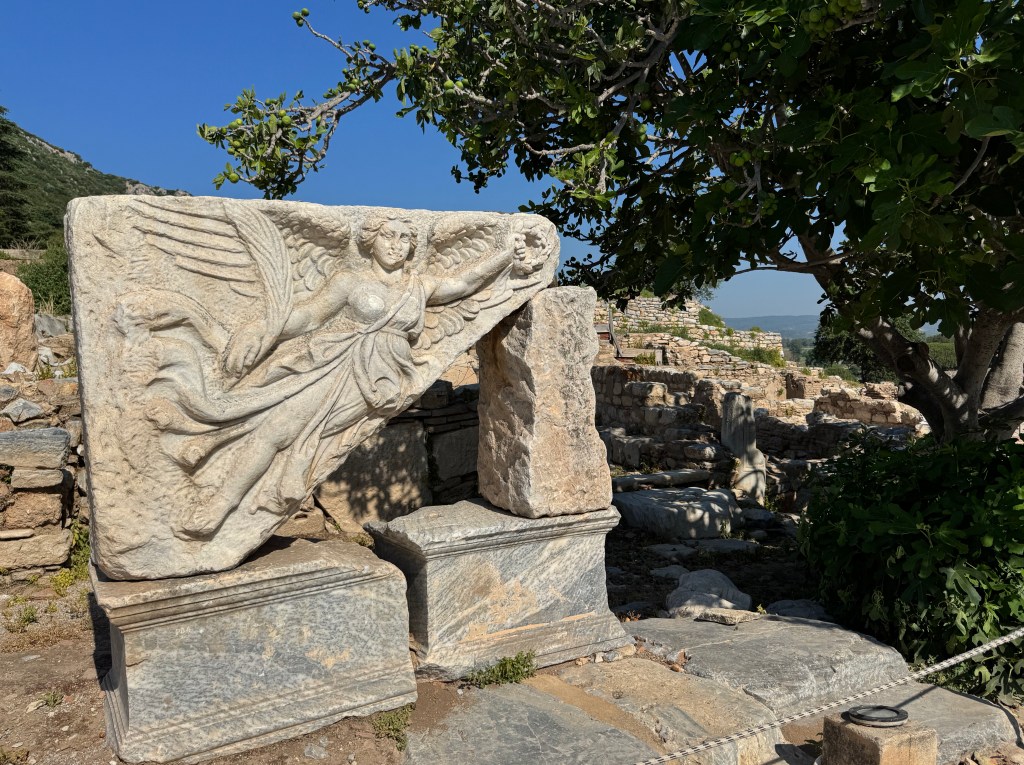
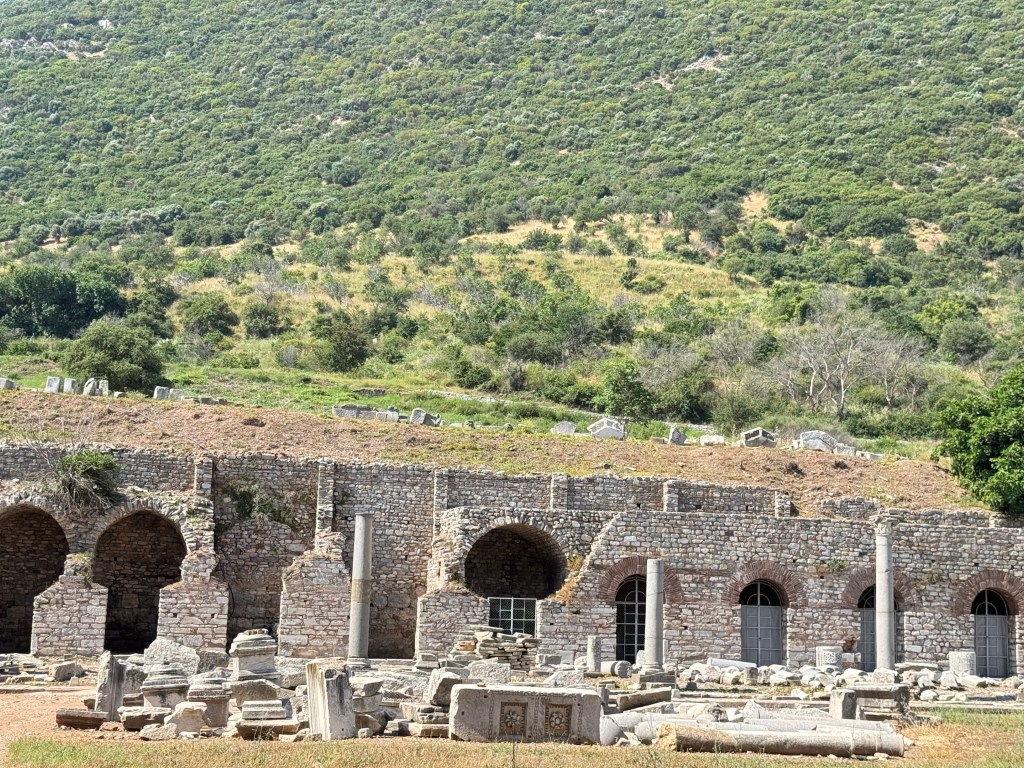
- A beautiful statue of Nike (God of victory).
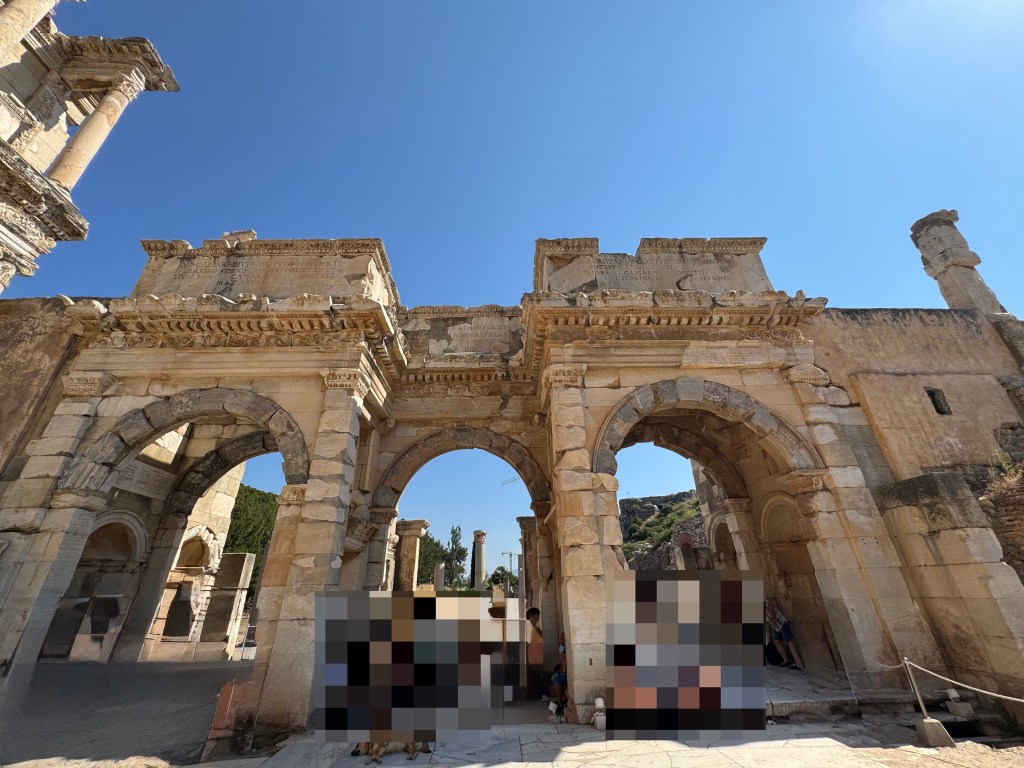
- The triple arch between the temple and the market place for goods and slaves.
- Next to the temple and just visible above the market place, were the remains of a large synagogue. Jews made up about 10% to 20% of the town population.
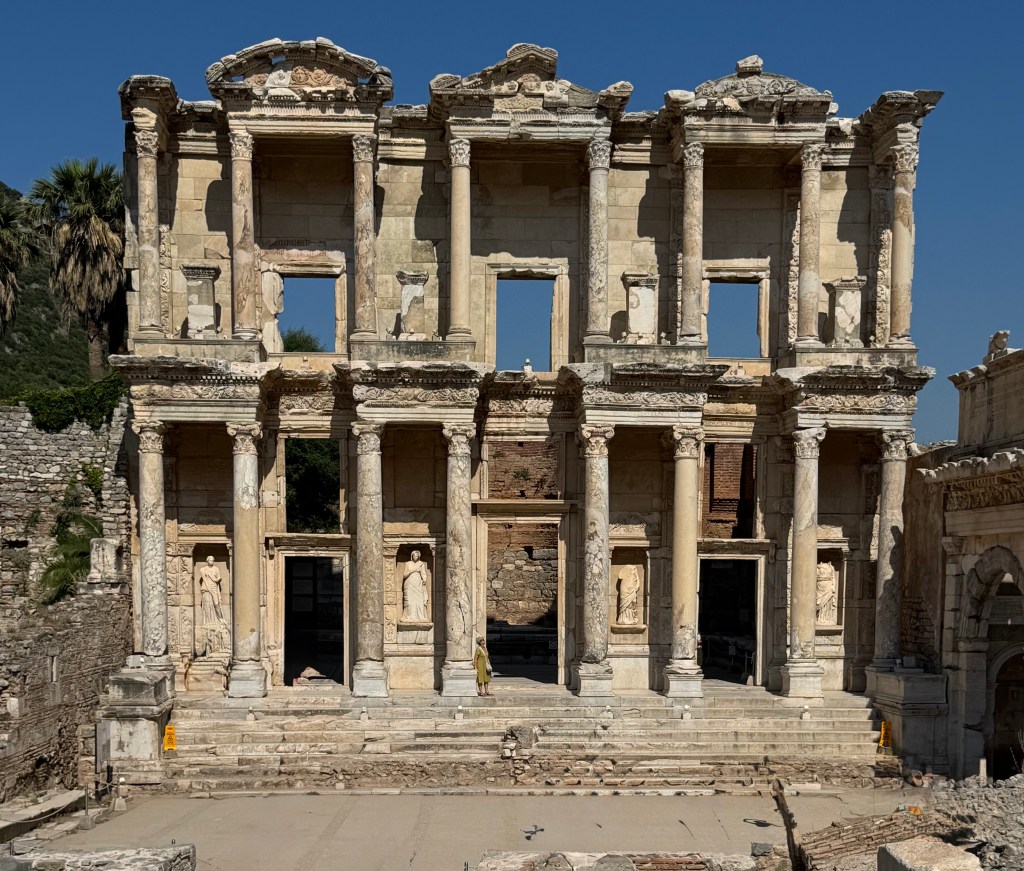
But the best in the ancient library. It has 4 big columns with statues for Knowledge, Wisdom, Understanding and Signs. Marc Anthony gave the library scrolls to Cleopatra for her Alexandria library. Unfortunately, that library was burned and the scrolls were destroyed. We had dinner in the plaza in front of the library. See below.
What we didn’t see were the many statues that are now in the British Museum and the local museum.
The Ephesus Museum.
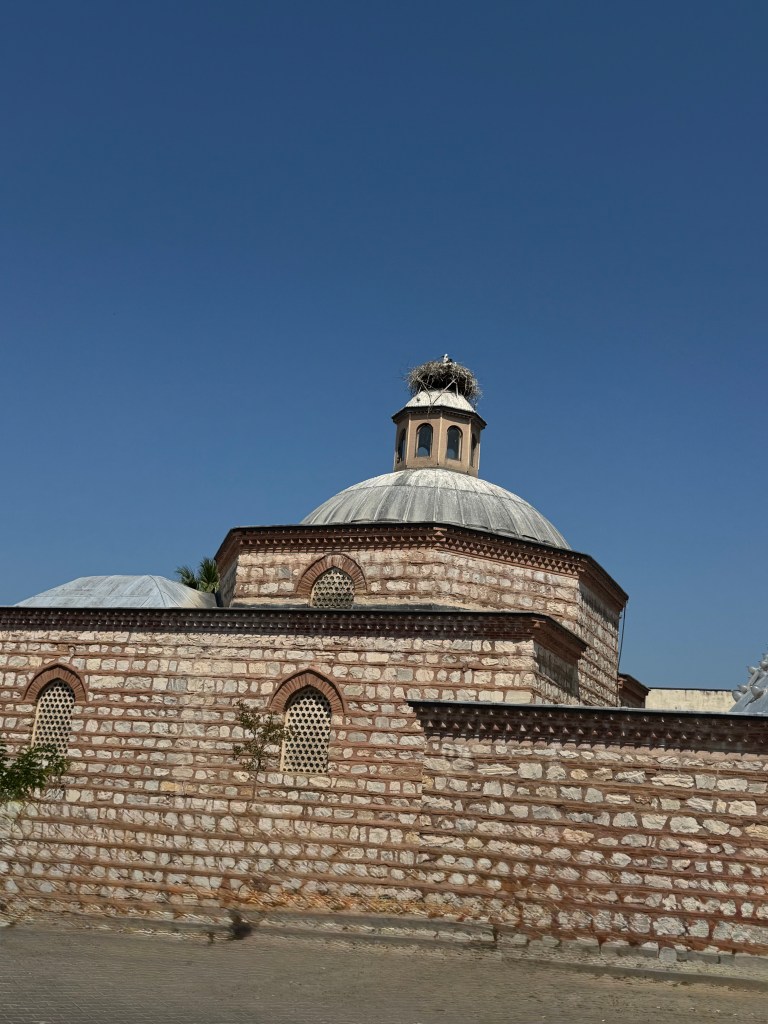
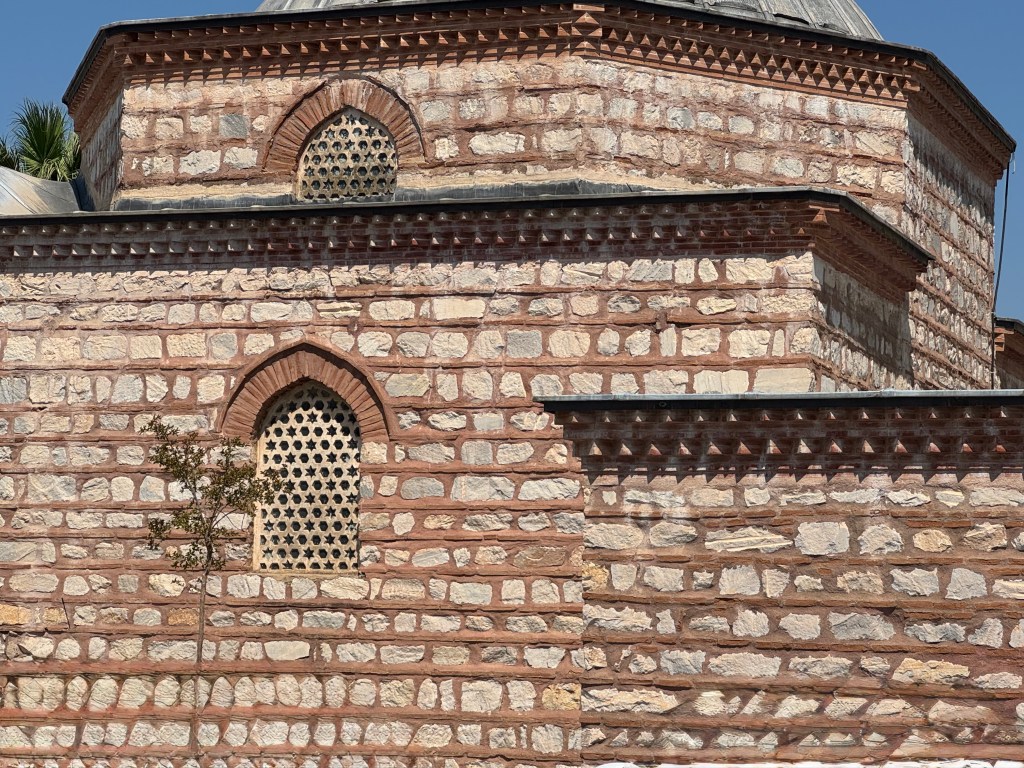
Next to the museum, is a Hammam (bath house), built in the 1490s by a Jewish refuge from the Spanish inquisition. It has little Jewish stars in the windows. On top of the Hammam and on the poll next to it is a Stork nest with mama and 4 little ones. Apparently, they come back each year, just like the Moorings Osprey pair.
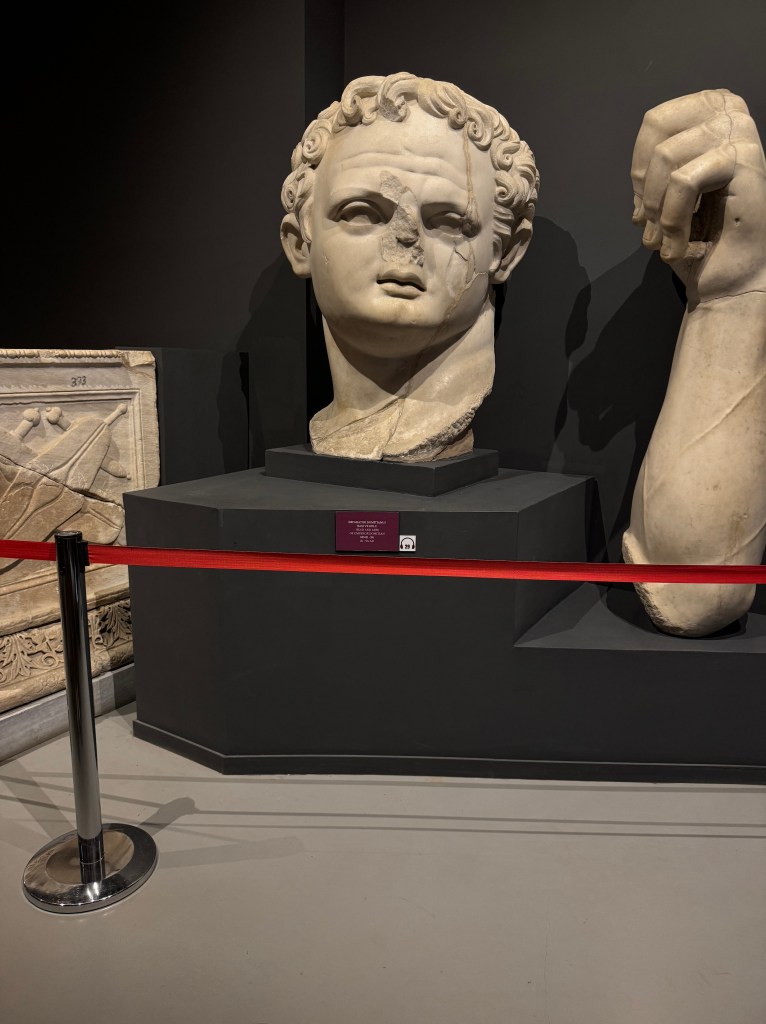
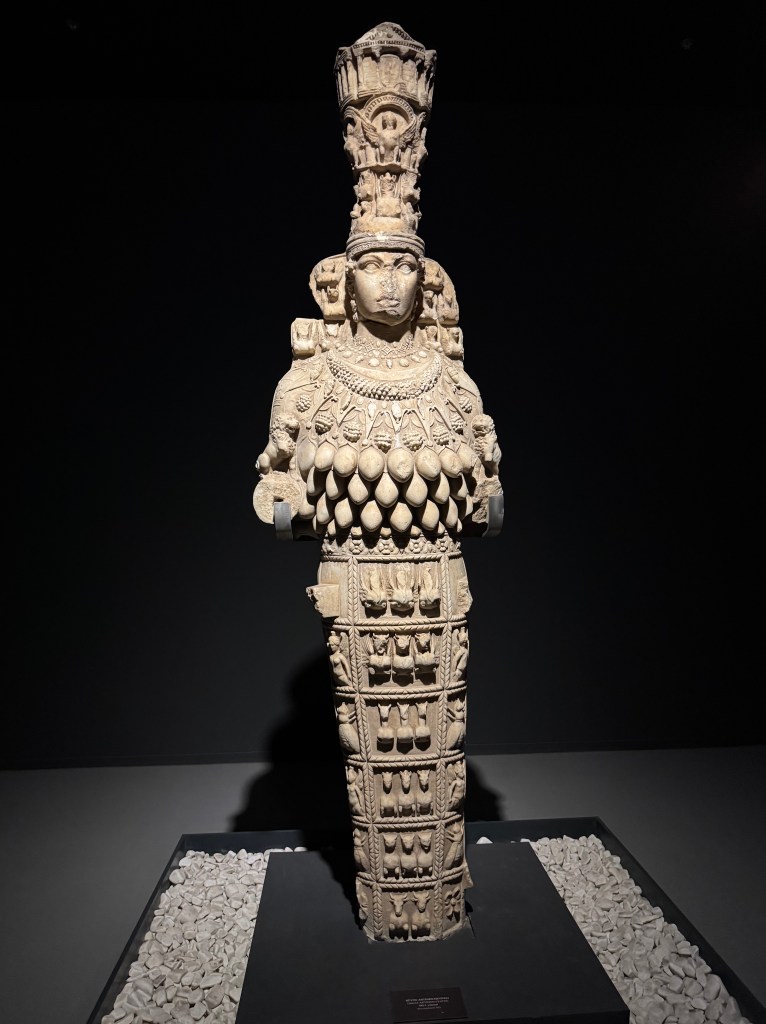
The museum is small but has very beautiful statues including an almost perfect one of Marcus Aurelius, and a couple of Goddess Diana statues with her many breasts.
One Stele of Abraham about to sacrifice Isaac, with God stopping him must have come from the synagogue.
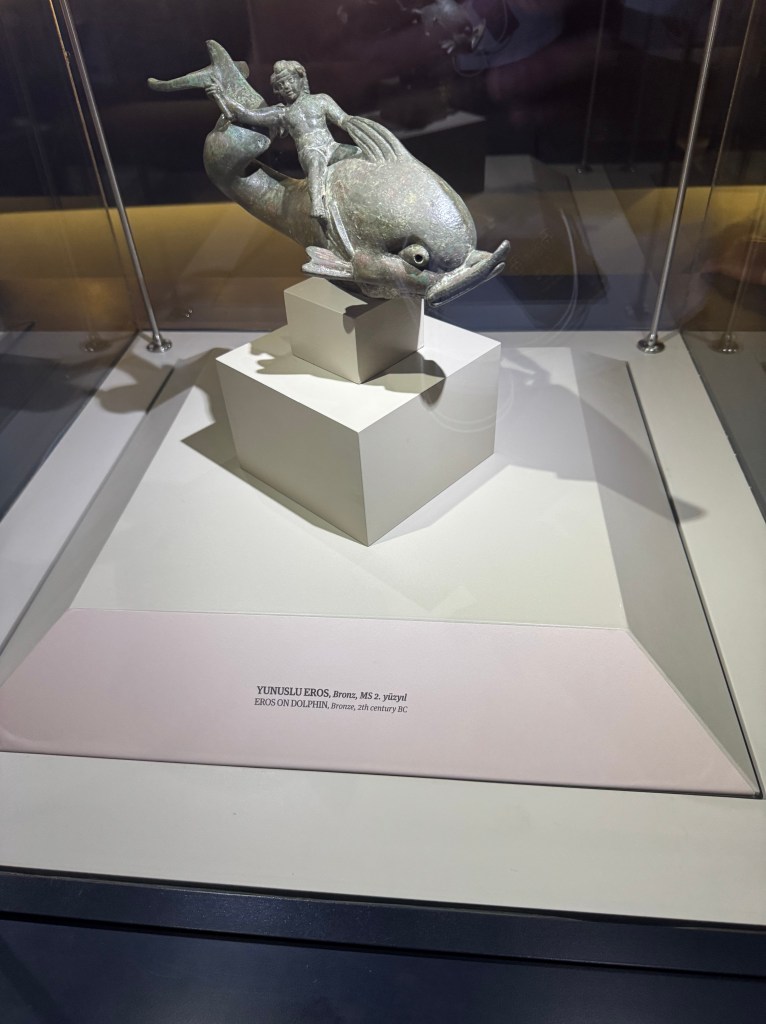
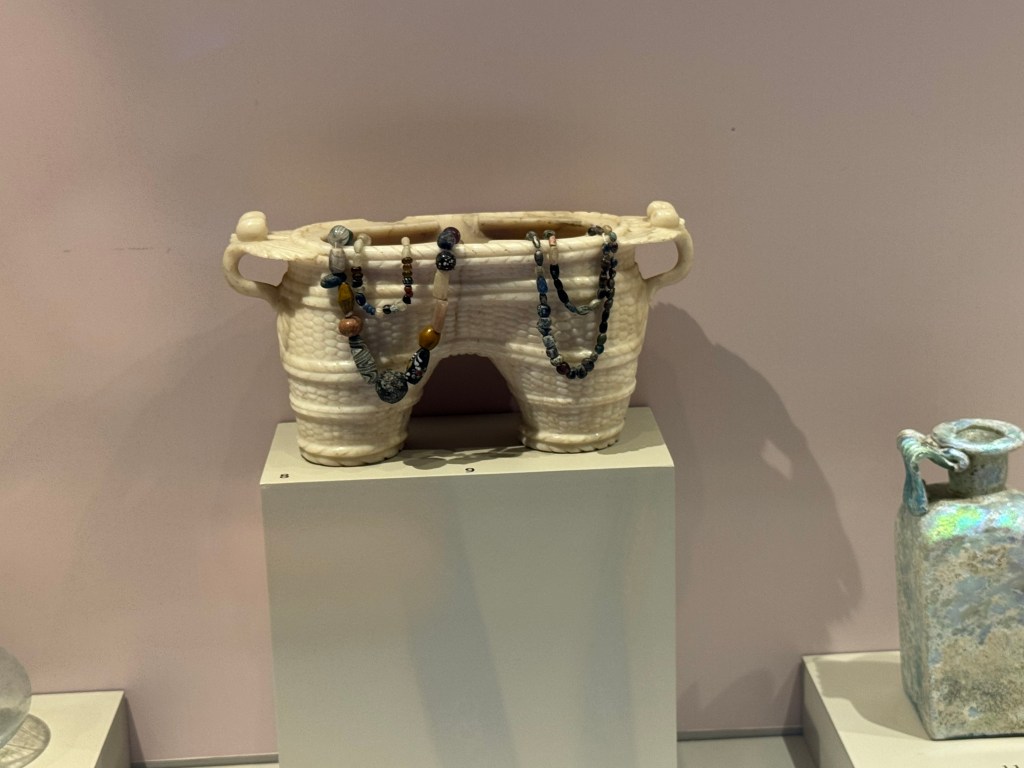
Also in the museum was a darling Eros on a dolphin in bronze, and Roman glass. Sadly, there were many headless statues because 19th century visitors to the area wanted a souvenir and hacked off the heads of these statues.
UNESCO sponsors carpet school and store.
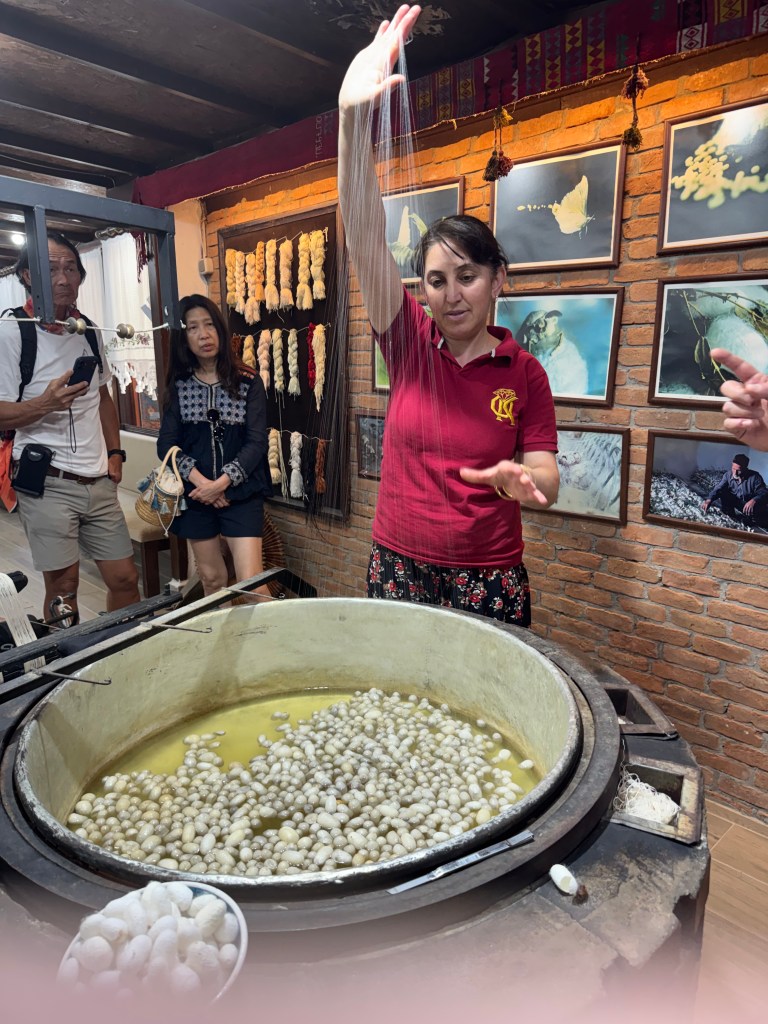
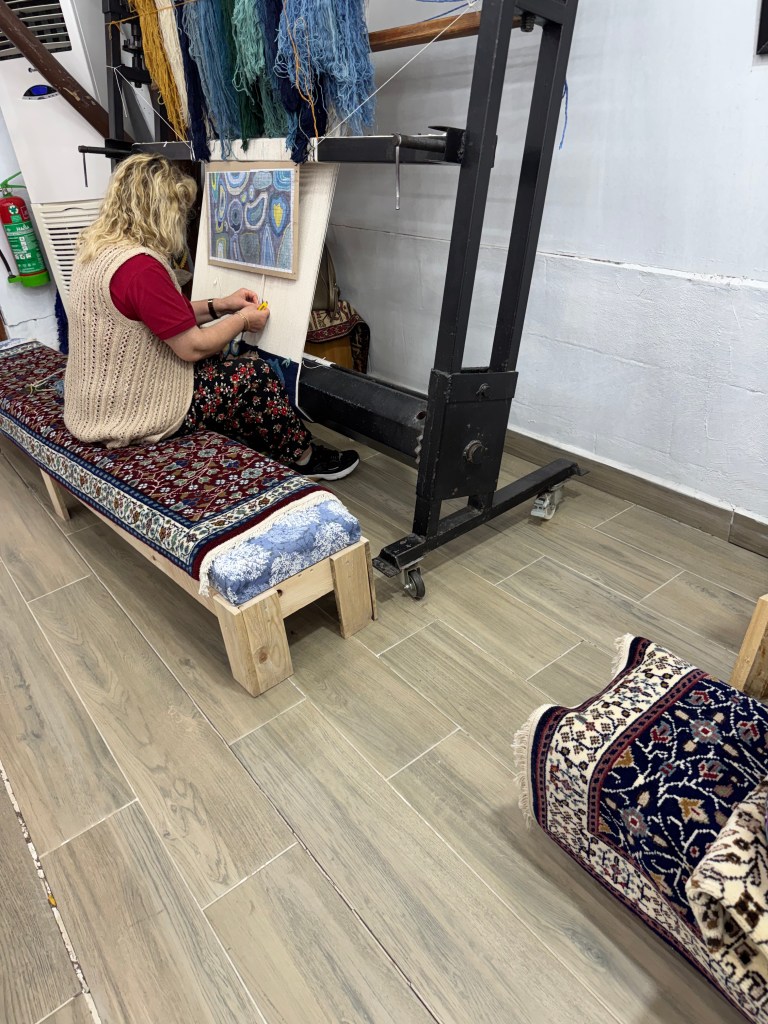
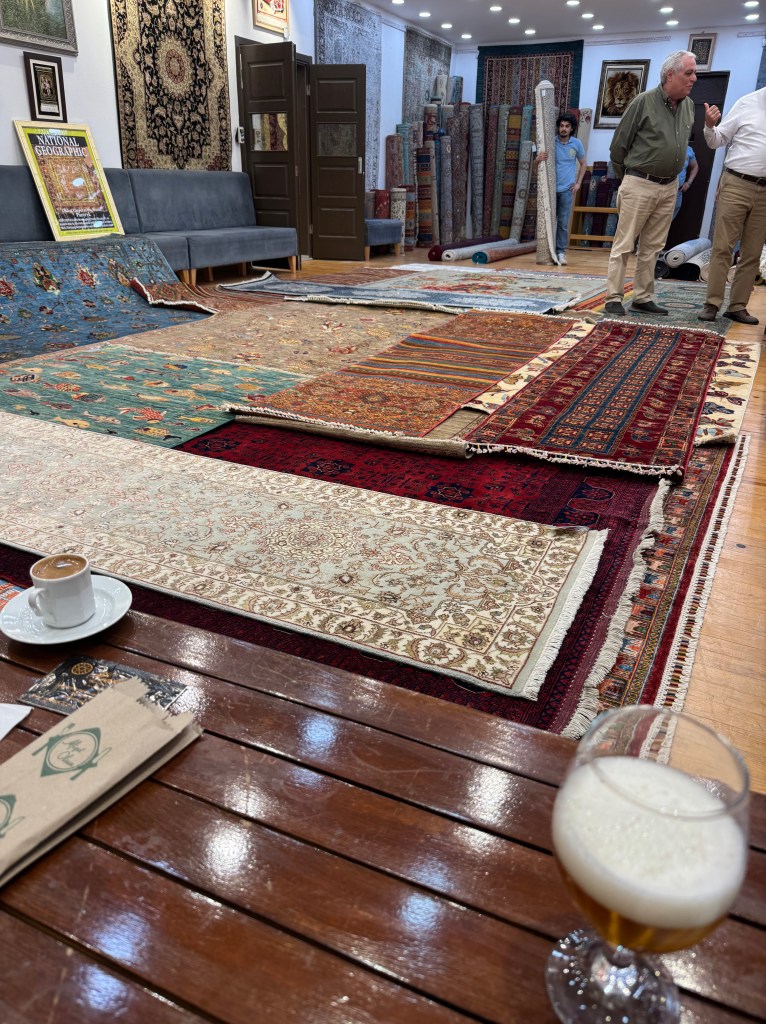
In order to re-invigorate the art of carpet making, UNESCO is paying to teach girls this craft. When they become skilled, they start weaving at home in their free time, especially during the winter. We learned about the process: caterpillars feed on mulberry trees, which are plentiful here, the Cocoons are harvested before hatching, put in water and then the silk is separated from the cocoon. One cocoon gives 1 mile of thread. The carpets are made of cotton, wool, silk or a combination. We then were fed a snack and looked at the beautiful finished product. No, I did not buy a carpet.
Dinner in front of the Ephesus Temple
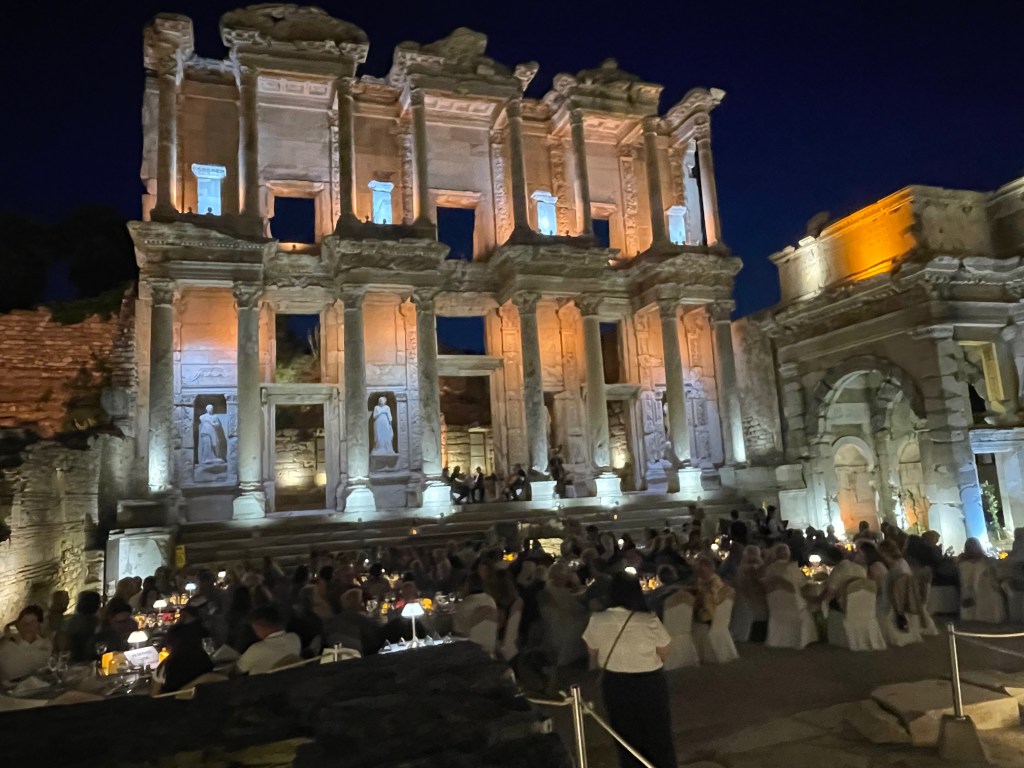
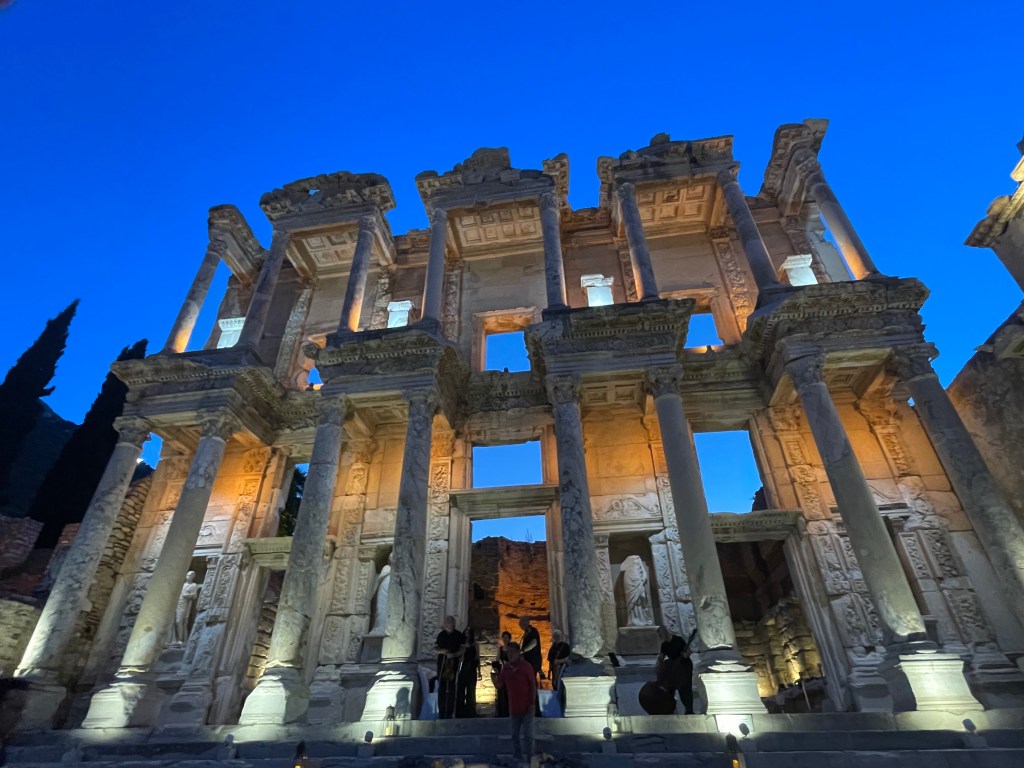
Windstar had arranged a special dinner in front of the Ephesus Library. We arrived at the site when it closed to the public at 8 PM. The area in front of the library was set with tables. A string quintet plus flute played while we ate. We watched the evening come and the library light up. Absolutely lovely. The 8 of us from the pre-trip ended up at the same table even though we arrived on different buses. The food was only ok, but the venue was great. We walked back to the buses, in the dark (well-lit path). It was awesome to walk through the ruins again without the crowds.
Patmos
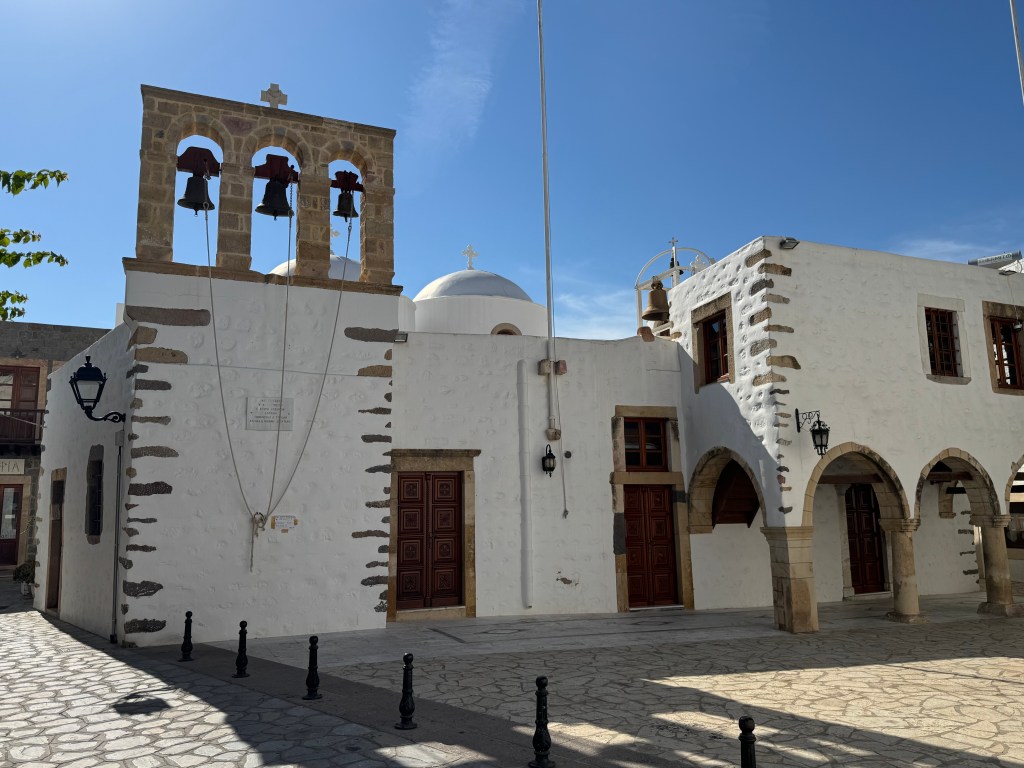
Since we were the only boat anchored in Patmos, the small town was quiet. There were very few tourist shops but I did buy a very cute little canvas bag. We sat at a cute outdoor restaurant in the square. We had a tea/coffee and a little snack and used the facilities and internet.
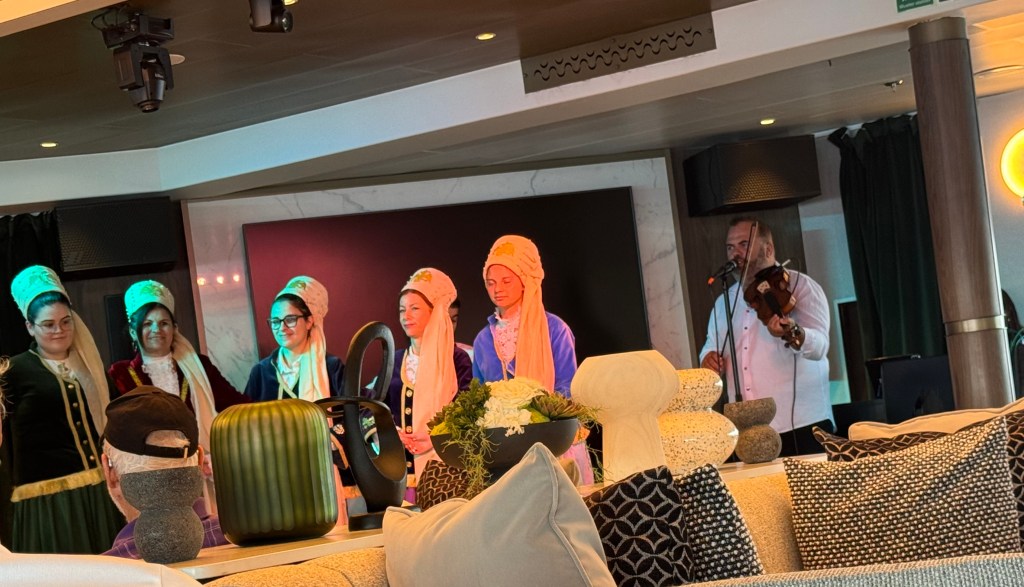
At 4 PM we had a family Greek dance presentation. Father and son played; wife, sister, daughter and 2 nieces danced. It was fun.
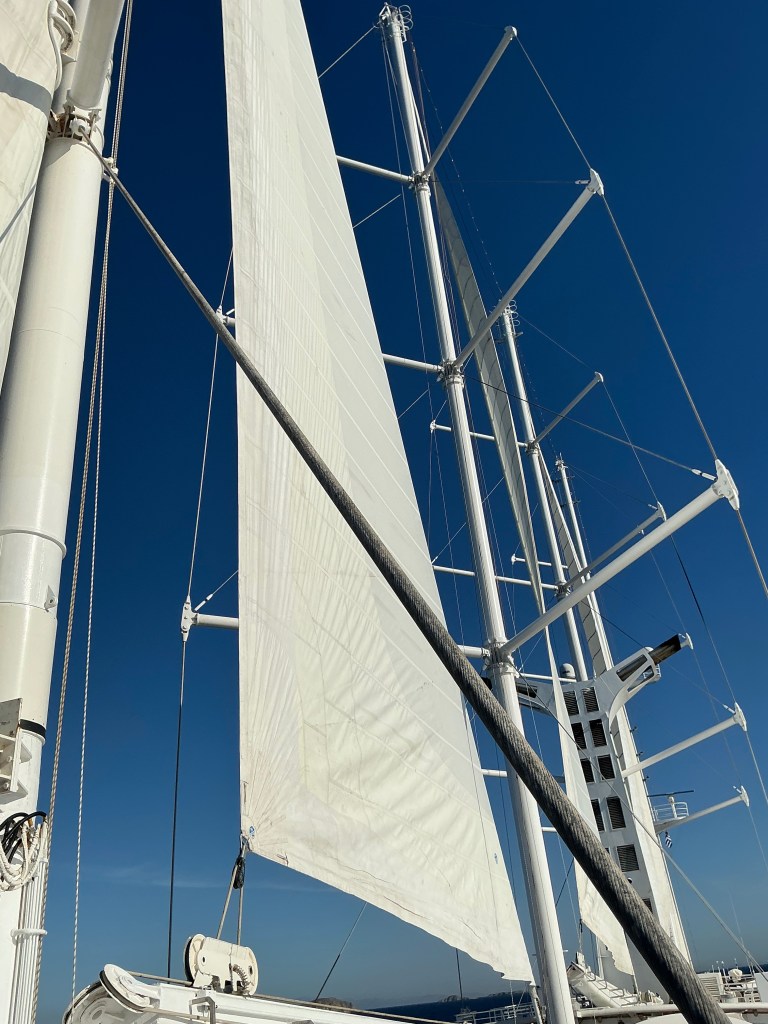
Leaving port, we had our sail away with the sails unfurling. Since the winds cooperated, we sailed (rather than motored) a good part of the night.
Santorini
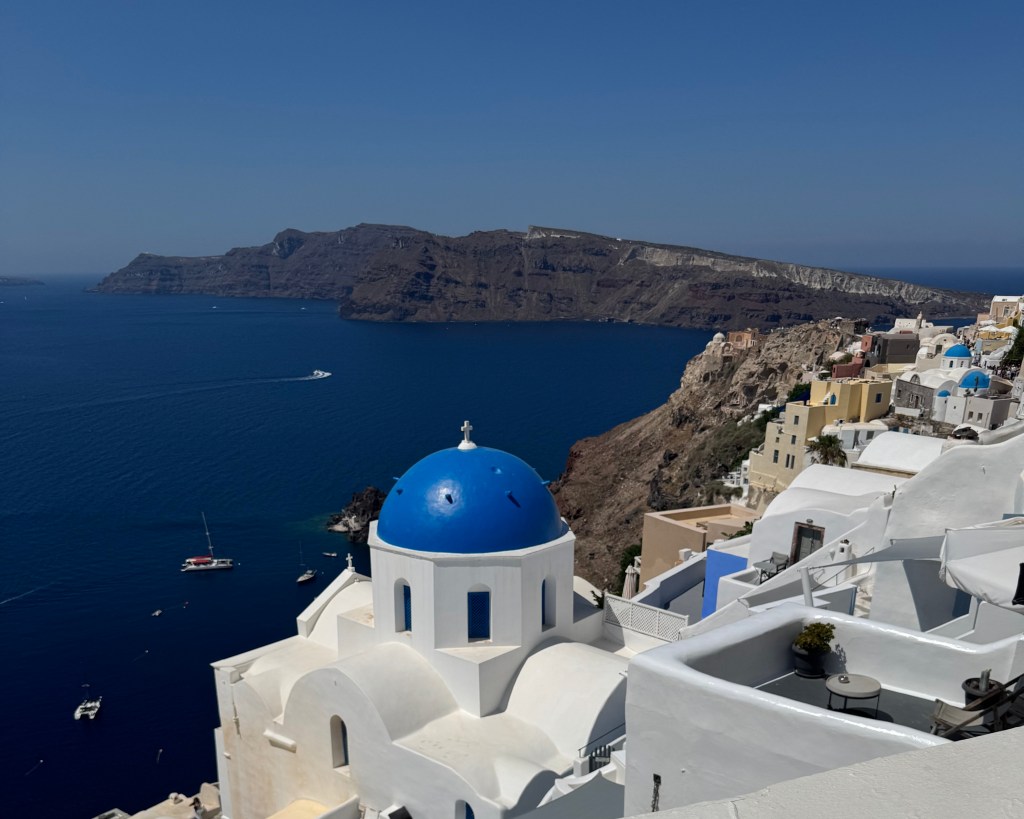
Santorini is made up of 5 islands around a volcanic caldera created around 1600 BCE. The eruption may have contributed to the Minoan decline. A caldera is a caved in volcano. The mountains surrounding the caldera are high and come right down to the water. There are some black sand beaches. I imagine the sand is boiling in summer. The 14 villages are all at the top of the mountains.
These islands are inhospitable. In July the temperature rises to 110. In winter, the wind makes it almost impossible to fly or boat in. There are no rivers and no fresh water on the island except for the rainwater. They desalinize water and import the rest. There are many wineries but the vines are trained to grow to create a low basket to protect them from the wind.
The area’s residents, after the eruption, lived in caves or excavated homes from the mountain. Later, when materials could be brought up (1800 feet by donkeys), the houses at the top of the mountains were built. Donkeys are the only large animal on these islands. There is not enough water and land for cattle or sheep.
Today, Santorini is a tourist destination. In summer some 100 flights a day come into the tiny land strip. Under new restrictions, cruise boats are now limited to 8,000 passengers per day. The country has 20,000 residents but 100,000 in summer. Some of the hotels in Oia charge $5,000 a night, but a beach front hotel is cheaper because the action is on the top of the hills.
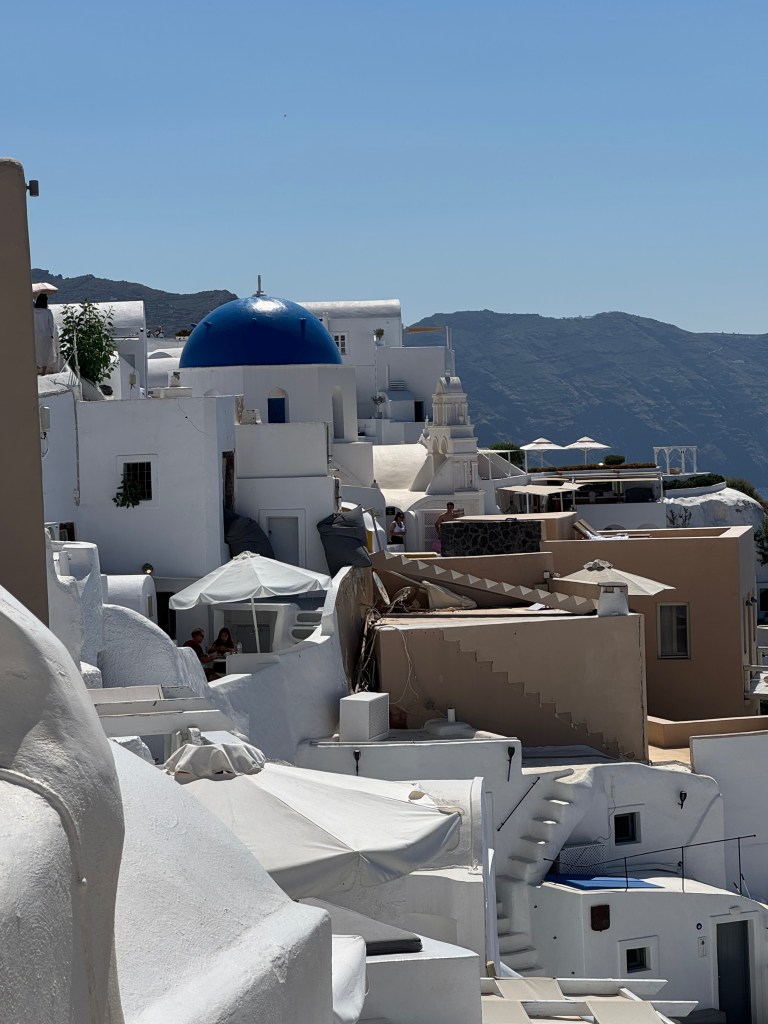
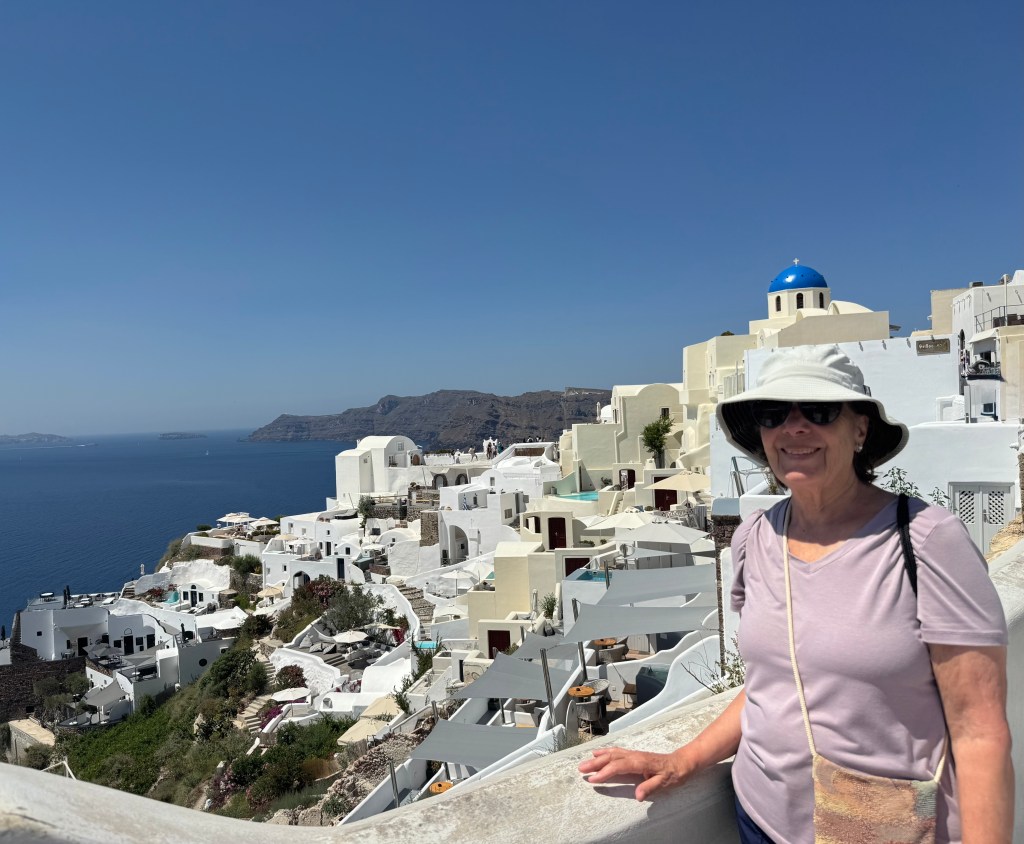
The bus ride to top of the mountain is a scary zig zag road. In Oia, the houses are white with bright blue arc roofs. The arc on the roofs protects from earthquakes. The white is not a legal requirement but the max of 2 stories is mandated.
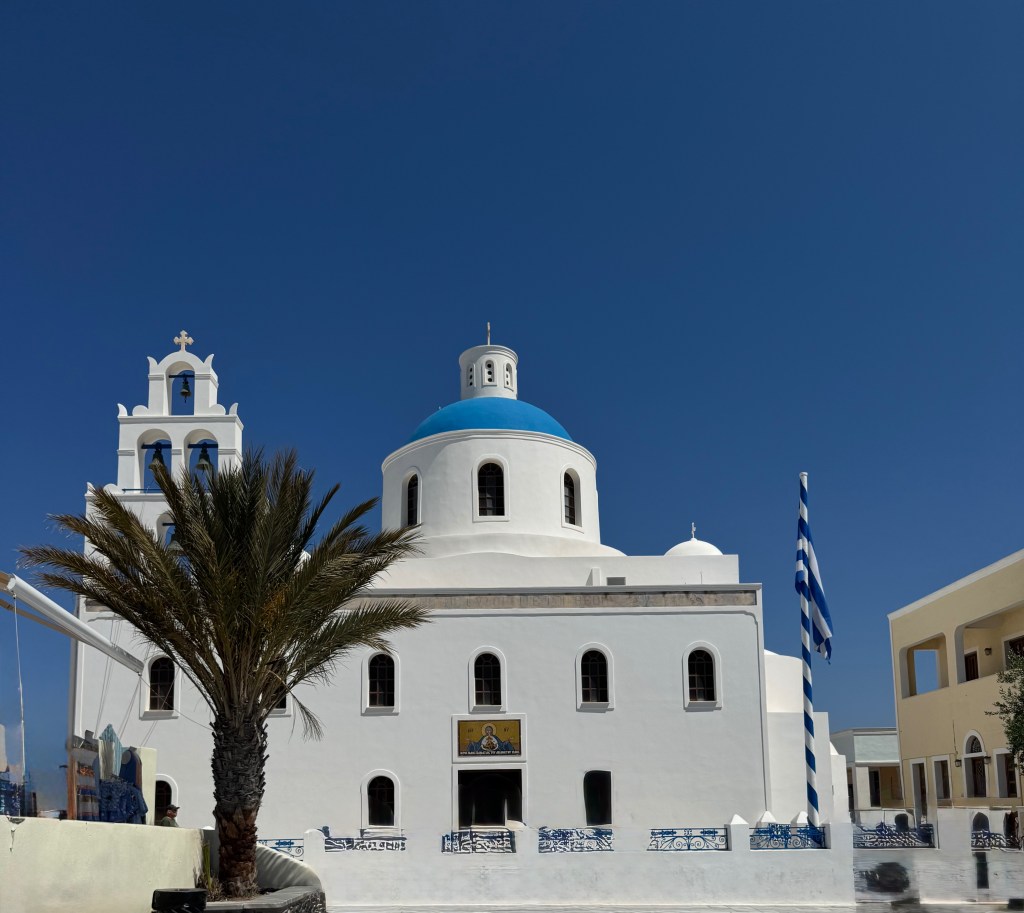
In the main square, is a beautiful Orthodox church.
From there, there is one main street to the right and to the left. The houses/hotels are built into the cliffs. A beautiful triple church, is visible from a few side streets. People (including me) line up for a picture opportunity.
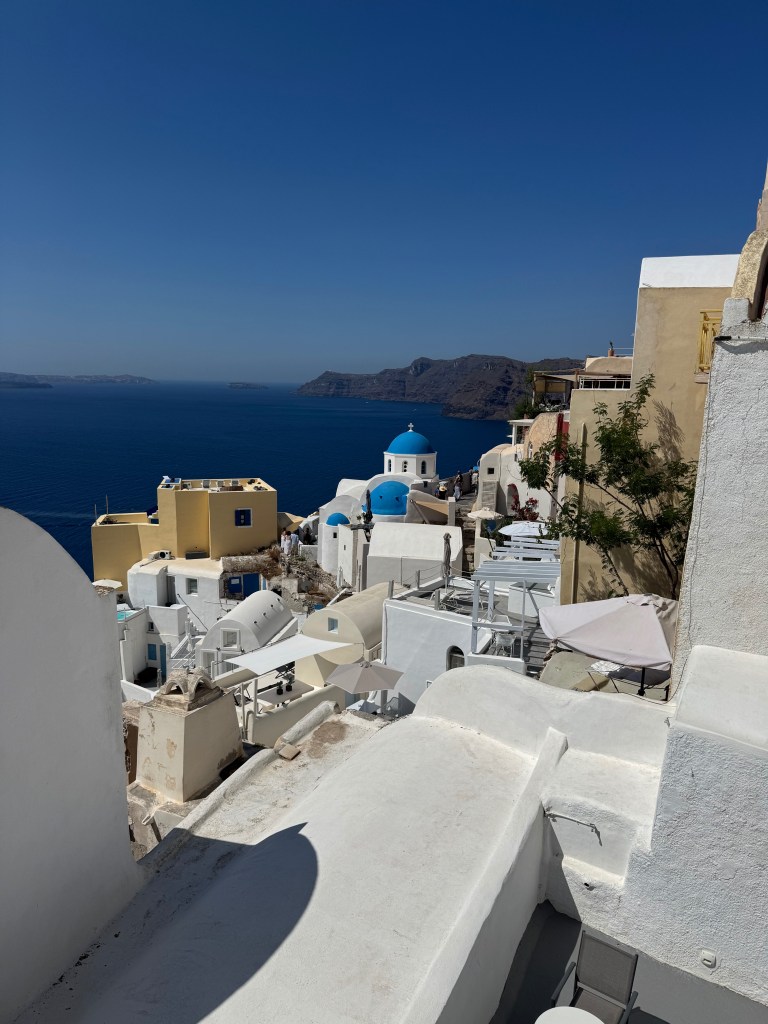
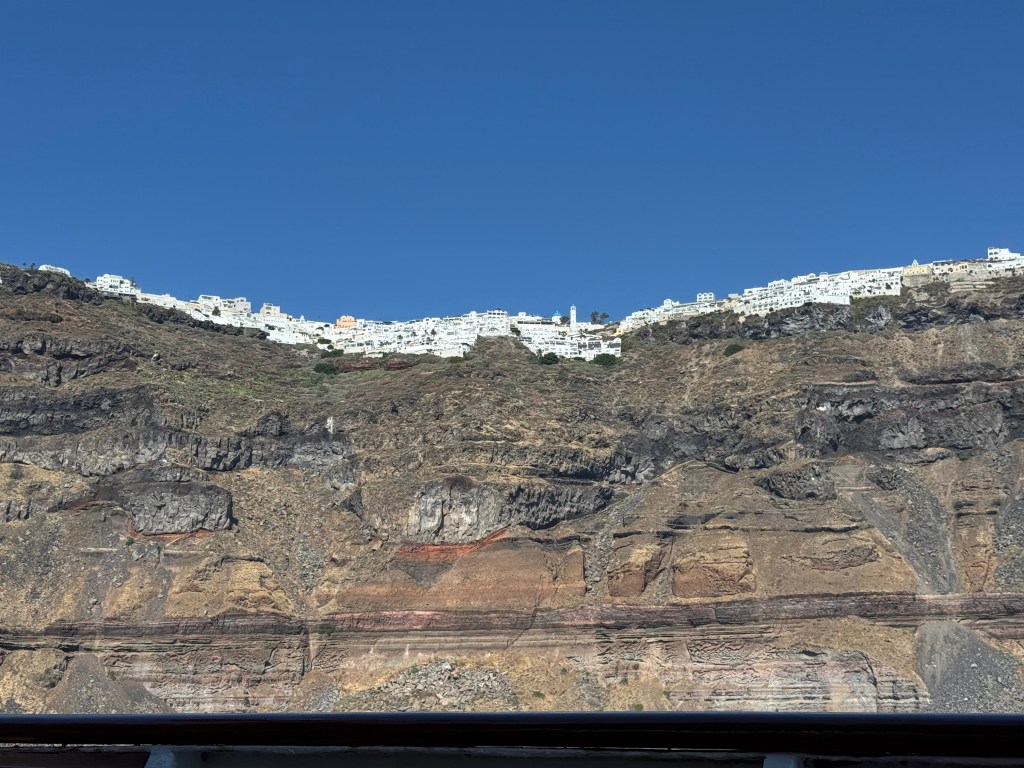
Back on board, since we were anchored in the caldera, we had a lovely view of Santorini. We could see the geological layers as well as the trail and the cable car going up to the town of Fira.
The ship held a deck bar b q followed by line dancing with the crew. It was really fun watching the dancing capped by a beautiful sun set against the sails as the lights in town went on.
Monemvasia
Monemvasia is a medieval city. It became a major commercial and naval center in the 10th-12th centuries and was in its prime, in the 15th century. At that time, it had about 50,000 inhabitants. The upper town was first fortified in the 6th century. It was under Ottoman rule with a garrison on top until it fell in a siege to the Greeks in 1821. Now there are only ruins, but the process of restoration has begun. We climbed up in 2013 but not this time.
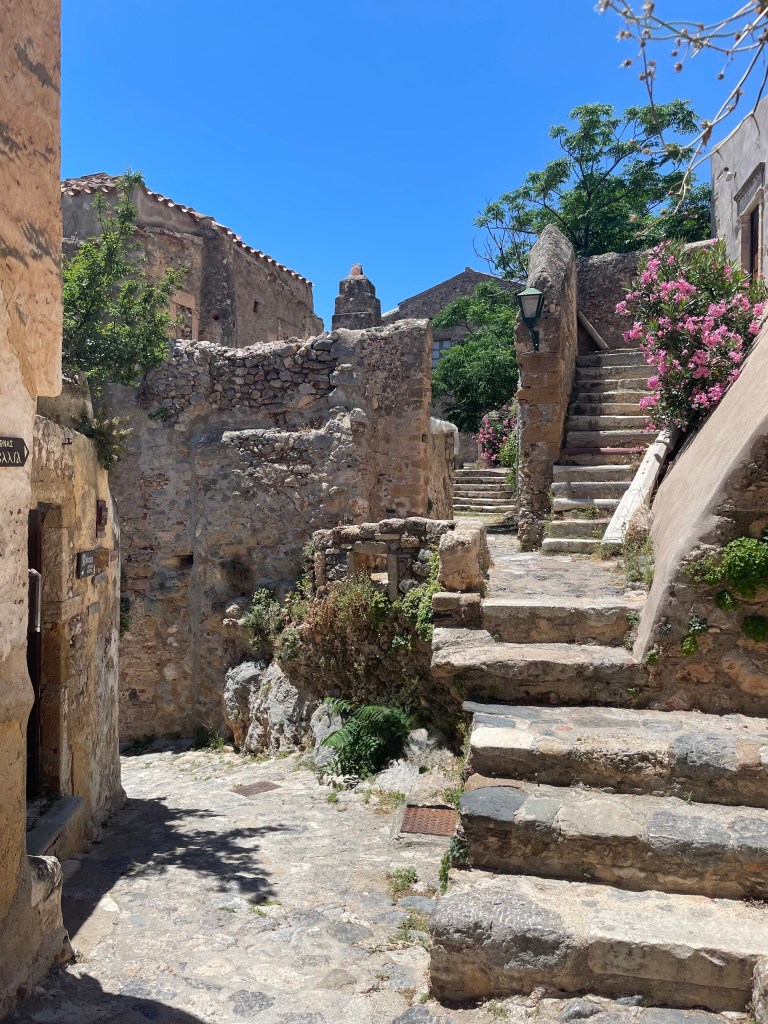
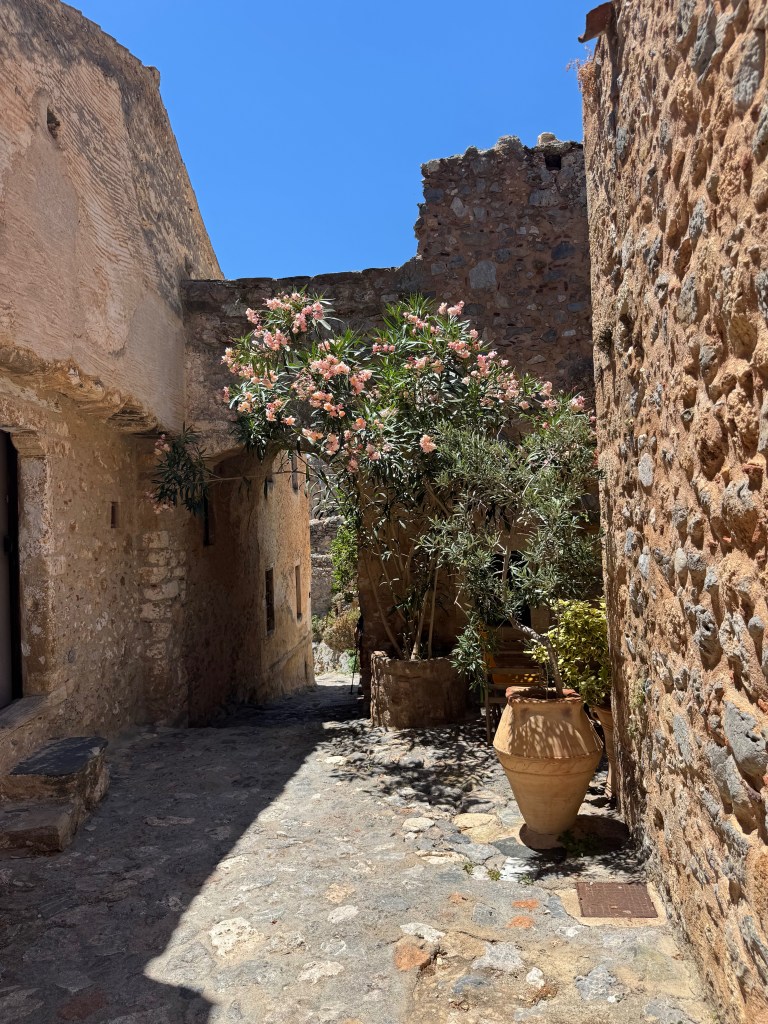
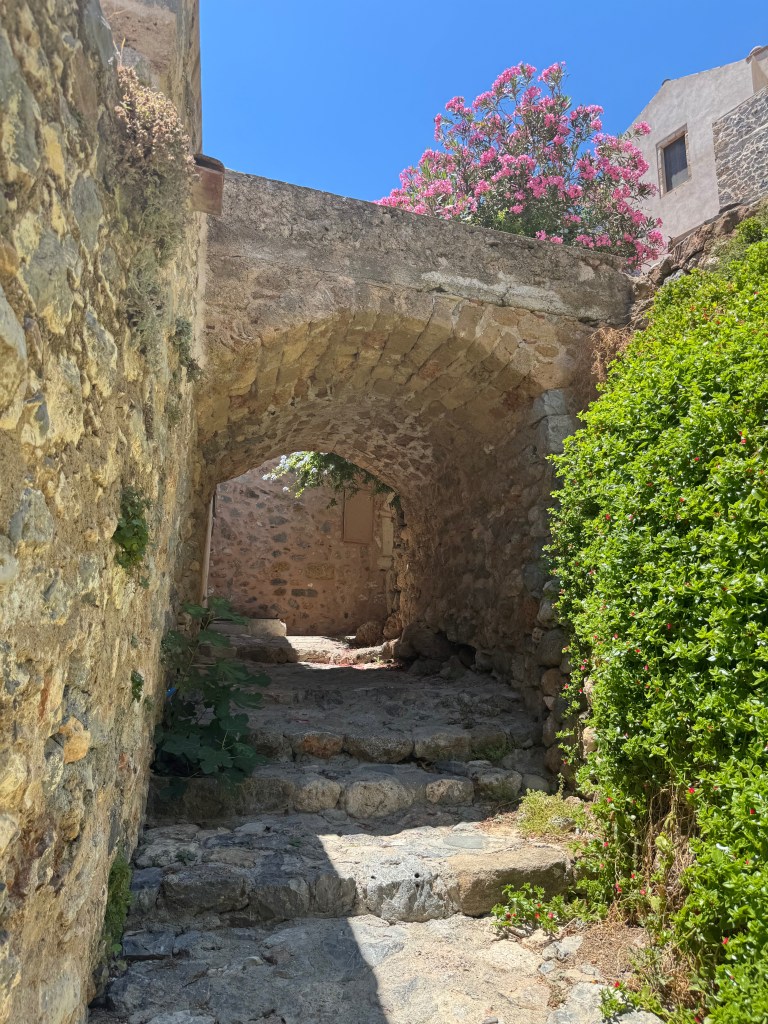
We walked in the lower old town on pavement made up of slick medieval pavers. The buildings are of massive stone. Arches over the street enabled the houses to add additional rooms. It really felt medieval.
We sat in a shady, pleasant roof top of a restaurant, had a snack and used the internet.
When we left port, the sails were again raised and we sailed and it was very peaceful on deck without the motor.
Nafplio
Nafplio was mostly built in the 13th century, and was an important port fought over and occupied by Venice and Turkey over the centuries. The Citadel is about 750 meters high. It was built by Venetians between 1711 to 1714.
This town was much easier to walk around in than Monemvasia. It was also less interesting. We stayed in the lower town and did not attempt to walk or to Taxi to the fortress which dominates the landscape.
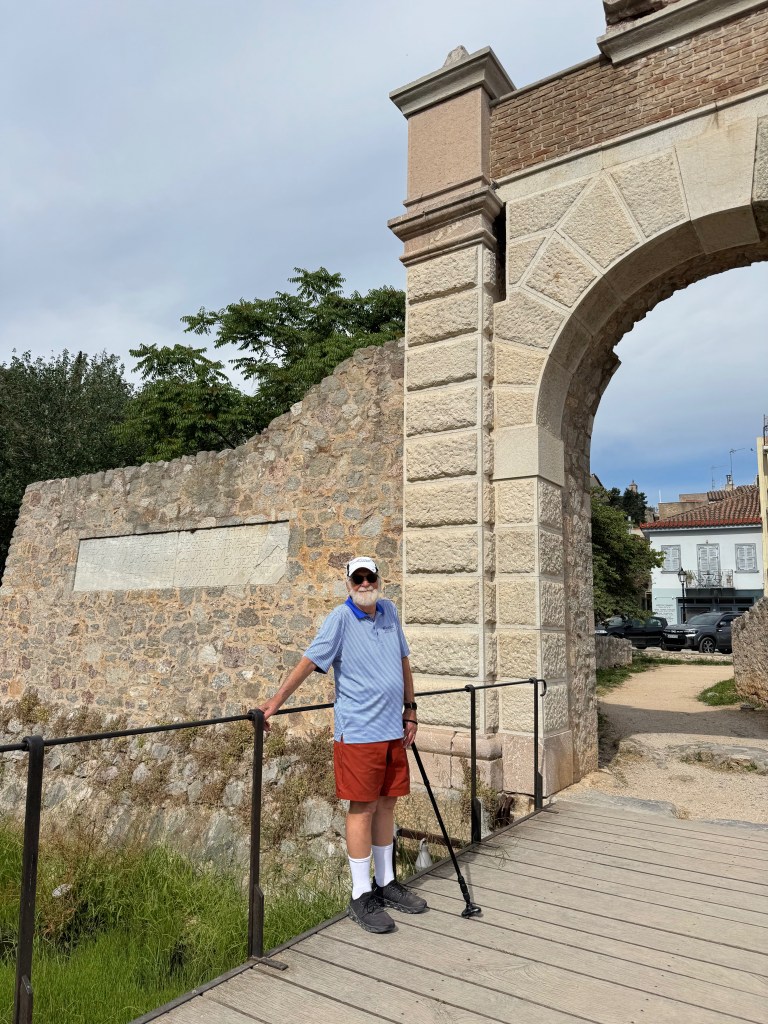
We saw the city walls and the moat that used to surround them (all grass now).
Then we visited the small but excellent Archaeological Museum. Their oldest artifacts were from 10,000 BCE. Arrow heads and prey remains were evidence of habitation in caves by small families at that time.
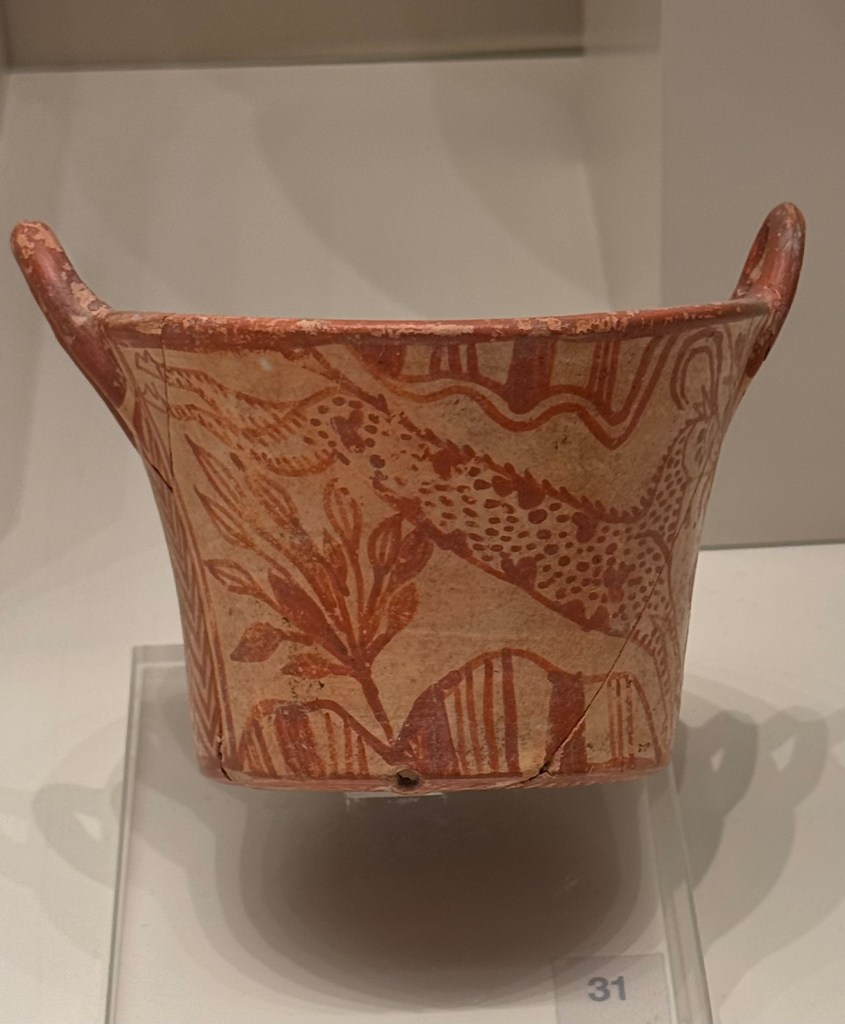
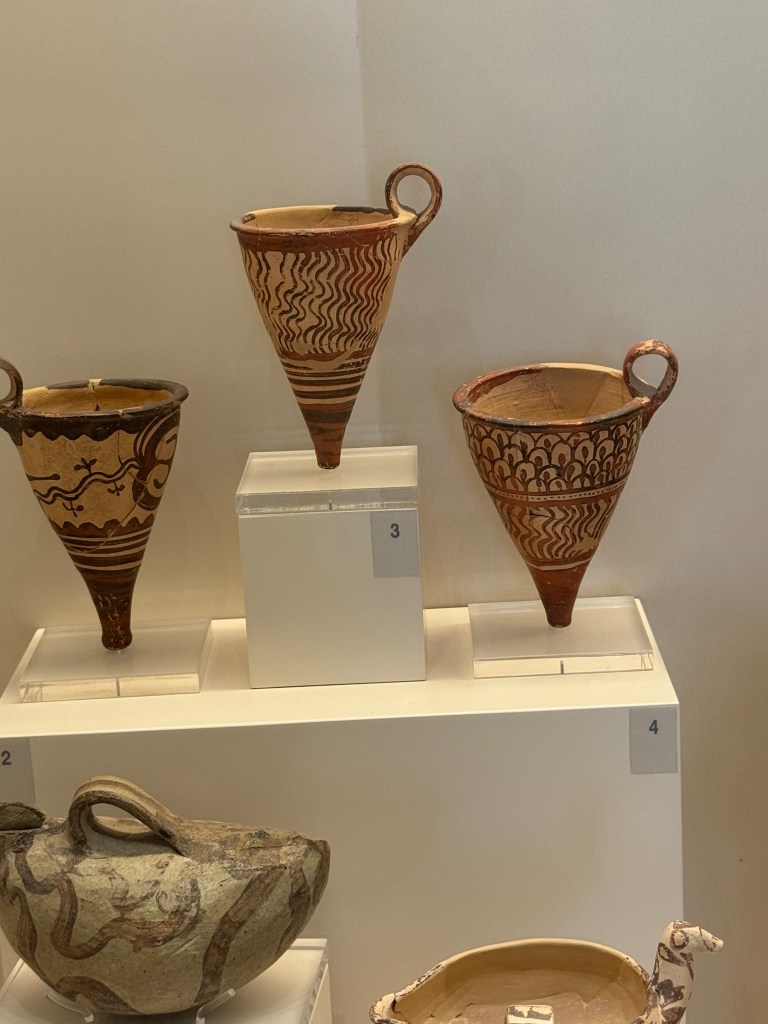
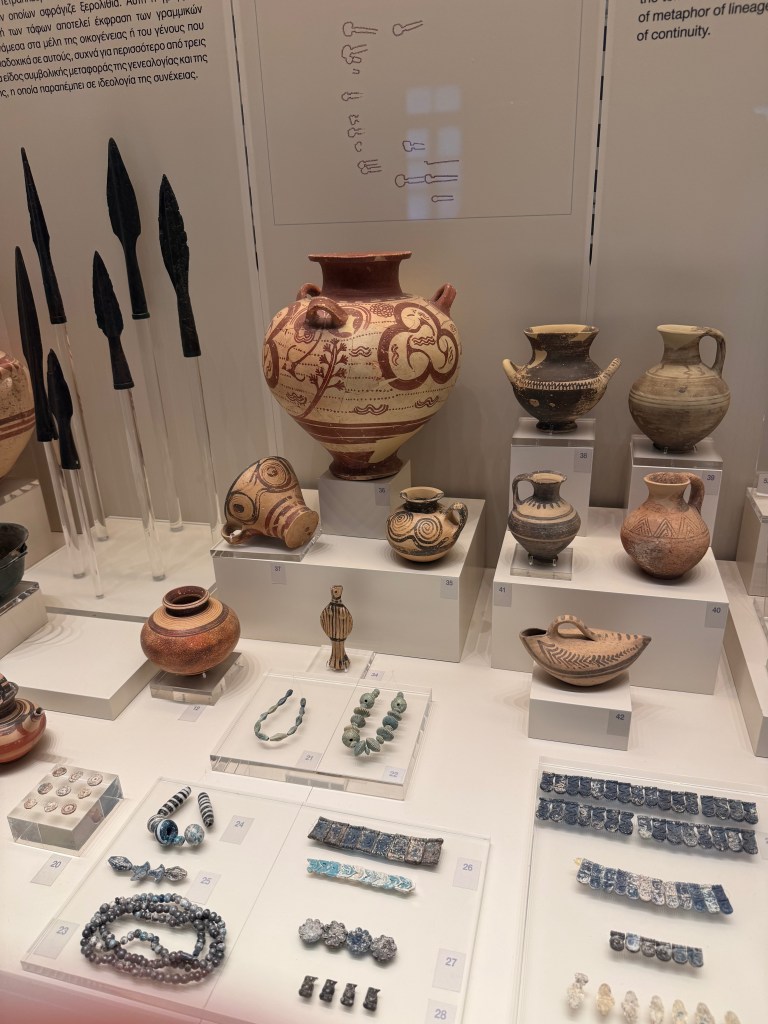
More recent artifacts included fabulous pottery from about 4,000 years ago to 3,000 years ago. The pottery was unlike any that I had seen before. There was also faience jewelry and glass.
The building itself is made of heavy stone. The staircase is original.
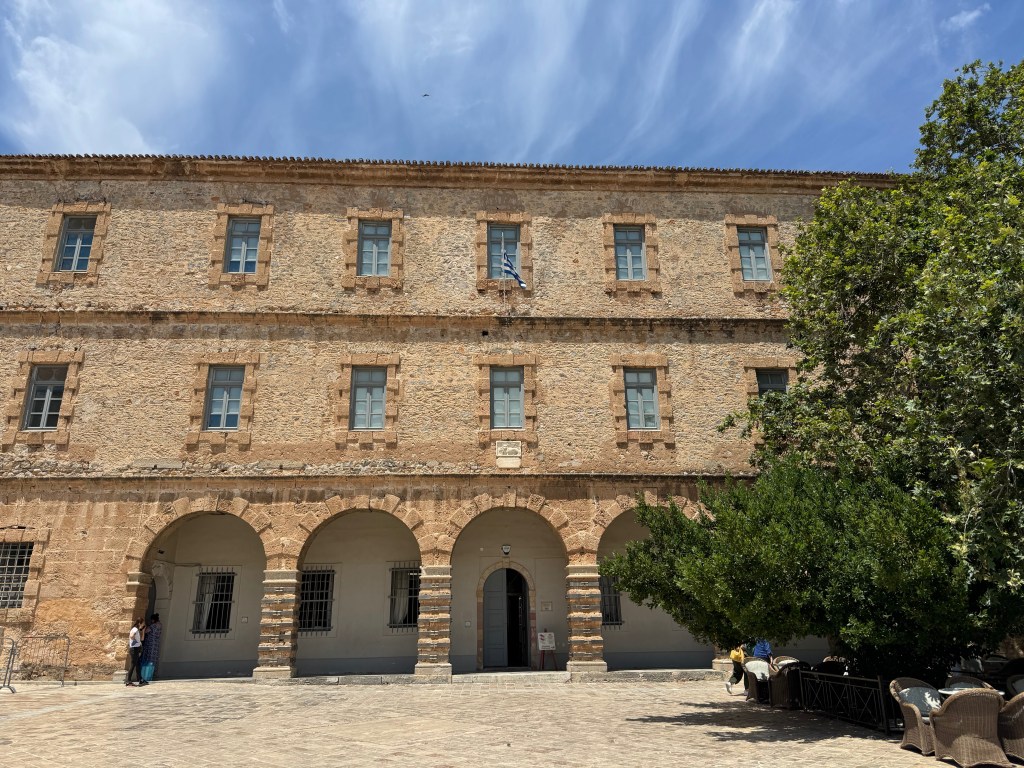
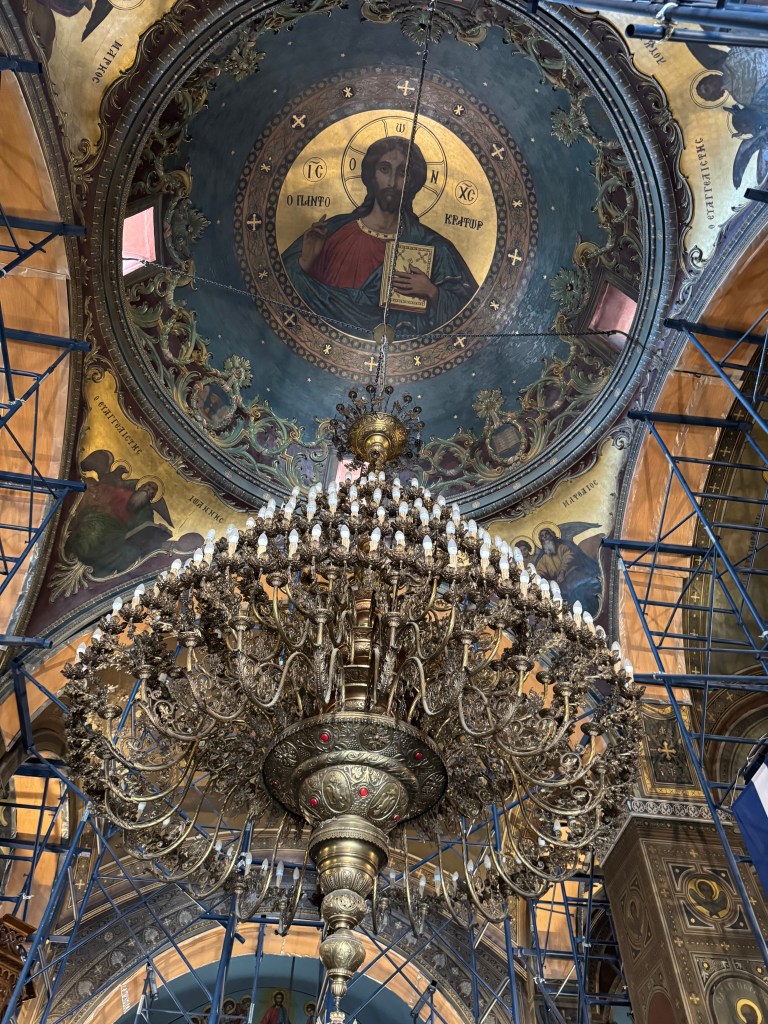
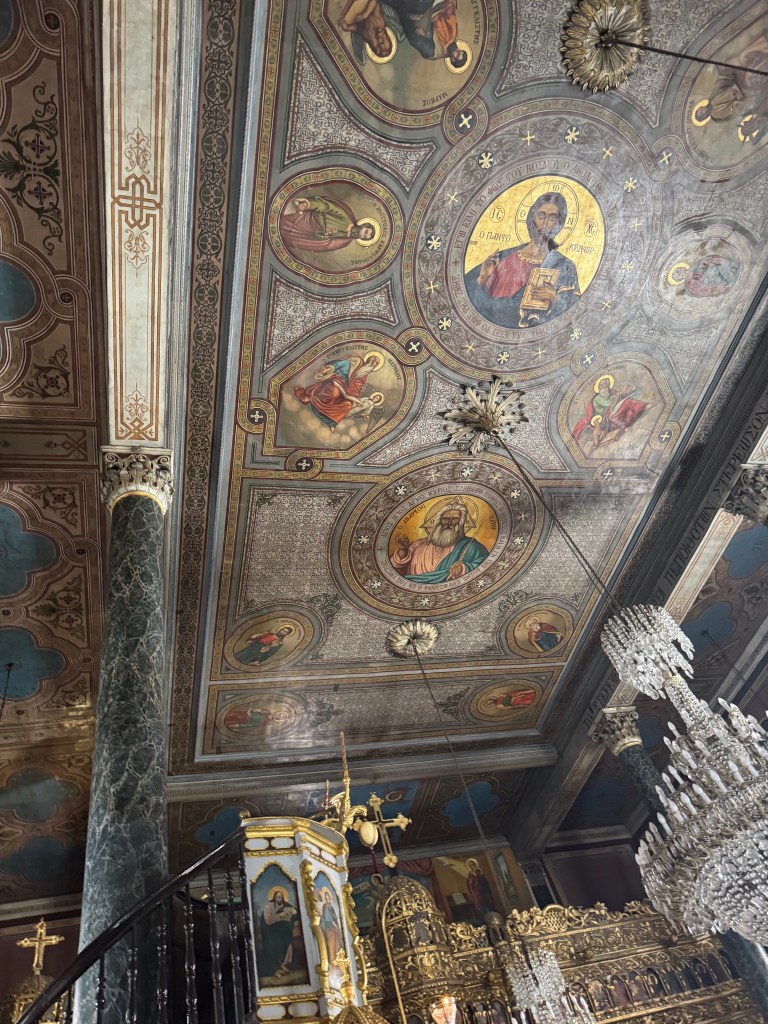
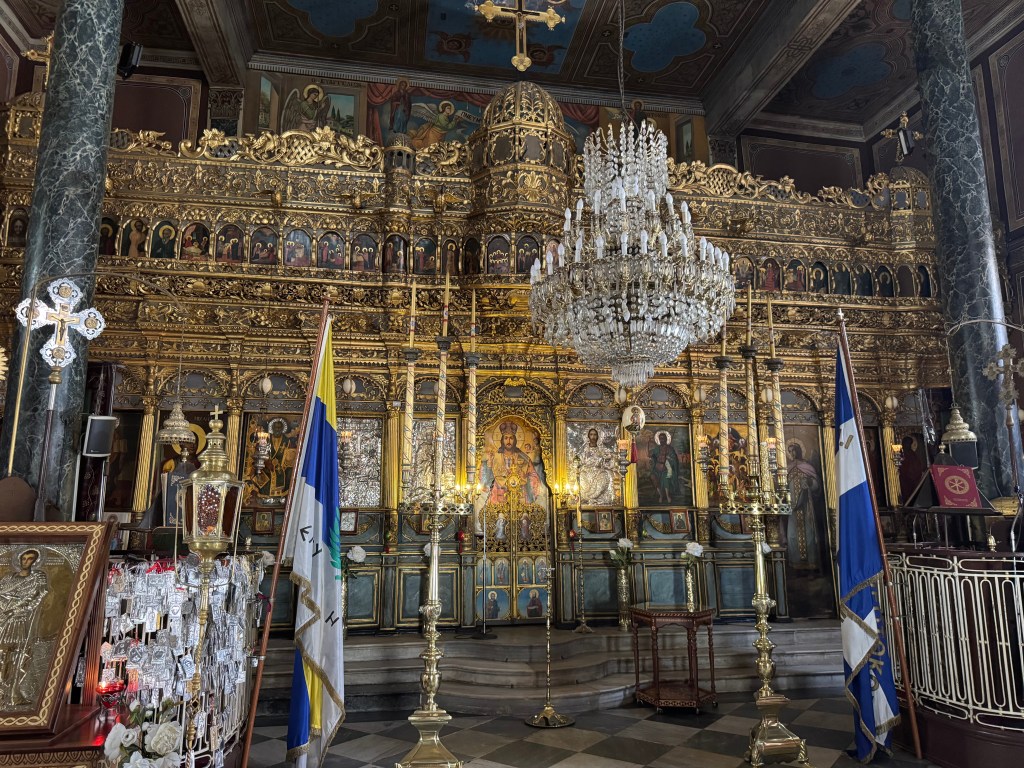
We also visited a couple of Orthodox churches that were full of icons and beautiful candelabras.
As we left port, the captain played “It’s time to say goodbye”. We stood on deck, so grateful that at 81 and 89 we can still travel. It was a magical cruise.
Final comments:
- It wasn’t easy, but I am so glad that we made the effort to go to Greece and the Archaeological sites.
- Having a cane to lean on was great when the pavements were slippery or uneven.
- It can still be a great trip if I don’t get to do everything that I could 20 years ago. I am grateful for what I can do.
- I loved being on the sailing boat and watching the sails opening up. It made this into a real adventure.
 Nili's Adventure
What a great trip! The photos are magnificent and really tel the story! Thanks for sharing!
>
LikeLike
Great to read. You two look great! We are going to Greece on August 13th and we will be in Monemvasia, Nafplio, Elafonisos and Athens besides other places in the Peloponnese.
LikeLike