
I had heard of the beauty of Slovenia and Croatia and chose Rick Steves’ tour itinerary. I prefer smaller groups, but decided to give his tour a try even though the group size could be as much as 26 people. The size was not a problem because his tours attract people who are real travelers and conform to his rules. This was a great trip.
Slovenia:
Ljubljana
I like to be sure that I arrive in plenty of time for a tour, therefore; we arrived in Ljubljana a day early. I pre-arranged with the hotel for a driver to pick us up from the airport to the hotel. It makes all the difference to me not to worry about getting to the hotel when I am tired from flights and in a new country.
The hotel, Pri Mraku, was beautifully located, right in the old town within a 5-10-minute walk to the river and the main square. As soon as we checked in, we went to get acquainted with the town.
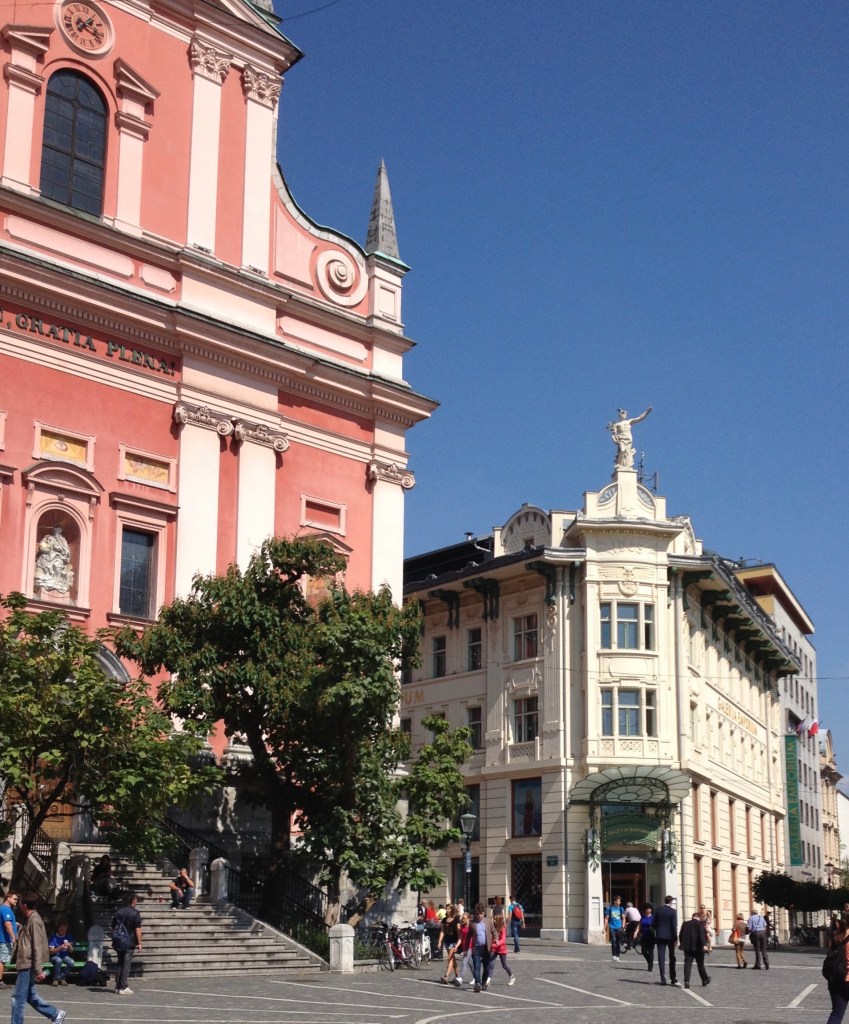
We had a morning free before our tour, therefore, we booked a tour to the Skocjan caves and Lipizzan horse farm.
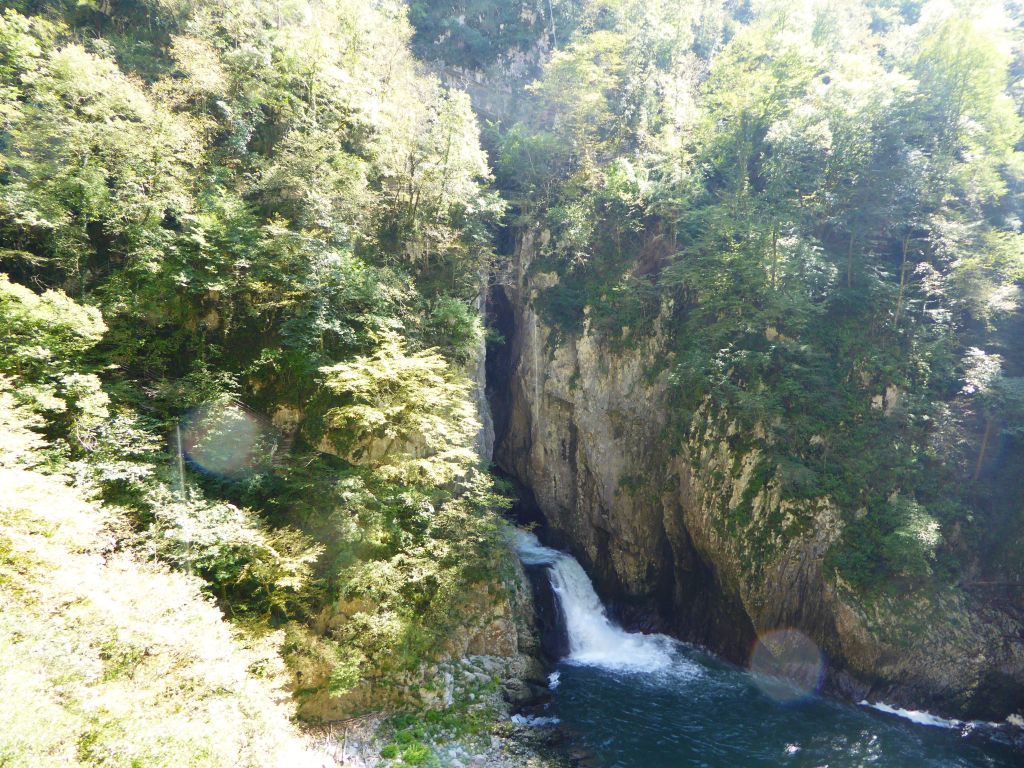
The caves are magnificent. A rushing river caused the caves and created wonderful formations. One place looked like an enormous cathedral. Nature makes more beautiful cathedrals than man can ever do. Unfortunately, I don’t have pictures from inside the caves.
The Lipizzan horses stud farm was wonderful. The Lipizzan are trained to perform and we saw a 45-minute performance showcasing their wonderful moves. These horses were bred to be white because the Hapsburg queen, Maria Theresa wanted white horses.
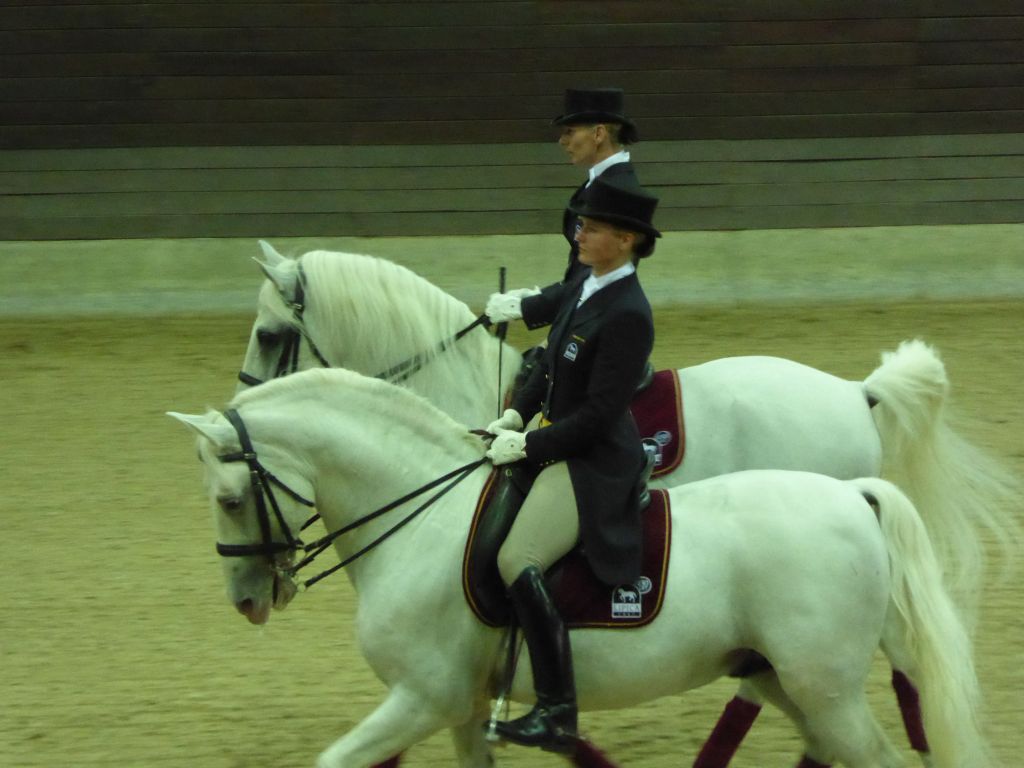
There are about 6,000 of these horses worldwide and 360 are in Ljubljana. The horses are born black and lighten as they mature. 10% of them stay black.
Ljubljana was originally a Roman military and trading post. Its location between Italy and Croatia and the fact that it had a navigable river made it ideal for trading. It was part of the Austria/Hungarian Empire, and the Ottoman Empire, and then was part of Yugoslavia. In 1991 Slovenia became independent.
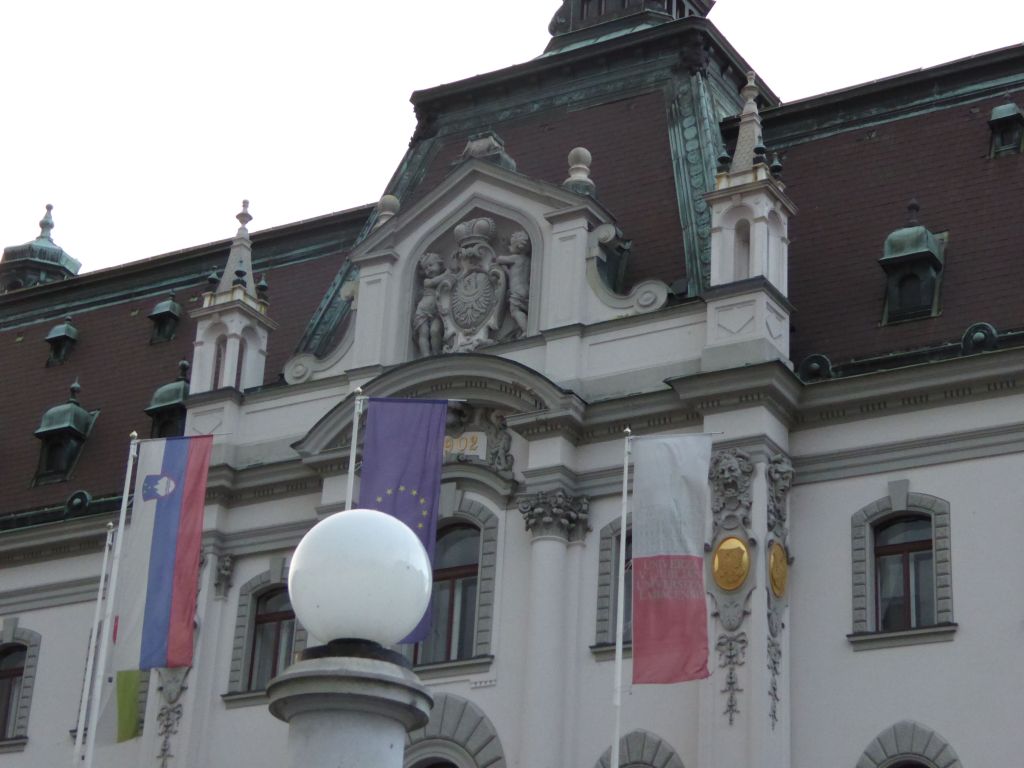
It is a lovely town, built on both sides of the river. On our first night, the Rick Steves tour provided a short city tour on our way to terrific dinner in the castle on the other side of the river.
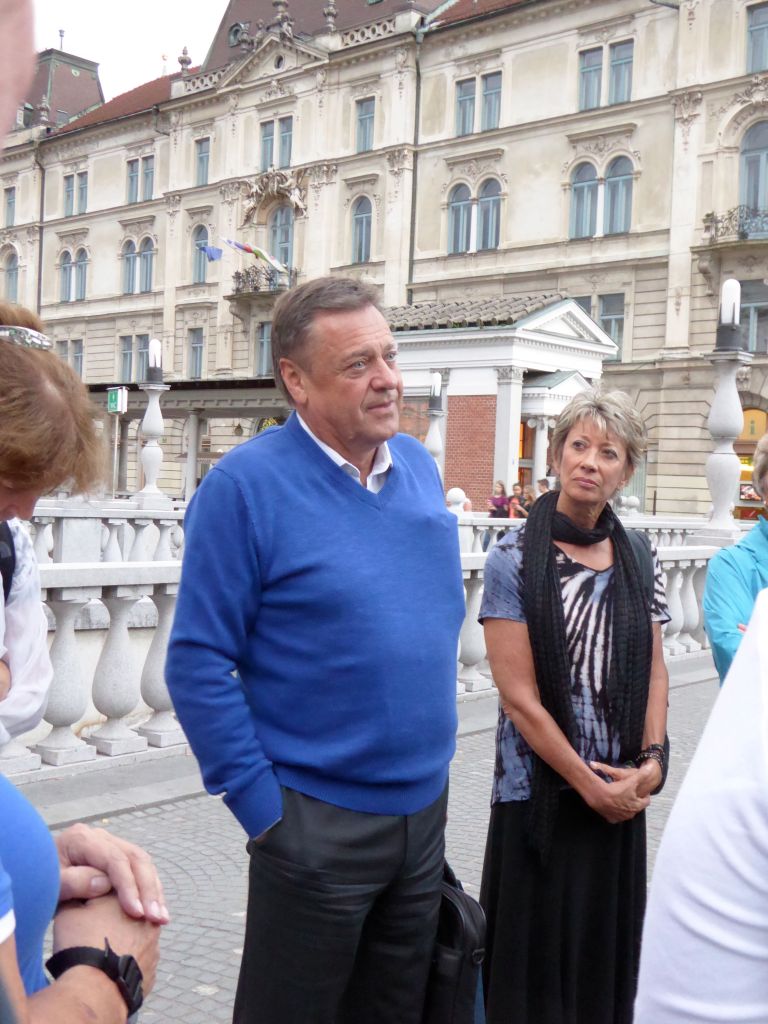
When we were crossing the pedestrian bridge, we met up with the mayor of the city, and he was happy to chat with us.
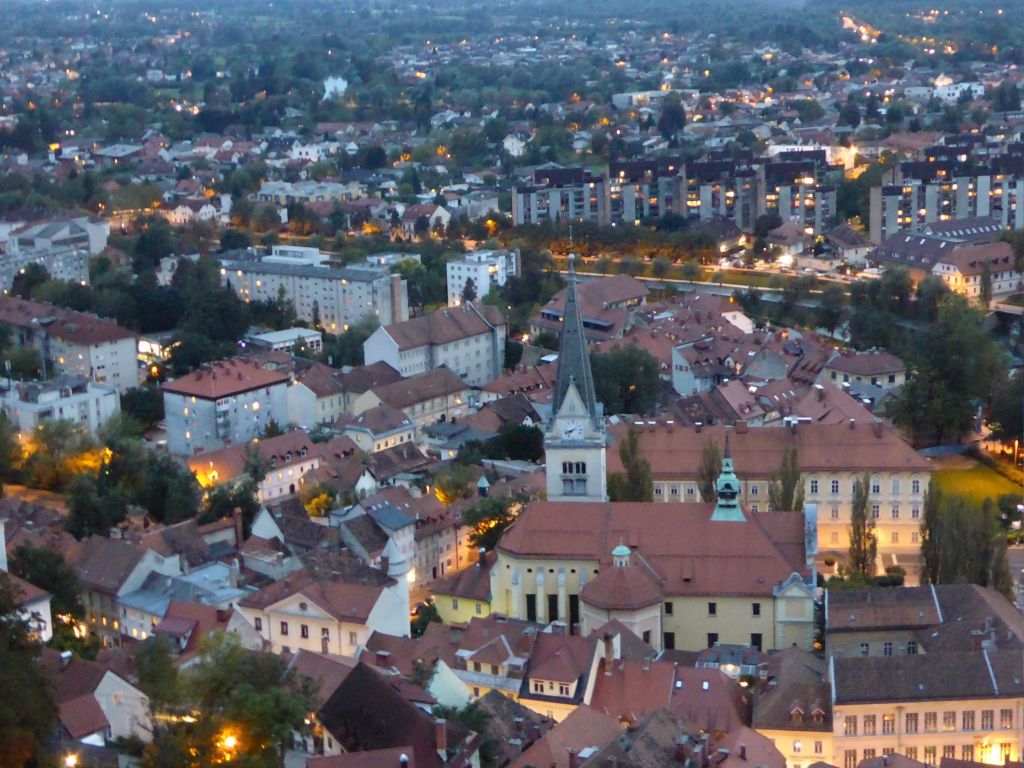
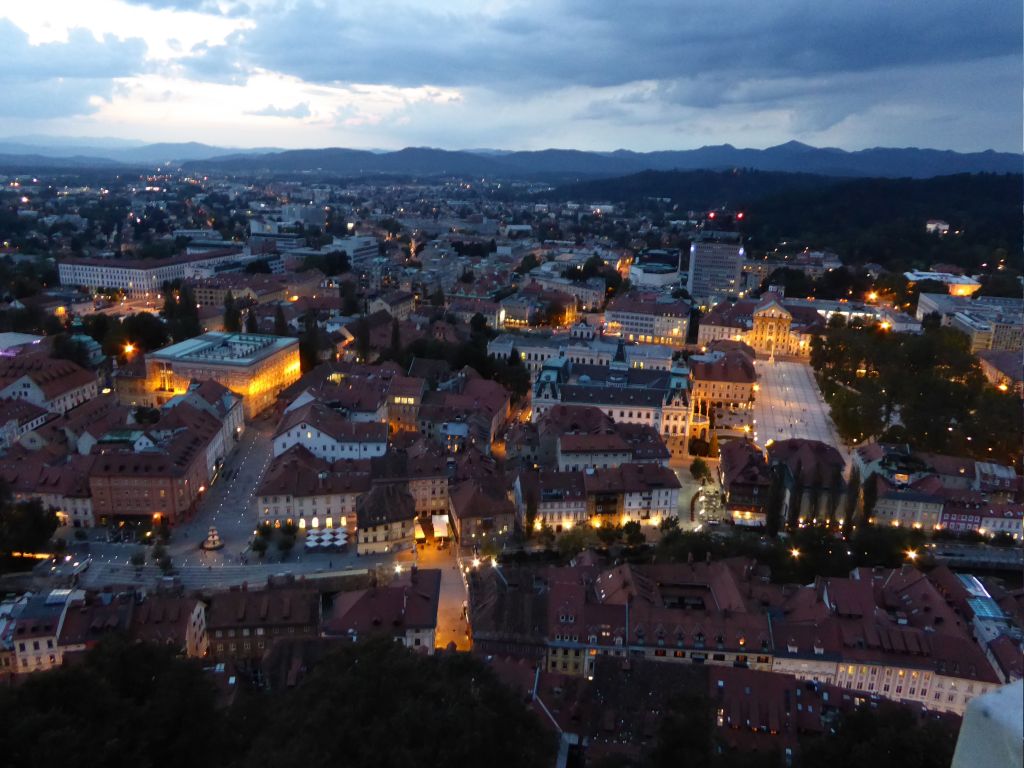
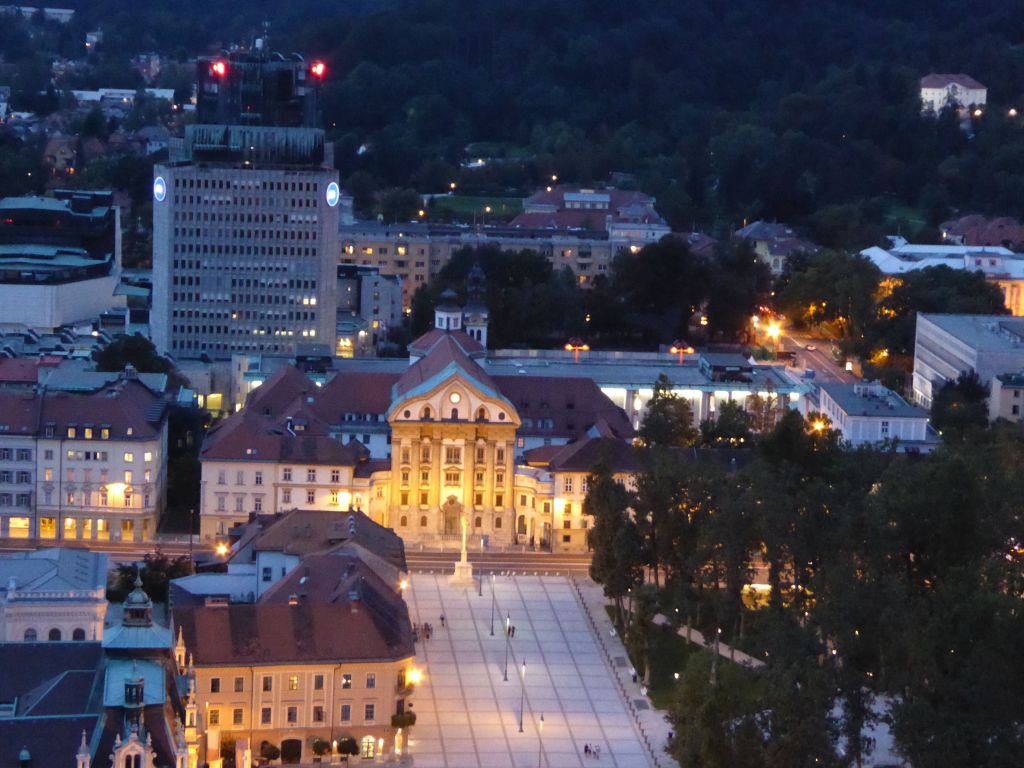
The dinner and view from the castle was spectacular.
Lake Bled and on to Kobarid
It was an overcast rainy day; not the best to see beautiful Lake Bled. We did, however, walk around the lake and stopped at the castle.
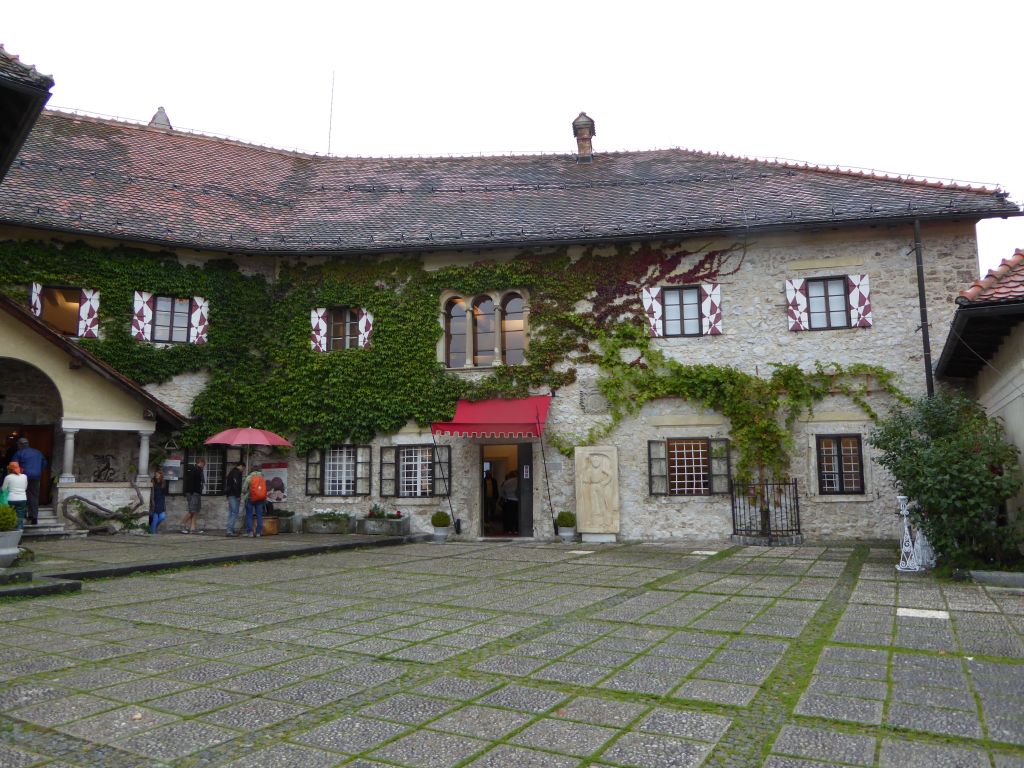
The castle is no longer furnished but still interesting to visit. It was never attacked.
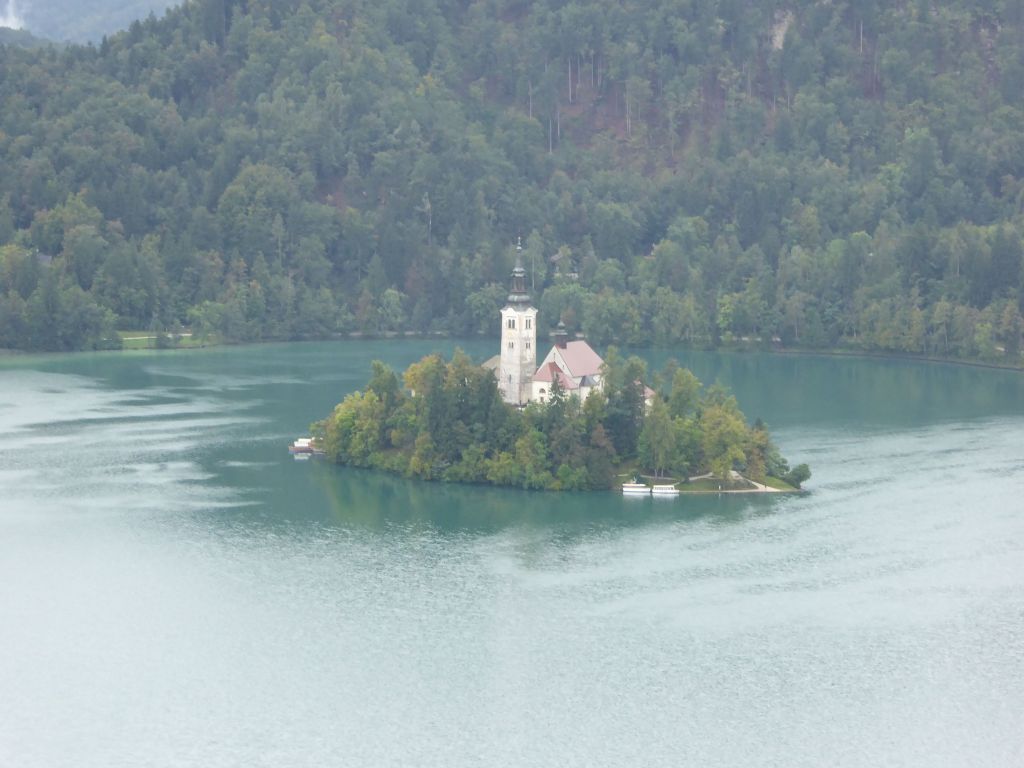
There is an island in the middle of the lake with a church. There are 99 steps up to the church and tradition has it that if you marry in that church, the groom must carry the bride up those steps.
The drive from Lake Bled to Kobarid through the Julianne Alps was magnificent.
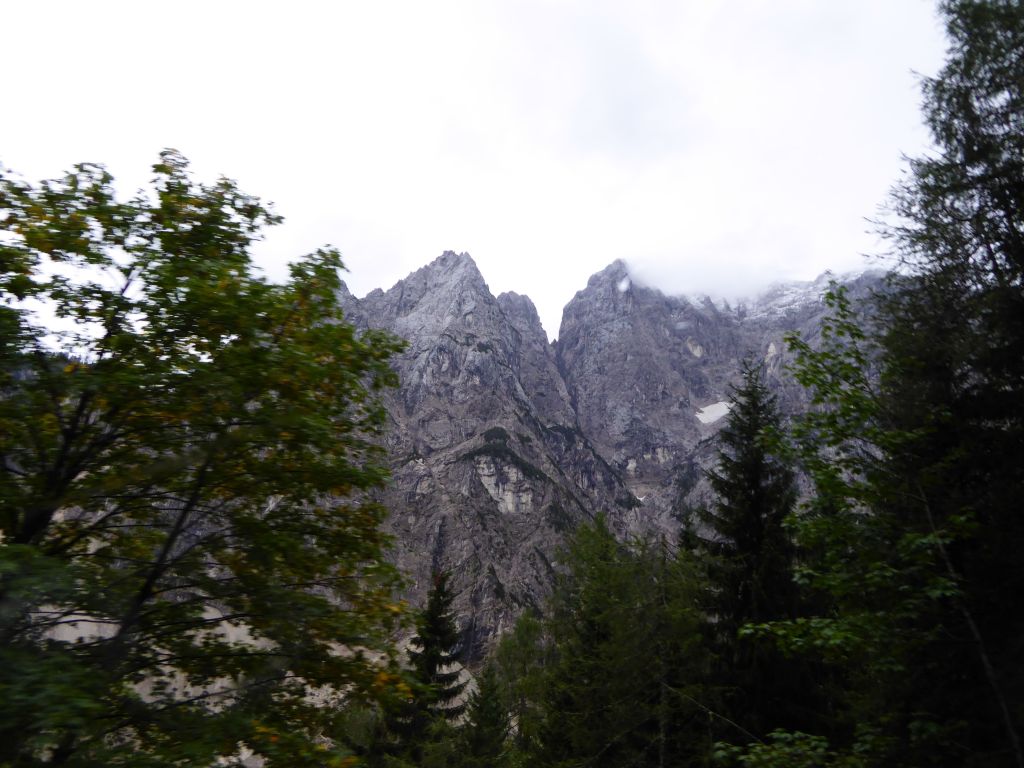
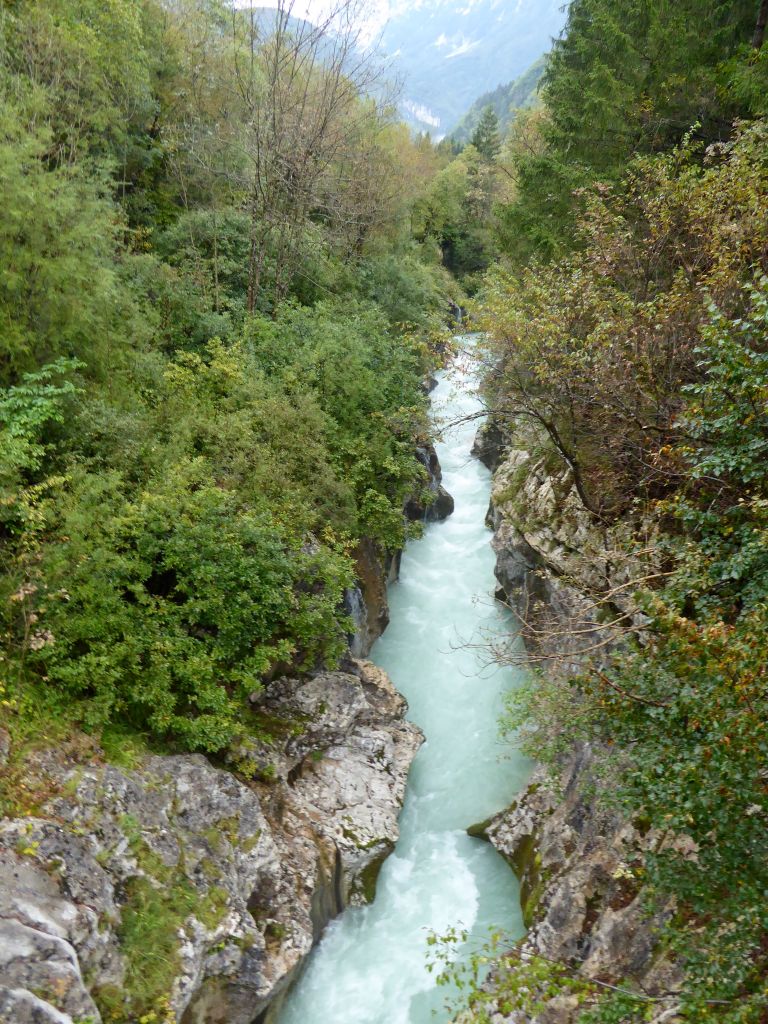
The mountains are rugged and because of the rain, we had extra waterfalls. The drive to the pass included 24 switchbacks and 26 on the way down. It was impressive. There had been a lot of fighting in these mountains during WWI and I can only imagine how miserable conditions were in the winter.
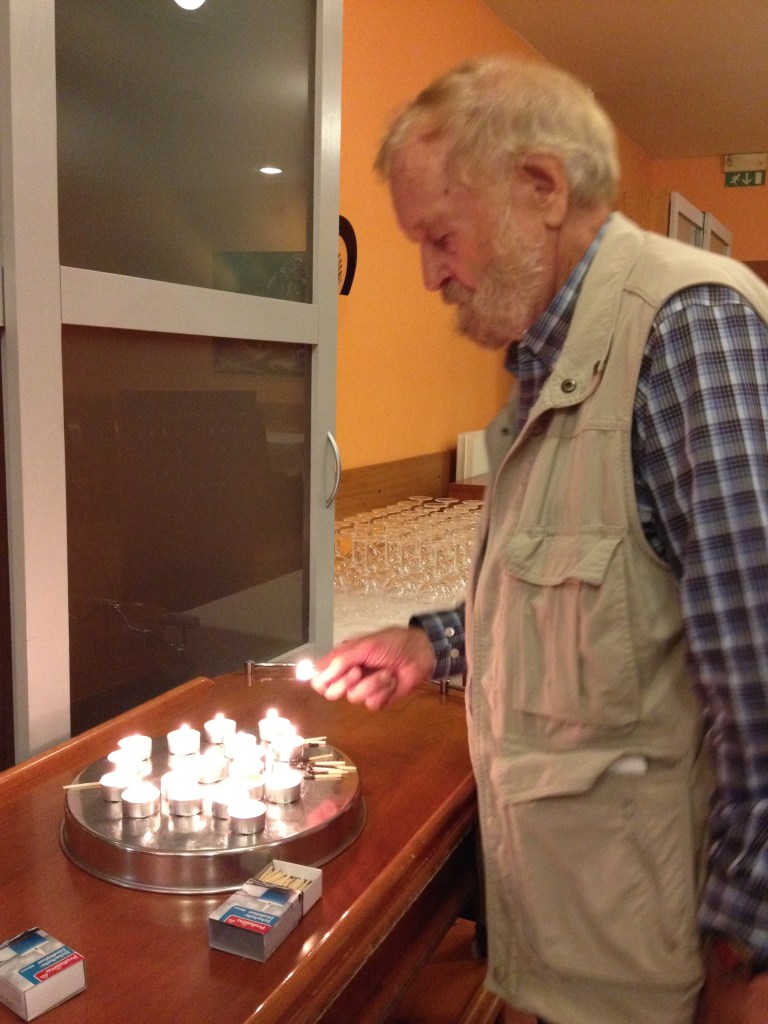
That evening was the anniversary of 9 11. Planning ahead, Jerry and I brought 18 tea lights and matches. At dinner, we put the tea lights on a tray. We lit the first candle, and everyone else got up and lit a candle. We also had a moment of silence to remember the firemen and other victims. Many in the group thanked us for getting the candles and planning the small ceremony.
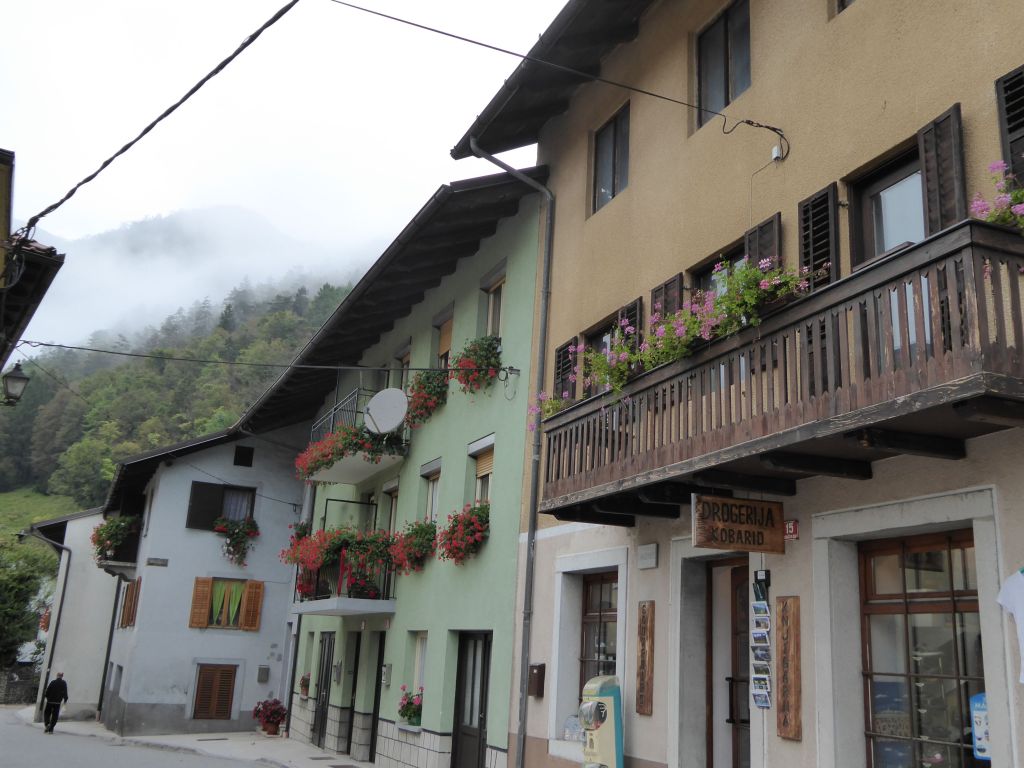
Kobarid, where the tour spent the night, was a lovely little mountain town with an interesting WWI museum.
Croatia
Pula
The original settlers of Pula were farmers and pirates. Their mistake was to prey on the Romans, who conquered them in 177 BCE and eventually used their port for commerce.
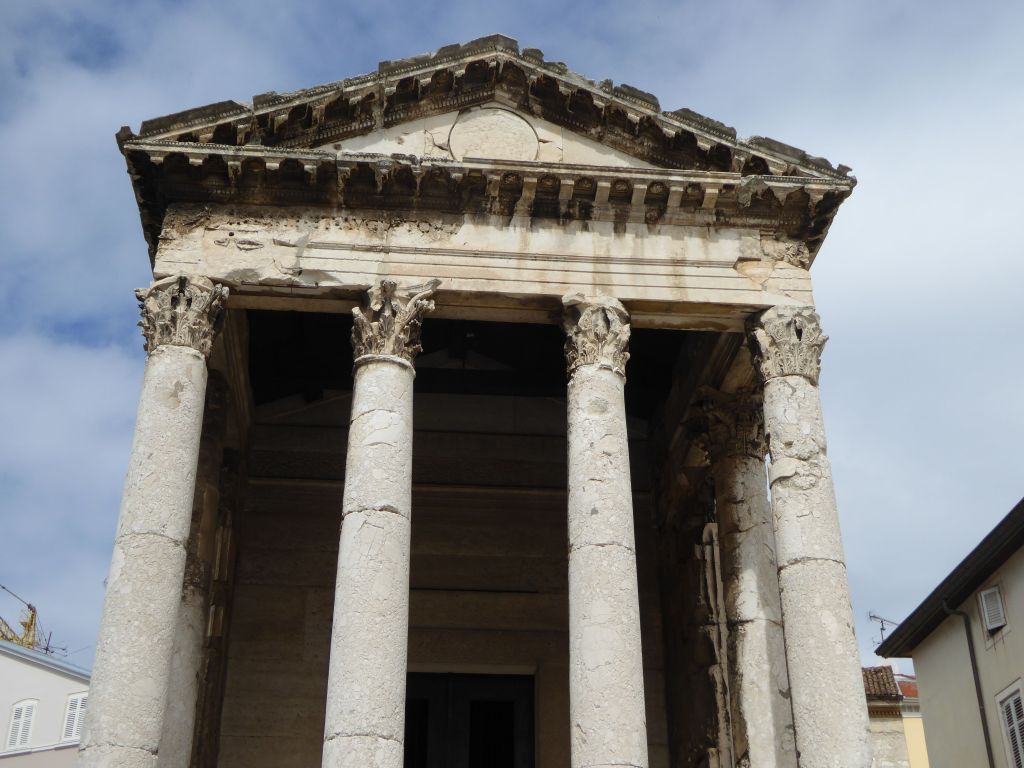
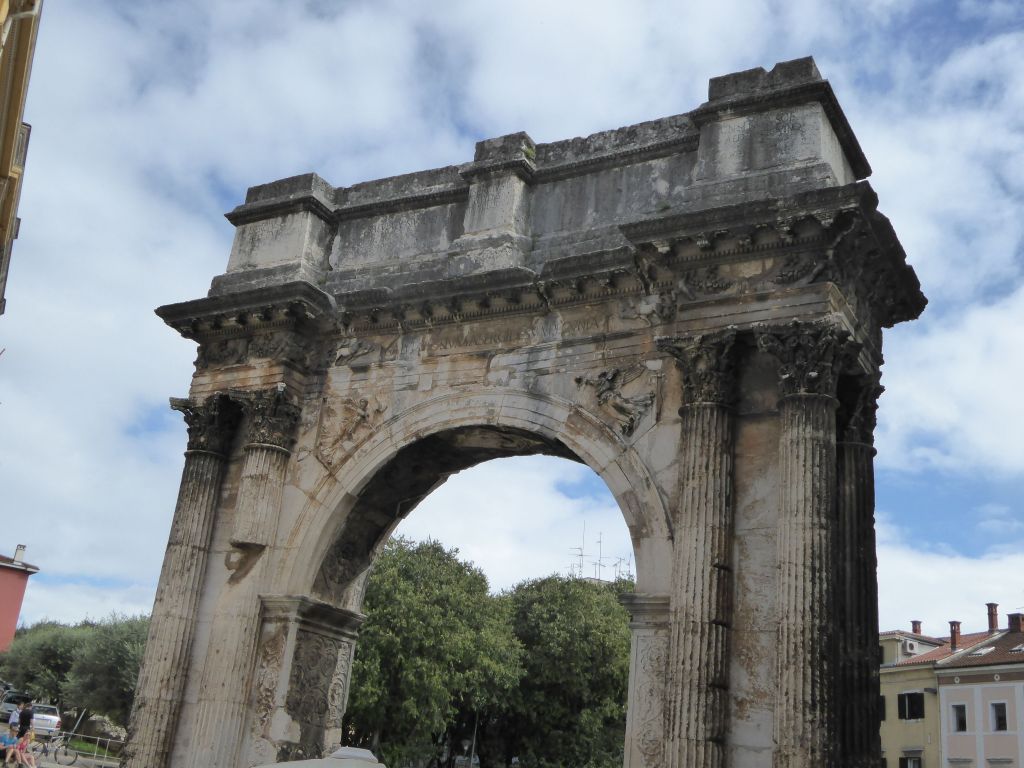
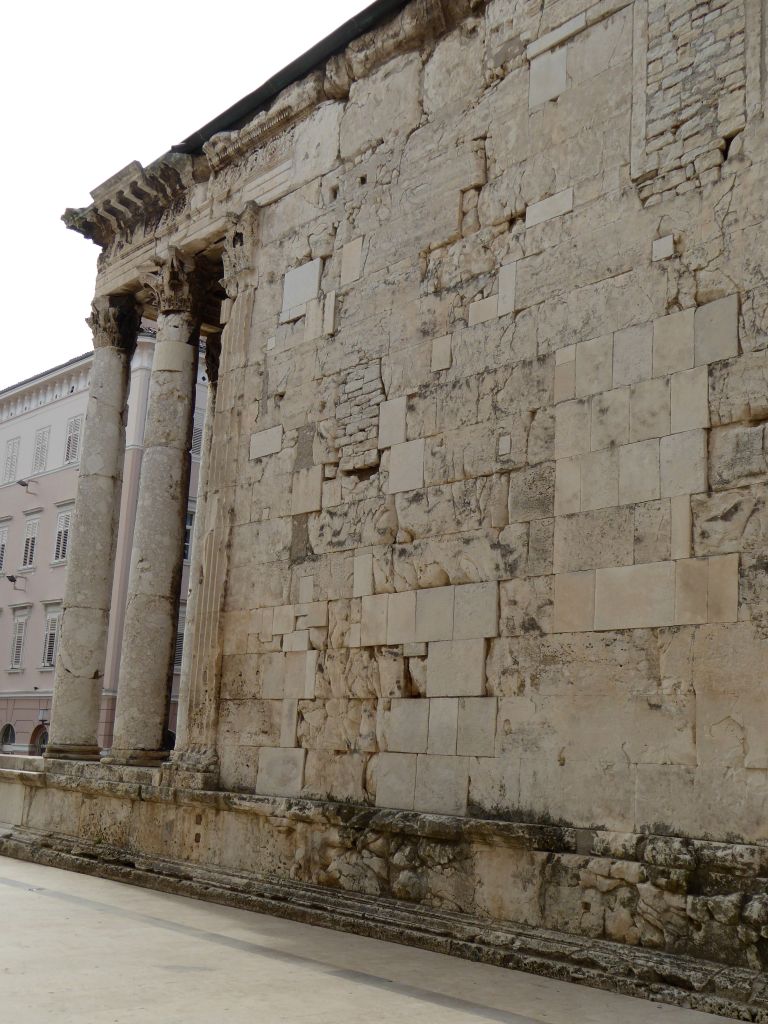
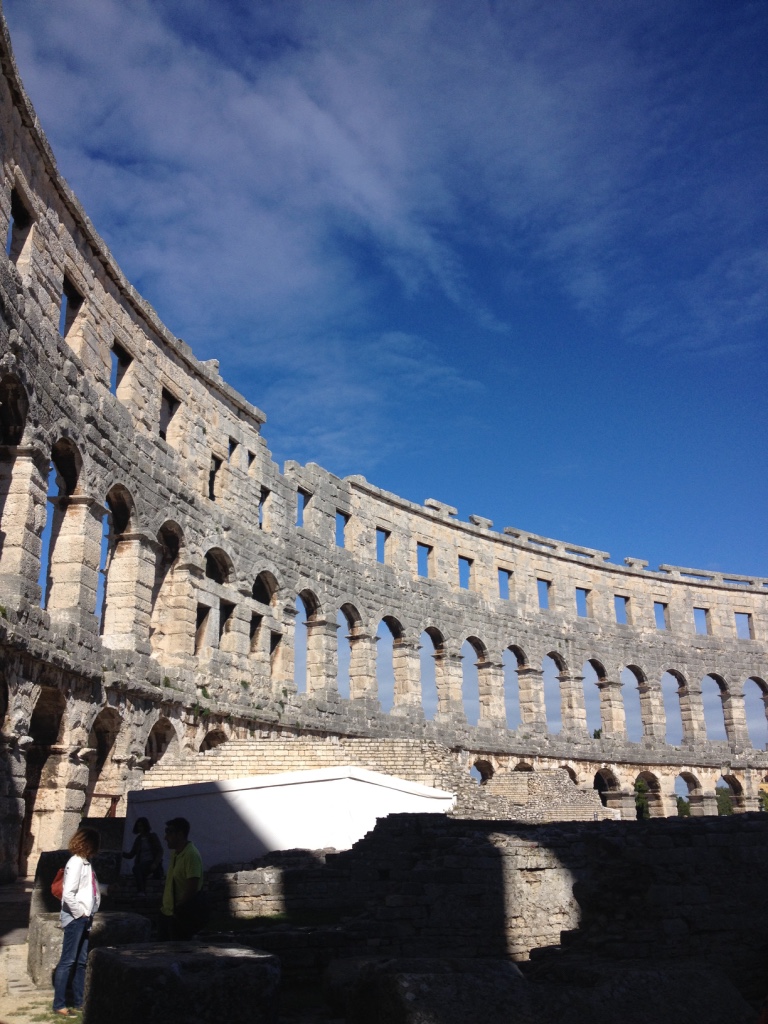
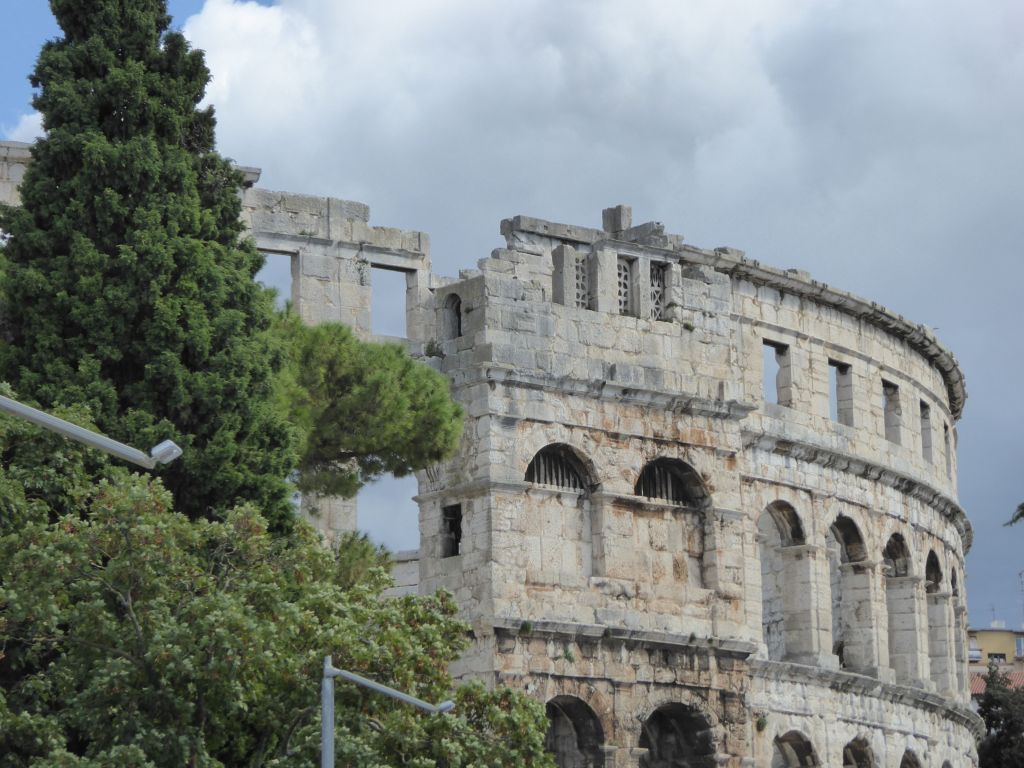
The Romans built a complete town with a forum and amphitheater around 50 CE. The amphitheater sat 23,000 people. The arena center was covered with sand. The seats had canvas coverings, in different colors to add to the drama. At the bottom was the royal box, where the emperor sat when visiting, then came the nobles, higher up were the military personnel and finally the peasants. There was also standing room space at the top.
Though smaller than the one in Rome, the amphitheater is much better preserved for a couple of reasons: a) its exterior was of stone rather than marble, so it was less likely to be re-used and b) the church forbade the locals from stealing stones from it. Only the Church could take the stones and they did not take many. During the Venetian occupation of Pula, from 13th to 18th centuries, the Venetians wanted to move the structure to Venice, but luckily it was too expensive and difficult to do so.

Rovinj
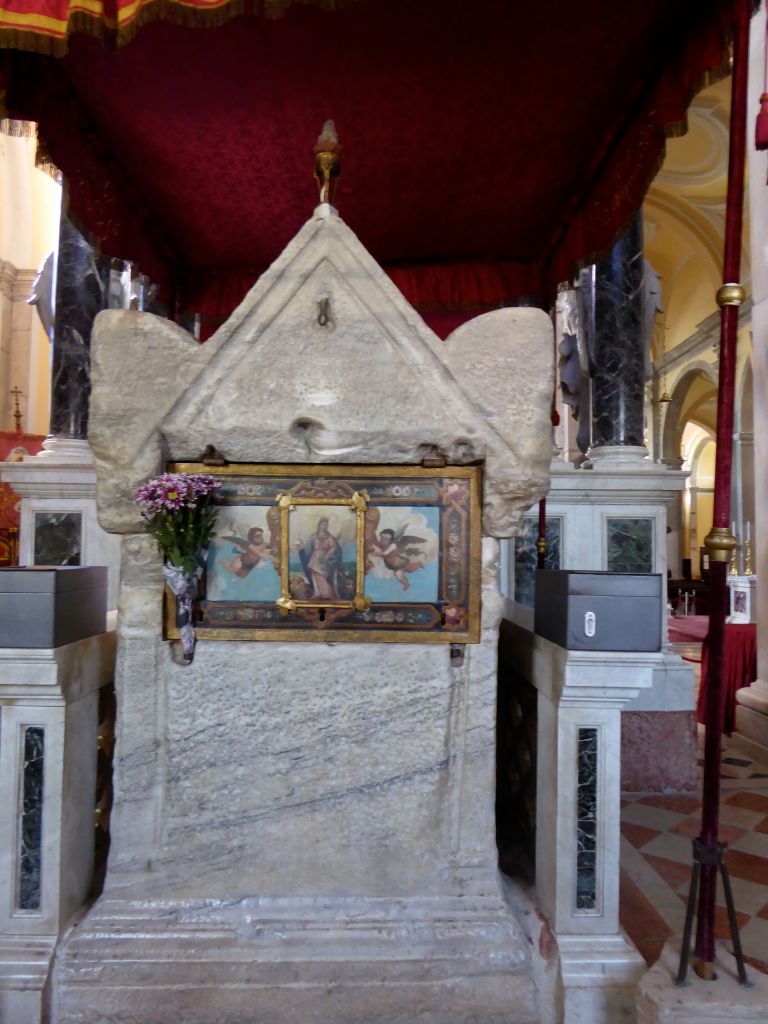
Rovinj‘s pretty St. Euphemia church is at the top of the hill. The church has a beautiful Carrere marble altar and gothic statues from the 15th century.
It also has paintings from the 16th and 17th centuries.
The church has a wonderful bell tower, which requires climbing 182 little wood steps to the top. Going down, I went sideways because the steps were so narrow.
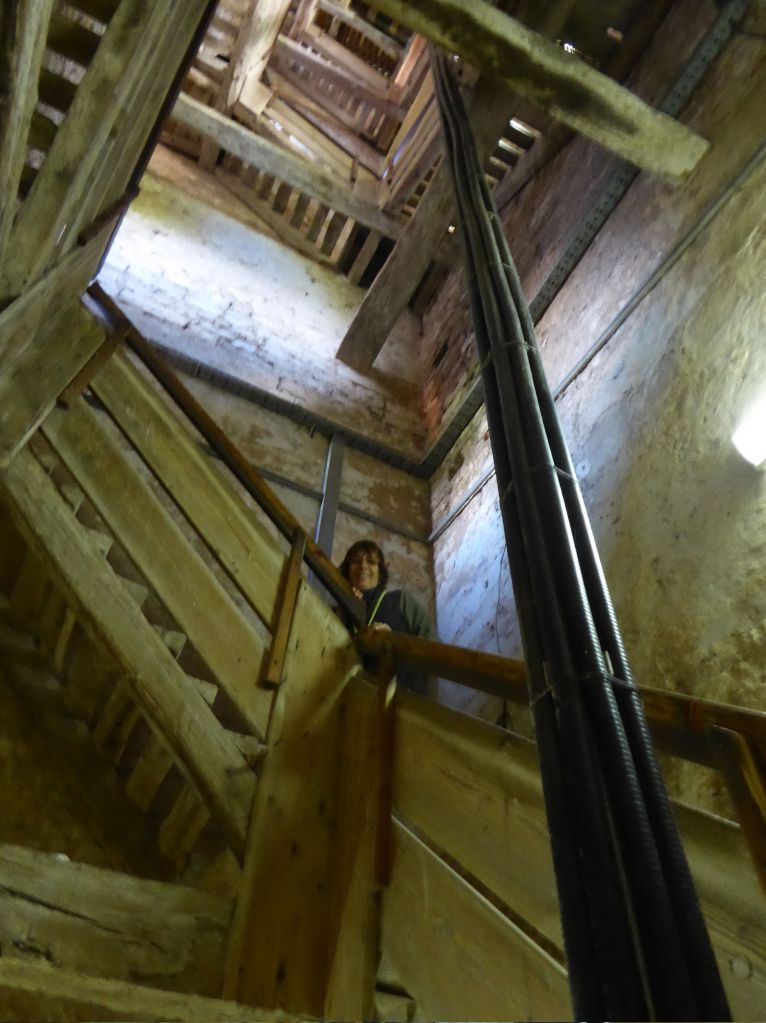
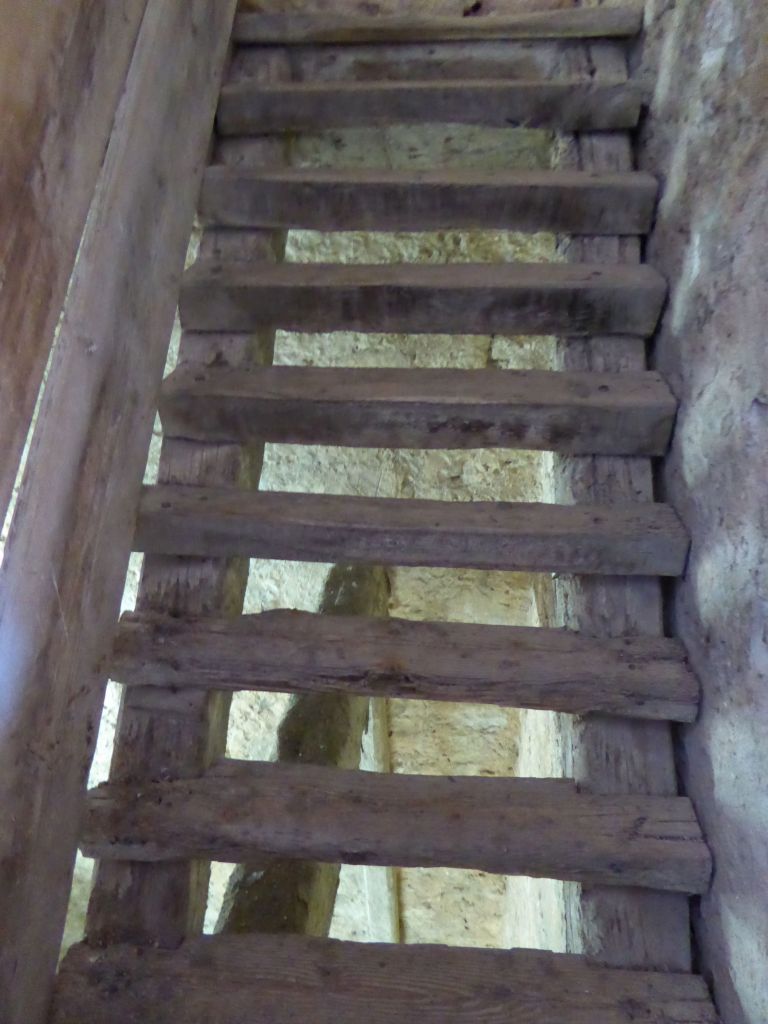
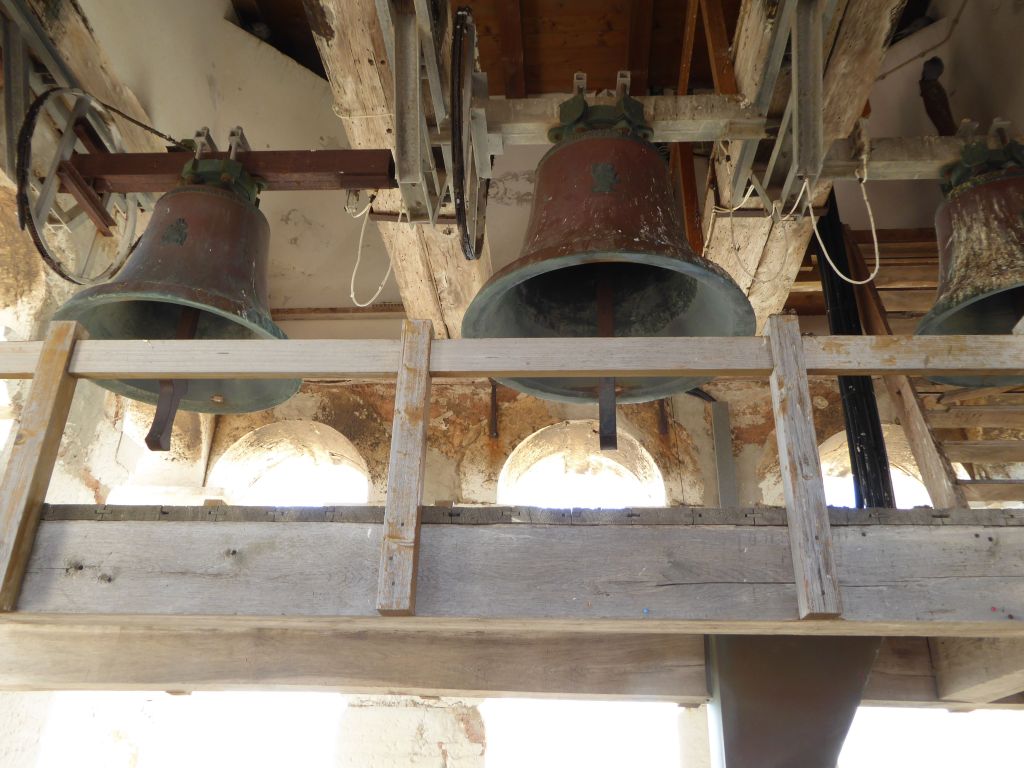
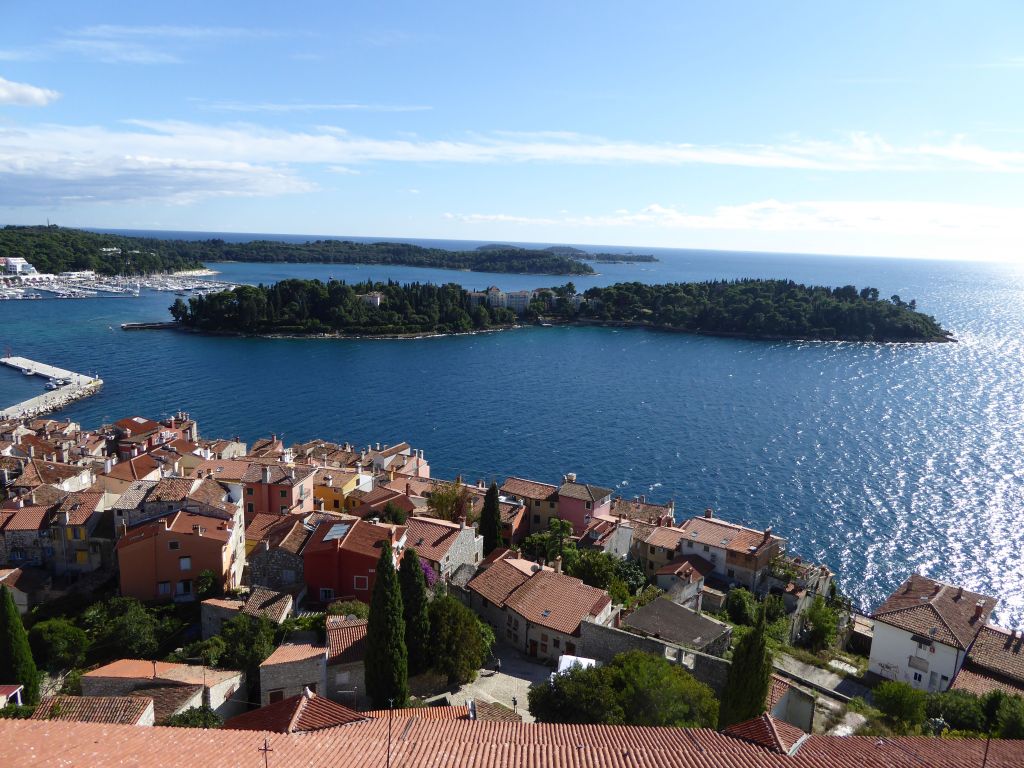
At the top, we saw this delightful view. The sky was clear and we could see forever.
Plitvice Falls
With all the rain that summer and early fall, the the falls were flowing like crazy.
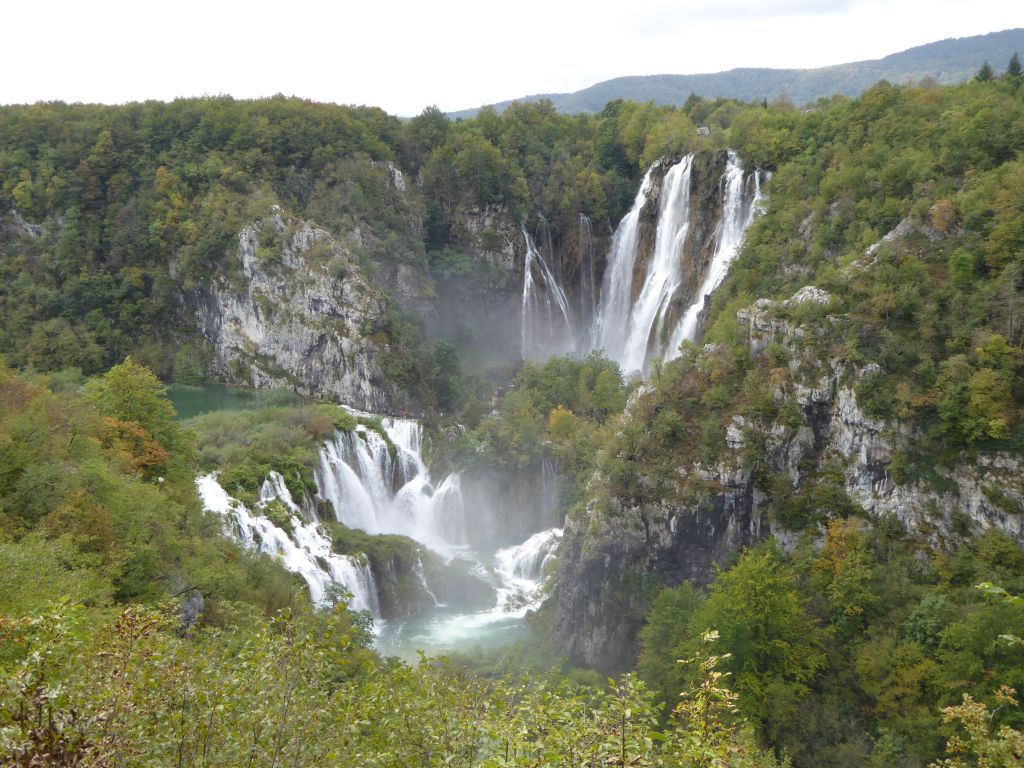
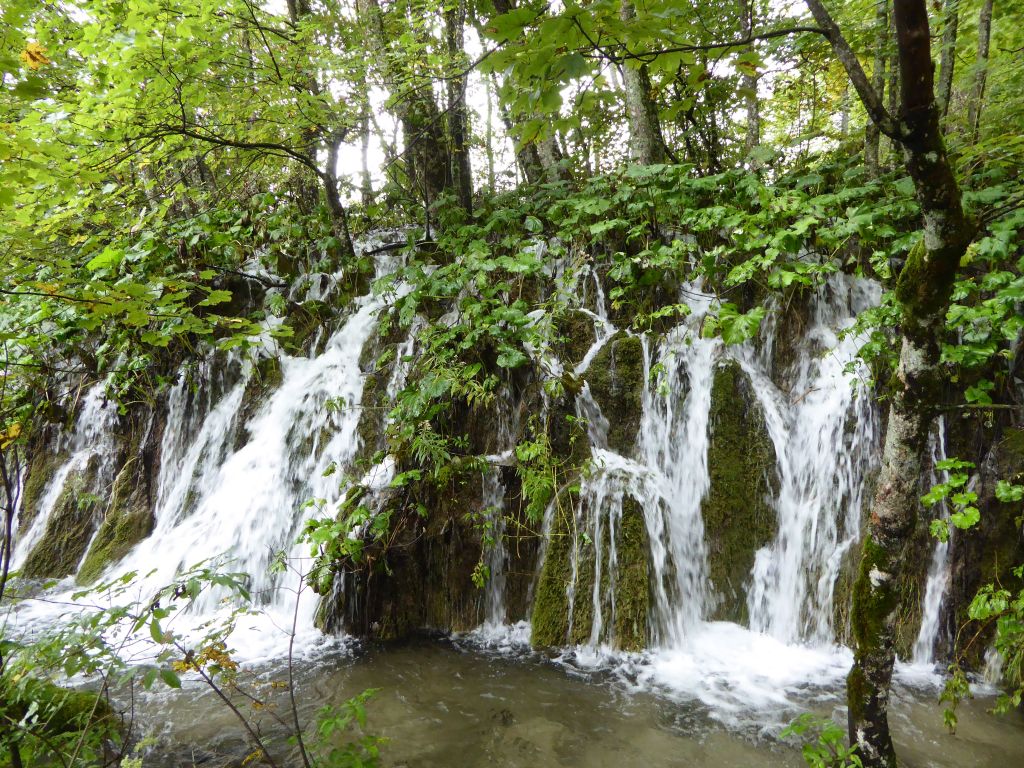
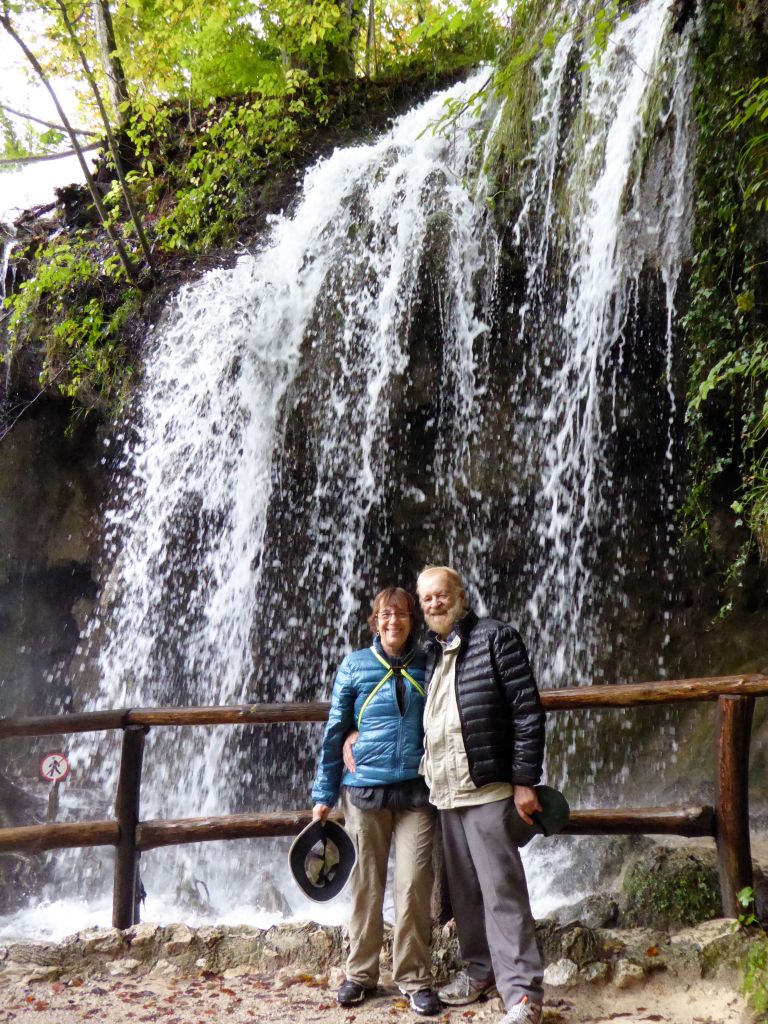
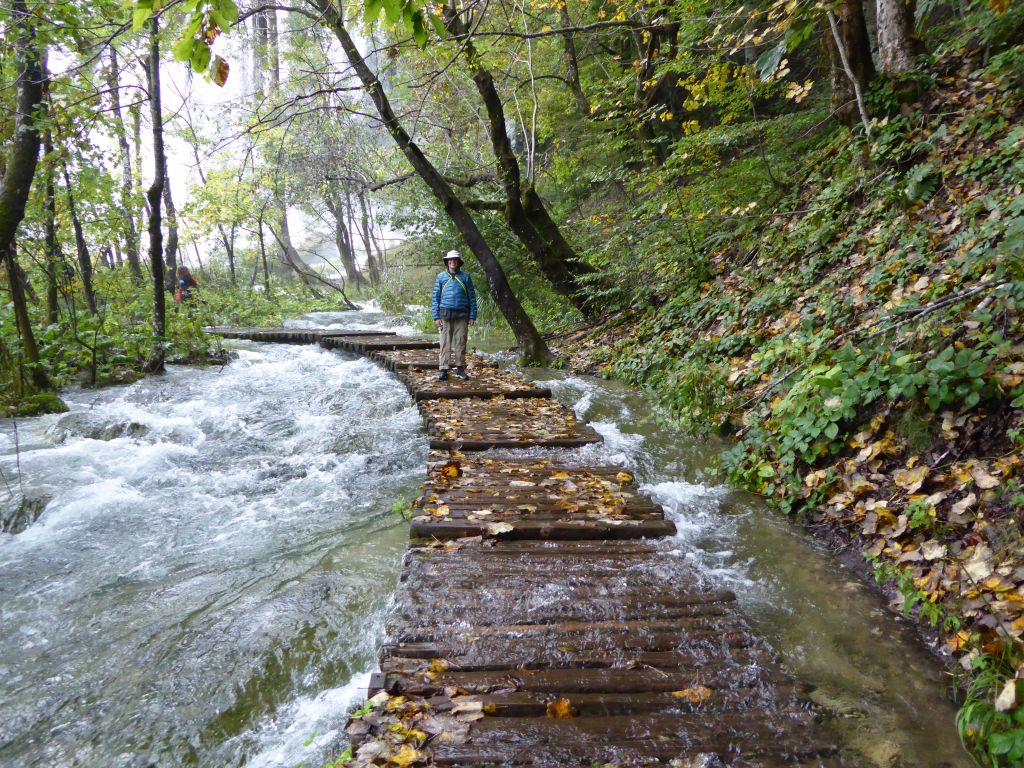
However, because of the rain, part of the trail was underwater.
They were stupendous, beautiful, and impressive. We saw large powerful falls and smaller falls that went circularly around the lake. Often there were too many of them to capture in one picture.
Split
Split’s main attraction is Diocletian’s Palace, built in year 305 CE. The city walls were added around 1660 to protect the inhabitants from the Ottomans. The Ottomans got to within 20 miles from Split before they were stopped.
The palace grounds, inside the wall, are quite large: 375,000 square feet. People built houses inside the palace walls over the centuries,. This is why the houses are of many varying styles.
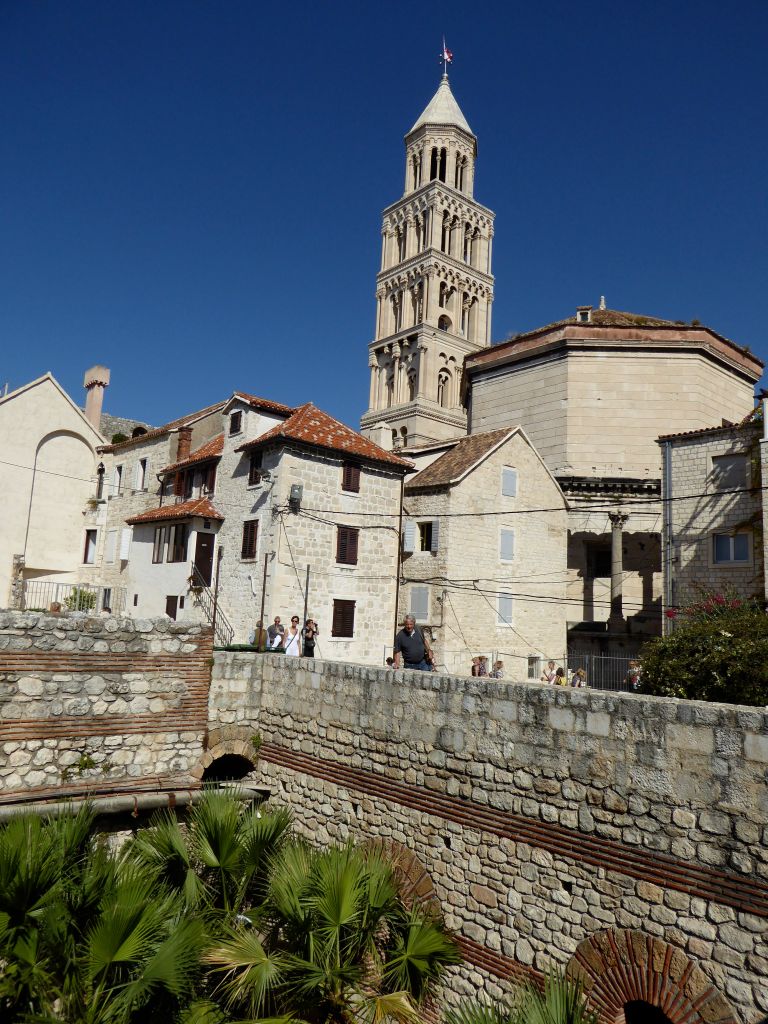
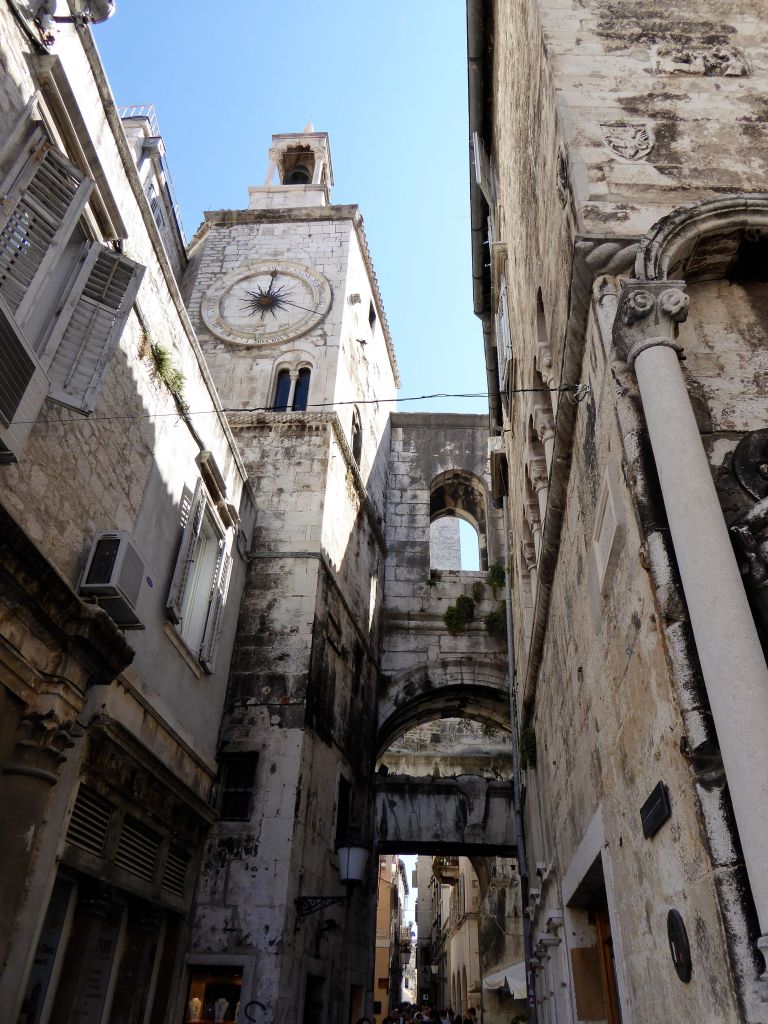
The main/official entrance to the complex is through the beautiful North Gate. In the Roman days, a wide street led right to the palace from this gate. Today the road is pretty narrow, because houses expanded into the road and now it is lined with tourist shops.
The main square in front of the palace is magnificent with Egyptian red granite columns from Luxor as well as a Sphinx from there. The Romans had conquered Egypt and took spoils.
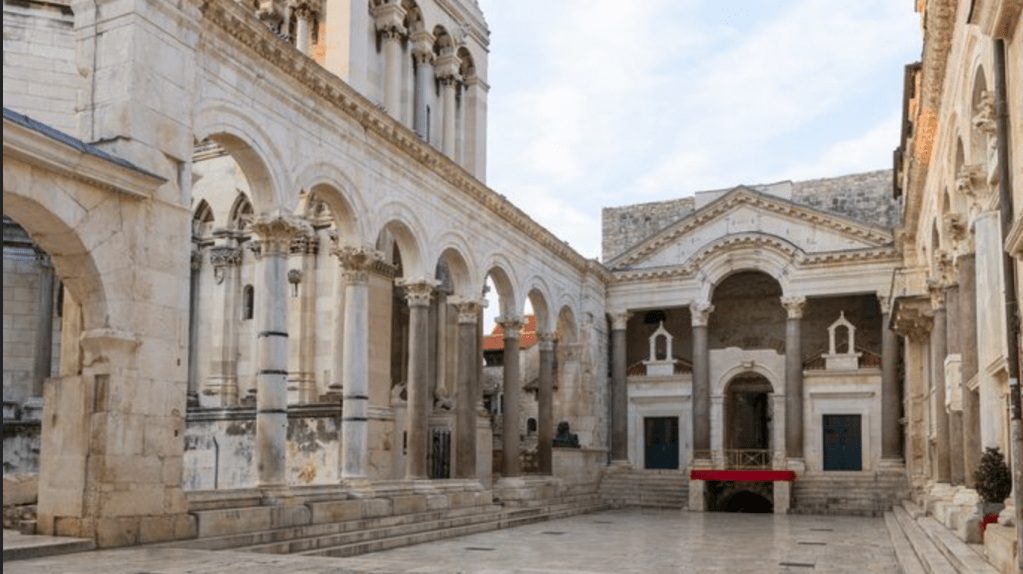
To the left, facing the palace is the smallest cathedral in the world. To the right of the palace is the Temple of Jupiter, now the church of John the Baptist. The square in front of the palace was the meeting place for visitors to the palace. Diocletian would come out on the balcony to celebrate the summer and winter solstice, and the subjects would all bow down to him.
During our visit to the palace, parts of the grounds were closed for the filming of “Game of Thrones”. The Palace grounds have been lived in for 1700 years and they are still vibrant with both locals and tourists.
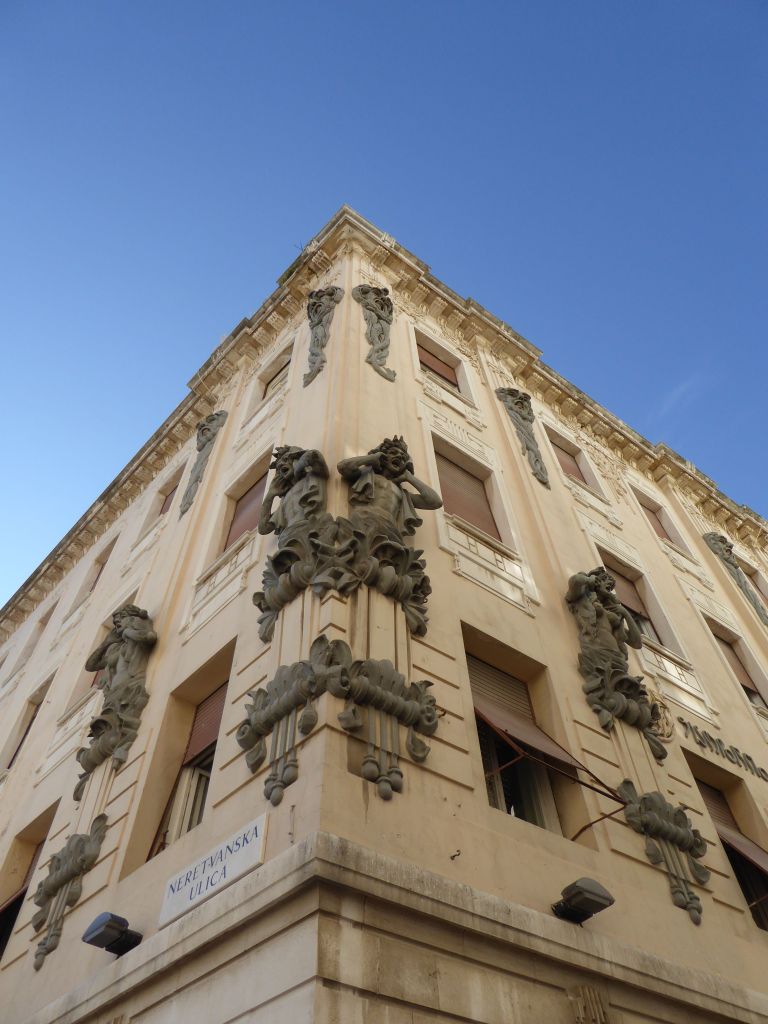
The town has natural Sulphur springs, and next to the fish market is a Spa Building built in 1905 – Art Nouveau style. On the building are sculptures of figures with their towels and fingers in their ears – to block out the fish market noises.
There is a tiny Jewish population in Split, 100 people, down from 300 before WWII.
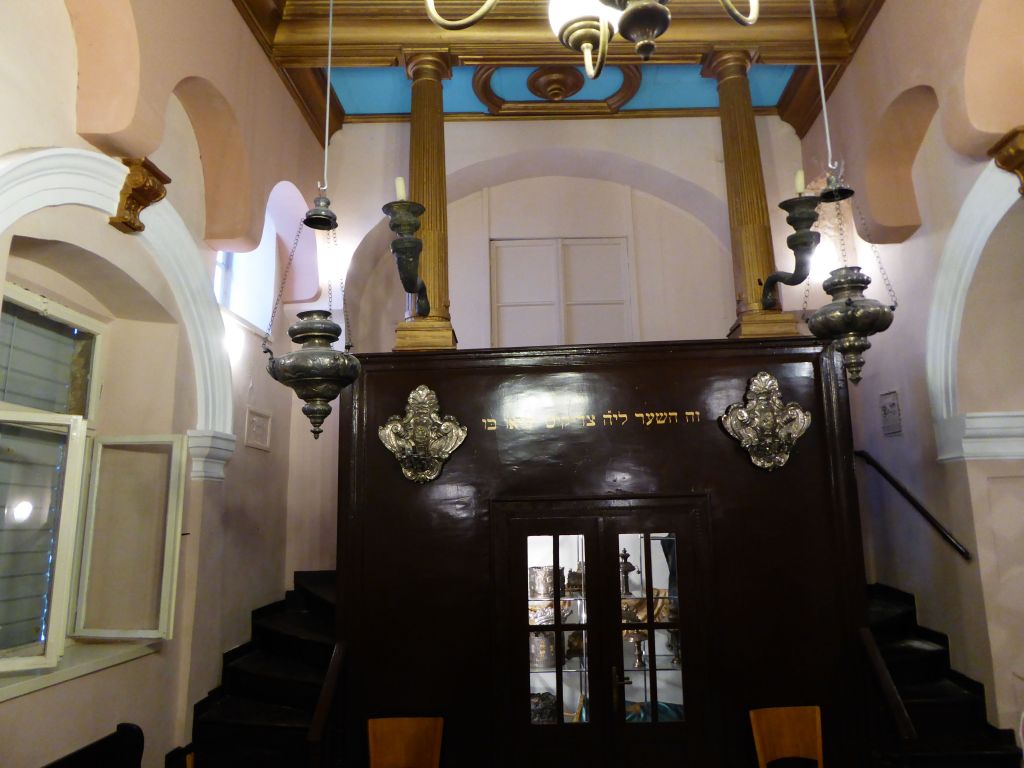
There is one tiny synagogue, from the 1500s, which is on the second floor of a normal house right at the end of the western wall of the palace. They don’t have their own Rabbi, but share the Zagreb Rabbi. The synagogue has been open continuously for 500 years with the exception of 1 year during the Nazi occupation.
Korchula
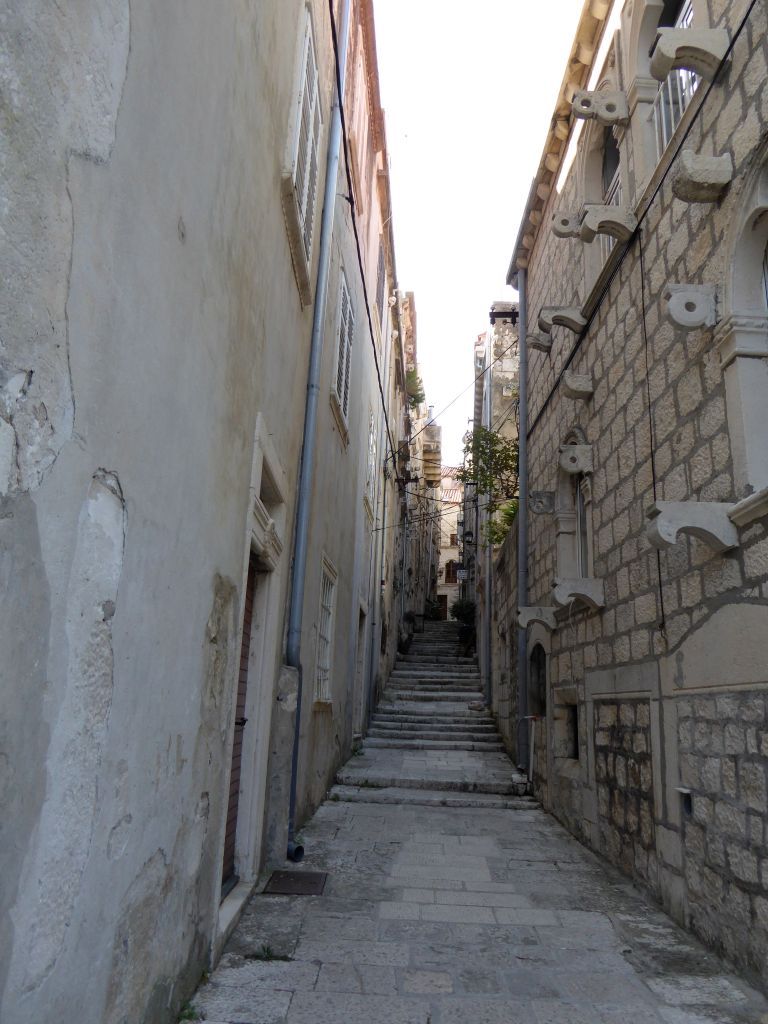
Korchula is a small island town. Its old town streets are laid out like a fish skeleton. The main north/south road is the main bone and the side streets are perpendicular to it. There are shops and restaurants on most streets. Along the water, on both the east and west sides are restaurants with views of the Adriatic.
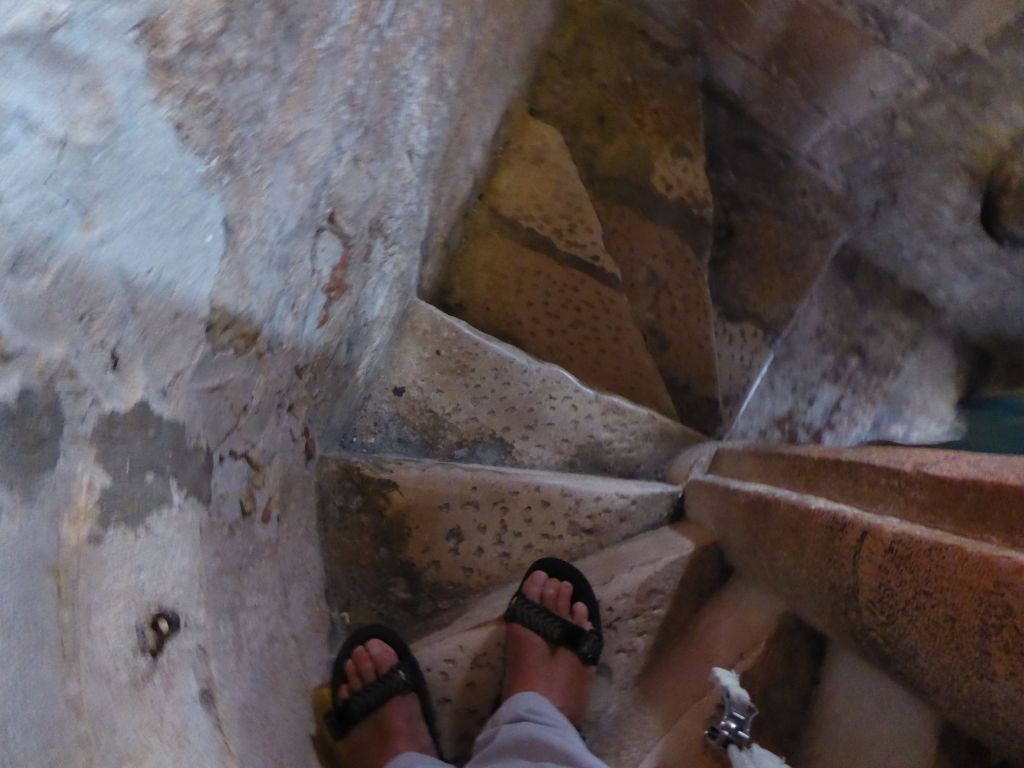
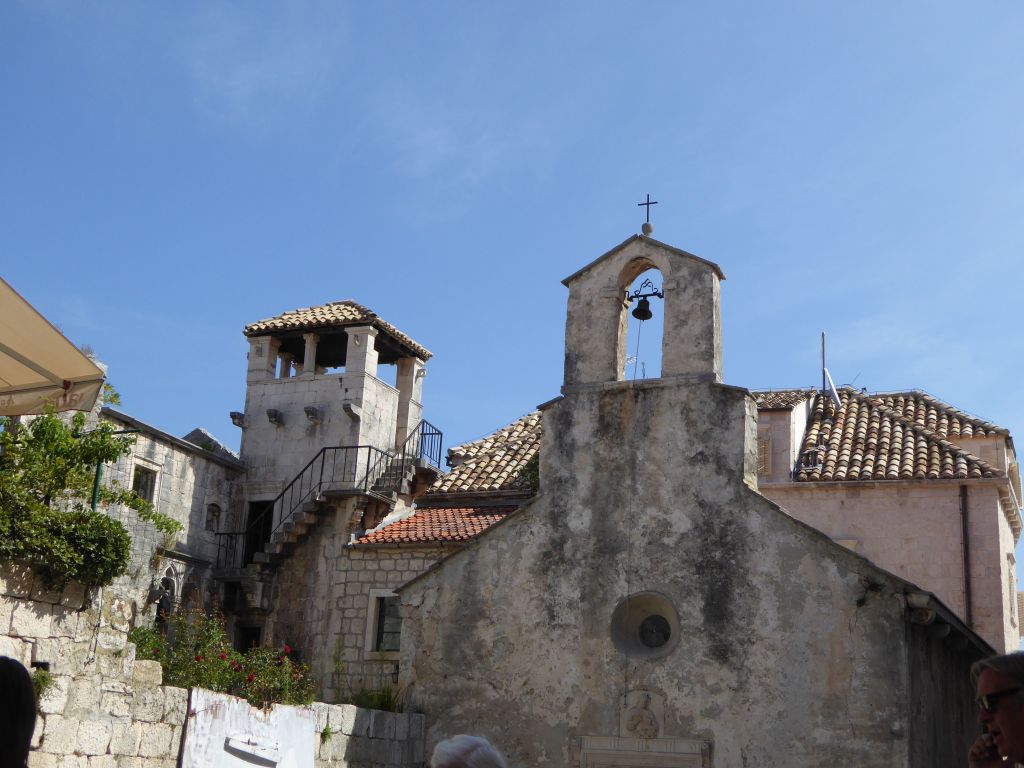
We had fun going up to the bell tower of the church. (Obviously, I love bells and bell towers). The spiral staircase is so narrow that they have a red/green light that is turns green for going up when no one is coming down.
The bell tower was fun to squeeze up into it. The view from the top was great.

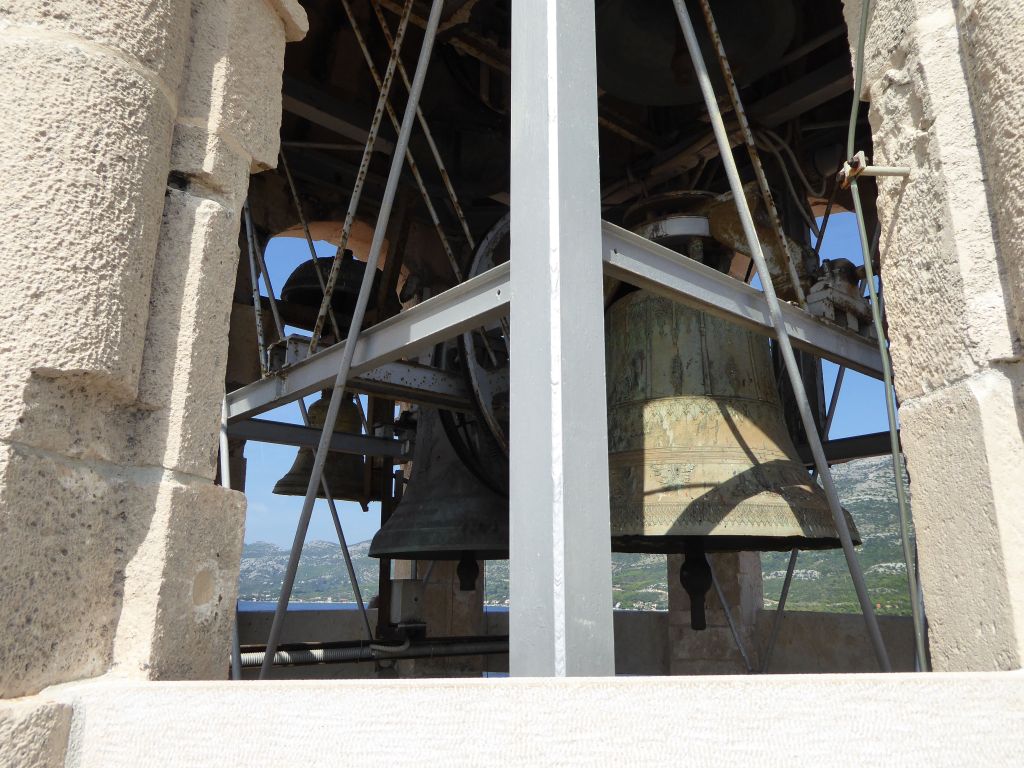
It was 11:45 AM and we decided to stay on top for 15 minutes to hear the noon bells. Wow! They started about 11:57 and rang for the 3 minutes. Then at noon, a hammer banged on the bells for 12 counts. It was awesome.
Dubrovnik
Dubrovnik was built in the Middle Ages and was an independent country. It was an important trading town, in competition with the Venetians. When the Ottoman Empire conquered the area, it left the Independent Republic of Dubrovnik alone, so long as they paid their large monthly tribute to the Sultan. The town’s people tried to look poor, so that the tribute would not be raised, therefore, they never decorated their churches or the outside of their houses. Today Dubrovnik is part of Croatia.
The Dubrovnik area has about 50,000 people but the walled city is down to 1,500 from about 5,000 in the Middle Ages. It is expensive to live in the walled city: no cars are allowed; therefore, everything has to be walked or carted in. It is almost completely a tourist town. It has one post office, two grocery stores, over 100 restaurants and some 80-tourist shops. About 100 cruise ships dock there a year.
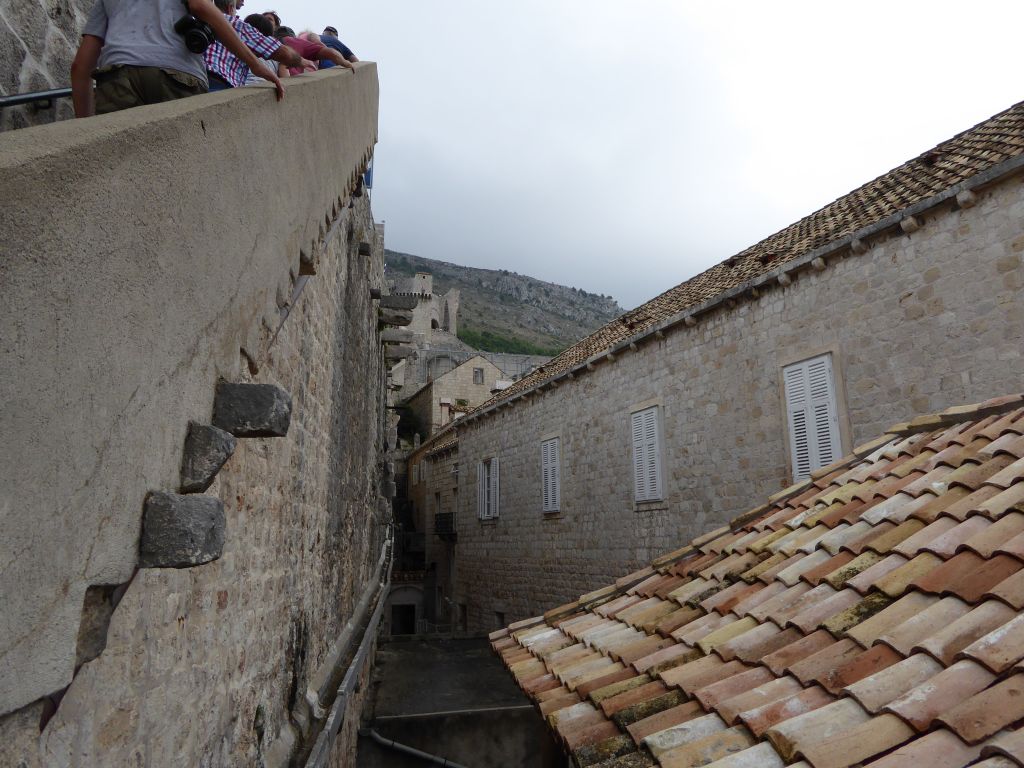
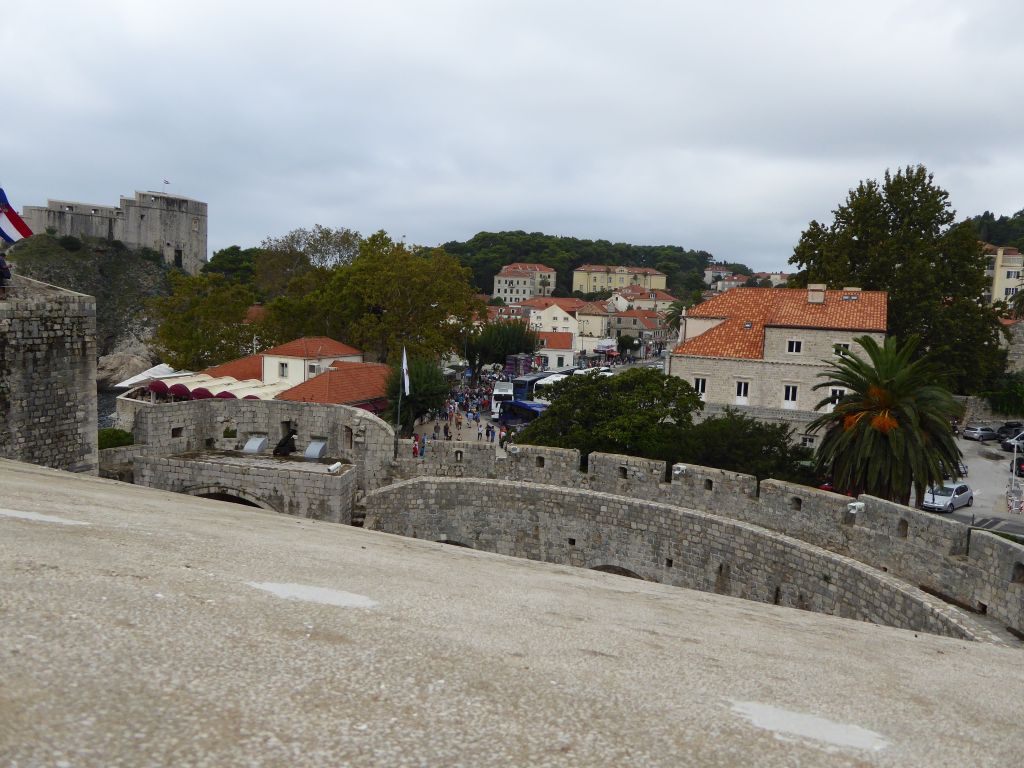
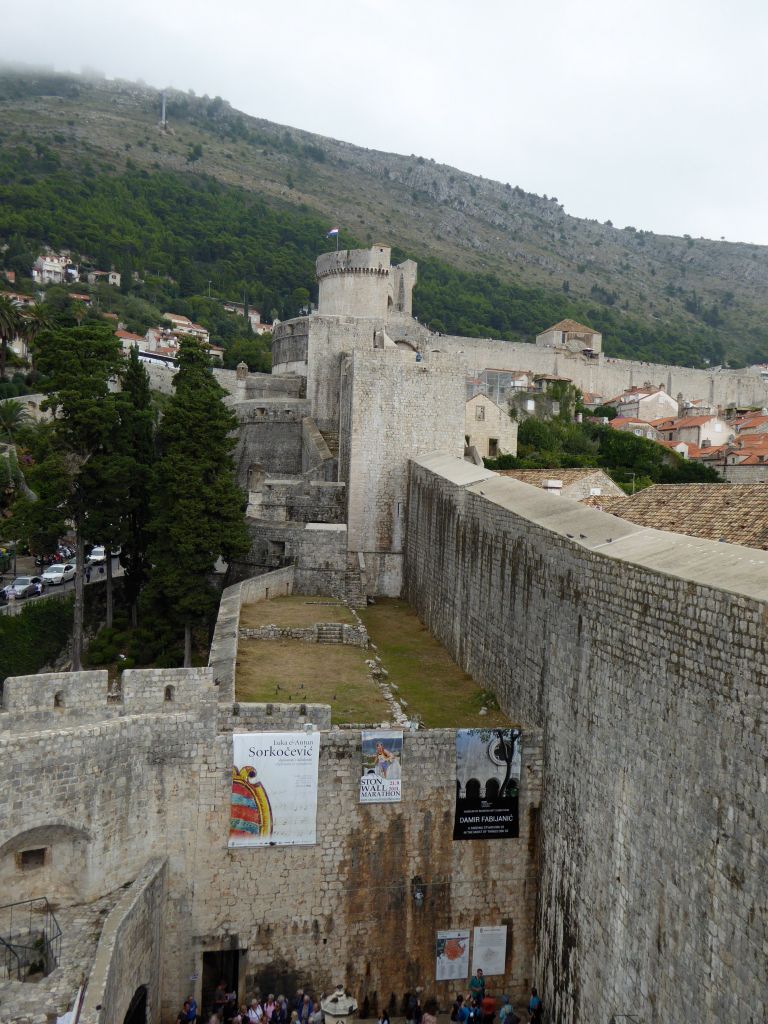
Dubrovnik is circled by two walls. The inner wall was built first and was built very high for protection from enemies who would try to scale the walls. The second wall was built later with holes for artillery. These walls are lower because by then, they worried about artillery breaching the walls rather than scaling them.
The aqueduct was built in 1437 and saved going 8 miles for water. It brought the water to 2 fountains: one for the Christians and one for the Jews. The sewage system from that time is still working, just with more filtering.
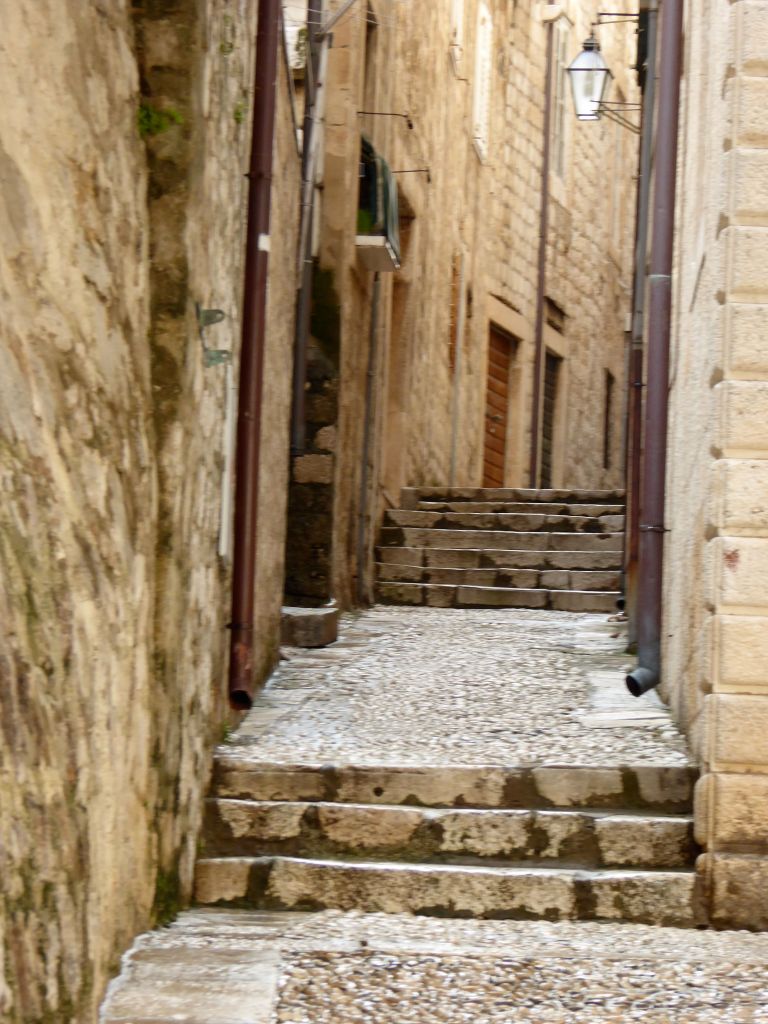
The city is inside the inner white limestone wall. The walls meant protection, and with limited space, the streets were necessarily very narrow.
Our guide showed us some graffiti from 1597, in which one of the residents wrote that he was tired of having his windows broken by the youth playing some kind of football on the streets. The guide also showed us the old orphanage. Since it was shameful to have a child out of wedlock, there was a window with a Lazy Susan kind of contraption, where a woman could place a newborn and turn the wheel and walk away without the people in the orphanage knowing her identity. If she thought she might want to claim the child later, she would break a coin in 2 and leave one half with the baby. The kids lived in the orphanage for 6 years, and then they went to work for an upper-class family or in the fields.
Just outside the walls were some low houses, quarantine houses. The city suffered greatly from the plague. Quarantine comes from the Italian word for 40, which is the number of days you were required to stay in quarantine.
We walked on the city wall. It is about 1 1/2 miles of up and down stairs: strenuous but extremely rewarding. The walk is done in counter-clock direction only. It can be entered in three places – therefore, the walk can be done sections. The view of the city, the surrounding area, and the Adriatic were incredible. We just couldn’t stop taking pictures.
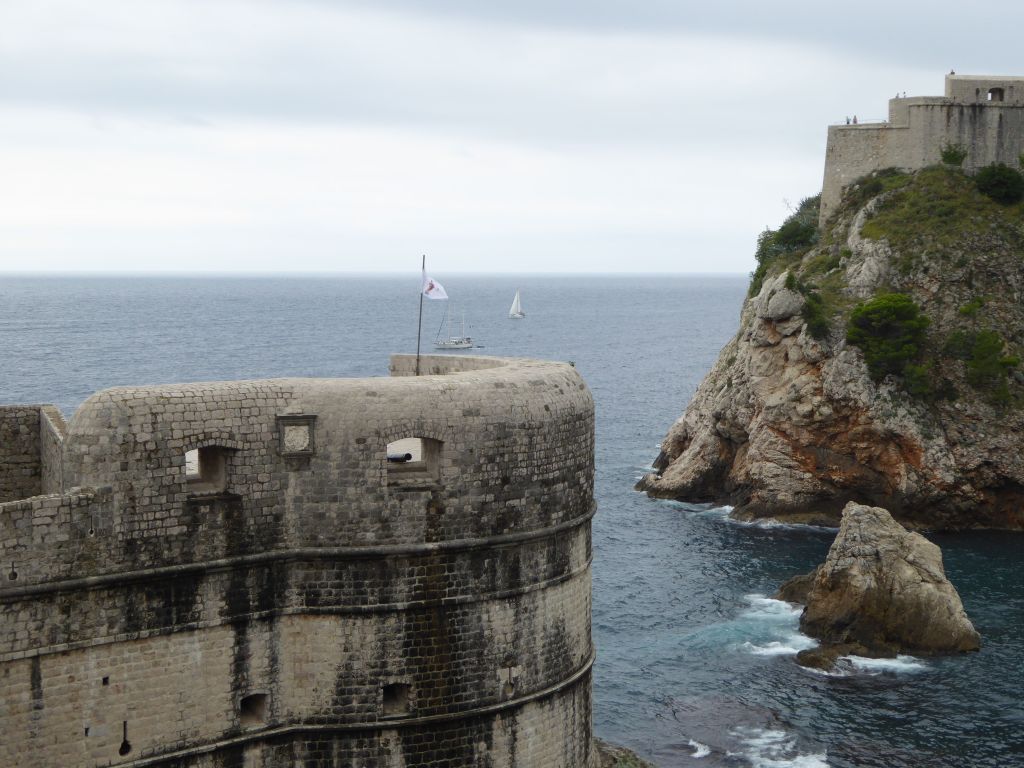
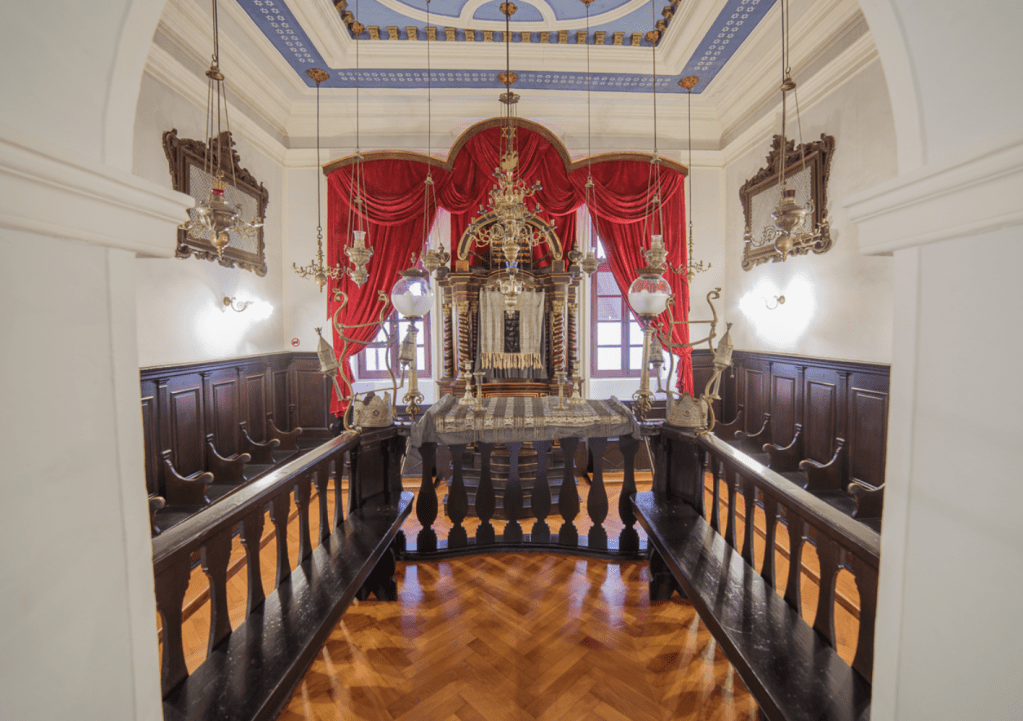
We went to the old synagogue and museum. This is the second oldest synagogue in Europe and the only Jewish Museum in Croatia.
In 1492 some of the Spanish Jews fled to tolerant, welcoming Dubrovnik.
But in 1546, Zudioska street, where the Jews lived, was walled off with a gate that was locked at night. The ghetto was abolished in the early 1800s. The synagogue was small but beautiful. The ceiling is painted blue with a Star of David on it. The lamps are Oriental style and were obviously influenced by the Turkish Ottomans. There are only 40 Jews in town now.
Mostar, Bosnia
We took an overnight trip to Mostar in Bosnia i Herzegovina. The “i” in their language means ‘and’ therefore I will shorten the name to BiH.
BiH suffered much during the war in the 1990s. Half of the country is Muslim, the Bosniaks, 1/3 are Serbs (Christian Orthodox) and the last 15% are Croatian Catholics. The Bosniaks converted to Islam during the Ottoman rule. The three groups do not get along.
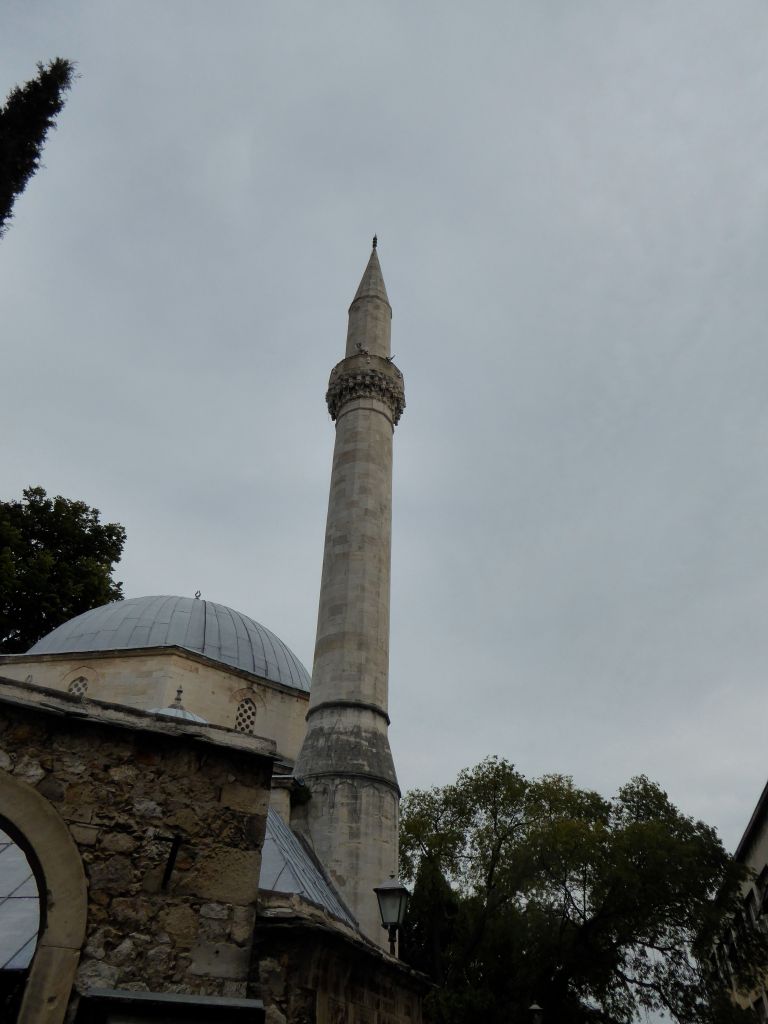
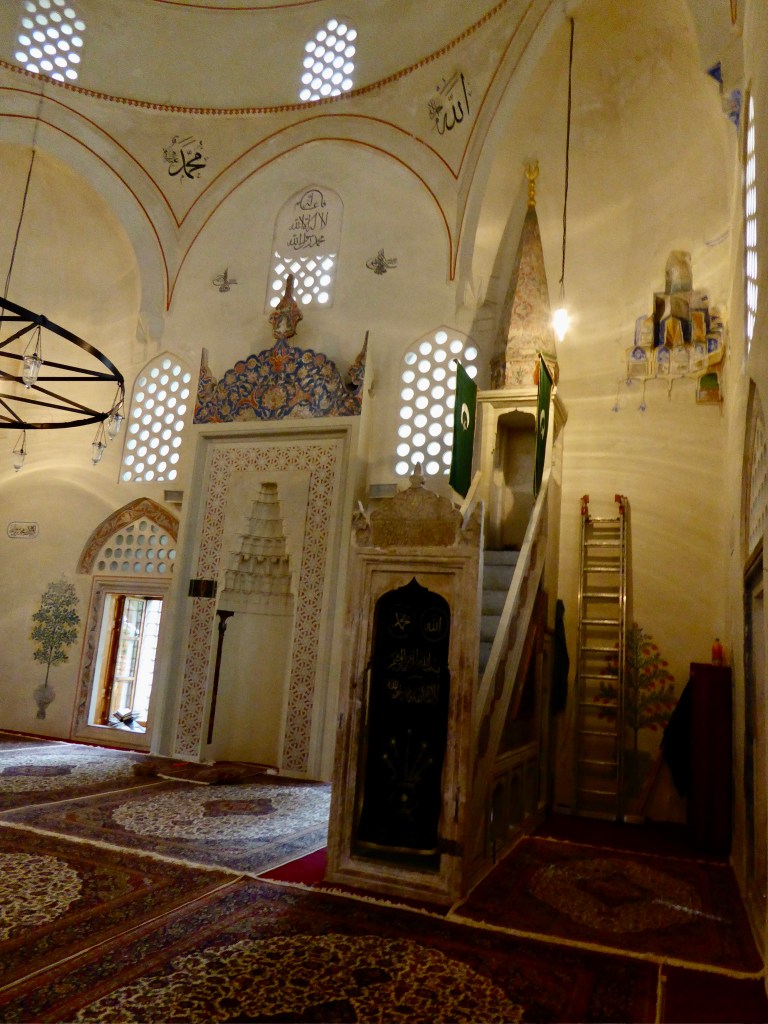
In the 1990s, Mostar was the unhappy middle between Serbia and Croatia, and therefore was shelled by both.
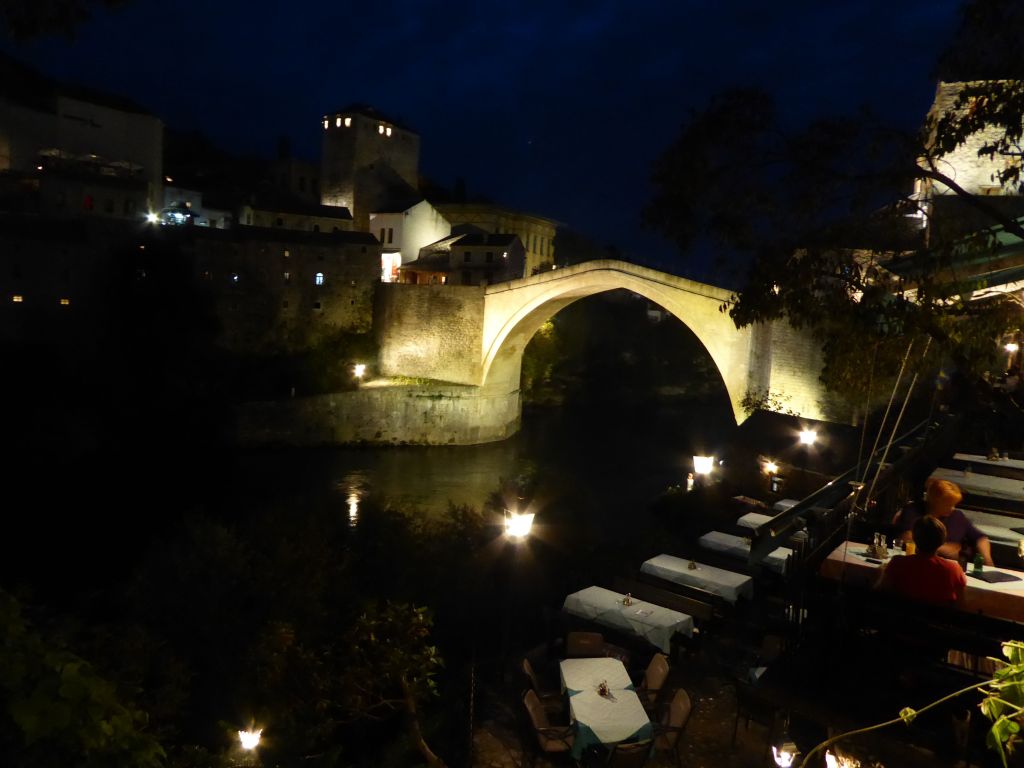
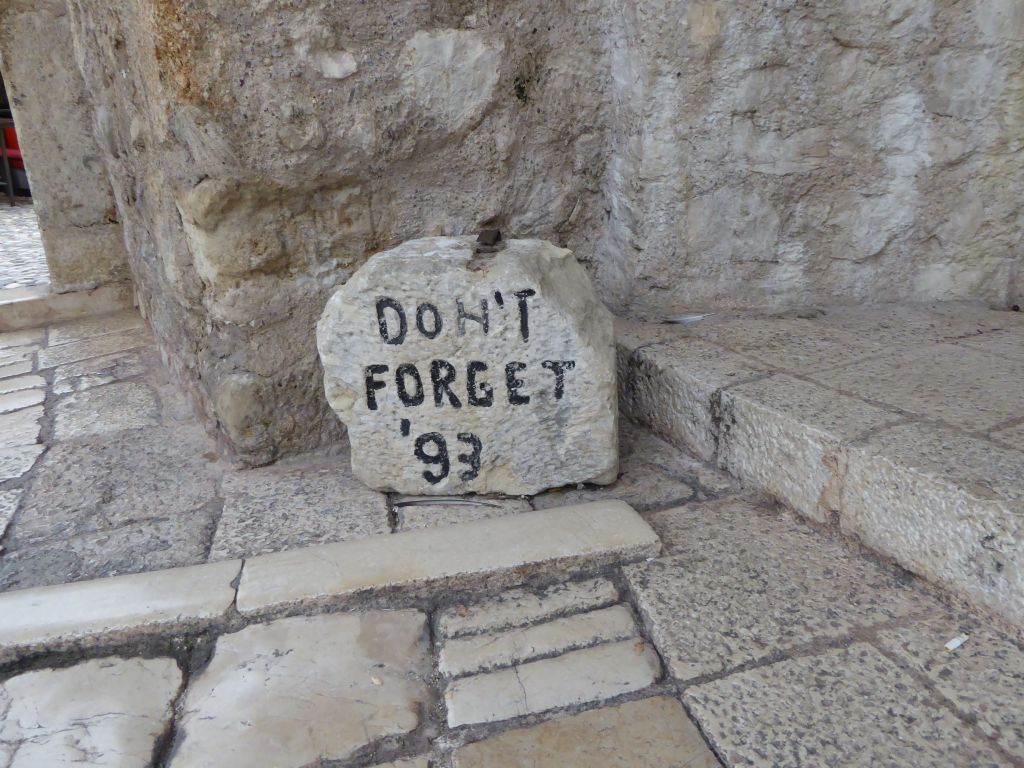
The old bridge was destroyed in the fighting and has been reconstructed. The war is still raw.
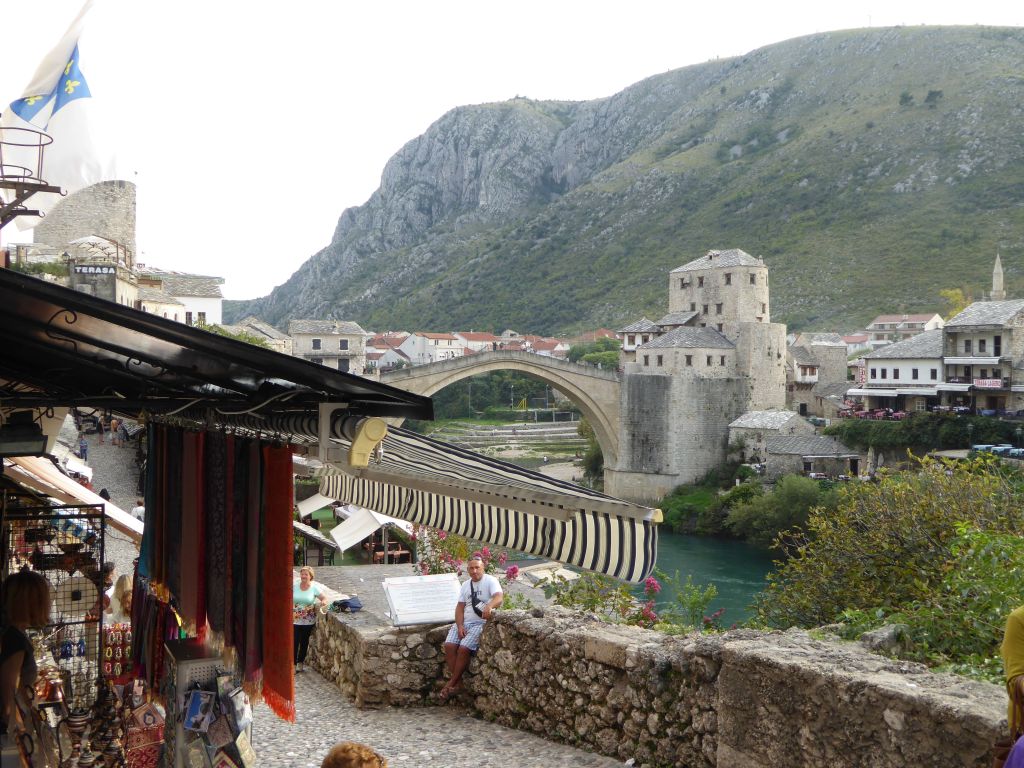
The suq (shopping area) is the most interesting thing in the town. It has interesting fabrics and ceramics.
Final Comments:
- We saw some beautiful towns and countryside and learned a great deal of history.
- Rick Steves company uses awesome guides.
- The size of the group was not a hinderance to flexibility and we enjoyed meeting the fellow travelers.
- Arriving a day early and being picked up at the airport is wonderful.
 Nili's Adventure
This is a wonderful read, Nili, thank you so much. I read it on the blog, where the pictures are much clearer and the text is far easier to read.
Paul and I are looking at a Tauck small group cruise that takes pretty much the same route, but beginning and ending in Venice, as part of a European trip in 2026. Paul has been to some parts of that area, notably Diocletian’s Palace, but it’s all new to me. Your descriptions really whetted my appetite, though I’m afraid I don’t share your enthusiasm for climbing stairs and looking down from a height! Just reading your description is enough for me.
What a treasure trove all of your travel journals are, especially for your family. Really lovely. Many thanks again for sharing.
LikeLike
Thank you for the comments. I think a cruise will be much easier for you than a bus trip. It is a lovely part of the world. We are thinking of a Carribbean cruise in Nov or Dec to island that I have not been to. Definitely different for us.
LikeLike
Dear Nili,Thank you for the journey! You have certainly seen some richly historical and beautiful places!Love, Linda
LikeLike