
It was time to pick a get-a-way for Winter, 2014. My dear friends, Ajit and Laurie had recently visited Sri Lanka (Ceylon), his birth place, and they highly recommended it.
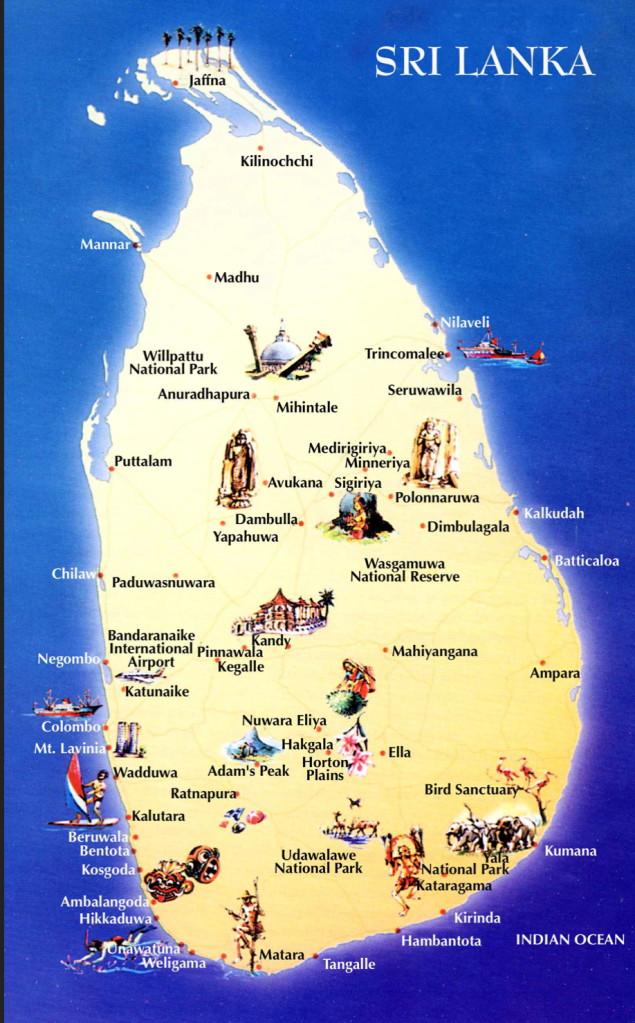
Sri Lanka is a small island in the Indian Ocean. Therefore, we originally thought that 2 or 3-week trip would be adequate, but it soon became apparent that if I wanted to see all the principal sights and have down time, the trip needed to be extended to 30 days. Even with the extended time, we had to eliminate the far North and East of the country.
We hired Varini De Silva, owner of Ceylon Express to create the itinerary and to provide us with a dedicated driver/guide for the full 30 days. The itinerary would include historical sites, antiquities, religious sites, as well as some beach time.
At Varini’s suggestion, we timed the trip for mid-February to be able to include the Nawam Perahera festival in Colombo on February 14th. We arrived in Colombo a couple of days before the festival, both to get over jet lag and to enjoy the pre-festival excitement. For the nearly 3-hour parade, the tour company bought us seats (with backs) rather than just stools, which the locals used.
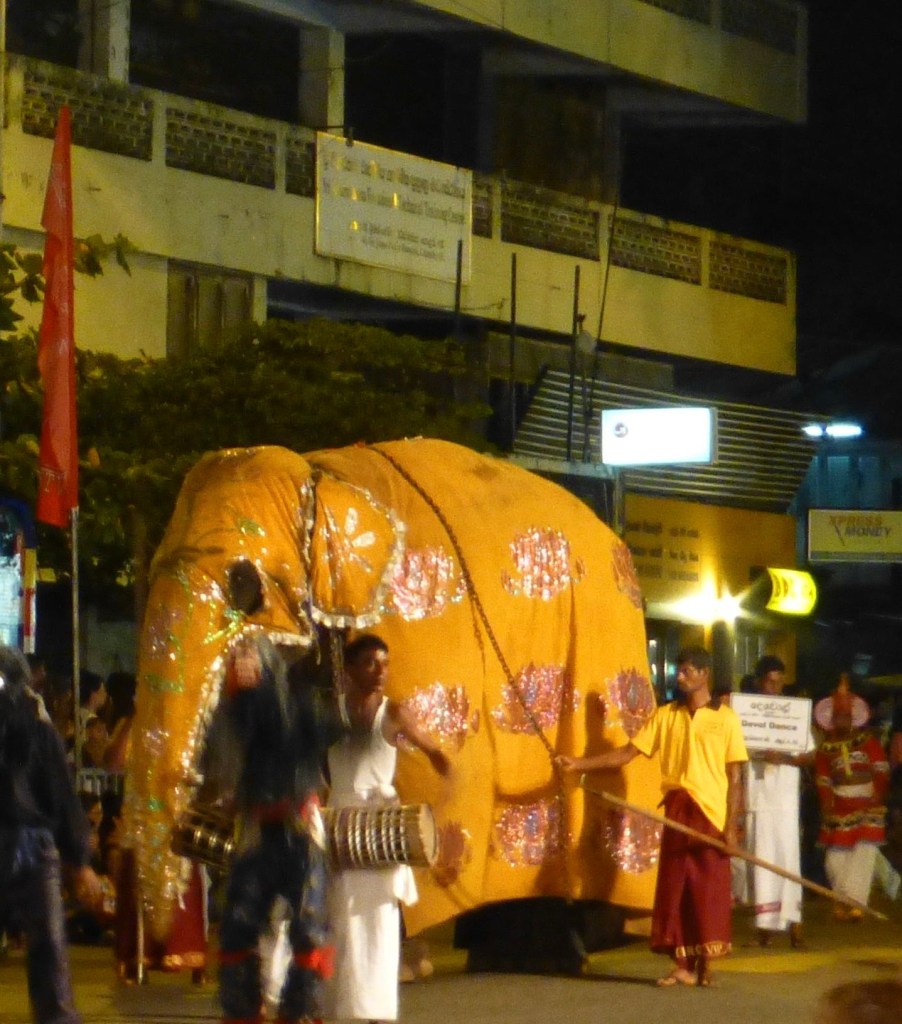
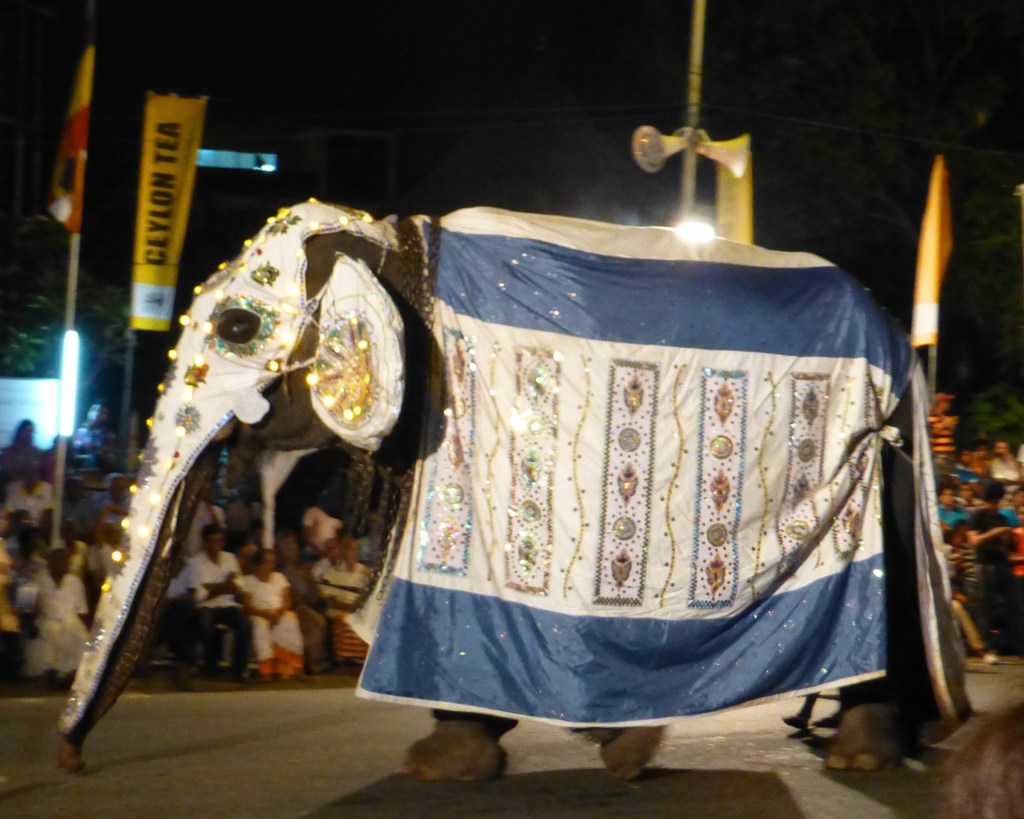
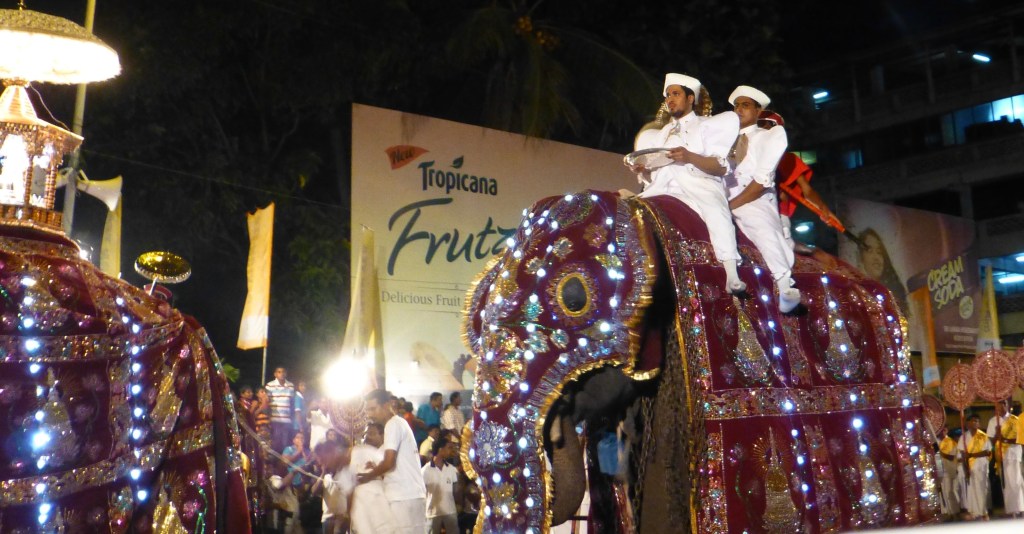
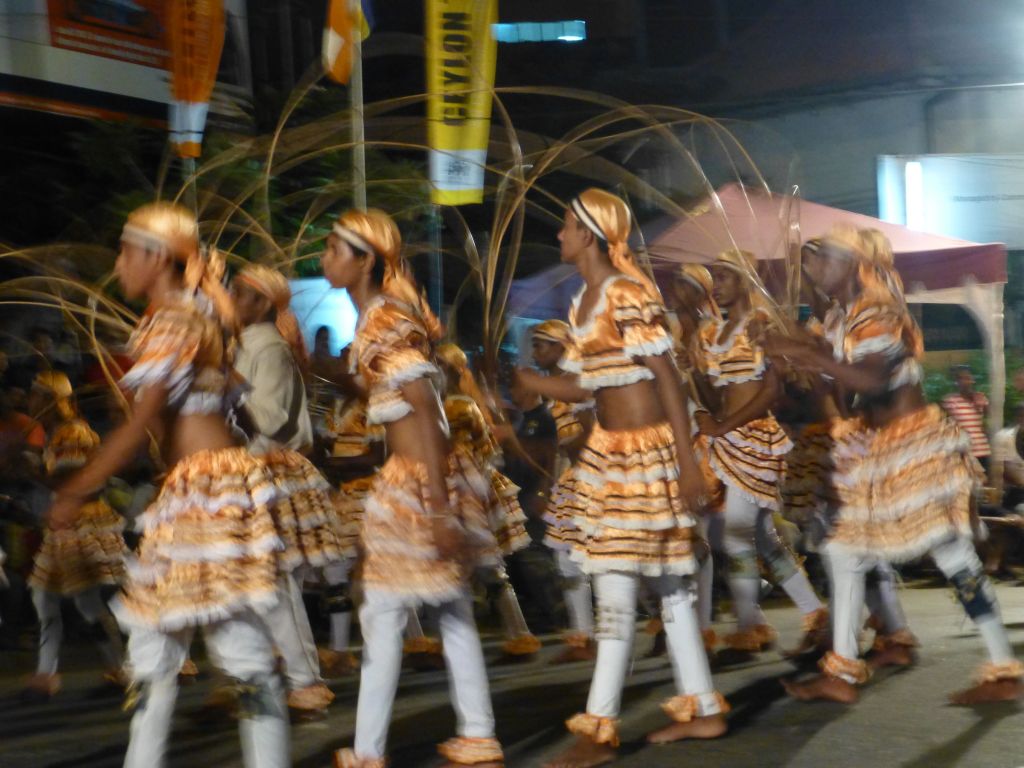

The parade was quite a spectacular, with 100 elephants, drummers, pipers, dancers, whip throwers, fire twirlers and more. The costumes, both on the people and on the elephants, were magnificent. Each group performed constantly as they paraded rather than just once in a while, therefore, we saw all the acts. I loved every one of the 165 minutes.
After 3 pleasant days in Colombo (there was much else to see in addition to the parade), we drove north to Anuradhapura and Mihintale to see the oldest temples and ruins where Buddhism first began in Sri Lanka in the 3rd century BCE.
We started touring in Mihintale:
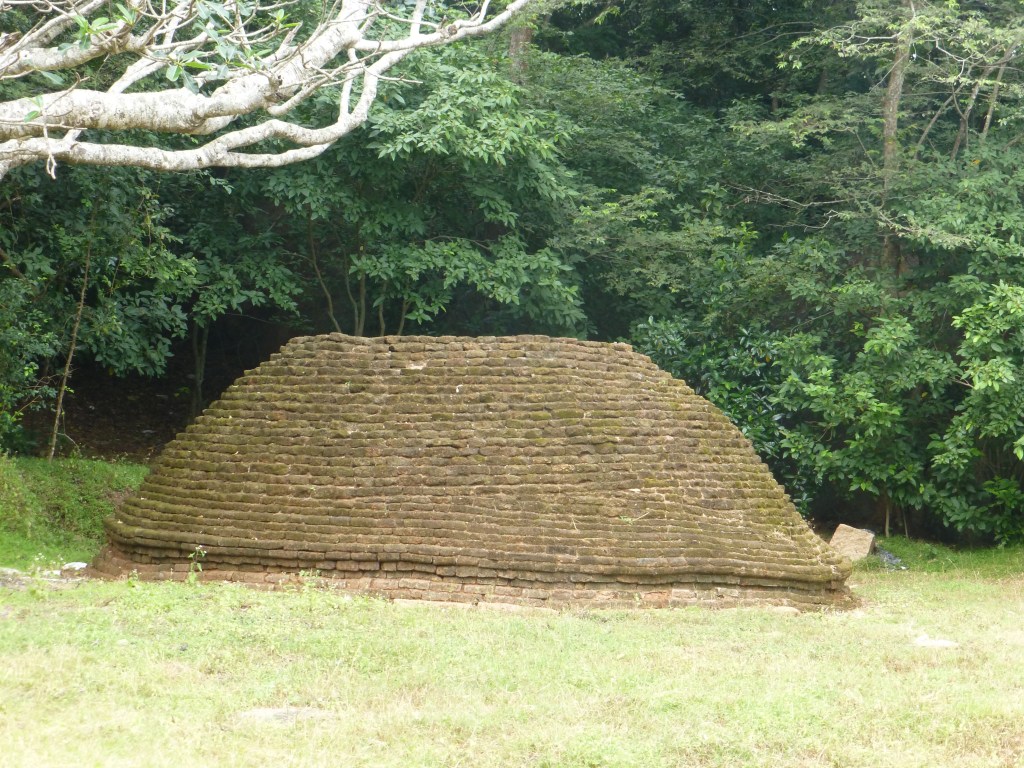
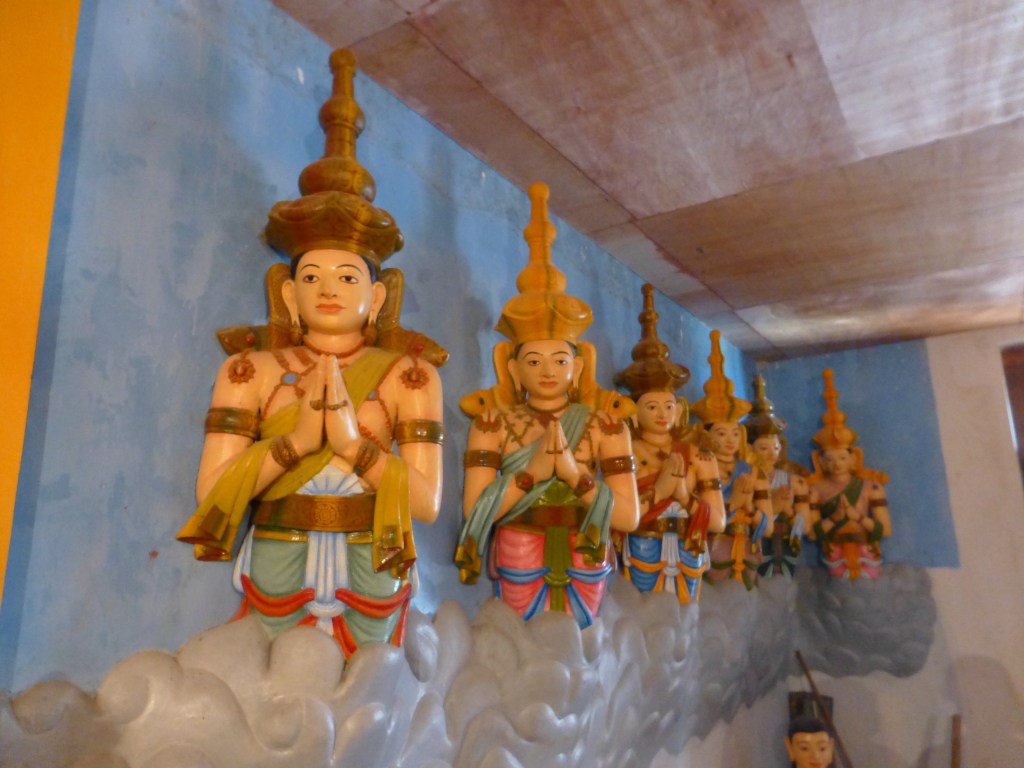
and saw many Stupas, temples, rock caves, beautiful Buddha statues, and monasteries.
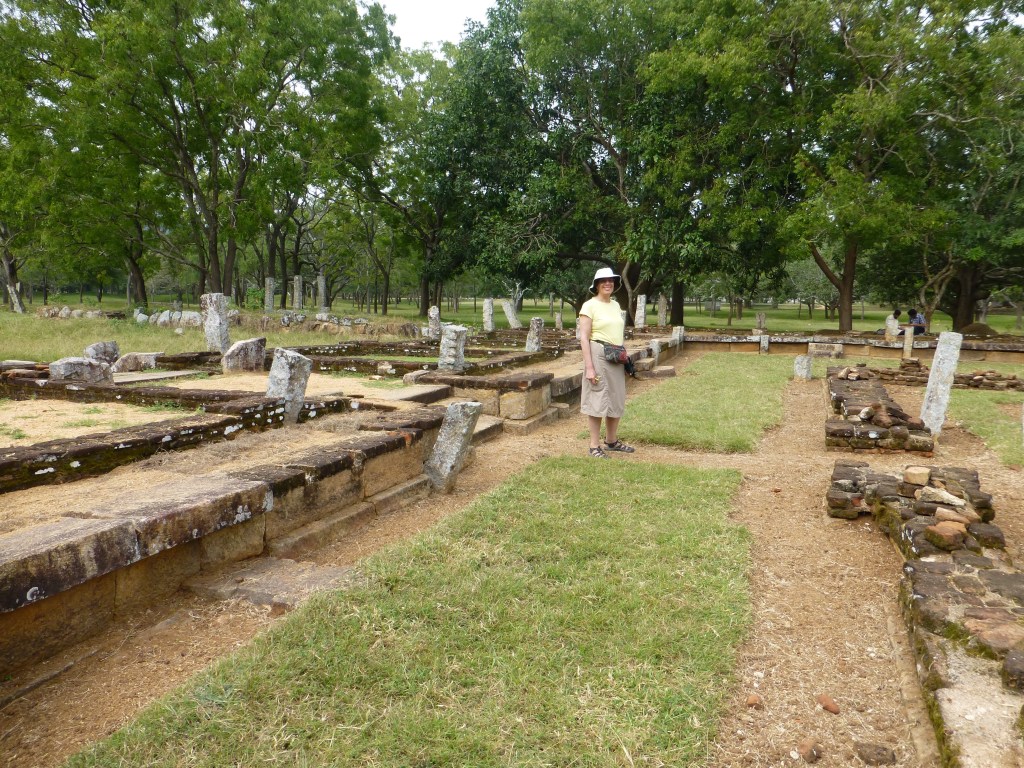
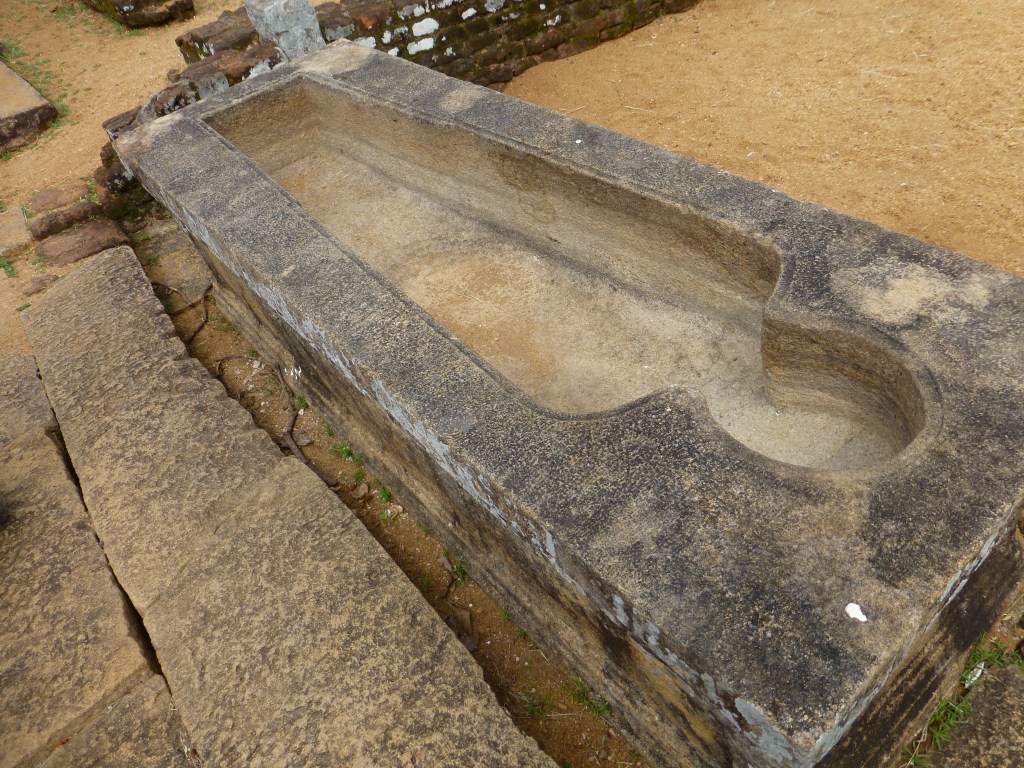
We also saw the remains of a hospital (above) and the baths that they used for medicinal purposes. The baths were carved out of rock so that the patient could lie down and soak in herbs.
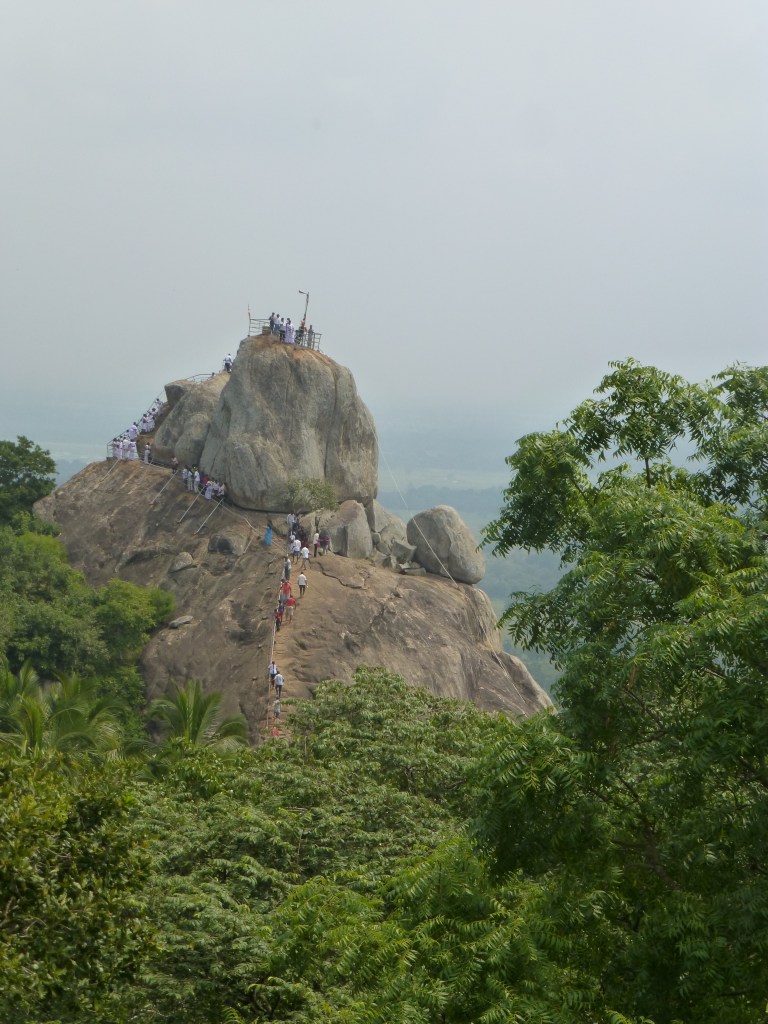
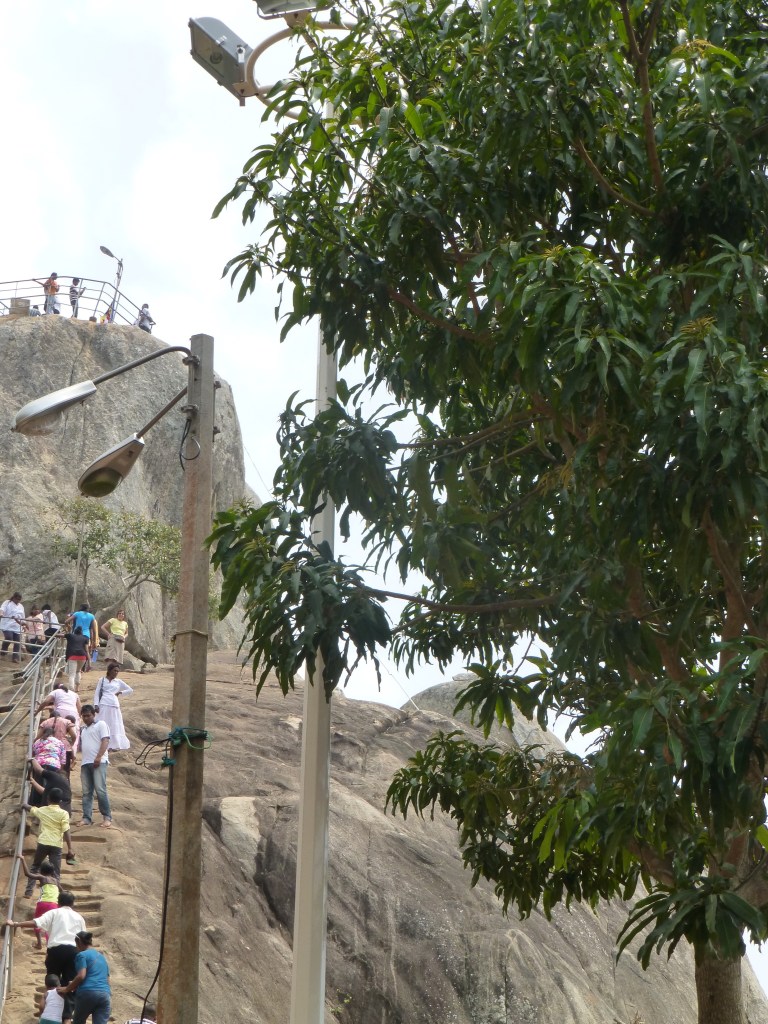
In the middle of an open area in Mihintale is the large Meditation Rock. For some reason, a climbing challenge is always an invitation for me to go for it. But this time, I climbed only half way because it was over run with locals. There was only one railing for both going up and down and I felt that it was too dangerous to continue. Also, there were too many people up on top for meditation. If you look carefully, I am on the top of the first part (yellow top/beige skirt). This is as far as I went.
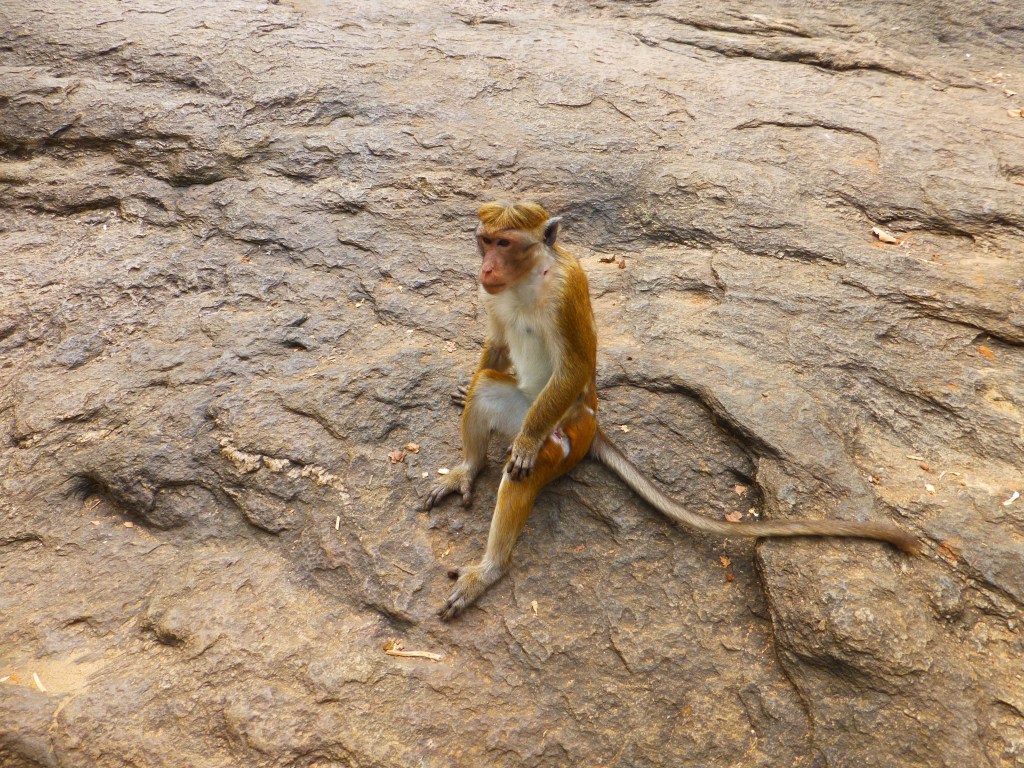
We also saw lots of monkeys.
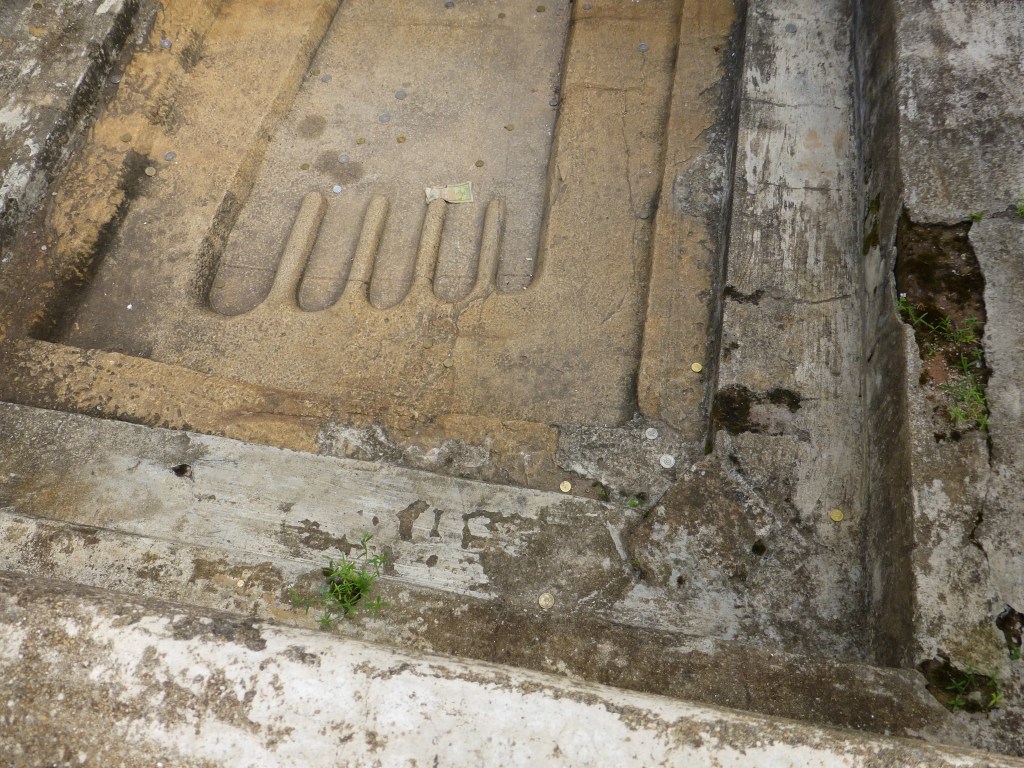
In Anuradhapura, we stopped at the impressive ancient Isurumuniya Vihara Rock Temple (below). It was carved out of gigantic volcanic rocks. The temple itself is from 3rd century BCE, but some of the beautiful sculptures are 600 years younger. We were able to climb the back of the temple and feel its massiveness. Below is an ancient natural footprint in the rock.
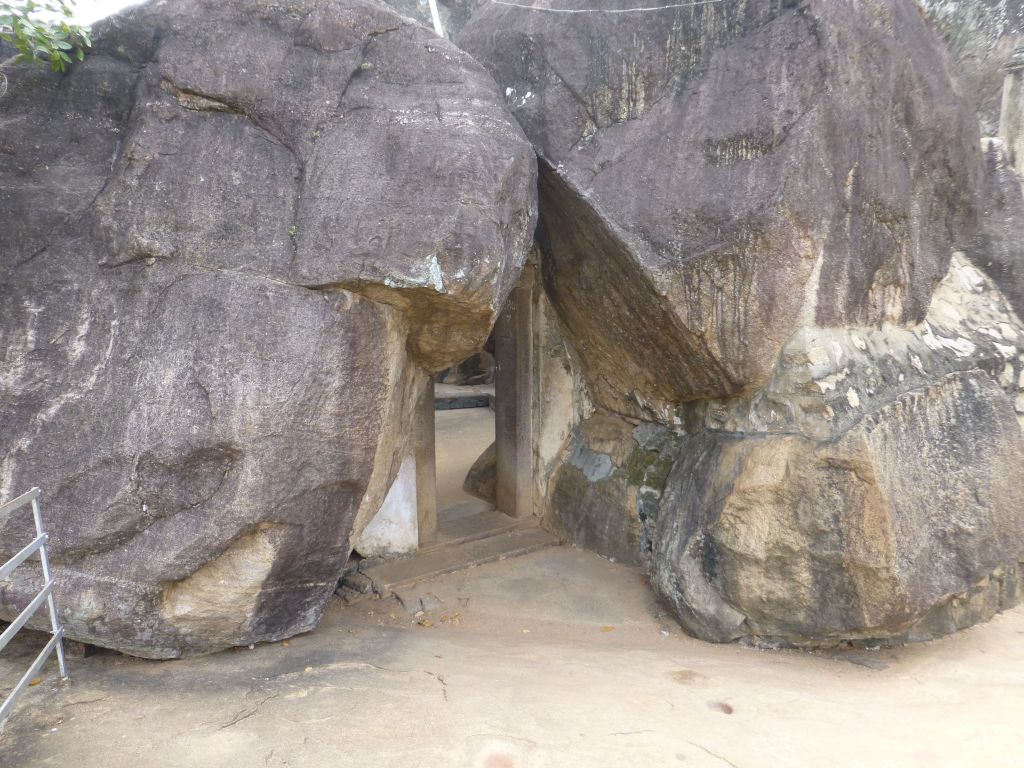
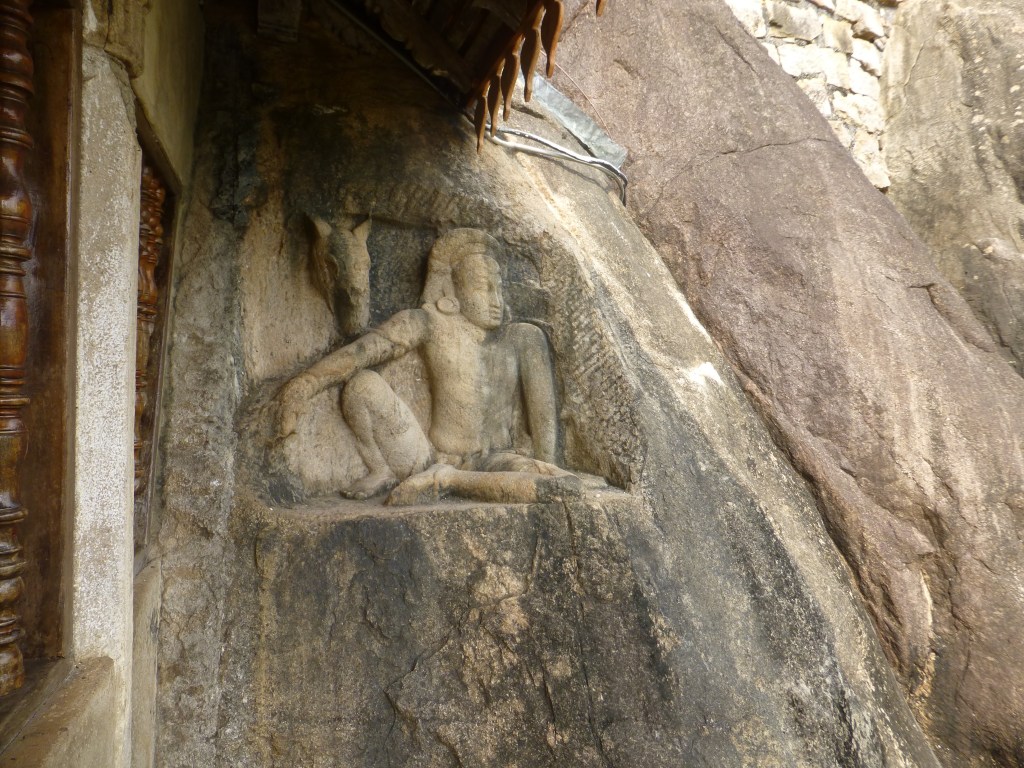
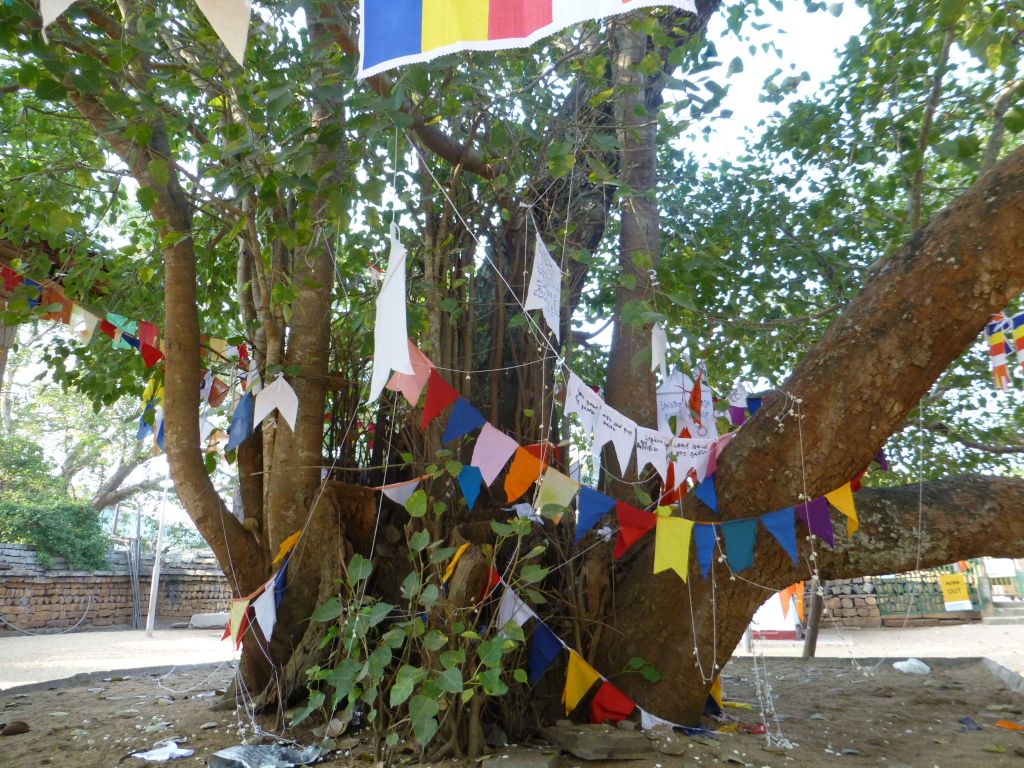
To the right is a tree which grew out of a cutting from the Bodhi tree under which Buddha had attained enlightenment. It was brought to Sri Lanka 2,300 years ago.
The bell shaped Thuparama Dagoba,(on the left) is the oldest stupa, built some 1700 years ago. Next to the stupa is a shrine with the beautiful guard stone and carvings seen below.
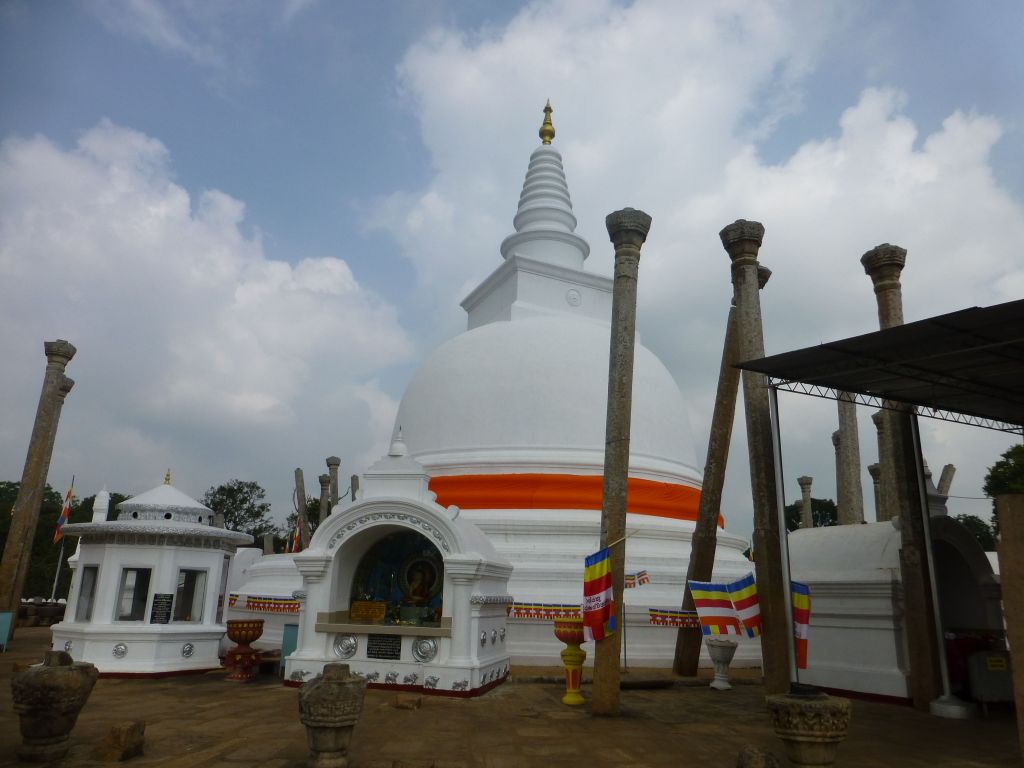
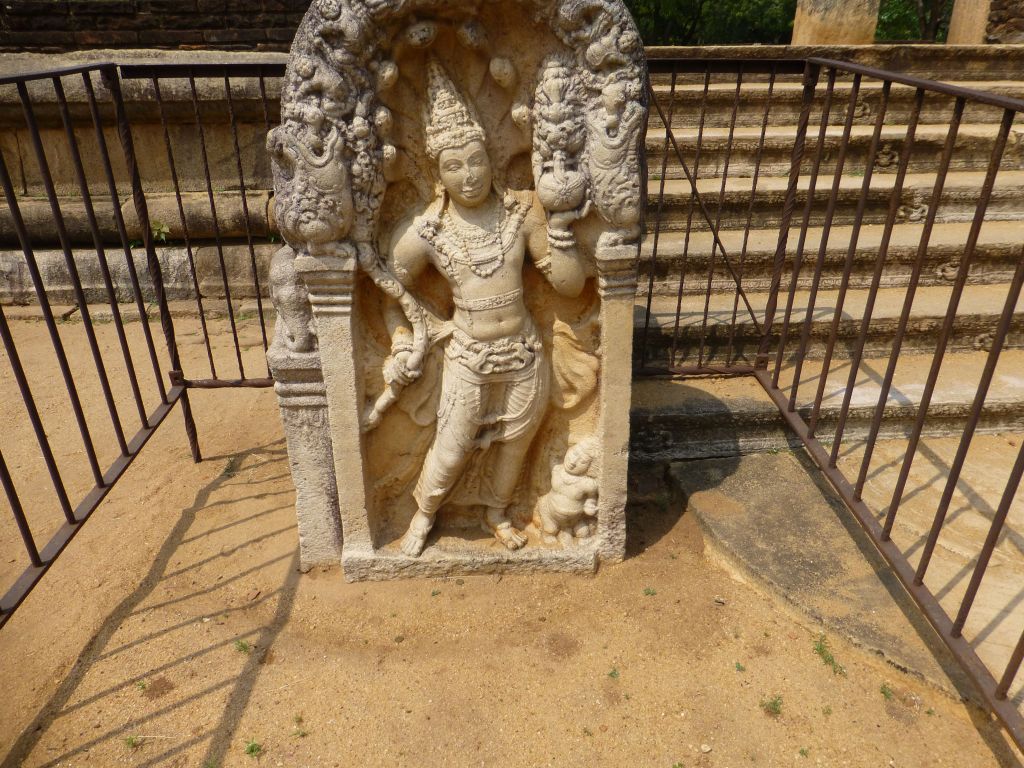
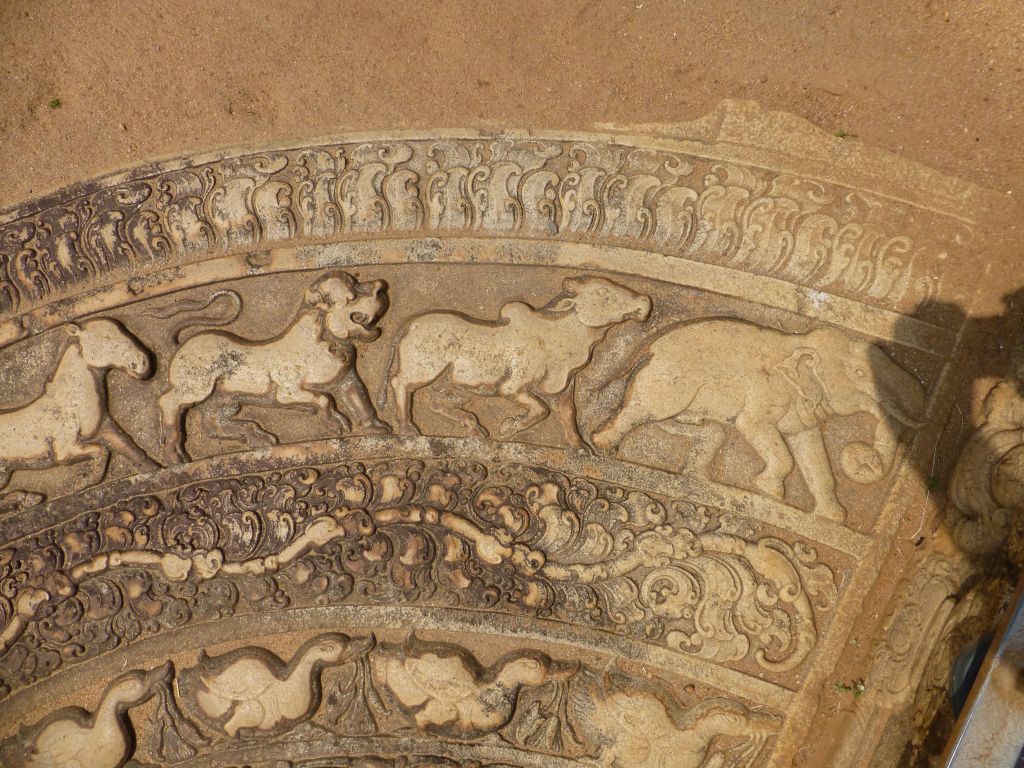
There were too many fantastic sites in Anuradhapura for me to detail. If you want further information, ask for it in the comments section of this post.
Moving forward in historical time, we drove south to Habarana, with a stop in Aukana to see the magnificent 5th century 39-foot rock-cut Buddha statue.
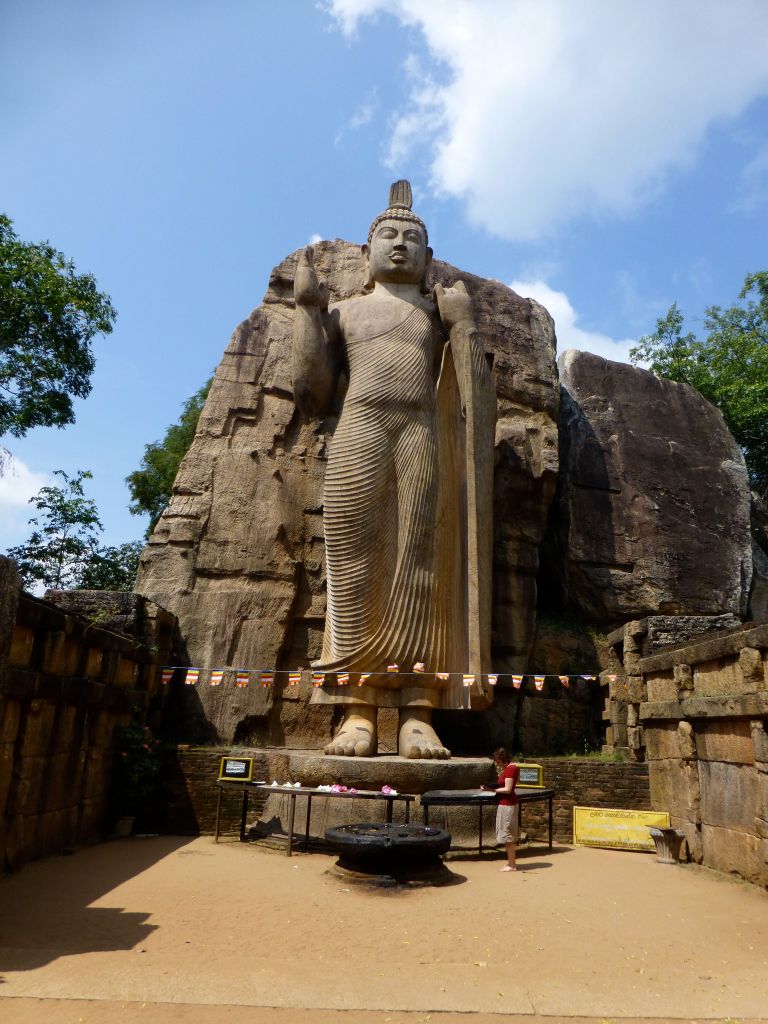
The details on the folds of Buddha’s robe are delicate and flowing and the face is beautiful. To get a feel of the scale of this Buddha, you can barely see me, in a red shirt, next to the platform.
Habarana was our headquarters for Polonnaruwa, Kaudulla National Park and Sigiriya.
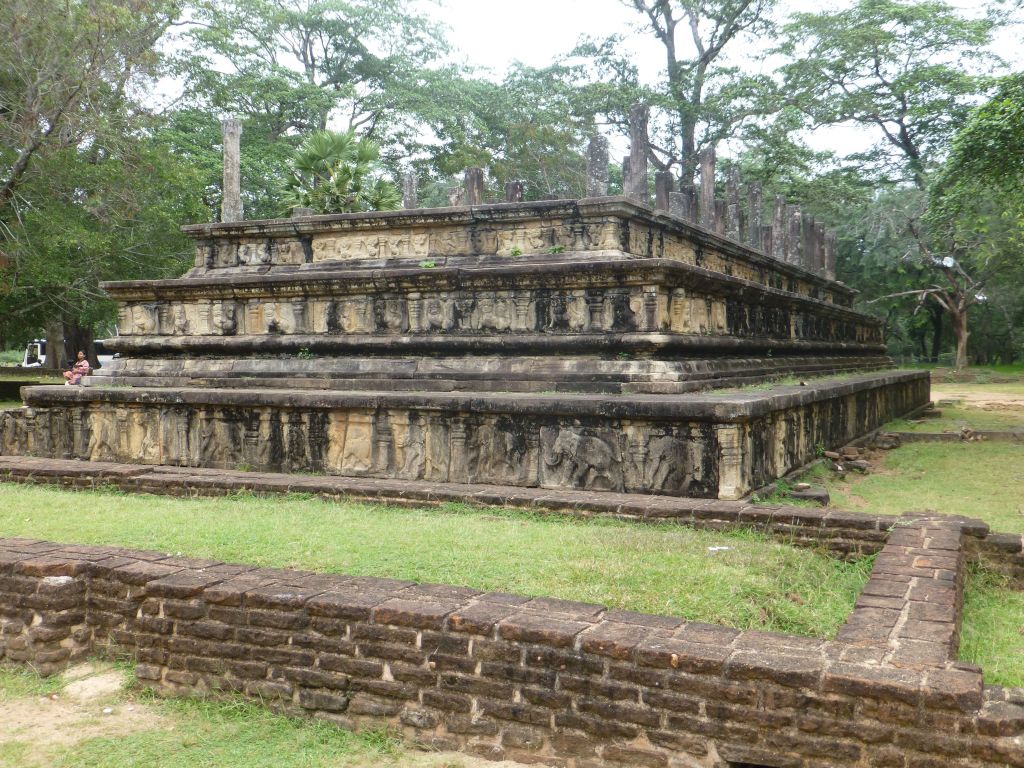
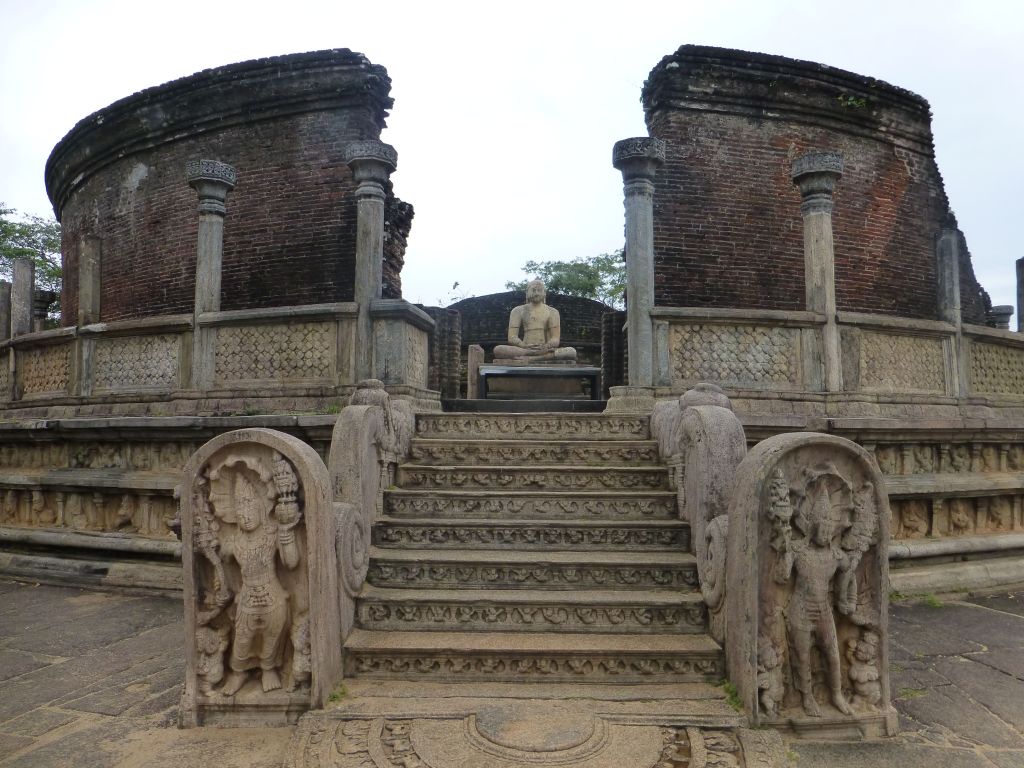
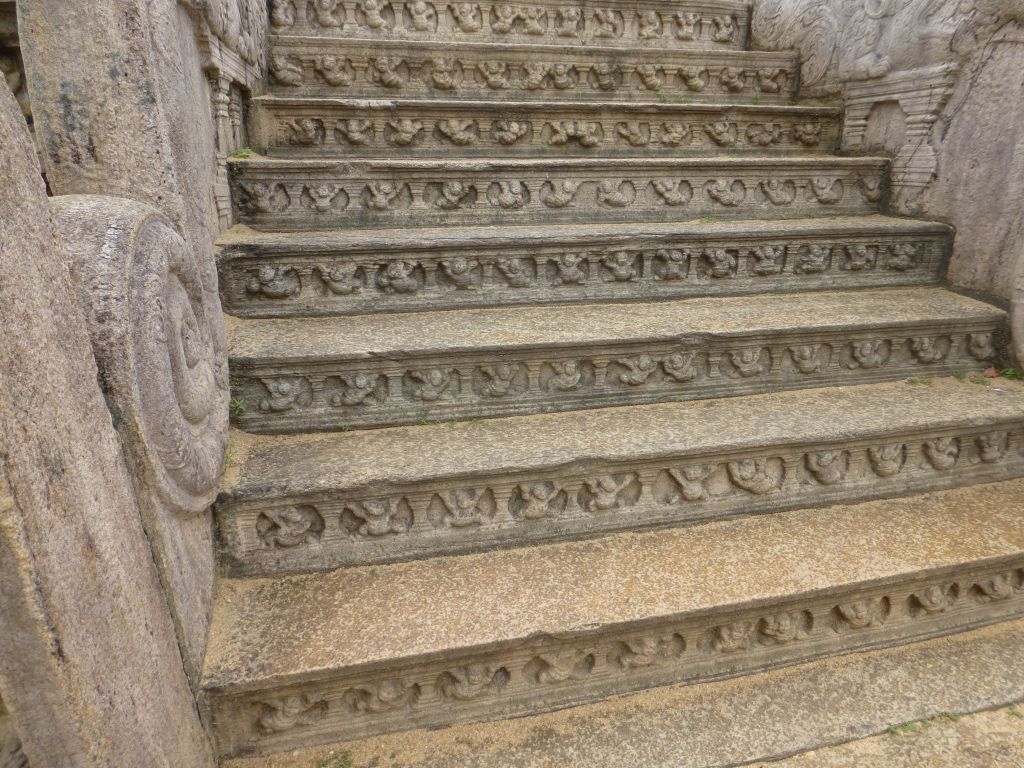
Polonnaruwa was the 11th to 12th century capital of Sri Lanka. The Polonnaruwa complex included the royal palace, royal administrative buildings, and shrines. On the ancient road between the palace and the shrines, we saw the remains of trade stalls, similar to those that line the roads in Sri Lanka today. This capital was greatly influenced by Southern India and has Hindu as well as Buddhist temples. The structures were very impressive, but they had not weathered well and looked older than the ones in Anuradhapura even though, they were much more recent.
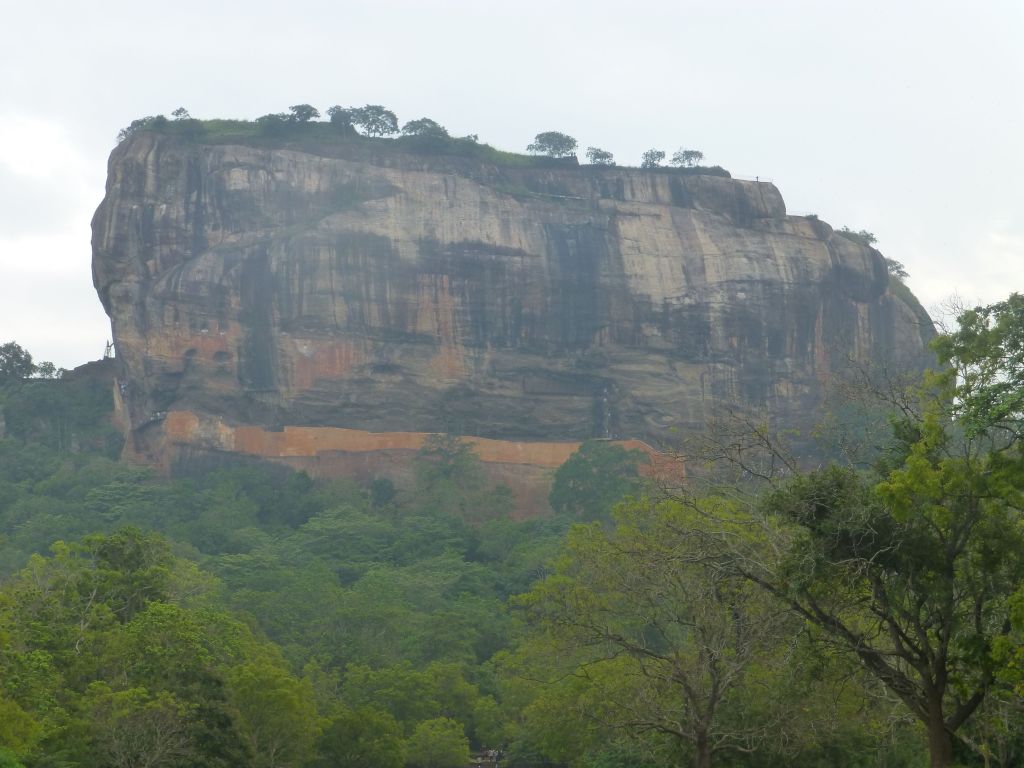
Nearby Sigiriya is a 5th century Rock Fortress, which juts up out of the landscape. It is incredibly impressive. At first sight it looks like a huge pillar in the middle of a meadow with shear walls that I couldn’t believe we would be climbing. There are 2 moats surrounding the grounds. In its day, the outer one, 6 KM around, was covered with mud; the inner one, 4 KM around, was filled with water with crocodiles to deter unwanted visitors. King Kasyapa lived there with his entourage and his 500 wives.
The lower, summer palace had (still visible) magnificent water gardens fed by irrigation channels. The upper palace, 660 feet high, is quite a climb. (Think a 70-storey building.)
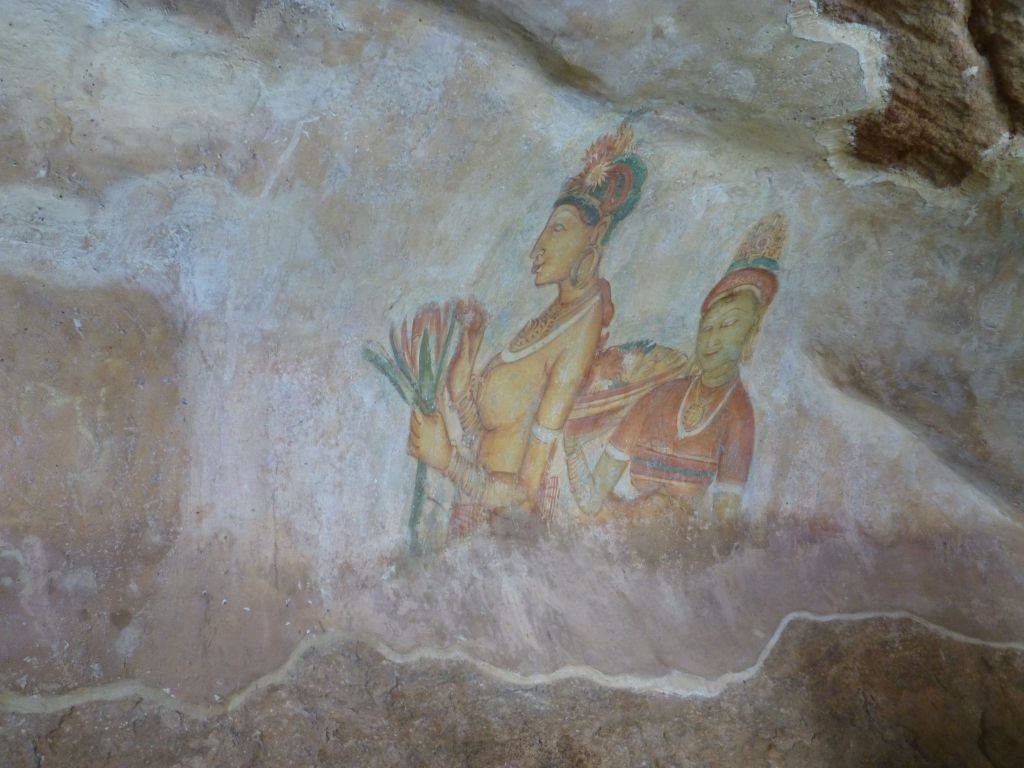
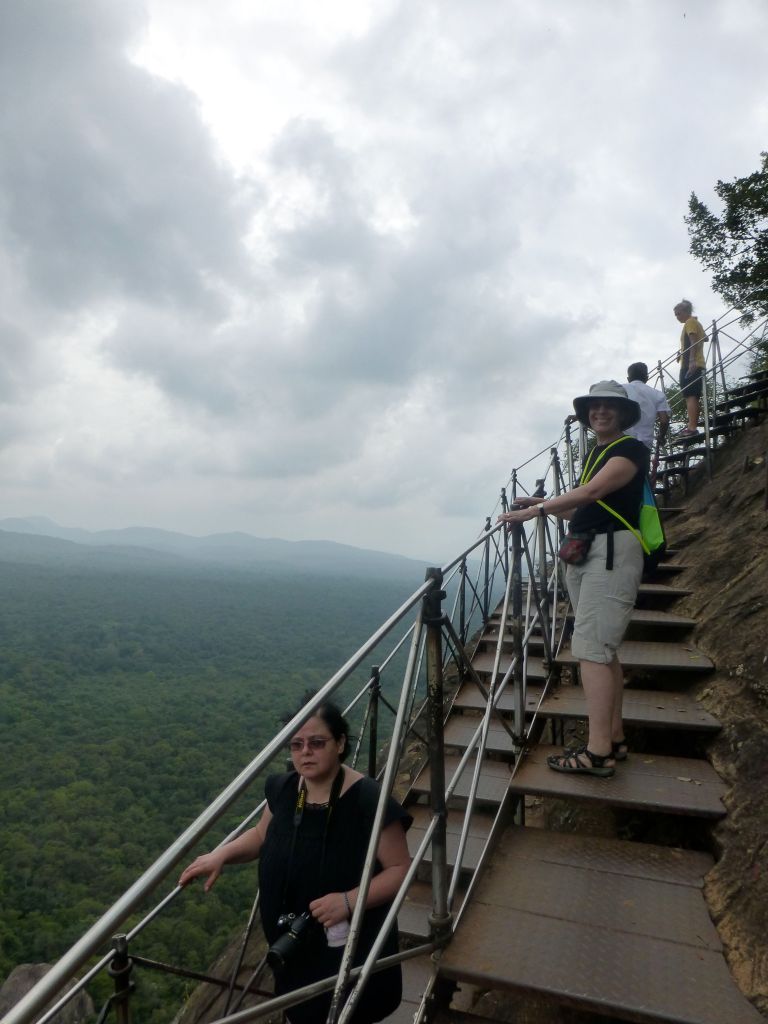
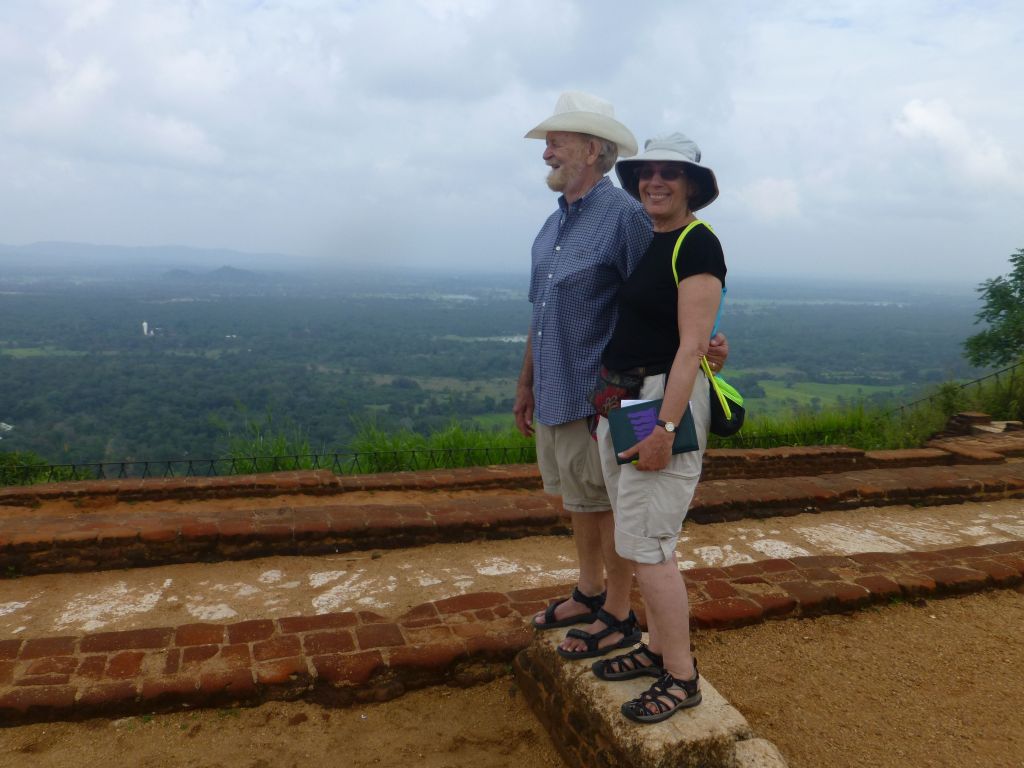
About half way, we were rewarded by the sight of the 18 remaining, exquisite frescoes of celestial maidens. Originally, there was a mirror wall across from the 500 frescos (one for each queen) and the effect must have been stunning. From this vantage point we could see the pleasure gardens below. We continued climbing to the top. The army barracks were another 100 feet higher and then at the top, were the remains of the king’s rooms.
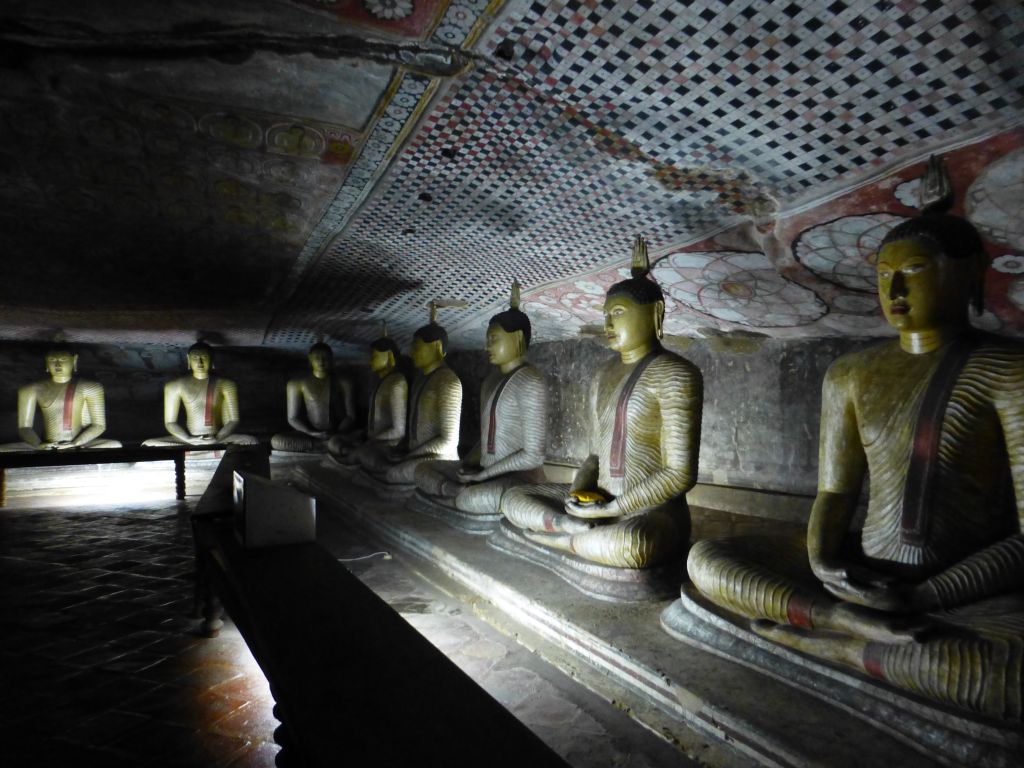
After Sigiriya, we continued south to Kandy, with a stop in Dambulla to see the rock cave temple, which has 48 statues of Buddha plus marvelous paintings of many more Buddhas on the wall. These are incredibly beautiful especially since the natural folds of the rock were used to give illusion of cloth and movement.
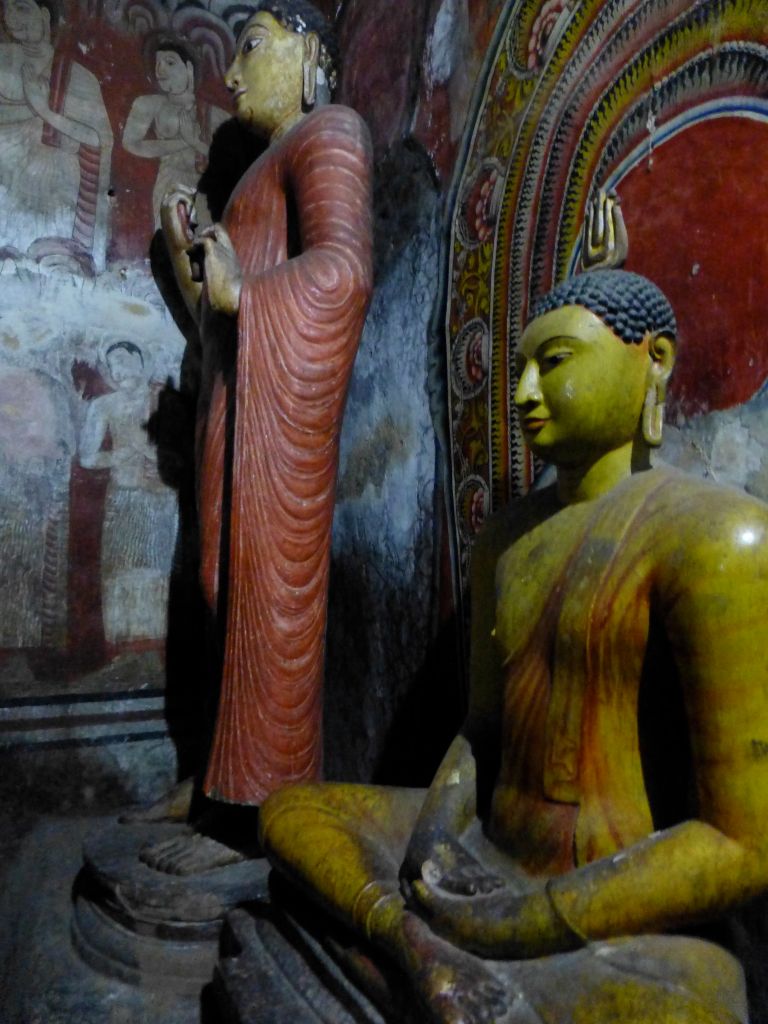
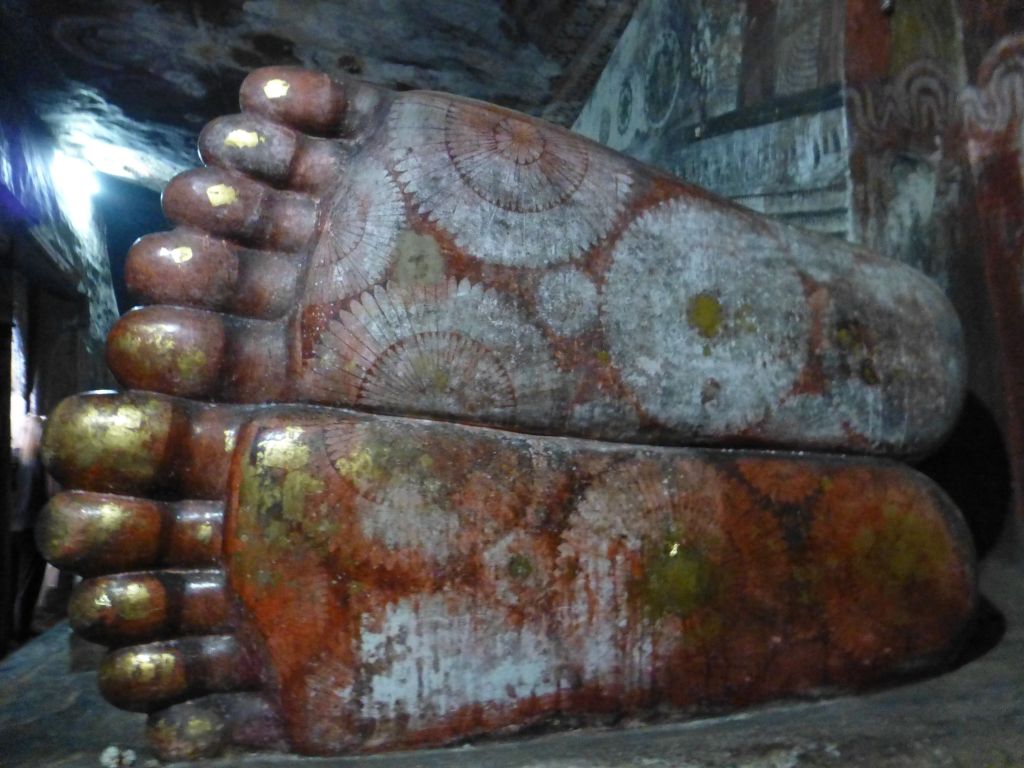
Kandy was the last Sri Lanka kingdom, which lasted from 1592 to 1803, when the king abdicated to Britain. Kandy is built in a valley surrounded by mountains and today it is chocked by traffic. However, it is well worth visiting if only to see the magnificent Temple of the Tooth, which is really multiple temples, and the old royal library.
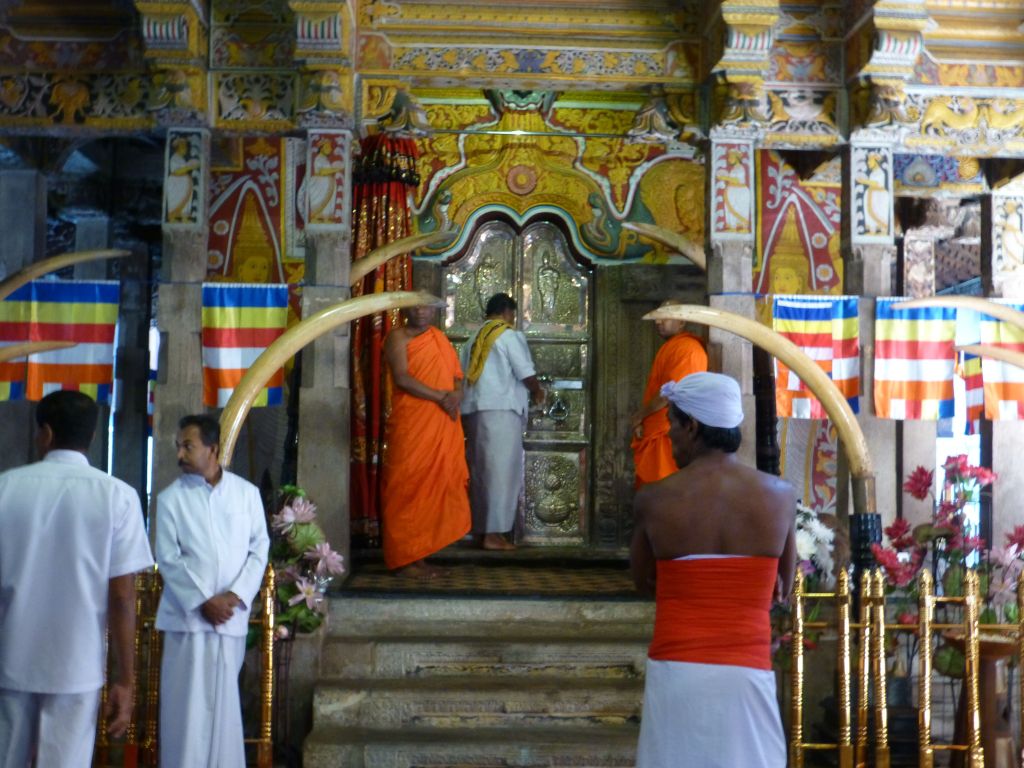
We went to the “tooth” ceremony one morning. The tooth is in the main temple, behind 4 doors plus a curtain. All we could see when we arrived was the curtain. When the ceremony began with bells and drums, the curtain was opened and we could see the silver door. The other doors are Gold, Ivory and lastly a bullet proof one for the tooth. At the end of the ceremony, we could see all the way through to the tooth for a minute. The ceremony involves taking 4 bowls each with 8 Kilo of rice and the same of meat as offering for the tooth. Only special people are allowed to do this. The food is later distributed to a poor family. The library has 3,000 meditation books.
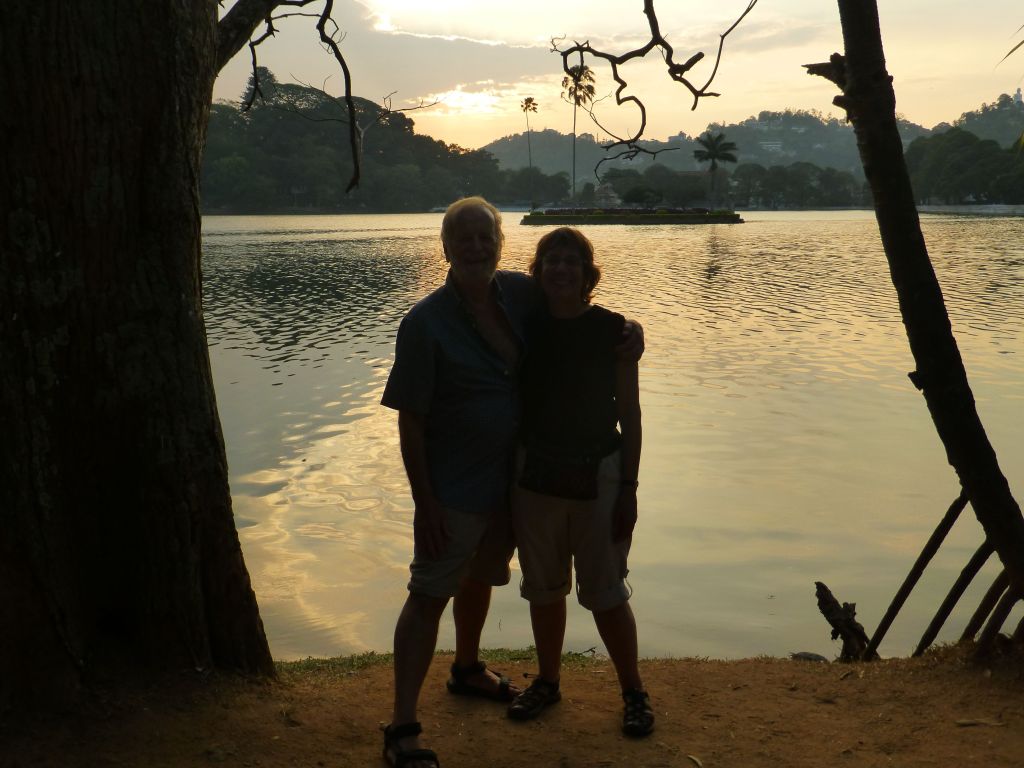
In the center of town is a lovely lake and 19th century colonial buildings. Not far are the pleasure garden of the Queens. Especially wonderful was the orchid house. Also surrounding Kandy are many important temples.
Our hotel in Kandy was up the hill from the town (about a 10-minute walk).
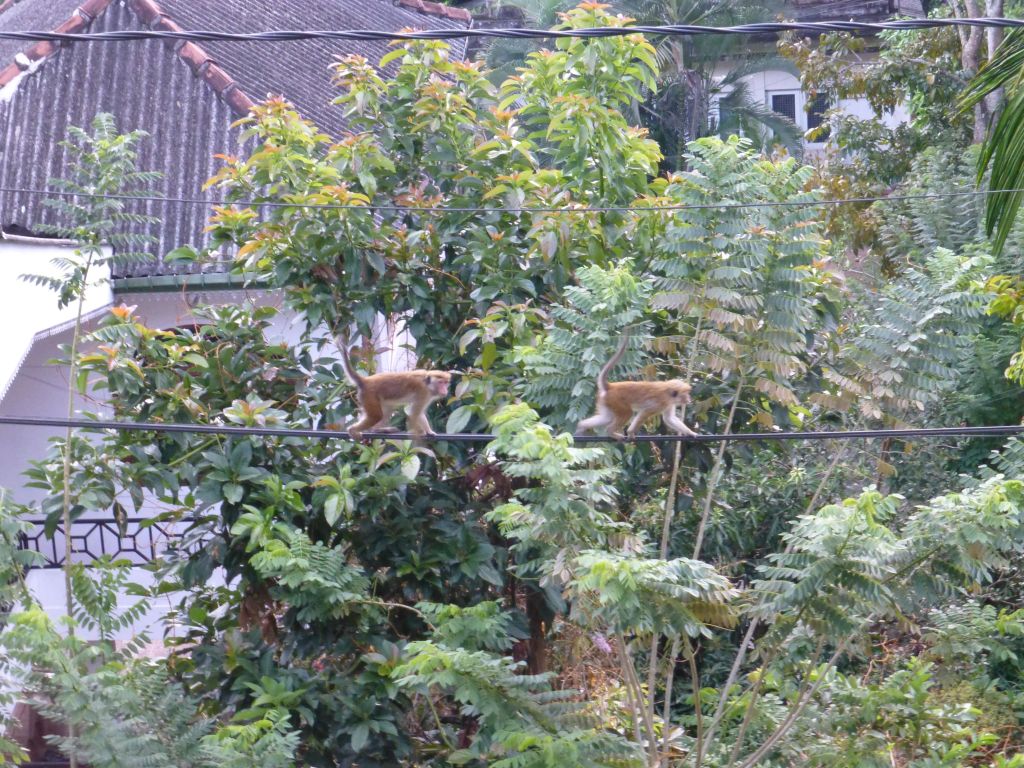
Our main entertainment was watching a troop of monkeys walking on electric wires, right across the street from us. It was a huge troop, about 25 monkeys with lots of babies, hanging on to mama. One of the monkeys walked across our balcony. We had heeded the front desk’s advice to keep the patio doors locked, in order to keep the monkeys out. They are destructive.
We did not spend all our time on archaeological and historical sites. We went on 2 safaris. The first was near Habanara in Kaudulia National Park where we saw elephants. The second was in Yala National Park, where we were lucky enough to see a leopard meandering very close to our vehicle.
We also stopped at the Elephant Transit Home in Udawalawe National Park. These orphaned elephants are returned to the wild at about age 8. We watched one of the five daily feedings. Such fun!

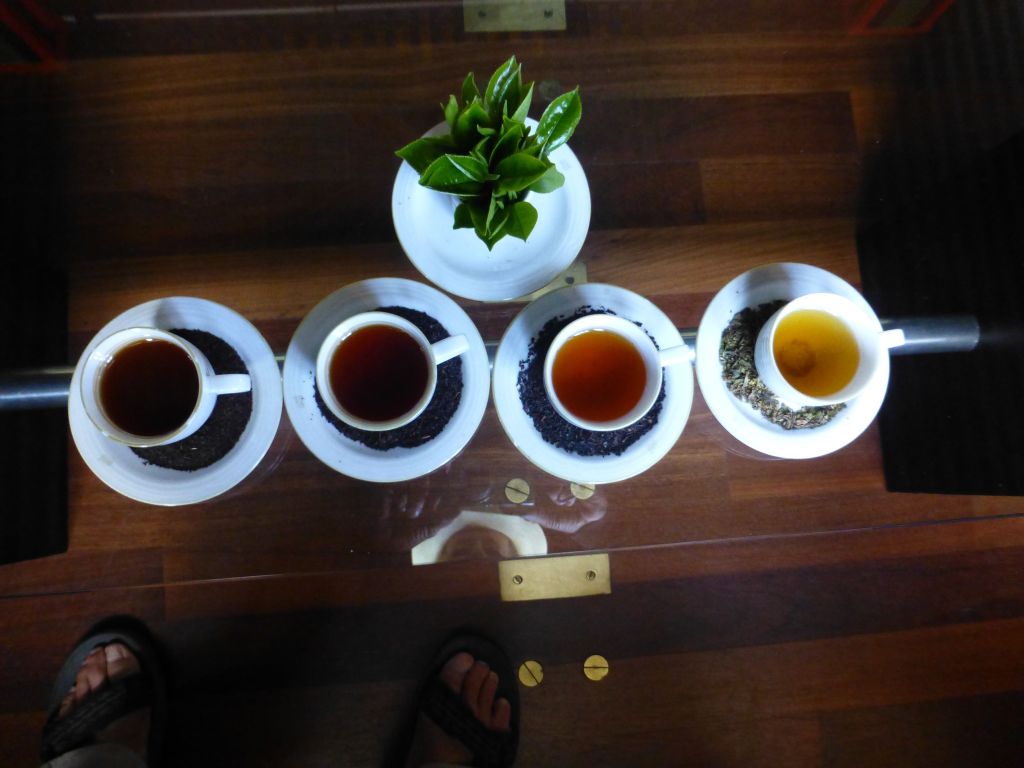
In Newark Eliya we visited a tea museum and a tea plantation. At the plantation, I had the best cup of tea ever.
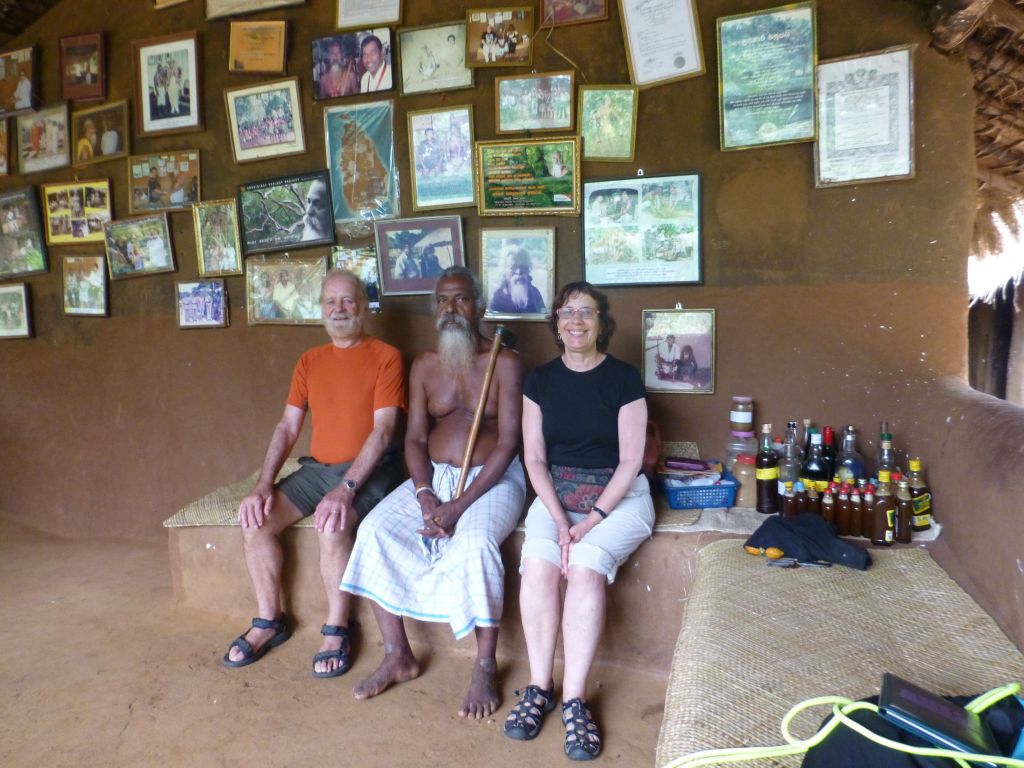
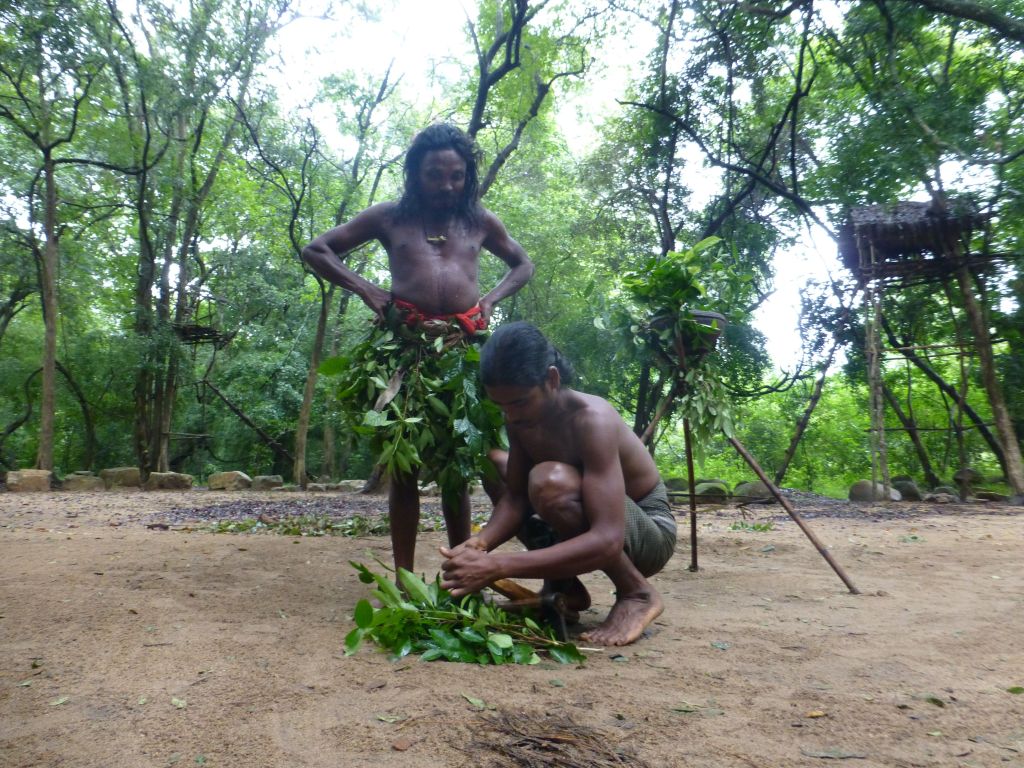
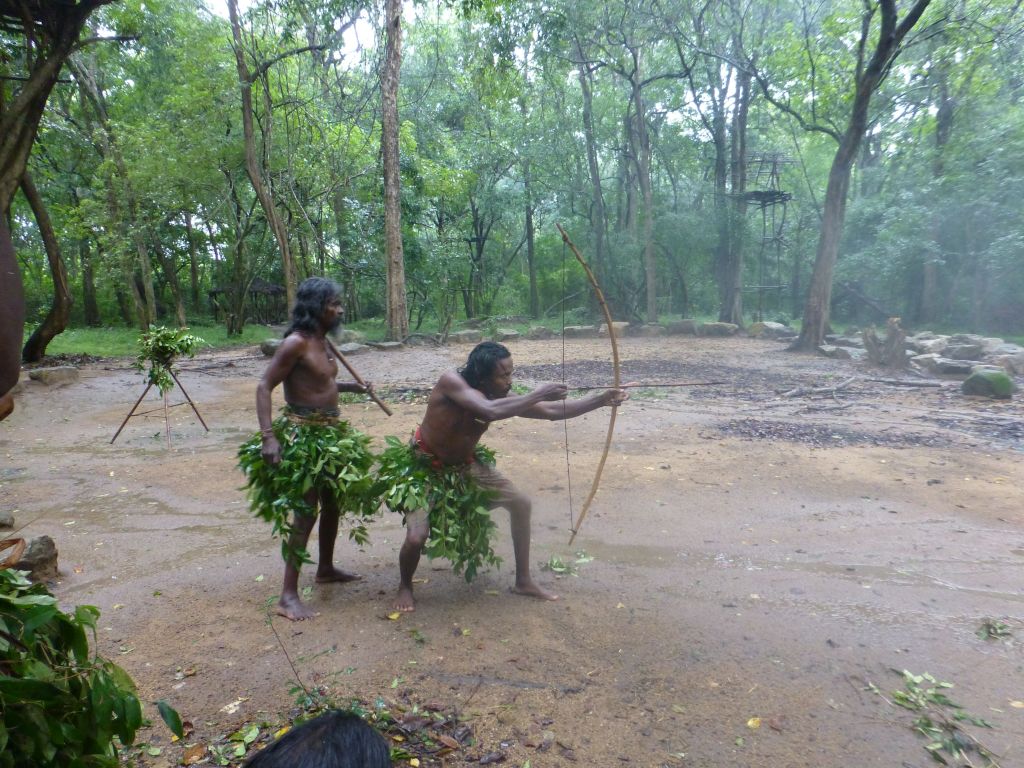
Another wonderful experience was visiting a Veddhas village and learning about their culture. We visited the house of the chief. Then we went into a clearing, where we enjoyed a ritual dance and a demonstration of animal trapping (without the actual trapping). This is not a tourist village set up for tourists. They actually still live this way and have few outsiders come to visit.
Shopping is always a draw, and we had stops at a batik factory, a woodworking factory and at a spice garden where they grow cinnamon, cocoa, aloe vera, turmeric and more. Finally, we relaxed at the beach in Bentota for 5 days.
We saw wonderful historical, religious and natural wonders. But it was the people who impressed me most. We felt truly welcomed. The merchants were helpful but not aggressive. Tuk- Tuk drivers would ask if we would like a ride, and if we said, “no,” they would respond with “have a nice day.” When we did want their services, it was easy to agree on a price – usually about $2.
The food was inexpensive, $7 – $10 for most meals. On the road, most of our meals were buffet style, with both spicy and bland choices. Many of our hotels were isolated, which necessitated eating at them. But the food was excellent.
Sri Lanka was a delight.
Final Comments:
- Choosing an expert tour company is key to a wonderful adventure. Ceylon Express specializes in Sri Lanka and guided us to a wonderful itinarary.
- Having a dedicated driver was great. He was not a tour guide, but he did give us some interesting information.
- Since Sri Lanka is not on the route to future trips, it was brilliant to plan a comprehensive trip. I am only sorry I didn’t plan a 6 week trip and include the north and east of the country.
- Extra time and solo travel means extra experiences.
 Nili's Adventure
From a overall feel perspective how does it compare to India?
LikeLike