
Windstar Cruise & the Panama Canal:
We timed the Costa Rica section of the five month adventure, to end in time for the Windstar Cruise.
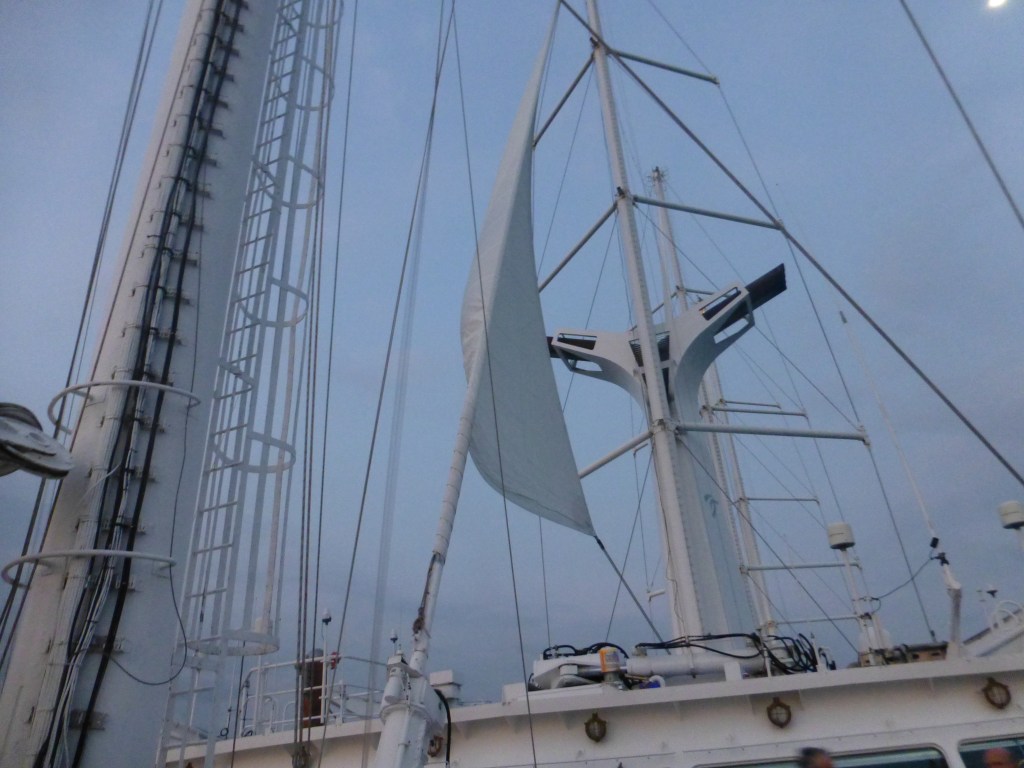
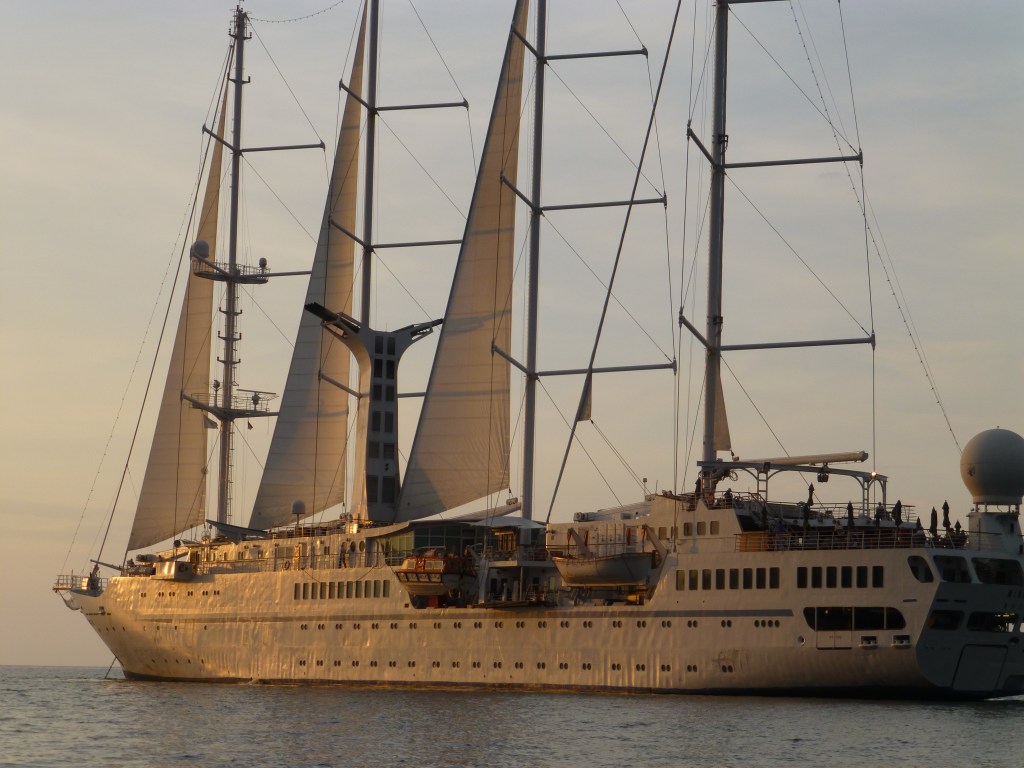
Windstar is a lovely sail/motor boat. Although the sails are unfurled as we set sail, the boat actually uses motor power almost exclusively.
One evening we took zodiacs around the ship as the sun was setting on the sails. This photo gives a bit of the feel of what the ship looks like under sail.
To keep to highlights, I am only writing about our Panama Canal crossing section of the cruise. But before I get to the crossing, I will tell you the saga of Jerry and his hand.
When we were at Lapa Rios the prior week, at the end of a 3-hour hike, Jerry climbed back into the jeep, on the rickety stairs, and lost his balance. He grabbed the side of the jeep and cut the back of his hand on a nail (that shouldn’t have been there). It was a deep gash, but in typical fashion, he announced that it was nothing and we could just put a band-aid on it. Yeah, right! The resort general manager told him differently. She drove us 25 minutes into town to the emergency clinic. Jerry got 12 stitches by a doctor who is used to fixing farmers’ cuts. This was her 4th stitch up that day. She told us to be back in 8 days to take out the stitches. Problem: in 8 days we would be on the Windstar at sea.
Therefore, when we got to Finca Rosa, (see post 27), we decided to check with a doctor (it was 6 days from the stitches). Hotel Finca Rosa had a doctor on call but he was out of the country. They suggested seeing the doctor in the pharmacy in Santa Barbara (a suburb of San Jose where Finca Rosa is located). We went there (in the pouring rain), the doctor looked at the hand and in her limited English said it was fine but to immobilize the hand using a tongue depressor so it can heal. The stitches were not ready to come out. So what were we to do?
We called the cruise line in Seattle, because we read that there was a doctor on board, to ask if we could have the stitches removed on board. They said, no, that he is there only for emergencies, not for pre-existing conditions. Our next plan was to find a doctor in Golfito, where we would be docked on Monday, to take out the stitches. It would be 9 days by then, 1 day later than recommended. But we were lucky and had a better solution presented to us.
Remember Mary and Sam from Finca Rosa? On our second evening we had dinner with them and were talking about finding a doctor at the next port, Golfito. Turns out that Sam is a pediatrician. He was Mary’s kids’ pediatrician (it is a second marriage for both of them). He said, let me look at it after dinner and I will take care of it. That’s when things got interesting. Word got around because we were looking for:
- a place to do take out the stitches
- sharp little scissors.
One couple brought us a small pair that they had but they were dull, the office didn’t have small scissors, then I remembered that there were little sharp scissors on my Swiss Army knife. I ran to get it. Sam said he needed a shot glass of vodka to sterilize the scissors. So someone else went to get it from the bar (bar tender got in the act and didn’t charge for this). Sam began to operate, while a veterinary pathologist acted as second (he was just keeping us company). Another passenger is an OBGYN doctor and he watched as well. Sam said the wound was healing well, clipped the stitches and then used our tape to bind the cut. We had bought antiseptic in San Jose and Sam and the veterinarian laughed and said it was great stuff but they don’t sell it in the States.
This freed us from finding a doctor but more importantly we had a trustworthy opinion that the cut was healing well. You can imagine that we get lots of questions from the passengers. We were in a zodiac with a nurse and she said, hell, she could take out stitches. It turns out that there were about a dozen medical professionals on this boat!!
Now for the main event: The Panama Canal crossing.
A bit of history:
In the late 1800s the French, who had built the Suez Canal, wanted to repeat their feat and began to build a canal. They did not understand that while the Suez was built in flat, dry land, Panama is mountainous. In addition, the climate is humid, rainy, and full of yellow fever. Here they would have had to dig very deeply to get through the mountain range. An enormous number of people died from yellow fever during the French experiment.
The U.S. took over and used the lock system so that less of the mountain had to be dug out. Also, doctors had just discovered that mosquitoes caused yellow fever and they took steps to clear out all stagnant waters, and improve sanitary conditions. The Panama canal was finished in 1914. In 2013, we crossed the original canal. Today, there is a new canal to accommodate the newer even bigger ships. I did a partial canal crossing, in the new canal, earlier this year on my cruise with my daughter, Maggie and her family.
Going through the Canal was awesome.
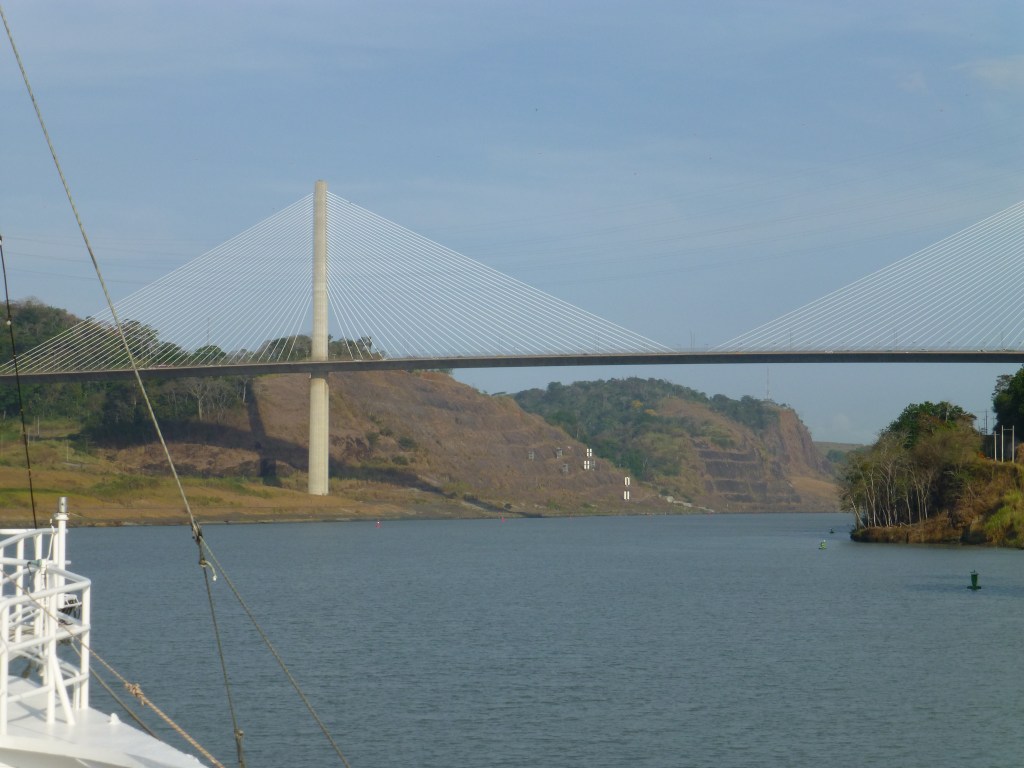
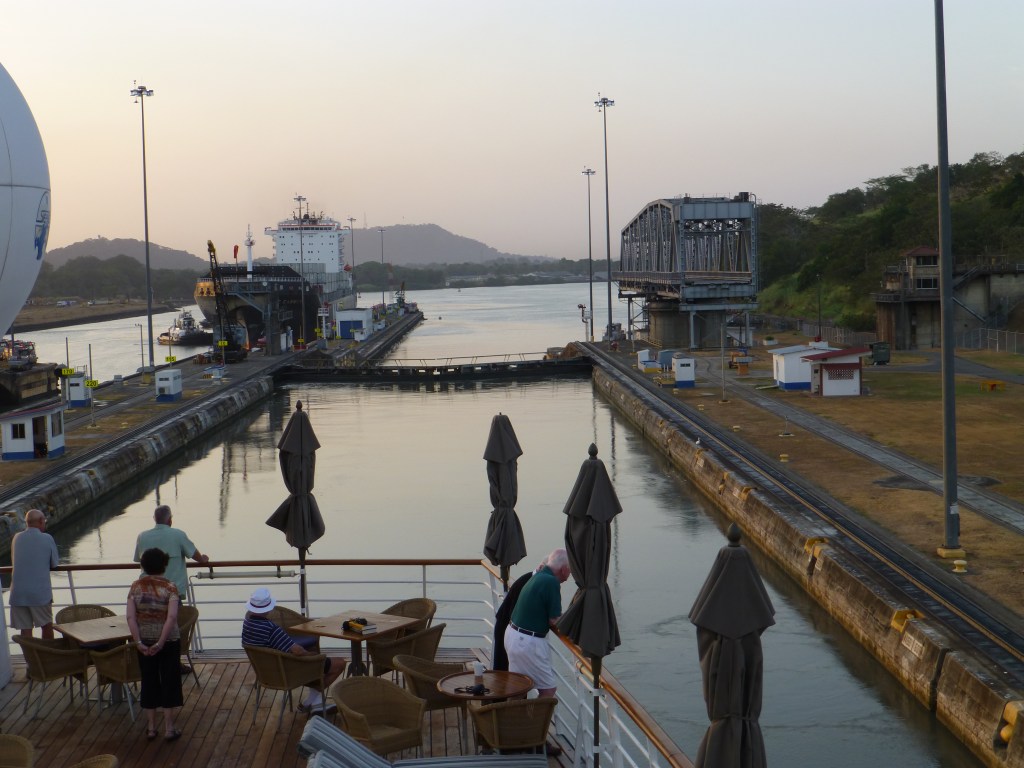
We entered from the Pacific, had to go up in stages, cross the lake and then go down to the Caribbean in stages.
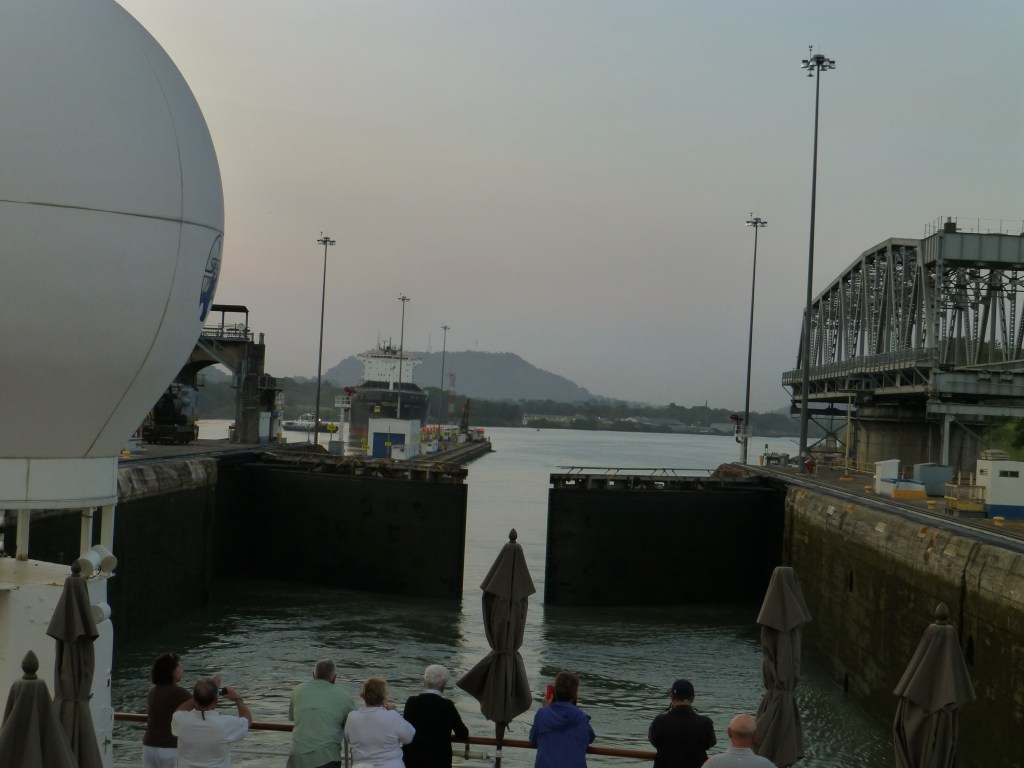
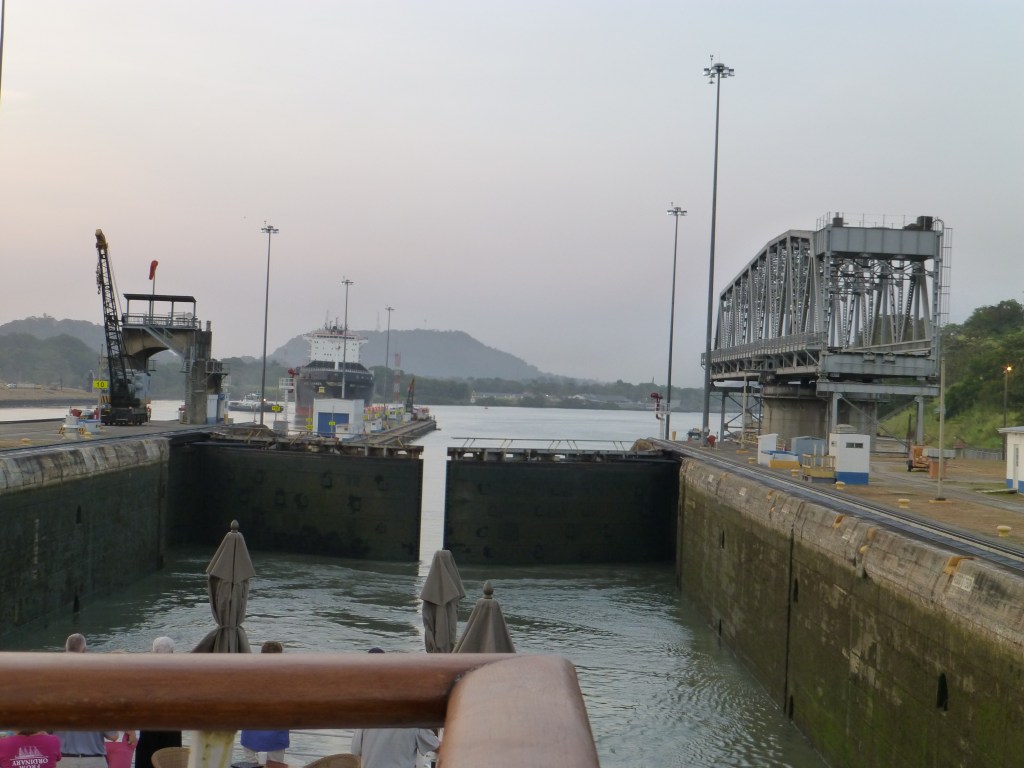
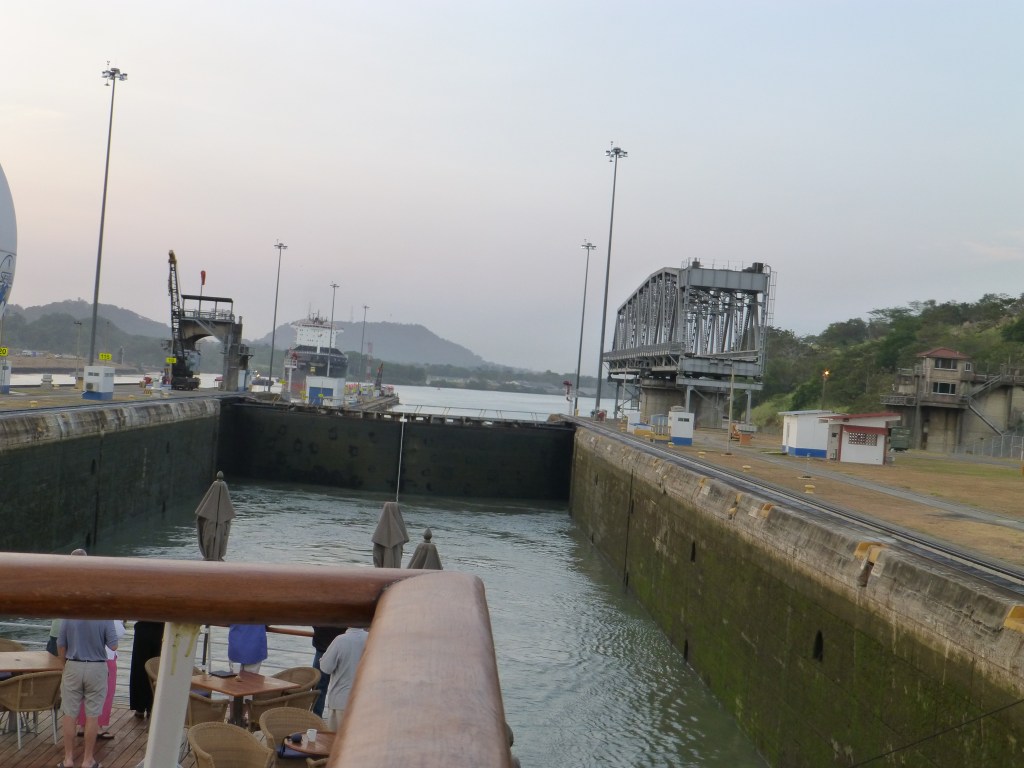
It took from 6am to 1:30 pm to do this. At that time, there were 40 ships going through a day.
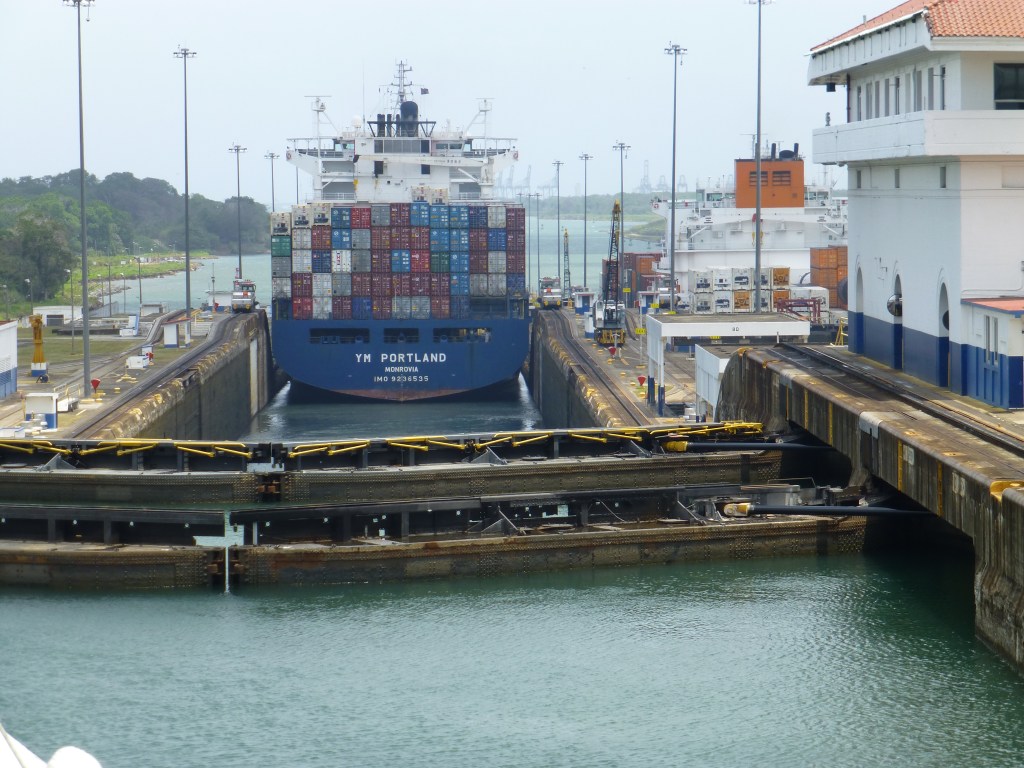
The containers were built to be able to fit into the locks with about 2 feet to spare. There was a container ship before us and it was amazing to see the tight fit.
The Process: Pacific to lake. Ship 1 enters through lock #1. The back doors close. The water level is raised to the level of the next lock. The front doors open and the ship exits and goes into the second lock. The back door closes and the water level in lock #2 goes up. In the meantime, the water in lock #1 go back down so that the next ship can enter. The reverse is true when going down to the Caribbean side.
The ship was guided through the lock by means of 4 train cars. Two on each side in front and two each side in back. Rowboats came out and throw ropes to the boats to tie the trains to the boats. (This is different now in the new canal.)
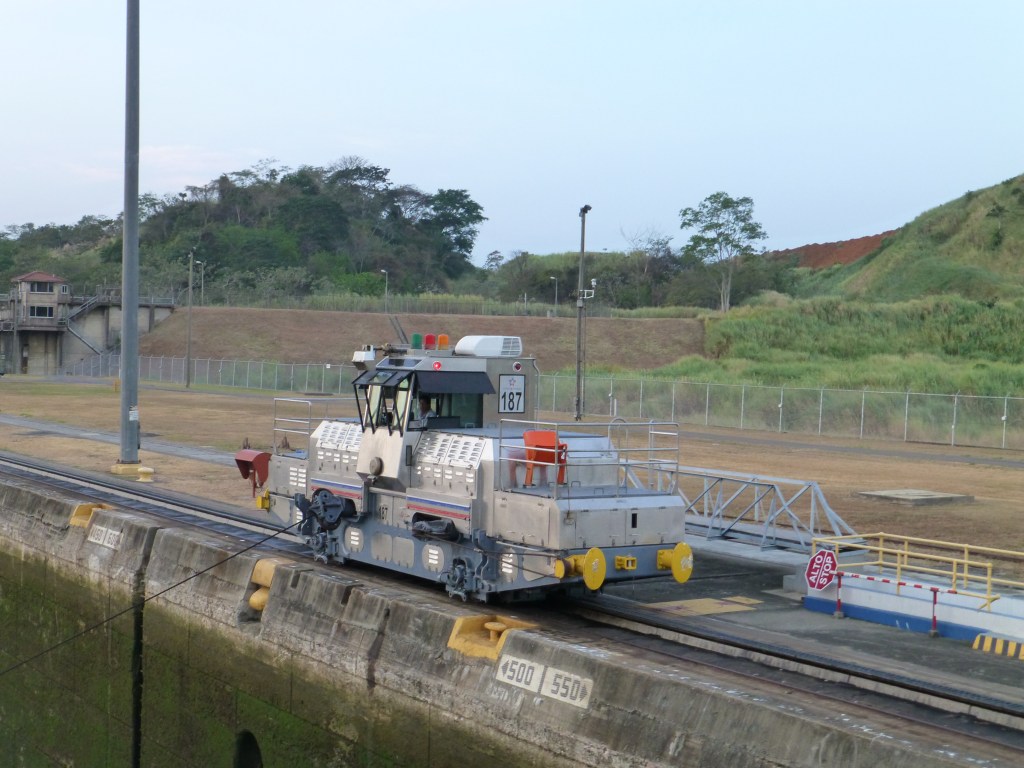
The week on the Windstar was wonderful. It was the first of many Windstar cruises.
Panama City
The cruise was over, but not our touring. We took a city tour which included “Panama La Vieja”, the city built by the Spanish explorers in 1519.
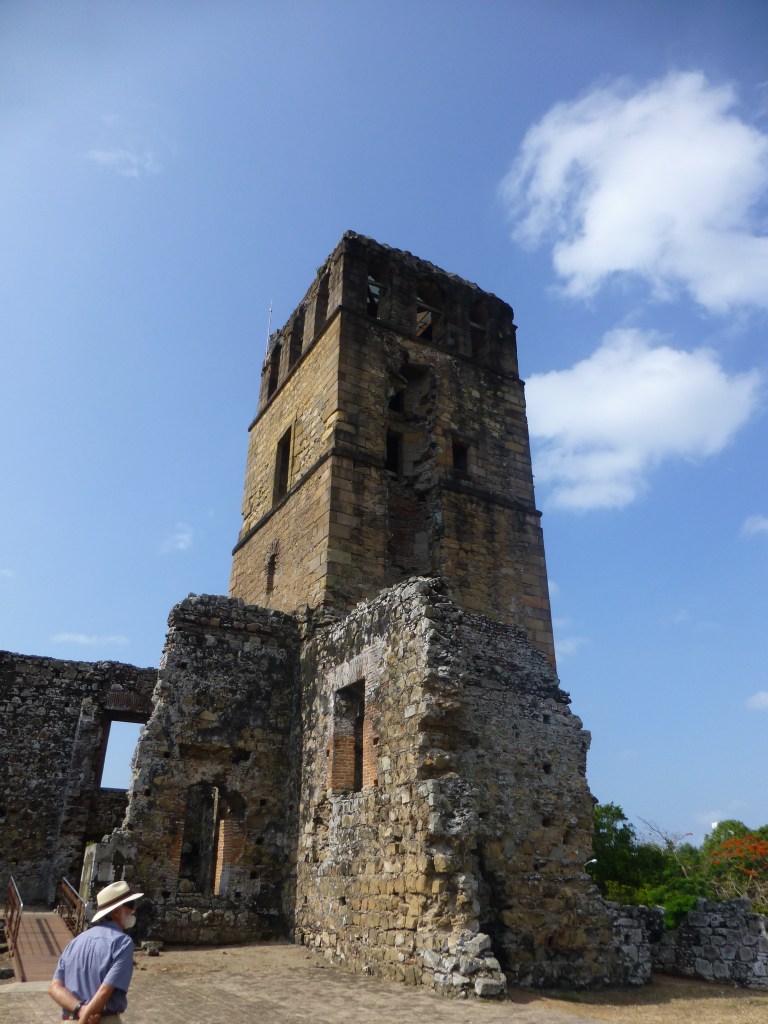
It is in ruins today, but much has been preserved including 115 steps up to the top of a tower. The view from the top was great.
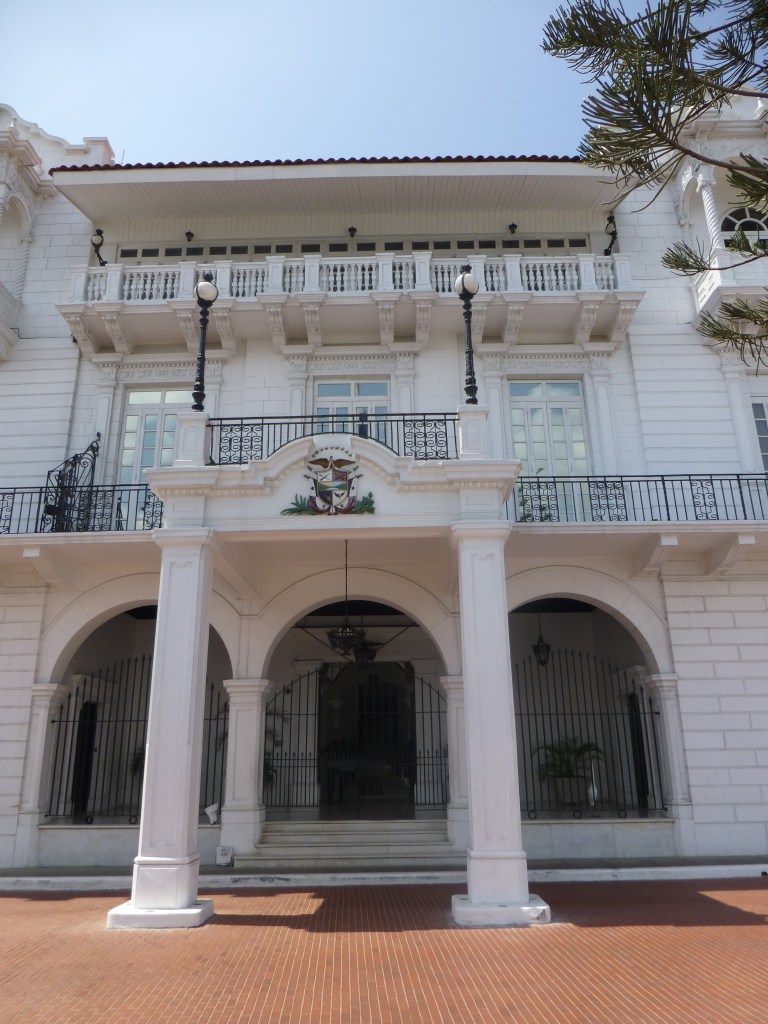
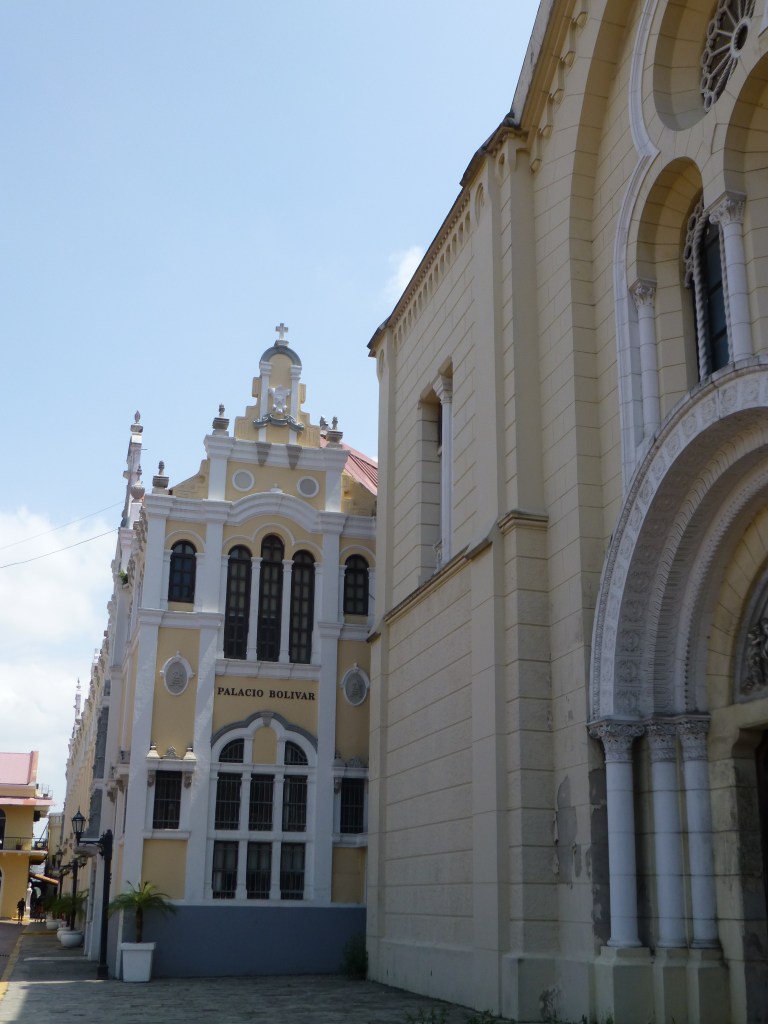
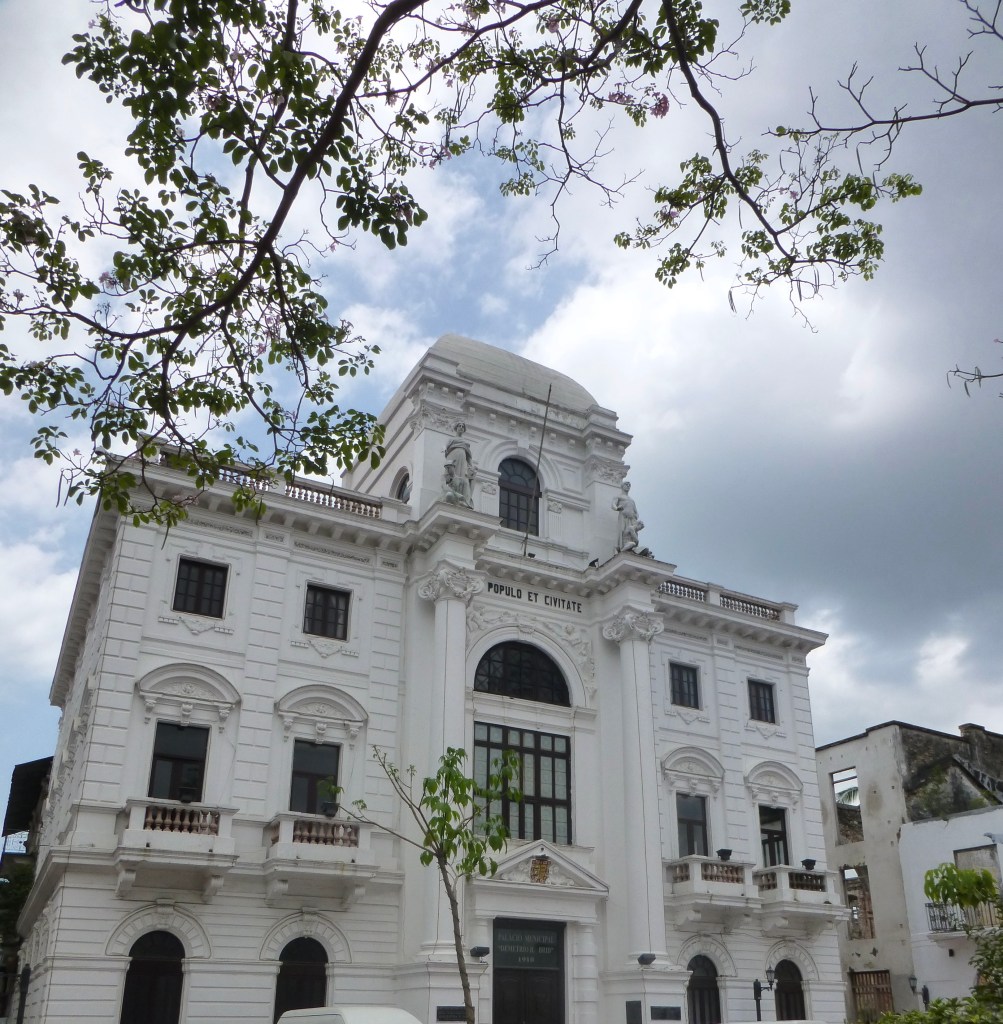
The tour also stopped at the Colonial city. It had fallen on hard times but was in the midst of restoration. In 2013, about 40% of the buildings were restored completely. I retuned to Panama City when I took the cruise earlier this year and much more of the city has been restored. It is a very charming city.
Gamboa Resort
After Panama City, we spent a couple of days at the Gamboa Resort. After the small, intimate eco-resorts in Costa Rica, this huge resort was a shock. Although it is in the rain forest, it has no sense of intimacy.
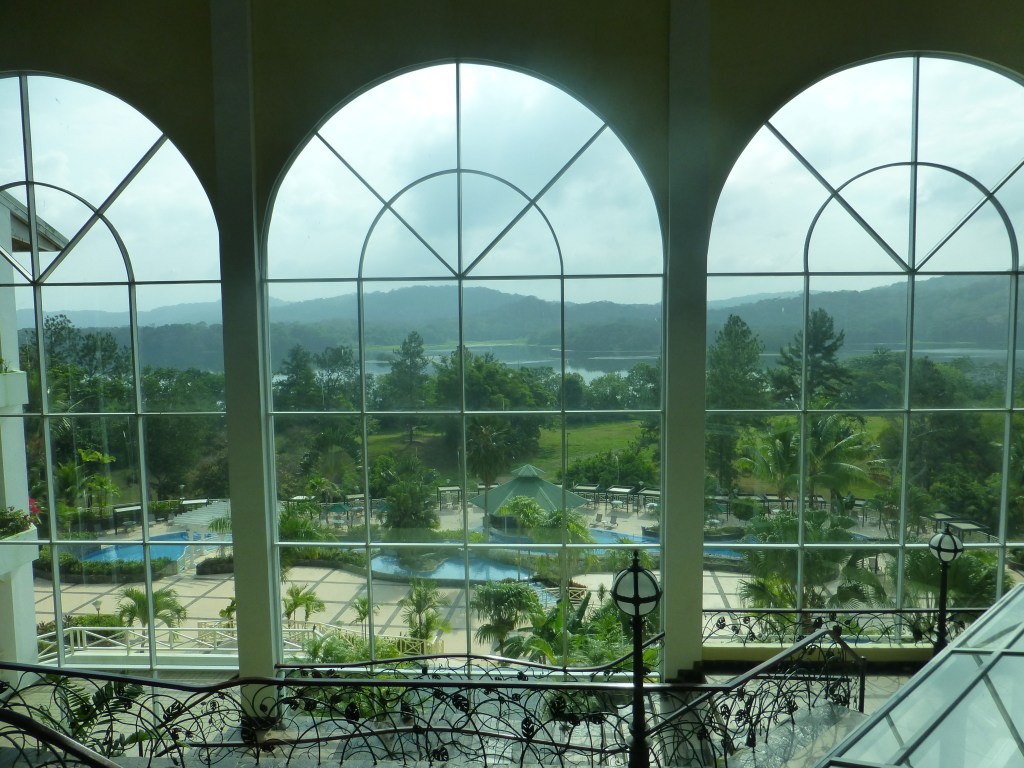
However, the resort offers lots of hikes and activities, and has an awesome pool area and very comfortable rooms. It is possible to see Gatun Lake (canal lake) from the grounds of the resort. This picture is taken from the dining room.
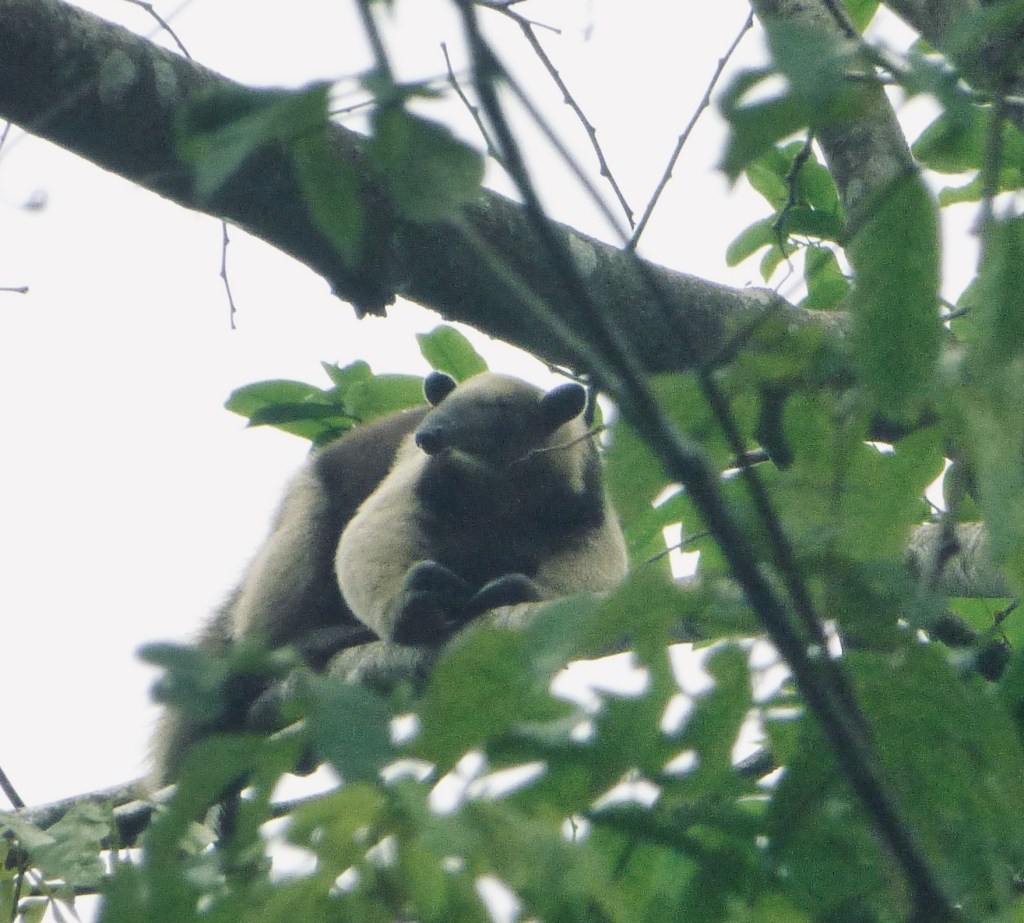
We took a couple of great hikes. and we did see lots of wild life such as a cute anteater. The guide said that they are nocturnal and rarely come out during the day. The anteaters (right) use their tails similarly to monkeys.
We also saw White Faced and Howler monkeys, the blue Morph butterfly and lots of birds including a toucan.
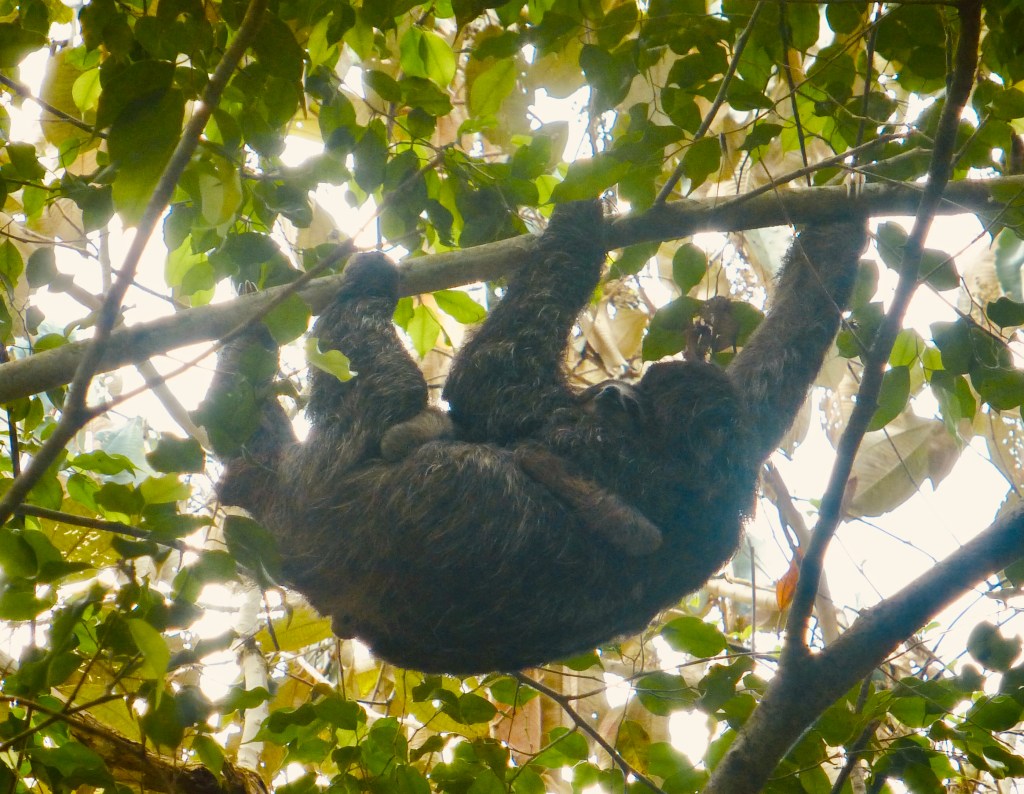
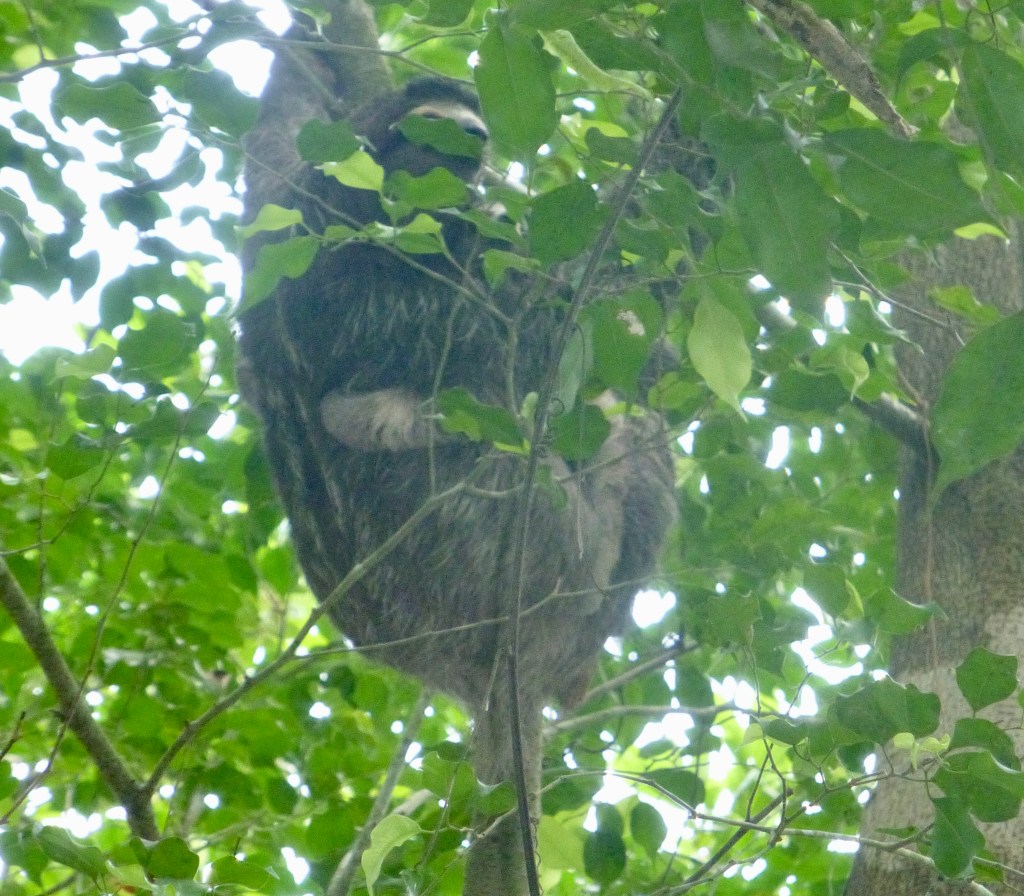
But the most exciting was a 3-toed sloth with a baby on her stomach. The sloth was only about 20 feet above us consequently we could see it really well. As we watched, it started to move and I took some videos. Watching the sloth move was like watching a ballet.
Coral Lodge
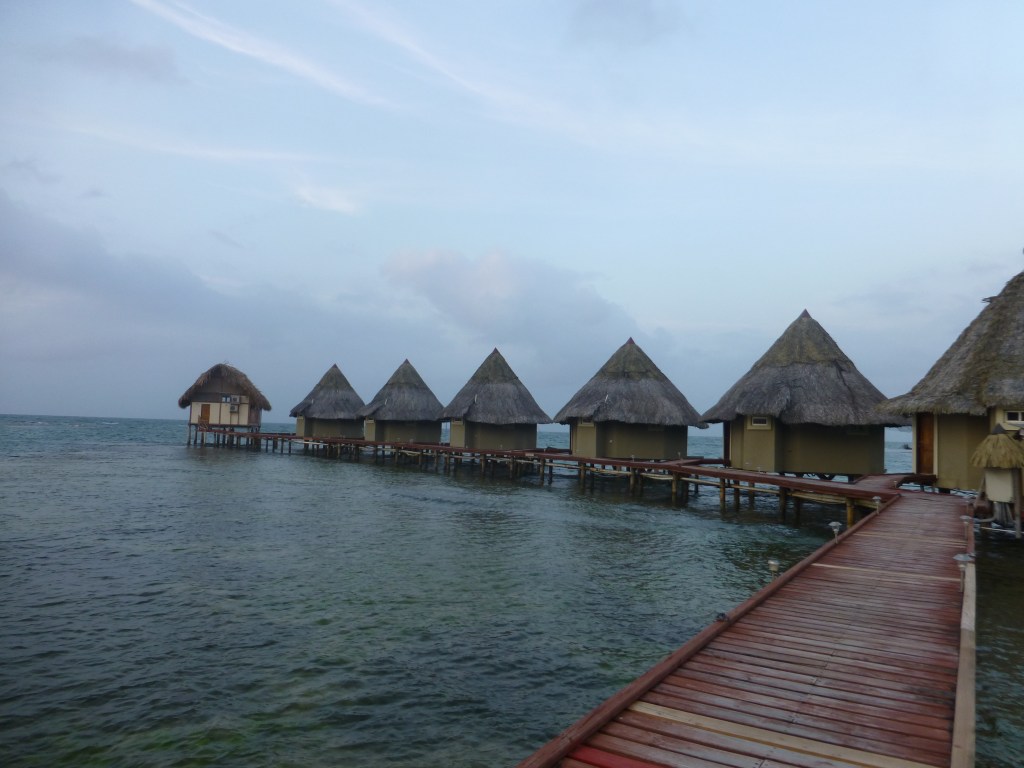
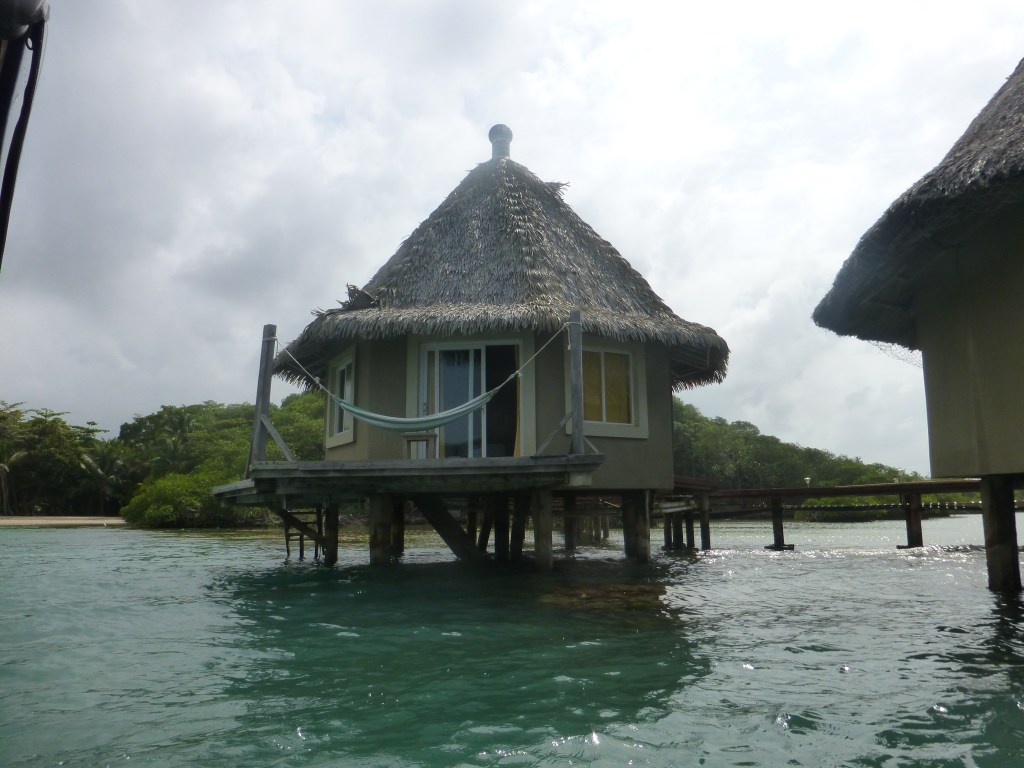
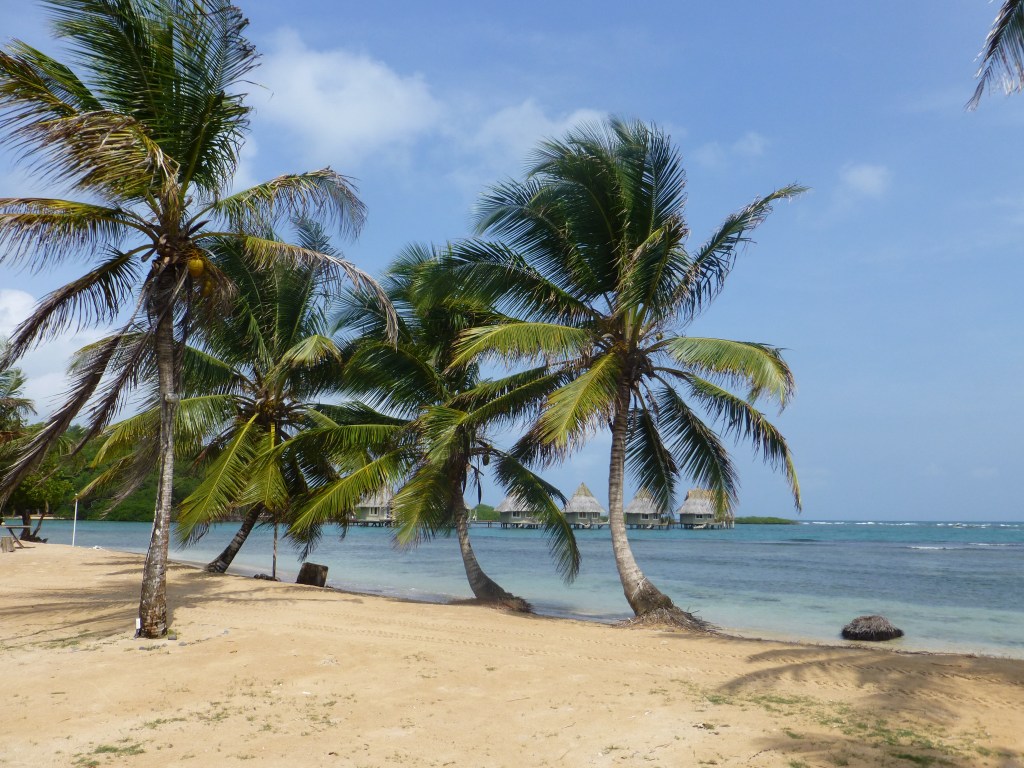
Our final adventure in Panama was Coral Lodge near the San Blas islands. It is on a bit of sand in the middle of nowhere. There are seven bungalows on stilts in the water for guests, a boat dock, and a main house where we had dinner and relaxed. The water was warm and calm but we were warned of jellyfish, and skipped the swimming.
Coral Lodge was our down time stop before returning home for 2 weeks to catch up on taxes and bills. Part III of the Central America adventure will include Mexico, Honduras and Guatemala..
 Nili's Adventure