
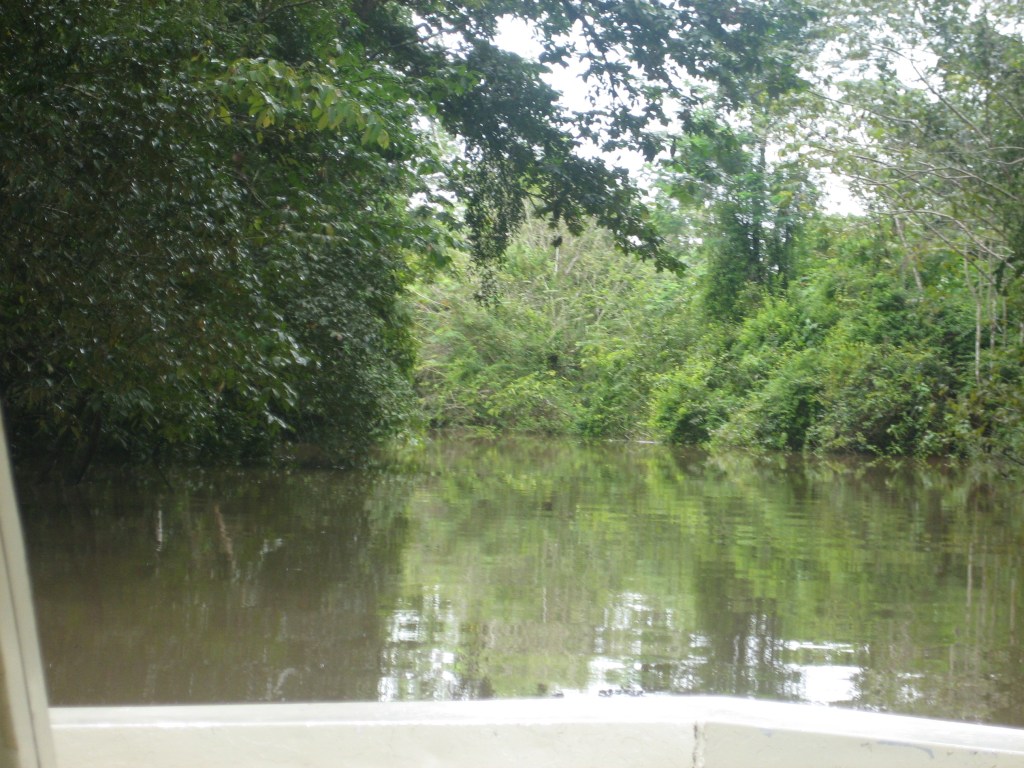
The Amazon, that great river and jungle in South America, was next on my list. The travel choices were an Amazon River cruise, a group tour with a company like Oversees Adventure Travel (OAT) or to create my own itinerary (with the help of a tour company). The cruise sounded inviting, but I realized that I would only see the area near the river. A group tour is usually limited as to time and only gets surface deep in an area. I decided to go inland and have an in-depth experience. In order to accomplish this, I researched and found a company called Explorama, which owned 5 lodges in the Amazon in five very different settings – and different levels of comfort (or discomfort). By luck, when I called, I was connected to the owner of the company, Peter Jenson, and worked directly with him. I chose to stay in all 5 lodges, but I took his suggestion and only stayed 1 night in Tambos, the most primitive of the lodges. Good decision. For reference, here are the five lodges, where 1 is the most comfortable and 5 is the least comfortable.
- Ceiba Tops, 2. Explorama, 3. ExplorNapo 4. ACT and 5. Tambos.
Explorama arranged for a dedicated guide, Luis, whom we met him in Iquitos, Peru. He was born in one of the Amazonian villages but now lived in Iquitos so that his kids could receive a good education.
Explorama Lodge
A 1 ½ hour high speed boat trip brought us to Explorama Lodge, the company’s original lodge and 2nd level in comfort.
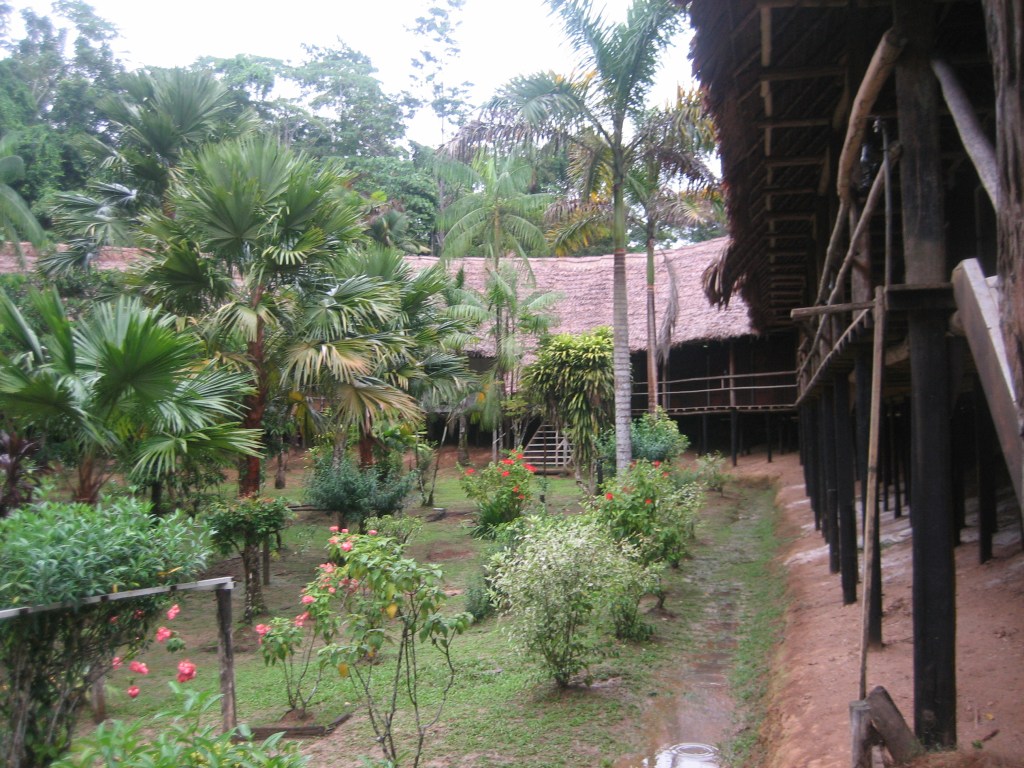
There was electricity in the bar and dining room, and oil lamps in the rest of the camp.
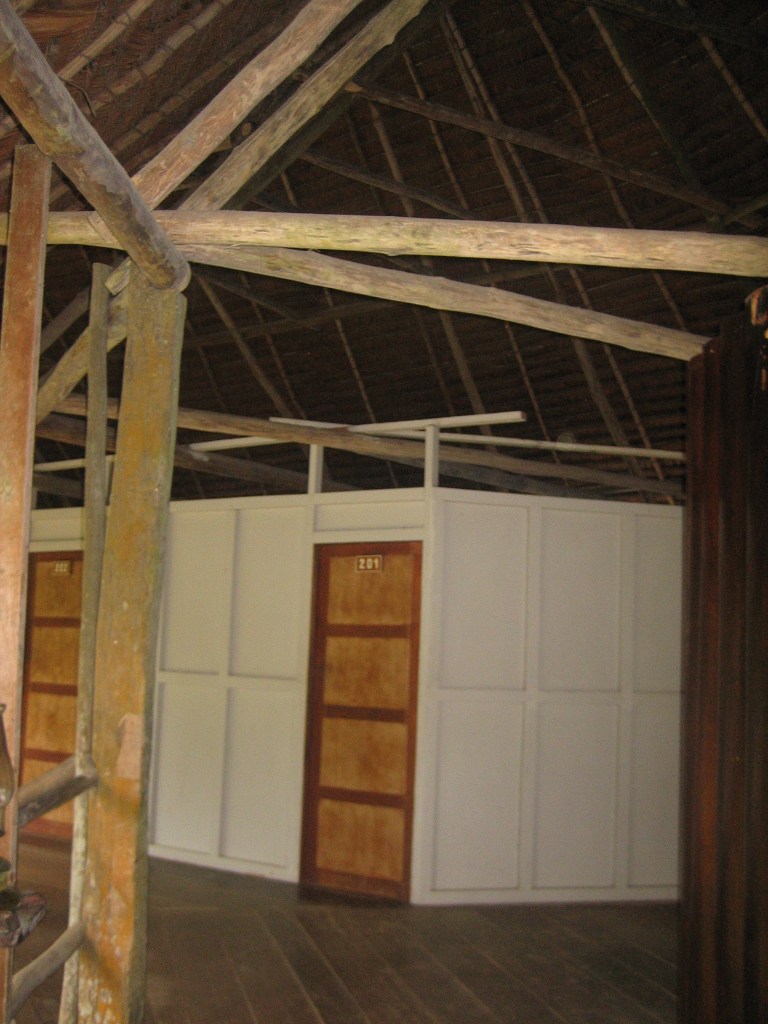
Our room had indoor flush toilets and showers (cold water only). Although there were walls and ceilings, the walls were just partial dividers between the rooms. They did not reach the ceilings. This gave the visitor air but very little privacy from the room next door. Because the room was open, the beds were covered by mosquito nets.
The camp common areas were very comfortable with lovely hammocks and easy chairs. I took lots of naps in the hammocks – every time I lay down to read, I fell asleep.
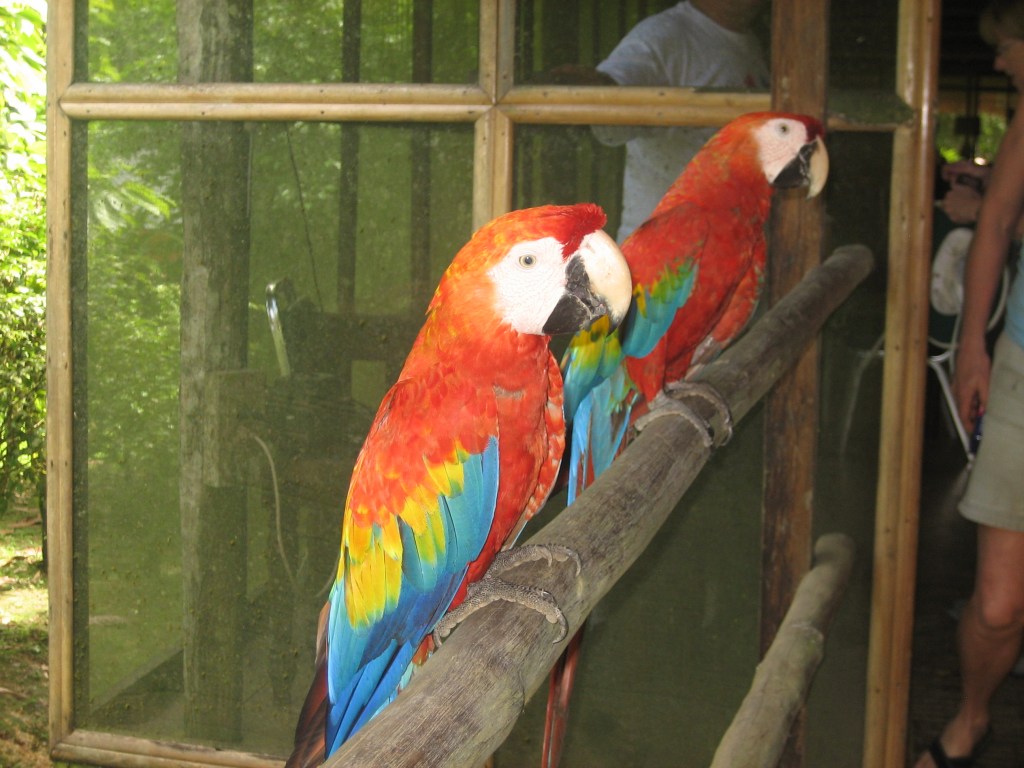
Even without going into the jungle, the jungle came to the camp in the guise of beautiful green and red Macaws and lots of monkeys and a parakeet joining me for lunch (and stealing a cracker).
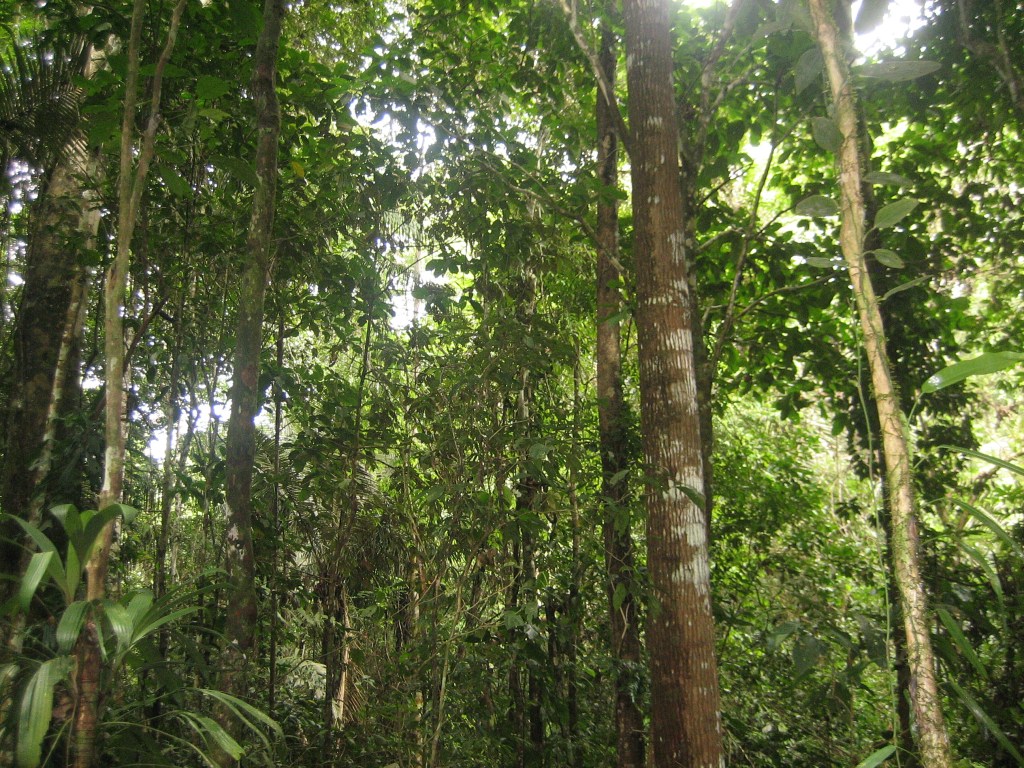
The purpose of being at the Amazon, was, of-course, to walk and feel the jungle. The jungle canopy is about 200 feet high. The trees are so tall that it was necessary to crane my neck to see their tops.
On trail walks Luis pointed out medicinal plants including garlic, lemon grass and paprika.
The Amazon River doubles in size between the dry and wet seasons. We were there midway into the high-water season, which meant that some trails were under water and could only be navigated by canoe, while others were still passable by foot.
The bottoms of the canoes were flat, and can navigate shallow water. It was heavenly to glide through the water while looking for monkeys, macaws, iguanas, various birds and butterflies in absolute quiet.
The only other boats, we saw were those of the locals.
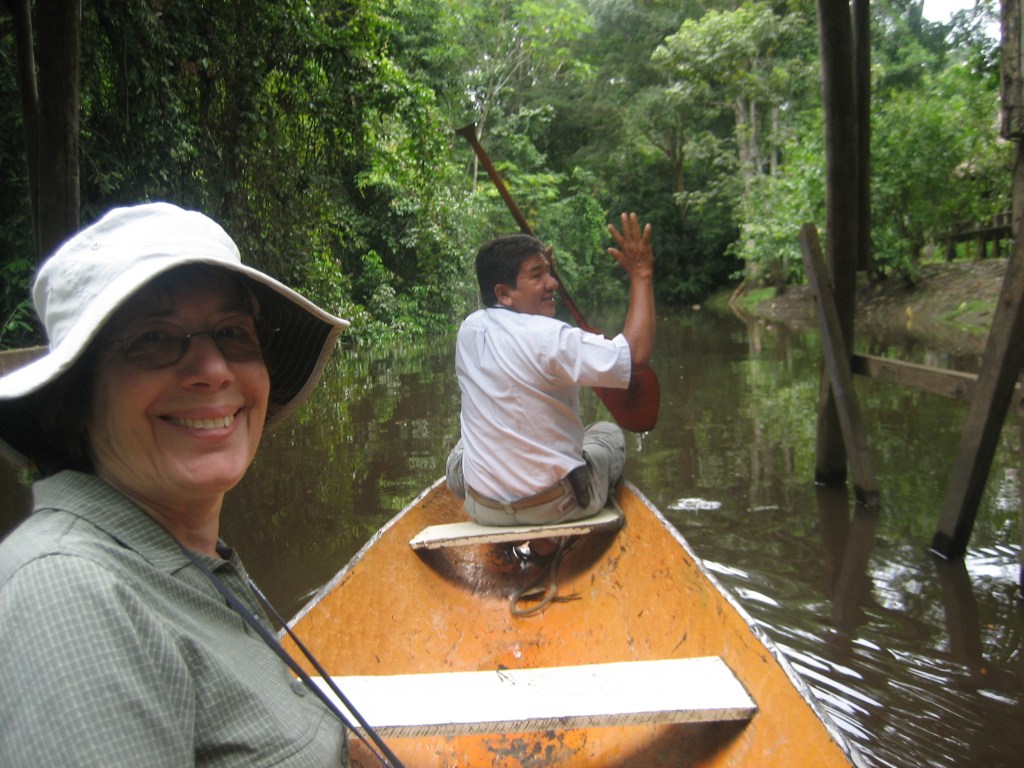
Because we had extra days at Explorama, Luis took us in a motor boat to visit his birth village in order to give us a feel for village life and to meet his family.
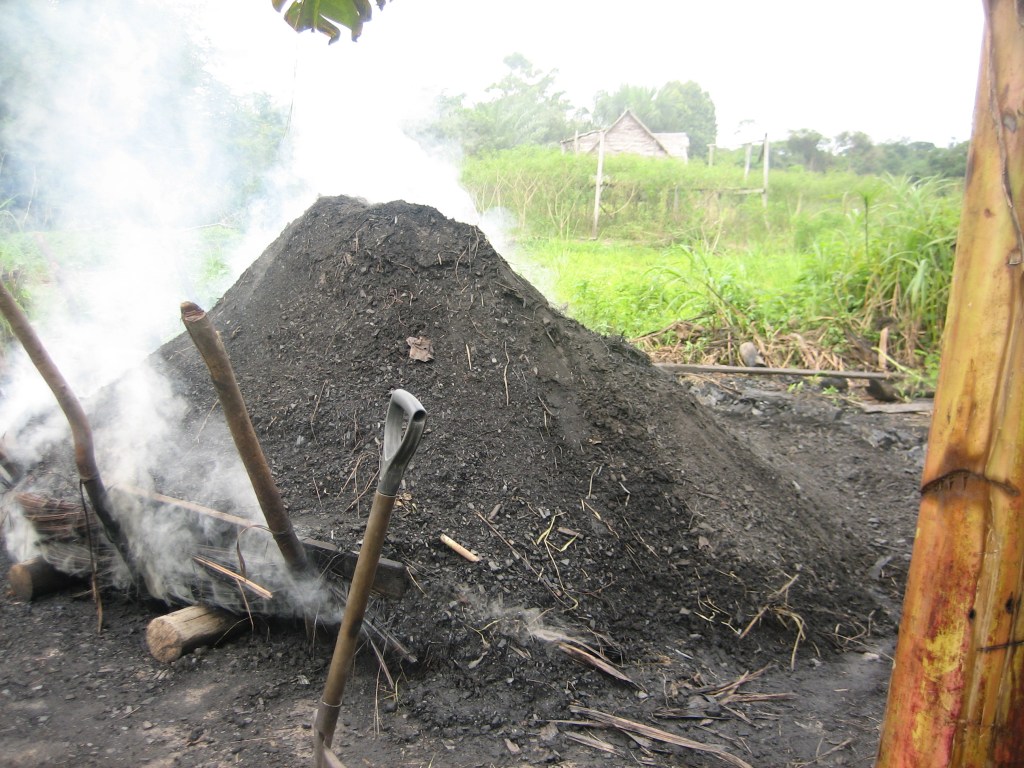
Luis’ brother was building a new charcoal oven with the help of his neighbors. His sister and her husband were in the process of building a new enclosure for their fish farm and they explained the process.
On the final day at Explorama, we visited a more tourist oriented Indian jungle village. Luis and his family are River People, mixed Spanish and Indian. These villagers were Jungle Indians and spoke a dialect that Luis did not understand.
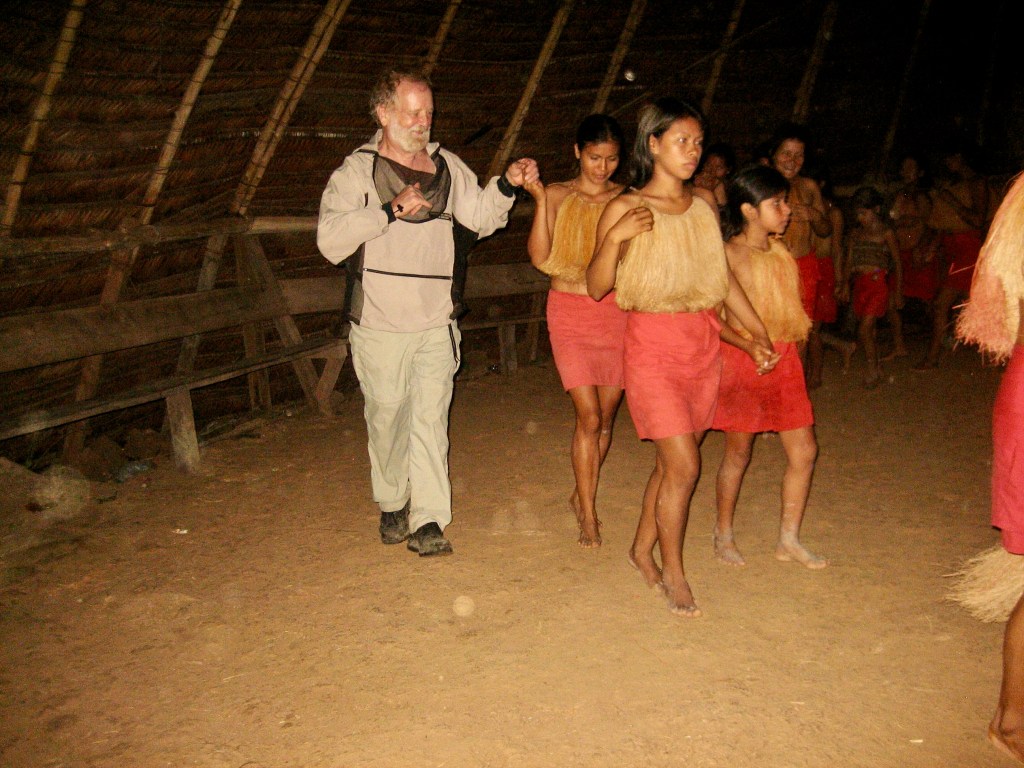
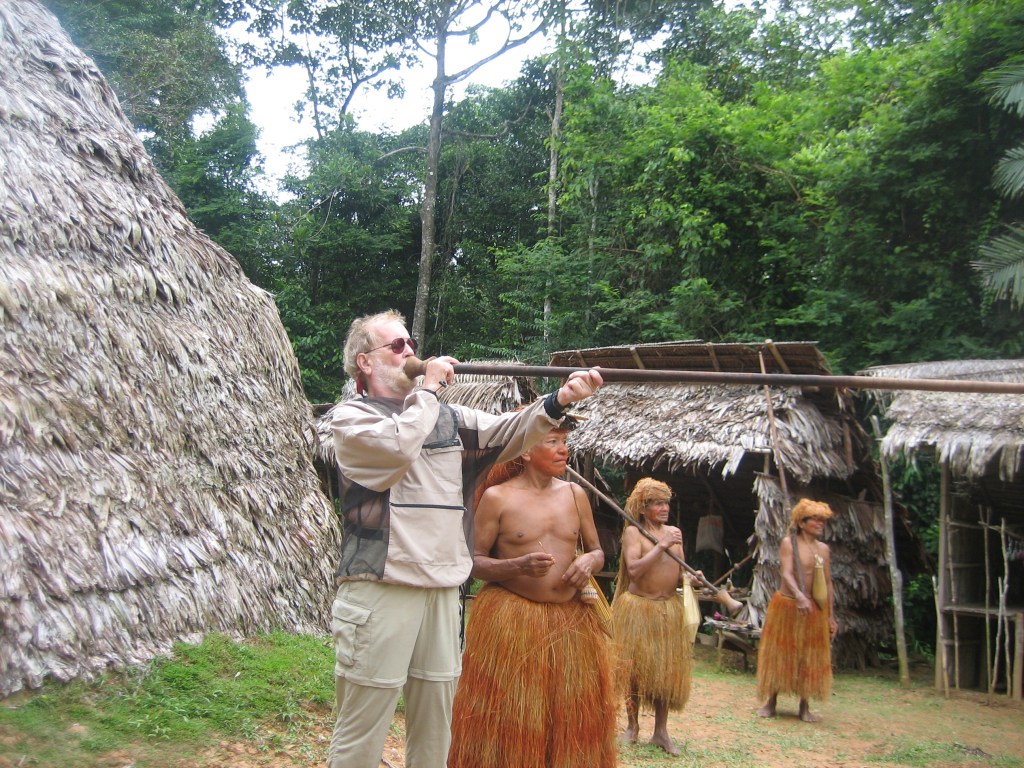
They did a dance demo for us and expected us to dance with them. They also demonstrated the use of blowguns that they use to hunt monkeys and other small animals. The darts can go 25 to 26 feet. When trying it out, I hit the target first try. Beginners luck, I guess.
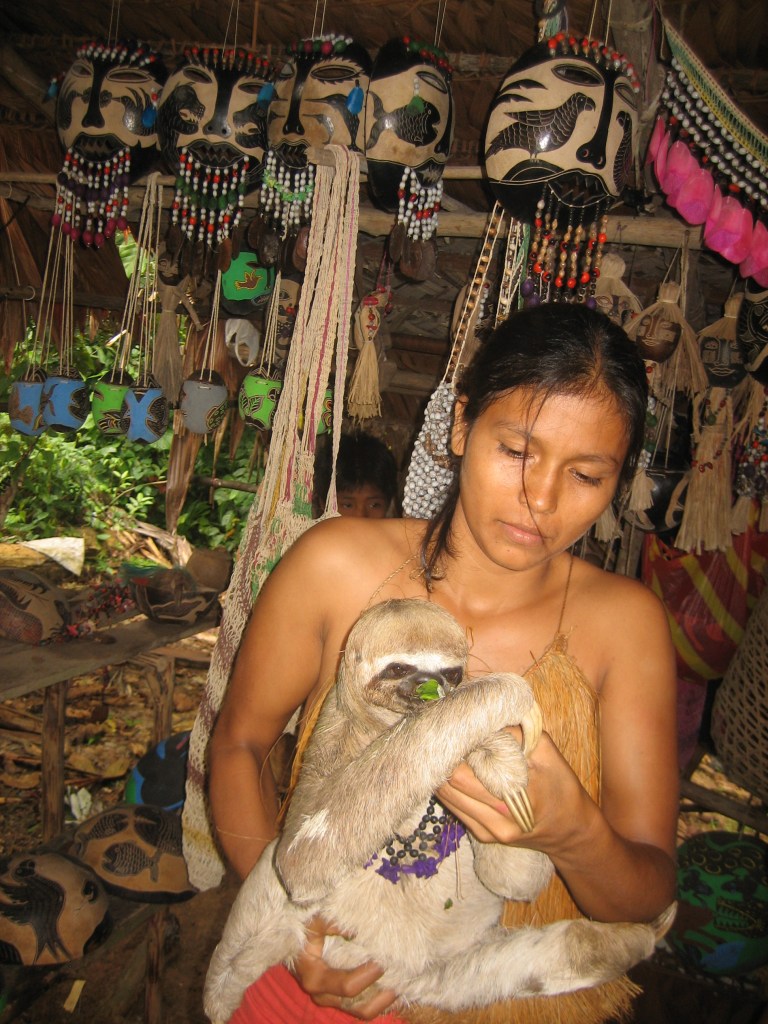
One of the village girls had a pet sloth climbing all over her. It was the cutest thing. Luis assured me that once full grown, it would be released to the jungle and would do well.
ExplorNapo Lodge:
We motored down the Amazon to the Napo River and down it for 50 miles to the Sucusari River. Both the Amazon and the Napo rivers make the Mississippi look small. The Napa River was at least a mile wide – the Amazon three times that.
ExplorNapo Lodge is much smaller than Explorama and more primitive. The rooms were nice, however they did not have an attached bathroom or shower. The lodge had a combined dining room and bar, with Wifi and electricity every evening for about 4 hours to enable us to charge electronics
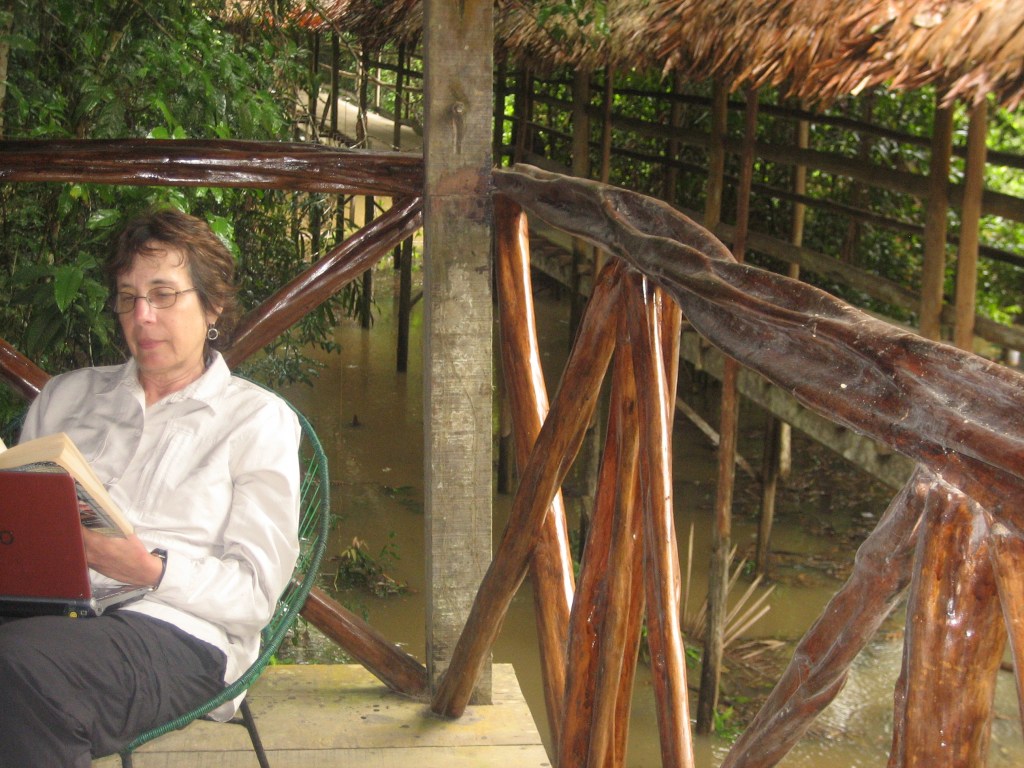
There was a lovely hammock house and a nice sitting area. It was very quiet at this camp: only one other tourist the first night and just us the second night.
I imagine that the lack of in-room facilities keeps the number of tourists down, but I am sorry for those who did not make the effort – the jungle experience here was wonderful.
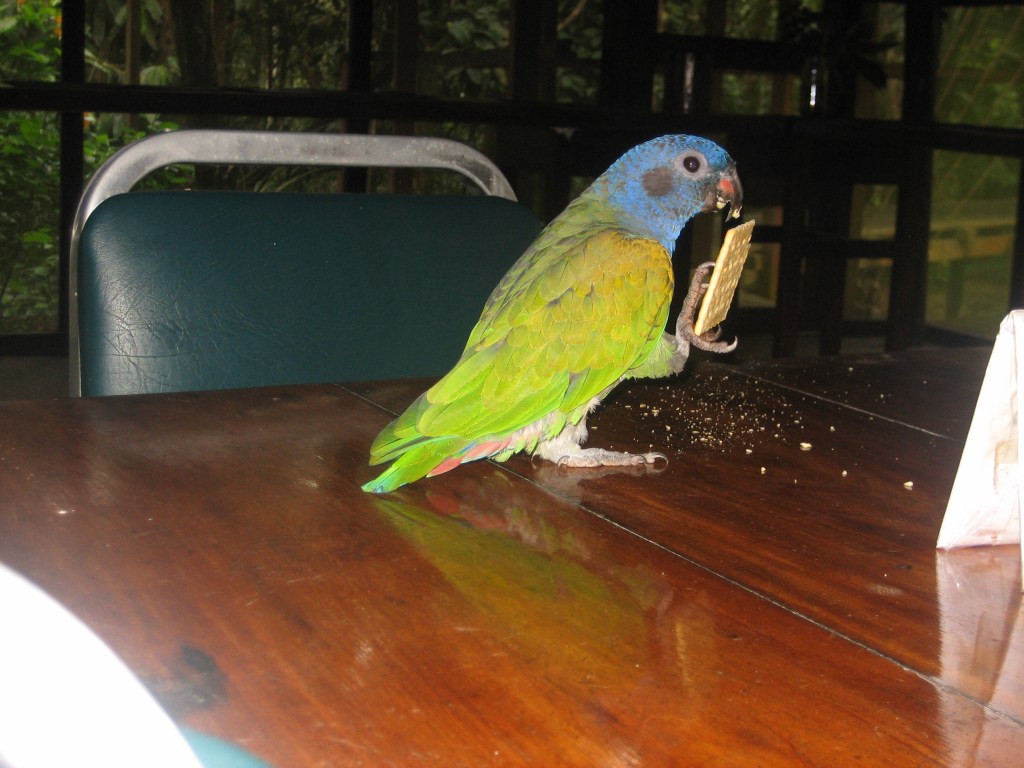
Again, the wild life came to the camp. The Lodge hangs bananas from a nearby tree and the Tamarind monkeys come and “steal” them. The parrots were super friendly. Polly wants a cracker!
This area was very sparsely populated because most of the land is not farmable. On one boat trip, after the first 3 miles, we saw no houses.
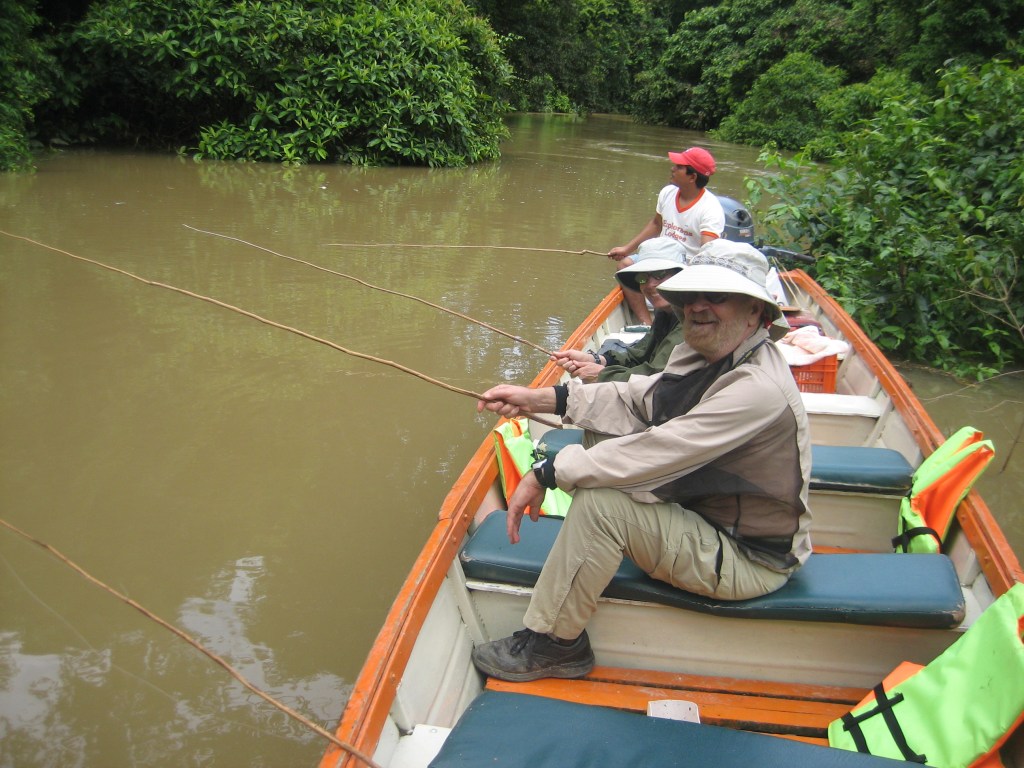
We stopped to fish. Luis caught 3 catfish, which he cooked when we found a bit of land for a campfire. We also had chicken, potatoes, cucumbers and fruit that Luis brought from camp. The fish was just a bonus.
The exciting sighting was a sleeping 2-toed sloth, as well as monkeys, and birds. The day was very relaxed especially the way back, when we coasted with the current and did not need the motor.
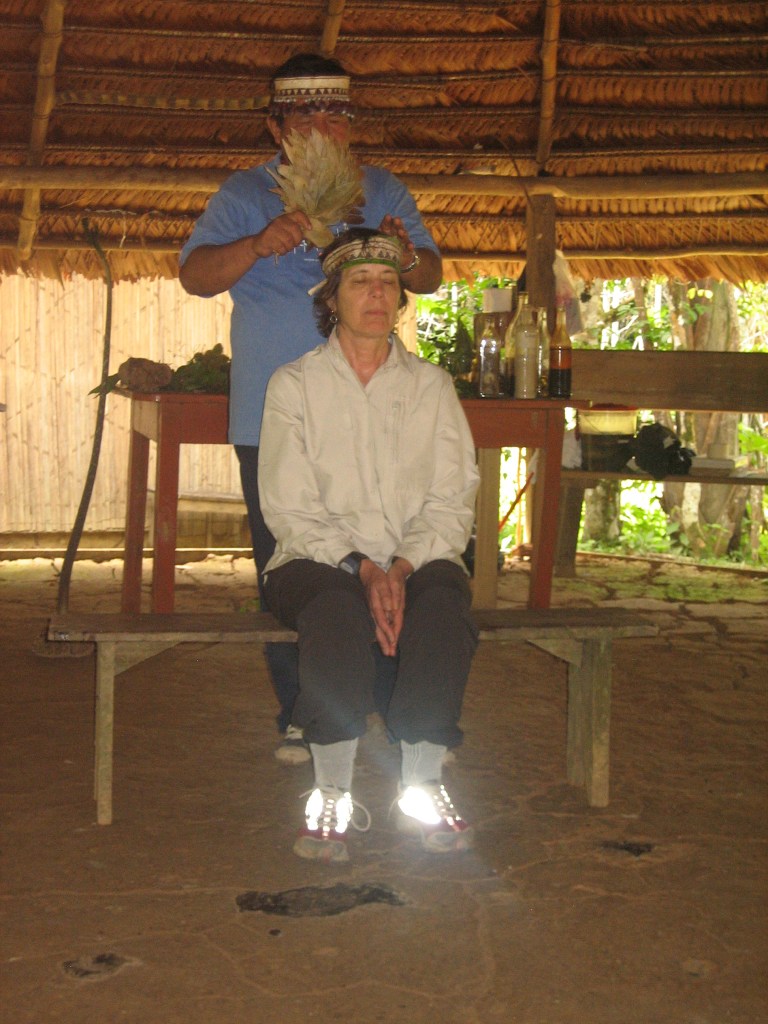
Another highlight was a visit to a Shaman. He taught us about medicinal plants and performed a spirit cleansing ceremony. He put a moist headband with tobacco leaves on my forehead, blew some smoke on my head then lightly hit my head with leaves, while he chanted. It was very pleasant and I felt very relaxed at the end.
ACTS Lodge:
Our arrival at the next camp, ACTS, was anything but smooth. We were supposed to walk between the camps, they are very close in distance. But because of heavy rains, the trail was too muddy to navigate, therefore, we had to go by canoe. Luis brought only one paddle, and with the fierce current, the canoe ride took 1 ½ hours in pouring rain. When we arrived at the boat dock, we were met by about 1 million termites. I might be exaggerating, but they were seriously annoying. The rain brought them out but luckily they were gone by night fall.
This camp was more rustic than ExplorNapo. There was a small dining room/bar, which also housed the hammocks. The bathrooms were about 110 feet from the room. And consequently, there were only 2 other tourists at the camp.
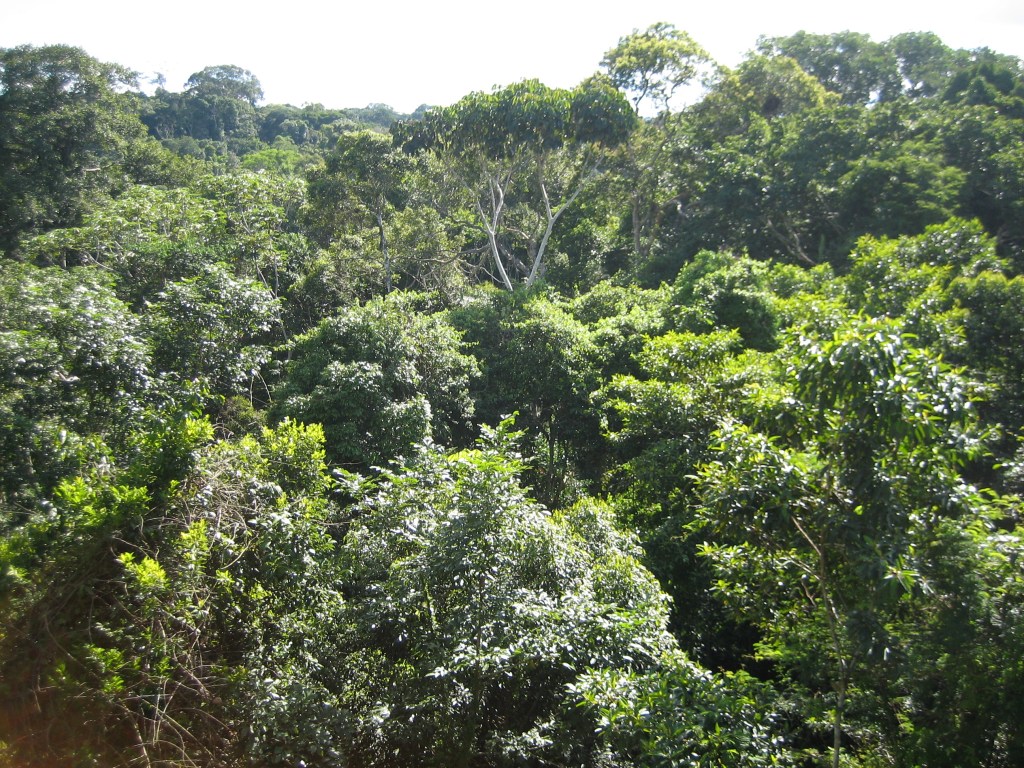
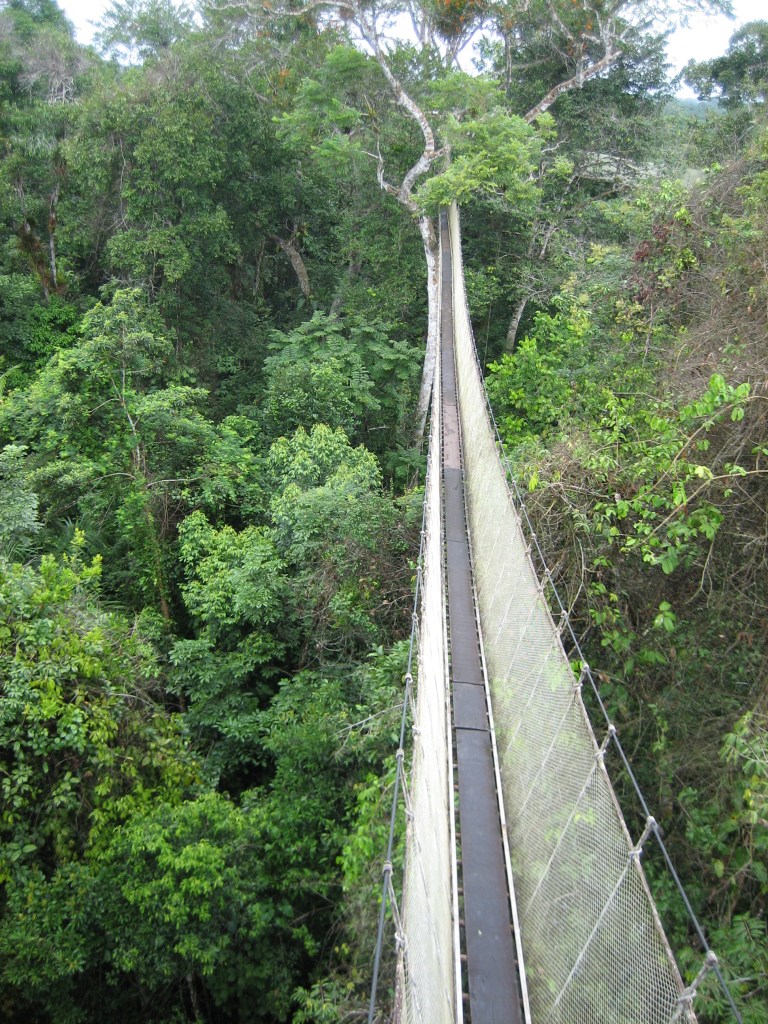
The reason to come and stay in ACTS is the awesome Canopy Walk, a 5-minute walk from the camp, erected and owned by Explorama. It is made up of a series of swinging bridges tied from tree to tree and because the bridges go above the trees, it’s a great place to see birds and monkeys.
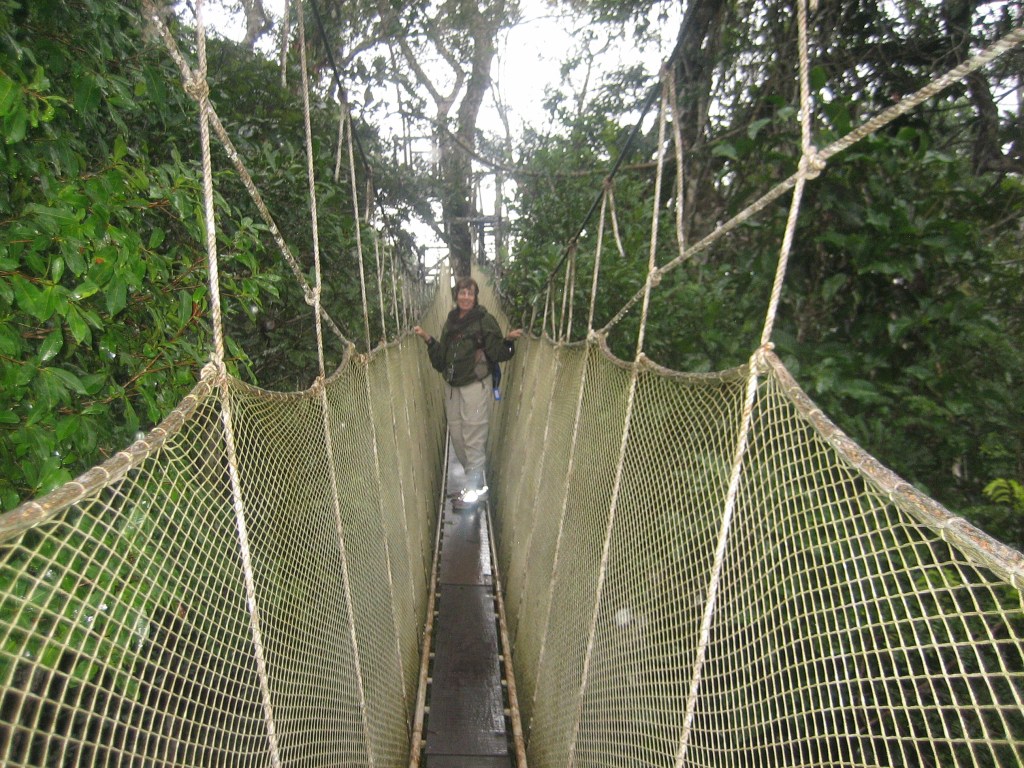
Walking on the swinging bridges is scary for some people. One of the other tourists staying at ACTS only made it to platform 4 (there are 14 platforms) and had to turn back. However, I felt very safe on the walk because there is a net on both sides that comes about 4 feet high. Besides, I was a pro at it, after New Zealand.
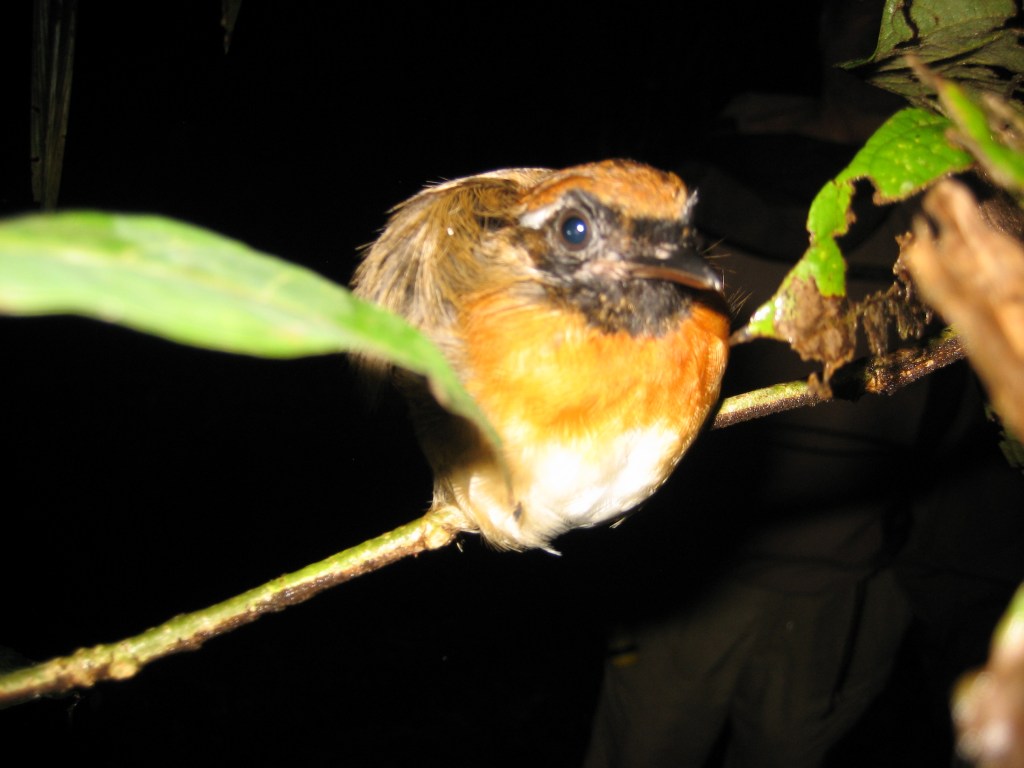
We had an amazing night walk in the Canopy. The walk to the canopy was in total darkness except for our flashlights. It was more challenging than in day light, but totally fun. When we got to the bottom of the stairs, Luis turned off the flashlights and had us sit and just listen. It didn’t matter if we closed our eyes or not, it was just as dark. The sounds of the jungle were wonderful. Then we walked up to the highest point of the canopy and looked around. It is lighter at the top than at the bottom of the forest. We could see the outline of trees up there and the lights of the city, Iquitos. Luis shined his flashlight and we saw the eyes of a nocturnal monkey as well as brown furry Kinkajou monkeys sleeping close by..
When we got down we saw 3 different birds sleeping on a branch. They are sound sleepers – the flash of the camera and the flashlight did not wake them up. Needless to say, we were the only ones there.
It is possible to visit the Canopy Walk from either Explorama and Ceiba Tops as a day trip. However, to do that, you leave those camps about 6am, have breakfast at Napo, then walk 45 minutes to ACTS, then another 5 minutes or so to the canopy. The Canopy allows only 3 people on each bridge at a time and a total of 4 at a tree – therefore if you were with a group of 30, it would take a while to get across the 14 stations. Then, they return and have lunch at Napo and spend about an hour with the Shaman before heading back to their camp. They get the experience but if it happens to rain while they are there, they don’t see the birds. Being at ACTS, I was able to go to the canopy six times, before and after the day visitors and see lots of wonderful animals and birds including Toucans. ACTS is not luxurious, but it provides such wonderful and varied canopy experiences.
Tambos:
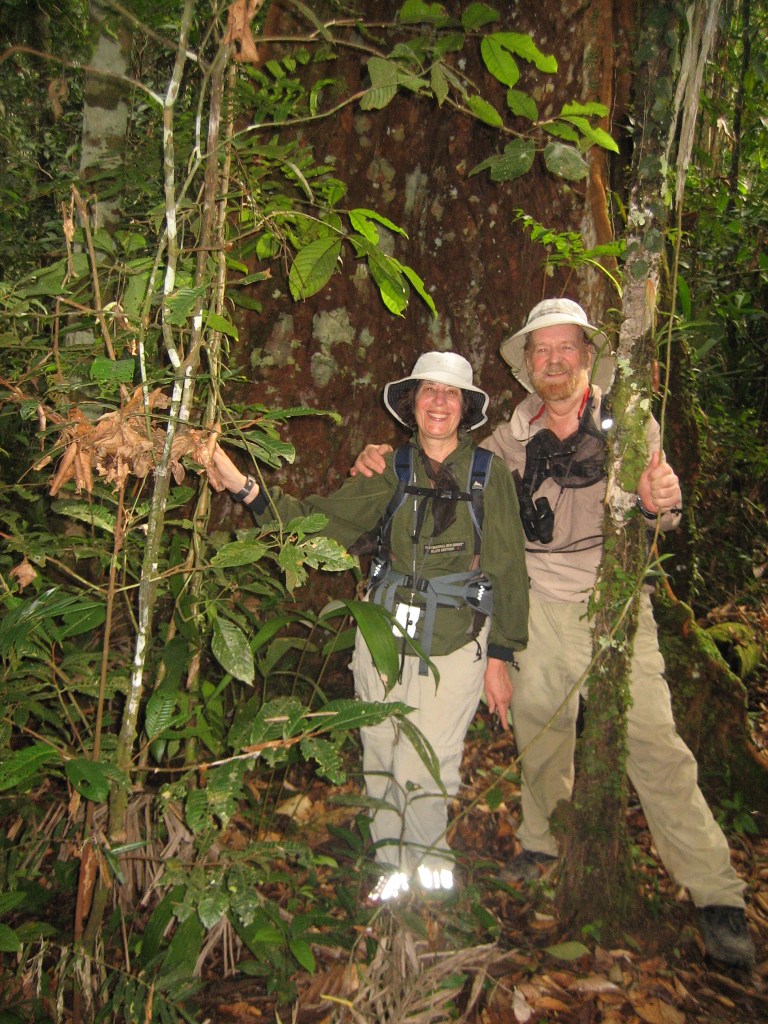
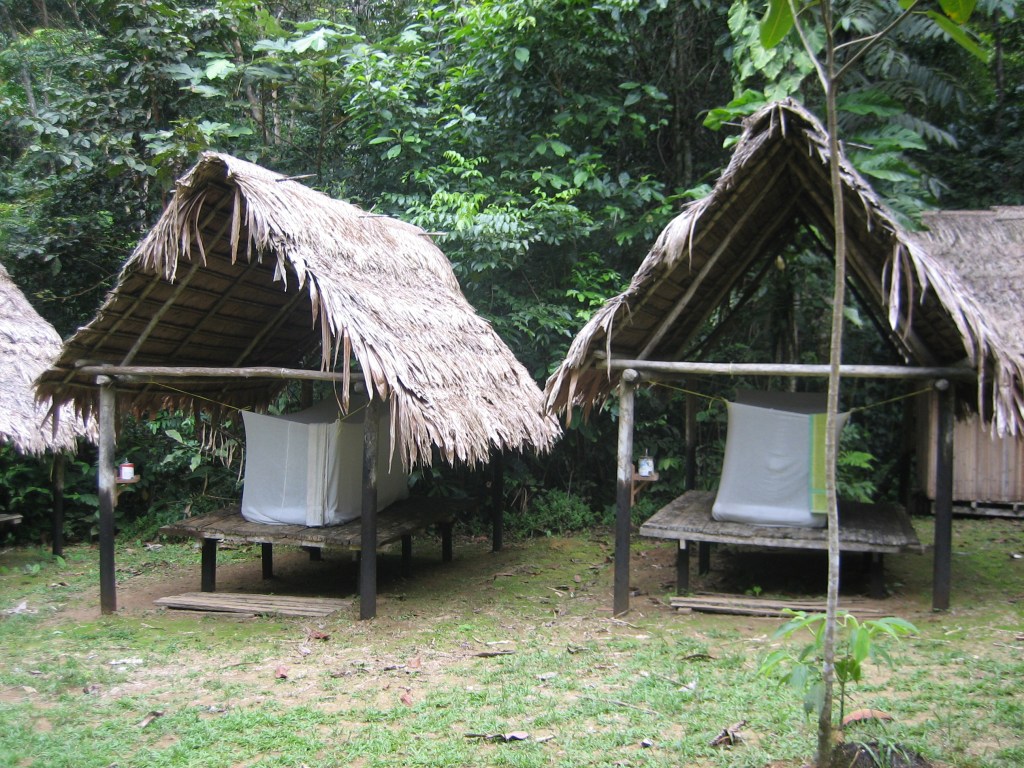
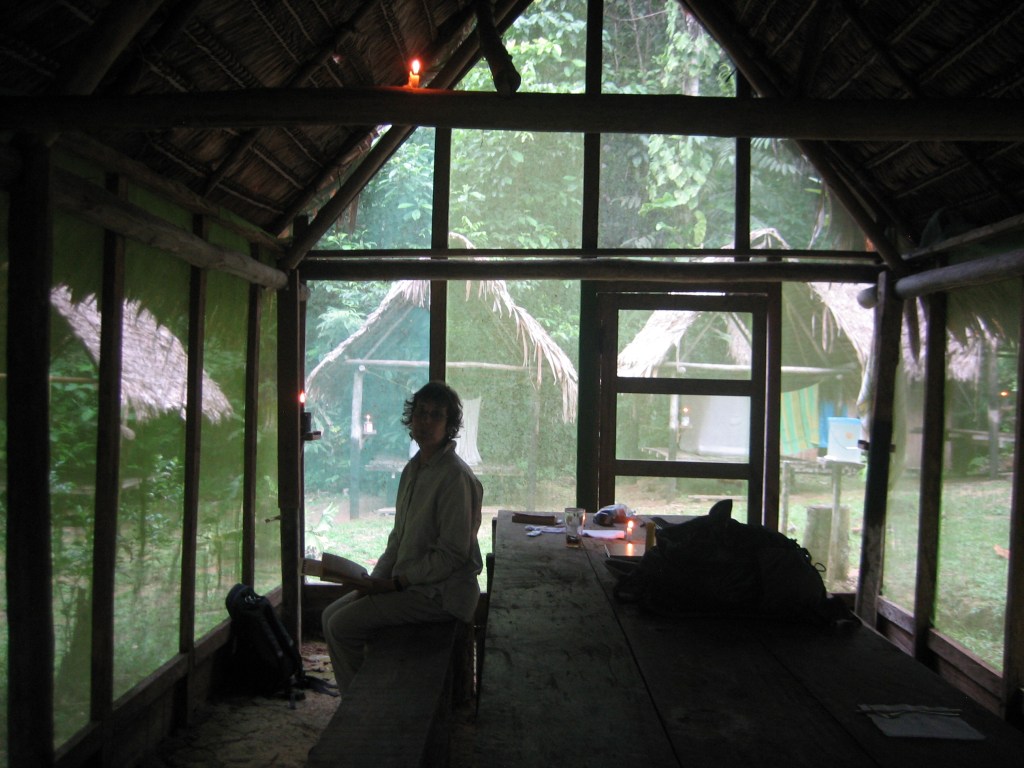
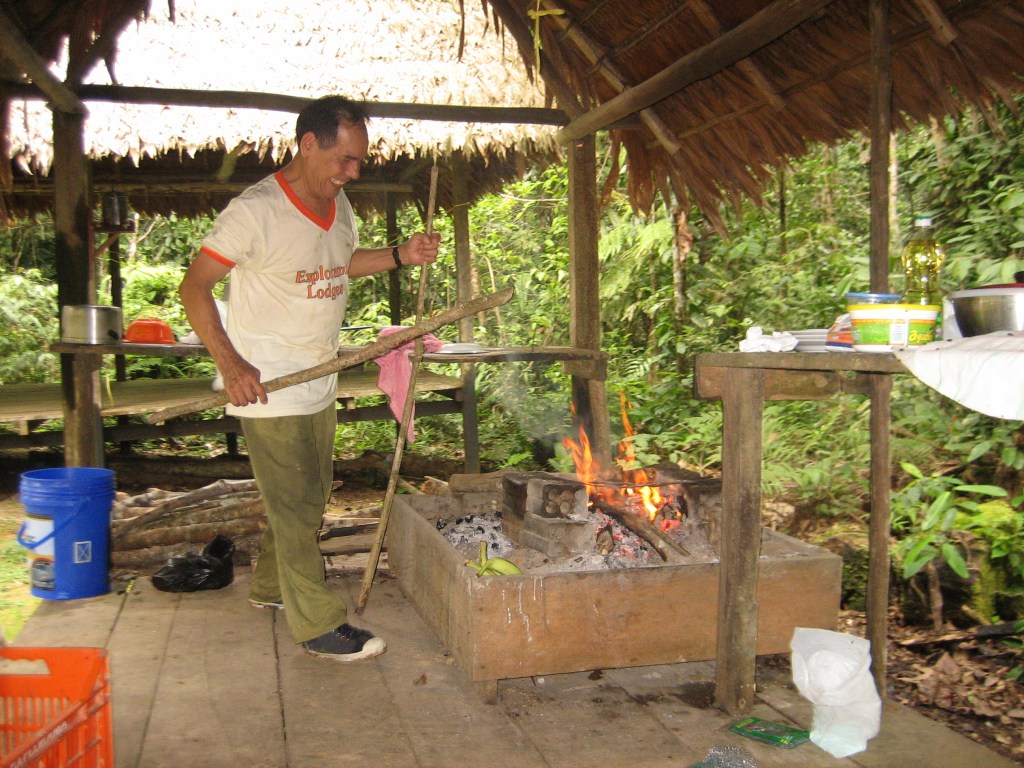
Tambos was rustic!! It was so rarely used, that it is no longer listed on Explorama’s website. I guess there just aren’t enough crazies to want to camp in the jungle.
There were 10 covered sleeping platforms, a screened dining area with a long table for about 20 people. (We were the only ones at camp). There was an open pit for cooking. A cook came from ACTS to cook our dinner and breakfast. There was a non-flush toilet in the woods (without a door). I did not attempt it in the middle of the night. There was a basic cold-water shower as well, which felt great after the hike. Obviously there was no electricity or WIFI. But unfortunately, there were lots of ants.
A couple of guys carried food, water, nets, and beddings from ACTs for us. A guard, with a gun, was up all night to protect us. I am glad I was there for only one night since there was nothing to do except walk in the jungle, which we had been doing regularly. But I am glad I was there for that one night. It was an experience and the fried fish at dinner was excellent.
I slept fitfully and woke up permanently at 5am. I waited till 5:30am till it was a bit light to get out of my netting. Breakfast was at 6am and then we started off through the jungle back to ACTS and from there by boat to the last camp, Ceiba Lodge.
Ceiba Lodge:
After the last 3 rustic lodges, Ceiba felt like a totally luxurious resort. The rooms were air-conditioned and there was hot and cold water and flush toilets in the rooms. It was nice to have a warm shower and in-room toilets – but I missed the kerosene lanterns and the personal attention. I was glad that Ceiba Lodge was not my only jungle experience.
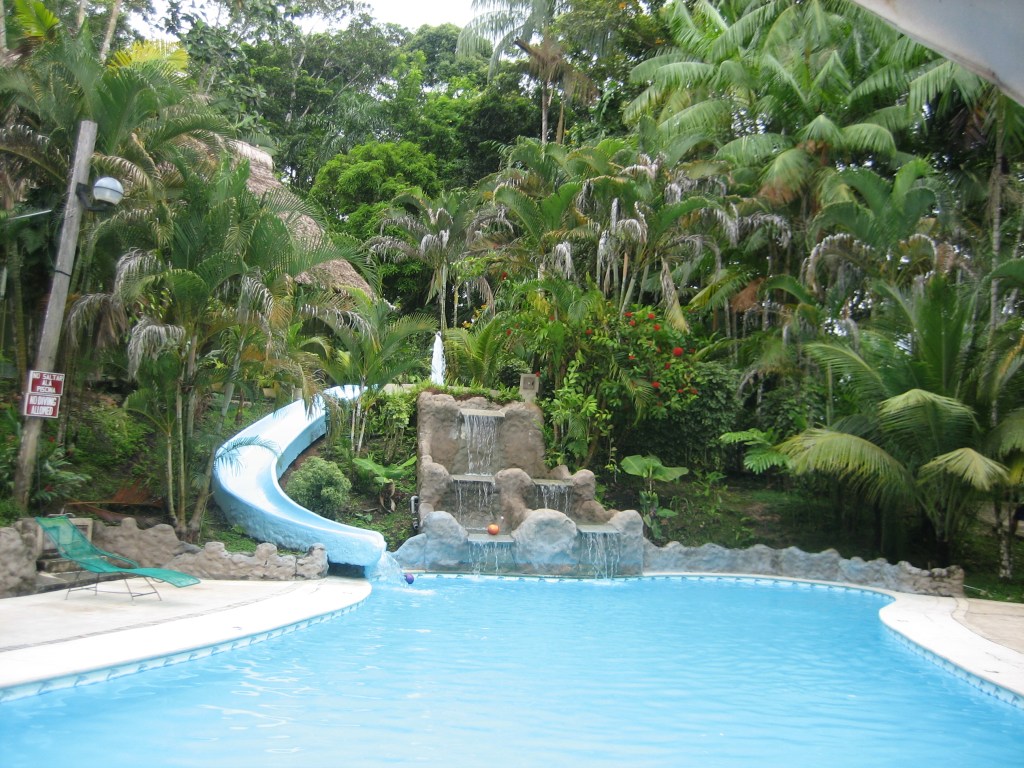
The resort has a little pool and a Jacuzzi and a lovely hammock area. The tables were set with cloth tablecloths, real silverware and cloth napkins (instead of inadequate paper napkins at the other camps).
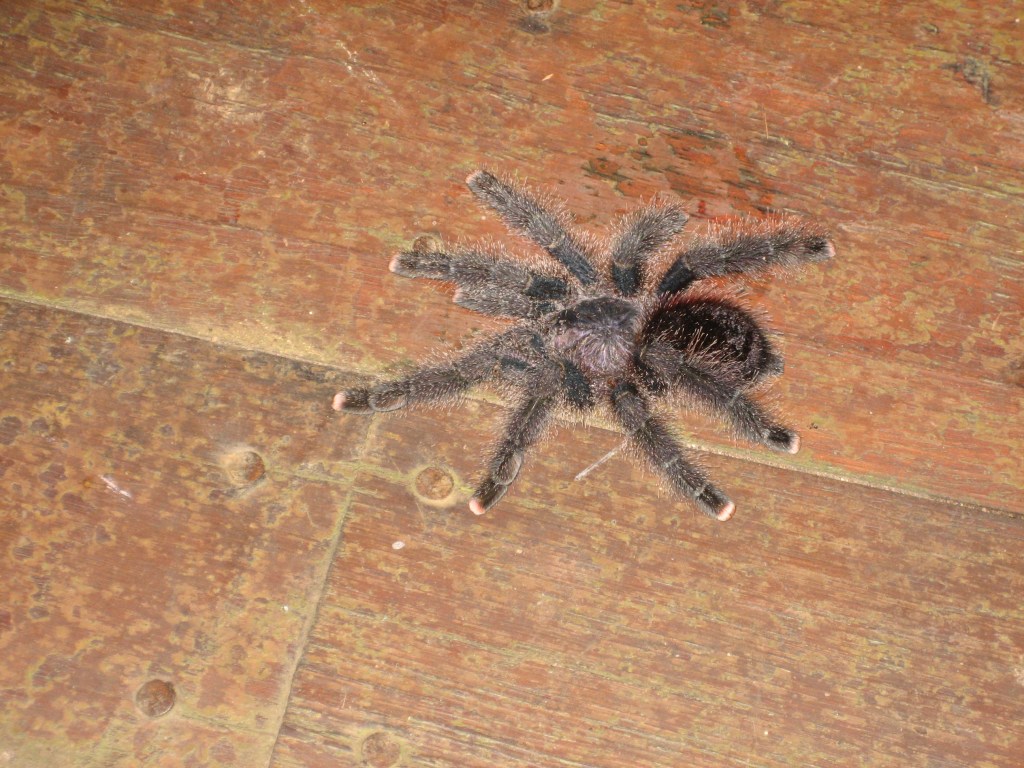
But we were still in the jungle. While sitting in the hammock, I spotted a Pink Toed Tarantula on the floor. The staff insisted that it wouldn’t hurt me unless I stepped on it, but I took no chances and moved.
Monkey Island: There is a house on the island that feeds the monkeys every day; therefore they come out of the jungle for their food. The monkeys are very friendly, actually overly friendly. They like to climb on the visitors. A monkey greeted me at the dock. Then another monkey with a baby on its back came to say hello to me. Before I knew it, it had gotten hold of the binoculars around my neck, and climbed up with the baby on my shoulder and then sat around my neck. It was like wearing a fur neck scarf at 85 degrees. The monkeys were of different varieties and all frolicked together. It was fun to watch them eat the fruit.
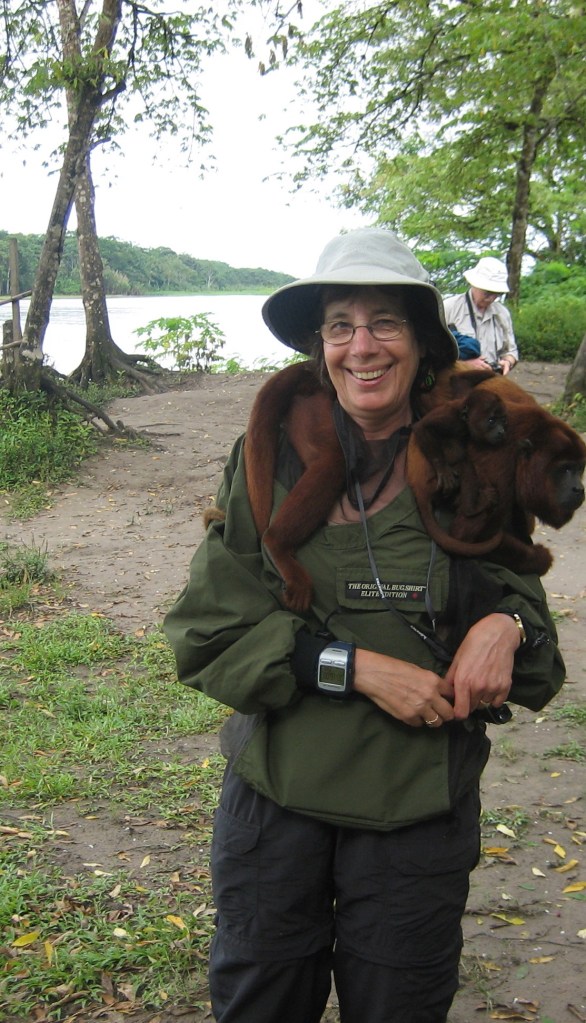
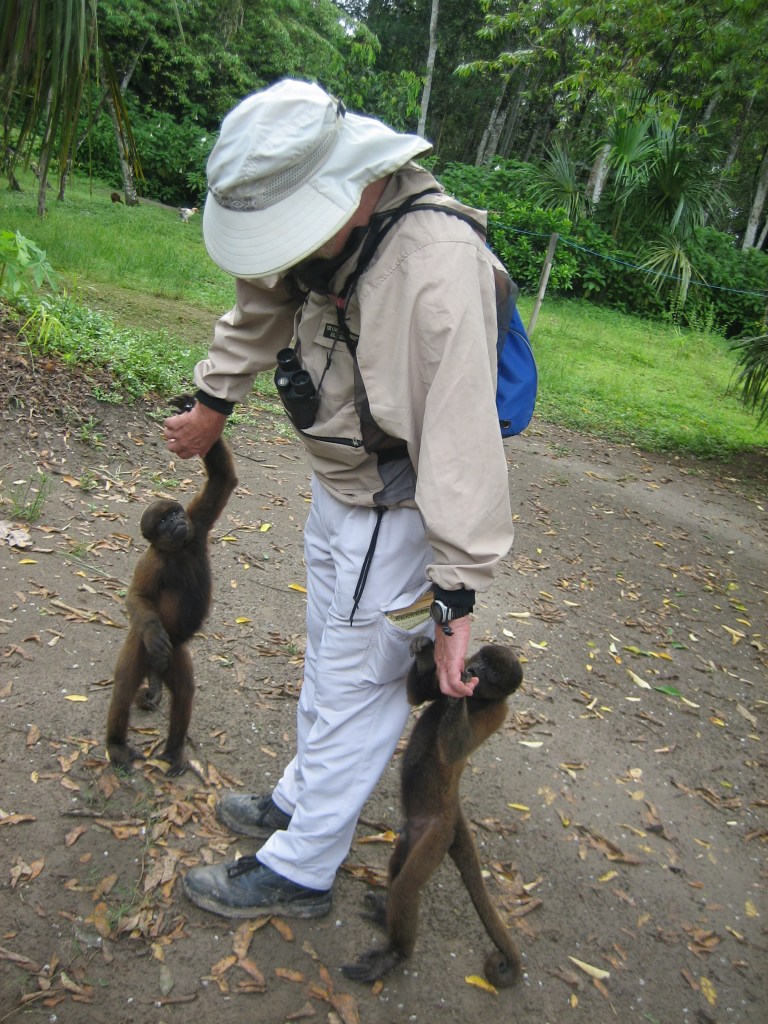
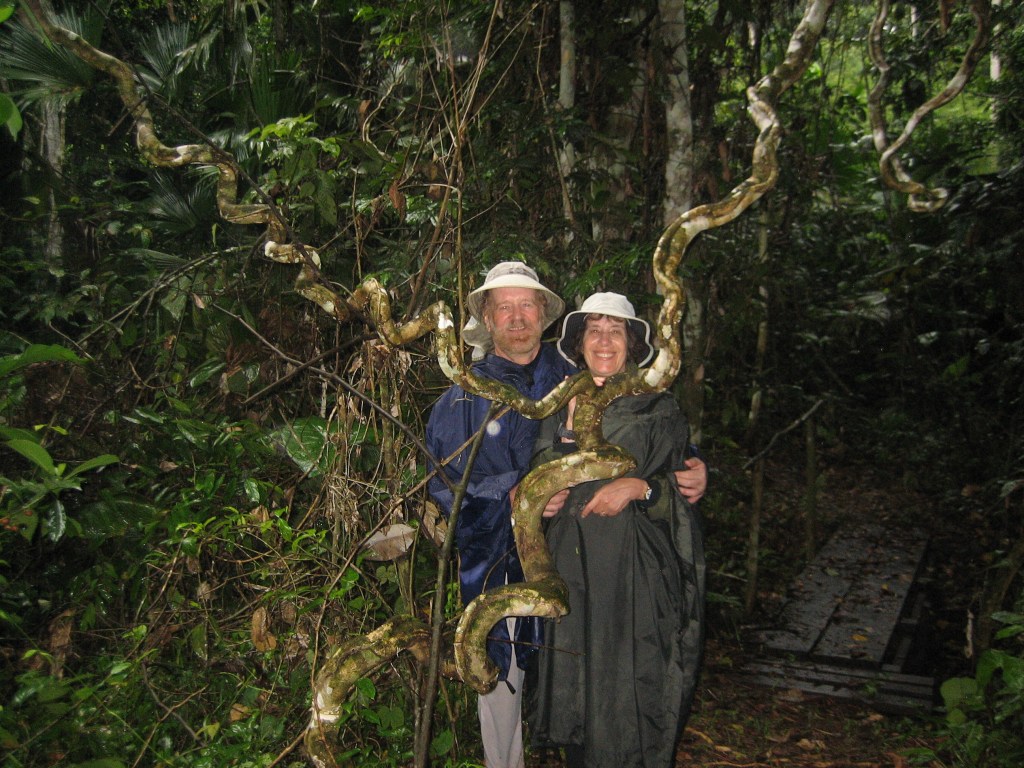
On our walk in the jungle, we saw beautiful Ceiba trees. They are so tall that I couldn’t get a picture. We walked in a primeval forest and Luis pointed out how much darker it was than the forests that had been cut, farmed and re-planted by Explorama.
Iquitos
We went back to the town of Iquitos via the Amazon Queen River boat. It went at a slow relaxed pace of 10 miles per hour for 2 1/2 hours.
Compared to the lodges, Iquitos felt like a huge Metropolis. On our free day there, we hired a guide and went to Iquitos’ sister town, Belen, the “Venice of Peru.”
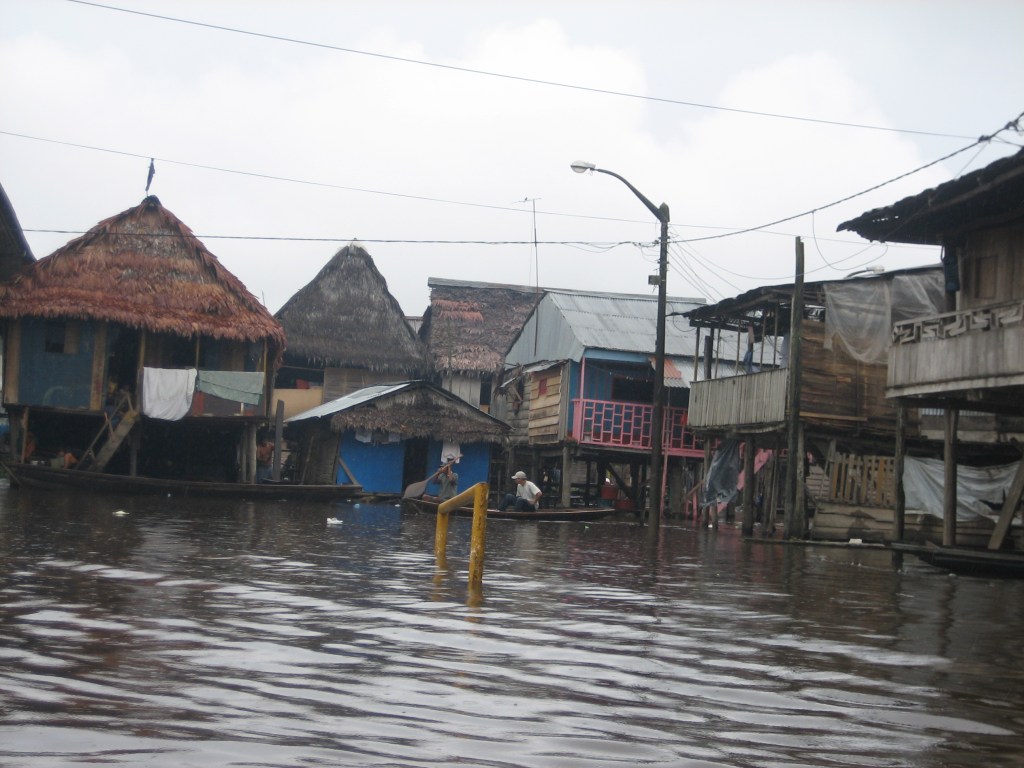
In high water, a canoe is necessary to go into the part of the city that is underwater. The people here build 2 story houses and use only the top story in the high-water time. They also build floating houses.
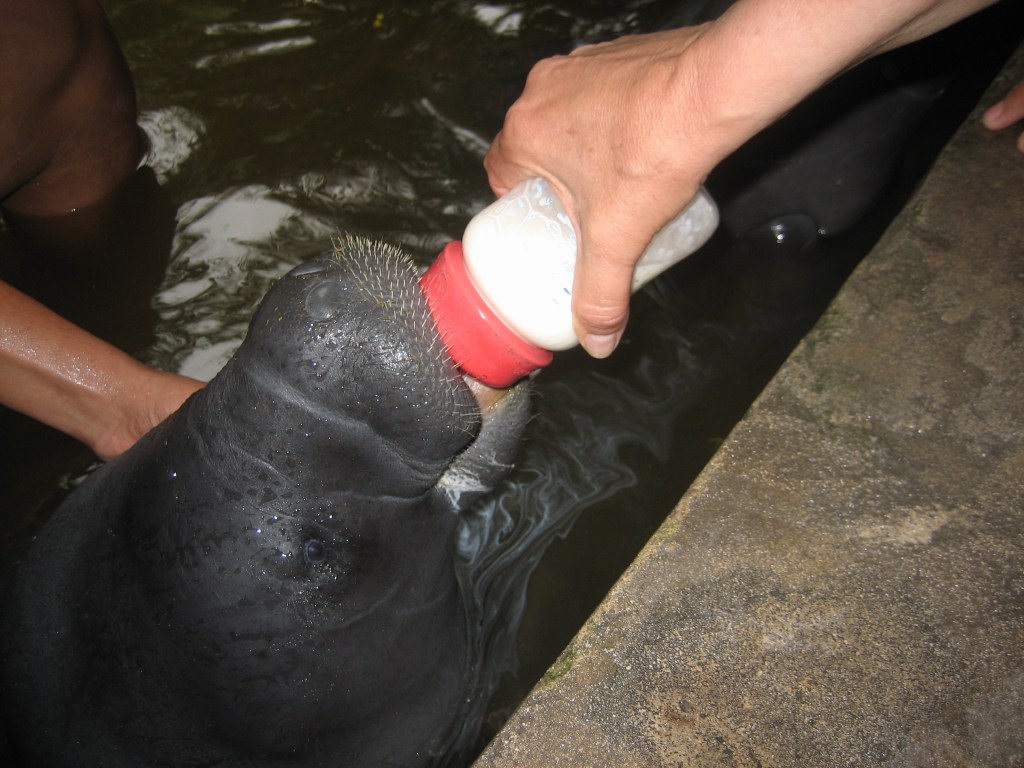
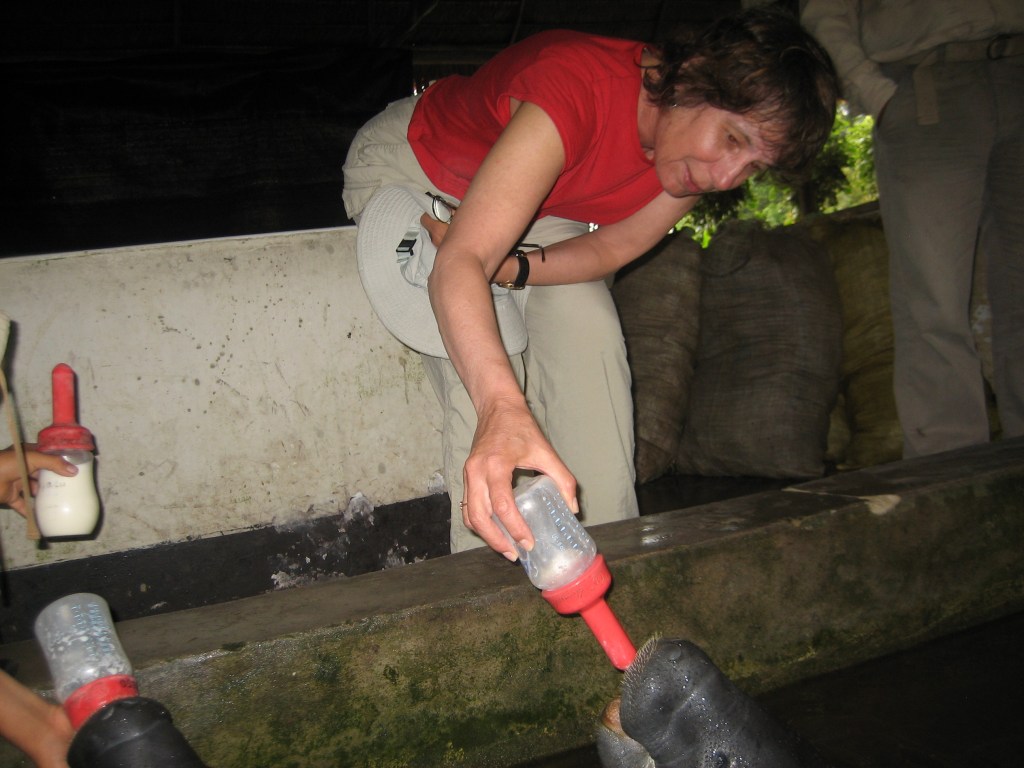
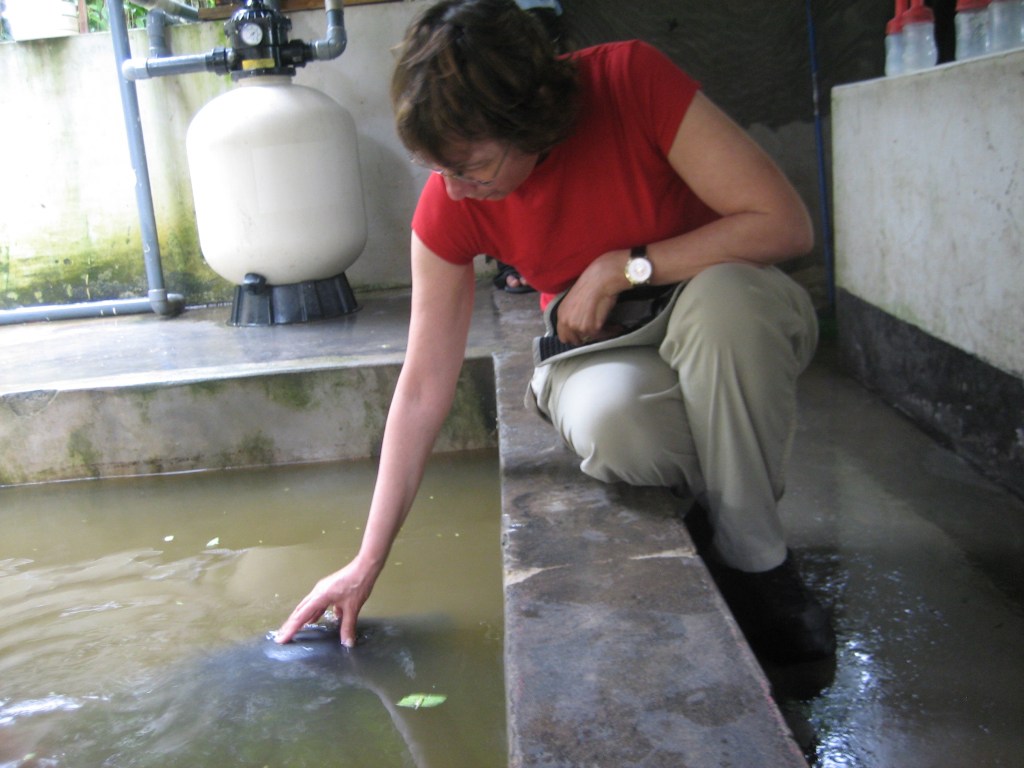
Most memorable was a visit to the Manatee Conservation Center. When natives kill the mother manatee for meat, the orphaned babies are raised at the conservation center. They need milk for the first 2 years. I was allowed to feed a baby manatee a bottle of milk. The females take 4 years to reach maturity. The male needs 7 years. The female is pregnant for a full year and has one cub every 4 years. They are docile and love to be touched.
Final comments:
- The choice to do a personalized land tour rather than a cruise or organized tour was the right one. The extra time that I spent in each location meant that I could delve deeper in the culture and the environment. It takes more effort, but is well worth it.
- Going to the more primitive lodges was also the right decision. The benefits outweighed the discomforts. I treasure it more now that I know that Tambos is no longer available.
- Being in such a hot humid climate, made hand laundry a challenge. Nothing dried within 24 hours and most things didn’t ever really dry because it was so humid. Socks took at least 3 days to dry. Luckily, I packed 5 pair of socks and underwear. I wore pants and shirts long after they passed the normal dirty stage. Traveling has its challenges.
- The Amazon is amazing.
 Nili's Adventure
Nili, you are absolutely intrepid! I’m going to share this with one of my best friends who is an adventurer like you (though she can’t take this kind of trip anymore. Hope your hip is healing well, see you soon! Love from Paul and me, Cello
LikeLike