
Jews had been in Morocco for centuries. Many arrived with the Roman conquests of Northern Africa. Some Berber tribes had converted to Judaism and intermingled with the Hebrews. But the largest influx came during the Spanish and Portuguese Inquisition. Recently, most of the Jews in Morocco have emigrated to Israel.
In Morocco my focus, again, was Jewish heritage. Since we had 18 days we did not limit ourselves just to the main tourist sites such as: Rabat, Fez, Marrakesh. We could go farther and take our time in each place.
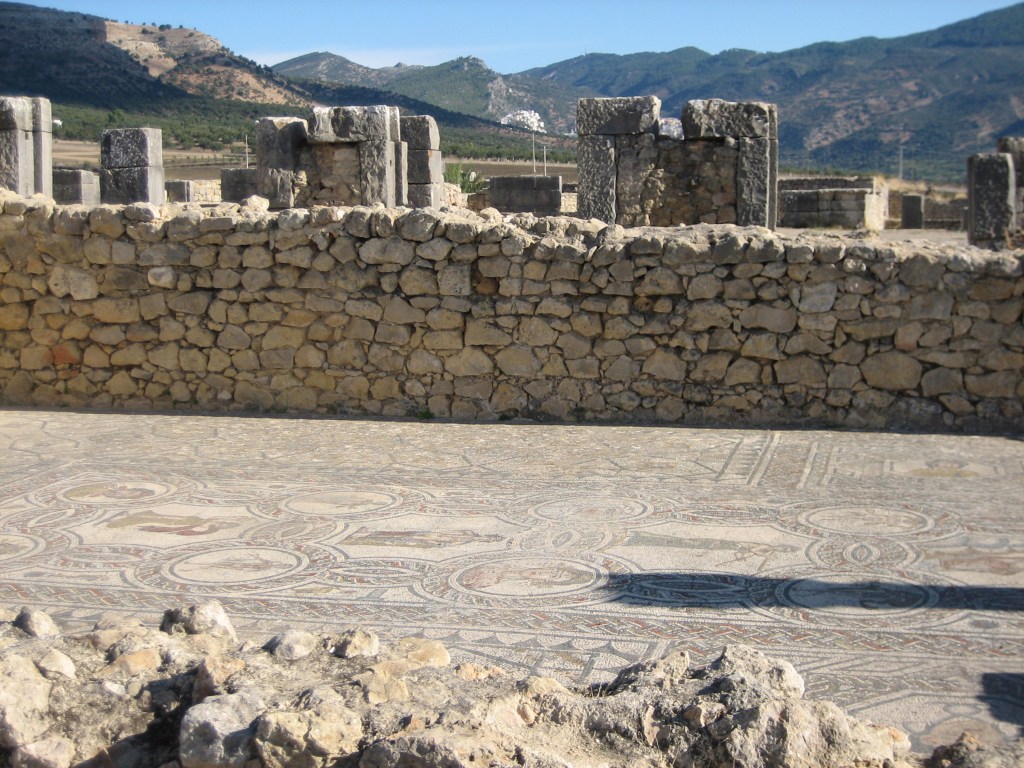
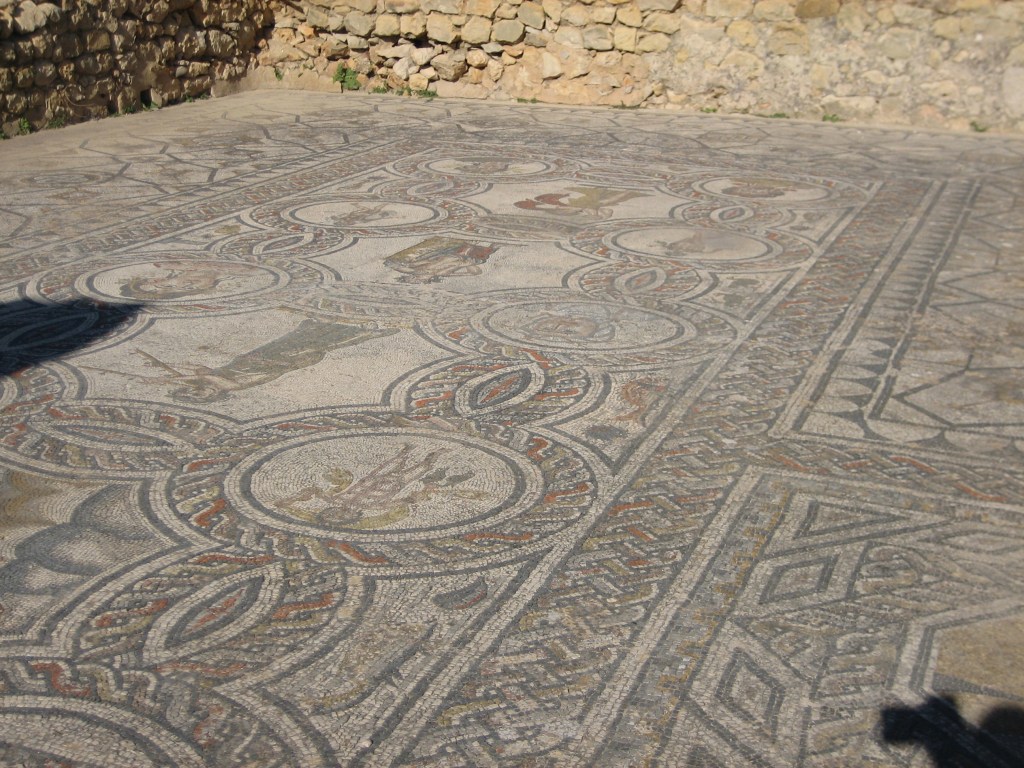
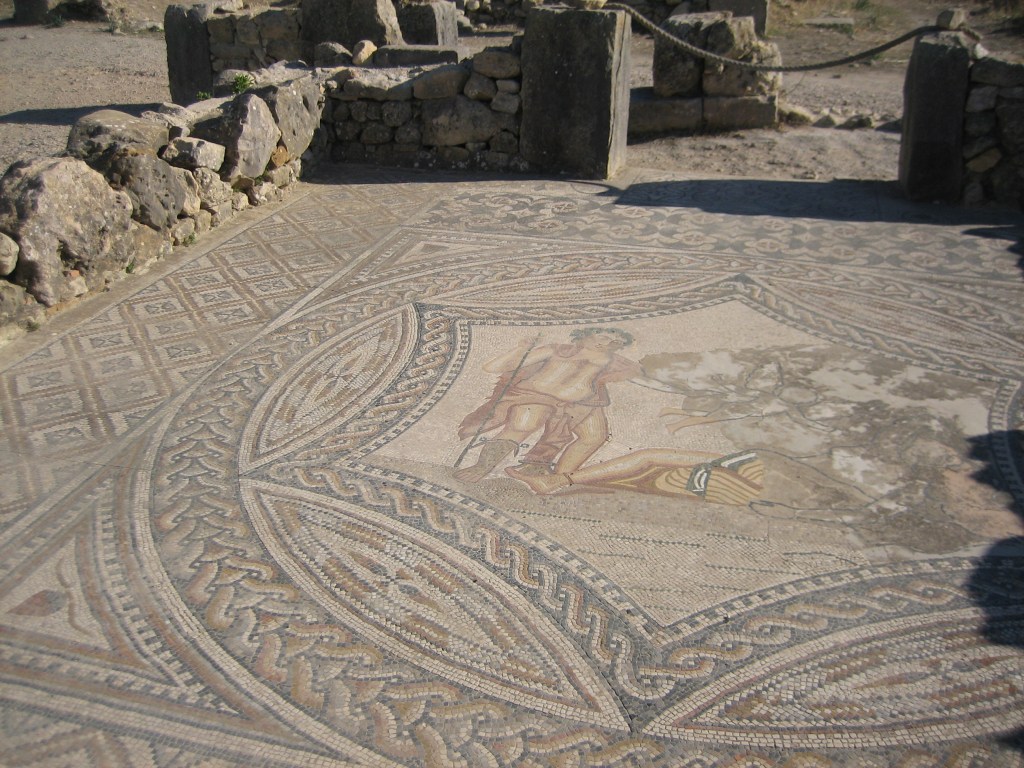
For instance, driving between Rabat and Fez we stopped at Volubilis, an ancient Roman town with amazing mosaics on the floors. My favorite mosaics were: the god Jupiter, a four seasons mosaic and another with an acrobat doing his tricks. 15,000 people lived here, including Jews, in Roman times. It was a fascinating place that is usually skipped by those with limited time
Next to Volubilis is the town of Meknes. At one point, 27,000 Jews had lived here – now there are just 50 families left. We visited a Jewish Hebrew School. The caretakers spoke beautiful Hebrew that they learned at the school and told us about life in Meknes before everyone left.
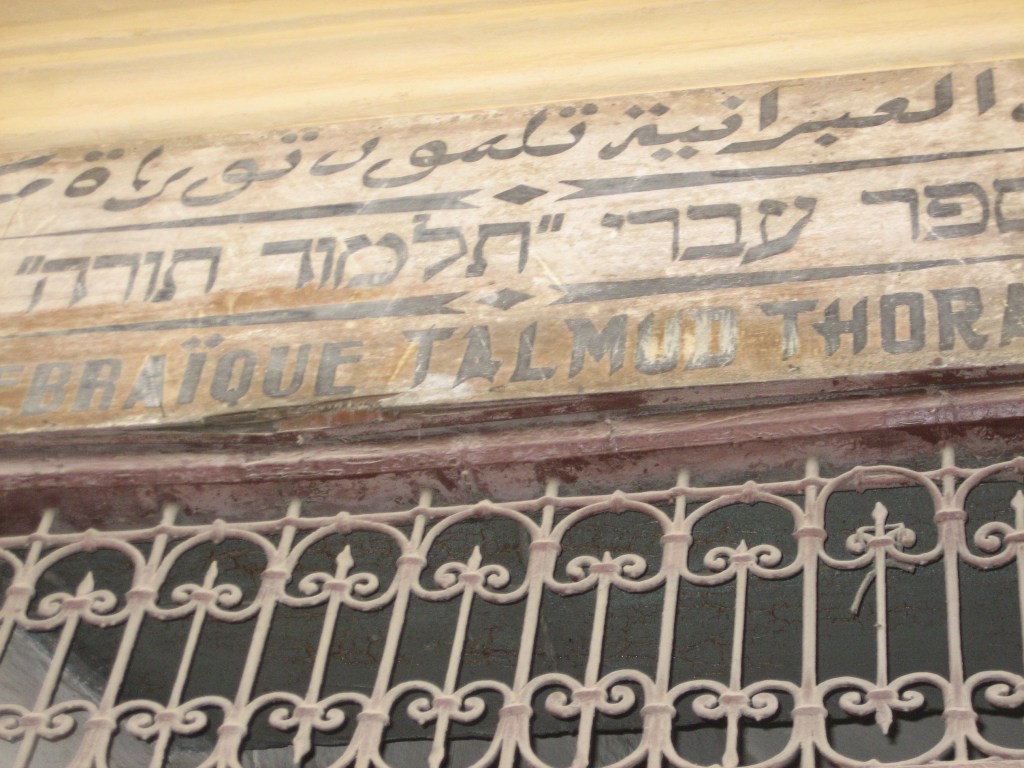
I asked how the Jews fared during WWII, since Morocco was under Hitler’s control some of the time – at least under Vichy France. The caretakers said that the Jews were fine because the King of Morocco would not give up the Jews to the Nazis. He said everyone in the country is Moroccan.
Meknes has a wonderful Suq with fruits, olives and spices beautifully displayed. It was a feast for the eyes as well as for the stomach.
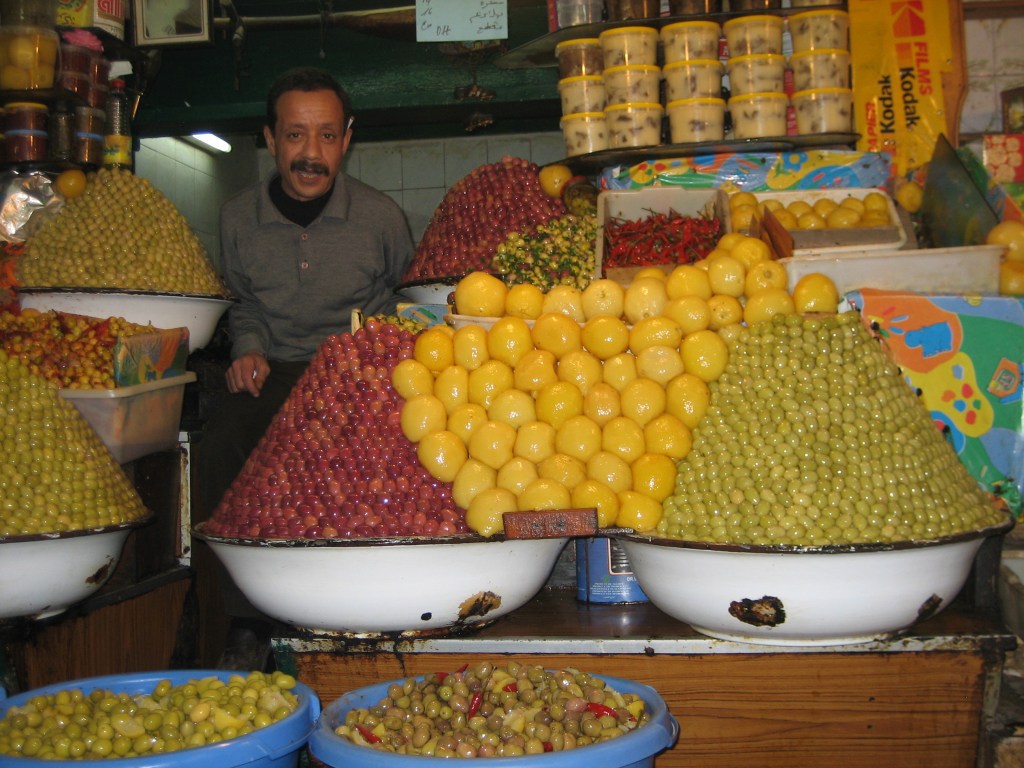
Fez was amazing.
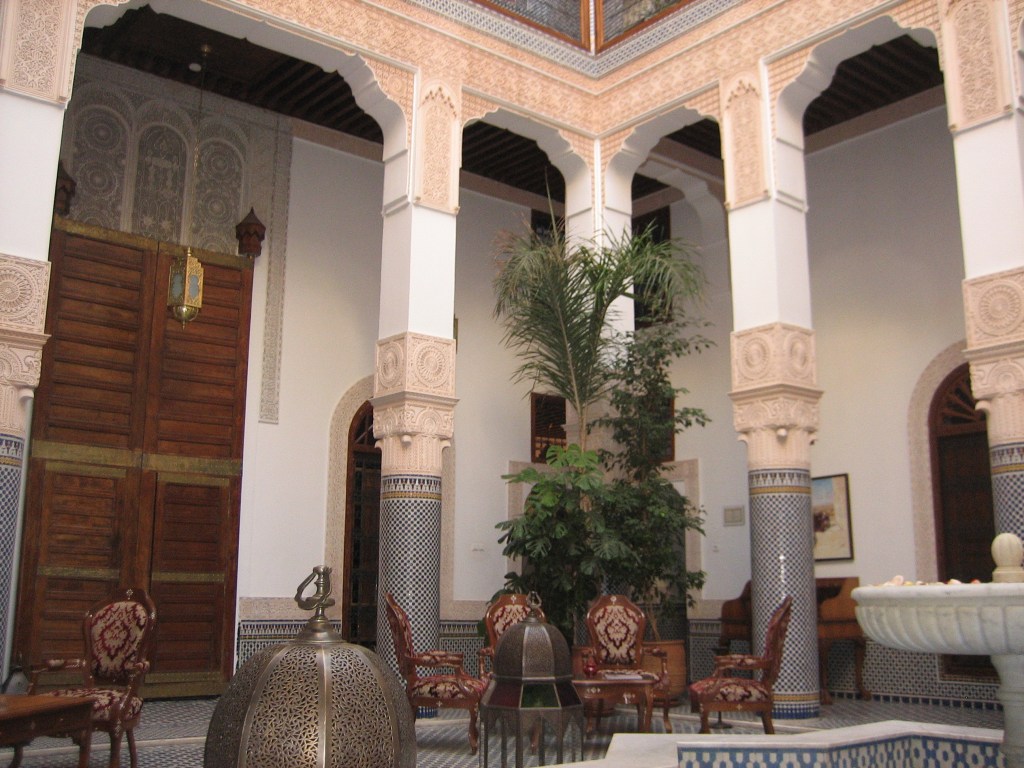
We stayed at the beautiful Riad Myra. Riads are private homes turned into hotels or B&Bs. From the outside it looked like an uninteresting building, but inside, it was magnificent. There were 12 rooms around a beautifully tiled and decorated courtyard that had tables and chairs.
I thoroughly enjoyed the beauty of the Riad but I had two unpleasant experiences there. The first night I was tired and only wanted soup, and the guide explained this to the owner. Nevertheless, she tried to charge me for a full meal. The guide straightened her out. Also, our nightlight went missing. They returned it, saying it was in the garbage, right!! It really helped to have my guide.
The obvious attraction in Fez is the 9th century Medina (old city). It is a real labyrinth with so many wonderful things to see. I don’t think I could have found my way out without the guide. It is meant to be confusing, because it was built by the son of a king who had been murdered by enemies. The son, now the new king lived in the Medina, and built the suq so that if anyone tried to kill him, the murderer would never get out alive – he would be found. It is still fully lived in – it is not just a tourist place.
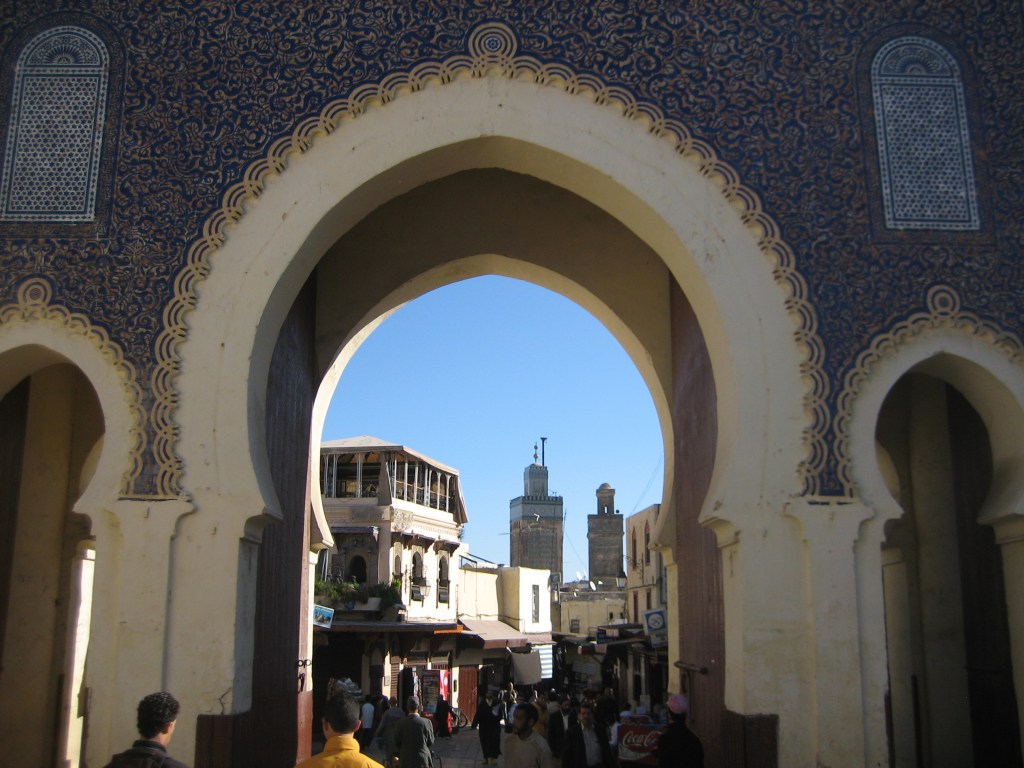
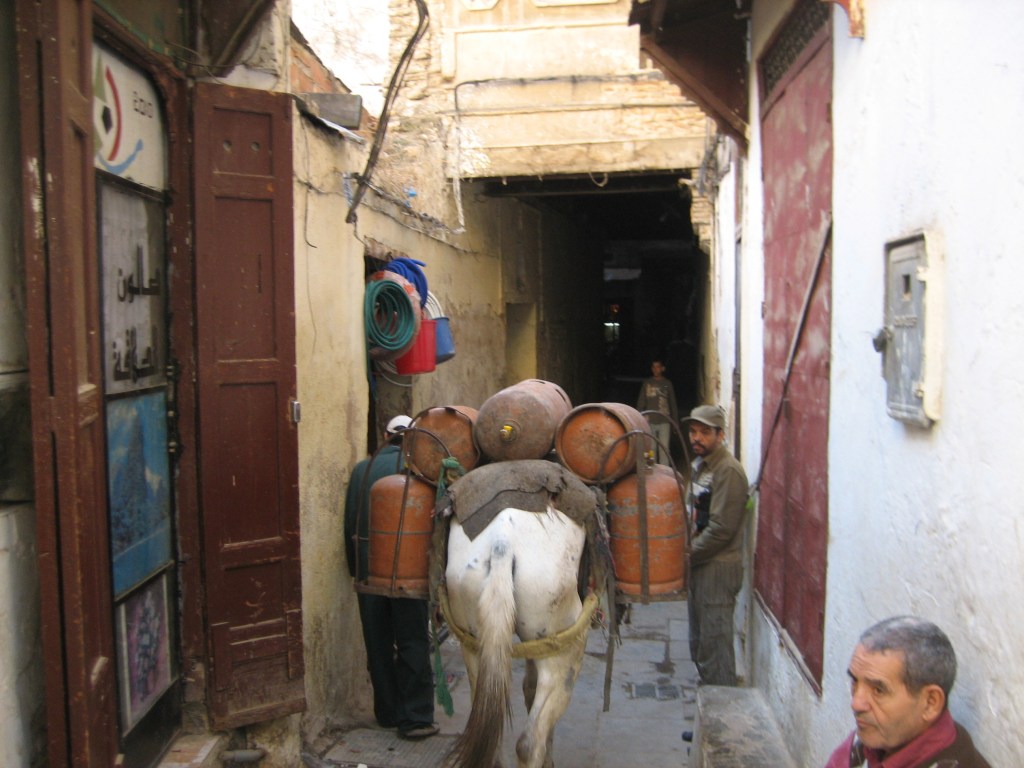
The streets are too narrow for cars so there are donkeys and carts doing the deliveries. Every once in a while I had to step aside to make room for a donkey or mule. There were lots of shops and interesting food displays.
We went to the roof of a leather shop to see the leather tanning. It was still being done the old way. The government subsidizes it to keep it profitable. There were lots of vats to cure the leather and it takes days to get the process done. Then they dry the skins on the roofs and later dye the skins. The tannery had sheep, goat, cattle and camel skins.
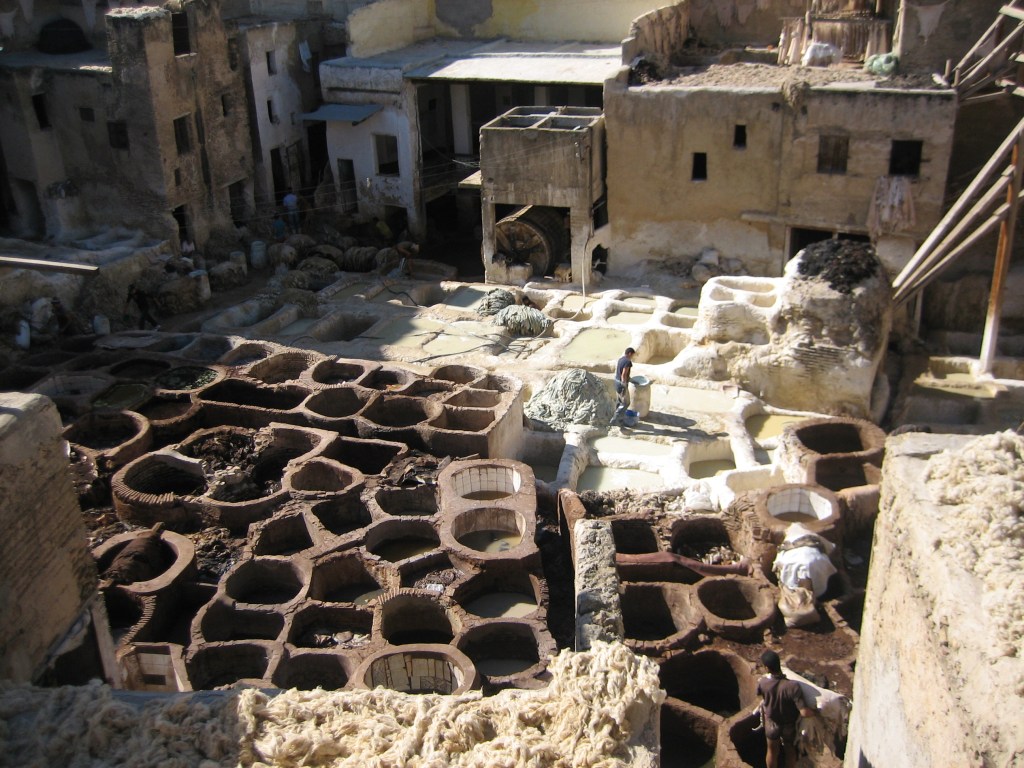
One square in the Medina had huge cooking pots on the ground. The locals rent these pots when they have lots of company. What a great idea! Then they bring them back to be cleaned.
In addition to the 9th C Medina, there is a newer 15th C Medina. This is where the Jews, who had been expelled from Spain and Portugal, settled. The Jewish quarter in the Medina is called the Mellah because these Jews were salt (Mellah in Hebrew) merchants. Salt was very expensive. The houses here had balconies, and were reminiscent of the houses the Jews had in Spain. They built their houses next to the King’s palace to have his protection.
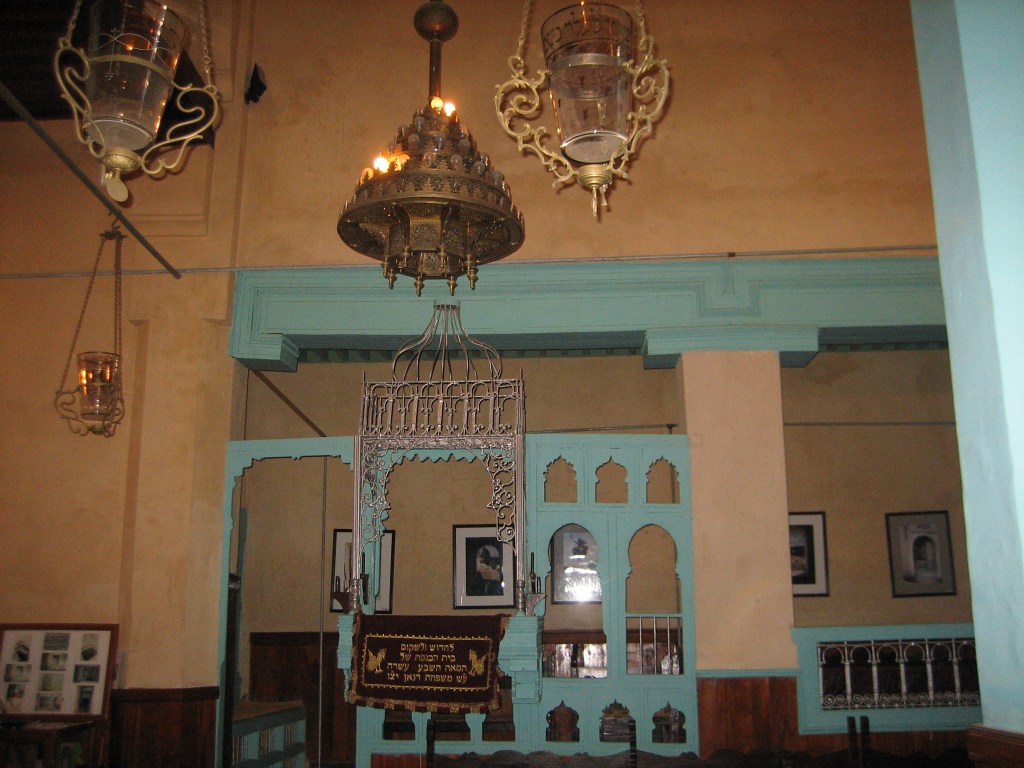
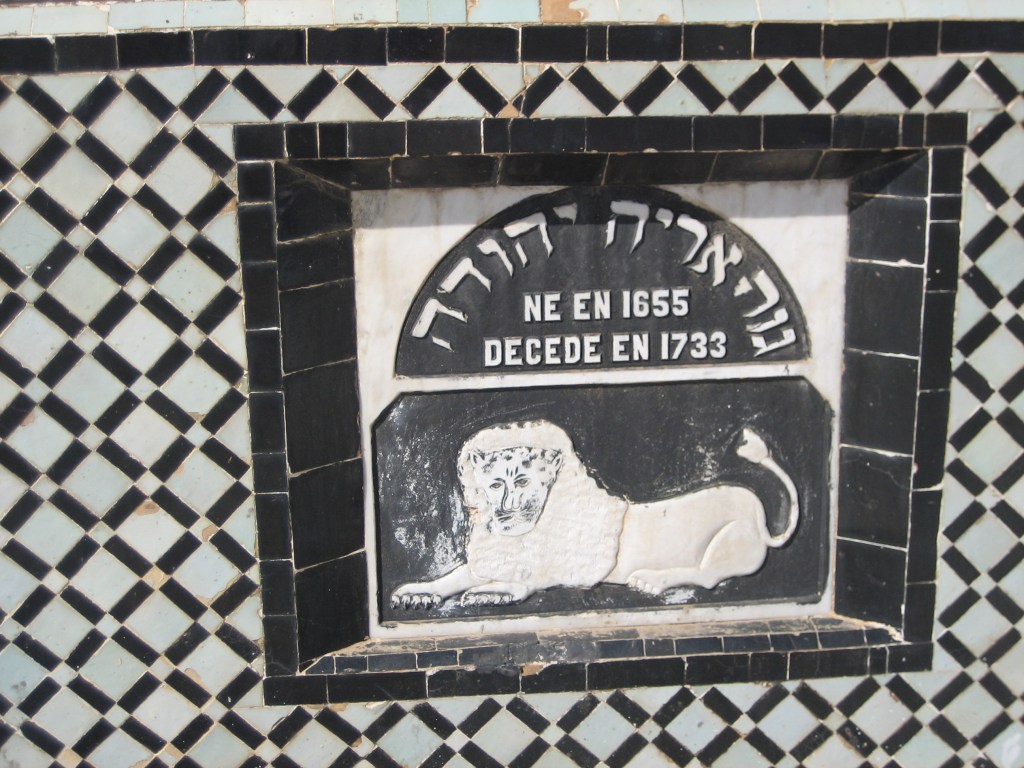
I visited the 17th C Eben Danun Synagogue. We also saw the cemetery dating back from the 16th century. I was surprised to see the large monuments, each with an opening for burning candles.
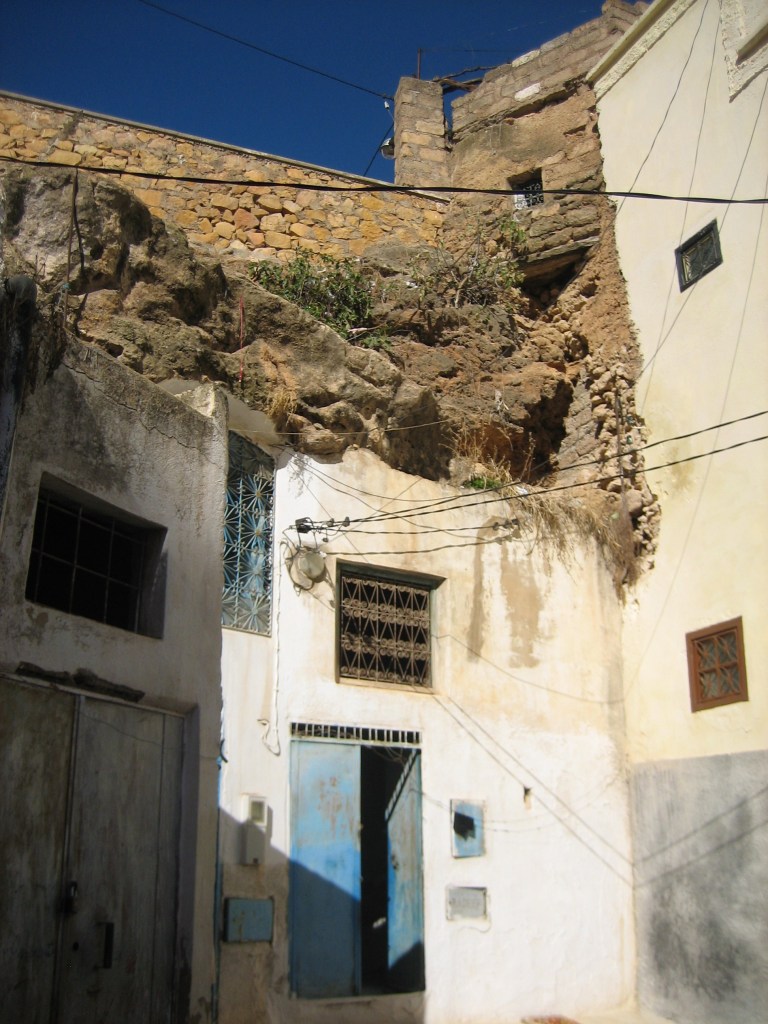
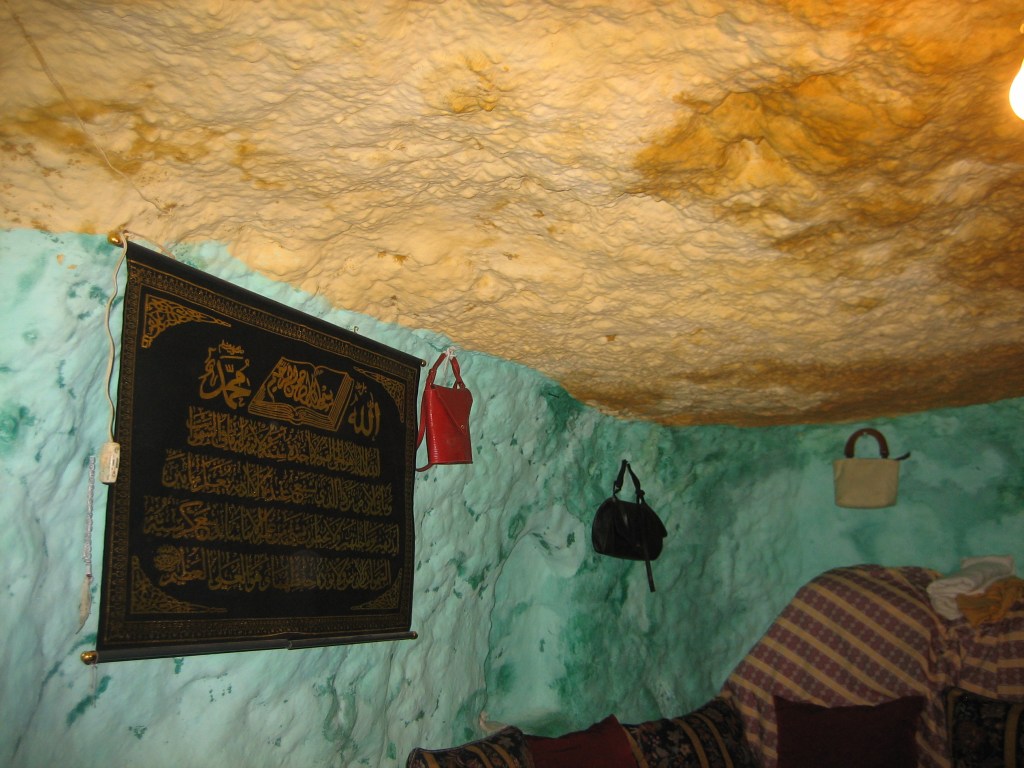
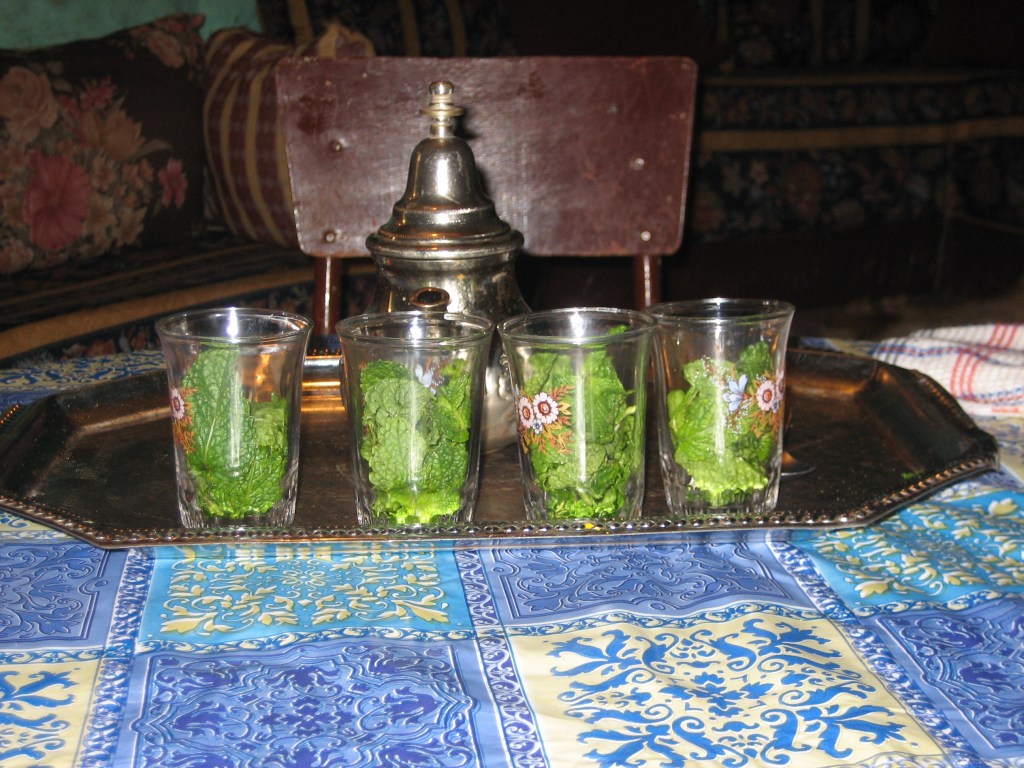
Since we had three full days in Fez, we had time to take a side trip to Bahalil to see the houses built in the caves into the mountains. Our guide made arrangements for us to visit one of the houses. It was a one-room cave with a small extension out of the mountain for the kitchen. Our hostess invited us to drink tea with her and through our guide told us a bit about her life. She was a widow, living with a grown- up daughter. They make buttons from silk threads to sell. She insisted I take a couple of buttons home with me. They have electricity and water. The inhabitants of Bahalil are Berber, many of whom are descended from the Romans and therefore have blue eyes and light brown hair. Again, being on a solo trip with a guide allowed us to dig deeper into the culture.
Erfoud: We headed south east to the mountains and desert terrain of Erfoud.
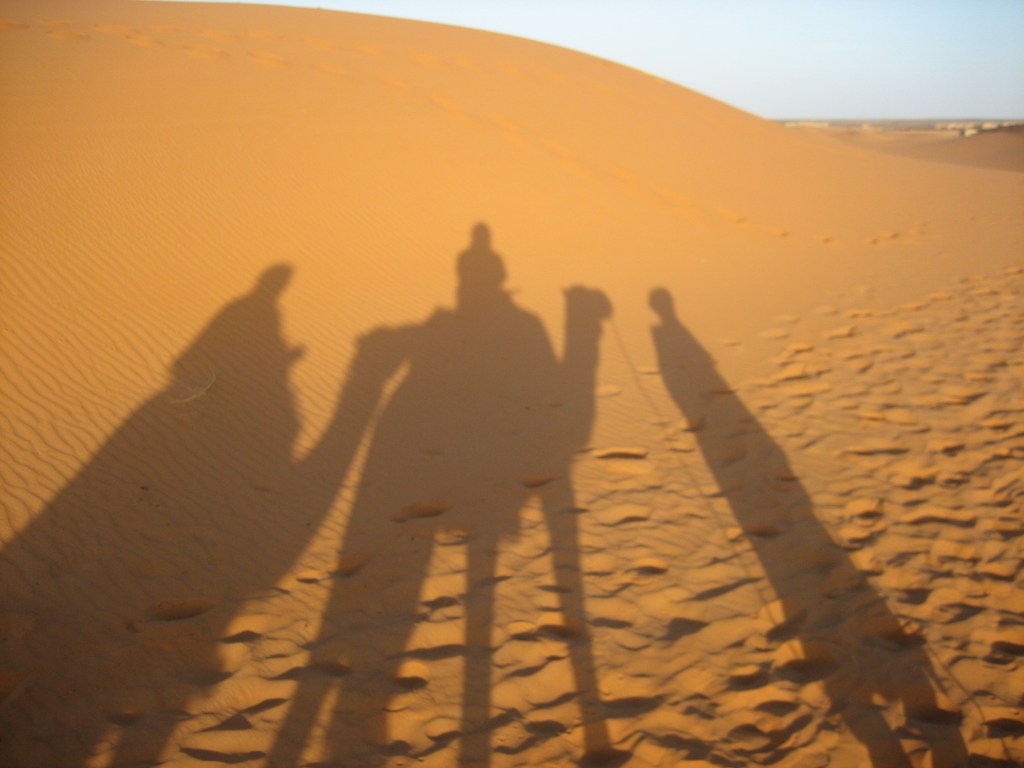
The next morning at 4:45am we began our sunrise dune expedition. We rode for half hour in a jeep then another ½ hour on a camel to reach the dunes. It was still dark and very still. The only sound was the swish of the guide’s flip flops. We left the camels and climbed the dunes on foot (I slid as I went).
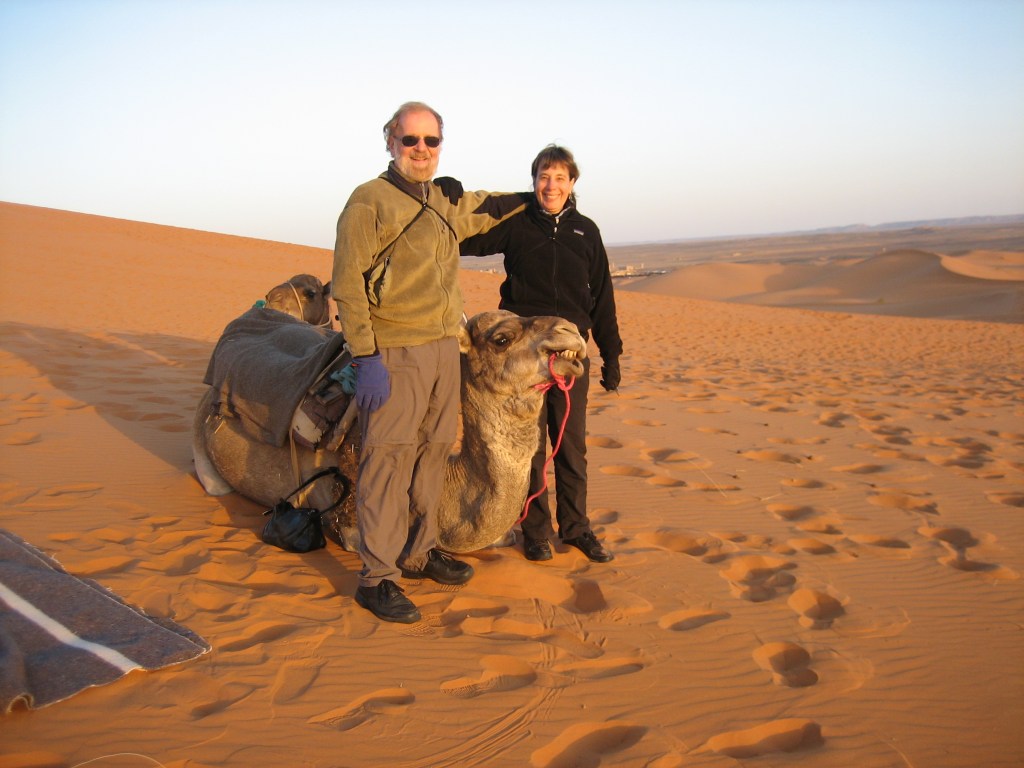
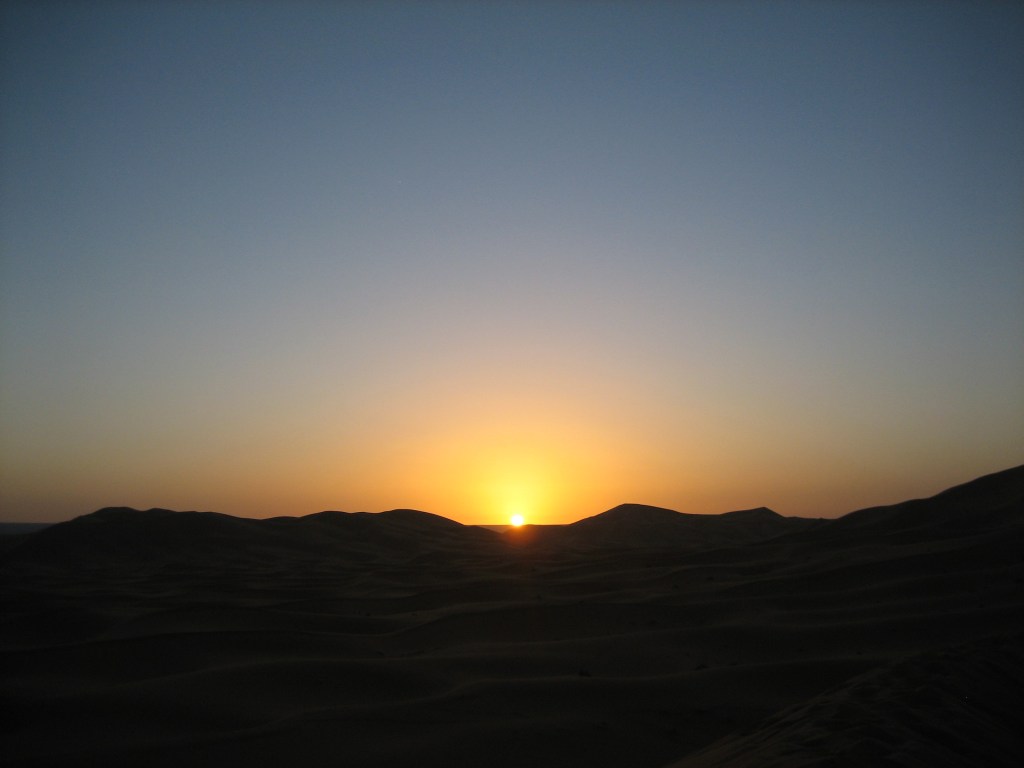
At the top, the guide spread a blanket for us to sit and wait for sunrise. He picked a spot where the sun would come up between 2 mountains. When we arrived, the sky was full of stars, then the stars began to fade and the sun started coming up. It was a magnificent sight.
The picture to the right was taken on the way down from the dunes.
From Erfoud we went west toward the Atlantic. We stayed at the Kasbah Ben Morah, which is a real Kasbah (fortified house), from the 17th century, beautifully restored. The Kasbah has a lovely veranda for the guests to sit and watch the evening come. We had dinner at our Kasbah and since it has only a few rooms, it has a small dining room with only one menu. As soon one table ordered; the menu was given to the next table. The menu was limited but the food was delicious.
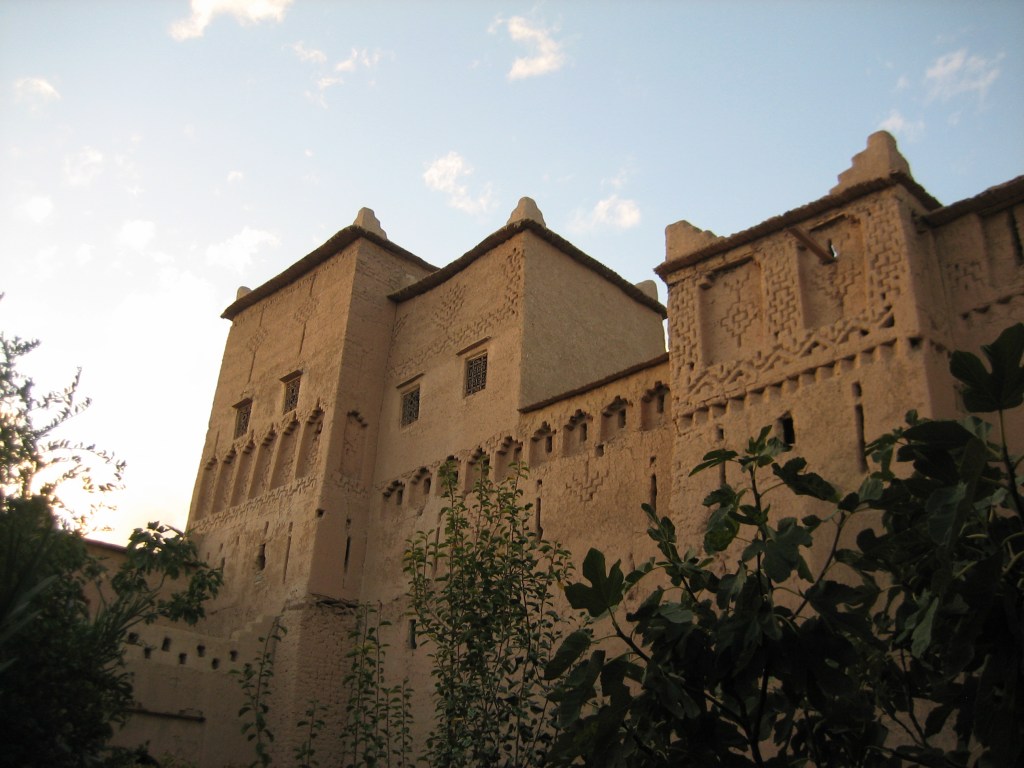
Nearby is another 17th century Kasbah, pictured on the 50 D bill. It is in the early stages of restoration.
Our next Jewish heritage stop was the town of Arazan near Taroundant, to see a tiny adobe 14th century synagogue.

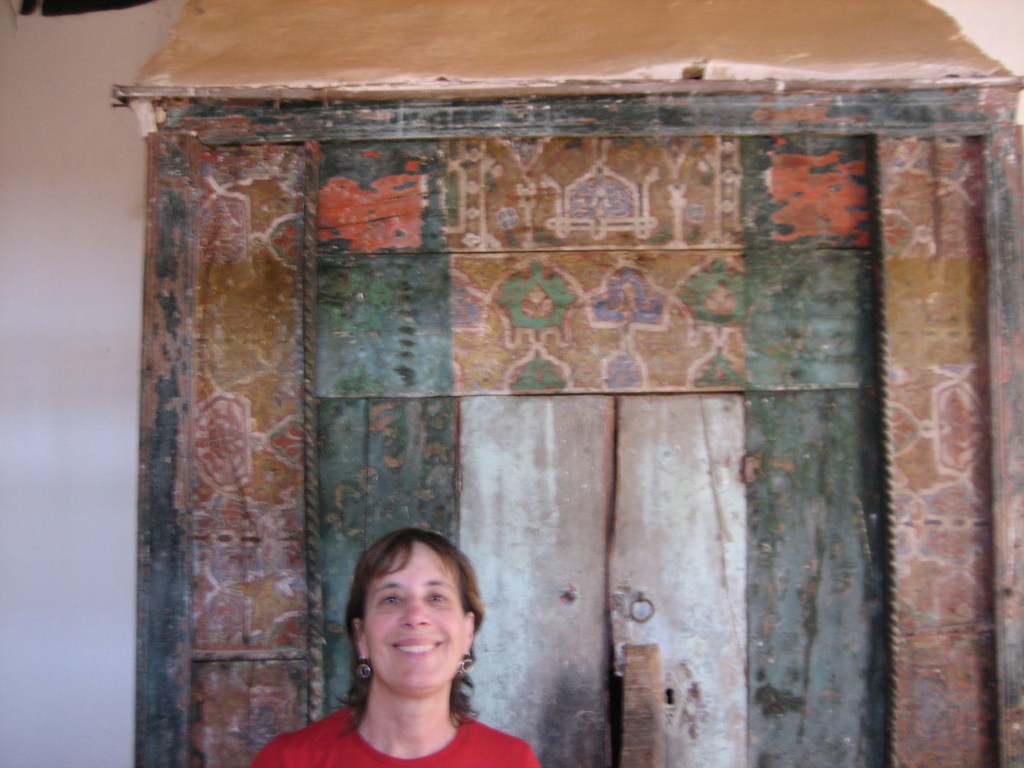
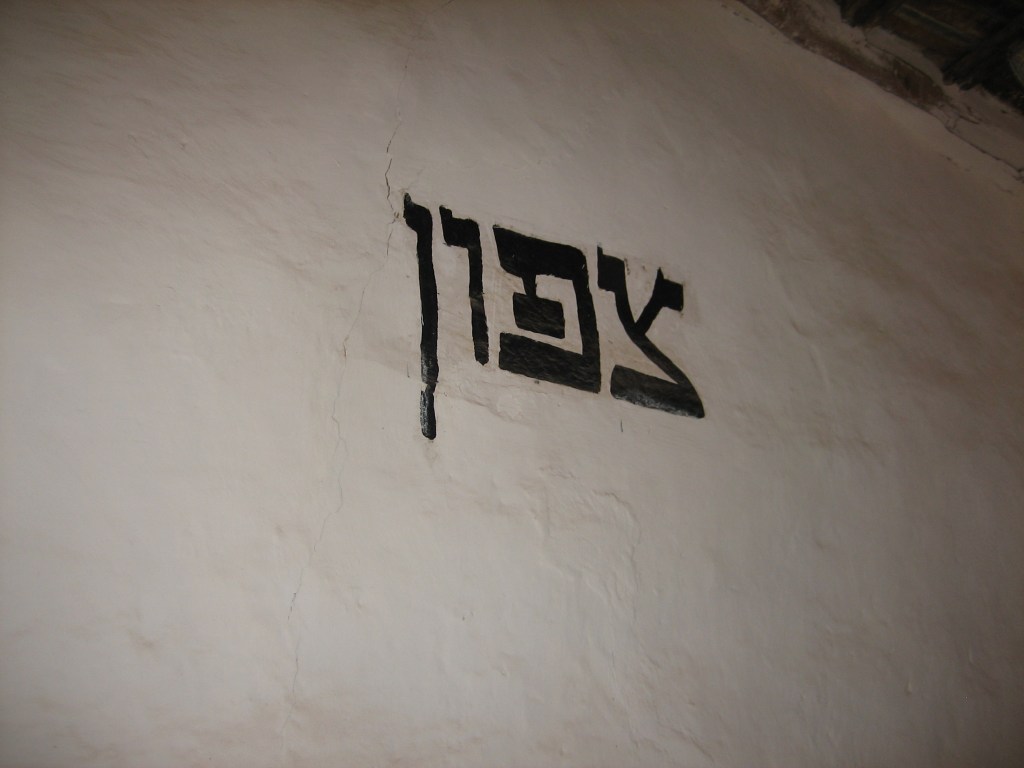
14th Century synagogue, Arazan
Our guide had not been there for a long time, and he was not exactly sure how to get there. We stopped at a gas station to ask for directions and a man on a bicycle offered to show us the way. We snaked through the tiny streets of this hamlet following the biker and then came to the synagogue. It is only about 14 by 20 feet. It still had a beautiful wooden Berber arc and Hebrew words written on the wall. There are no Jews left in the town and obviously we were the only tourists.
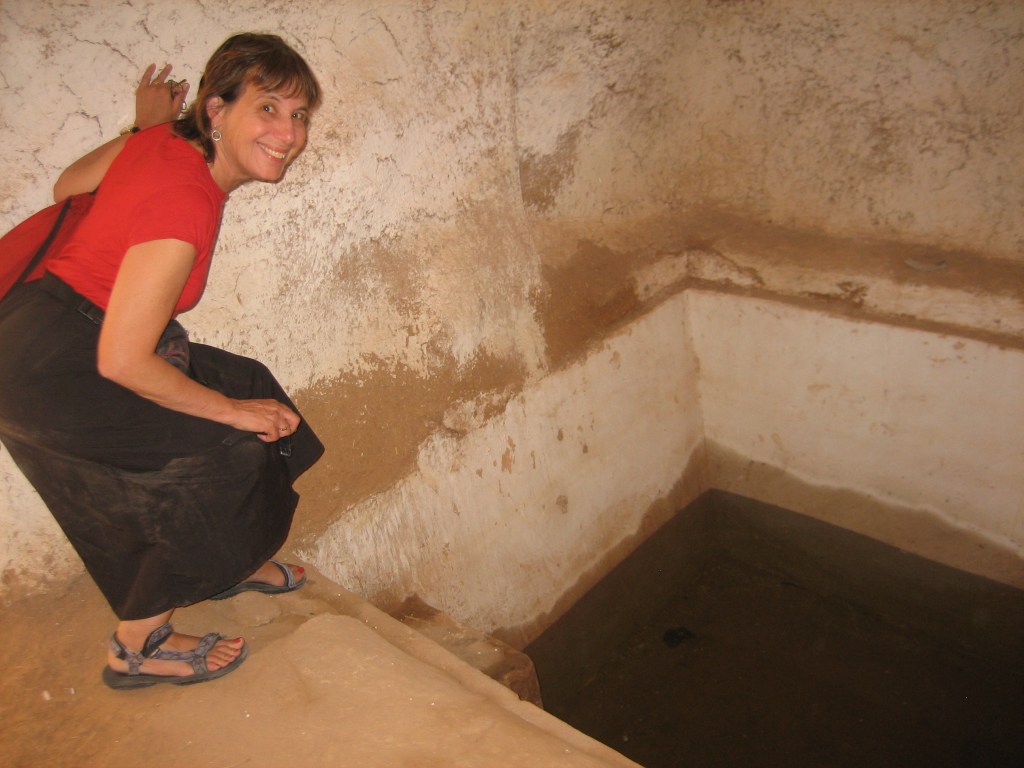
Next to the synagogue was a ritual bath (Mikvah). It was amazing to just be able to open the door and go in.
We continued to the Atlantic coast, to the walled Portuguese port town of Essaouira. Our Riad was inside the Medina (walled part of the city).
As part of the Jewish Heritage tour, we were scheduled to go to the grave and house of the Rabbi Chaim Pinto (1748-1845), who had been revered as a wise man in both Morocco and Israel.
The Pinto house was locked, but a neighbor called the caretaker who said she would meet us at the cemetery. In the meantime, the neighbor took us to the old school where the Jewish children had studied and lived. The house is crumbling because it has been standing empty since 1960 when most Jews left. Squatters had moved in and they were happy to show us the students’ entrance cards and the books in the cabinets. It is as if the school just closed for the day instead of for 50 years. The squatters actually take good care of the artifacts because when tour groups come through, they receive tips.
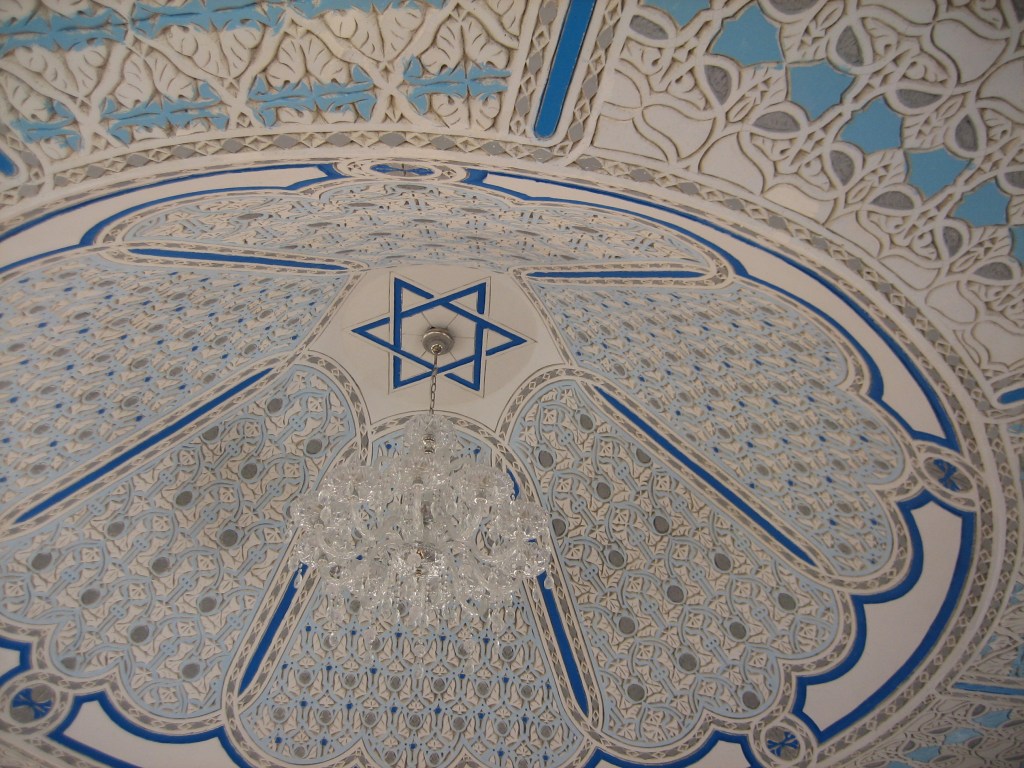
The cemetery houses a beautiful monument to Rabbi Pinto and has his grave. This grave yard and the Pinto family house are beautifully maintained. There is an impressive synagogue in the house itself.
Our last stop was Marrakech. There is much to see and do in this city, including a huge Suq, which is much easier to navigate than the one in Fez. We even managed it on our own when our guide left us on our last day. It was especially lively in the evening with lots of open air restaurants in the area surrounding the Suq.
We visited a very beautiful synagogue, which was well hidden inside what looked like a typical house. The space was lit by the magnificent lamps that we had seen in all synagogues.
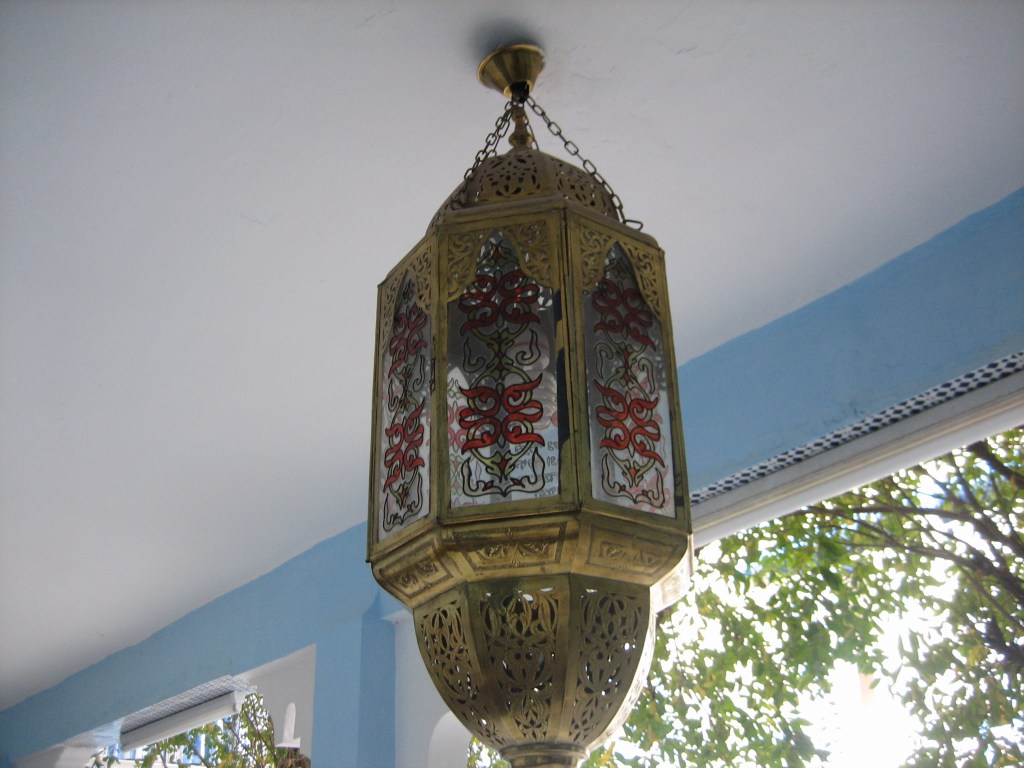
I was dying to purchase one that I saw in the Suq but it was $3,000. The memory will have to do.
Final comments:
- This was a particularly meaningful trip. I now understand so much more about the life of Roman and medieval Jews in Morocco.
- Having a dedicated guide in Morocco to smooth out, otherwise frustrating situations, such as being overcharged, was wonderful.
- Again, having the extra time to visit out of the way places like Bahalil, and Arazan added a great deal to my understanding of the country.
- Private visits to homes is another bonus of using an excellent tour company and having excellent guides.
 Nili's Adventure