
I am always asked if I have a favorite country that I visited. It is difficult to choose, but if I had to, Bhutan would be it. Bhutan was the most special trip for many reasons; the culture, the terrain and the architecture. In addition, we had three amazing experiences; climbing to Tiger’s Nest Monastery, crashing a “rainy day” private party and meeting the Queen. Read on.
A year after the trip recounted in the prior post, we had another opportunity to visit our son and family in SE Asia. This time his work had transferred him to Malaysia. We also visited Thailand, Laos, and Bhutan. Each of the countries were interesting and full of experiences, but I will only write about Bhutan in this post because it was head and shoulders more exciting than the others.
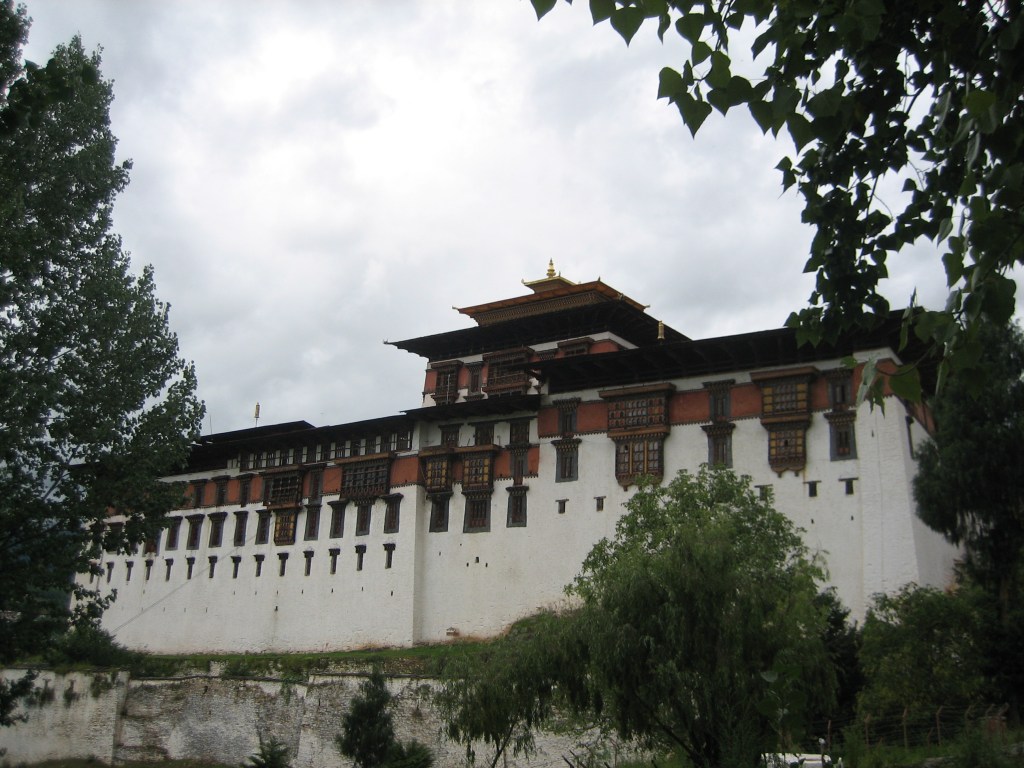
Visiting Bhutan requires pre-planning. At least in 2006, the government limited the number of tourists to 14,000 visitors a year. (Bhutan was closed to tourist until about 1975). In order to get a visa, I had to hire a local tour operator, set the itinerary, prepay for the trip at a fixed rate of $250 per night per person and then receive the visa for the specified days. The fee covered hotel, flight (from Bangkok) and food as well as a guide and a driver. Most of our meals on the trip were pre-ordered. There were usually at least 4 dishes, a noodle/vegetable dish, assorted other vegetables, one protein dish and rice.
The only airport in Bhutan is in Paro, which is in a small valley between mountains that are 8,000 feet high. Flying down into the airport was scary. The pilot had to basically dive bomb the plane down. Paro, the second largest city in Bhutan, is still a very small town, with only a couple of blocks of shops. The capital city of Thimphu has around 100,000 people. It is about a 2-hour drive from Paro. The rest of the country is sparsely populated east of these 2 towns.
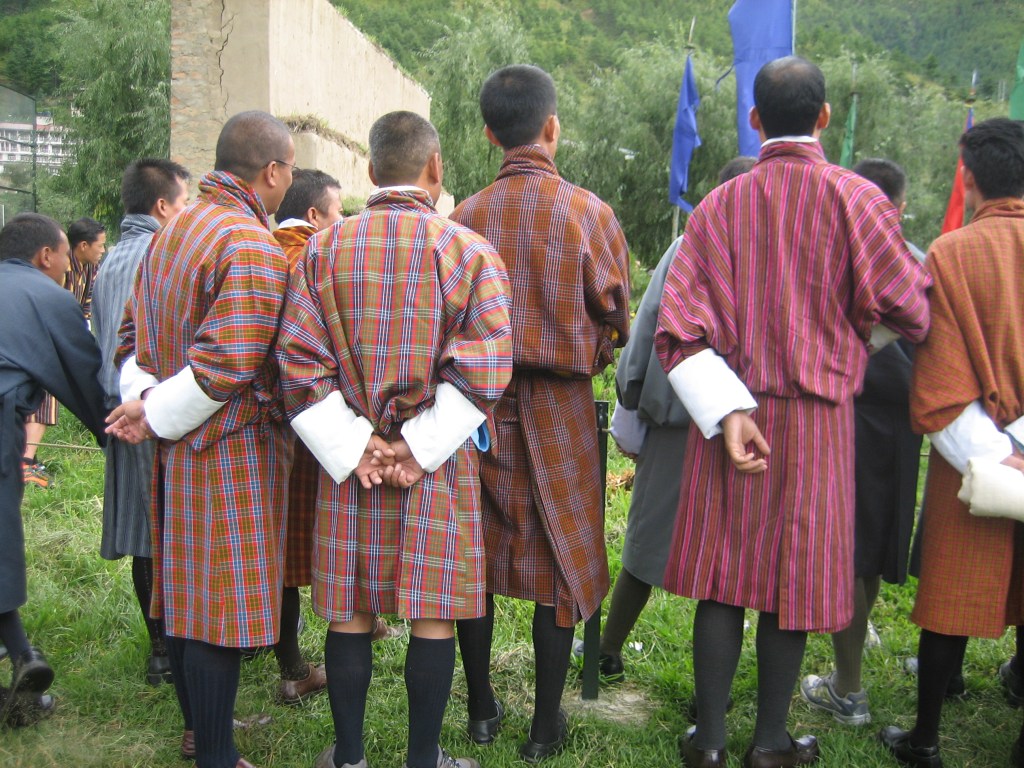
The Bhutanese men wear a very distinctive clothes. Their dress looks like an Oriental bathrobe that is tied in the middle and then the bottom is arranged like a kilt. They wear this with knee high socks and it is very colorful. The women are not dressed as dramatically.
Both men and women have to wear the local dress when they are working or are out, but at home they wear western clothes. The country is trying hard to hold on to its culture.
After landing in Paro, we immediately drove to Thimphu and were introduced to the beautiful Bhutanese architecture and to the national sport, archery.
We were able to watch a couple of matches. The archers were in three teams (the blue, red and yellow), two men are up at a time on each side. If a team made a good shot – then the teammates would dance and sing a victory dance.
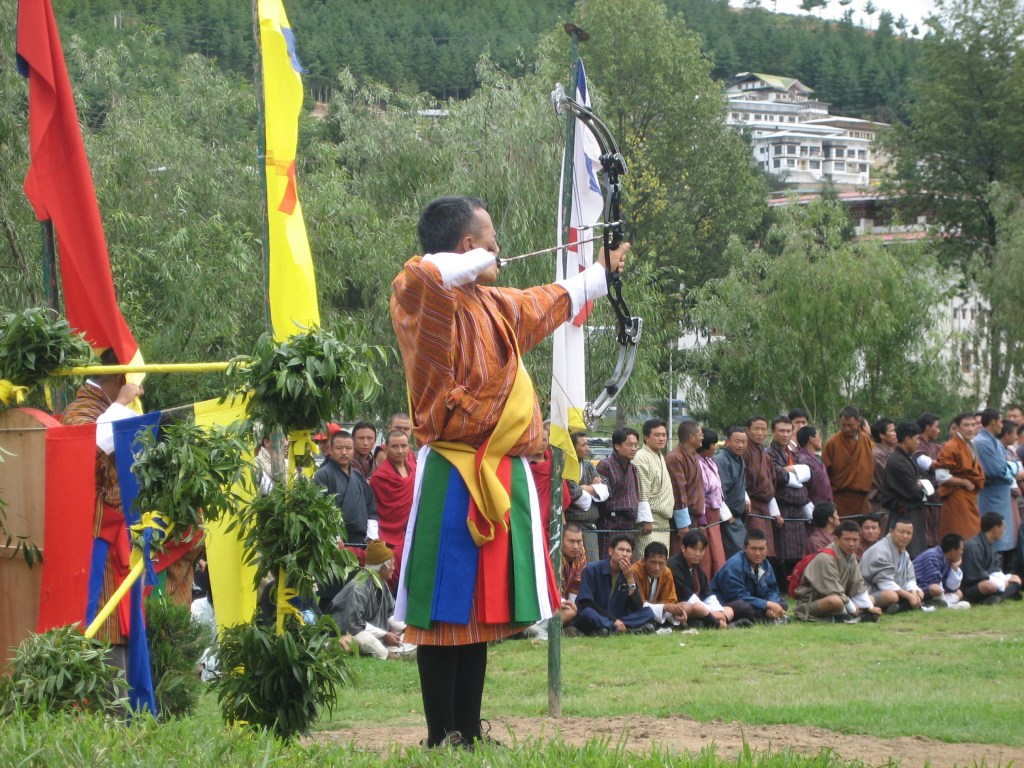
There was a grandstand under a beautiful tent and dancing and singing in front of it. The matches started at 8:30AM and went all day. They are very well attended by the locals. I watched the matches from 1:30 and till 4. What fun.
Since we were in Bhutan for 16 days (most people go for a week and stay around Thimphu and Paro), we were able to go about ½ way across the country, as far as Jakar. We saw lots of monasteries, topographies and met lots of locals. Travel in Bhutan is scary because of the inadequate mountain roads, shared by people, cars, trucks, animals. The “2-lanes” were so narrow that we usually drove in the center of the road – until traffic came from the other side. The roads are on the side of the mountains with a huge drop off. But our driver was terrific. Traveling East to the center of the country, we averaged 25 miles per hour.
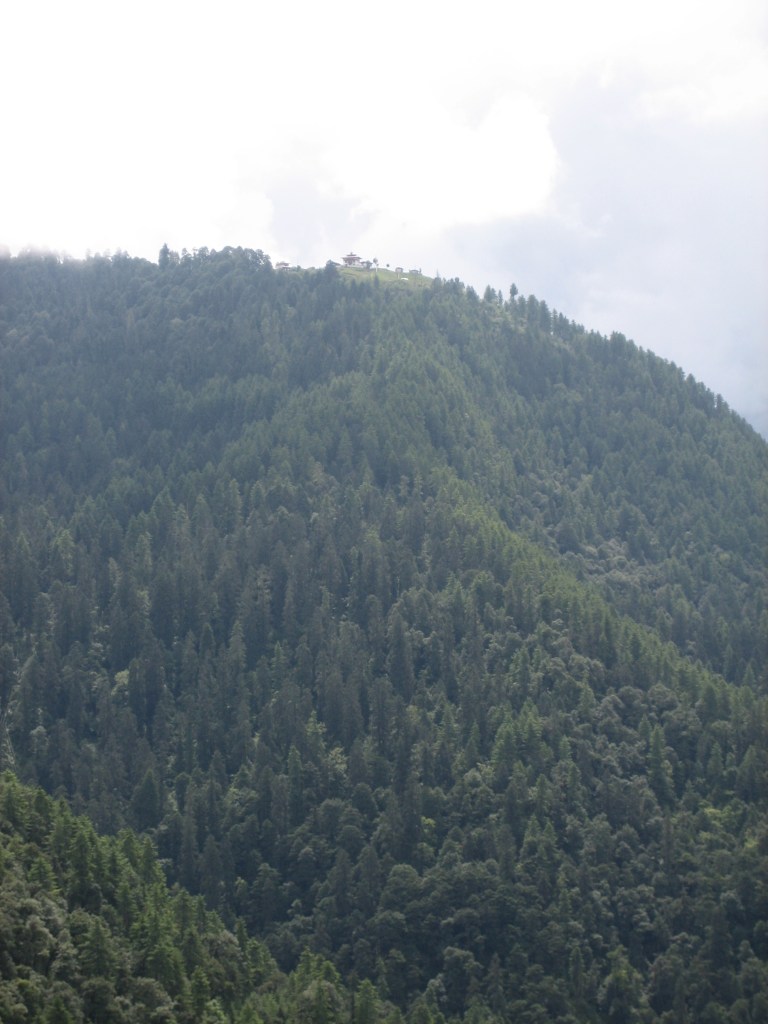
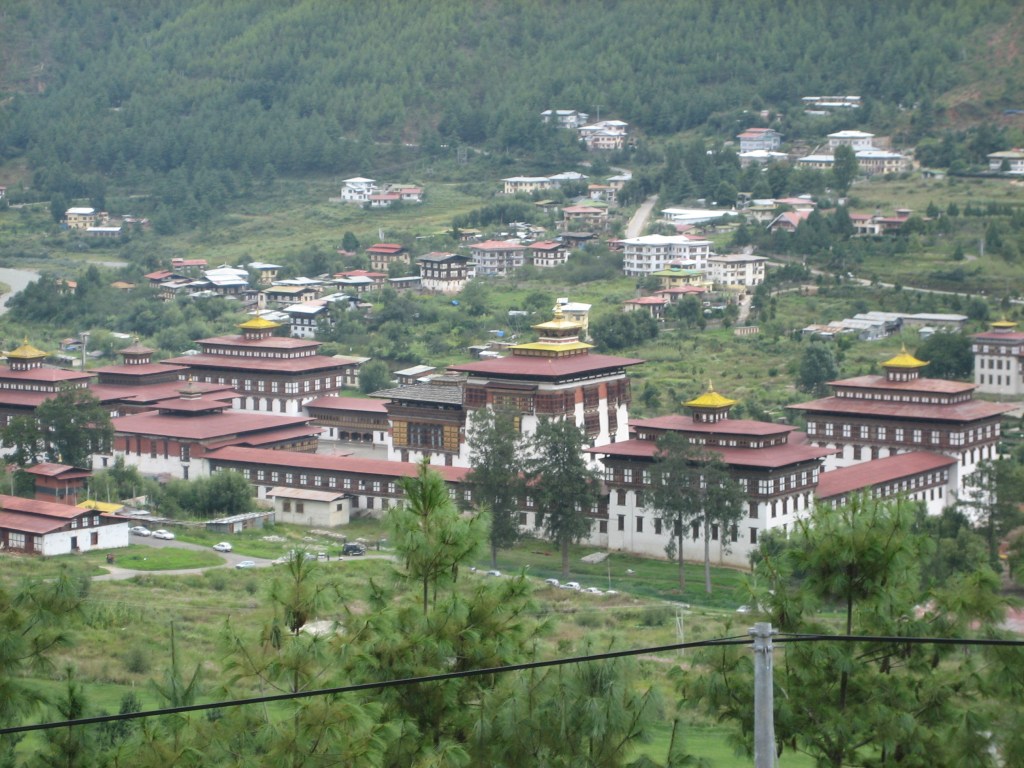
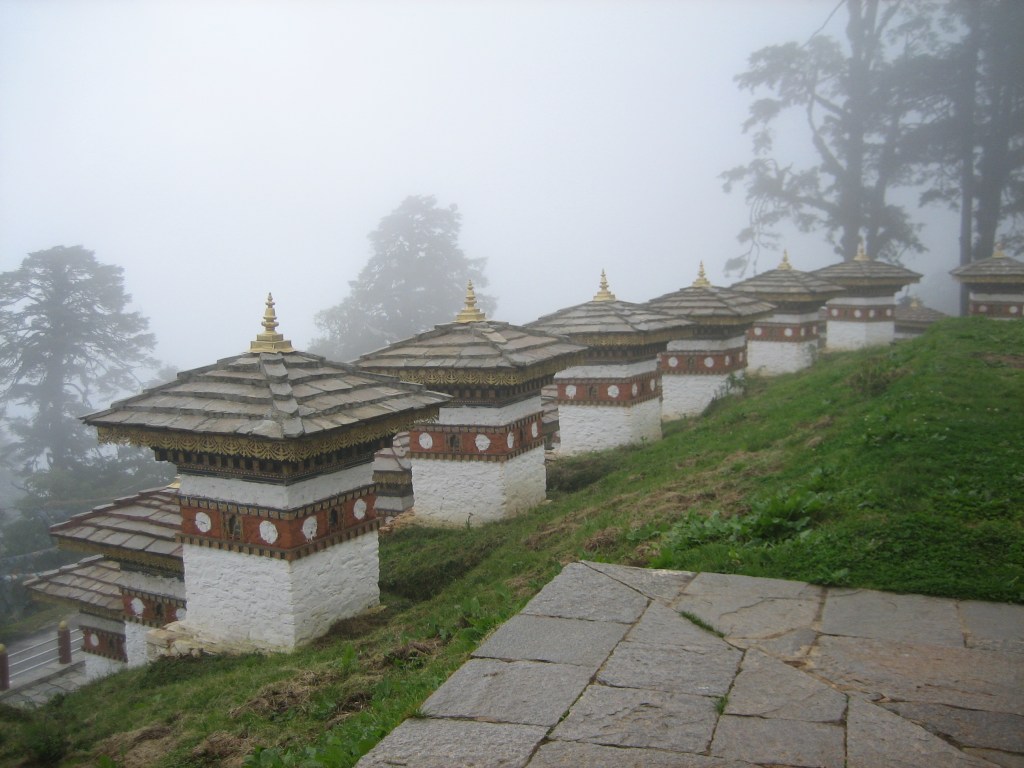
The scenery was superb with magnificent mountains and all kind of climates. In some sections we saw lots of blue spruce, while in the rain forest sections, we saw moss hanging from the trees. In the various valleys we saw apple orchards bananas, cactus, pink buckwheat and yellow mustard plants. We passed many waterfalls, some very high, some very wide. The rivers are lovely. Wherever there was any open space in the mountains, there were rice patties. Various places on the road were apple-loading sites. The farmers brought baskets of apples down from their orchards (no road, just paths) and loaded them on a big truck, which would go to market.
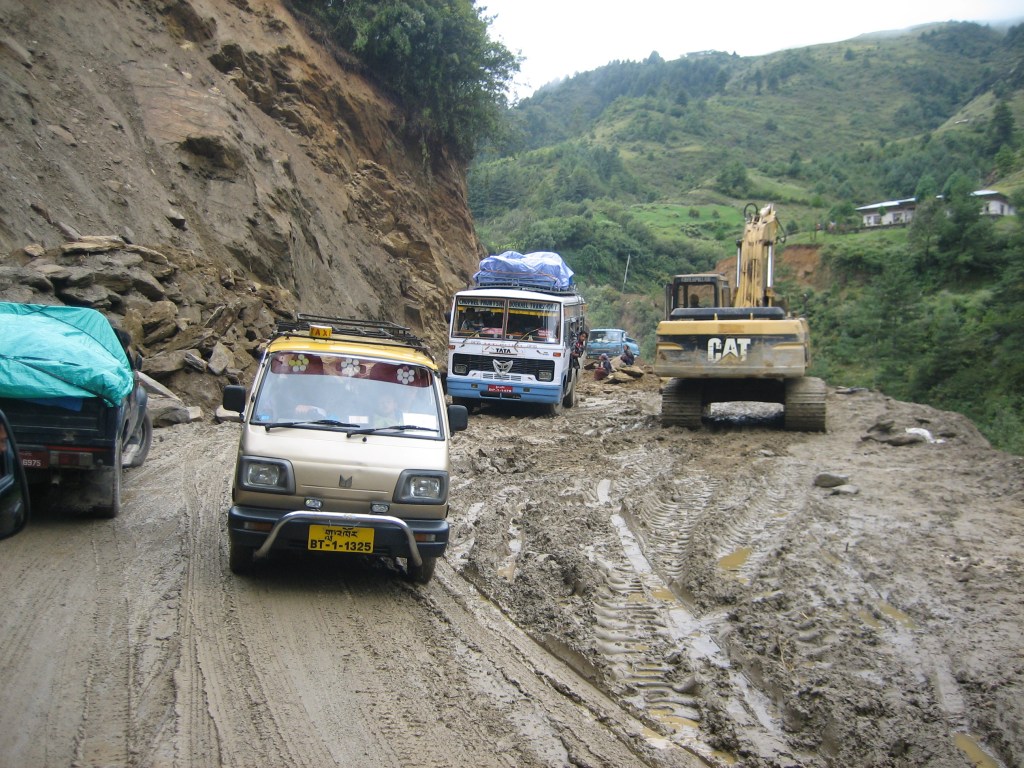
There were lots of road crews out fixing or widening the road. But they consisted of a couple of men and women with pick axes. At one road construction site, there was actually a backhoe (civilization!)
We also saw various species of monkeys – including a mother with a baby.
We stopped at lots of Monasteries and Nunneries. At one Nunnery, the nuns were in the front room chanting their morning chants when we arrived. The back room is the holy room with a Buddha statue surrounded by bowls of holy water.
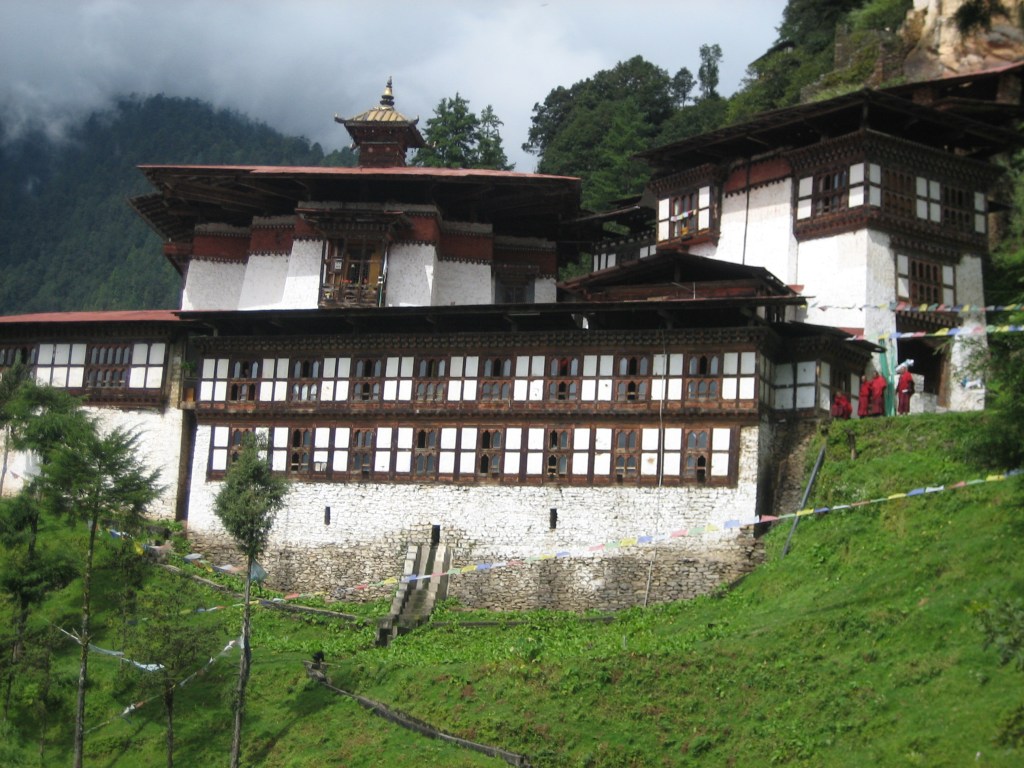
We were welcomed and one of the nuns gave us some holy water. She poured some water into our hands and expected us to drink a bit and put the rest on our heads. It is supposed to wash away the bad thoughts.
At one Monastery, the monks chant four times a day for about 2 hours each time – (with breaks) for 6 weeks a year. We arrived just as they were walking in a procession to the temple. We watched them gather, the metal drum calling them to the chanting. The monks entered to a beat created by a monk hitting one stick against another. Their normal scarlet robes were covered with an extra robe of yellow. They each received the holy water from another monk then sat down to chant. The chanting included deep throat chanting, which was amazing to hear. I feel so lucky that we came exactly at the right time. Apparently having visitors looking in while they are chanting is not a problem.
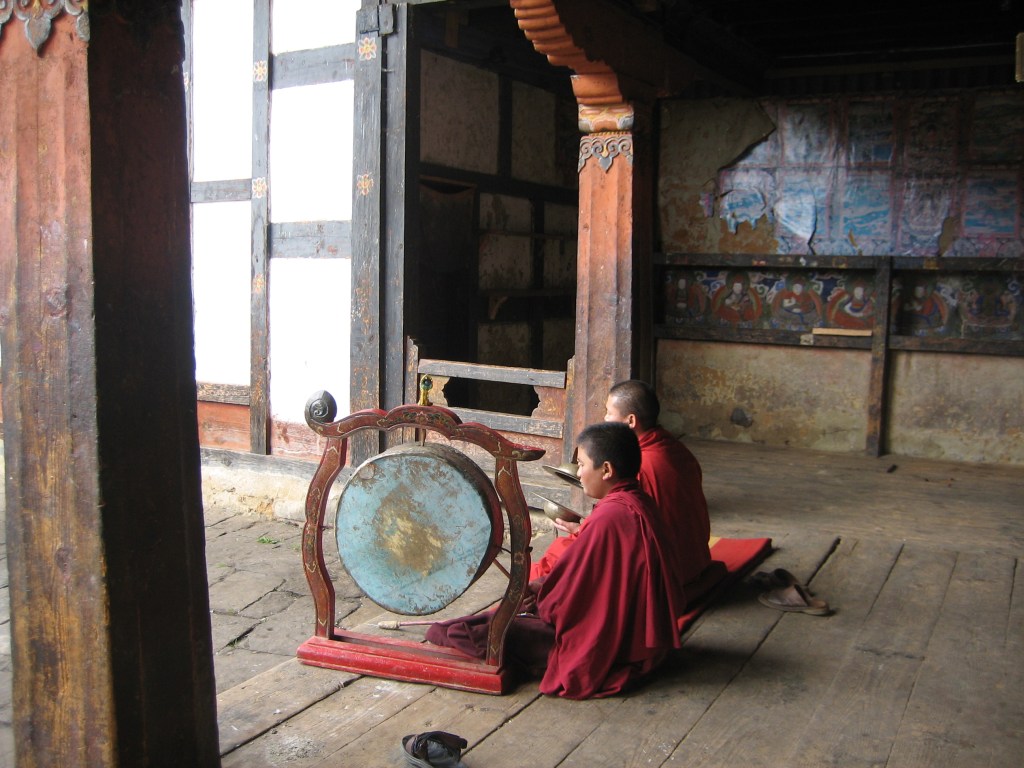
At the Jambay Lhakhang monastery, built in 659, we arrived as the monks began chanting for a special holiday. Actually every 8th, 10th, 15th, and 30th day of the month is special (in the Bhutanese calendar). The chief monk sat on a throne chair, another monk a bit below him and the others on the floor. They were playing musical instruments and chanting. They played drums, a long horn, a short horn that sounded like an oboe, a twirly drum, 2 types of cymbals and shells.
A lot of local old people were walking around the monastery. These locals walk and say mantras till they get tired, rest, eat their lunch, then walk some more. They believe that saying the mantras takes their sins away.
The Shudra Monastery, was a challenge to visit. It requires 1000 feet climb, starting from an elevation of 8000 feet. I felt the altitude during the steep climb. It is built in a cave on the side of the mountain.
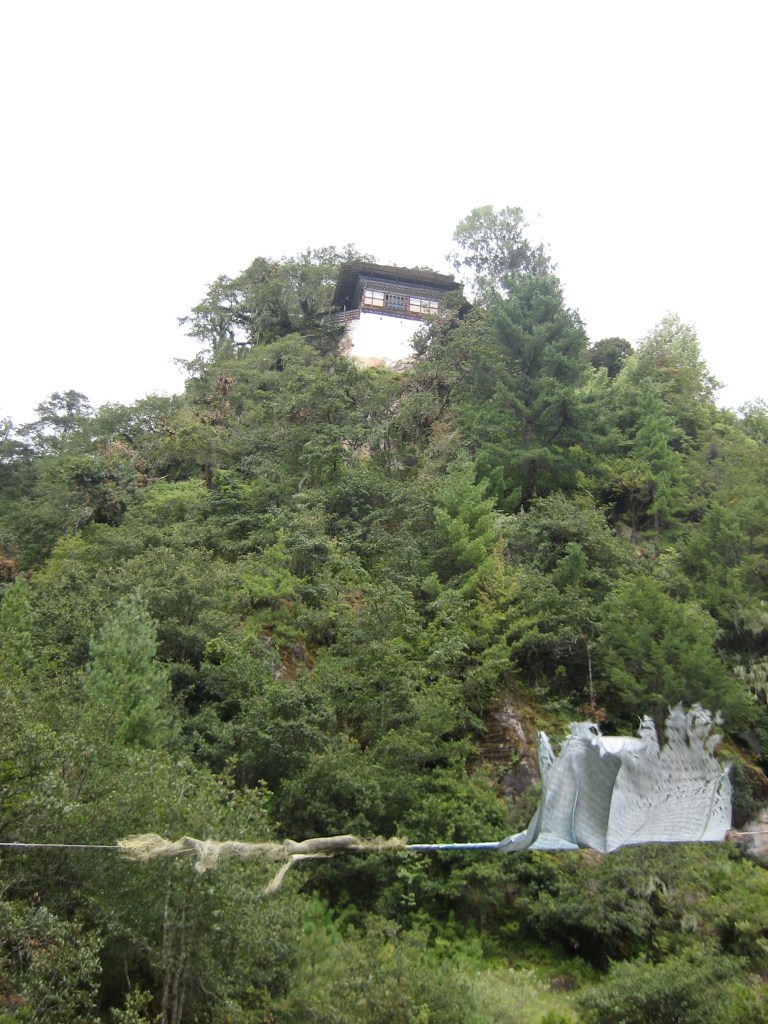
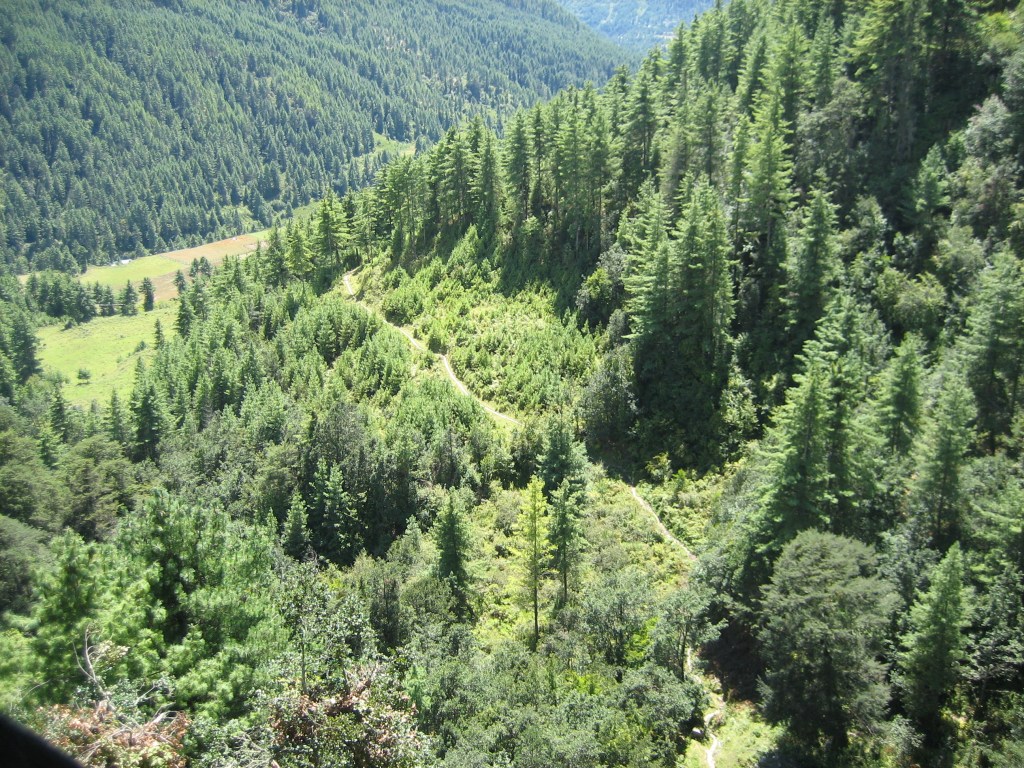
The view from the monastery was fabulous. No monks live in this monastery, but an old lady, a caretaker, let us into the Monastery. It has the footprints and handprints of Guru Rinpoche and his consort’s footprints as well. (He is the monk who brought Buddhism to Bhutan.)
We asked the caretaker how many tourists come to this monastery. She said about 1/2 dozen per year. This is not surprising since so few visitors come as far into the country as we did, or are willing to climb 1,000 feet. The caretaker’s family lived around the corner from the monastery. They invited us for tea and we would have had our lunch there, but there were too many flies in the house. Instead, we had a picnic on our way down.
At our eastern most destination, Jakar, we took a day trip to the Ura valley, which is probably the prototype of Shangri-La. We had a completely sunny morning for our drive on beautiful mountain roads.
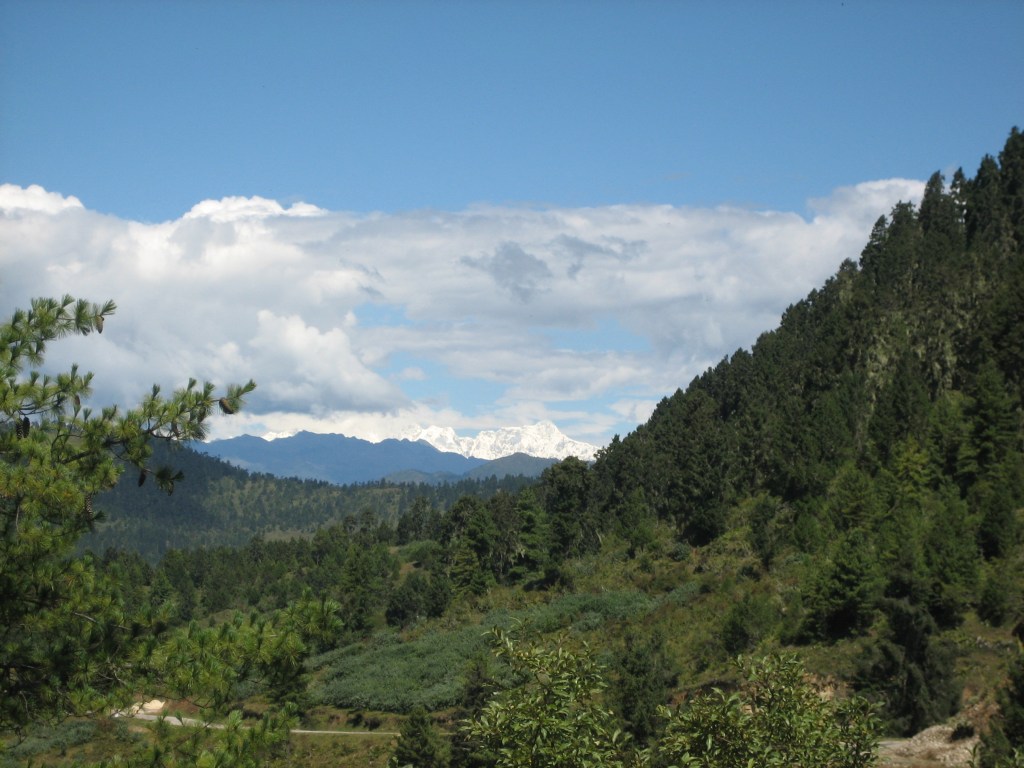
At the summit (12,400 feet) our guide and driver got really excited and parked the van. The snow-covered Himalayan peaks – some 50-60 miles away were visible. Our guide said he had driven over 100 times from Jakar to Ura and had only seen them twice – this being one of the times. These mountains, at 24,650 feet, were an unbelievable sight.
From the summit, we descended to the beautiful Ura valley, surrounded by mountains with a little village at the center.
We stopped at the primary school while the kids were at recess. They were in small groups talking and playing games. No one was running around and there was no shouting. There is no playground equipment. When they went back to class, we peeped into the younger grades. The kids all wear a uniform – identical fabric for boys and girls except the girls have a long skirt and the boys the short skirt.
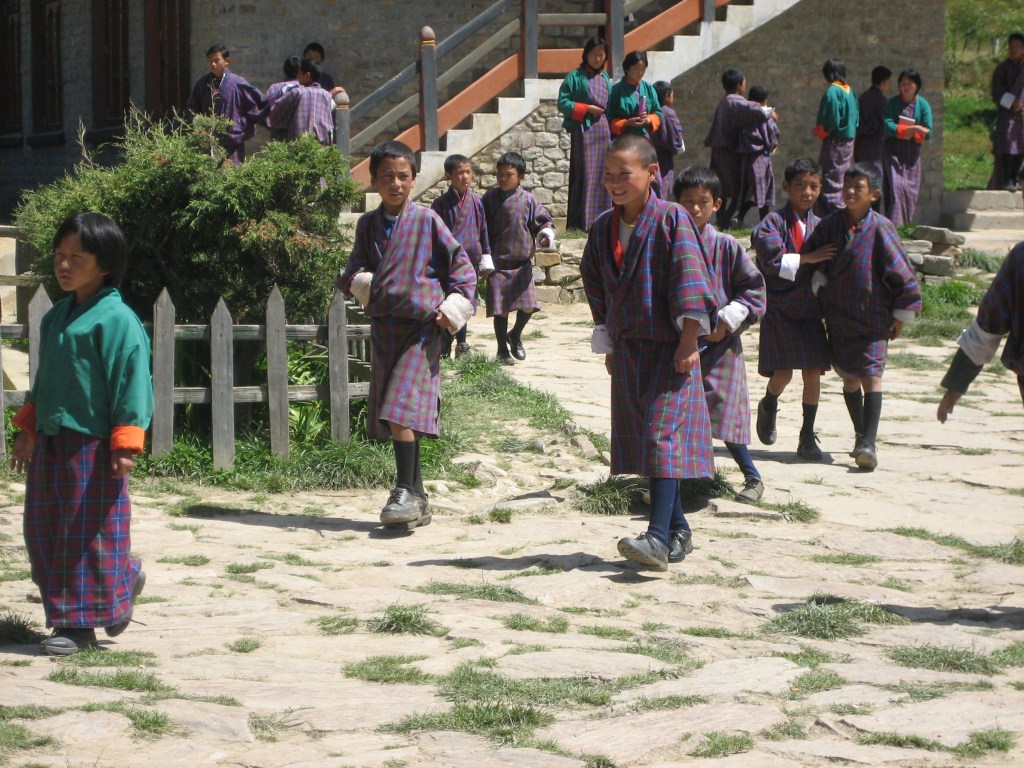
We had a picnic lunch because Ura has no restaurants or stores.
Our timing in Bhutan was perfect because we were there a couple of weeks prior to the big annual festival that is celebrated all over the country. Although we didn’t see the festivals, in each town, we saw the pre-festival practices, without lots of other tourists. As a matter of fact, we saw almost no other tourists once we left the 2 “large” cities (Paro and Thimphu).
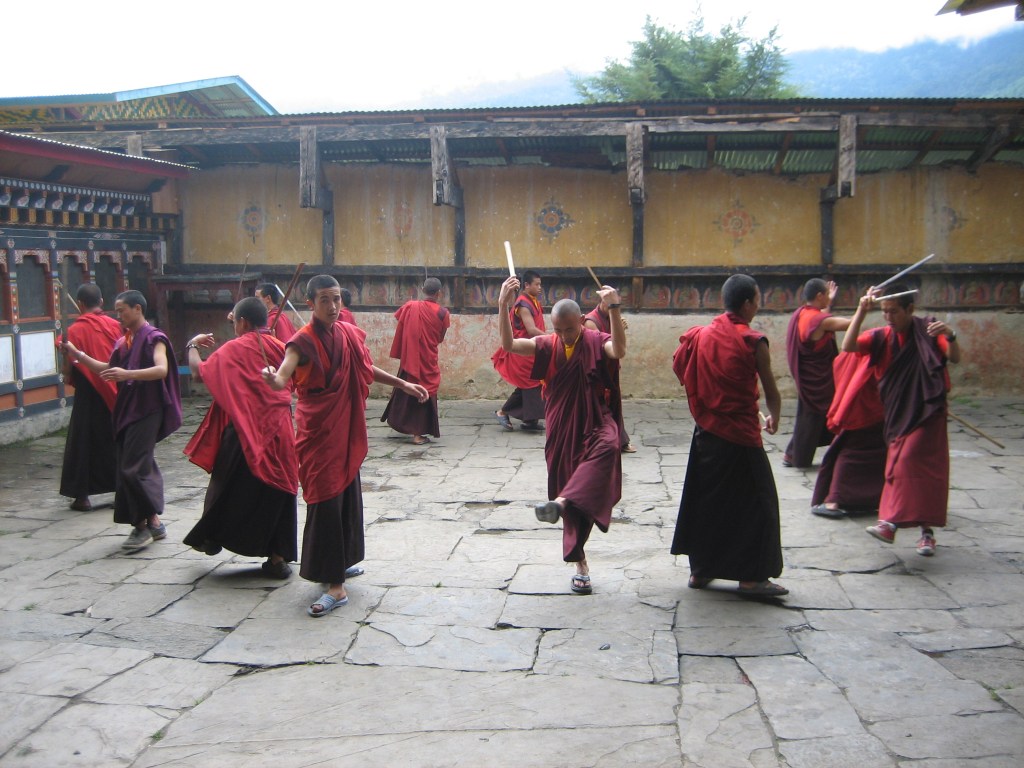
At some of the monasteries, the monks were practicing their dancing with drums and cymbals, doing turns and leaps. At another they were dancing with swords. Other times we saw the village women practicing the dancing and singing.
As I wrote at the beginning of the post, we had three amazing experiences; climbing to Tiger’s Nest Monastery, crashing a “rainy day” private party and meeting the Queen. Yes, really.
When we returned to Paro, it was raining too hard for us to climb to Tiger’s Nest on the appointed day. Not to miss a day’s adventure, however, our guide took us on a short road trip to the Lhakhang Karpo Monastery, to watch an archery tournament. We also watched local ladies practicing for the festival. To enter the monastery, we took off our shoes, and when we went to put them back on, we found walnuts in them. The young monks, who had put them there, thought it was very funny.
But the real adventure came on our ride back to Paro. We heard singing in a courtyard. Our guide asked if we wanted to stop. Yes, of-course. We went to the gate of the courtyard of the house and looked in.
The owner of the house quickly drew us into the courtyard and sat us in honored chairs (the rain had stopped by then). We sat next to His Excellency the 9th Neyphug Trulku Rinpoche, Head of the Neyphug Thegchen Tsemo Monastery. He is the 9th re-incarnation of a very importance Lama. He was all of 26 years old but has tremendous responsibility. He was invited as an honored guest to this house as celebration for the Blessed Rain Day.
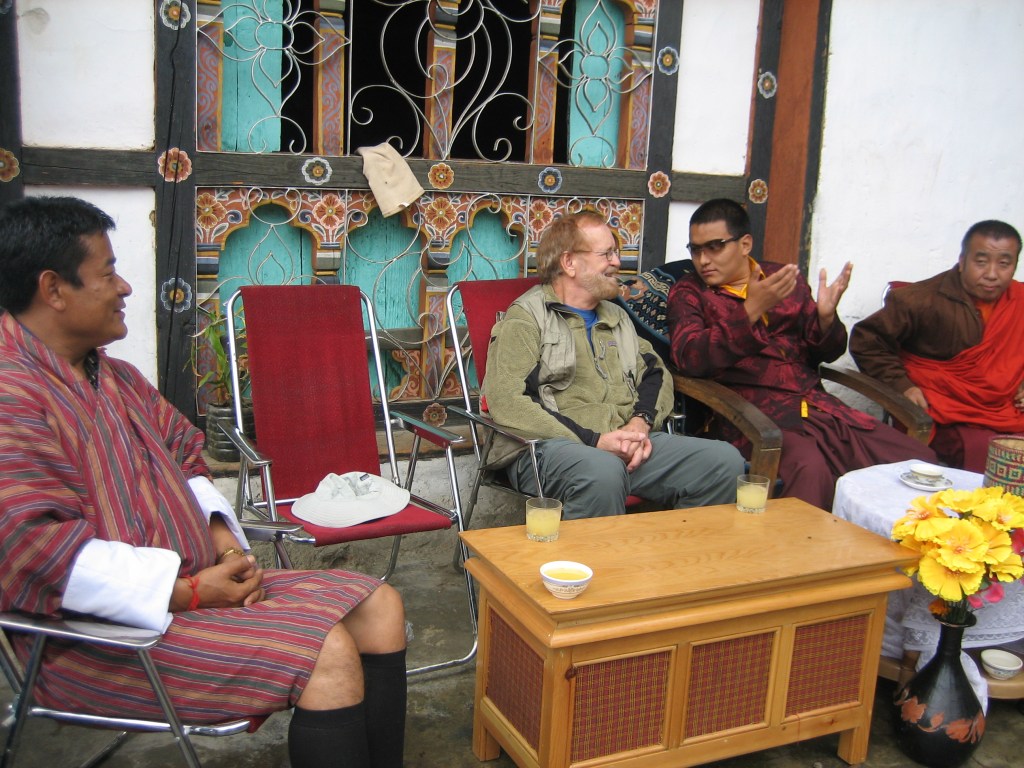
The gentleman seated on Jerry’s other side was the forestry minister. The owner of the house was a member of Parliament.

The guests were dancing and singing. We were asked to join in, which we did. I have it on video. They treated us to drinks and were just lovely to us. What a fabulous experience. Now if it hadn’t rained, we would have gone trekking and missed this.
The next day we did hike up to Tiger’s Nest Monastery. It was still raining but this was our last chance to do this fabulous climb.
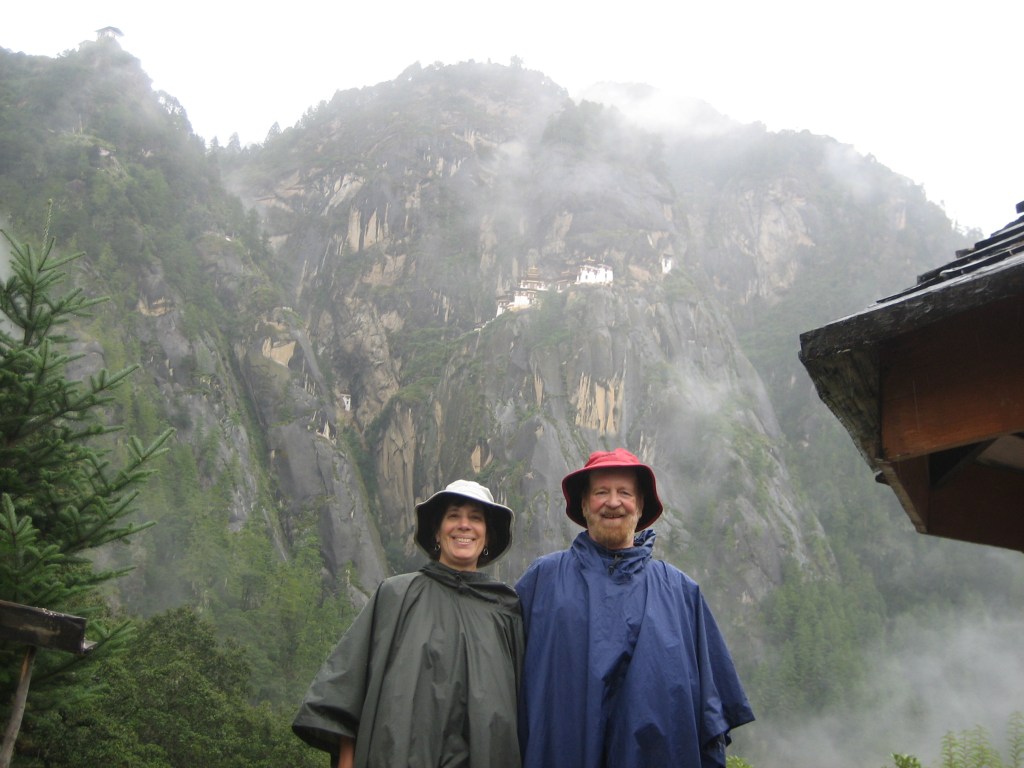
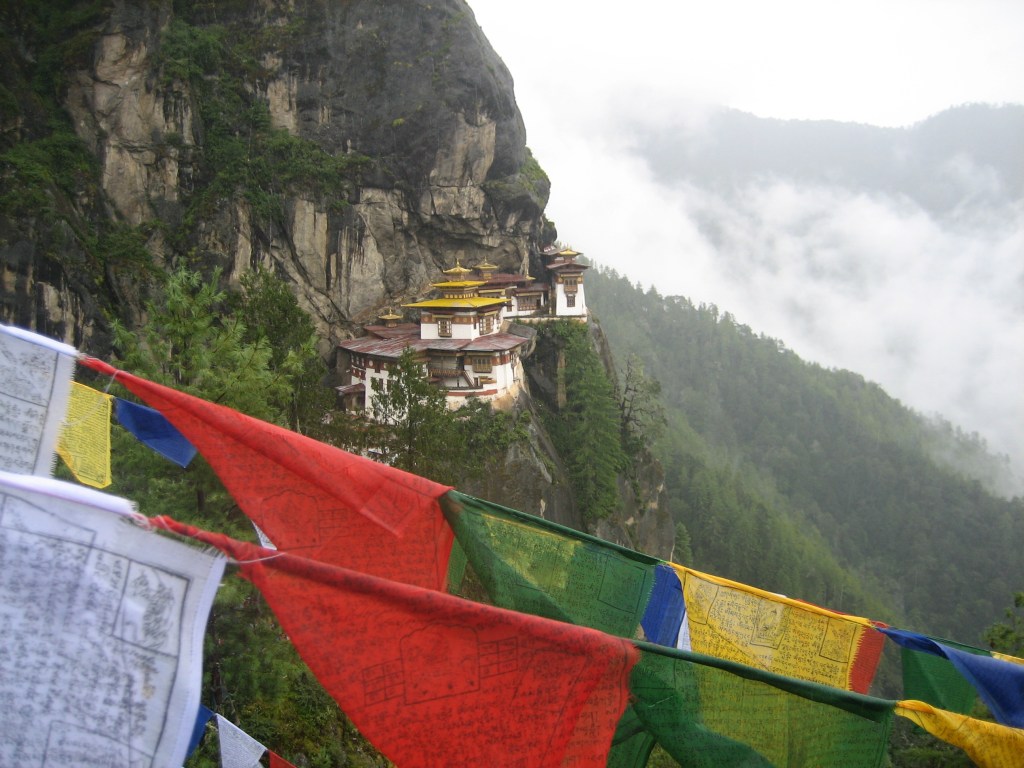
The monastery is 3,000 feet up. But that does not include the 450-500 steps (I lost count) down and the 300 steps back up to the monastery and vice versa at the top. It was a steep climb and slippery due to 3 days of rains. But the views were worthwhile and the feeling of satisfaction at having done this climb, was wonderful. The monastery is really multiple monasteries built into a rock high up on the mountain. About 1/3 of the way up is a teahouse. We had wonderful views of the monastery from it. It was really beautiful to watch the monastery disappear into the clouds and then reappear.
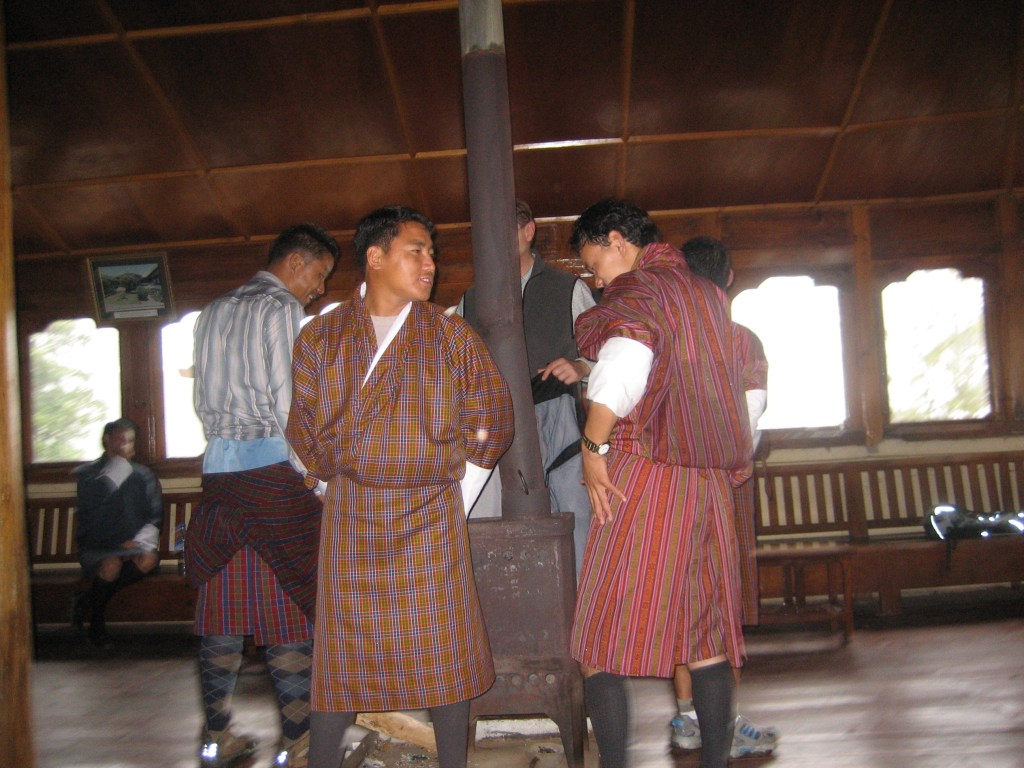
We stopped and rested in the teahouse on the way up and gratefully stopped there for lunch on the way down. The guides warmed themselves at the stove.
There were about a dozen people who did the hike that day. The monasteries were very interesting, with lovely woodcarvings, wall paintings and statues. But it’s the excitement of the climb that really counts and the beauty of the mountains that is the lasting memory. I was grateful to have the guide help me down the mountain because of the mud.
The Queen: I saved this memory for the last part of this post because it is not every day that an Israeli/American meets a Bhutanese queen. Not far from Thimphu is the town of Punakha and the Khamsum Yuelley Namgyal Chorten monastery which the Queen Ashi Tshering Yangden built for her son, Jigme Khesar Namgyel Wangchuck, the (then) Crown prince. He is the king now. The king who reigned at the time of my visit, Jigme Singye Wangchuck, had married 4 sisters. Queen Ashi is the third sister but the important queen because her son is the first born.
The monastery is at the top of a hill, and due to recent rain, the long hike was muddy. As we started climbing, our guide, Tobgay said, “Oh, the Queen is up at the monastery, but we can go in when she leaves”. I didn’t think anything of it figuring she would be gone by the time we walked up. It was warm and humid and I was cursing the fact that I had to wear long pants – shorts are not acceptable in Bhutan for women. By the time we reached the top I was sweaty and muddy.
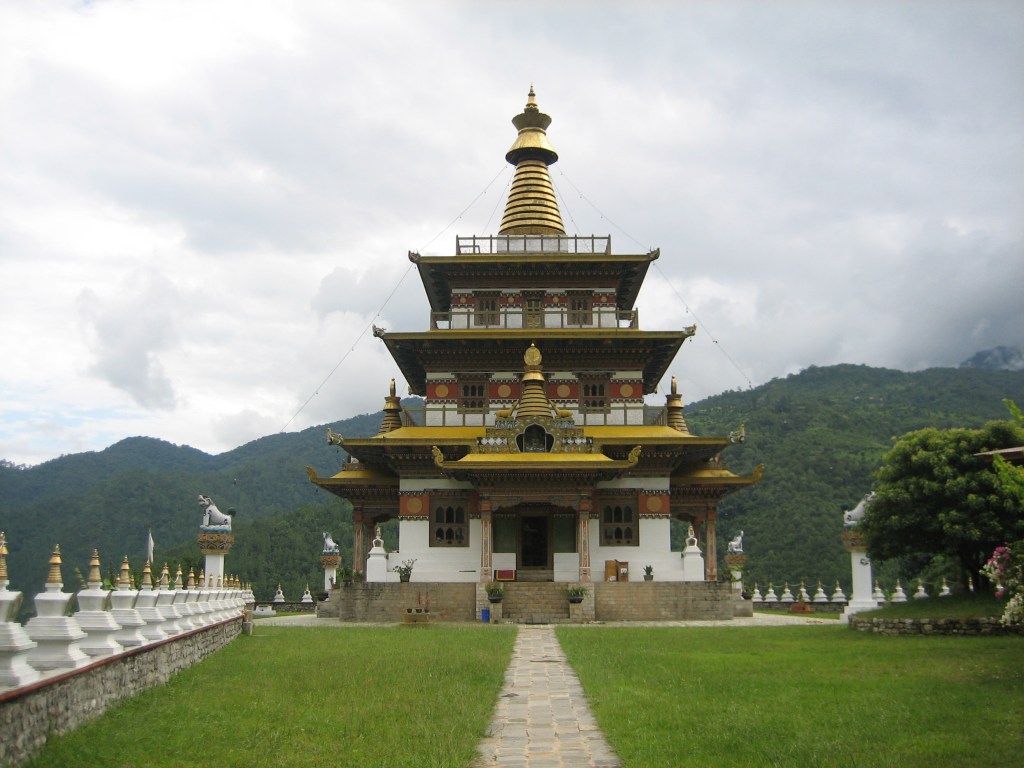
The Queen was still inside praying but we were told that she will be leaving soon. In the meantime, we were able to walk around on the outside. We did the usual clockwise walk around the monastery (not allowed to walk the other way). Then we waited to the side of the entrance for the Queen to leave. Our guides went and hid further away but I wanted to see the queen walking out, as long as her entourage would not ask us to move off. There were a couple of men, in Bhutanese clothes, hanging around the entrance and I figured they were waiting to go in and pray. One of them walked up to us, chatted and asked where we were from. We said, “New York” and he soon walked away. Almost immediately, the Queen and her attendant walked out and began putting on their shoes. (You are not allowed to wear shoes in a temple). The man we had chatted with, returned to us and said we could go in. I asked if we should wait till the Queen went away, but he said, “No, go ahead”. We took our boots off and started to walk up to the front of the entrance (up 5 steps). The queen offered us her hand to shake and said; “I understand that you are from New York – welcome” and we began to talk. I said that I was so happy to be in Bhutan and what a beautiful country it is. Then I asked her if she has been to NYC, she said she came after 9/11. Then we talked about world peace for a few minutes.
She said that Bhutan is a peaceful country. She asked us a few questions and then blessed my children. She had some attendants bring us cokes. Then we shook hands again and we went in.
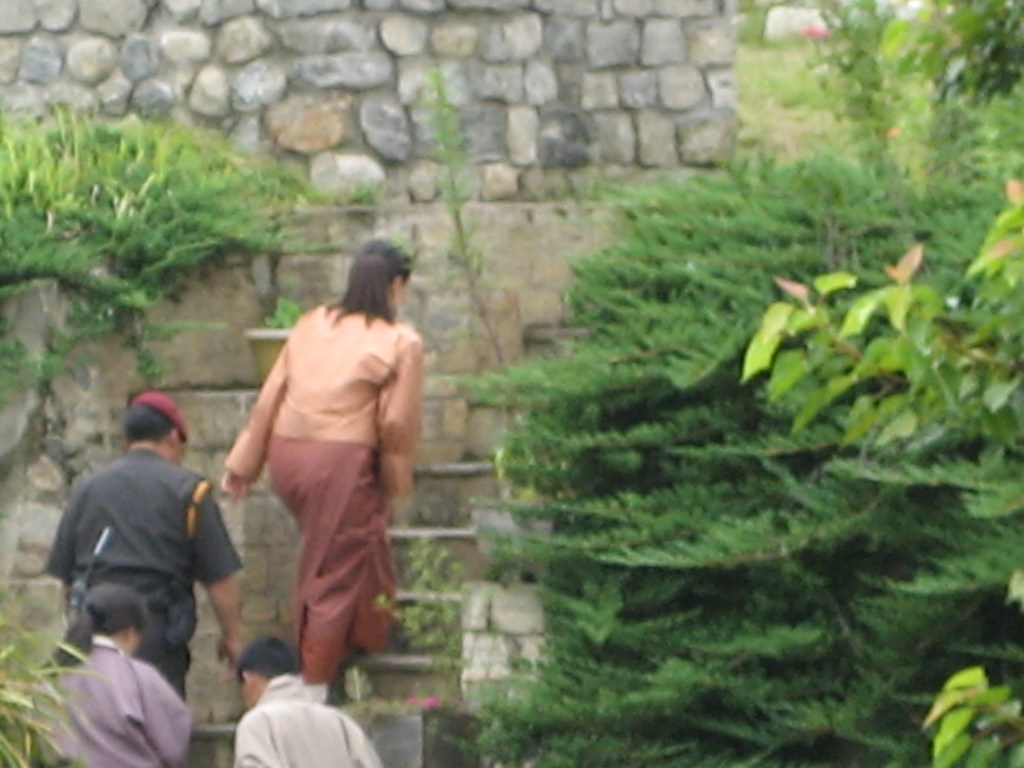
Only then did I realize that I could have easily asked to have a picture with her. But by the time I went back out she was already on her way back. In a way, I was glad not to make it into a tourist thing but I did get a picture of her leaving. It was an amazing experience. The Queen greeted us with no secret service men surrounding her, in a completely comfortable atmosphere. There were guards around but not obtrusively.
Queen Ashi is absolutely beautiful and her English is perfect. I asked Tobgay how she got up to the Monastery; he said that she walked up like us. She didn’t look as bedraggled as I felt after the long muddy climb. What an afternoon. Incidentally the monastery was beautiful and the view from it was just fabulous.
We had one more royal proximity. When we boarded the plane, the pilot, in his welcome announcements said, “Good Morning, your majesty and your royal highness, ladies and gentlemen” etc. I asked a crewmember, who was on board? She told me that Her majesty, the youngest queen and her son the prince were on the plane. They were in first class – we were in economy. Pretty wonderful that the royal family flies in regular scheduled airlines and have strangers sit in the plane with them. Can you imagine our President doing this? It just confirms my earlier view that it is a very modest country and that even the royal family are down to earth.
We had a fabulous view of the Himalayan Mountains from the plane on our way back to Bangkok.
Final comments:
- Having extra time on this trip allowed us to delve into the culture more deeply.
- Solo travel opens up opportunities for experiences that group travel does not.
- Sometimes when it rains, a new opportunity opens up – the private party.
- Timing is everything. By going right before the festivals, we avoided crowds but saw some wonderful preparations. I am sure that the festivals were wonderful to see, but I am glad that I avoided the crowds.
 Nili's Adventure
Really enjoyed this writeup! Seemed like a very special trip.
Regards,
Sean Logan
Genealogist
https://clanlogansociety.org/ The Clan Logan Society International
Member
https://pre1800logans.groups.io/g/main The Logan DNA Project, Limb 1, EKA â David Logan #1009
LikeLike
Nili, I remember this trip very well. In your trip journal, you included pictures of trees filled with little pieces of fabric/ribbon, which were prayers. The description of the mountain roads scared me to death. The story of meeting the Queen is wonderful!
Marsha
LikeLike