
I believe I was always meant to go to Egypt. I received my undergraduate degree in Ancient Near Eastern Studies (Egypt, Palestine, Turkey etc.) from the Oriental Institute at the University of Chicago. I married an Egyptologist, who for a while worked at the Metropolitan Museum in NYC; put together the Temple of Dendur, which was brought to New York block by block when the High Dam threatened to flood it. He also brought the Tut exhibit to the museum. He made frequent trips to Egypt but I was barred from entering the country – I had been born in Israel and my U.S. passport had my birthplace on it.
In 1979 the Egypt- Israel Peace was signed, which would allow me to travel to Egypt, but life interfered in the guise of small children and a divorce. Now, I was retired and looking for a winter get-away. Egypt seemed the logical next trip in combination with a family visit in Israel.
By now, I have traveled enough to know that I prefer to plan my own tour with a company that will provide, hotel transfers, guides (and/or drivers) rather than take a prearranged tour that moves from site to site at lightning speed. Gat Tours came up with a great itinerary as well as guides and drivers at each location.
We made our flight arrangements New York to Cairo, then Tel Aviv to New York with Air France because it is one of the few airlines that flew to both cities. Air France also gave us a bonus option of ending the trip with a few days in Paris. I can honestly say it was the perfect trip – except, like other trips, it was too short.
Cairo:
I was very happy to have both a driver and a guide to take us to the fabulous sites outside of the city. But Cairo is crazy, and I also needed the driver in the city because crossing the street was totally scary – the cars did not obey stop lights and certainly did not stop for pedestrians.
Below is a brief description of the main attractions we visited while in Cairo.
Memphis
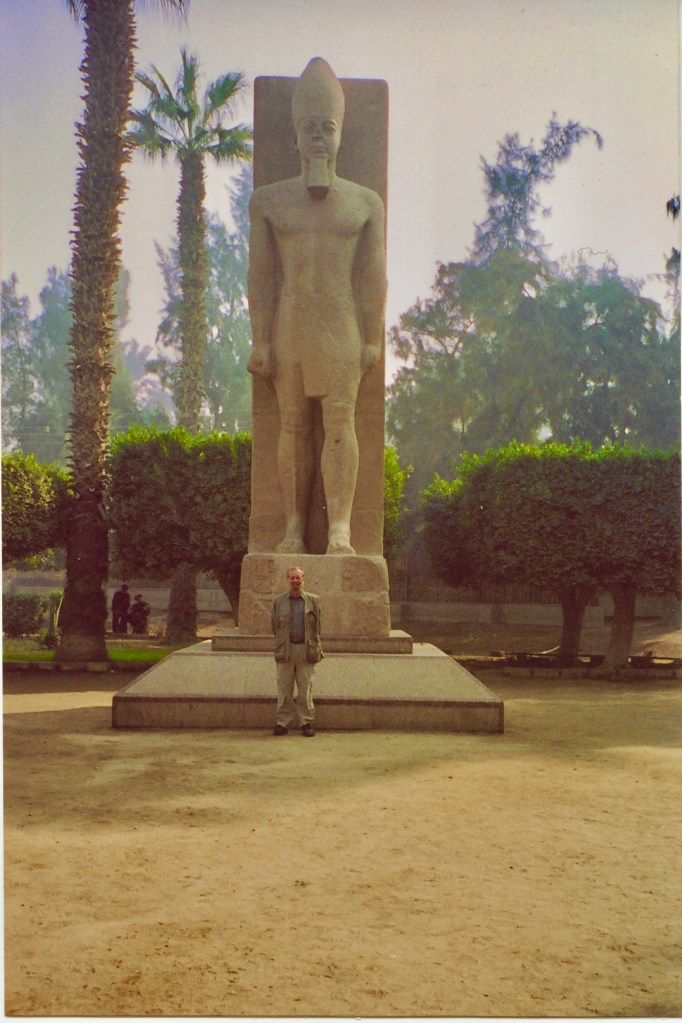
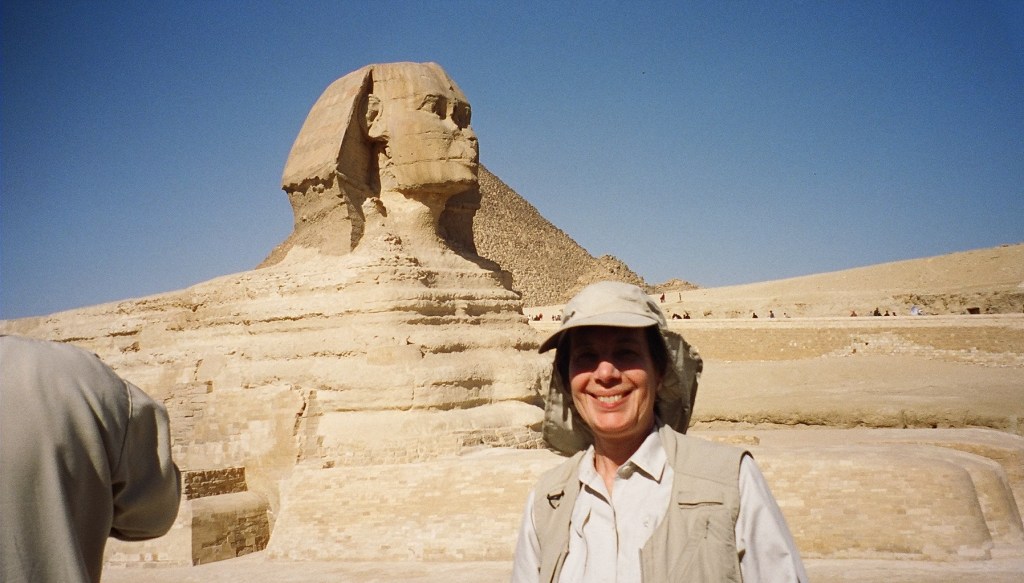
Memphis is the first capital of Egypt and is now an open-air museum. It was very exciting to see the incredible standing statute of Ramses II, the sphinx and the excavations after studying about them so long ago.
Saqqara
Saqqara’s main attraction is the Djoser’s Step Pyramid, the first known (or preserved) pyramid. Originally the kings were buried in Mastabas, large flat roofed rectangular structures. King Djoser began to build his mastaba like his predecessors but decided to make it higher by adding another level and continued the process until he ended up with the step pyramid.
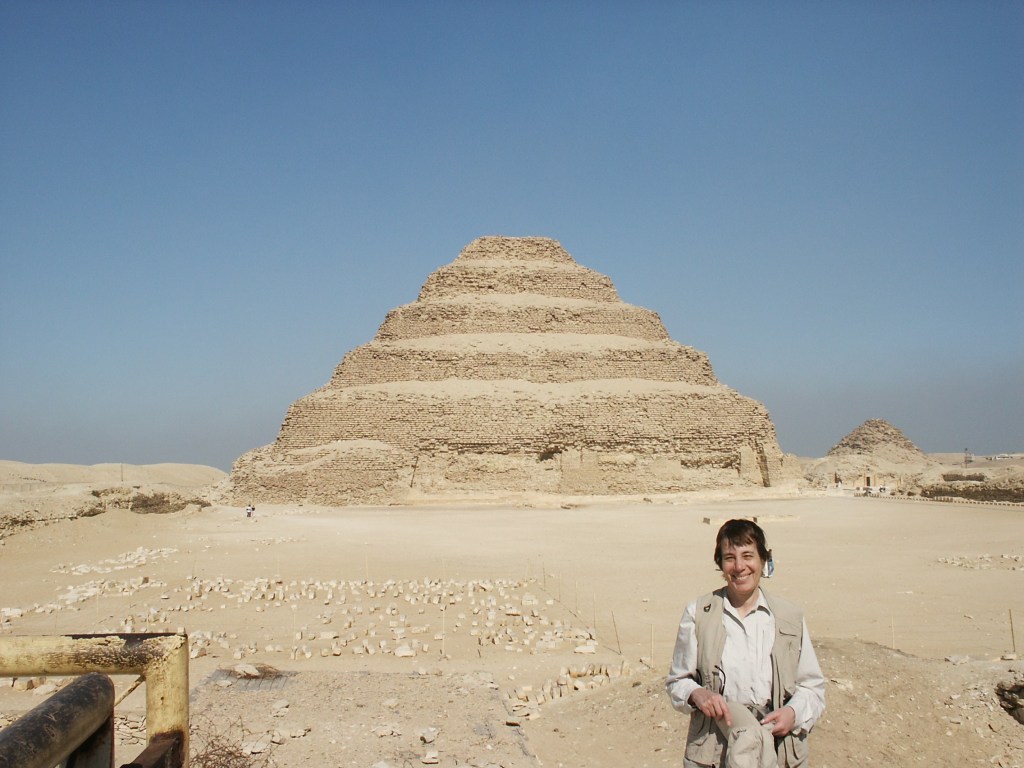
The drive to Saqqara was through green fields when near the Nile, but as soon as we began to climb just a bit away from the river we were in absolute desert. This desert is totally devoid of plant life.
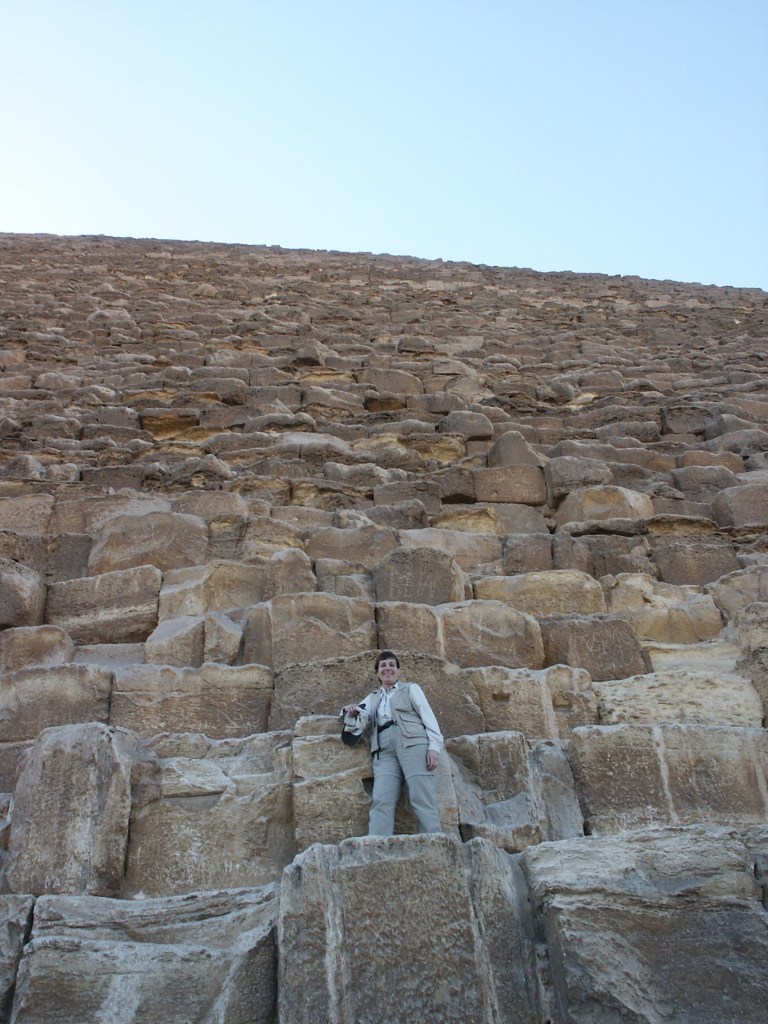
The pyramids of Giza were the obvious follow up to Djoser’s Step Pyramid. They took pyramid building to a new level. Standing next to those huge stones and realizing what it took to build them, is awe inspiring. The blocks are almost the size of my 5’2″ body.
We were able to go into Khafre’s pyramid. What an experience! The entrance is a very long narrow low passage way. I had to bend down quite a bit to get in – first going down then back up to reach the tomb section. I was really glad to be only 5’2”. The air became very stale after a while. At the end of the tunnel, there was a good size room which was the burial room.
The Egyptian Museum: Since my visit, a new museum has been built and opened. I am sure it is wonderful – the collection is incredible. Unfortunately, when I was there the old museum resembled a dirty store room rather than a museum.. Most of the artifacts were piled together in dirty cases with no labels or organization.
Cairo to Luxor
We took the overnight luxury train from Cairo to Luxor, with a compartment to ourselves and seats that converted to bunk beds. We arrived at 6am, and because we used a great tour company, we were able to get into our hotel, the Sheridan, right away to shower and rest.
Luxor is fantastic and in my opinion, rivals Cairo for antiquities. It is a small town with a small souk (market) and a lovely riverfront. Its attractions are the two amazing temples on the East Bank of the Nile– the Karnak and Luxor Temples, the and King and Queen Tombs, the Colosus of Manor and more Temples on the West Bank.
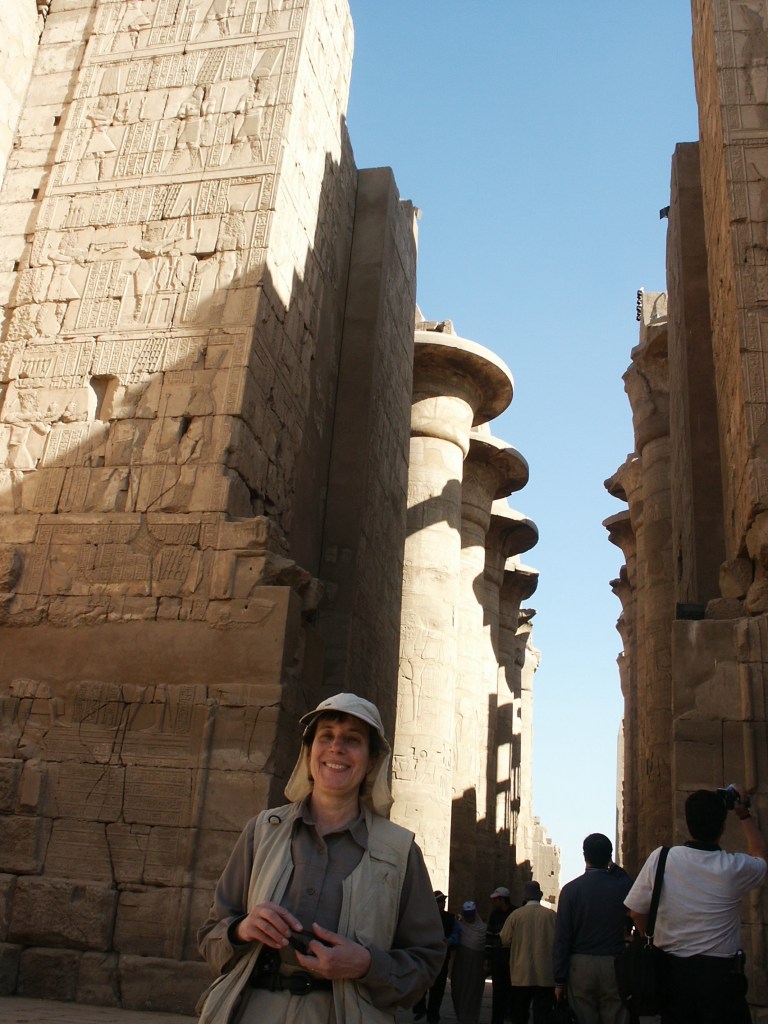
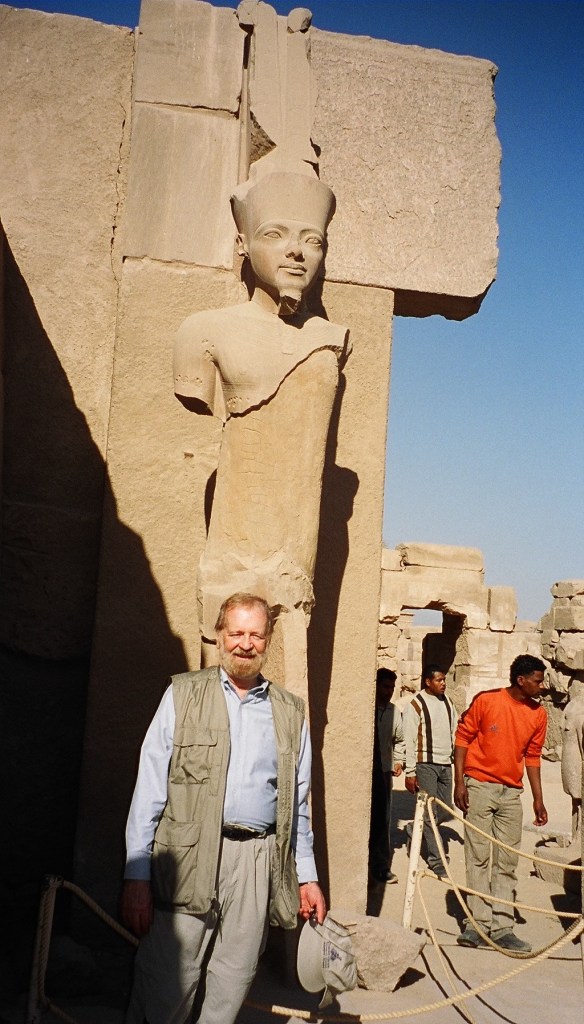
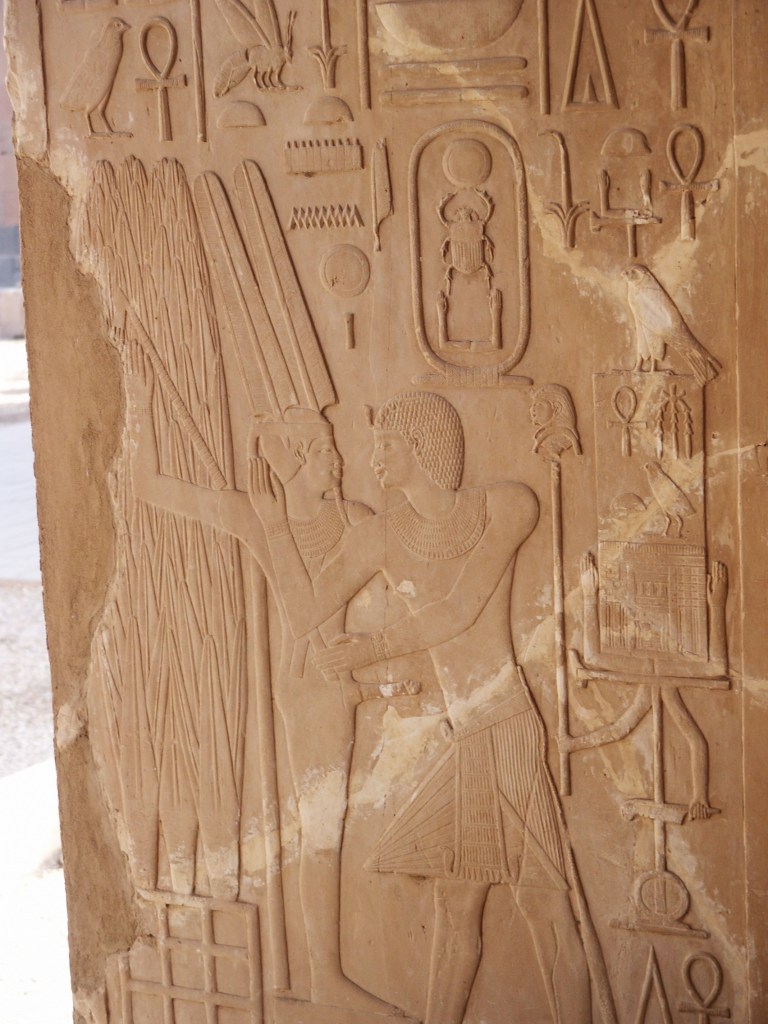
Karnak Temple is overwhelmingly amazing. It is about 10 times larger than I imagined, with a whole series of temples– one inside the other built by various kings. The pillars, the carvings, the statues, the colors are all just wonderful. I tried to capture it above, but Karnak is so massive, it is hard to photograph.
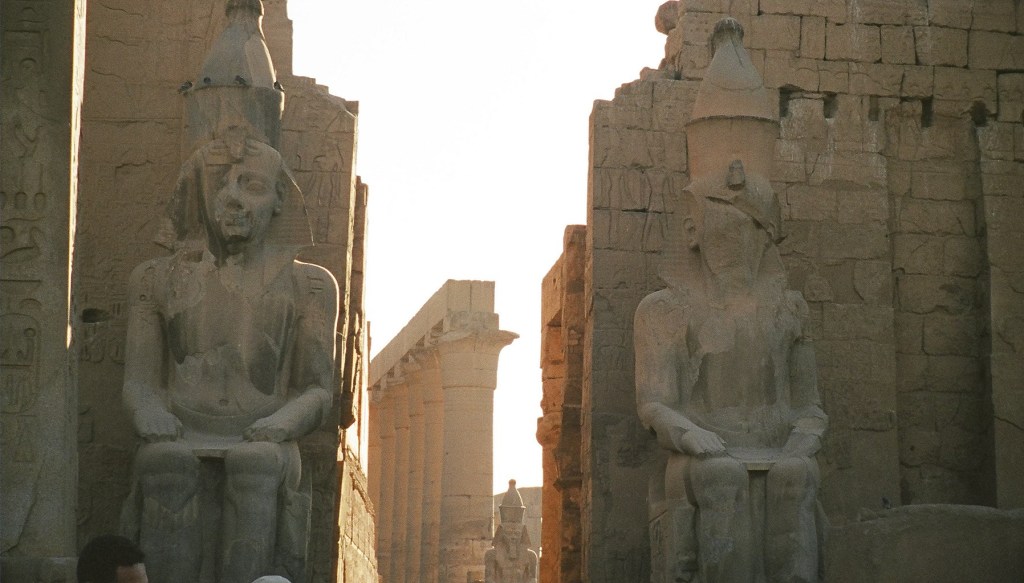
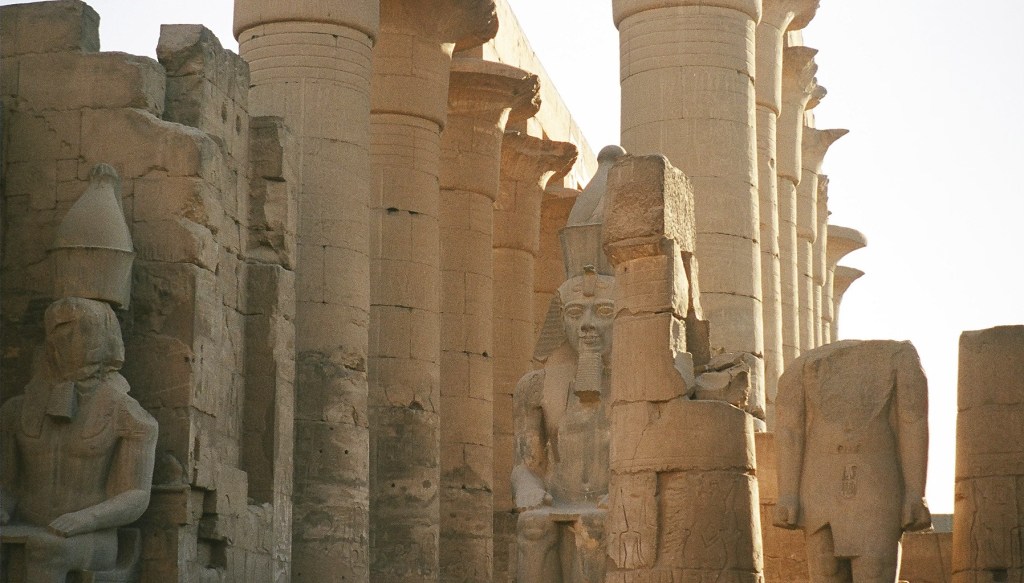
Luxor Temple is smaller, but not less impressive. Both Muslims and Christians used the temple grounds. There is a mosque built around 1300 and a church built out of the temple stones by the early Christians. They resurfaced the stones, but most of the resurfacing has worn off and now you see a combination of ancient Egyptian carvings with painting of the apostles mixed together.
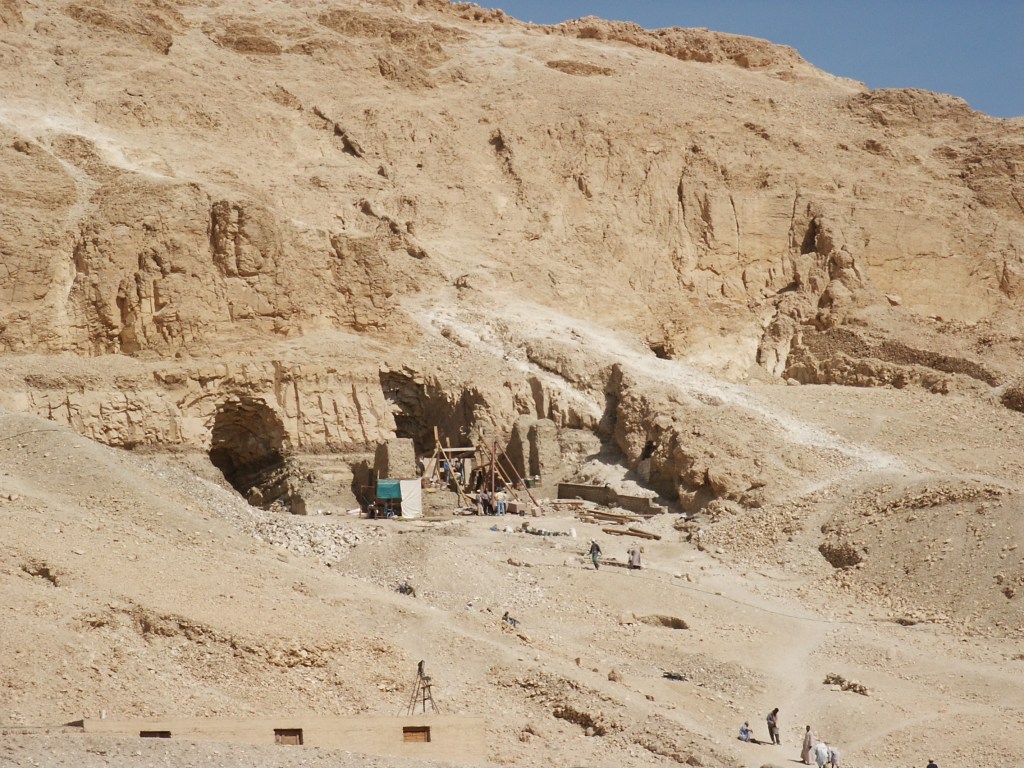
The kings and queens of ancient Egypt built their tombs on the west bank of the Nile. The ancient Egyptians believed that the sun died each night in the west, therefore it made sense to have the tombs in the west as well.
These tombs are later in date than the Giza ones, and date from when the capital moved to Luxor. These kings had seen the earlier pyramids plundered – after all it’s easy to know where the king is buried if it’s under a pyramid, therefore, they built their tombs into the side of the mountain hoping that these tombs would be hard to find and plunder. Unfortunately, that was not the case and the only known tomb to escape plunder was Tut’s tomb. At the time of my visit, 62 tombs have been found for the kings and about 70 for the queens.
In order to keep the tombs from deteriorating, only three tombs were open in the Valley of the Kings at a time. I went into all three. They were much larger than I expected, housing multiple rooms with beautiful decorations on the walls and ceilings. The colors are still vibrant. The illustrations show the king with the gods – sometimes with the wife – often with the people they conquered, who are mostly the Nubians and the Syrians. In one relief, the conquered ones are upside down so that they can’t revolt.
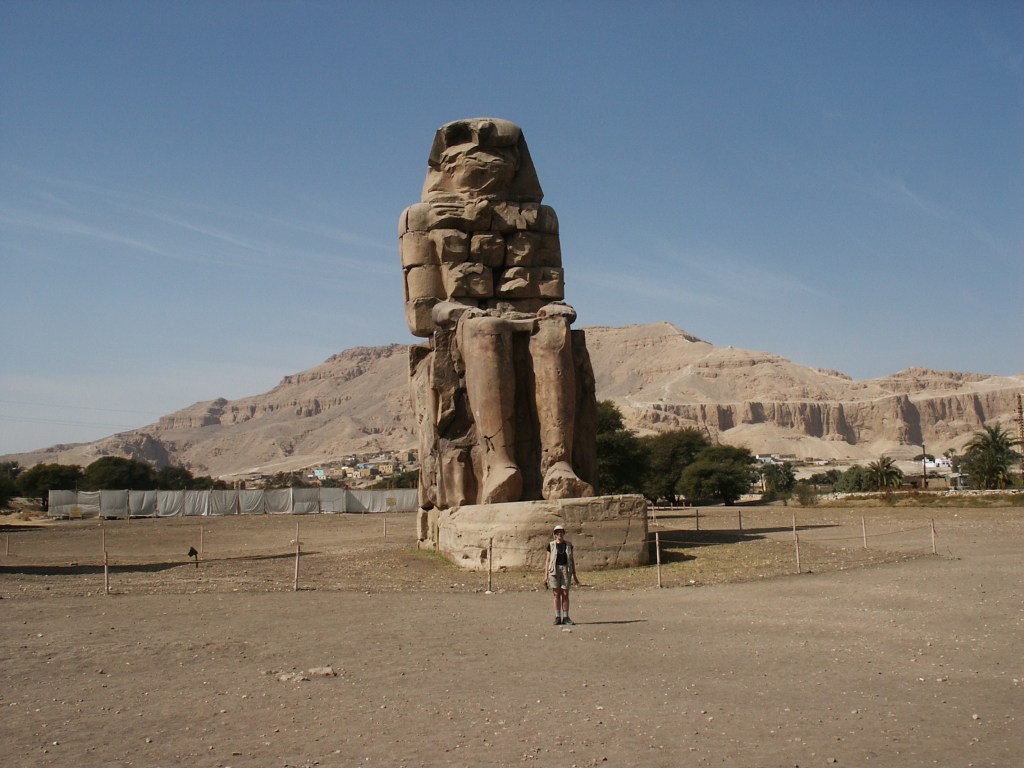
There was a lot more to see on this side of the Nile, such as Hatshepsut’s Temple, The Colossus of Mannon (pictured on the right with me in the foreground and tombs of lesser ministers and artisans.
The Royal Cleopatra: Luxor to Aswan
The next main adventure was gliding down peacefully on the Nile on the Royal Cleopatra between Luxor and Aswan for five days.
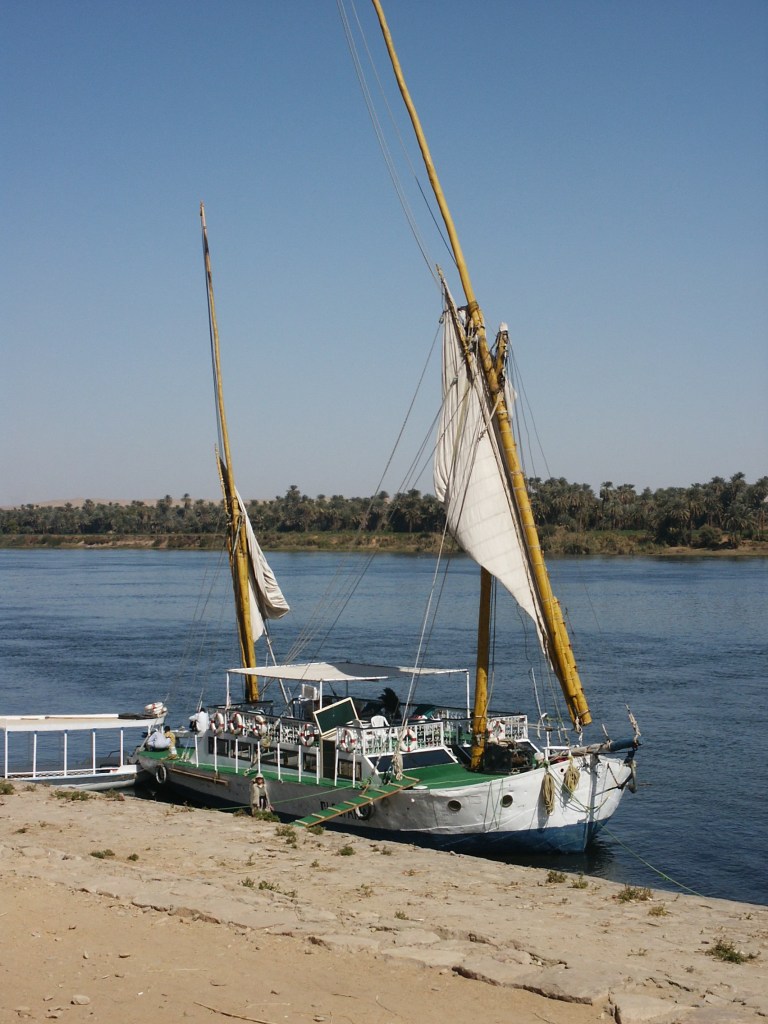
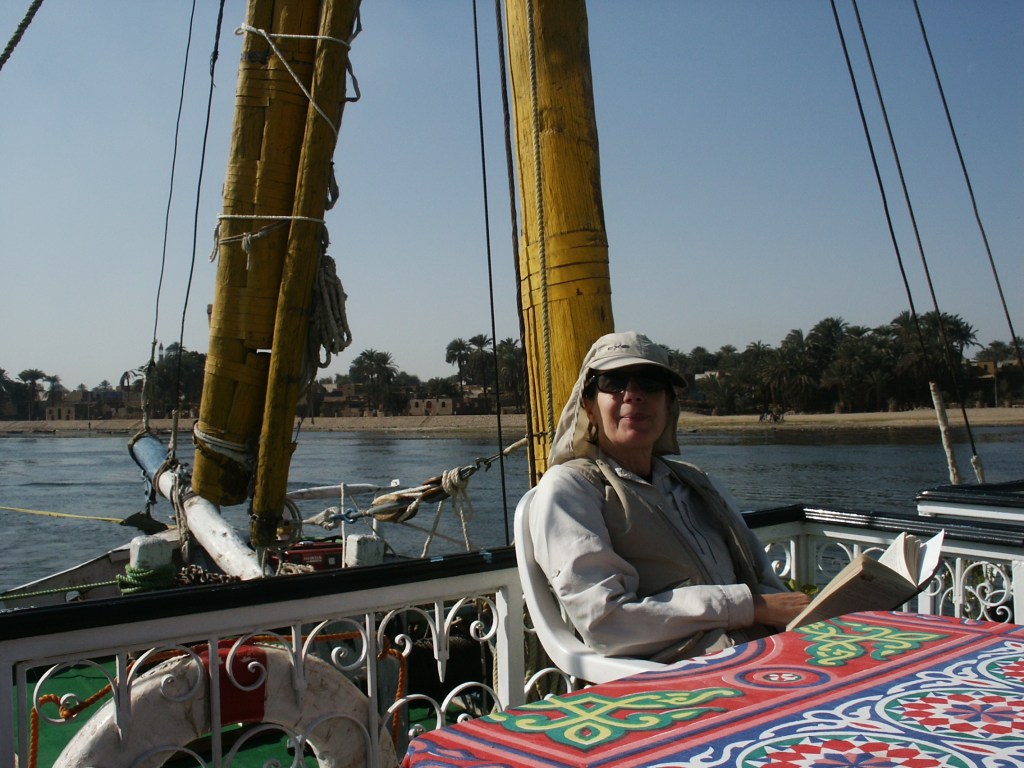
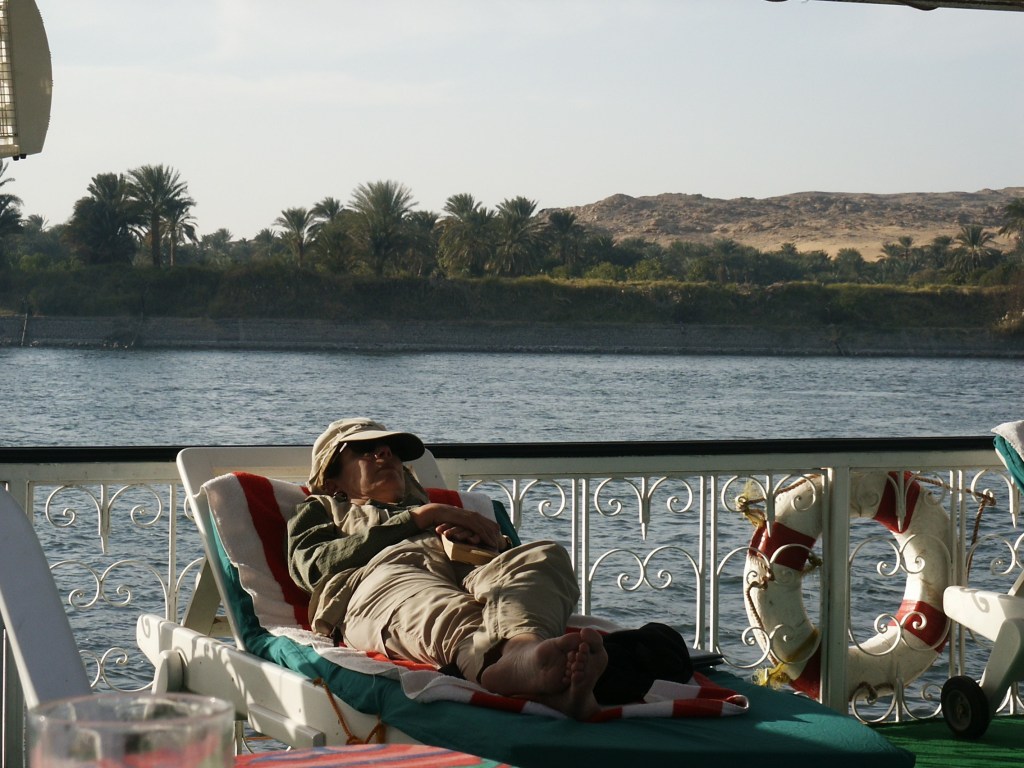
Our private boat (it is suitable for 2 couples), a modified Felucca (sail boat), was perfect. It was charming, and comfortable with two private rooms with ensuite bathrooms and living/dining/kitchen area. The upper deck had tables, chairs and four lounge chairs with an awning to keep out the sun. We had total privacy since the crew slept on the towboat. The only quirk on the boat was the shower, a hose that came out of the sink and had to be held. The bathroom (tiny) had a hole in the corner for the water to drain after the shower.
As we sailed down the river, we watched the large cruise boats go by in packs with their noisy dirty motors while we sailed slowly and quietly. We sat on deck and read or watched the scenery. The river banks are very rural, therefore, we had lovely background noises of donkeys, roosters, cows and the periodic call to prayer. It was simple living, simple food and absolutely delightful.
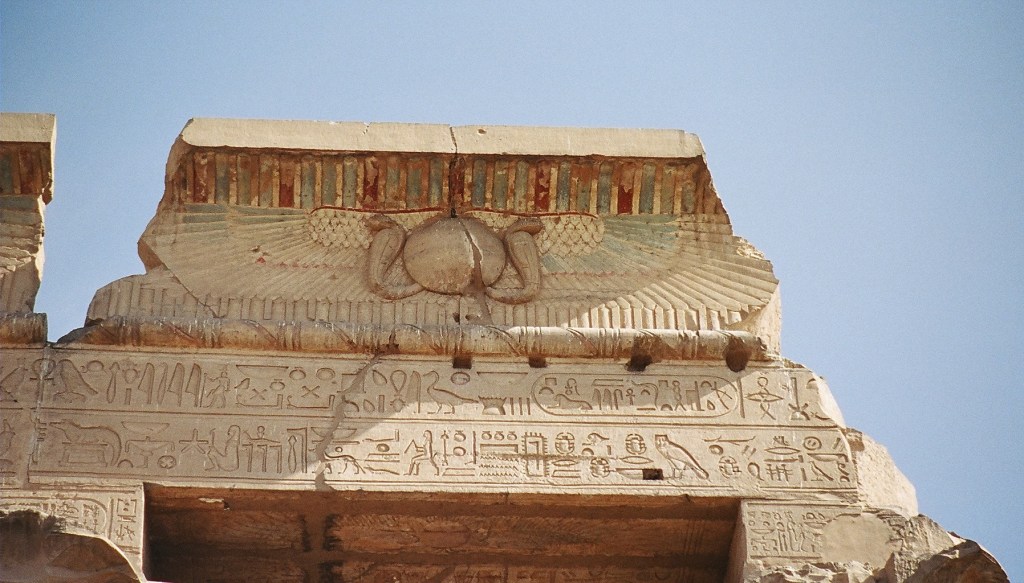
One reason to take the Nile cruise rather than fly or drive is the interesting stops along the way. The two main attractions where most boats stop are; Edfu and Kom Ombo Temples,. Each temple was special.
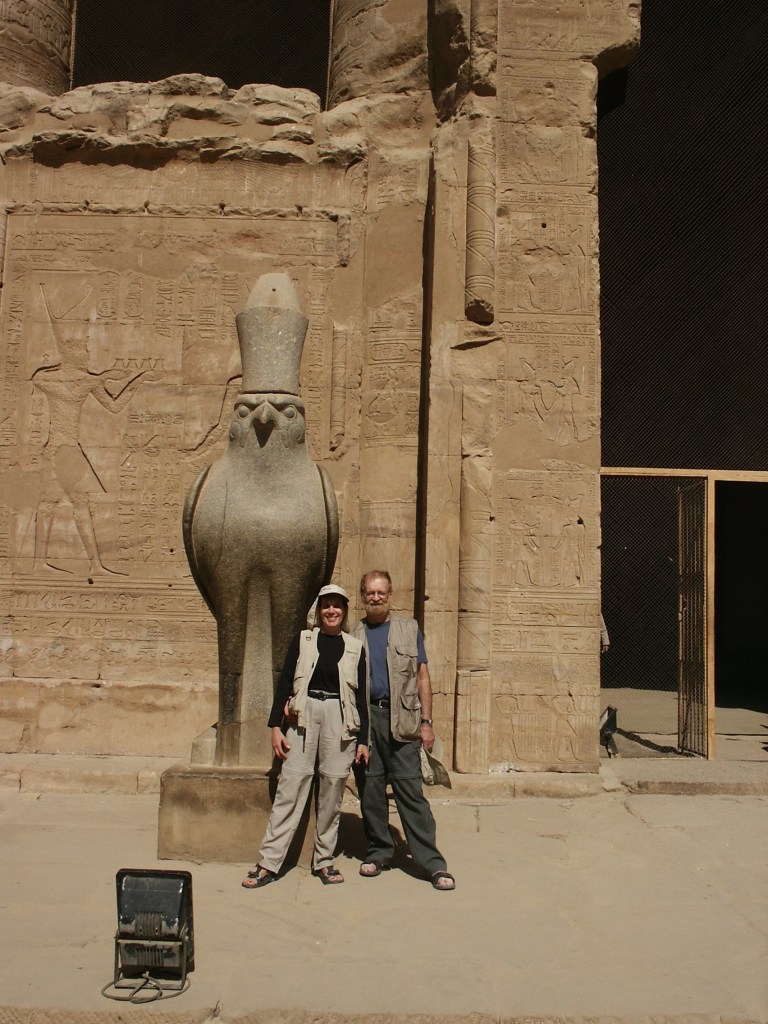
The Edfu temple had two beautiful falcons guarding the temple.
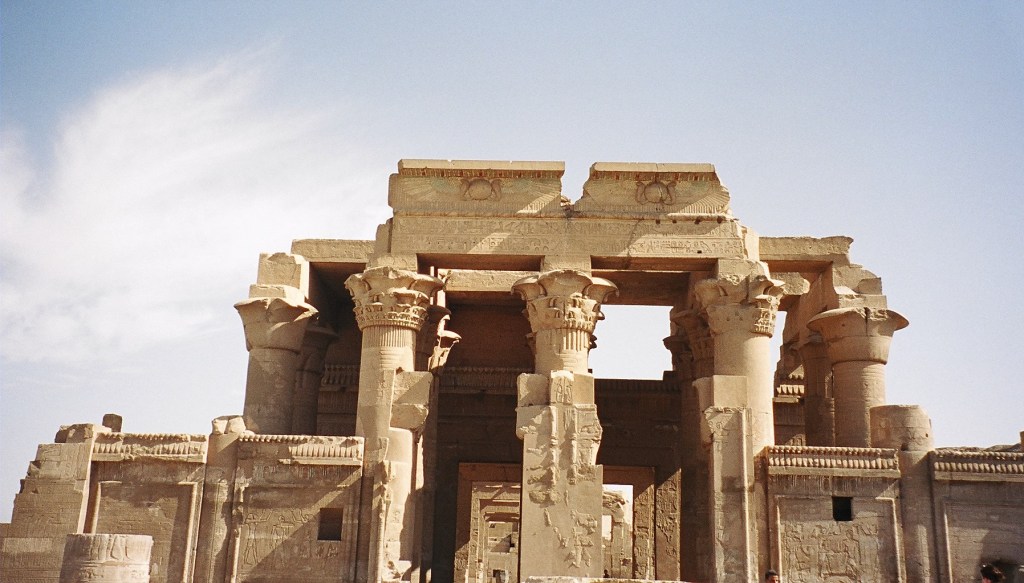
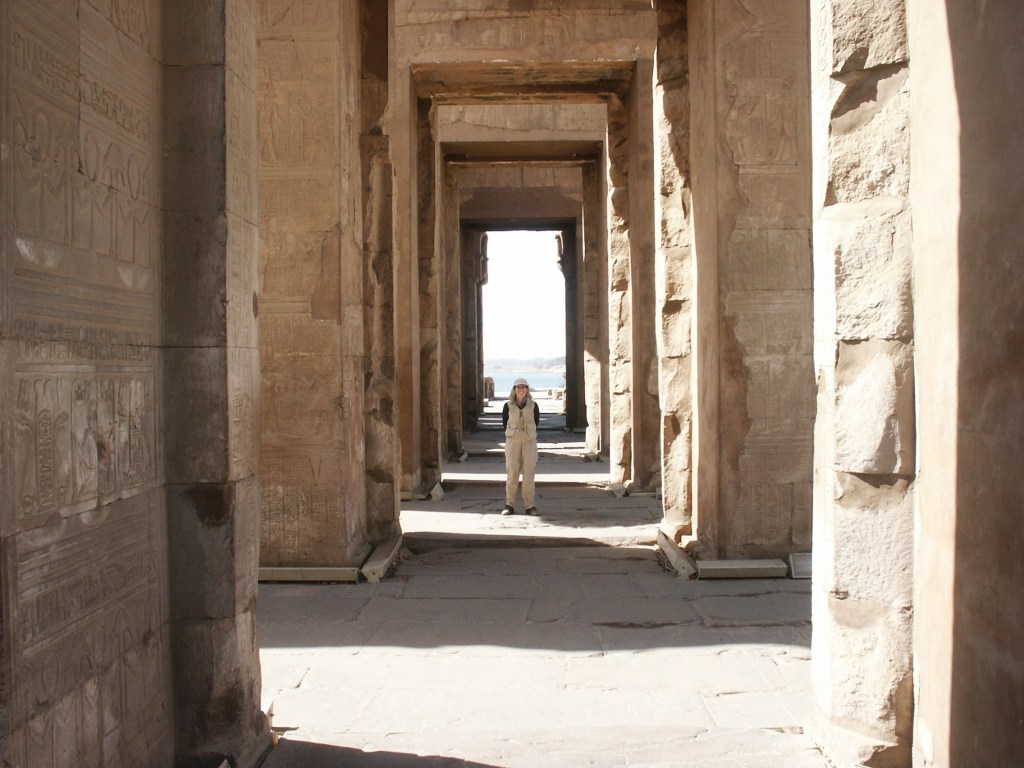
Kom Ombo (below) was special in that it was a dual temple to the god Horus (Falcon) and to the god Sobek (crocodile). To give you the idea of size – that is me between the doorways.
Our advantage, because we were small, unlike the cruise boats, we were able to also dock at other places along the way. One of the stops was the old quarry site called Silsila, where we had the place to ourselves. We could see how the huge blocks of sandstone were carved out of the hill. At one time thousands of men were working in the quarry. There was also a small temple there for the workers.
One day we stopped in a town to see an animal market. It was not market day but we still were able to see the many camels that were awaiting the next market. They had been walked there from Sudan.
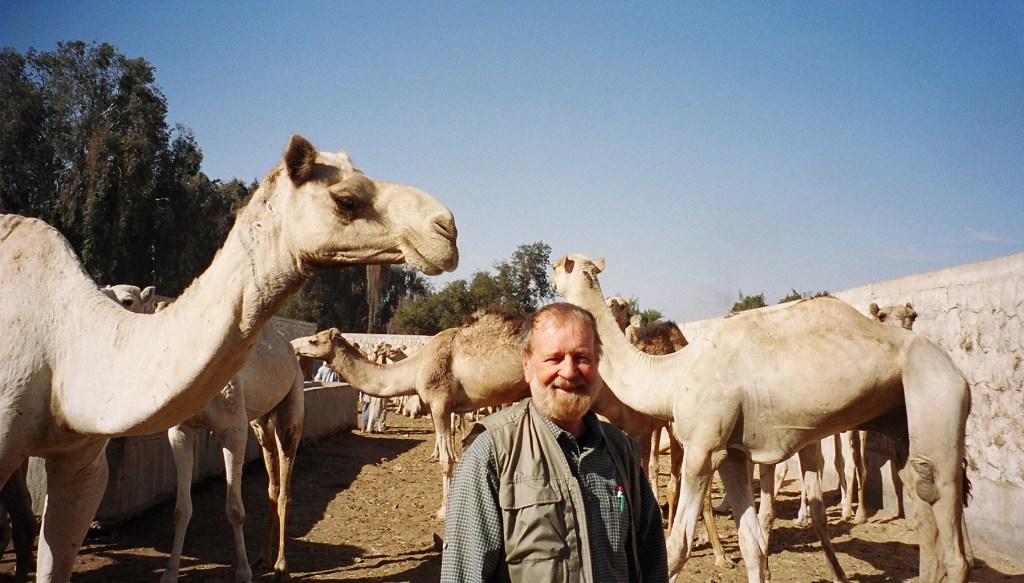
We had a bit of a walk around the town, where vegetable vendors had their wares spread on the ground. It was interesting to see what was being sold. The meat markets had slabs of camels and cattle on hooks with the tails still on them. Yuck.
Another day we docked near a Nubian village and walked to it. The Nubian village, though close to the river, was not visible from the river and from a distance it looked all blue. But actually, the houses, made of brick, were covered with stucco and painted in blues and oranges. We took a walk through the quiet village and while trying to avoid a mound of sand, Jerry hit his head on a rusty air conditioner. The locals felt so bad that one of them invited us to his house for tea and a rest. This was a wonderful opportunity to see the inside of a Nubian home. We sat in a sweet courtyard to drink tea and were shown the individual rooms for the family members. They demonstrated how they weave their colorful baskets and showed us some of their treasured old baskets.
One morning three feluccas were tied up near us. One passenger was taking a walk toward our boat and Jerry invited him for tea. A short while later another passenger joined us. They thought we were sailing in the height of luxury, because their feluccas were just large open sailboats about the size of a small room. On each boat there were 10 passengers. They slept in sleeping bags on deck with a tent like cover. During the day they just sat in place because there was really no room to move around. It looked uncomfortable and we were glad to be on our boat.
Aswan
One of my delights of being in Aswan, was staying at the Old Cataract Hotel (OCH).
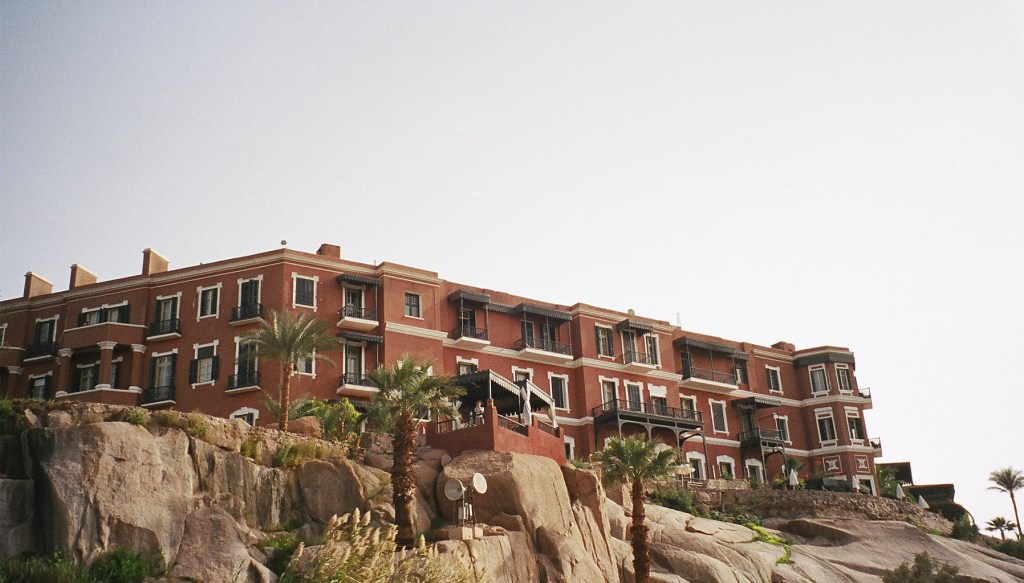
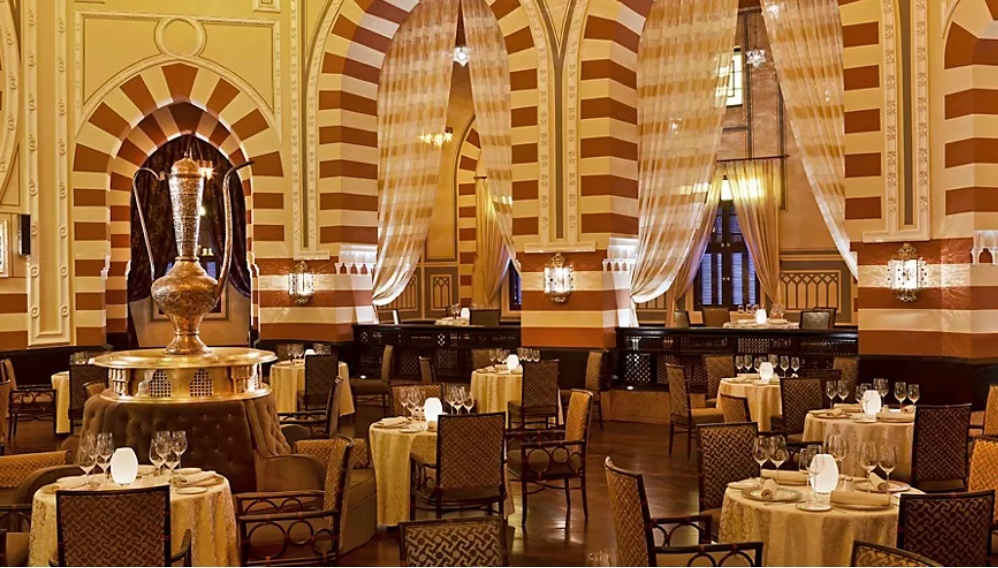
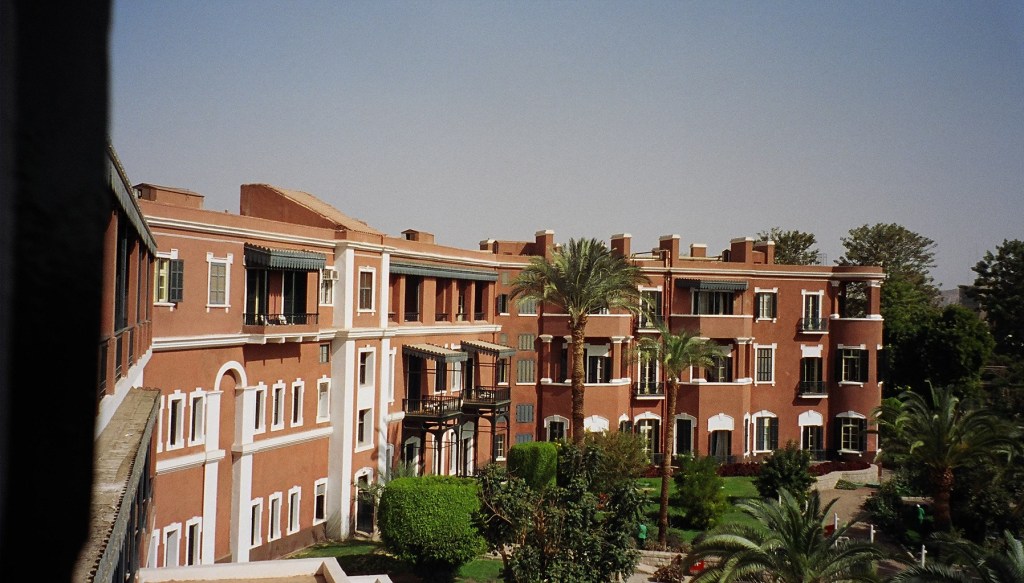
The OCH is truly a 5-star hotel, but this being Egypt, it was still affordable. It was built in 1898 and is all plush red cushions and lovely chandeliers, wood and beautiful paintings. It has an old-fashioned elevator, with the latticed door and an attendant. We had breakfast every morning in the beautiful restaurant called the 1902, which looks a bit like a sumptuous mosque. It also serves dinner but was too pricey for me. We sat on the very large veranda overlooking a small Nile harbor and watched the feluccas and motorboats while we had lunch and later in the afternoon, drinks. Incidentally Agatha Christie stayed at the hotel and some scenes from Death on the Nile were filmed there.
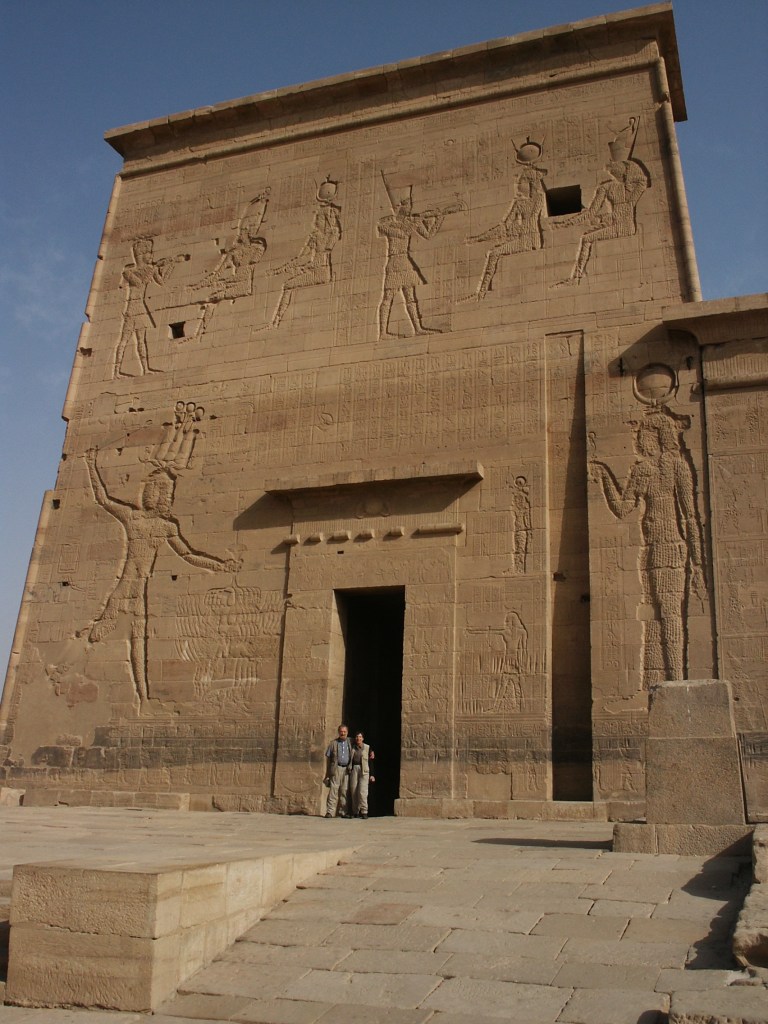
The main archeological site to visit is the Philae Temple, which is located in the 1st cataract (a rocky place in the river that creates rapids. Philae Temple, is a Greco Roman temple, somewhat similar to Kom Ombo. The detail in the carvings is not as refined as those in the early Egyptian temples, but there is more movement and life to the them.
We found Aswan very easy to tour on our own. Walking along the Nile and stopping at cafes is lots of fun. Most of the places of interest are walking distance from OCH, or via public ferry (if you are adventurous and want to do what the locals do). The ferry or a slightly more expensive private felucca ride, will take you to Elephantine Island.
I loved the Unfinished Obelisk Museum. Aswan was the granite source for the large obelisks (like Cleopetra’s needle in Central Park, NY). The obelisk we saw, was started but developed a crack and was abandoned. Seeing the partially carved obelisk gave me the feel for how it was done. Also, not to be missed are the West Bank tombs of the nobles who lived in Aswan. The tombs have well-preserved paintings on them and some wonderful reliefs.
Final comments:
1. There is a great deal to see and take in. As with any trip, leave plenty of time to visit the important sites and time to return to some of them as well. If you have the leisure and money, plan on at least 5 days in each location (Cairo, Luxor, Aswan). You will not run out of adventures.
2. The sites get very crowded. Therefore, find out when they open and go as early as possible. You will avoid the crowds, and in the summer, the heat.
3. Your regular guide cannot enter any of the tombs. The tomb guides are helpful and survive on your tips. Expect to pay them – they will make a difference in the experience.
4. Eat the street food but do not drink a drink with ice. On our last day in Cairo, Jerry bought an orange juice from a vendor, who was squeezing the juice himself. What we did not realize that when he gave it to him, it had ice in it. Big mistake.
5. A good tour company can make the trip so much more enjoyable. For instance, our private boat on the Nile was fabulous. In addition, they were very helpful in making the Cairo to Tel-Aviv flights.
 Nili's Adventure