
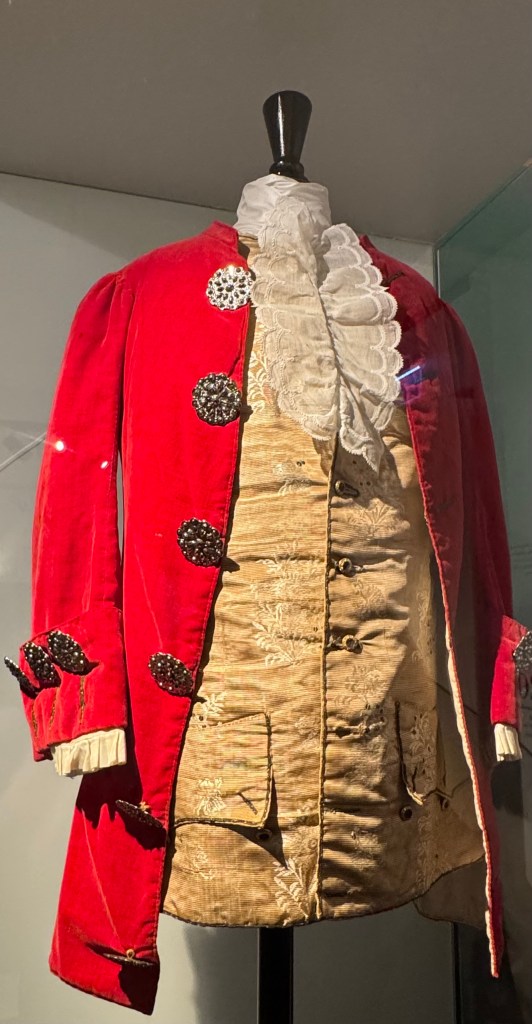
2025 started with a January hip replacement for me. Would I be able to still travel? We held off making any travel plans until I was sure that I was mobile after the operation and then I started to look for a tour. Jerry suggested an opera or classical music tour. I found Great Performance Tours, which was going to Salzburg & Munich (two cities that would be new to me) over Easter for both opera and symphony performances. The timing worked. I could still go to my son, Sean and daughter-in-law, Joy’s house for Passover. Tight but doable. We signed up.
Travel at 80 shortly after a hip replacement is possible, but not easy, especially since we flew through the Frankfort airport. I prefer to carry-on my bag, but if I was flying through Frankfort again, I would check my suitcase. This airport required a great number of stairs and carrying the bag made it much harder. We boarded three buses to get from incoming flight to outgoing flight. The plane did not de-plane at a gate, instead buses met us in the middle of the grounds of the airport. Then we drove for about 10-minutes and we were dropped off at terminal B. No signs, no staff to tell us where to go (right or left). Luckily we turned right and soon saw a monitor telling us that our plane was leaving from terminal A. We followed signs and got on a bus to go from terminal B to terminal A. We then went through passport control and finally reached our gate. Of-course we had to board another bus to go to the plane.
Salzburg
Salzburg is small enough so that we were able to walk to most destinations. The Salzach River divides the city between the Old Town and New Town. When the old town ran out of space for the expanding population (it is bordered by the mountains and the river), the new town was built. Our hotel, the Imlauer Pitter was on the New Town side of the river and very convenient to interesting sites and to the river.
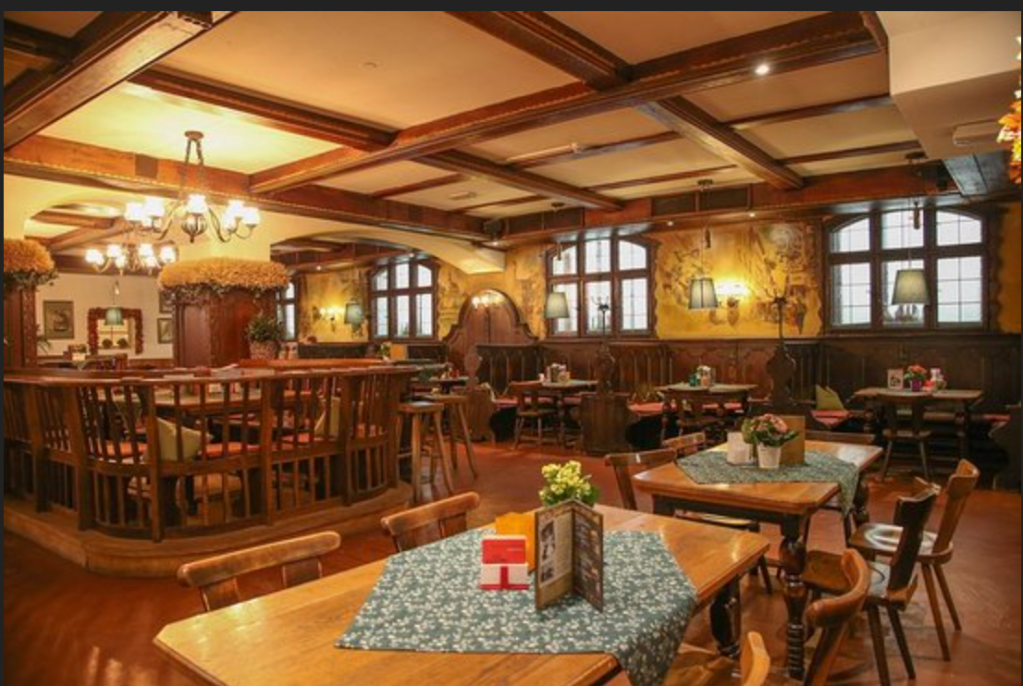
Our first evening was free, but since we were tired, we dined at the hotel’s restaurant, Pitter Keller. The taxi driver who brought us to the hotel recommended it and he was right. We did not have reservations and were lucky to get a table. It is an adorable rustic looking restaurant, which has been in existence for 160 years.
It serves traditional Austrian food and I had beef goulash with dumpling. Yummy.
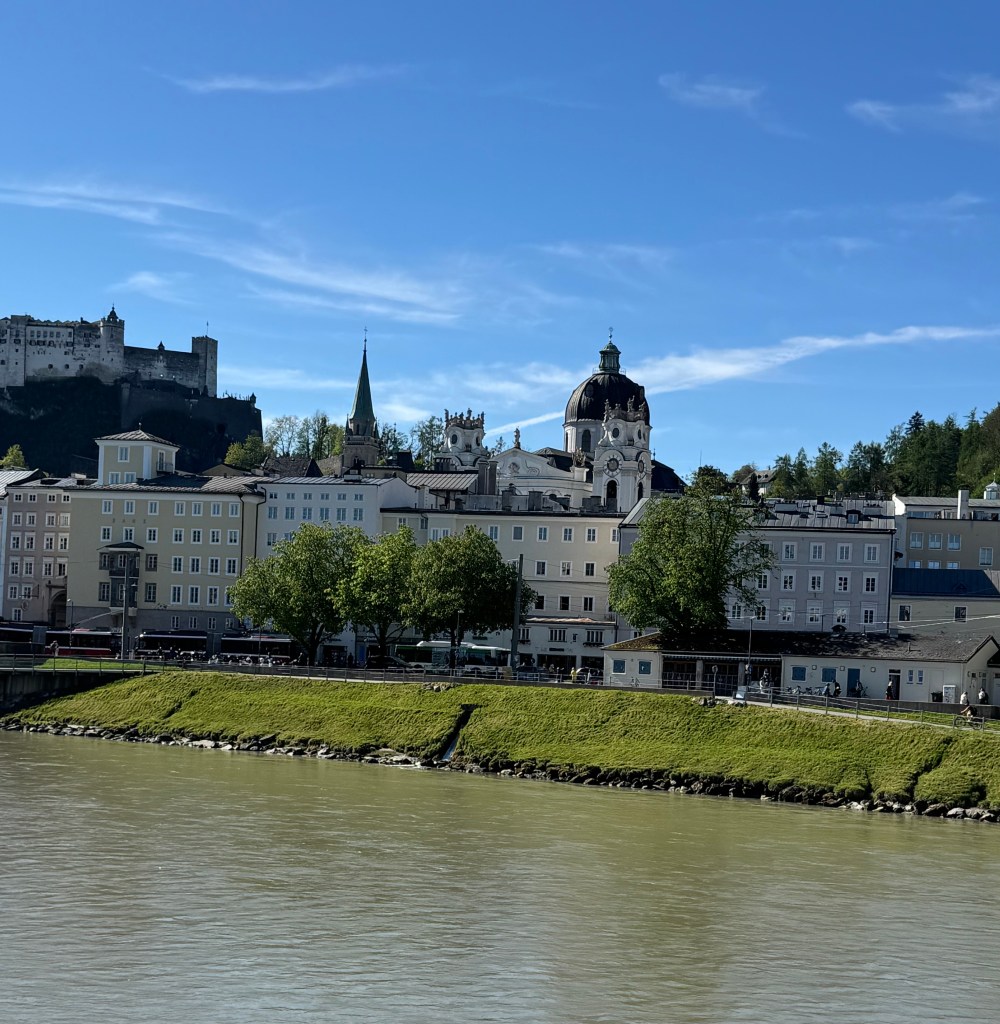
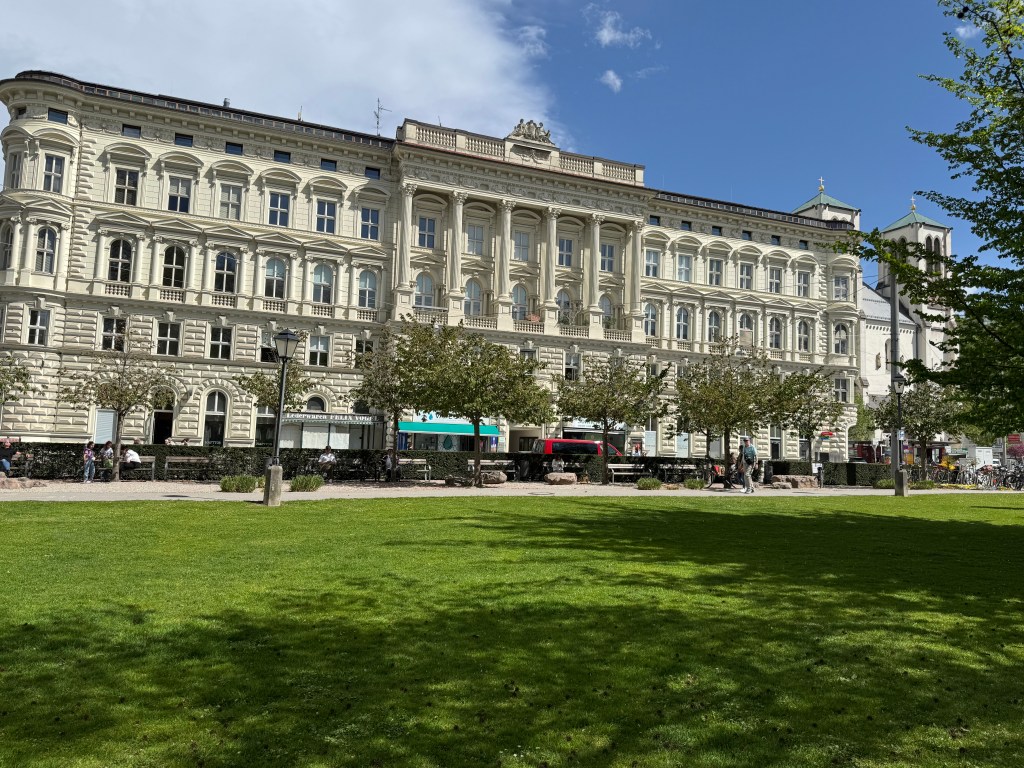
Although our evenings were taken up by performances, we were free to tour on our own during the day. The walk along both sides of the river was lovely with views of the beautiful buildings on the banks of the new and old towns. There were a number of pedestrian bridges linking both sides of the river.
New Town:
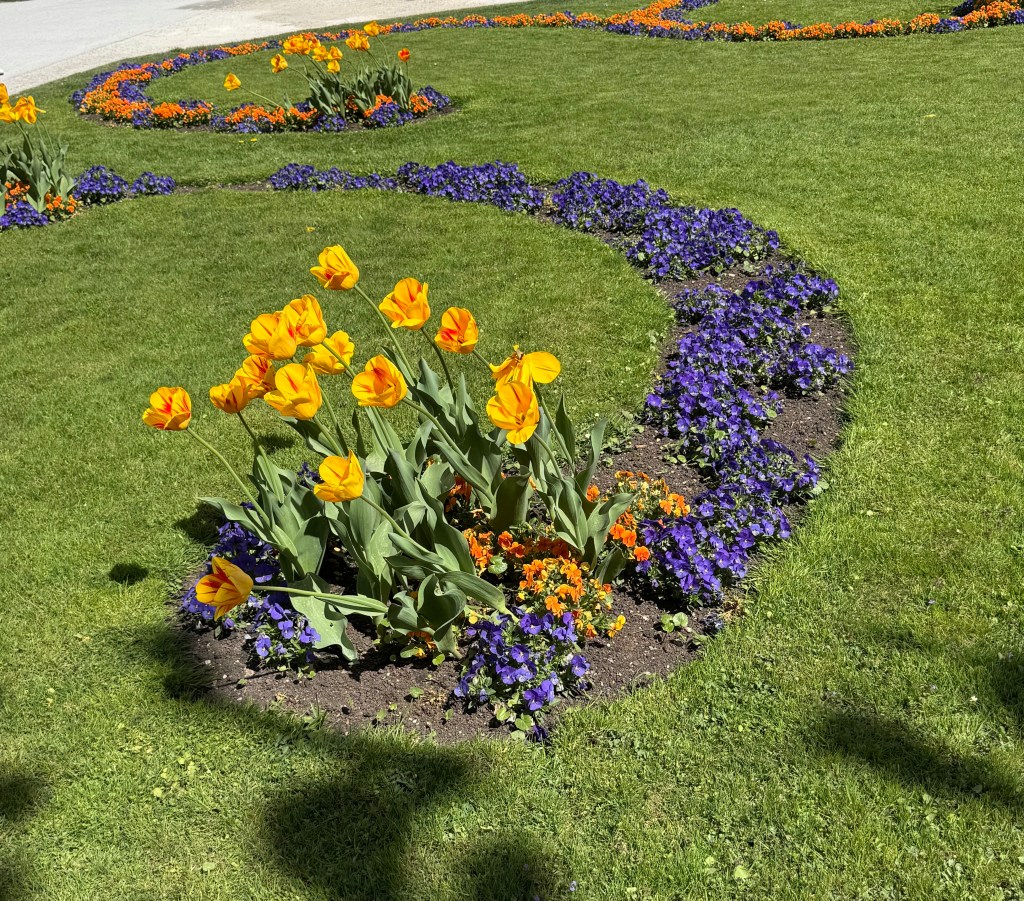
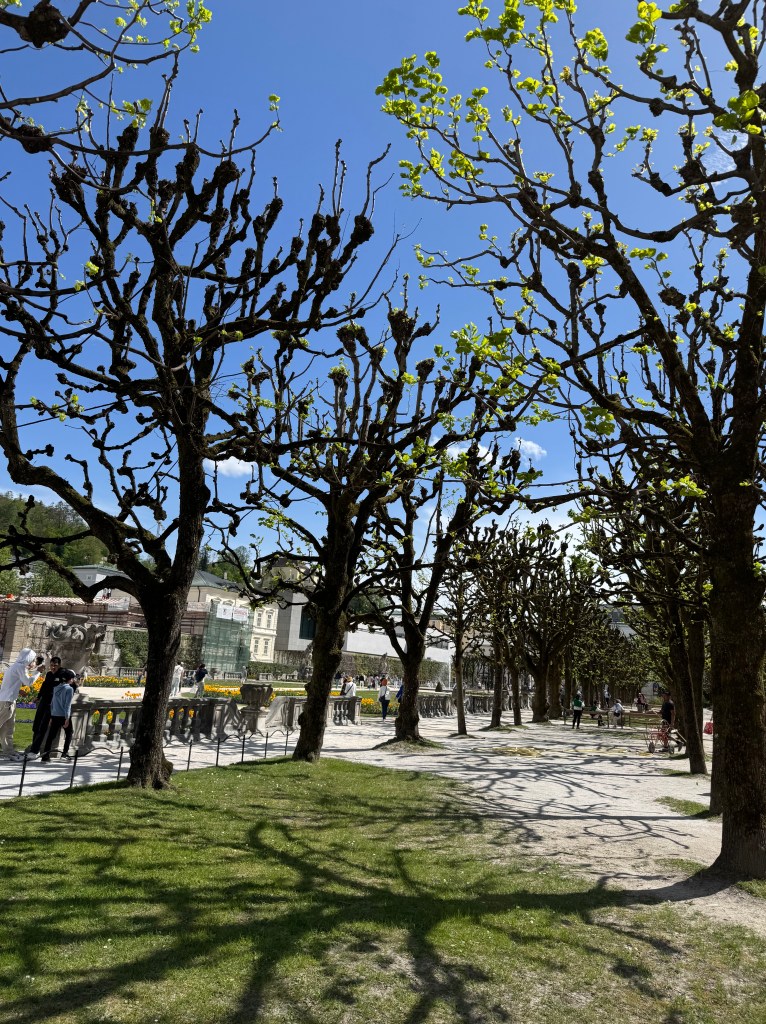
The beautiful Mirabell Park and Gardens are a short walk from the hotel. This is a large city park, about 3/4 of a mile long. The tulips were in full bloom, bordered by pansies. The trees were beginning to bloom as well.
On the other side of the park, from the hotel, is the Mozarthaus Museum, where Mozart (1756-1791) and his family lived from 1773 to 1780. The house has a large ballroom and 6 other rooms. The ballroom was used by Mozart’s father, Leopold, for concerts and tutoring.
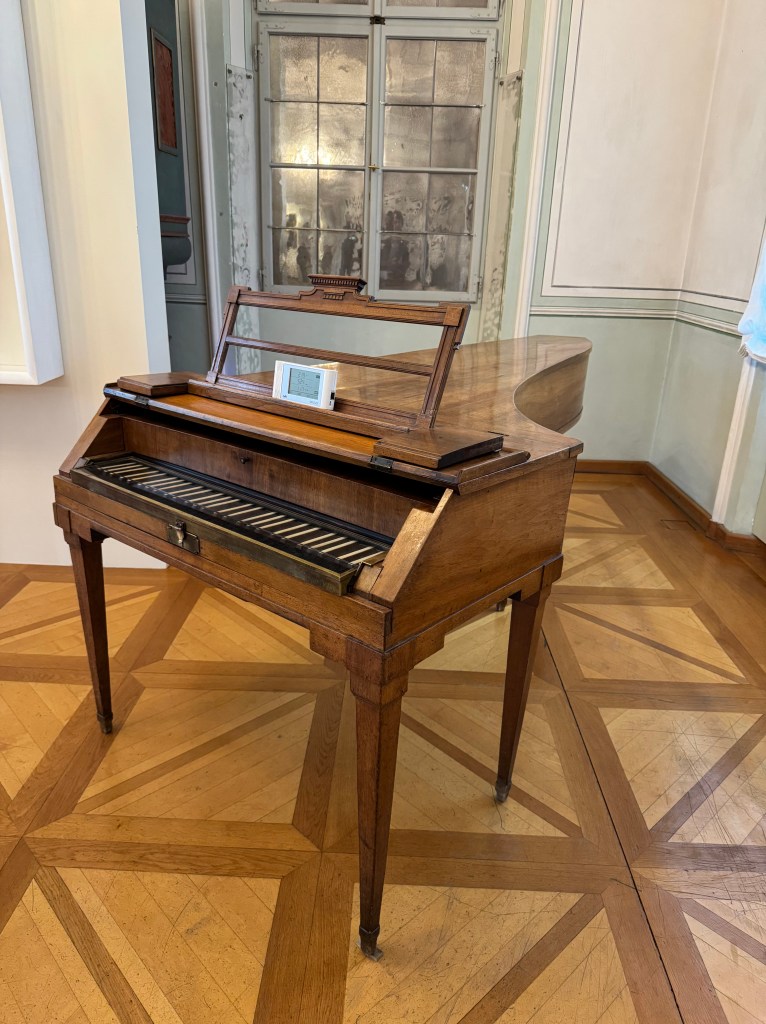
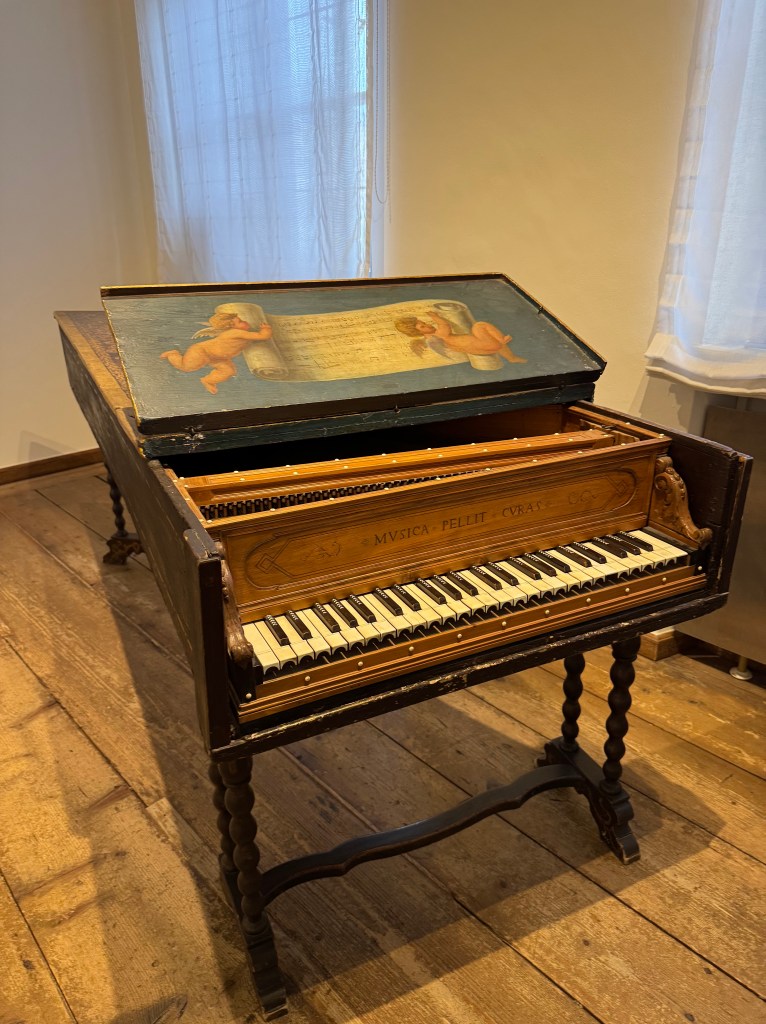
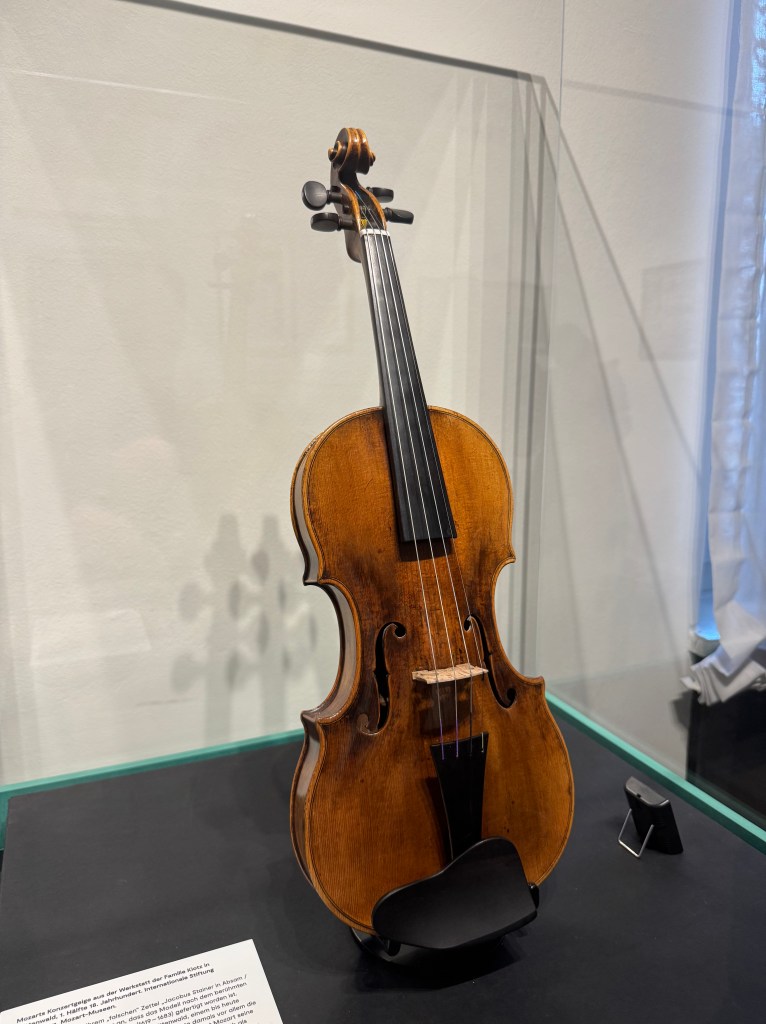
The most exciting artifacts were a grand piano that Mozart used for his concerts around town, a harpsichord and Leopold’s violin. It felt like a pilgrimage to visit Mozart’s home.
Old Town:
We were lucky to have a sunny Saturday during the Easter weekend in the old town. The locals were all out, enjoying the town and the many food stalls. Jerry had a local sausage called Bosnia, but since I don’t eat pork, I had a falafel. Both were very good.
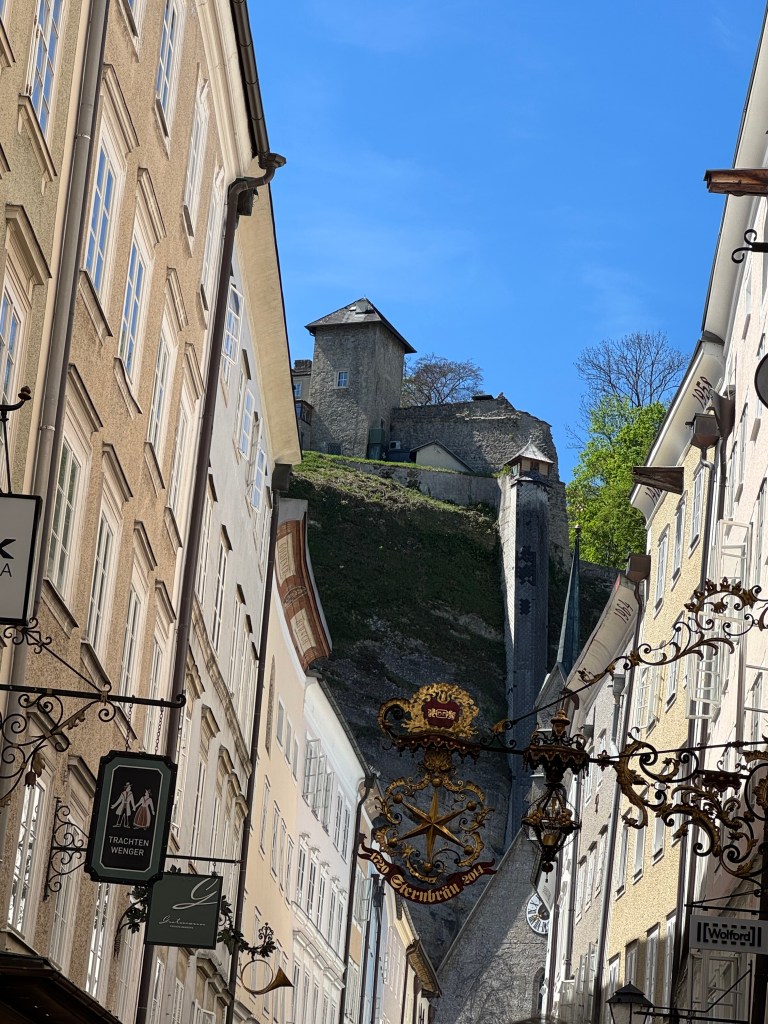
The streets of the town and the signs were very charming.
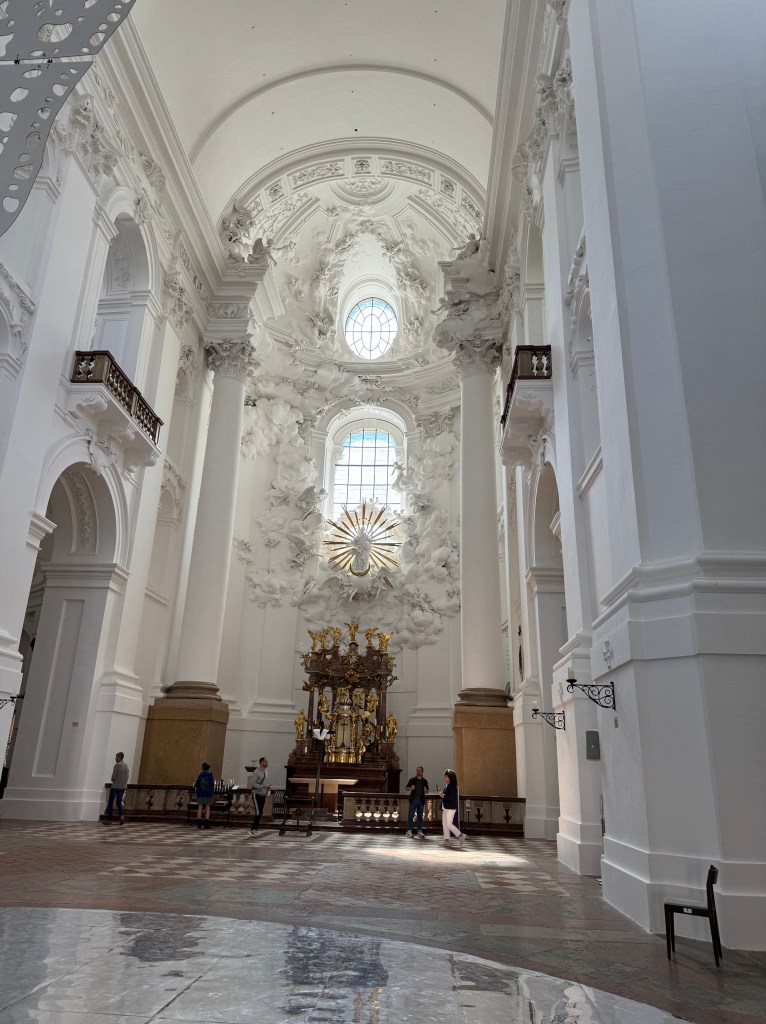
We went into the Kollegienkirche (church). It was a very large and unusual church. There were no pews. It was sparkling white with interesting side paintings. It is a working church with candles being lit by locals.
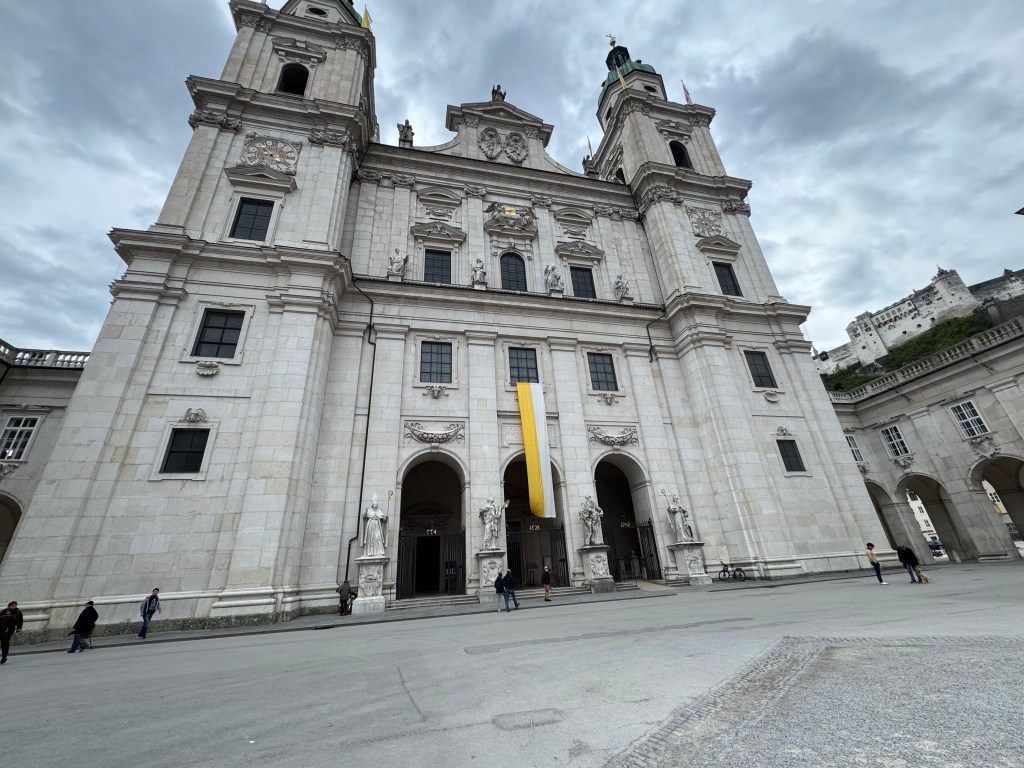
On another day we toured the Salzburg Cathedral called “The Dome.” The Dome was built in the early 1600s on the remains of a number of previous churches. It is considered the first early Baroque church north of the Alps. Unfortunately, the dome was bombed in 1944. It is now rebuilt and is magnificent.
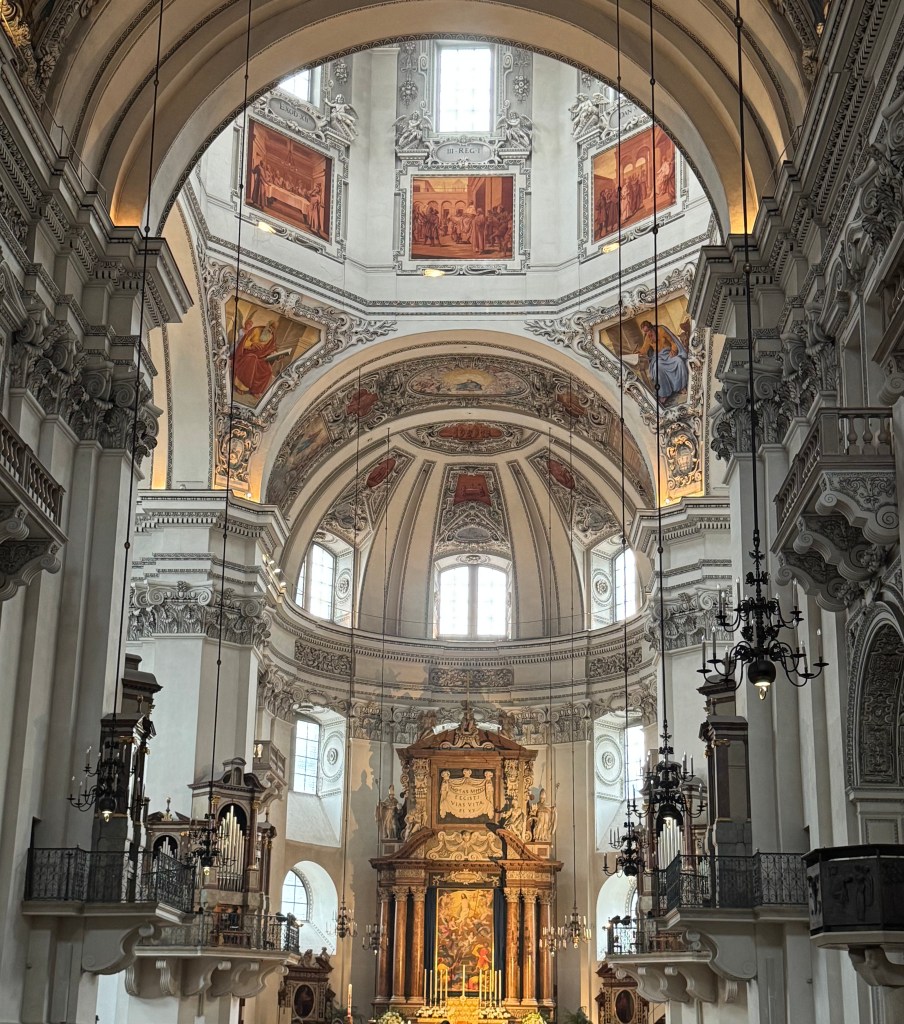
Not sure why, but it seems to have 4 organs. The church has beautiful painted walls and ceilings. Catholicism ruled the Salzburg area, therefore, this is a Catholic Cathedral.
We walked to the nearby funicular to go up to the Castle. As I said before, most European towns built a castle/fort on a hill for protection. This one is no different. It is possible to walk from the town to the castle, but we chose to take the funicular. The first funicular was built in the late 1800s.
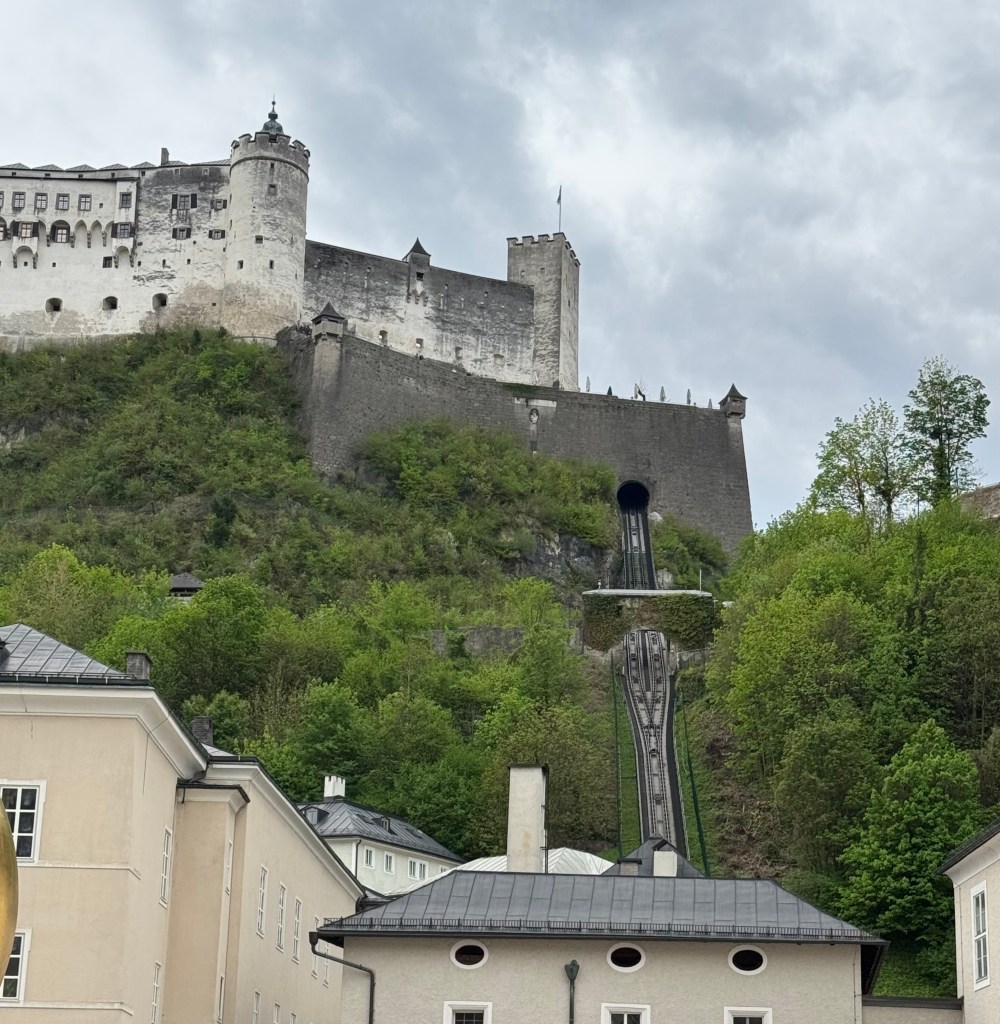
Once on the castle grounds, we focused on the tower and the prince’s apartments. While visiting them, we learned a great deal about the history of this area. The nearby salt mines provided the incentive to build a town here. Salt, though cheap now, was a luxury item. Pre-refrigeration, it was necessary to preserve food.
The area was ruled by the Prince-Archbishop of Salzburg. Thus, the religious and secular were combined. Most of the rulers lived in the lower town but some lived in the castle, especially when they felt they needed protection. The Prince-Archbishops were extremely wealthy.
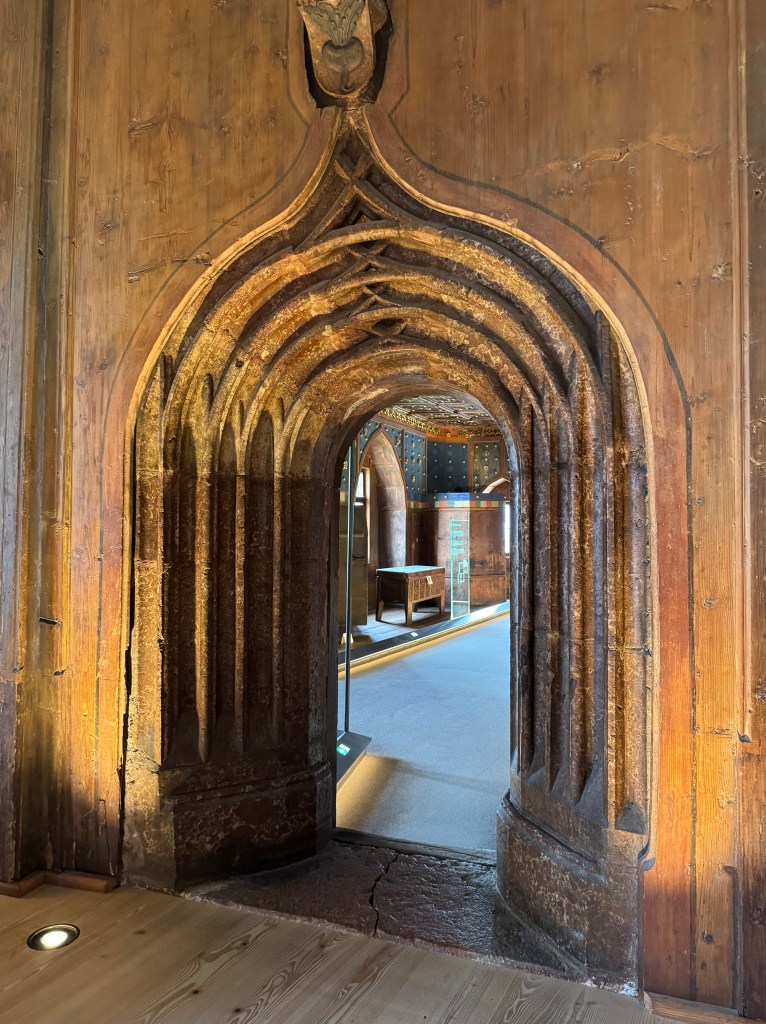
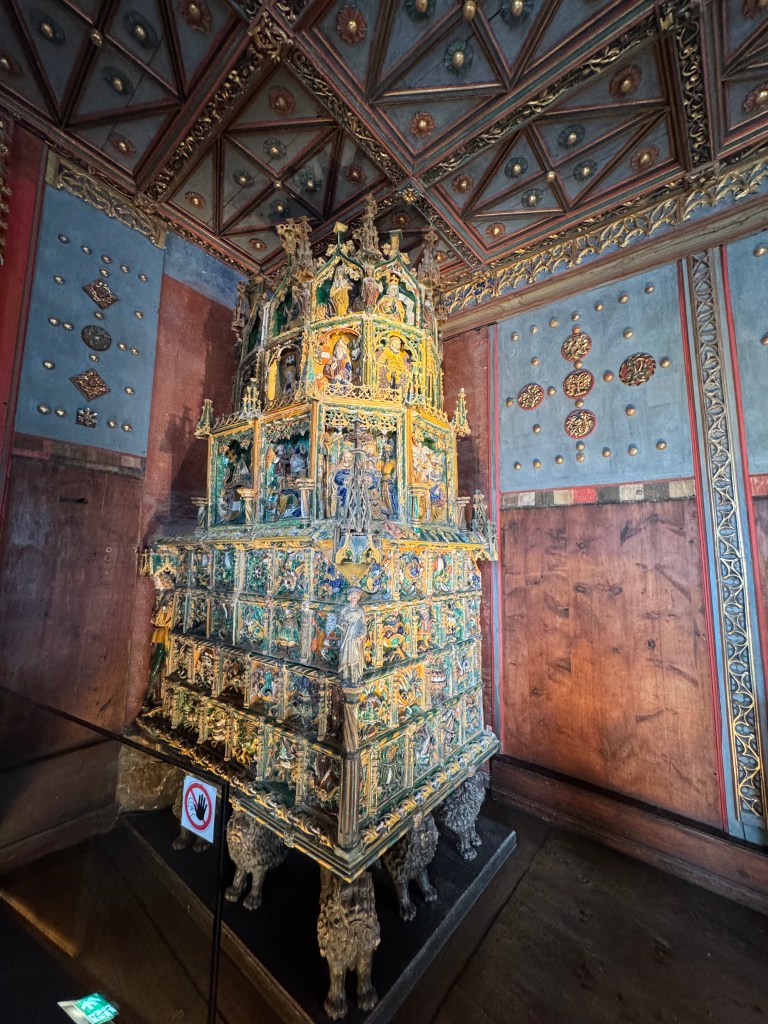
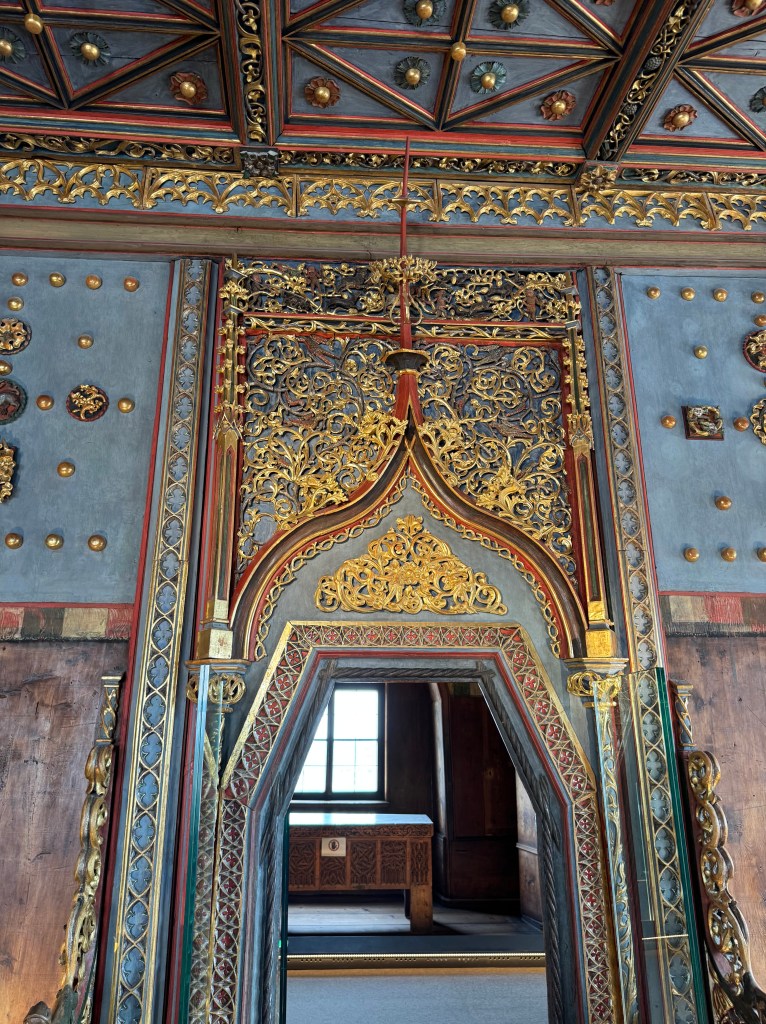
We saw the remains of the wealth in the Prince’s apartments. The furniture is gone, but the beautiful ceramic heater and the gold decorations on the walls have survived.
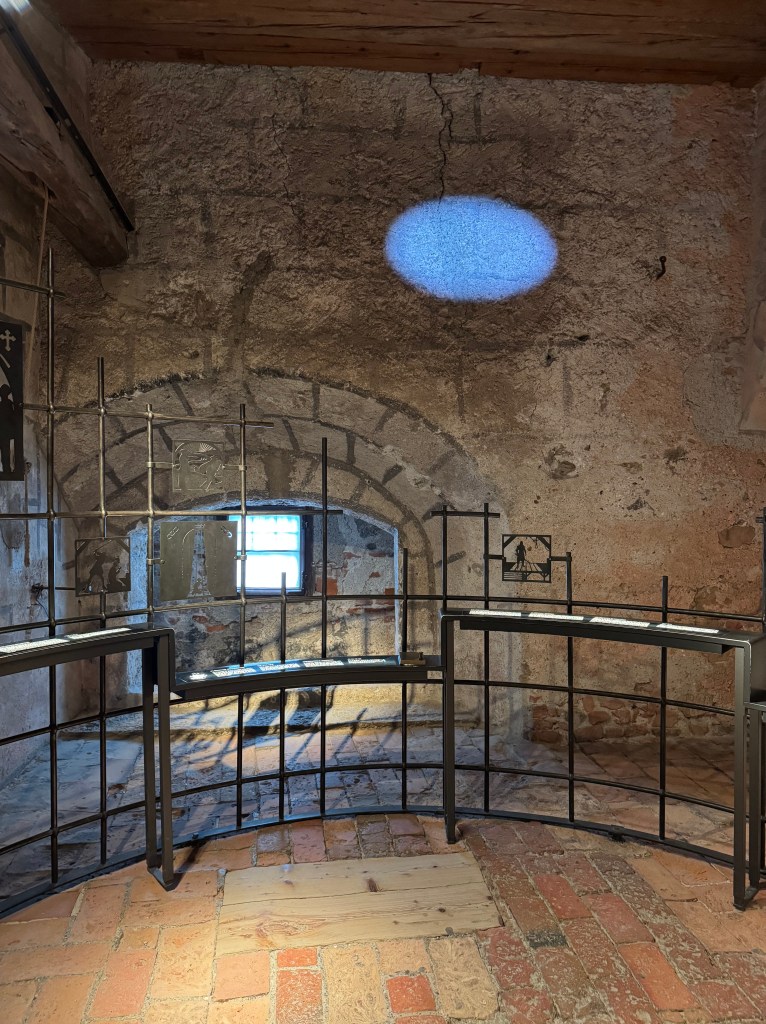
I could not pass up going up to the tower. I did not count the steps but there many of them on a circular stairway. On the way up we saw the grate to the dungeon and got the feel of the gloomy atmosphere.
Up at the top, the views of the mountains and the city were fantastic.
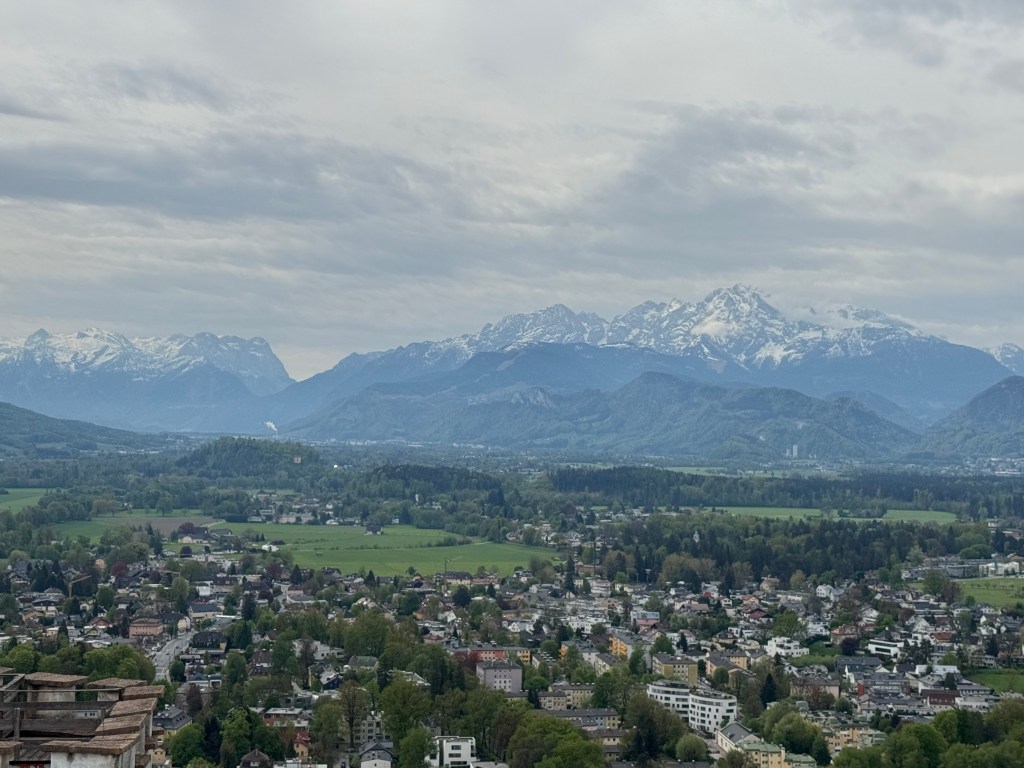
Day trip to Gaisberg Mountain:
The tour company took us on a day trip to the Gaisberg Mountain for the views and for a light lunch at Hotel Zistelalm. The mountains were bathed in sunshine.
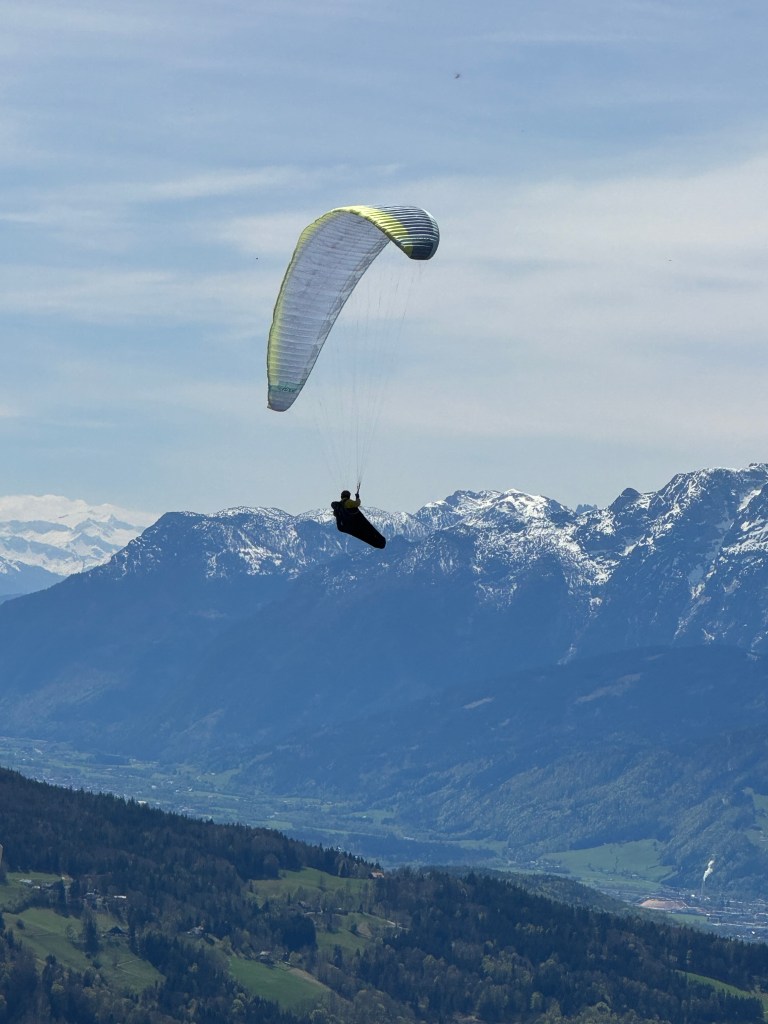
When we stopped at the view point, we saw many locals getting ready to hang glide, as well as many already in the air. The locals were taking advantage of the fine weather. It was a delightful scene. The views were breathtaking.
Lunch in the courtyard of the hotel was fun. It consisted of soup with dumpling and then a salad with a boiled egg. Desert was Apple strudel. The views of the countryside from the hotel were beautiful.
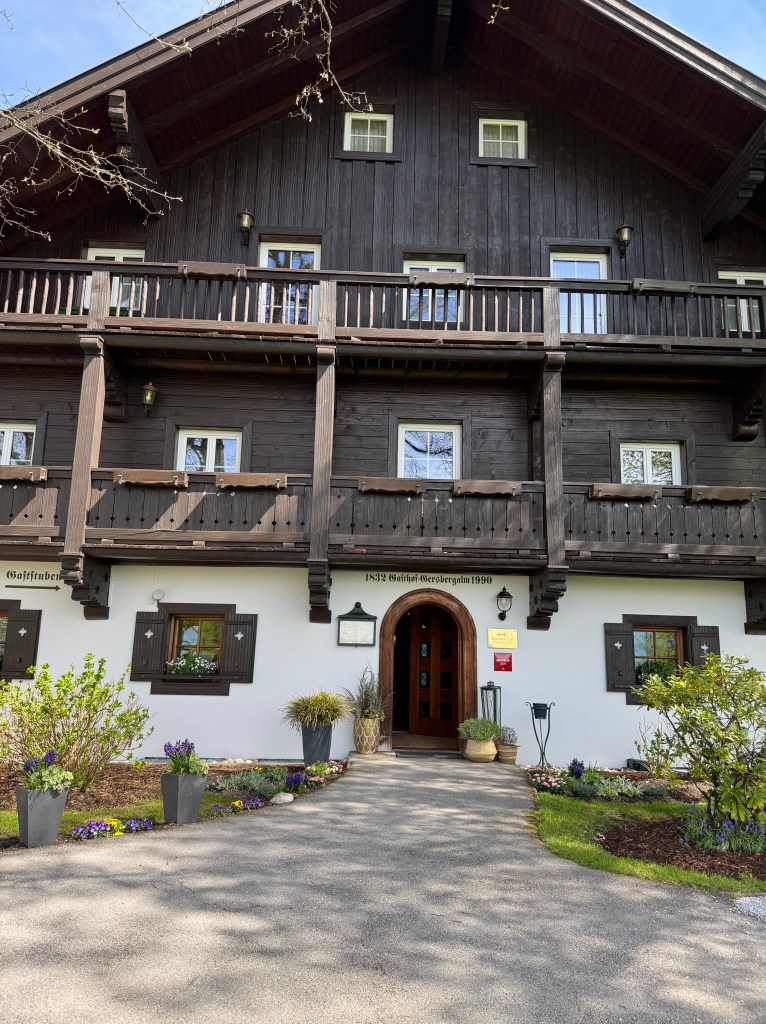
Munich
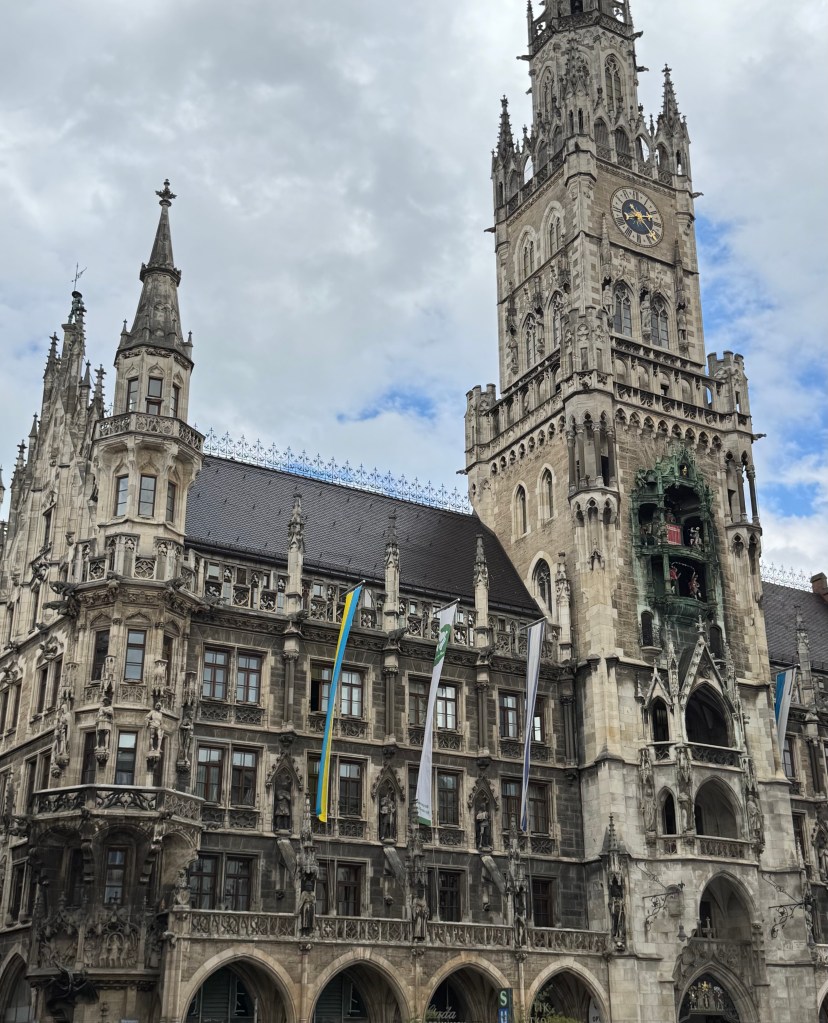
The center of Munich is Marienplatz. Like other European town squares, it has the government house, a church or two and lots of shops. The buildings that survived WWII are beautiful. The square has been the town’s official square since 1158. The government building is very ornate but needs a cleaning.
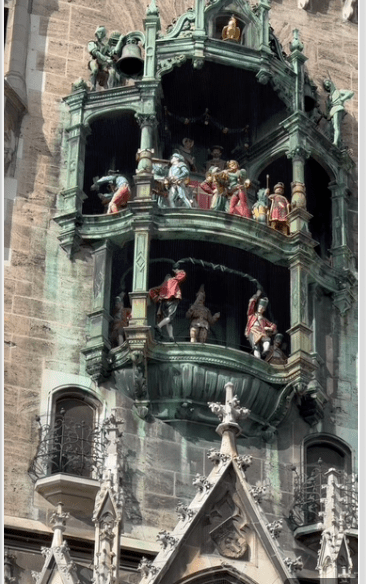
It has a clock with figures that move at 11, 12 and 5. We timed one of our visits to Marienplatz to see the figures moving. It was very fun.
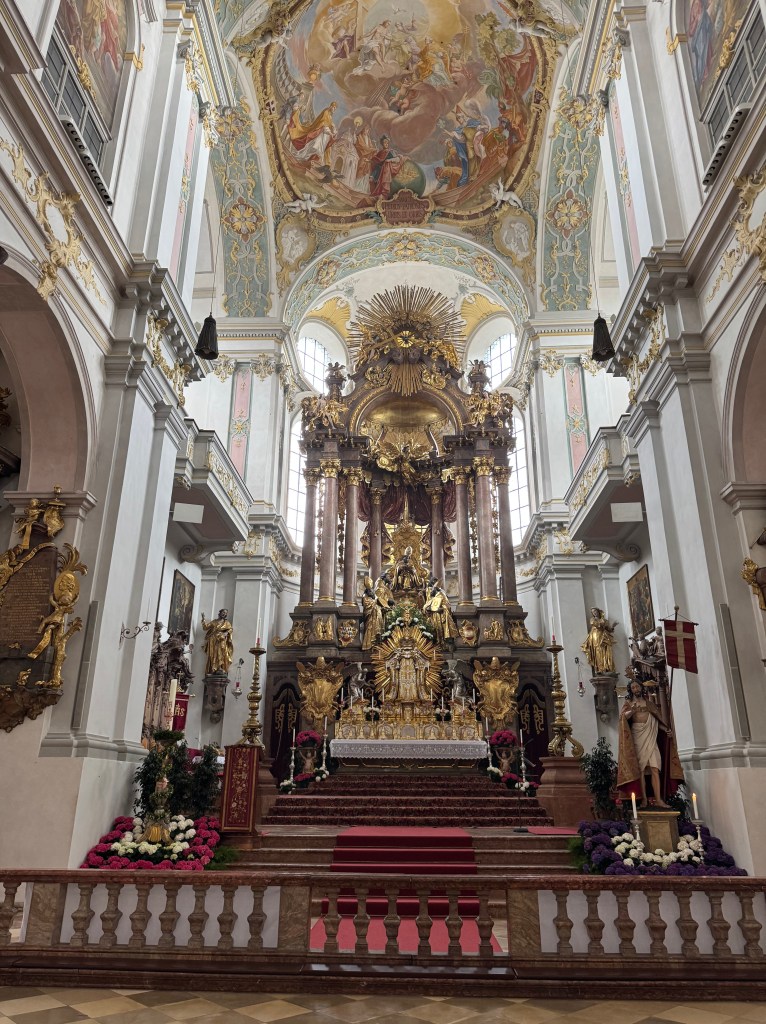
We went into two of the churches on or near the square. The Alter Peter Church is very beautiful with a painted ceiling and lovely organ.
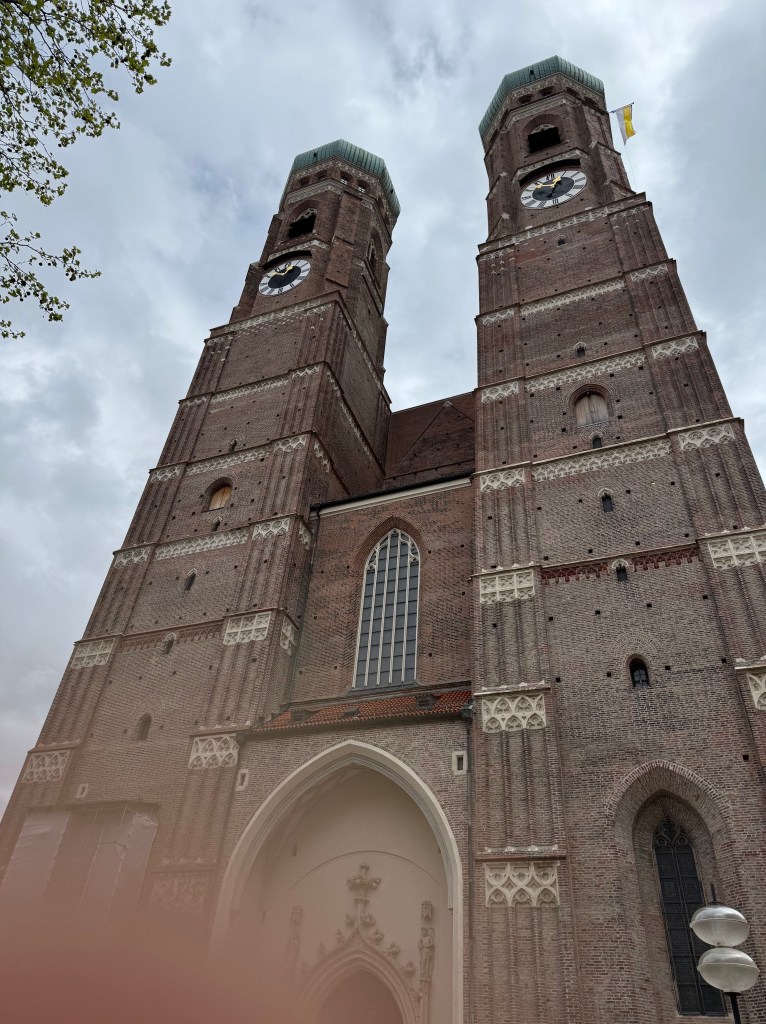
We also went into the 2-dome church called Frauenkirche (Our Lady church), which was completed in 1488. The two domes are visible from much of the old town and can be used as a marker. We skipped going up to the tower to climb the 79 steps. The church itself is very big, very white and not at all warm and fuzzy. It is a working church and there were lit candles and people praying.
The English Gardens: Everyone said how lovely these gardens are. We walked about a 10-minute walk to the gardens and then walked the length of the park.
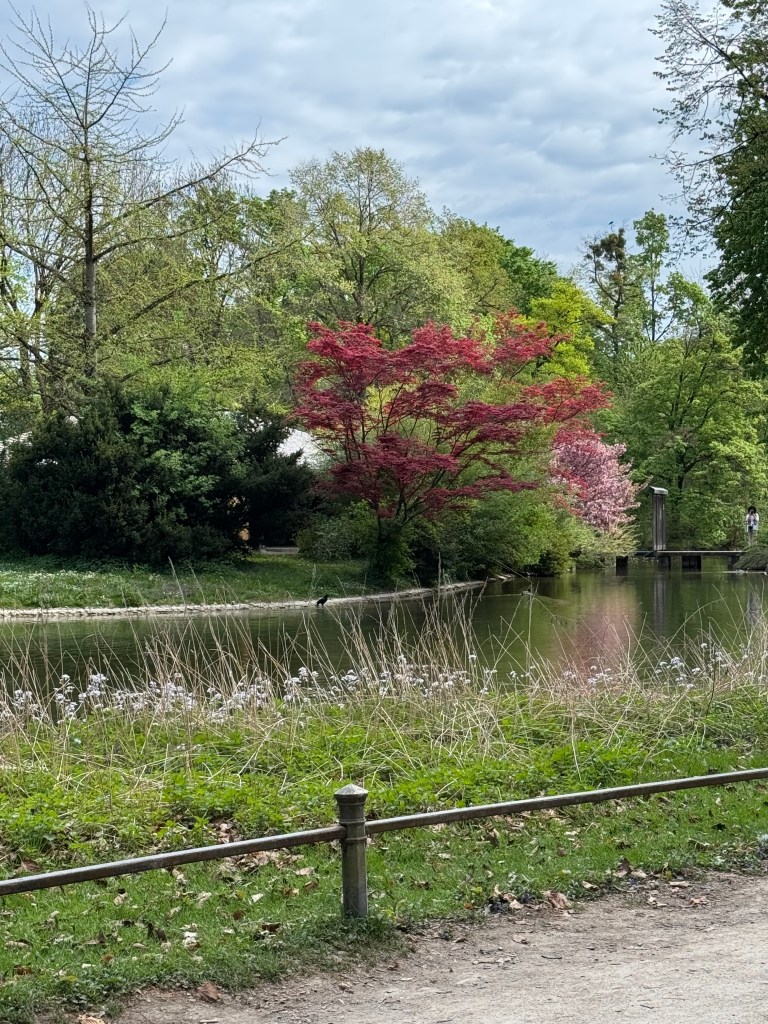
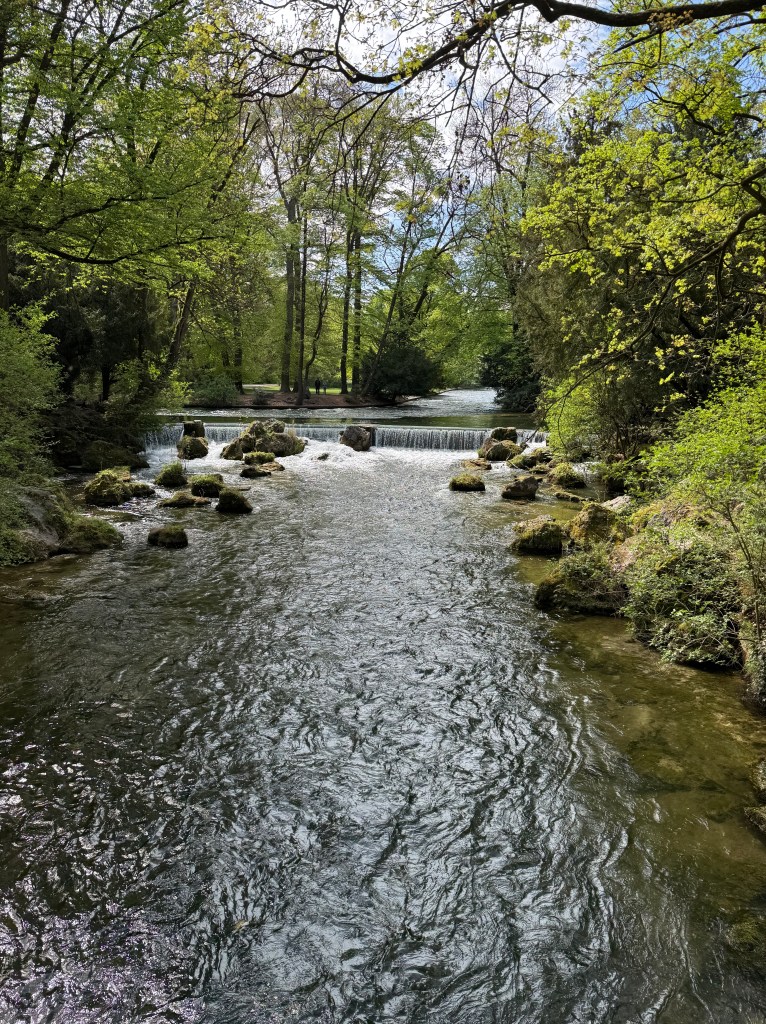
It is a lovely city park with some waterfalls and little ponds. The weather was fine, and we saw lots of locals taking advantage of the day. But there were no flowers except flowering trees and dandelions. I am glad we had the outing, but I would not recommend it to someone who has limited time, as we did.
Residenz Museum: More exciting to visit is the Residenz Museum, which was only a short walk from the hotel. The proximity to the hotel decided us on the destination and I had no clue how fabulous and extensive this palace was going to be. We spent two half days there and didn’t see everything.
The Palace was the seat of the Dukes, Electors and Kings of Bavaria from 1508 to 1918 (when it became a museum). To say the rooms are beautiful is an understatement. Not all of the rooms survived WWII but the restorations are wonderful. Much of the furniture is authentic to the palace and some of the furniture is from the various periods but not from the palace.
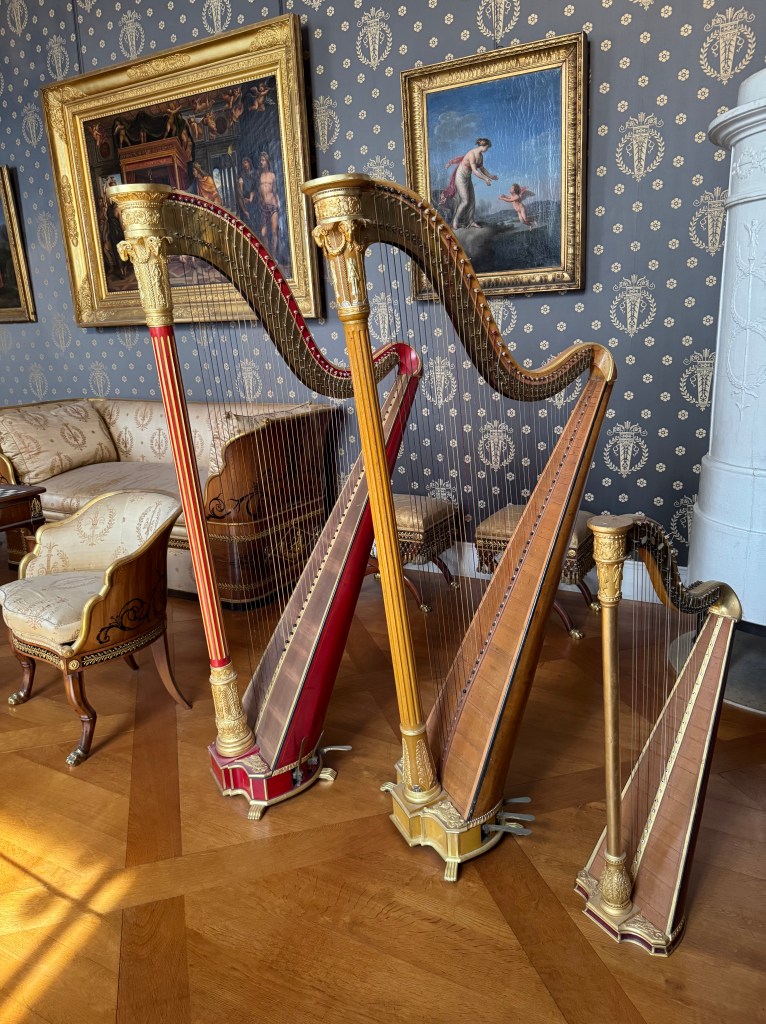
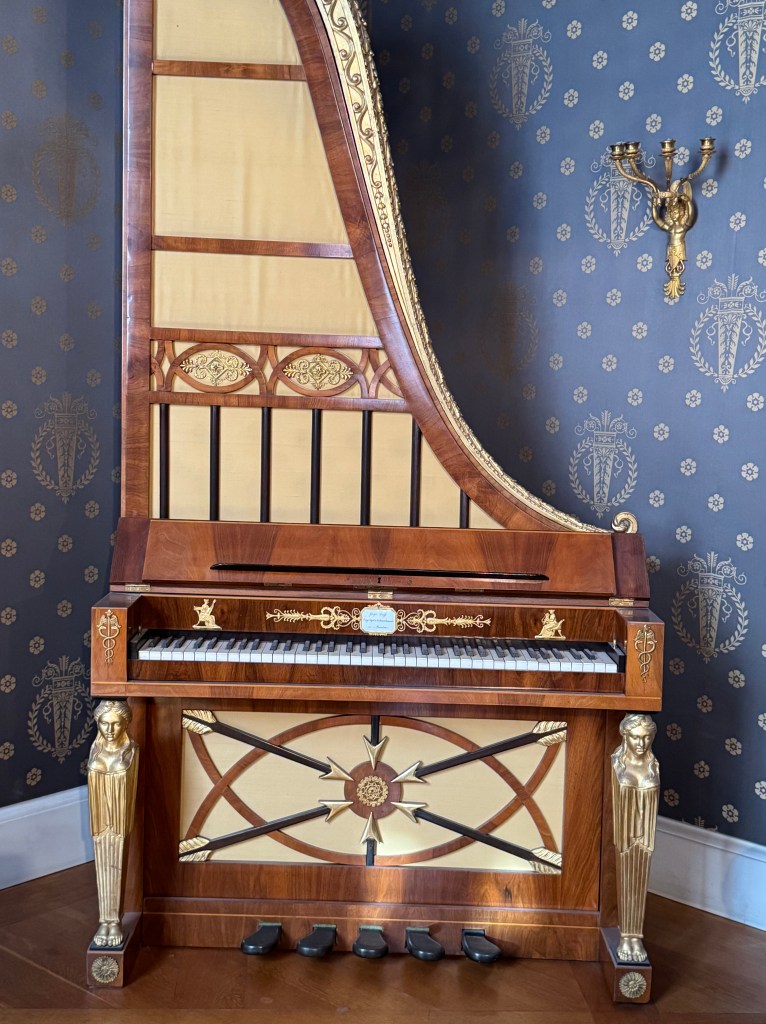
I had a couple of favorite room: The music room had 3 harps from early 19th C as well as a strange upright/grand piano.
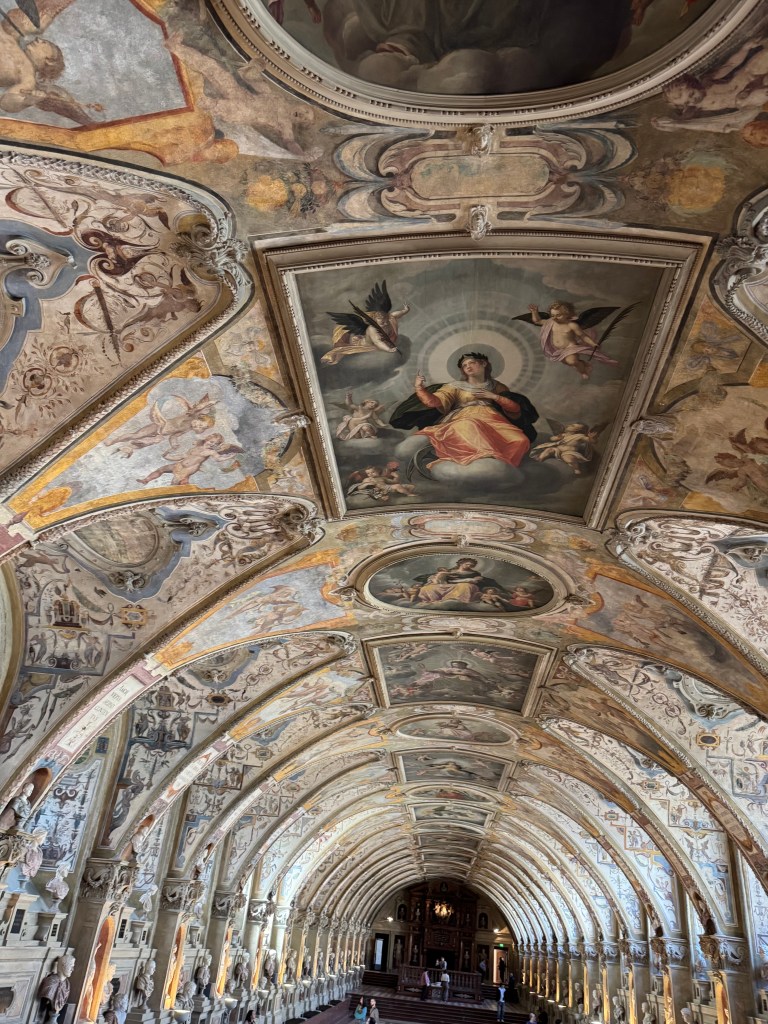

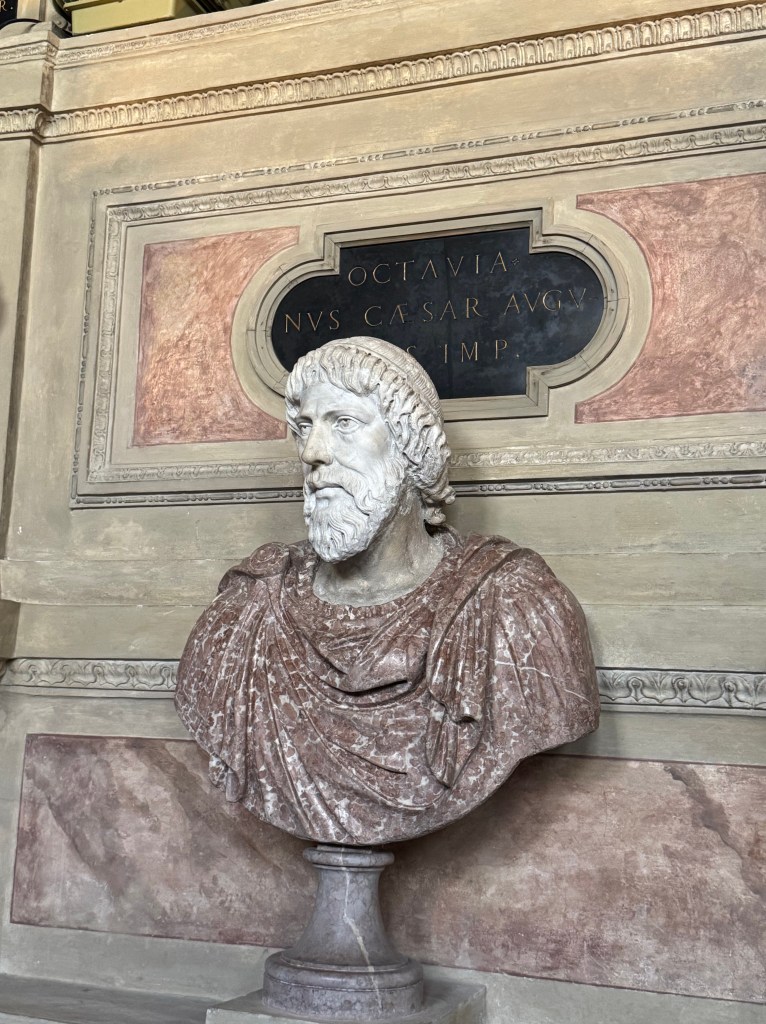
Another favorite was a magnificent huge room with painted ceilings and walls. It housed an incredible number of marble busts of Roman emperors.
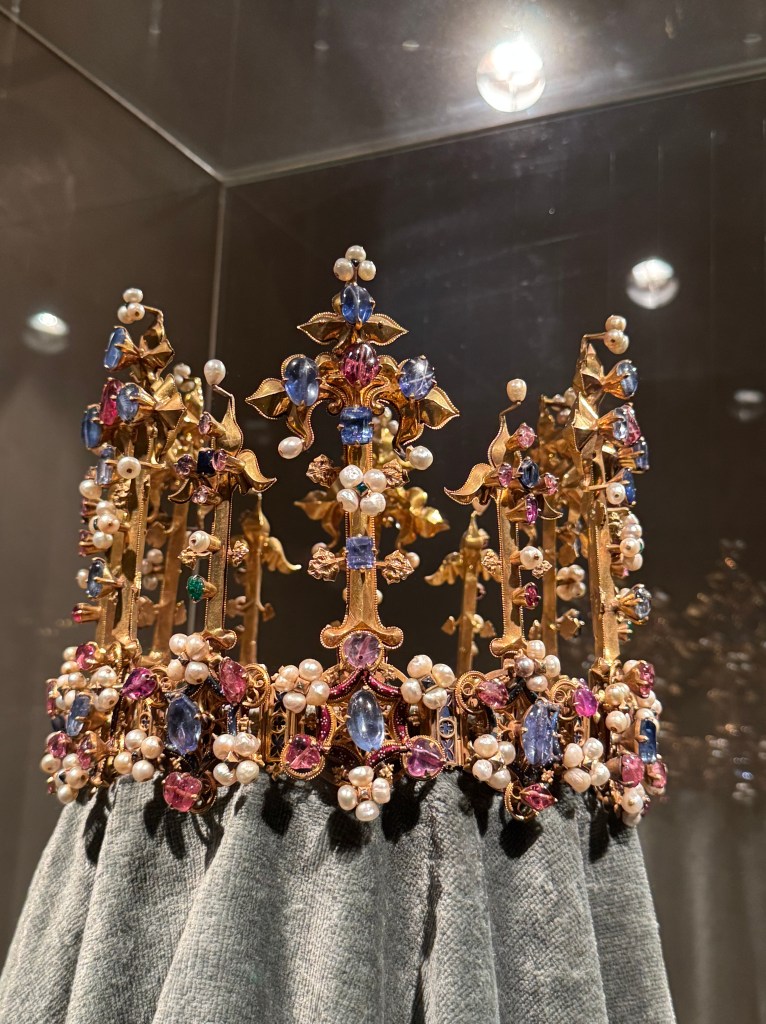
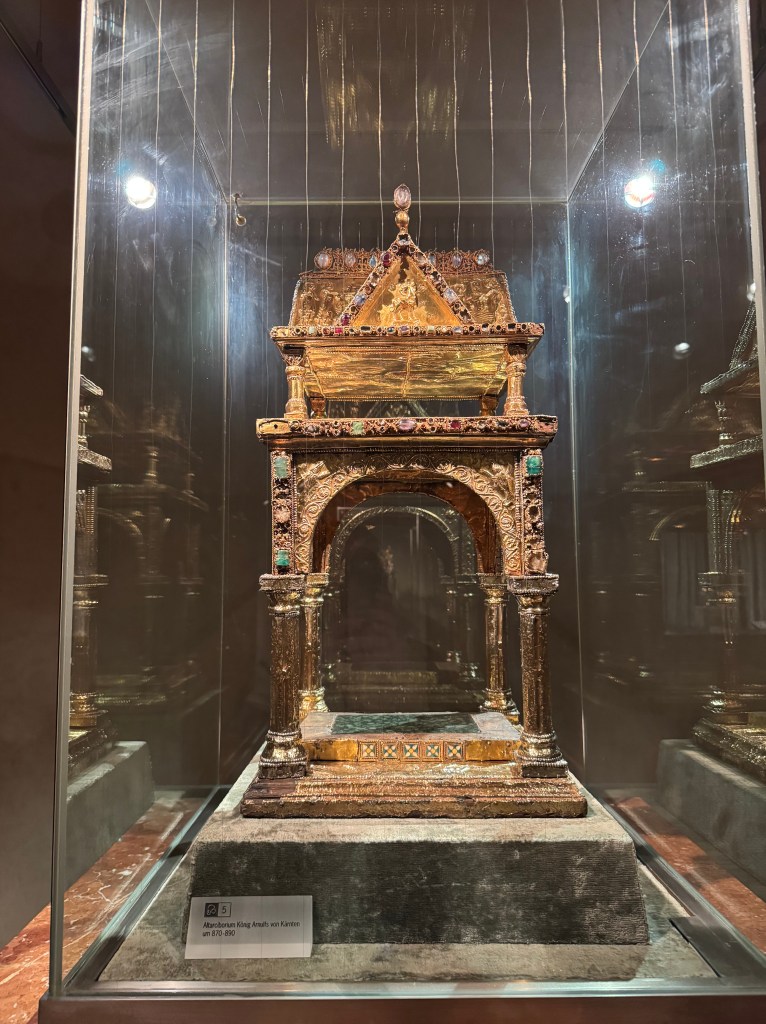
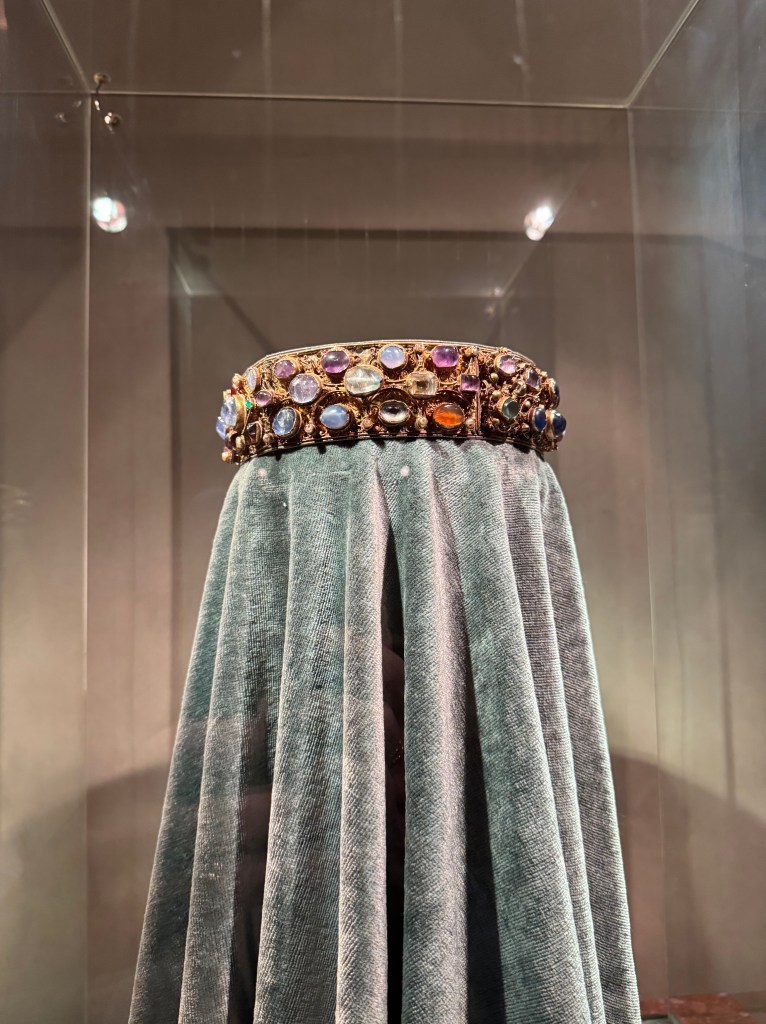
During our second visit to the Residenz Museum, we concentrated on the Treasury section. The Treasury included all the precious objects that belonged to the family including crowns, reliquaries, display items and items used such as plates and silverware. We took our time and listened to lots of the explanations using their audio guide. Each room had an overall explanation, and then many of the objects had specific information. It was fun and informative. Some of the items in the first few rooms were 1,000 years old. They were mostly crowns and reliquaries worked in gold filigree with precious and semi-precious stones. Absolutely beautiful.

The next few rooms were from 1300 to 1500. One beautiful etched cup was made by Muslims. (Above)
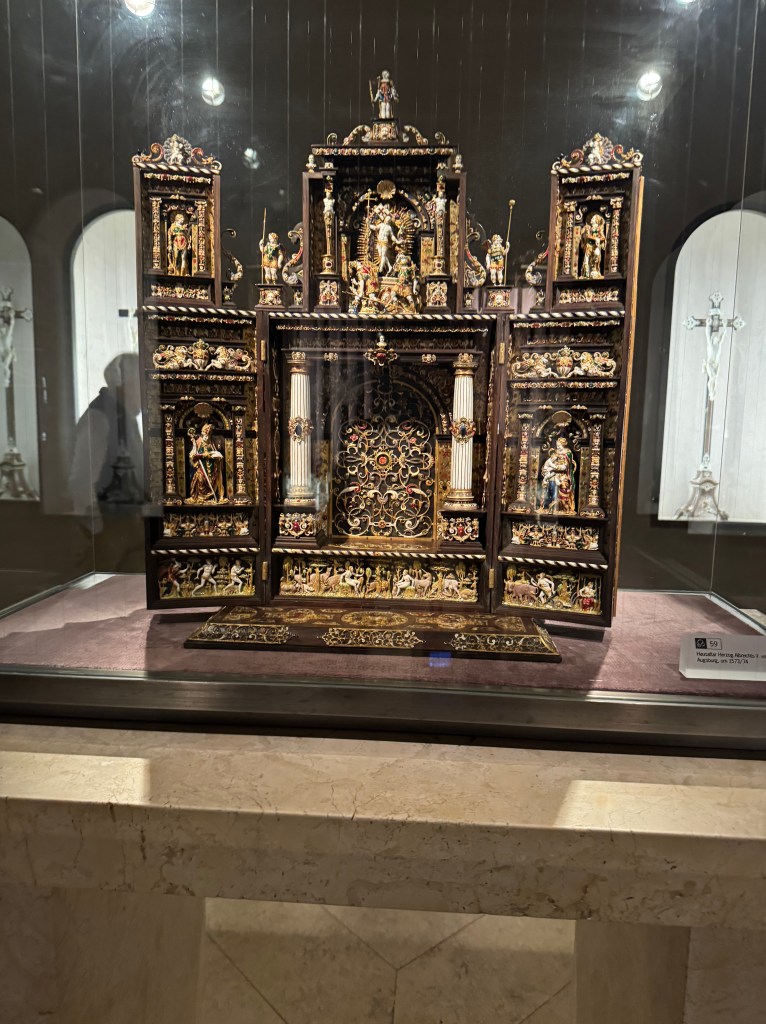
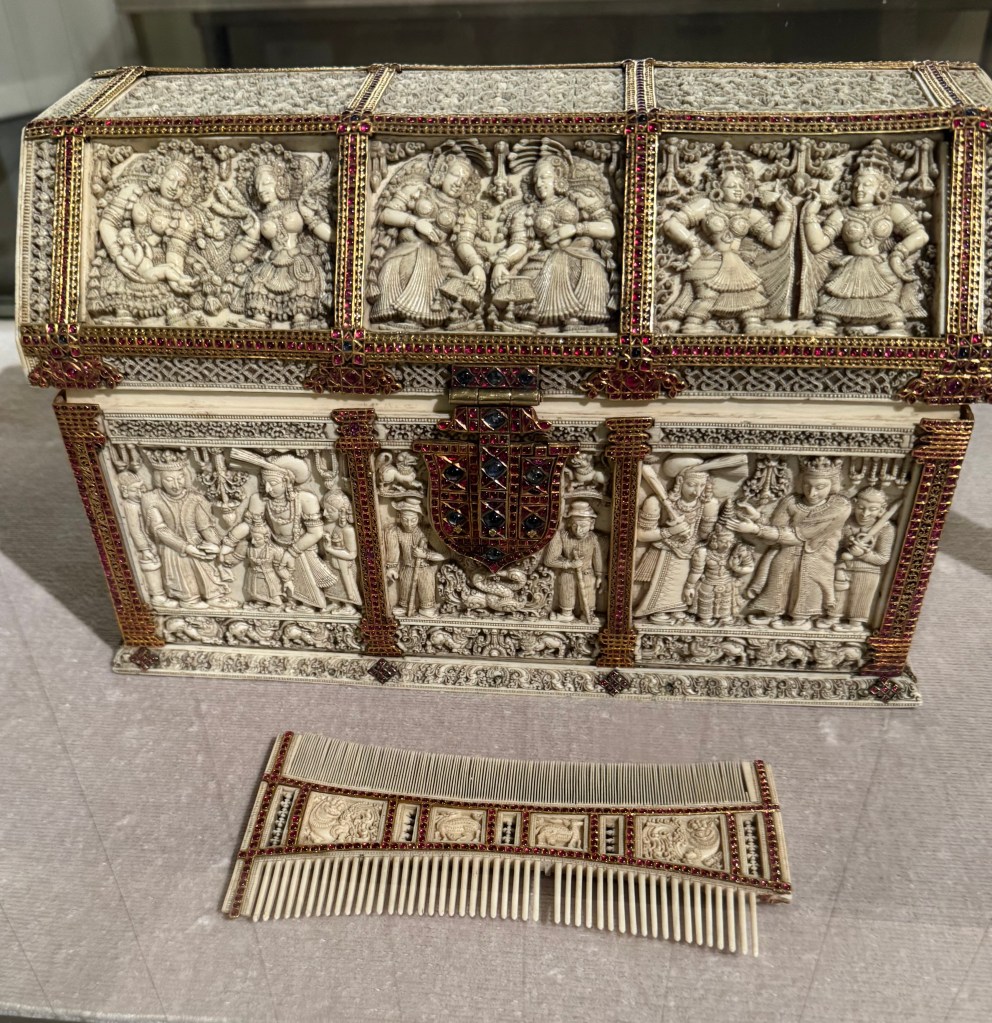
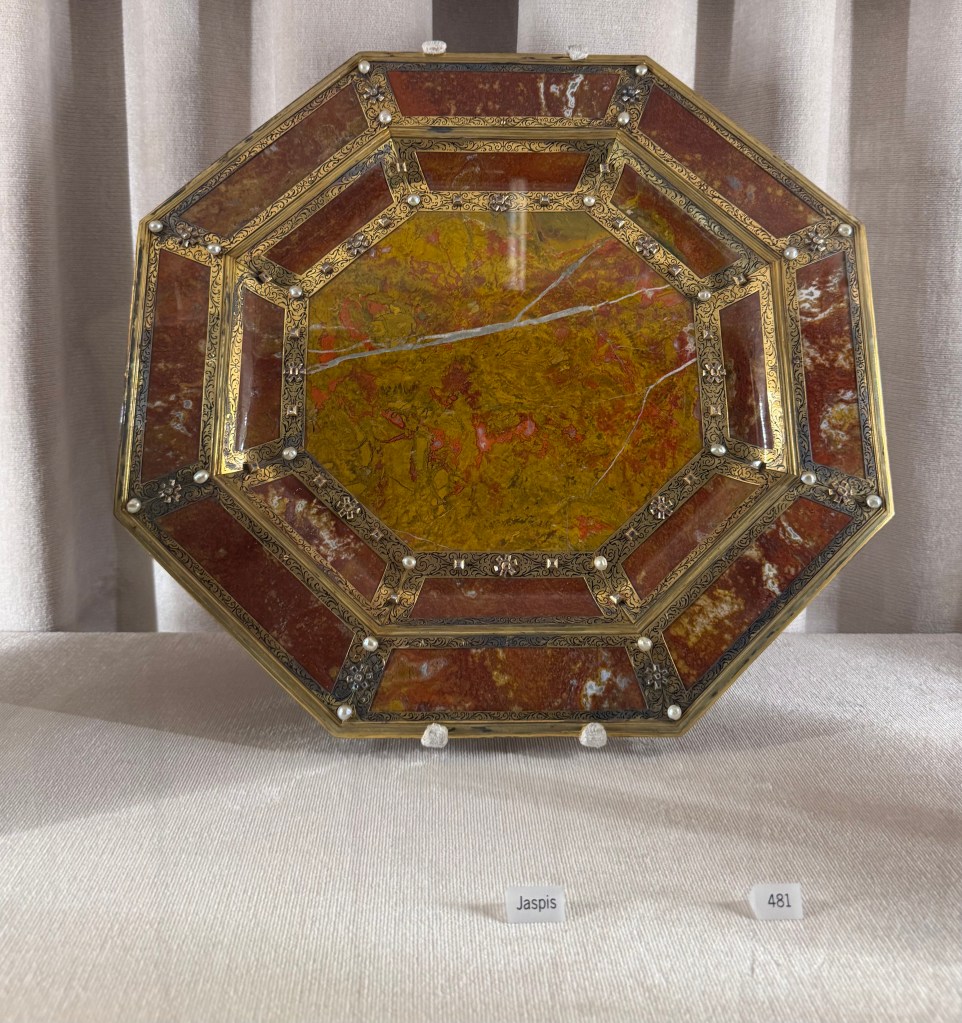
Other items included intricately tiny carved wood, rock crystal bowls, beautifully etched and much more. What a treat. We always think of the Middle Ages as the Dark Ages, but many of these items were done during that time. The artisans were extremely skilled. The wealth and power of the Bavarian rulers was immense. One interesting fact is that at some point, around 1500, artisans started to make a mark on their creation and became famous. Before that, the artists were anonymous.
The Performances
We saw/heard four performances in Salzburg and two in Munich. In Salzburg we heard Mendelssohn’s Elijah on the first night, Grieg’s Peer Gynt, Tchaikovsky Violin Concerto and Shostakovich’s 9th symphony on the second night. Mahler’s Symphony #2 on the third night and the opera Khovanshchina on the last night. The hall was modern with excellent sight lines and acoustics.
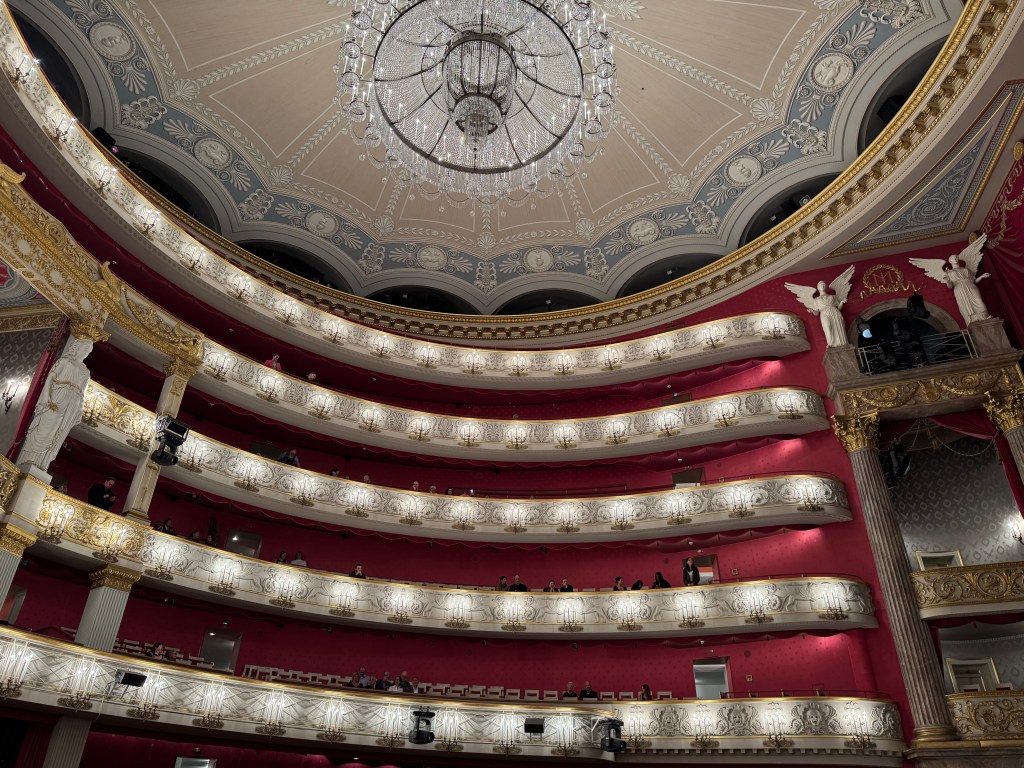
In Munich we saw 2 operas: Tchaikovsky’ Queen of Spades and Puccini’s Manon Lescaux. The Munich opera house is the old style, very beautiful venue. Our seats were not the best, but they were the best that the tour company could get – most of the good seats are snagged by subscribers. I was happy to have the super titles, but they were so high up, that if I tried to read them for too long, I would have had a sore neck.
In both Salzburg and in Munich, late comers were not seated. In addition, I noticed that the audience was substantially younger than U. S. audiences and wonderfully behaved.
These were all fantastic musical adventures, if somewhat heavy. My favorite was the violin concerto with the 41 year old Augustine Hadelich. He was mesmerizing.
Final Comments:
- I am very glad that I paid for the hotel for an extra night so that we could get into the room early morning upon our arrival. The early nap and shower made a great difference to adjusting to the time difference and made our first day productive.
- The small group of 12 plus the leader was a good size
- It was nice to have lots of things, like transportation to the venues arranged for us. The hotels were excellent and central. But I would have liked more touring arranged and lectures about the cities and the music. We only had the one-day scenic trip out of Salzburg. The guide, who is a buddy of Chris, gave very little information. However, Great Performance Tours do not say that they provide the extra services, so I cannot fault them. They provided what they said they would.
- Other notes: Mozart was 3 years old when he started to play the piano
- Mozart only needed 30 minutes to learn a minuet when he was 5 years old.
 Nili's Adventure
Sounds wonderful, Nili! A delight (as always) to hear about your travels and see the photos. I especially like the photos of the Mozarthaus Museum.
LikeLike
It’s been fun to read this with our friends Margaret and Wiken
LikeLike