
The Portugal trip was conceived because my daughter Maggie and her husband, Kevin, were living in Braga, Portugal. I wanted to visit them but I also wanted another adventure. The Rick Steves 11-day Portugal trip, which began in Lisbon and ended in Porto (45 minutes from Braga) seemed ideal. In addition to Lisbon and Porto, we visited Evora, Obidos, Fatima, Coimbra, a winery and a cork farm. I had been on 3 previous Rick Steves trips. I knew that the trips are active, utilize small interesting hotels and that we would have a great guide. I looked forward to learning more about Portugal and I was not disappointed.
Lisbon
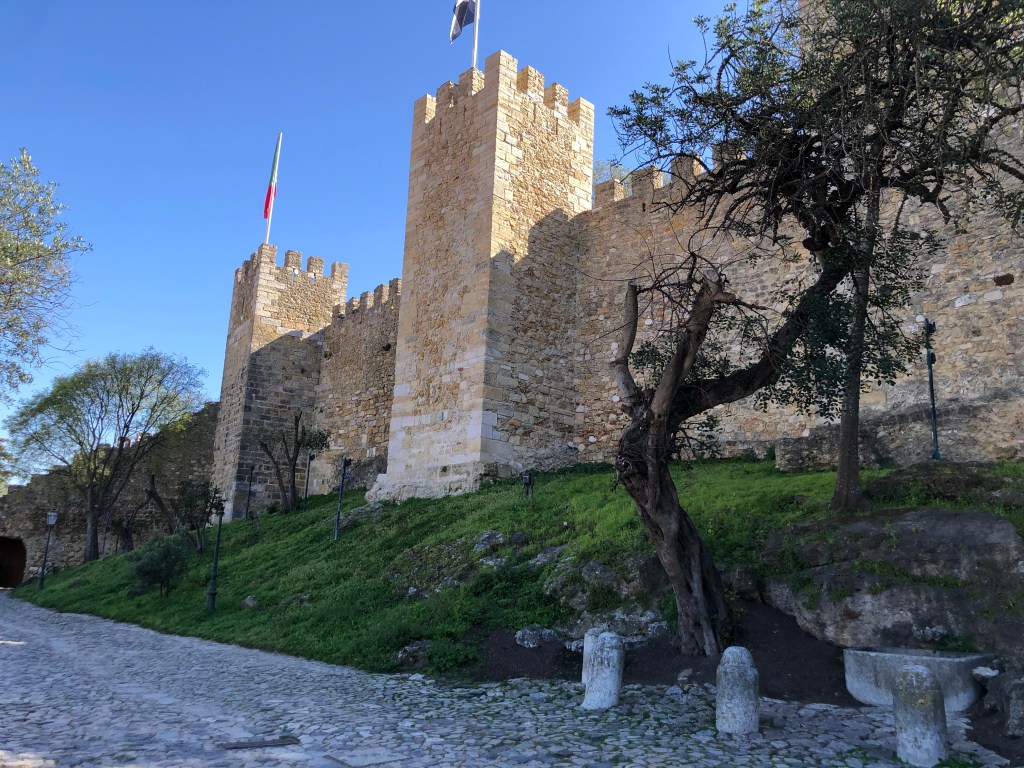
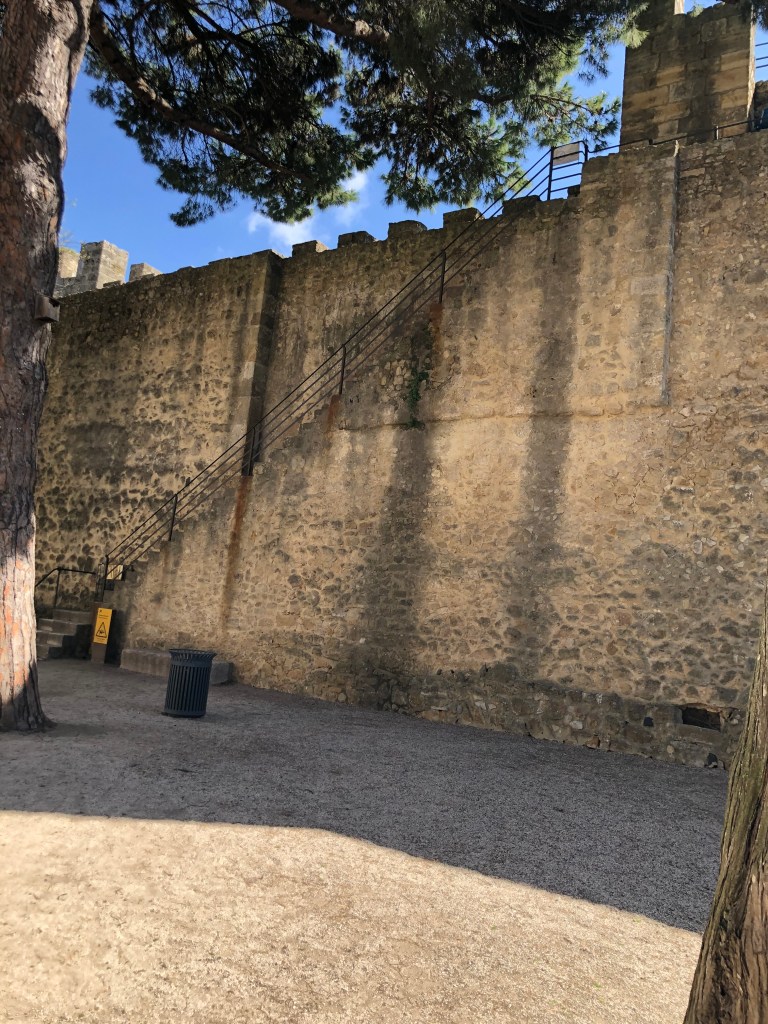
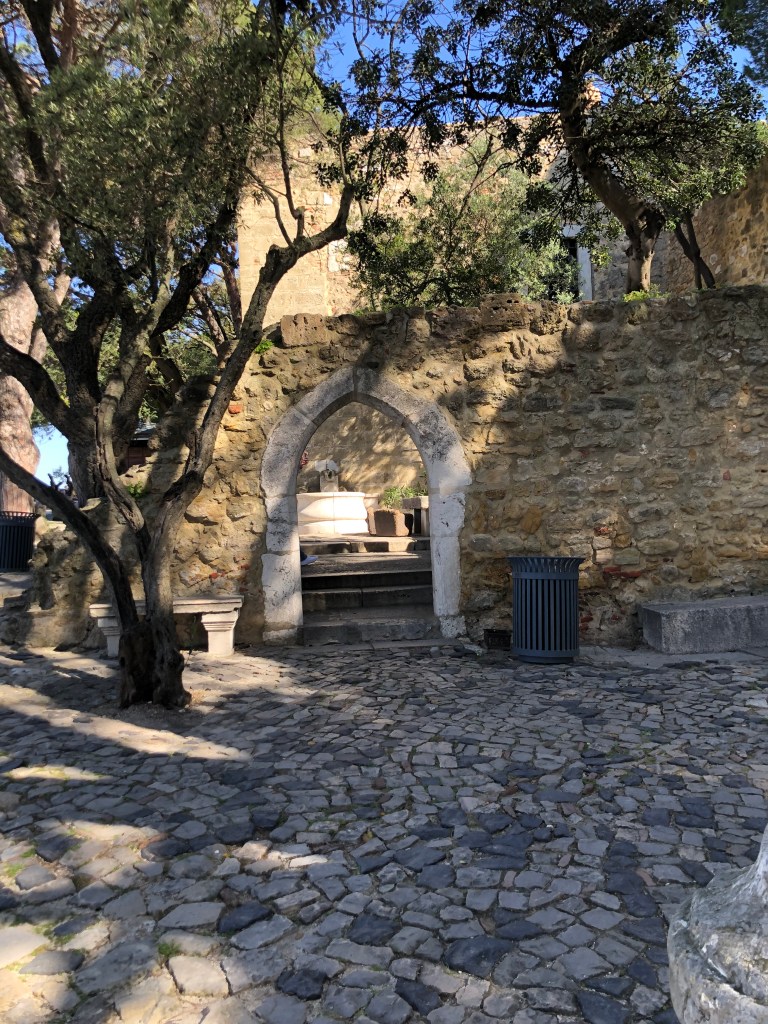
Lisbon is a city of hills. On one hill is Castle of Sao Jorge, a strategically located fortification built by the Romans in the 2nd century BCE. In the 12th century it became a royal palace and military barracks for the conquering Catholics. The walls were renovated in the 20th century.
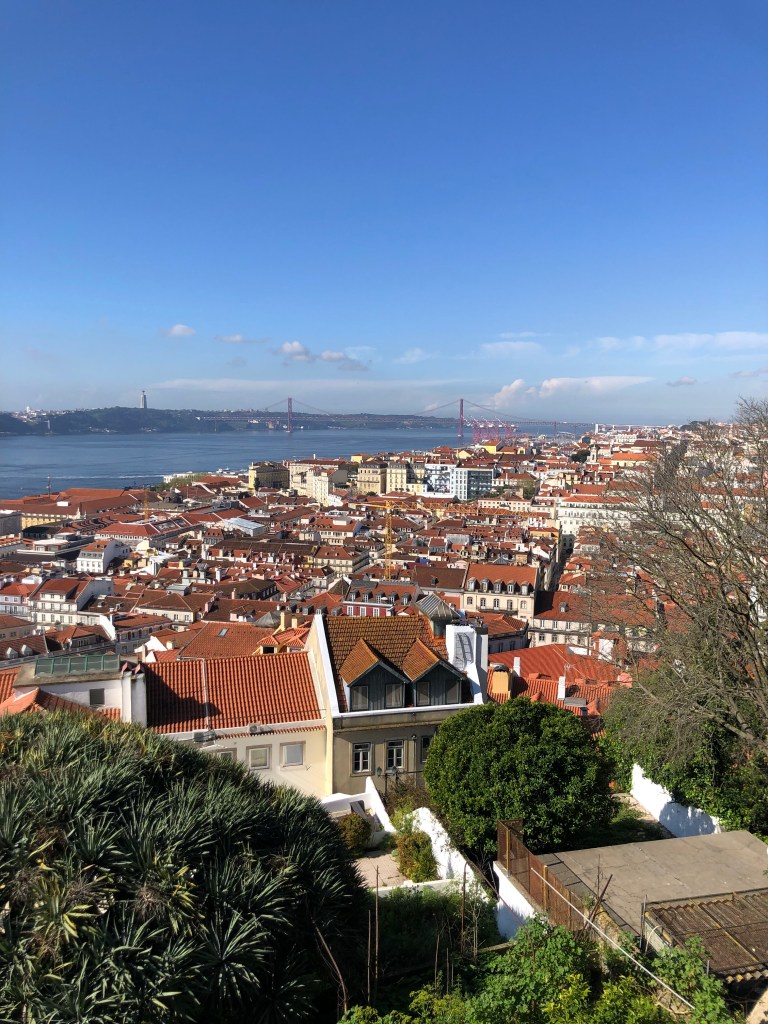
The views from the castle of the roof tops, the other hills and the sea were wonderful. I walked around and climbed the walls.
Walking with our guide, Claudia, we saw the house of Aristide de Sousa Mendes, who was in the foreign service in WWII. (Portugal was neutral). He used his power to save some 20,000 refugees from the Nazis by giving them visas to enter Portugal and then go on to other safe countries.
On the other side of the coin is the memorial built to remember the thousands of Jews killed during the inquisition, on the square of the San Domingo church where it all began 500 years ago.
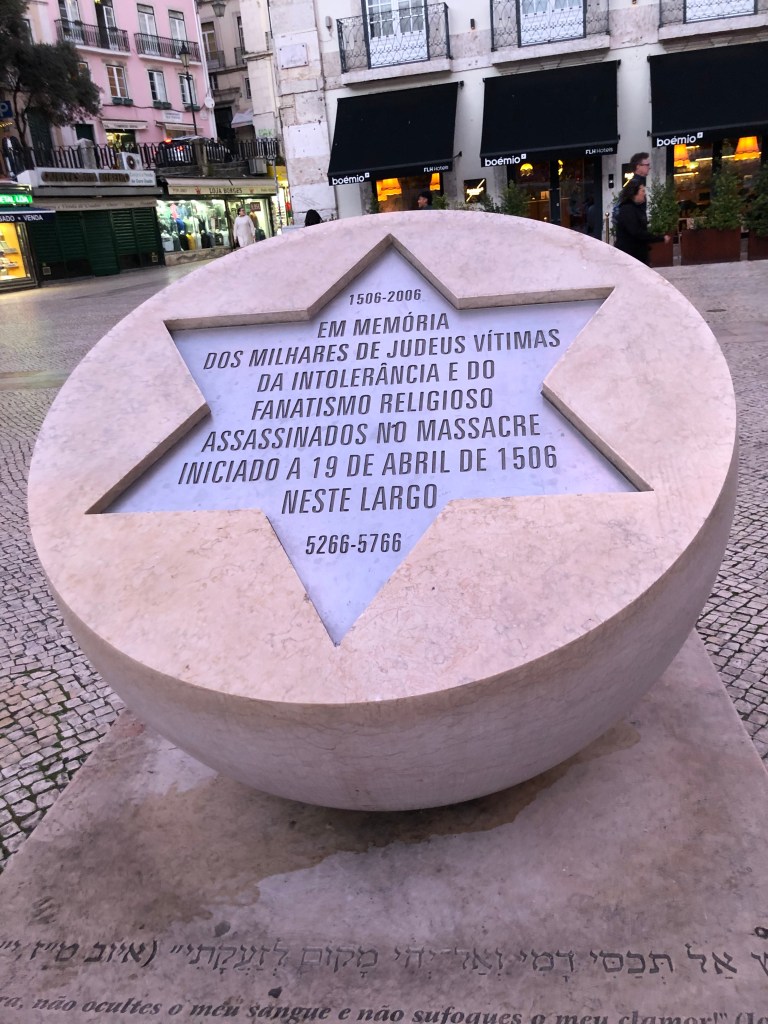
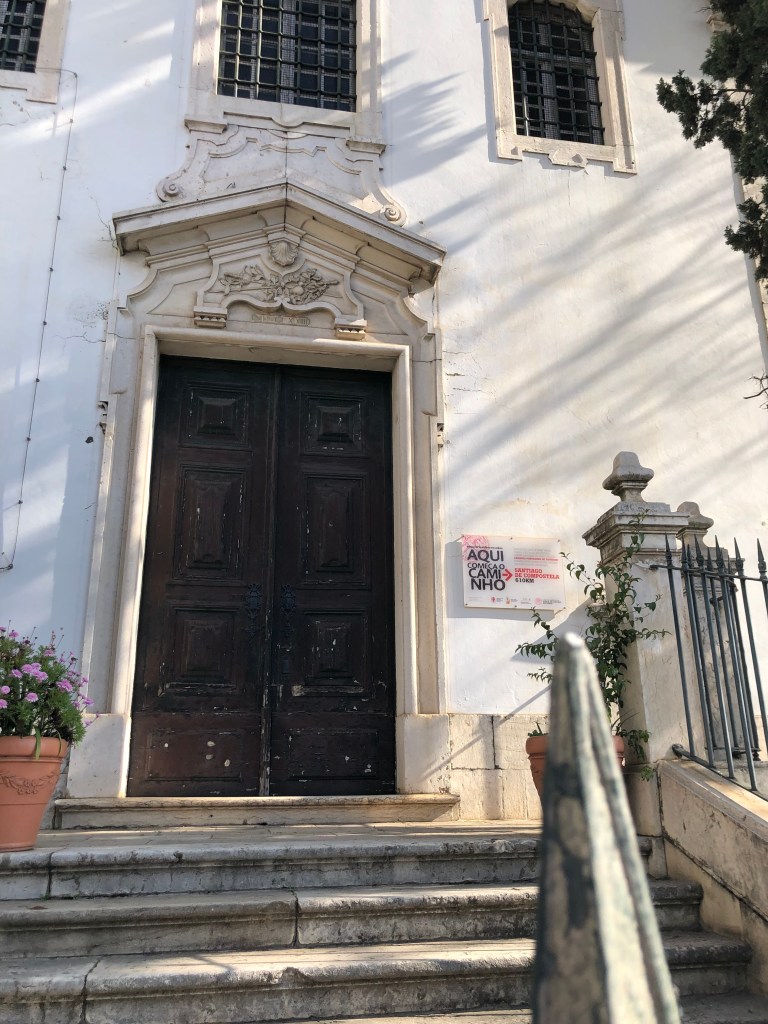
Claudia also pointed out the signs of the start of Camino on the Church of Santiago, during our walk.
The other major hill is the Alto region, which is charming with cafes and views. Here we saw the Carmelite Square is where the bloodless (Carnation) revolution took place in April 1974 to free Portugal from dictatorship.
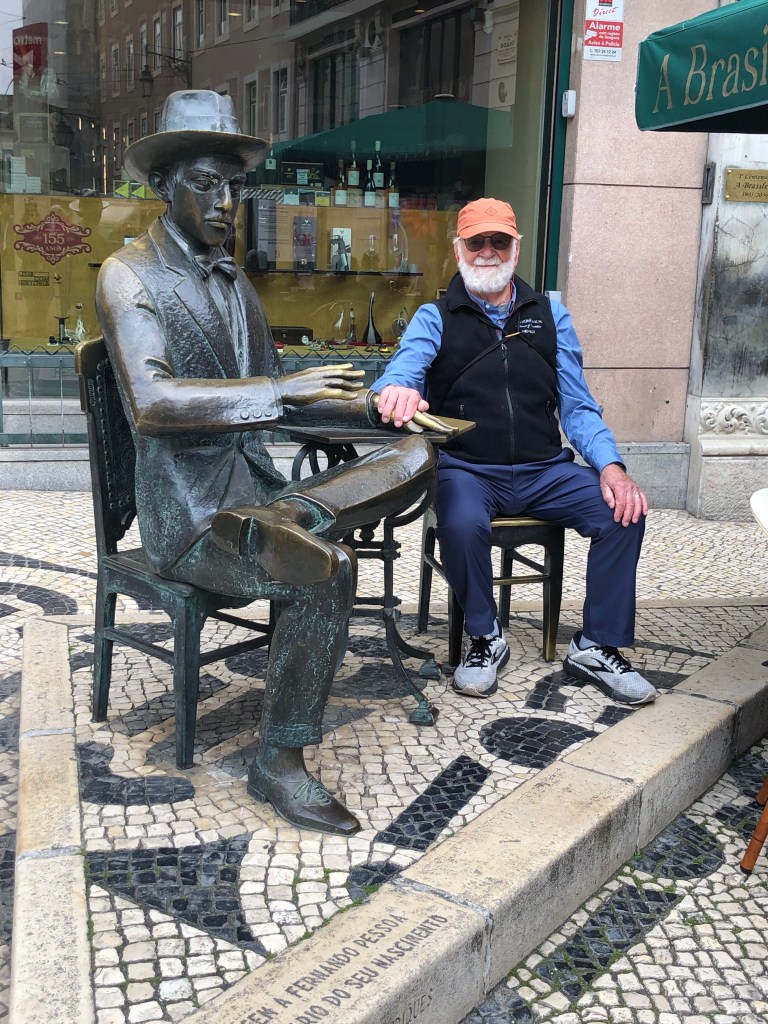
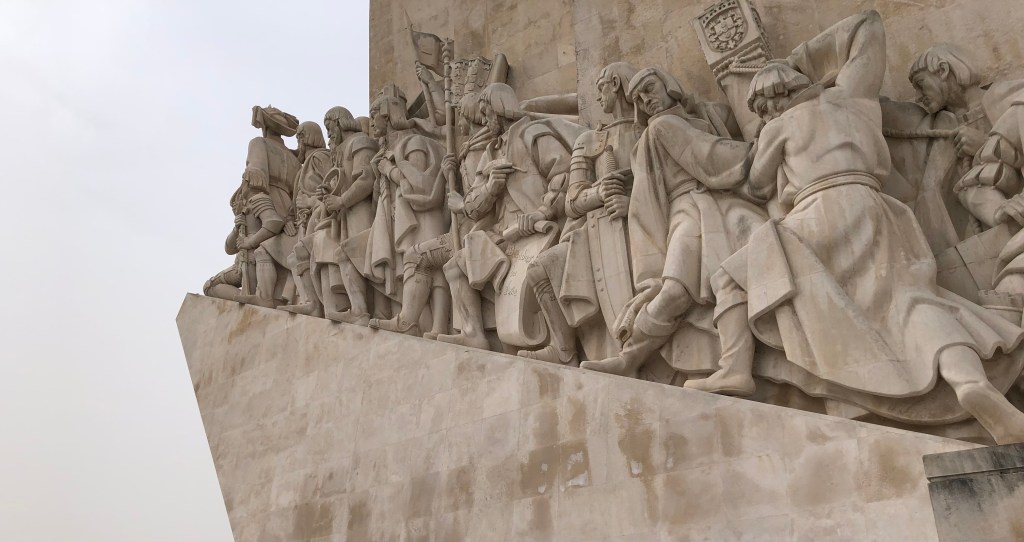
Belem, on the river front was the gateway to the Portuguese explorations in the late 1400s. The monument (above) to the sailors, is just beautiful.
The St. Jerome’s monastery and church, which sit a bit inland from the river, was built by King Manuel, who founded the explorations and incidentally started the Portuguese Inquisition against Jews and Muslims.
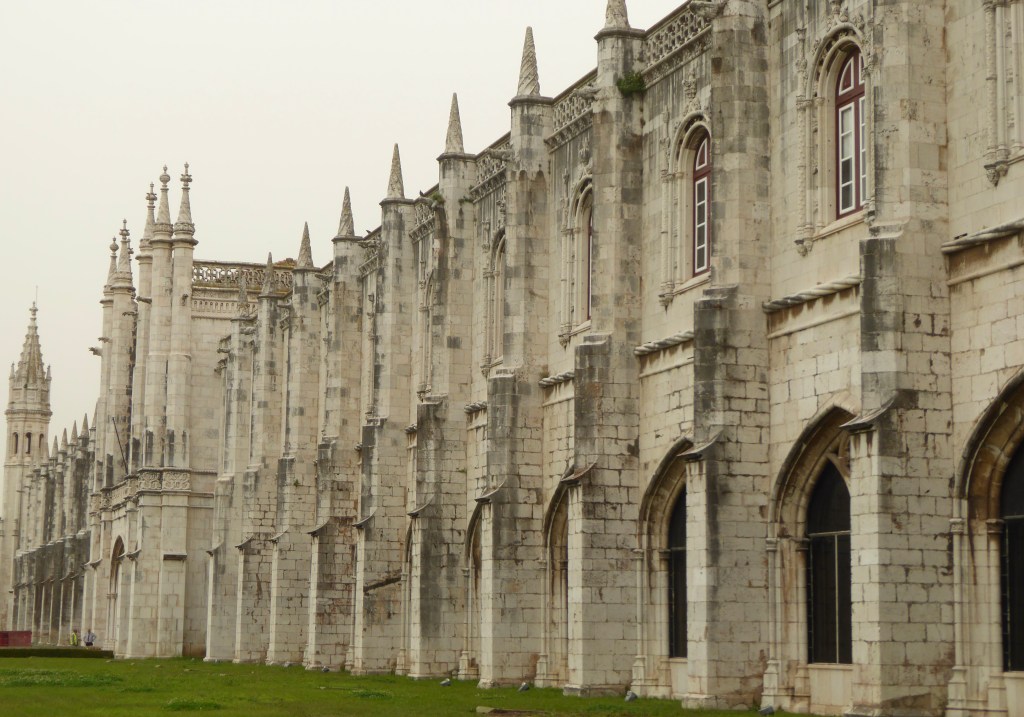
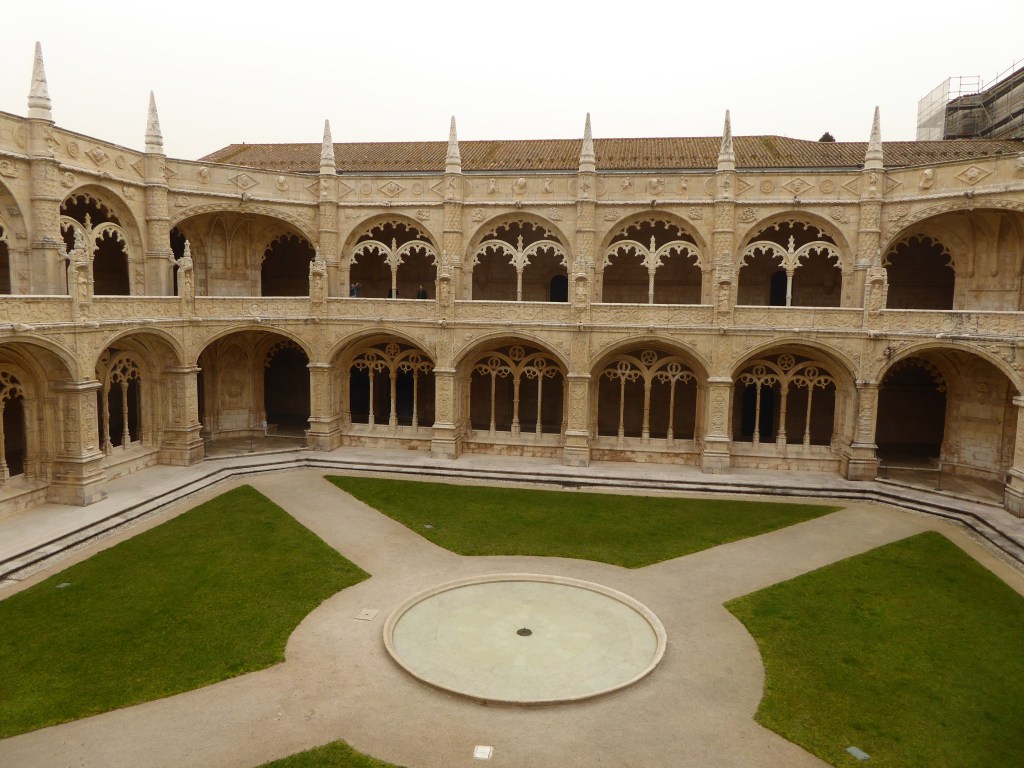
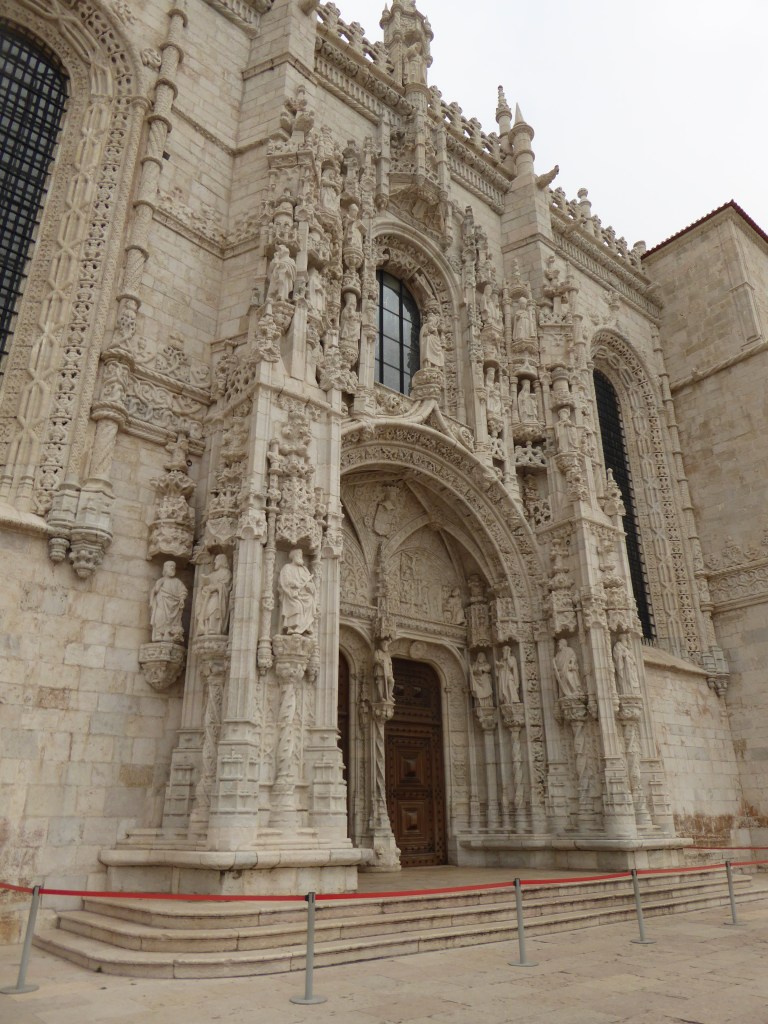
The monastery is enormous with ornate stone work and a beautiful cloister with lovely gargoyles. The church roof is 75 feet high. The monks at this monastery were a strict order – they did not speak to each other and therefore sat facing the wall during meals.
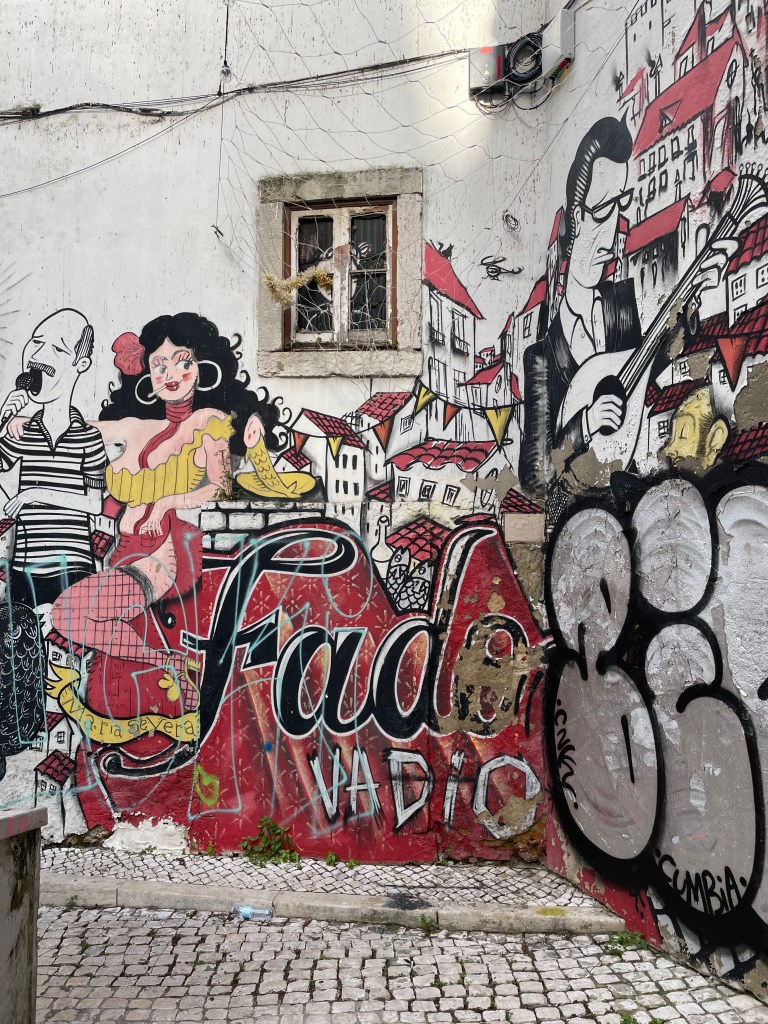
Fado: began in the early 20th century and is very Portuguese. The tour arranged for a private dinner with Fado performance. Two guitarists; one playing the 12 strings Portuguese guitar and the other playing a classical guitar accompanied the two singers who took turns singing sad and happy songs. We had music between the courses. One performance after salad, one after main course and finally one after desert. I was amazed to see that it was 9:30.
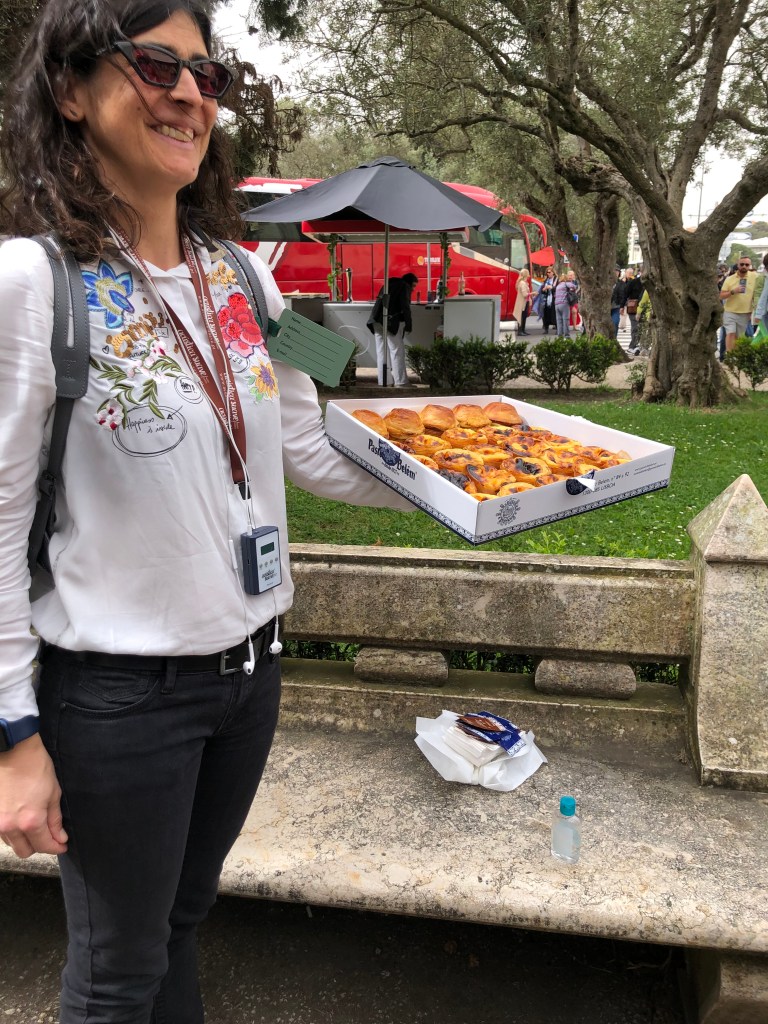
Claudia brought us a snack between visits, the Pasteis de Nata, the Lisbon specialty. It is a creme pastry. Supposedly this is an old monk recipe.
Cork Farm visit
This farm, owned by the same family since the 17th century, was open only for Rick Steves tours. They grow pine trees in addition to cork trees.
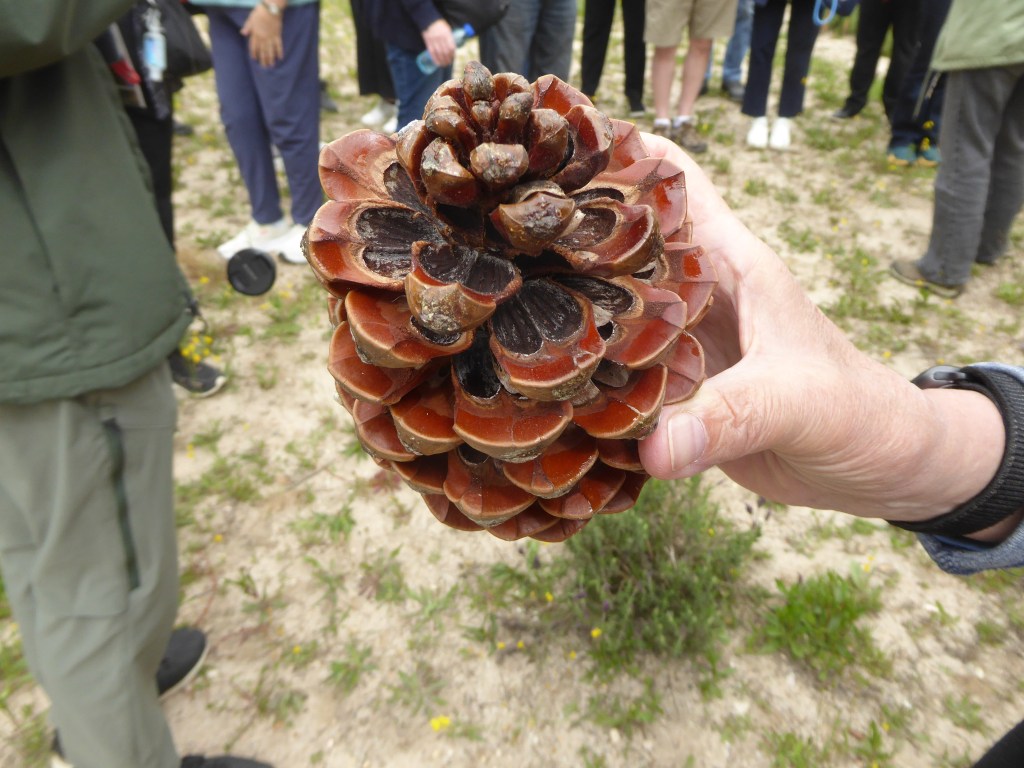
We learned the process for getting the pine nuts out of the cones. Very intensive, which is why pine nuts are so expensive.
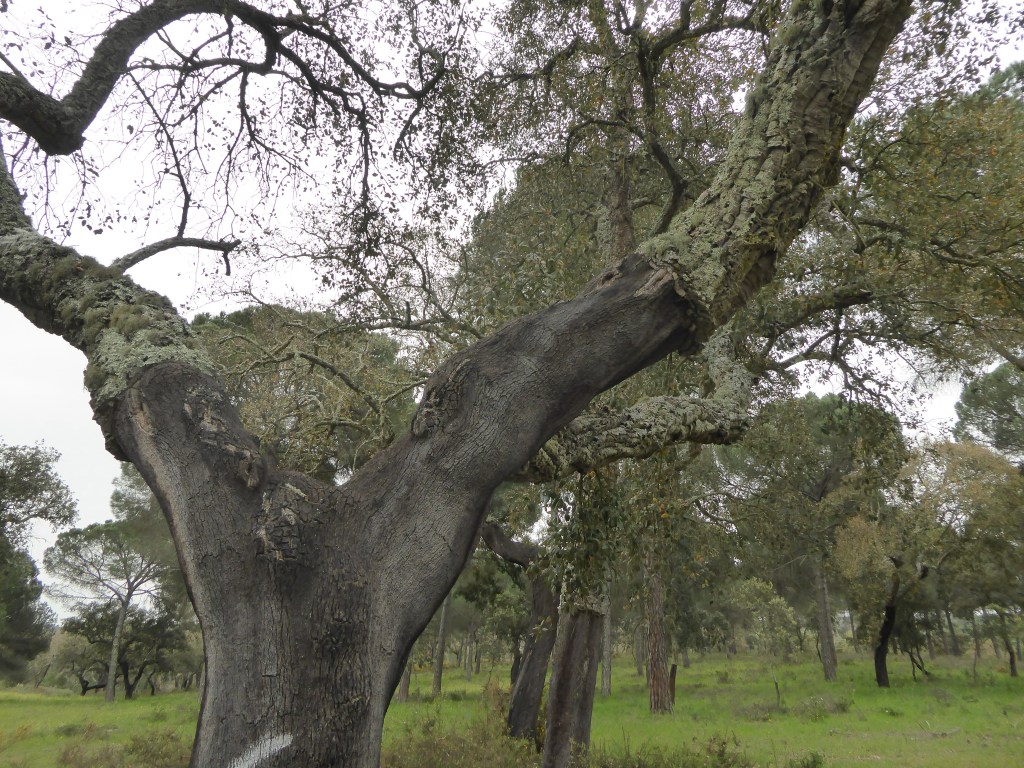
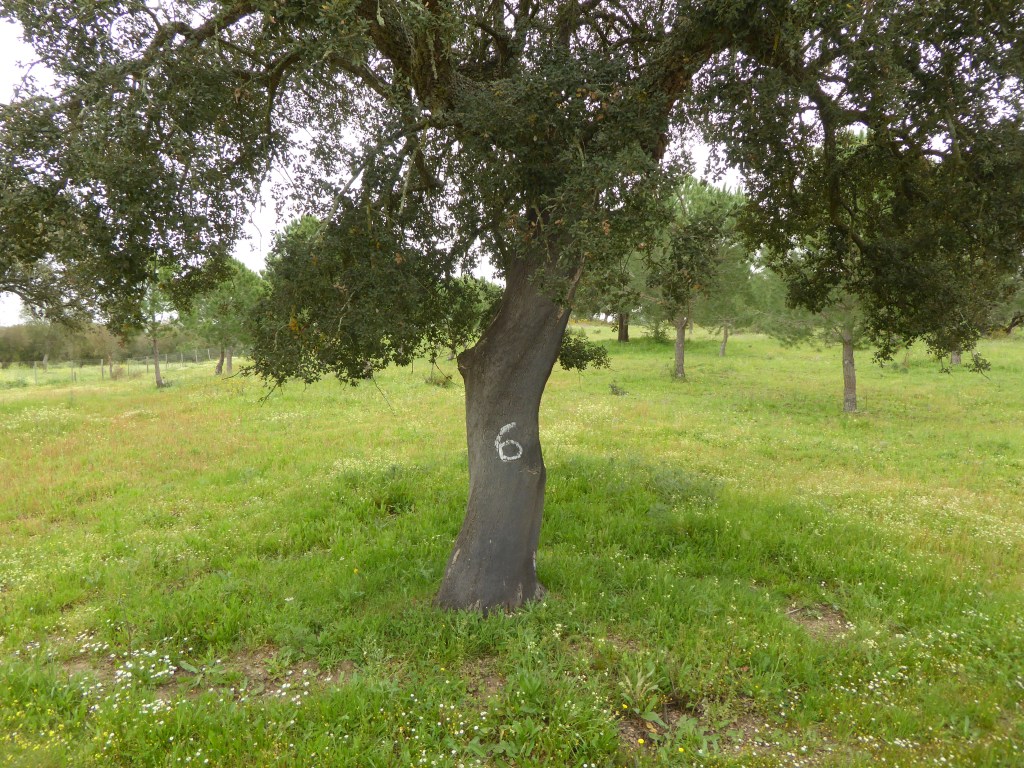
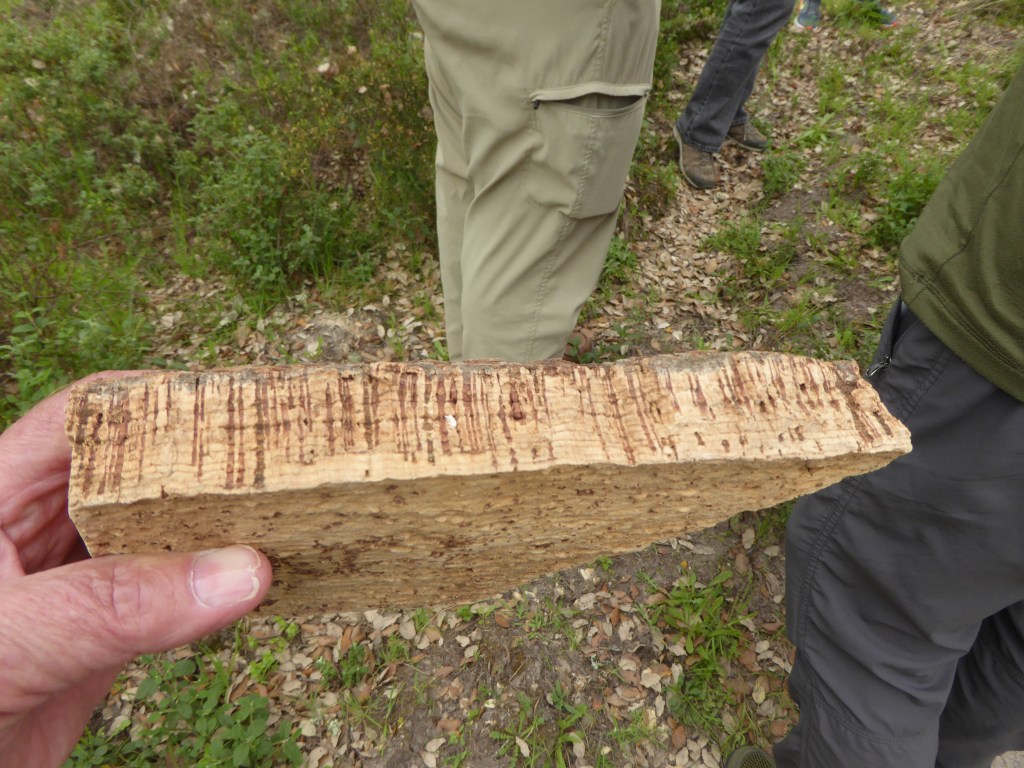
The cork trees are fascinating. They are harvested in place. Just the bark is removed from the tree. Picture of the tree above (left) was just harvested which is why the bark is dark. The tree on above (center) has a 6 on it, which means it was last harvested in 2016. It will be harvested again in 2025. The picture above (right) is of the inside of the cork. The trees take 20 to 25 years to grow enough to be harvested and can survive 17 harvests.
Obidos
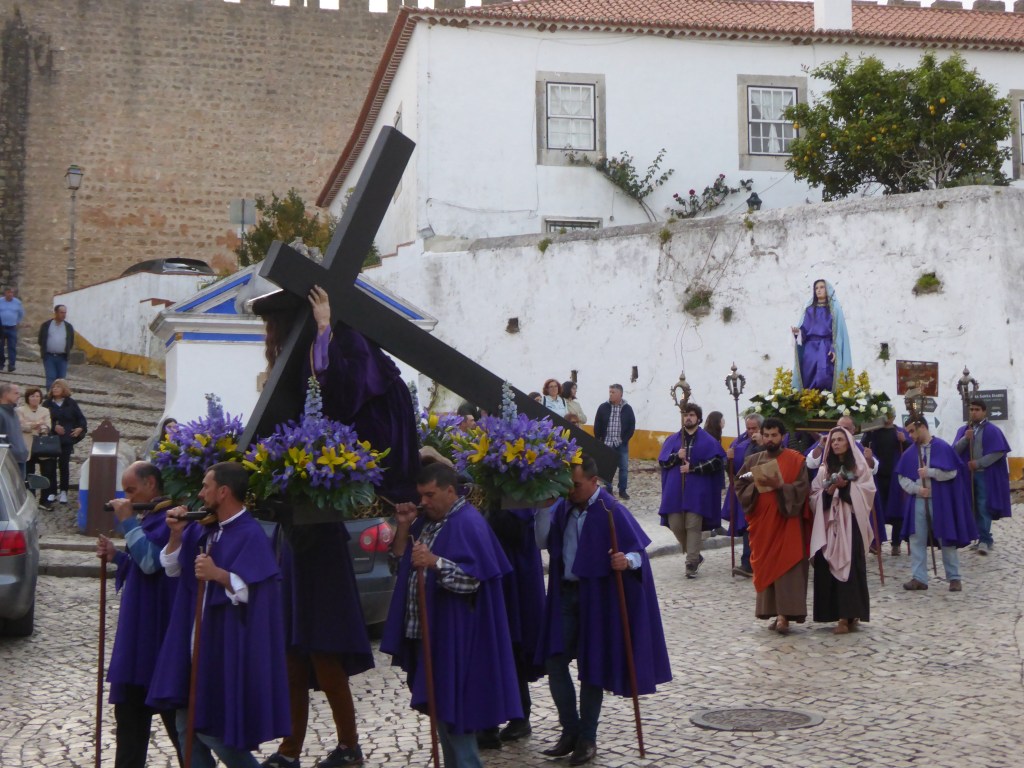
Obidos was my favorite of the trip. Our timing was fantastic – we arrived at our hotel for our evening orientation tour just as the Palm Sunday procession was passing behind our hotel, which was one short street from the walled city. I had never experienced this kind of procession: first came priests dressed in purple with incense, then a huge bier with a statue of Jesus and then another with a statue of Mary. This was followed by many more priests and towns people walking with lavender branches. There were singers and a band playing mournful songs as well as lots of bell ringing. It was all very exciting. The procession snaked around the walled city and therefore we saw it a few other times as we toured the town.
Obidos was founded by the Romans at the top of the hill and the spot was used by the Visigoths, Muslems and Christians because of its defense capabilities. It is a small city with only 3 main streets length wise, each one higher than the other, with intersection cross streets at a steep angle. The footing was slippery and walking took concentration especially going down in the dark, as I had to do to get back to the hotel.
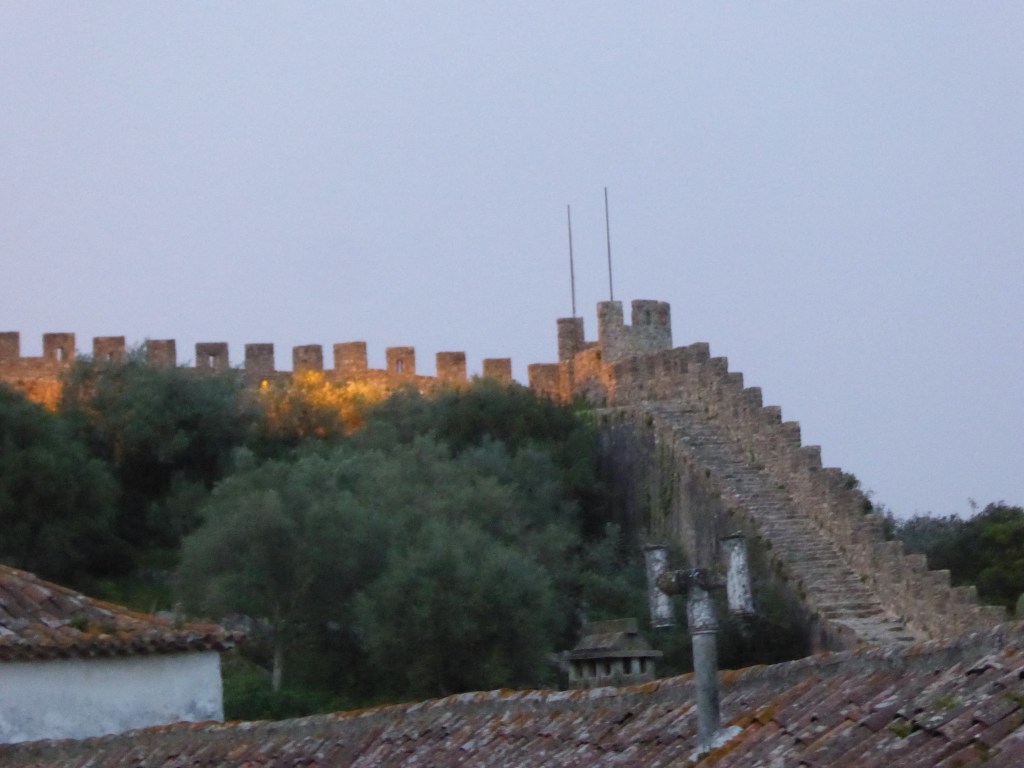
The 4 kms of Obidos city walls were built in the 14th century, and the visitor can still walk much of them. But there is no guard rail on the inside and since people can walk in both directions, it felt too dangerous and I chose not to do the walk.
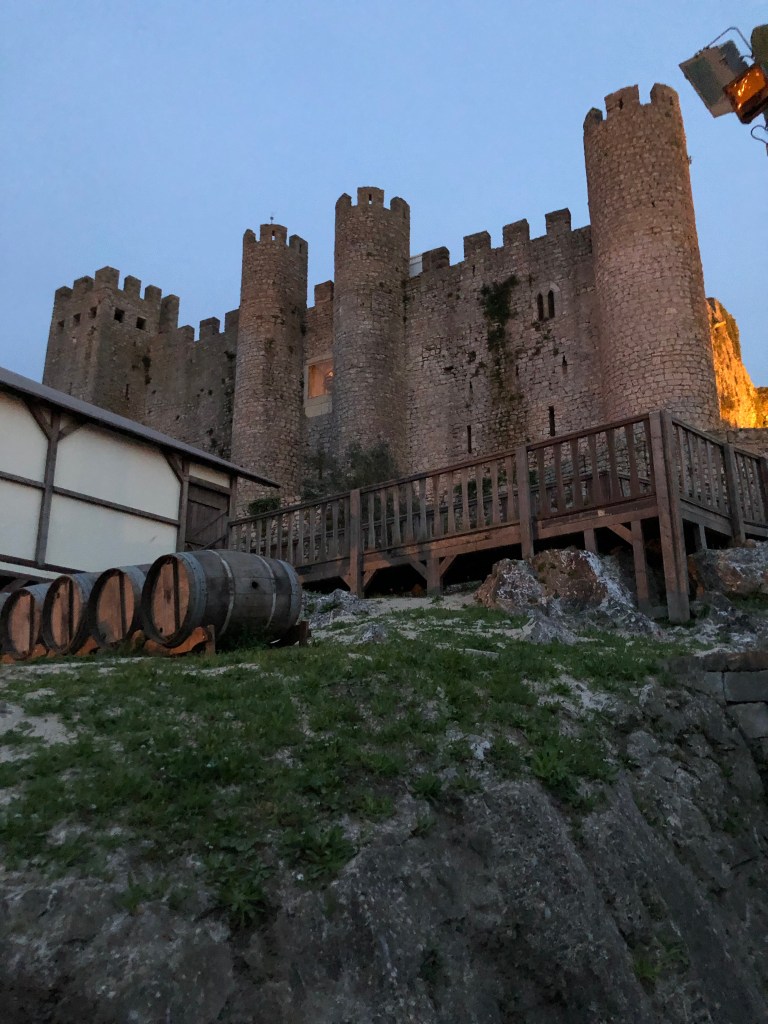
The old castle is now a hotel. We could not go into it, but we were able to see the grounds and the view of the valley from there.
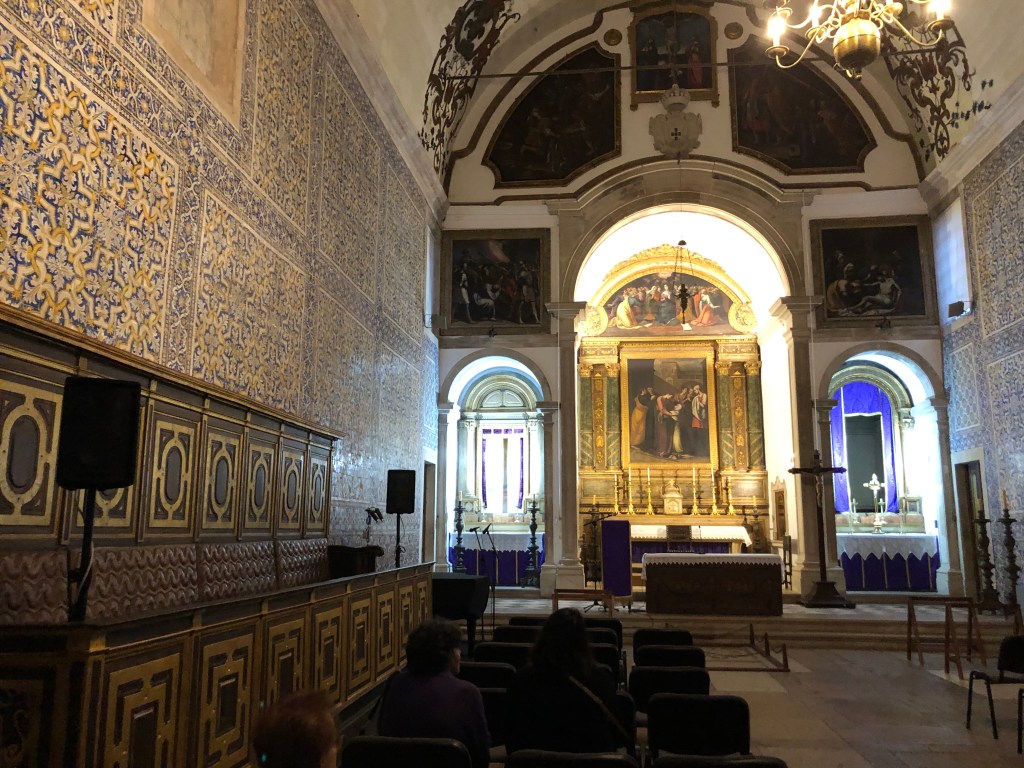
In our free time in Obidos we revisited the various churches that we had seen the night before during the procession. I especially enjoyed the Alm House Church, which housed the statues when they were not in the procession. It is a lovely, Moorish looking church with tiles around the walls.
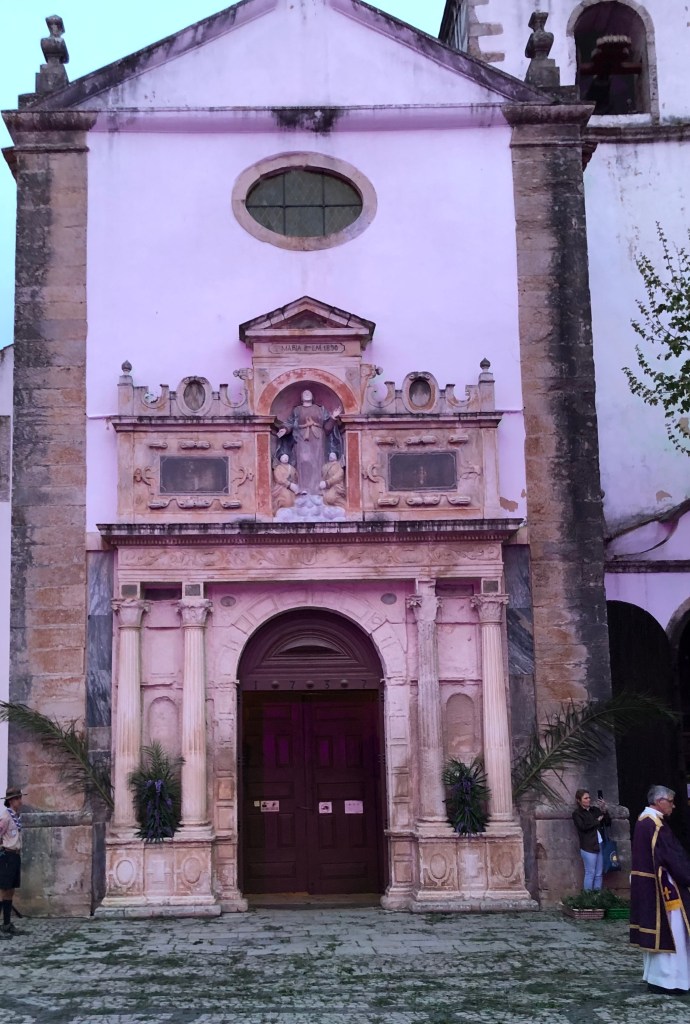
Next door was the Santa Maria Church, which has lovely pink exterior walls. The procession had stopped in front of it, but we were not able to enter until the next day.
Batalha and Fatima
We made a short stops in Batalha and Fatima on our way to Coimbra.
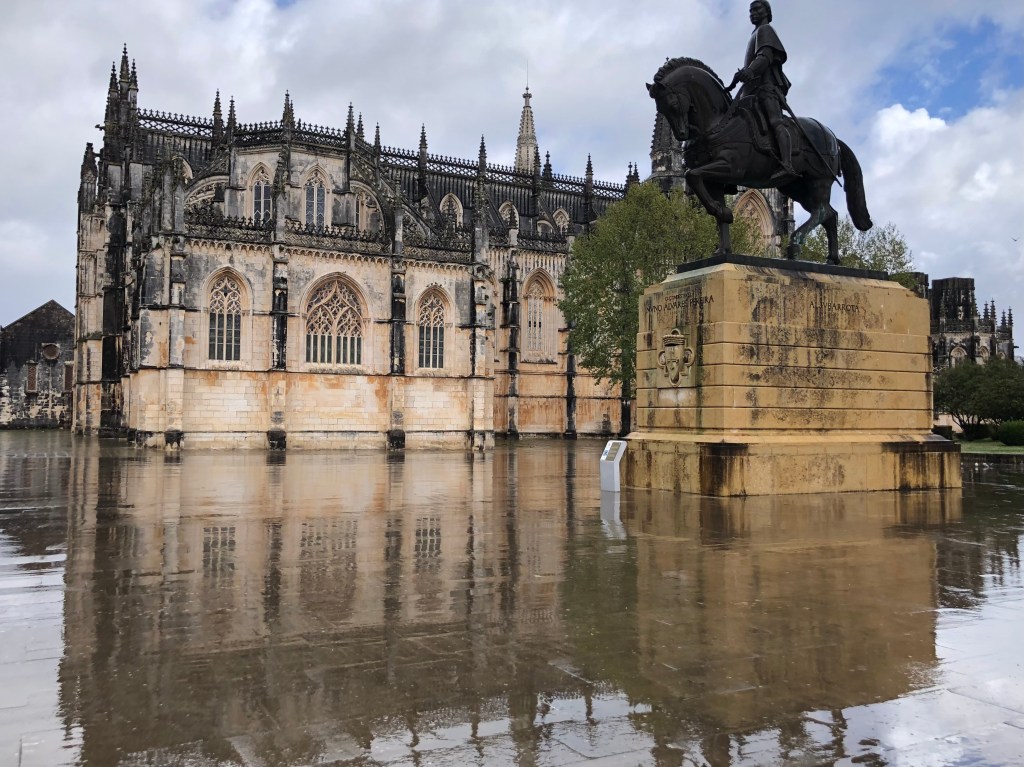
The attraction in Batalha (meaning battle), is the 37,000 square meter, Batalha monastery, built to the Virgin Mary to commemorate King Alfonso’s win over the Moors.
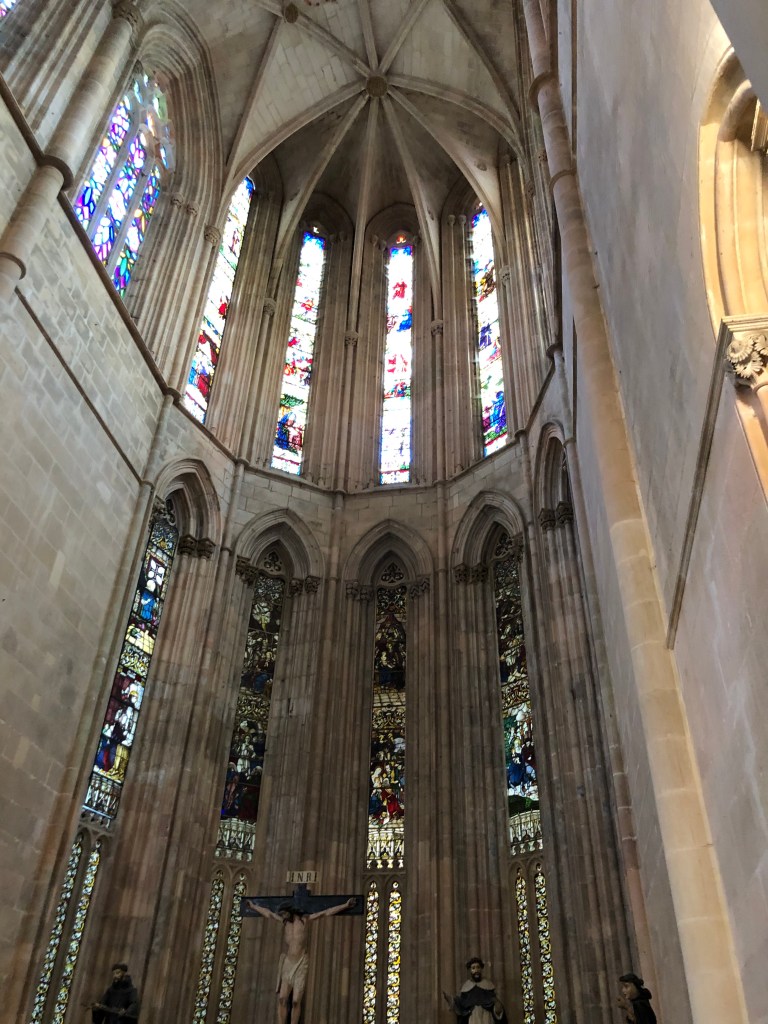
The church is plain but very beautiful with its lovely stained glass windows. It opened in 1517. Its 27 meter ceiling (90 feet or so), is the highest in Portugal.
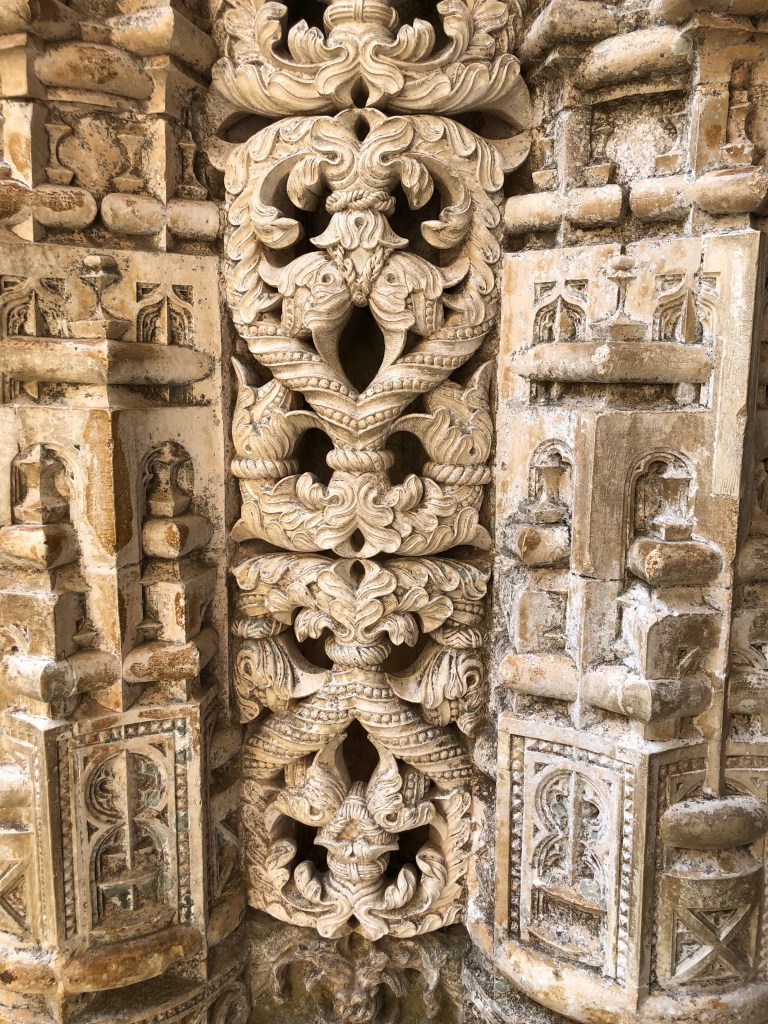
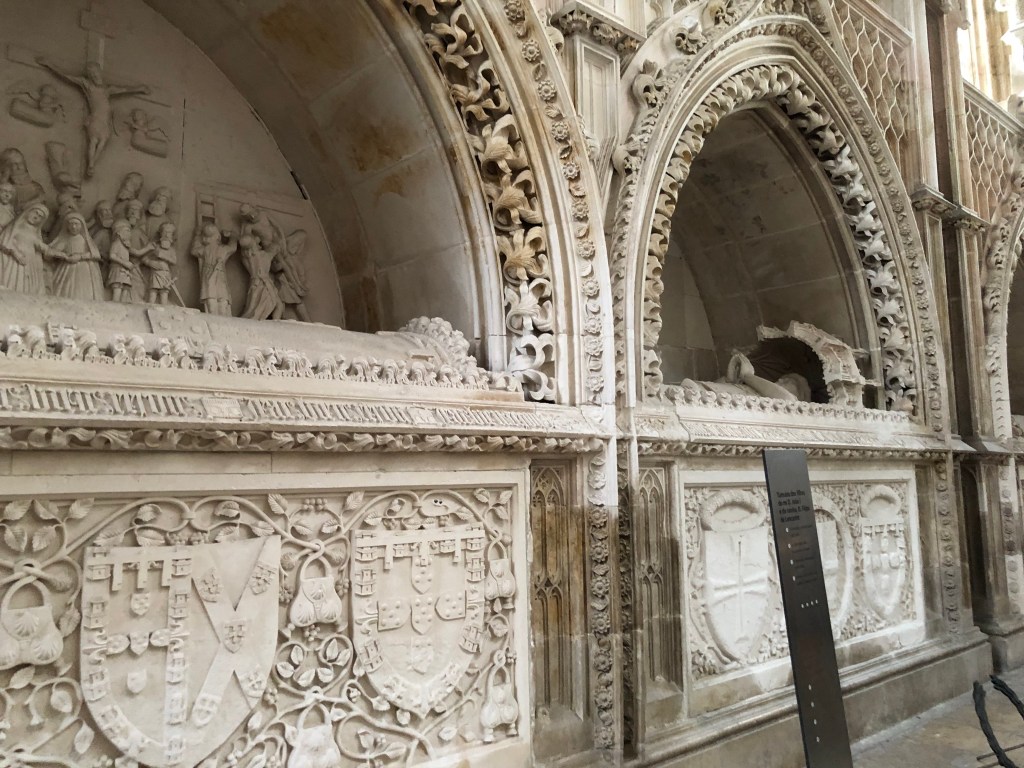
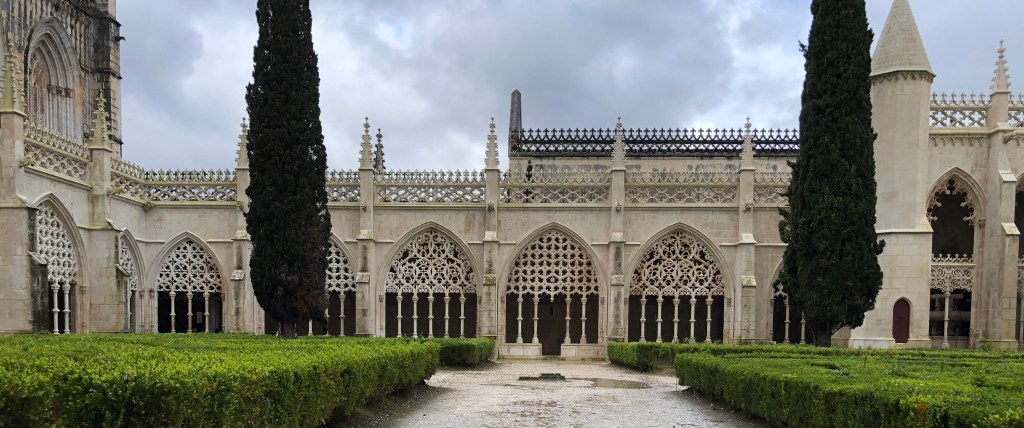
The square chapel has beautiful columns and in its middle is the tomb of King John and his queen. There were lovely carved arches and a beautiful cloister.
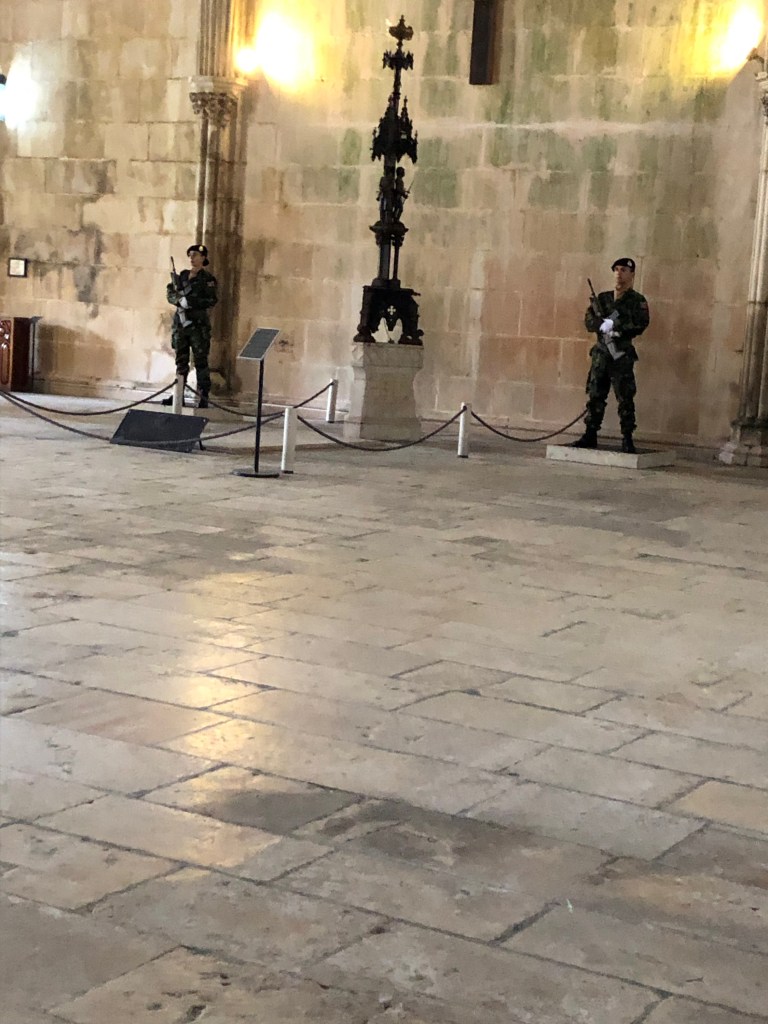
The chapter room of the cloister is dedicated to the unknown soldiers who died in Normandy and Africa in WWI. We were there for the changing of the guards’ ceremony, which I found to be meaningful.
Fatima (a Moorish name) became a holy site when in 1917, three shepherd children, Lucia, Jacinta and Francisco saw a vision of Mary on May 13th near the town of Fatima while tending their sheep. They saw the vision each month on the 13th until October 13th, 1917. The children talked about the vision and by the October visitation some 70,000 people were there to see it. Apparently on her last visit, Mary told the children to build a church at that spot.
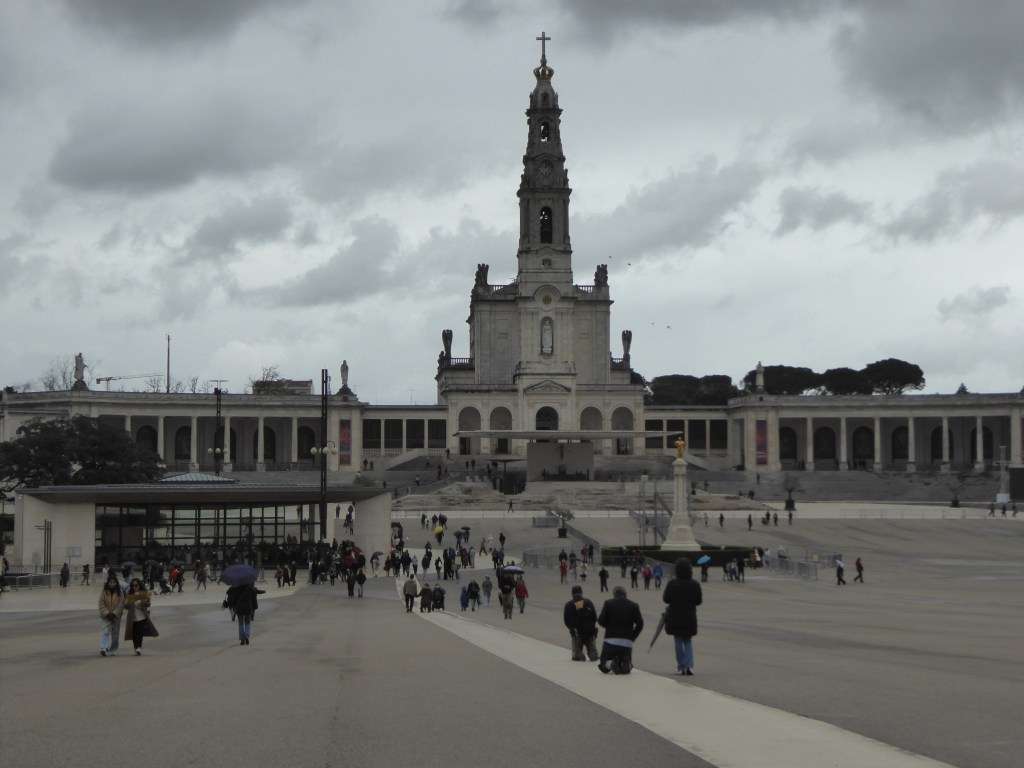
This has become a pilgrimage site with pilgrims ending the trip on their knees. Today, there are 2 churches. The original church (above) was insufficient to hold all the people who came to pray.
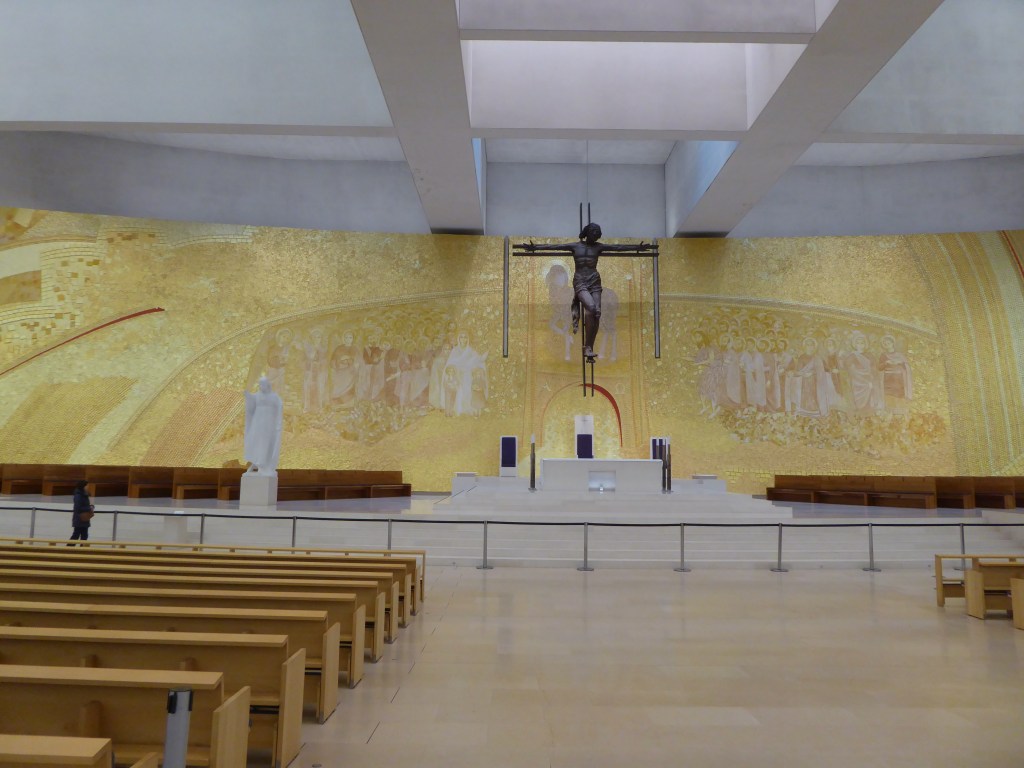
The new larger church has a beautiful mural up front and 12 entrances to symbolize the 12 apostles.
Coimbra
Coimbra, a university town today, was a Roman town on a hill, with a wall, an aqueduct, a forum and a palace. When the Moors took over from the Barbarians in 714, they built their Palace on the Roman foundation. The Portuguese King Alfonso also built his palace at the same place when he took control in 1141. The current (16th century) aqueduct was built in the place of the Roman one. The palace has been converted to the university. The schools in Coimbra were originally religious school and there were 23 of them in the town. Today, there are 150,000 inhabitants in the town and 22,000 are students.
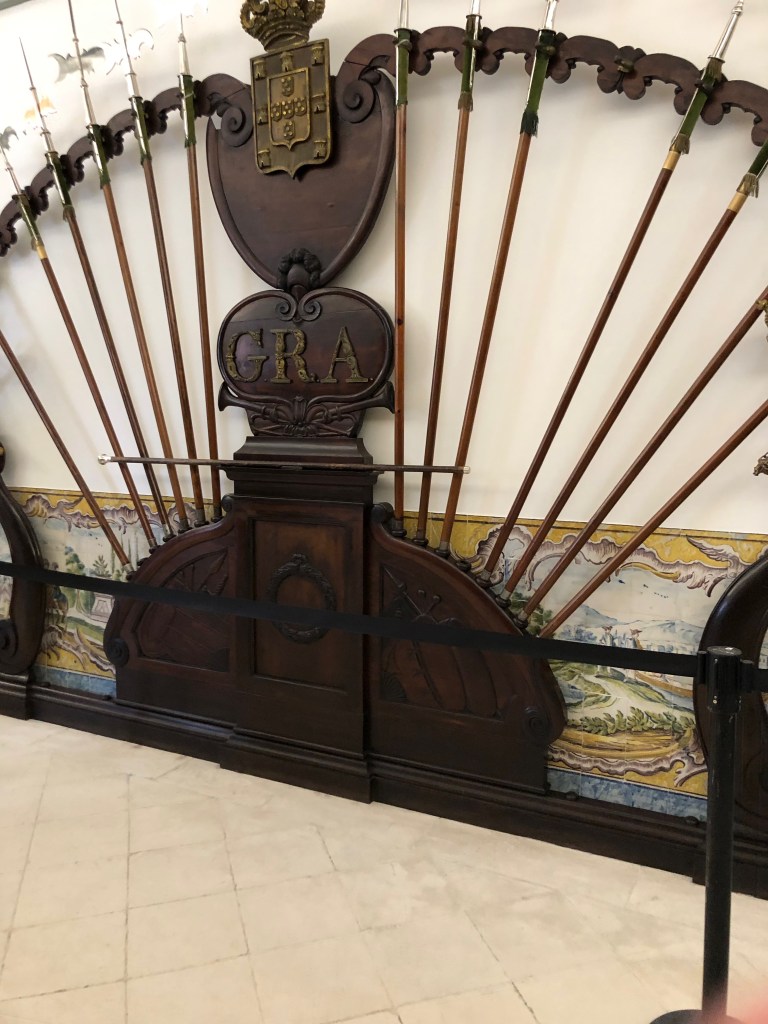
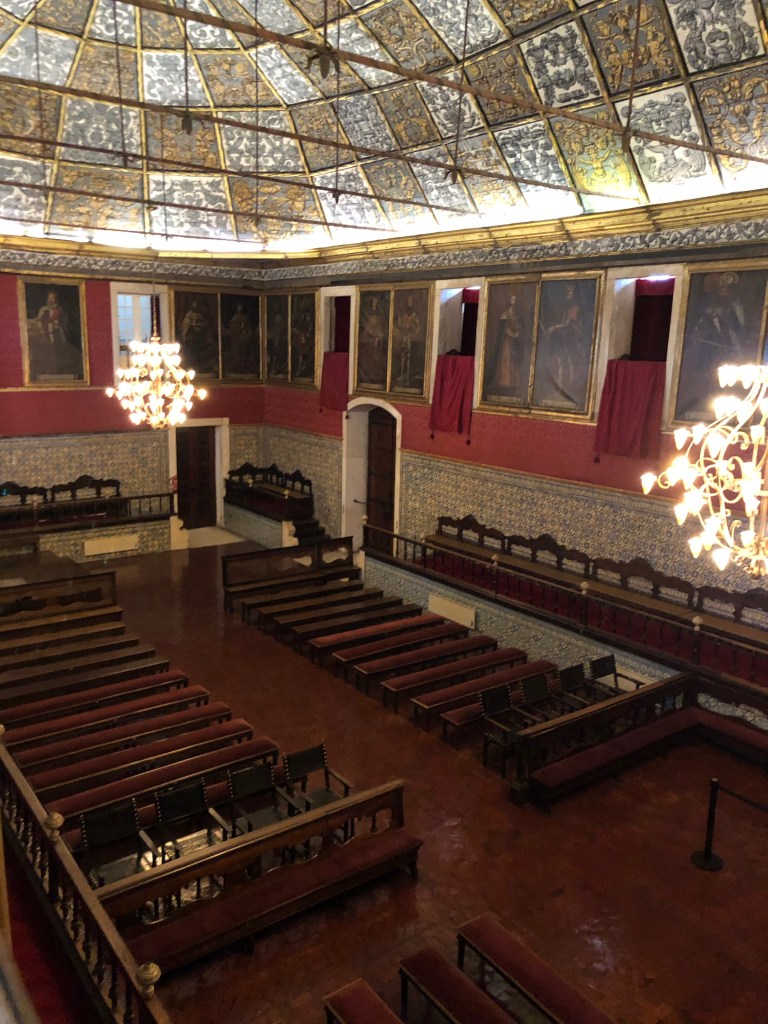
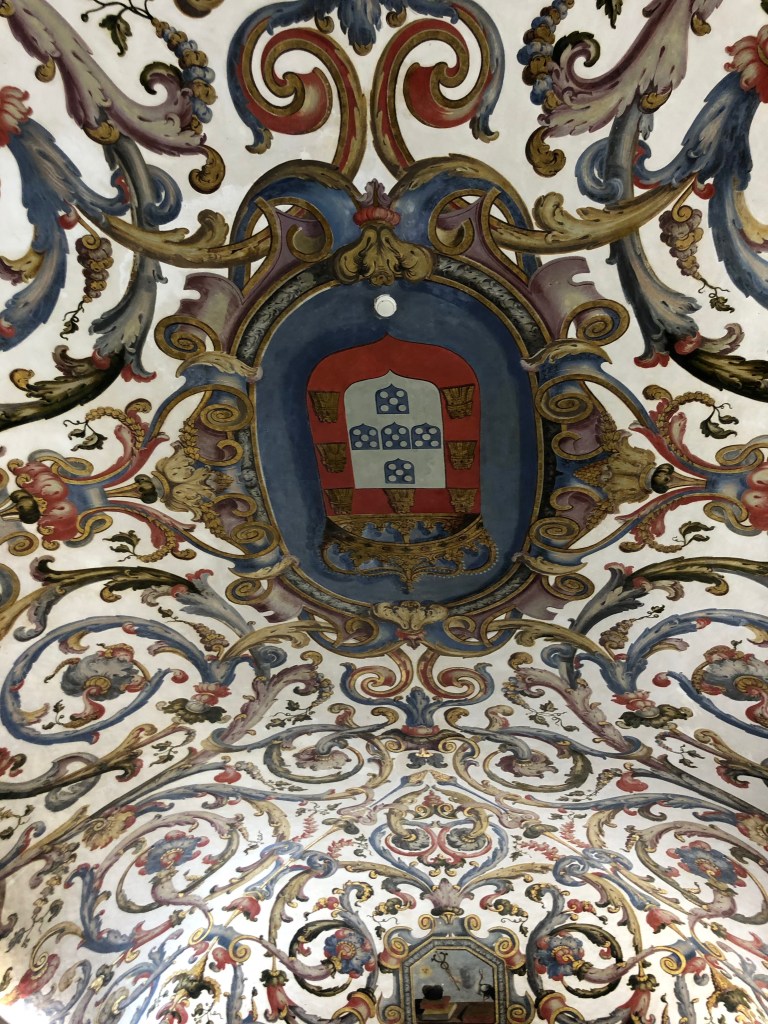
Because the university was originally a palace, the rooms are absolutely beautiful. The main gem of the University is the library, which King John V, rich from the gold from the colonies, gave to the school. The library has three levels.

The third floor is magnificent with walls and ceilings in 18th century Baroque style. This part of the library looks like a church and has beautiful Rosewood tables that are covered at night to preserve them from bat droppings. The bats are there to eat bugs that harm the books.
Porto
Our last city stop on the tour was Porto. I enjoyed the visit to the commerce building best.
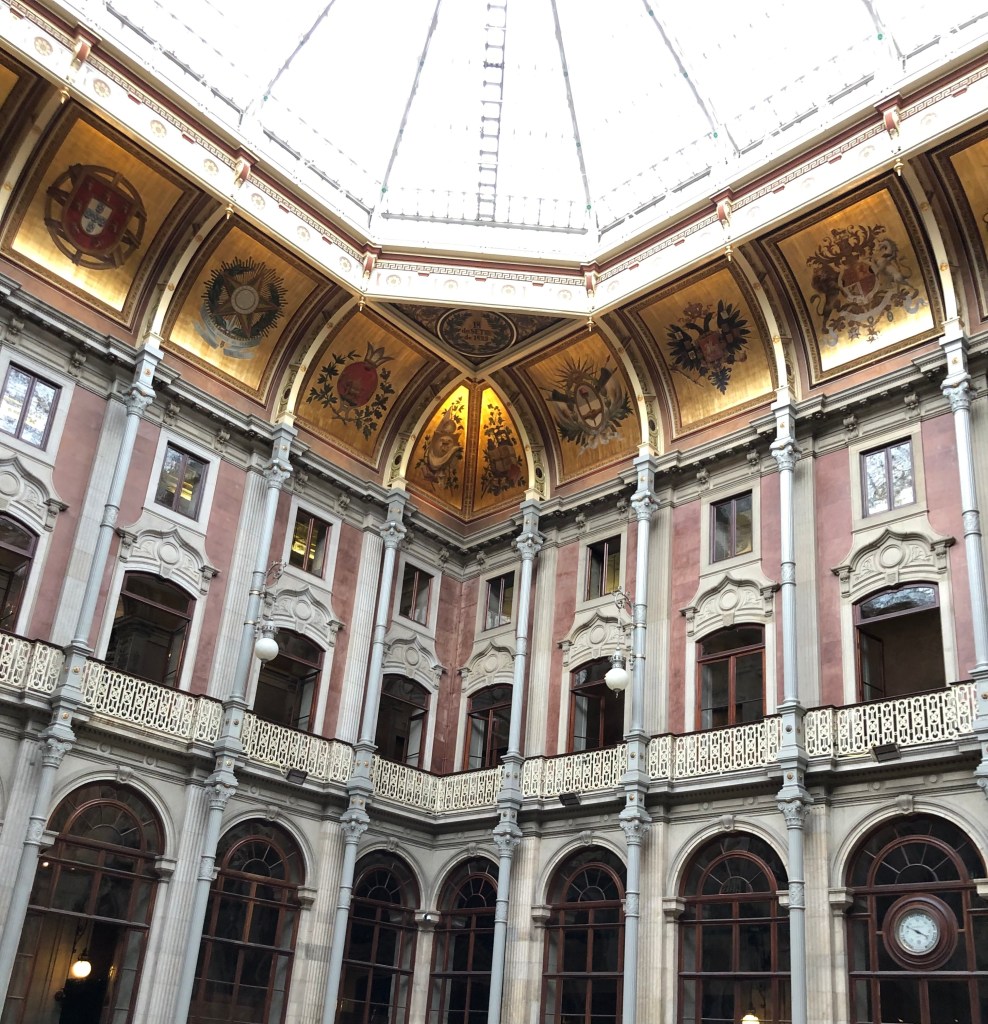
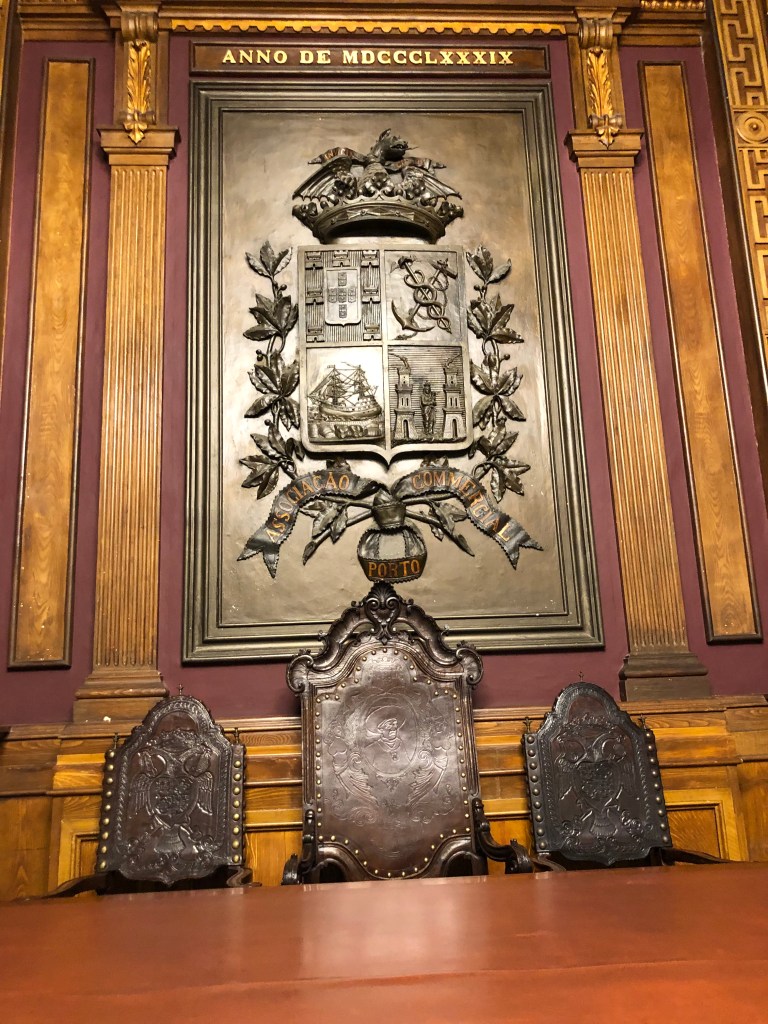
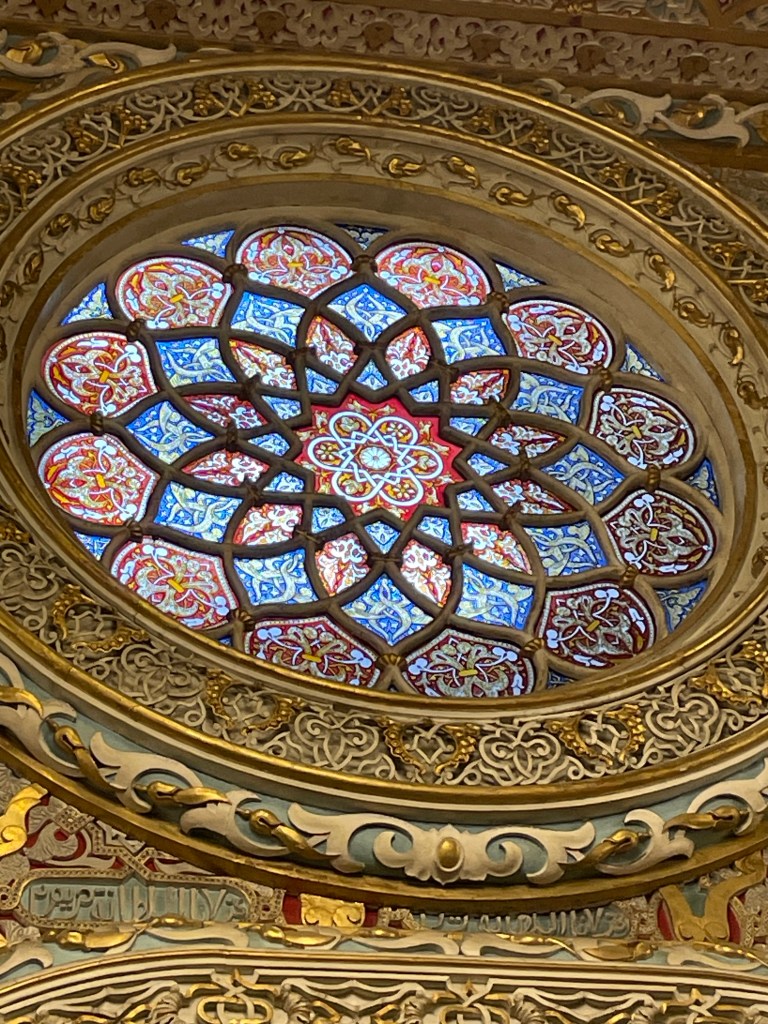
It was built on land that previously belonged to a monastery. It is a granite building and the carvings were done on site.
The most impressive was the ballroom, which was done in Arabic style with geometric designs that just sparkled.
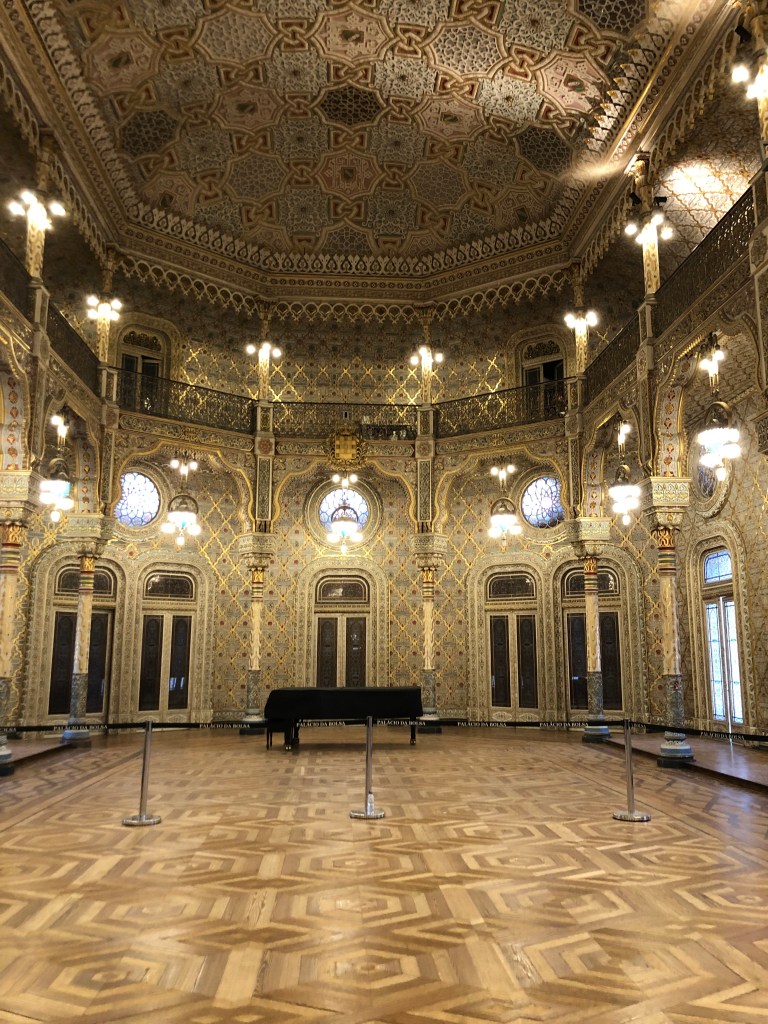
The historic St. Francisco church next door has been de-consecrated to prevent lighting of candles, which can cause a fire. It started life as a simple church, but successful business people built many fancy alters.
The weather that started balmy in Lisbon, turned cold and rainy. Luckily I was able to buy a jacket before the weather changed. In Porto, we, unfortunately had cold rain to cope with. On our walk, going down a narrow street, we could not enjoy the architecture. We had to watch our feet on the slippery stones.
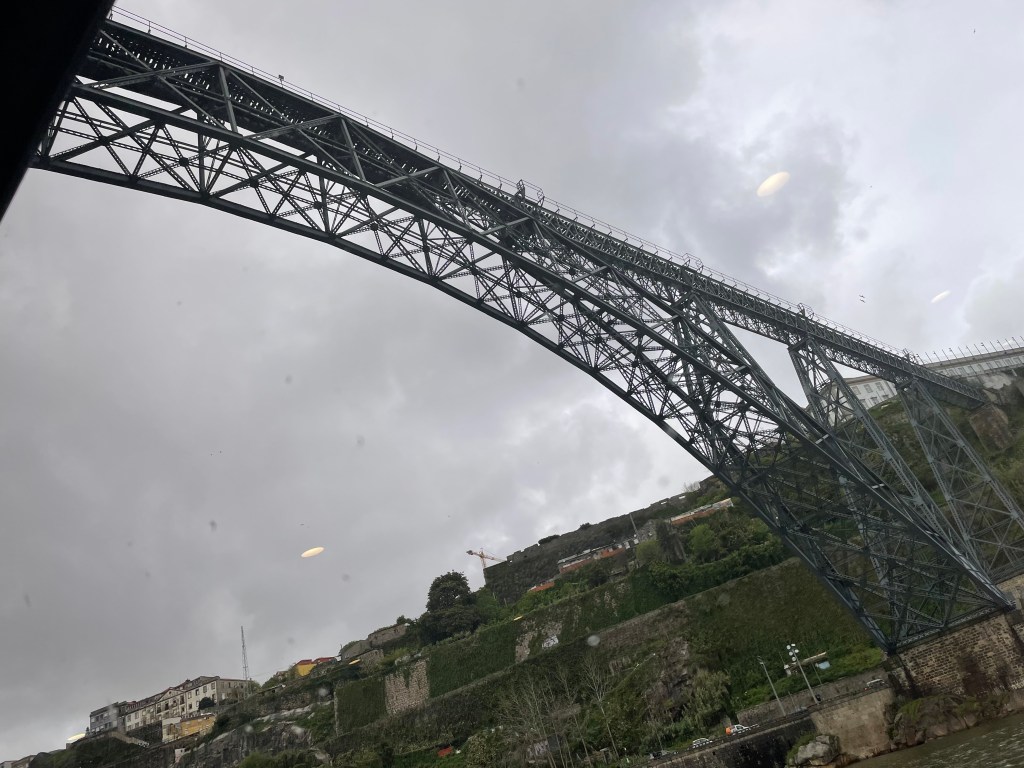
We also had rain on our 45-minute Douro River cruise. However, we were inside the boat and stayed dry. I did enjoy seeing a bridge designed by Eiffel (of Eiffel Tower fame).
Luckily I was able to return to Porto a few days later in sunshine. See below.
Family Time
At the conclusion of the Rick Steves tour, my daughter Maggie and her husband Kevin picked me up and brought me to Braga, where they had been living for about 2 years. Braga, is the 3rd largest city in Portugal, but it feels small and charming.
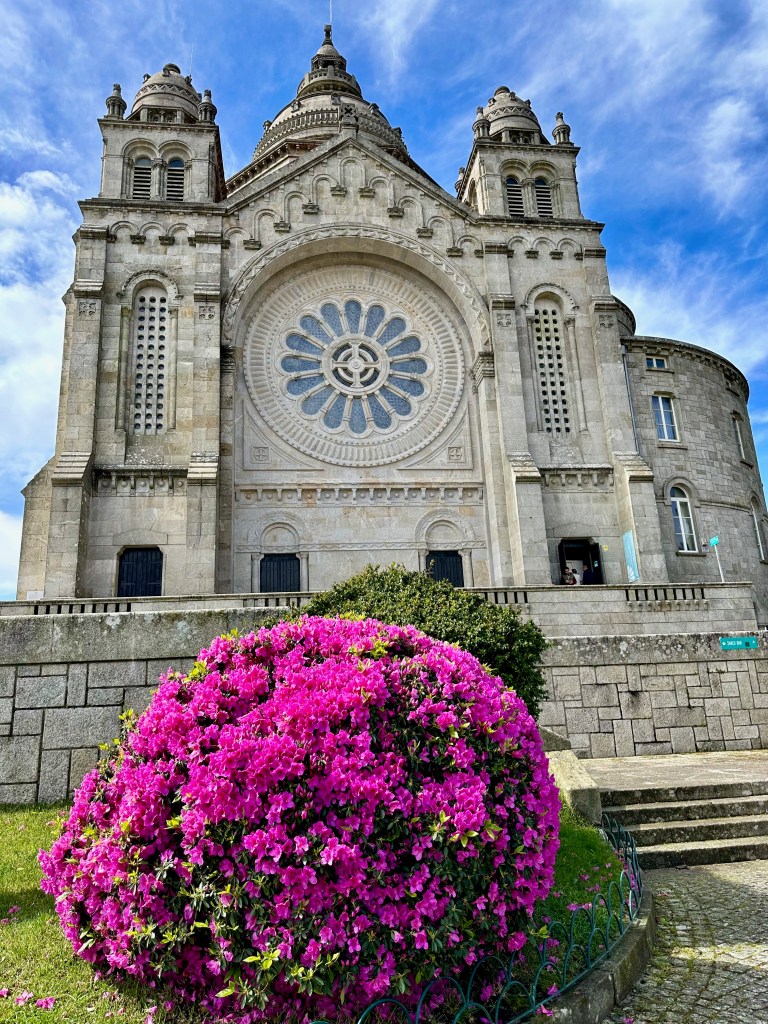
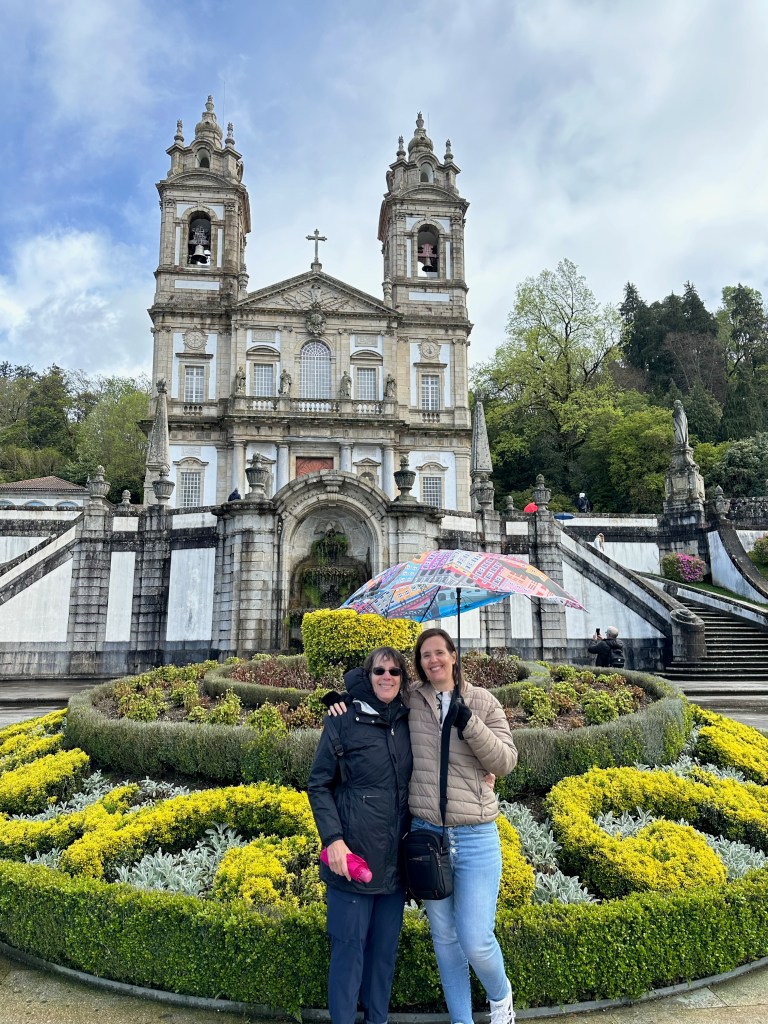
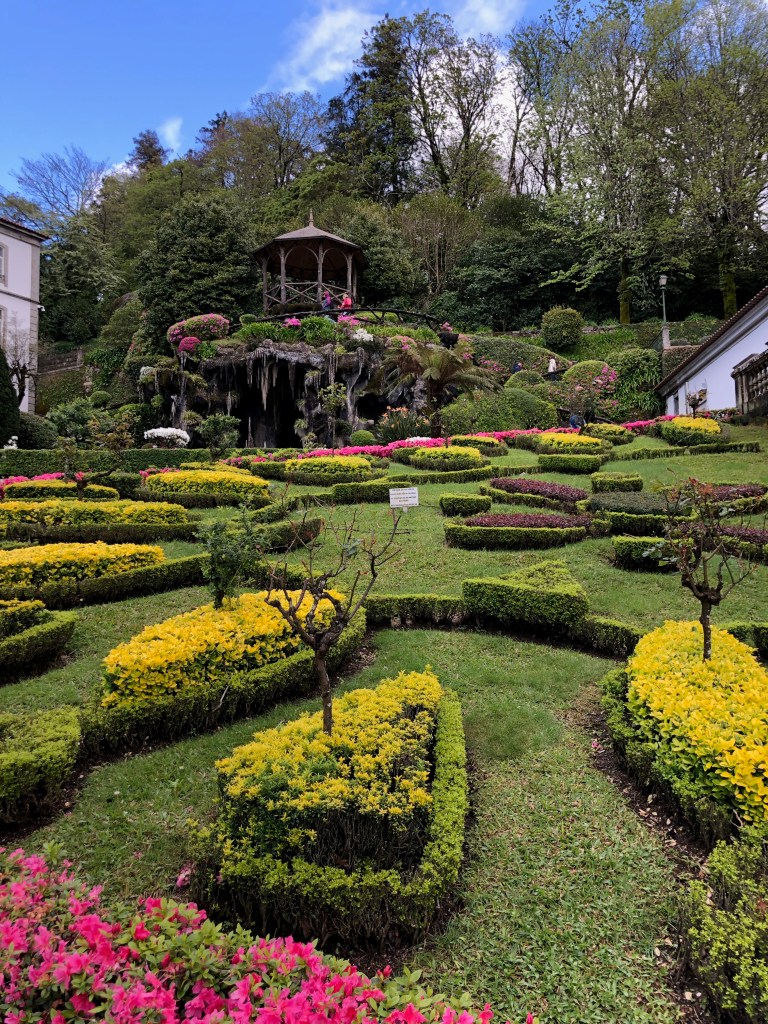
We toured two lovely churches; Santuario de Santa Luzia de Castelo and Bom Jesus. The first is a lovely square church, with views of the Atlantic Ocean from its grounds.
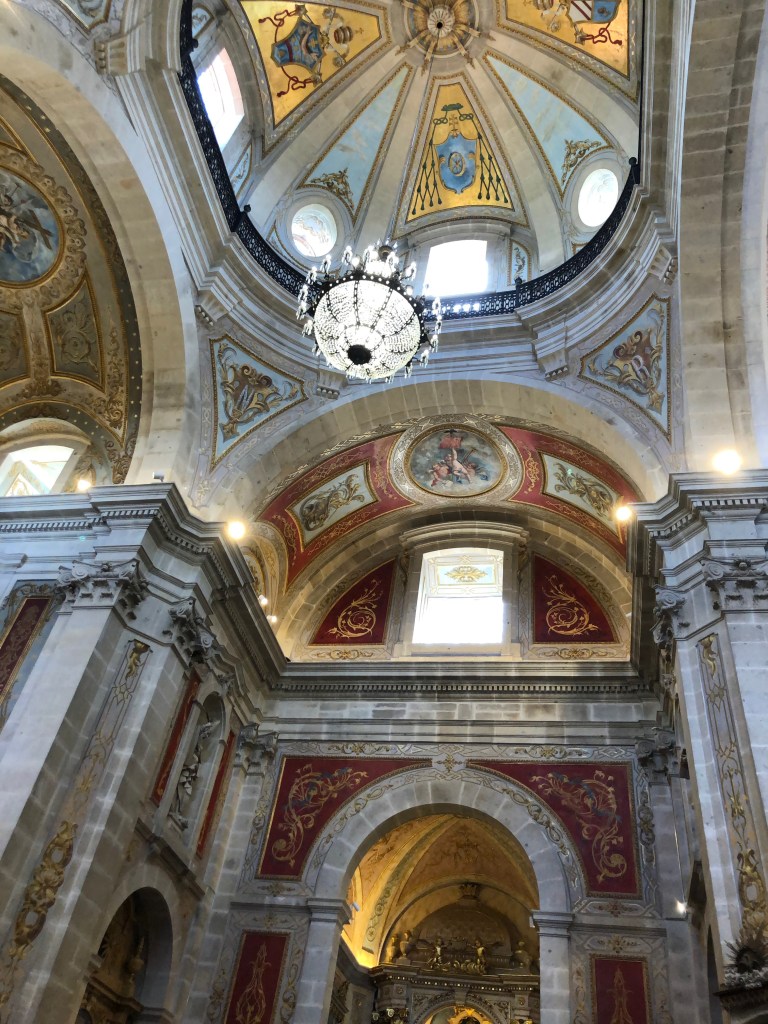
Mom Jesus church is a long, Latin style church with magnificent grounds and structures.
We walked in downtown Braga, and ate at some of their favorite restaurants. Maggie treated me to the local cherry drink, which is usually drunk in chocolate cups. Alas, they were out of the chocolate cups.
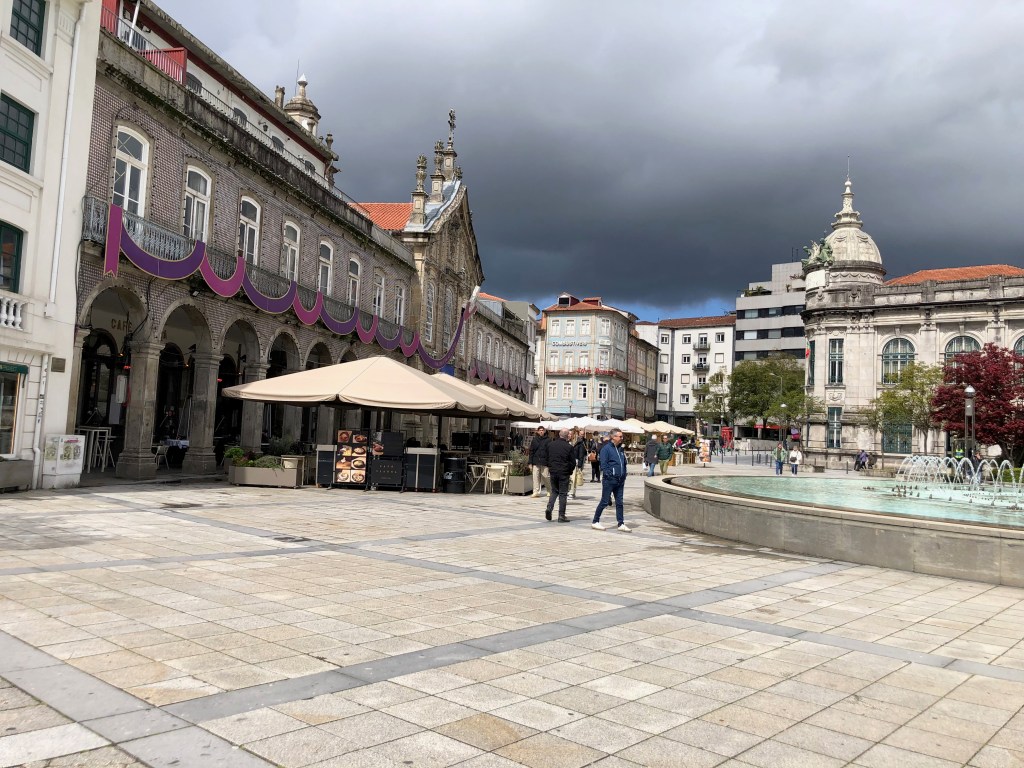
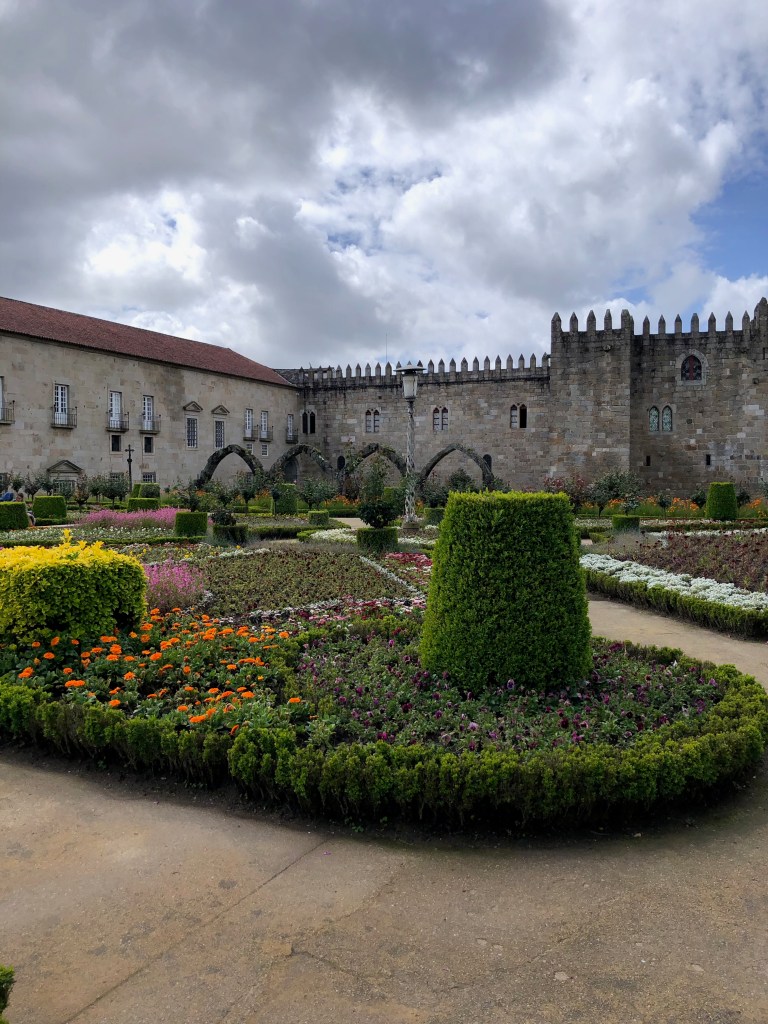
We visited the lovely Santa Barbara Garden. The roses were just coming out – I love roses. We had enough dry weather to enjoy the beautiful grounds.
We had one very rainy day, and we called it our spa day. Maggie and I booked massages and I spent quite a bit of time in the warm indoor pool. It felt great to rest after a couple of weeks touring.
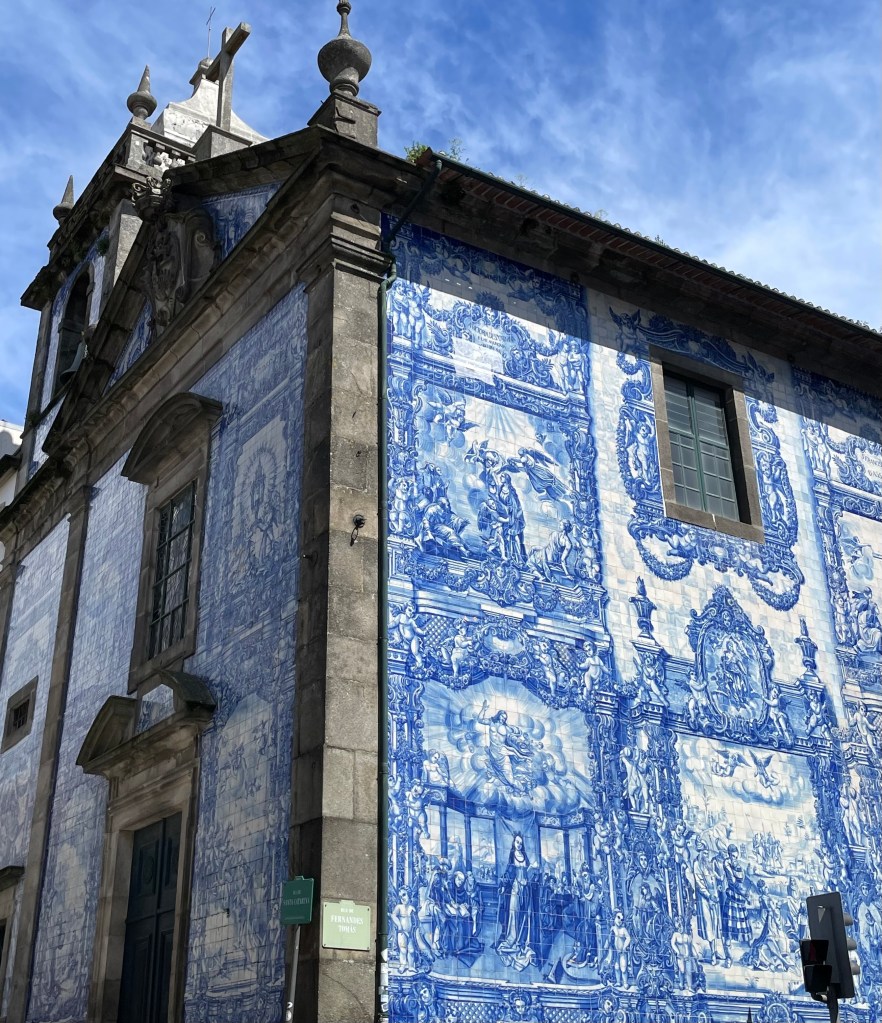
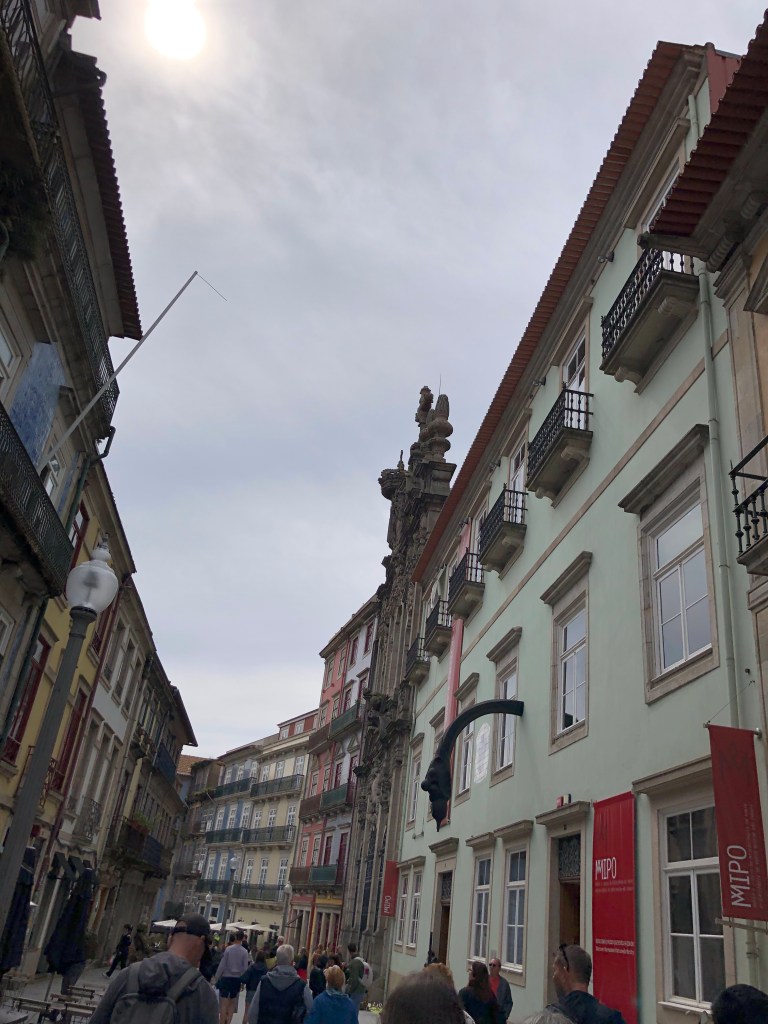
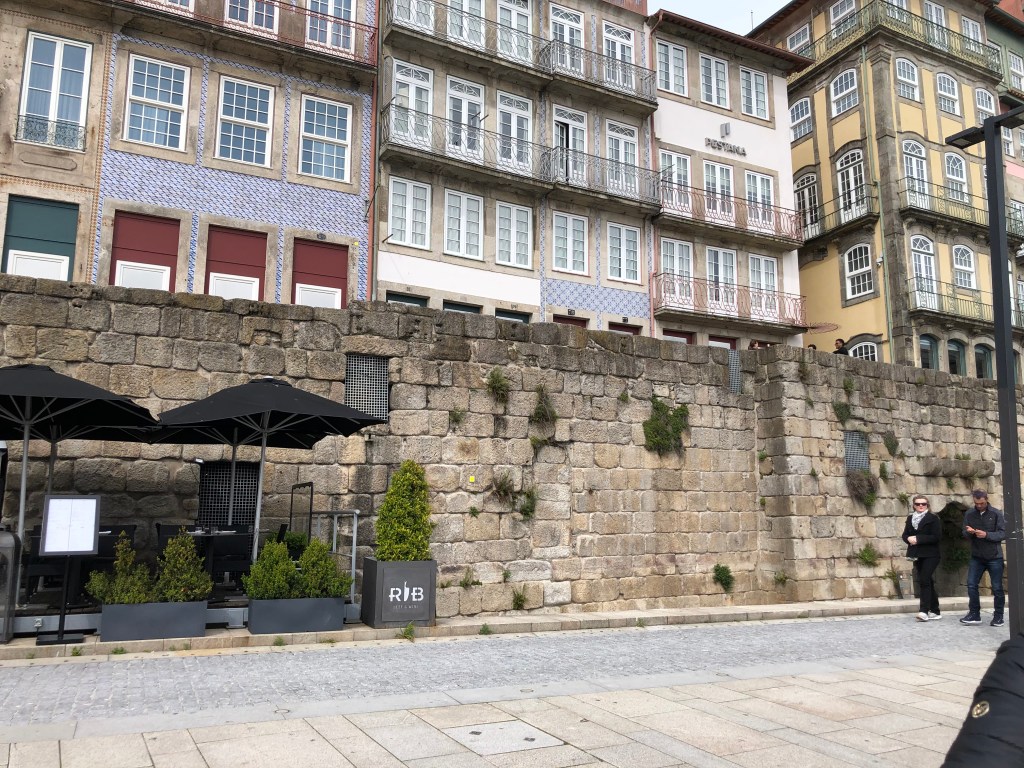
On our last day, we went back to Porto. This time I had lovely weather and could tour in sunshine. We went back to the river bank and I could enjoy (see) the Roman walls and the beautiful tiled buildings with the blue sky above.
Final Comments:
- This post skipped some of our stops. They were all worthwhile and wonderful, but I try to keep these posts somewhat short and report on the best. I skipped: Evora and its UNESCO Roman walls, Alcobaca and its beautiful monastery of Santa Maria, the beach at Nazarene, a winery and a faience pottery factory. If you want to read about them, I will forward my full log.
- I love Rick Steves tours but I think I am aging out of trying to keep up with 25 or so others in the group. The slippery cobble stone streets and a fast moving guide were sometimes a challenge. The fact that I needed a new hip had something to do with it.
- However, I still love learning about history and local culture. I might just have to go at it a bit slower in the future.
- I am glad that I jumped on the opportunity to visit Maggie and Kevin in Portugal. It is always great to tour with “locals”. They have since returned to the U. S.
 Nili's Adventure