
Windstar Cruises had an intriguing trip to the Japanese Island south of the mainland. We decided that it would be fun to do a land tour of Japan followed by the cruise.
Japan was very slow to open up to tourists after Covid. Because the country was closed from March 2020 to December 2022, many tour guides found other jobs. The industry was having a great deal of trouble finding English speaking guides. Our travel agent suggested that we use some English speaking assistants to supplement the guides. We agreed. But even that was an uphill battle. For instance, in one case our assistant knew almost no English and we communicated via Google Translate. However, this low level of assistance was important, because I don’t believe we would have been able to negotiate the various trains on our own: there were few signs in English. We used the trains extensively to move around the country.
There were many wonderful adventures and some tense moments during this trip.
Although we flew into Tokyo, we spent only a short time there and continued on to Mt. Fuji area. We did end the trip in Tokyo, therefore, I will return to report on this city at the end of the next post.
Mount Fuji and La Vista Fuji hotel
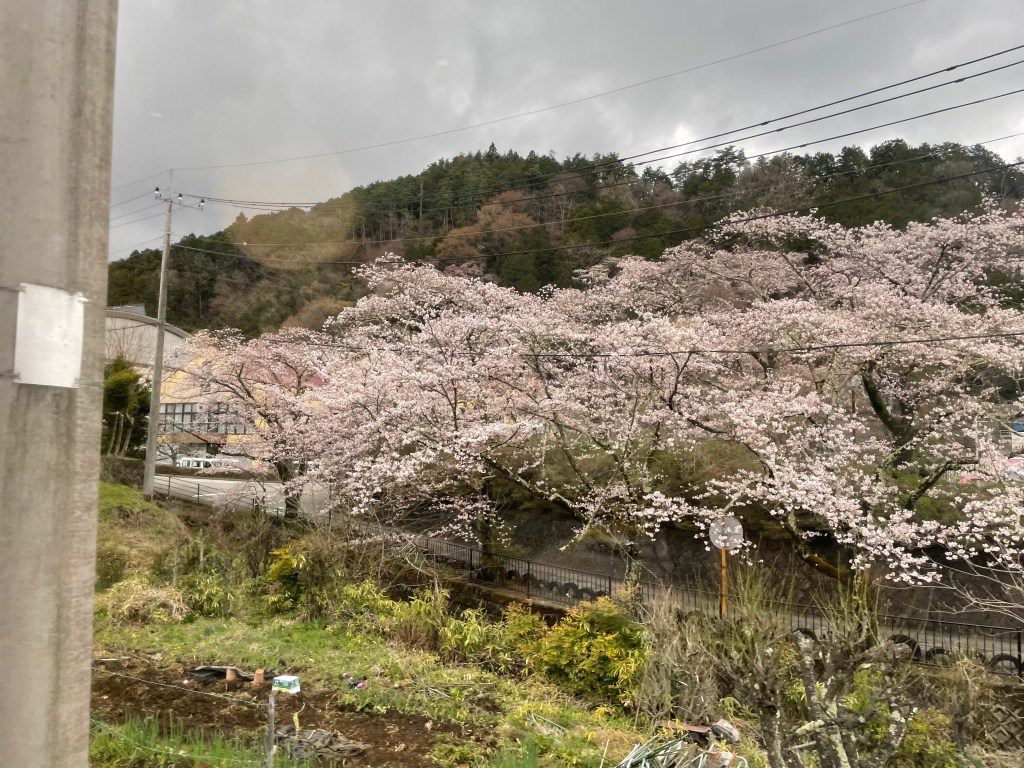
The train trip from Tokyo to the Mount Fuji area was lovely in that we were able to see blooming cherry trees along the way.
Our room at La Vista Fuji hotel was very nice, with a balcony looking right at where Mount Fuji would be if it wasn’t hiding upon our arrival. The hotel was pretty isolated; therefore, dinner was included. It consisted of 7 courses and was delicious. Another amenity at the hotel was having 4 private hot tubs for the hotel residents to use. The hotel provided pajama type pants and top plus a jacket and shoes to wear to the hot tub and a basket for your towel. Once in your private room, you shower then go in to the hot water naked. Each tub is different. I went to the bamboo one my first night. Ceramic one, the next morning.
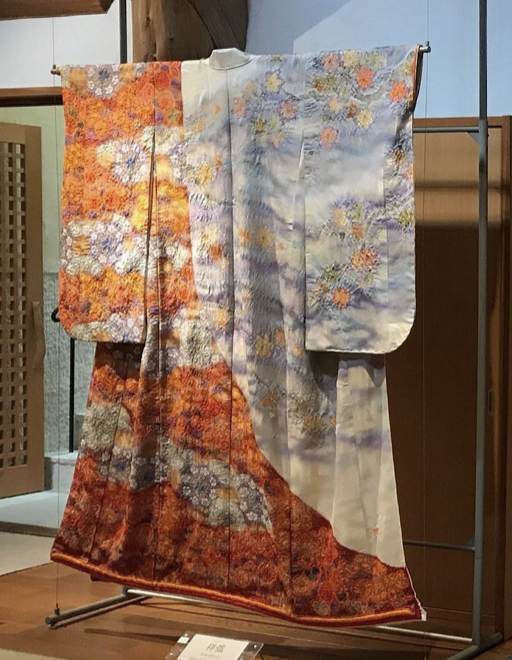
The Itchiku Kubota Art Museum, which was only a 10-minute walk from the hotel was a delightful museum. When we walked into the main room, I saw huge Kimonos, with beautiful colors on the fabric, hanging around the room. At first I thought that these were ancient ceremonial kimonos, but they were much too large for a person to wear. I was directed to a video and learned that we were seeing modern works of art by Itchiku (1917-2003). He apprenticed at age 14 and started making costumes at age 20. About that time, he saw an exhibit of ancient tie-dyed fabrics from the Muromachi era (1500 to 1600). The tie-dye process was labor intensive and died out when new techniques were invented that were time savers.
Itchiku was enthralled by the tie-dye fabrics and tried to recreate the ancient technique to get the shading and beauty. He worked on it until WWII, when he enlisted. He became a Russian POW and was in Siberia for 12 years after the war. It is sad to think that he missed all those creative years, but he did say that the Siberian sunsets remained in his brain.
He finally figured out the technique when he was 60 and began this project. He became famous, and built this museum. He was 80 when they taped the video and he said the he was hoping to live to 100 to finish the series. It took a year to finish each kimono. Unfortunately, he died at 85. The Kimonos were incredible with vibrant colors and textures.
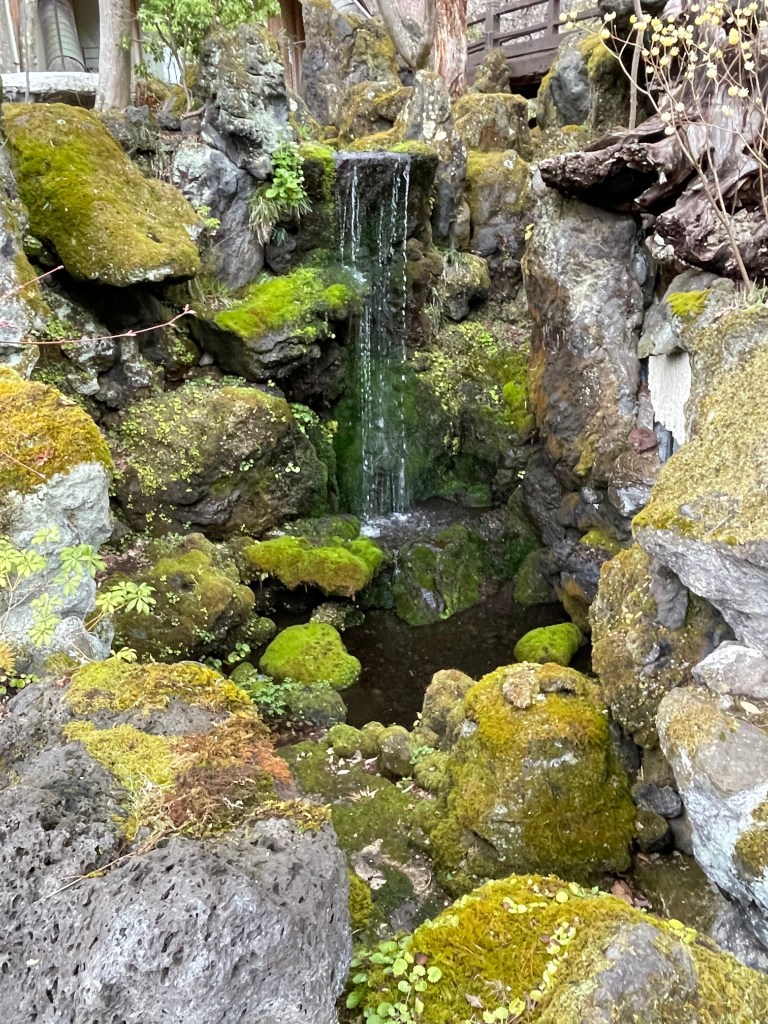
The grounds of the museum were also lovely and complimented the beautiful designs inside.
This museum has made the Japan trip worthwhile all by itself.
The Mt. Fuji Panoramic Ropeway is a cable car that goes up for a view of Mt. Fuji, if the mountain decides to play nice. The cable car starts at 9:30, we got there at 9:15 and beat the rush.
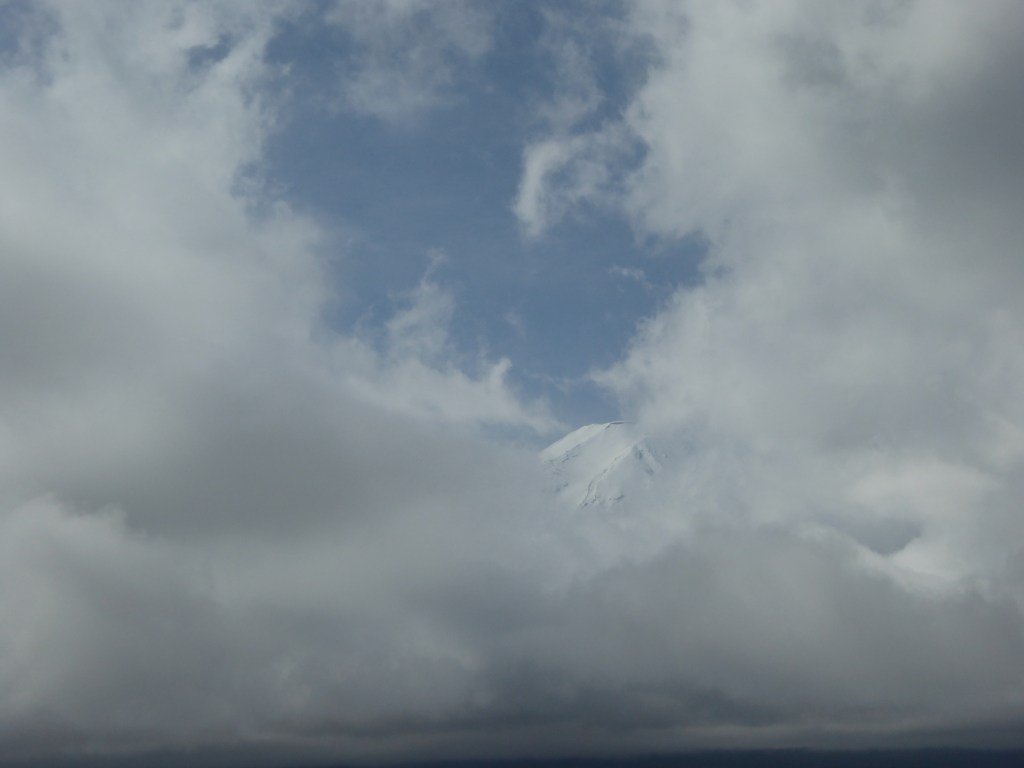
Up on the mountain I was looking in the direction of Mt. Fuji and said to Jerry, “I think that’s where it should be” and all of the sudden, the clouds parted and there it was, for about 5 minutes. We really only saw a tiny bit of the top. But I was excited to see that much.
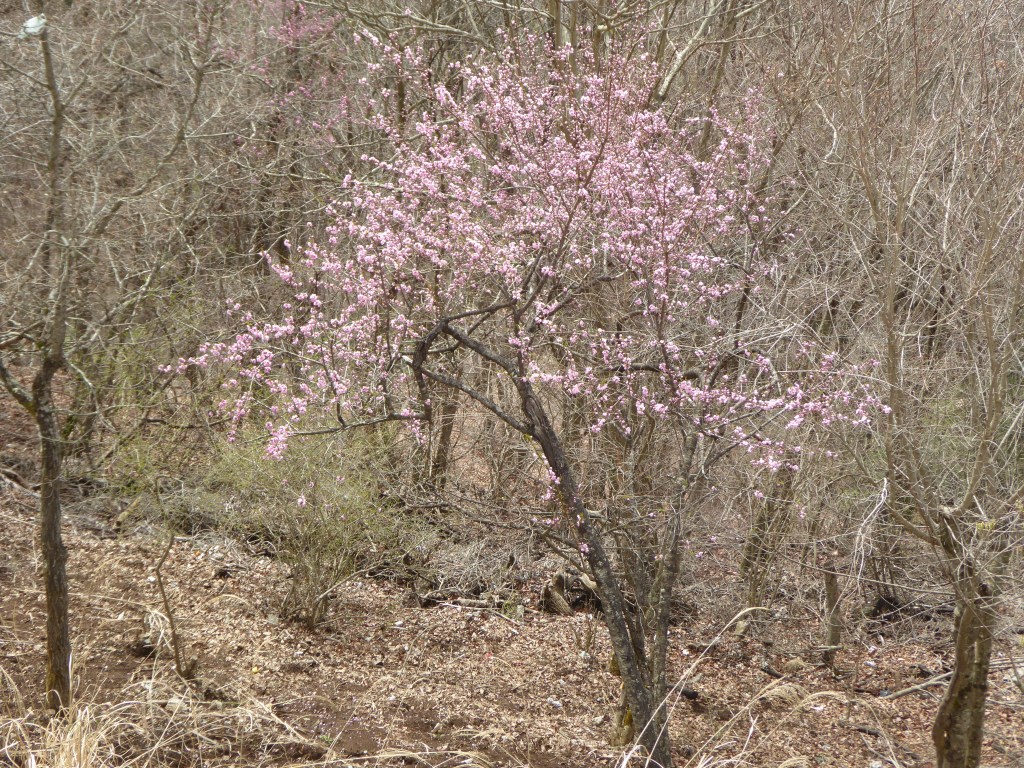
Then we drove to the Arakurayama Sengen Park to walk among the 500 or so Cherry trees. The park is on a hill and to see the trees and view point, we climbed the equivalent of a 28-story building with 9-foot ceilings.
Unfortunately the Cherry trees were just coming out; therefore, they were not impressive. Mt. Fuji was covered by clouds, but it was a beautiful day and we enjoyed the park.
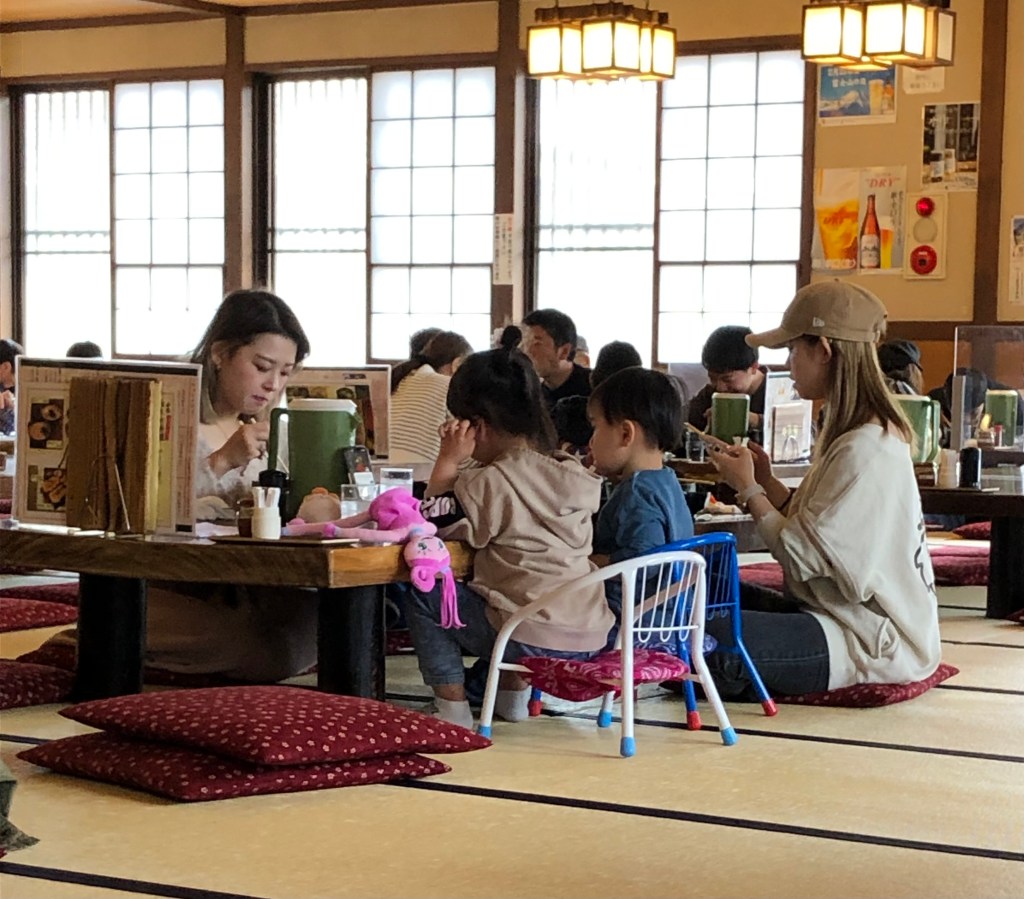
Lunch was a wonderful experience. The only menu was in Japanese, since they did not expect tourists. Some of the seats were on cushions on the floor, and some had wells for the feet under the table. Luckily we sat at a table with the wells. I had the mushroom, vegetables and noodles hot pot. The food came in a large bowl from which I spooned out the desired amount and put it in a smaller bowl. It was delicious.
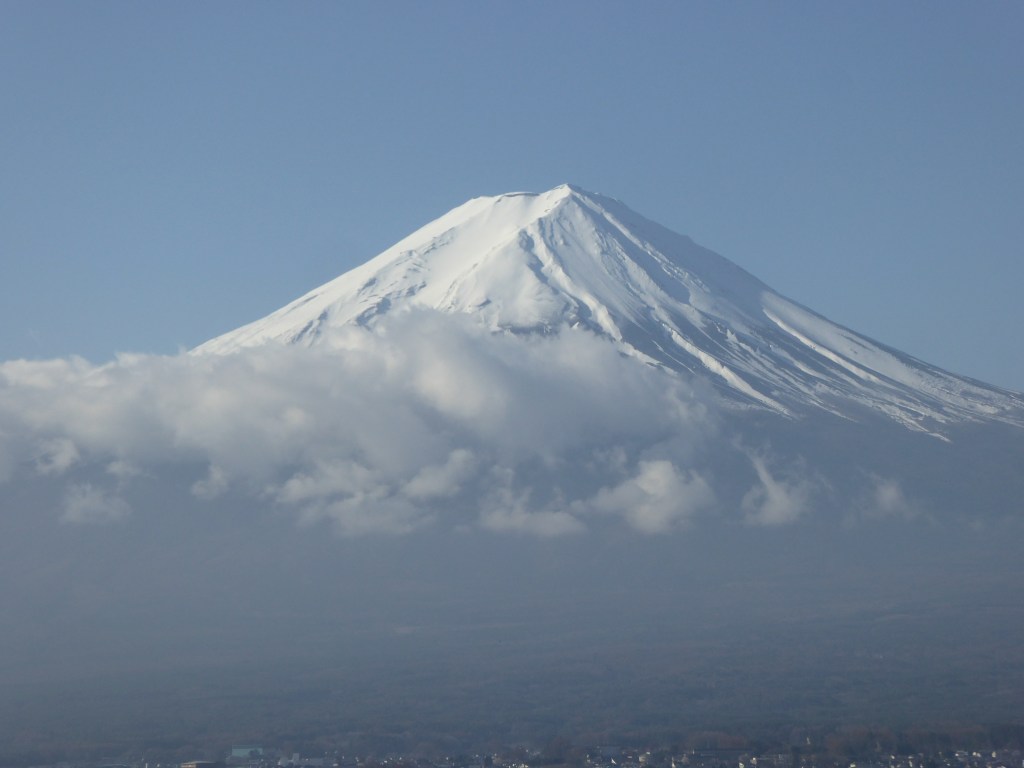
On our last morning, the mountain made a glorious appearance. As soon as I realized that the sky was clearing we sat on the little patio, and watched as the mountain appeared. At first only a bit was visible, but soon most of the mountain and its slopes were visible. It was like having front row seats for a fabulous film as the clouds moved across the mountain: sometimes covering it and sometimes letting Fuji come out in its glory. It is moments like these that make me soar and makes jet lag and travel difficulties all worth it.
Takayama and Shirakawago Village.
For this adventure, we had an English-speaking guide, Yuri, who spoke excellent English, but had never been to our destination. The train ride to Takayama (2 1/2 hours) was beautiful; going along a river and into the mountains. The mountains were full of firs and dotted with Cherry trees. There were also Cherry trees in full bloom along the rails. But by the time we climbed to Takayama, the trees were only partially out. In Takayama we strolled through the Sanmachi Historic District, which is the old merchant street, built in the 16th century and re-built in 1875 after a fire destroyed it.
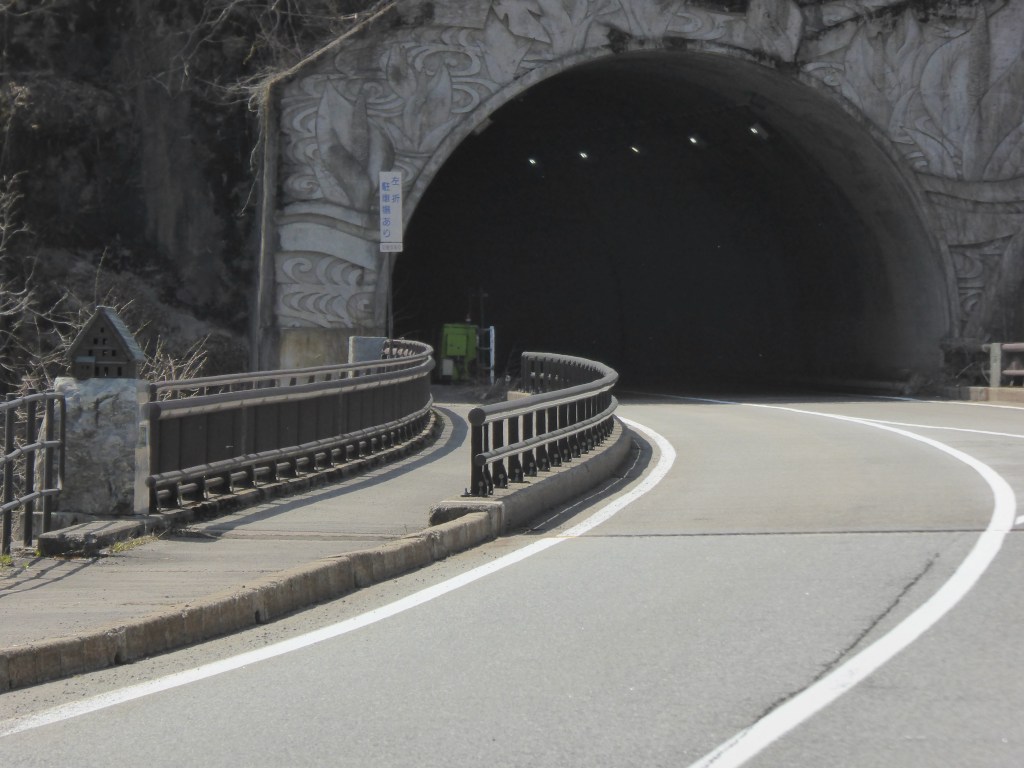
Then we drove to Shirakawago Village, which today is an hour drive through 15 long tunnels dug into the mountain.
Before the tunnels, the town must have been very isolated because it is high in the snow-capped mountains.

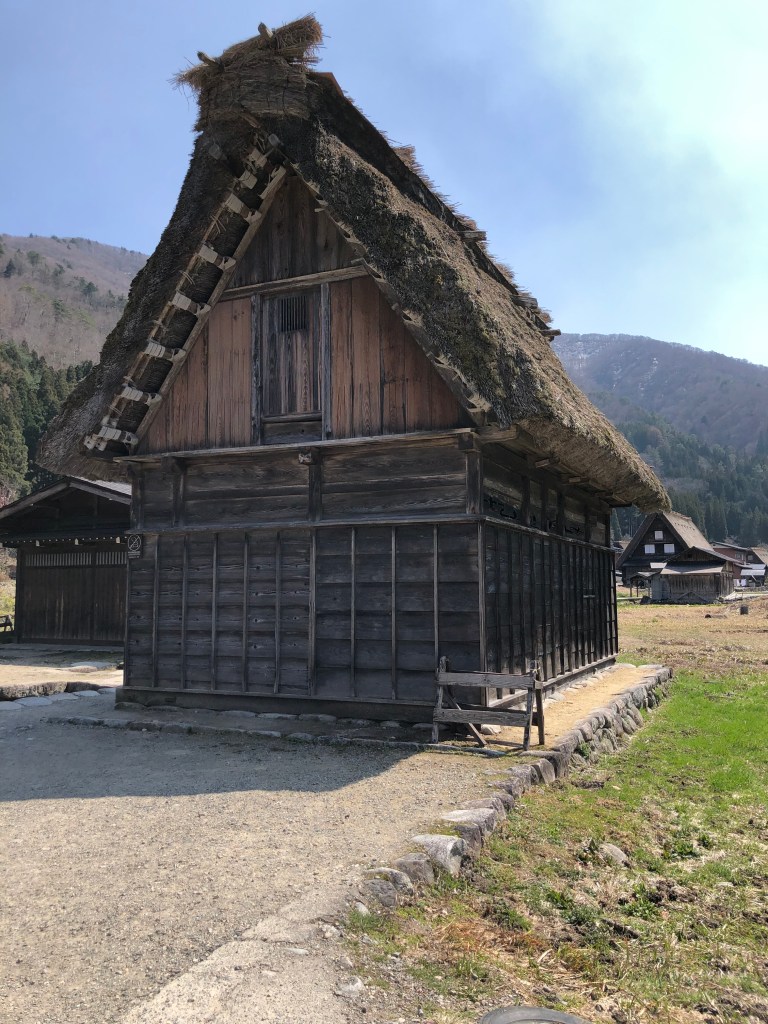
Shirakawago Village is unique because all of the houses in town are Gassho houses with thatched peaked roofs. The thatching is about 14 inches thick and the roof is pitched like hands praying. There are about 1,600 inhabitants in this UNESCO Heritage village and 140 houses. The thatching needs repairs after their severe winters and the whole town gets together to do each roof.
One of the houses has been made into a museum. On the ground floor in one of the rooms was a fire pit. The whole family would gather around the pit and children were put to sleep in that part of the house, which would be the warmest.
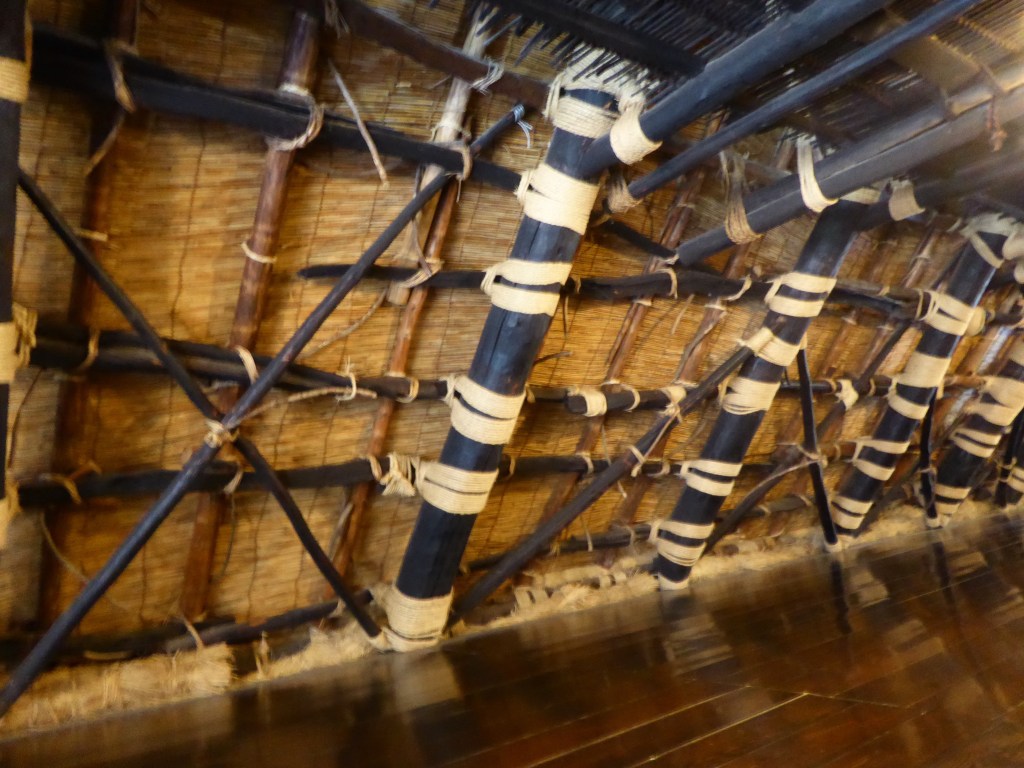
We were allowed to go up to the attic (very steep stairs) and from there we could see the thatching from the inside and the supports of the house. No nails were used in the building the houses. The thatching had to be tight to keep the house warm.
There were also samples of the silk worm cocoons and the silk operations (which was women’s work). The windows panes in the attic were made from local paper. I wonder how much cold they kept out. We had fun walking around the village and having a picnic lunch before heading back to Nagoya.
Kyoto:
What would travel be without a few tense moments. Luckily, the English- speaking assistant this time spoke English. When she picked us up at the Nagoya hotel, right before we headed to the train station, I asked her if I could see the tickets and she looked at me and said, “don’t you have them?” Always before the assistants had the tickets. Quickly she called the office and found out that they had given the tickets to the front desk. The tickets were there. Luckily I asked and discovered the mis-understanding.
At the Kyoto platform, another assistant was waiting for us. She said that the taxi line was very long but that we would be able to get into the short line for foreigners. The line was shorter but no taxis were coming. The regular line was about 100 people and not many taxis were coming to that one either. Therefore, she suggested going by subway to the hotel. This was an excellent choice, because the hotel was right on the subway line.
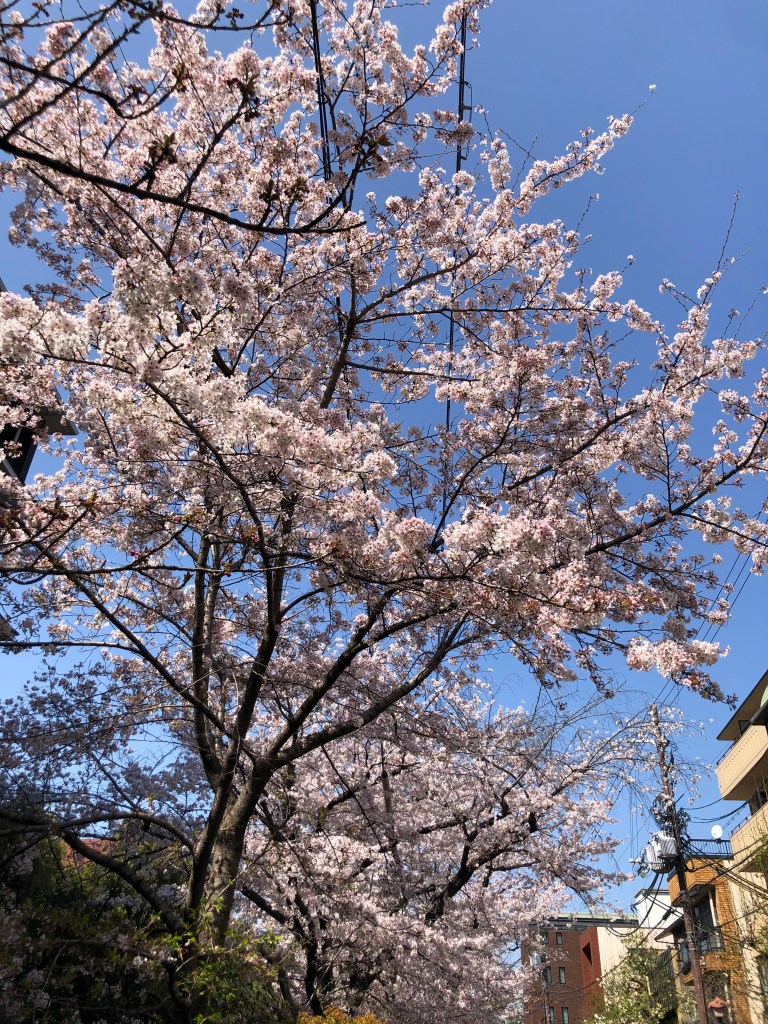
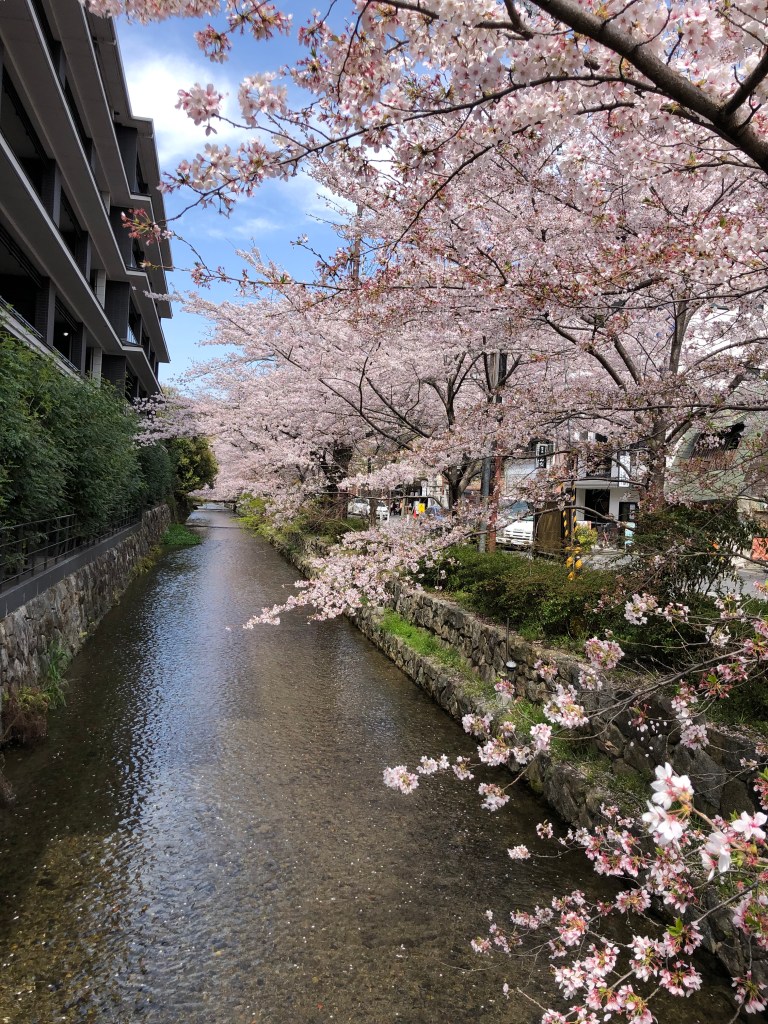
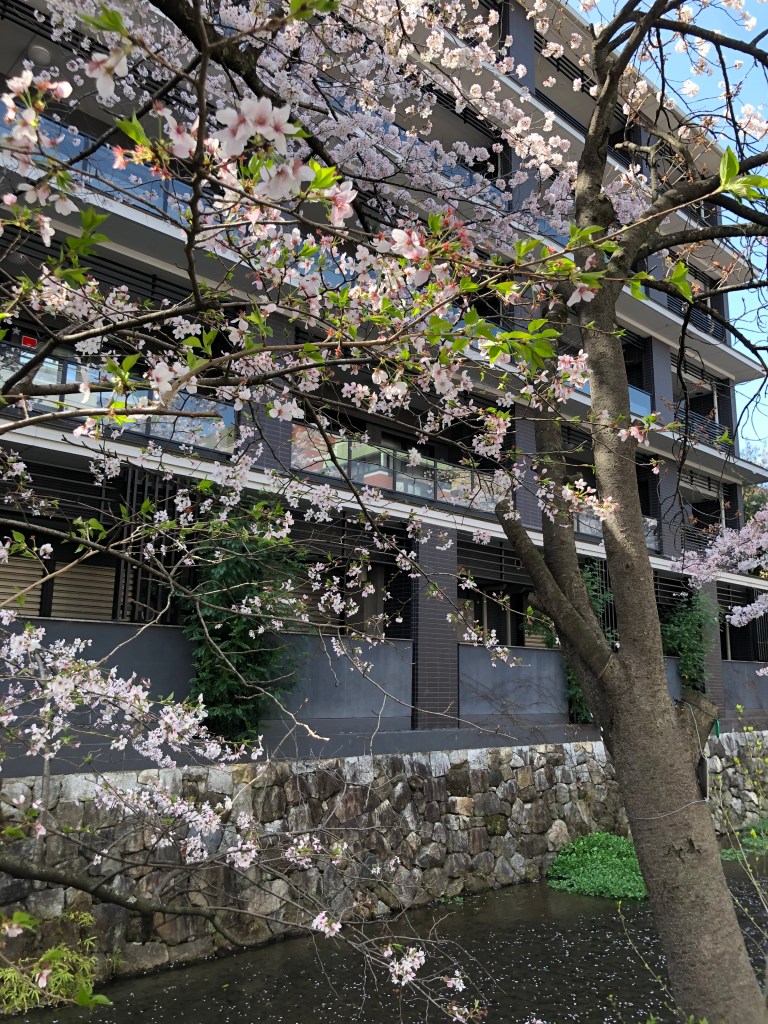
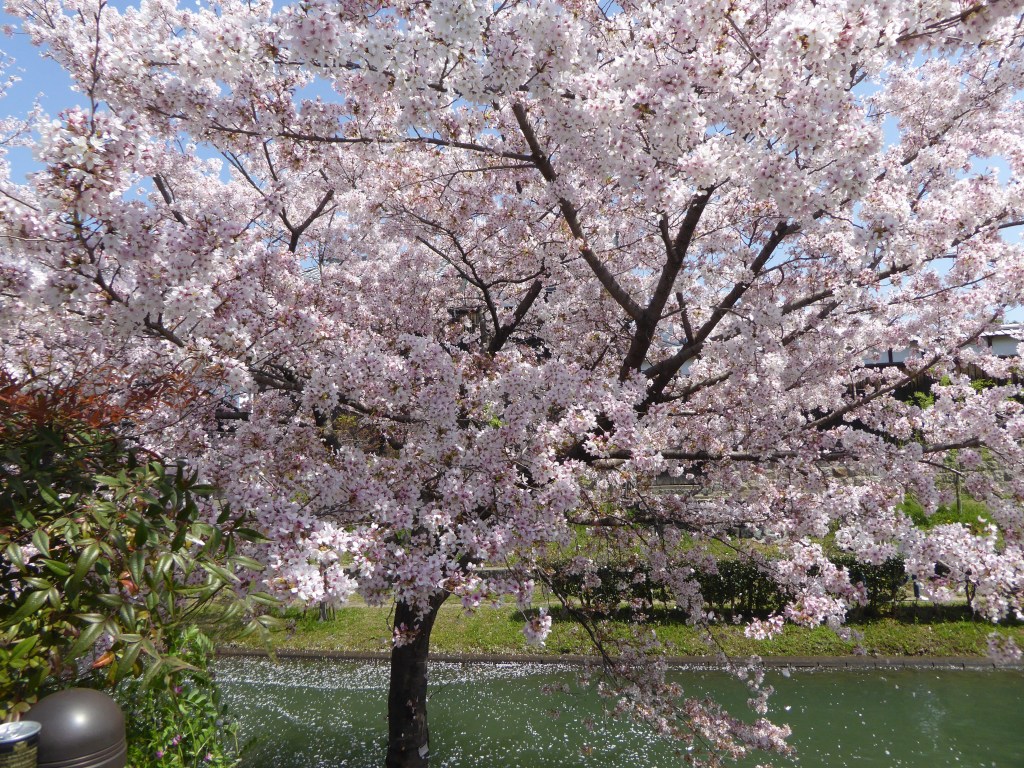
The cherry trees, which were past bloom in Tokyo and only coming out in the mountains, were in full bloom in Kyoto. Our walk along the river was magical!! We learned that all the cherry trees came from a single source in the late 19th century. These trees have a 50-year life and are re-planted from cuttings of the existing trees. That is why the color and shape of the trees are so similar and they make spectacular eye candy.
There are wonderful temples and shrines in Kyoto. The Shinto and Buddhist religions are practiced simultaneously. Shinto is the older religion, while Buddhism was brought to Japan in the 6th C from the main land. When entering the grounds of the temple, you do not need to bow, but when entering the shrine grounds, you are expected to bow.

The Fushimi Imari Taisha Shinto shrine, dedicated to the rice God, Imari, began being built in 711. The most remarkable feature of this shrine are the thousands of gates painted orange/red. Business men, who wish to be successful, pay money and have the company’s name written on a gate. The reddish color is said to keep the devil away from the shrine.
The Byodoin Temple is beautiful, but I only saw it from the outside because there was an hour-long line to get into the temple. Instead, we walked the beautiful grounds full of cherry trees, as well as weeping cherries and Japanese maple trees that were just coming out.
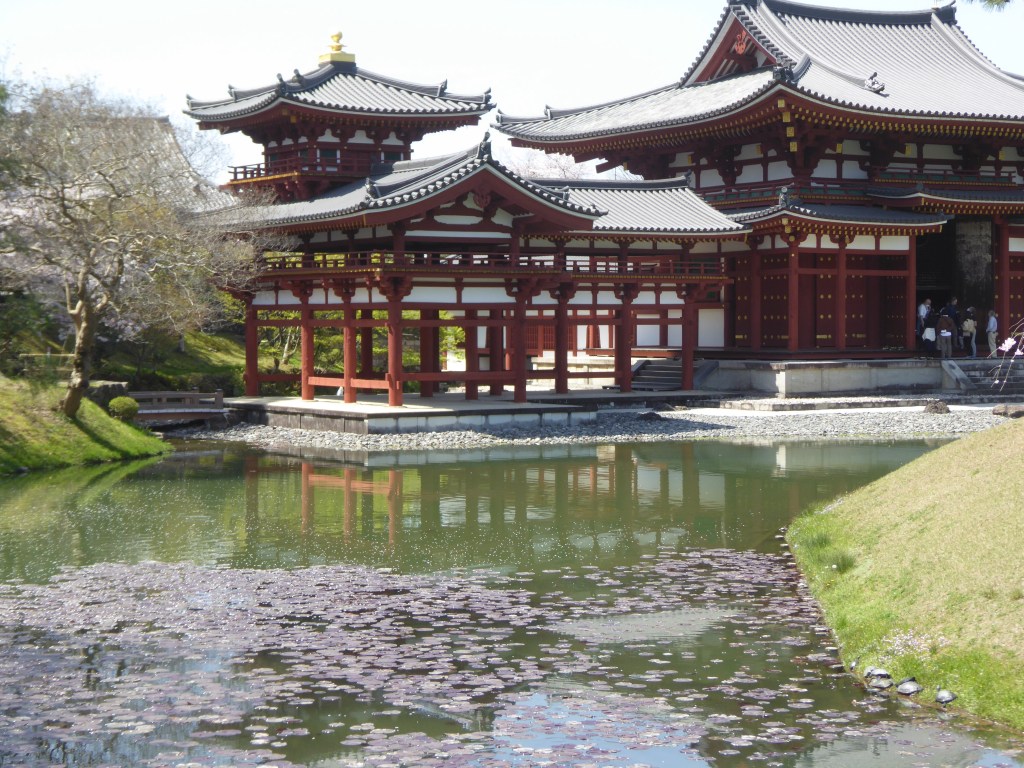
The museum on the temple grounds was wonderful. It had magnificent statues of Buddha. There were also many Bodhisattvas sitting on clouds, many of them holding musical instruments. They were all beautifully displayed.
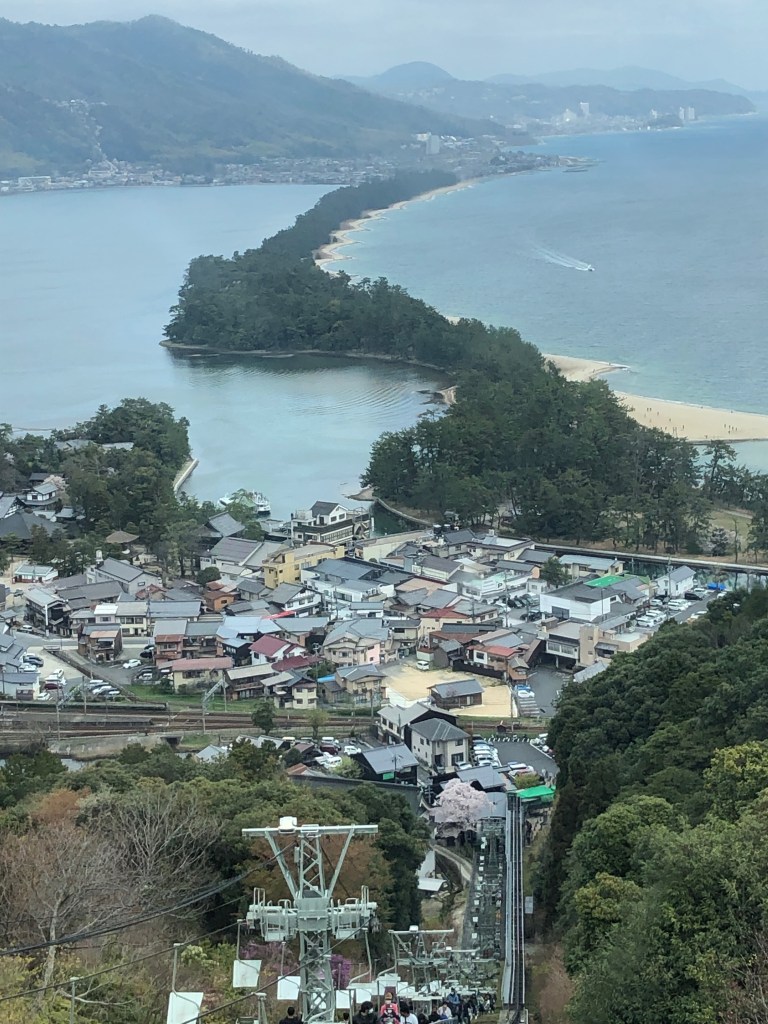
We took a day trip to Kyoto by the Sea: Amanohashidate (also called the dragon island). It is a sandbar that is about 2 1/4 miles long and is anywhere from 60 feet to 500 feet wide. It crosses the sea as a bridge and has about 5,000 pine trees on it.
On either side of the sandbar are mountains with lookouts that you can reach either by chair lift or by Monorail. I went up by the Monorail for both lookout stations. Jerry went up by monorail and down by chair. To get from one lookout to the other, we took a boat.
A narrow spit of land between the mountain and the sea inlets, forms a fishermen’s village. The houses are all very close together and the first level is for the boat, then the 2nd second level is for the family.
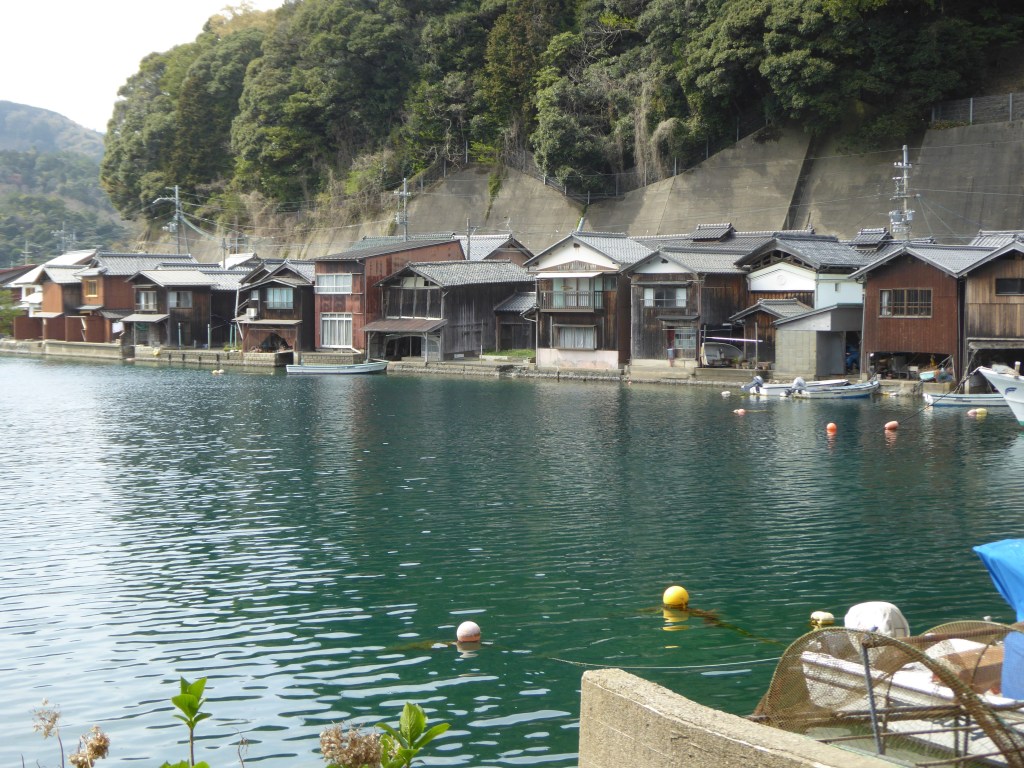
We took a boat to see the houses from the water and then walked along the road to see them from land.
Even though this was a fishing village, there were no fish stores. The fishermen sold their catch at the port, either to locals who would come with their buckets or to restaurants.
This was the end of the pre-cruise land tour that we had arranged. The following post will begin in Hong Kong.
 Nili's Adventure
The kimono is stunning! Thanks for the recap,Linda
LikeLike