
I wrote about some of the Scandinavian and the Balkan countries in earlier posts; therefore, this time, I will write only about special and new experiences in that part of the world.
The cruise left out of Amsterdam, and we flew in the day before to be safe. Our night in the Amsterdam hotel was an interesting experience:
I usually book my own hotels, but this time my travel agent (through another travel company) booked a hotel near the Van Gogh Museum. When we arrived, we learned that the “Hotel” was a pod hotel – all the “rooms” were pods.
Let me explain:
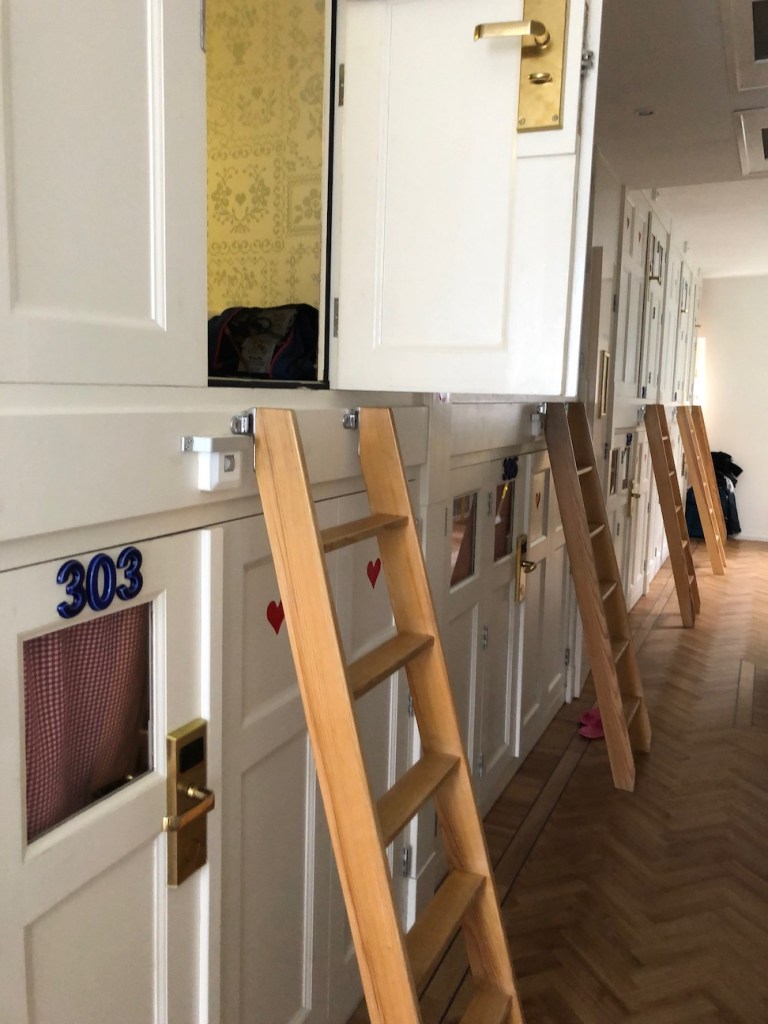
The pod is just a space the size of a king size bed with about a foot on the right, on the left and in front. The ceiling is tall enough for sitting up but not for kneeling or standing. To get to the top pod (which is what we were given), I had to climb 5 steps up a ladder. Not sure that the ground level ones would have been better, but none were available.
The bathrooms, though very clean, were shared. Our pod was on the 3rd floor and no elevator was available. We had to carry our bags all the way up. Something had gone seriously wrong with the booking. Luckily it was just one night. It was sort of a camping experience and the staff was very pleasant and accommodating.
As I said, the “hotel” was right near the Van Gogh Museum. Luckily I bought tickets before the trip because it was sold out. There was a special exhibit of Van Gogh’s olive tree paintings. He did these when he was in the asylum. It was so wonderful to see them together. The main part of the museum also had so many wonderful masterpieces. The audio guide was excellent.
Scandinavia and the Fjords
Flam, Norway
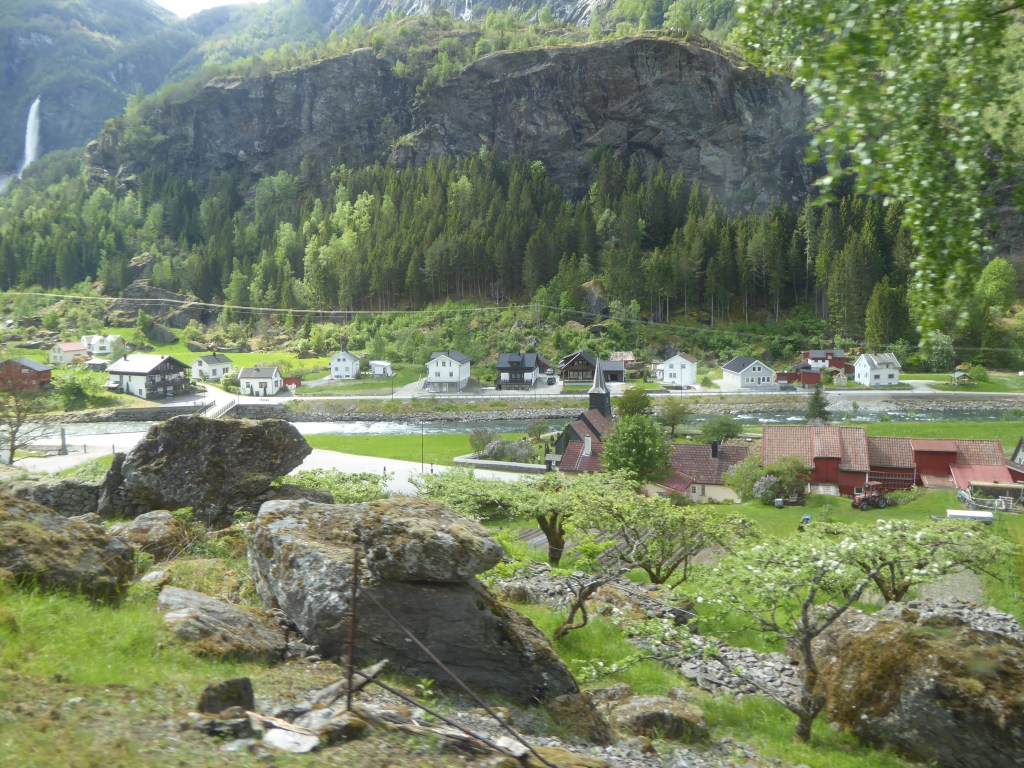
I opened the curtains in the morning to a mostly sunny sky and unbelievably beautiful cliffs and waterfalls as the boat sailed into harbor.
We booked the Flam Railroad excursion, through a beautiful gorge up the mountain. Here are some facts about the train: It was started in 1920 and it took 20 years to build. There are 20 tunnels through the mountain. The train goes up for 20 Kilometers/12 miles at a gradient of 55% for most of the ride.
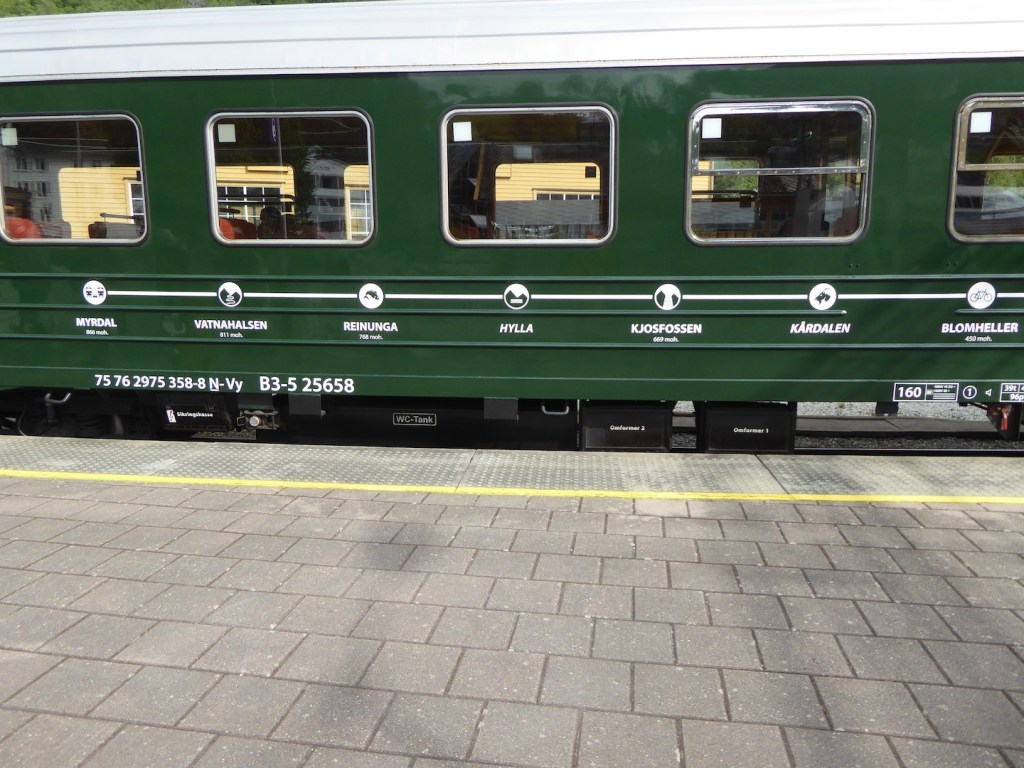
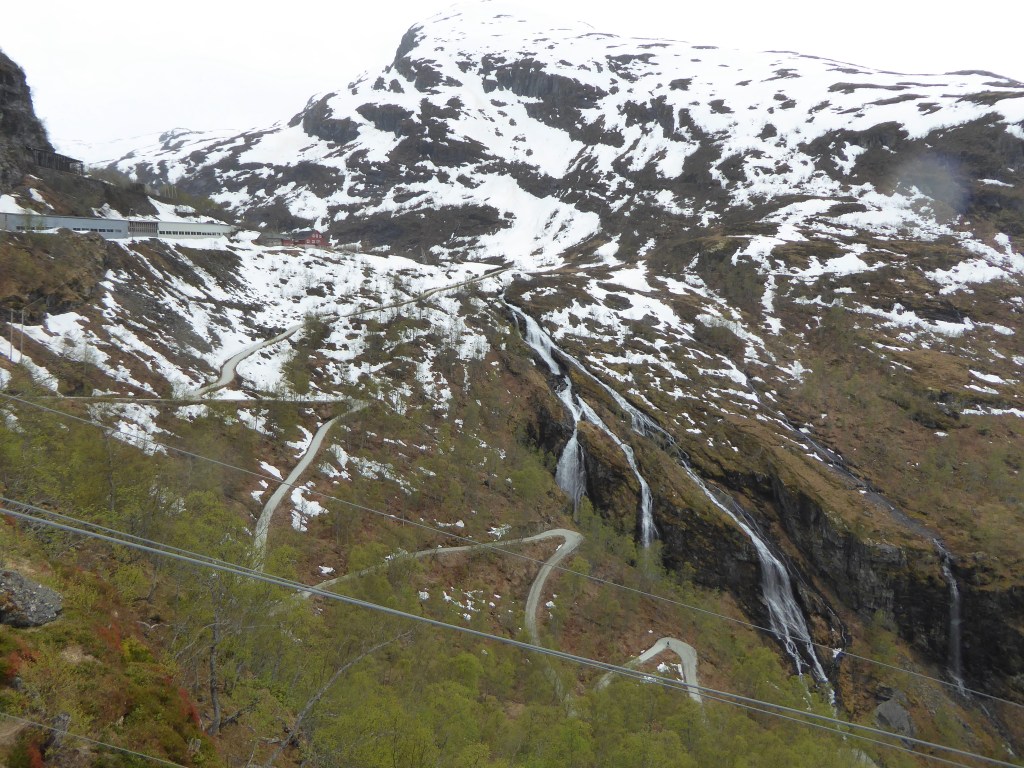
As the train climbed we kept seeing magnificent waterfalls. It was hard to resist photographing them. The mountains are rugged and covered by evergreens. The deciduous trees had brand new leaves on them and yes, there was also a lot of snow.
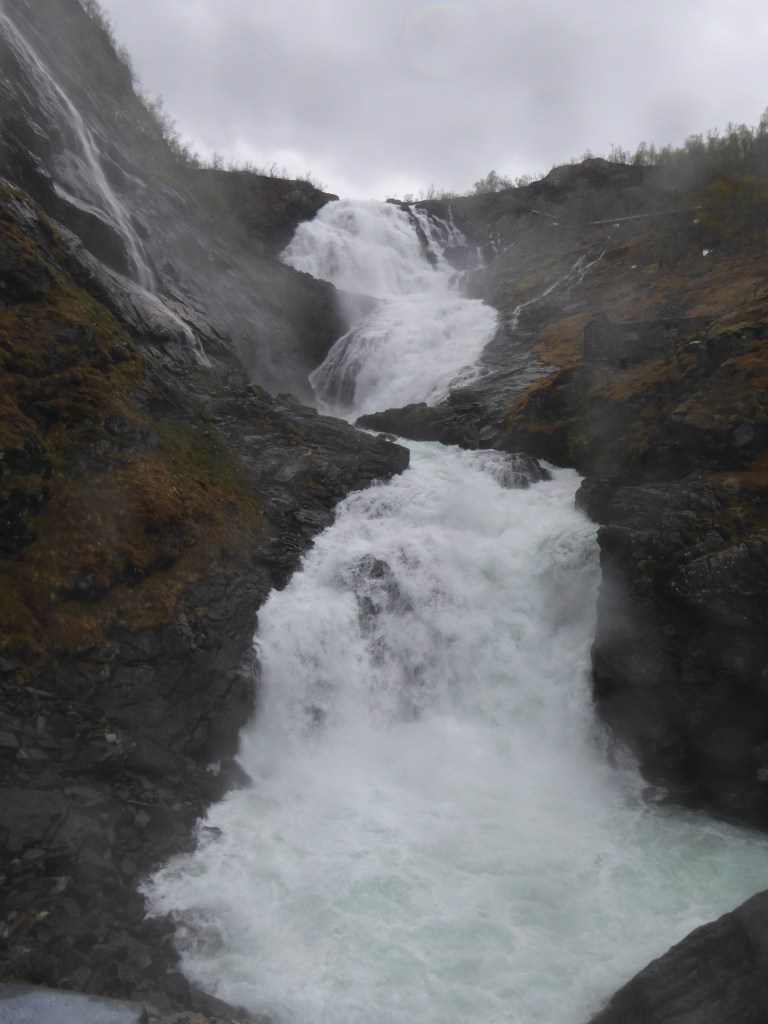
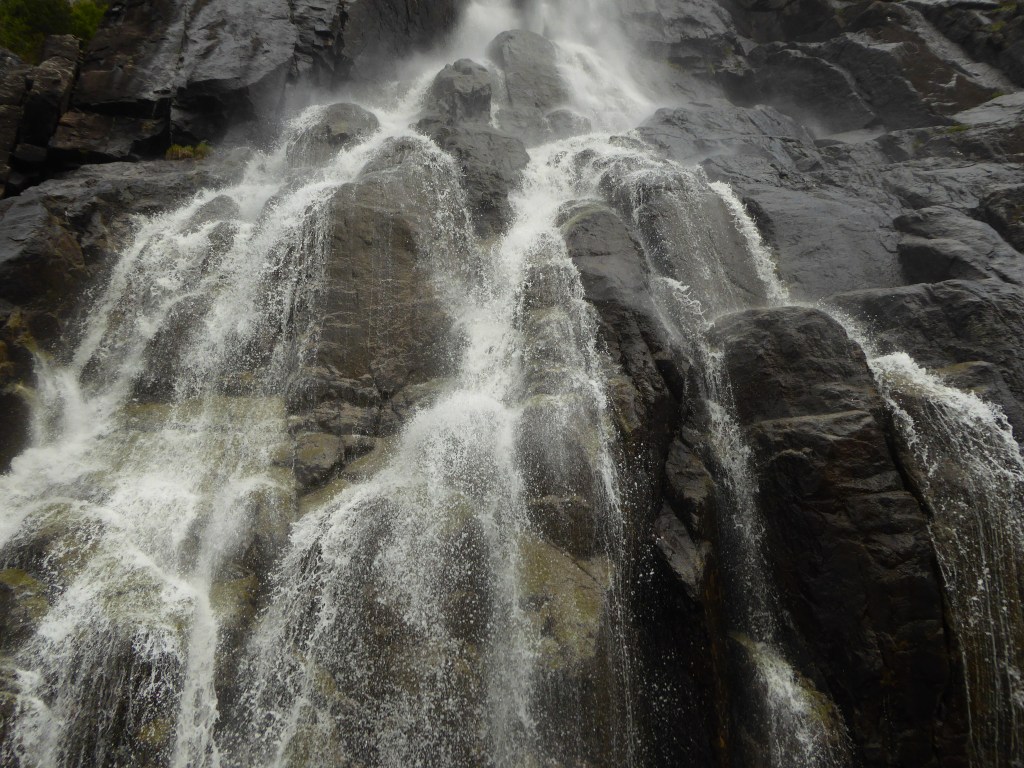
The train stopped for 5 minutes to view the amazing Kjosfossen waterfall. Two ballet students were dancing on the rocks to music. They do it for a week as an assignment. It made it really special. We left the train at the hotel, about 3000 feet up, to have waffles, with wonderful jam. Then as a group, we took a walk to a lookout. The view was a delight but even more fun was watching people zip lining down to the river. Apparently the zippers go as fast as 60 miles per hour!!!! It is the longest zip line in Scandinavia.
We took the next train back into Flam and had a couple of hours to roam in this town of 500 inhabitants. It has a few stores and a bakery and a hotel. We ate a muffin and sat at the hotel grounds to check email.
Alesund, Norway
Alesund had a major fire in 1904, which destroyed most of its buildings. Therefore, the town center’s buildings were all built between 1904 and 1906, the Art Nouveau period. The buildings are beautiful with lots of decorations.
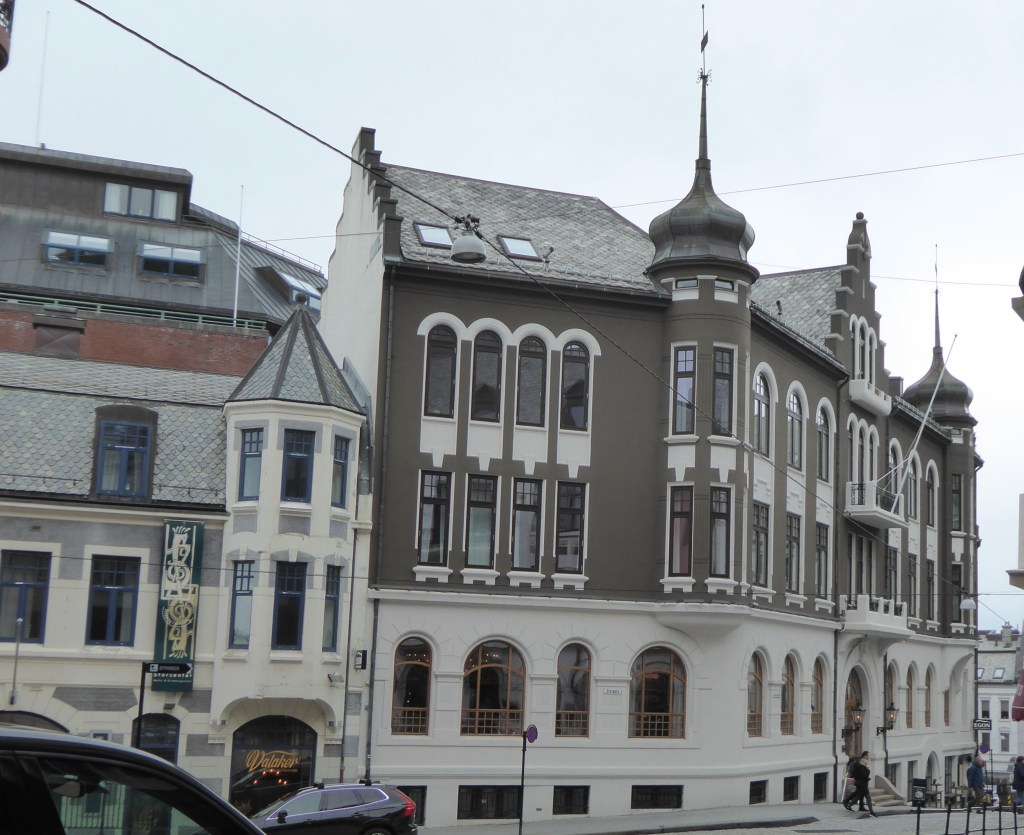
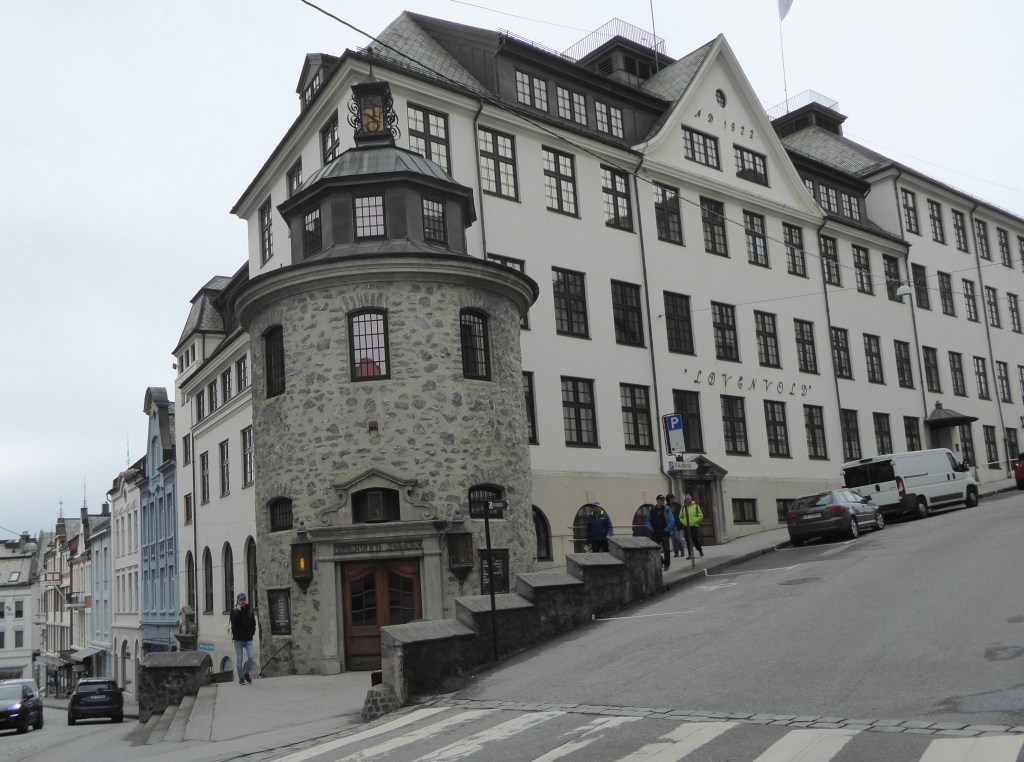
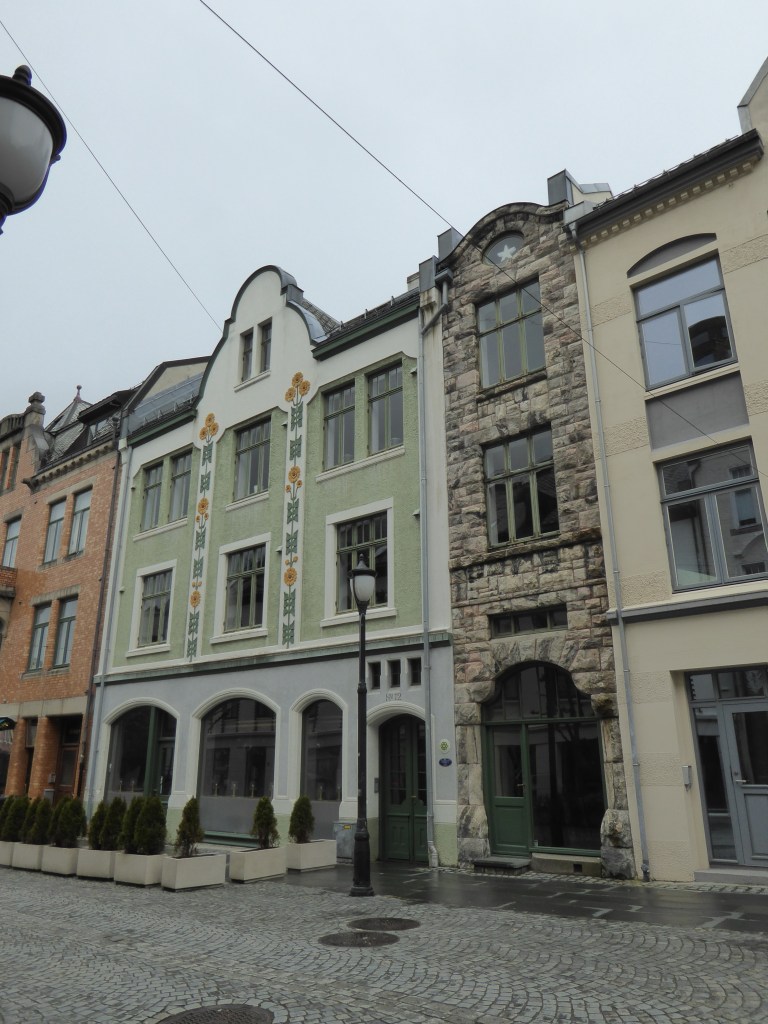
A short walk from the boat brought us to the center of town. The city is large but the center is fairly compact and was very quiet.
We decided to climb to the top of lookout mountain, which starts right from the center of town. Had to hike up quite an incline through a park and then up 440 stairs.
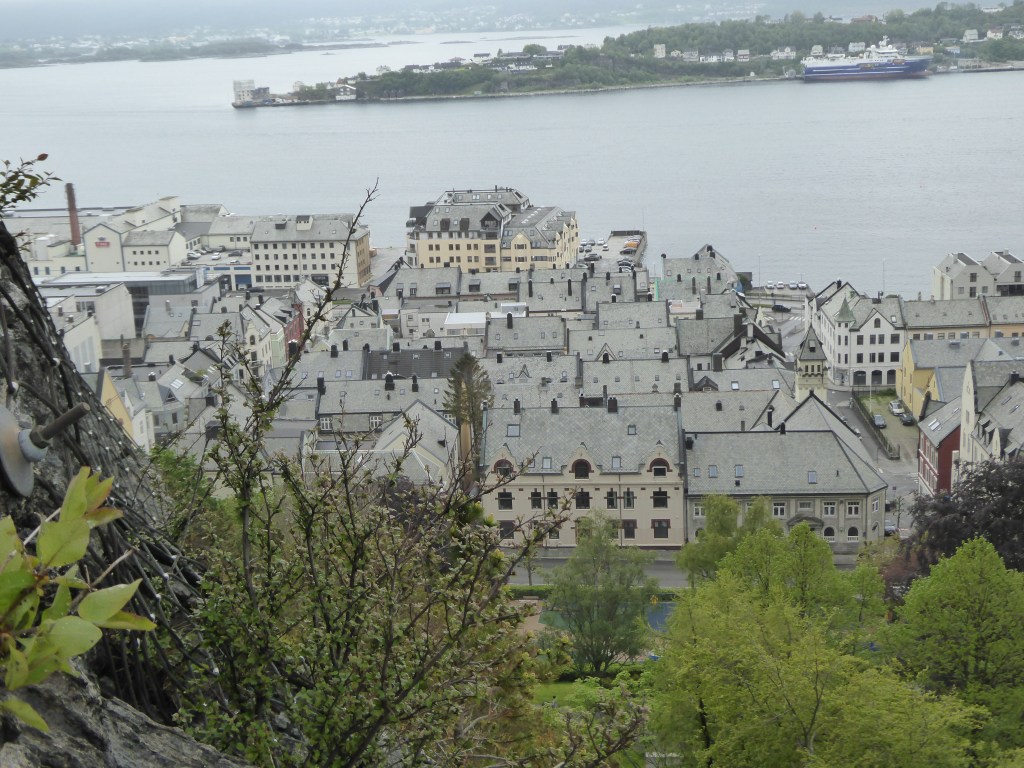
It was well worth it both for the psychic pleasure that we can still do the climb and for the view. Luckily the fog was above the lookout and we could see into the town. Also luckily, there were rails to use as a crutch on the way up and for safety on the way down.
Afterwards, we walked through the town, looking into a yarn store and at some of the lovely buildings as well as walking into but not buying anything from a tourist store. It is sad but true that I don’t really need anything or even want anything.
Geiringer Fjord, Norway
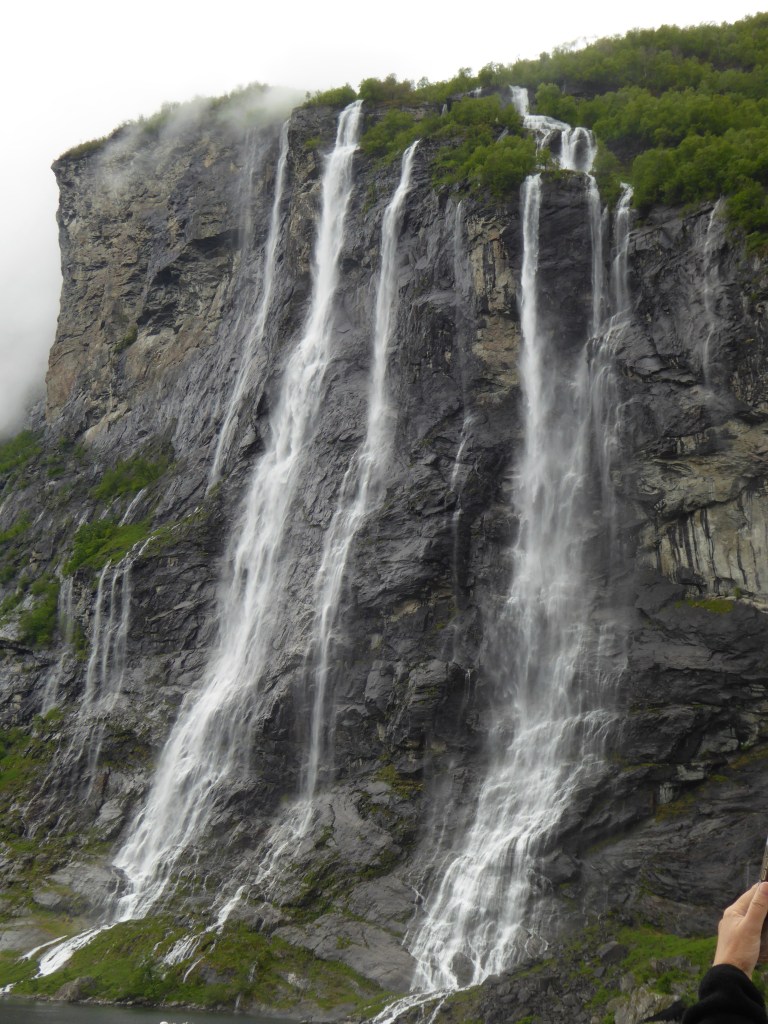
I was very excited to see my first Norwegian fjord. The boat went slowly through the fjord and in spite of the fog, it was an incredible sight. We passed by the beautiful “Seven Sister Waterfall.” I put on all my warm clothes to be able to be on deck to see it close up. The captain turned the boat 360 degrees so that everyone would have a chance to see the beauties we were passing. These mountains with their water falls were just wonderful.
Bergen, Norway
Bergen city center is lovely with beautiful and colorful houses. It has a very old fish market – maybe 200 years old, which was fun to walk through. Most of the town (outside of city center) is on the hillside, surrounded by majestic mountains. We took the funicular to the top of the mountain, for the awesome view. There is a forest walk at the top, but we decided that we wanted to spend our time and energy on walking the town rather than the forest, and took the funicular back down. There was an option to walk down, but with only one day here, we did not do it.
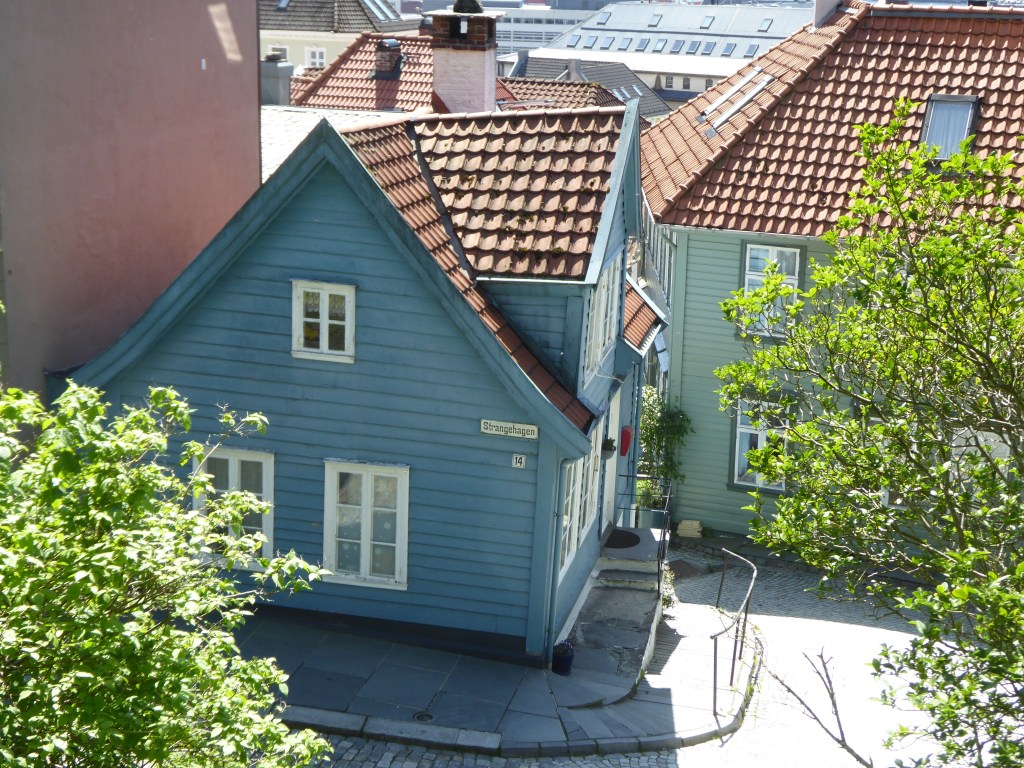
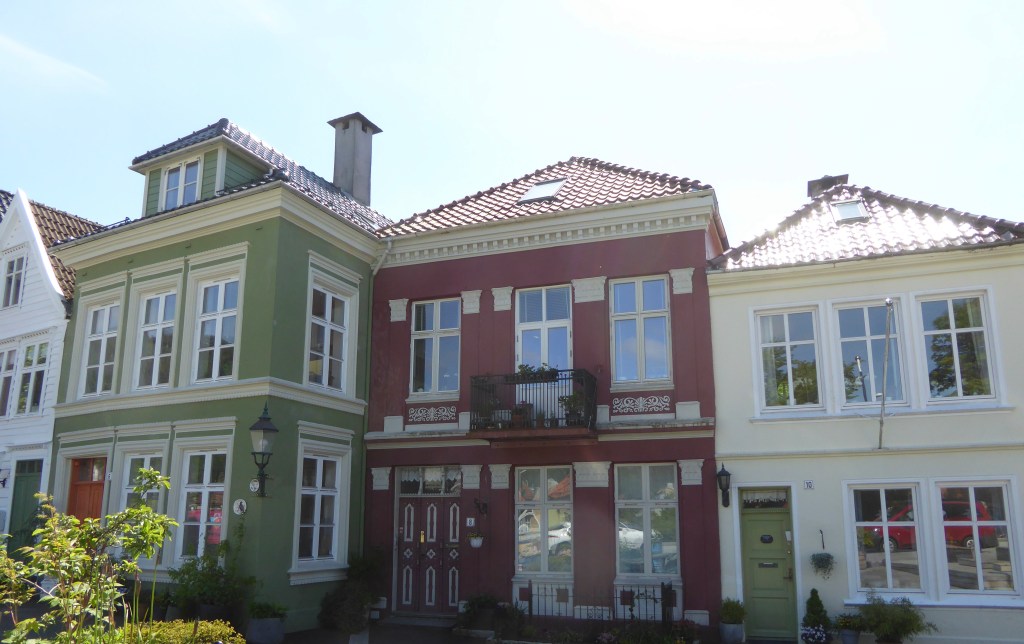
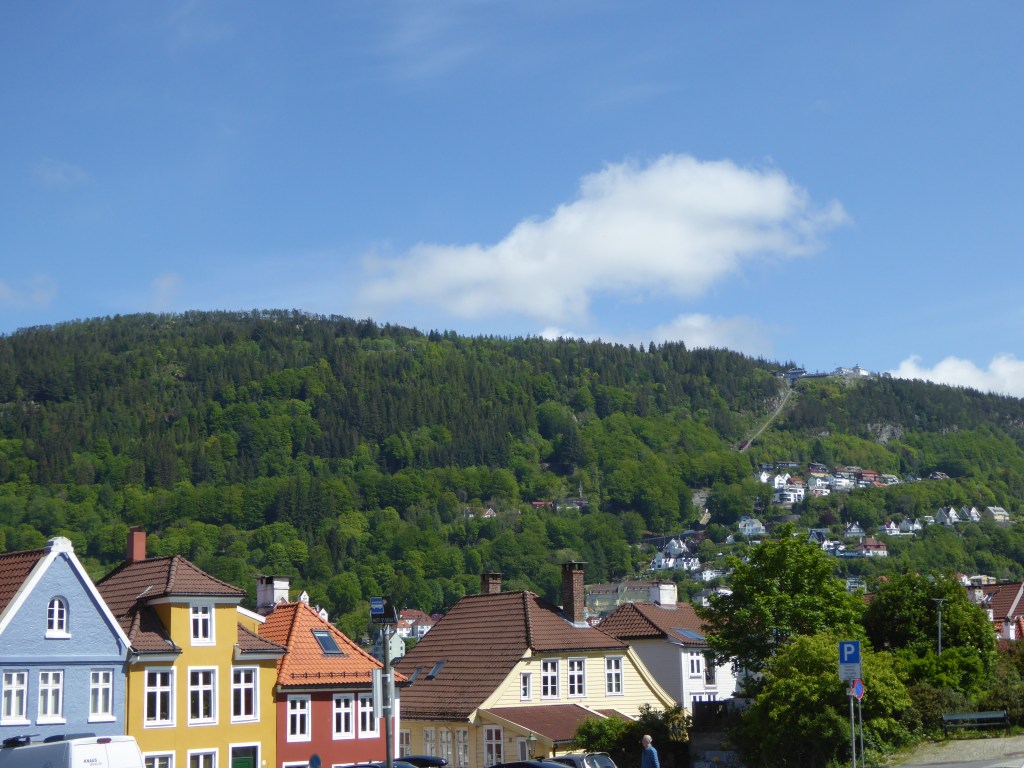
While walking in town, we saw an old couple (they might have been our age), each with a walking stick. She had hers on the left, he on the right and they were holding on to each other going up a steep hill. The town is very hilly. I would have enjoyed a couple of days in Bergen.
Copenhagen, Denmark
I wrote about Copenhagen in a prior post, therefore, I will only mention that we were there on a National Holiday and saw the Royal Run. They actually had about 4 different races and it went all day.
The Baltics
Wismar, Germany
We were originally scheduled to be in St. Petersburg, Russia, for two days. Obviously the war between Ukraine and Russia caused our itinerary change: Wismar and Sassnitz, Germany replaced St. Petersburg.
A bit of history before I start. Medieval Wismar had a very important role in the Hanseatic League. The Hanseatic League was a Medieval (12th to 17th centuries) commercial and defensive confederation of merchant guilds and market towns. It originated at the end of the 12th century as a loose German alliance between trading towns to protect against pirates. After a while it coalesced into an alliance with common legal systems governing trade and their own armies for protection. The guilds tightly controlled everything. End of history lesson.
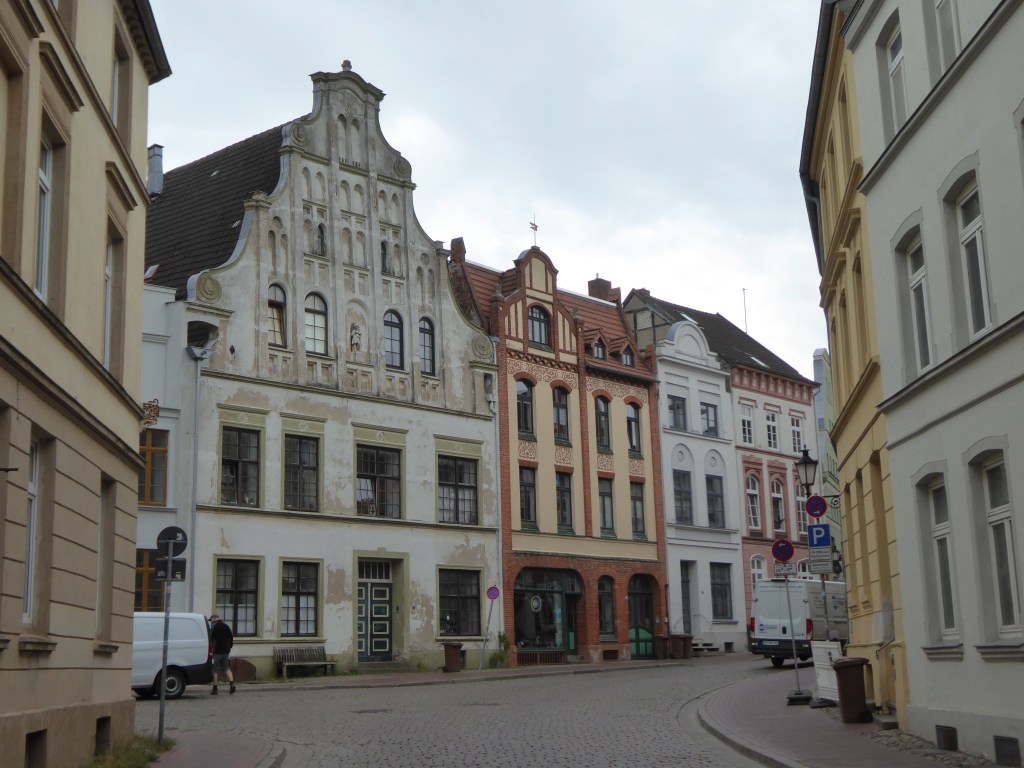
We docked a short walk from the town. Wismar, a UNESCO World Heritage site since 2002, is just beautiful. Each building is prettier than the next – each is picture worthy. Some of the buildings are from the 1300s, some from later periods, yet they make a unified whole – that’s not to say that they are the same.
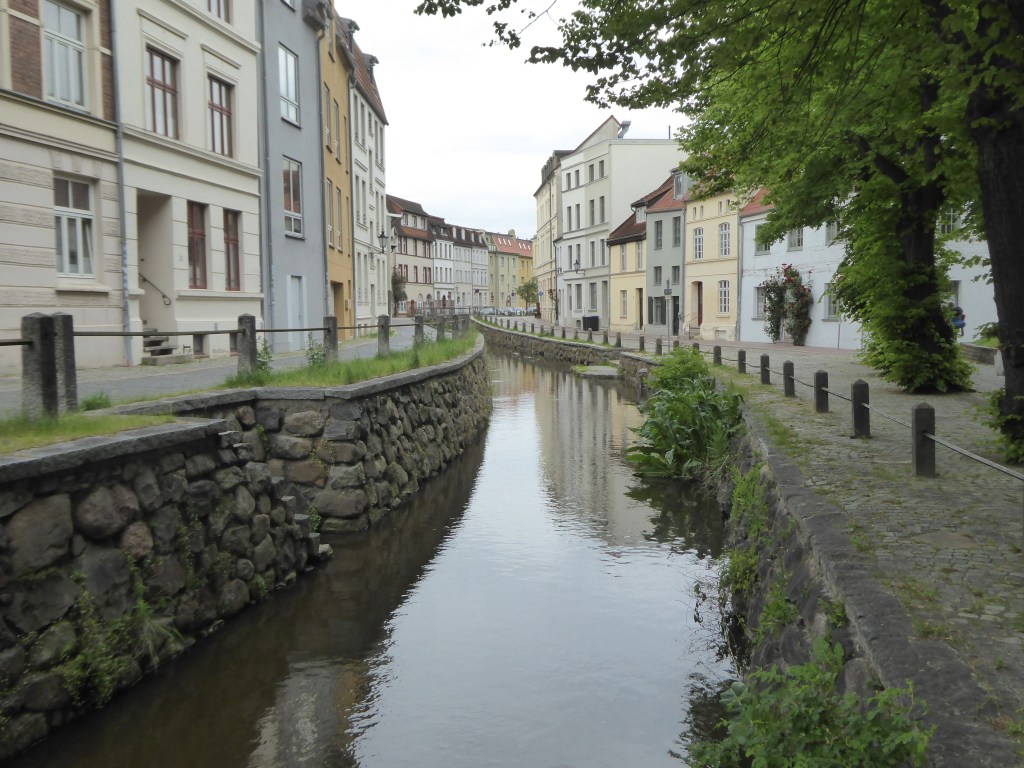
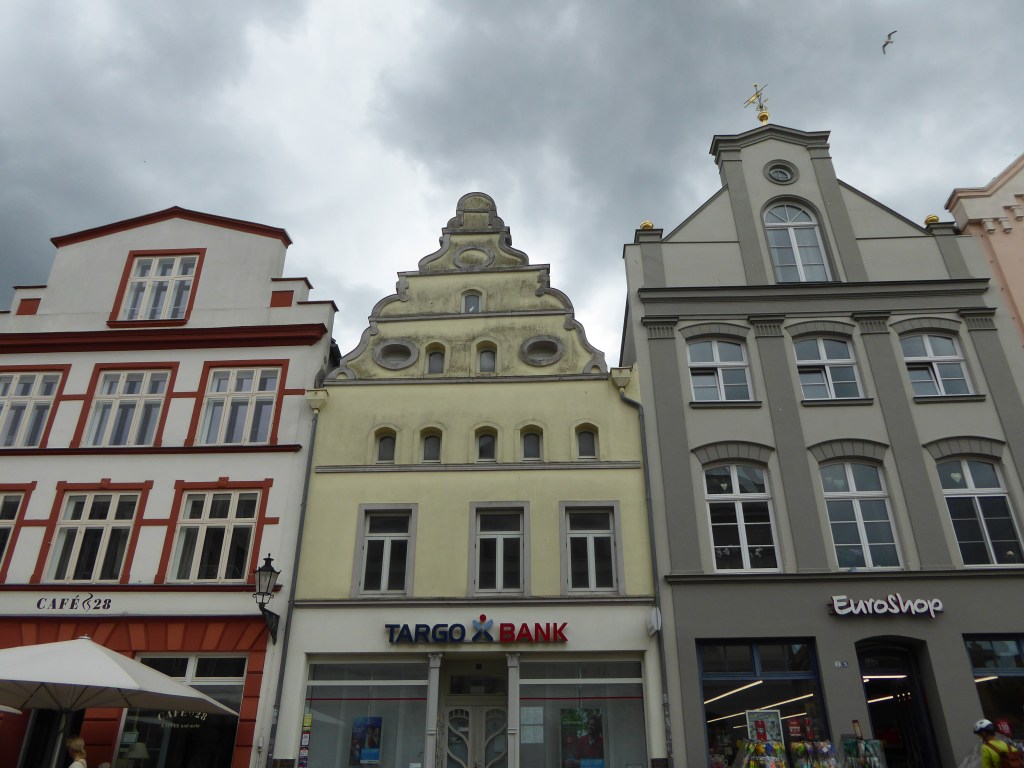
Their height is similar but the facades are different colors and designs. They are continuous whether on a straight or circular street. The streets are cobble stones – charming but hard to walk on. The city, designed like a typical medieval town, is unchanged. The streets flow but are not in a grid like formation.
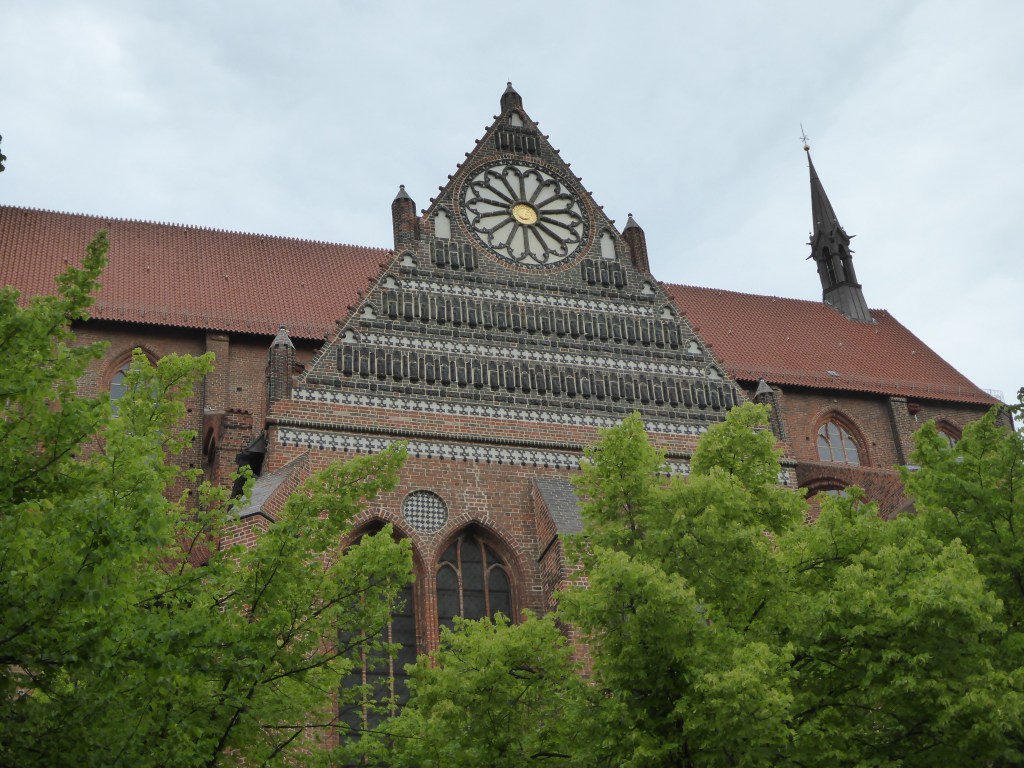
There are a number of entrances to the old town. The one we took, brought us to the Cathedral, which is under repair but still open. It is towering and very beautiful.
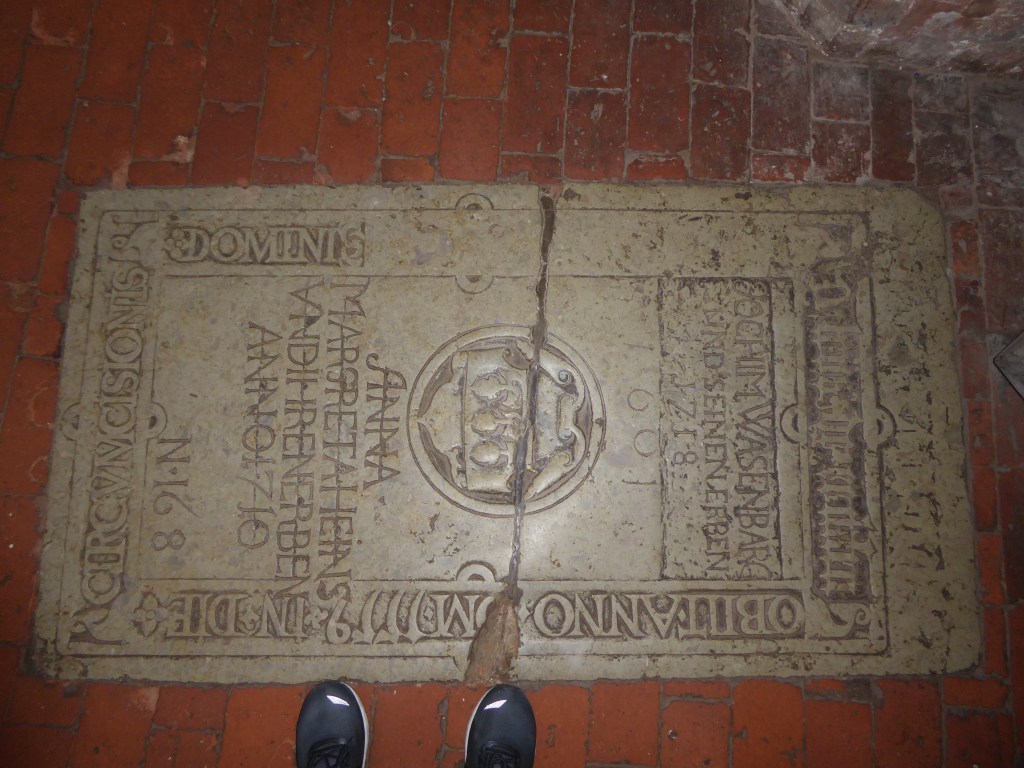
On the floor were crypts from the late 15th century and early 16th century. The crypts have been walked on so much over the last 400 years that some of the writing has been worn off.
We continued on to the Tourist Information which is housed in a 1350 house, designated “The World Heritage House”. The house has undergone additions and renovations but is mostly intact especially the cellars where we used the free and clean bathrooms.
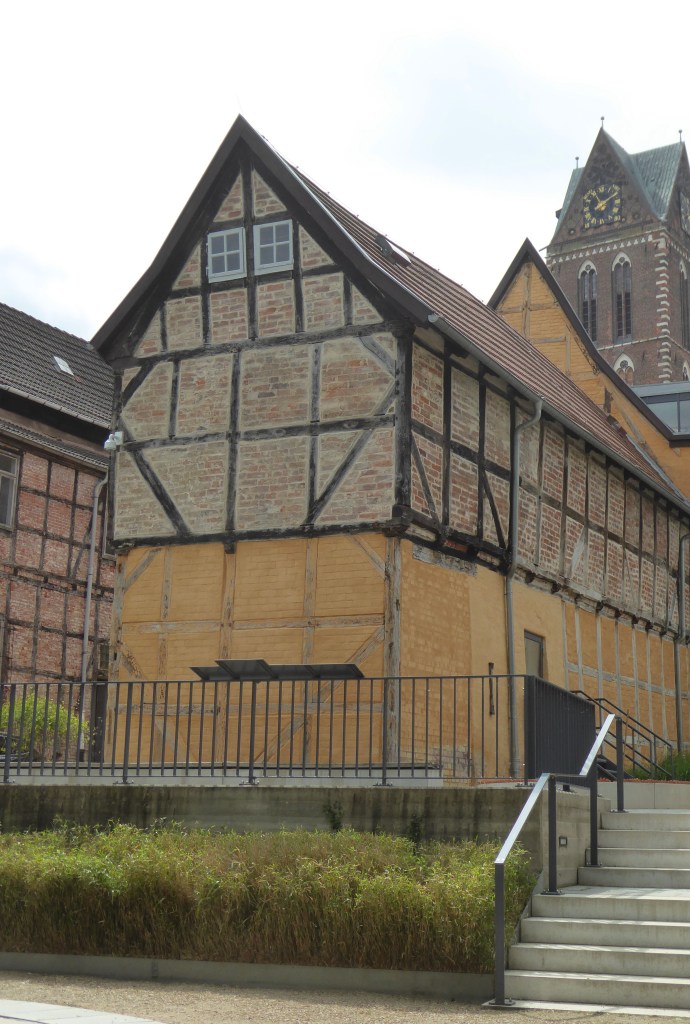
The town square, more circular than square, is ringed by lovely buildings. We continued walking and I think we covered the whole town and went into as many churches as were available. Wismar is a tourist town but most of the tourists were German, coming by car. Ours was the only cruise ship at port.
Sassnitz, Germany
The most impressive thing in Sassnitz are the chalk cliffs. We could see them from the boat, but for a better view, we took a 1 ½-hour boat ride from town. They are towering and various shades of beige and white. The sun was shining on these lovely cliffs.
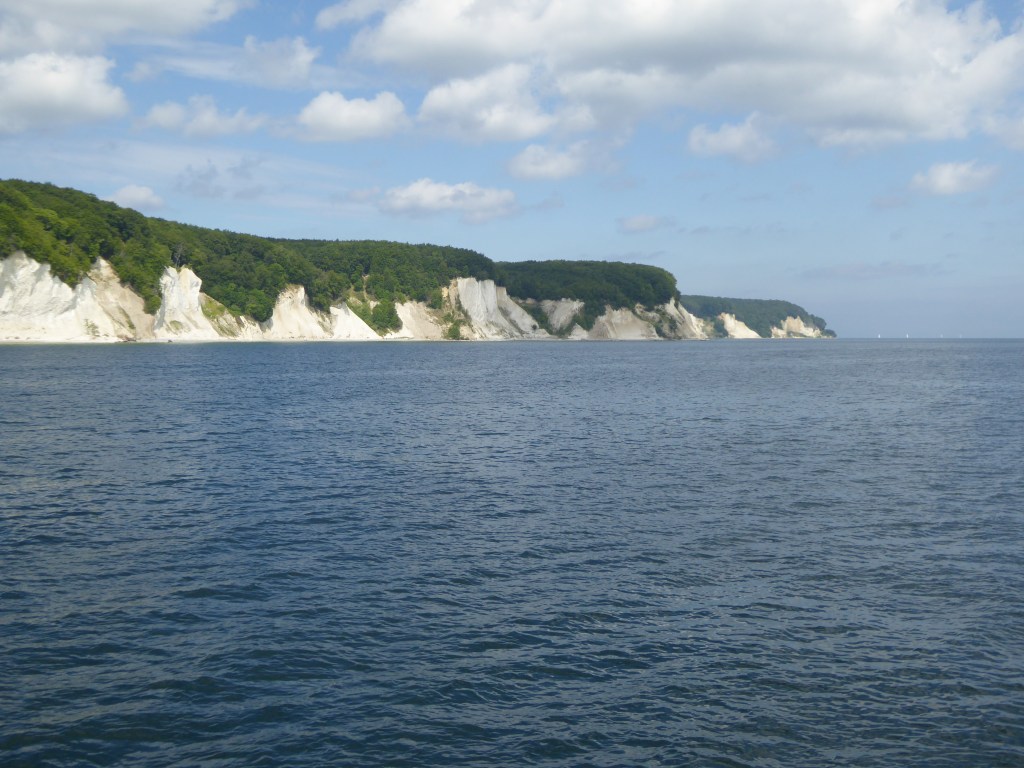
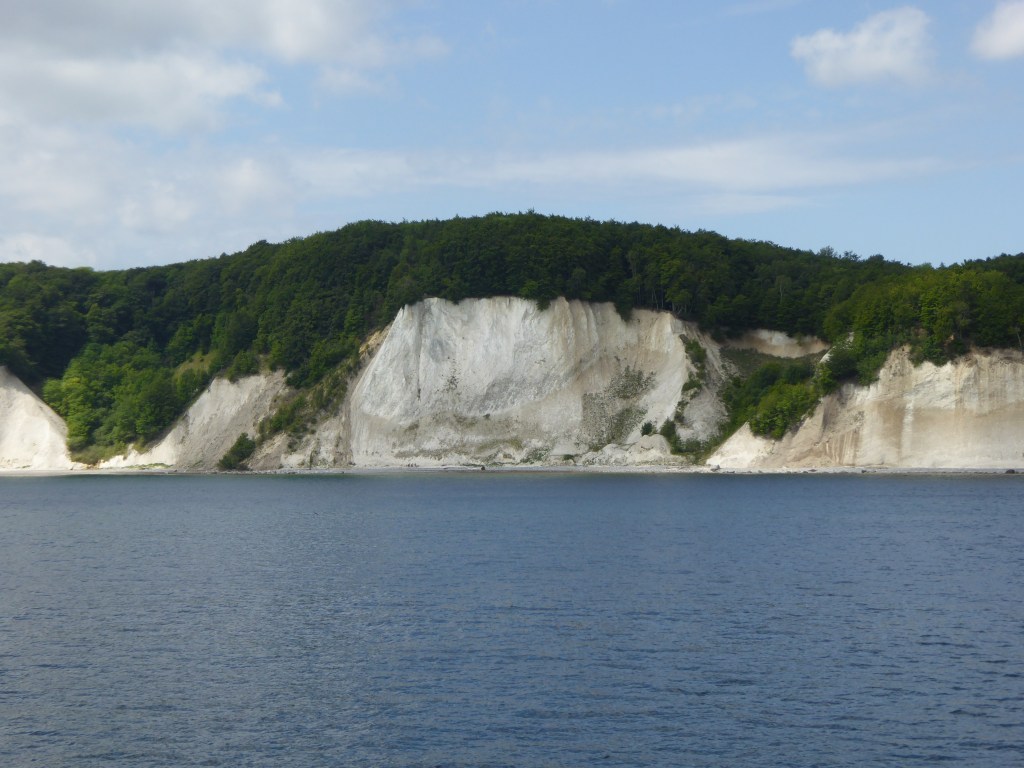
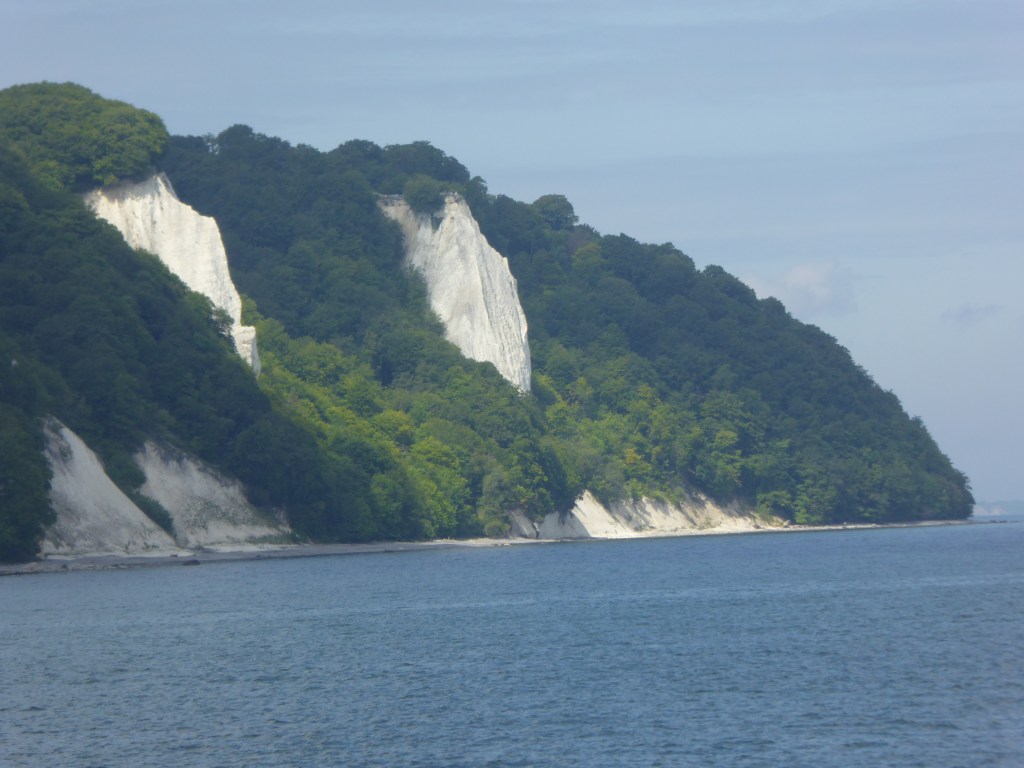
Sassnitz is an old fishing village. Other than the boat trip, there was not much to do in town. The cruise company had to find alternatives to St. Petersburg, and they scored with Wismar but Sassnitz was a dud.
Tallinn & Helsinki
I wrote about Tallinn and Helsinki in post 34 and will skip over those wonderful cities on this post.
Philippine Independence Day
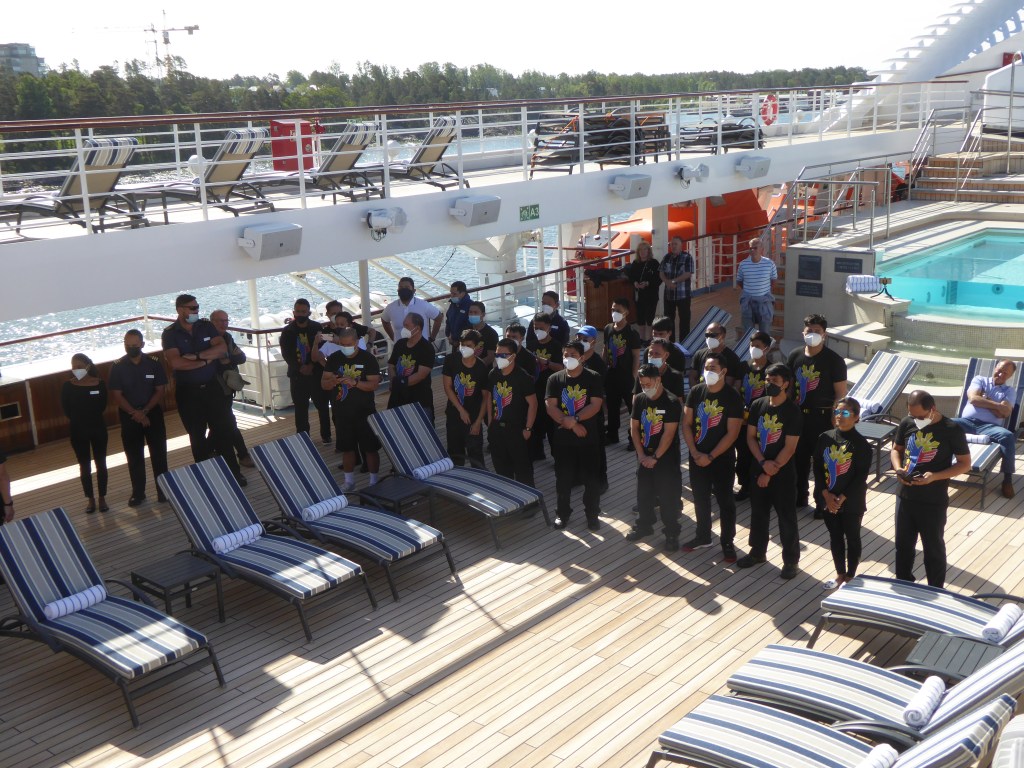
On Philippine Independence Day, the ship held a flag raising ceremony, because many of the crew is from the Philippines. It was a very moving ceremony. A number of the crew spoke. One young lady started the ceremony with a prayer for better conditions in Philippines – less corruption. Then we heard a brief history of Philippines from the Spanish invasion, to the British, then US control and Commonwealth status by U.S. Then in WWII the Japanese invaded and finally the country won its Independence in 1946. The crew does not take independence for granted like the US citizens do. They have had very little of it.
Mariehamn, Aland, Finland
The town of Mariehamn is a tiny island town only 1 mile across. It is part of the Aland group of islands that belong to Finland but speak Swedish. The main attraction is the Aland Maritime Museum and the sailing ship, Pommern. The museum had great model ships and excellent descriptions. It was hands on for kids with a station giving instruction on knots and the ability to climb ropes.
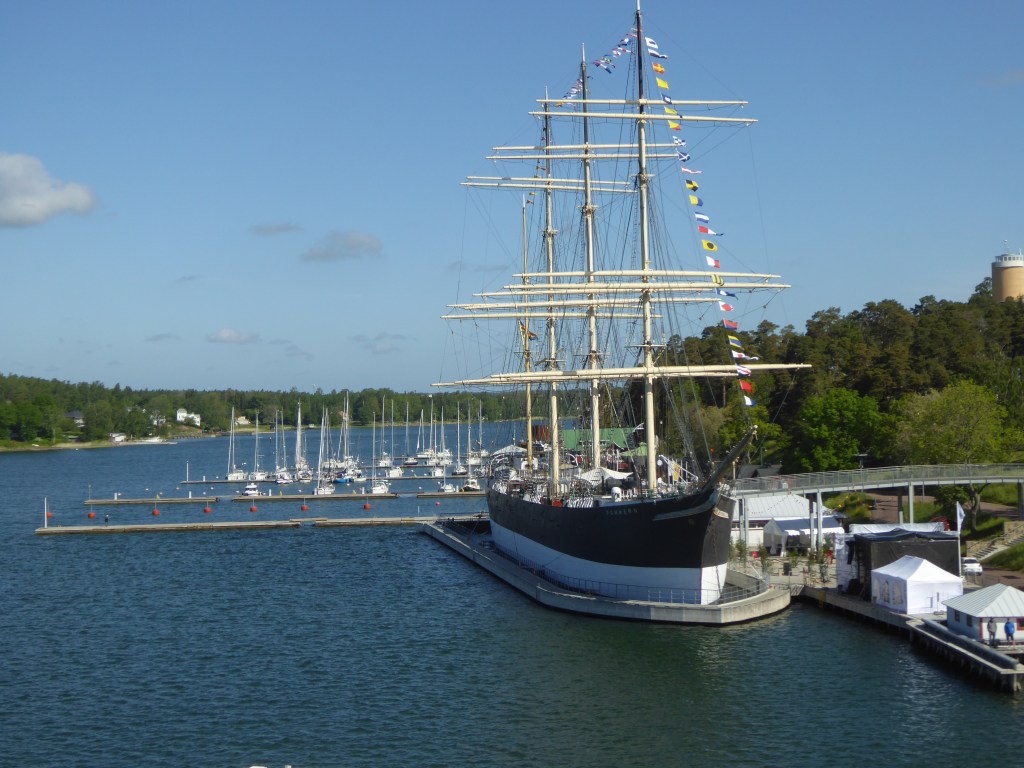
The sailing ship was wonderful. There was a great audio guide that is proximity driven. The story was told as if we were listening to a 17-year-old on his first voyage. This ship went from Mariehamn to Australia past the Cape of Good Hope. On the voyage back they had bad winds and chose to go the long way past Cape Horn. It took 100 days.
Stockholm, Sweden
The cruise ended in Stockholm, and since we had already been there, we looked for new adventures. As we walked into the old town, we passed a building called Riddarhuset or the House of Nobility. It was open and we entered. What a find!! I spoke to one of the men working there and he explained that it is owned cooperatively by the 600 or so remaining noble families. Each male nobleman, after age 18 is billed an amount which keeps up this house. They meet as a “parliament” every 3 years. The rest of the time the space is used for dinners, concerts and other events.
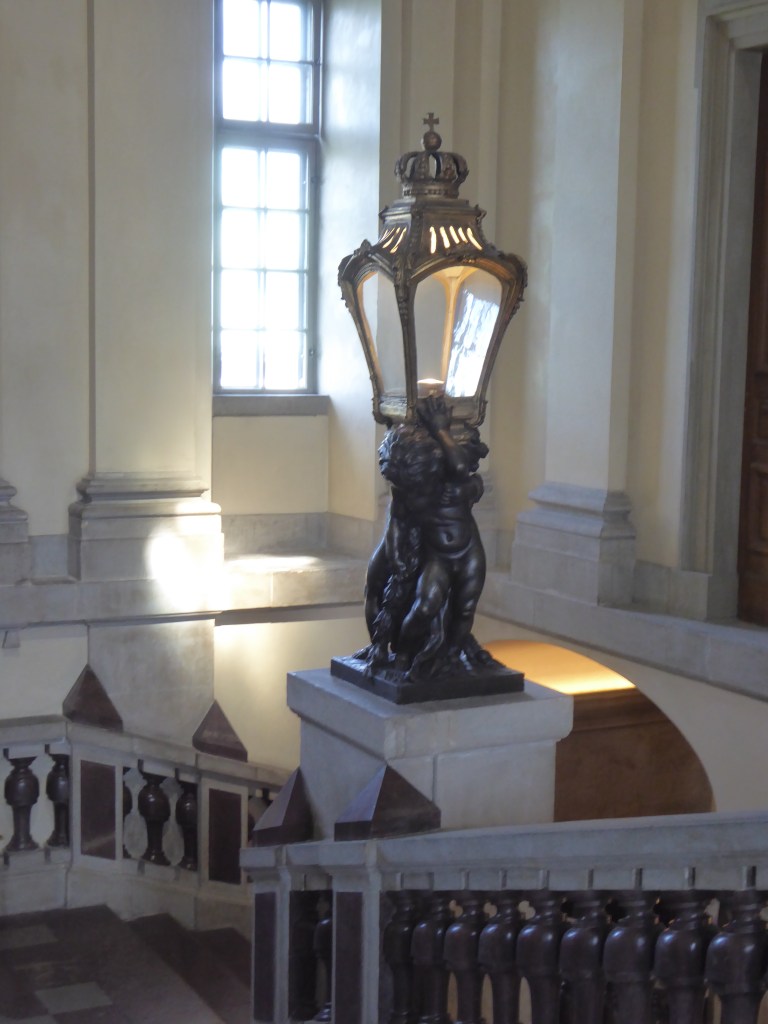
This beautiful house was built from 1641 to 1672 for the Swedish Nobility. It has an impressive staircase that was completed in 1668. At each corner of the staircase, there are lanterns, replicas made in 1765, of the lanterns in the French Royal Palace.
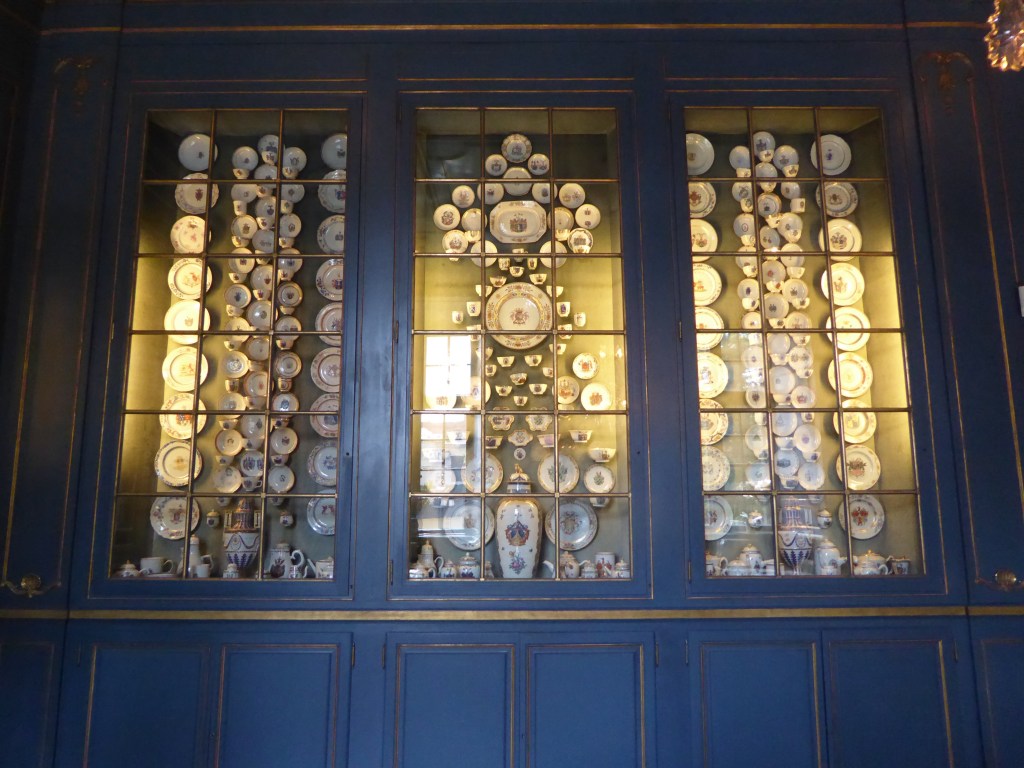
The Blue Room (above) included bone china sets from the 18th century and signet stamps. The Great Hall was used by the parliament from 1668 until 1866. Now it is just ceremonial.
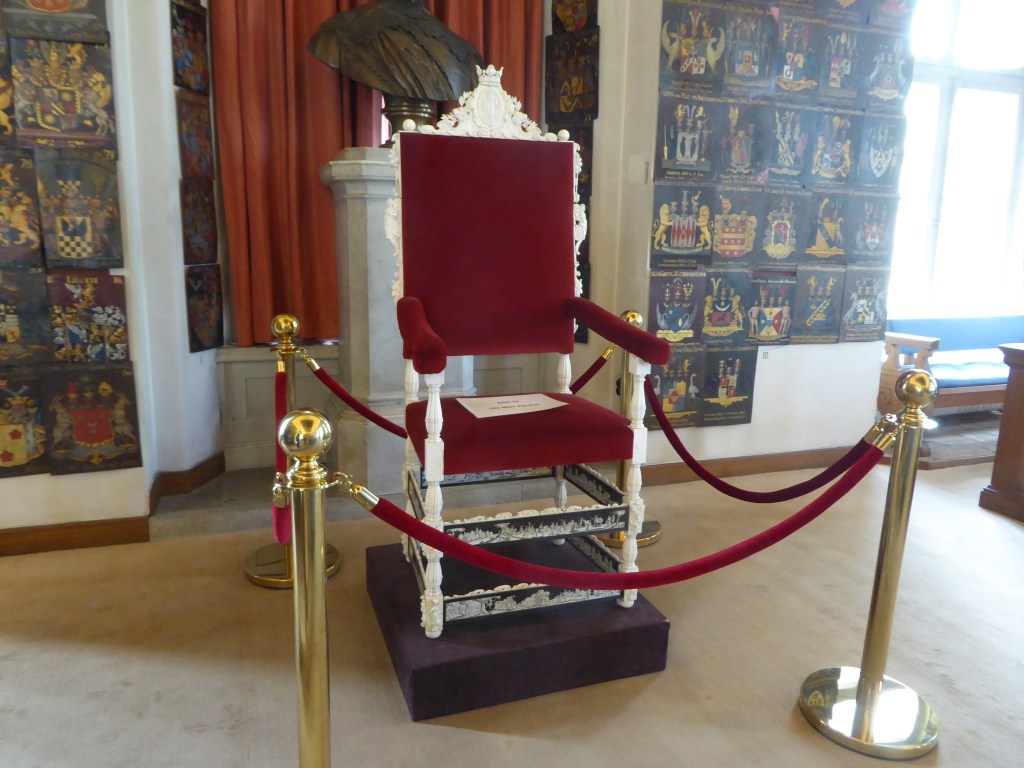
The walls have 2,331 coats of arms painted on copper plates. Beautiful painted ceiling from 1670 and the Lord Marshal’s chair are the other attractions. This chair was made in 1620 in Germany with carved ivory and ebony. It is fabulous.
The place is well worth a visit, and we just stumbled on it.
Final Comments:
1. The beauty of travel is the unexpected. The Philippines Independence Day and the Riddarhuset in Stockholm were 2 such events.
2. We were very disappointed not to be able to go to St. Petersburg. But I am so glad that I was able to visit Wismar instead.
 Nili's Adventure