
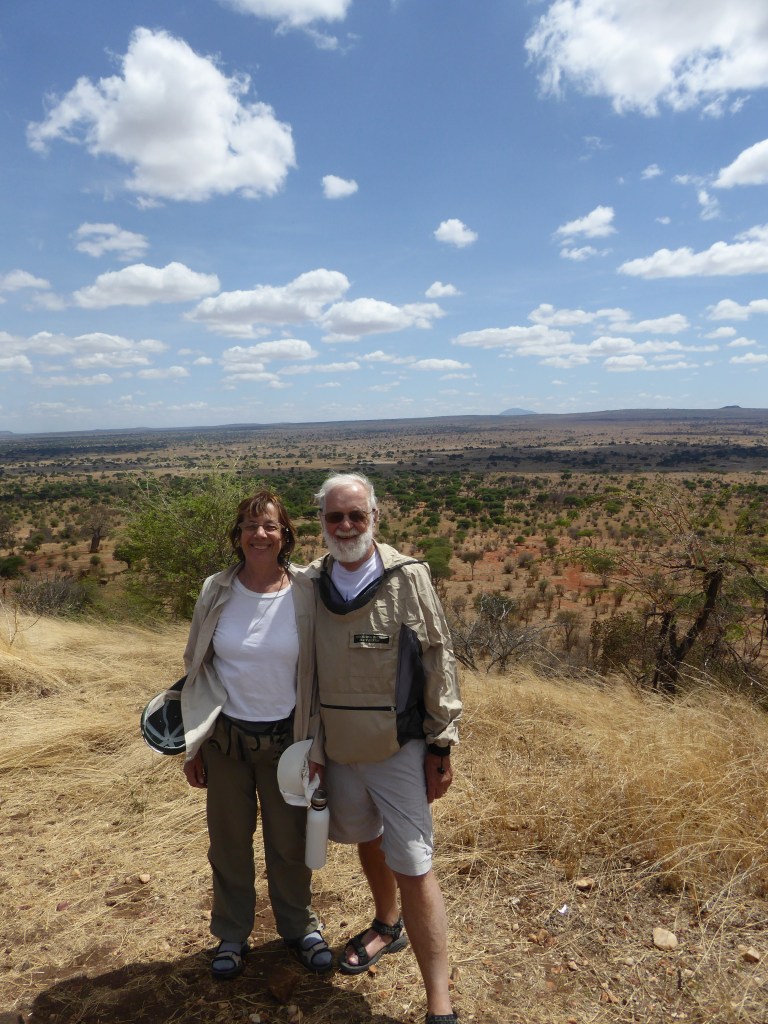
We were previously in Southern Africa in 2004 (see post 10). I loved game viewing and always hoped to be able to come back to the wildlife camps. Therefore when Galapagos Travels offered a trip to Tanzania, we jumped at it. I knew it would be a great trip.
The main focus of this trip was game viewing and to that end we covered a great deal of territory by land and air and stayed at tented camps right in the parks for 9 of our 17 nights. The tented camps/lodges were basic, most with no electricity in the tent and in the case of Selous, no Internet in the camp at all. However, the tents all had an attached private toilet and shower and charging stations for our electronics in the dining area. Meals were excellent – usually family style for lunch/dinner and buffet for breakfast with an omelet station. All camps were clean and pleasant to congregate in.
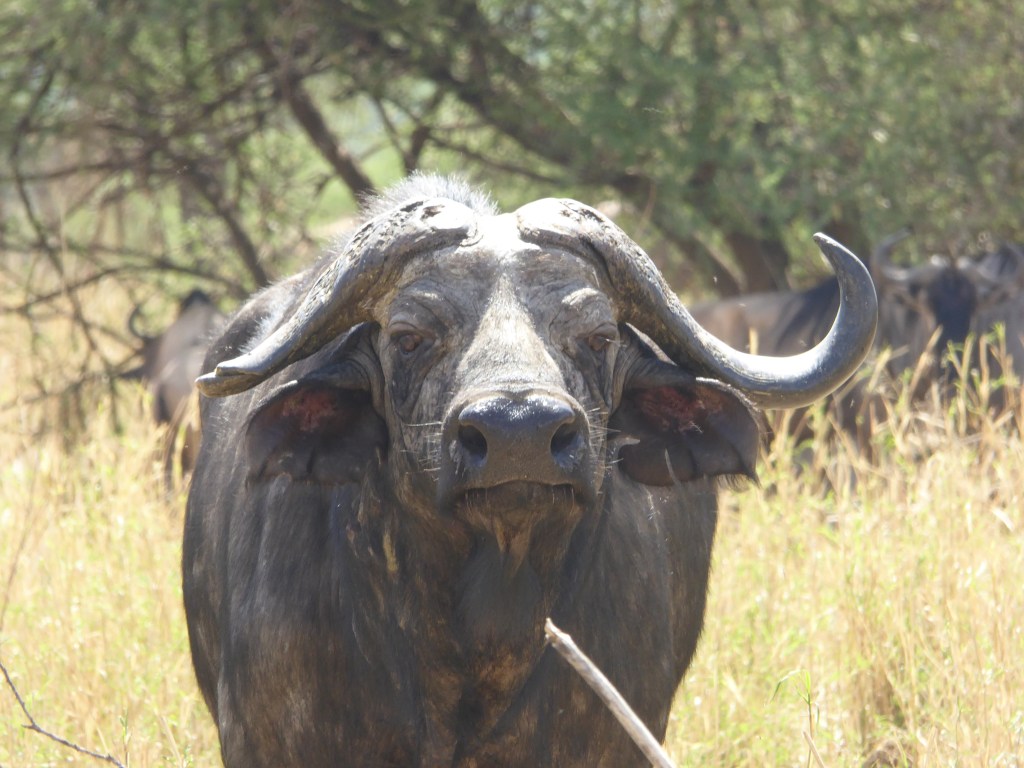
Some of the other game viewing highlights were; cheetahs, lions, cape buffalos, nursing elephants and impalas, giraffes, zebras, ostriches and monkeys.
In addition to game viewing, we visited two of the 128 tribes in Tanzania: Masai and a Iraqw, and learned a bit about their way of life. We also had city tour of Stone Town (Zanzibar) – more about these experiences later in the post.
We began the trip in Arusha and proceeded to Tarangire National Park.
We drove in 3 safari vehicles, each with a guide. (Having the 3 vehicles allowed us to look at animals with only 5 or 6 people in the car – everyone had a window seat).
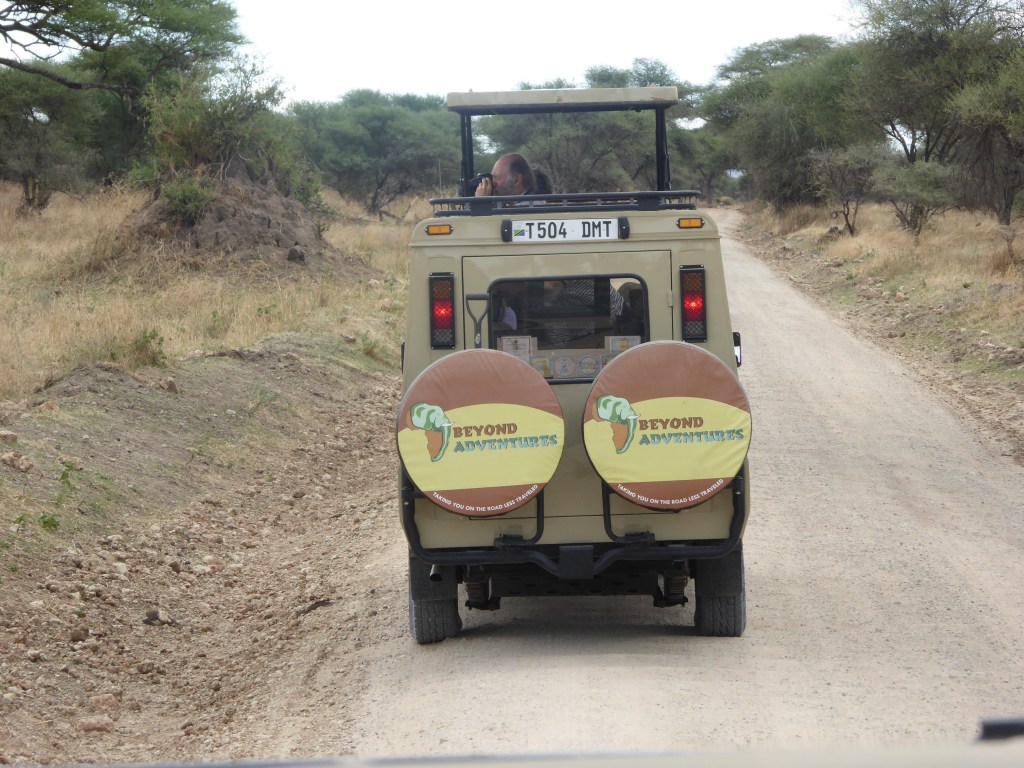
One of the guides, Herby is Masai, but since he is educated and a guide, he is not involved in agriculture or herding (the traditional Masai jobs). However, owning cows is so ingrained in the Masai, that he has 30 cows, and buys them whenever he has extra money. The Masai value wealth by the number of cows a person owns.
Tarangire National Park:
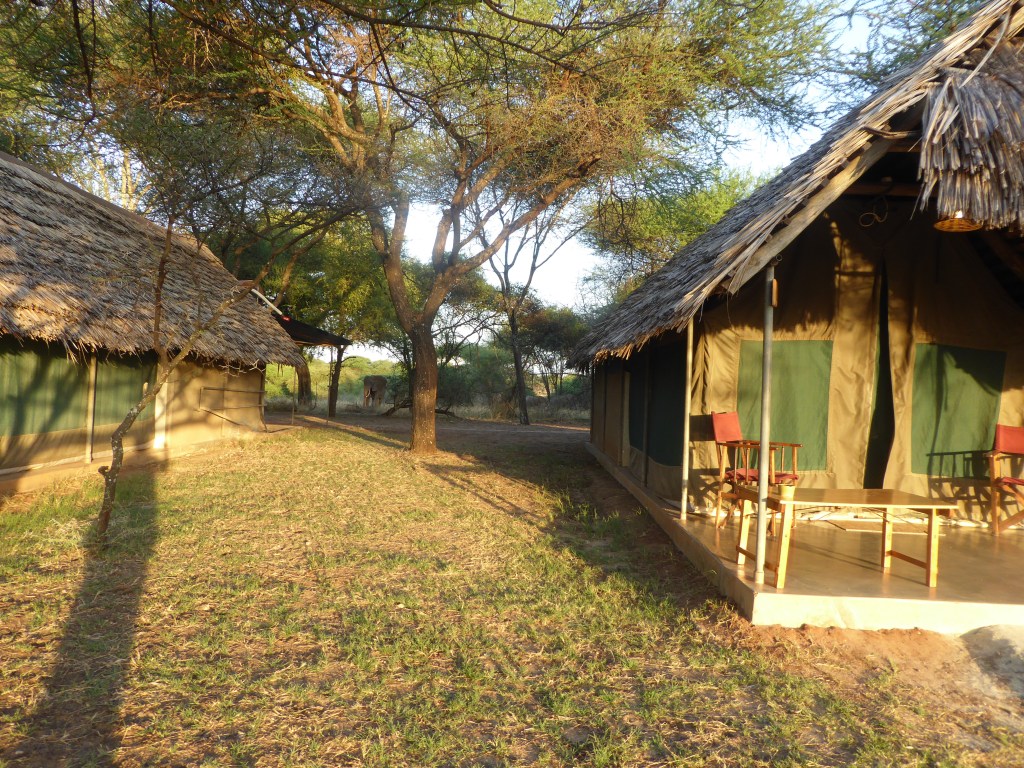
Our “room” at the lodge is a two room raised tent with a bedroom and toilet/shower room. There were no locks on the doors, just screens that zip and a flap that can be closed for privacy.
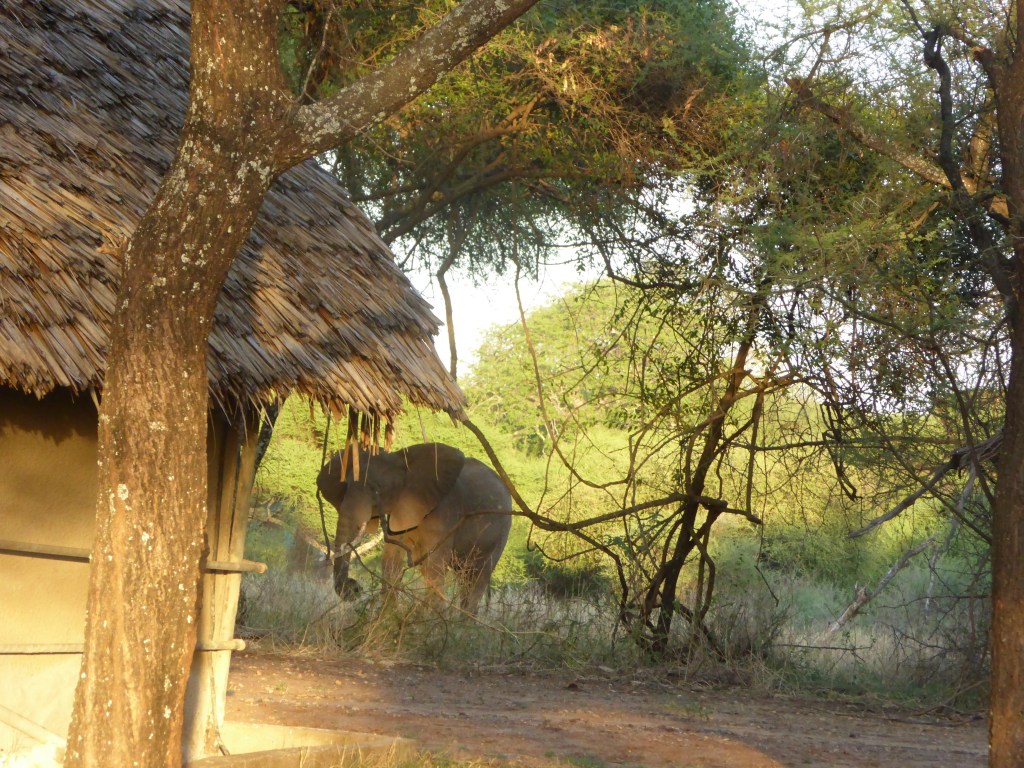
There were many wonderful moments in this camp, including waking up to see elephants behind our tent. Really just behind the tent and only about 10 feet away.
Here are some of the highlights in this park:
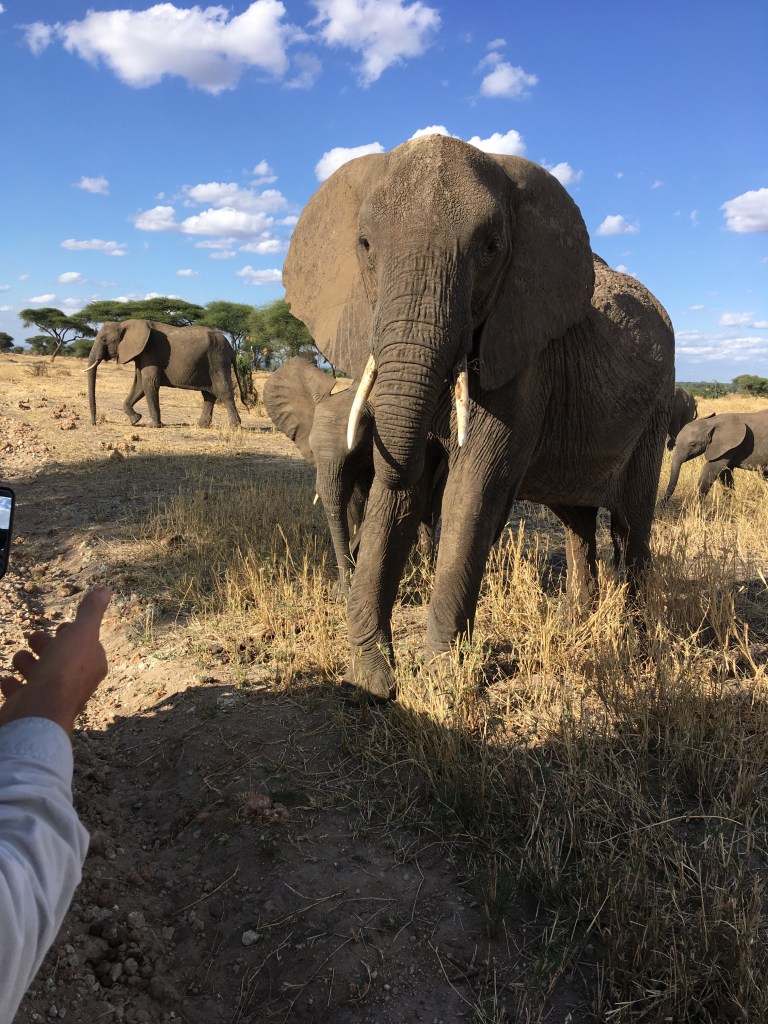
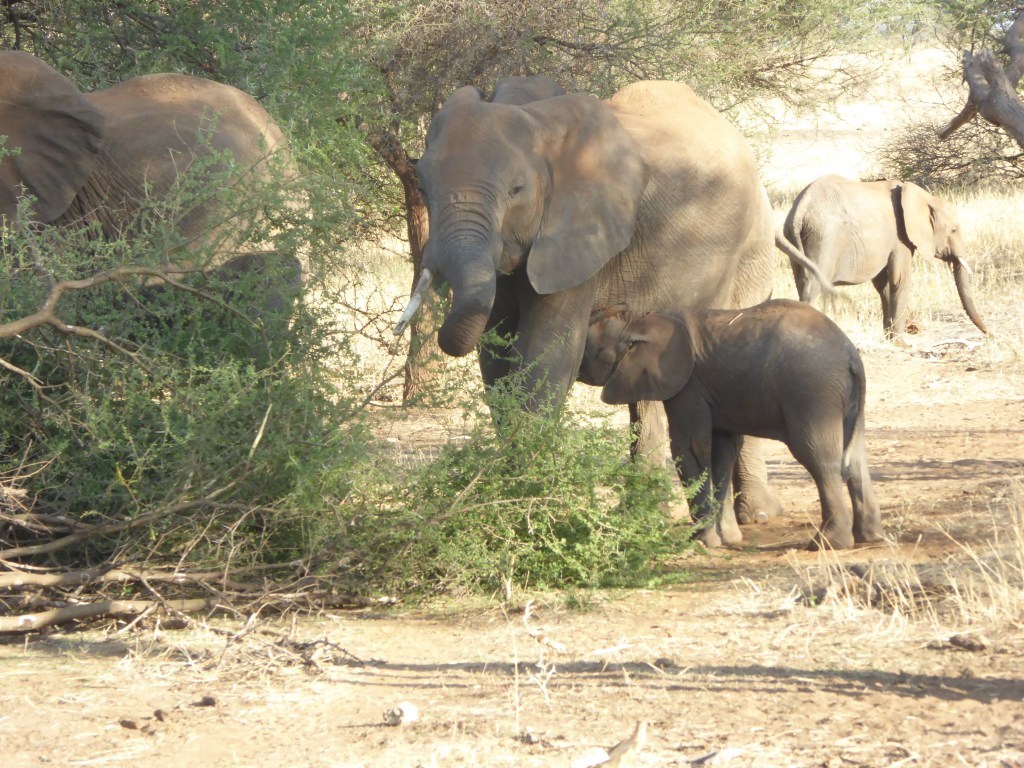
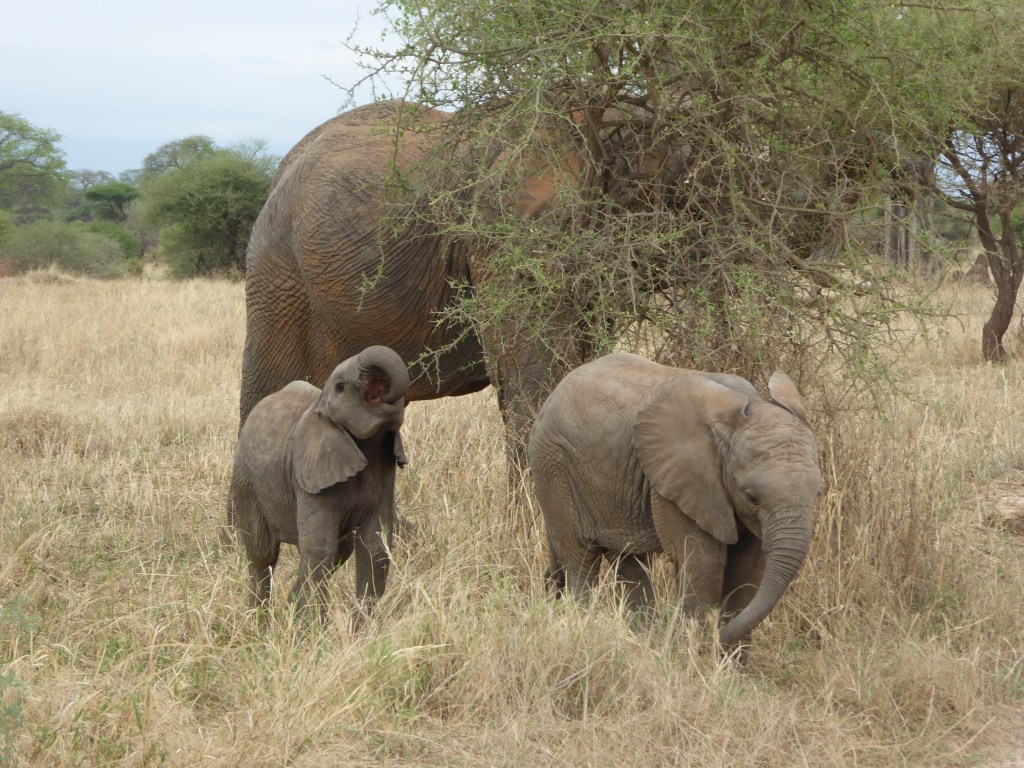
-Elephants: Lots of them at the watering hole near camp. One elephant baby nursing.
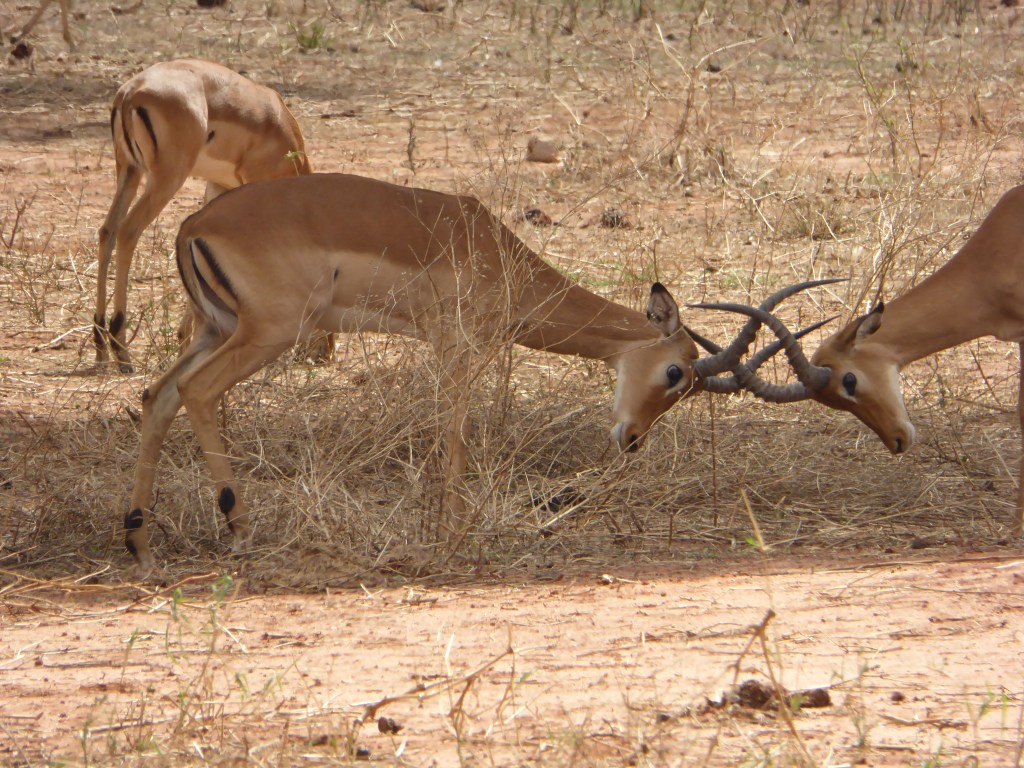
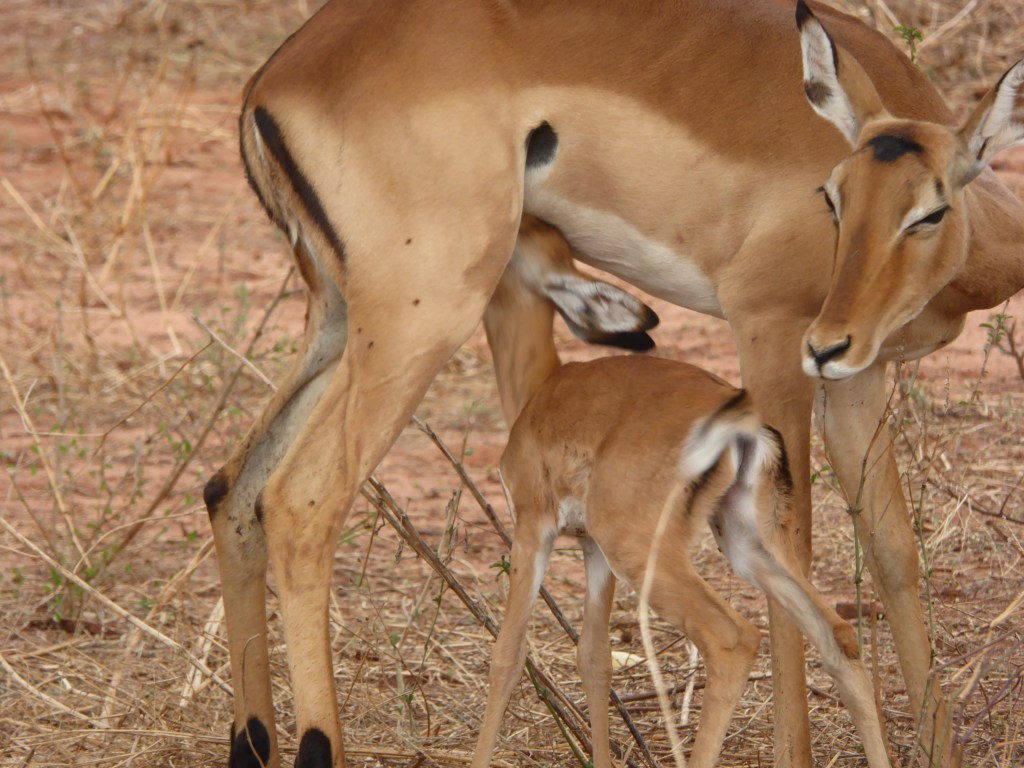
-Impalas: fighting, a baby nursing.
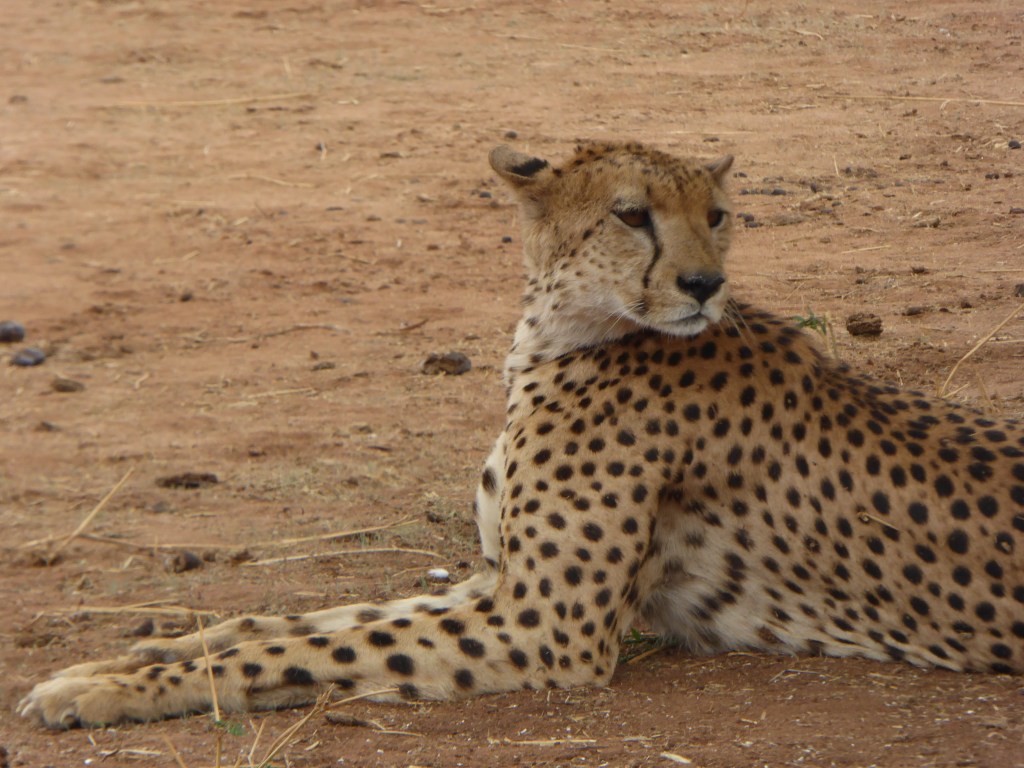
Cheetah looking so grand.
–
Cape Buffalos staring at us
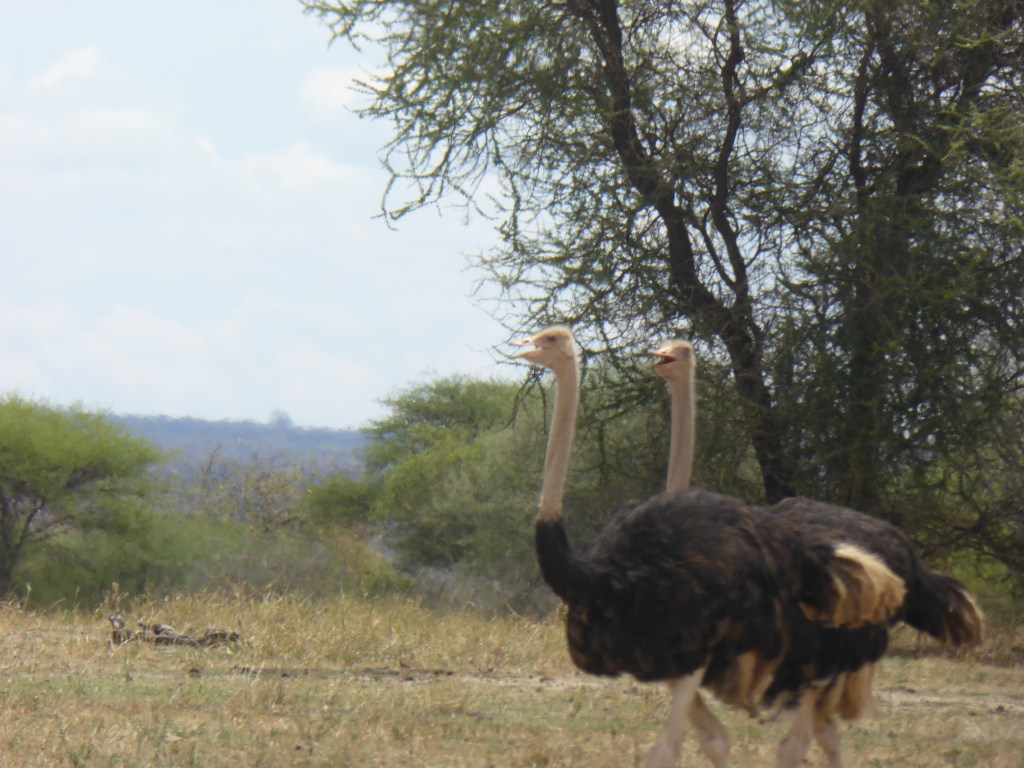
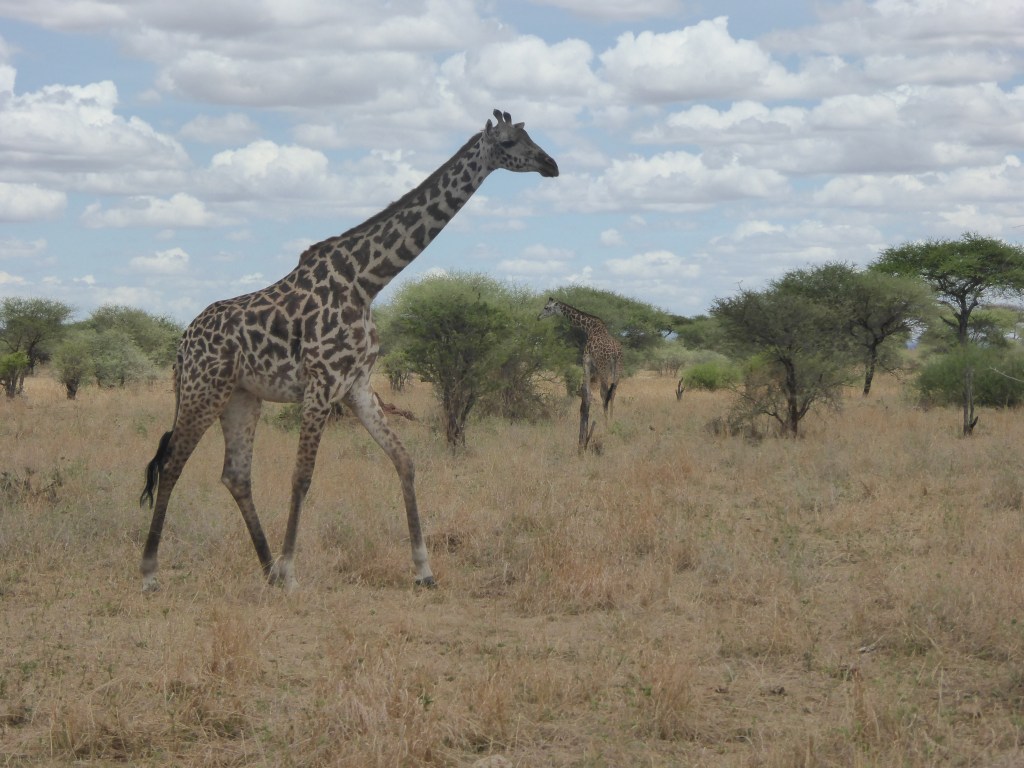
Ostriches and giraffes and many more.
While in Tarangire, we also visited a Masai village. Masai came from North Africa (Egypt, Ethiopia, Sudan). They were hunters, therefore, they migrated following the game. Many names in Tanzania are Masai names and they are one of the few tribes that have held onto their traditions.
At the Masai village (about 1100 people,) the chief greeted us and gave us a tour. We saw the enclosure, made from the thorny acacia tree branches, for the cattle at night (when not off in distant pastures). Baby cattle and goats come inside the houses for safety at night.
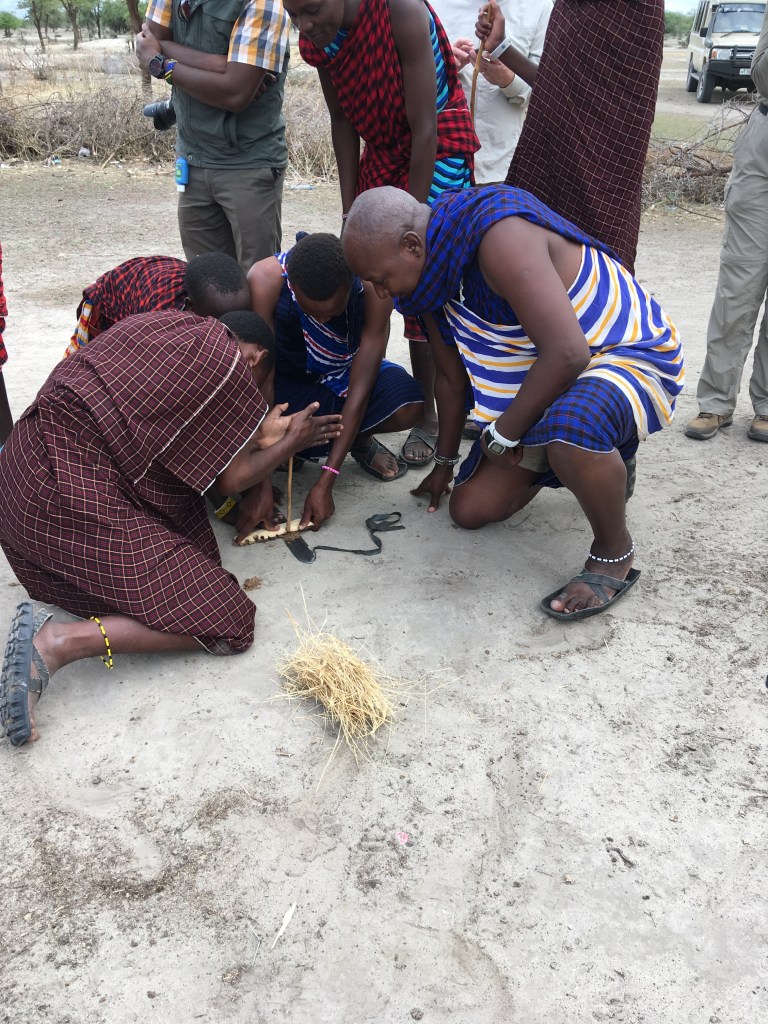
We saw a fire lighting demonstration using sticks. They start a fire each morning this way, and then they share it with each other.
Then the women dressed all the females in our group in traditional garb and let us help crush millet with a large pestle, and bead a little bracelet. They sang to us as well. The singing consists of a leader chanting and then a response from the rest of the women.
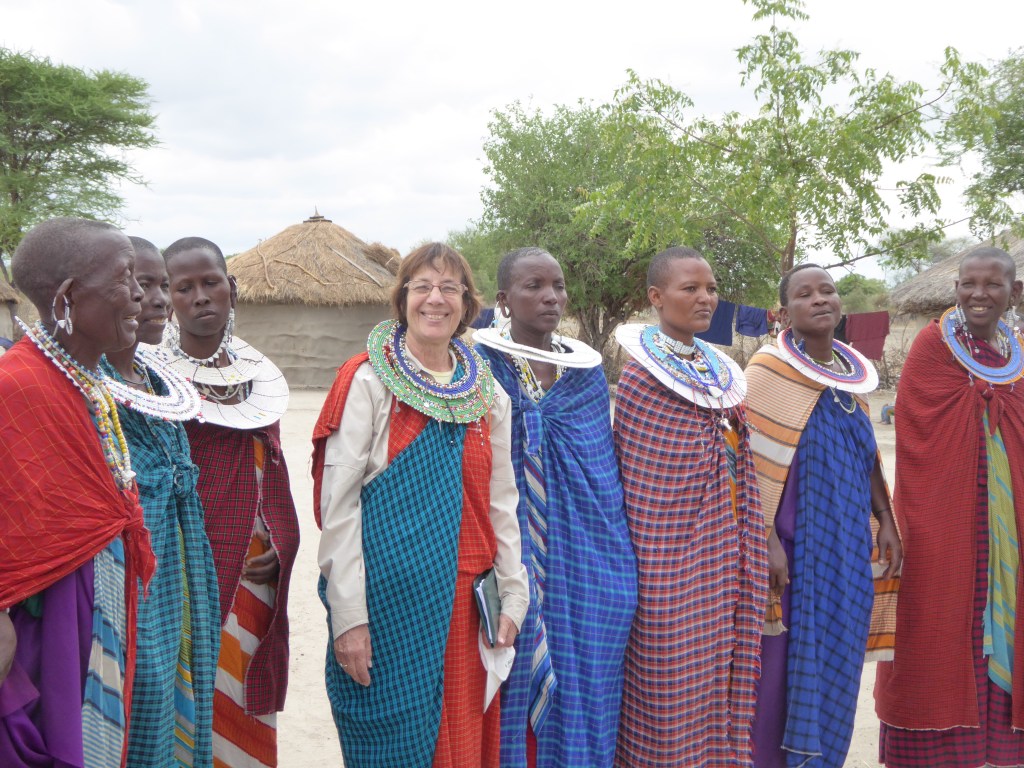
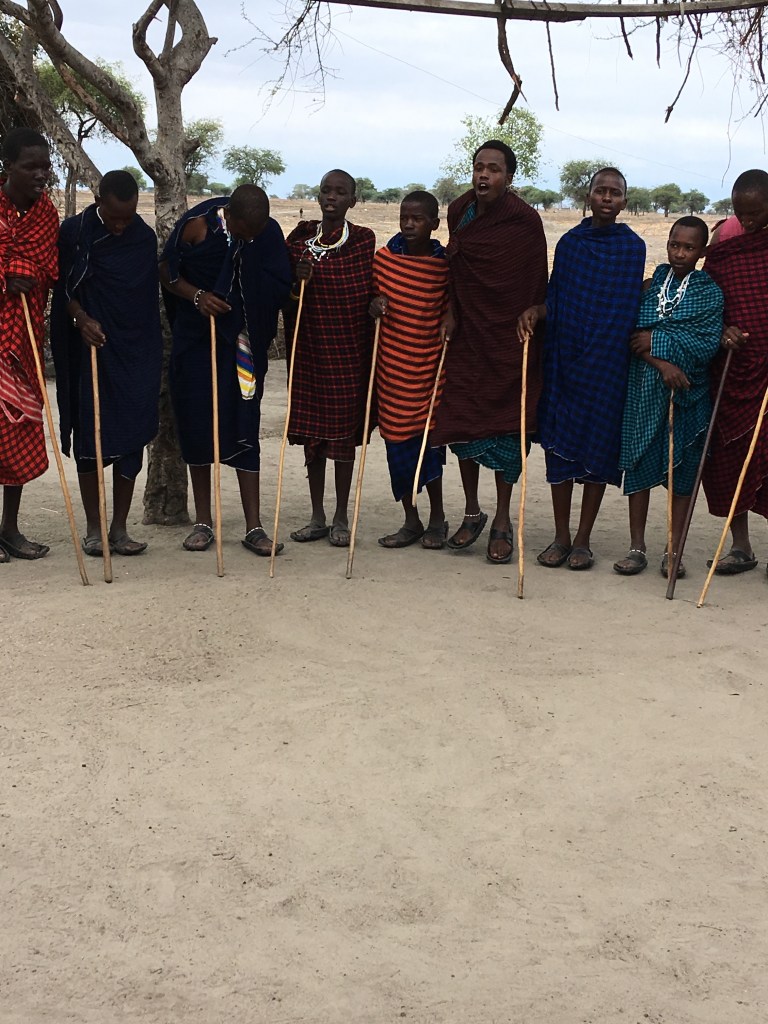
The men and boys also sang and danced.
We were invited into a private home and were able to ask the chief questions, thru our guide. We learned that polygamy is still legal – this chief has 4 wives. Female Genital Mutilation is illegal and the chief tries to make sure that it does not happen. He is pro-education but has a hard time getting his men to send the kids to school rather than use them as herders.
Traditionally they circumcise the boys during a 7 years period, and then for next 7 years there are no circumcisions performed. Therefore, if a circumcision cycle begins in 2000, it ends in 2007. All the boys circumcised during that time are considered the same age and have the same nick name. Then no one is circumcised again till 2014 and that group has another name.
Keitel Lodge
Our next lodge was actually a resort, with electricity in the room and a dining room.
While at Keitel, we visited an Iraqw tribe. They are an agricultural tribe, who came from Ethiopia in the 14th century. They raise most of their own food but not enough for exports. Therefore, to make money, especially to send the kids to school, they make bricks – their soil is rich in clay.
The assistant chief, Paulo, met us. He has been voted assistant chief twice now. Each is a 5-year term. The chief is also elected as opposed to the Masai where the chief’s position is hereditary. Paulo is on the school board and believes in education.
Paulo emphasized many times that they are very different from the Masai. They do not observe polygamy and they choose their own spouses. He and Pauline are still on their honeymoon after 20 plus years, he says.
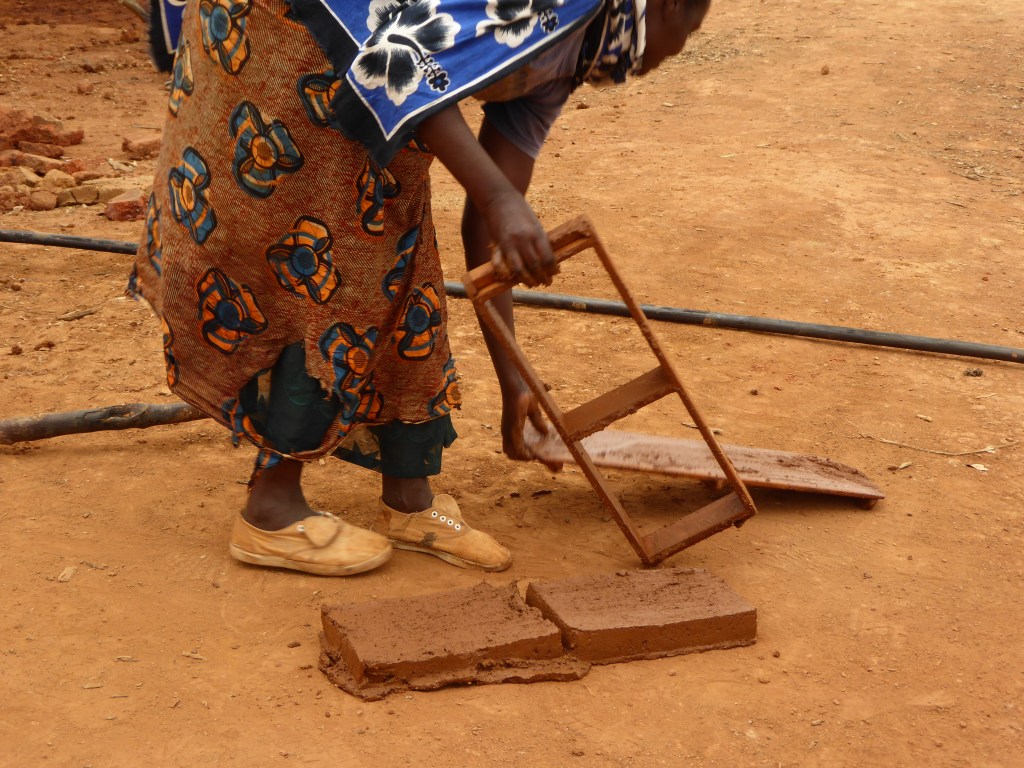
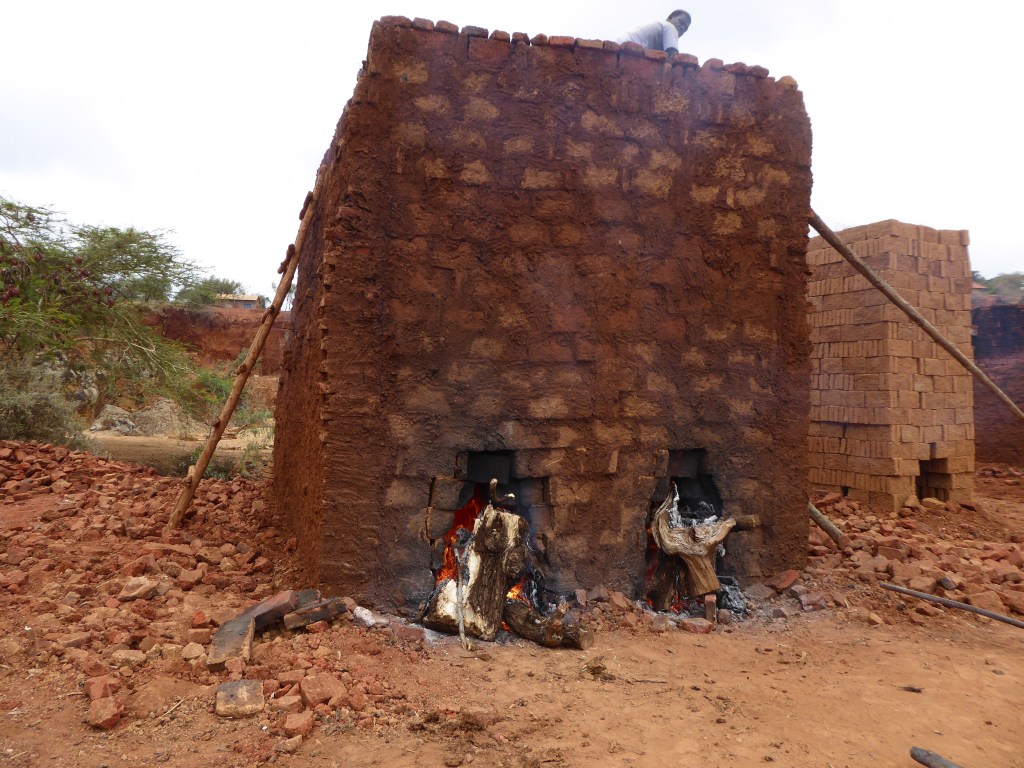
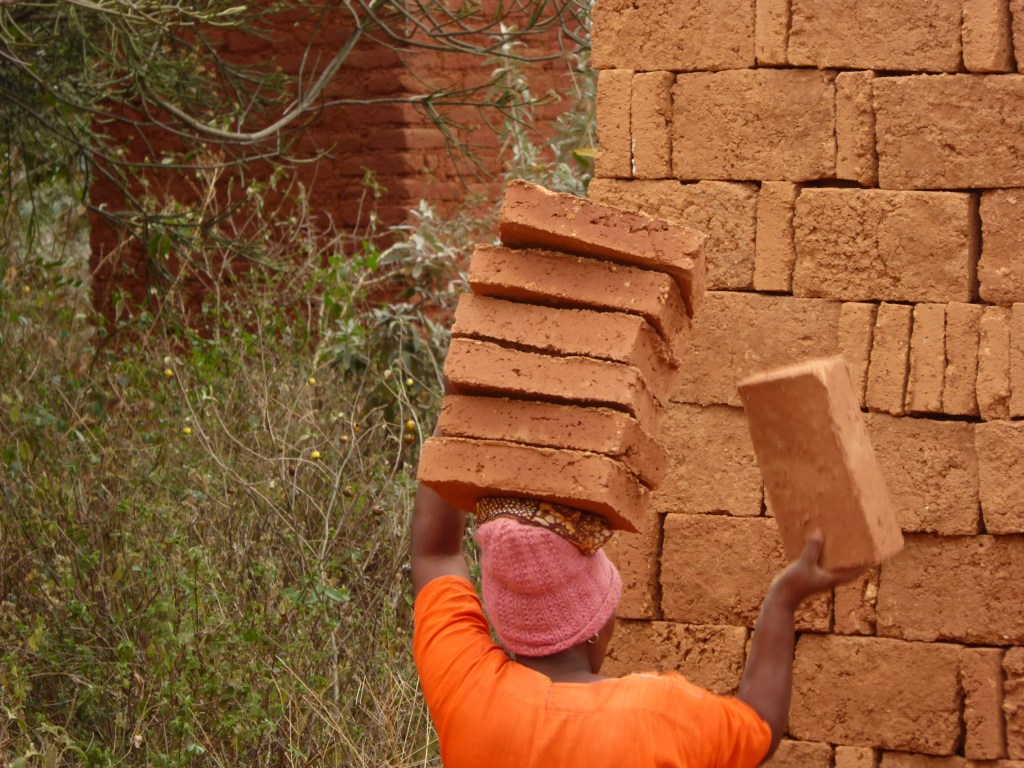
He took us to the brick quarry to see the brick making. To make the bricks, they crush the soil, form it into bricks using a form, and then dry them for 4 days. Then they pile up 10,000 bricks. These bricks are covered with more clay. Then a fire is lit under them. The quarry is large and is shared by 50 families. Each has their own plot. When the quarry gets too deep, trees are planted to keep erosion at bay. They have a number of quarries.
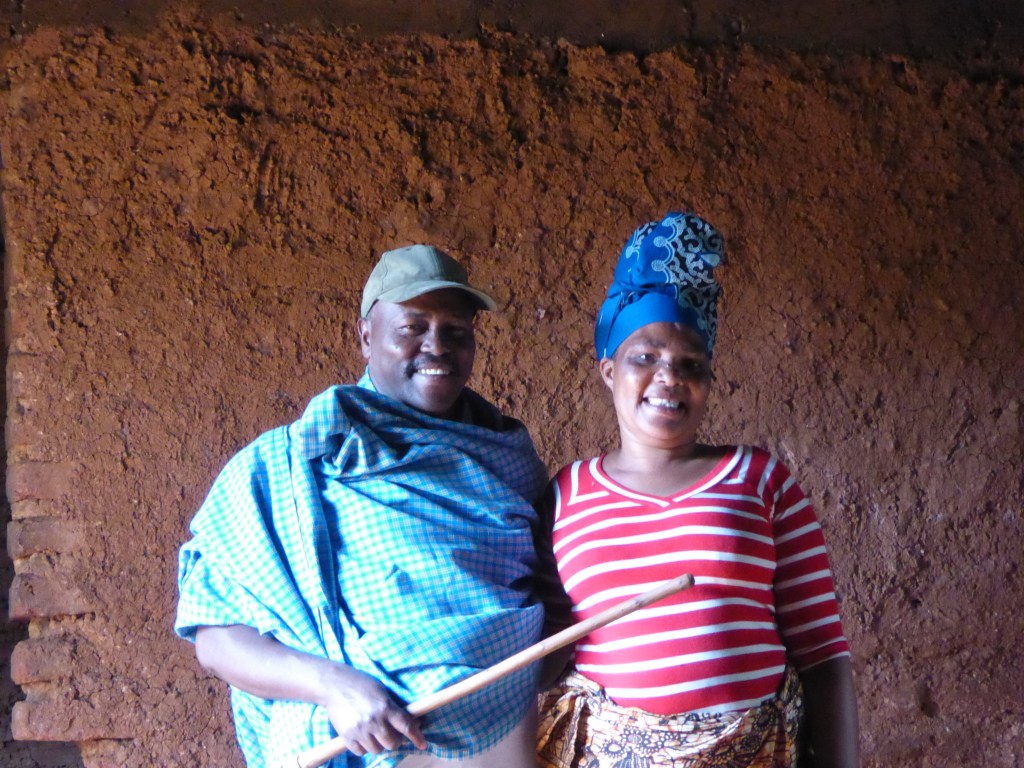
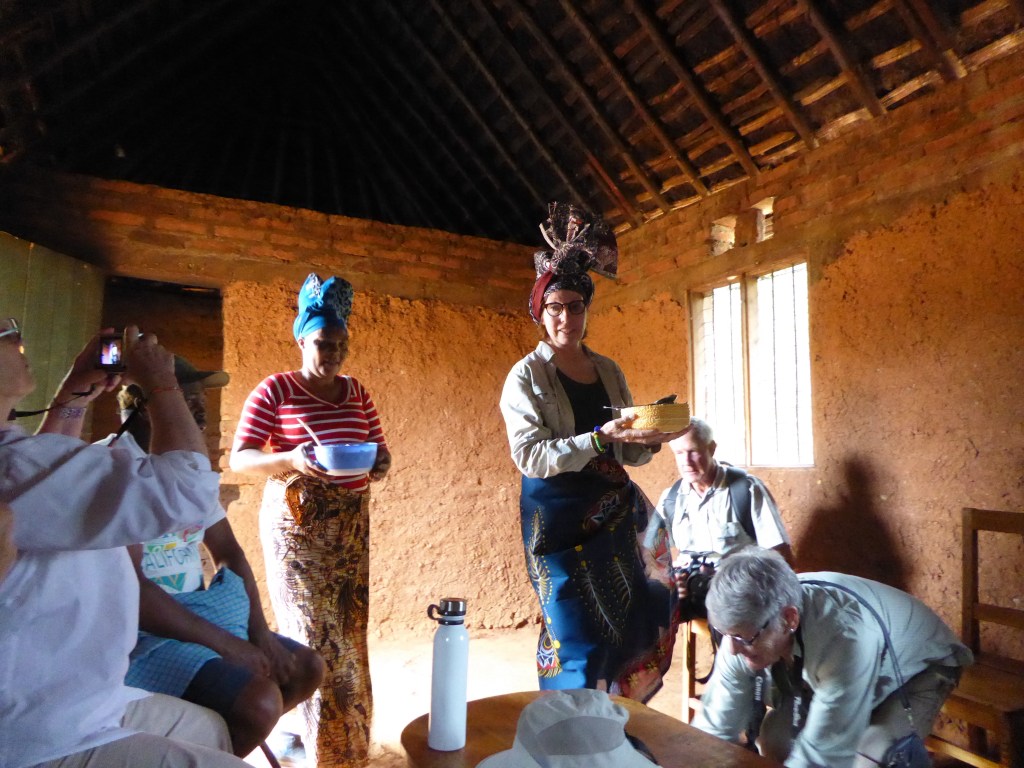

We were able to visit Paolo and Pauline’s house where we had lunch of polenta, greens, beans and corn. Then we (men and women) put on their traditional garb and learned how to wear their traditional turban. We also had a musical performance.
Southern Serengeti Natl Park:
Lake Masek Tented Camp
On our way to the Southern Serengeti we drove (and stopped) at the Ngorongoro Crater and the Olduvai Gorge. The crater is actually a caldera, which is a volcano which erupted in such a way that the insides blew out. It looks like a bowl and is 13 miles wide.
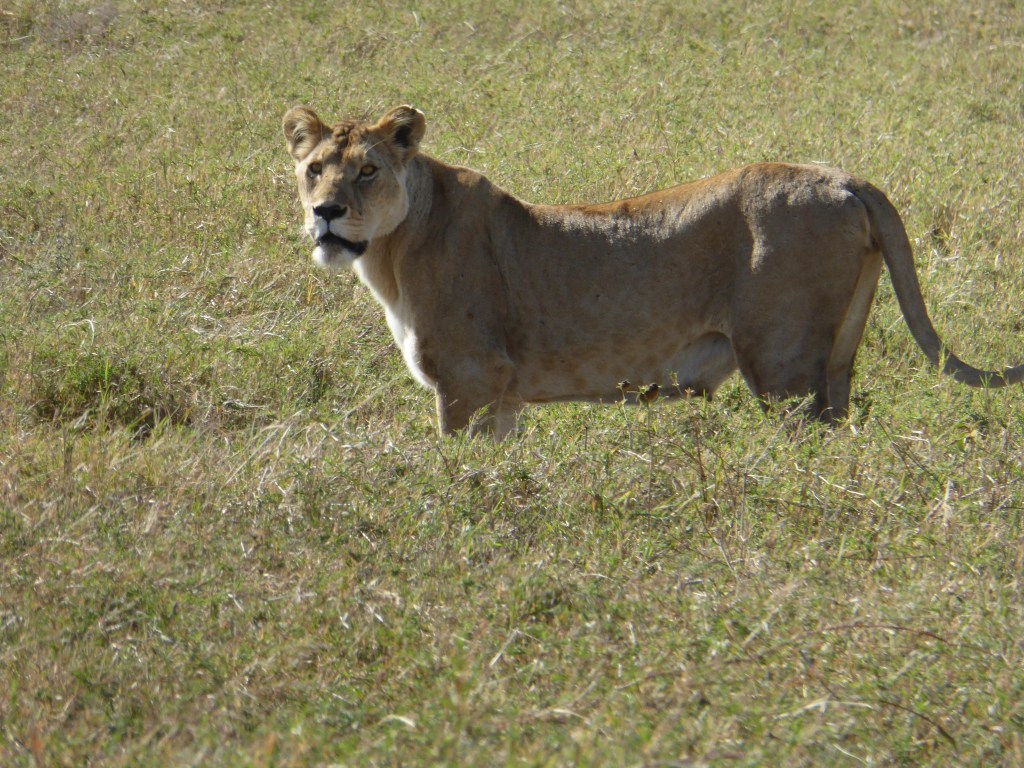
Inside the caldera, we saw a lion crossing right in front of us, lots of zebras with babies. BTW, the zebra baby stripes are brown and become black as they mature.
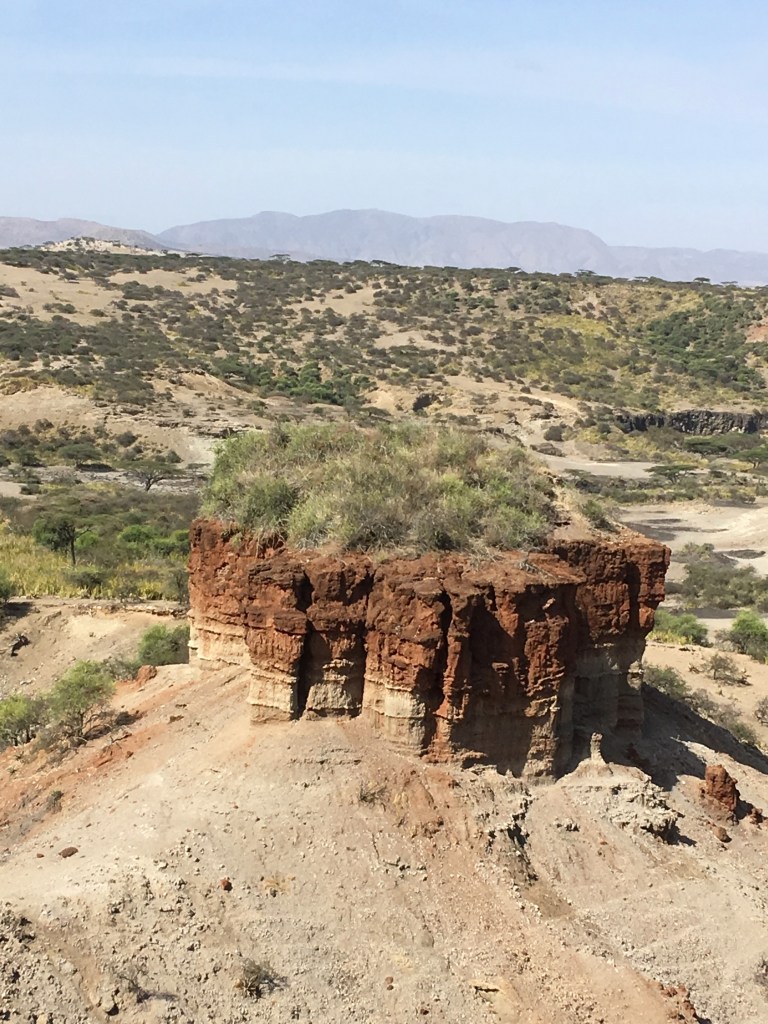
The Olduvai Gorge is where the Leakeys worked and discovered “Lucy”. The museum was very informative, especially about pre-historic hominids. It was very exciting to walk around the area.
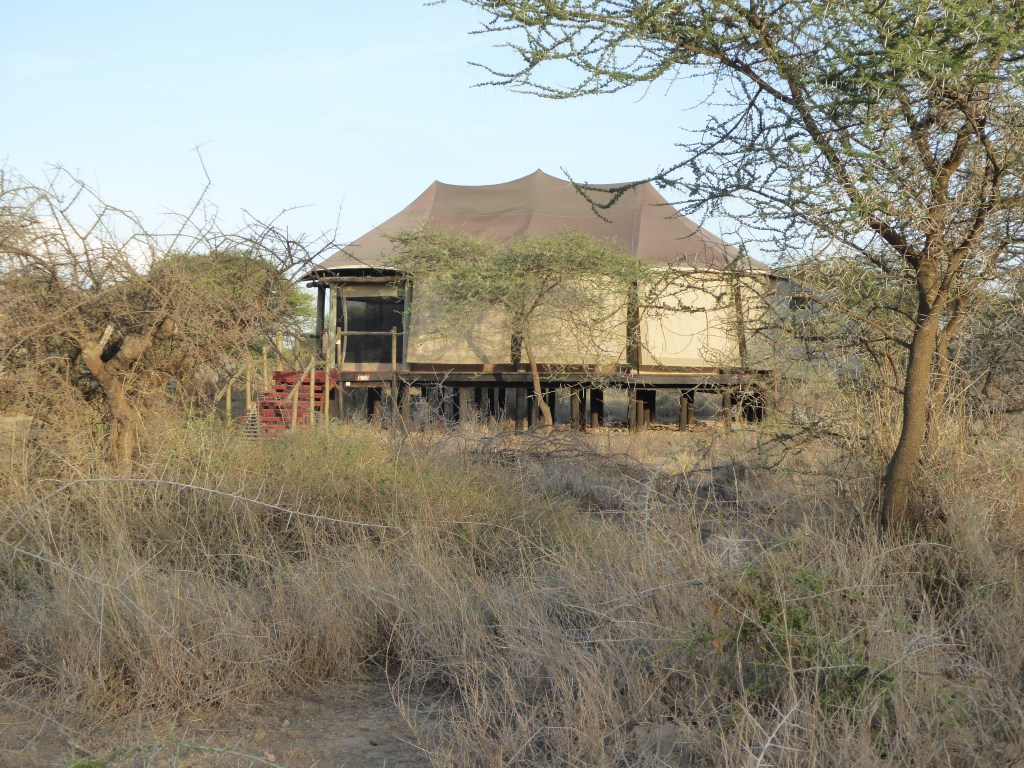
Although Lake Masek was a tented camp, we had electricity in the room and a gorgeous outdoor shower.
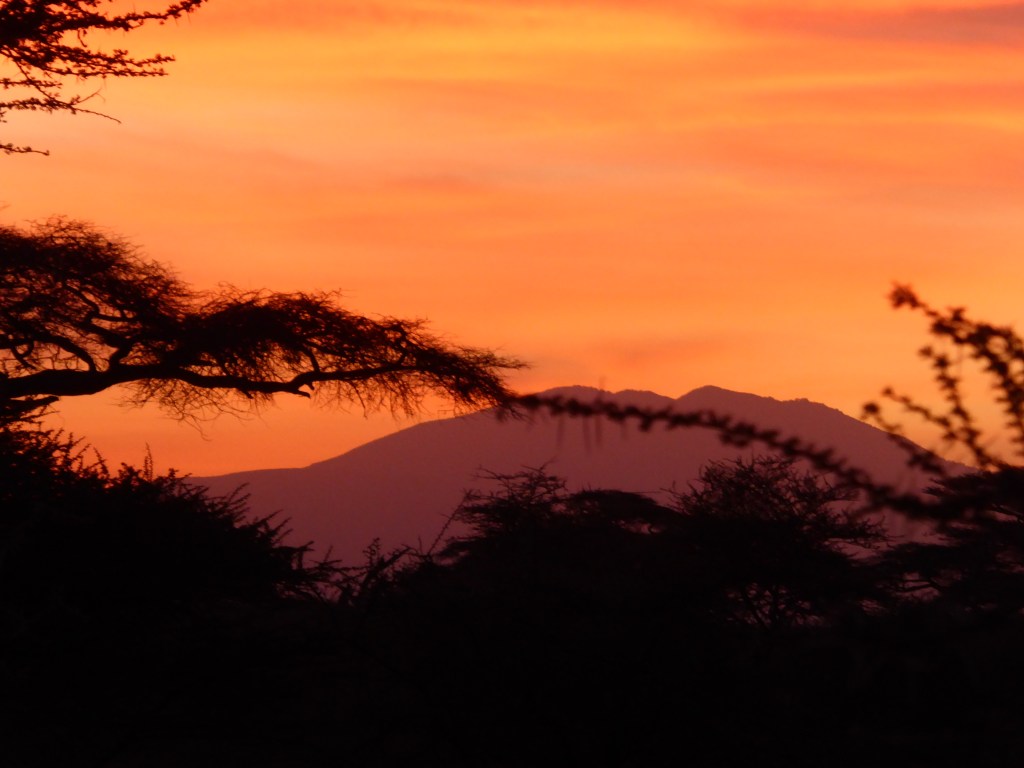
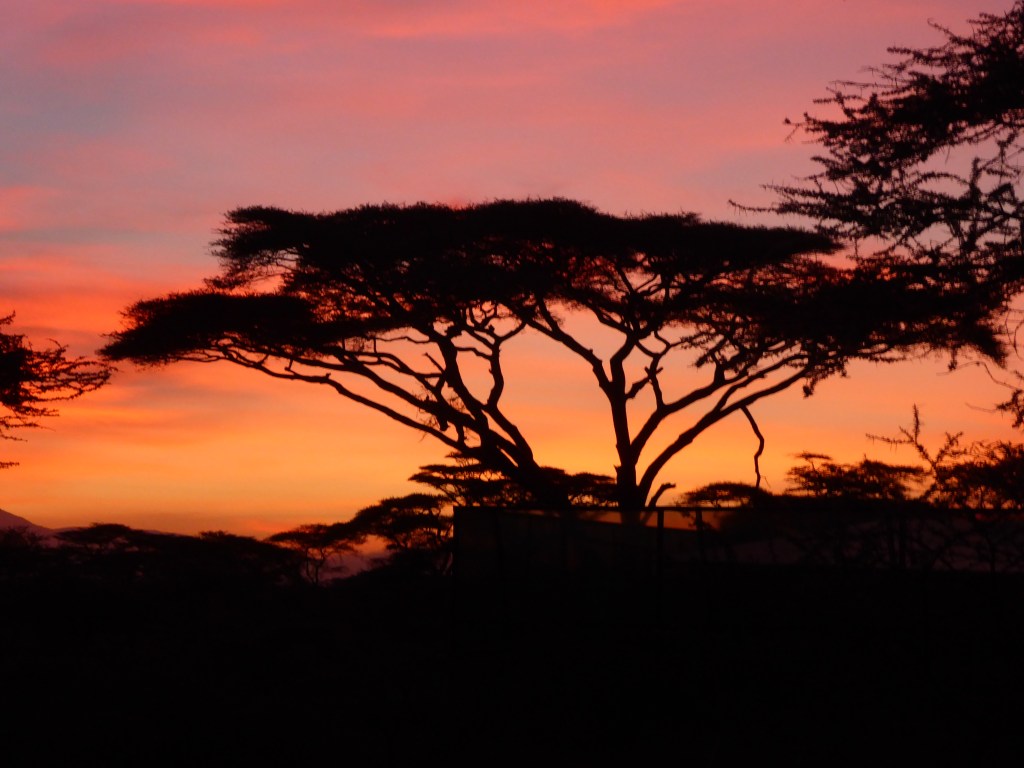
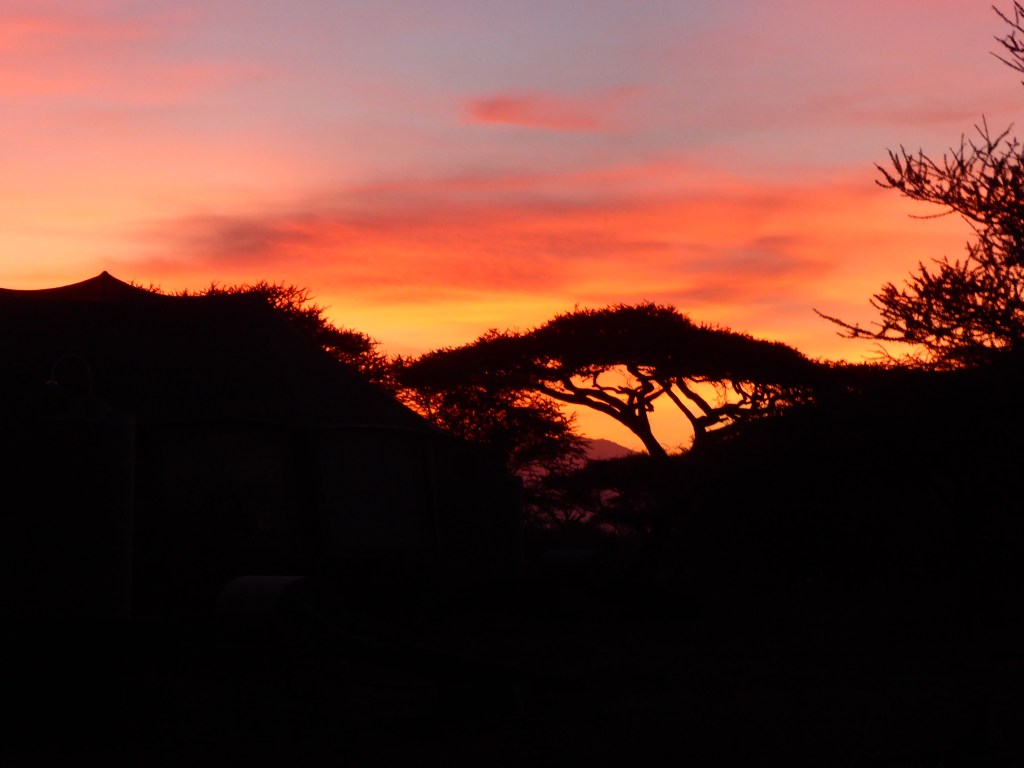
The dining room overlooked a beautiful lake and sunrises were spectacular. Our tents were far from the main dining area, therefore, when dark, we had to call the dining tent and get an escort with a flashlight. The escorts are all Masai men who walk with a flashlight and a spear. The Masai always walk with a spear whether they are going to market or herding cattle.
The Serengeti is flat land with either acacia trees or grasslands. The grasslands go on and on as far as the eye can see.
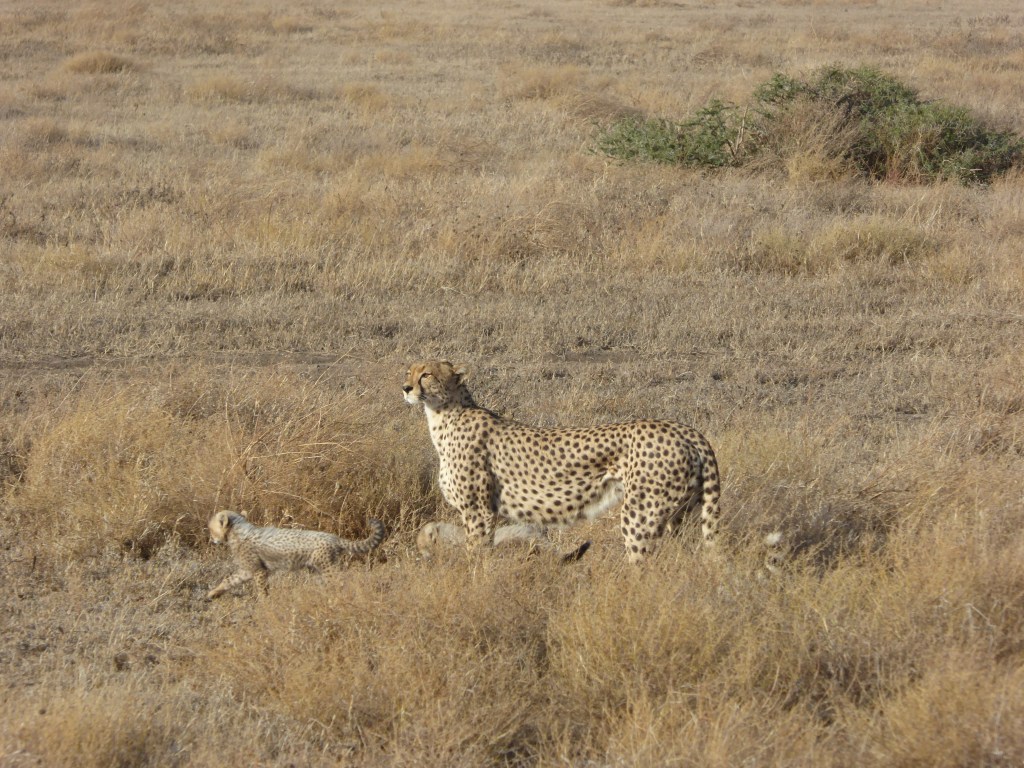
On one fabulous drive we saw a cheetah with two babies, aged 4 to 6 weeks, walking across the grassland looking for prey. We followed them for quite a while.

We also saw 2 lionesses hunting together. Our sister vehicles were in their way, therefore the lionesses went around the vehicles. Our friends were so close to the lionesses that they could have touched them. Obviously we keep hands in the vehicles.
On another drive we saw flamingos gliding in formation on the water and then flying. It was a beautiful sight.
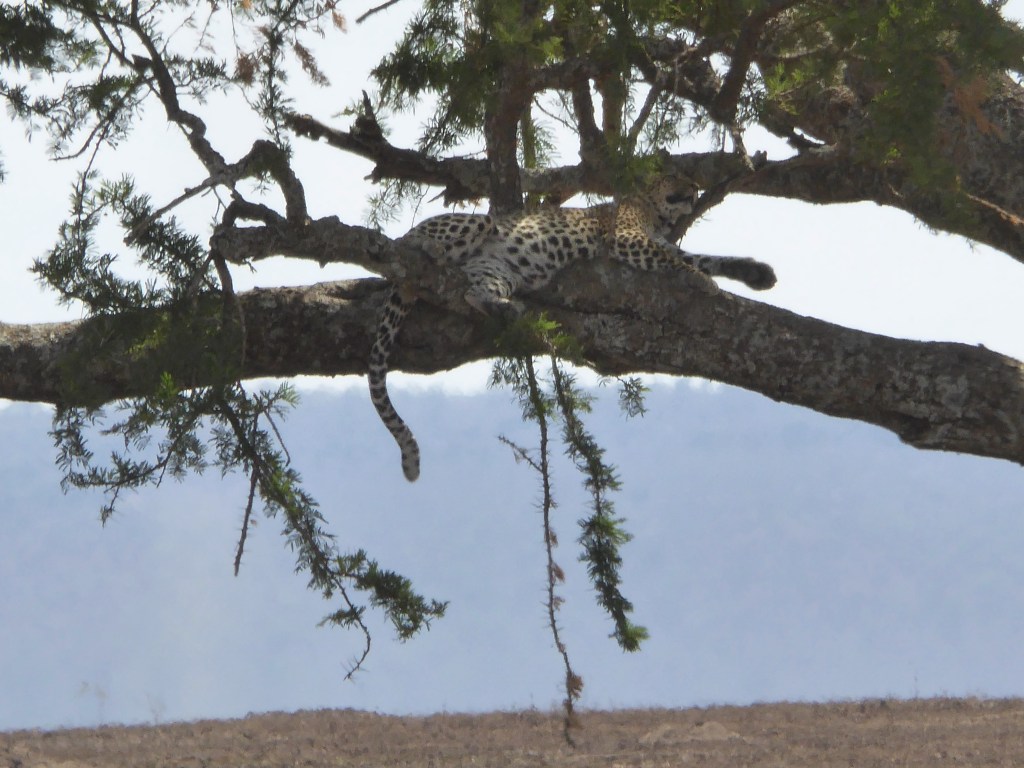
And on yet another drive we saw a leopard on a tree close enough that I could see him clearly with my binoculars. Leopards are shy and hard to spot.
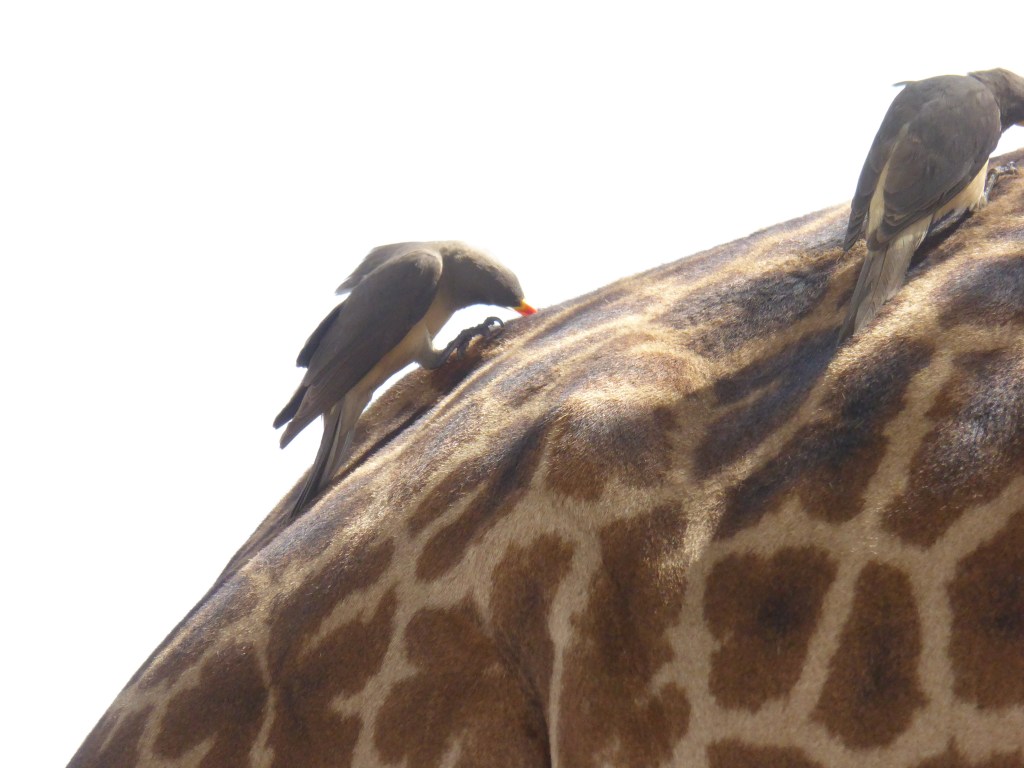
We also saw lots of giraffes eating right near the vehicle. They had tickbirds on them and we were so close to them that we could see the birds eating the ticks.
Central Serengeti: Kati Kati Tented Camp
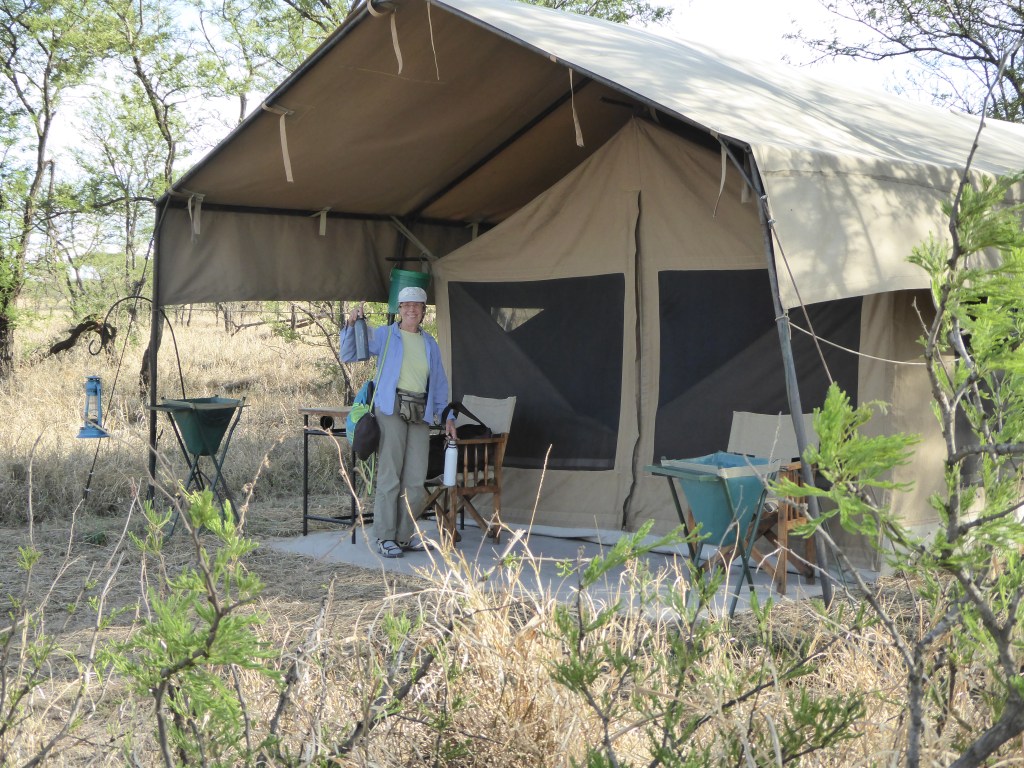
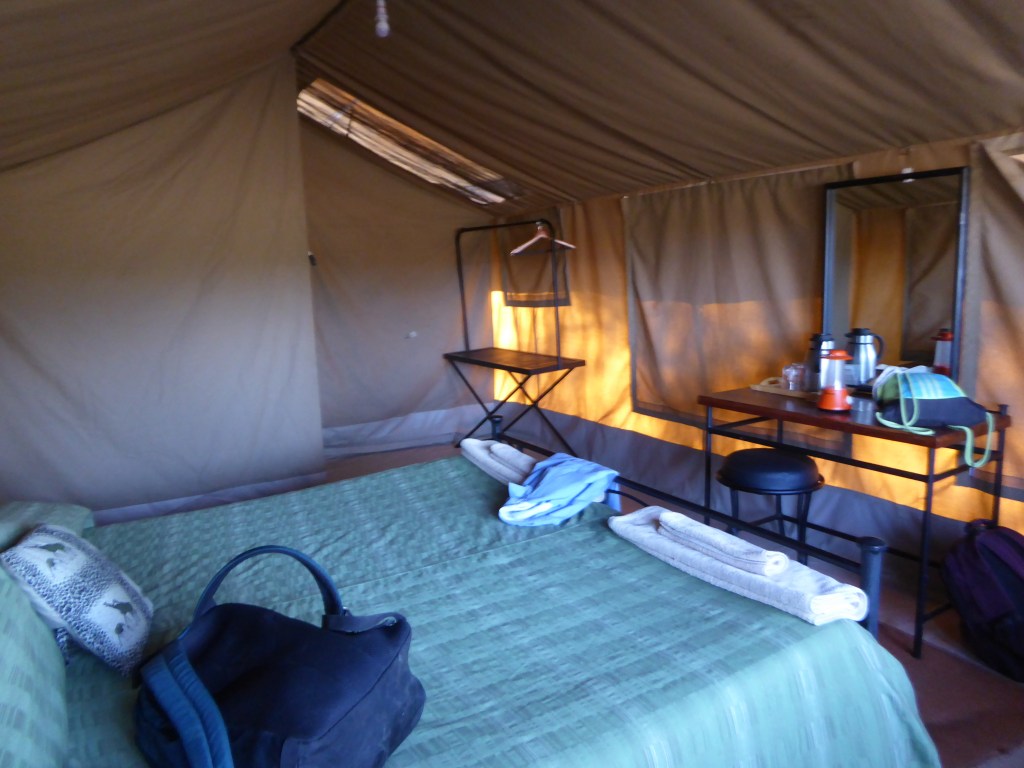
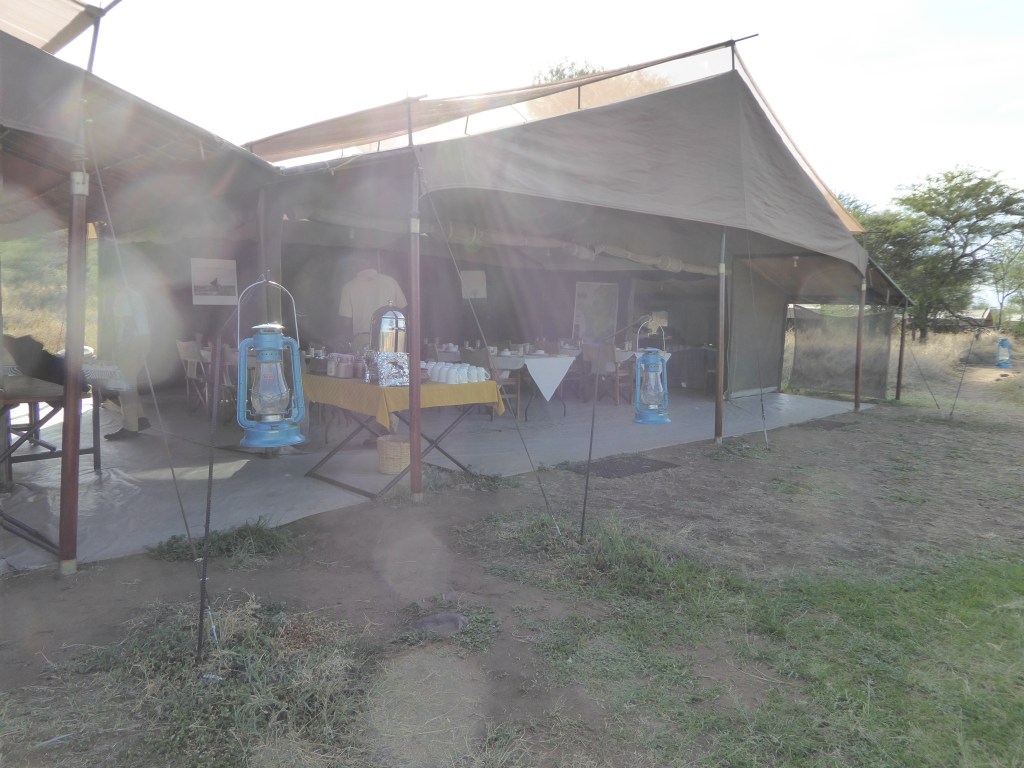
We moved on to the Central Serengeti and stayed in Kati Kati Tented Camp. This camp was very basic but fun! There was a private toilet and shower but no running water. Therefore, in order to take a shower, the group needed to agree on a time and then the staff came to each tent and poured water from a bucket outside the shower to activate the shower. We didn’t have much warm water, therefore, we showered army style, i.e. wet yourself, soap yourself then rinse off. If there is not enough water for the second person, the guy behind the shower pours more in the bucket. It was an adventure. If you want to shower at a time other than with the group, then you let the office know.
This felt more like camping, with a campfire at the dinner tent – but definitely plush camping. Being at this camp allowed us to be close to wild life. Probably almost too close. We were warned that we should not leave anything on our little patio, like shoes because the hyenas would take them.
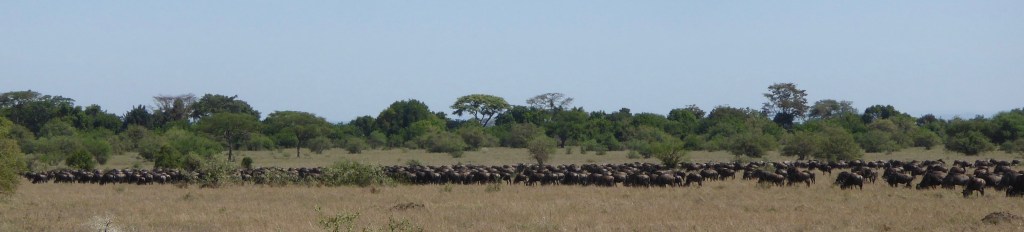
On our drive, we hit the jackpot. We saw very large herd of wildebeests migrating. They were on the horizon as far as the eye could see. They kept coming and coming.
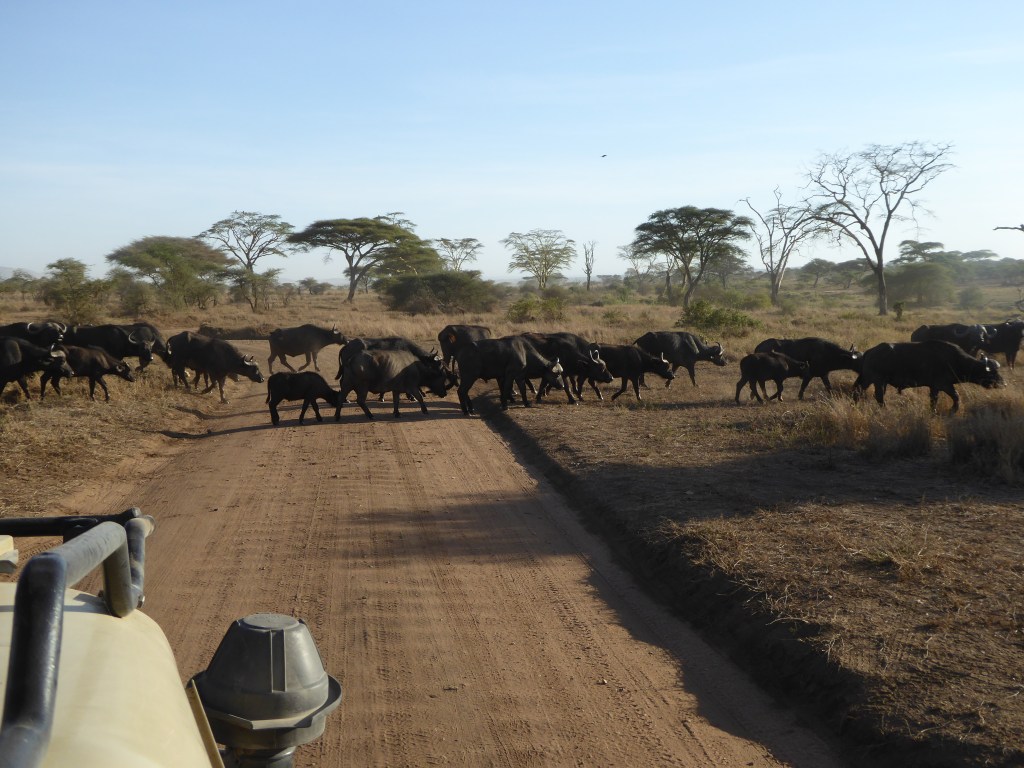

As we drove we saw more and more herds. I am not sure if the pictures are doing the experience justice. About 1.5 million wildebeests migrate each year. They go about 400 km each way sometimes more if they have to take alternative routes. We probably saw more than 50,000 of them. It was fantastic being surrounded by the enormous herds. It is what I most wanted to see on this trip, so I feel very fortunate that I experienced it.
Selous Camp: Southern Tanzania.
At Selous we used 4 open safari vehicles; similar to the ones we had in Botswana. I prefer them because I could see out of them so much better.
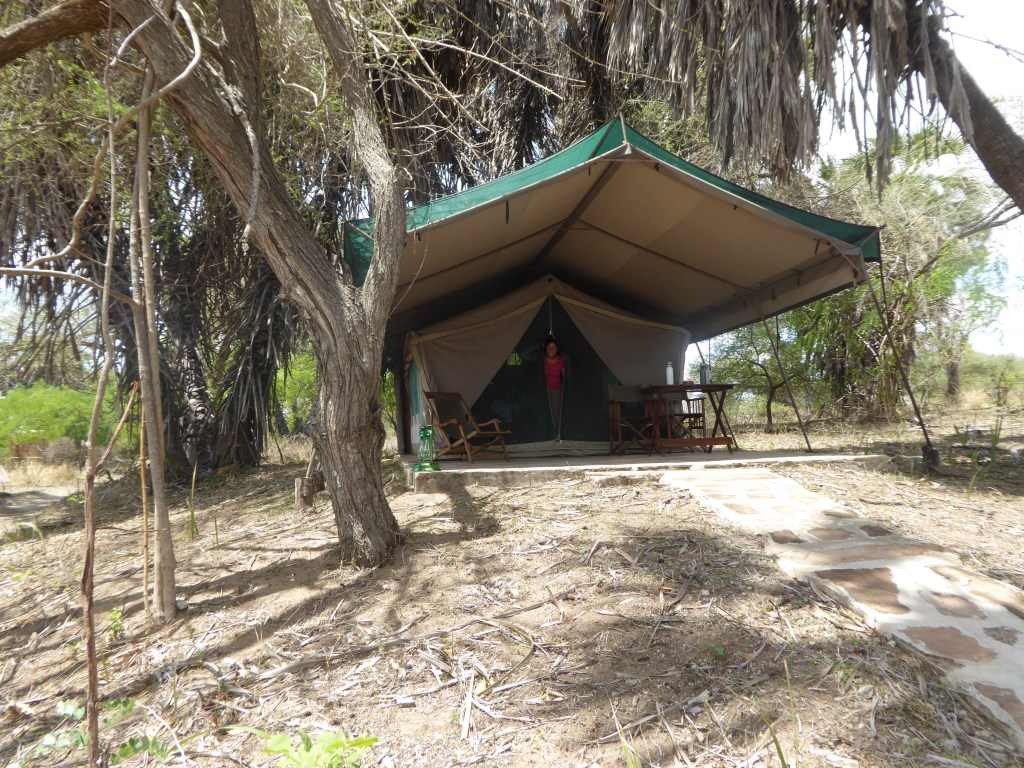
This camp was a bit more primitive compared to the other camps. The dining/sitting covered area was on the sand. The tent had a sleeping area and a zippered screen that lead to the toilet and shower area. These were partially open to the sky, which is why the zippers had to be closed all the time to keep animals out. But, also, since they were partially exposed to the sky, the toilet paper and our towels got wet if left out when it rained. It also made it hard to use the toilet and stay dry in the middle of the night in the rain.
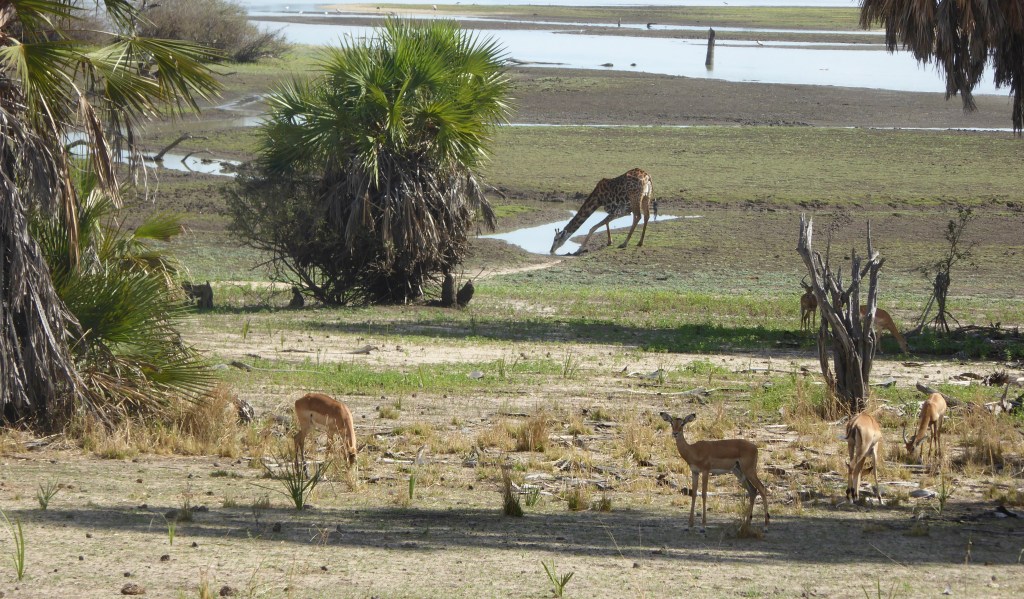
On the other hand, the tent had a veranda, from which I could watch impalas and giraffes drinking at the lake.
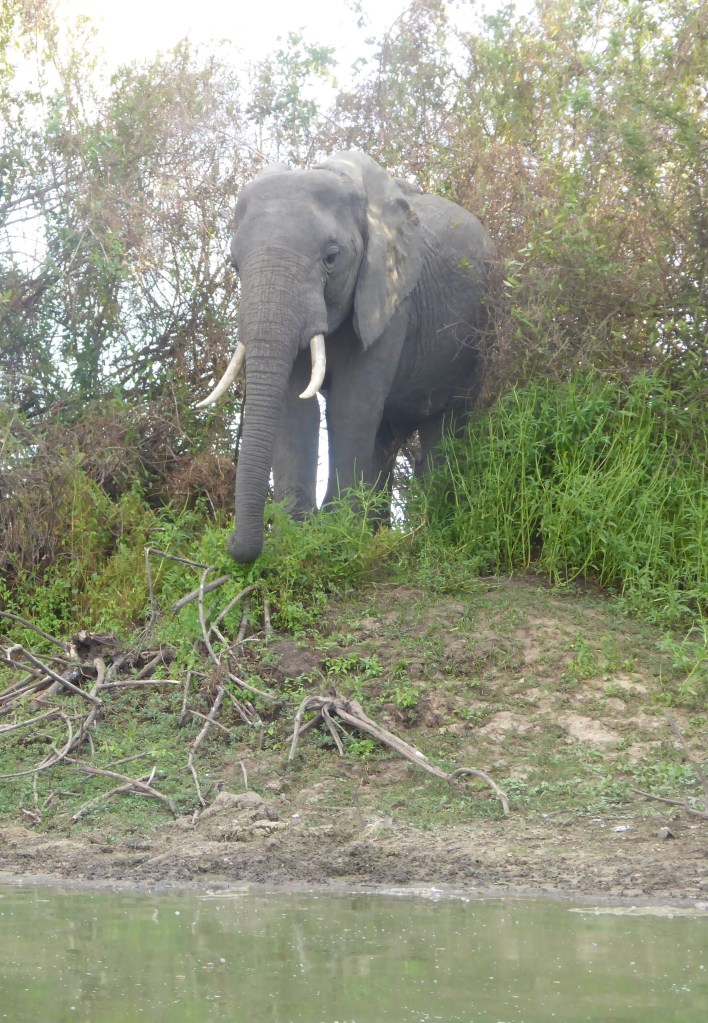
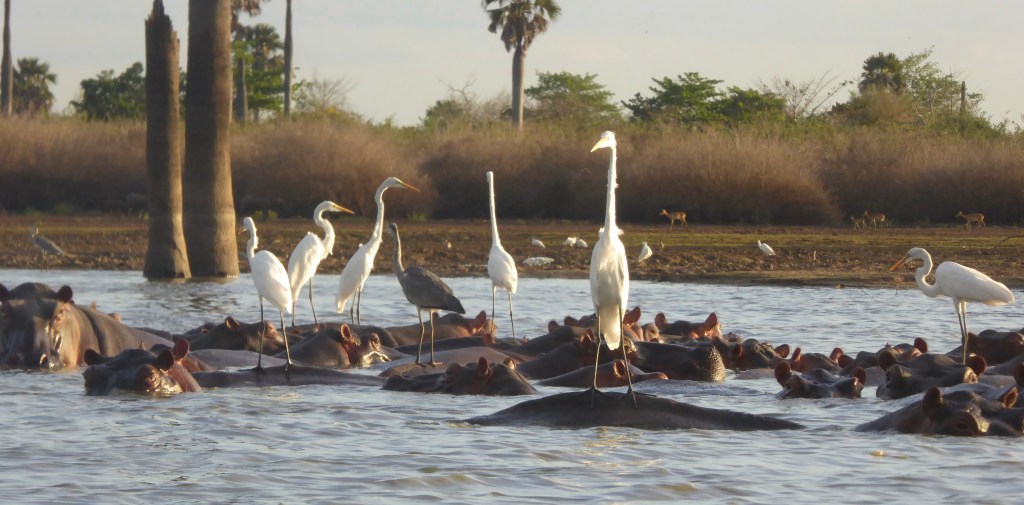
Since we were by a lake, we boated to see the elephants (pictured above on left) coming through the trees to drink at sunset. It was exciting to see the elephant break through the trees. On the right are hippos with the shore birds getting a ride.
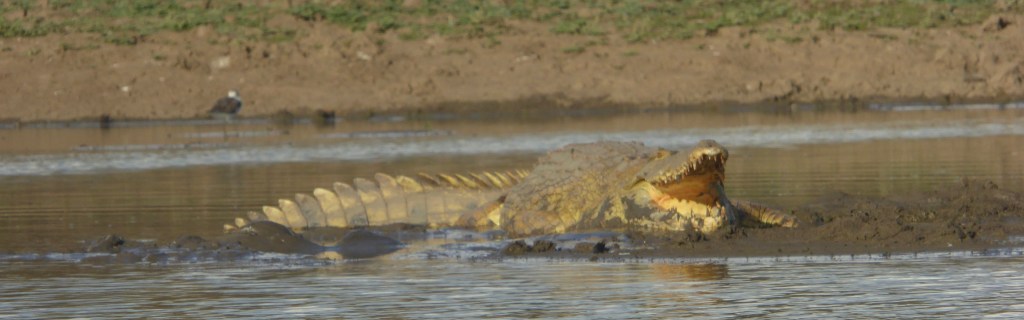
We also saw lots of crocodiles. One was absolutely huge. His head was over a foot long.
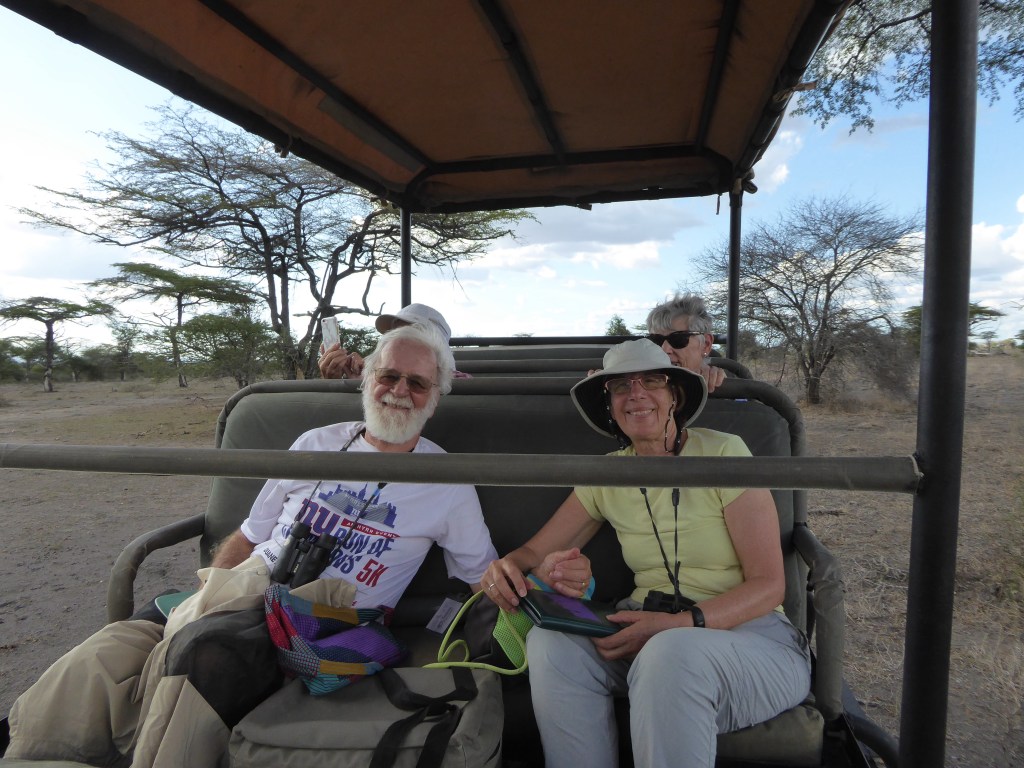
Land safaris in Selous also produced wonderful sightings.
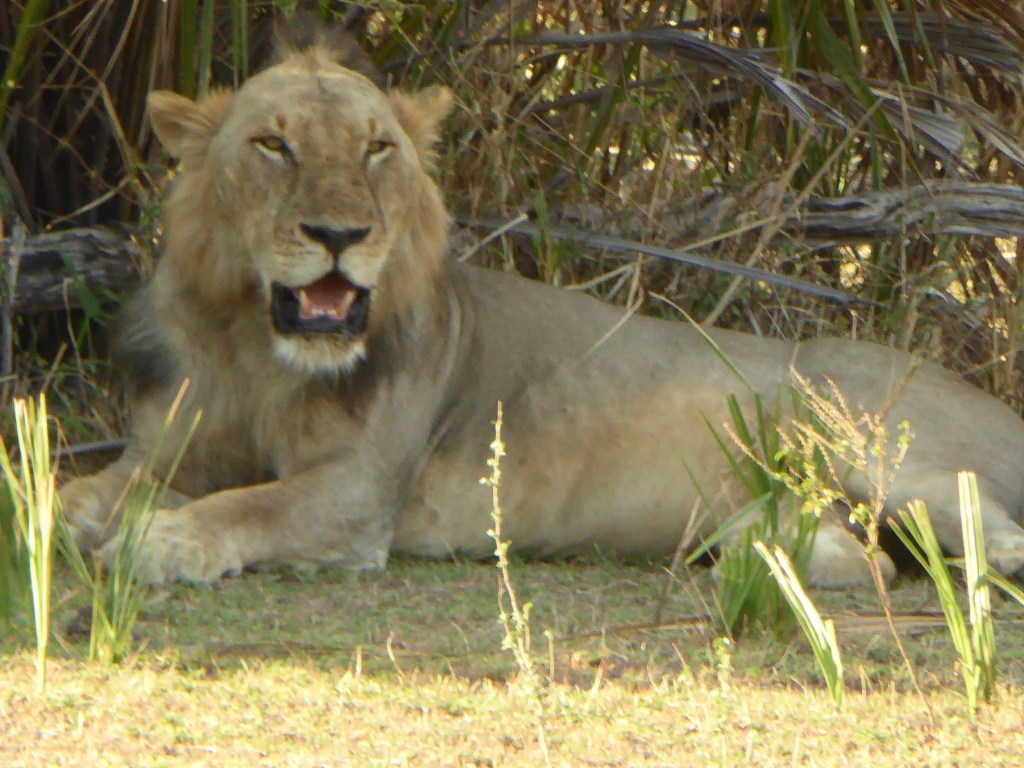
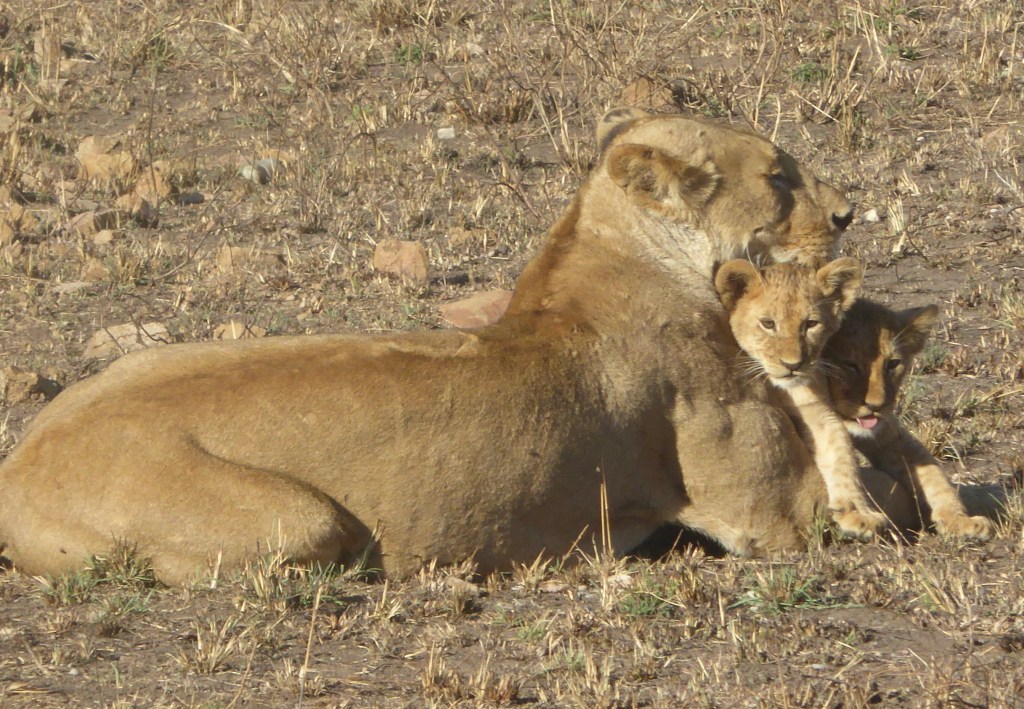
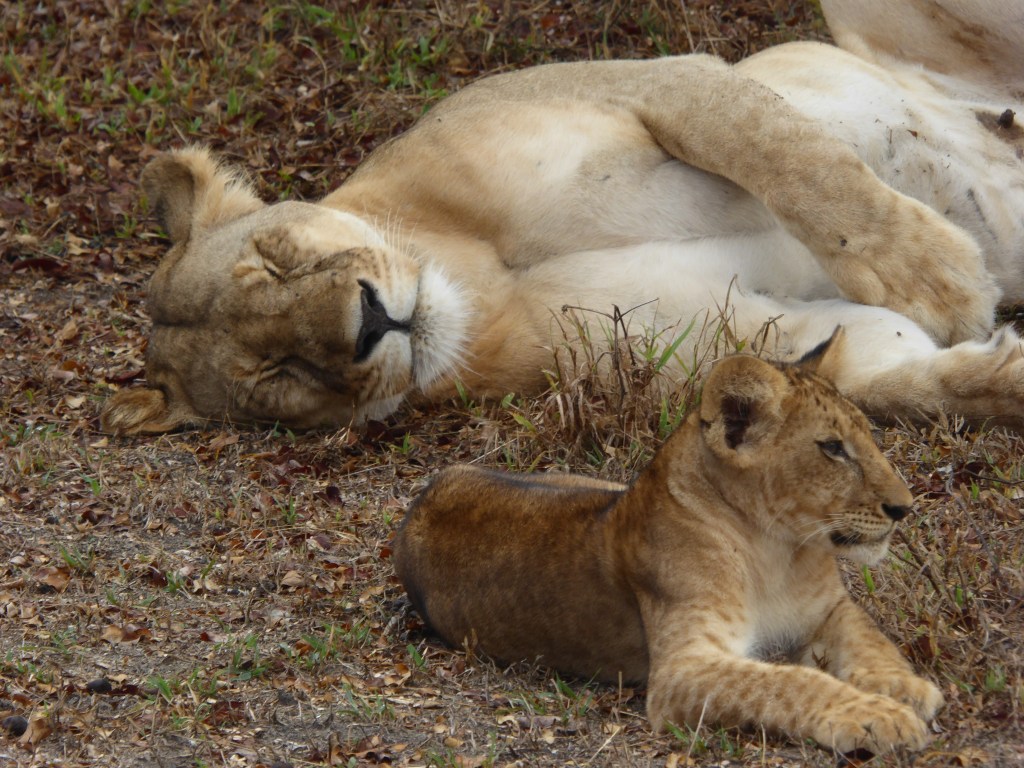
For instance, we saw a lion pride, with 1 male, 6 lionesses and 7 cubs, all at different ages. At another location, we saw a lioness with 3 babies nursing. There were also 2 other lionesses in that group and the babies, went from one to another to be petted.
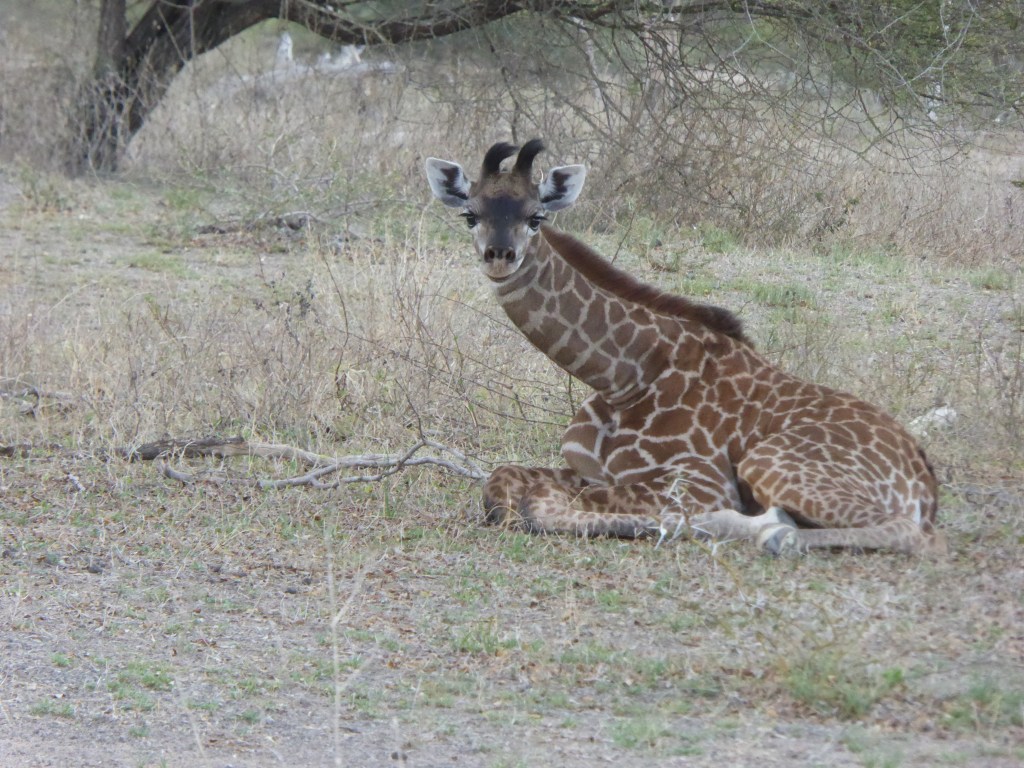
We saw a baby giraffe (one week old), with the umbilical cord still attached, sitting all alone. His mom had placed him/her in a safe spot and was obviously getting food.
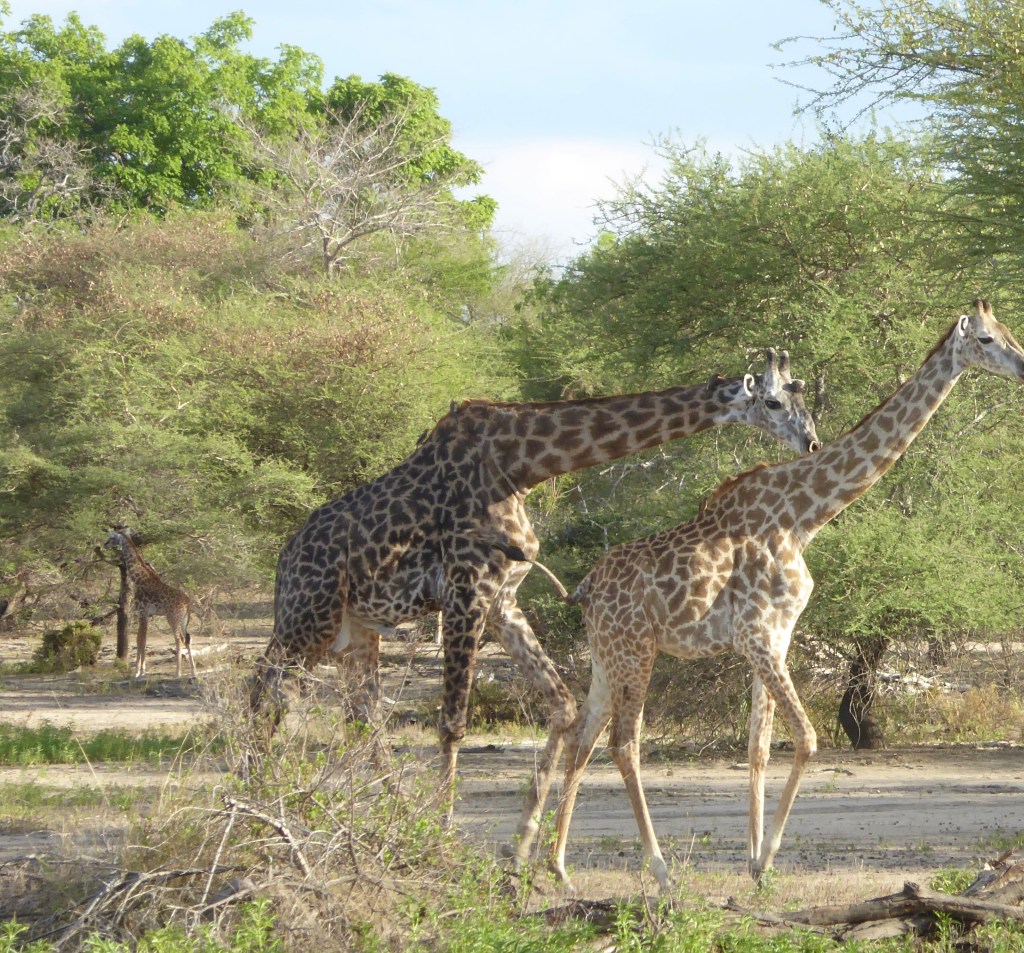
Two giraffes were trying to copulate. They did not complete the act while we were there. He was ready, with his “manhood” showing and walking slowly behind her nuzzling her backside. He mounted her once, but she walked away. She was walking very slowly, not trying to get away, but possibly not quite yet in heat.
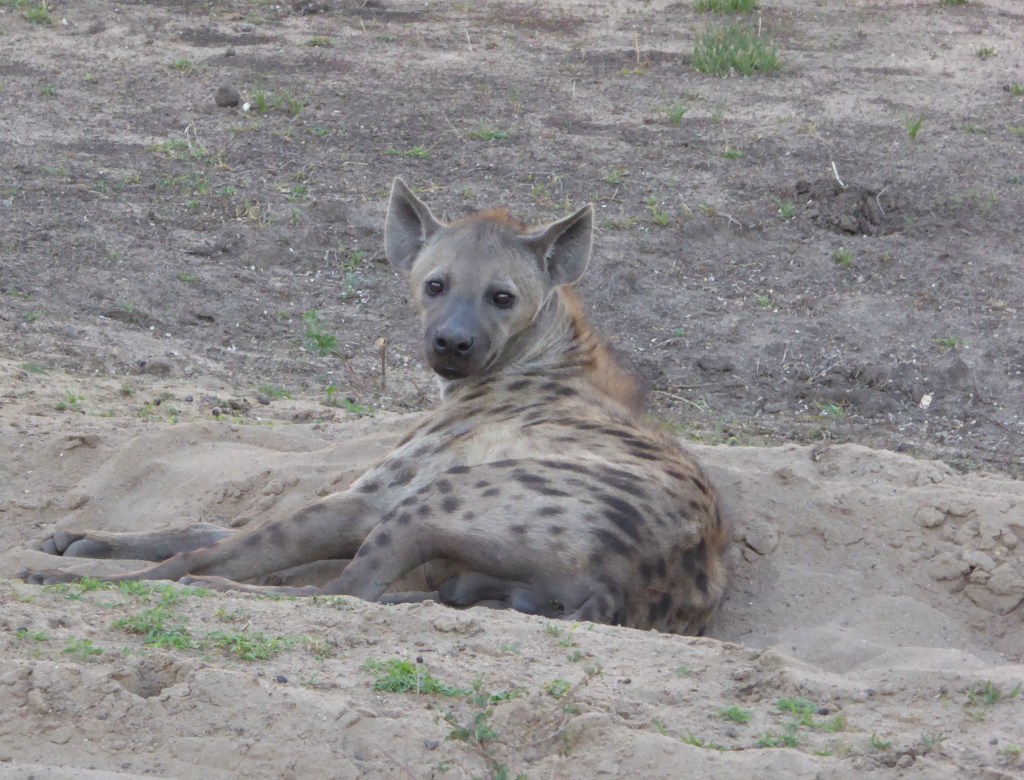
Selous was the only place we saw wild dogs.
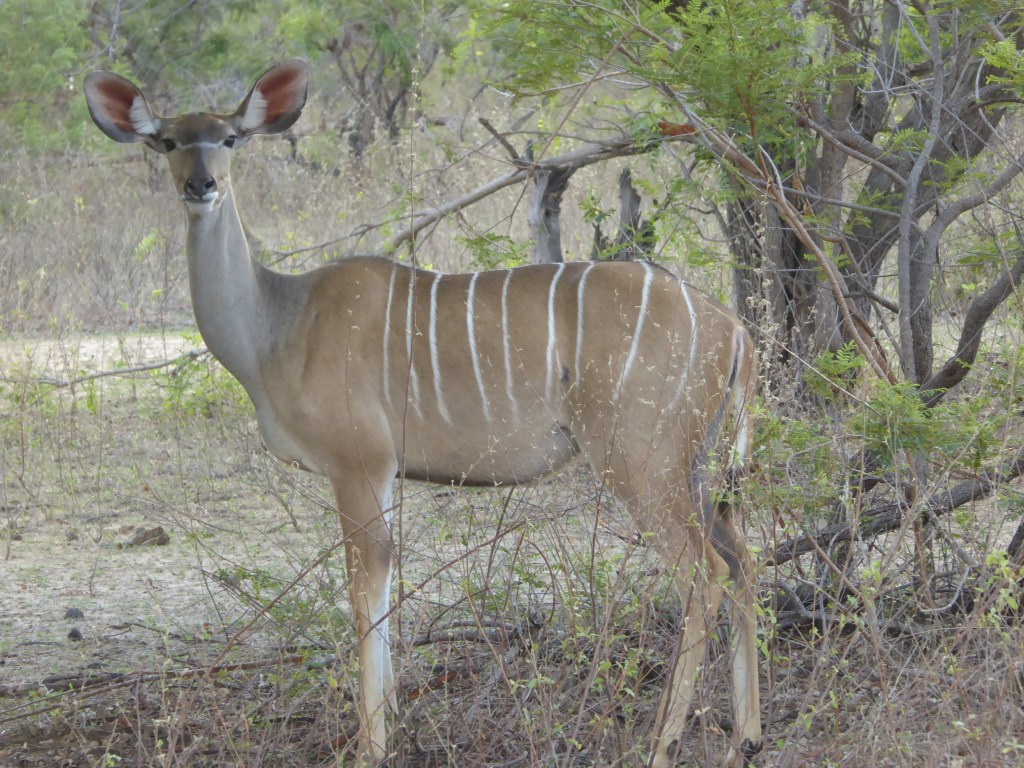
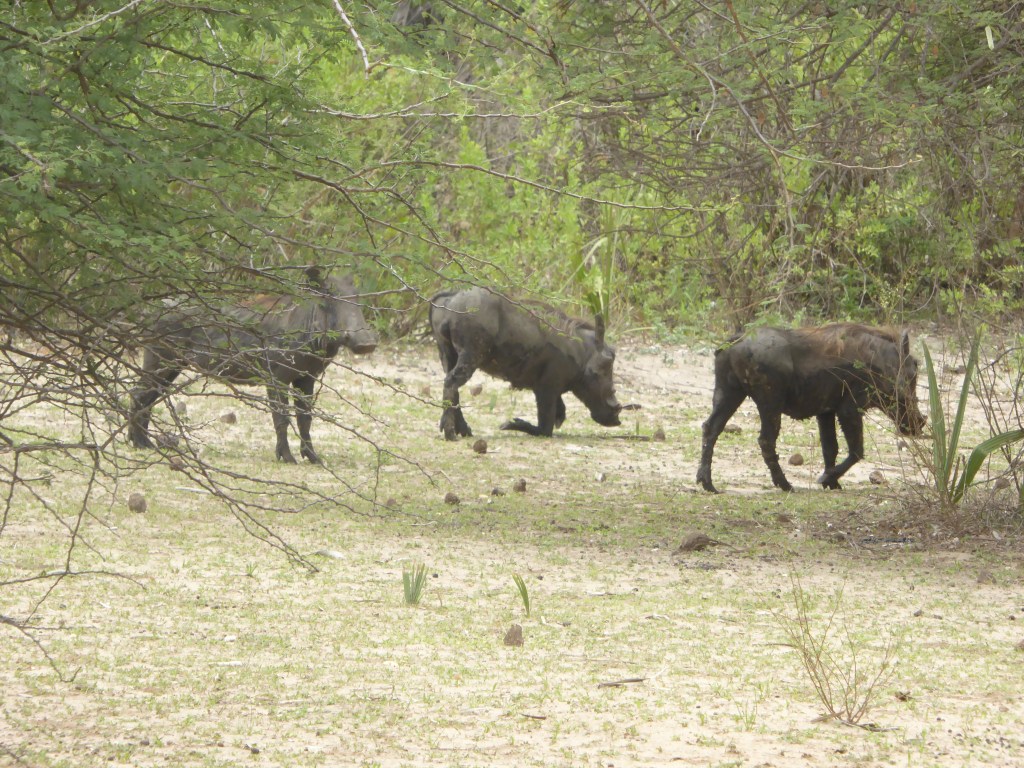
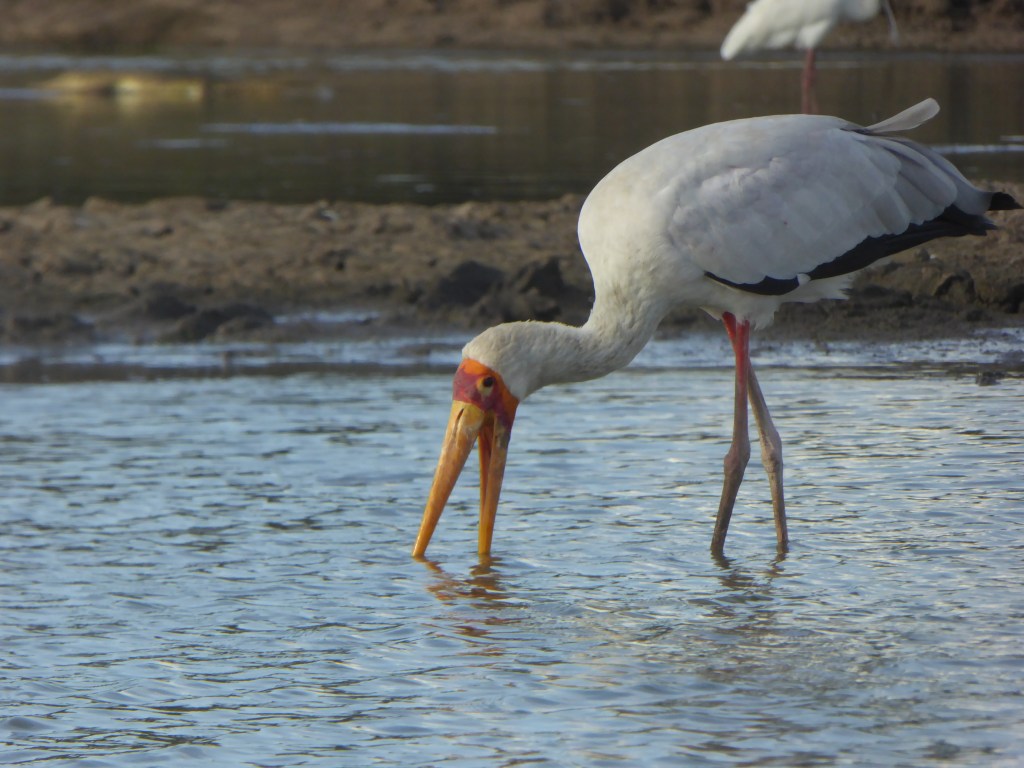
Other sightings included the Kudu, wart hogs, and the yellow billed stork.
Stone Town, Zanzibar
Zanzibar – doesn’t the name evoke pictures of orientalism? As soon as we arrived in Stone, Town, we felt that we had changed countries (but we hadn’t – because Zanzibar and Tanganyika had merged to form Tanzania.) Zanzibar is more Middle Eastern than African. The population is 95% Moslem and the women all have their heads covered. Here we woke by Muslim call to prayer at 5am instead of hyena calls.
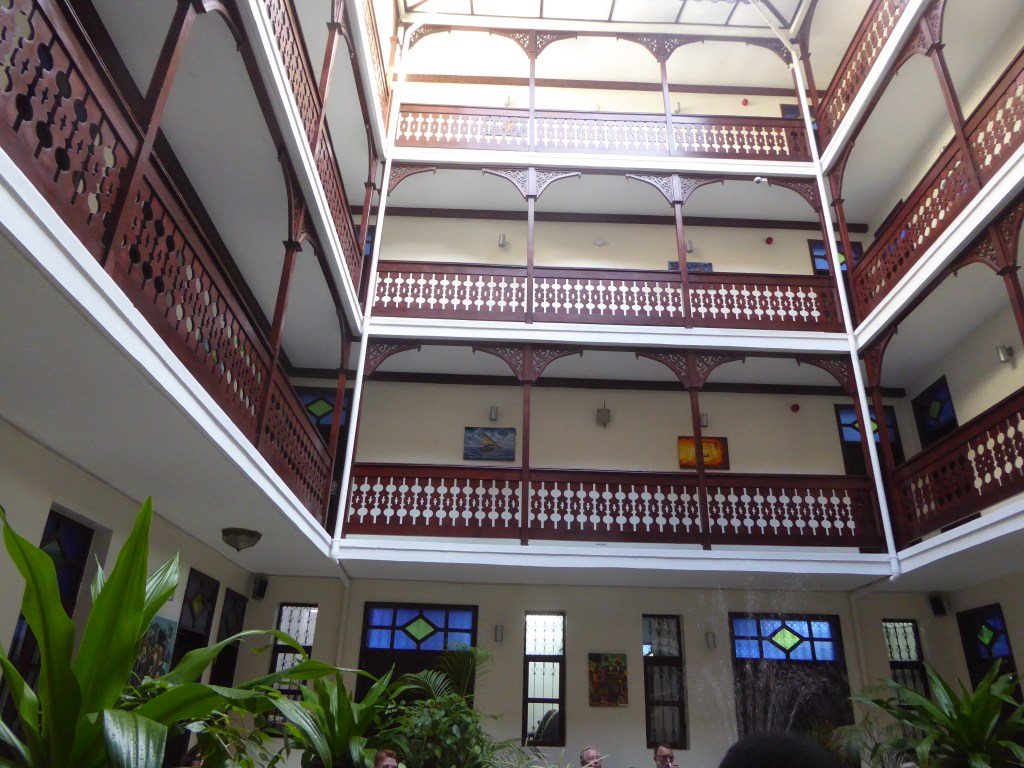
We stayed at the lovely Maru Maru hotel, with roof top dining terrace, which overlooks the city.
It is very central, with shops all around.
Stone Town’s streets are all close together (to keep the sun at bay, according to the guide). There were lots of shops and bazaars in these narrow streets.
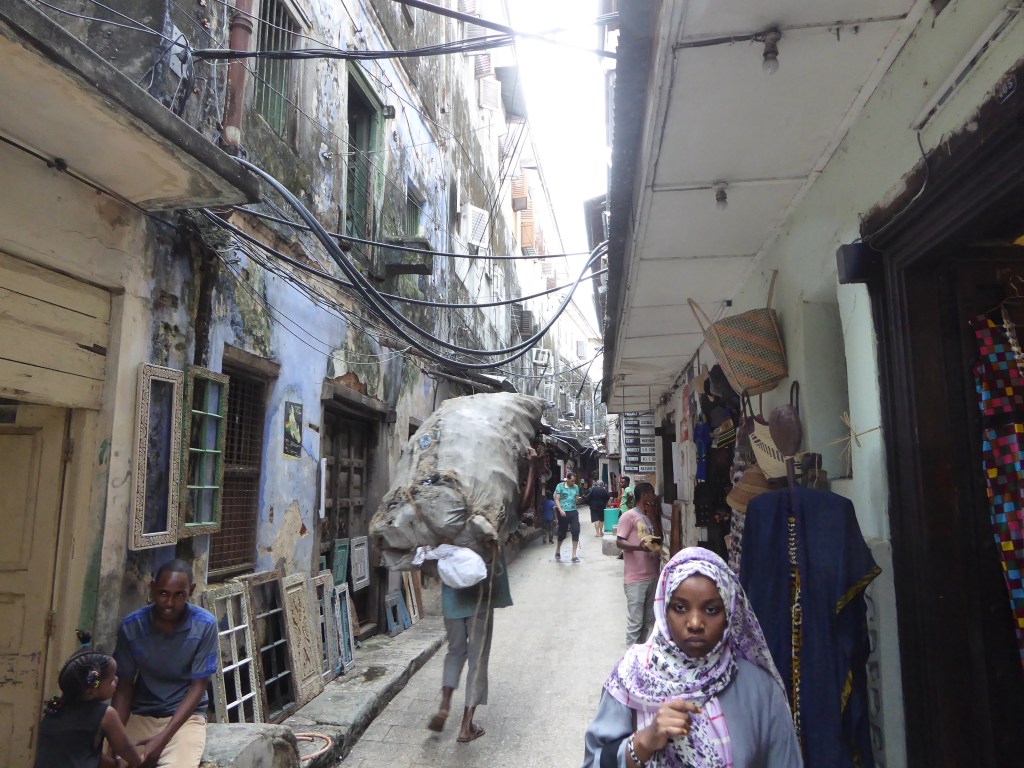
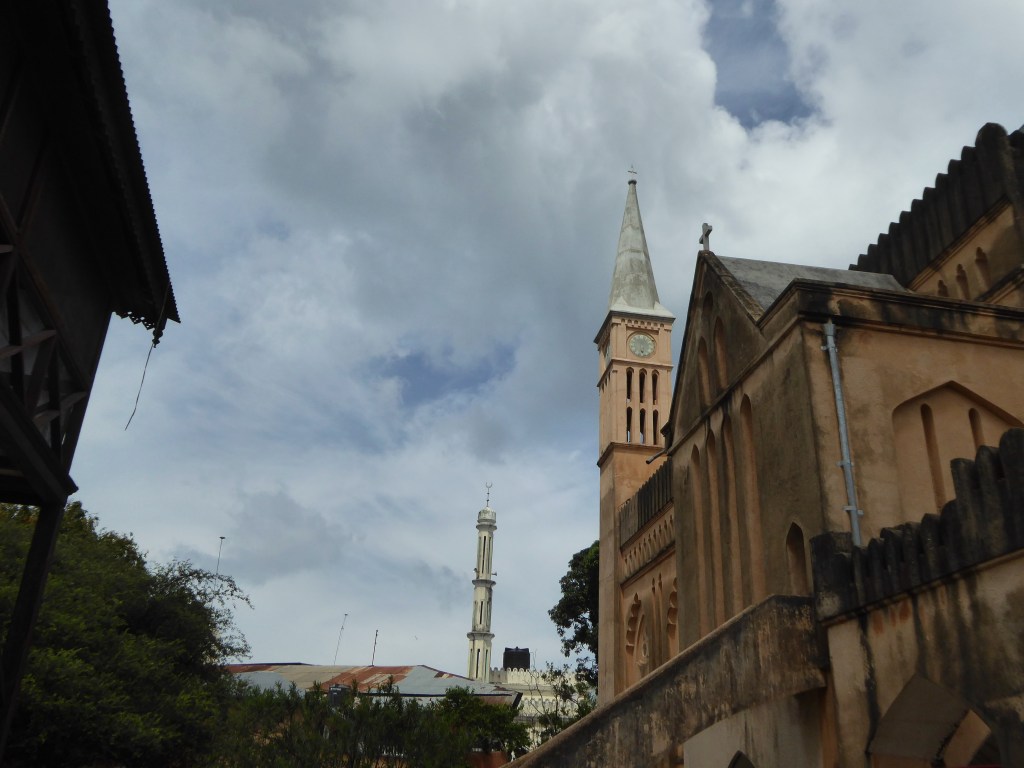
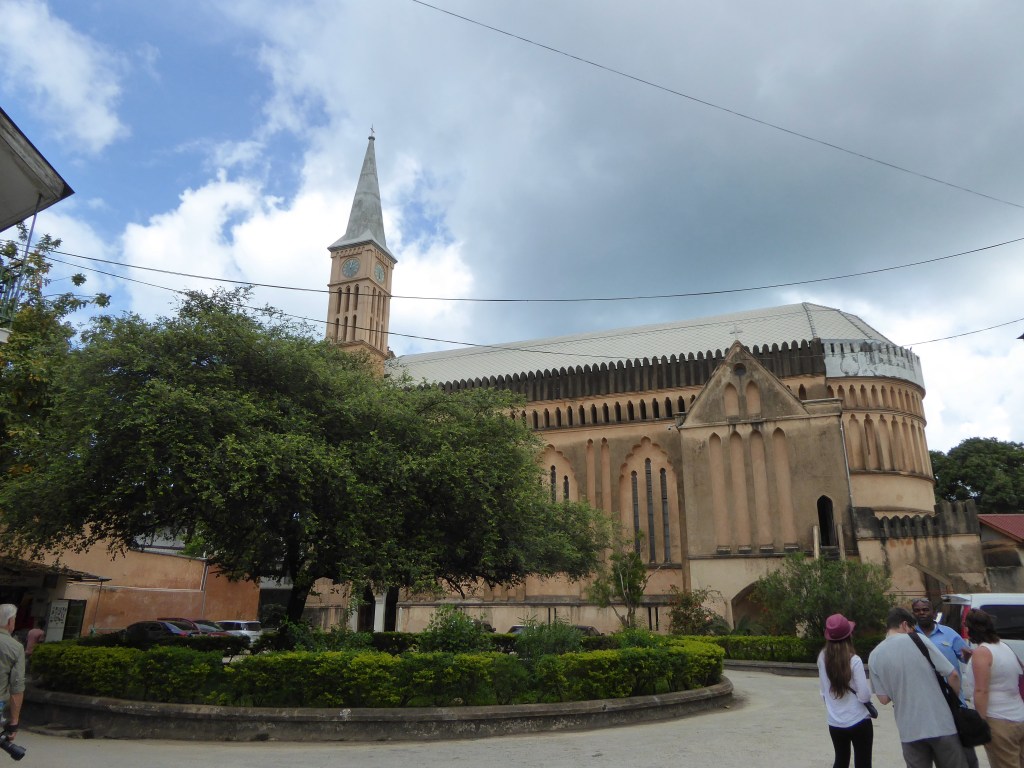
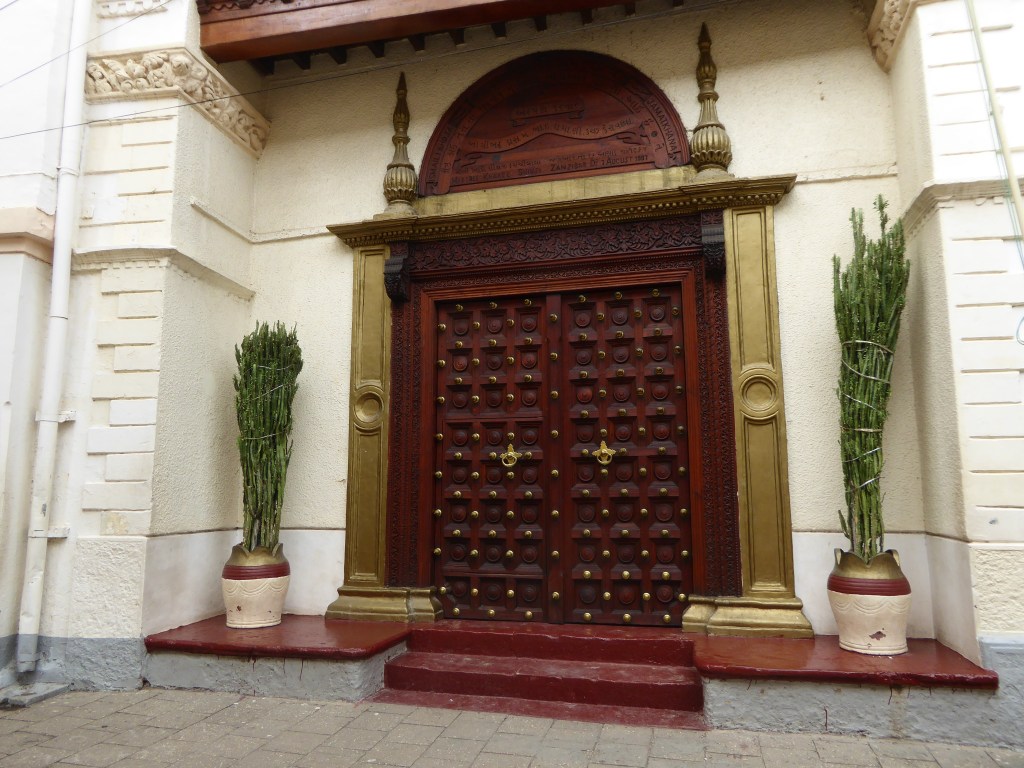
The architecture of the city is interesting because it is influenced by the Portuguese, Arabs, Persians, Indian and African. The name Stone Town comes from the coral stone that is used in the houses and streets. The buildings, therefore, have a coral tinge. Most of the traditional buildings have a long stone bench in front of the house, which is used for sitting and socializing as well as a “foot bridge” when the streets flood in the rainy season. The beautifully carved teak wood doors are very distinctive. Some are Indian style with rounded tops and big brass studs. Others are rectangular, the Omani Arab style with verses from the Koran.

If a door has mango leaves drying on top, then it is a Hindu household. The doors were an indication of how rich you were.
Some sections have carved wooden balustrades (balconies) that resemble those in New Orleans.

Zanzibar was a center for slave and spice trade. We saw some of the old slave quarters for those held overnight as well as the exhibition on the slave trade at the museum. It is hard to imagine the pain that was felt in this space.
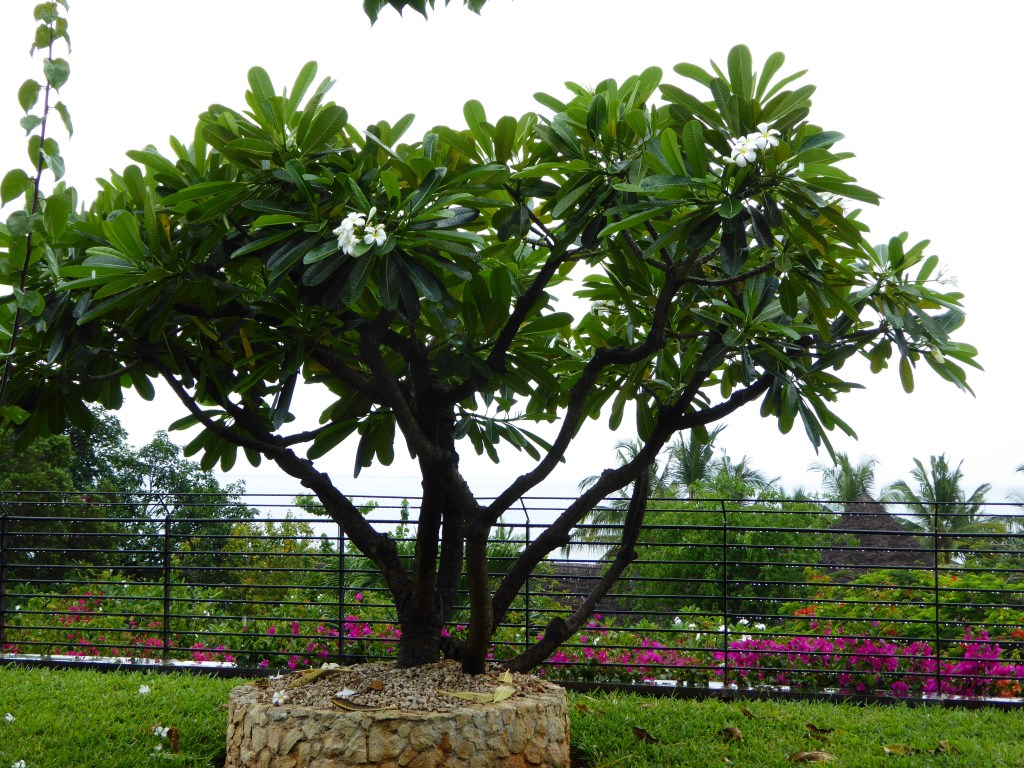
Last stop was the Diamonds La Gemma dell’Est resort on the Indian Ocean, for a few days of swimming, reading and relaxing. I treated myself to a wonderful facial.
It was an exhilarating, wonderful, but exhausting trip.
Final Comments:
- This African trip was both similar and different from the Southern Africa safari. We stayed in camps and saw wonderful animals. But also I learned about the Masai and Iraqiw.
- Staying in tented camps may not be as comfortable as a 4 or 5 star hotel, but being close to nature is well worth any discomfort.
 Nili's Adventure
WOW!! We haven’t nor never will do a trip like this but it was wonderful to read your journal and see the photos!!![Sent from my iPhone]
LikeLike