
My daughter, Maggie, wanted to go to Italy with me. How awesome is that? We found a Rick Steves tour that covered Rome, Volterra, Cinque Terre and Florence. This would give her some of Italy’s highlights but also hit some new cities for me. We turned out to be very good travel partners, keeping similar hours and having similar energy levels. It also gave us some precious mother/daughter time. As a bonus, Maggie has a great sense of direction – which I lack. I wrote about Italy a few posts ago, therefore, I will only mention any new experiences that I had on this trip with Maggie.
Rome
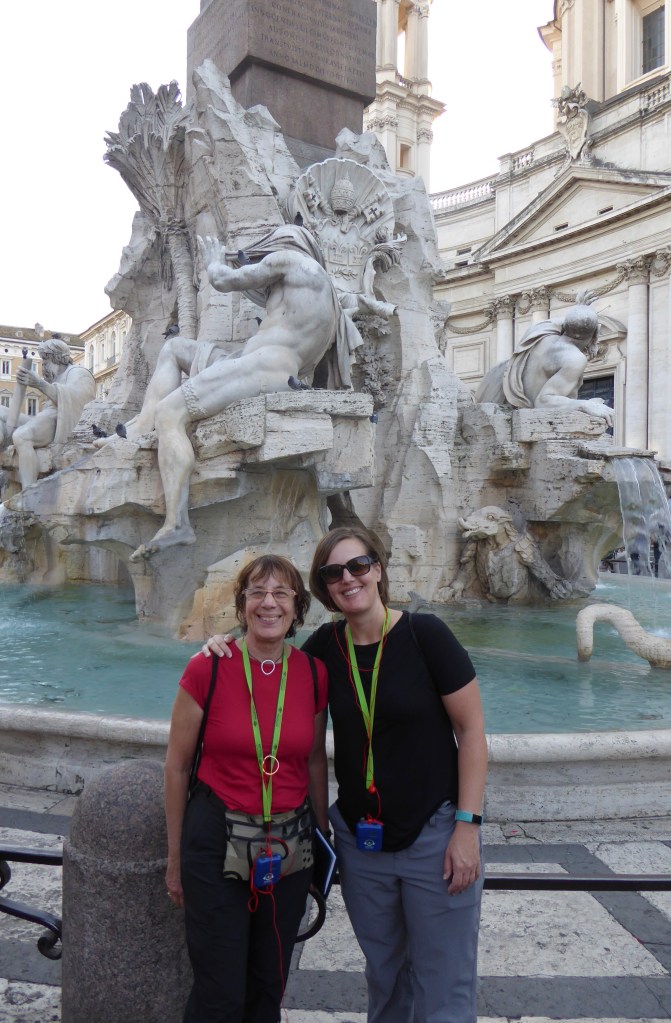
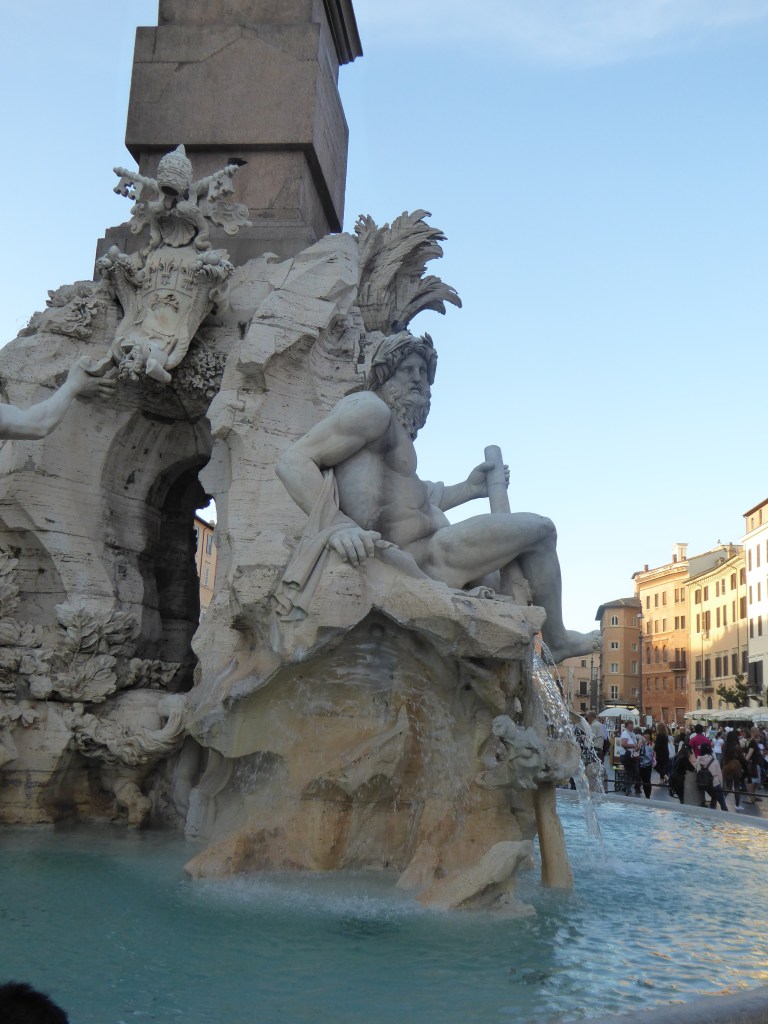
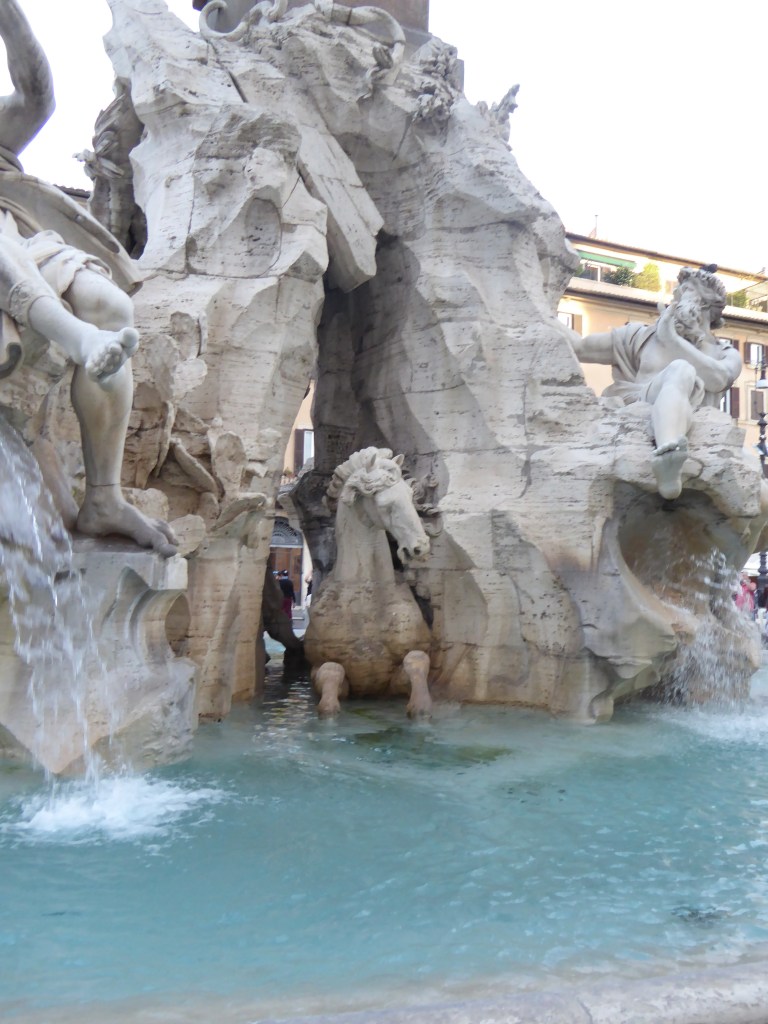
Rome was covered thoroughly in post #30, but there are a few gems that I saw or learned on this visit. After going to the Borghese Gallery on my previous visit, I was on the lookout for Bernini’s sculptures (1598 to 1680). I absolutely love his work such as St. Peter’s square, the angel sculptures on the Bridge of Angels, and the Four River Fountain in the Piazza Navonne. Above are Maggie and I in front of the Four River Fountain and below are two more pictures of the fountain.
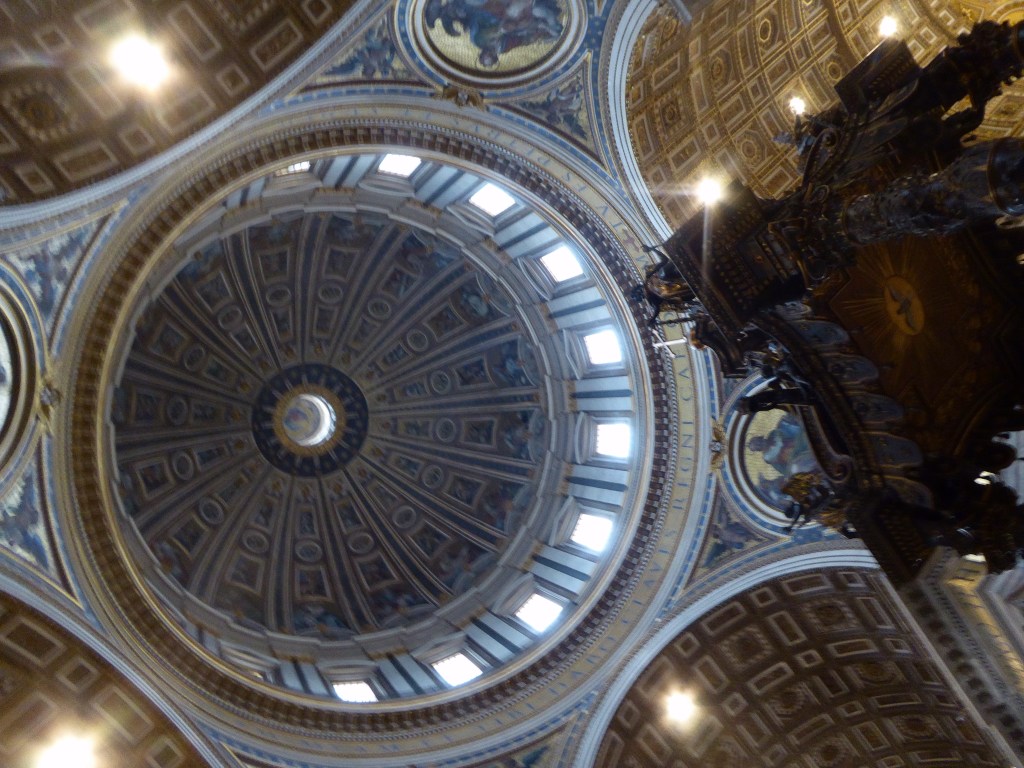
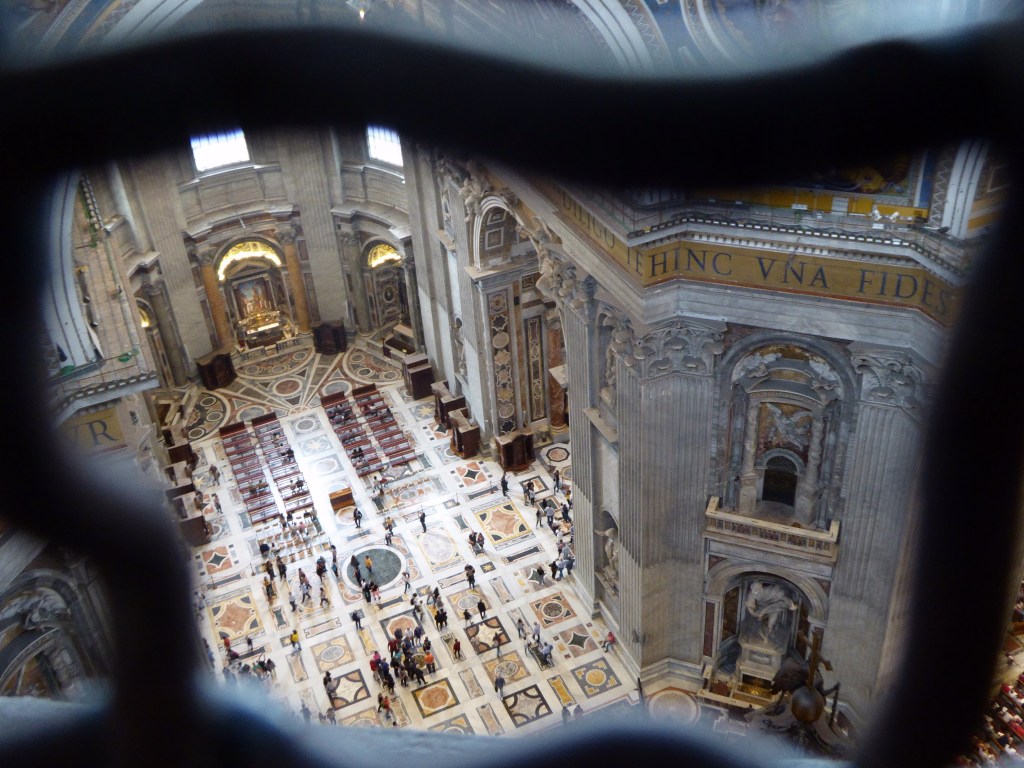
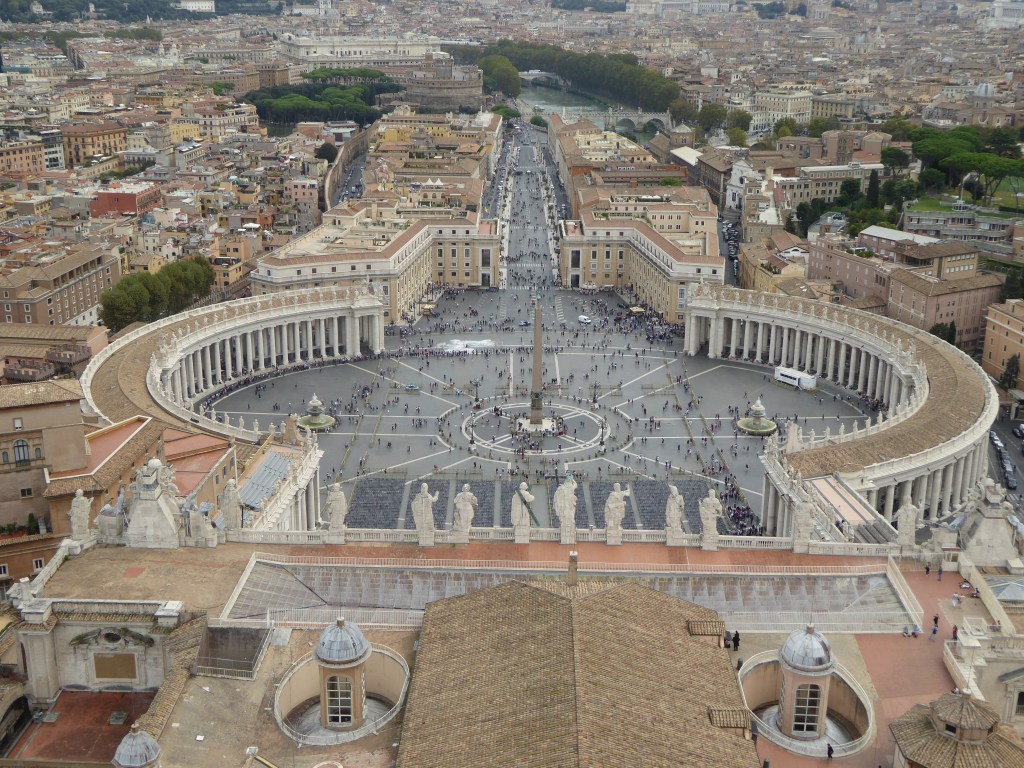
Maggie and I climbed to the dome of St. Peter’s Basilica. The view of both the inside of the Basilica (middle picture) and of the square outside it (picture to the right) were well worth the climb.
I also learned that there were events every day in the Coliseum in Roman times. In the morning there were animal shows and in the afternoons, the gladiator fights. The emperor did get to decide if the looser would live or die but not with his thumb. He would hold out his hand. The tickets, made from clay or wood, were free.
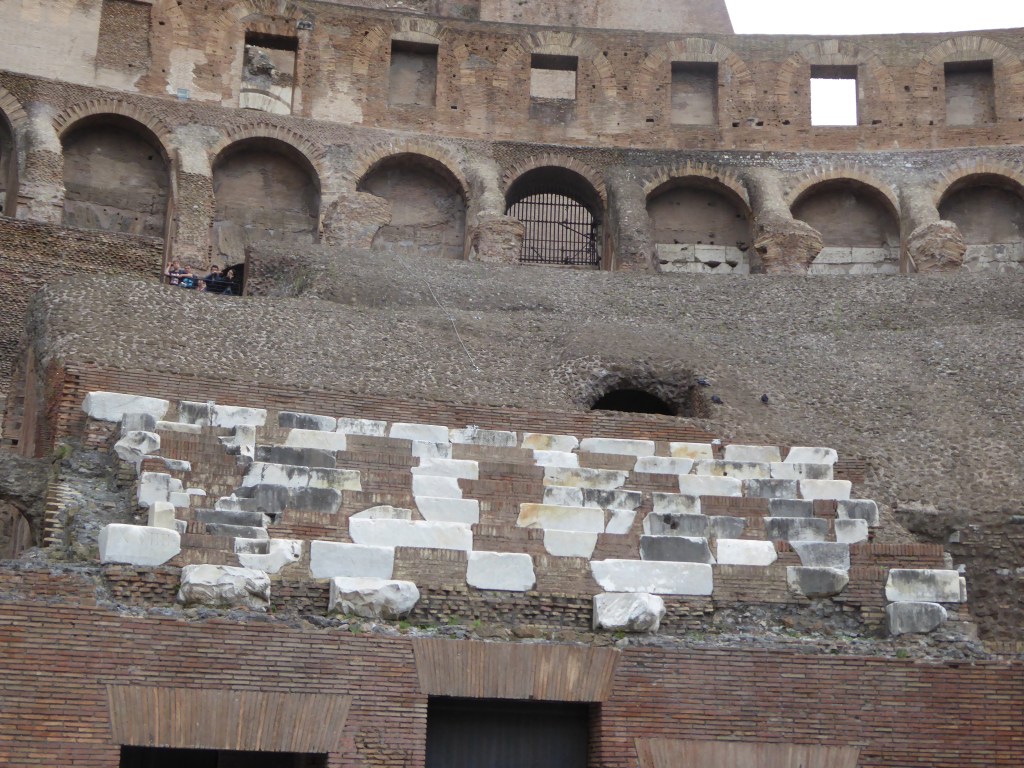
About 70,000 to 75,000 people were able to come to a performance. The tickets were given out outside and when the stadium was full, they would stop giving out tickets.
Constantine (Emperor from 306 to 337) stopped the human killing, but the animal games continued for another 100 years.
Volterra, a lovely hill town in Tuscany.
Volterra was an Etruscan City/State around 1000 BCE. The Etruscans were traders in the Mediterranean and ships were very important to them. They had an animalistic religion, which means they believed in natural signs like bird flight patterns or thunder and lightning clues. By 4th Century BCE, there were 25,000 Etruscans living in the area. (Today, Volterra’s population is only 10,000). Etruscan were much more advanced than the Romans at that time. The Romans learned about aqueducts and street grid patterns from the Etruscans. For a long time, Romans and Etruscans were good neighbors but when the Roman population grew and they needed more land for food, they attacked the Etruscans.
In fear of the Romans, Volterra residents built a 5-mile wall around the city that included farming land and 12 springs within it. Being at the top of a high hill, they were able to withstand a 5-year siege. But eventually they lost to the Romans in 260 BCE. Volterra was the last Etruscan city to fall. They lasted longest because they were furthest North and Rome worked its way North.
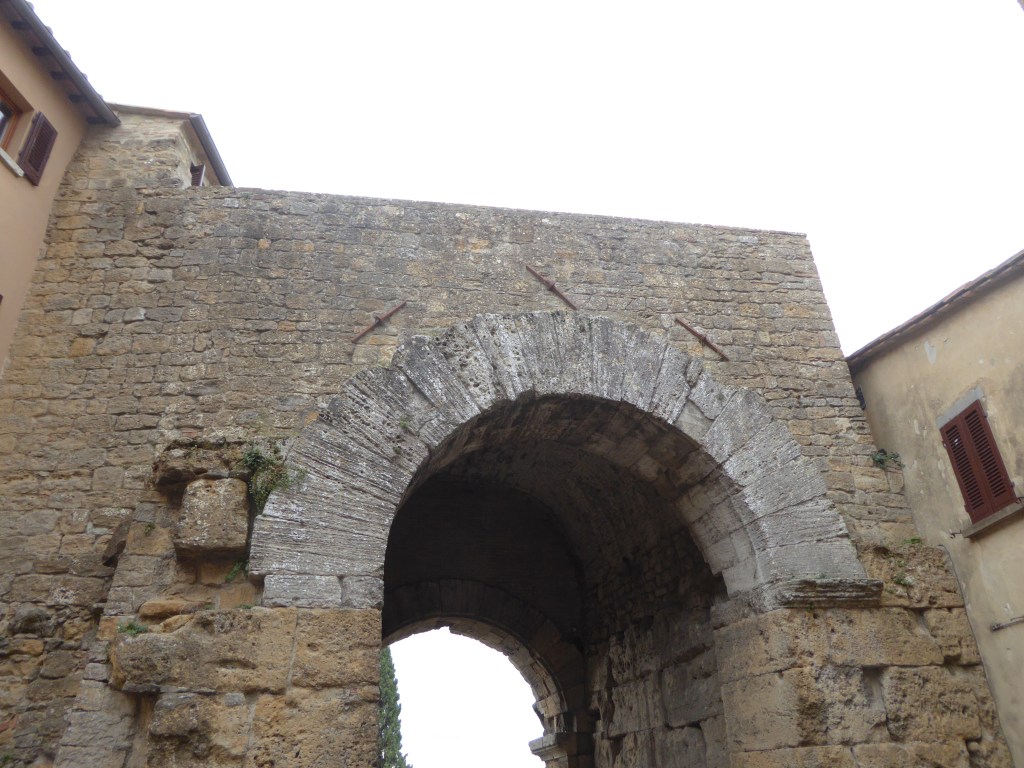
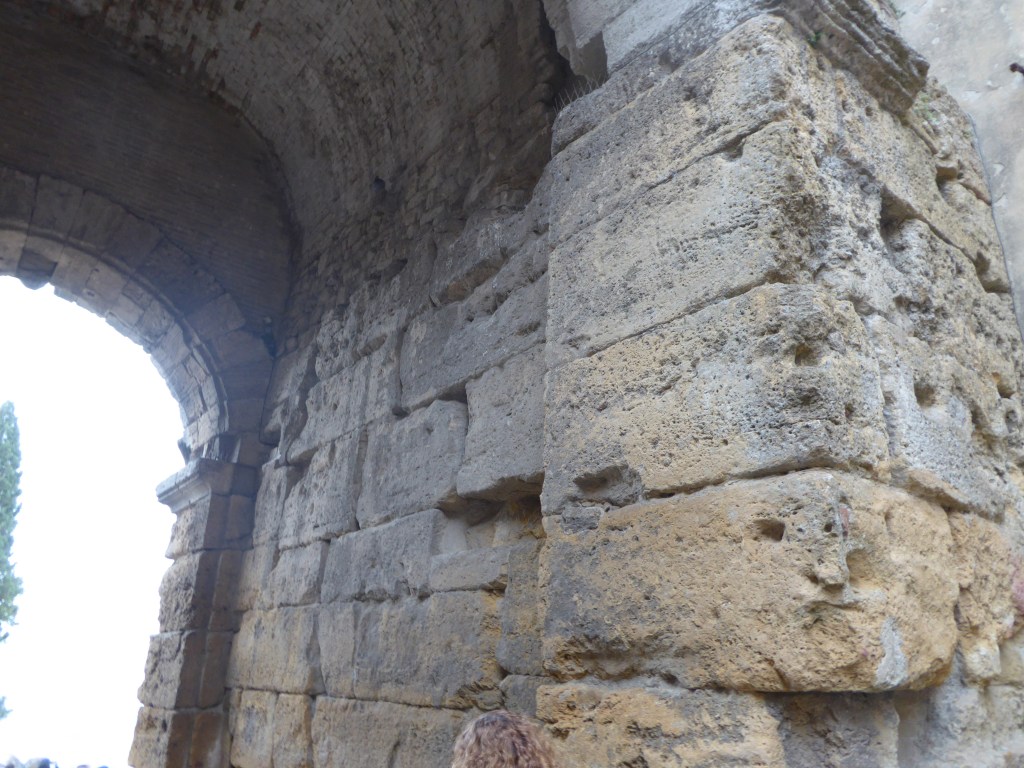
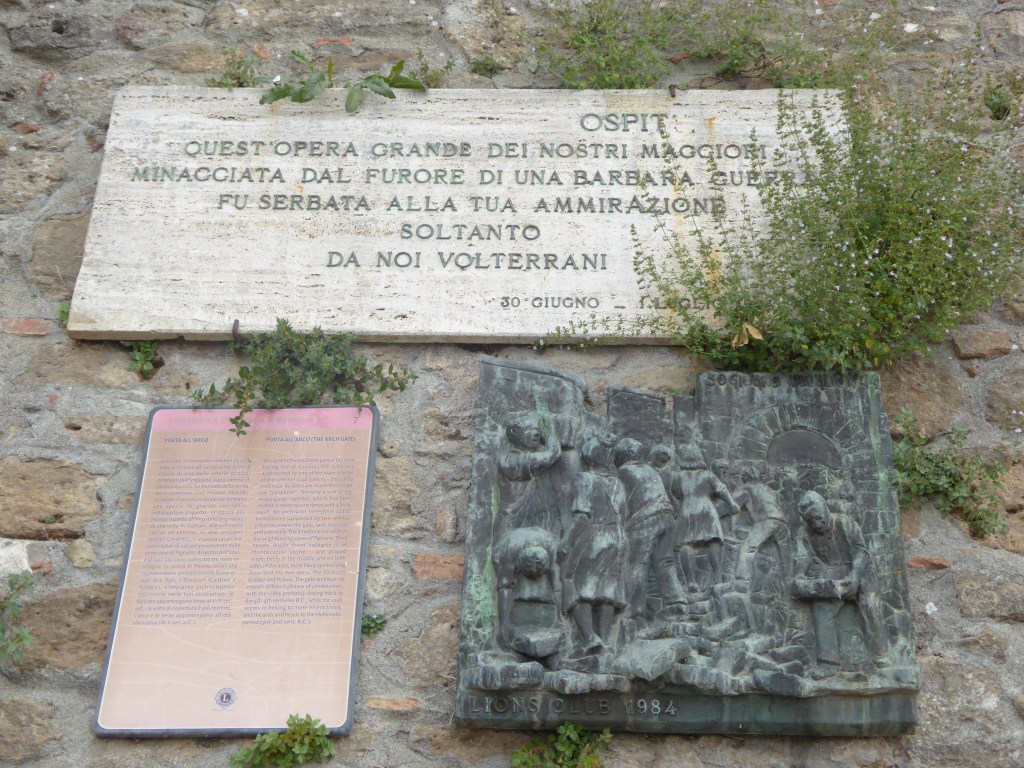
Only an arch remains from the original 5-mile wall. It is the oldest fully rounded arch in existence. The stones making up the base of the arch are enormous. This arch was almost blown up in WWII. After the Italians threw over Mussolini and joined the Allies, the Germans, as they were retreating, had orders to blow up the arch so that there would be no entrance for the allies into Volterra. When the locals heard that this was planned, they worked around the clock for 24 hours and dug up all the stones from the Main Street and piled them up in the arch.
When the Germans saw that the entrance was blocked already, they left it. Soon afterwards, the American liberators came. To the right is a plaque to the work of the town heroes who worked to block up the arch.
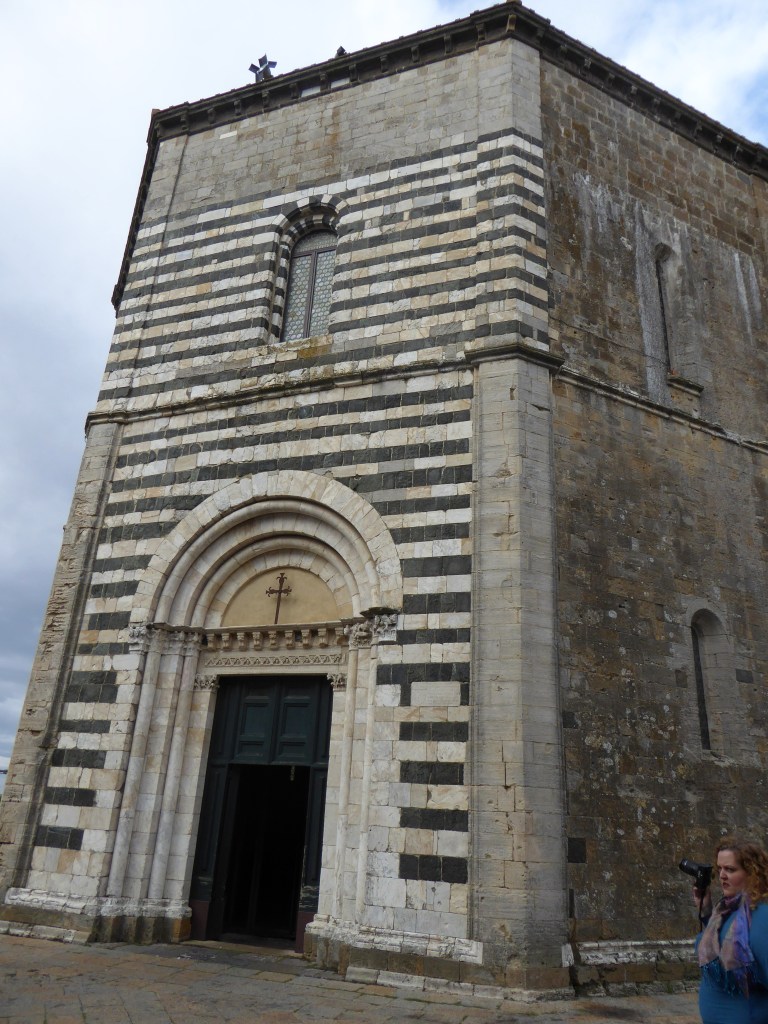
Volterra became an independent state at the end of the 12th century. They built the town hall in the first half of the 13th C. Florence copied the Volterra town hall design, when it was given its independence.
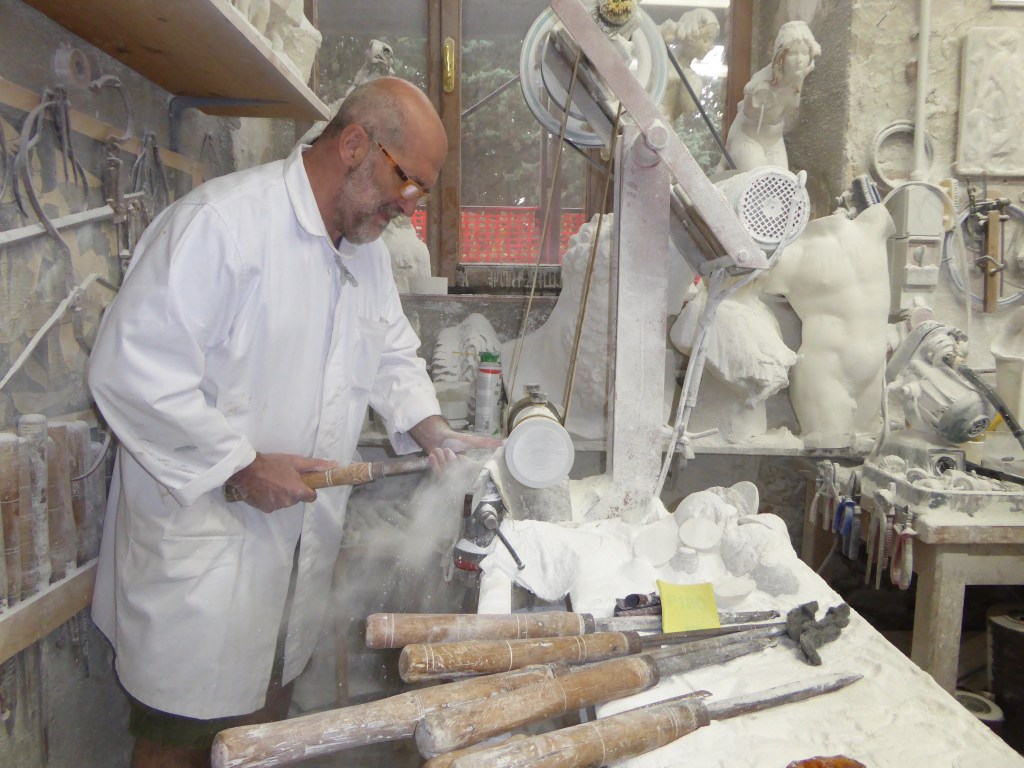
In the 1700s a free art school was established in Volterra, and to this day, there are many artisan shops in town. We went into an alabaster workshop and received a demo of making alabaster bowls using a lathe.
The archaeological museum has magnificent Etruscan funeral urns and jewelry. The Etruscans were thought to be primitive but when archaeologists found the urns in the graves, they realized how skilled they were.

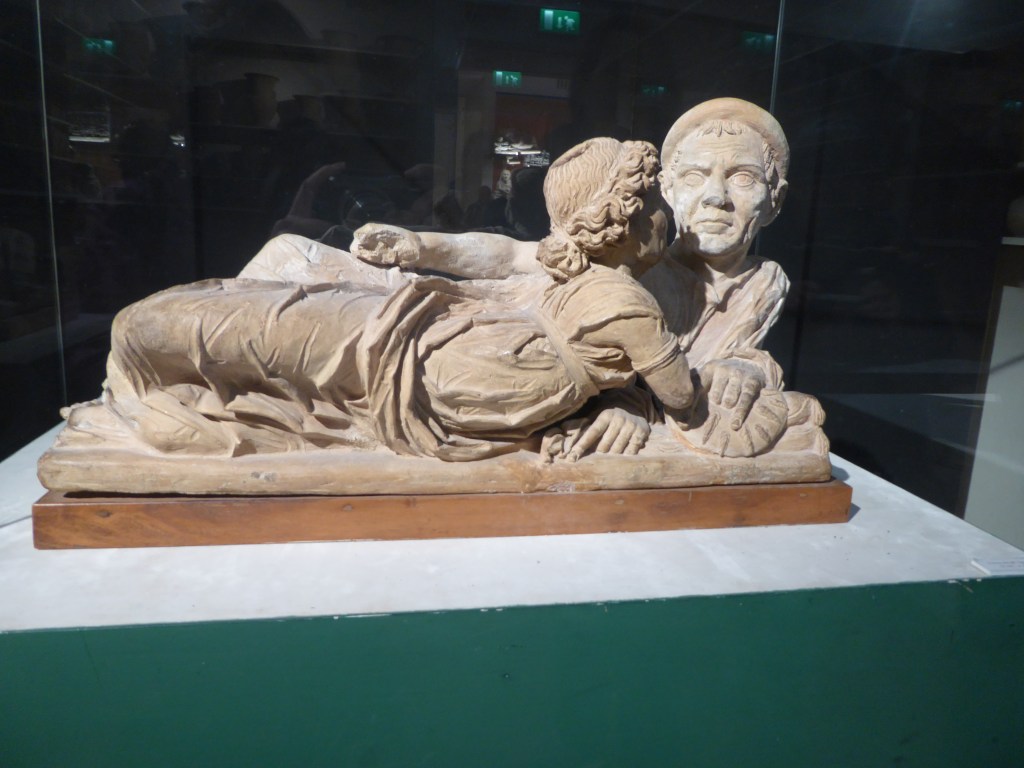
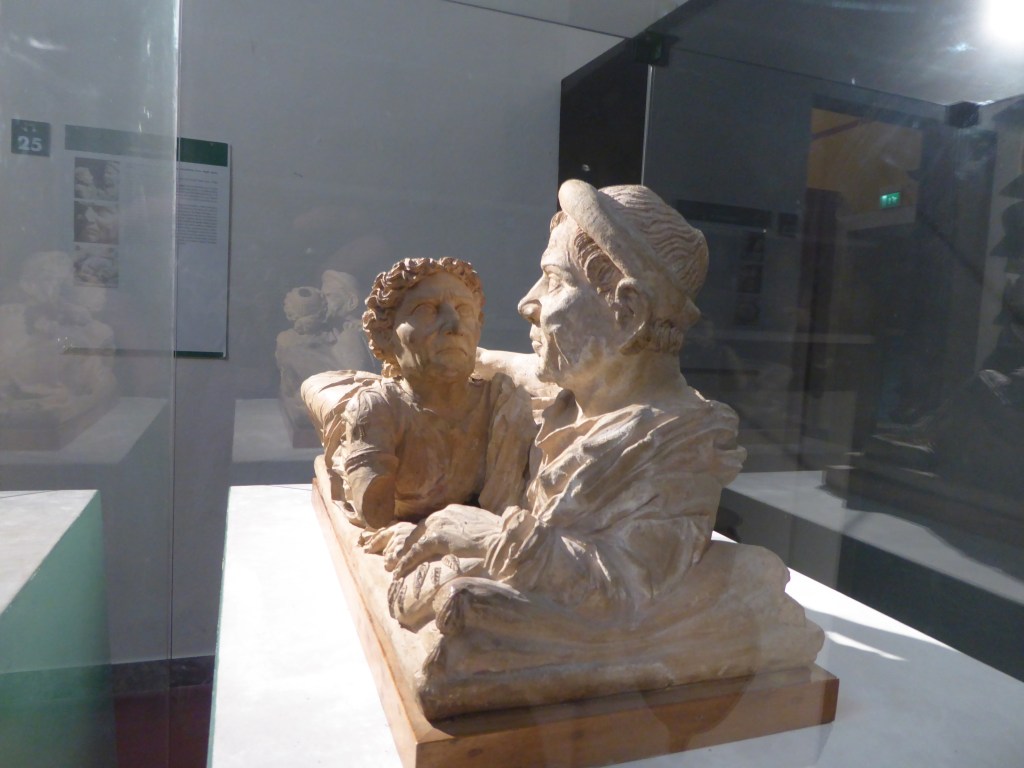
This museum has the best Etruscan Urn collection and the fifth best Etruscan collection. The graves housed all the things that the person would need in the afterlife and the urns held the deceased’s remains. About 30% of the people were buried in urns. Archaeologists learned that in the Etruscan society, men and women were pretty equal. Women could hold responsible positions. They would be the ones to name their children. My favorite urn had a sculpture of the husband and wife on top of the urn. They were so beautifully carved with their older faces, obviously still in love. (Pictured in the center and on the right.)
Lucca
Lucca is a darling Tuscan town and I wish that we had more than 4 hours to tour it. Lucca was originally a Roman colony founded around 56 BCE. Julius Caesar actually came to Lucca.
In the Middle Ages Lucca was on the pilgrimage route from Canterbury to Rome. Lucca had 70 churches and became a banking center for the pilgrims. The pilgrims banked their money there before proceeding to Rome and often did not return to get it back.
In the 13th century, Lucca was at war with Florence. The war was a disaster for Florence. They tried to flood Lucca and instead flooded their own camp.
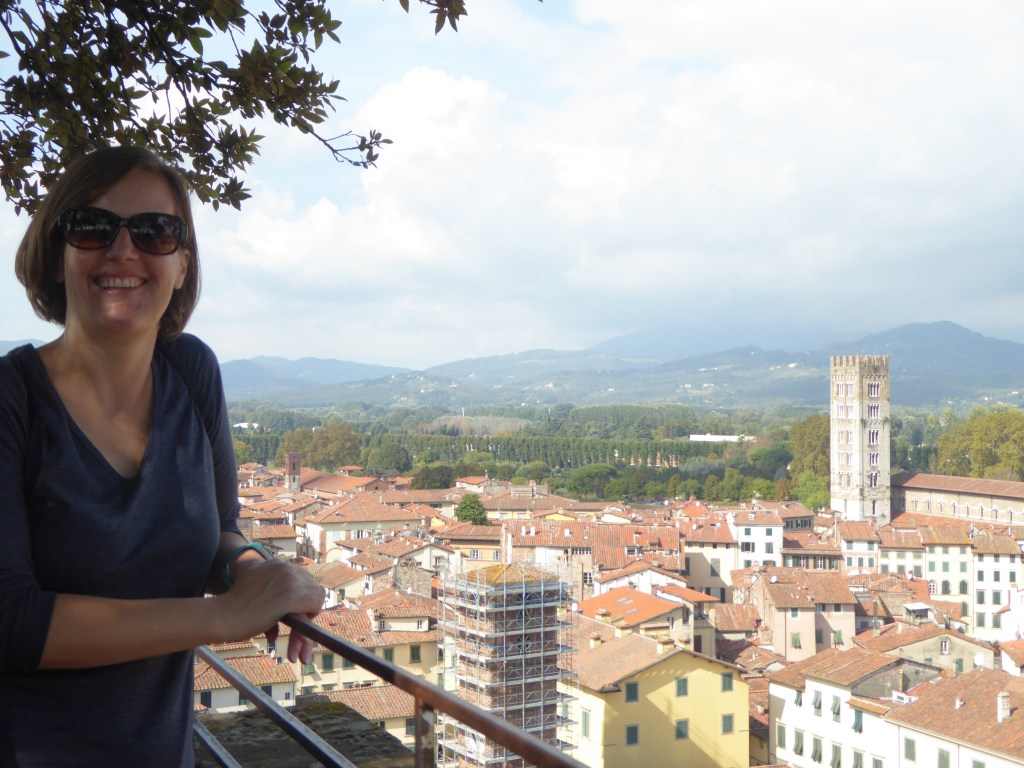
At about this time, important families built towers for protection and lived in them. There are only a few left. Maggie and I climbed Guinigi Tower. The view from the tower was magnificent.
The city walls were built in the 1500s.
Today the walls have been turned into a park for biking or walking around the perimeter of the city. Maggie and I walked a section of the wall.
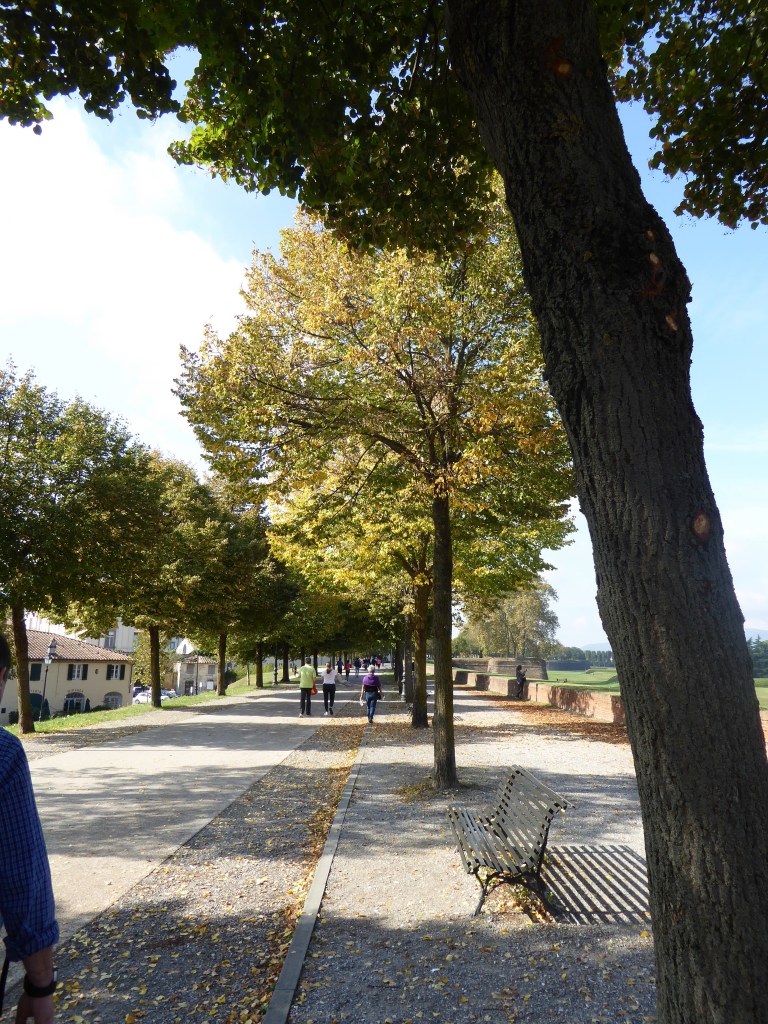
Lucca was an independent republic for 500 years until Napoleon conquered Italy. Napoleon set up his sister to be in charge of the city. She made lots of changes such as bringing in 37 varieties of trees to plant in the city especially on the wall. She also loved music and art and brought lots of artists including Paganini to Lucca.
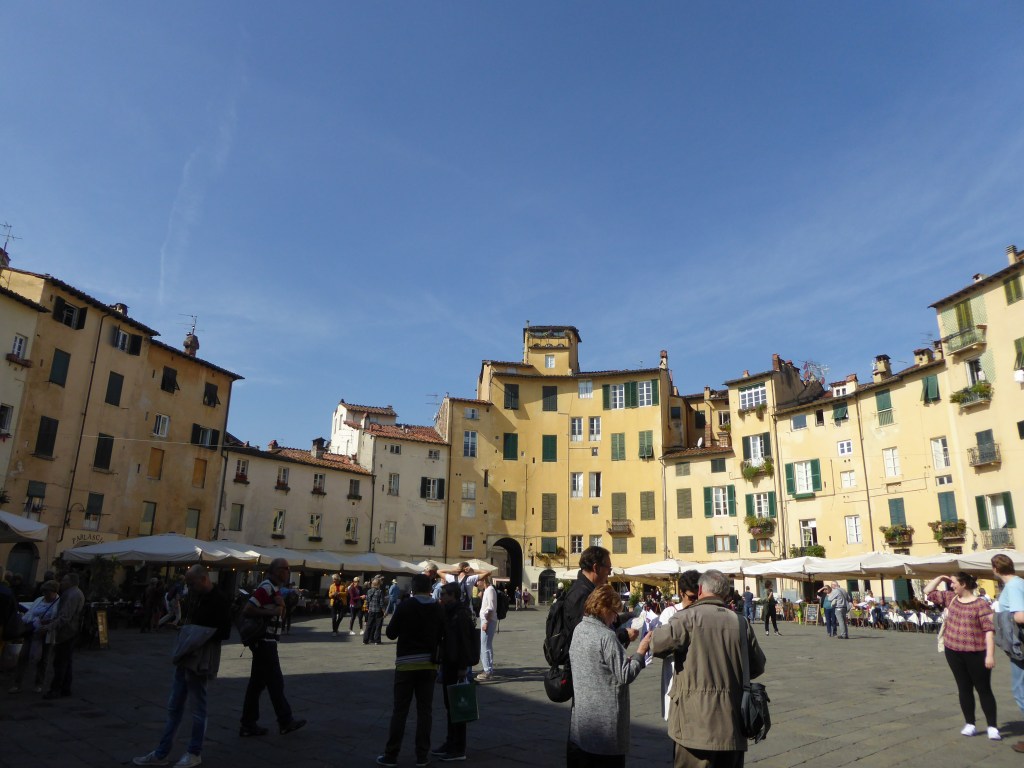
Under her direction the old coliseum was restored with buildings (instead of seats) and today it is a very charming oval with restaurants all around. We had awesome gelato in this oval. The buildings are different heights which adds to the interest level.
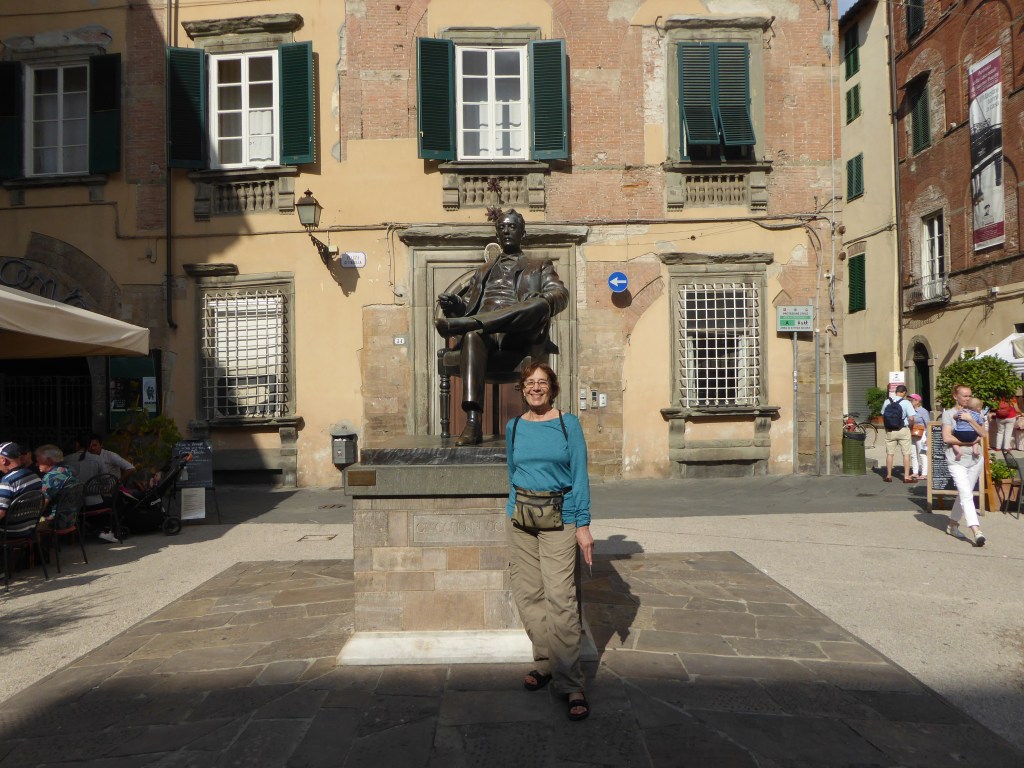
Puccini and his family lived in Lucca. The house that he was born in, is a cute museum today. I love his operas and enjoyed the museum, especially the costumes.
Cinque Terre
We had a full day on our own and what a day it was!!! Not a cloud in the sky all day and temperatures very comfortable (except while hiking- we got hot).
We spent the night in Levanto, just outside Monterosso Al Mare, the northern most city in Cinque Terre, . We took the 6-minute train to Monterosso then hiked to the next town, Vernazza.
The hike is maintained by the park service. It started pretty easy on even steps but very quickly once we passed the ranger’s desk, it became rugged. We climbed on and on with steps that were often uneven and very high.
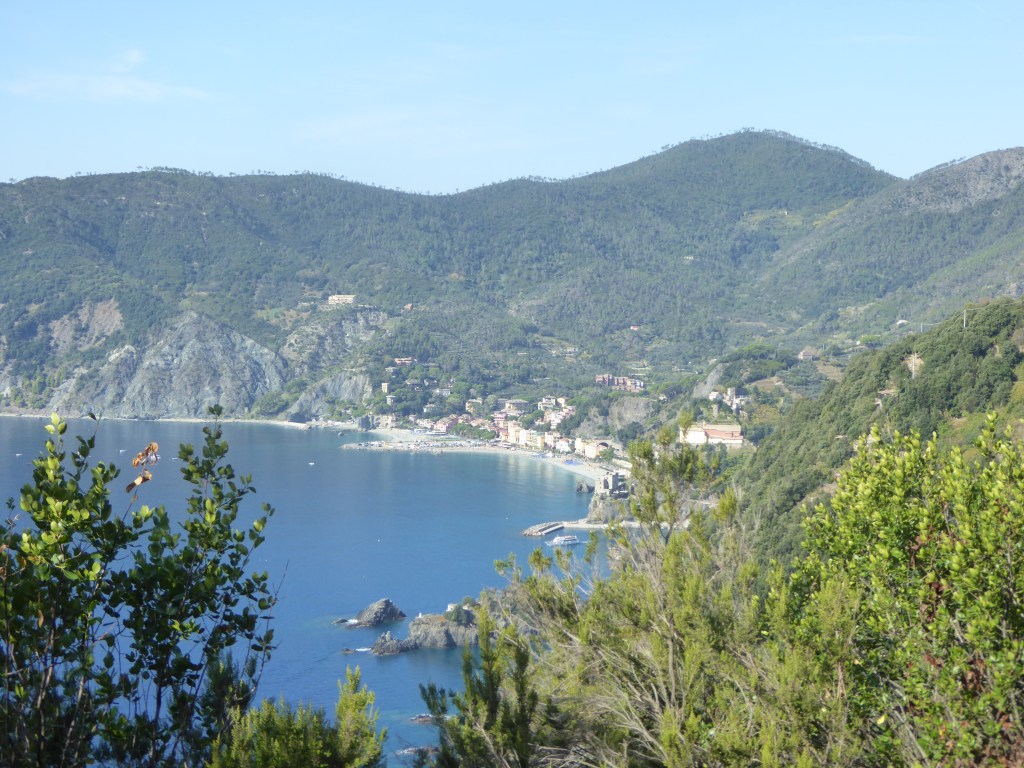
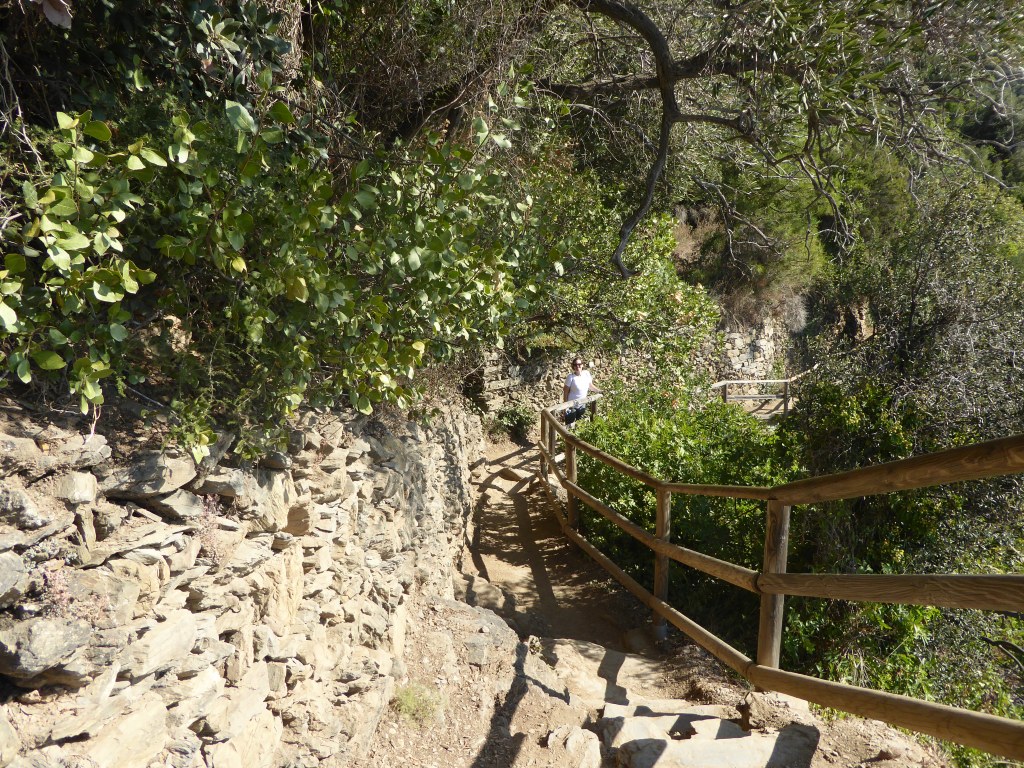
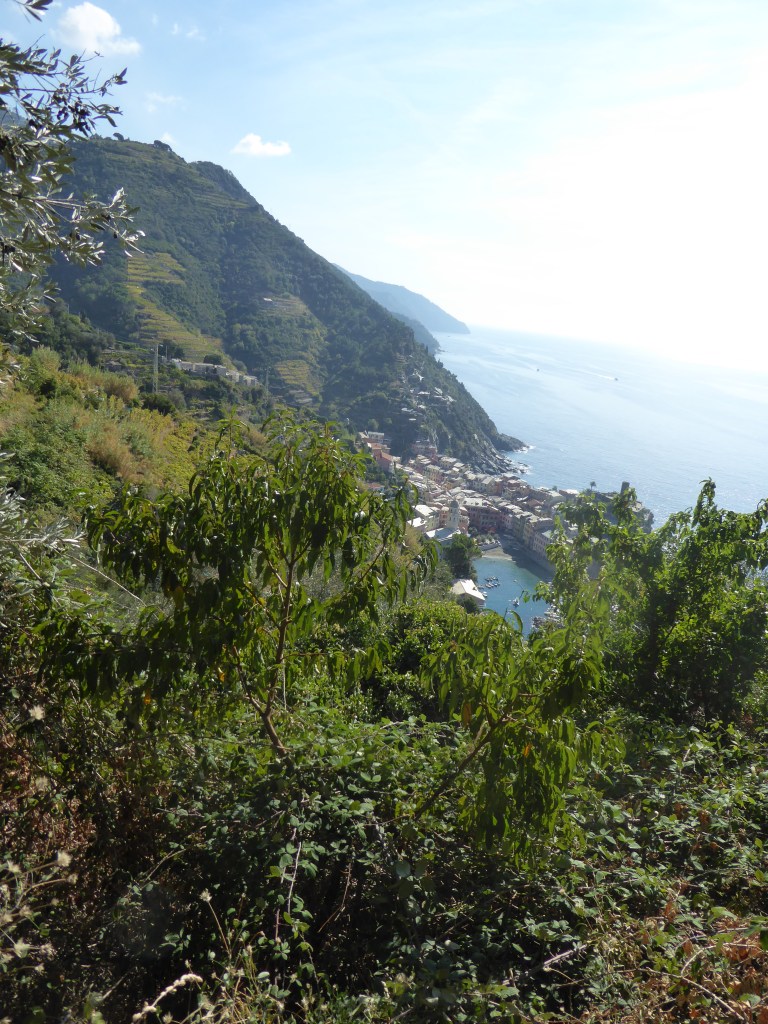
But to compensate for the exertion, we had the views of the water and the 2 towns that we were walking between. The hike took about 2 hours – a bit less for Maggie who at the end went ahead of me.
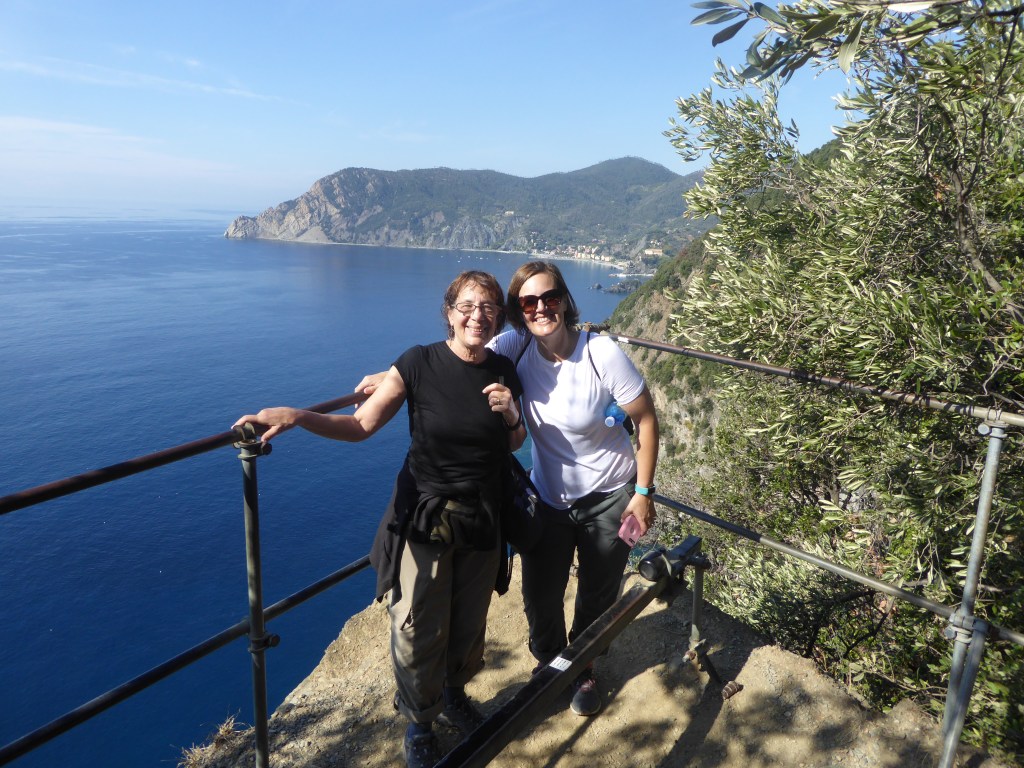
We did take many stops to look about and take pictures.
Maggie says that it is the most beautiful hike she had ever been on and she lives in beautiful Northern CA. I have had a number of spectacular hikes but this definitely ranks at the top 2 or 3. The walk was only about 2 1/2 miles as the crow flies but it was up and down all the way with very few level steps, so our step counters registered about 6 miles.
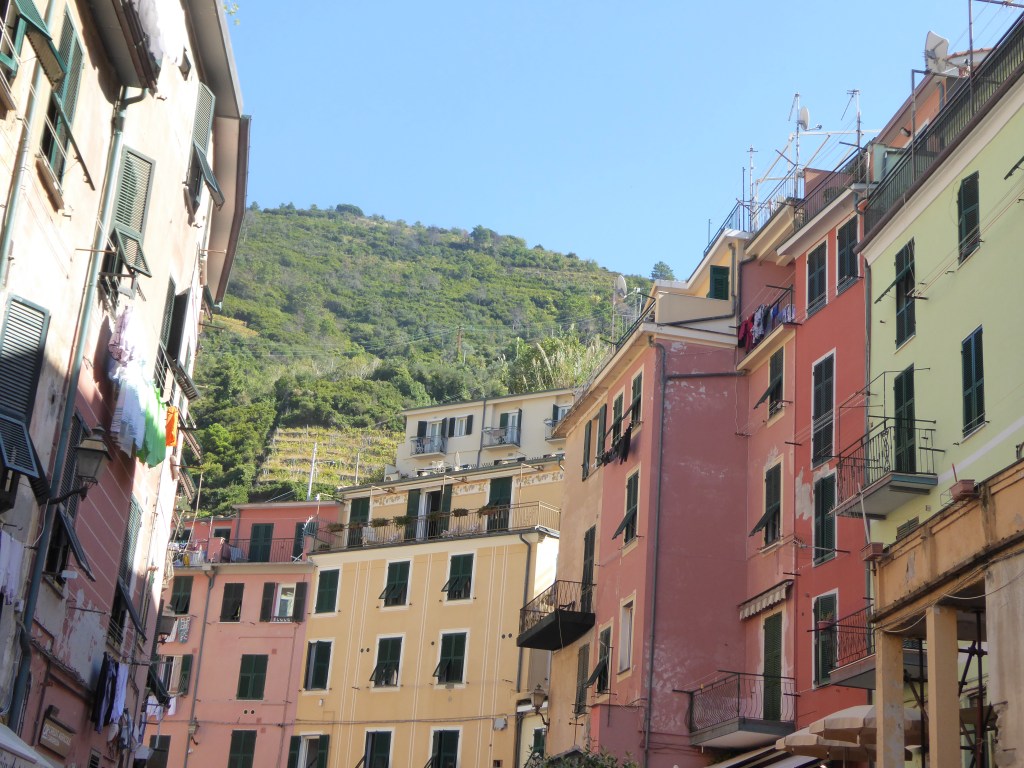
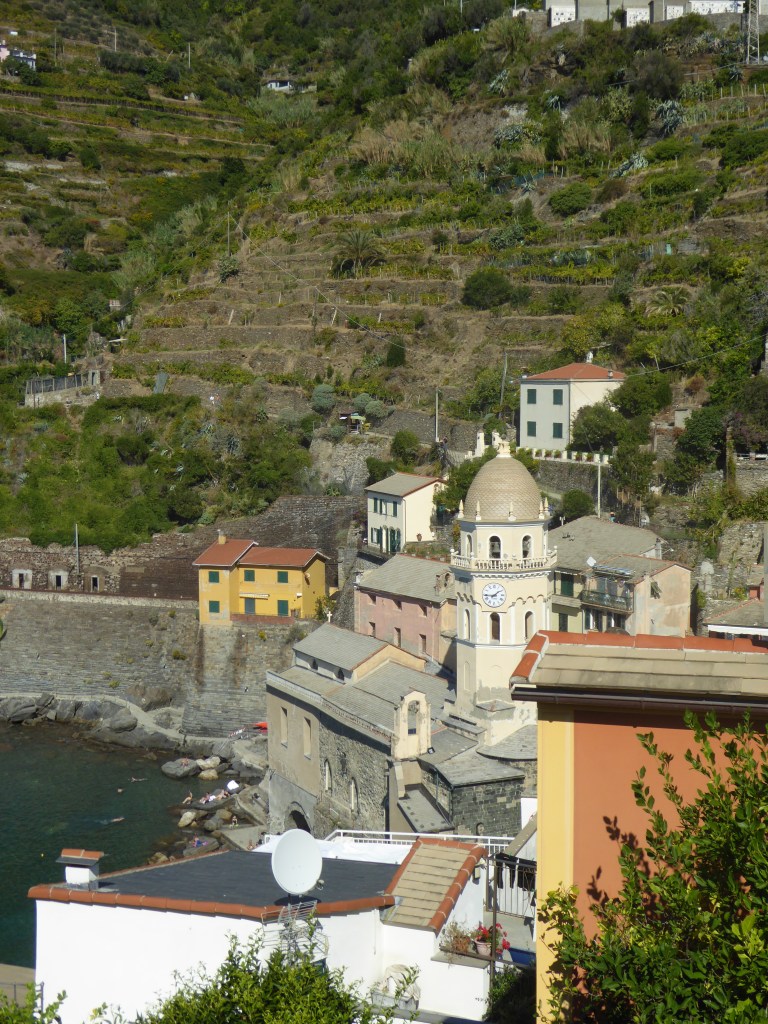
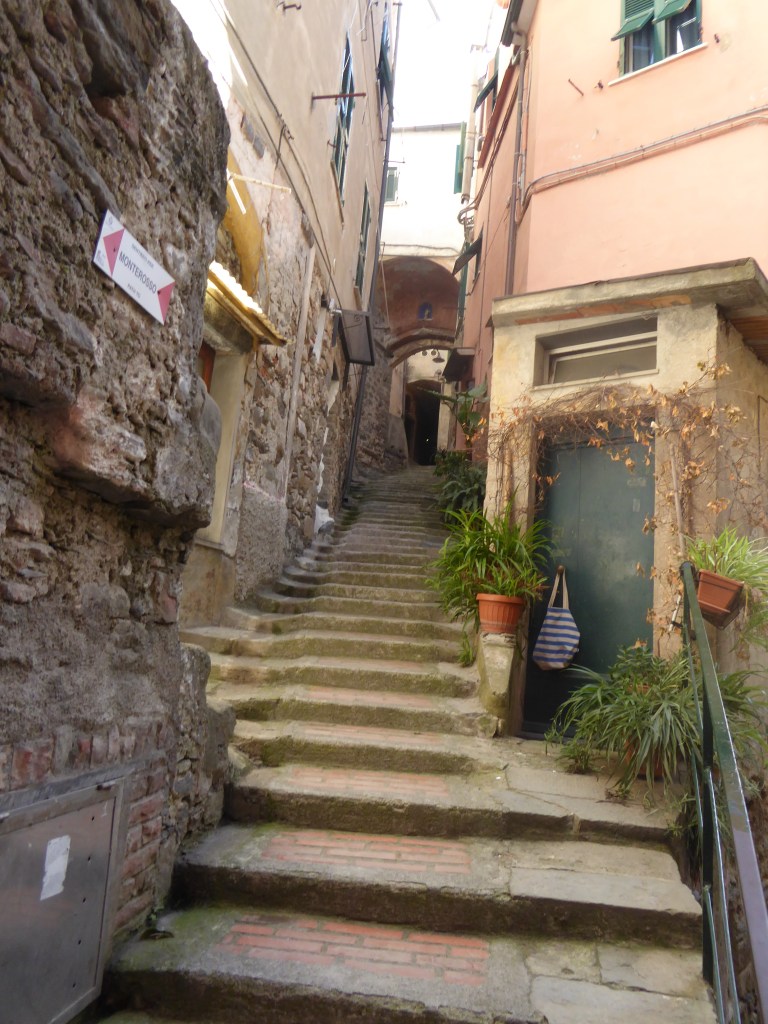
Vernazza was very crowded – we were warned that it would be in the middle of the day due to cruise ship passengers. But we loved looking at the buildings and the countryside. We found a relatively quiet spot and ate the sandwiches that we brought from the hotel and were very happy not to have to sit in a restaurant. We then climbed to the top of the Castle. There is no castle to visit, only the top is accessible for a spectacular view of the town.
We bought boat tickets for the ferry back to Monterosso and the train back to Levanto. It was all very easy to negotiate.
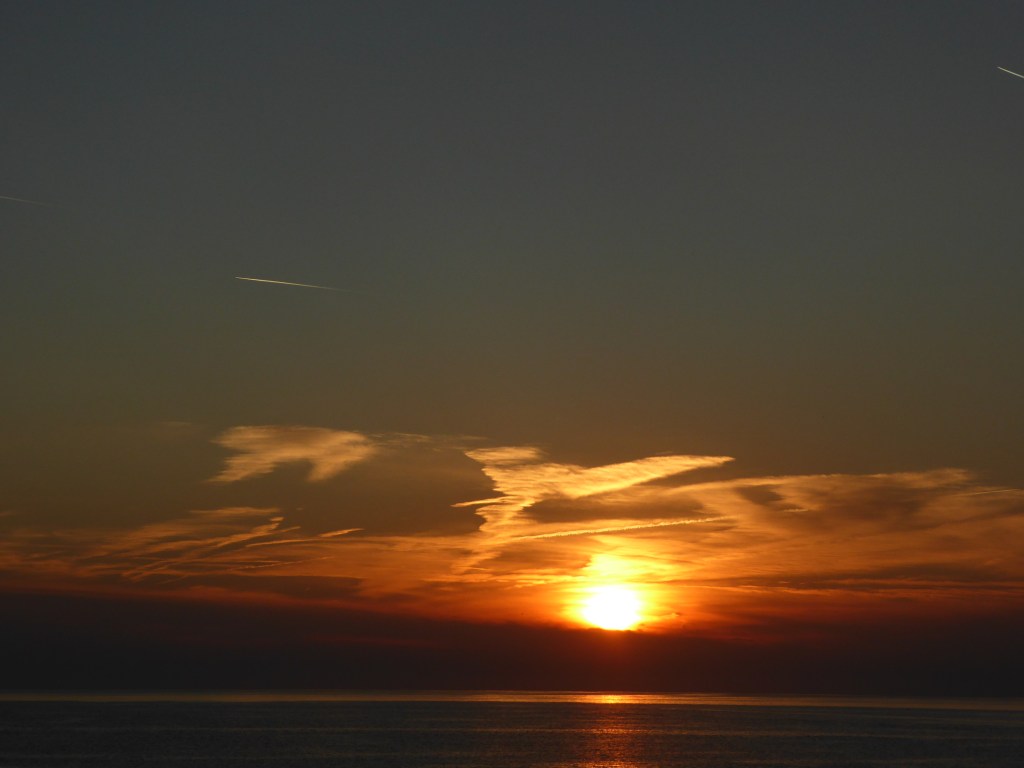
We watched the sun set from a bench overlooking the water. There were a few clouds to make the sunset incredibly beautiful. It was a wonderful end to a wonderful day.
Florence
I was in Florence almost 20 years ago, and on this repeat trip, I was able to enjoy seeing Maggie experiencing it for the first time. It is an incredibly beautiful city in great part thanks to the Medici family, who came to power around 1,400. They were extremely wealthy and in their 300 or so years of power, they supported the arts and many artists including Michelangelo. They beautified Florence and were responsible for the Uffizi Gallery, the Boboli Gardens, as well as other structures. There is so much in Florence, therefore, I will only comment on what left Maggie and I saying, wow!
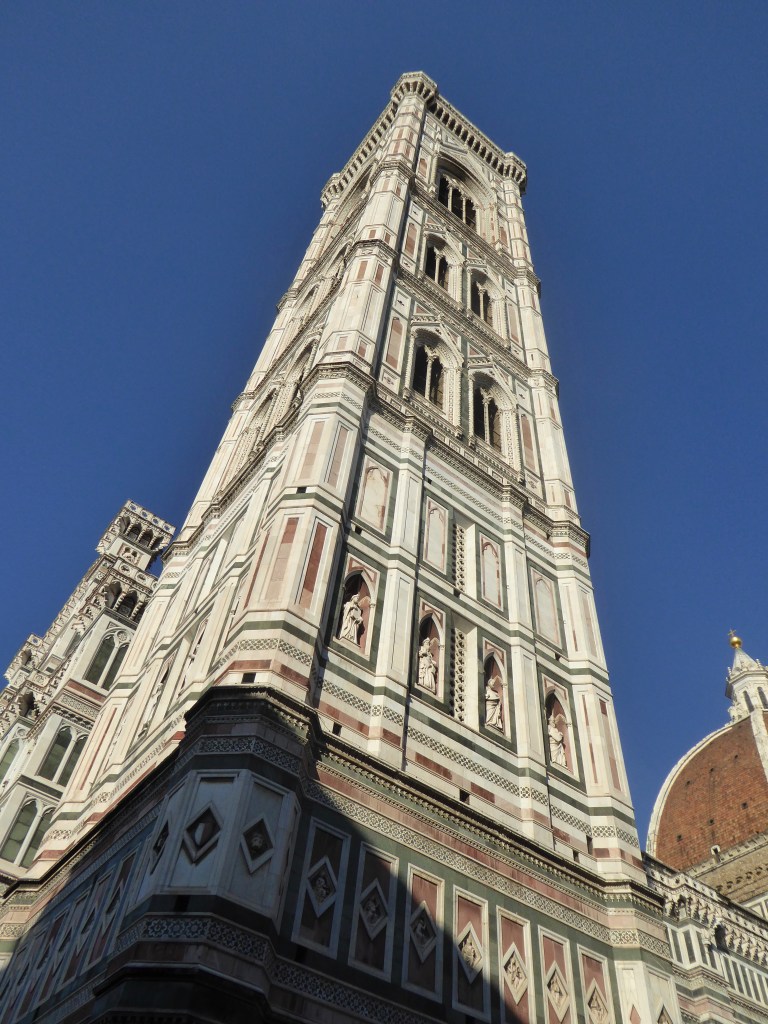
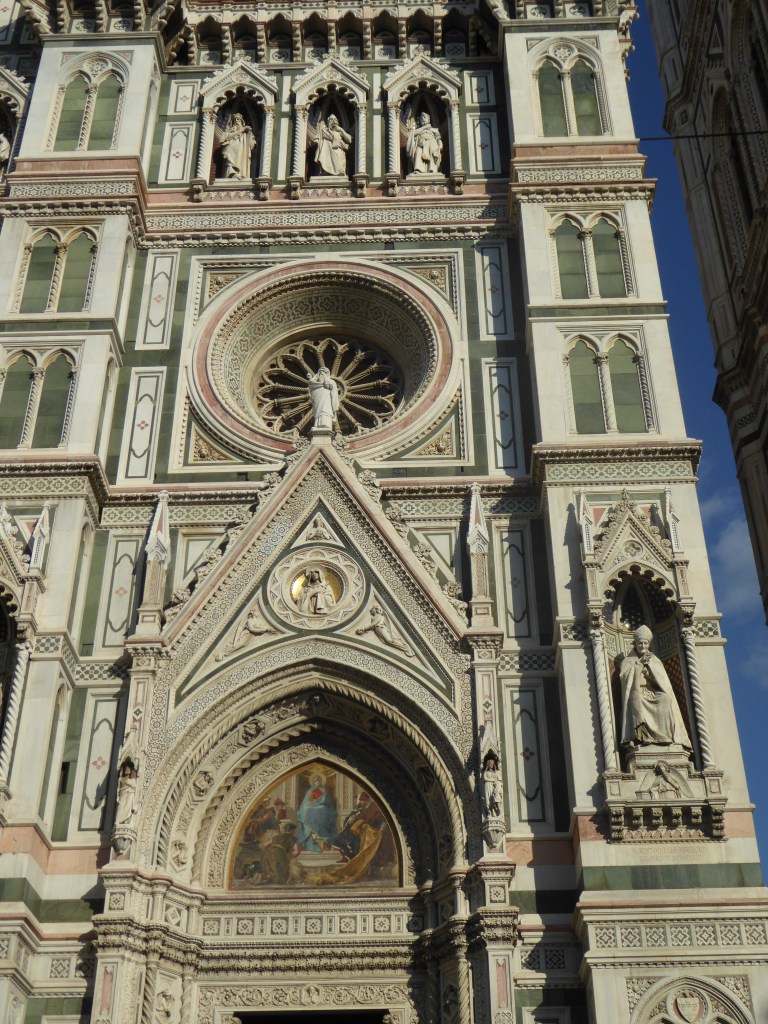
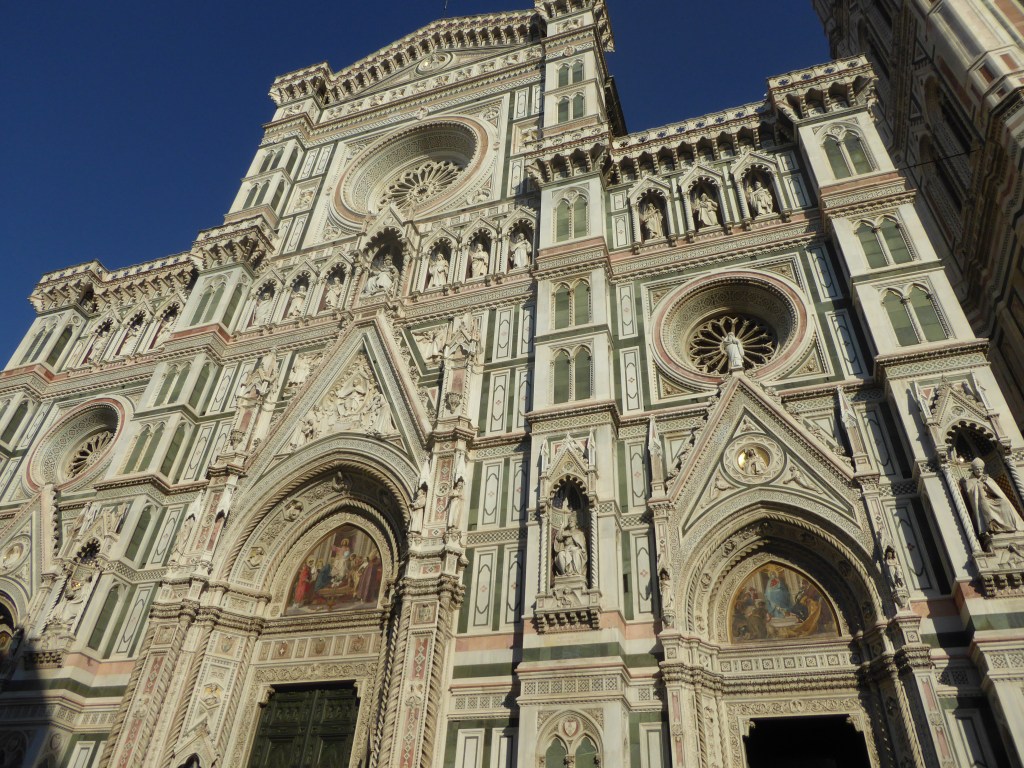
The Duomo and the matching bell tower were definitely a wow!!. If you have not seen this cathedral, with the dome built by Brunelleschi from 1420 to 1436, honestly, just come to Florence to see them. They are magnificent. The Dome is an architectural wonder. Brunelleschi was a genius and invented many techniques. The dome pre-dates St. Peter’s in Rome. The exterior, from the 19th C, is made up of multicolored marble.
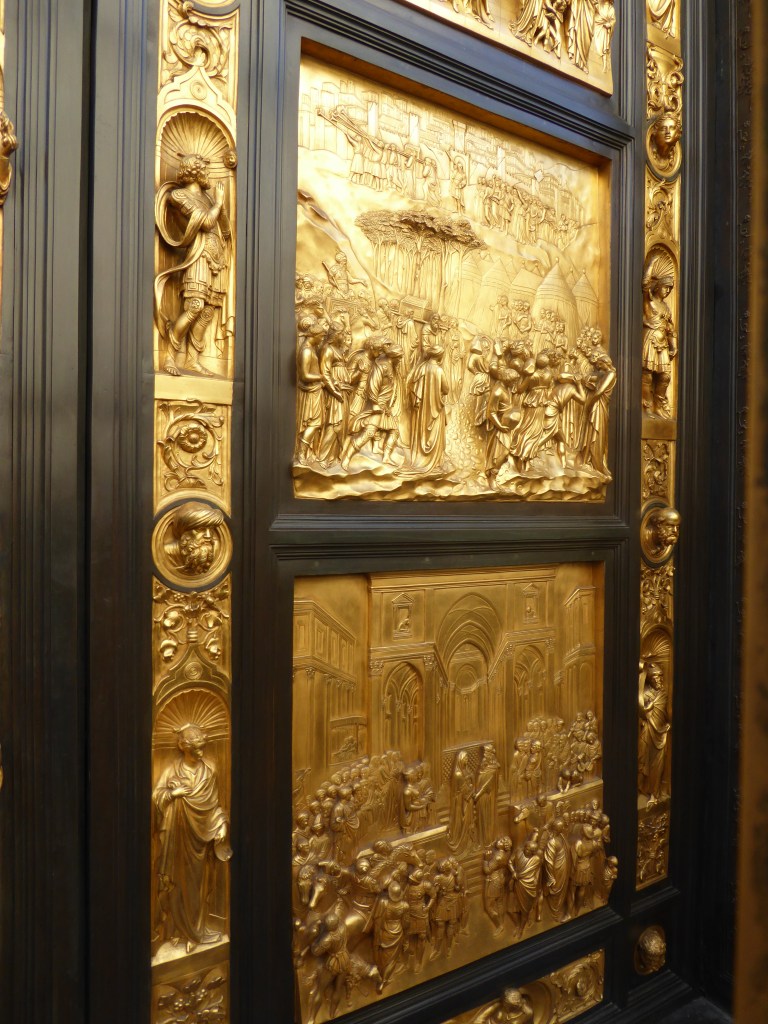
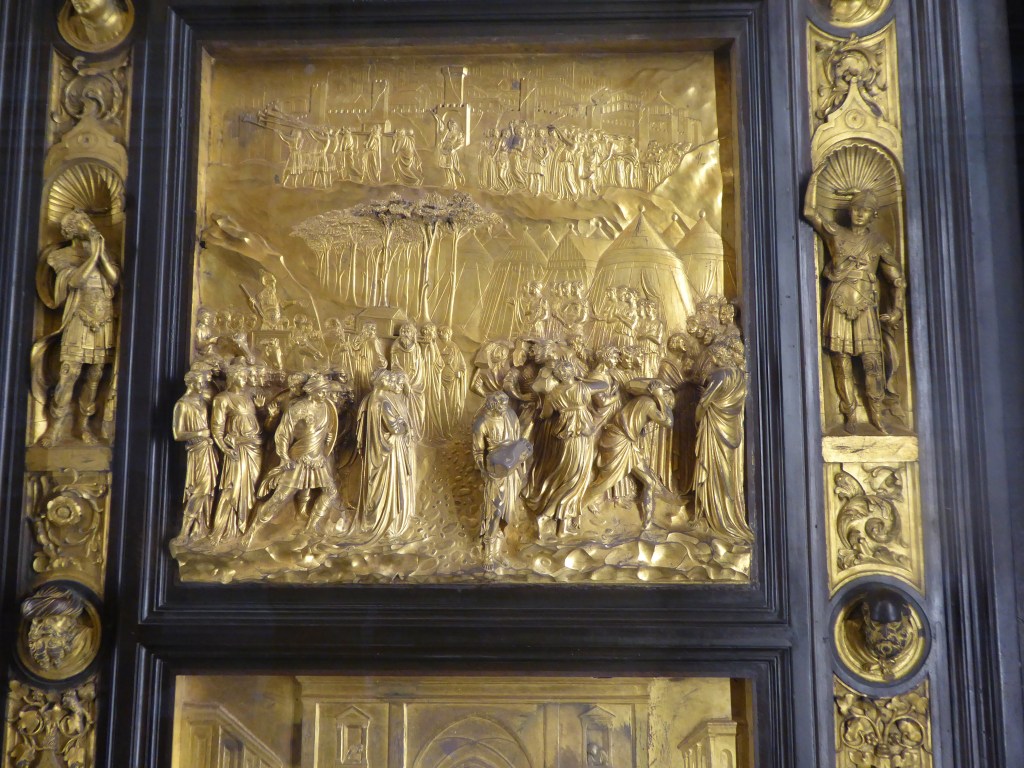
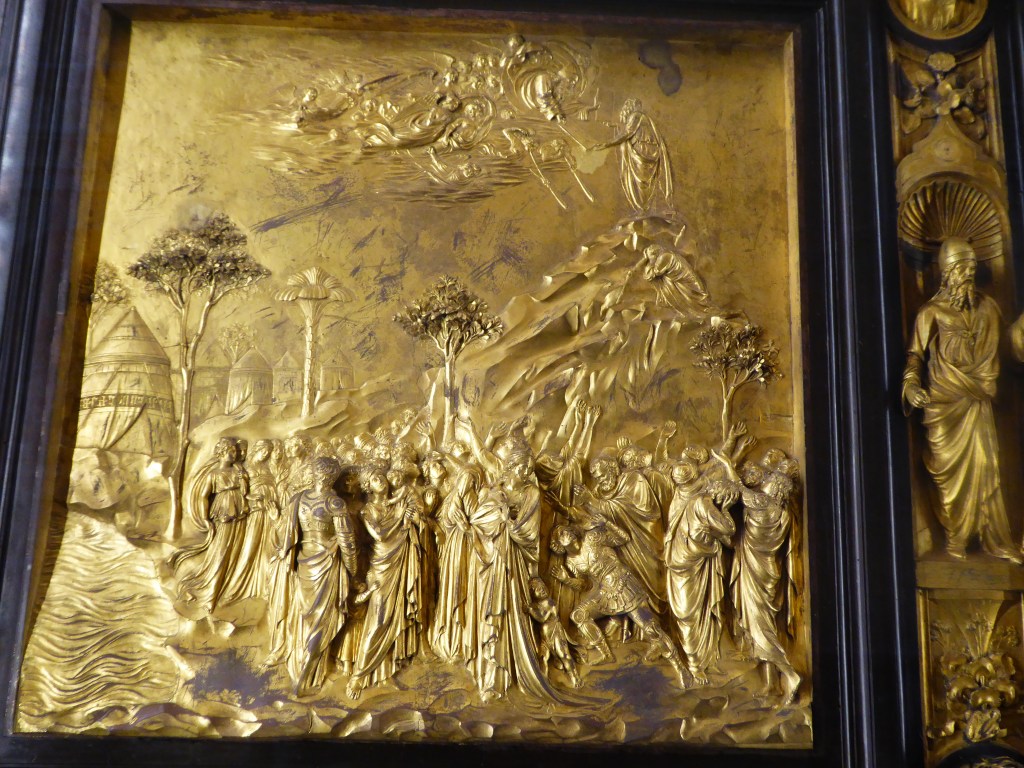
Across from the church, is the Baptistery. The original copper doors are in the Duomo Museum in order to preserve them. Replicas were put in the Baptistery. The replicas are amazing glinting in the sun. We also visited the originals in the museum and again were awed.
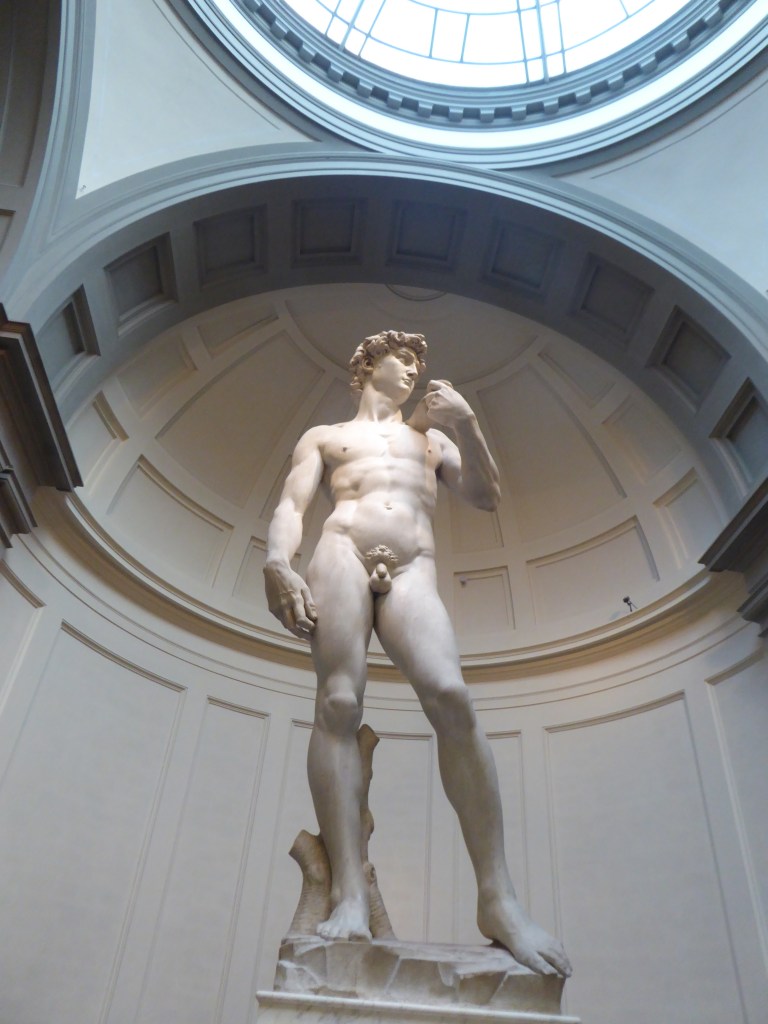
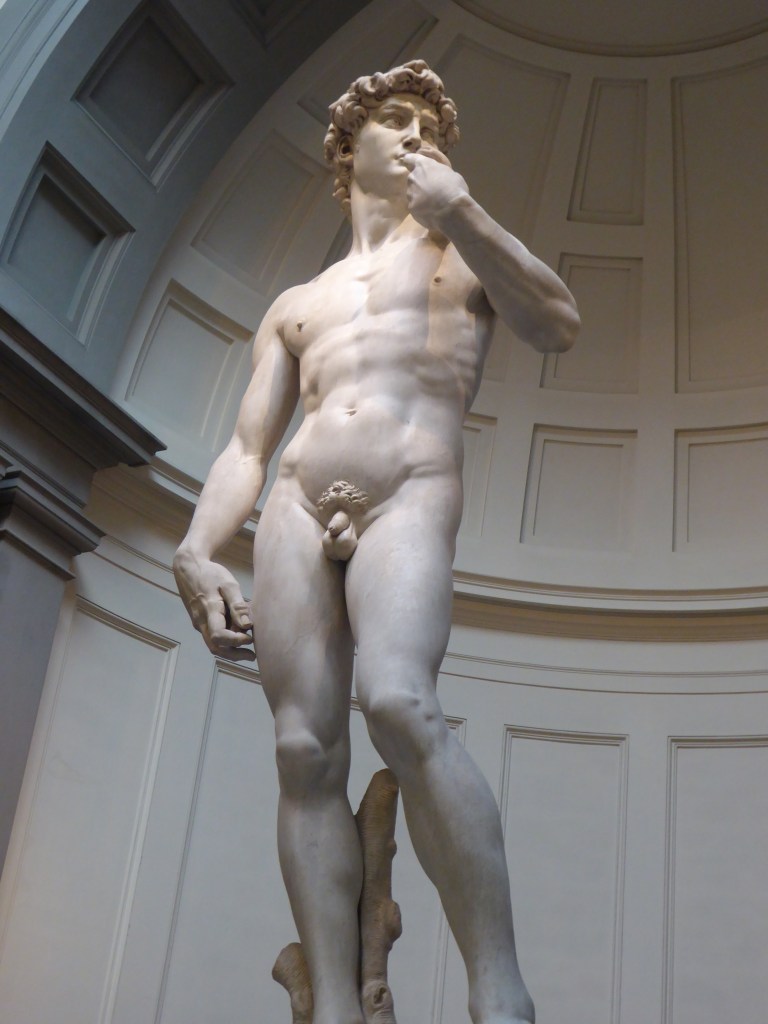
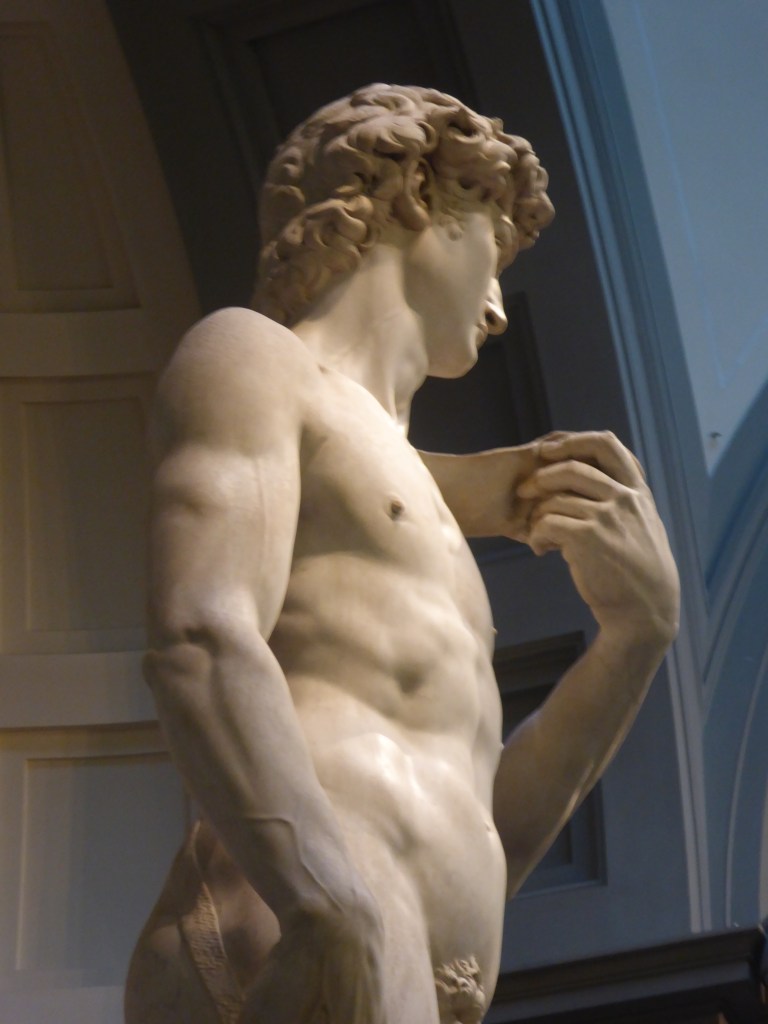
No statue in Florence can compare with The David by Michelangelo. Maggie had her biggest WOW moment in the David room. She says that it was the best of the trip and it even topped the Sistine Chapel. I agree.
Michelangelo sculpted the David from a piece of marble that had been cut 40 years earlier and other artists had trouble carving. What Michelangelo did with this piece of marble is just amazing. David is huge, he is manly. The expression on his face is enigmatic. You can see the veins in his neck and his arms. One can just gaze and gaze.
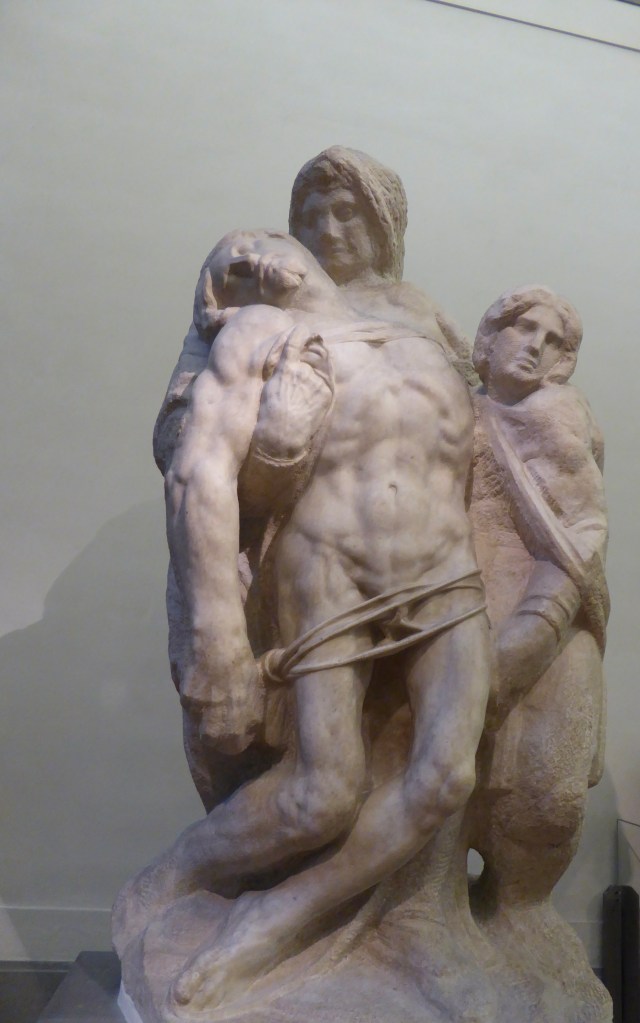
The next room had some of Michelangelo’s unfinished works. The Pieta is so emotional even in its unfinished state. The piece on the right, has Michelangelo’s face in the back, which is how he made sure that the marble he chose, was the one that was sent.
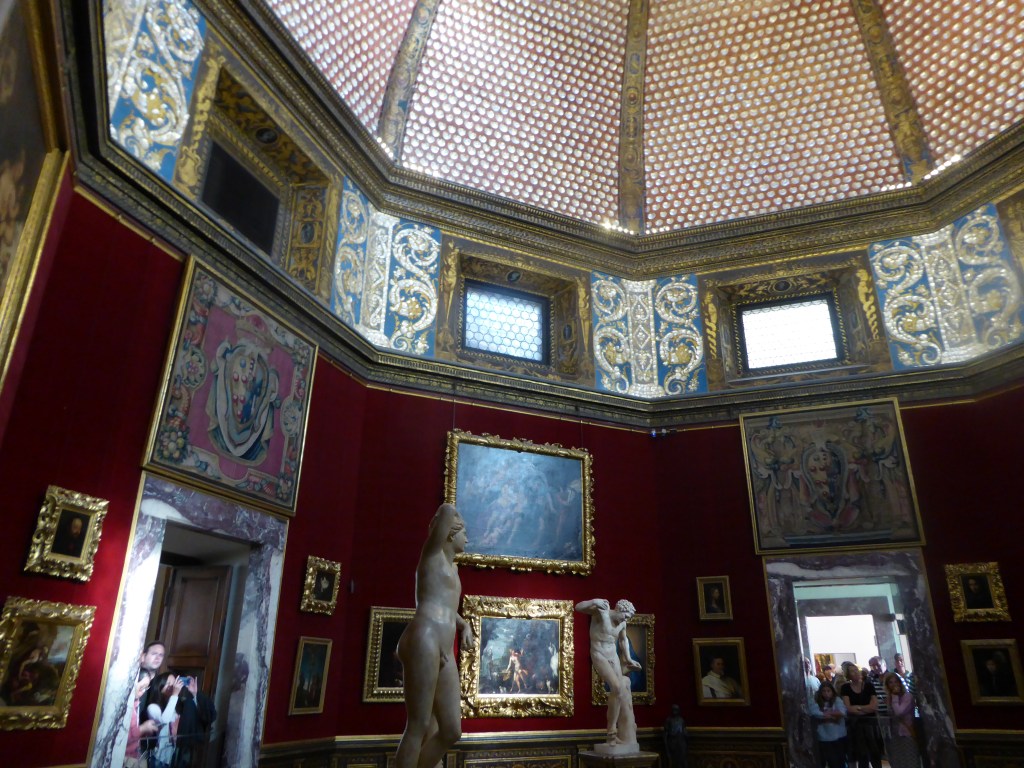
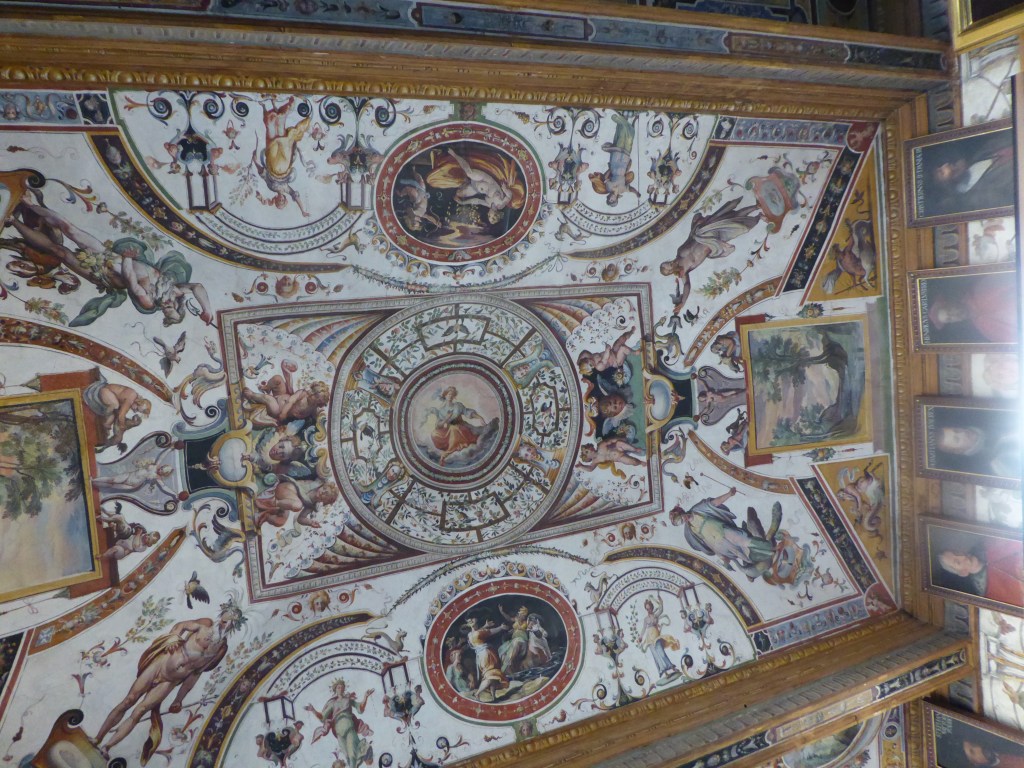
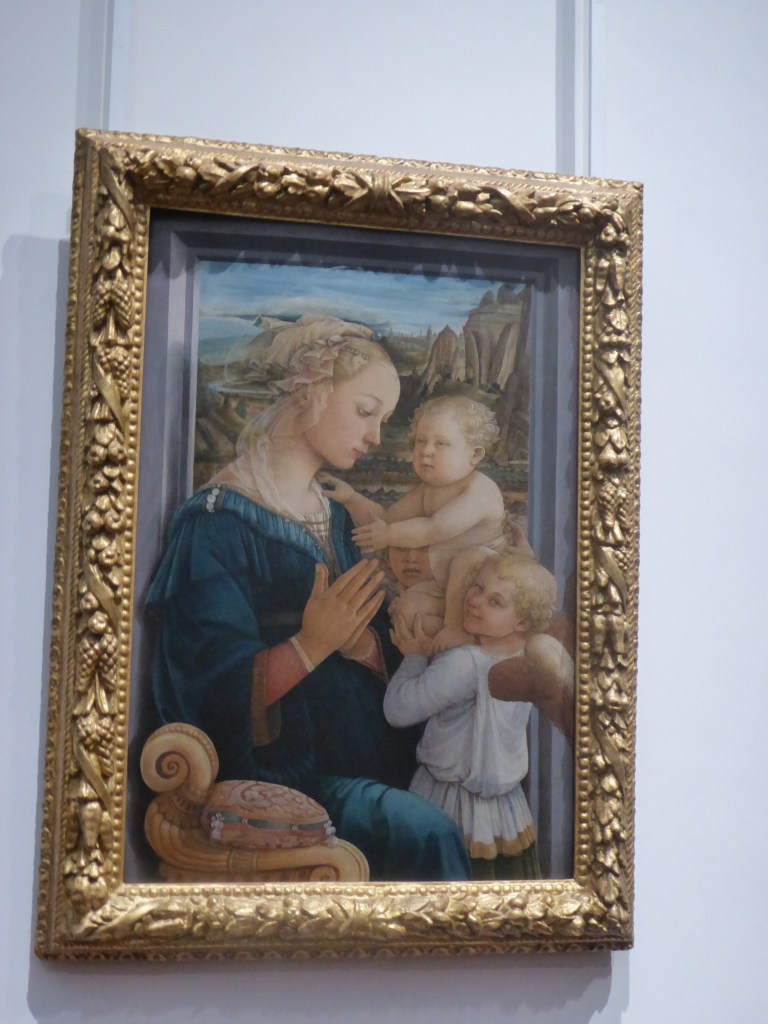
We visited the Uffizi galleries with a guide. She took us though it in chronological order starting with some Medieval paintings, which were all of religious subjects, with no prospective and unrealistic features. Giotto’s art began to be more realistic. Then we saw Botticelli’s Birth of Venice, DaVinci paintings, and ended with Rafael’s sweet painting of Mary gently touching Jesus and John the Baptist. The paintings were wonderful, but the rooms themselves were also fabulous.
We climbed the Bell Tower next to the Duomo, which is about 420 steps up. The climb was a bit tough – some of the stairs were tight and circular, which made it fun when there were people going up and coming down. The 11:30 Bell started ringing when we were one level below the top. Maggie and I both jumped.
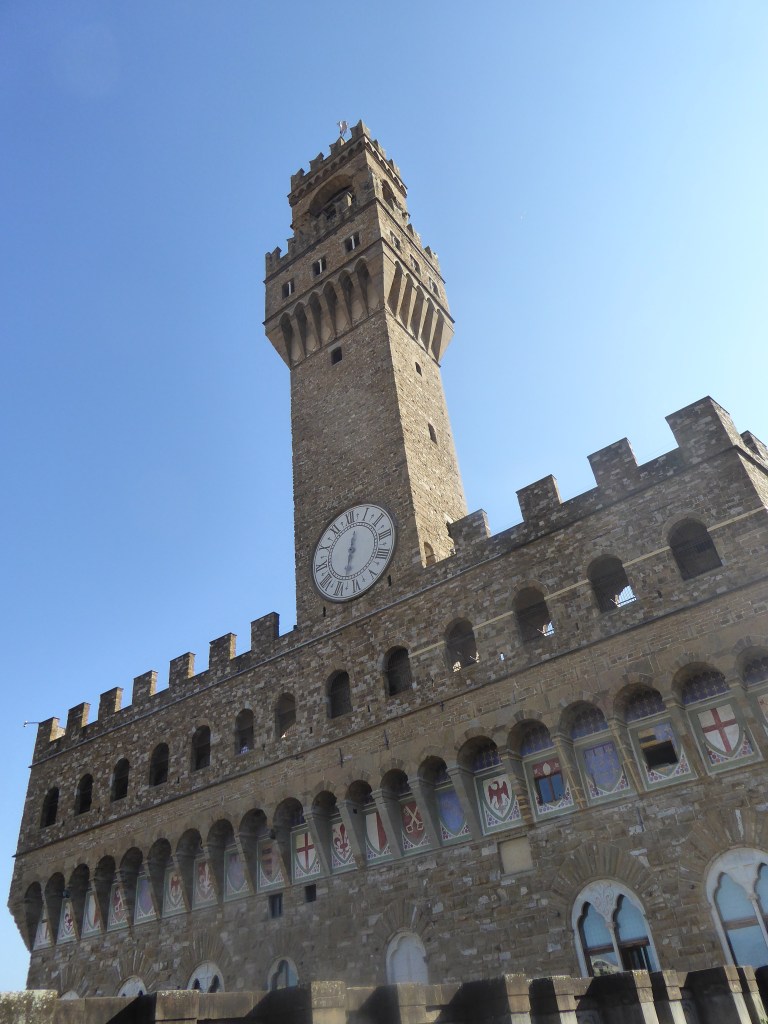
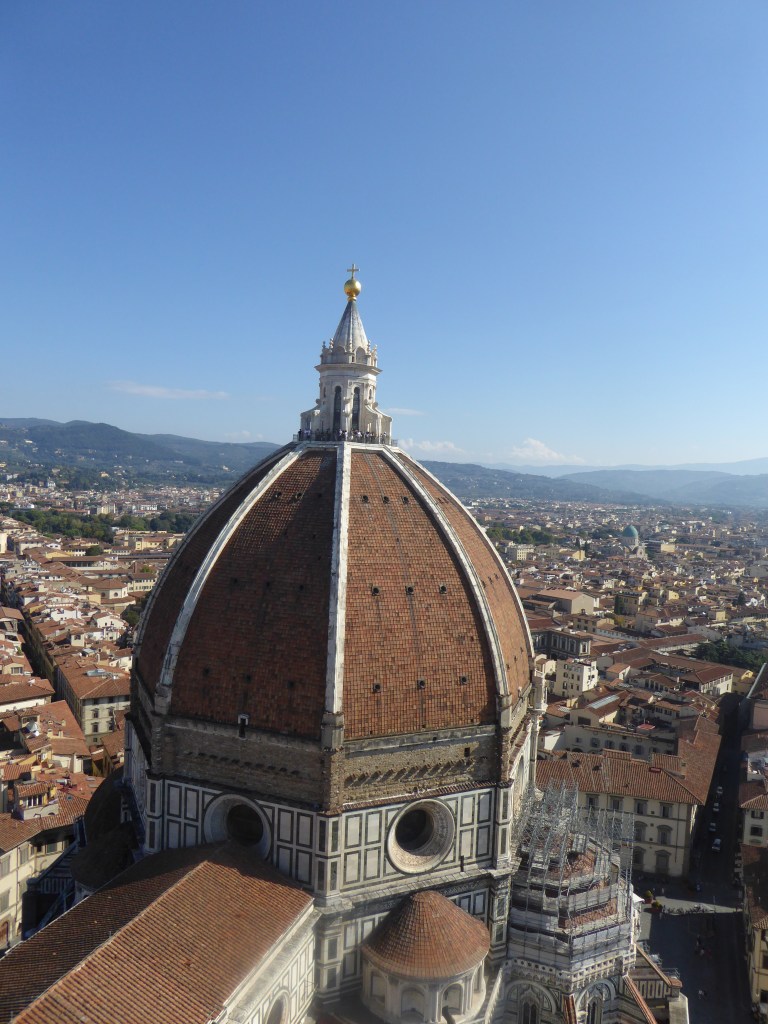
We thoroughly enjoyed the beautiful views from the top.
Maggie and I took the train from Florence back to Rome and enjoyed our last two days together, walking through the city and visiting the Borghese Galleries.
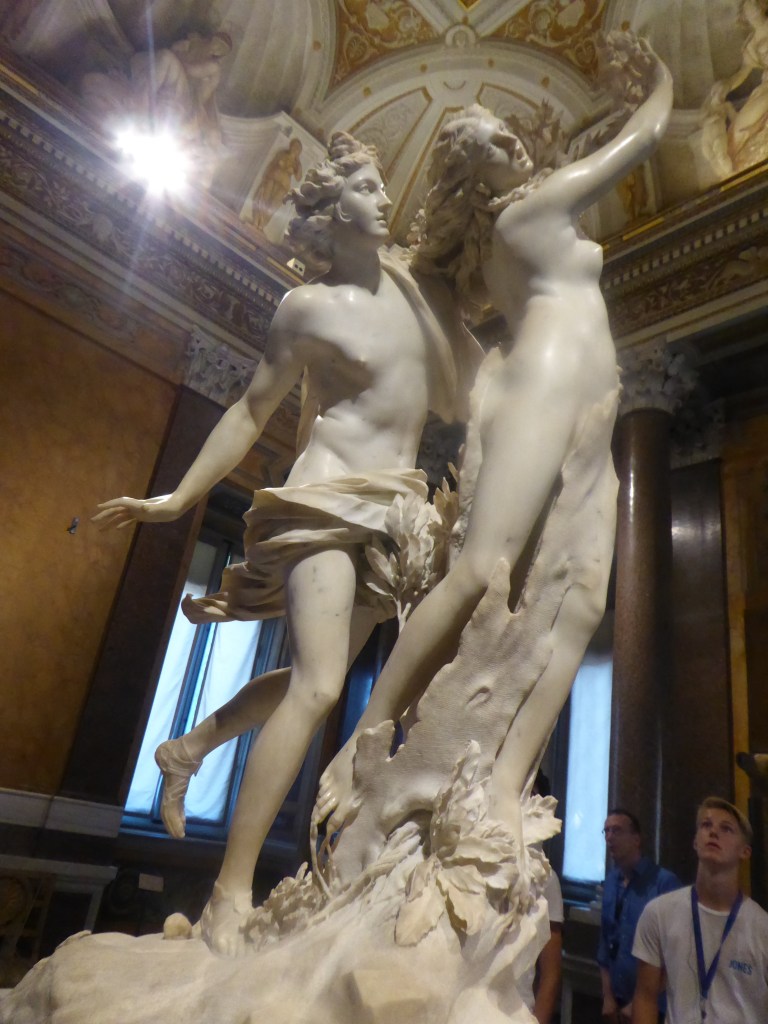
We had a fabulous active 10 days together. We ate countless wonderful meals and tasted gelato in each city. We enjoyed the art and history as well as the more active hikes. I still smile when I remember this trip.
Final Comments:
- Rick Steves books small local hotels rather than Holiday Inn or Marriott. It makes the trip interesting because you never know what you will get. The charm over rides any lack of space or drawers.
- Maggie and I both packed our clothes in packing cubes which makes it so easy to pack and unpack and basically makes drawers unnecessary. I highly recommend them.
- This was an active tour. Touring old towns requires stability and energy. The streets are uneven and in the hill country, all up and down. My morning hour walk and floor exercises paid off.
- Aside from the actual touring, we needed to be able to handle our bags ourselves. We visited small towns where the buses cannot get all the way to the hotels. In Voltera we had to walk about 5 minutes pulling our bags to the hotel. In Levanto our bags were ferried to hotel by car but we had a mile walk to and from the train station to the hotel and then up one flight of stairs with the bags.
 Nili's Adventure