
I went to Tahiti because of Jane Austen. Well, indirectly at least. The Jane Austen Society annual meeting was going to be in Huntington Beach, CA. Since we were flying from NYC to California, we decided to continue on west to Tahiti. WindStar Cruise company, which we had taken to Costa Rica/Panama and Athens/Rome, had a 7-day cruise on the 148 passenger Wind Spirit boat, in Tahiti, which worked with our schedule. Perfect.
The Tahiti trip was wonderful but not amazing . What is the difference between a wonderful and an amazing trip? A wonderful trip is one where all the arrangements work perfectly; you have new experiences, some pleasant interactions and relaxation time. An amazing trip is one where you see things that are so much more exciting, or beautiful than you ever imagined, you learn many new things and come away thinking WOW! For instance, in my last post I wrote about being amazed by the Terra Cotta soldiers, same by Tiger’s Nest in Bhutan. There was no wow! factor to this trip but the islands were beautiful with mountains, beaches and friendly people. I learned about the local culture and rites. Wonderful but not amazing.
Moorea
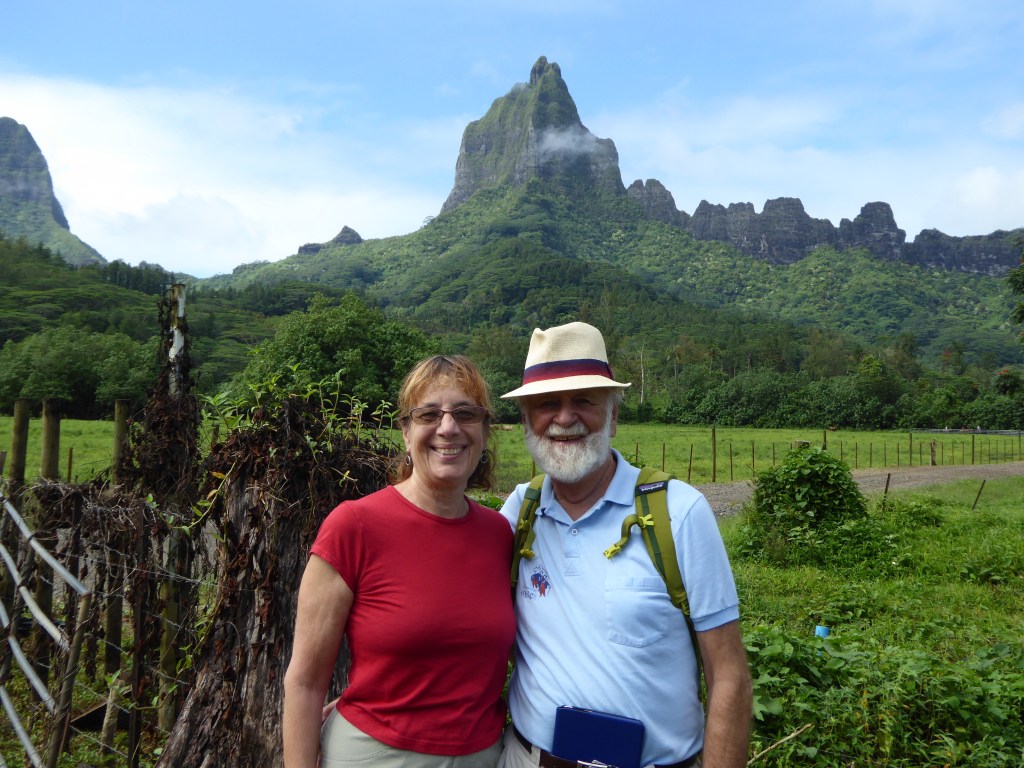
Moorea is very mountainous with beautiful volcanic mountains. The boat docked in Cook’s Bay and we took a tour to the Belvedere (view point) up the mountain.
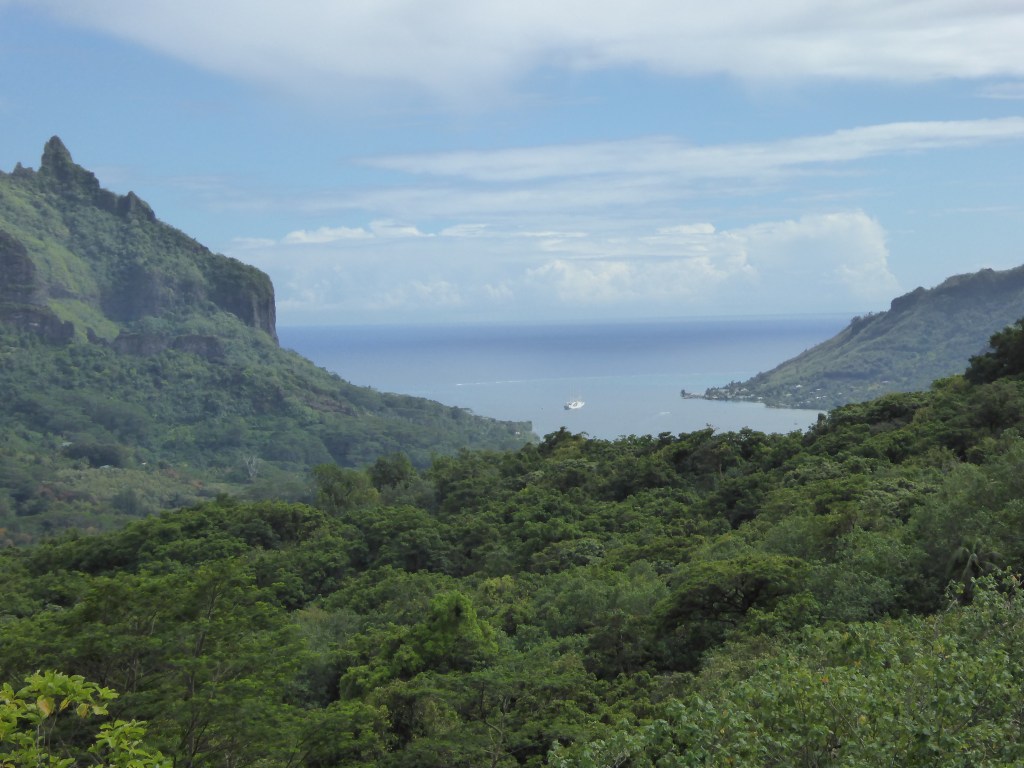
At Belvedere, we could see both Cook’s Bay, Opu Nohu Bay (where Capt Cook actually landed) as well as about half the island. It was spectacular. That dot in the water is our boat.
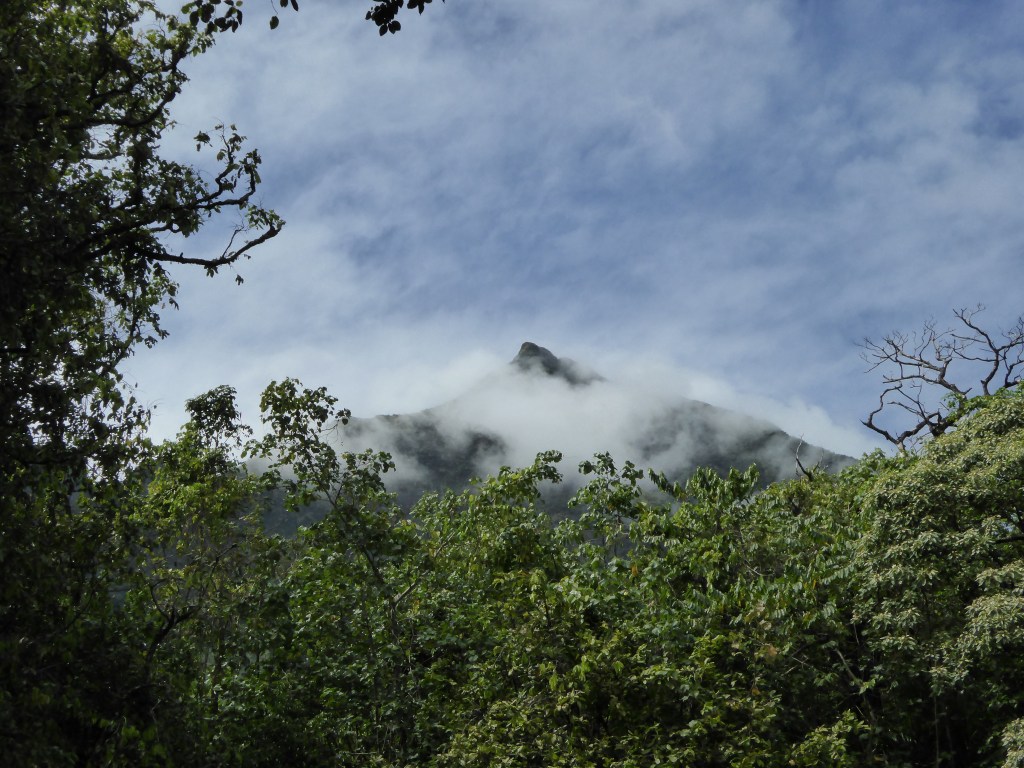
Our guide pointed out a mountain that was used in the movie South Pacific. It was covered in mist just like it was in the movie.
Polynesians found the island as early as 600 CE but real settlement with agriculture started about year 1000. They came from SE Asia in their canoes together with plants, chickens, dogs and pigs. A group would make an exploratory trip, find a good landing point, go back to pack up family, plants and animals and find their way back to the new home. Before the Polynesians came, there was very little vegetation and animal life on the islands. Very little is indigenous.
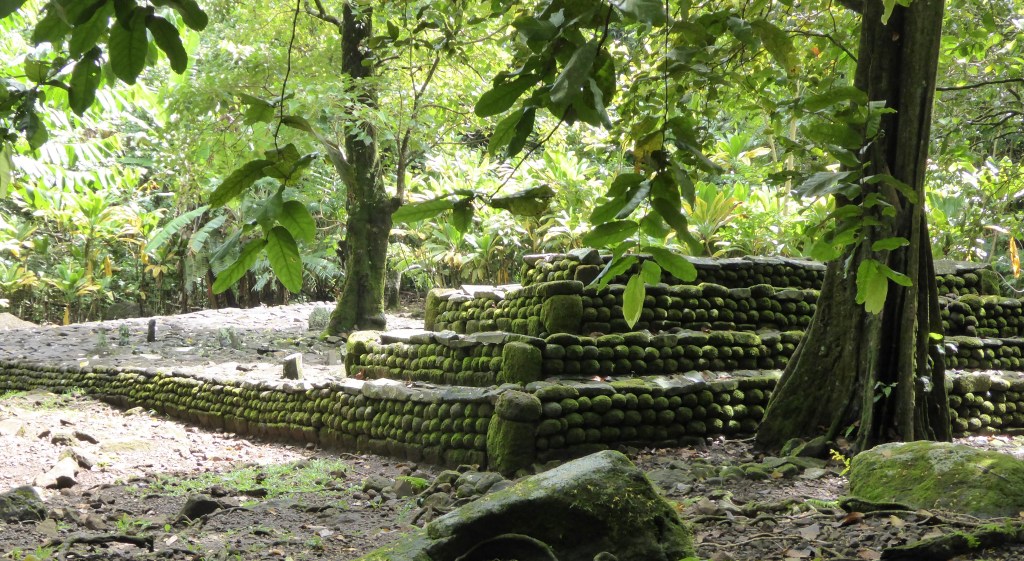
We visited a Marae, a holy spot, made of stones. The head of the Marae pointed to the mountain and the foot to the ocean. At the head were totems that connected the king to the gods. The Marae was also a place for the village to gather in, as well as for human sacrifices. This Marae was built around 1000 CE. Missionaries dismantled many Marae, now the government is restoring them. This was our first encounter with their human sacrifice practices. We learned that a cult which took hold around 1700 CE, to the Turtle God, Pro, was bloodthirsty and demanded many human sacrifices.
Back on the boat, we saw whales as well as the Dolphins swimming near us. We mostly saw the whales’ back but one whale did a tail flip out of the water. Swimming around the whales were tiny dolphins jumping high above the water. It was fabulous.
That evening Jerry and I were invited to have dinner with the captain. I expected a large table, but there were only 4 of us with the captain. I have no idea why we were selected. The other couple, Tom and Ramona, were Chicagoans of Lithuanian descent. The captain is from Bulgaria and therefore, maybe we were picked for the name Vetowich. The conversation flowed and we had very interesting fun evening. Before we knew it, it was 9:30. It didn’t feel like it was so late.
Raiatea
Raaiatea is believed to be the first island settled, probably from Samoa. The boat docked, which made coming on and off the boat easy. We walked around the town, used internet, had coffee/tea, but there were not much else to do.

However, in the afternoon, a group of locals came on the boat for a Tahitian dancing and lei making demonstrations. Tahitians speak with their body and hands and the dances all means something.
The ladies gave a demo of a number of ways to wear the beach cover ups (sarongs) and they even demonstrated two possibilities on guys. Those who wished, learned to make the leis.
We also had a talk by a man (about 80 years old) and his nephew, about Tahitian way of life. The old man’s father was a chief. Today there are no more chiefs only democratically elected mayors. The old man never went to school but learned all he needed to know from his parents, like counting, fishing, and carpentry. He never uses money (he doesn’t charge the ship for his talk, because he wants to teach others about the culture) and has everything he needs. Of-course he inherited his house and land from parents. He sees no point in snorkeling: why look at fish, fish are meant for eating, not looking at. He has 4 wives. His father had 8 wives, but he is lazy so he only has 4. Why save money? You could have a heart attack and die. He lives day by day and has never left his island.
The nephew explained about Tattoos, which come from the word Tatau. Ta means writing or to mark someone. Tau means time. It was a ritual which told your place in society. The marker or tattoo artist got ready the day before by praying and cleansing himself. It is marking someone for life so it is a serious job. He would sing while doing the Tatau to distract the person because it hurts. It was done with sharp bones of pigs and rats. They would then put on a salve to stop the bleeding and infections.
Bora Bora
Bora Bora is the island that the US military set up as a base after the Pearl Harbor attack. The military built an airstrip (still used), and a road around the island. Bora Bora is larger than the last few islands and very tourist minded. There are many expensive hotels on the island with lots of over the water cabins. The prices make NYC hotel prices seem reasonable.
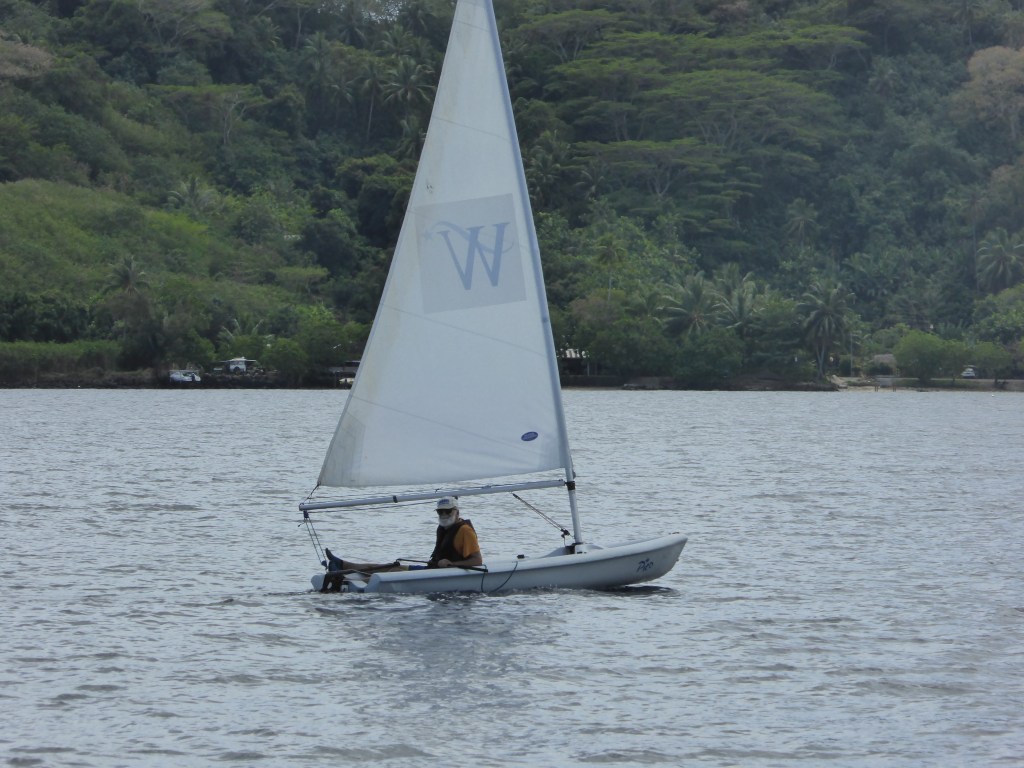
Since our glass bottom boat excursion was in the afternoon, Jerry took advantage of the fact that he could take out a sailboat from the sports deck. He is an awesome sailor, and had a great sail until a brief storm came about 11:30.

The glass bottom boat excursion was fun. The boat captain sat and played the ukulele as he drove. He fed the stingrays and sharks so that they would come right under the glass bottom of the boat. We also stopped over corals where we saw a variety of beautiful fish.
The next day we had a stingray snorkeling adventure. On our way to the stingray experience, we ran into a huge school of dolphins. They capered and porpoise out of the water all around us. The best was the dolphin that jumped straight out of the water and did 360 turn and back flip all at once.
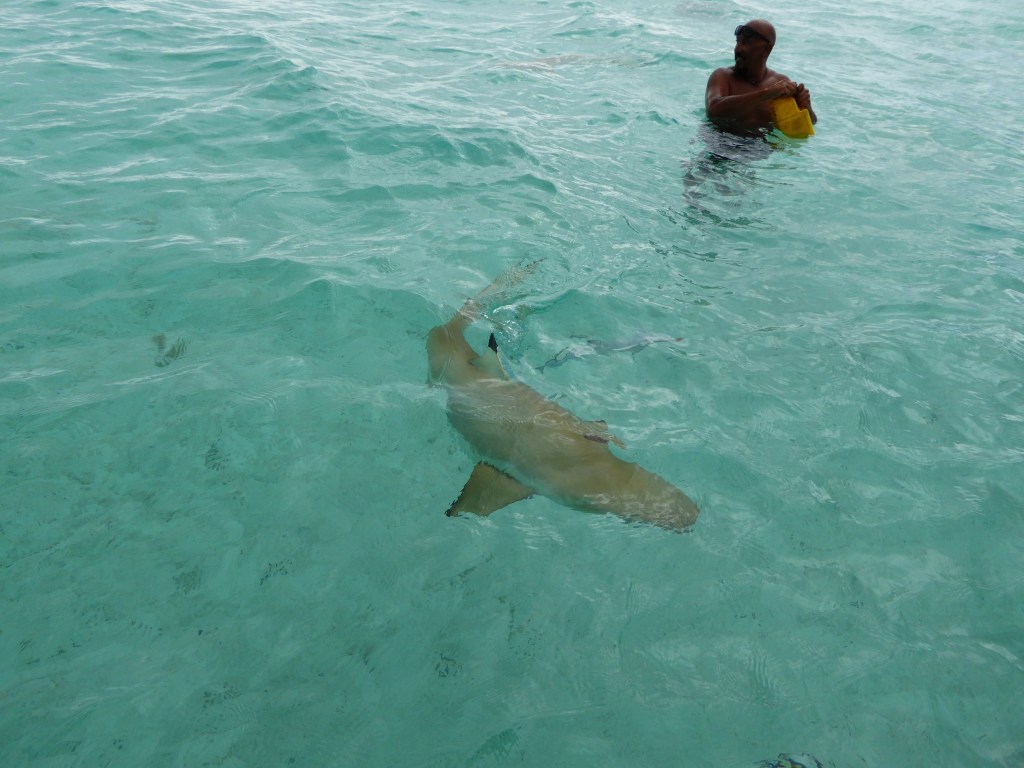
We swam with a lemon shark and walked in waist high water to pet the stingrays. This sounds a lot easier than it really was because the water was very wavy and really buffeted me around. Luckily it was so clear that I didn’t really have to look through the snorkel mask. It was fun to pet the stingrays
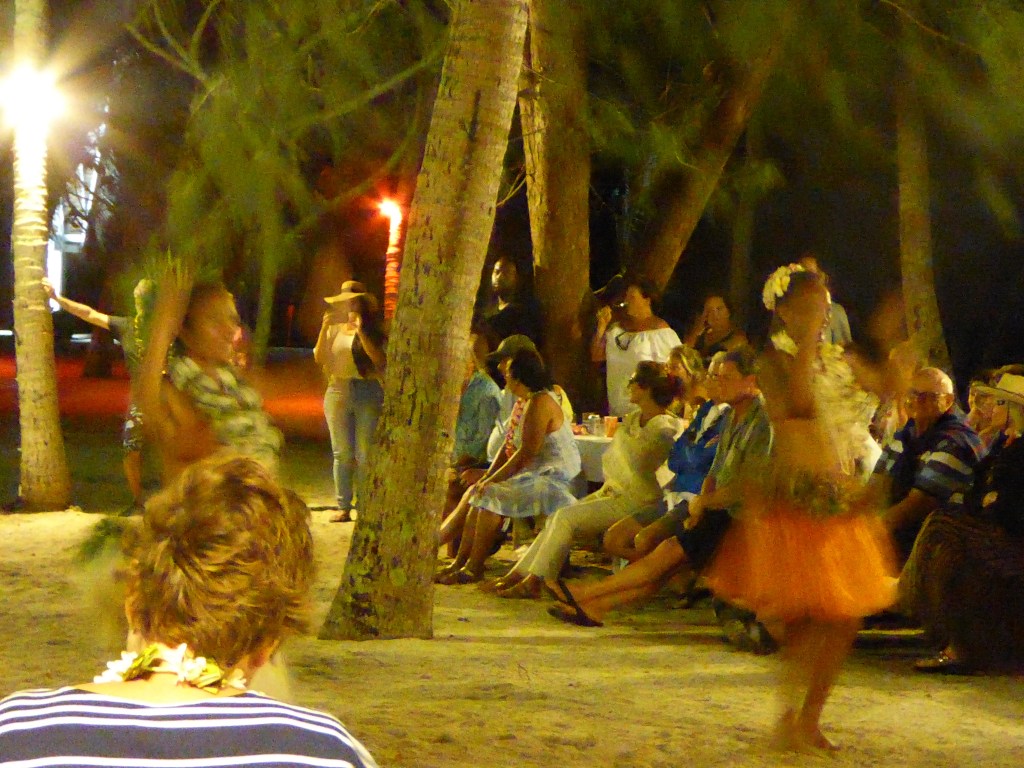
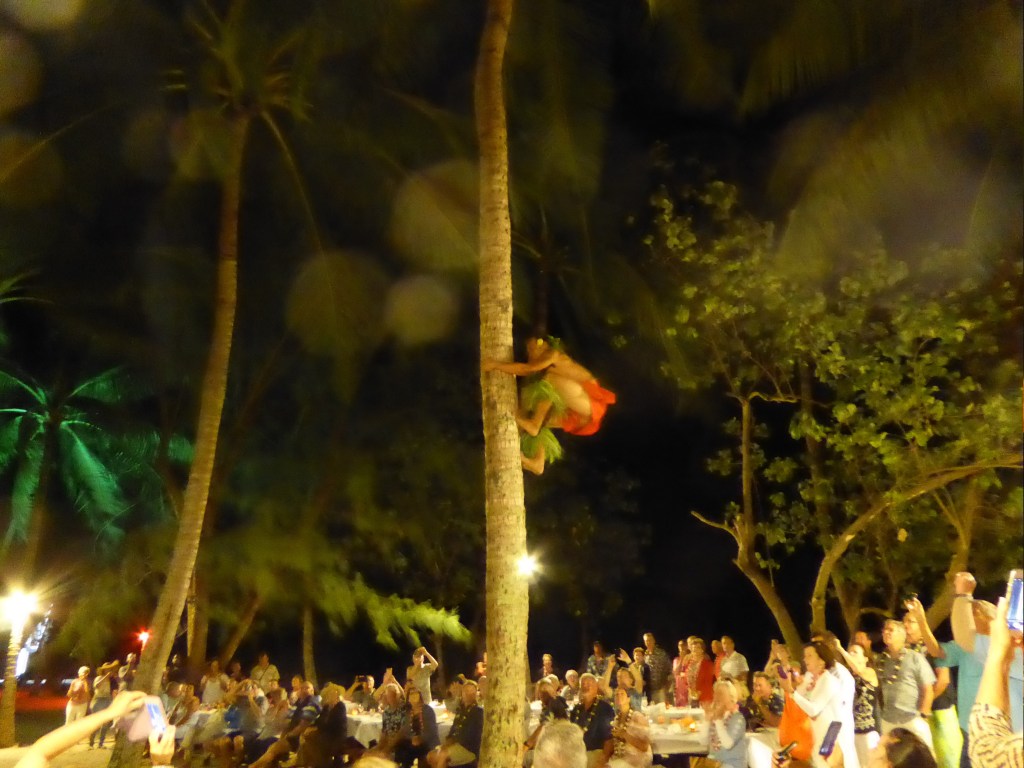
That evening we had a barbecue dinner and show on a tiny nearby island. The show consisted of male and female dancers as well as flame throwers. The flame throwers twirled double torches, one in each hand, while one of them climbed on the other two. The show and food were wonderful.
Huahine
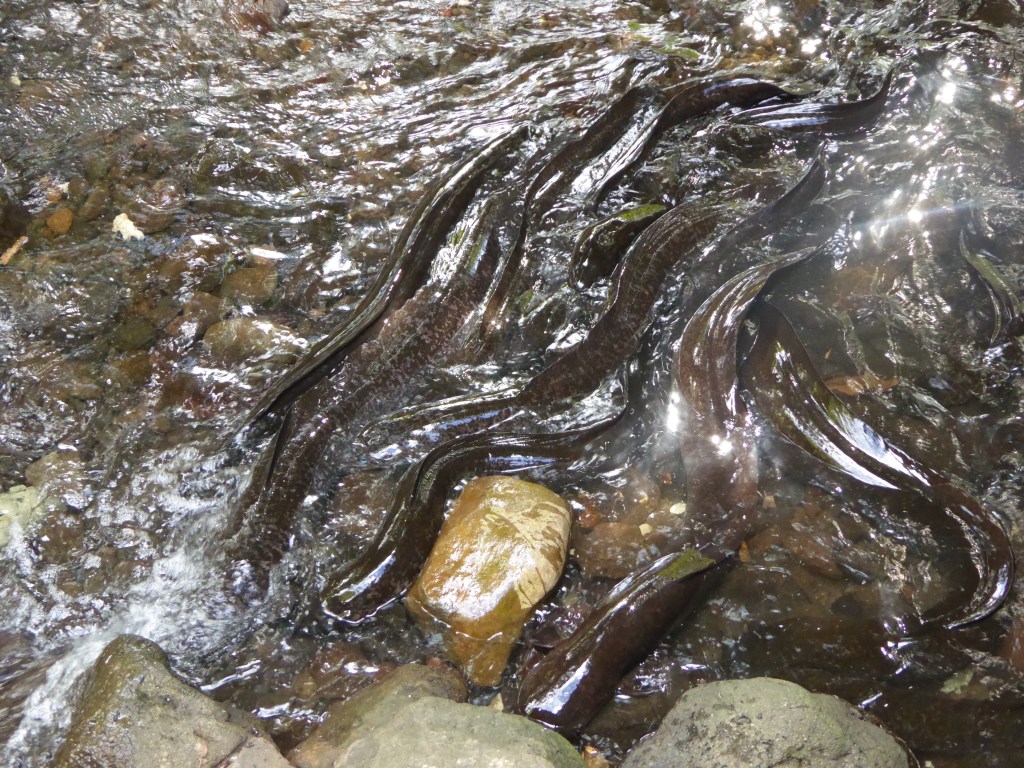
During our expedition in Huahine we saw Blue Eyed Eels. They are fat and large, but are not dangerous like other eels. The natives don’t fish the eels because they are sacred. The eels clean the water of bacteria; therefore, they are very important ecologically. The eels’ eye color changes; they are blue during the morning, then green at noon and grey in bad weather. They live for 80 years.
There are 377 Marais in the little island of Huahine and we visited one associated with a museum. As I said above, the Marais were used for religious ceremonies.
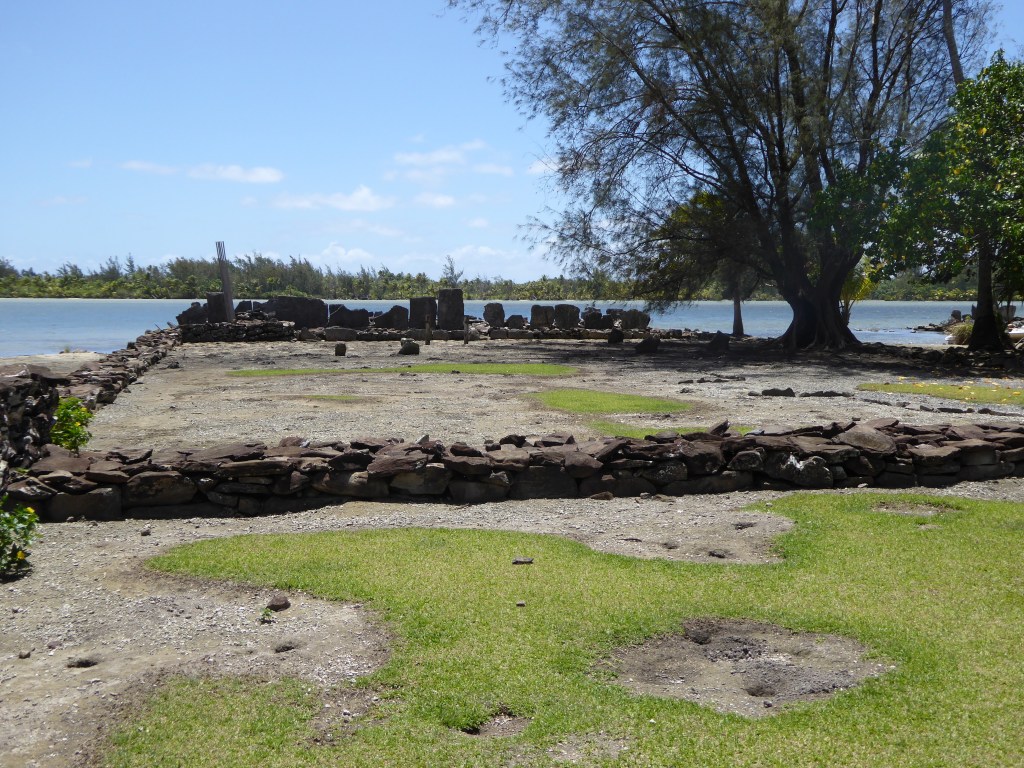
In this island, there were about 7 human sacrifices a year in each Marais. According to our guide, the last sacrifice took place in 1906 when the Priest chose a son of the Royal family. After that the Queen declared that there would be no more human sacrifices. I did not realize that human sacrifices continued into the 20th century.
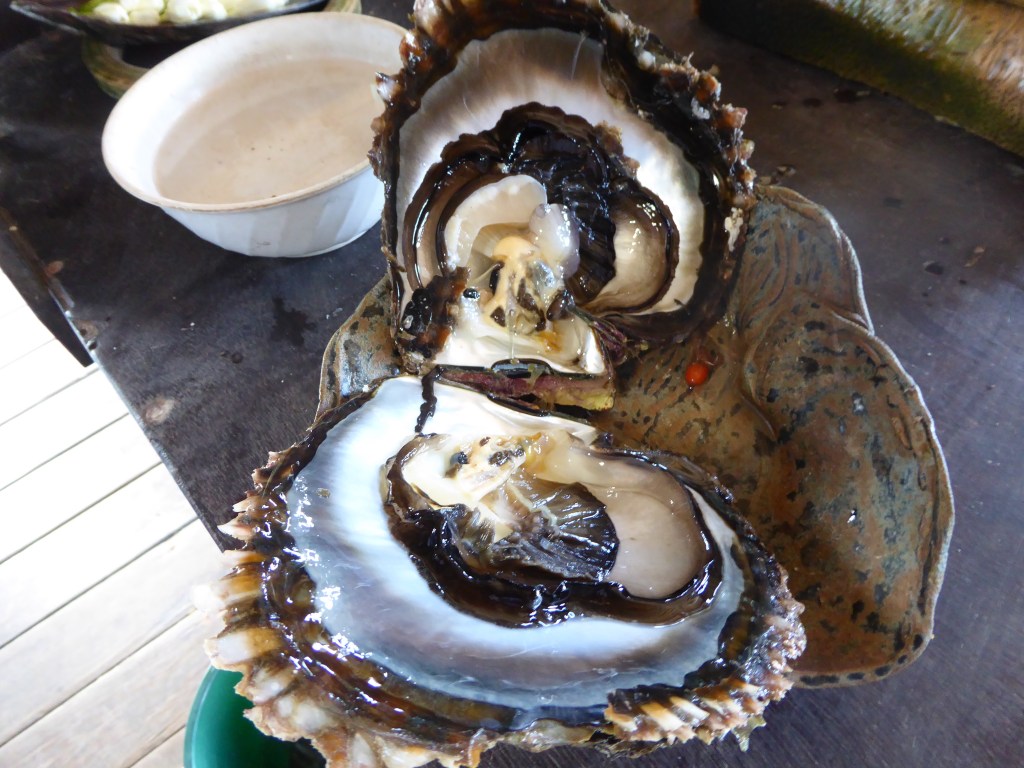
We also visited a house, where the black pearl oysters are harvested. We learned about the process of inserting a shell into a three-year-old black lip oyster. The shell acts as an irritant, therefore, the oyster builds the casing around it. It takes 2 years for the casing to stick properly. The house is over the water on stilts.
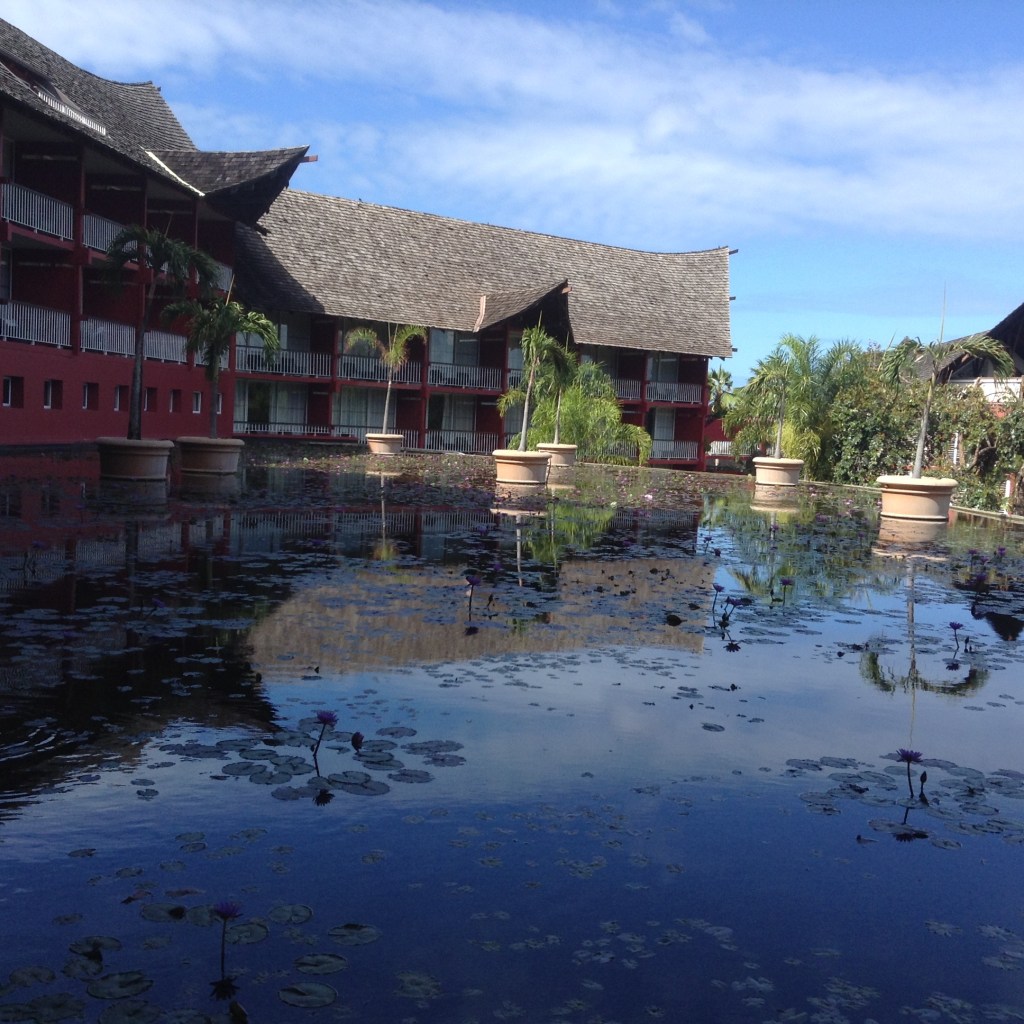
We ended the trip where we began it, in Papeete. Windstar had put us at Le Meridien. It is a lovely hotel. It has a sandy pool/beach which we made use of on our last day.
Final Comments:
- Windstar cruises are well planned and lots of fun. Because the boats are small, they can go to small islands. Also, having under 200 passengers makes for smooth embarkation and disembarkation.
- It is best not to have too many pre-conceived notions. I had expected Tahiti to be more exotic than it really is. Possibly years of French influence lessened the indigenous feel.
- Tahiti is a great destination for a cruise because it is then possible to see many islands with limited effort.
 Nili's Adventure