
My father’s dream was to see China. He never did. Therefore, in 2016 I decided to go in his place.
We visited many wonderful places, but I will focus only on Beijing, Xian, Lhasa, Chengdu, Yangze River, and Shanghai.
Beijing:
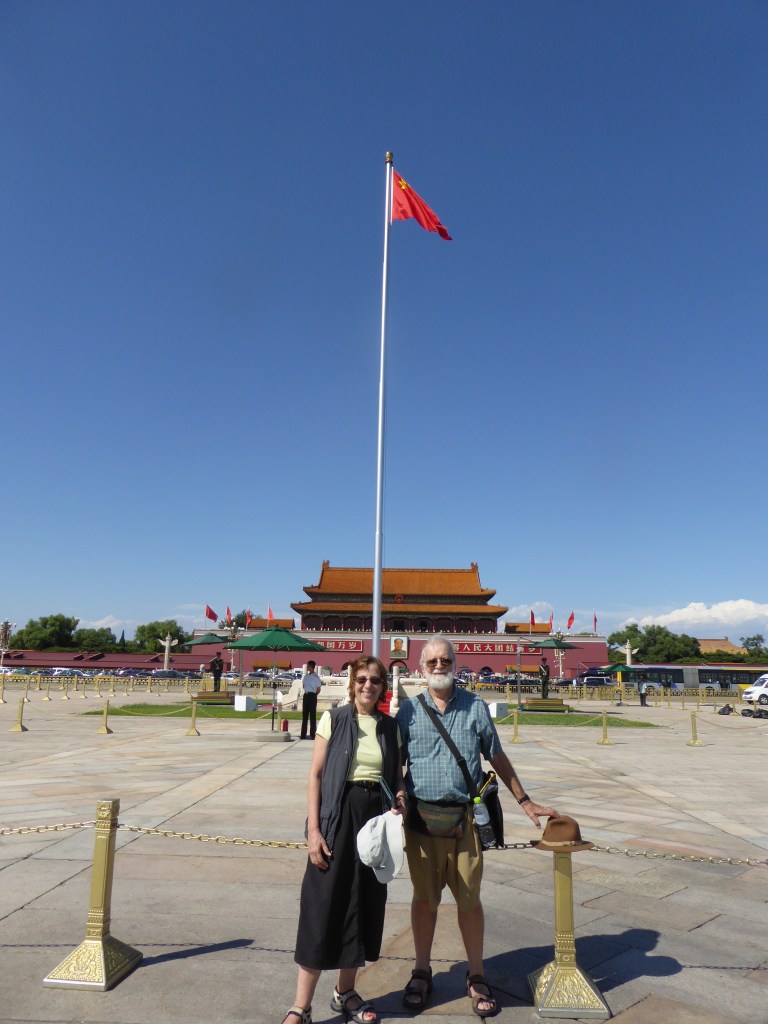
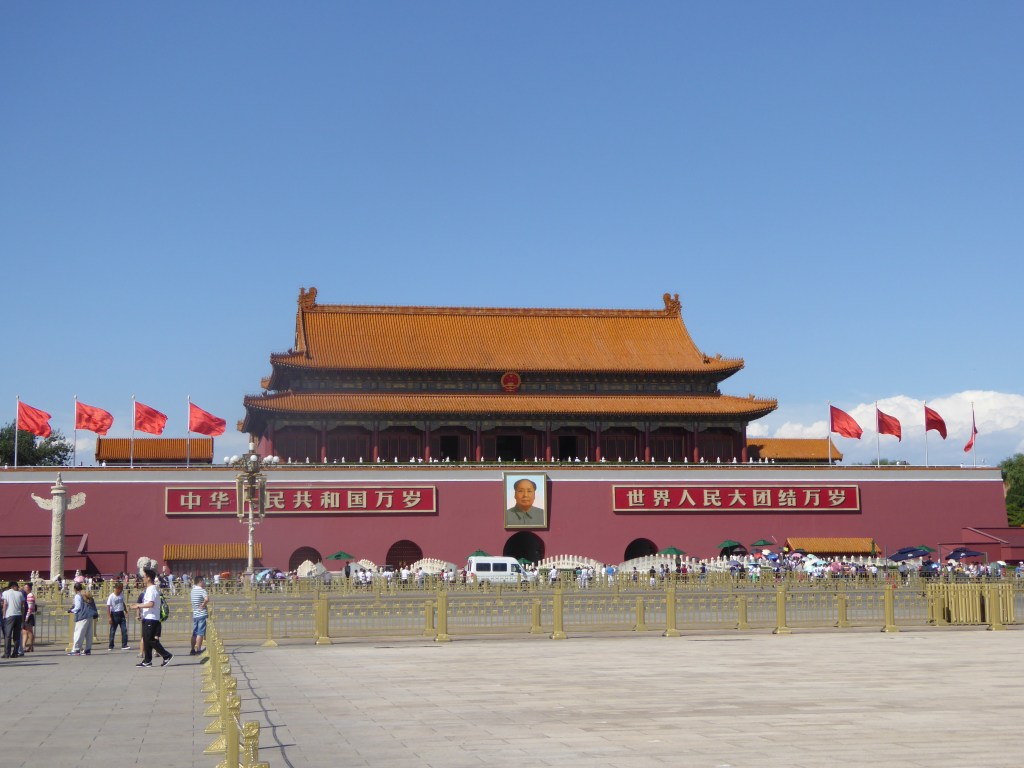
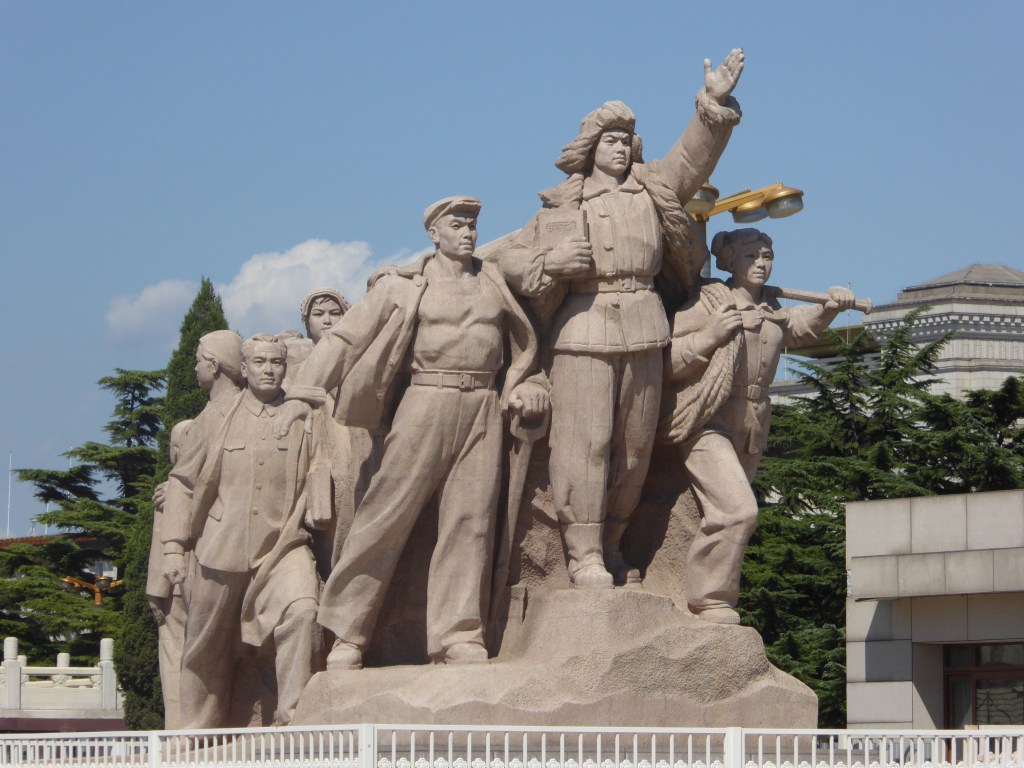
Tiananmen Square is at least three times the size I expected it to be. It stretched in front and in back of the Mao memorial and burial place. It was quiet when we visited, but our guide said that in the morning when the memorial opens, the line to get in is usually over an hour.
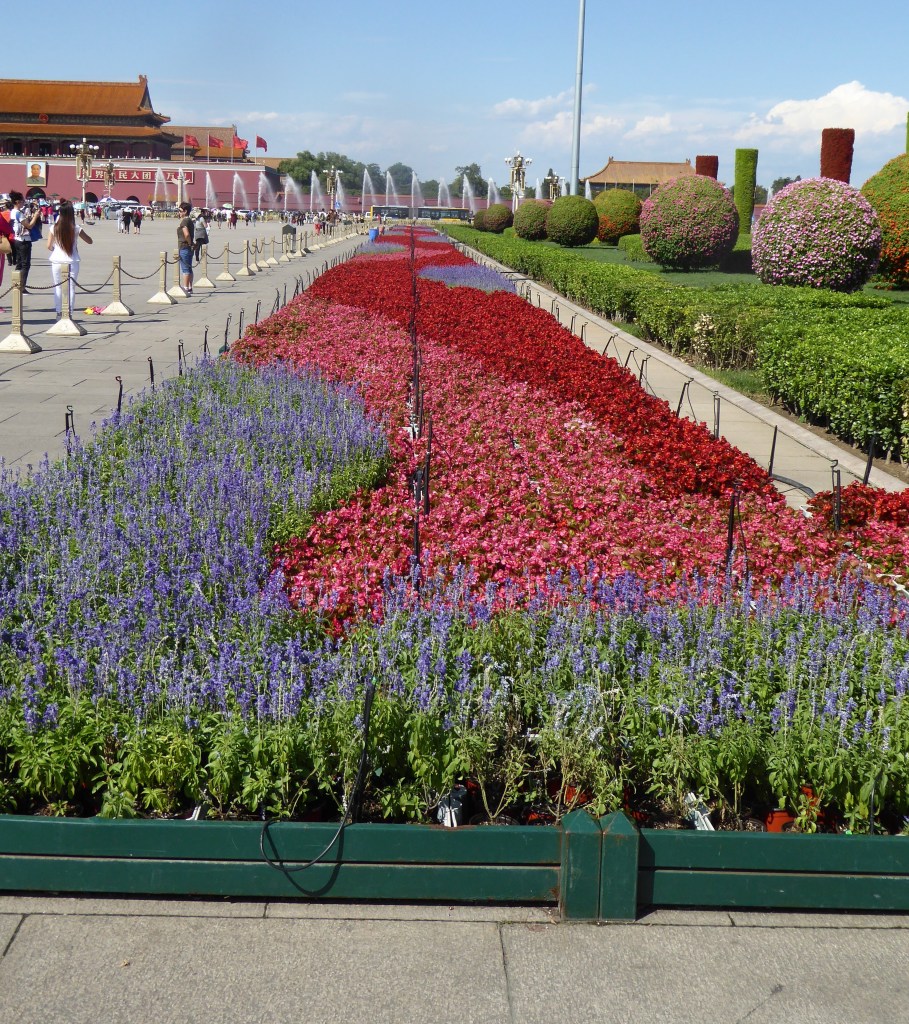
The square behind the memorial has beautiful gardens.
The Forbidden City:
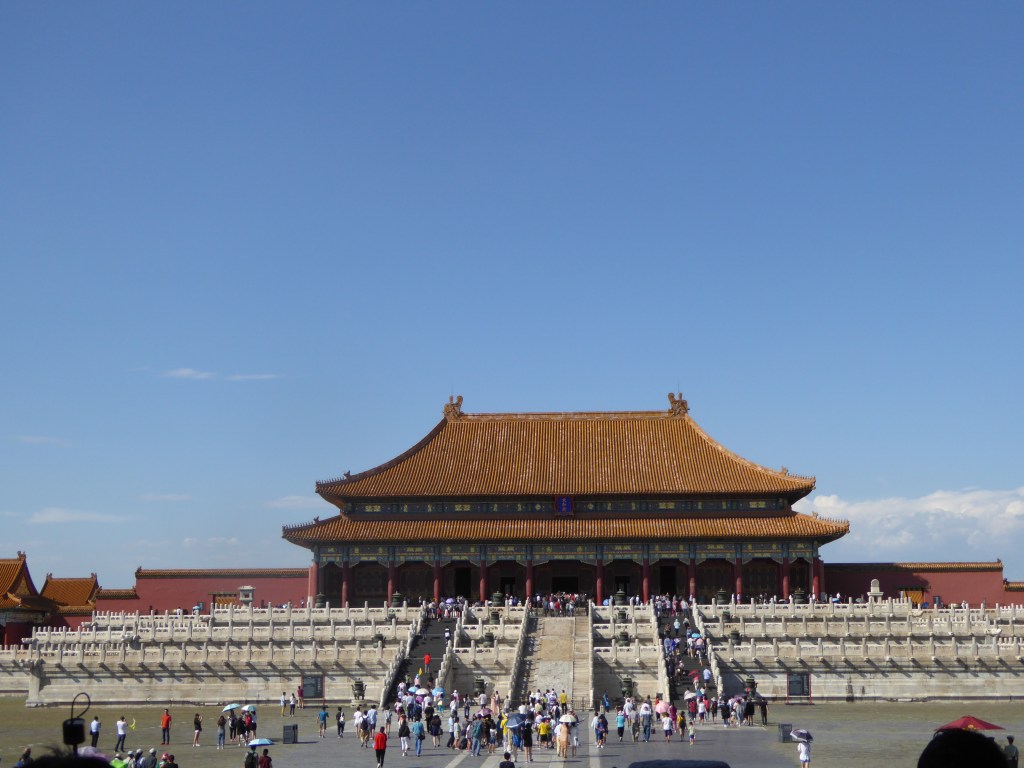
It is an enormous complex. When we entered, we saw a series of large buildings (all wood and beautifully decorated) one after another. The first few were open air, used for receiving officials and for ceremonies.
Behind those were the living quarters of the emperor and separate buildings for the concubines and staff. It went on and on for a Kilometer.
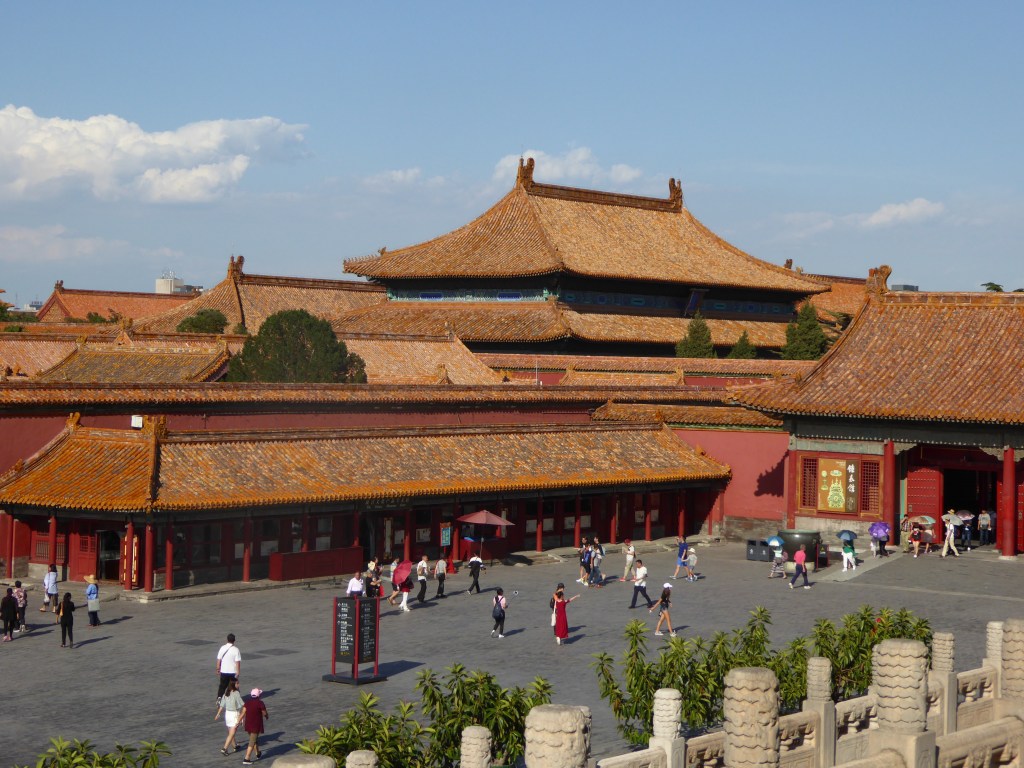
There were many huge copper kettles that used to be filled with water to use in case of fire. 16 of them are gold or gold plated.
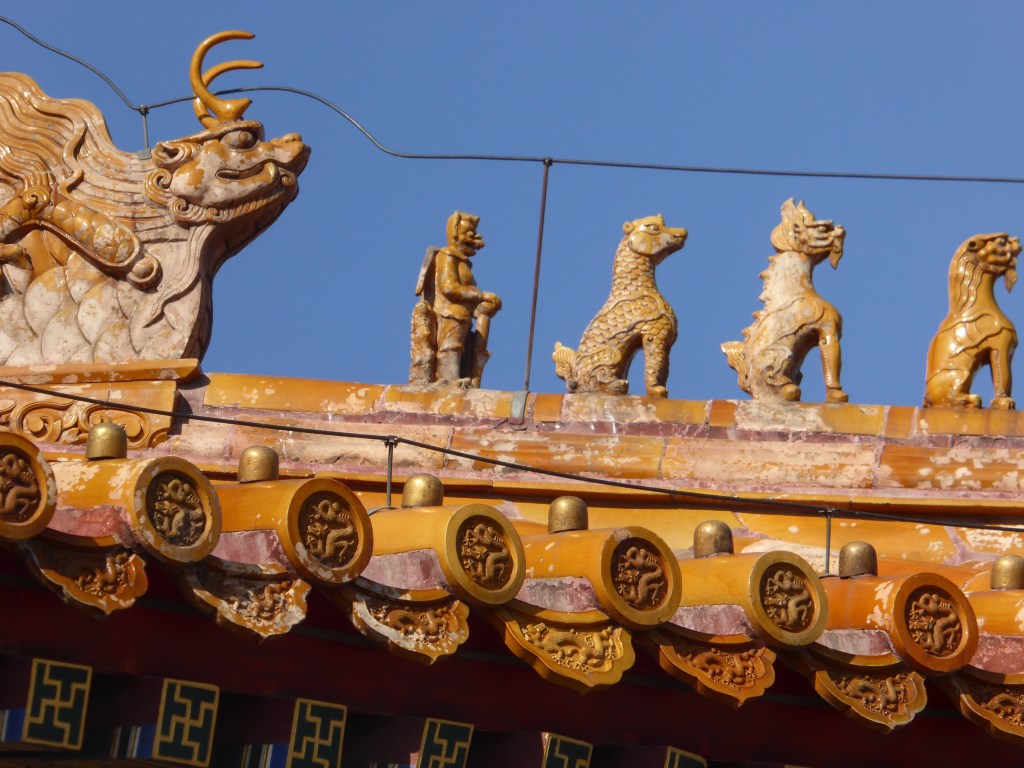
The decoration on top of the buildings consisted of Phoenix, dragons and other animals. They are very beautiful.
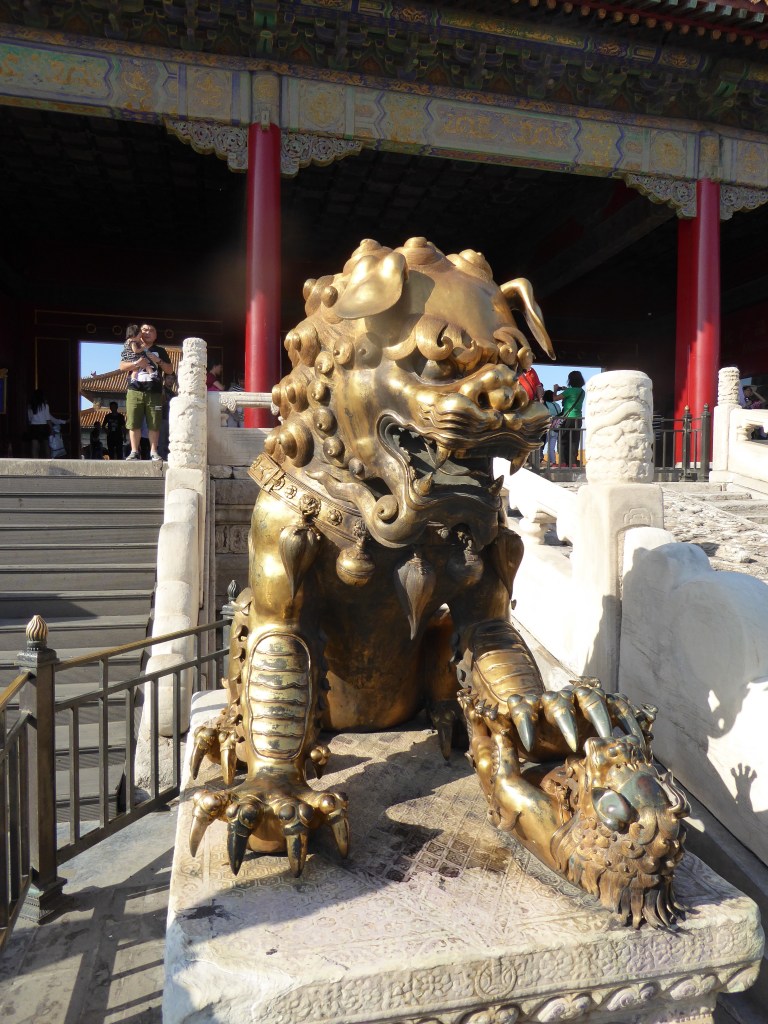
There are also statues of lions. One set has a male and a female. The female holds a baby and the male holds the world.
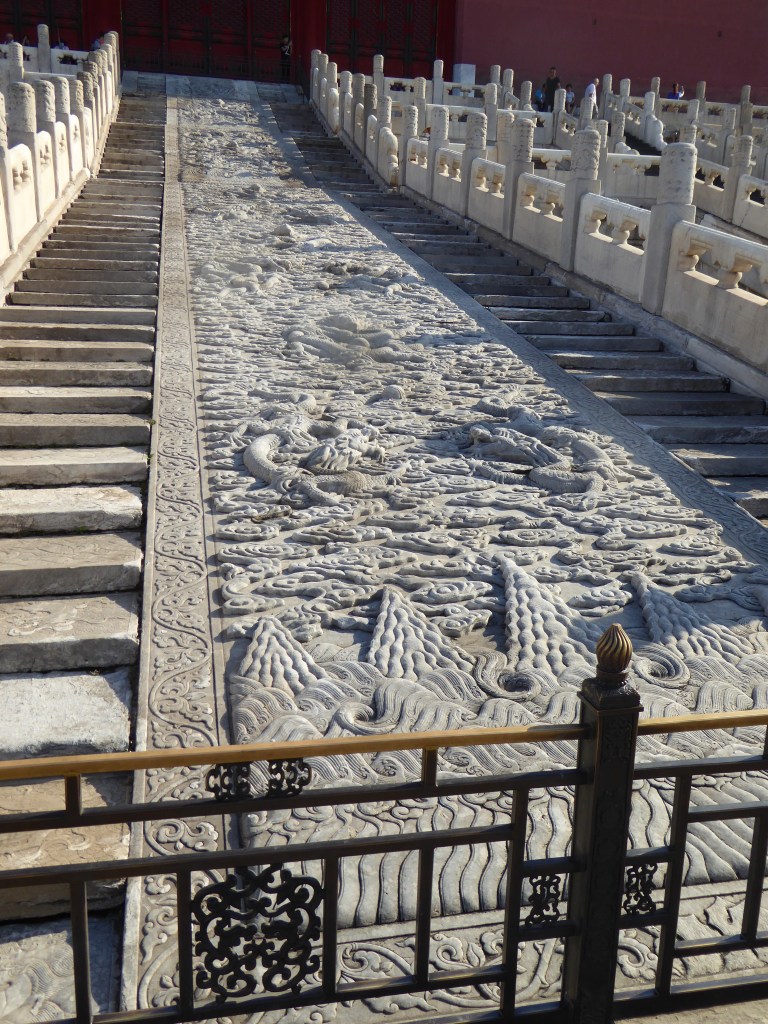
There was one huge slab of stone, beautifully carved, (50x11x5 feet). They moved it in one piece to the complex by wetting the road in winter and sliding it on the ice.
Here are some fun facts: There are 9999 1/2 room units (4 pillars make up a room unit) in the complex. Why that number? Because supposedly there are 10,000 room units in Heaven.
In addition to visiting the above sites, I was excited to eat Peking Duck, in Peking (old name for Beijing) twice. The pancakes were translucent. The duck, fantastic.
Hiking the Great Wall of China:
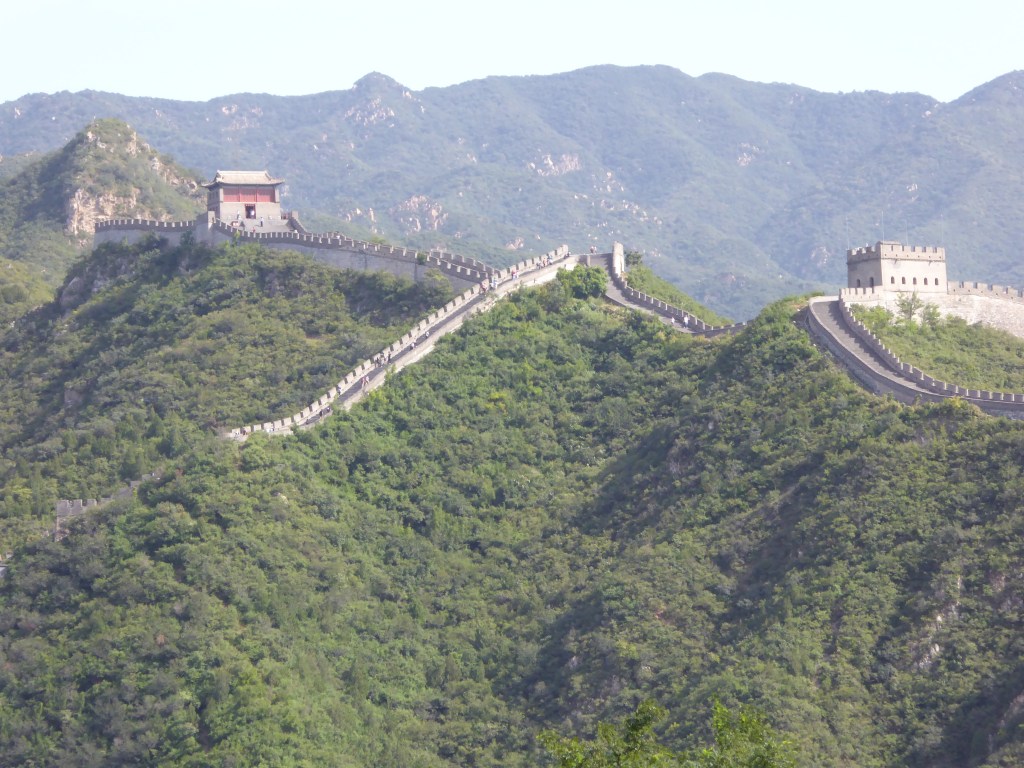
Wow! Walking the Great Wall of China was very exciting. The wall was started some 2,200 years ago, when China was divided into 7 kingdoms. Each kingdom built fortresses for protection at strategic points, which was the beginning of the wall. Eventually the forts were connected, and so the Great Wall was born. Only sections of it have been restored and are still walkable.
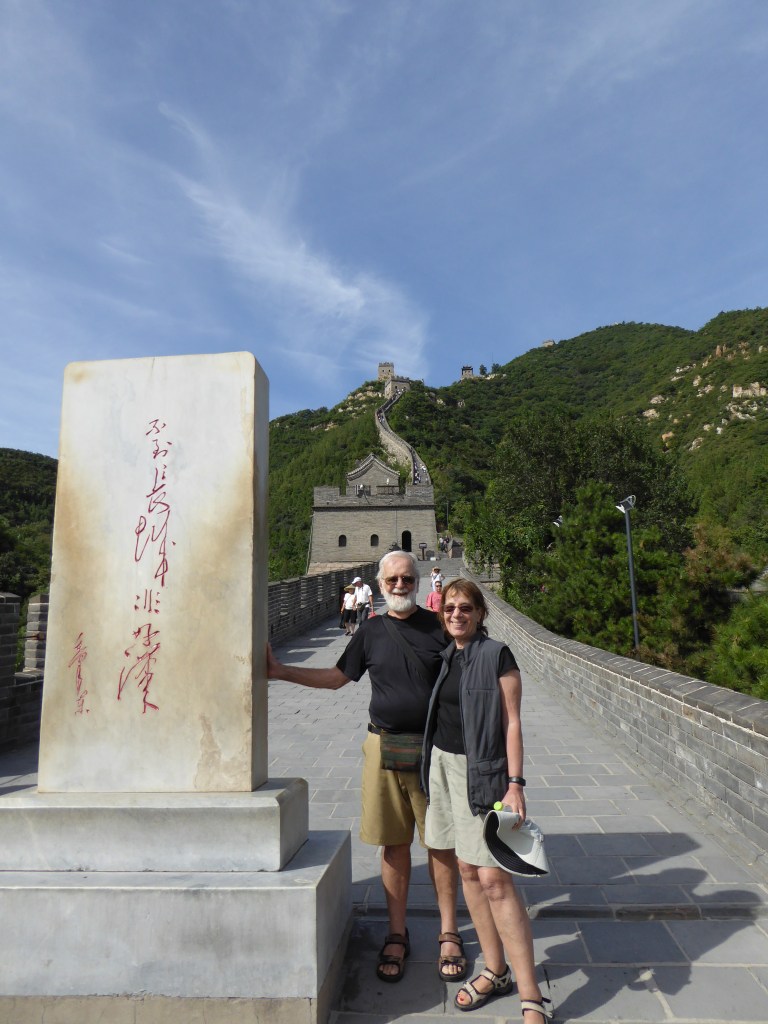
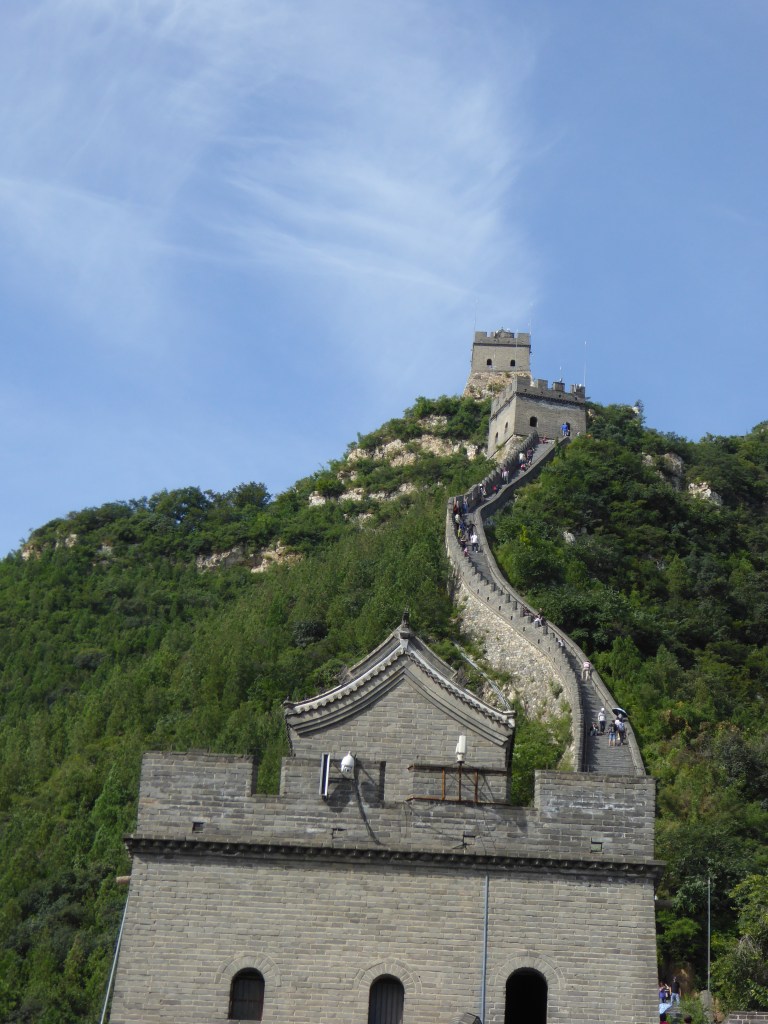
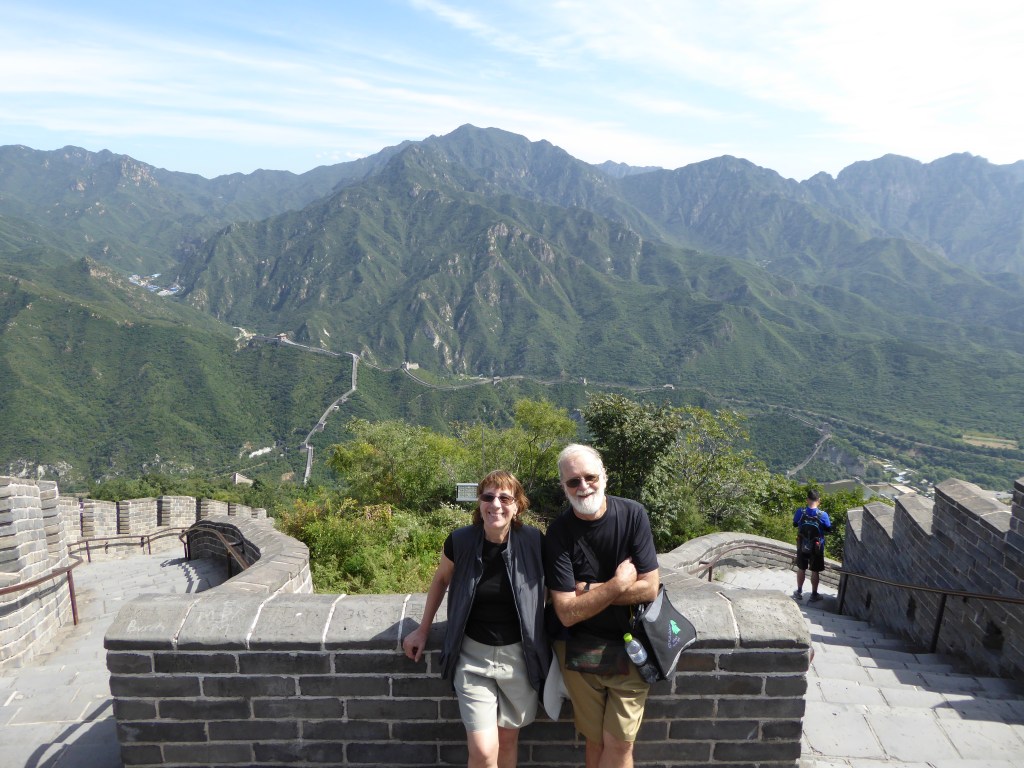
We had a choice of a short climb or a high climb. As usual, I can’t resist and we did the high section. The mountain views were incredible. We climbed about 1200 feet on uneven steps, with some being only 2 or 3 inches high, others were 18 inches. But there was a railing, nice breeze and it was early in the morning, and a marvelous climb. No matter how many pictures you see, you can never really understand its magnificence.
Xian – Terra Cotta Warriors’ Tomb
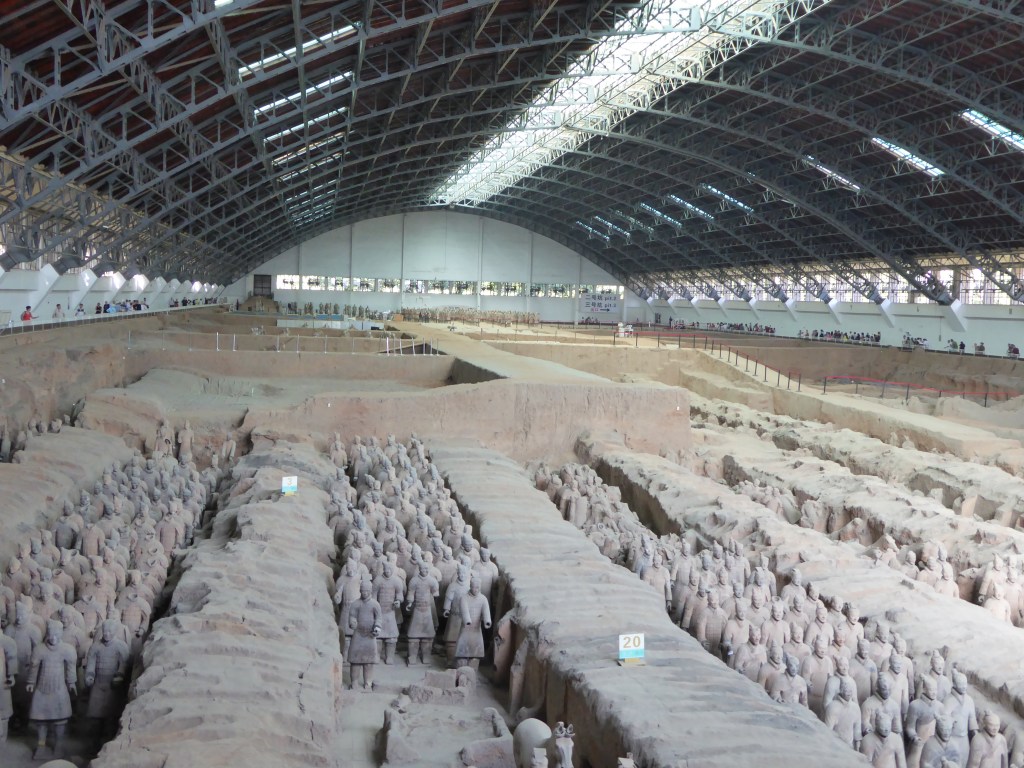
These warriors are considered the 8th wonder of the world. The word impressive doesn’t do them justice. I was truly amazed when I first saw these excavated terra cotta figures of soldiers, horses and carriages.
History: King Qin Chi Huang of the Quin dynasty, (pronounced Chin), took the throne at age 13, and started to rule at 21. He unified the country by conquering the other kingdoms and declared himself, emperor. He unified the language as well. He began to build his tomb at age 14, but it was not done when he died at age 51. His son finished the 56 square kilometer tomb, 3 years later. The king had ordered 7,000 warrior statues to be formed and placed in the tomb to protect him.
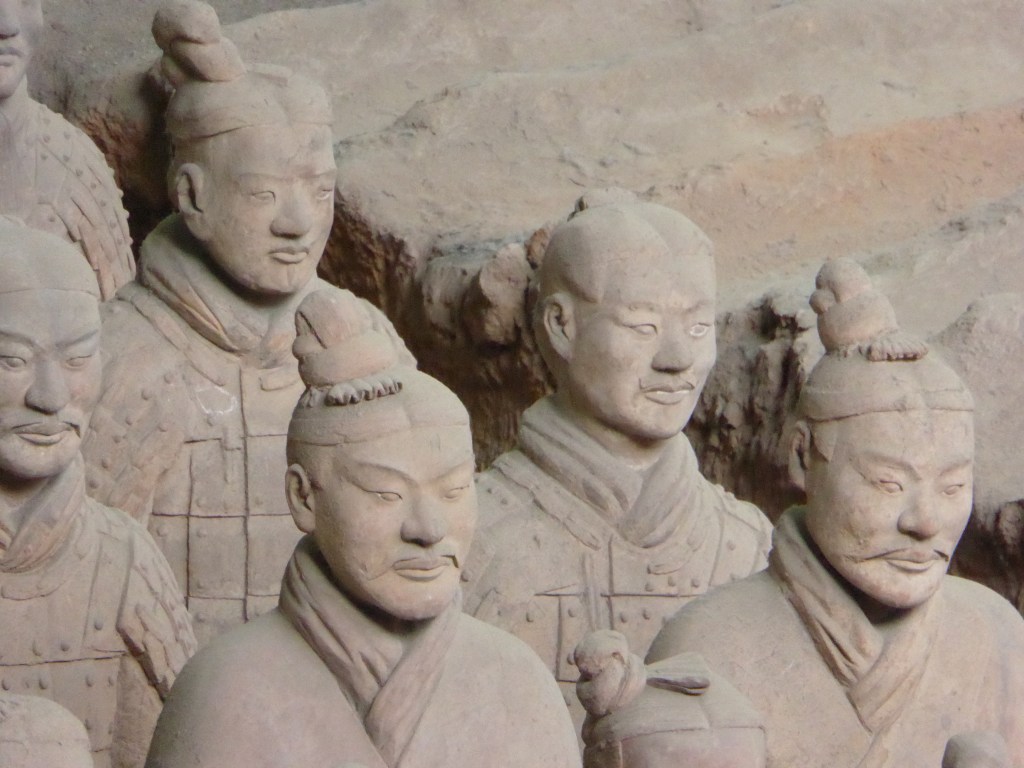
The statues are larger than men and each face is individual.
Before this time, when the emperor died, he was buried with his actual soldiers. But the terra cotta soldiers replaced real people. There are also horses and a couple of bronze chariots.
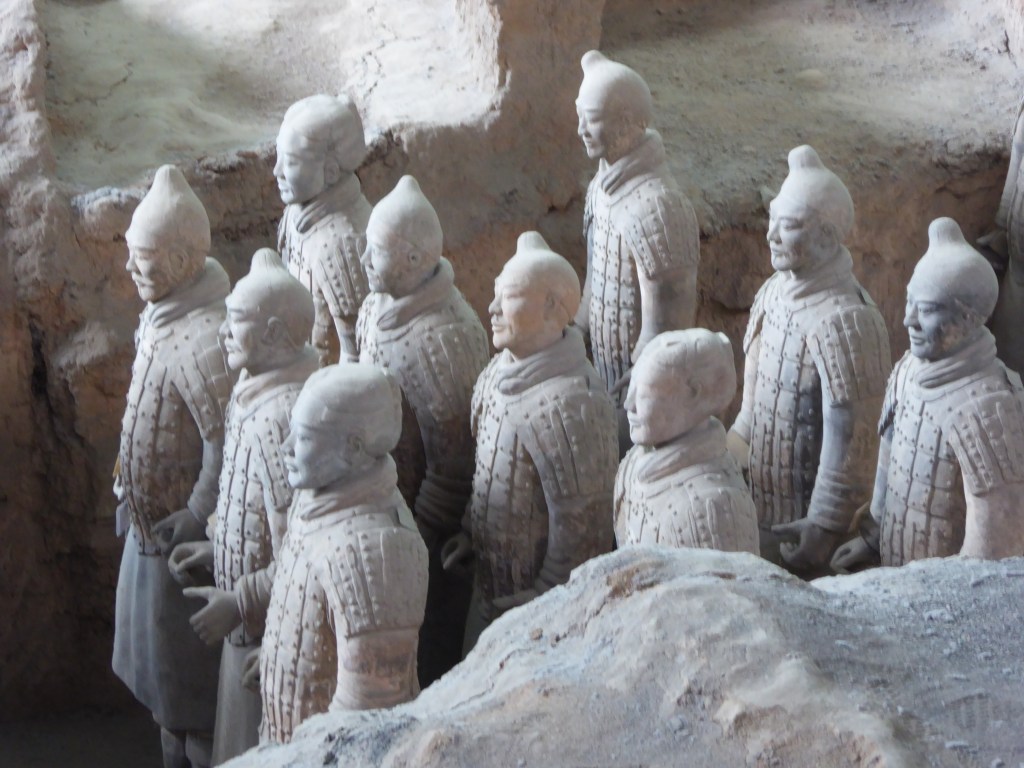
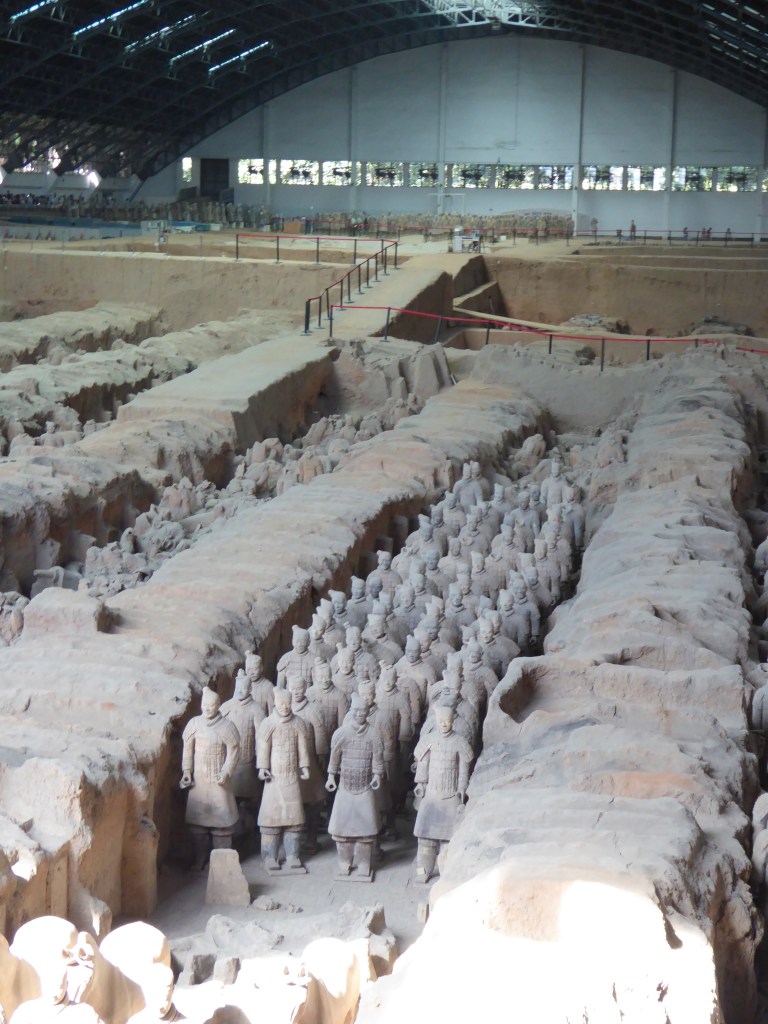
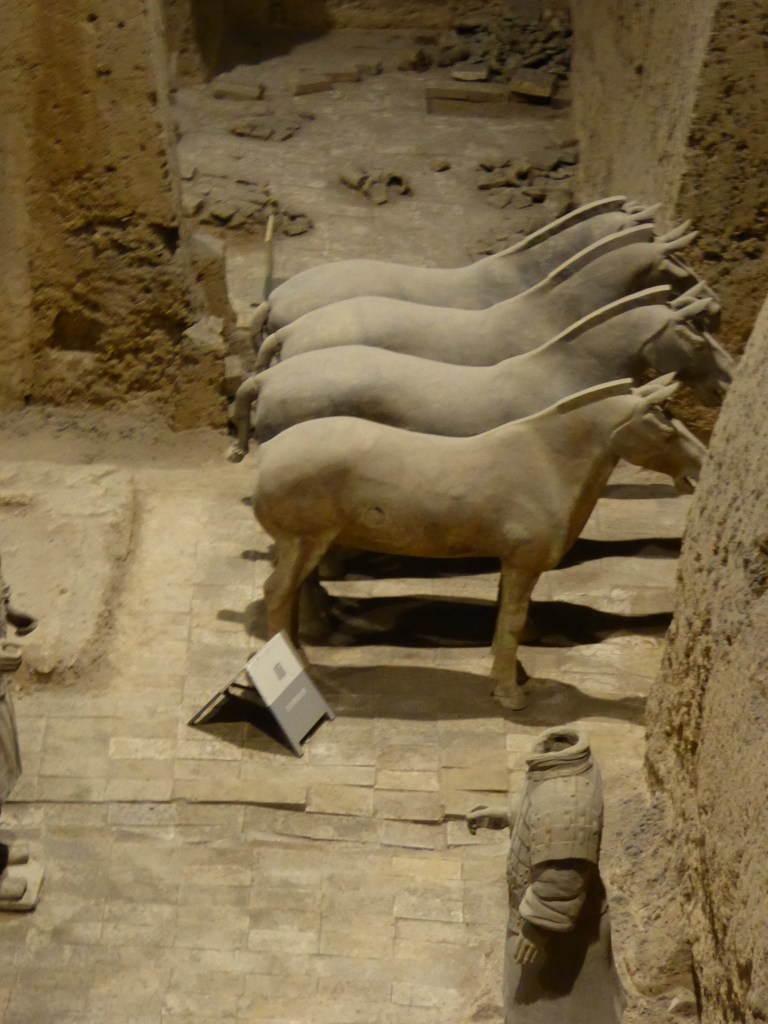
The Warriors were found in 1974 when a local farmer was digging a well.
When the area was first excavated, the warriors had bright colors on the clothes and bodies. Unfortunately, the air destroyed the colors.
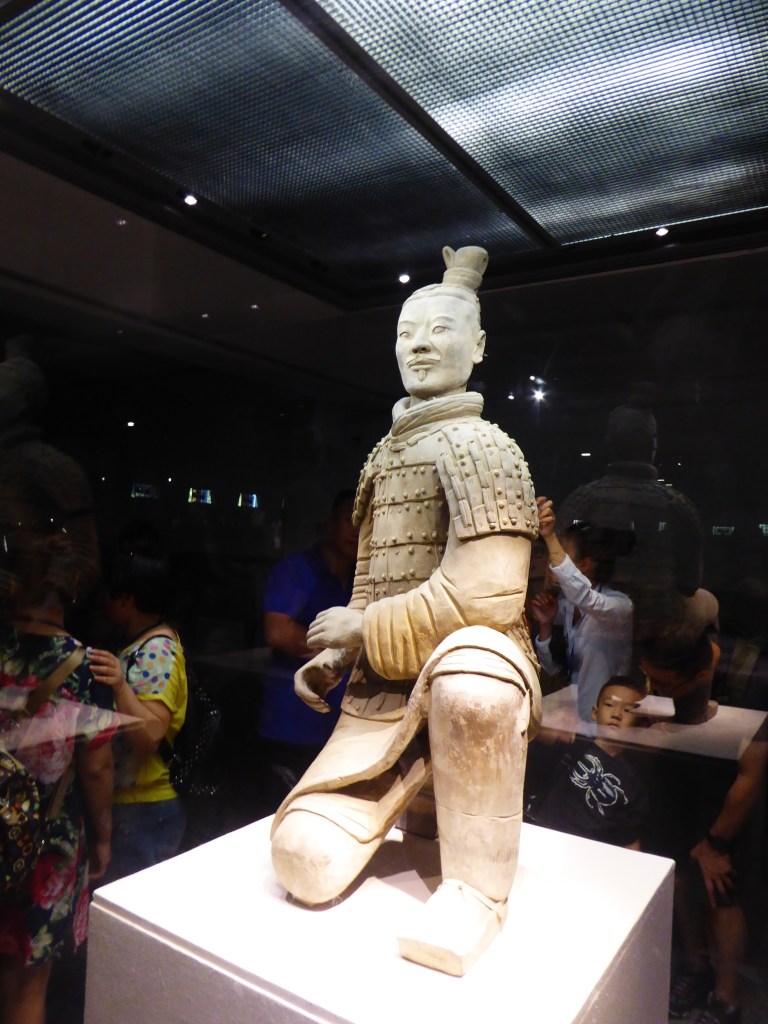
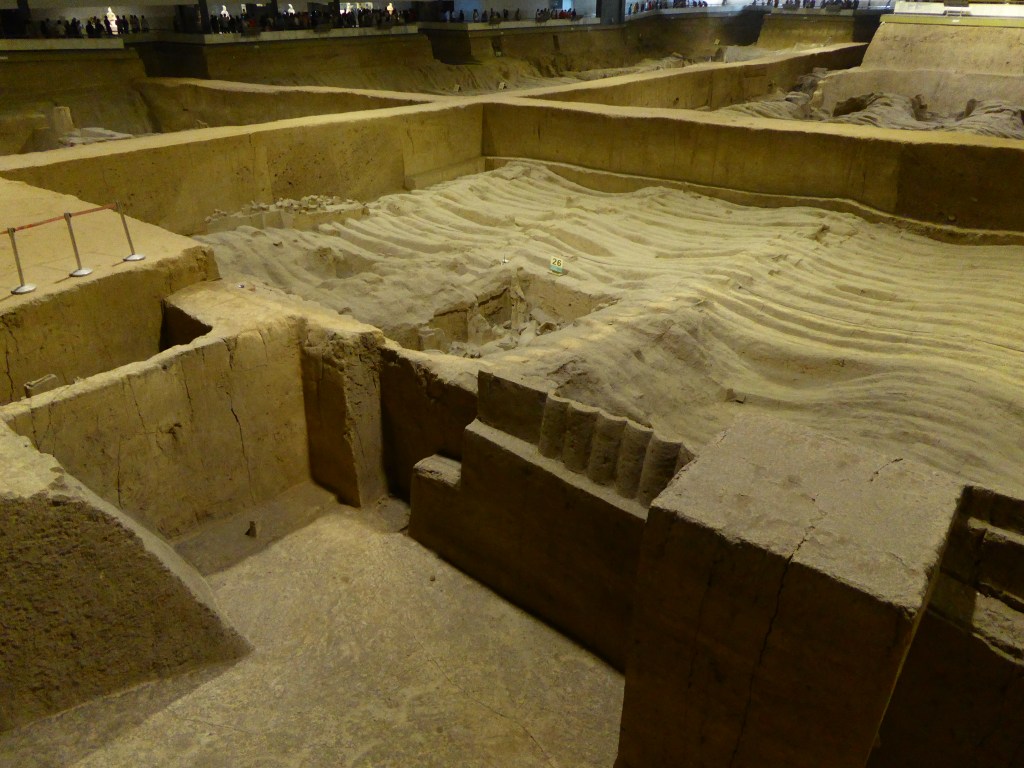
Luckily only some of the area has been excavated and archaeologists hope for better techniques before excavating the rest of the tomb.
Originally all the soldiers were standing facing North, which is where an invasion would come from. The other three sides of this area were surrounded by mountains.
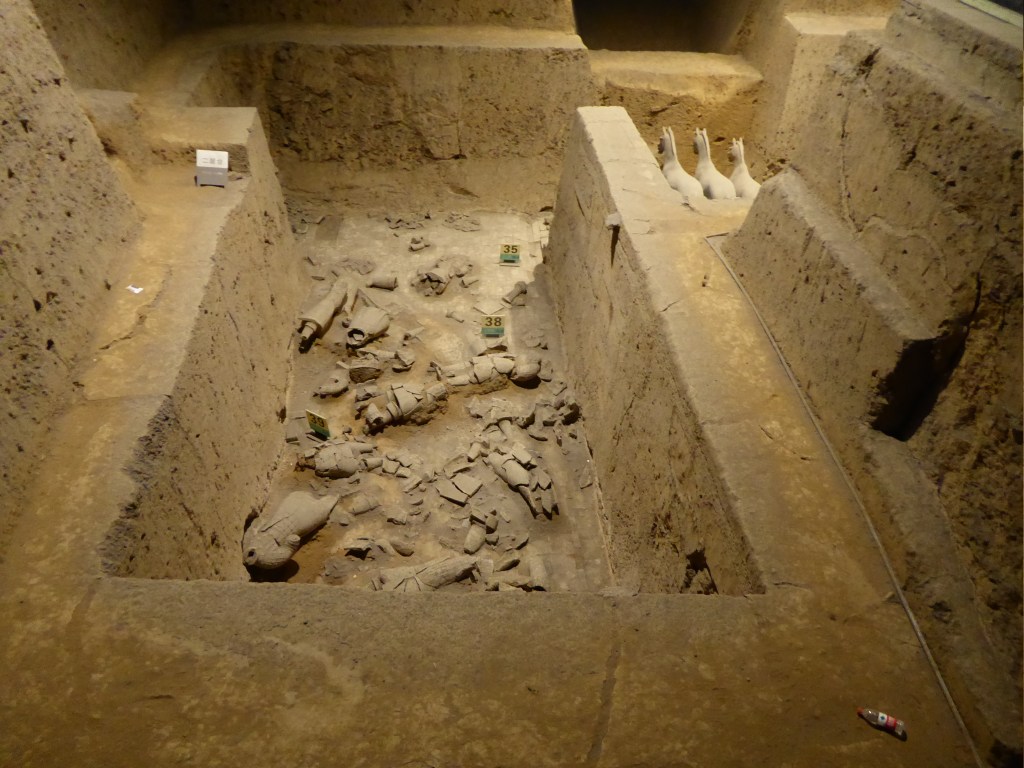
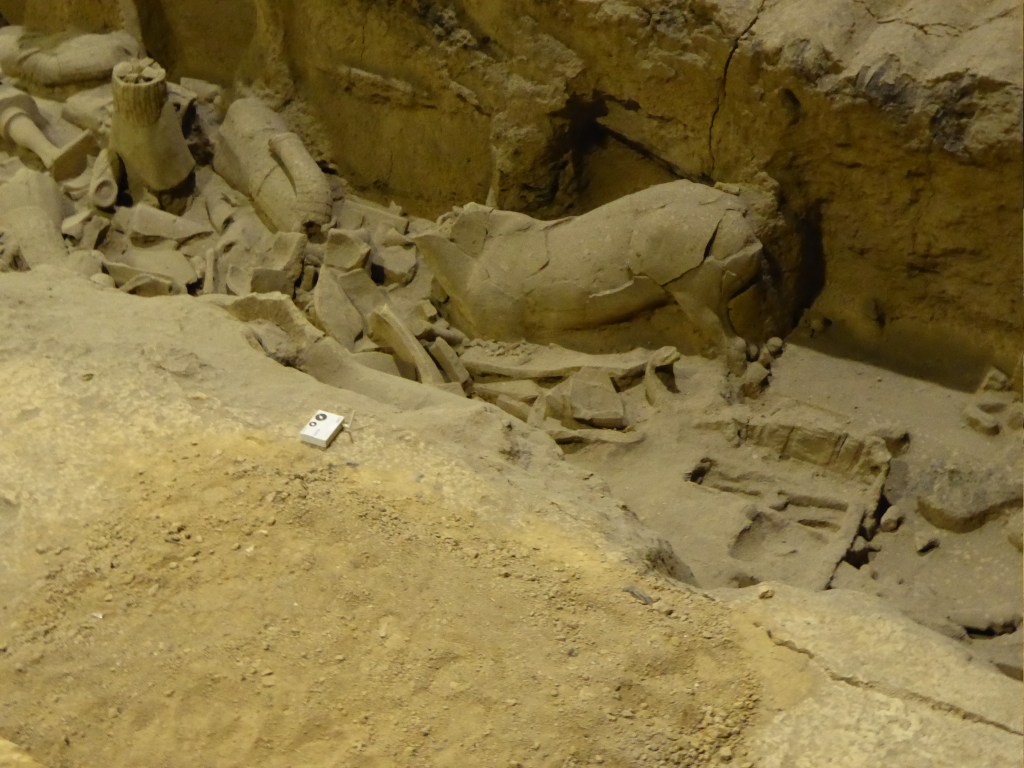
But most of the warriors were found on the ground, often in pieces because after the emperor’s death there was a peasant rebellion. The Warrior pit was discovered and the rebels took the weapons that were in the warriors’ hands and knocked down many of them. They then set fire to the roof and wooden pillars that held the roof. But luckily the terra cotta did not burn.
Lhasa, Tibet:
We stayed at the beautiful Hotel Shangri La. Lhasa is at 10,000, therefore, the hotel has an oxygen room in case one gets woozy or gets a headache. In addition, at check in, we were warned not to take too hot a shower or to be too active the first day. The hot shower would open our pores and we would lose oxygen. The young man who took us to our room was hoping to get to NYU. He was taking his SATs and has obviously worked on his English, because it was better than anyone else’s that we met in China including our guides. He was impressed that such old folks like the two of us were traveling as far as Tibet. He said not many tourists our age come.
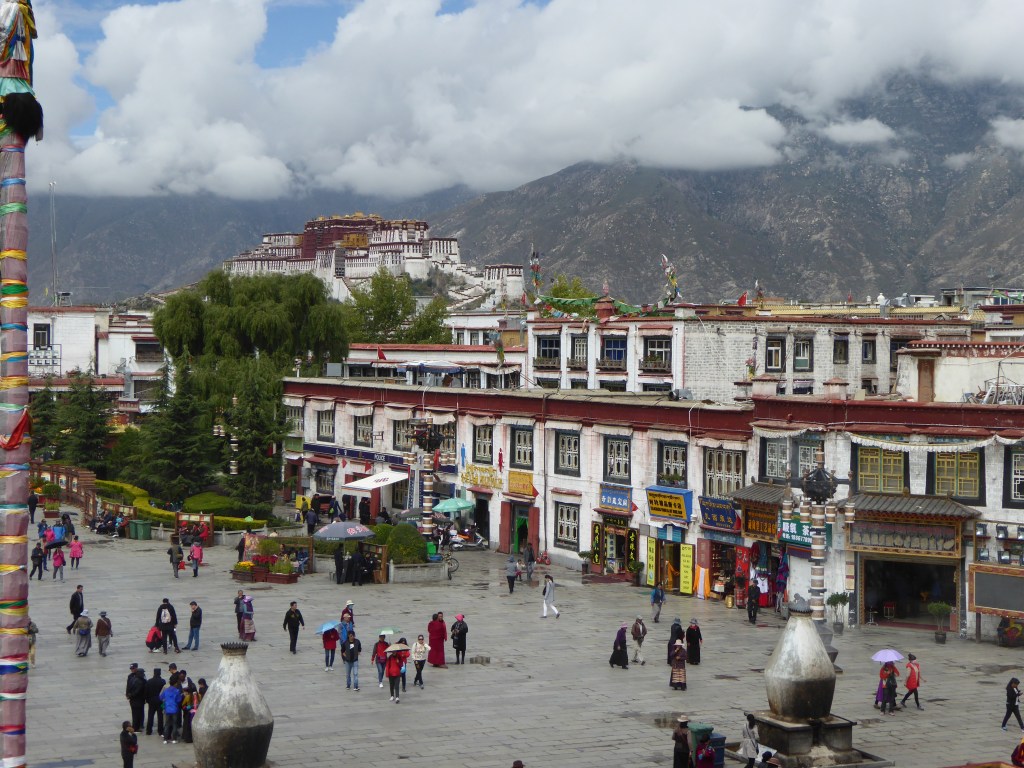
Being in Tibet is so much more foreign than being in Beijing or Xian, which look so modern with high rises. Lhasa is made up of mostly 2 or 3 storied houses in a distinct style. The buildings are not as beautiful as the architecture in Bhutan, yet similar. In the background is the Potala Palace.
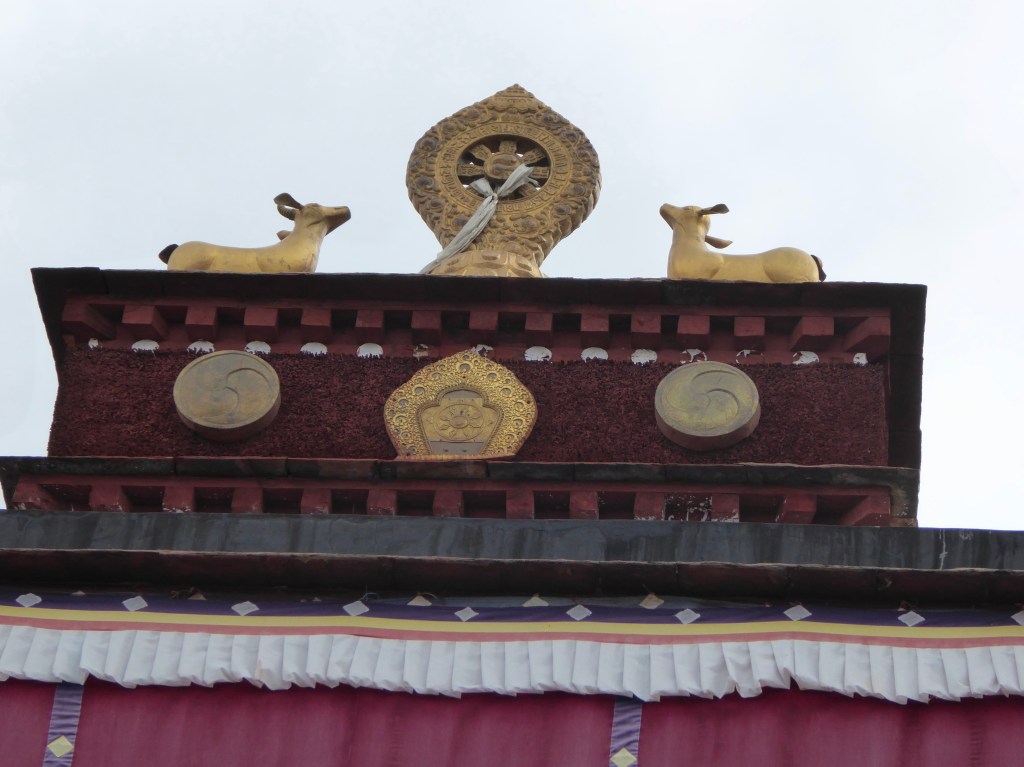
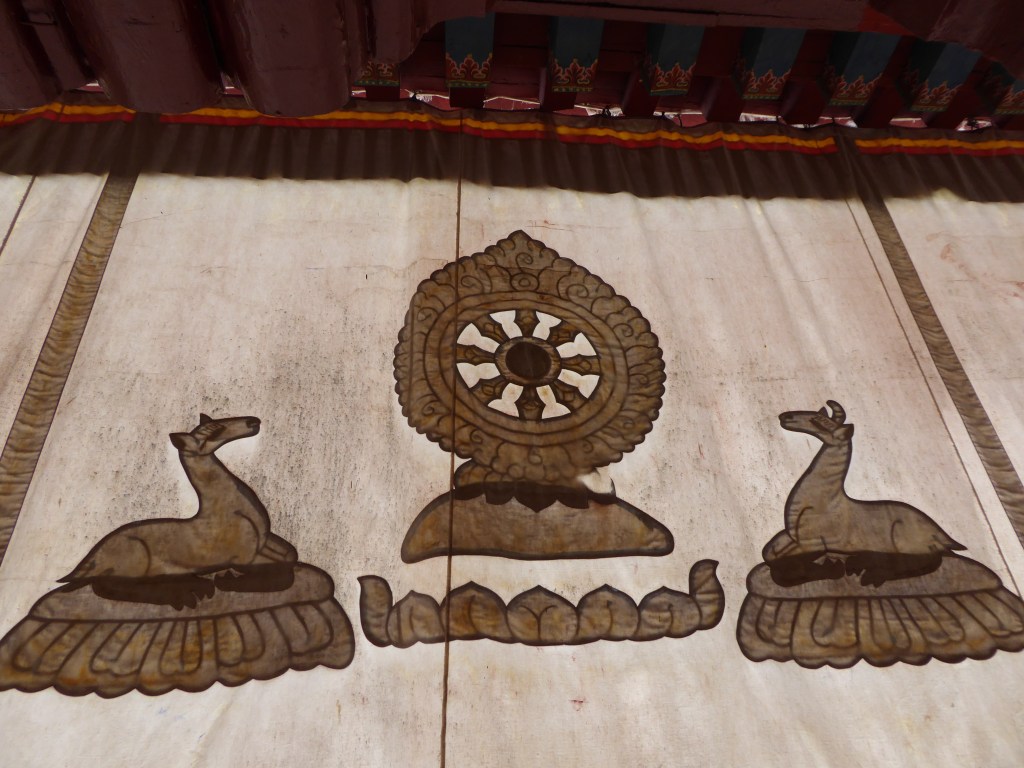
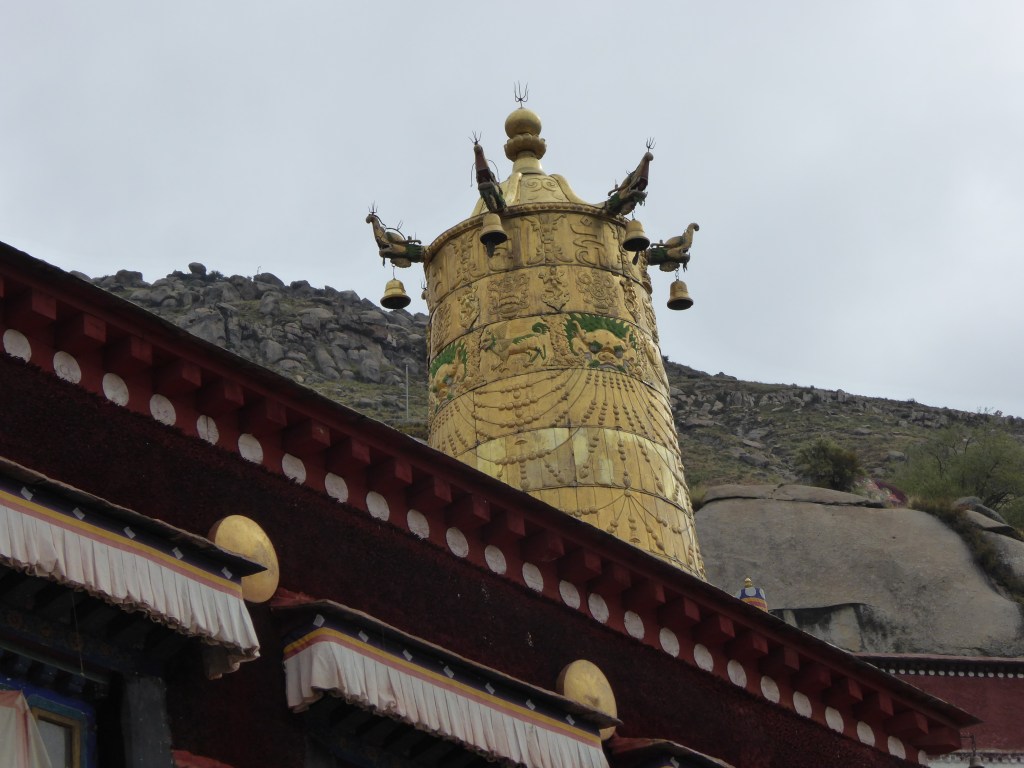
We started our touring at the Sera Monastery, which was built in 1419. Up to the 1950s there were 8800 monks living in this monastery, now there are only about 200 monks. There are two reasons for this: 1) During the Cultural Revolution (when China went after religious institutions and killed or put in jail intellectuals), it began limiting the number of monks it would allow. 2) public schools were opened so that parents began to send their kids to school rather than to the monastery, which had been the only place for kids to be educated for hundreds of years. In the past the children would enter the monastery at age 5 or 6 and live there as monks until age 18. At that time the young men would decide if they would continue to be monks or go into the world. If they decided to be monks and then changed their mind, and left, they could not return. There were also nunneries for the girls to learn in.
While we visited, the monks were chanting, ringing bells. Most of the monks were sitting on low benches, while the most important ones were a bit higher. The benches were covered with embroidered cloth with an assigned square for each monk. There were no children monks in the room.
The Jokhang Temple
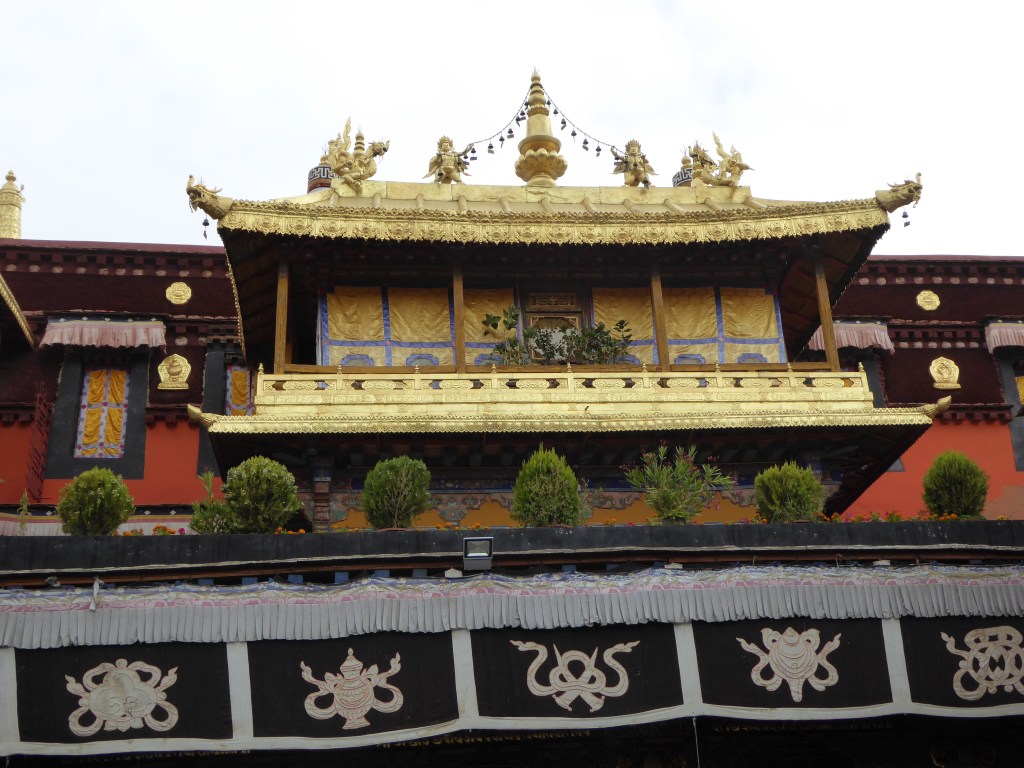
This temple was built in 647 by King Songstan Gambo who unified the country and was therefore very powerful. He made alliances with Nepal and China and married a princess from each country, (plus three Tibetan wives). The images in the temple were from 2,000 to 500 years ago. They are all unique with different poses and colorings and hats. The temple had over 1,000 images. No photos were allowed inside the temple or the monastery.
I noticed that large numbers of Tibetans were pouring into the square in front of the temple. The women were mostly in traditional dress, (wrap around skirts). They came on a pilgrimage to the Jokhang Temple.
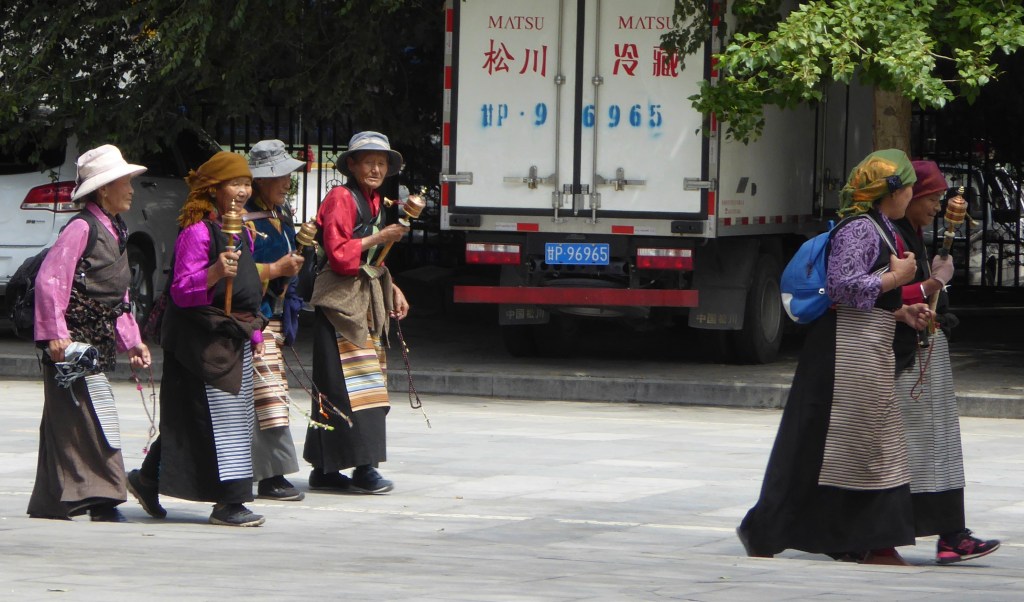
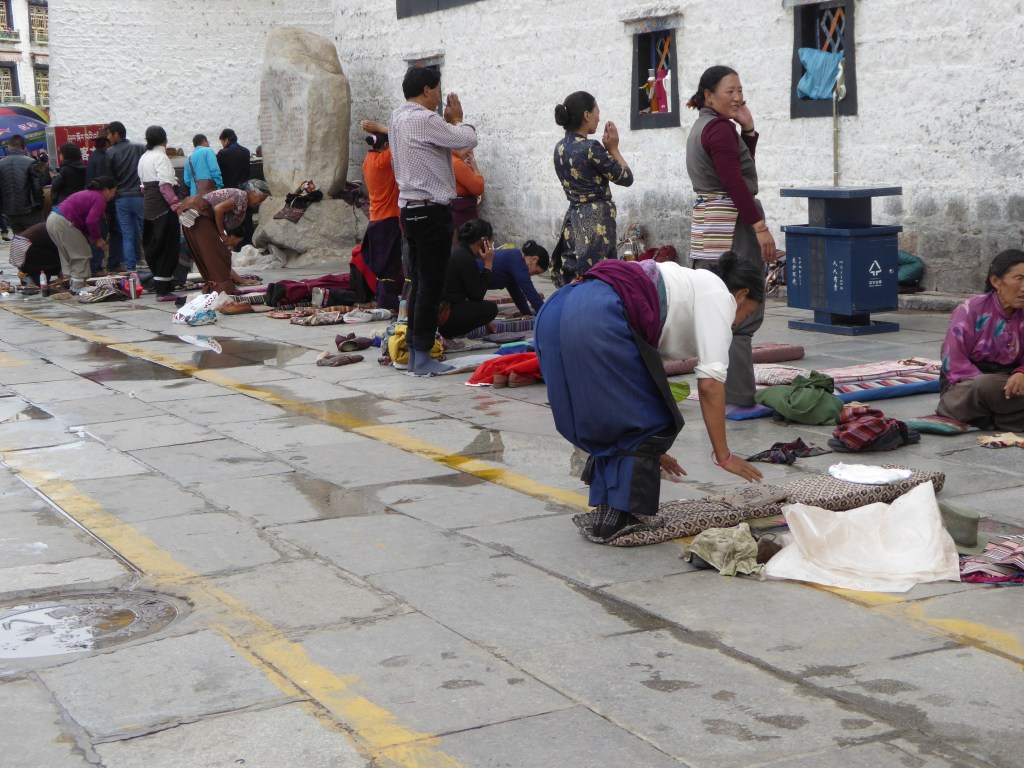
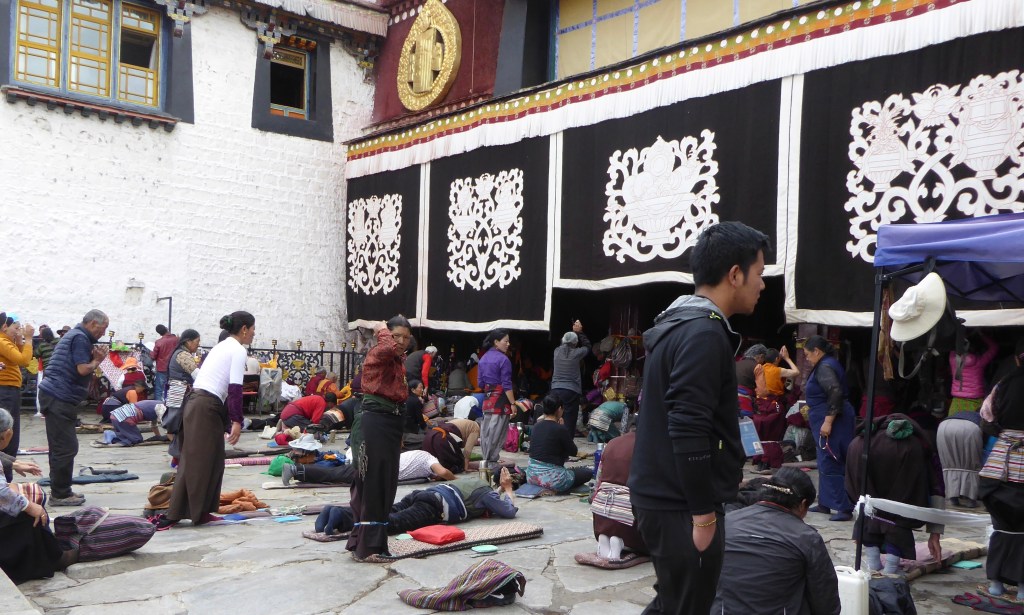
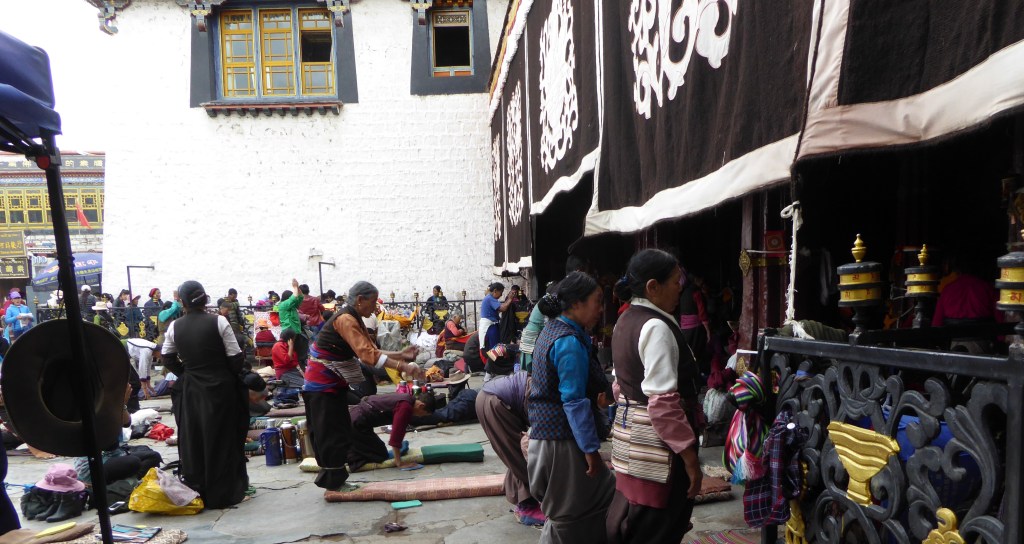
In front of the temple some 100 men and women were praying by doing what I can best describe as a yoga move where you start standing up and roll down to a prone position in one smooth movement. The women had bindings between their knees and their ankles, which prevented their skirts from flying up in the air as they got down.
The Potala Palace:
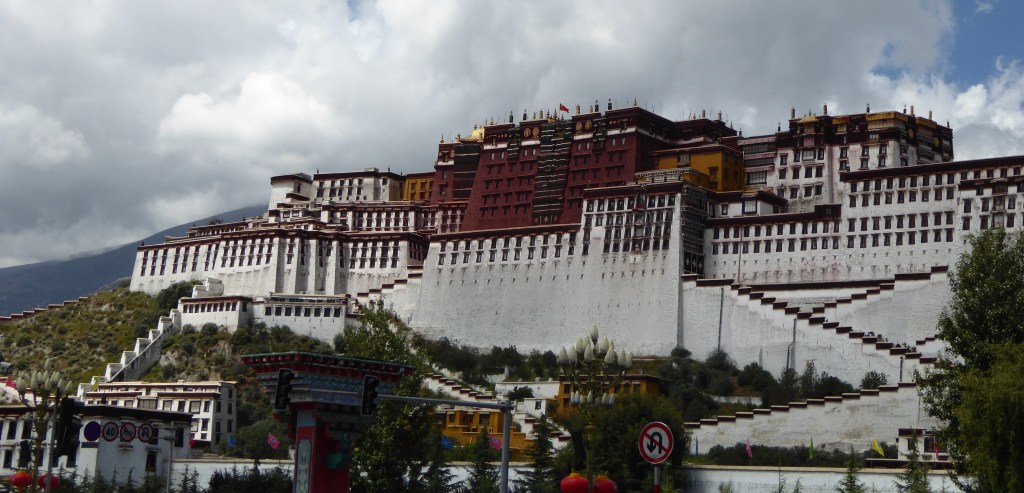
If you see a picture of Lhasa, it will most likely be an image of the Potala Palace. It is built on a high point in town and is massive. King Songstan Gambo built the palace. In 1640, the very powerful 5th Dalai Lama extended the palace to its present size. The palace became the residence of the Dalai Lama (continued such until the current Dalai Lama fled to India). It was the religious and political center. The palace is divided into two sections: white for political and cultural and red for the religious.
It is 1137 meters or 13 stories high and has 1,000 rooms. 1,000 is a lucky number for Buddhists.
There is such a demand to see the palace, that we got timed tickets. We had to enter the palace grounds at 3pm and be ready to start the climb by 3:30. During the 1/2 hour we were free to look at the museum exhibitions on the ground floor.
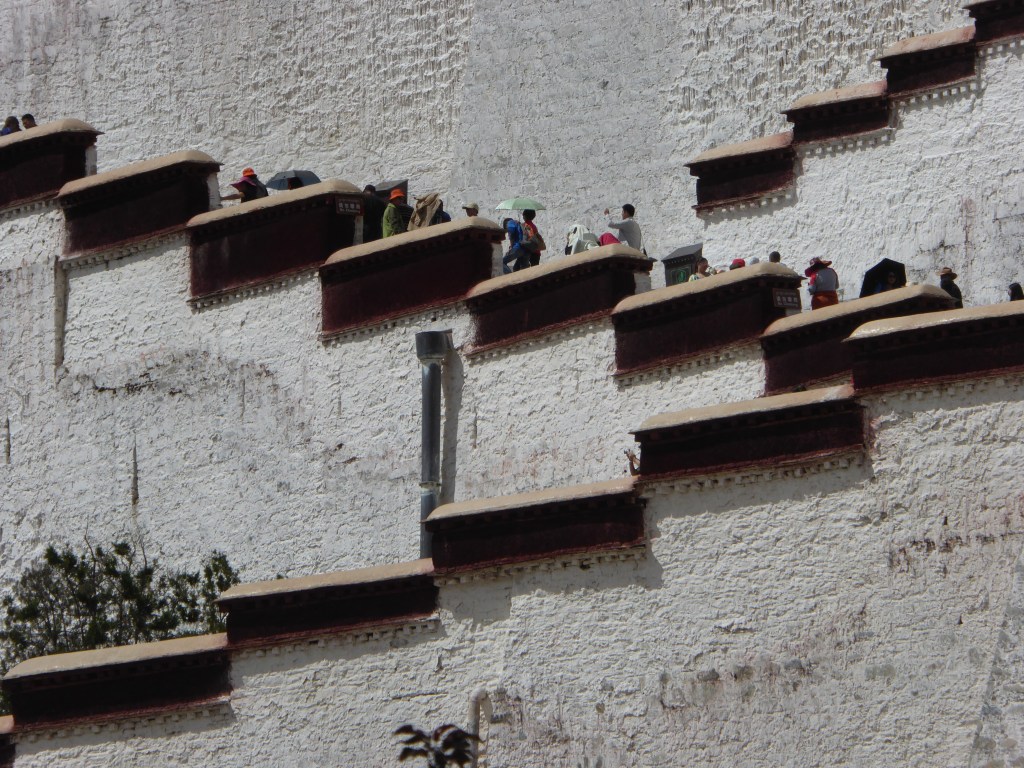
Then we started climbing. I needed quite a few rest stops because we were not acclimated to the high altitude. Also the steps were uneven, especially going down. About half the climb was outside in the sunshine and rest of the climb was inside the palace.
We had one hour to visit the rooms. We had to be sure to be done in an hour or our guide would have been fined. It would not have been a problem to see the rooms in an hour, except that there were so many people, therefore we moved very slowly, especially up and down super steep stairways. However, it was an amazing hour.
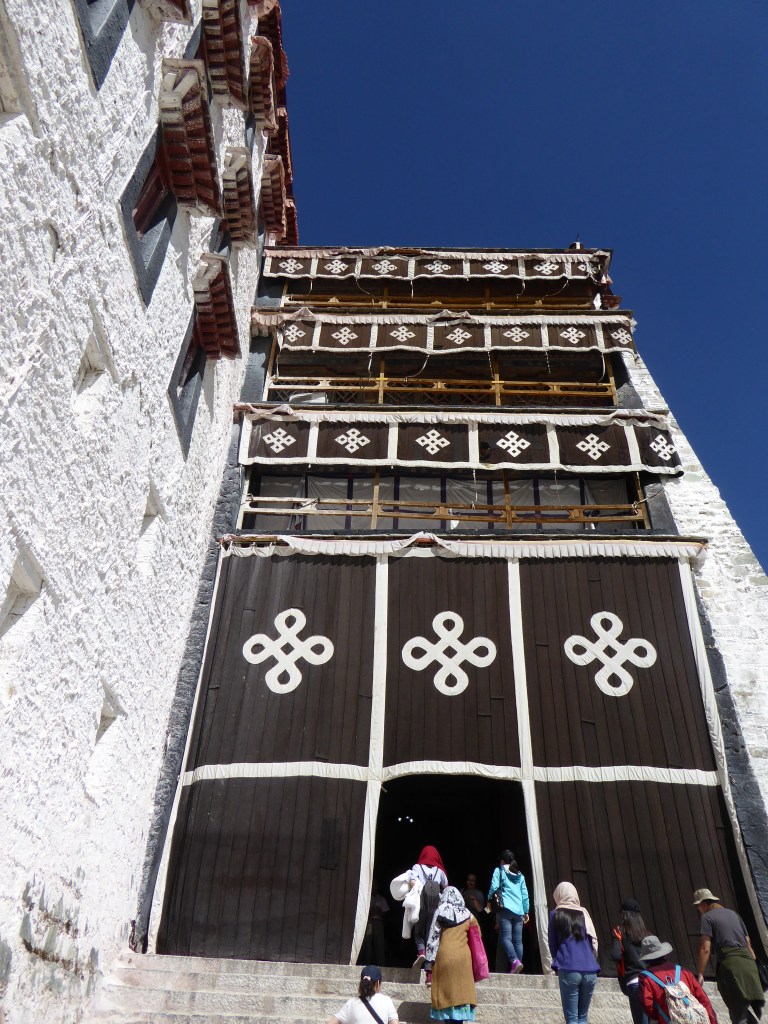
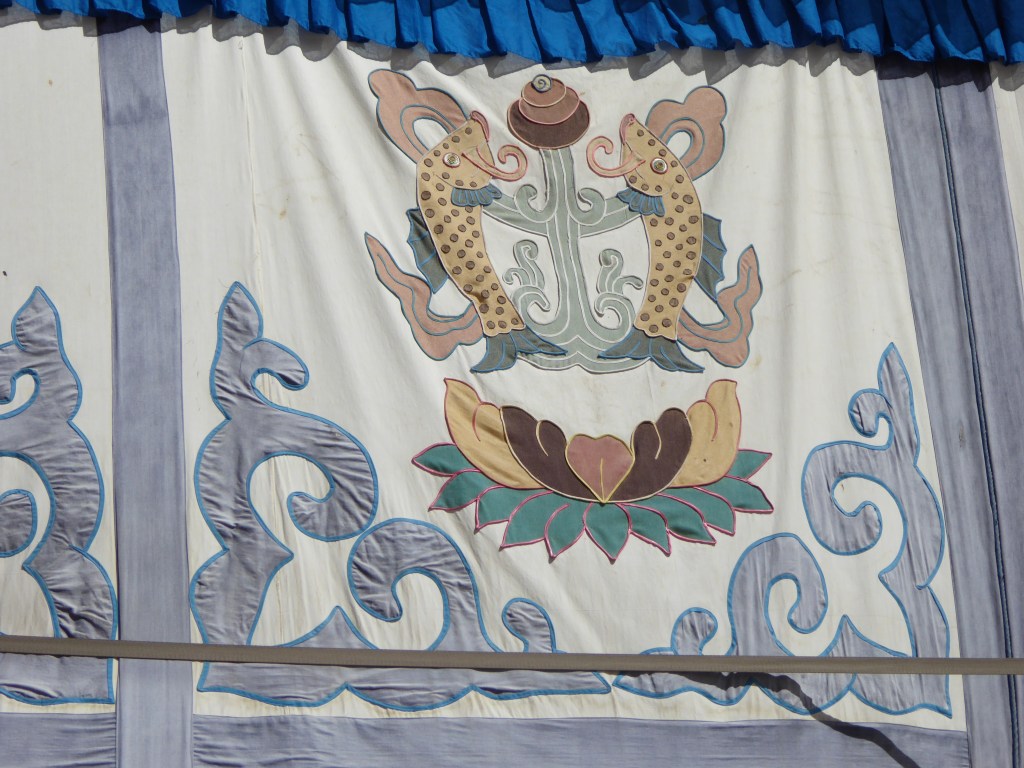
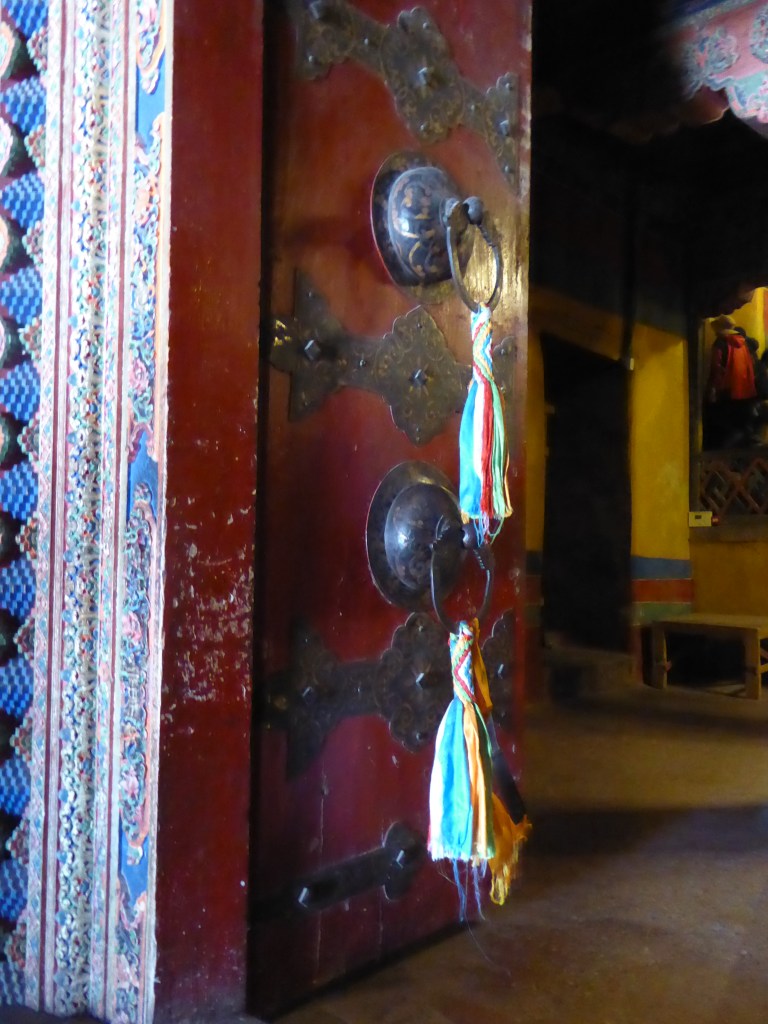
Various Dalai Lamas (DLs) lived in different sections of the religious part of the palace. (The political one was not part of the visit). We went through various reception and living rooms. Then we came to a huge room with 8 stupas for various DLs. The stupa for the 5th DL was the biggest one. It was 12.6 meters high and 7.6 meters at the base. It has 72 tons of gold and 10,000 precious stones. His is the largest stupa because he was the most important DL.
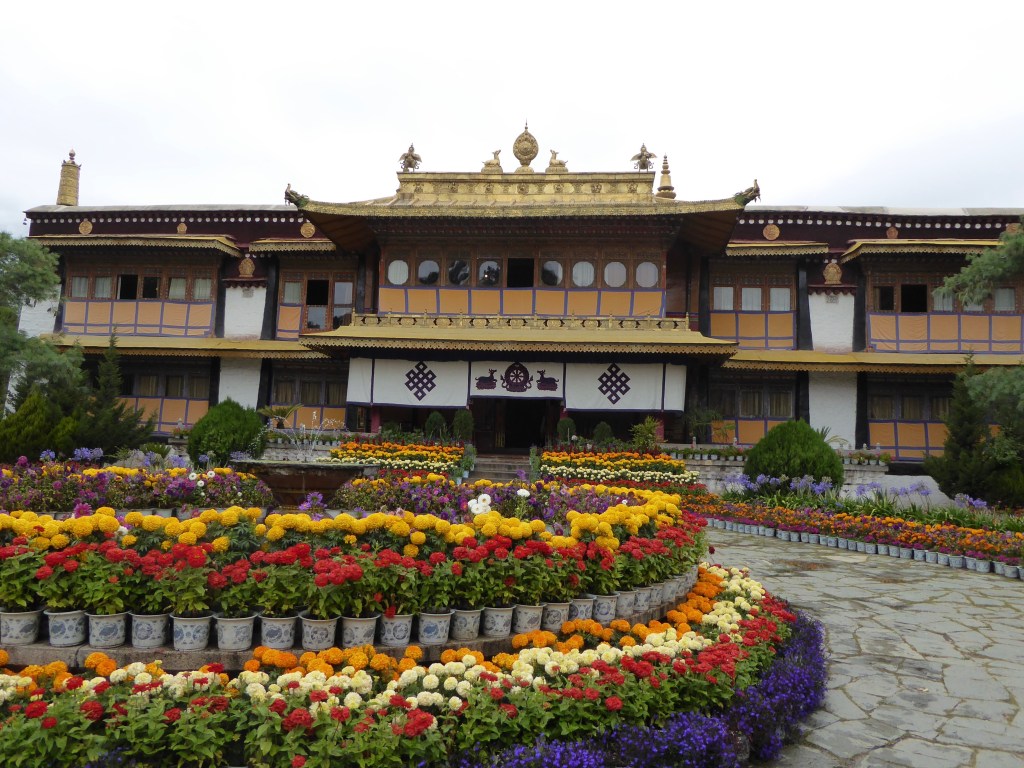
Another must in Lhasa is the Summer Palace(s) called Norbulingka. These palaces are less official than the ones in Potala Palace. There were various houses built by different DLs.
Many of the walls were covered by beautiful painted fabric. They used mineral colors (colors ground from rocks), which last a very long time.
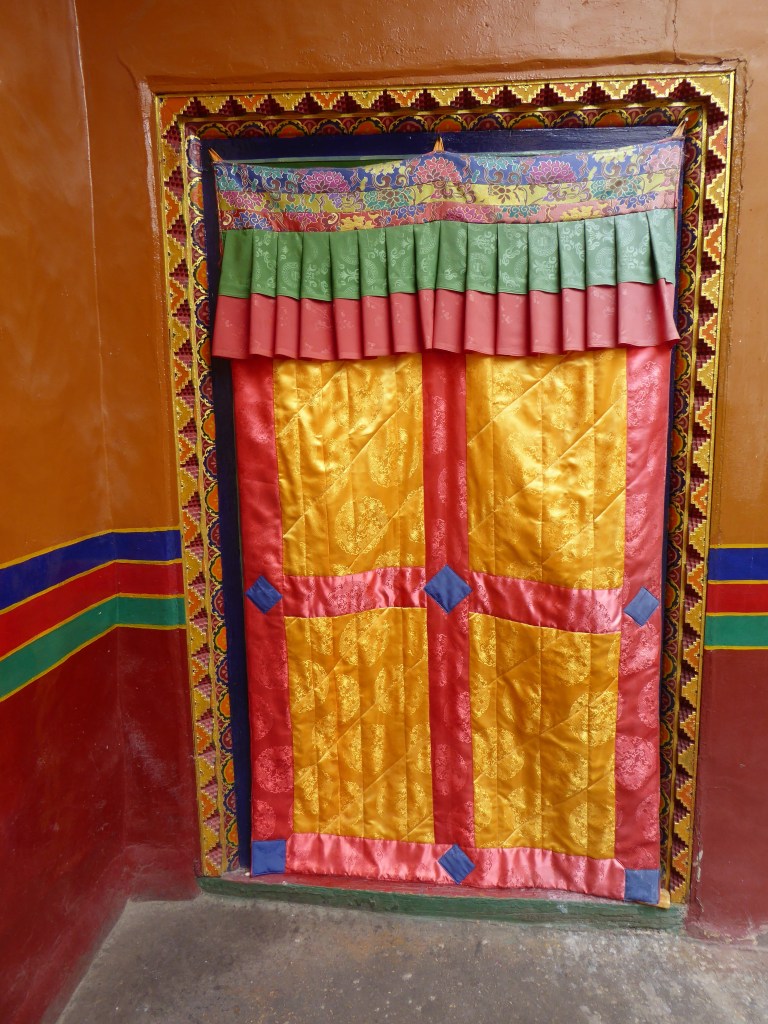
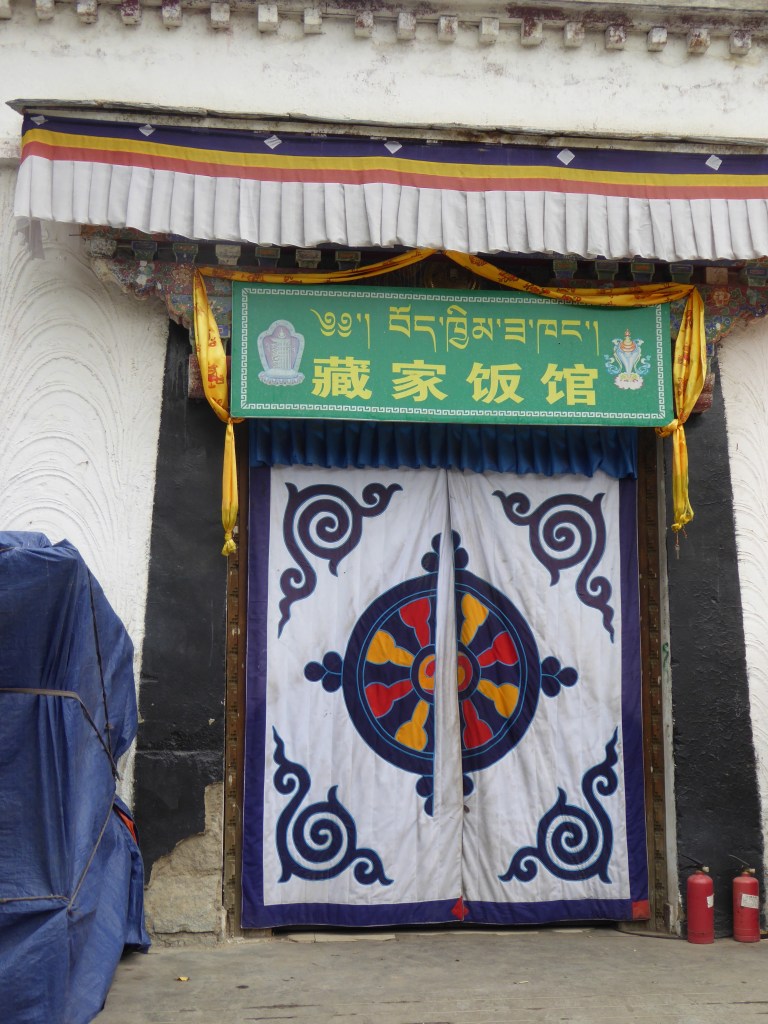
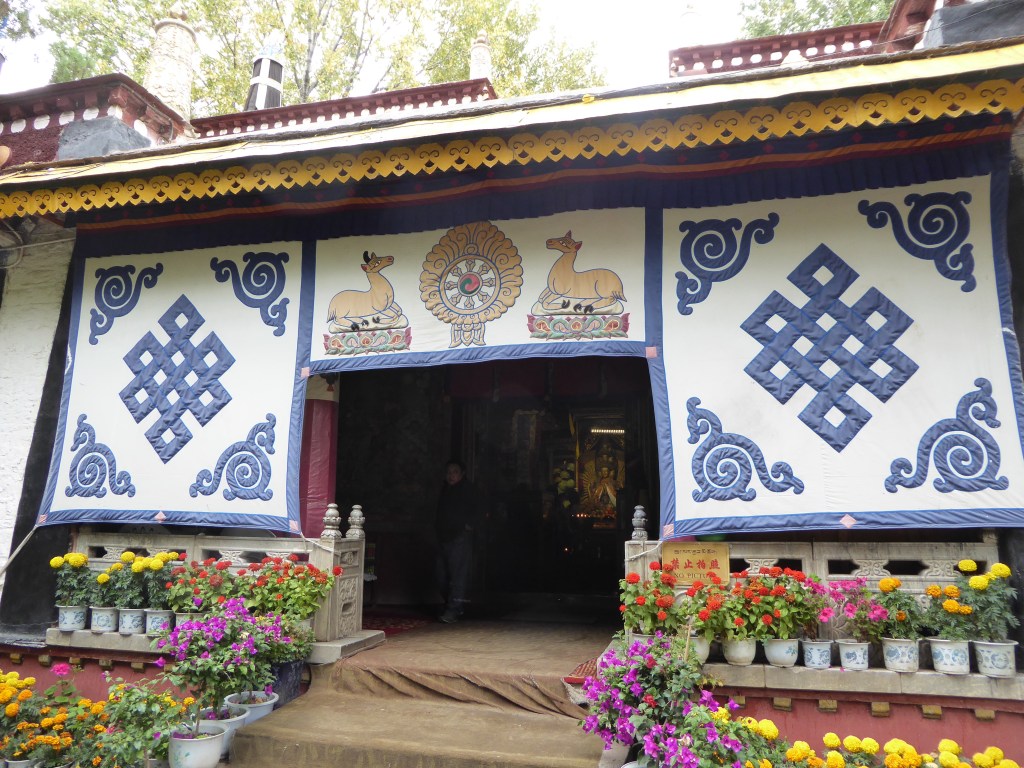
One magnificent palace combined the architecture of a monastery and a vacation villa. One wall tells the history of Tibet in 301 panels. It starts from inception and goes on to tell the life story of the kings and the DLs. Another had a library of 3,600 text books.
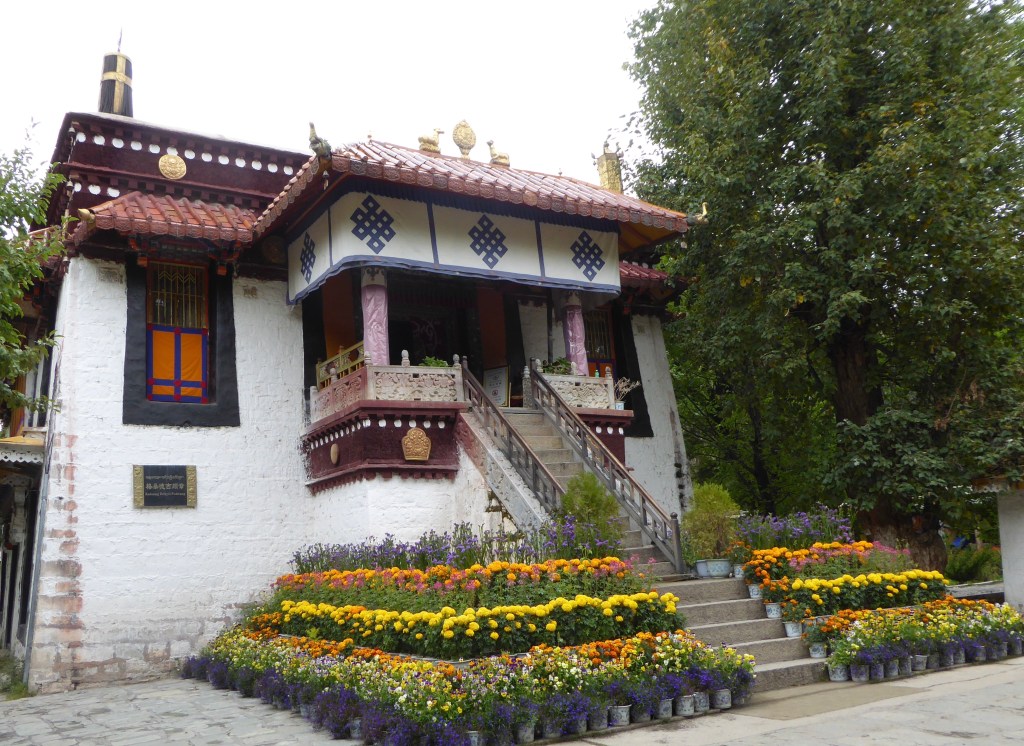
The grounds around each palace were full of beautiful flowers including lobelias, marigolds, pansies.
Chengdu
China is amazing in that medium size cities like Chengdu have 14 million residents.
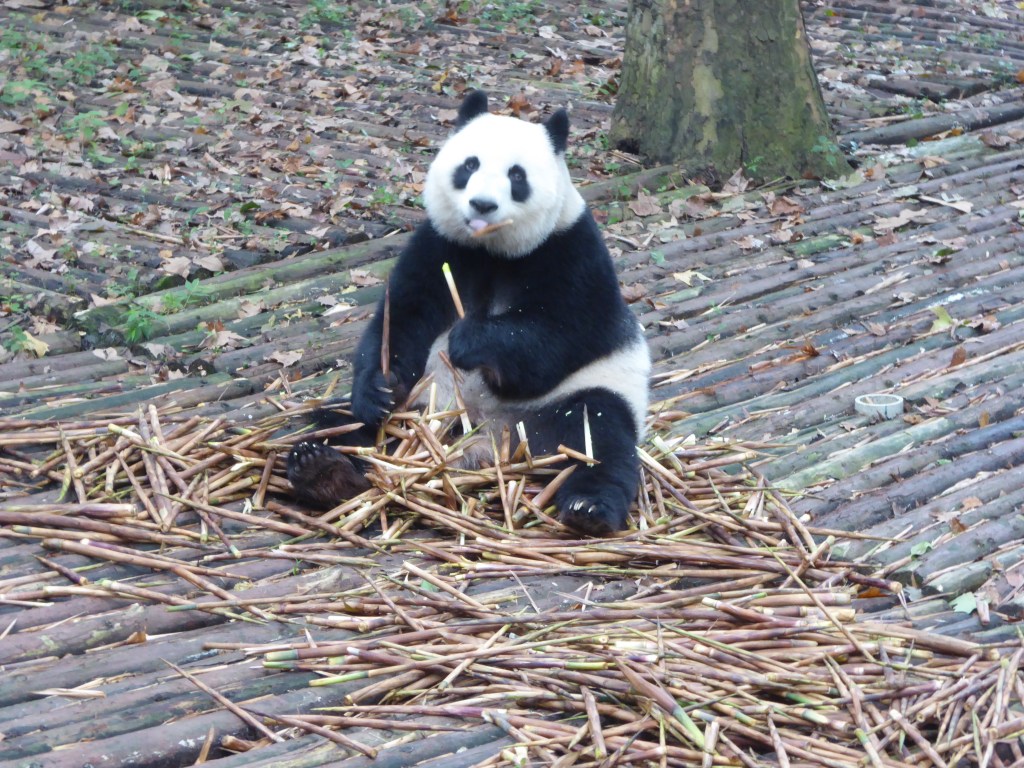
The main reason to come to Chengdu is to see the Panda Reserve. In the past the panda numbers had dropped dangerously low in the wild and the panda reserves are helping to keep the species alive. This reserve started with 6 rescued pandas in 1987 and now has 146 pandas, all born at the reserve. There are only 1840 pandas world-wide, therefore, this reserve has almost 10% of the pandas. They are very successful in breeding and bringing up the babies. They have an almost 100% success rate. Here are a couple fun statistics:
- Pandas eat 25% of their body weight each day.
- 50% of the pregnancies have twins, and the mother does not take care of the weaker twin.
- The female is in heat only once a year for a few hours. She is in control of the mating.
- The baby weighs only 100 grams or 3.5 oz when born or 1/1000 of the mother’s weight. Full grown they are about 200 lbs.
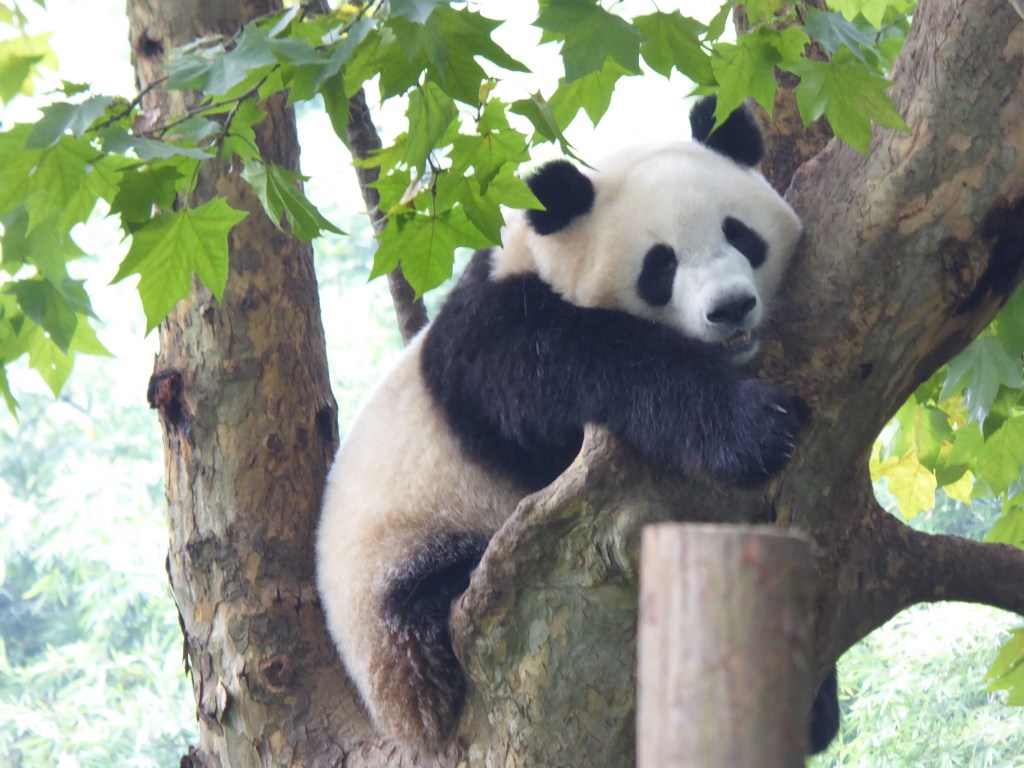
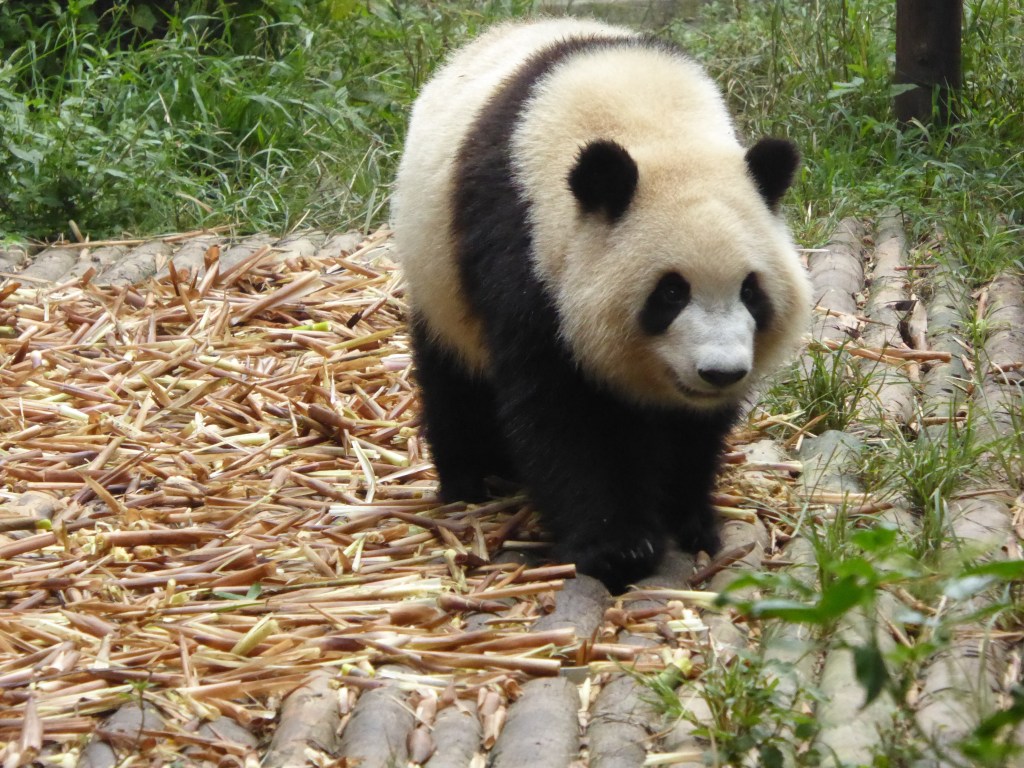
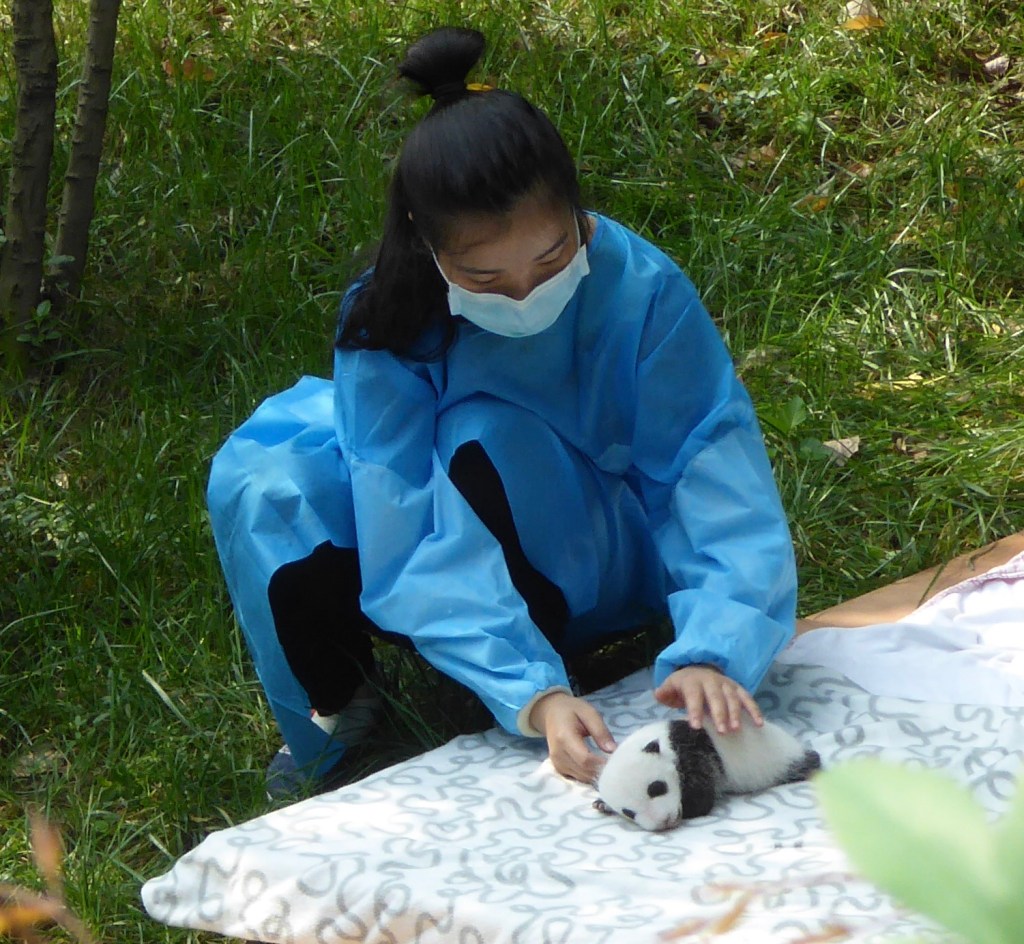
We saw a number of adults eating bamboo or sleeping, some on the ground and some in trees. We also saw lots of babies outside. One was only a couple of weeks old and was being cuddled by a reserve worker.
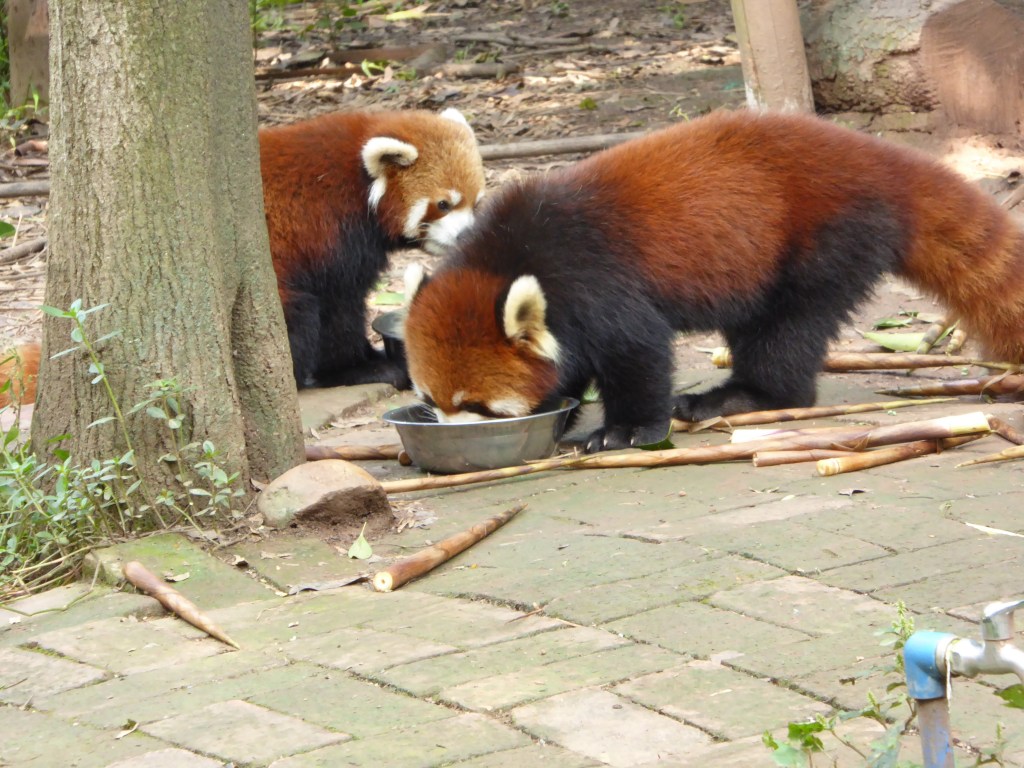
We also saw some beautiful red pandas, who have 9 rings on their tails. They were mostly up the trees but also running around on the ground. Red pandas are related to the cat family while Giant Pandas are related to the bear family.
People’s Park, Chengdu
Part of the fun of travel is learning about cultures. At the People’s Park, I learned about Chinese matchmaking. Sometimes the parents initiate the matchmaking by using a broker. The parents meet in the park and if they like each other, then they share pictures of their kids. Sometimes the young (or older) people put up their own advertisement in the park. One woman had a large poster with her details (she was 37 years old, xx height, xx education, owns a house, good job with benefits, looking for a guy about 40 who is xx height, xx education etc. On the back page was her picture. Another poster was from a widower in his 50s who is not particular as to age. He states that he has no debts, and likes to travel.
We had other adventures on our own in Chengdu, which I am happy to share with those who want my full travel log.
Leshun
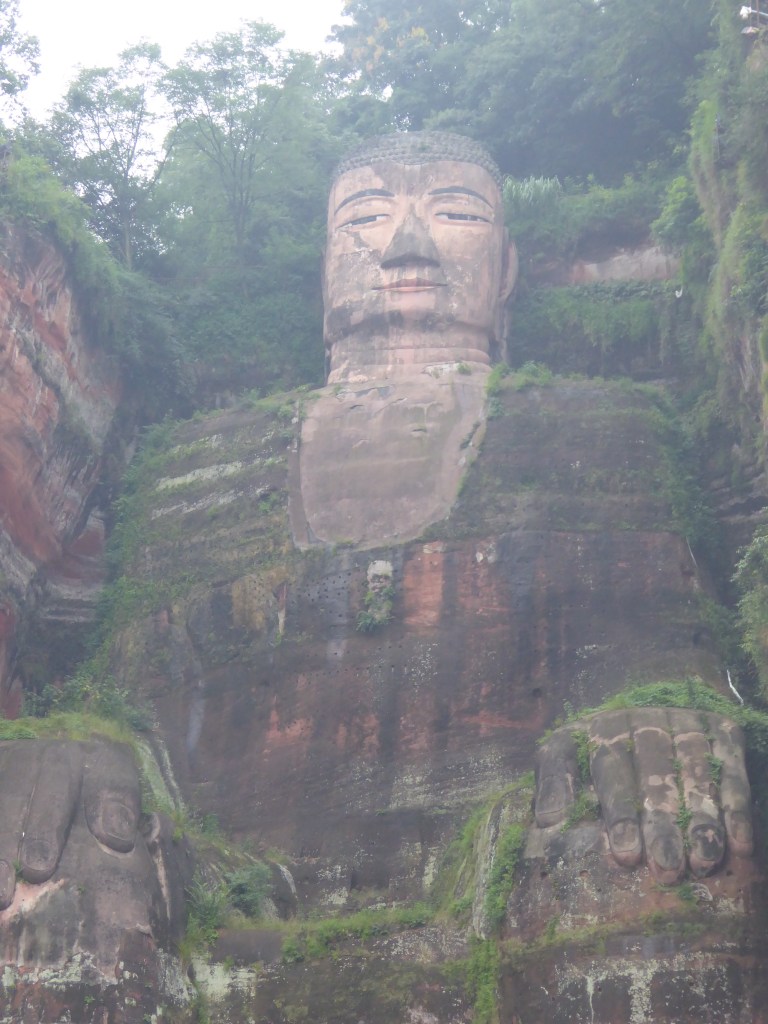
We took a side trip to Leshun to see the Giant Seated Buddha. It took from 713 to 803 (90 years) to carve it right out of the sandstone and its purpose was to protect fishermen. It is located at the meeting of 3 rivers with strong currents and potential for flooding. Supposedly, since the Buddha was carved, there have been no major flooding or fishermen deaths.
According to our guide, Mia, it is the largest seated Buddha in the world. It is 71 meters high (about 21-25 floors), with its head being 14.7 meters high and 10 meters in diameter. There is a water drainage system in the hair. This is necessary because it is carved out of sandstone and would not last without the drainage.
In order to see it properly we took a ½-hour boat ride. It is one thing to list its dimensions and another to actually see it in the huge rock that it was carved from. It truly is a beautiful sight.
Li River half day cruise:
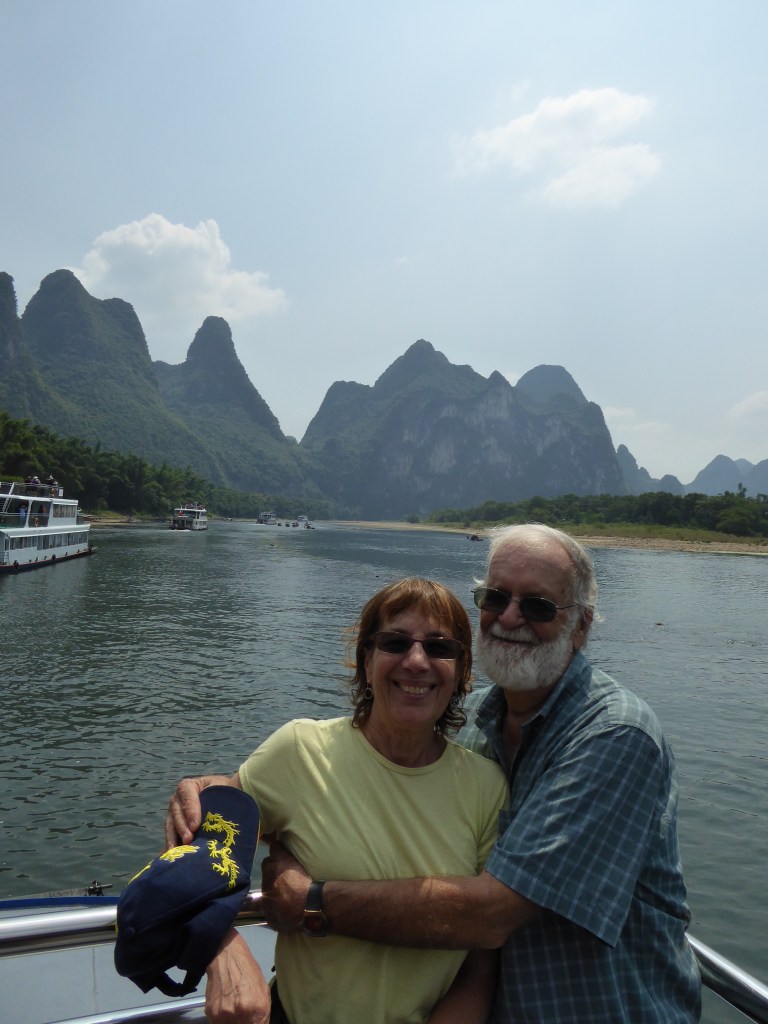
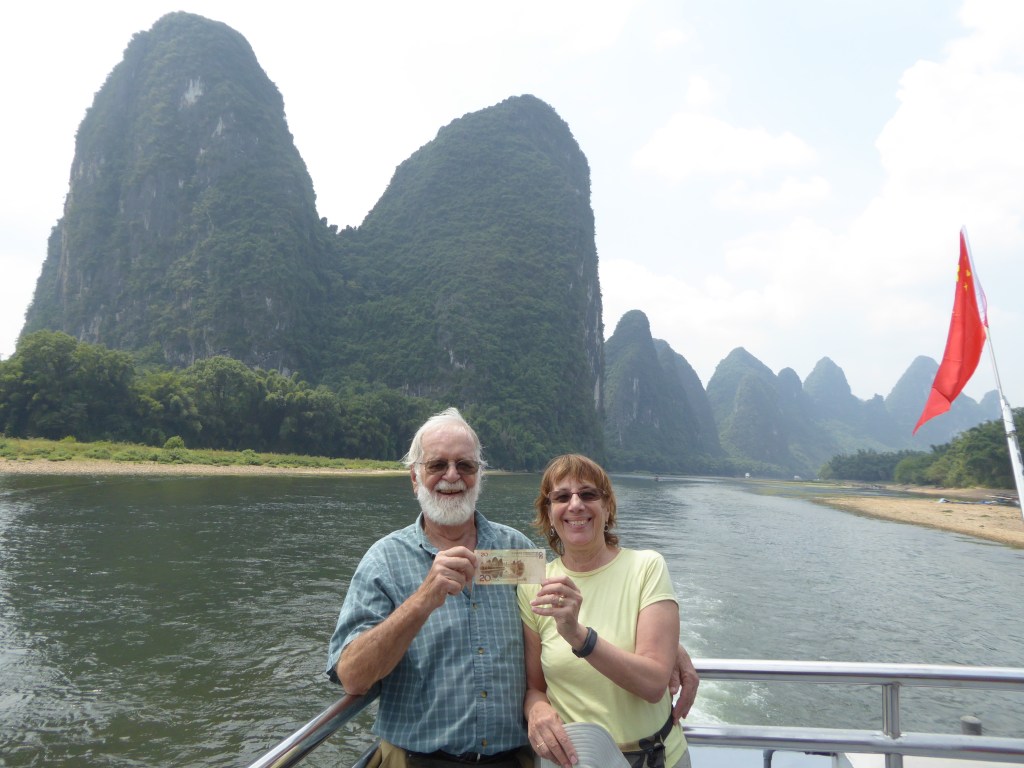
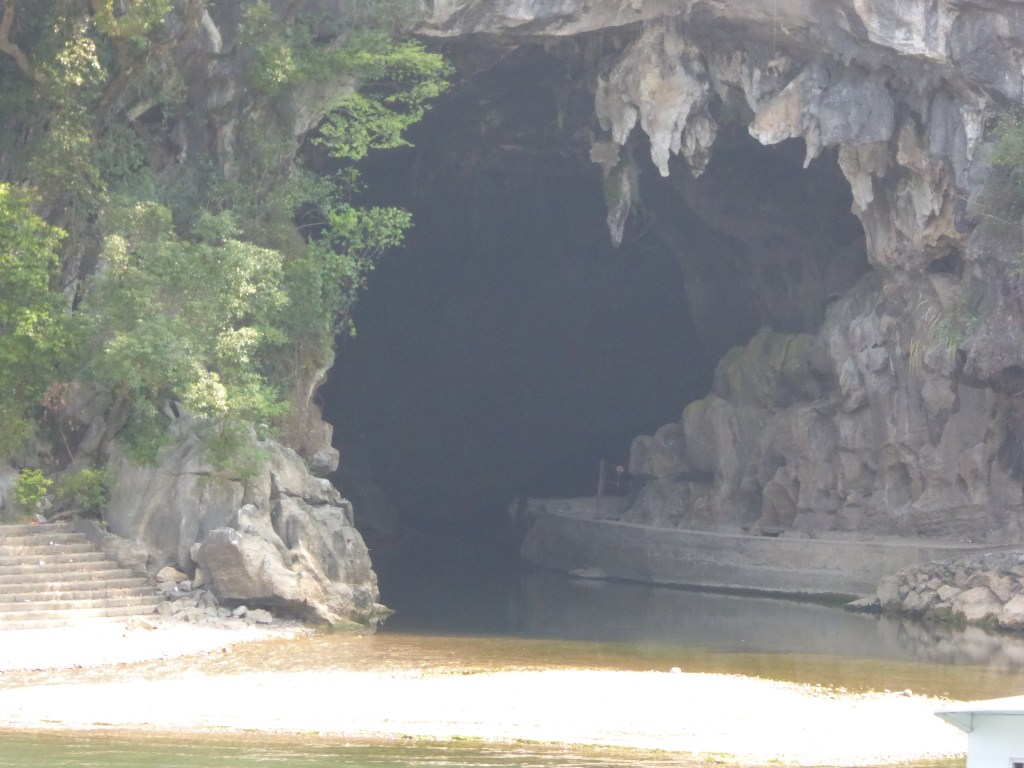
The views were spectacular on the Li River Cruise. The hills are triangular. The boat went through the terrain which got prettier and prettier as the morning advanced. All the mountains have caves in them. The 20 Yuan bill has a picture of one of the mountains that we passed. We did the tourist thing and got our picture taken holding the bill.
3 night Yangtze River Cruise:
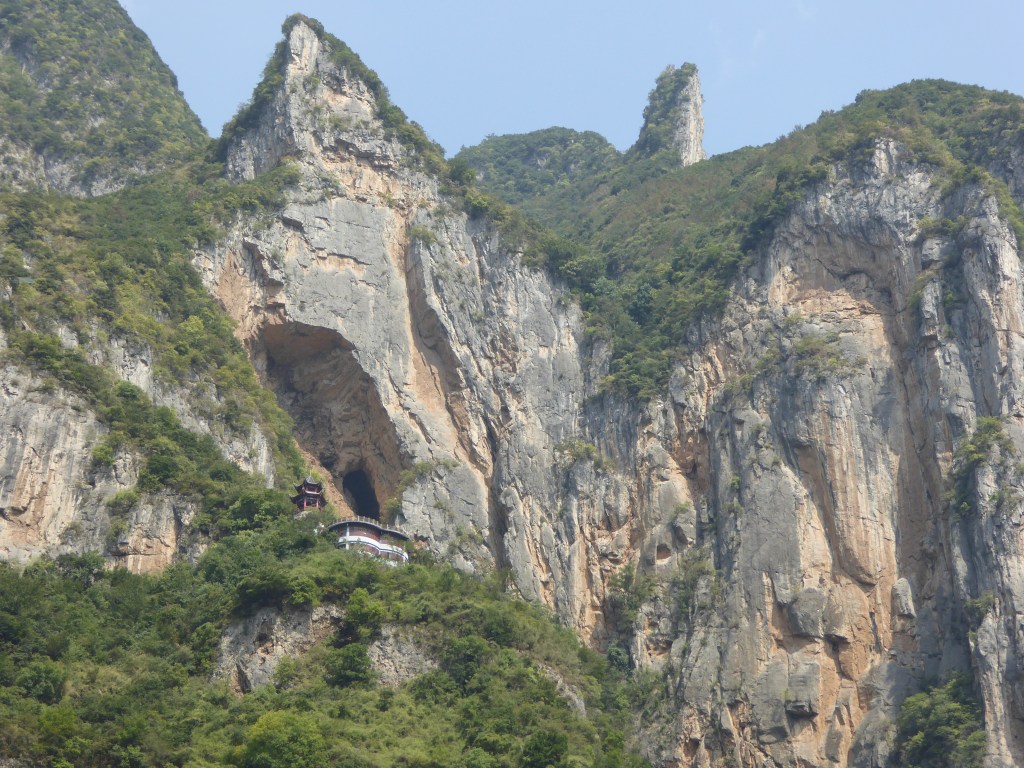
The main purpose of this cruise in to go through the three gorges.
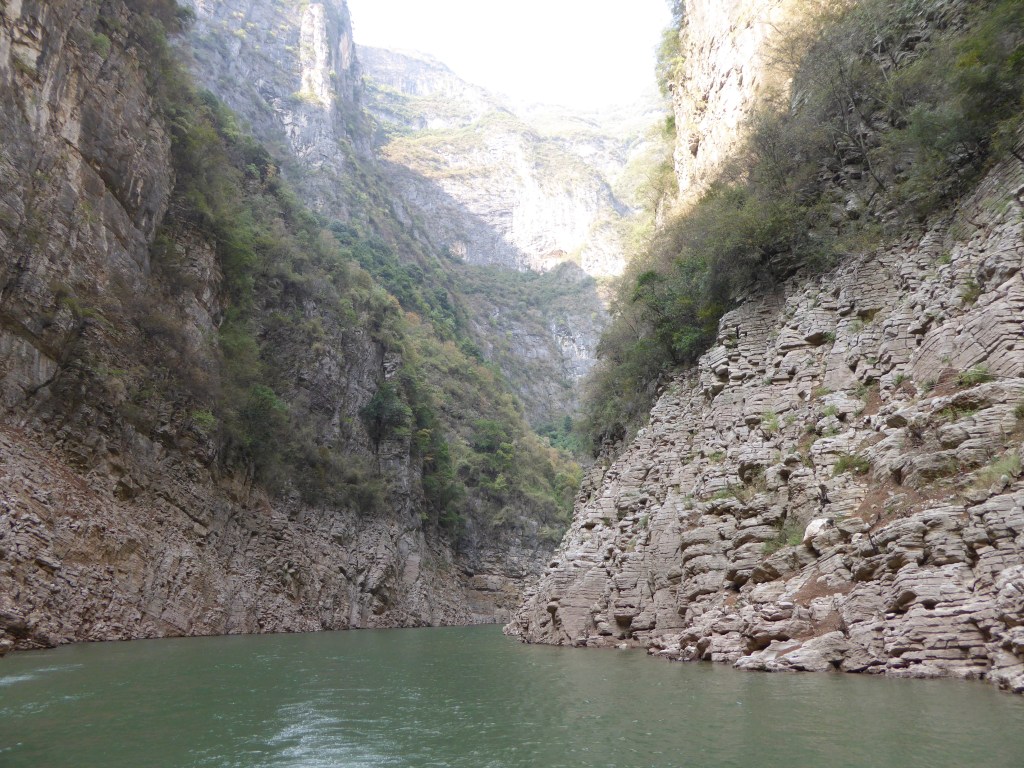
They were impressive! The first is narrow with enormous cliffs, narrow enough that I had to really look up to see the top of the mountains. The 2nd gorge was very different because it had lots of pagodas and temples on the mountain sides. Obviously, the climb to those temples was amazing. Not that we did it. We then went by small boat further into the gorge.
We stopped at the Shi Boa Zhai Pagoda, which is a mile or so walk to a from the dock. In order to get to the pagoda, we had to walk through the “hello market”, so called because the merchants basically know only one word of English, “Hello”. We crossed a wooden cable bridge. We were asked to walk in the middle so that it would bounce less. It was tempting to walk on the side and hold on but more adventurous to balance in the middle.
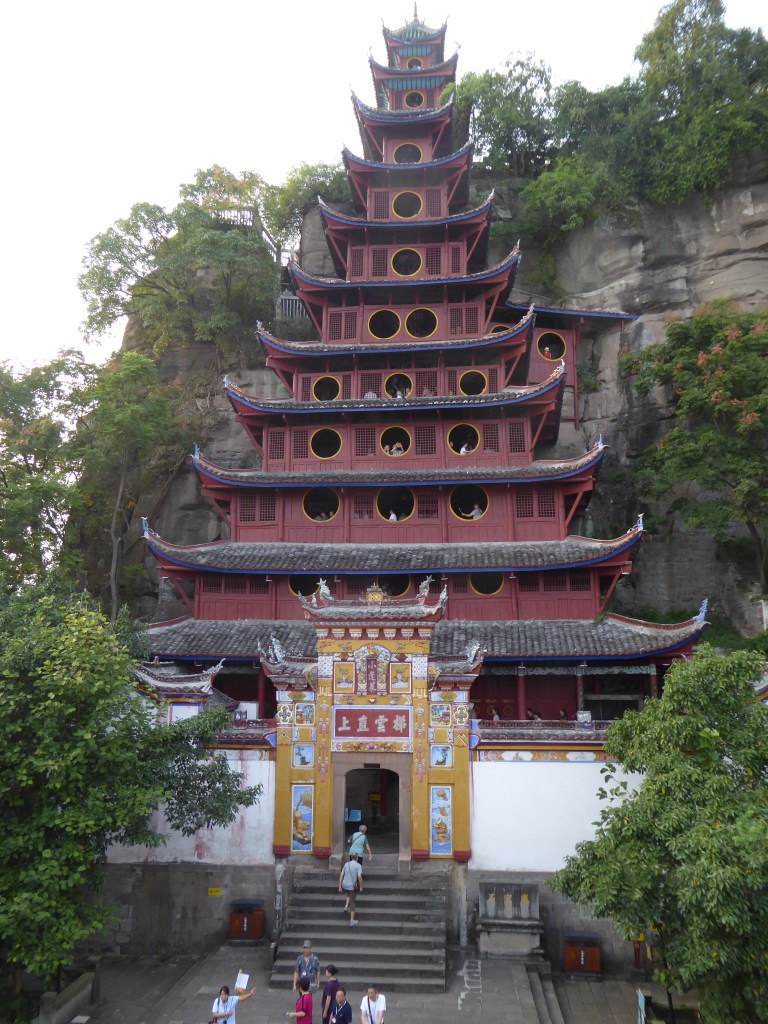
The pagoda has 12 tiers and is 184 feet tall. The first 9 tiers were built into the mountain in the Ming Dynasty (1368-1644) and the last 3 are above the mountain and were added in 1956.
We climbed to the top via wooden steep steps. We walked through the temple and saw statues of the Jade Emperor and his Empress as well as their servants. He is a mythological king who emitted heavenly lights. He is considered the king of the Gods. From the top of the hill, we had a great view of the valley, and the boats on the river.
On our last morning we took buses to the dam to see the locks and look at the view. We saw two freighters move from one lock to the next lock.
Shanghai.
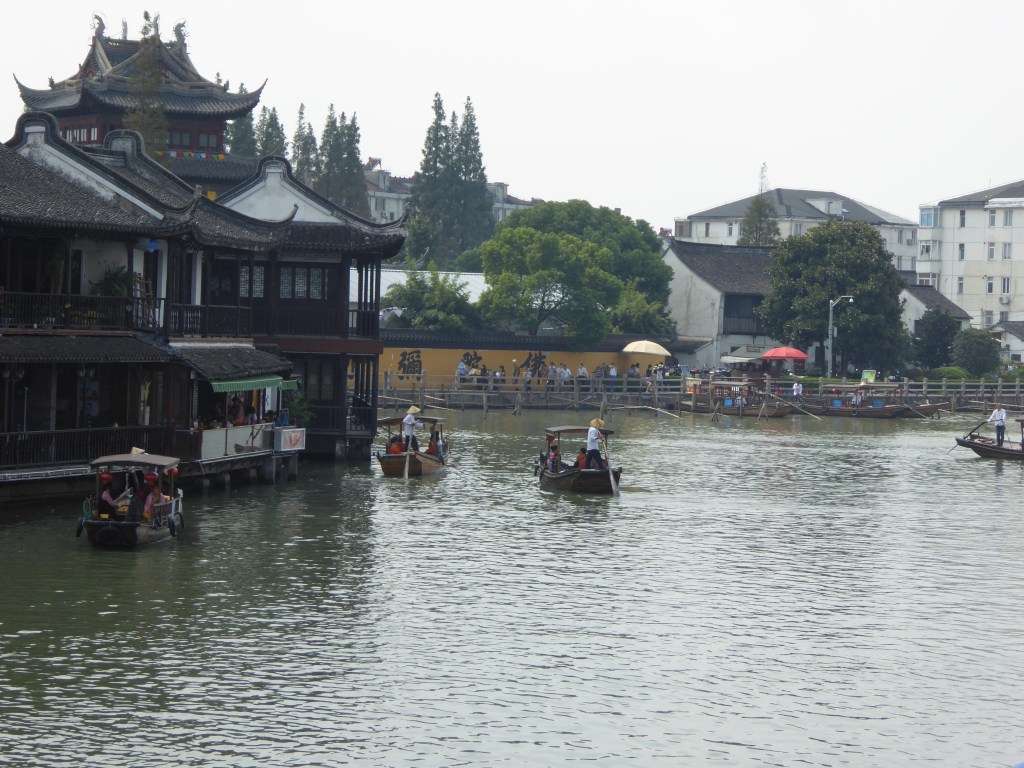
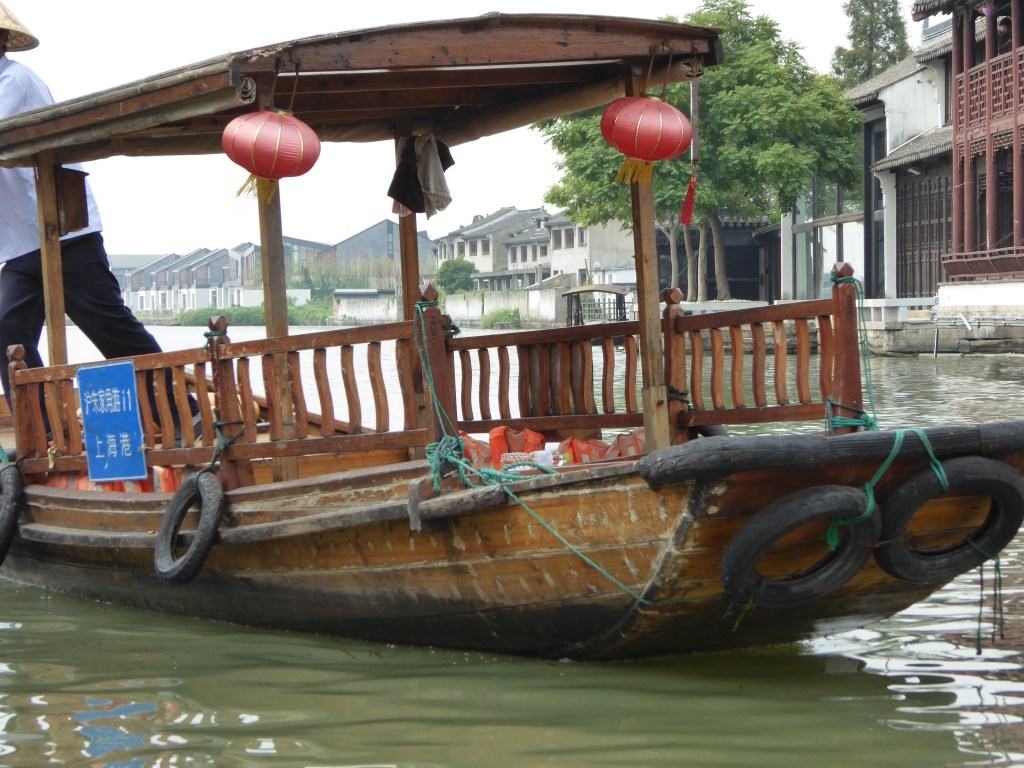
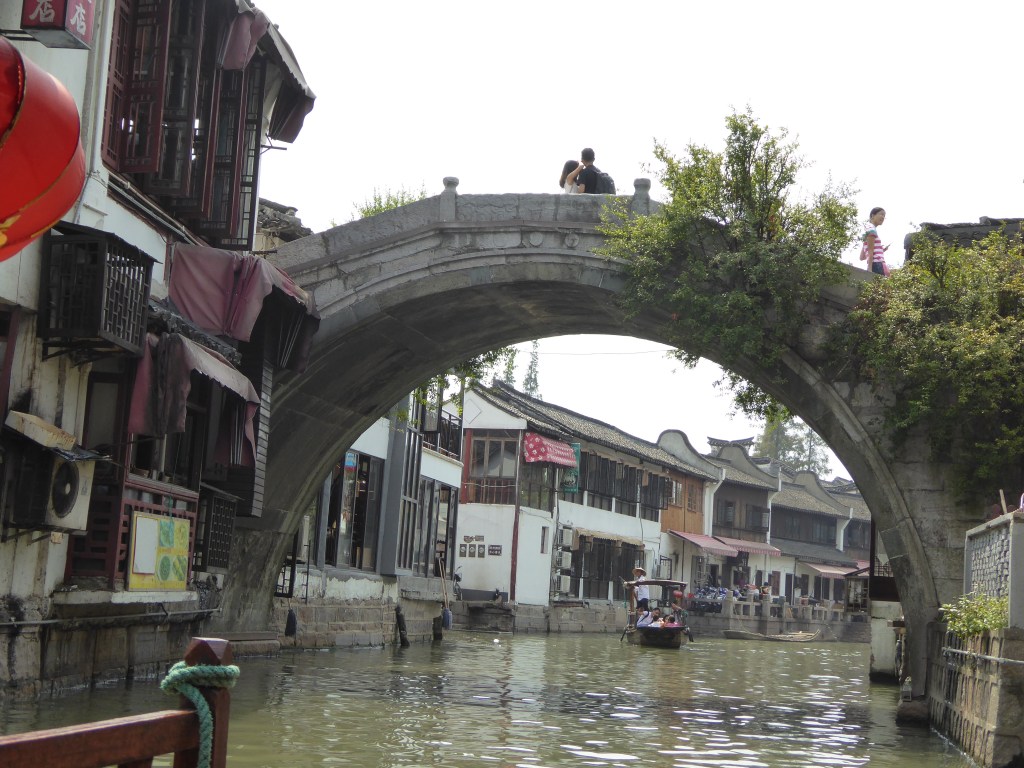
Our first sightseeing destination in Shanghai, was Water Town or Zhu Jia Jiao. This town was established 1700 years ago around canals. It is called the Venice of China – it even has gondolas. There are 36 bridges in different shapes and styles. The residents of Shanghai come here as well as Chinese tourists from other towns. There were more Westerners than I had seen anywhere in China except on the Yangtze Cruise. The houses that were built along the canals are all 2 floors, with the bottom floor having a shop and the upper floor, residential. Today some 2nd floors are restaurants. The shops were varied – many food stalls, shops with silk comforters, fans combs, toys, candy and costumes from the 18th C to wear for photographs.
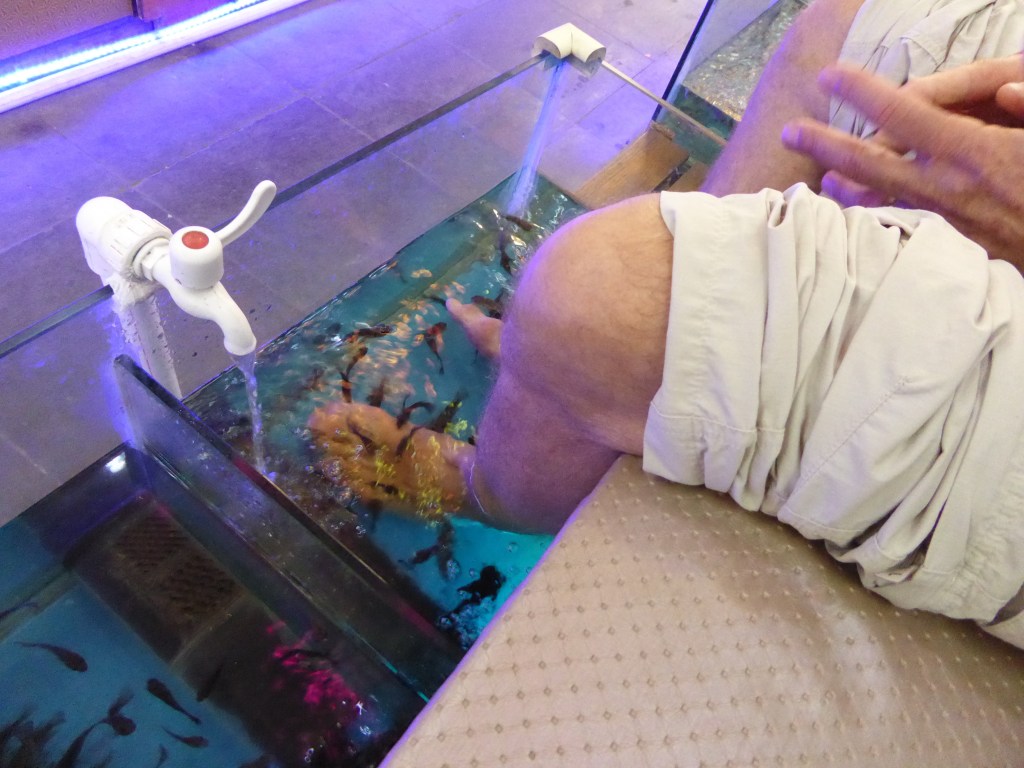
They also had nibbling fish tanks. We gave it a try. You put your bare feet in a tank with little fish and they nibble at your feet. It tickles. At first it felt really weird but then it felt just fine. Worth trying.
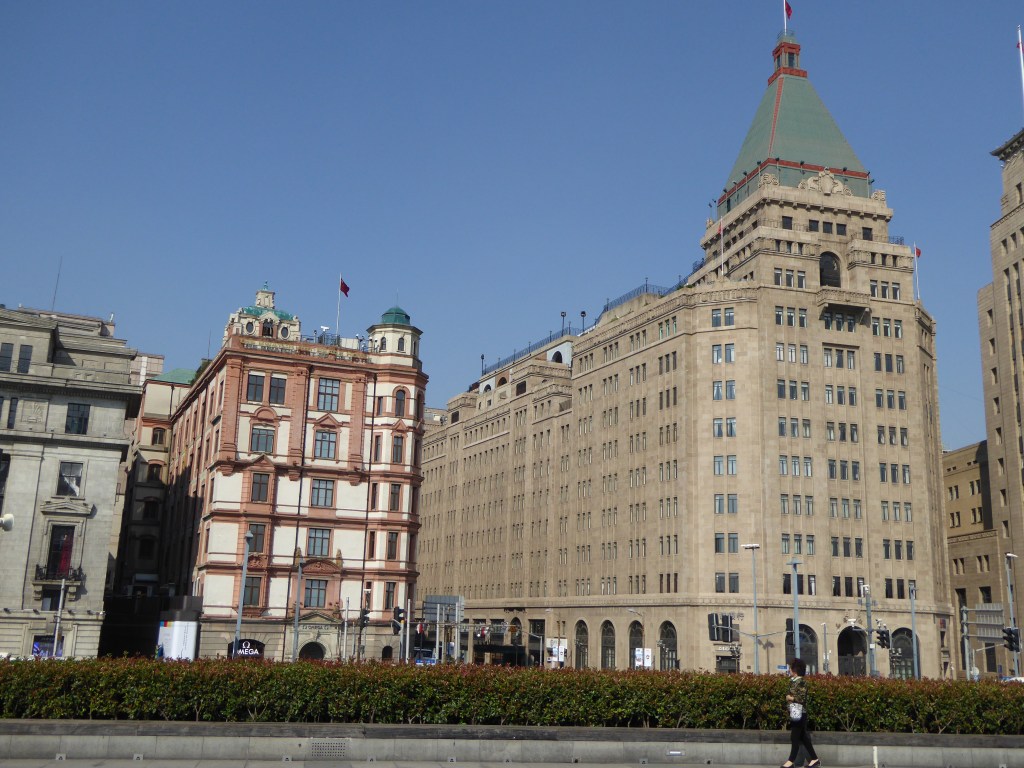
Shanghai was a surprising delight being so varied in its architecture and history. Shanghai became a major business center because it possessed the right Feng Shui. When we stood on the promenade, we could look behind us (west side) and see the British buildings built in the early 1900s. They are substantial and very beautiful.
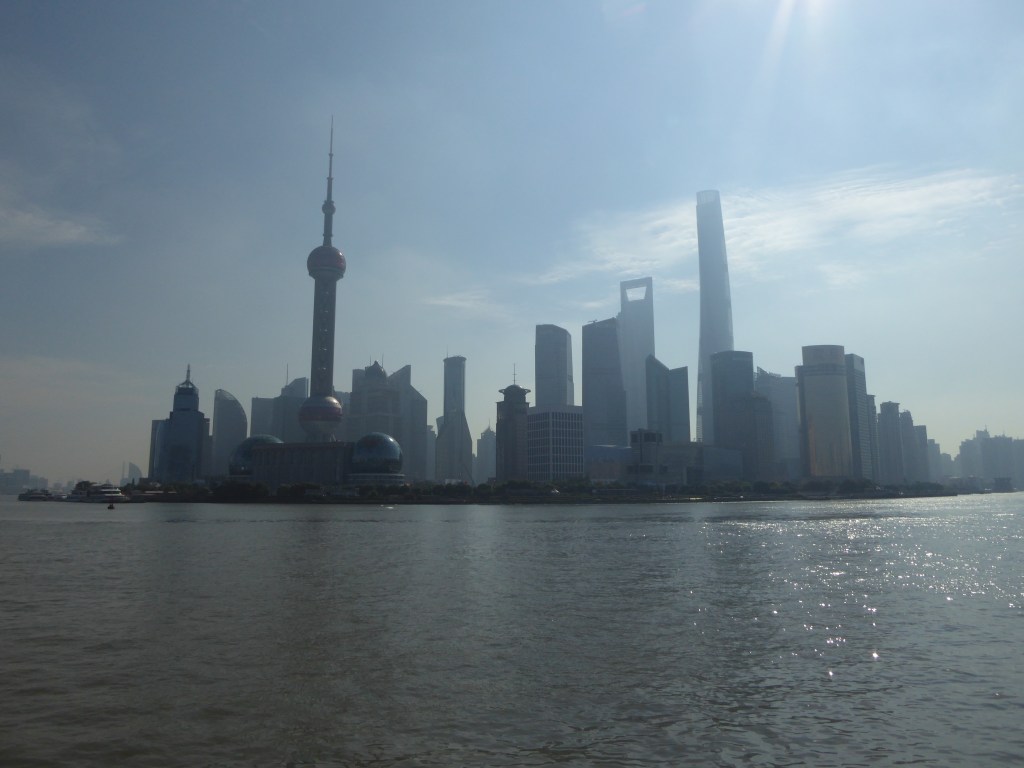
Across the river were the modern buildings, including the space tower, called the Orient Pearl.
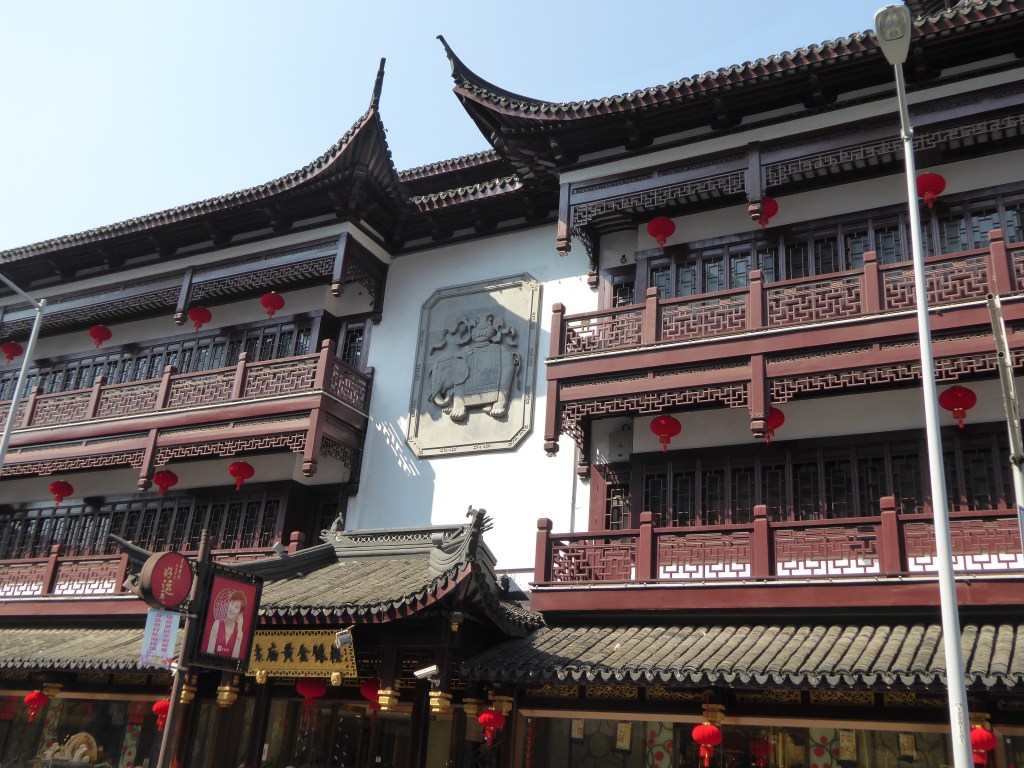
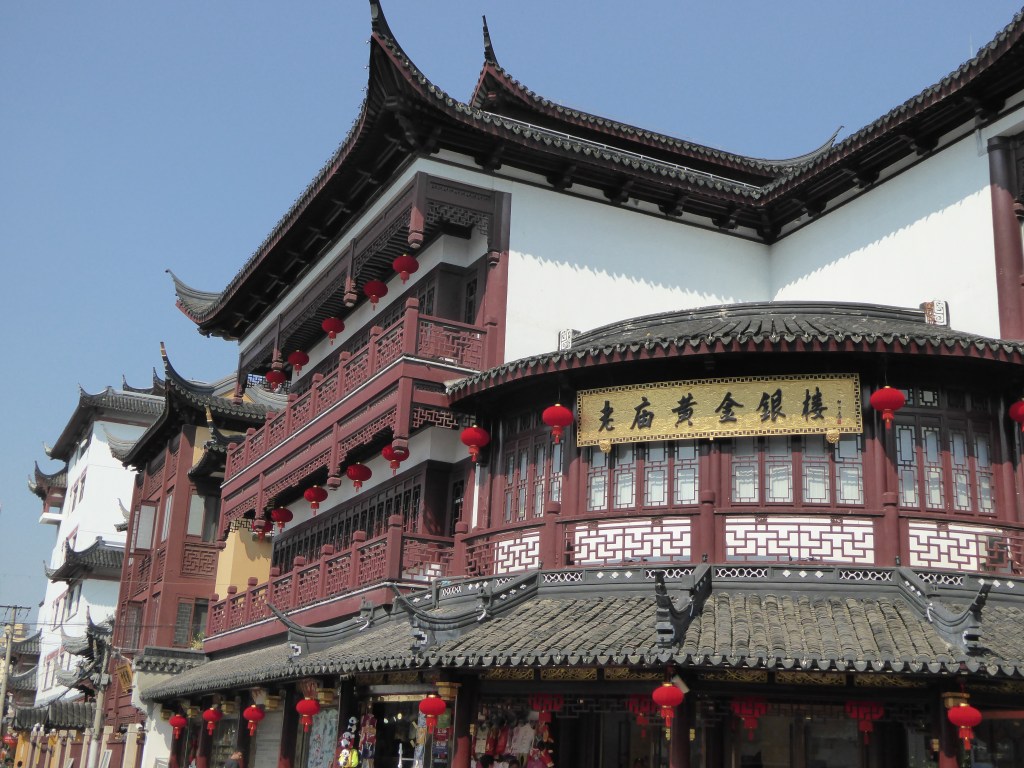
China Town was built for the Chinese about 150 years ago and looks like you would expect a Chinese old city to look with low 2-3 floor buildings with the interesting roofs. (The Chinese were not allowed in the main part of town when the British were in control).
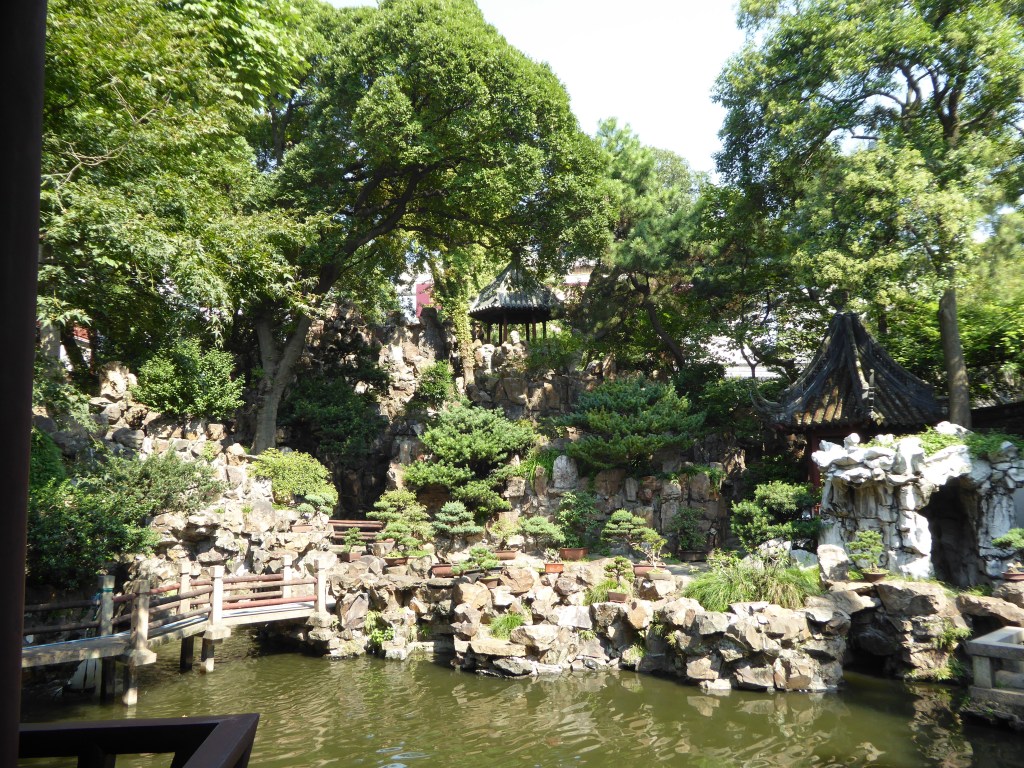
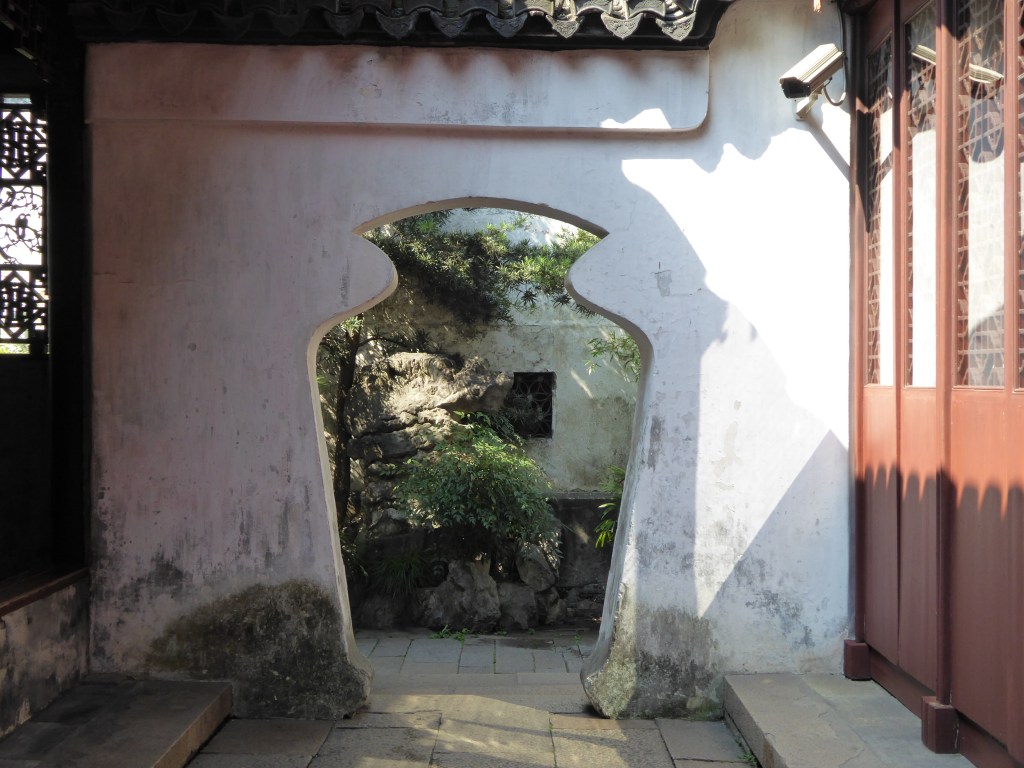
The beautiful Yu Gardens and residence were built in the 16th century. The gates between the buildings and gardens are shaped like a vase and the plantings are such that the view from each gate is like a picture.
We had fun walking barefoot on some turtle shaped rocks to exercise our feet. The head of the turtle signifies wealth and the body longevity.
Shanghai is a mixture of many cultures. Totally enjoyable
Final Comments:
- Check on arrangements even if you trust the travel company. At one airport, the guide had the wrong information but we were able to recover.
- We stayed in 5 star hotels, which were not substantially more expensive than 4 star hotels and definitely worth it. Touring is tiring, so it was great to relax in large rooms with amenities. It made getting used to new rooms, with different plugs, bathrooms etc. much easier.
- In countries, like China, it is very important to have a driver and a guide. You need both because it is hard to park a car. Most of the signs are in Chinese only.
- The hard part of the trip was having 6 internal flights. Although the flights were short, we still had to go through security and it was always different. In 2 of the security check points they wanted to see the umbrellas, at another they wanted to see the iPad.
- We used carry-on bags the whole trip (and that was a huge help in getting out of the airports quickly). It also limits the packing and unpacking. I used 4 packing cubes for the smaller items. The electronics cube doubles as the hotel safe lockable pack.
 Nili's Adventure
Gre
LikeLike