
Southampton:
Southampton provided me with a mini Austen pilgrimage. Jane Austen lived in the town for a short while and she danced at the Dolphin Hotel. The ballroom was locked but I could look in and enjoy the moment.
Baltic Cruise
Now for the main event, the Baltic Cruise with stops in Bruges, Warnemunde, Tallinn, St. Petersburg, Helsinki, Stockholm, Copenhagen.
Bruges, Belgium
Since we were on a large ship, it docked at the Bruges container port and we had to take a bus to get into the town of Bruges. The ship only provided two busses into town: the 9:30am bus was booked therefore we took the 7:30am bus. We arrived in Bruges by 8am, on a Sunday, and of-course, nothing was open that early.
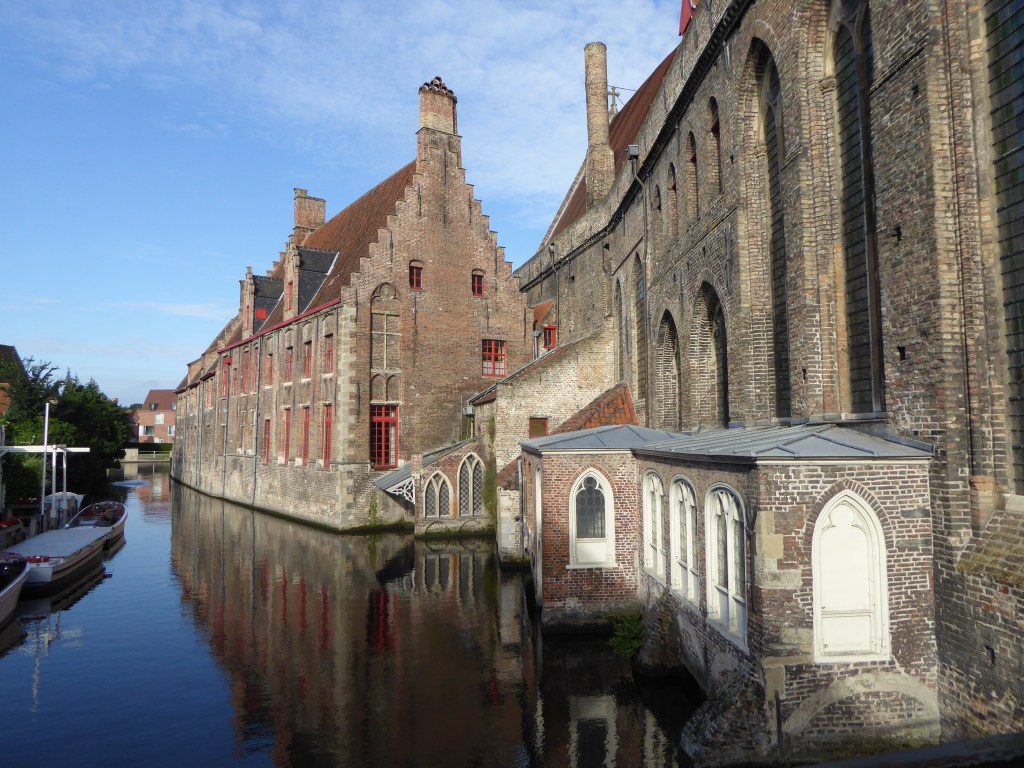
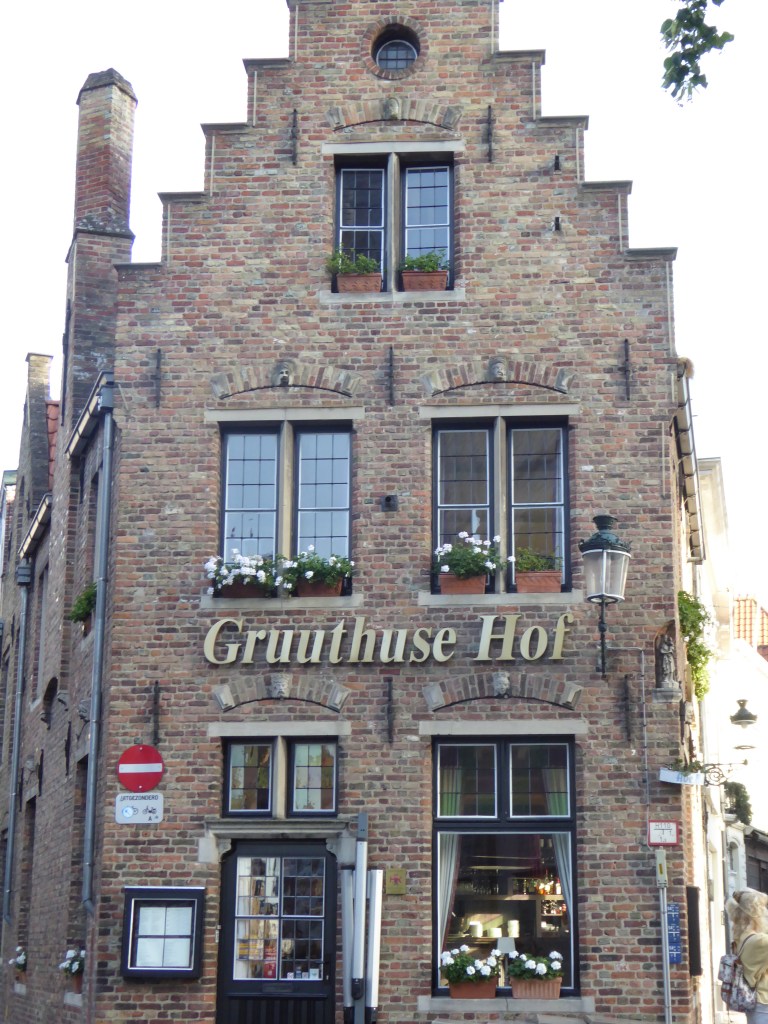
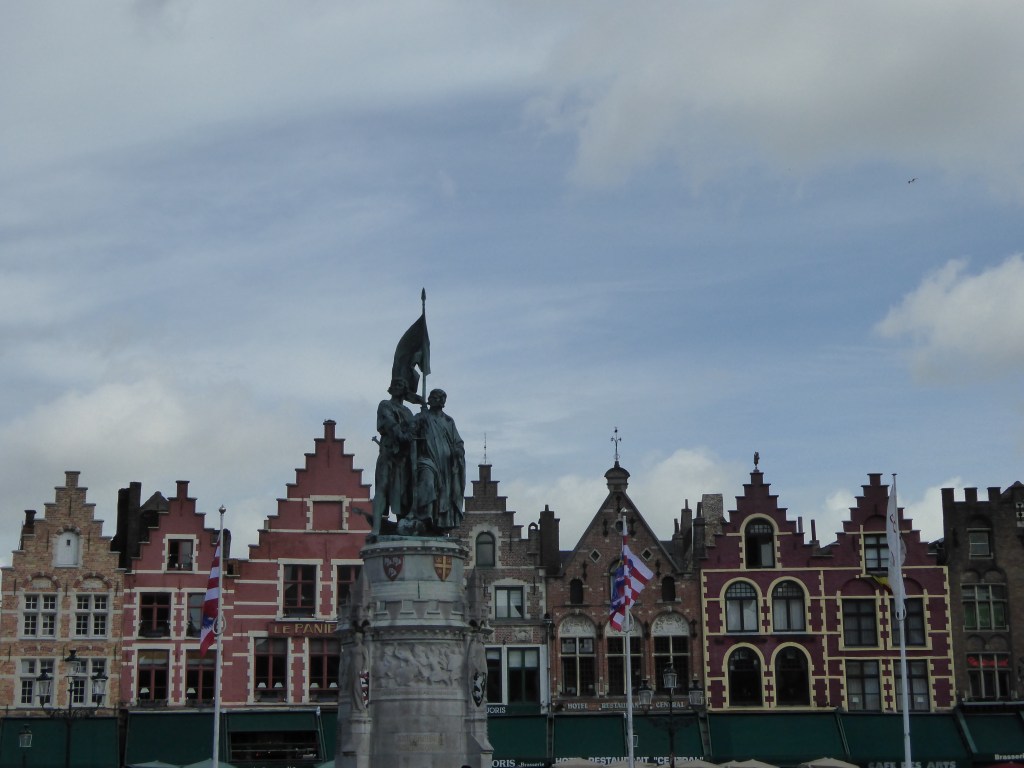
However, because it was so early, the town was peaceful and the streets were magical in their quietness. The sun was shining and the light on the buildings made them glow. Bruges is a beautiful medieval city, which was an important port for many centuries.
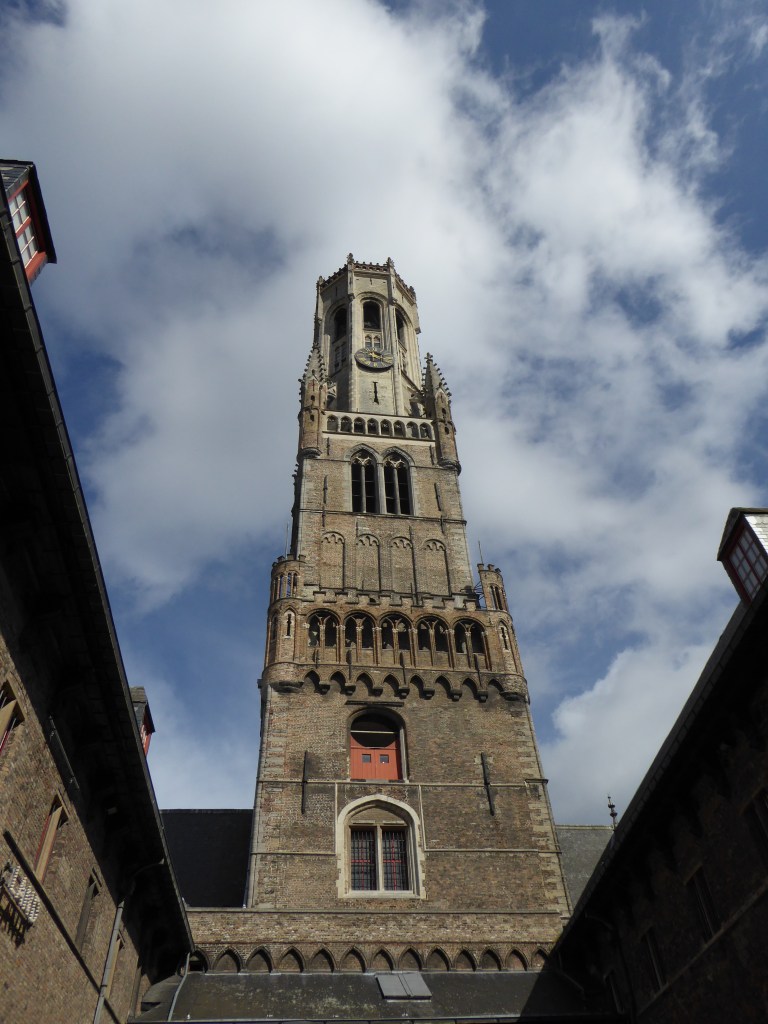
High on my list was to climb the Bell Tower. By chance we got to it at 9:30, just as it began to accept climbers. There were 15 people in line before us and we briefly debated whether to let the initial rush pass. But when I saw that within minutes there were about 10 people behind us, I decided to stay put in the line. Good choice. They only let 70 people up on top at a time and we were in the original group. By the time we came down, half an hour later, the line was twice as long and moving slowly as they waited for people to descend.
We climbed the 358 circular steps up to the top. On the way up, we stopped at exhibits, which allowed us to catch our breath. Just below the top was the 1748 brass drum. The drum has pegs on it that creates tunes. We reached the drum about 9:45 and waited for 10 minutes till it started rolling for the tunes on the hour.
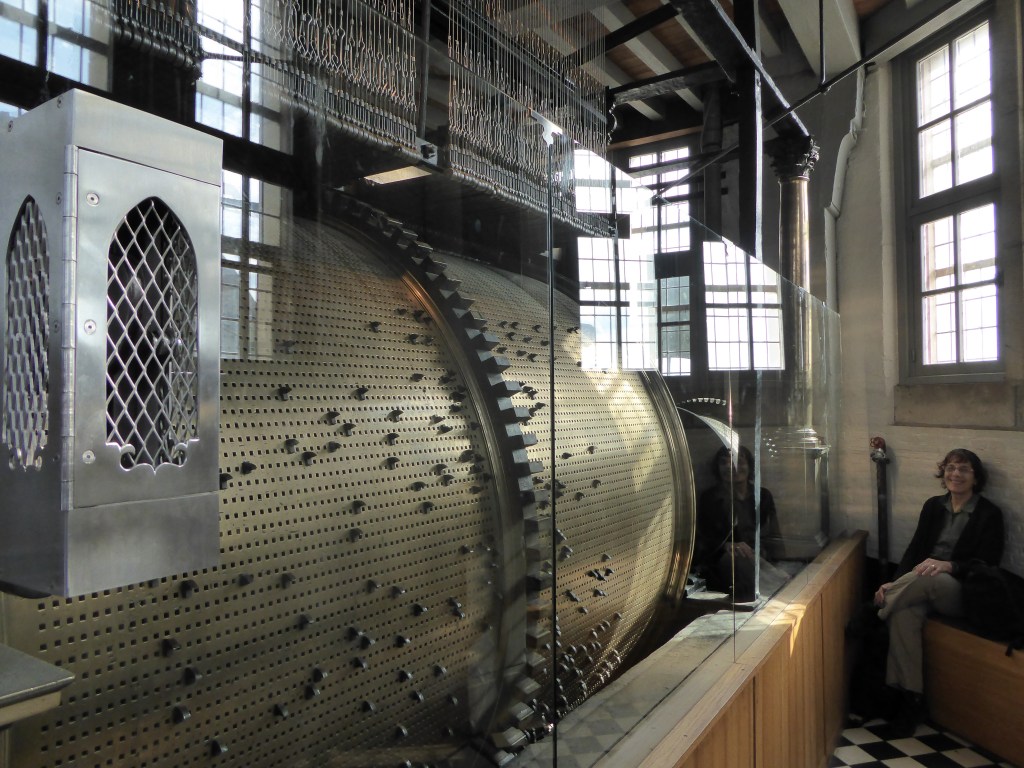
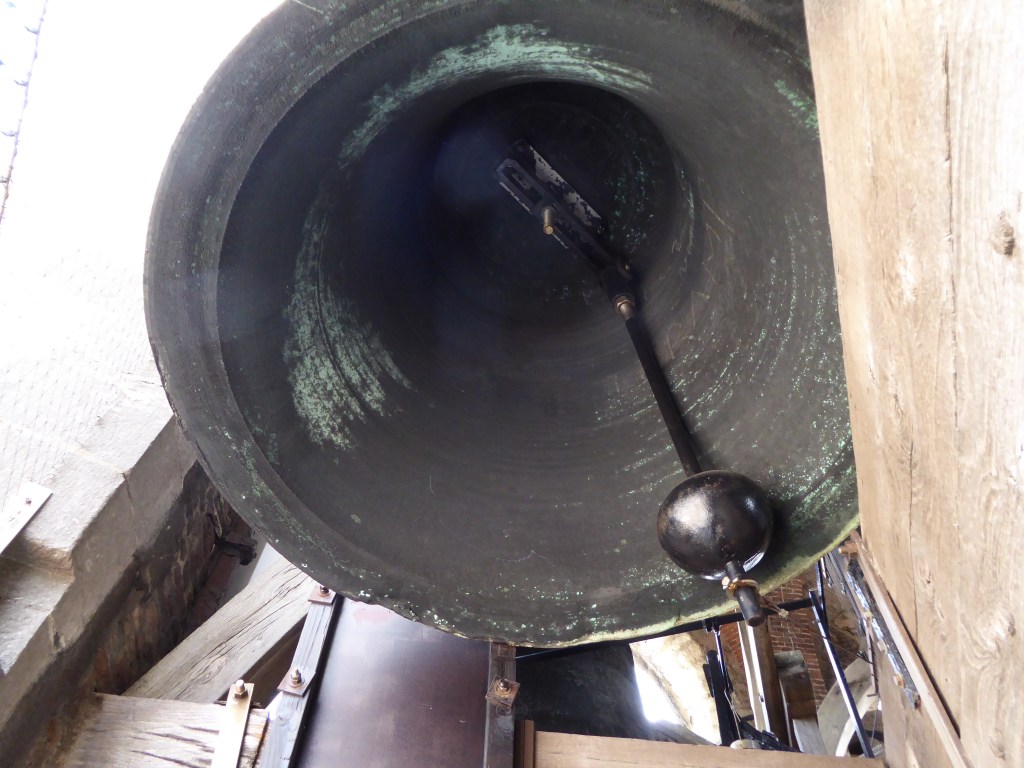
We climbed the rest of the steps and were on top in time to see and hear the bell clanging the hour.
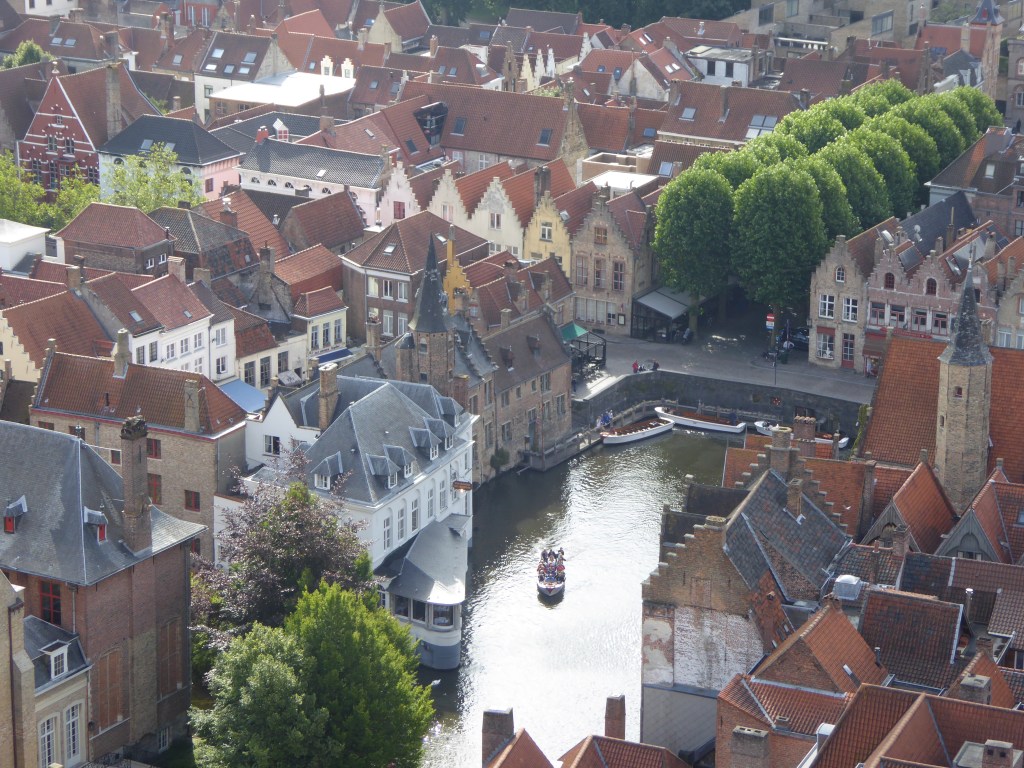
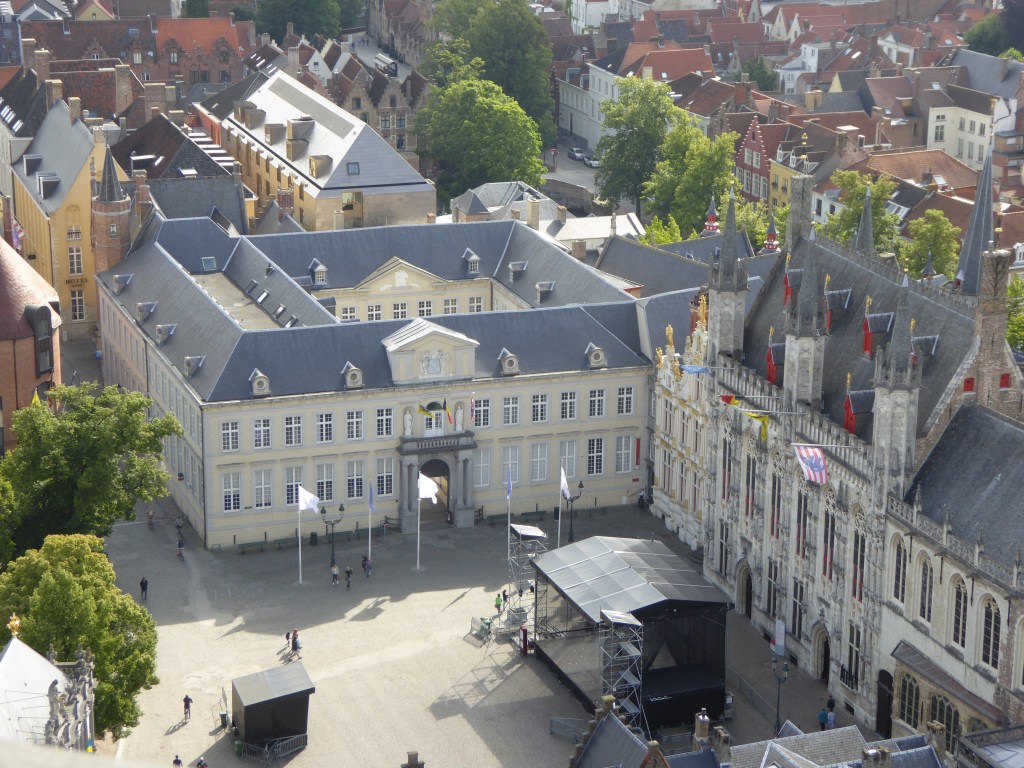
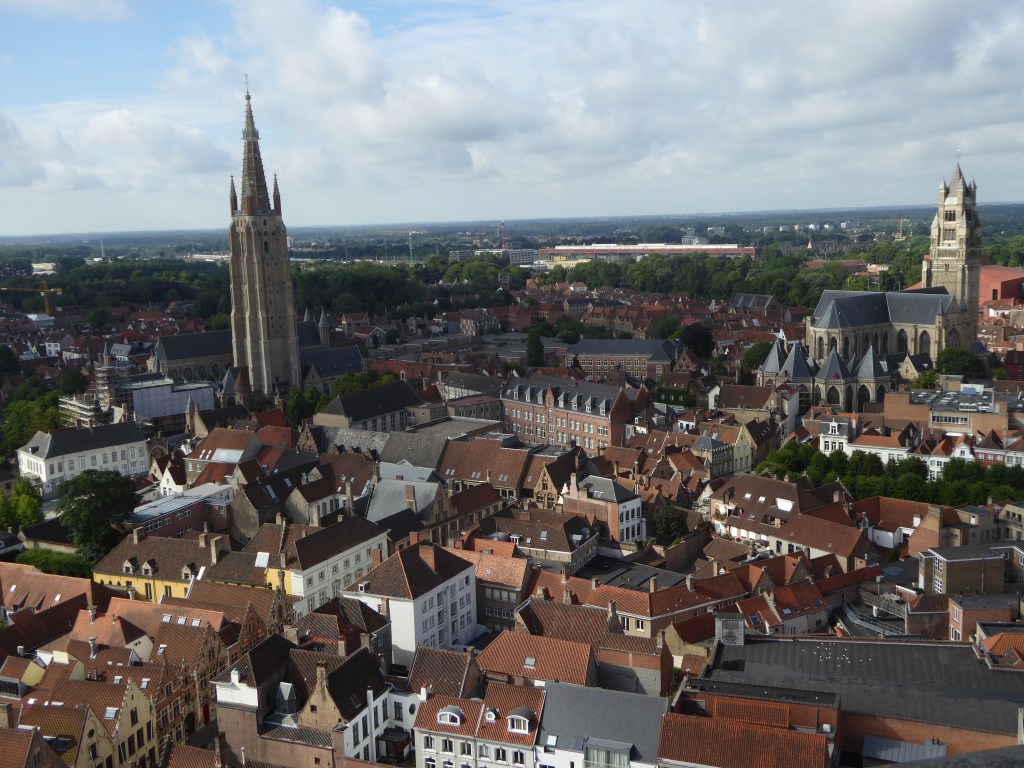
It was great that we were in the first wave of climbers, because no one was going down while we climbed up and they probably had stopped people from going up for a bit, because very few people passed us as we went down.
We had no other plans for the town except to look around and enjoy the buildings. By the time we left, the town was busy and alive. Sometimes second best (the 7:30 bus) is really the best choice. It was this time.
Warnemunde and Rostock Germany
The boat docked in Warnemunde, Germany, and while the ship had a full day tour to Berlin (3 hours by bus each way), we chose instead to tour Warnemunde and visit the nearby Rostock (both medieval towns). Warnemunde was only a 5-minute walk from the ship but Rostock required transportation (either by train or boat). Therefore, with the idea of going to the furthest point first, we took a 20-minute train to Rostock and then the tram from the train station into town center. We had a tour map from the Information center and proceeded to walk.
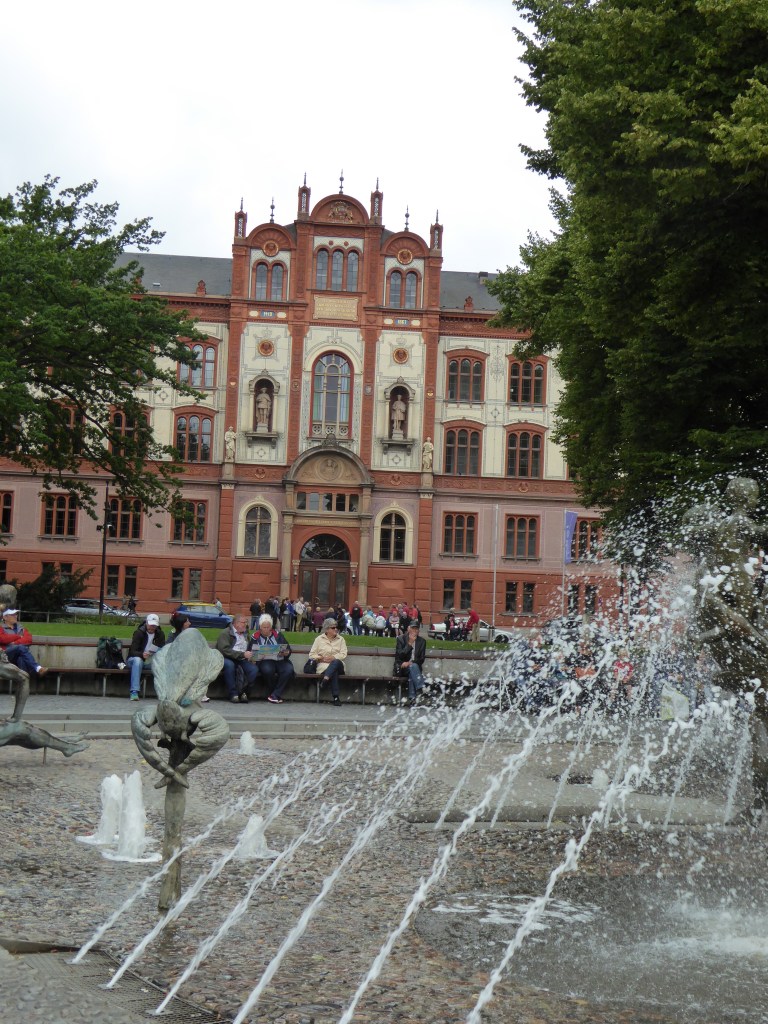
We started at University Square with its charming Fountain of Joy at its center. The University buildings were from the late 1800s.
Next to the University was the Abbey of the Holy Cross, a former Cistercian convent built in 1270. It felt very medieval. It houses an interesting museum of old children’s toys.
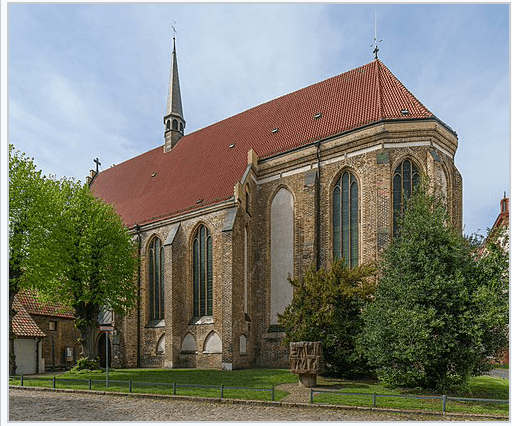
We went along the old city walls built in 1350’s and continued along the harbor until we arrived at St. Peter’s Church.
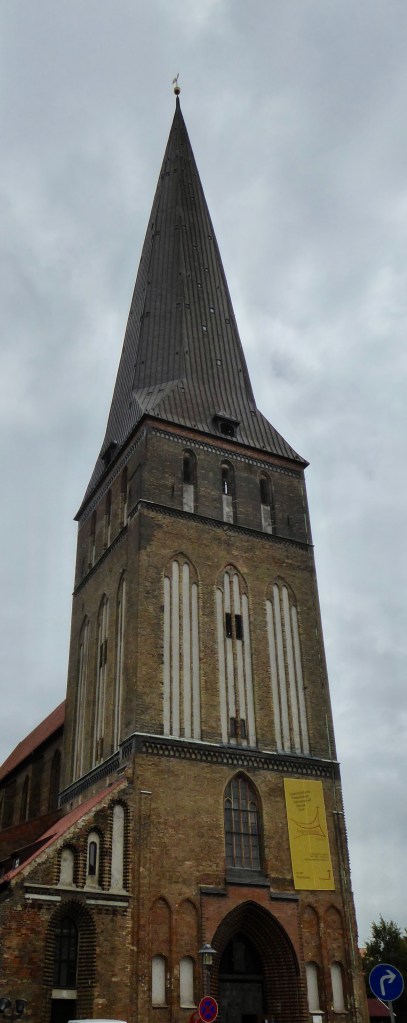
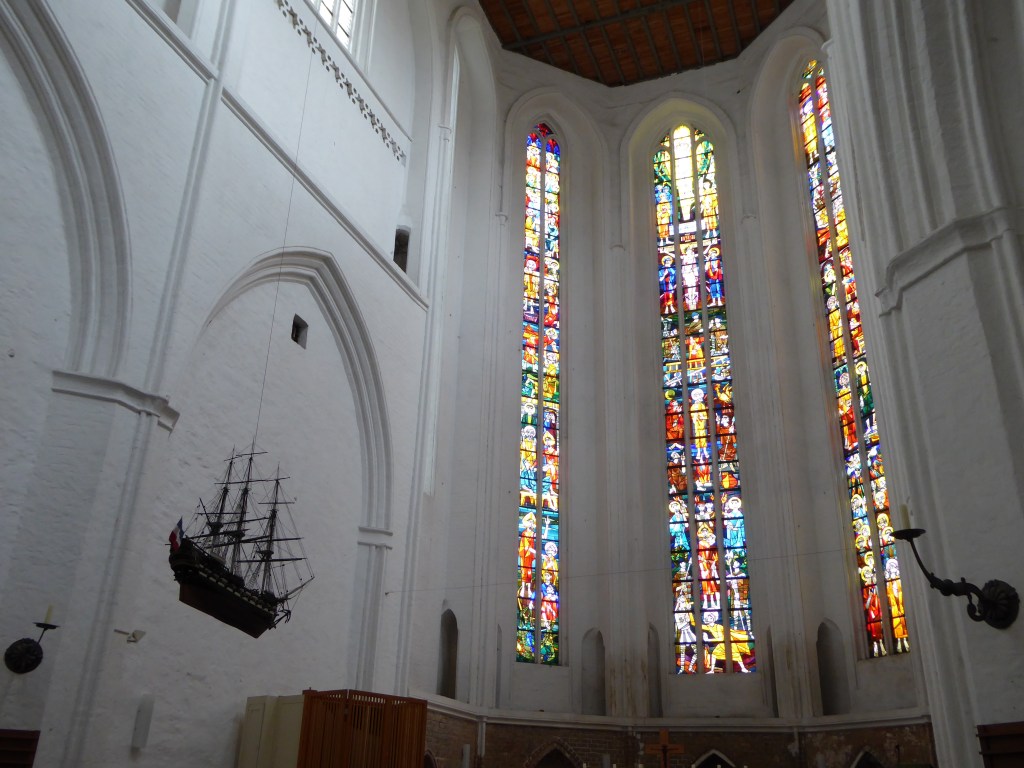
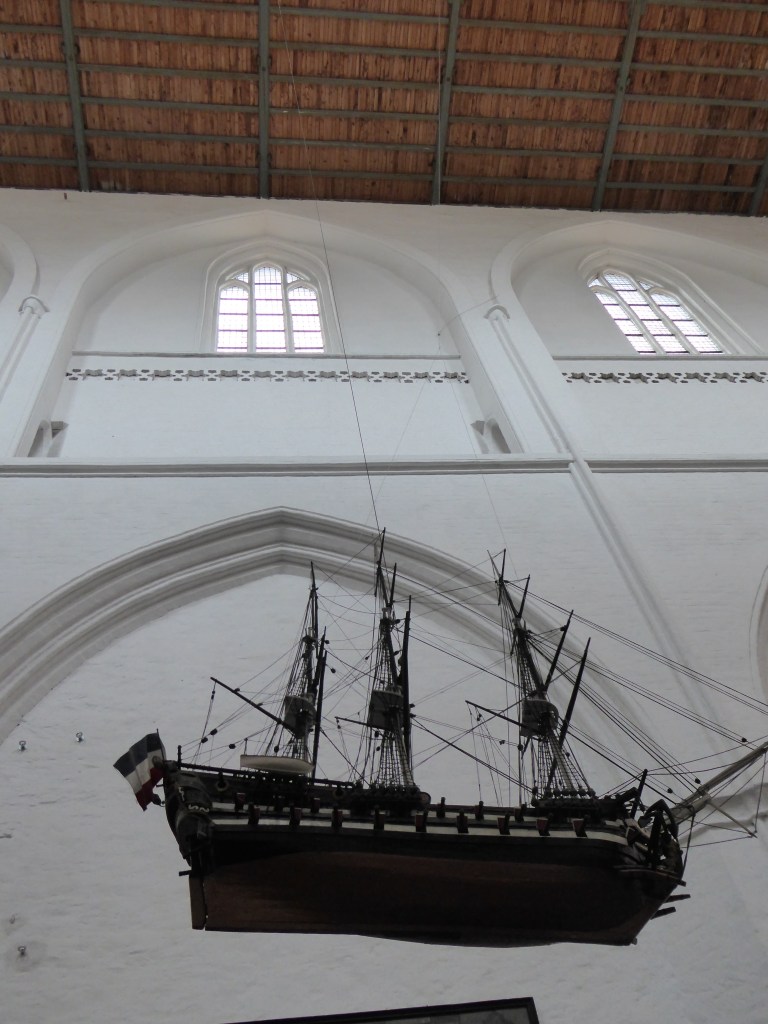
It is the tallest building around and was a landmark for fishermen and sailors. This sailors’ church is decorated with boats on its walls.
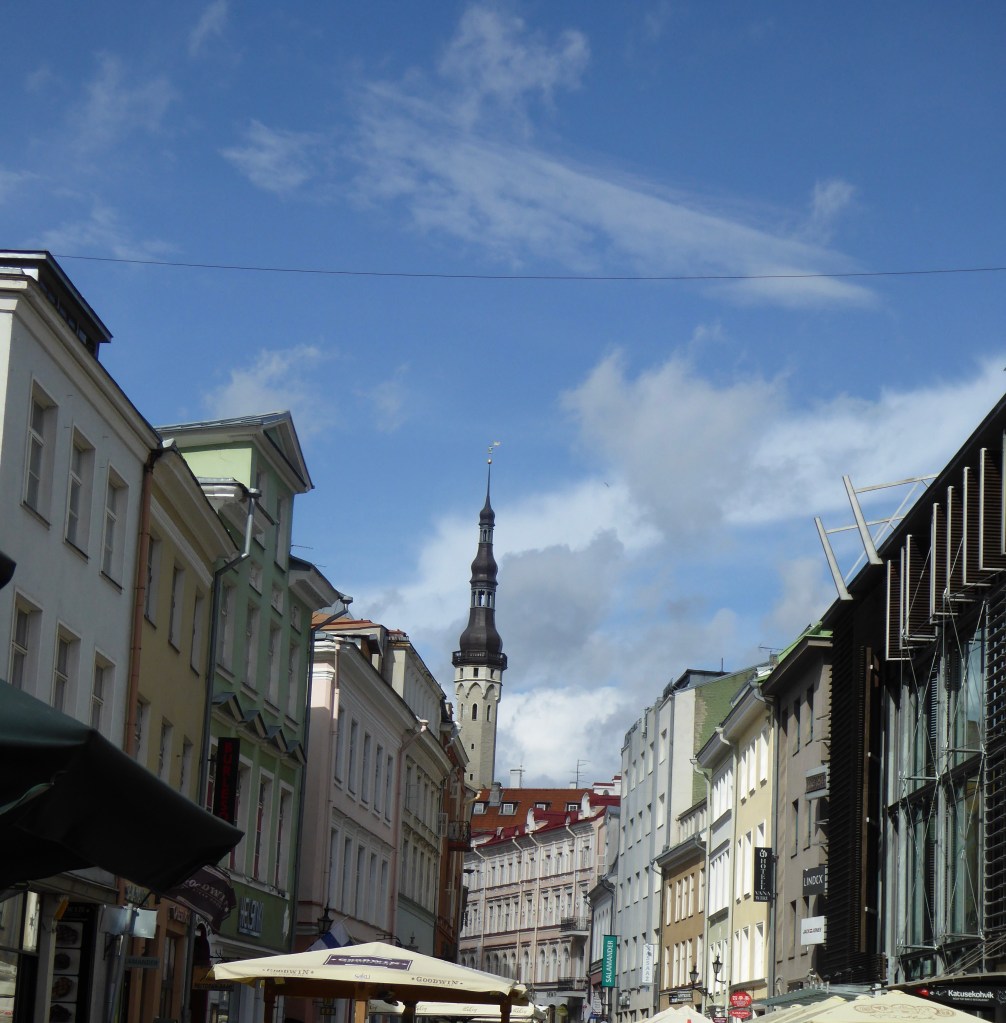
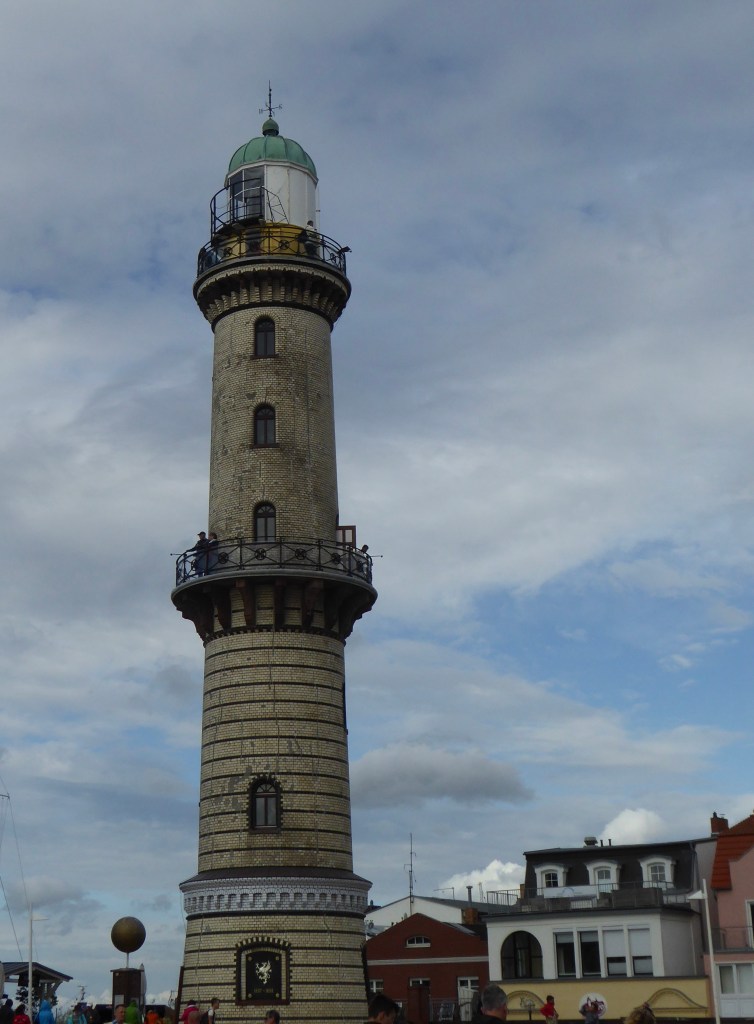
We took a boat to return to Warnemunde. We were tired but resisted resting and toured the town. Luckily it is much smaller town than Rostock. I enjoyed its lighthouse, the windmill and a Neo-Gothic church built in 1866 with a wood altar carved in 1475.
Tallinn, Estonia
Note: we returned to Tallinn on another cruise in 2022. For this write up I combined some of the experiences and will skip Tallinn in the later post.
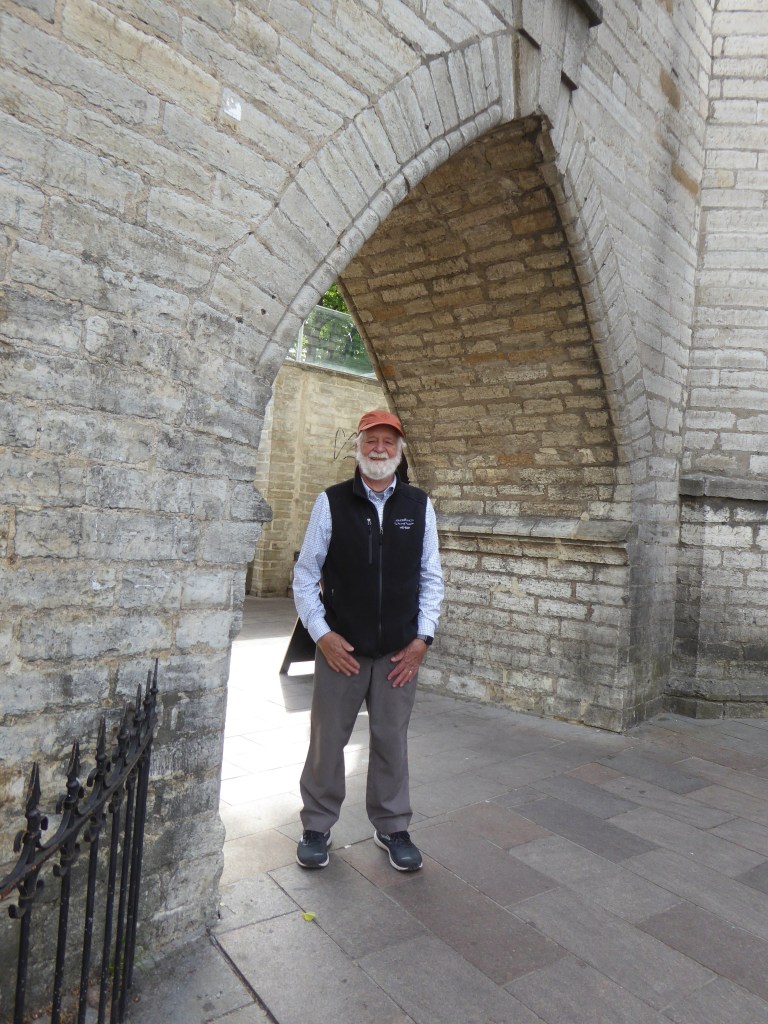
The boat docked close enough to walk to the medieval city. From the moment we entered the walled city, I was enchanted.
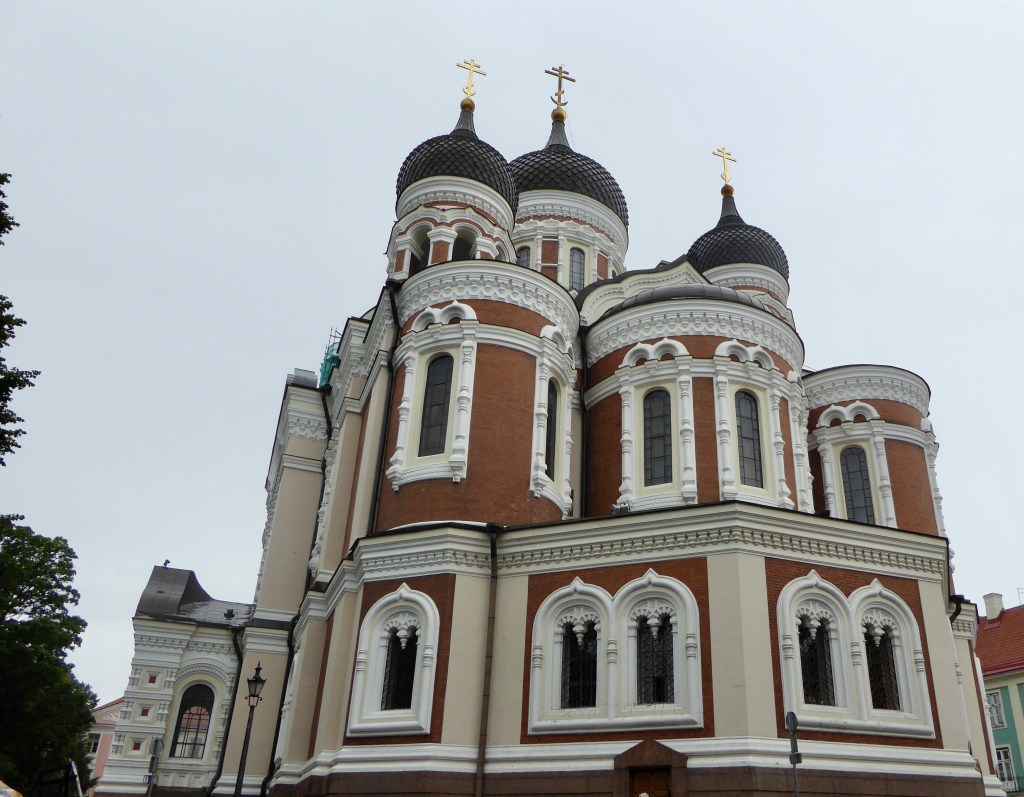
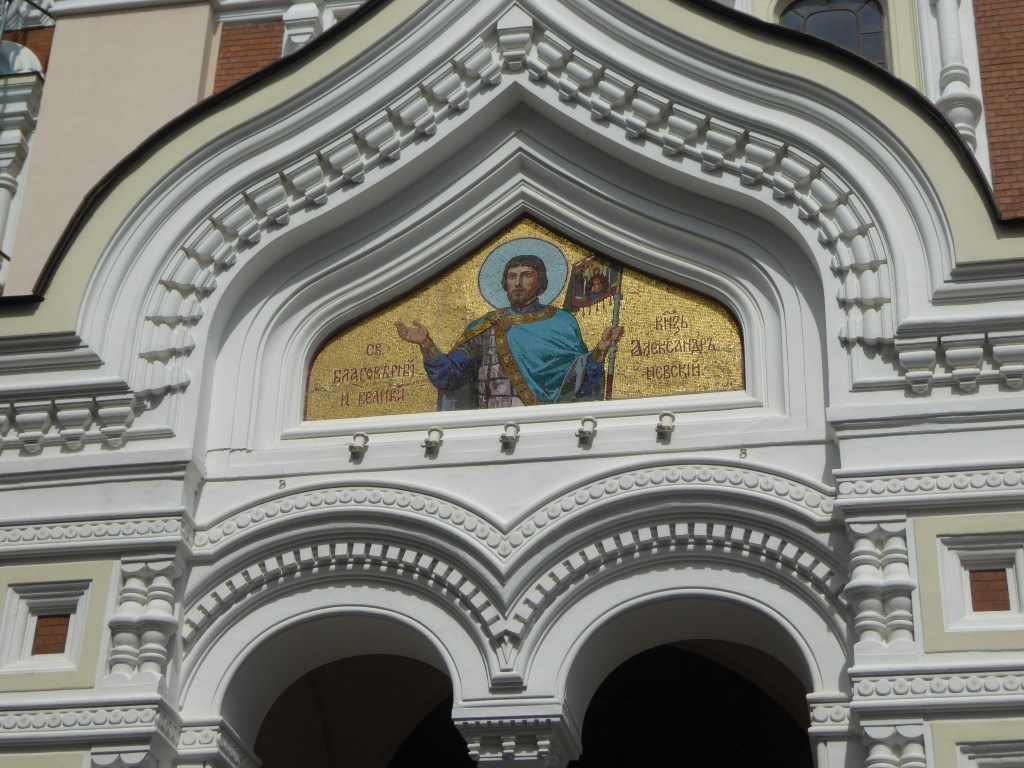
It has an upper city and lower city. The upper city has the beautiful Alexander Nevsky church. It is a Russian Orthodox church built in 1900 when Estonia belonged to Russia. It has a square design, no pews and impressive turrets. It has incredibly beautiful golden icons in the facade.

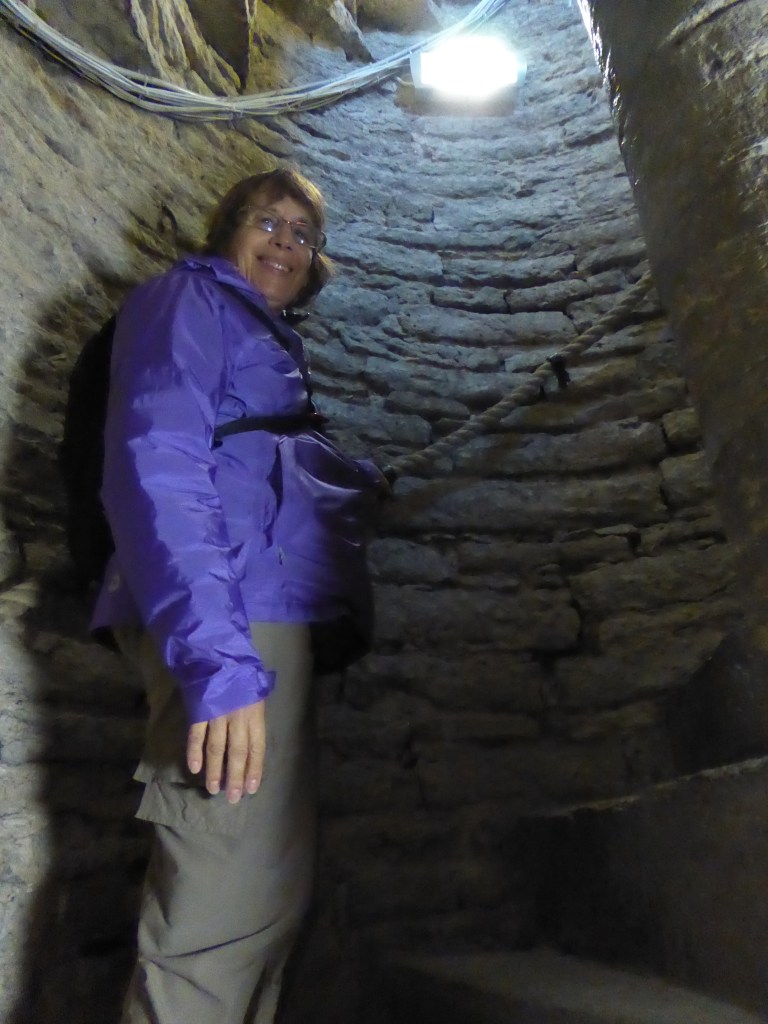
Still in the upper city, we climbed the St. Mary’s Cathedral tower – 140 winding steps.
It was delightful to look down into the lower town from the St. Mary’s Cathedral tower.
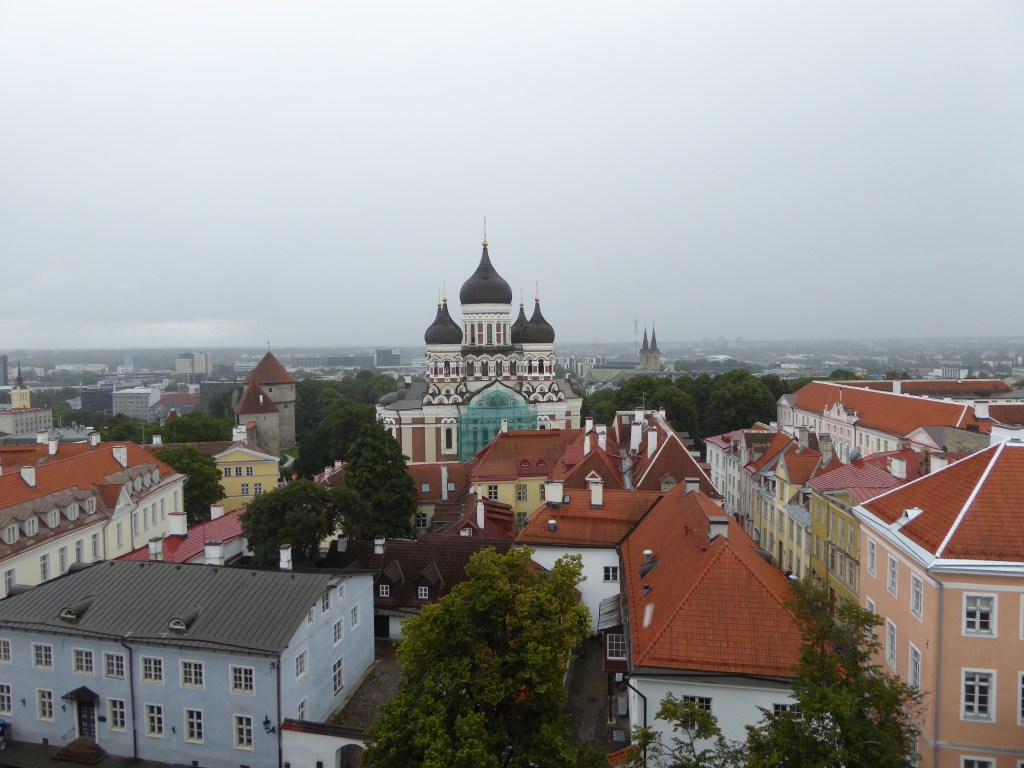
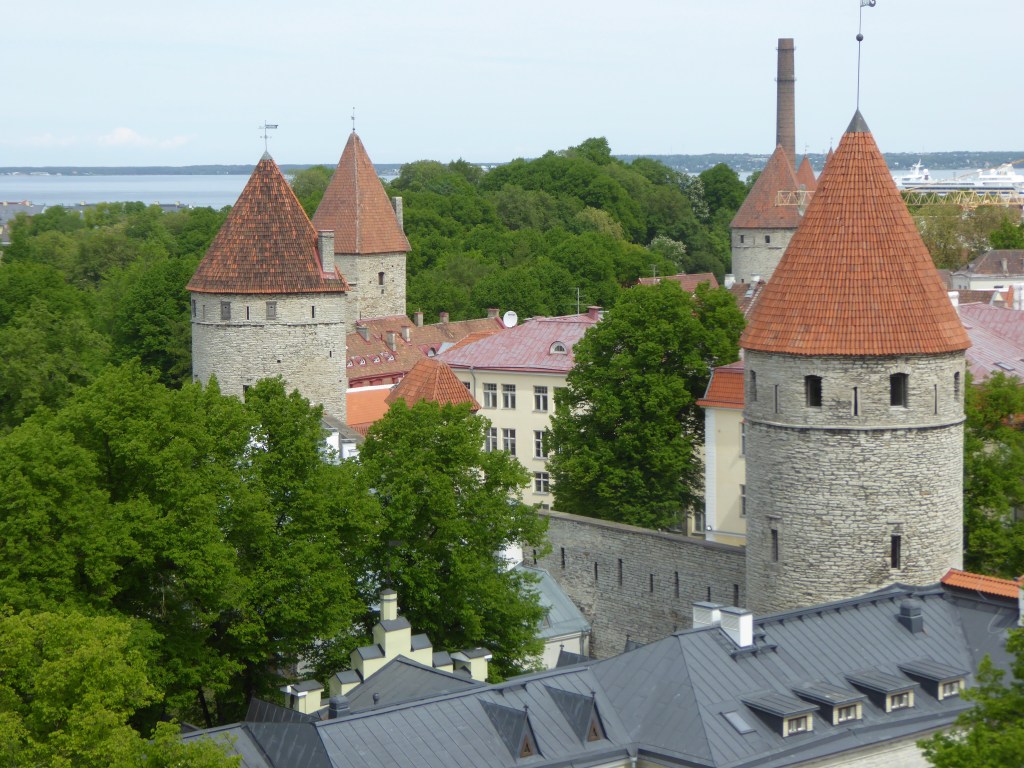
At the Tall Hermann Tower, near the Parliament house, each morning at sunrise the Estonian flag is raised and then lowered at sunset. It first flew up on the tower in 1918. Then from the Nazi invasion in 1940 to 1989, Estonia was not independent. They fly their flag proudly now. It is Blue, Black and White: Blue for a bright future and the Nordic sky; Black for the dark past and the color of soil; and white for enlightenment.
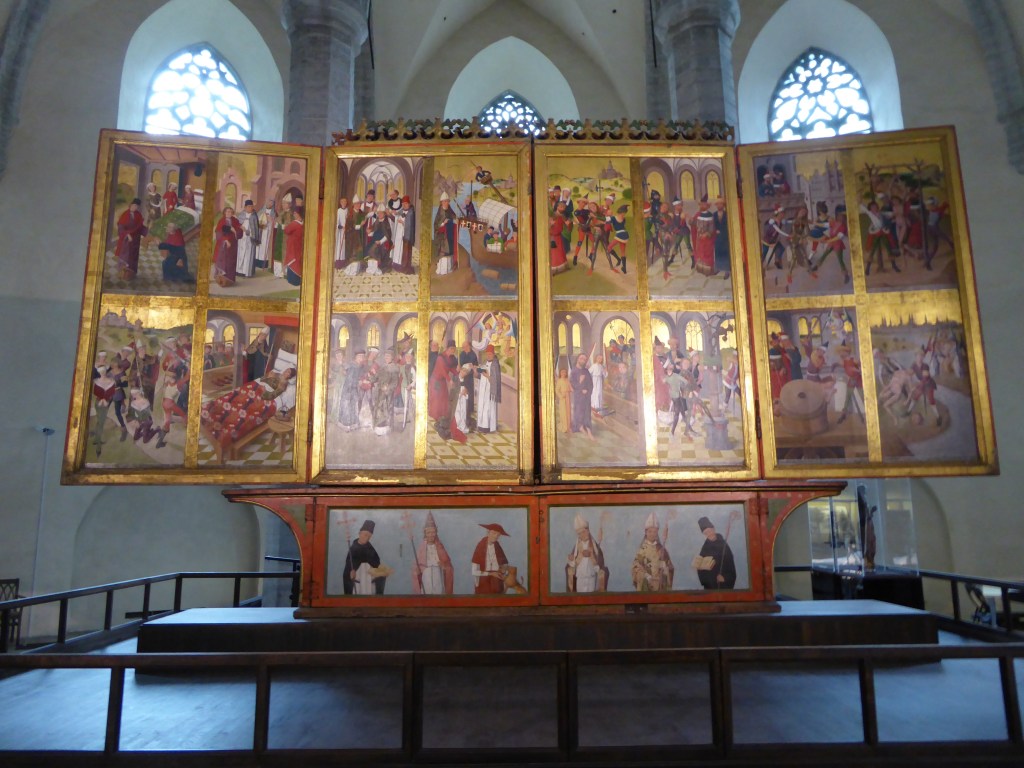
In the lower city we loved the Holy Spirit Church, which is a 13th or 14th century church, made of wood and has lovely altar pieces in painted wood. The pieces were in multiple sections that could be closed or opened partially on different holidays and days of the week.
The lower city is quite small and walkable, with streets going every which way. It was fun to wander around and look at the beautiful buildings.
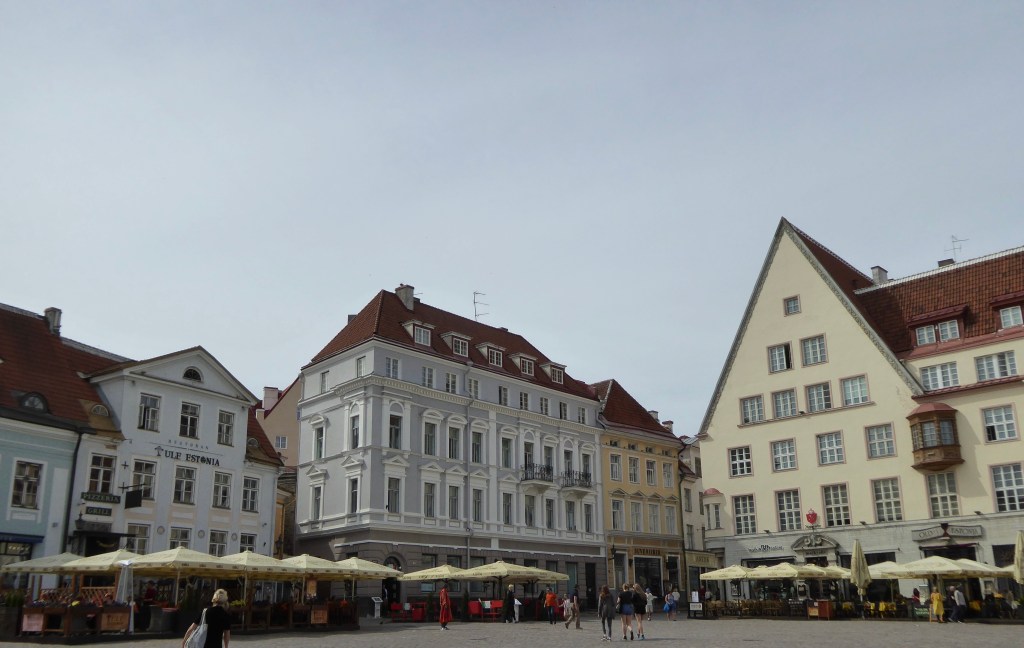
The town square is lovely and lively with its many restaurants.
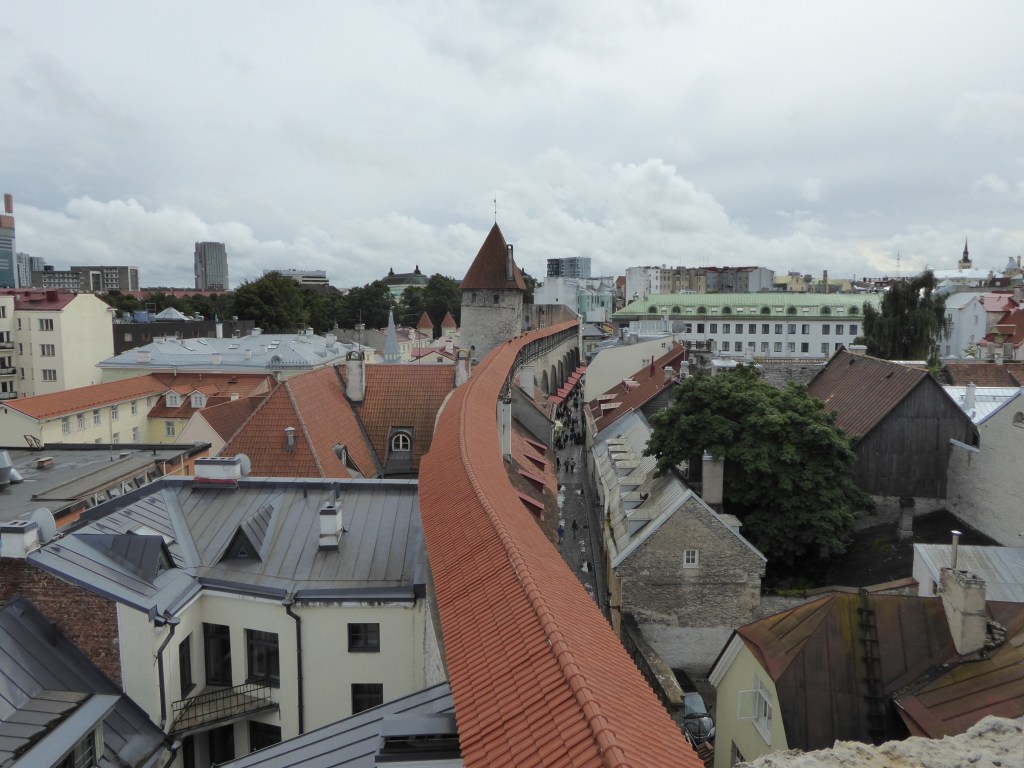
We had a great time walking on the lower wall and looking down into the town.
We had quite a few adventures. During our first visit (2015), at the information desk, we learned that there was concert in the St. Catherine church. We had the address but still had trouble finding it.
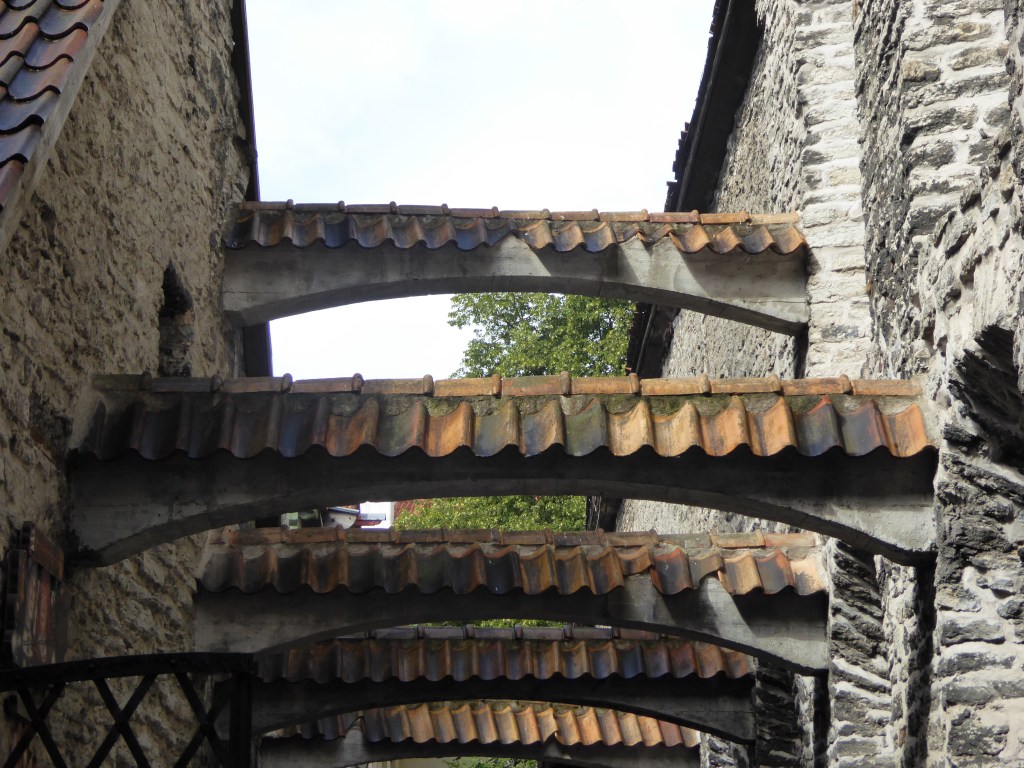
We were looking for a churchy looking church but St. Catherine is a ruin. We found it by a miracle, going through the St. Peter/St. Paul church and through this walkway.
The concert of medieval music in a ruined medieval church that hasn’t been used in 500 years was fantastic. The performers explained the Hurdy Gurdy they played. It is similar to a bagpipe, in that there are 2 drone strings (strings that play just one note as the background sound). The third string can be manipulated to play different notes while a crank is cranked on the side. I love learning new things.
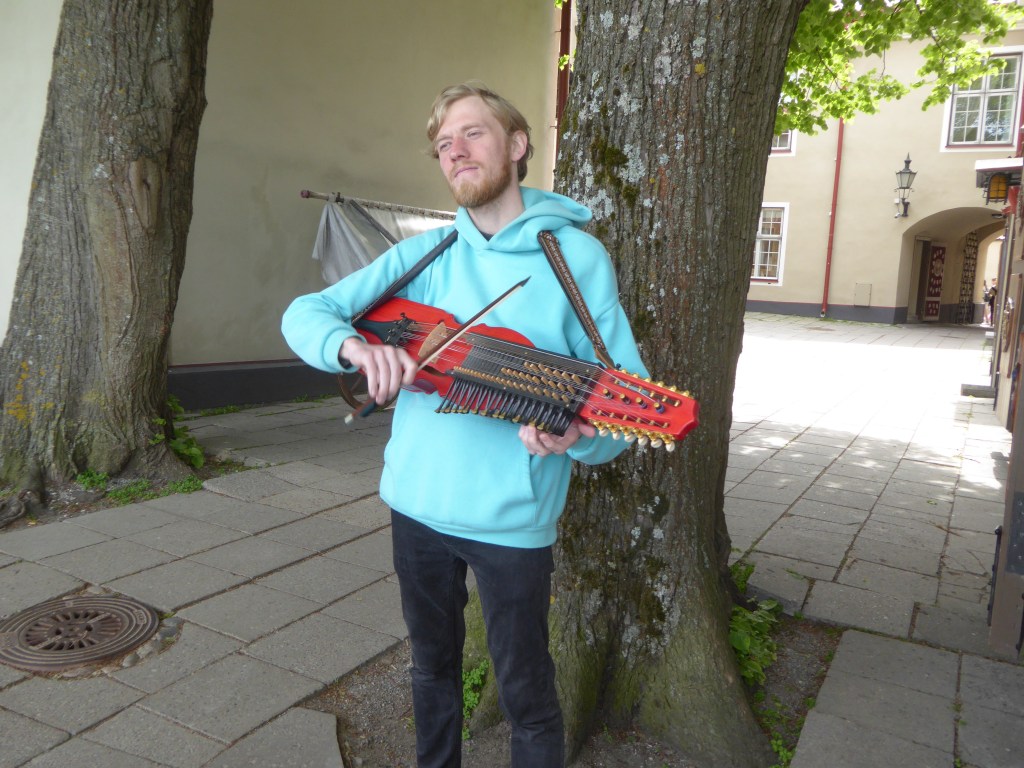
Our next adventure (2022 trip) was watching a young man play a harp/violin, 16th century instrument from Sweden. It had 16 strings and lots of pegs to push.
Finally (also in 2022), we learned about their public bathrooms. To use the bathroom, you have to put in a 20-cent coin. The door opens and then closes after you. You have 20 minutes to do your business. Then after you open the door, you better not try to sneak another person in to save 20c. Why? The bathroom automatically sanitizes and water washes the floor and toilet. If someone is there, they will get wet.
St. Petersburg, Russia
The main reason Jerry wanted to go on this cruise was to see St. Petersburg. It was a good thing we did it in 2015, because our 2022 cruise had to cancel that port (Ukraine war).
In 2015, St. Petersburg was a popular cruise port. There were 10 slips for cruise ships and the slips were full, which means about 20,000 people coming into port. Luckily, though, not all passengers go on tours and not all tours go to the the same sites at the same time.
The boat docked overnight in St. Petersburg, which allowed us to spend two days in the city. St. Petersburg has many fabulous sites.
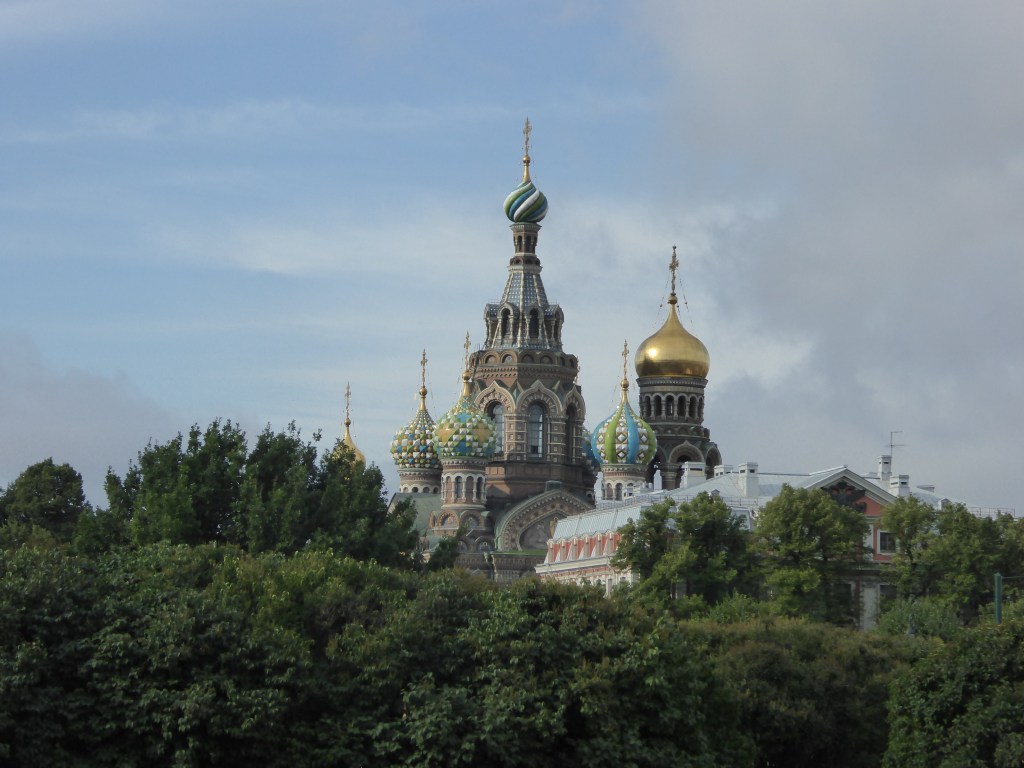
There are many Russian Orthodox cathedrals in St. Petersburg, with their distinctive 5 onion shaped spires. The central spire is larger than the other four and represents Jesus. The other four spires represent the disciples. Most of the spires are gilded which gives the city a bright feel.
The main attraction is the Winter Palace/Hermitage Museum. The advantage of being on a tour is that the Hermitage opens at 9am for tour groups. Although there were many other tour groups, the guides went in different directions so it did not feel too crowded.
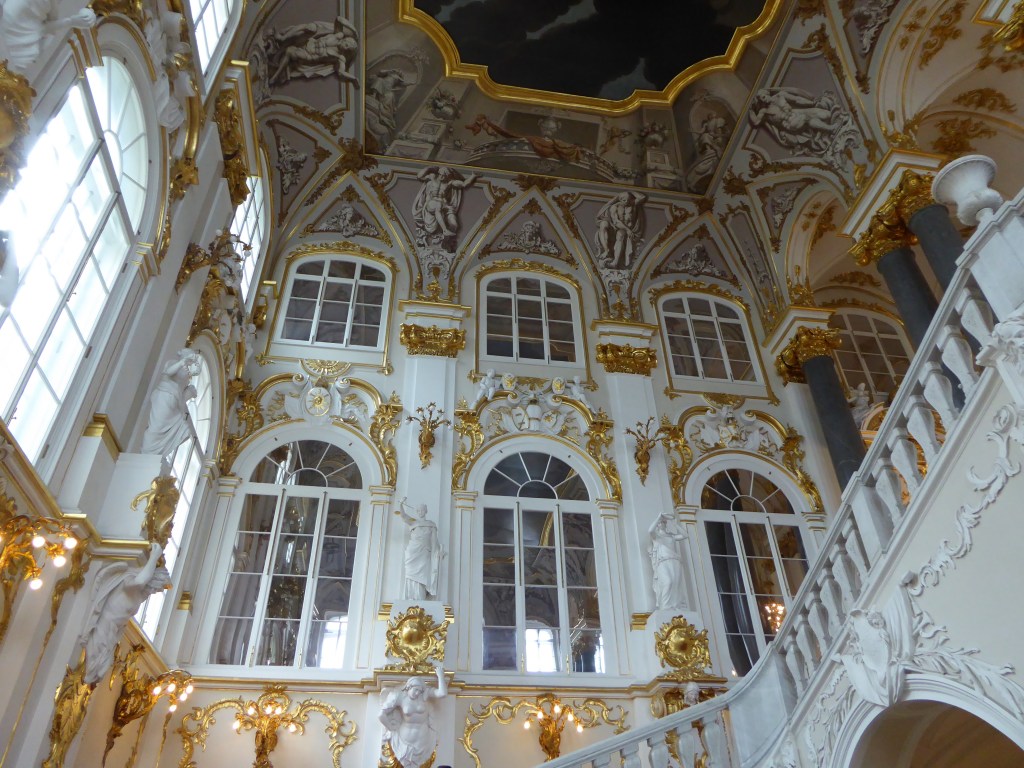
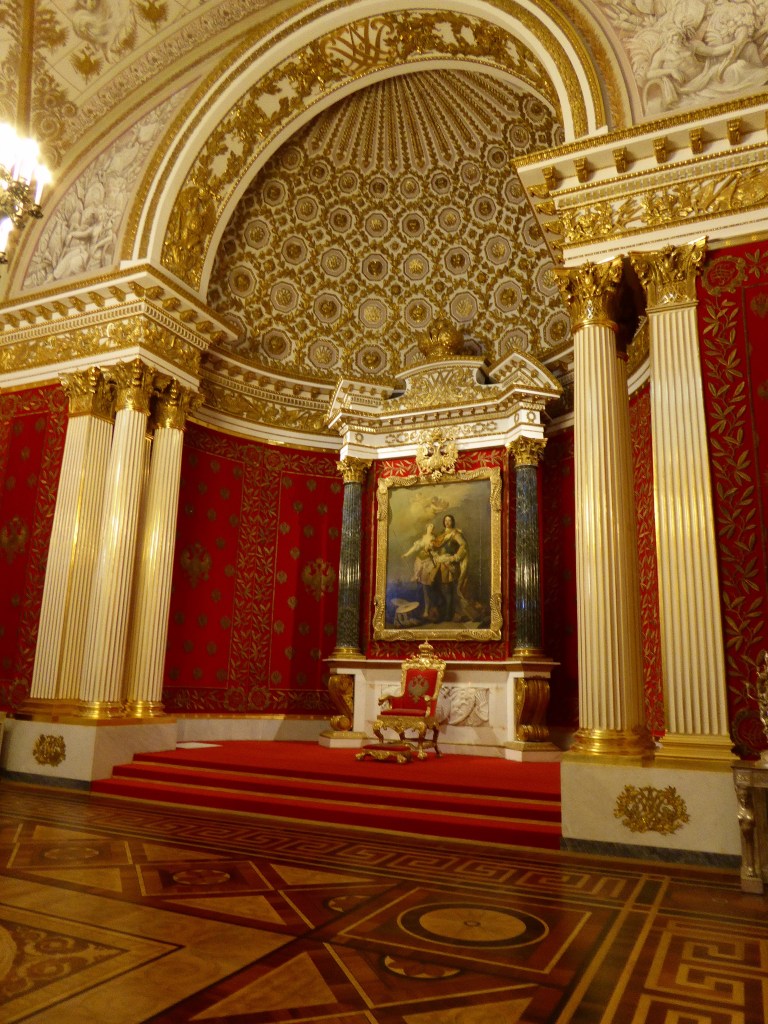
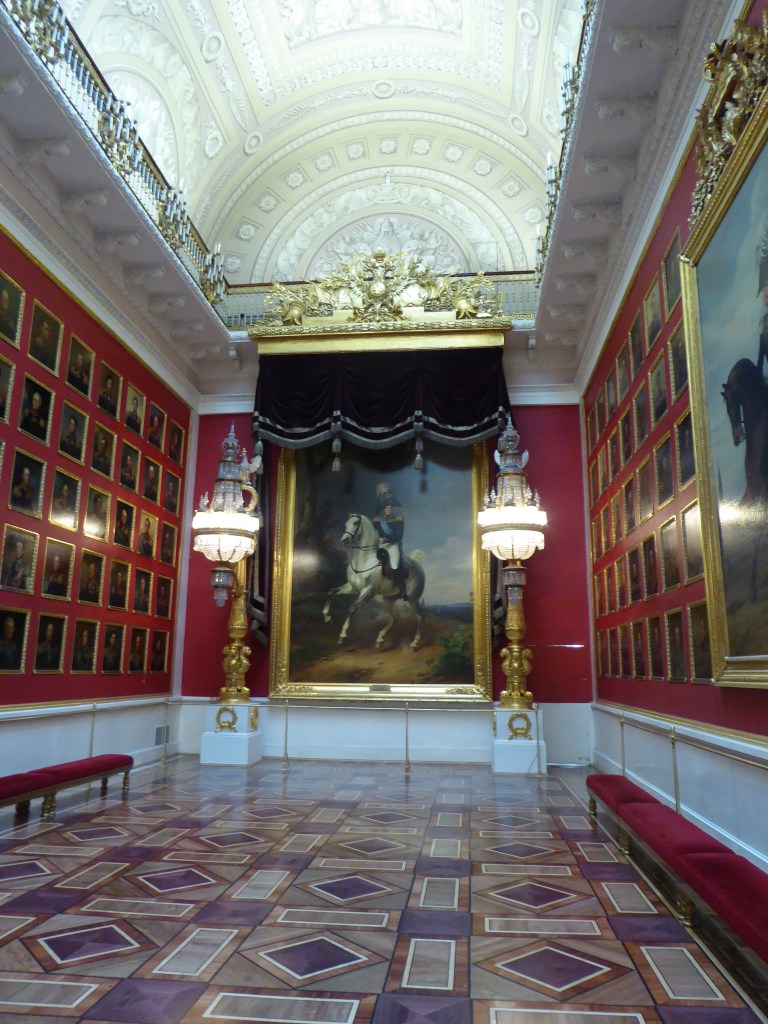
How does one describe the Winter Palace/Hermitage Museum? Over the top? Amazing? Let me try to unsuccessfully describe our 3 hours there. The Winter Palace was built around 1716 by Peter I (who loved European art and architecture). He built a small structure. His daughter, Empress Elizabeth increased it size and scope in the 1740s when she ruled. She created the palace in the Rococo Style. The Rococo style is ornate, therefore, there is much silver and gold, painted ceilings, and magnificent decorations. It truly looks like a palace of the imagination. The walls have the finest paintings, the tables are of lapis lazuli (blue) and malachite (green), the niches are full of vases and statutes. The floors are made of marble or wood inlay of different types of woods. Today’s floors are not the original ones but faithful reproductions. We saw the thrones and the rich apartments but not the original furniture.
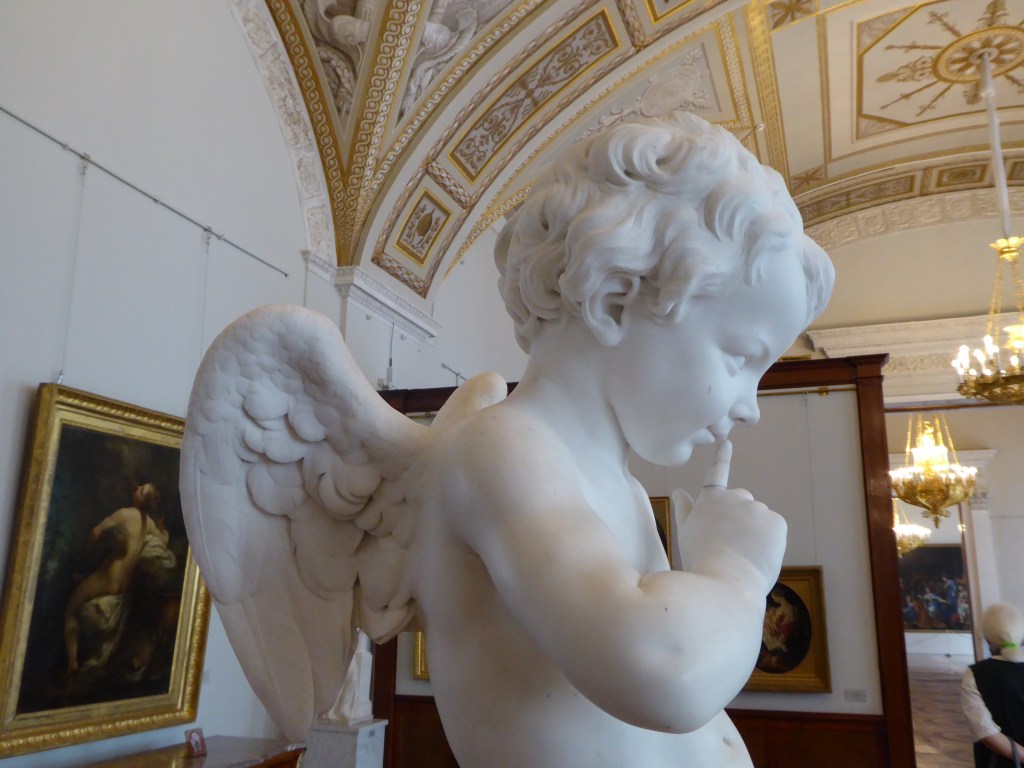
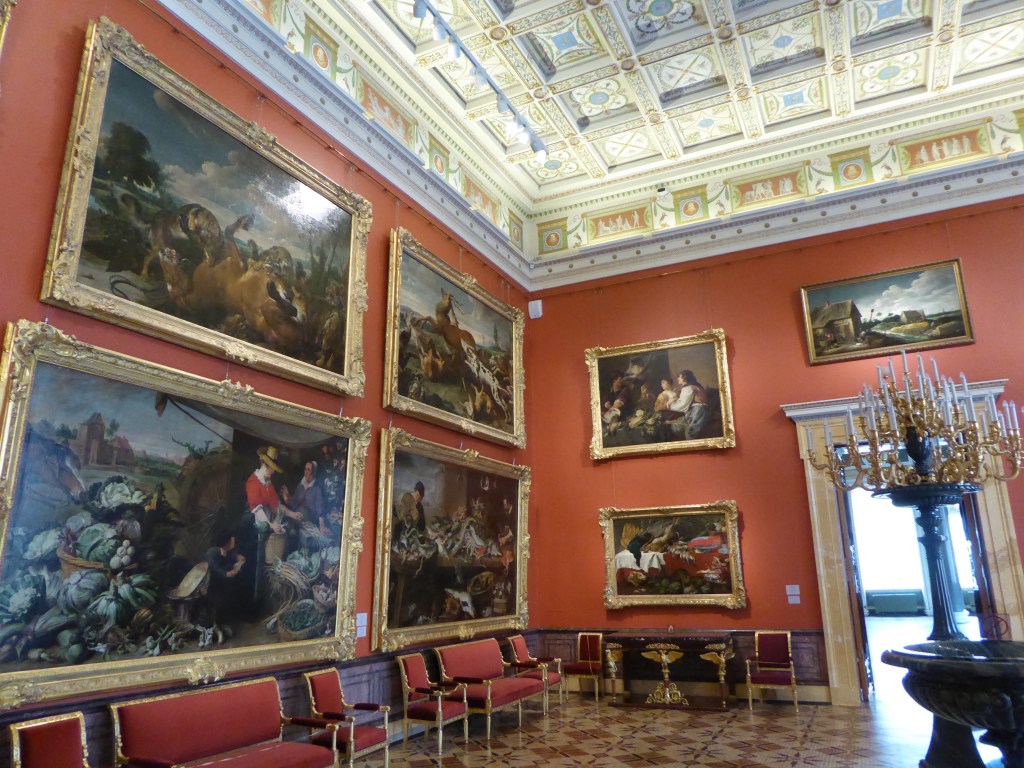
Catherine the Great built the hermitage adjoining the Palace. This is where she placed all the artwork that she bought. The Hermitage has some of Western Europe’s best art. According to our guide, it has the biggest Rembrandt collection of any museum. Peter I spent 2 years in Amsterdam and was the first to buy a Rembrandt. He must have had a good eye for art as did Catherine the Great. The museum has paintings by El Greco, Boucher, Titian, the Flemish artists, the Dutch artists etc. etc.
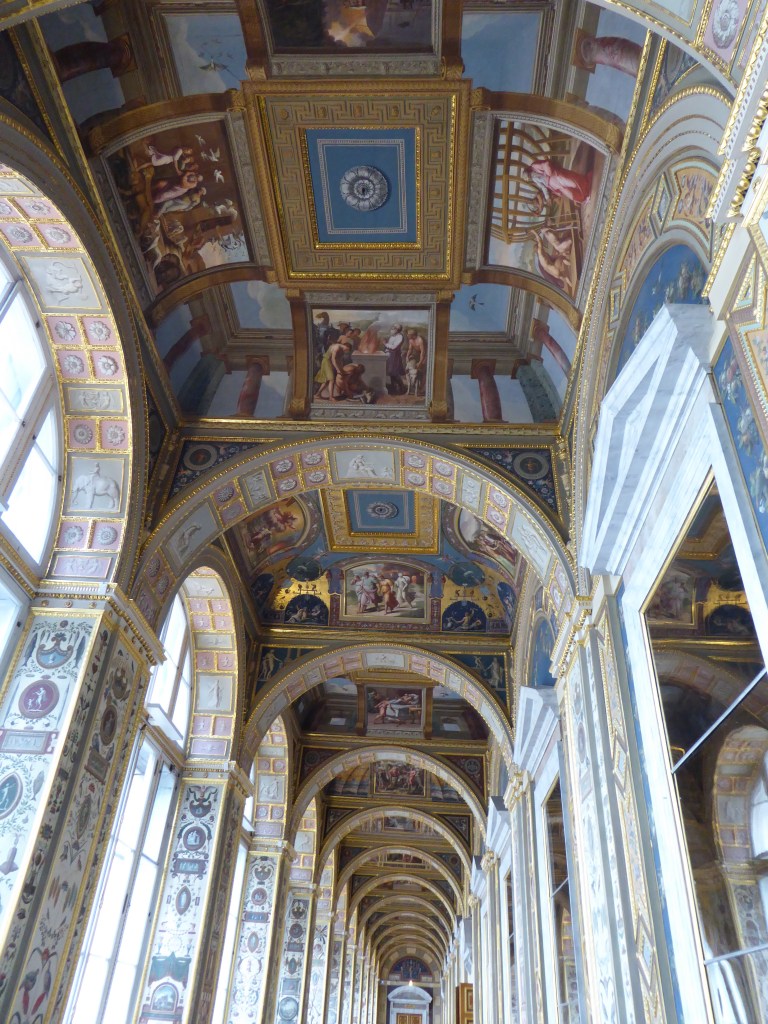
We walked through a series of arches made from Silver and Gold to get from the Winter Palace to the Hermitage.
We also saw the room and dining table where the 1917 October revolution started by arresting the ruling parliament.
Another wow experience in St. Petersburg is the magnificent St. Isaac cathedral. St. Isaac may have been a minor Saint but this church is incredible.
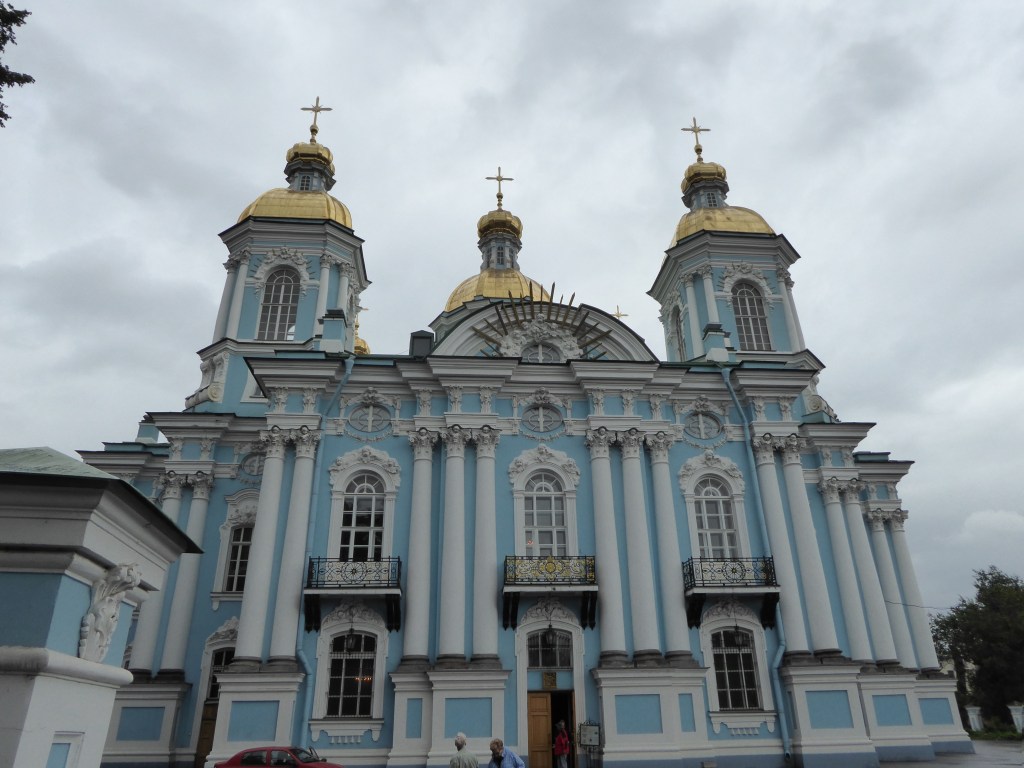
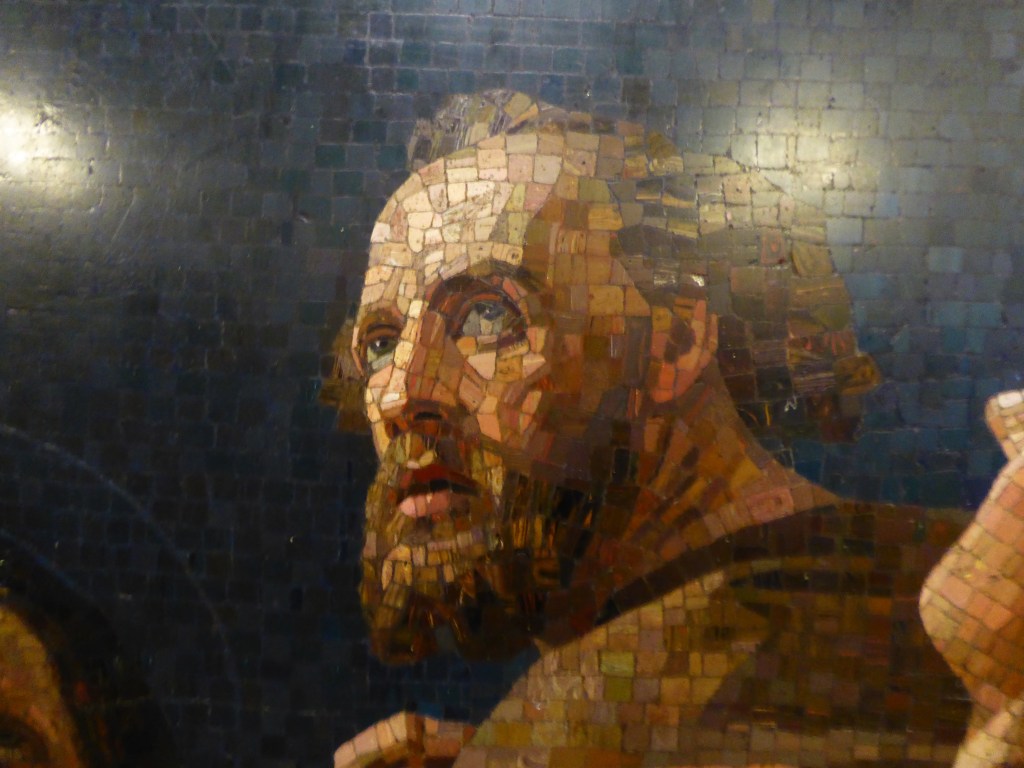
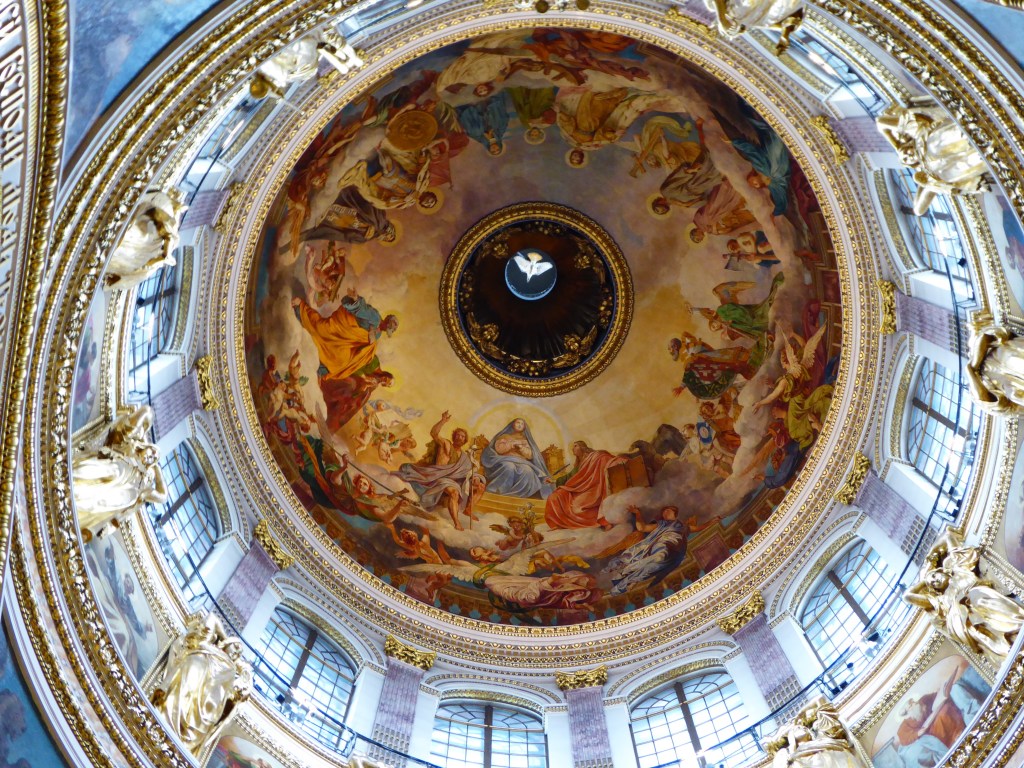
The “paintings” on the walls are really mosaics. The original paintings were deteriorating very quickly, therefore the architect decided to change them to mosaics. If you look closely, you can see the glass pieces, but from further, they look exactly like paintings. They are absolutely beautiful with wonderful gradations of color.
St. Isaac is the 4th largest cathedral in the world (after Rome, London and Florence). The dome was gilded, the columns were lapis lazuli and cornelian. Lapis lazuli was very expensive, so they traded silver for it, pound for pound.
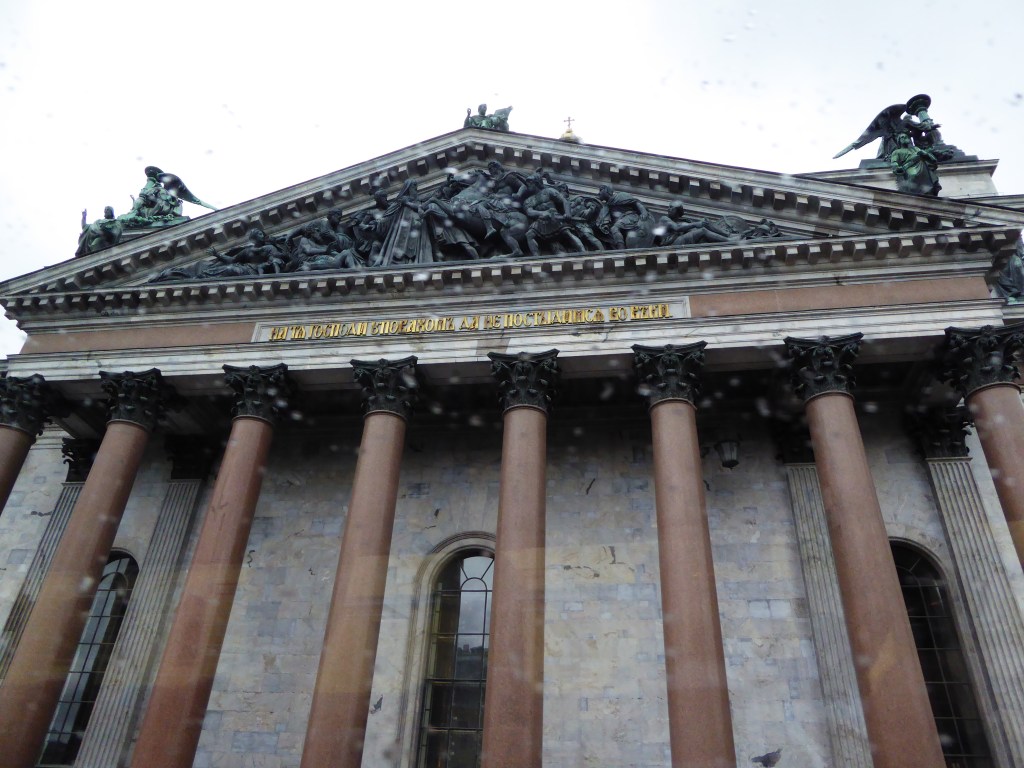
Because Communist Russia was anti religion, the cathedral was a museum for many years, but now a small section of it can be used for religious purposes.
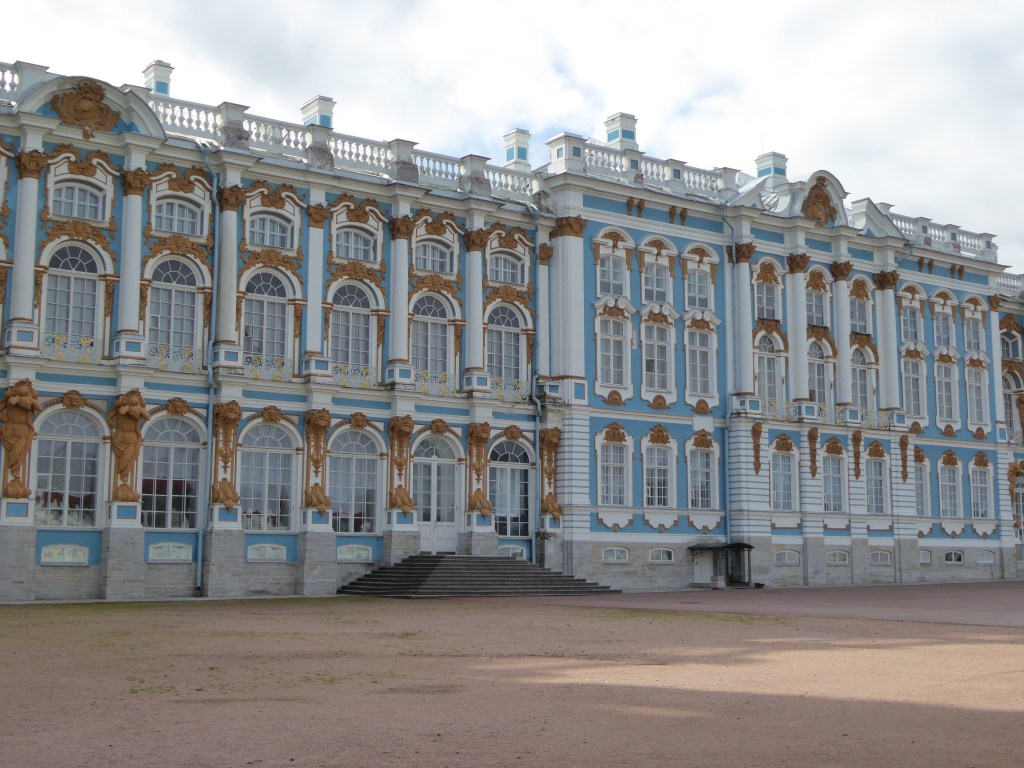
On the second day, we visited Catherine’s Palace. Our tour group was early, therefore, we were #1 for entering. We had to wait for 20 minutes and it was cold and cloudy. But there was a band entertaining us and when they played the Anniversary waltz, Jerry and I danced and entertained our tour mates.
Catherine’s Palace was built for Catherine I, Peter I’s wife in 1716 as a small palace. It was expended and re-done by the energetic Elizabeth in the 1740s. I thought yesterday’s palace and Hermitage were amazing, but this was over the top as well. Again, it was in the Rococo style with gold and silver everywhere.
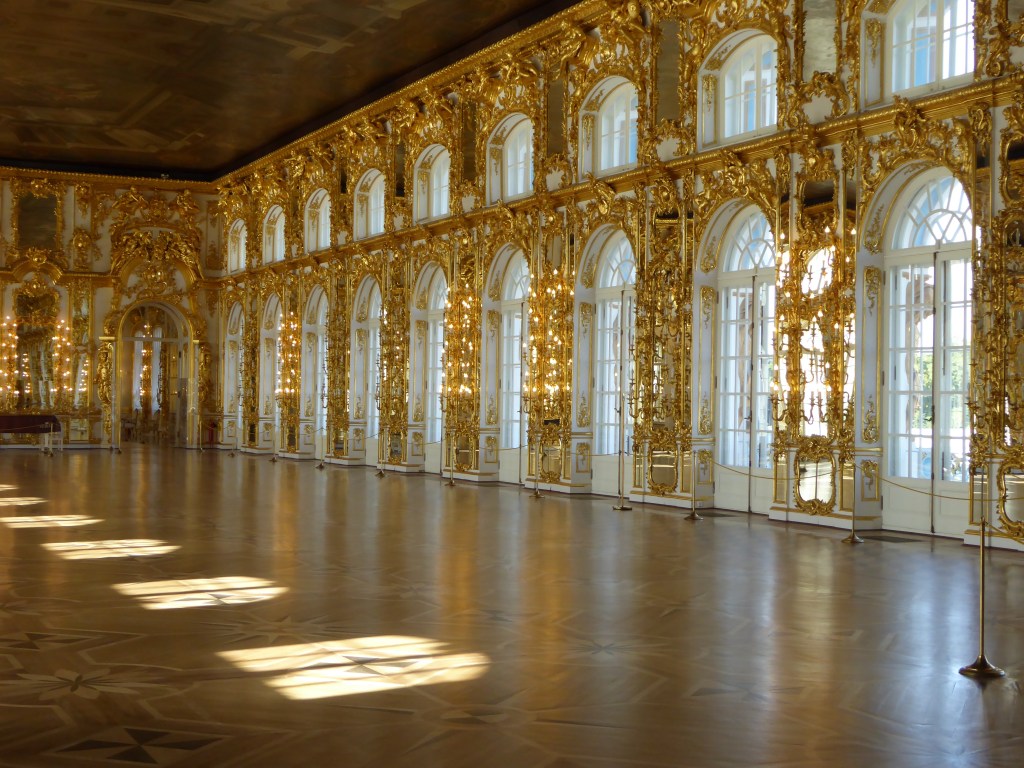
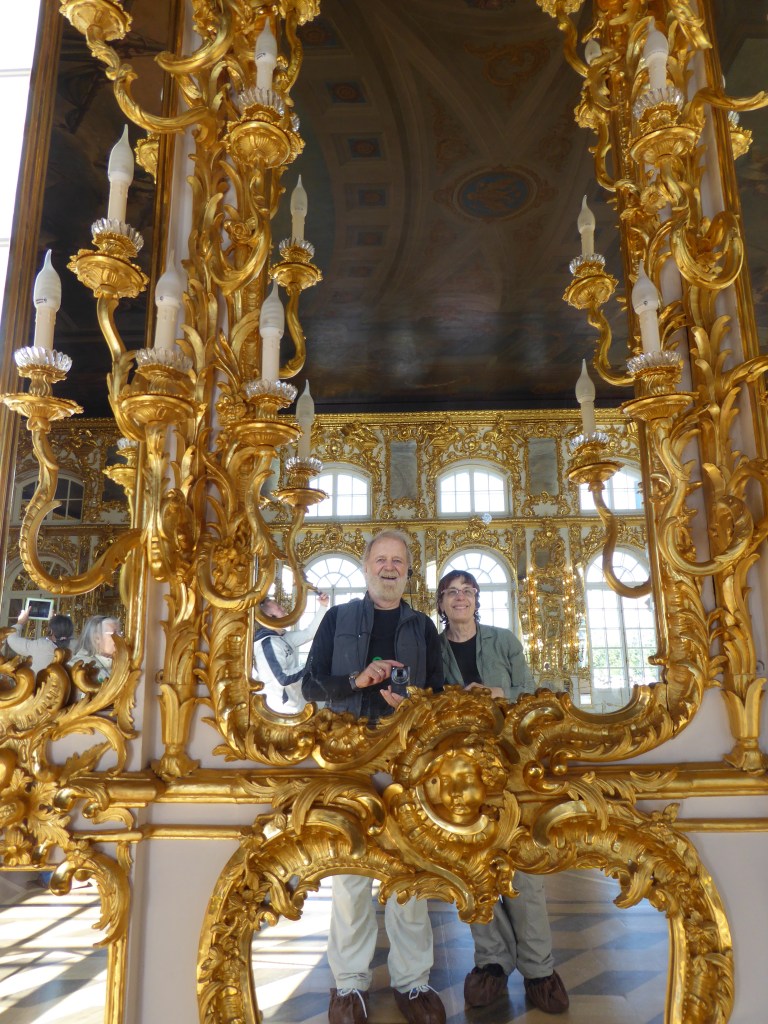
The entrance hall had scarlet curtains and stucco figurines on the walls. The ballroom was very large and the walls were of gold leaf designs and mirrors. There were also 660 candles in sconces on the wall in the old days. The candles would throw quite a glow. The effect today is breath taking with electric lights. It would have been even more so in the candle days.
We walked through a number of dining rooms with porcelain dish sets, made to order to match the room’s decor. There were statues, vases and beautiful tables.
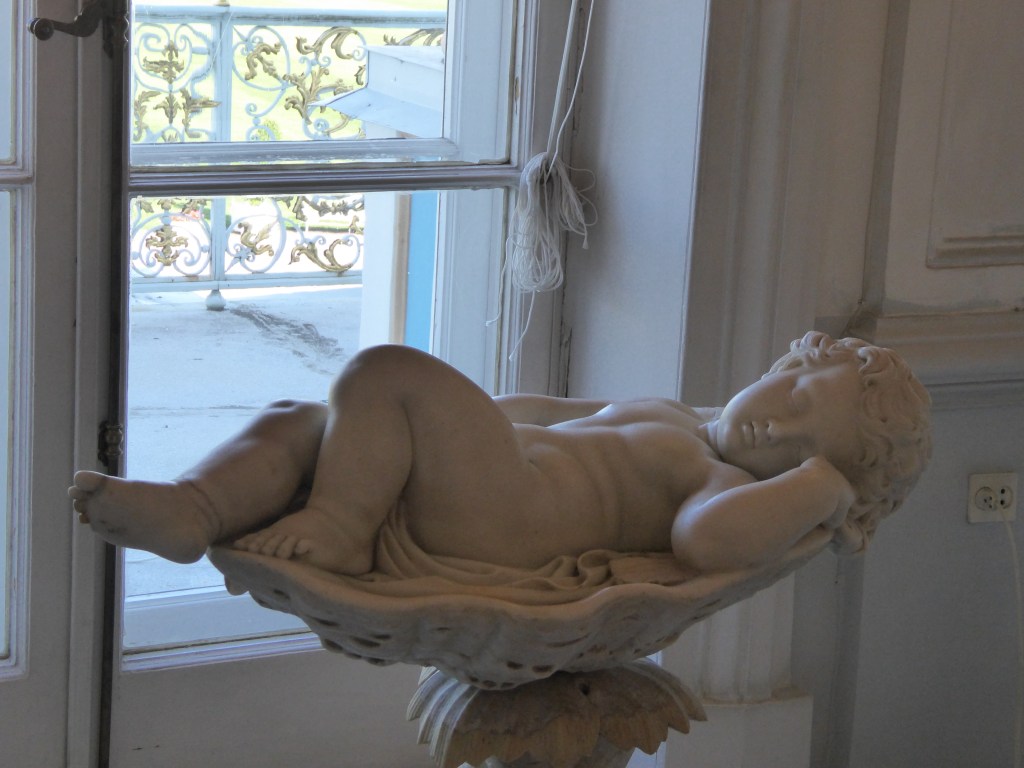
At each end of the staircase were reclining cupids: The west one had its eyes closed (night) and the east one had eyes open (morning).
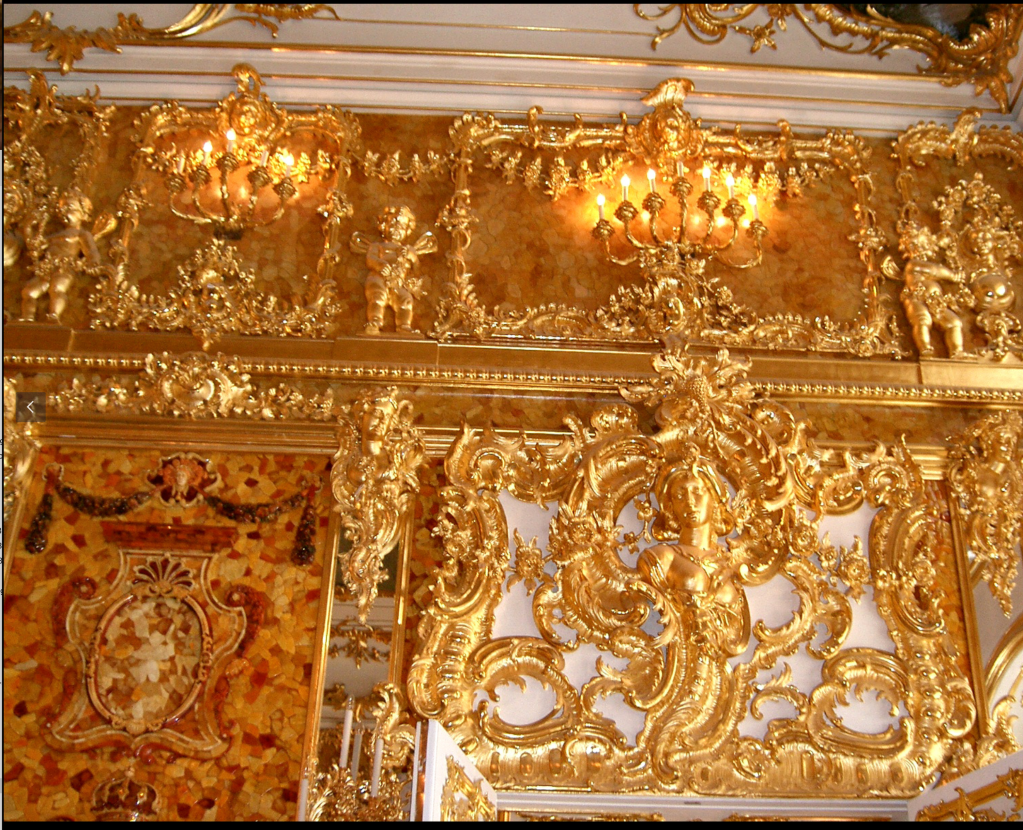
But none of the rooms had the effect of the Amber Room. The entire room is lined with different chips of amber. Unfortunately, the Nazis took the original off the walls, therefore, what we saw were replicas. The original amber has not been found.
Finally, we went to Peterhoff gardens. As I said before, Peter I had gone to Europe. There he saw Versailles. He wanted his own Versailles and hired a French architect and engineer and created the garden. The waterfalls and fountains are just beautiful. They work via gravity from natural water streams higher than Peterhoff.
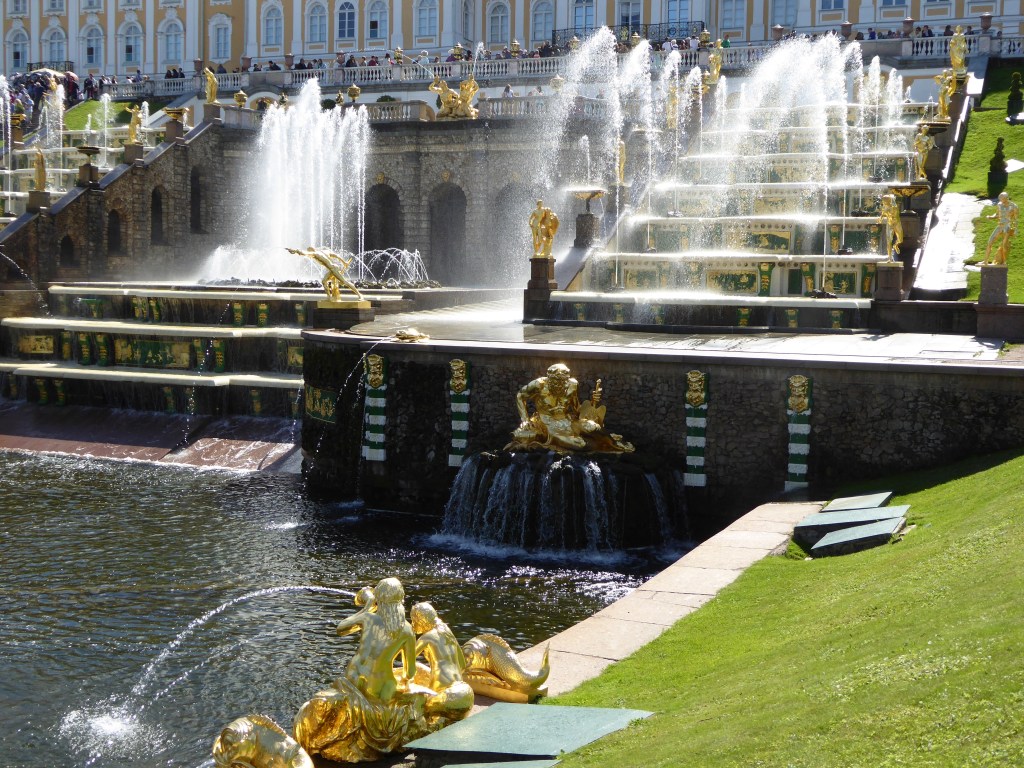
There was one very large fountain, then on either side, were steps with fountains on them. Somehow the water was all of one level even though the steps were different levels. There are allegorical statues around the center and on each side.
St. Petersburg was fabulous.
Helsinki, Finland
We had been to Helsinki in 2002 but did not report on it. I returned to Helsinki in 2022, therefore this report will briefly cover all three trips.
Helsinki is a lovely city but it is not on my top ten list.
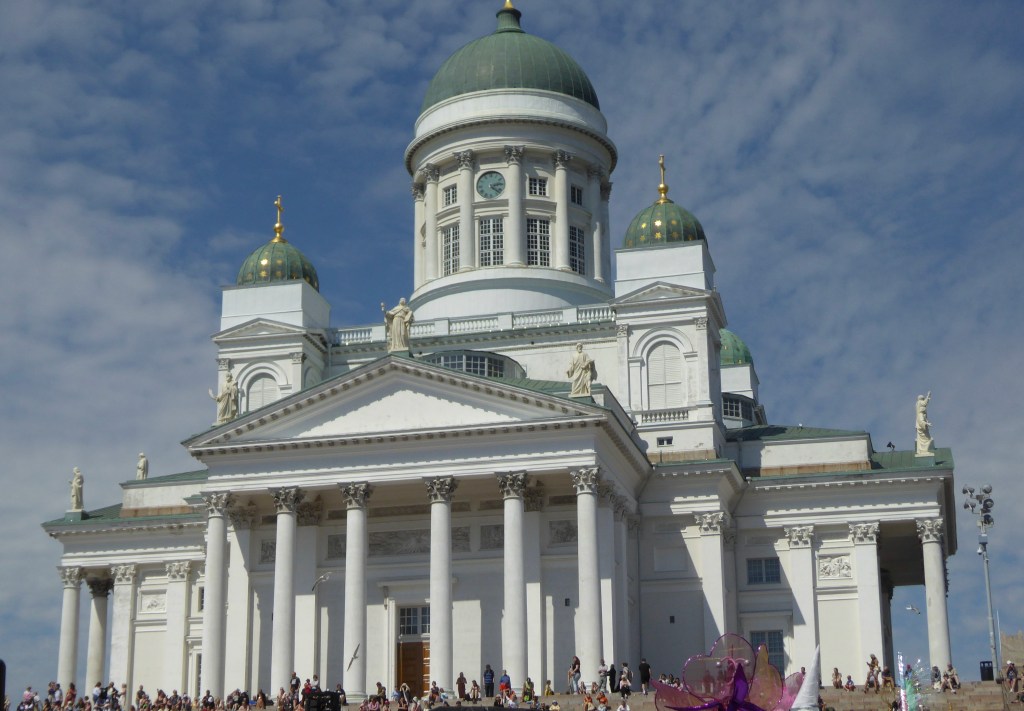
It does have a beautiful Eastern Orthodox church.
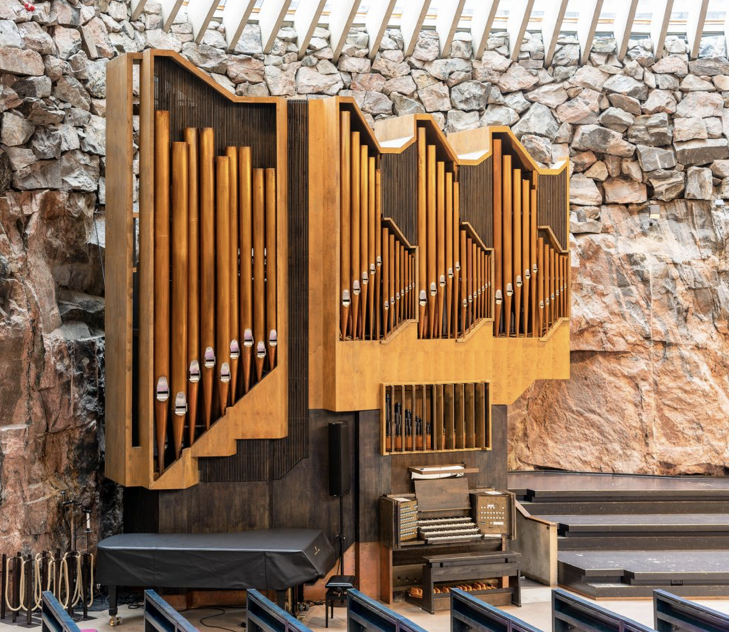
But it is the Cave Church that is very, very special. It opened in 1969 and is built into bedrock. While we were there, a young woman was playing the organ, therefore, we heard the beautiful acoustics.
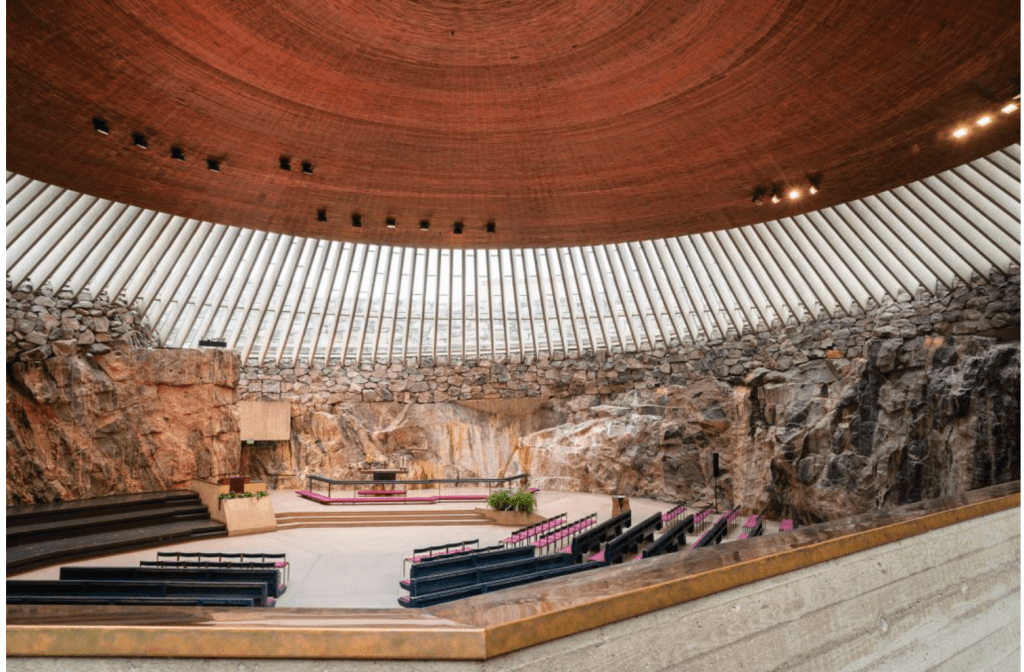
In 2022, we were in Helsinki for the Helsinki Samba Festival.
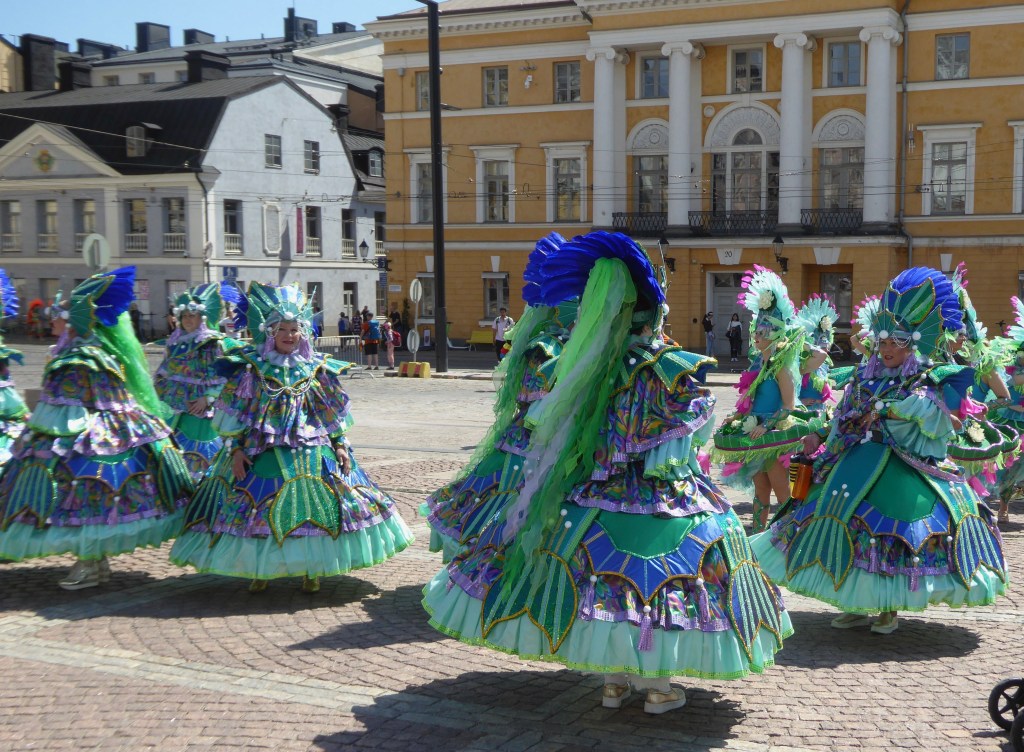
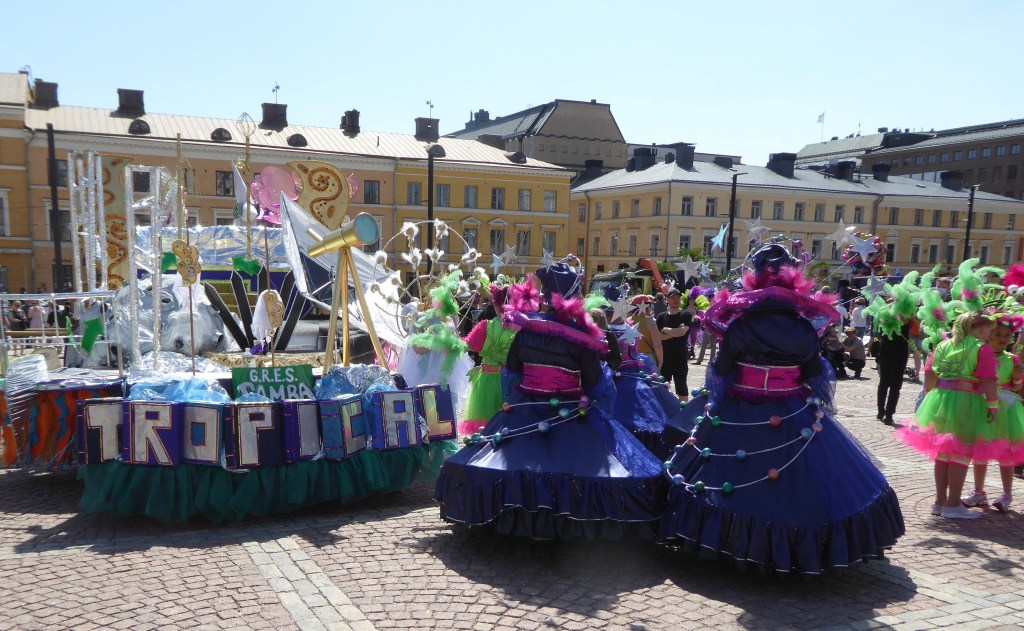
It was held in the main square in front of the Cathedral. Lots of groups performed, all dressed in outlandish costumes. We sat on the steps of the Cathedral and enjoyed the sunshine and the performances.
Stockholm, Sweden
I wanted to be sure to see the Vasa (explanation to follow) and old town. Vicki, Jerry and I planned to be off the ship as soon as allowed at 9, grab a taxi to the Vasa museum, so that we could see it before the ship tours arrived (they were starting at 9:45). It worked like a charm; we were almost the first people off the boat, took the first taxi (there were only 4 waiting) and were at the Vasa by 9:20, in time to take the 9:30 guided tour. It was so early that there were only about a dozen of us on the tour.
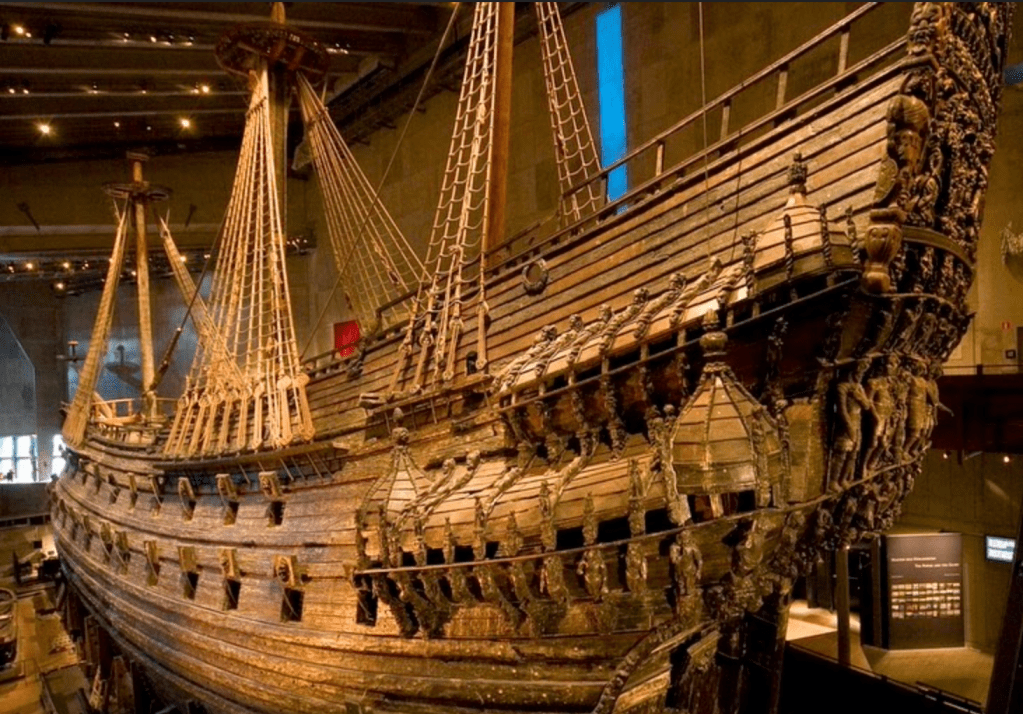
The Vasa is a ship built in 1628. It was built as a battle ship to fight Poland. The builders were not allowed to have written drawings because that might fall into the wrong hands.
The ship had beautiful statues carved on it and the front of the ship was about 4 stories high. Note how small the people are in this picture.
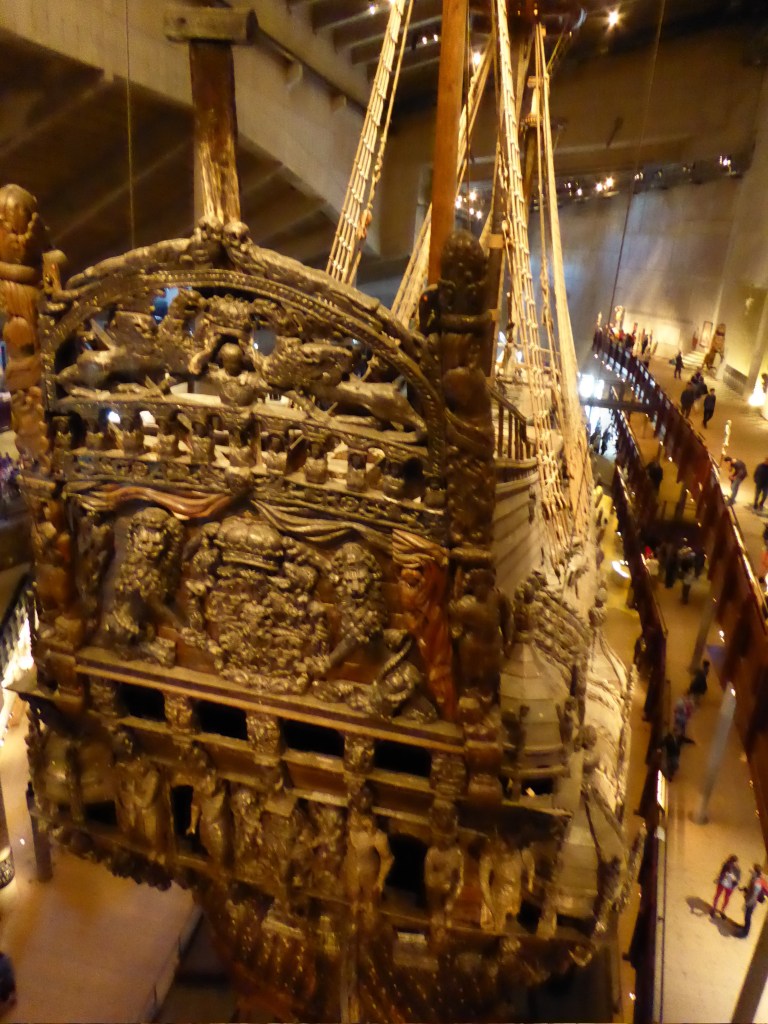
At 19.3 meters high, it was too top heavy and it sunk within 25 minutes of being launched, still in the Stockholm harbor. It stayed under water for 333 years until it was brought up in 1961. It is now restored and housed in the Vasa Museum.
Luckily it sunk while still in harbor because there were 150 sailors and their families on board, and 120 of them survived because there were many fishing boats around to help – none of the passengers could swim. If it had sunk later in open water, probably none would have survived. Interestingly, a sister ship, just 1 meter broader, survived and sailed for 30 years.
Shortly after the boat sunk, the Swedes were able to salvage 61 of the cannons. The cannons were the most valuable thing on the boat. It is amazing that they were able to do so because this was before oxygen tanks and wet suits. The 3 remaining cannons are on display. When salvaging the boat in 1961 the wood had to be kept wet until a chemical, similar to lipstick, could be injected into it. It was amazing to see the size of the boat and imagine it heading toward an enemy ship.
The old town is very pretty, with substantial buildings, mostly 5 stories high. The streets are cobble stones. Pretty to look at, but tough to walk on.
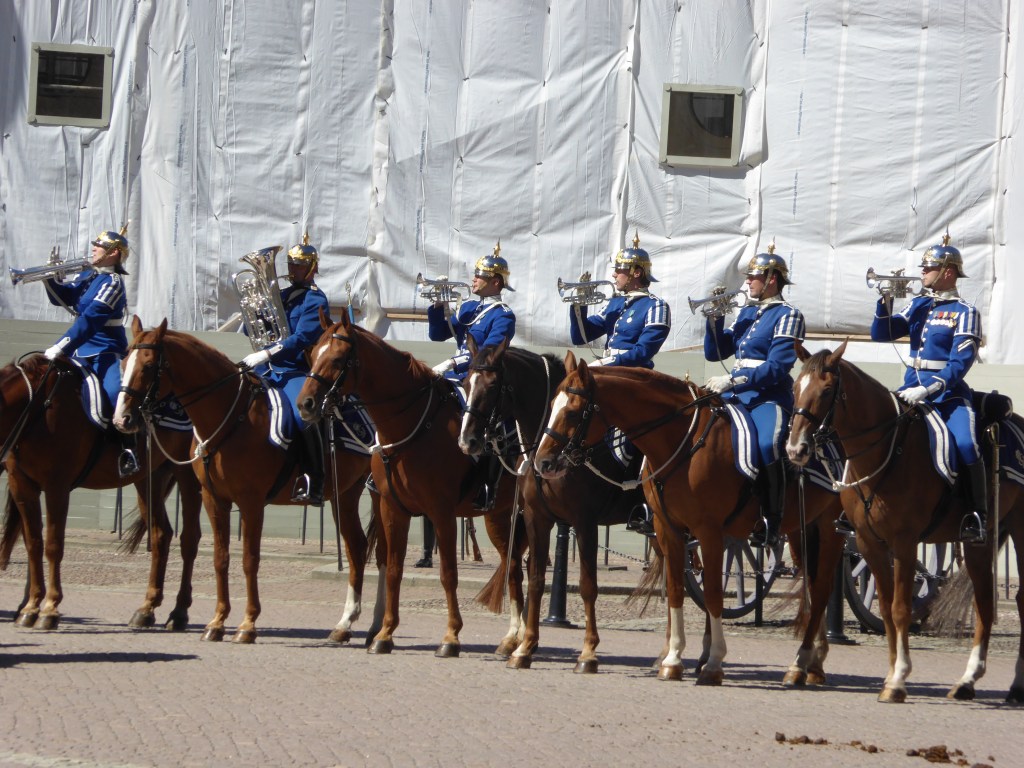
At noon, we watched the changing of the guard’s ceremony. We got a fairly good spot, behind some short Japanese tourists. The change took about 50 minutes with the magnificent horse guards playing music, while other soldiers marched. it was lots of fun. About half the guard were women.
We made sure we had some down time at lunch and at a café to just get the feel of old town.
Copenhagen
In Copenhagen, our last port, we had a full day from 10 am to midnight. We were out from 10 to 9:30 and I walked 30,000 steps. I think that’s my all-time high.
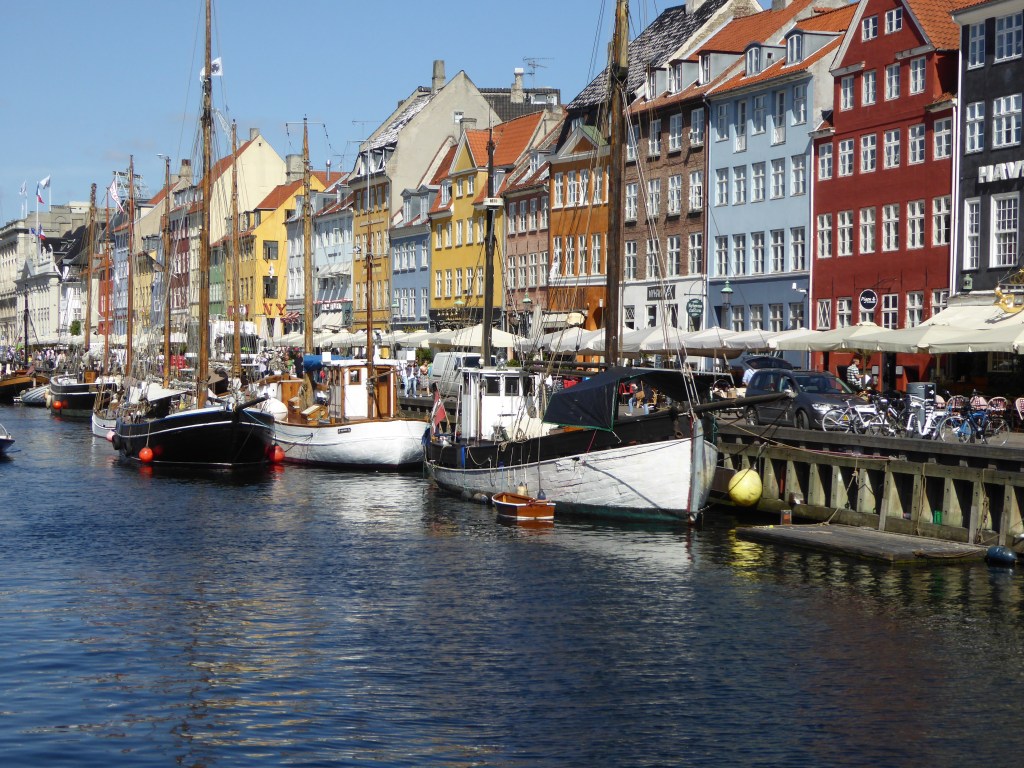
We walked along the Nyhavn Canal with its lovely old houses, painted with gay colors. Hans Christian Anderson, author of the “Little Mermaid” and “The Tin Soldier” was born in #20.
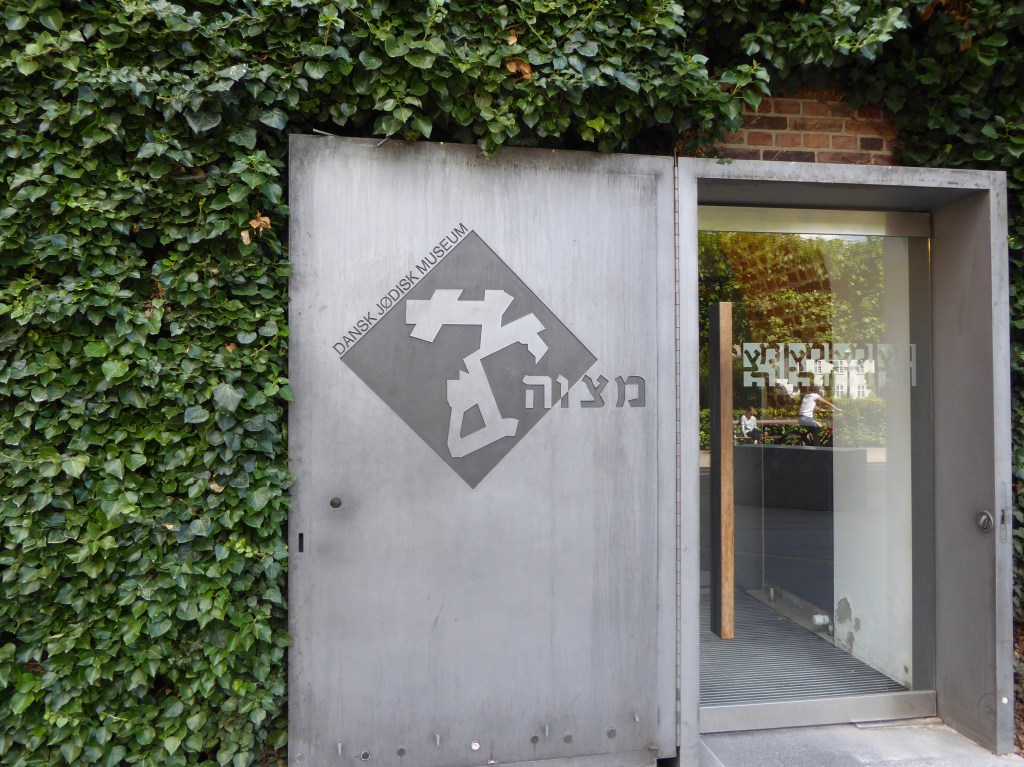
High on the list was the Jewish Museum. The museum explained that Jews began arriving in Copenhagen in the early 1600 by the invitation of the king. He wanted the merchants, who were displaced by the Spanish and Portuguese inquisition.
However, Jews were only allowed certain professions and not allowed to own land. This was standard in most of Europe. In 1814, the king gave Jews full Danish rights. They now had the freedom to go to university, own land and they became assimilated.
During WWII, Denmark stood out among nations in protecting their Jews. 99% of the Danish Jews made it through the war eventhough Denmark was occupied from April 9, 1940. At first the Jews were left alone. But the Danes knew that it would not last and they made back-up plans for their Jews. They set up escape routes all along the sea facing Sweden, which was a neutral country, and obviously had an arrangement with Sweden to accept the Jews if it became necessary. When on October 1, 1943 word came out that the Jews were to be rounded up, the Rabbis alerted the Jewish population and 7,742 escaped to Sweden, 472 were captured and 103 died.
The story of the escape to Sweden has been told in various films. The boats used were mostly little fishing boats. The escapees were put under cover in the fish hold. Some captains did the trip multiple times. At least one captain stayed in Sweden when he learned that the Nazi’s were suspicious of him. Each captain was taking a huge risk doing this. But the Danes rose to the task.
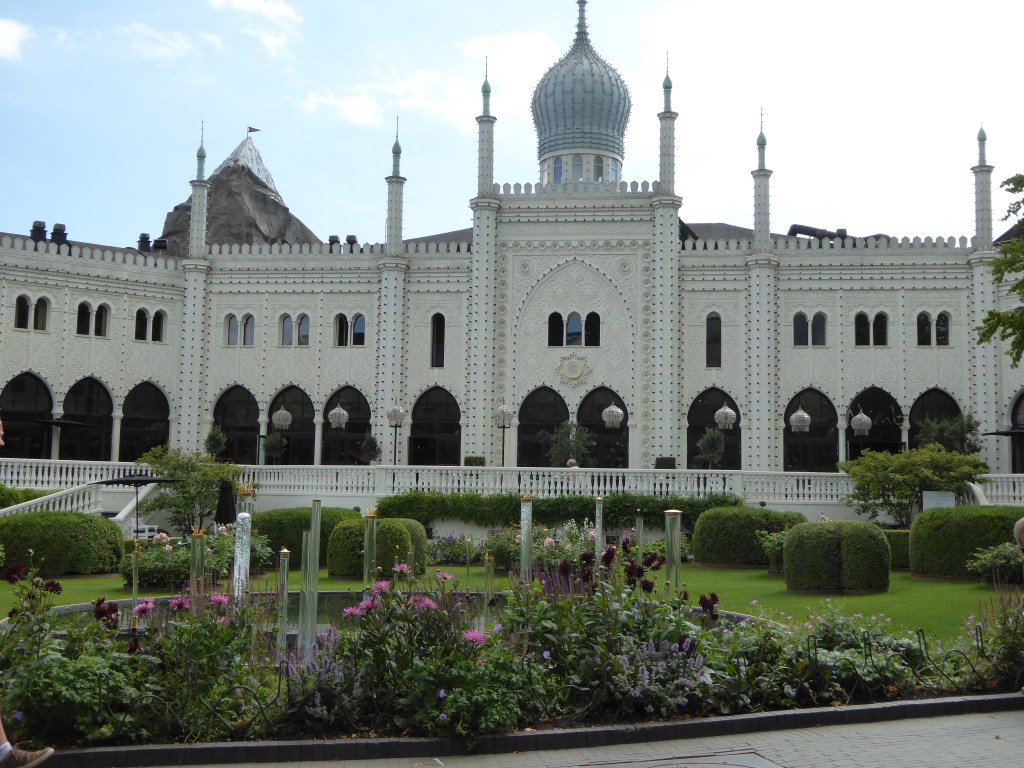
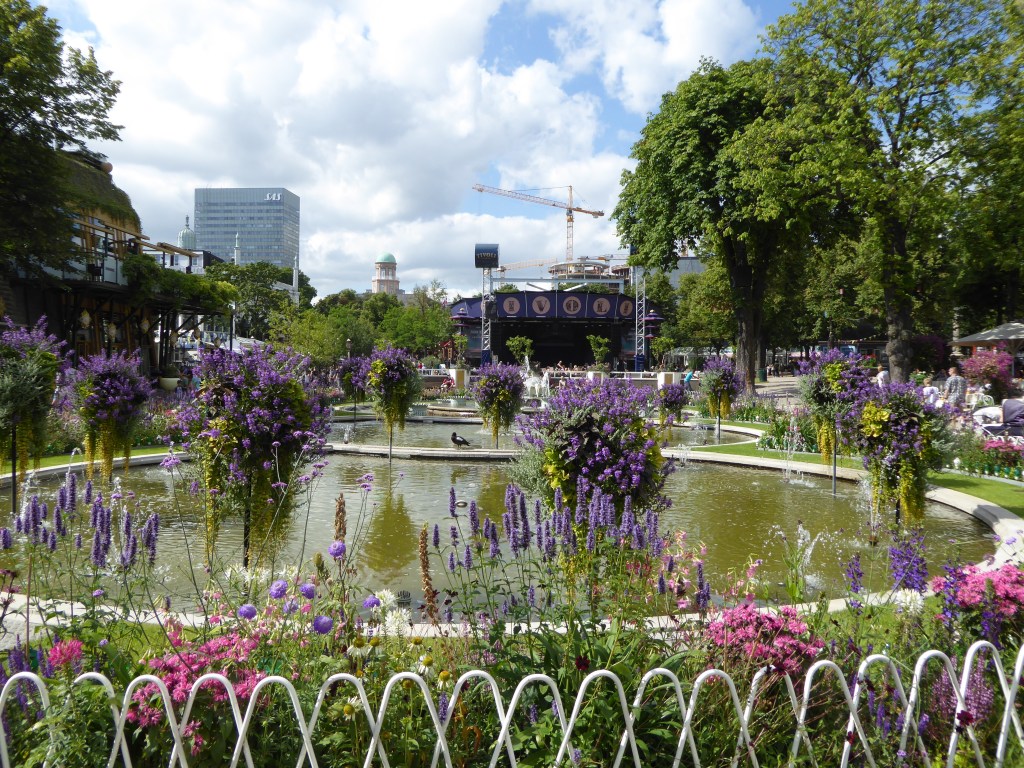
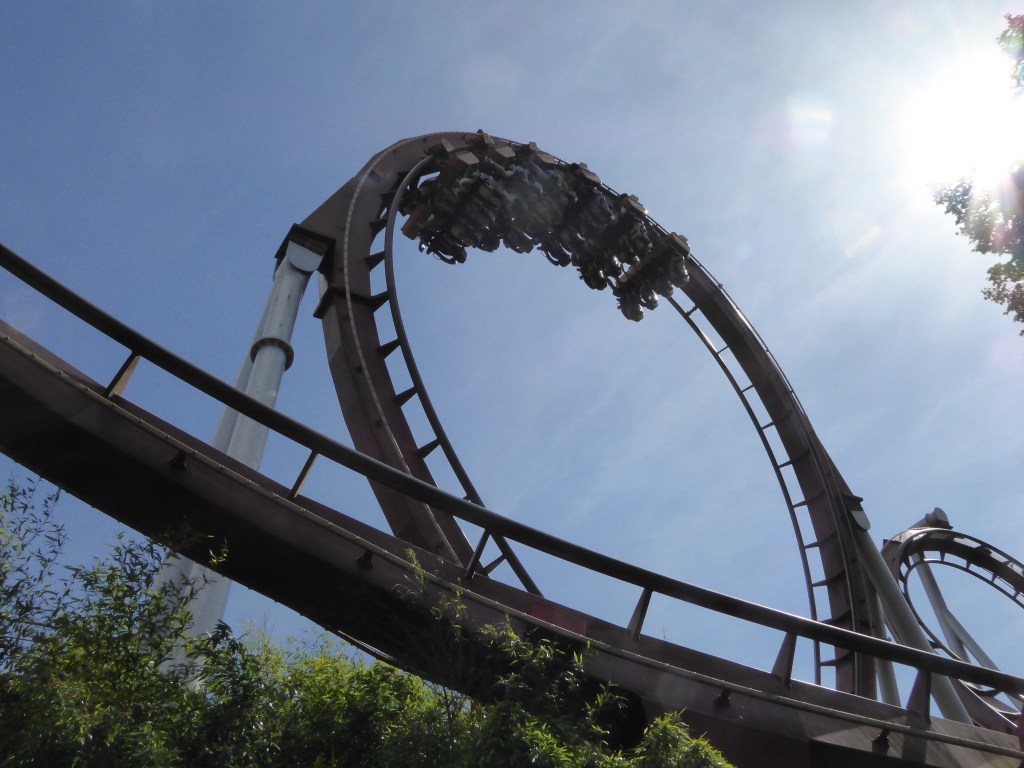
For lighter fare, we went to Tivoli Gardens. Tivoli is a park that was created in 1844 as both a green space and amusement park in the center of the city. It is an interesting combination of beautiful grass, flowers and fountains areas and the more energetic areas with major rides. We spent 3 hours walking and relaxing. Unfortunately, we could not stay till dark and see it lit with lanterns.
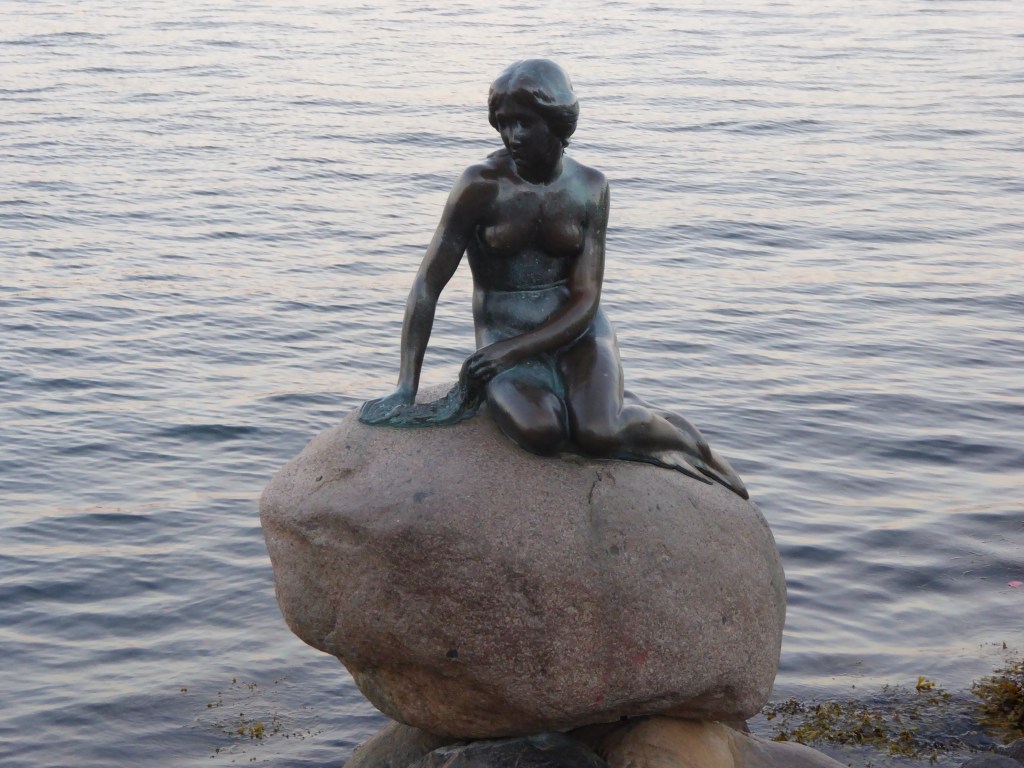
We had plenty of time, and decided to walk back to the ship. It was a lovely walk ending at the Little Mermaid statue.
We reached the ship at 9:30pm after being out for 11 1/2 hours and walking 11.3 miles according to my Garmin.
Final Comments:
- Cruising with Vicki, Stewart and Stewart’s mom was lots of fun. We were able to share experiences and lively conversations.
- Being on a large boat, meant that sometimes we did not dock as close to cities as a smaller boat could. This limited our on shore time, but it was not a major drawback.
- If an opportunity arises, go for it. If we had waited, we might have not seen St. Petersburg.
 Nili's Adventure