
How to choose the next trip? We were visiting our friends, Vicki Ondis and Stewart Pemberton and they mentioned that they had just booked a Baltic cruise leaving out of Southampton, England and invited us to come with them. The itinerary looked awesome. Jerry especially wanted to go to St. Petersburg. We agreed.
We had never been to Scotland and decided to see if we could fit in a pre-cruise tour. Rick Steves Tours had a Scotland tour whose dates worked with the cruise. Perfect.
The tour started in Edinburgh, continued to Pitlochry, Inverness, Oban and back to Edinburgh. I will, again, give the highlights only.
Edinburgh
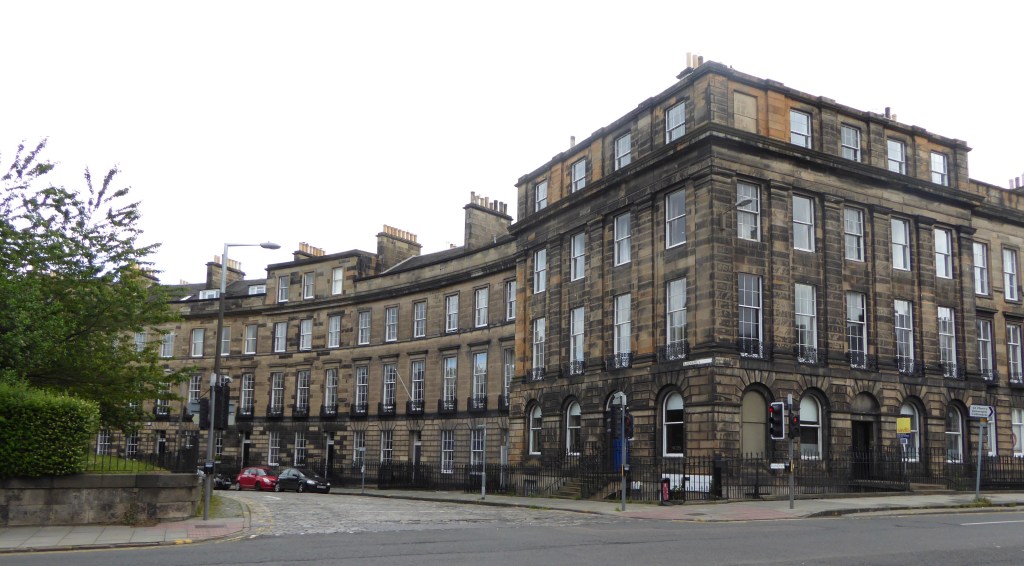
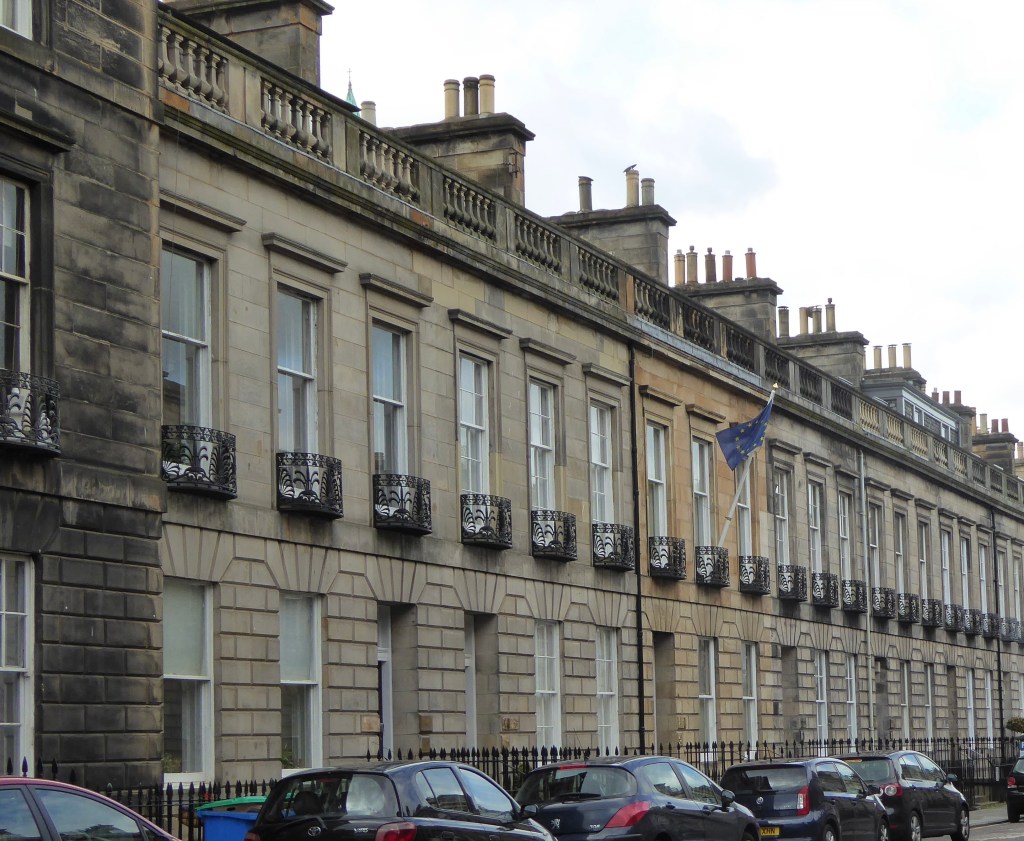
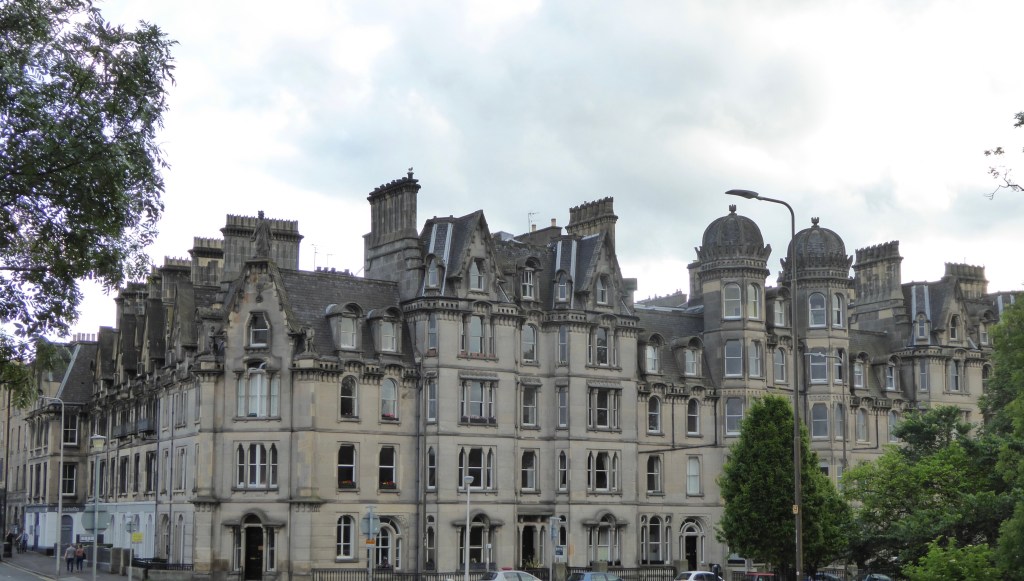
The Architecture of Edinburgh is marvelous. The buildings are all about 5 stories high and built from warm light brown stone, and very pleasant to look at.
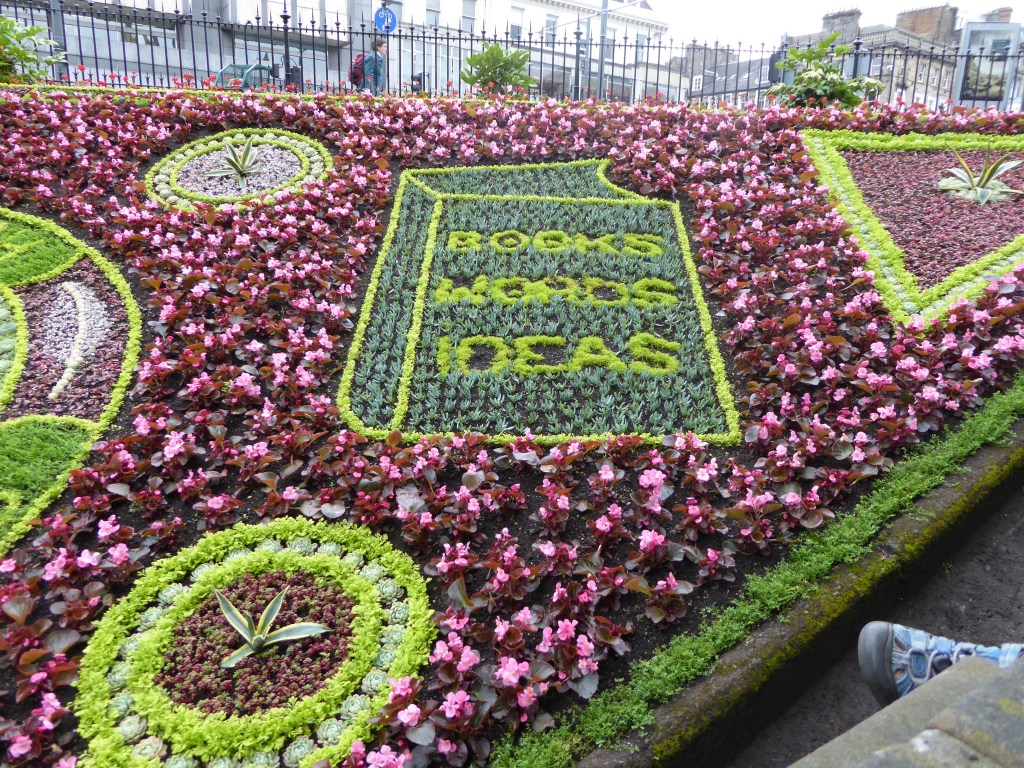
There is ribbon park with the hundreds of flowers.
Also the shops on Princes Street are delightful.
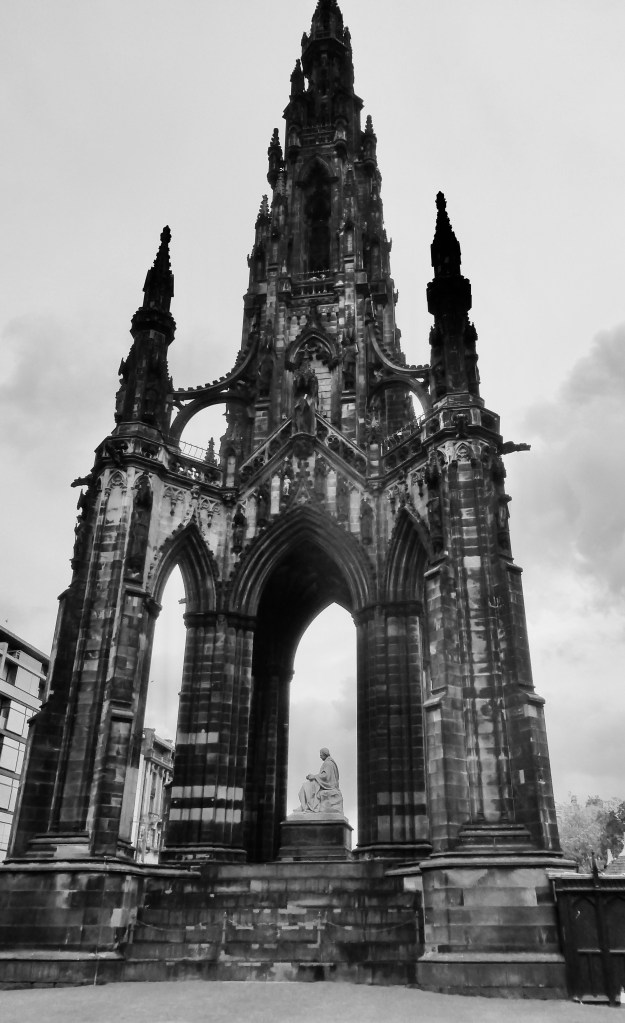
Another delight on Princes Street is the “Scott Memorial” to the famous poet/writer Walter Scott. At the foot of the monument, there is a statue of Scott – just visible in this picture. Inside, we climbed 287 circular, narrow steps to the top. The monument was completed in 1844 a short while after Scott died. The structure is gothic looking with lots of gargoyles and statues.
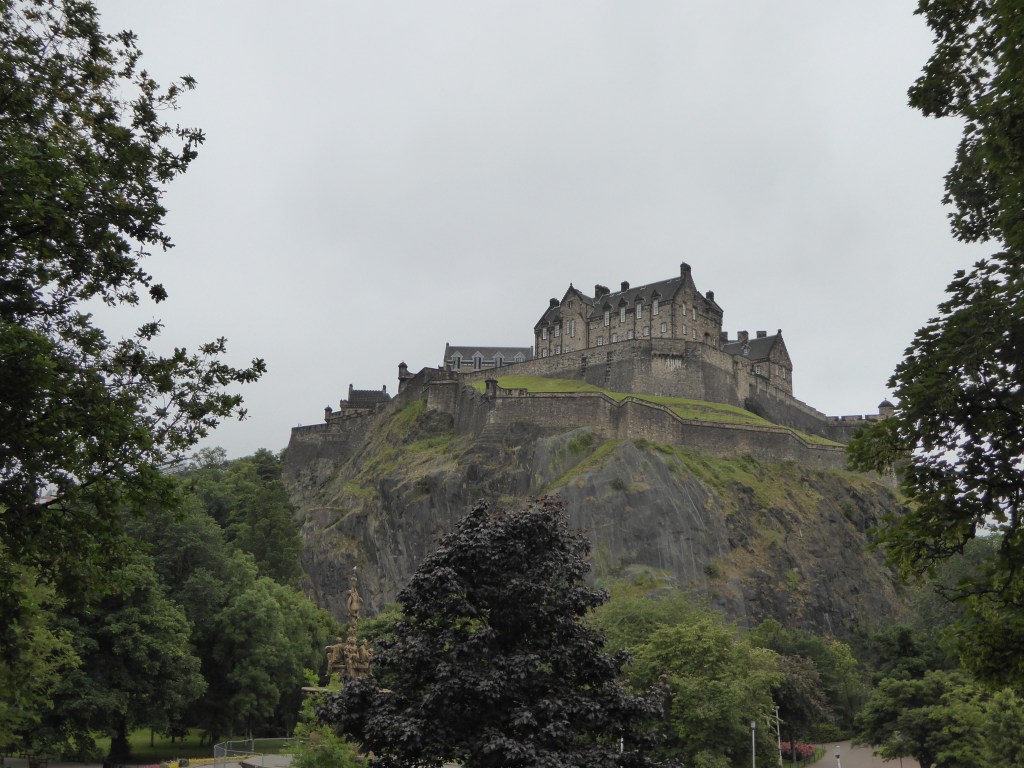
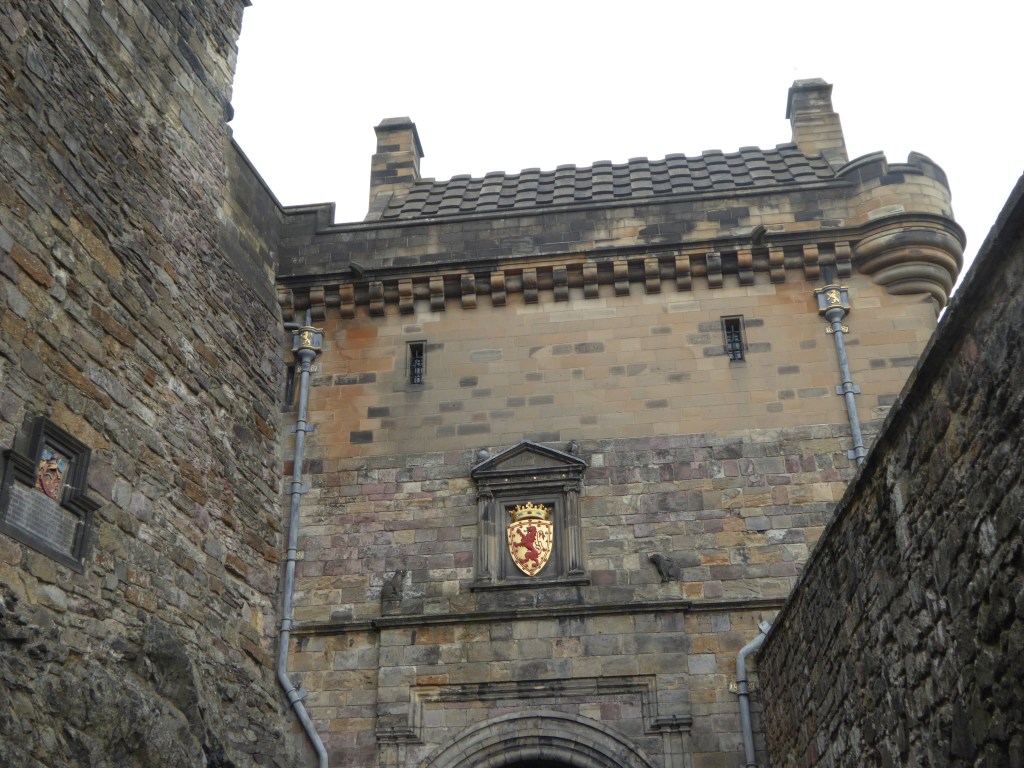
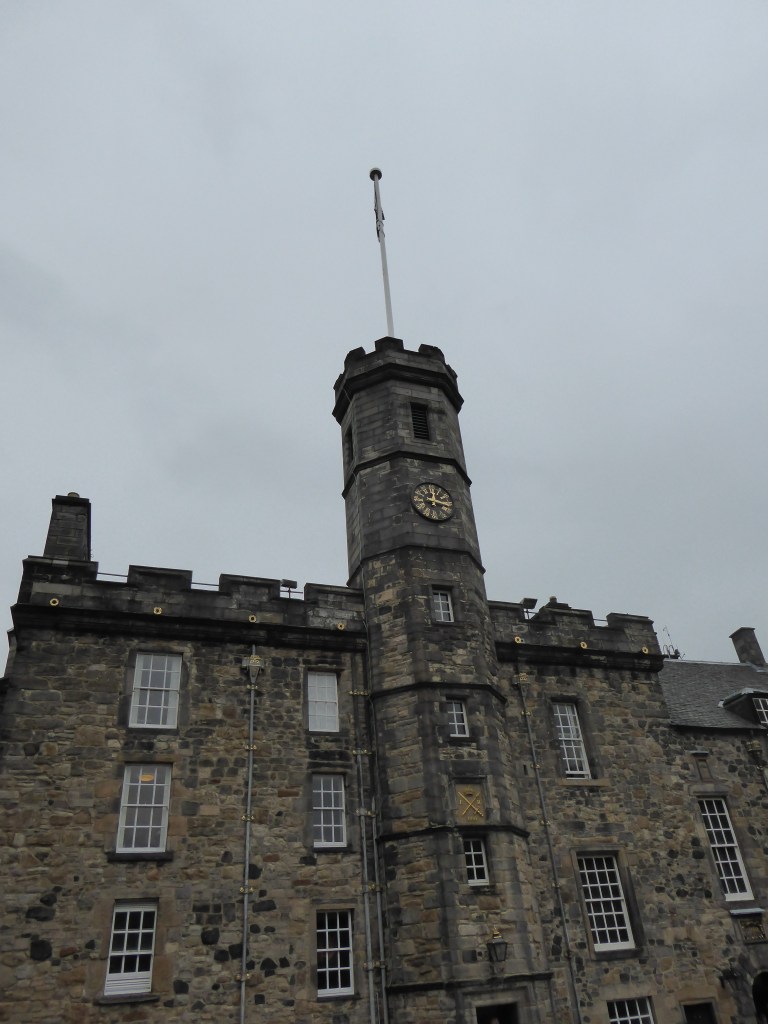
The Castle is built on an old volcano. Even though it is impossible to climb 3 of the 4 walls, the castle was under siege numerous times and one time a small army climbed the gentler side. In visiting the castle, we saw the the royal jewels as well as the apartments where Mary Queen of Scots gave birth to James I. The royal jewels include a scepter, sword and crown with beautiful pearls, diamonds and other stones. The items had been in storage and forgotten but were found by Sir Walter Scott and have been on display ever since. A cannon goes off at 1 pm each day, which was fun to hear.
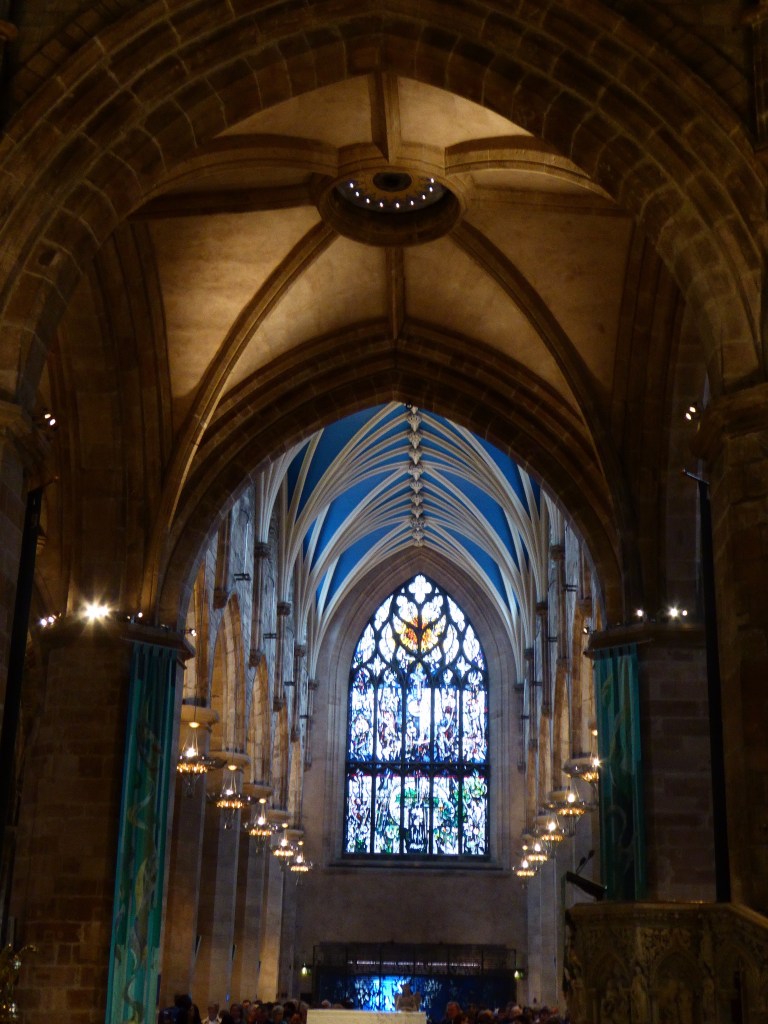
We like to find concerts when possible, and on our first day in Edinburgh, we found an organ concert at the beautiful St. Giles Cathedral, built at the end of the 15th century. The Organ concert was just perfect in that space and the organist was a young 22-year-old who was finishing his 4-year stint there.
Another meaningful stop was the National Library, which had an exhibition of items relating to John Murray, who was Jane Austen’s publisher as well as publisher for Lord Byron, and Scott. I saw facsimiles of correspondence including a check that Murray wrote to Austen’s brother after she had died. She would have loved getting this money and knowing her books sold well.
Edinburgh to Pitlochry
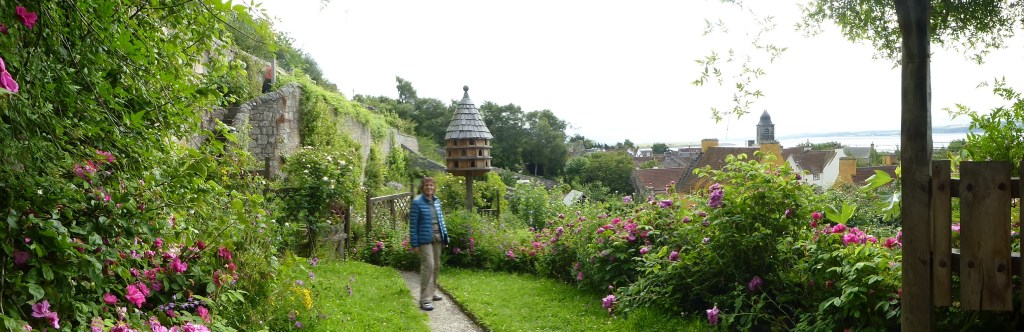
Our first stop was Culross where “Outlander” and “39 Steps” were filmed. Monks began mining coal in Culross in the 16th century, but they were not very efficient. Sir George Bruce got the rights to the land and installed a wheel turned by a horse, which produced a great deal more coal than before. He was very successful and he was also very good to his miners and saved some of their pay for them and found them other jobs when they could no longer mine. The monks, on the other hand were not kind to their workers. They thought them so low class that they wouldn’t even let them be buried in the cemetery.
Sir George Bruce built a beautiful house about 1597. I learned that the dining table was originally just a board on legs. When the meal was done, the table was turned over and the remains of the meal fell to the floor for the dogs to eat. Thus, came the saying to “turn the tables”.
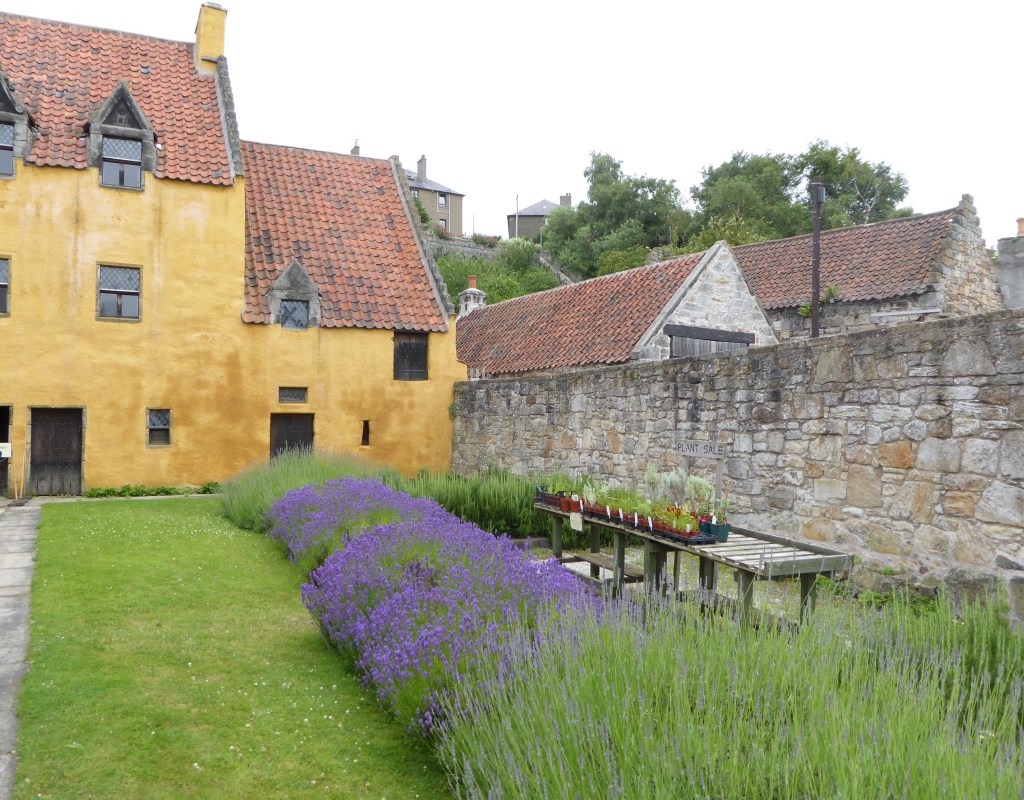
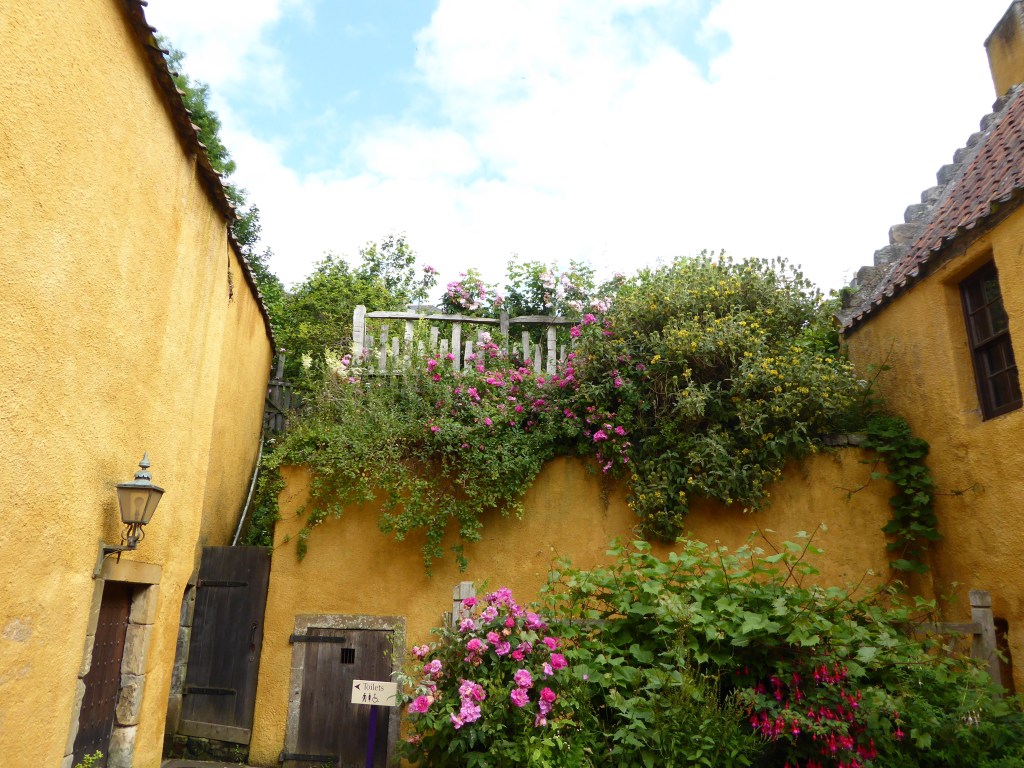
Originally the ceilings were all painted but only one room still has the original paintings. They were only preserved because an owner didn’t like the original oval ceiling and removed the wood to the stables. When the National Trust took over, they found them intact.
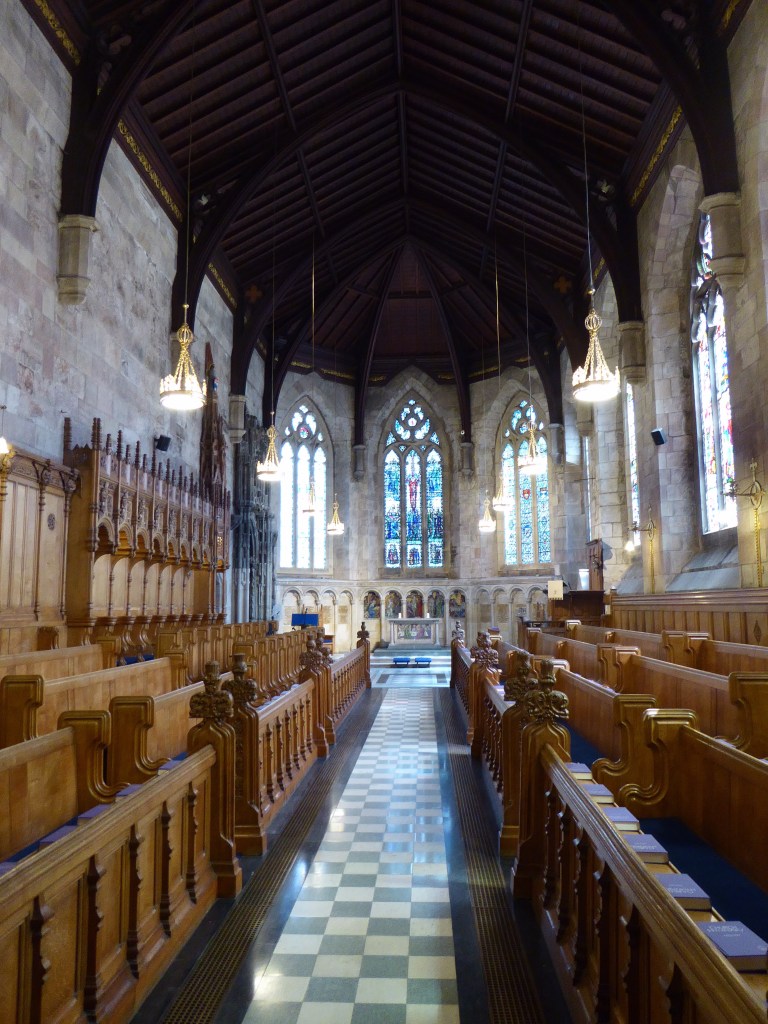
We continued on to the town of St. Andrews and visited the college’s darling chapel. We also visited the famous golf course.
In Pitlochry in the evening after dinner, we had a bagpipe demo from a woman who has been playing the pipes for 49 years. She was the first woman to learn piping in her area.
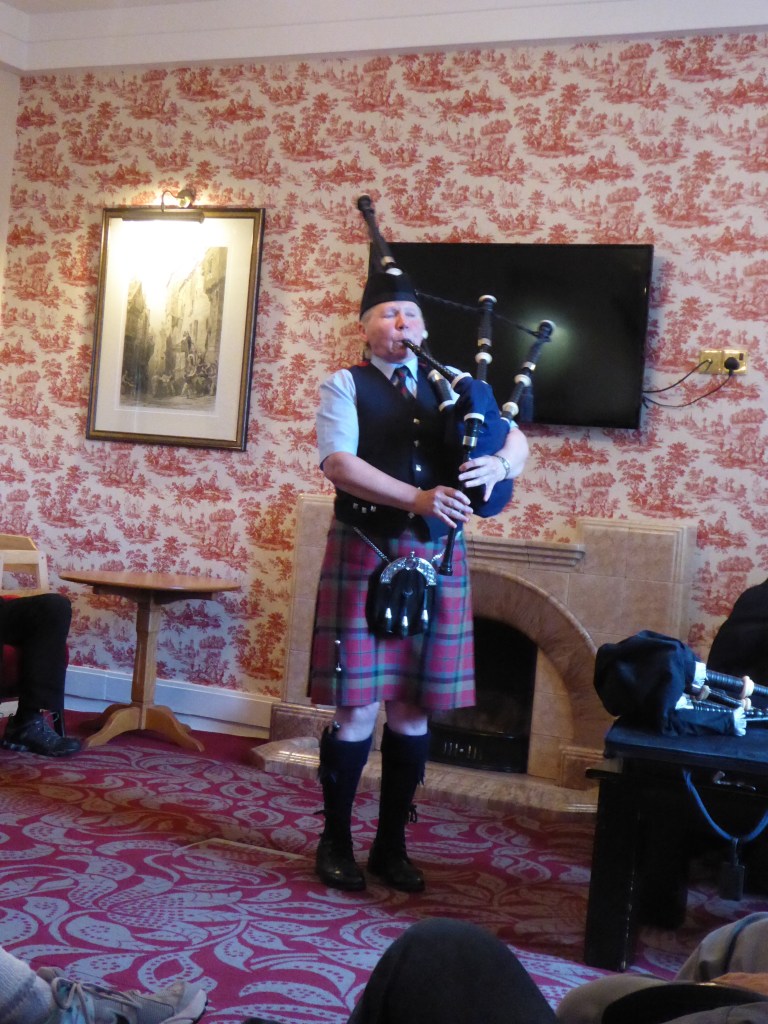
One time, her band was asked to play for the Queen but no women would be allowed, so she pretended to be a guy and went anyway. Now women are allowed. Watching her play gave me real admiration for the pipers. It is necessary to fill the bag and then use your arm to depress it while playing. Bag pipes are a double reed instrument.
Part of traveling is figuring out showers in various hotels. In the Pitlochry hotel, I turned on the shower taps but because the water was coming in faster than going out, I hurried my shower. When I went to turn off the taps, I couldn’t. Jerry tried to help, and he was able to turn the shower off but the lower taps were still going strong. We called the front desk and someone came right up and he closed the taps but said that it was my fault because I opened the taps too strongly. He said, “It is better to turn them on a wee bit only”. Who knew that I was so strong!
Inverness and the Highlands:
While in the Highlands, we visited Culloden battle field. Bonny Prince Charlie, sneaked into Scotland and led a revolution in 1746. The battle ended badly in Culloden for the Scots, and they have been part of Great Britain ever since. For a long time after this battle, it was illegal to wear a kilt or play bagpipes.
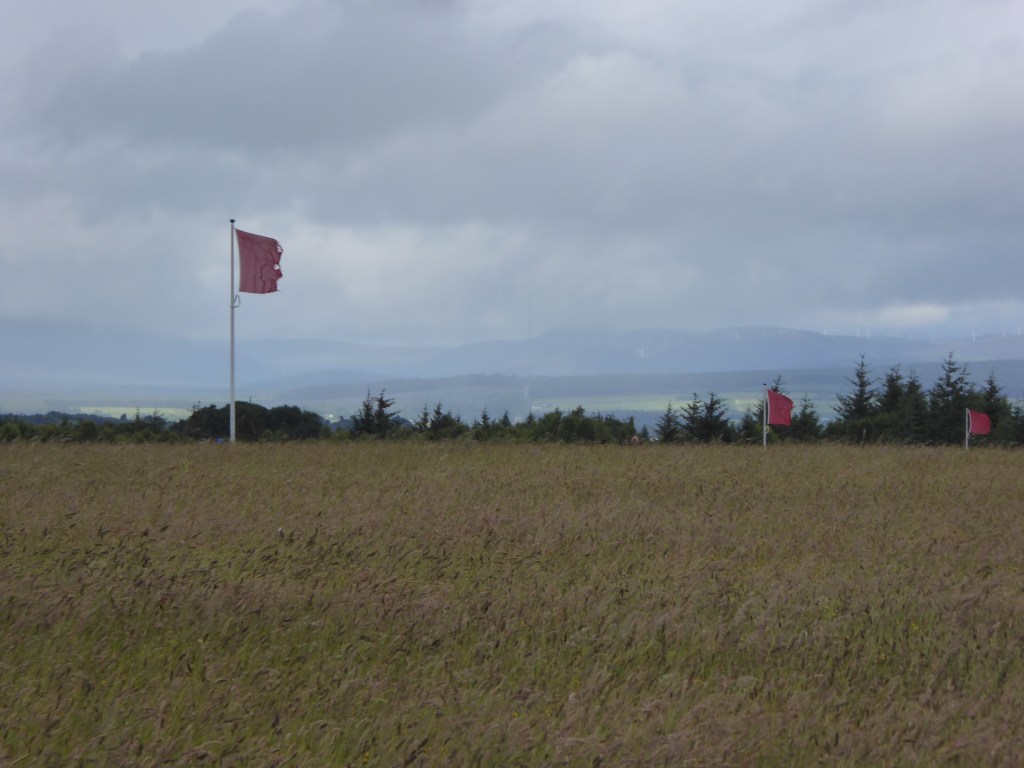
Visiting Culloden was a wonderful learning experience. I skipped the video of the massacre, but I did read a lot of the information in the museum. I walked along the battlefield which today is lovely with flowers and grasses.
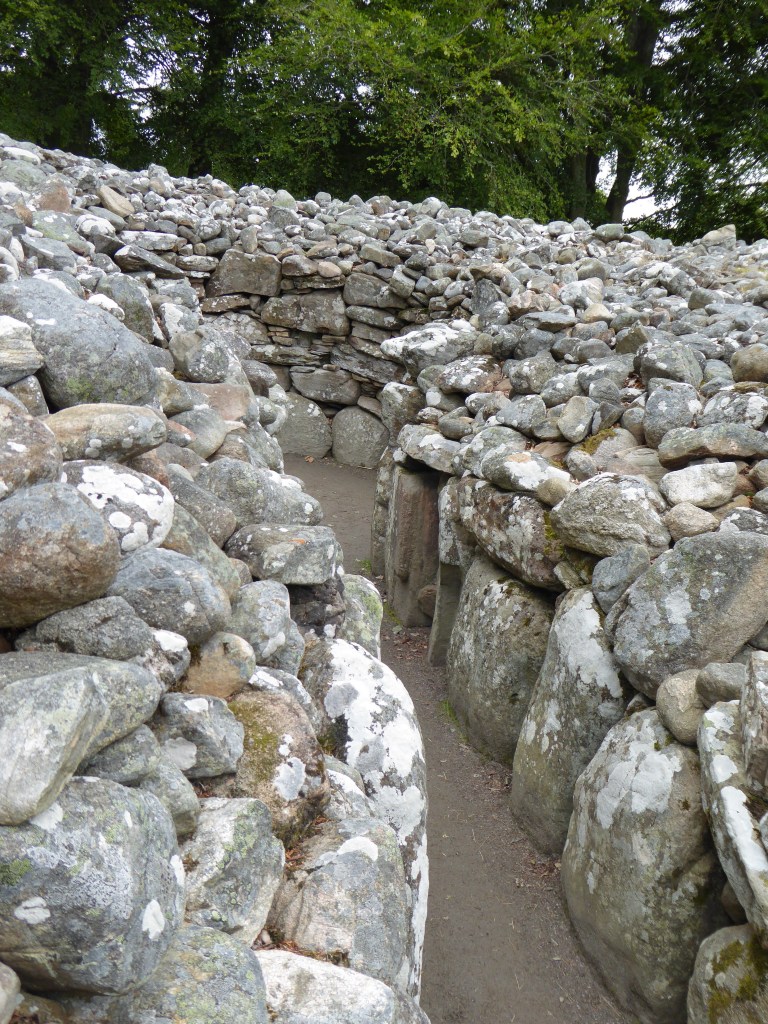
Another stop was the Clava Cairns, which consist of three Neolithic stone mounds some 3,000 to 4,000 years old. They seem to be burial chambers with passages into the center. One of the Cairns passages line up with the winter solstice.
Lastly was a visit to Cawdor Castle and gardens.
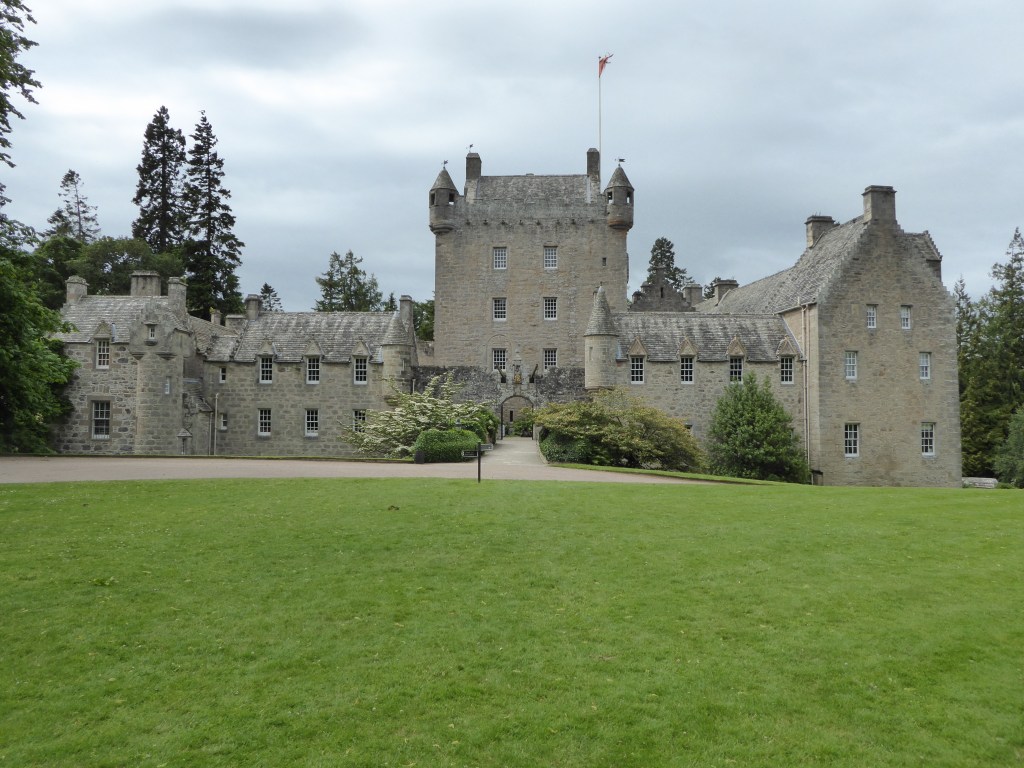
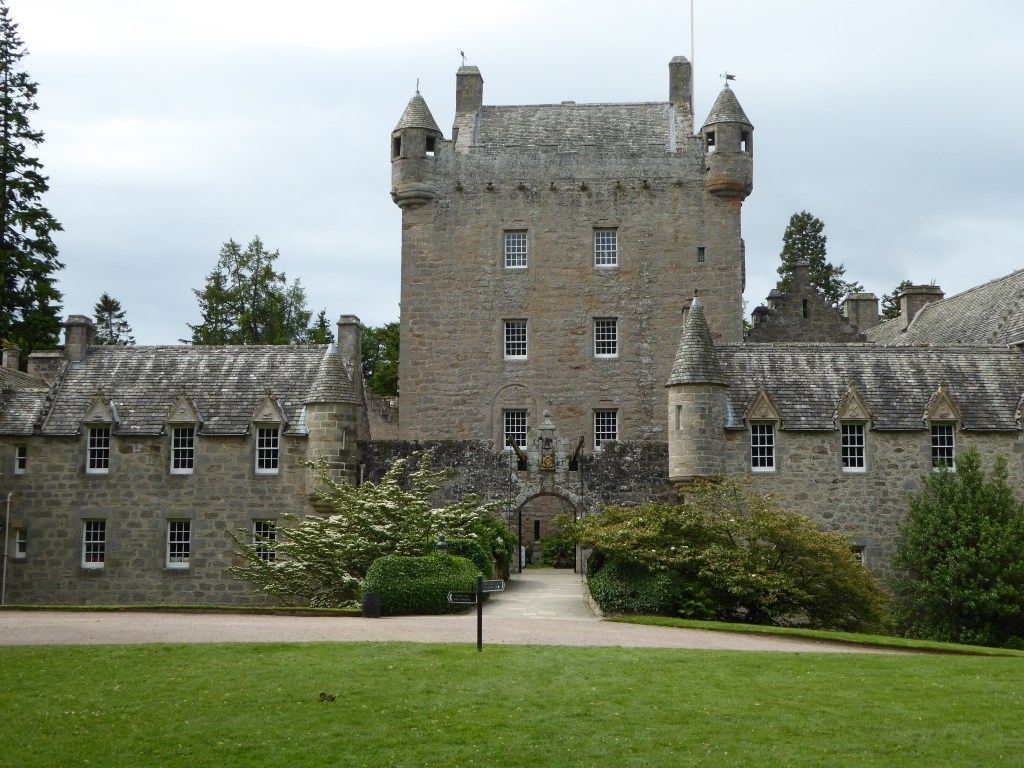
The Campbell clan who sided with England rather than with Prince Charlie, made out very well after the revolution. The widow of the late count still lives in the castle. The current count inherited the land but the widow, his step mother inherited the Castle. She allows visitors to some of the rooms of the castle. They are magnificent with tapestries and paintings.
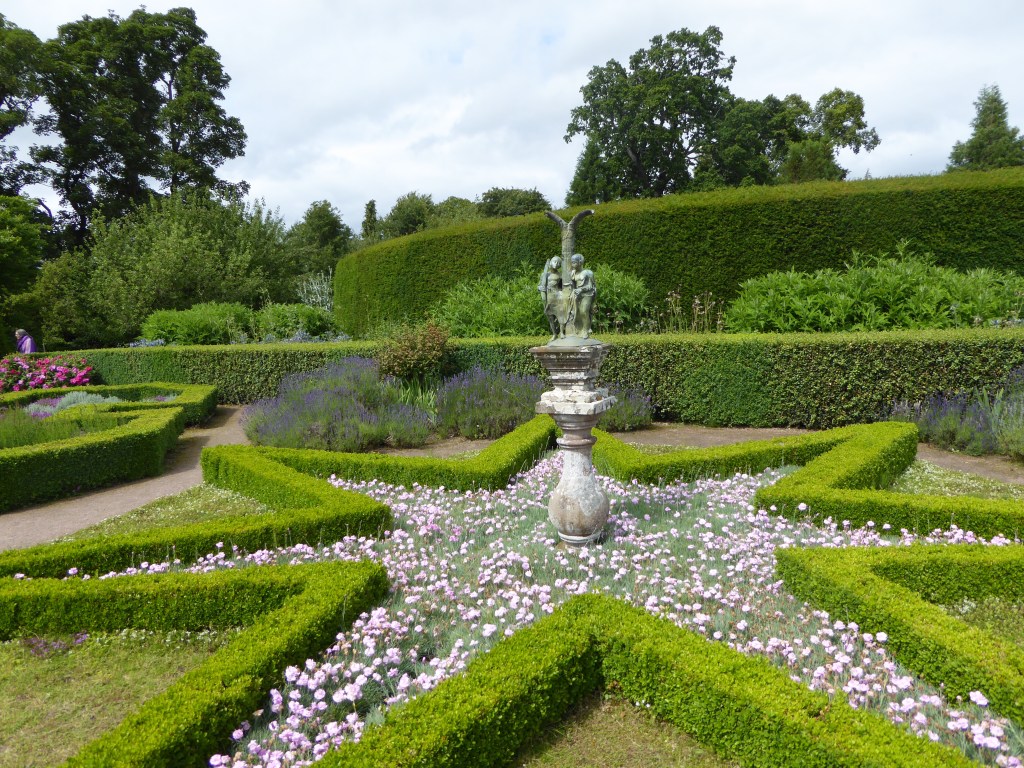
We also strolled through the gardens and they were a total delight especially since the sun came out for a while.
Inverness to Oban
We took a boat on Loch Ness to the Urquhart Castle. It did rain – light rain, but we could still stand out under an overhang and watch the shore on this short trip. We looked but did not see the monster. 😊
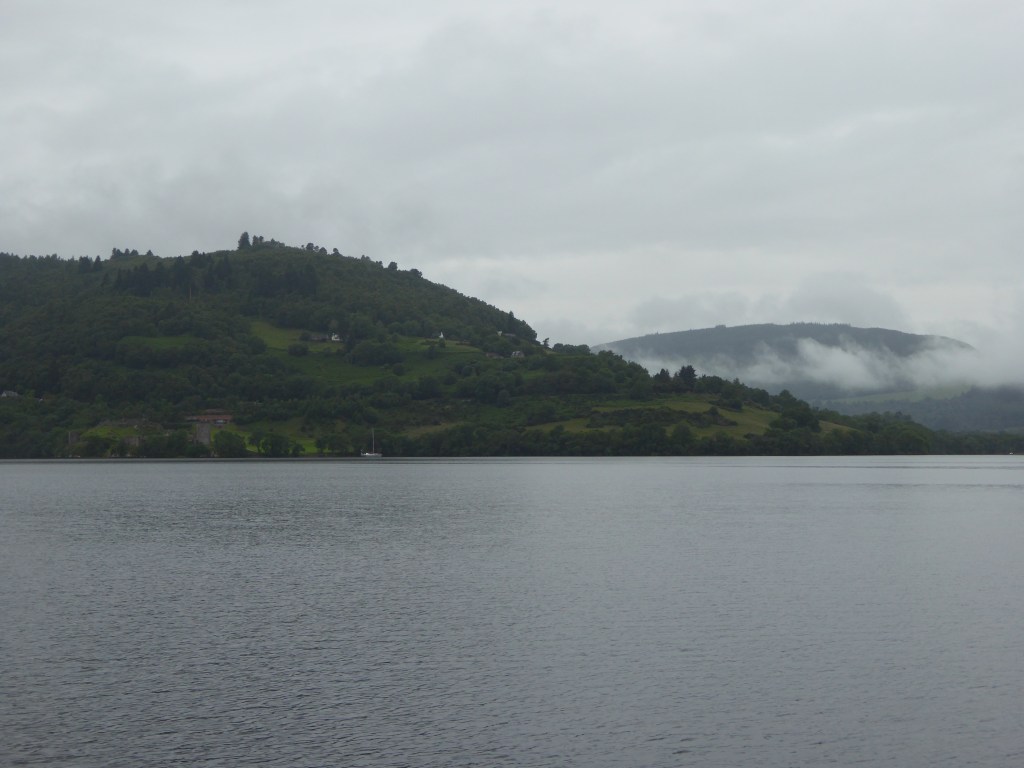
The site of the Urquhart Castle was used in Roman times but the fortified castle was only built around 1,200 CE. It was attacked repeatedly, and eventually the owners blew up the castle in 1,692 so that their enemies couldn’t use it.
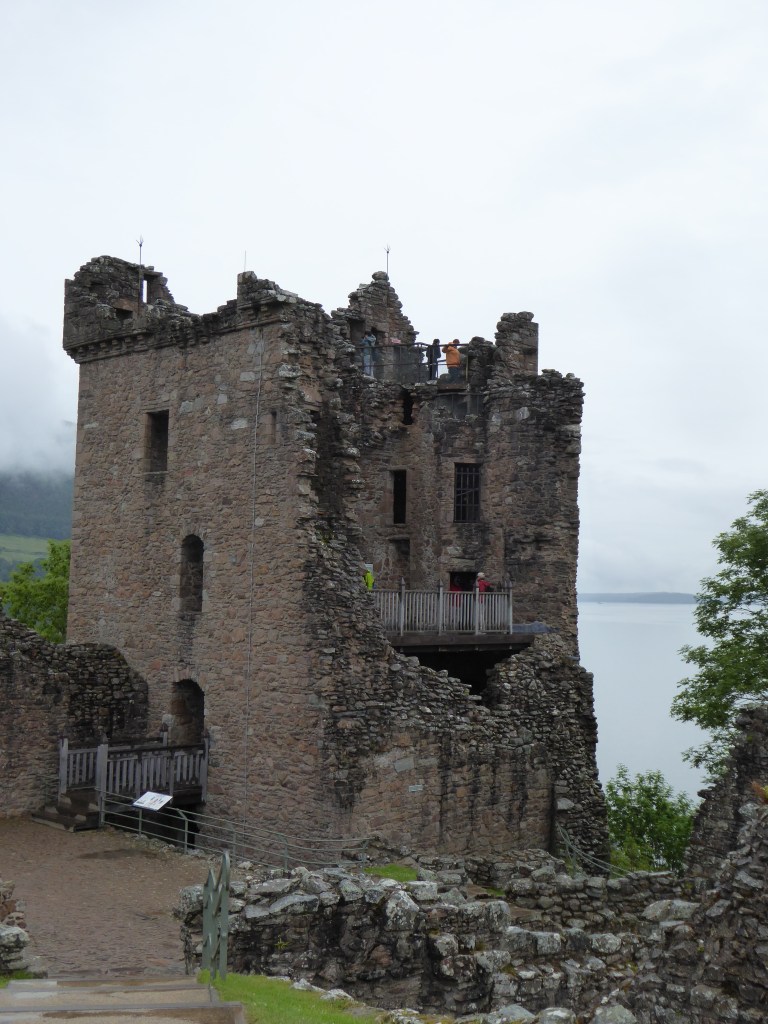
What we saw were the ruins. I climbed the circular steps up to the tower and down to store rooms. It is just a shell of a building but the signage was excellent and you could get the feel of the place. The view from the castle grounds was terrific.
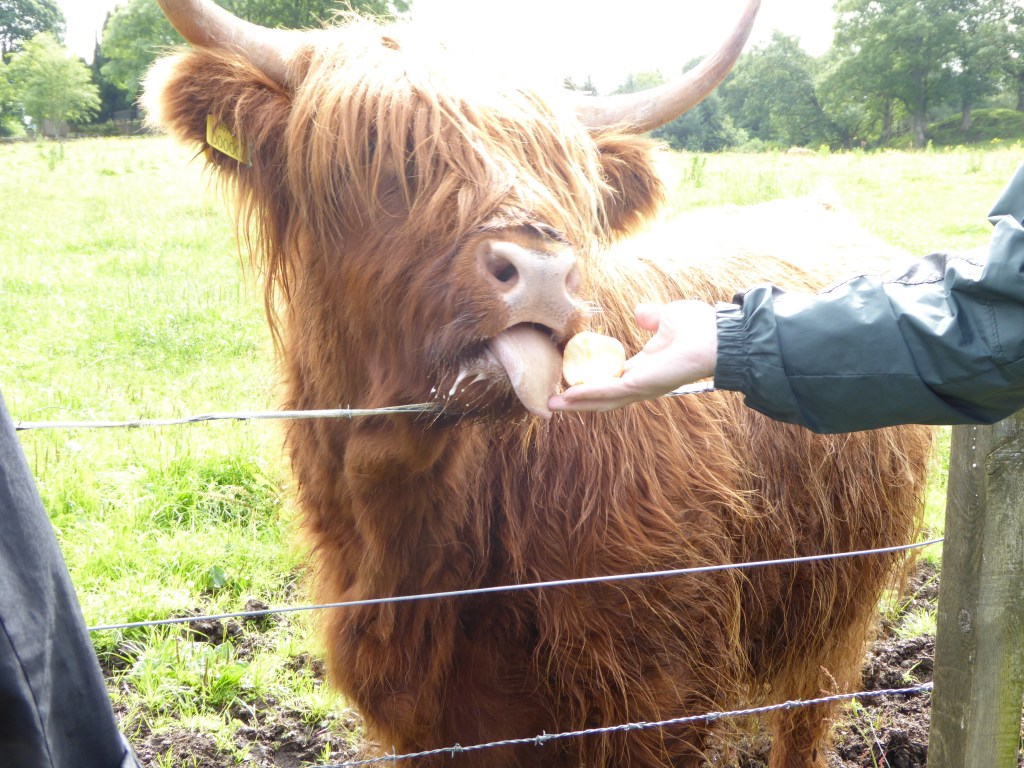
We stopped along the way to feed the coo. These are cows whose hair protects their eyes in the winter snows. They are very funny looking. I chose, intelligently, not to give an apple to the coo and have her slobber all over my hand. Yuck.
IONA
From Oban we had a full day trip to the island of Iona, the birthplace of Christianity for Scotland.
Getting to Iona is a shlep. We took the ferry to Mull (about a 45-minute ride). Then we drove an hour by bus across the island of Mull to catch the ferry to Iona. I enjoyed the craggy, moody hills but it was raining, therefore, hard to see much. The ferry to Iona only took 10 minutes. Iona is a tiny island, just 3 miles by 1.5 miles with about 100 inhabitants.
St. Columba, an Irish scholar, soldier, priest and founder of monasteries got into trouble for illegally copying the psalm book (there have been copyright problems for a long time). He left Ireland vowing not to return. The first bit of land he saw was Iona where he established an abbey in 563 CE. It flourished and the beautiful illuminated manuscript Book of Kells was written there. In the 800s, the Vikings raided Iona, and the monks fled, with the Book of Kells, to Ireland. The abbey with its beautiful chapel was restored in the 20th century.
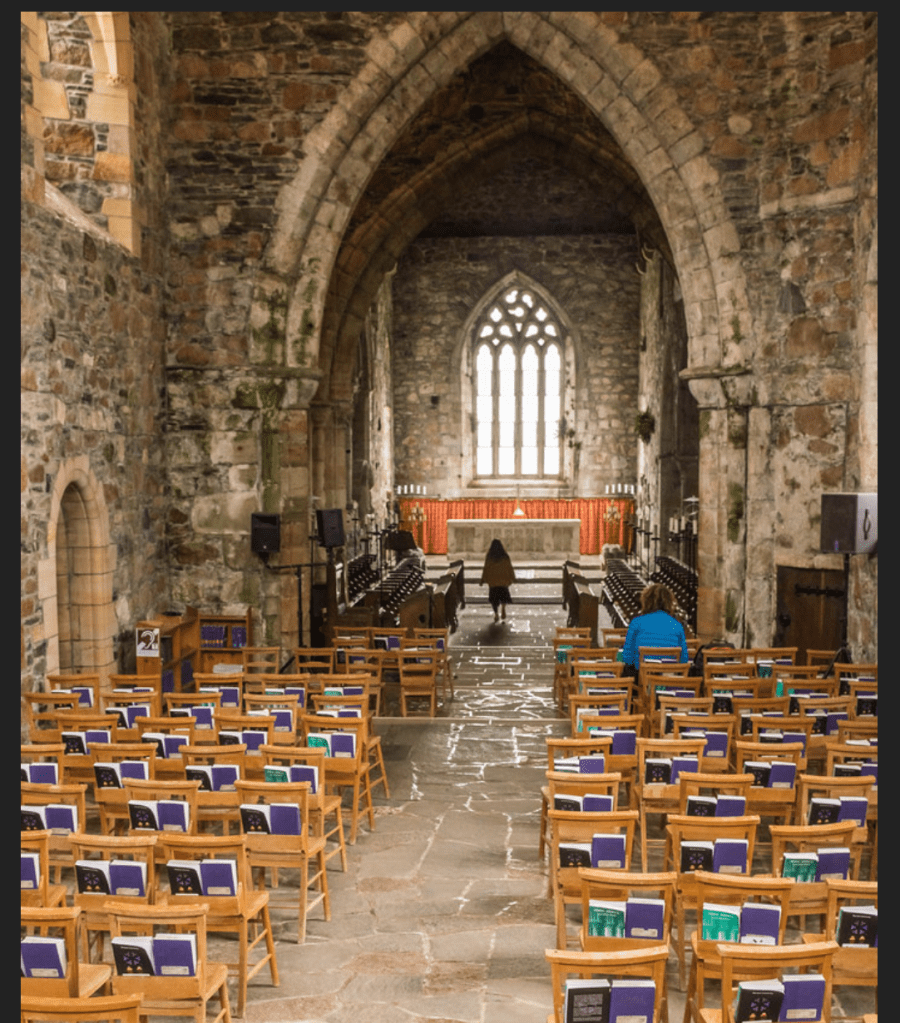
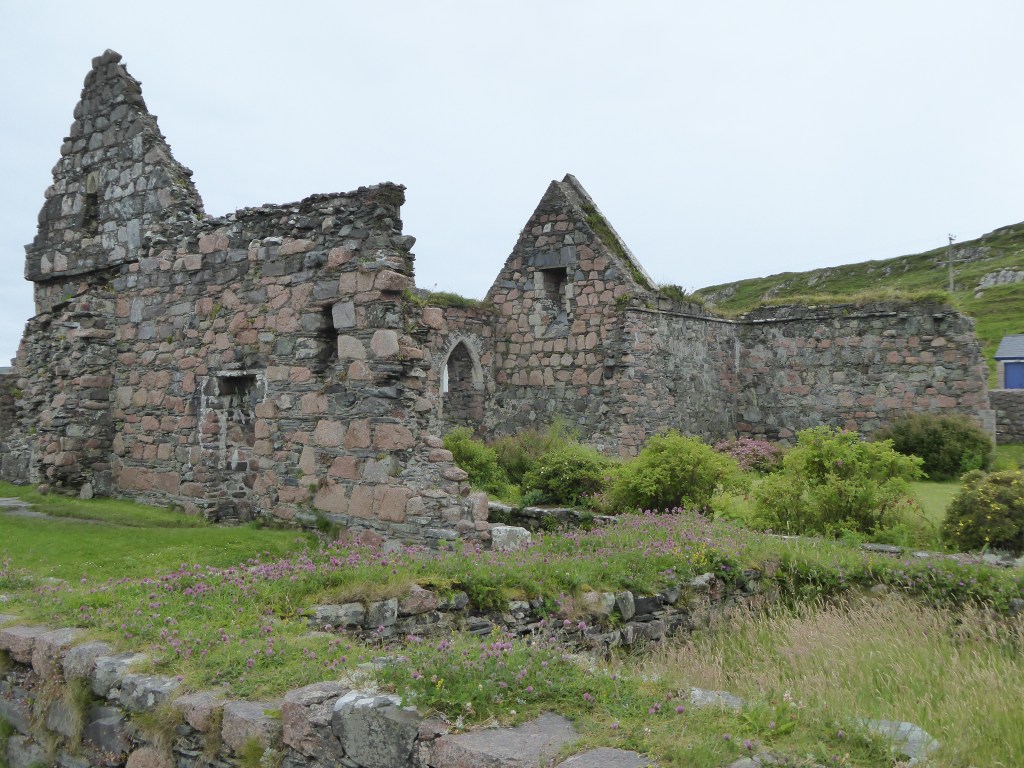
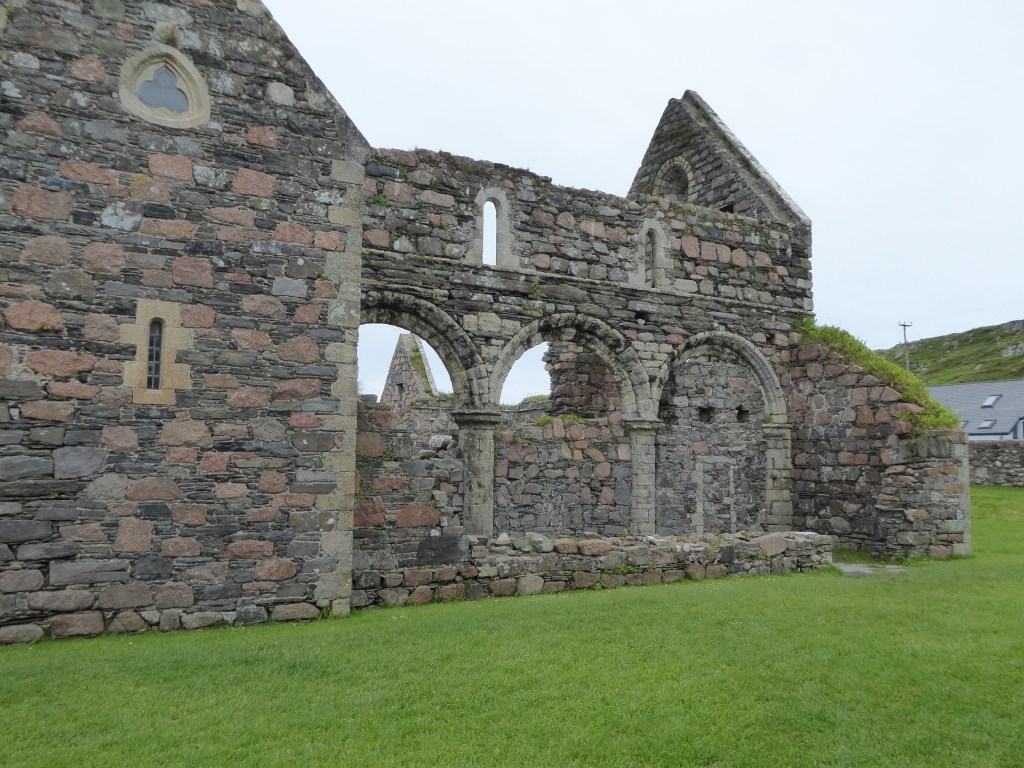
We visited the nunnery ruins and the abbey. It was not raining when we arrived but the wind was howling and it was COLD.
Oban back to Edinburgh:
As we drove south, the mountains became full of majestic evergreens as opposed to the craggy and fierce highland mountains. We went over a mountain pass is called “Rest and Be Thankful” because in the old days when the carriages were pulled by horses, at the steep up hill, the 3rd class passengers would have to get out and push, then if the horses were struggling, the 2nd class passengers would push and even 1st class men would have to walk. They were always happy to get to the top.
Stirling
Stirling Castle was built in a very strategic place because it is the lowest pass between the lowlands and the highlands of Scotland. Whoever controlled Stirling, controlled Scotland. There were two epic battles here in which Scots defeated the English even though the English had many more men. The first happened in 1297 – William Wallace defeated the English at the Stirling Bridge. The English tried to cross the bridge but were too heavy with their horses and armor for the bridge, and it collapsed after some of them crossed. The second battle was in 1314 when Robert the Bruce won the battle of Bannockburn.
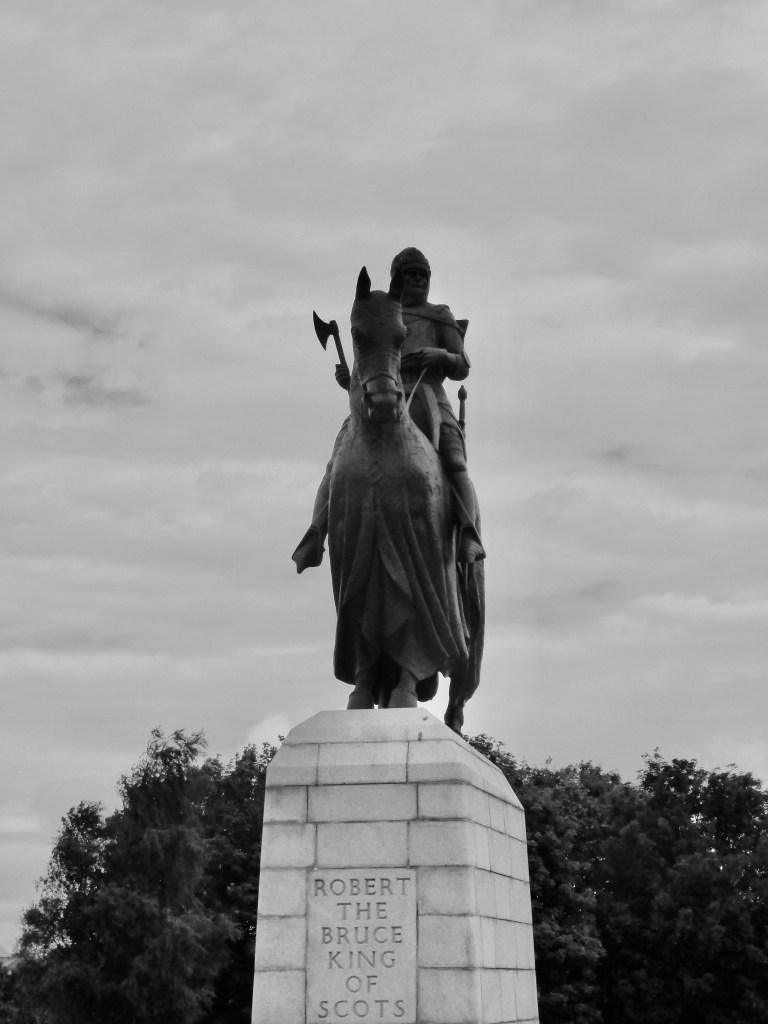
We stopped at the Robert the Bruce memorial, on the hill top where he waited for the English. He had prepared for the invasion by making holes in the ground, so that the English horses would break their legs.
Stirling Castle was the showpiece of the Stuart kings. The castle is high on a hill (for strategic purposes). It was built mostly by James IV of Scotland (1488-1513). It is much smaller than Edinburgh Castle, but the 2 hours we had there were not sufficient to see it properly. Another hour or two would have been better.
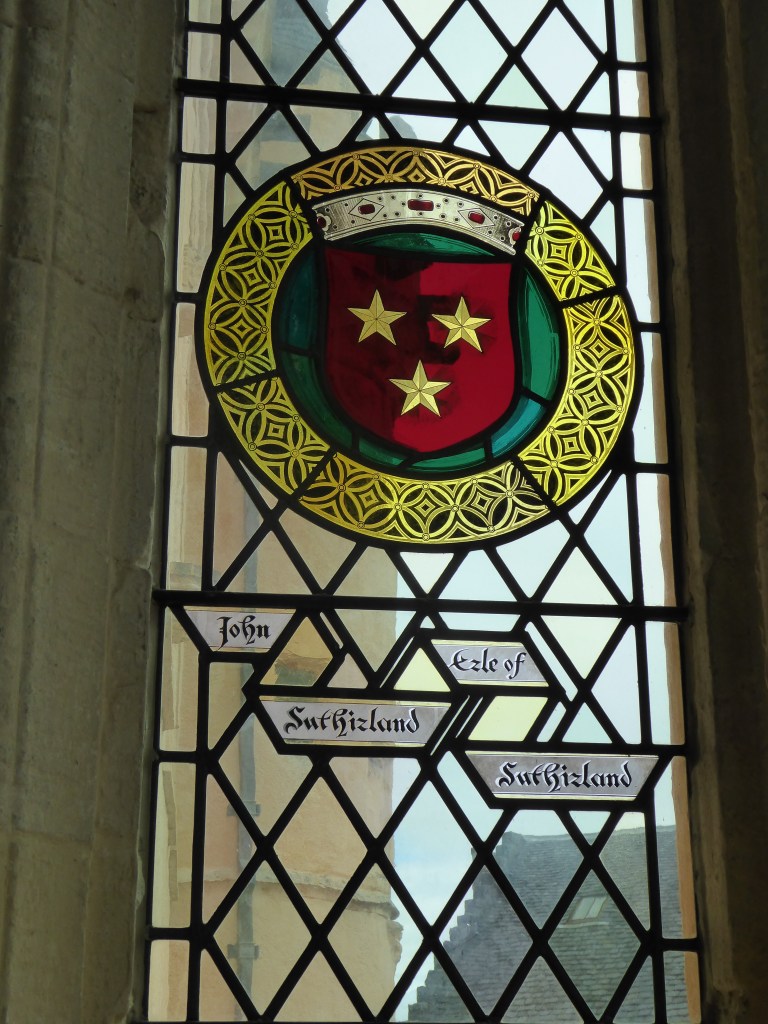
The Great Hall has beautiful stained-glass windows from Venice (locals did not know how to blow glass).
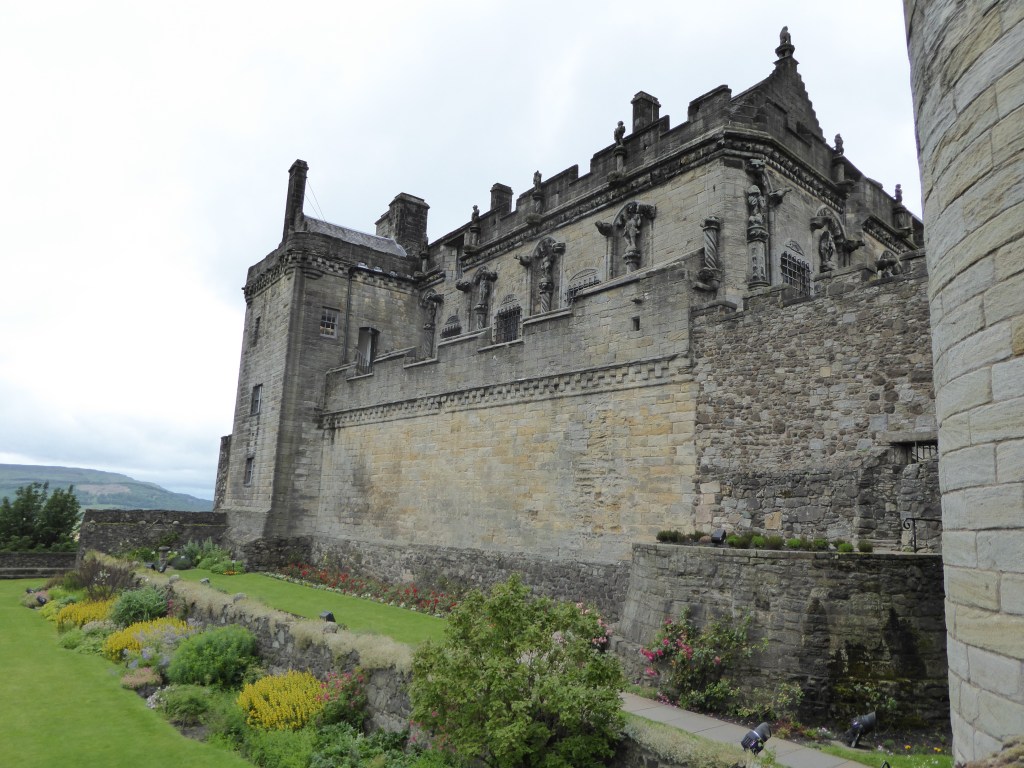
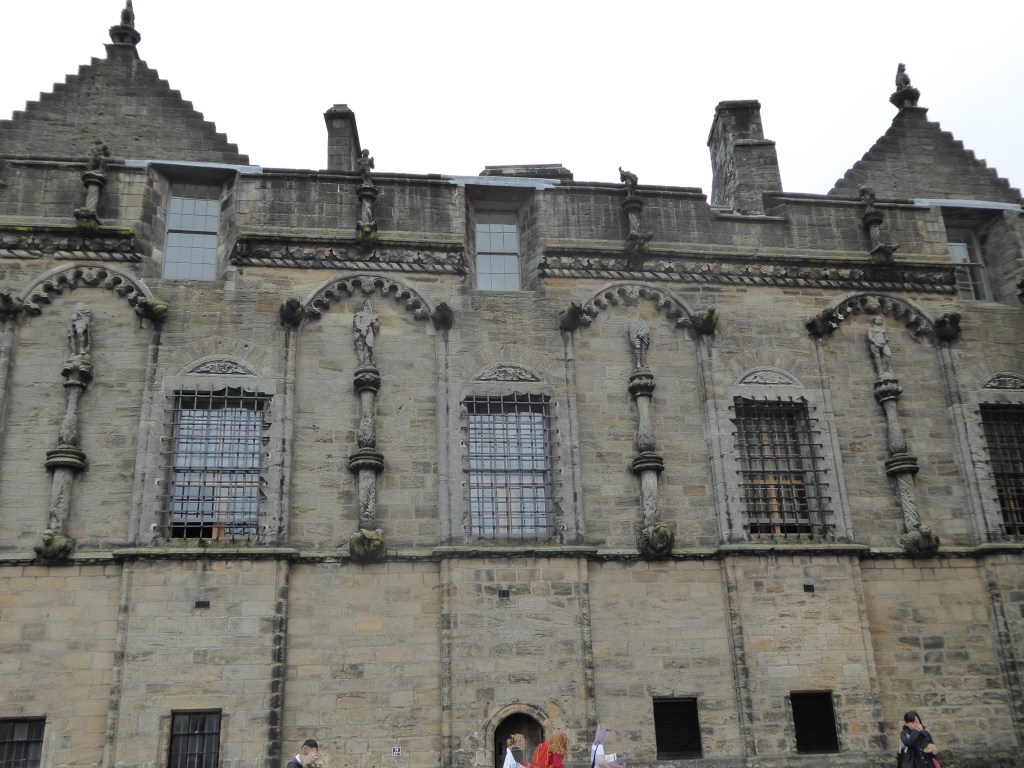
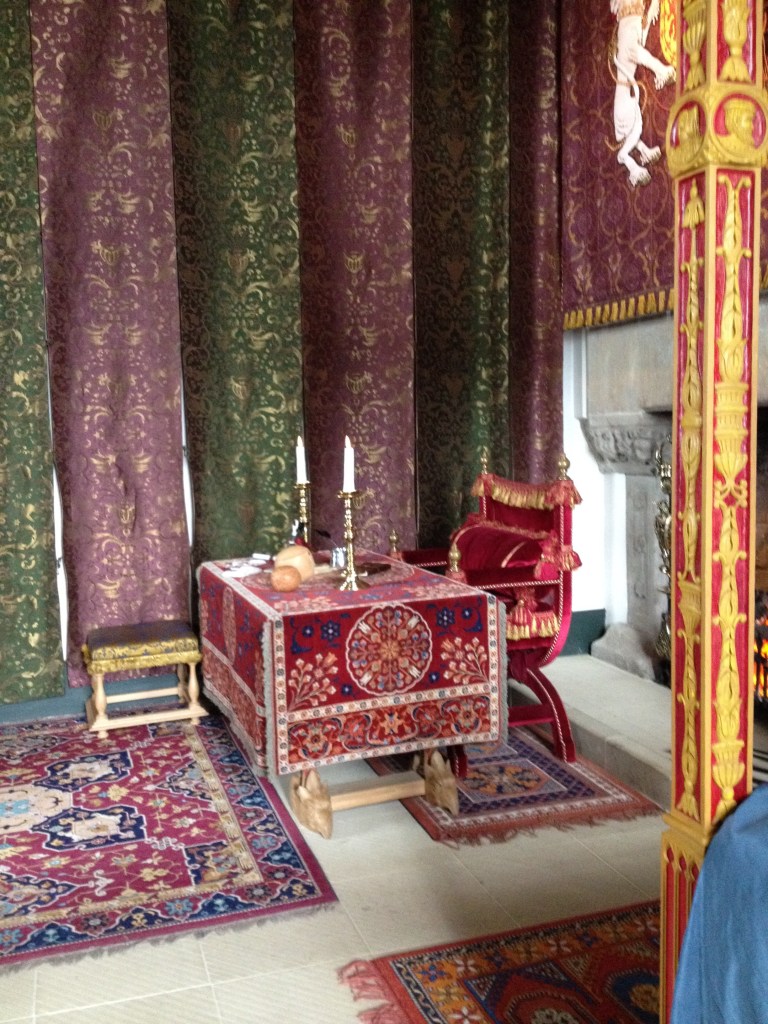
When the Scots joined England in the Union, the castle was no longer used. It housed garrisons and much of the original design was lost.
For instance, the beautiful ceiling in the great hall gave way to a second story for sleeping places. When the Scottish Heritage foundation got the castle, they restored it to its original beauty.
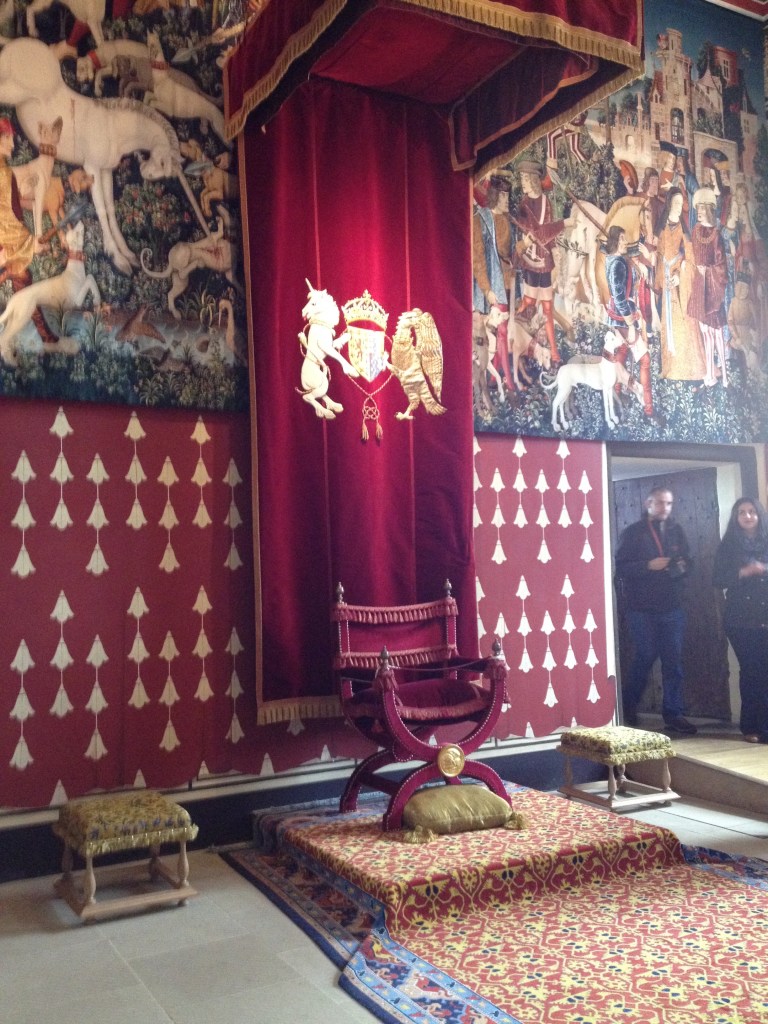
The Scotland tour ended in Edinburgh. The next day we took a train to London, where we toured until leaving for the cruise from Southampton.
The main London adventures were a visit to the British Museum, to the National Portrait Gallery and a concert. In the British Museum, I saw, among other things, the Elgin Marbles, which began life in Athens, and were brought to London by Lord Elgin. They were wonderful!! Having been to Athens, I could picture them in their rightful place.
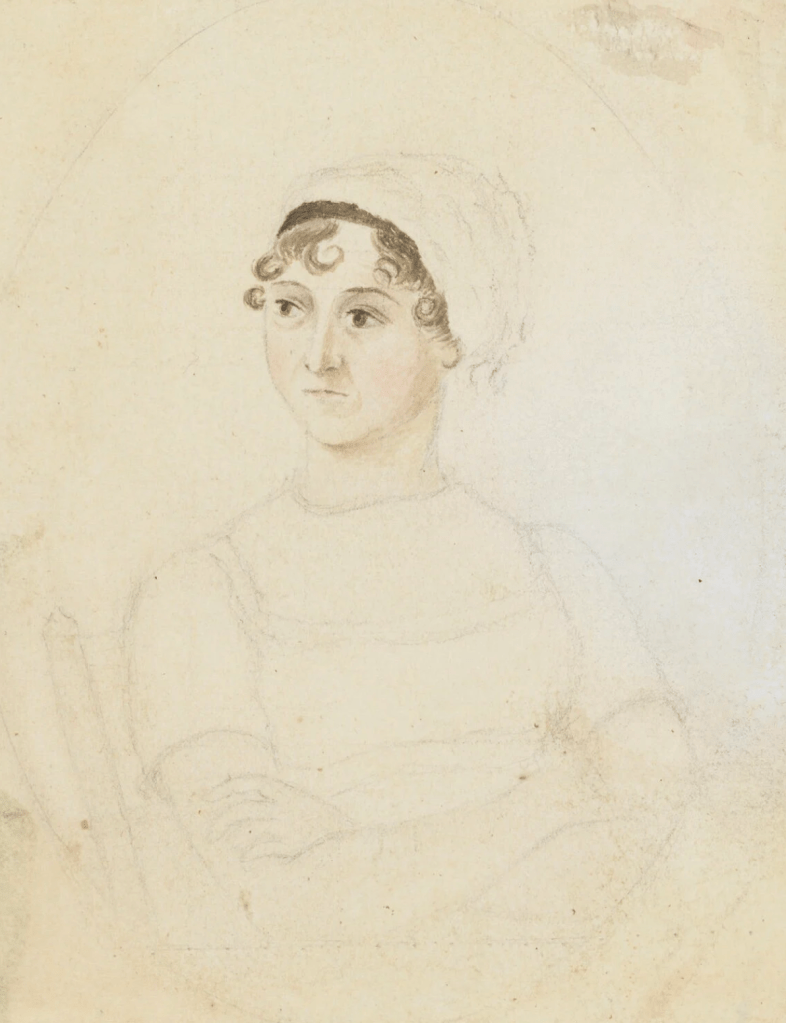
At the National Portrait Gallery, my first stop was to re-visit the little sketch of Jane Austen that was done by her sister Cassandra. Then having just been steeped in Scottish history, I looked at all the Tudor and Stuart portraits, including Mary Queen of Scots, Elizabeth I, James VI (I) etc. it all made so much more sense to me now. We also saw pictures of the 18th and 19th century romantic writers like Shelly and Byron.
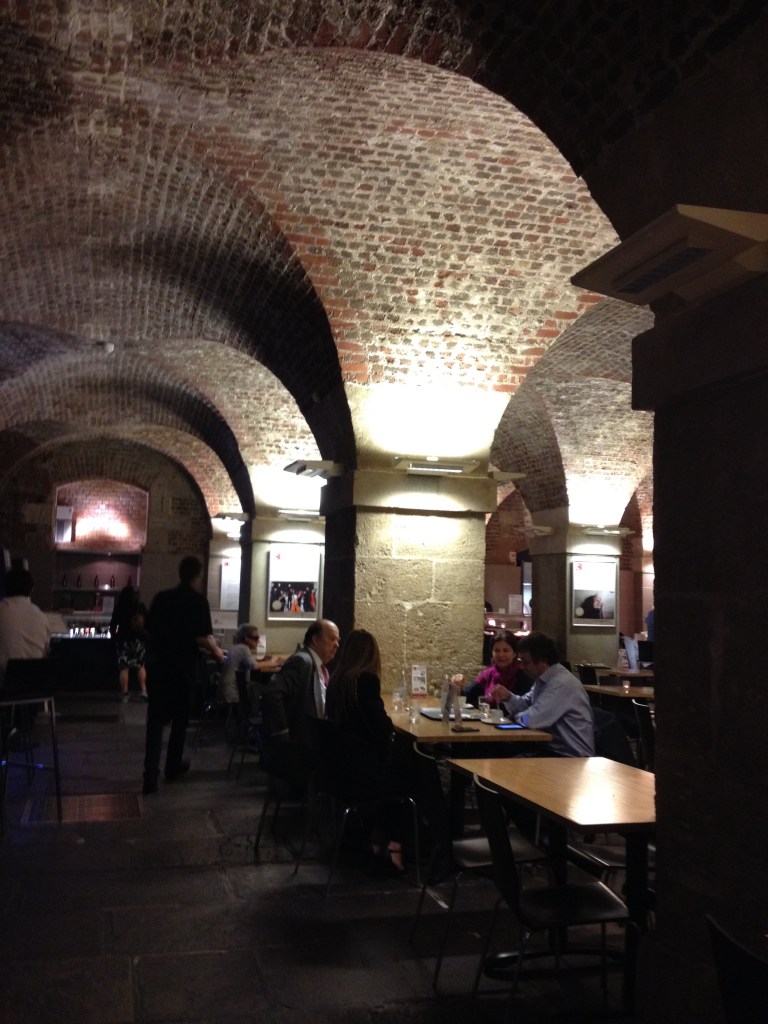
At dinner that night, we ate under St. Martin in the Fields Church – in the Crypt, which is now a cafeteria style restaurant. The food was excellent. Then we went up to the church for a lovely chamber concert of Bach, Mozart and Handel music.
Walking back to the hotel, we saw that a block from us, David Ducet was featured as Lady Bracknell in “The Importance of Being Ernest”. Darn. I would have loved to see it and wished we had another evening in London. However, we were heading to Southampton next day to meet our friends, Vicki and Stewart for our joint Baltic Cruise. The cruise will be featured in the next post.
Final Comments:
- Rick Steves tour was great again. We enjoyed our fellow travelers and felt that we learned a great deal of history from our wonderful guide.
- I did feel a bit rushed and would have liked a bit more time in each place – but I say that about all my trips. This is the tradeoff of having a set tour with wonderful guides versus creating your own tour.
- Scotland is a fascinating country if you like castles and history. I do.
 Nili's Adventure