
In order to visit Cuba, US citizens must go on an approved mission. Ours was a humanitarian mission organized by Galapagos Travels. In order to fullfill the mission, each participant brought about $50 over-the-counter pharmaceuticals for the St. Vincent de Paul old age home for women.
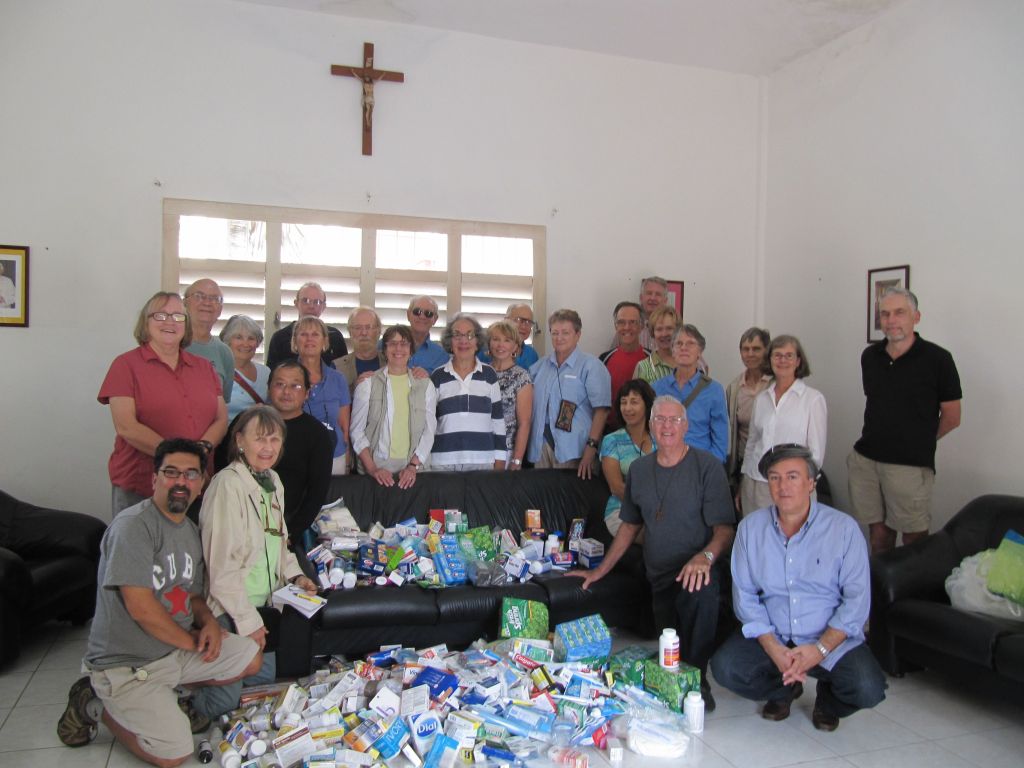
Once in Cuba, we met some of the nuns at the home and learned about the work they do, helping everyone, not just Christians. Bringing the pharmaceuticals did not seem like a big deal to us, but it meant the world to them.
The start of our Cuba trip was challenging. We were to fly from NYC to Miami on Thursday November 1, 2012, to meet up with our Galapagos Travels group and fly to Cuba Friday morning. Superstorm, Sandy complicated our plans. First she hit Cuba – luckily not the part of the island that we would be visiting. Then on Sunday, October 28th, she hit New York and closed our airports. When on Wednesday morning, the airports were still closed, we were faced with a decision: wait to see if LaGuardia airport opens on Thursday for our flight or rent a car and start driving. If we waited and the airports did not open, we would have to do the 1,000 miles in less than 24 hours. We decided to rent a car and drive. Easier said than done. There were no cars for rent in Manhattan, but we were able to reserve one at the airport. The airport was closed but the Rent-A-Car offices were open. Jerry took a bus to the airport while I finished packing, getting the house vacation ready, got cash and sandwiches. After standing in line for an hour, he returned at 1pm with the rental.
The first part of the drive was slow. There were lines to get into some rest stops, and the fuel lines on the NJ turnpike, were about 60 cars long. With electric lines still down, only some gas stations were open. Luckily we had enough gas to get out of NJ. We spent the night in North Carolina, then arrived in Miami by 8pm on Thursday. Relief. Our original flight to Miami did end up going on Thursday, but we didn’t care, we felt that we had made the right choice.
We took an American Airline charter from Miami to Cuba. The process was chaotic. First we had to fill out some forms and then an official took $20 for each bag we were checking plus our passports. We all stood around while the passports were processed and we were given our boarding passes. The security line was chaos as well but we got through in plenty of time to board the plane.
When we landed in Havana the chaos continued. We were given 2 forms to fill out for our visas. First we were told to hold on to both forms, then told to hand in one of them. Then we had to go through security with our hand luggage. This was terribly inefficient. The woman in front of me had to open her bags for them to check what was inside. In the US she would have been taken to another table, in Havana, they did it right on the conveyer belt and held everyone up. Bags came off slowly one by one. This process took 2 hours from landing.
The Countryside:
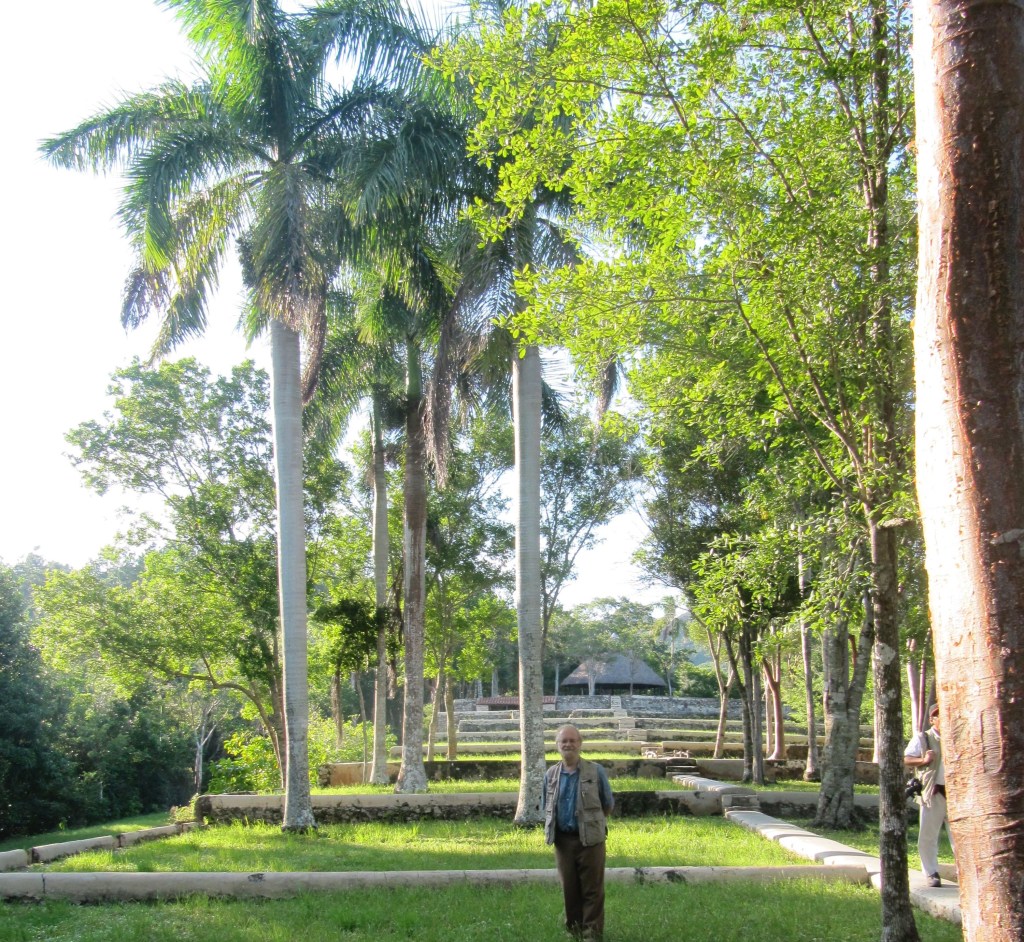
But finally, we were on our way, driving in the countryside until we reached Las Terrazas, an old coffee plantation. At lunch we had the first of the many musical band entertaining us. The coffee used to be planted in terraces, hence the name Las Terrazas. The view from the terraces was lovely especially with the sun shining on the red bark Mastic trees. You can see one of these trees to the right of Jerry.
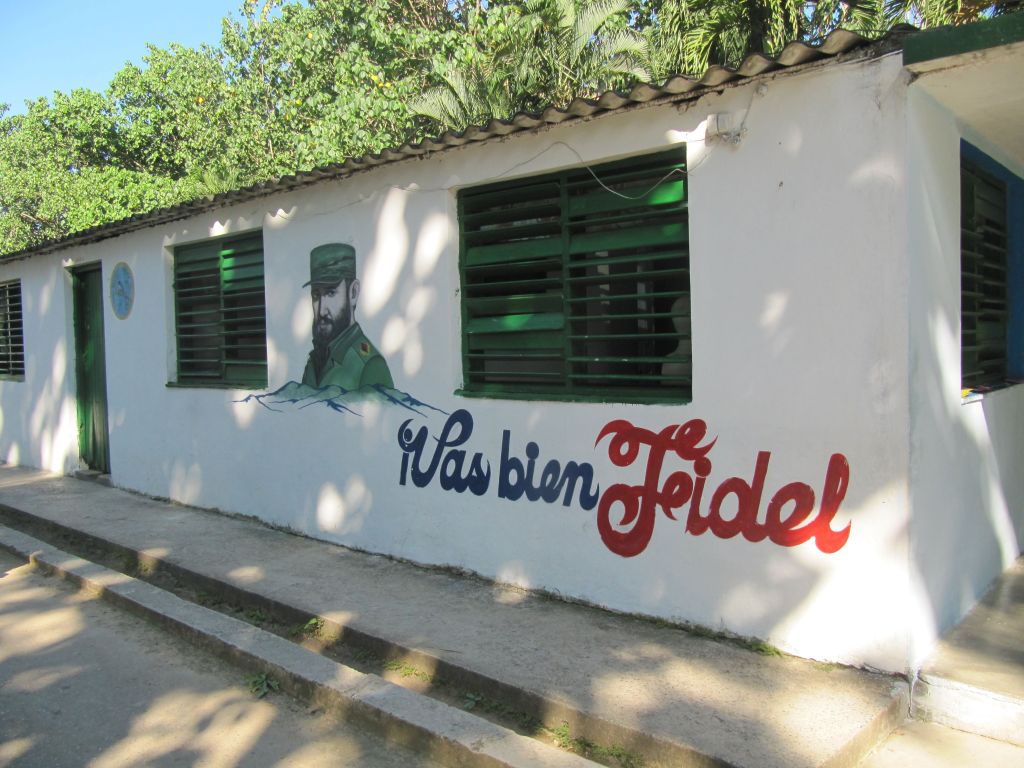
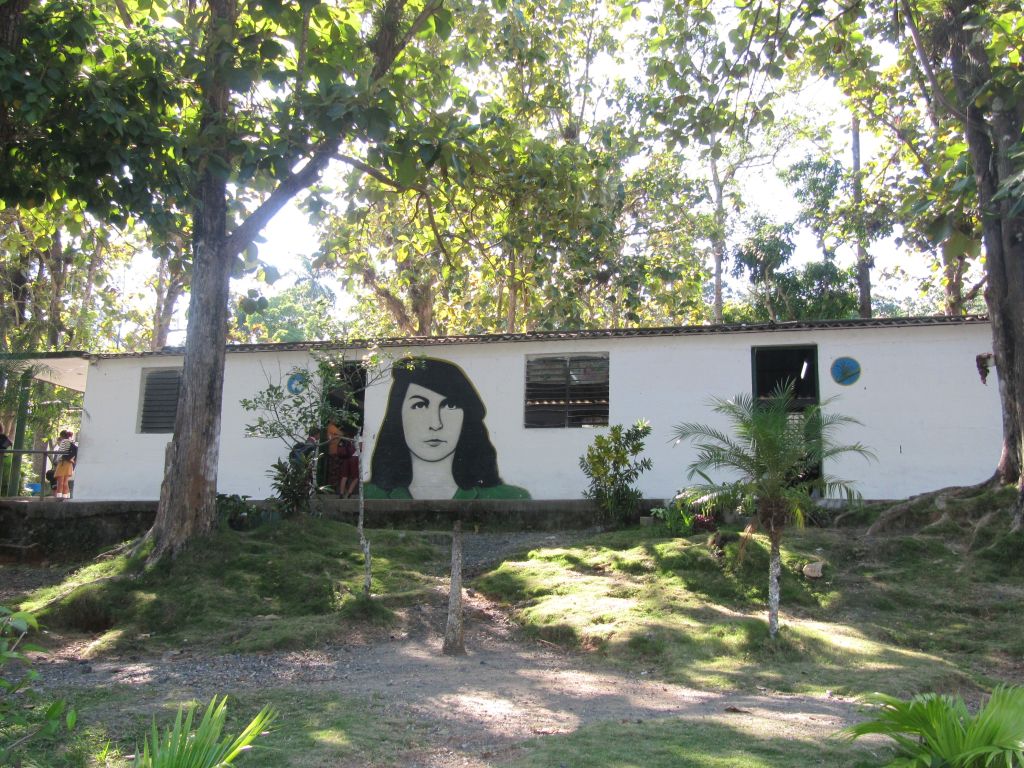
We stopped at a local school in Las Terrazas and I thought you would enjoy the murals they painted on the school buildings.
Vinales Cigar factory
What is Cuba without cigars? We saw an active cigar factory In Vinales. We were not allowed to bring our cameras or bags into the factory. The cigar production is 100% by hand from planting to reaping, curing and rolling. The first step at the factory, is to select the leaves. Three women in a room were selecting leaves. These were passed on to the next set of workers, who hand-roll the leaves, put the binder leaf on, put them in a press to tighten them and then finish the rolling with the wrapper leaf. Then the cigars get checked for size and density. Very few get rejected. They are packed, and the label is put on them. It was very interesting to watch how fast they work. Some of the workers tried to get us to give them a tip but our guide said to not do so. They have a quota that they have to meet each day. If they exceed the quota, they can roll the excess into the next day and take time off or get paid extra.
Our next stop was the Indian caves. The mountains here are full of caves.
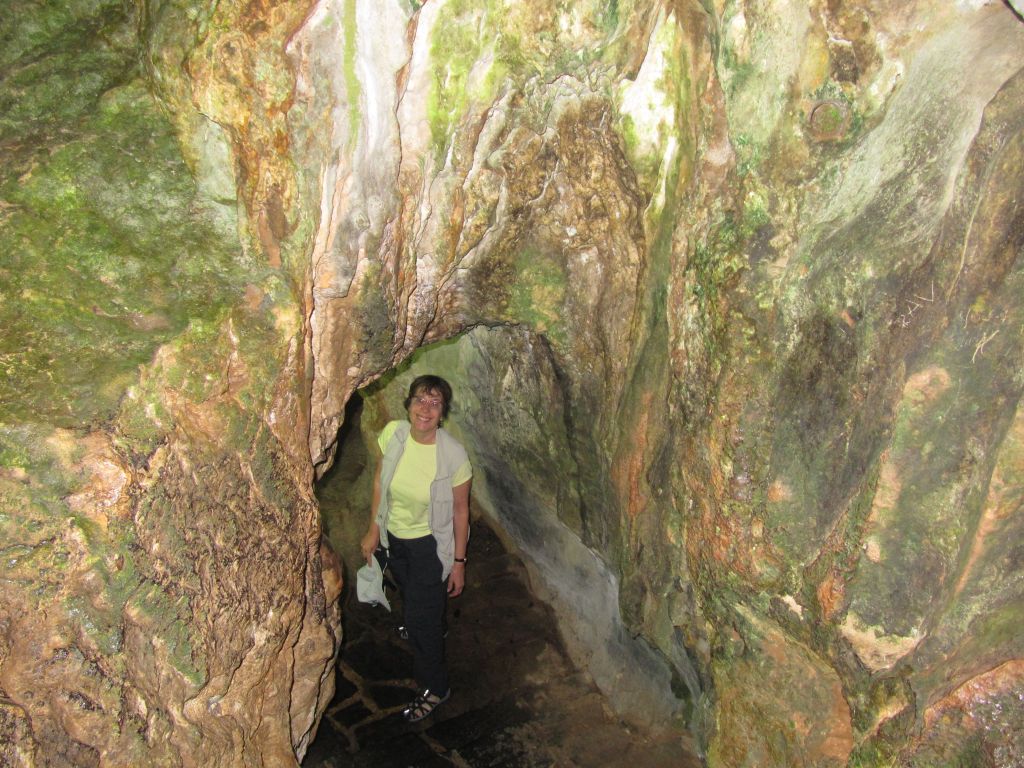
We began by walking in the cave full of interesting formations until we got to an underground stream. From there we went by boat to look at more cave formations.
We saw “sea horse” “tobacco leaves” “crocodile” “Columbus’ three ships” “an Indian head” and more. At the other end of the cave, there is a craft complex and also a guy giving people a chance to ride a water buffalo. I skipped that privilege.
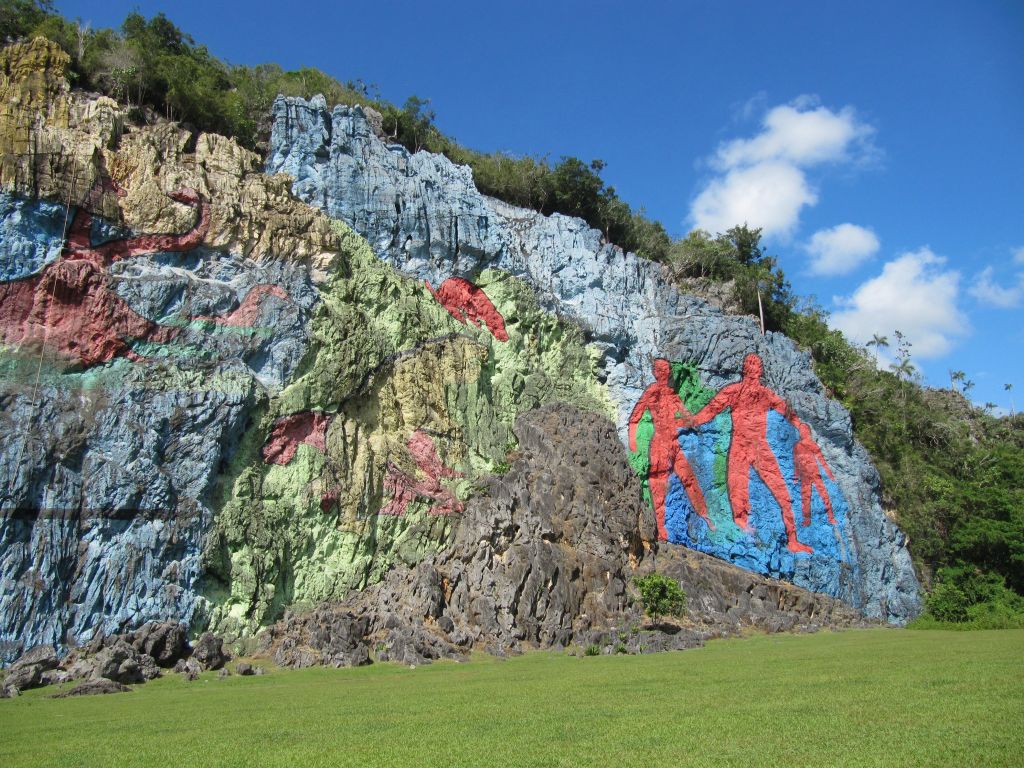
Nearby, at the foot of a mountain, there is a fabulous mural. The mural depicts life on the Island starting from snails, dinosaurs, to men. The painting begun in 1960, took 4 years to complete. The Cuban painter, Glez, who had been a student of Diego Rivera was commissioned to design it and it was painted with the help of 18 painters. It is enormous and very beautiful. We had a great view of it from our lunch spot.
We also went to a farm that grows tobacco.
We saw the new seedlings, which were only about 6 inches tall. The seeds themselves are tiny so they begin them in a small area and then transplant them into the field, one by one.

Each farmer has to meet a quota. If he exceeds the quota, he can sell the rest of the tobacco for extra money and for his own use.
The region received electricity last Christmas. Therefore, the farmer’s wife was happily doing laundry in the machine. They still cook on open fires so the kitchen is in a separate building from the house.
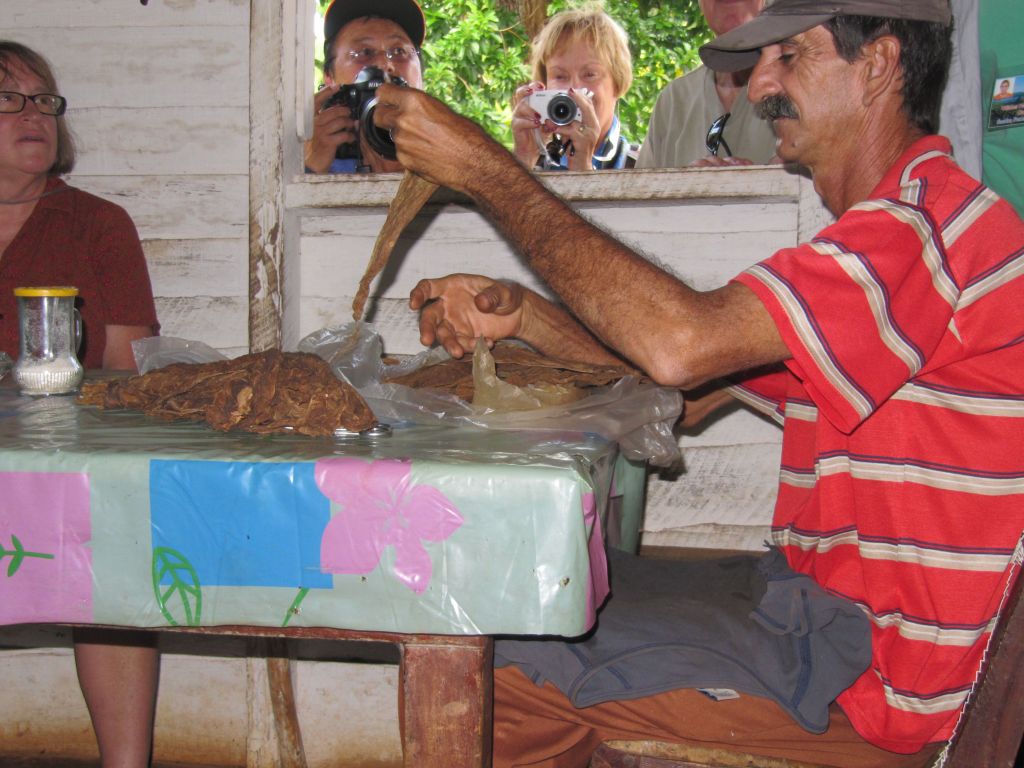
We sat around the kitchen table while farmer, Gerardo, rolled the cigars and our guide explained everything that he was doing.
After the tobacco is dried, it is fermented. This farmer uses water, honey, guava and rum. The mixture is boiled and then the tobacco leaves are moistened with it and covered tight for 3 months. After they are checked, they are packed for another year or more. Only then, are they ready for the cigar factory. We learned that the vein of the leaf has 60% of the nicotine. The leaves can be neutralized further. His leaves have only 10% of the original nicotine level.
Havana
Havana is a delight. It is a walkable city and the Old Town, especially Plaza Vieja is particularly interesting.
Old Havana became a UNESCO site in 1982, which brought in money to fix up the old beautiful houses. Some of the houses in Plaza Vieja are from colonial period, as early as 1559 and some are Art Nouveau inspired, from the early 1900s. To the right are 2 buildings, which are “before and after.” Obviously the one to the right has not been restored.
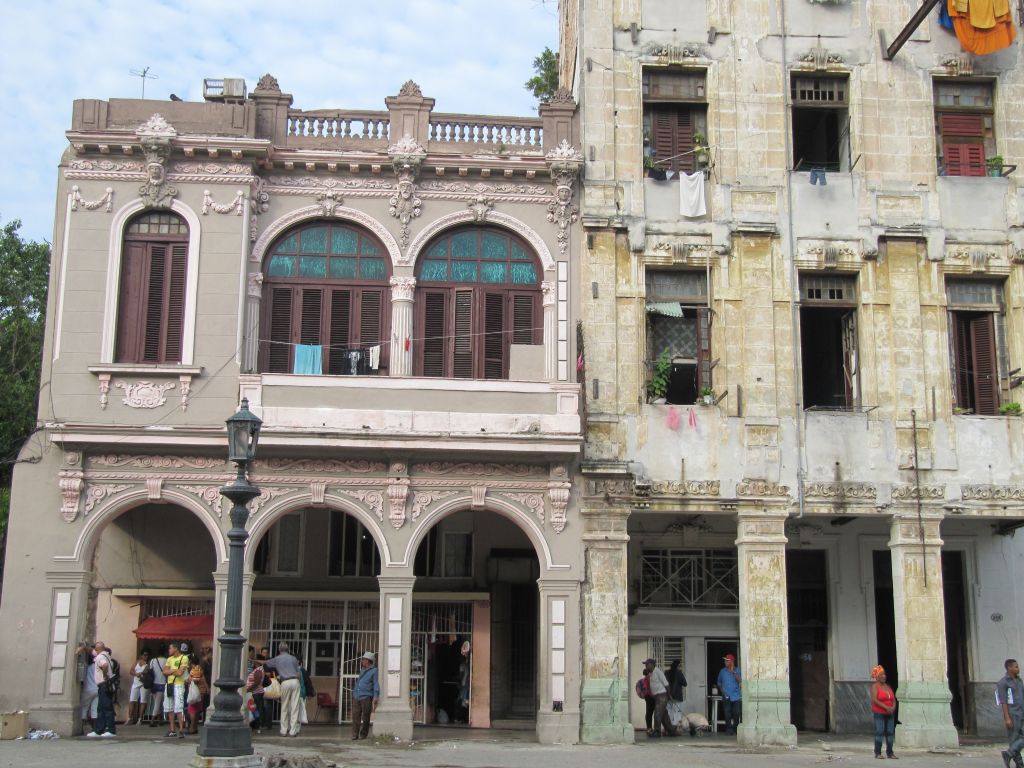
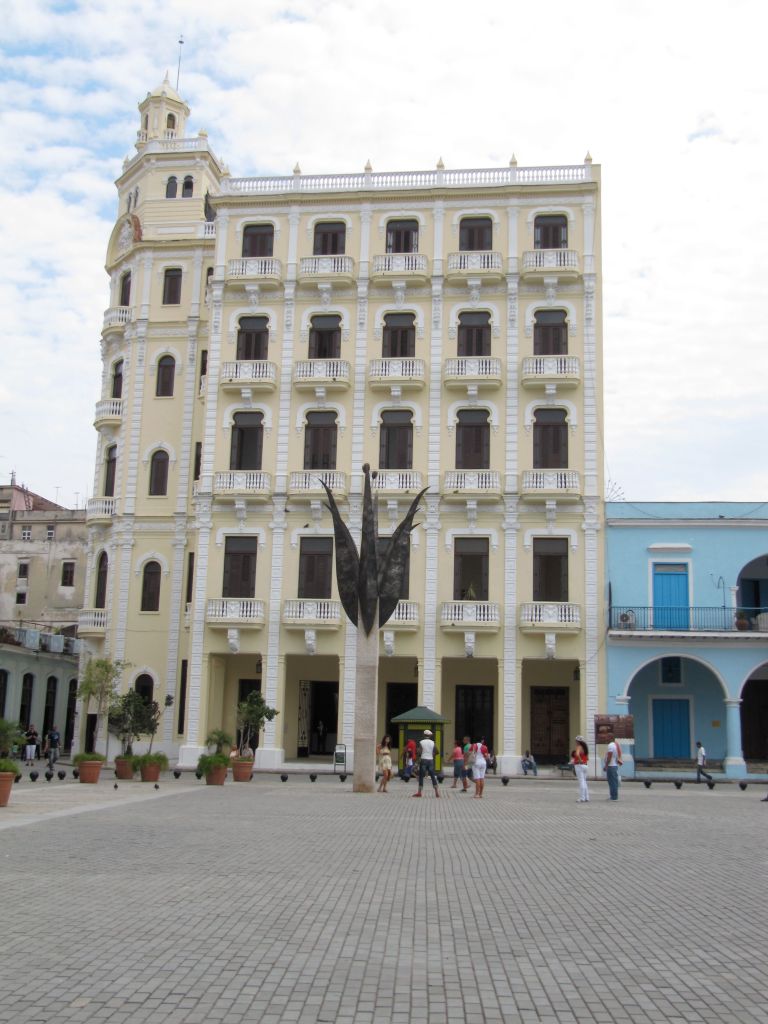
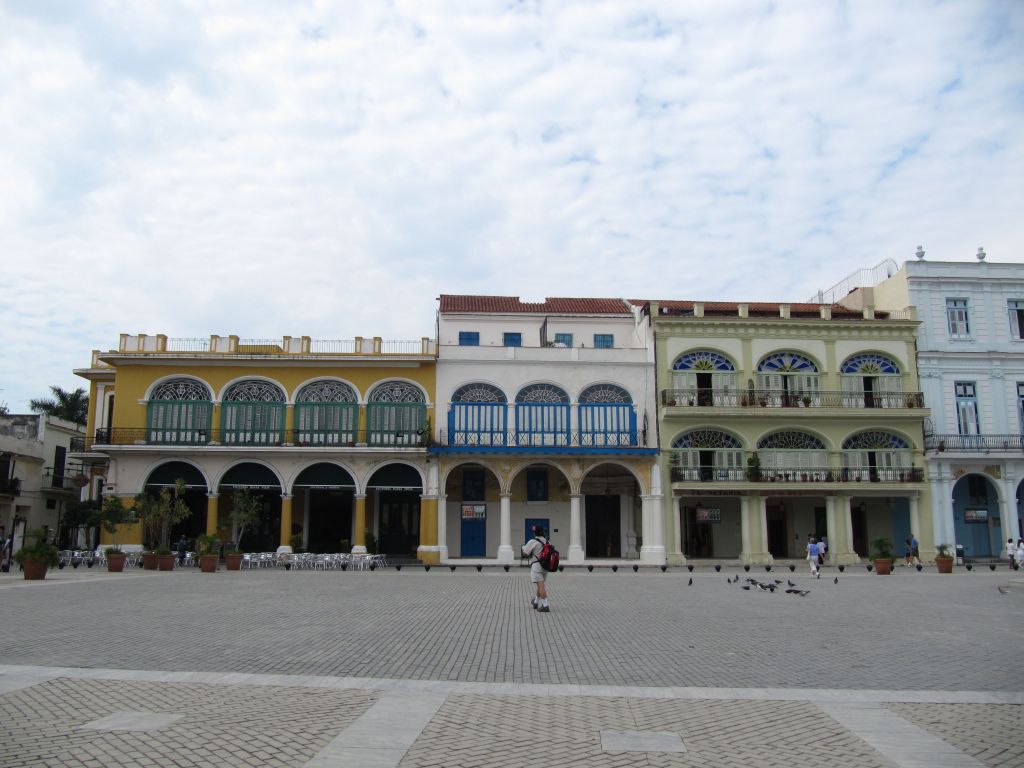
If only there was enough money to do this to the entire city, it would be awesome. One of the treats in this part of town is having hot chocolate at the Chocolate Museum. I am a hot chocolate expert and this definitely passed all tests.
Hemingway’s House
Hemingway lived in Havana for 20 years. Some of the time he rented a hotel room in Old Havana. But after a while he built a house, which is now a museum.
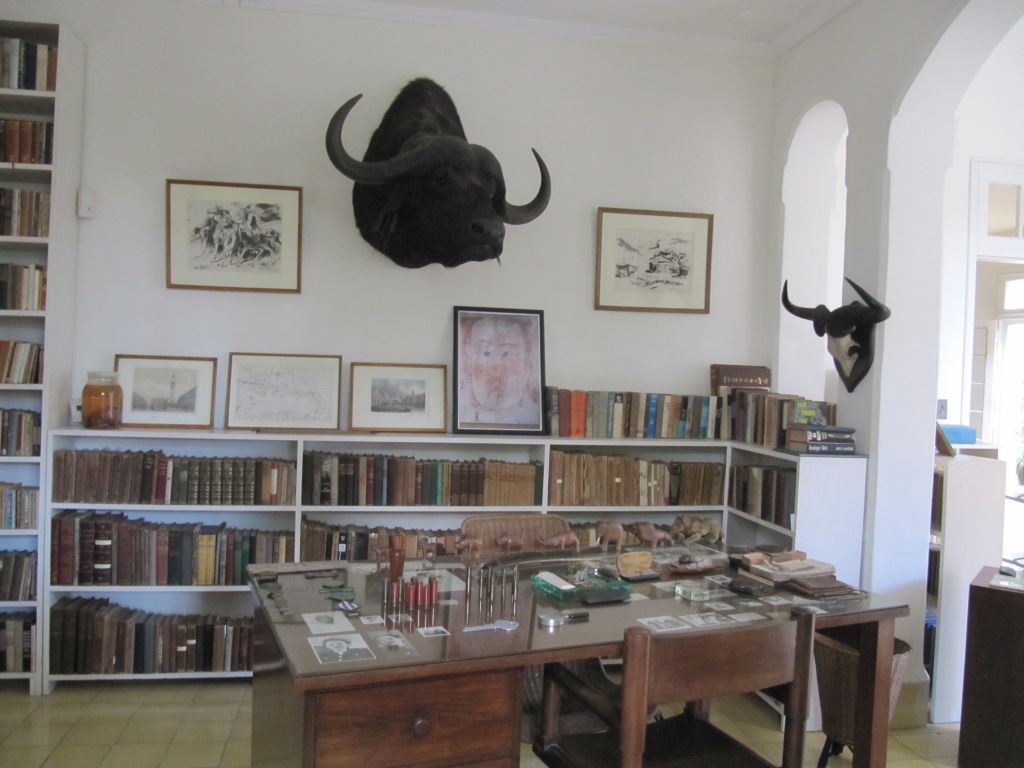
It is a simple house. Each room has lots of books as well as the many trophies for the animals that he shot. You can’t actually go into the house, but you can look through the windows and doors. This protects the house and allows all the books to be visible.
Near the house, is a tower that his 4th wife had built. There is a beautiful view from the tower.
There is a pool and his fishing boat nearby. Shortly before the revolution, Hemingway, who had liver cancer, left Cuba to go to the US to get medical help. He never returned because he committed suicide.
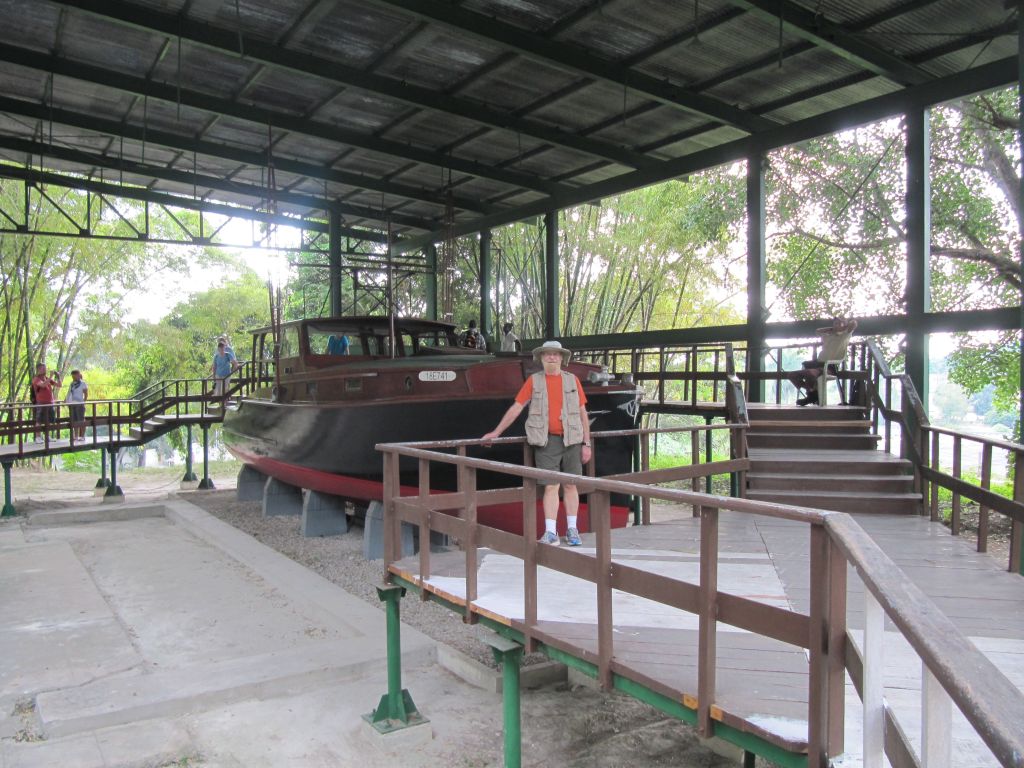
After the revolution, his house was taken over by the state to keep it as a memorial for him.
Near Havana is the Castillo de Los Tres Reyes del Morro Fort, built in 1589. We walked over the moat drawbridge into the actual fort with its tiny windows along the wall. At the entrance there was a metal cable, which was used to pull up ammunition from a trap door. At the open area, we had a lovely view. The fort protected Havana from pirates invading the Spanish Colony.
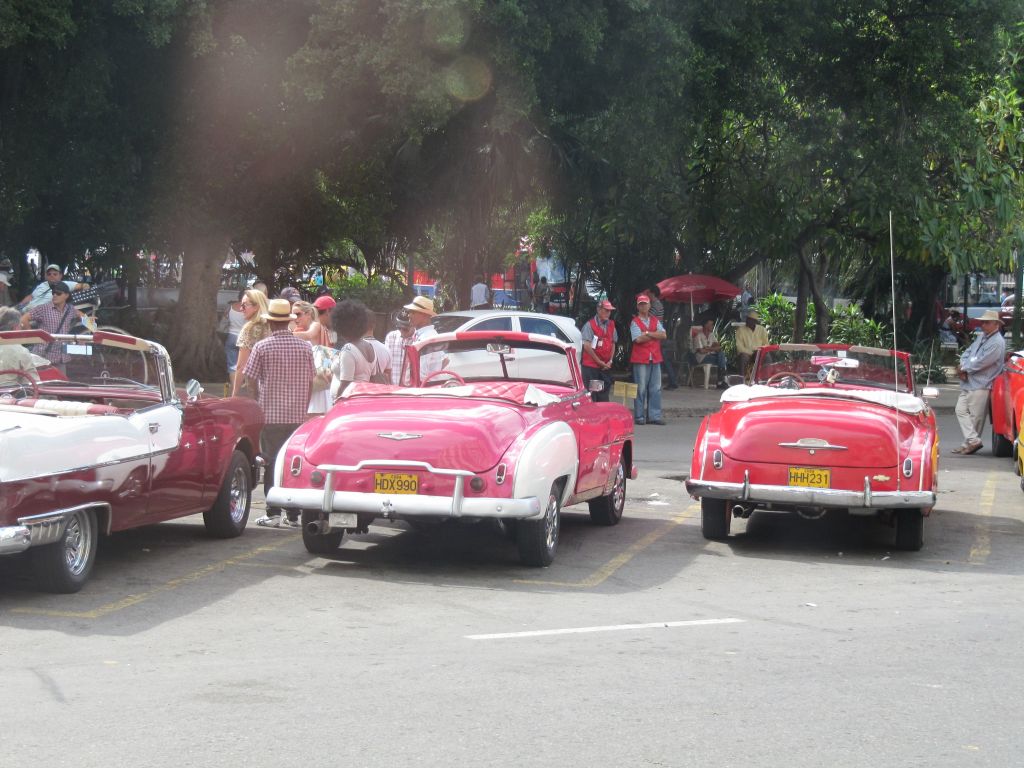
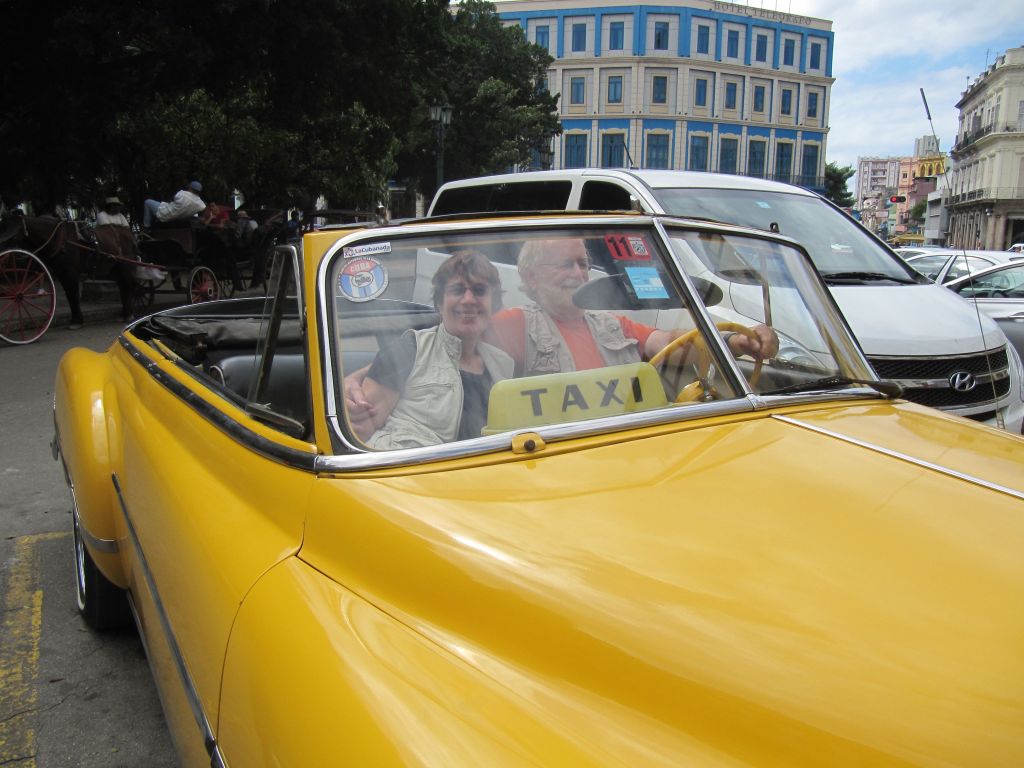
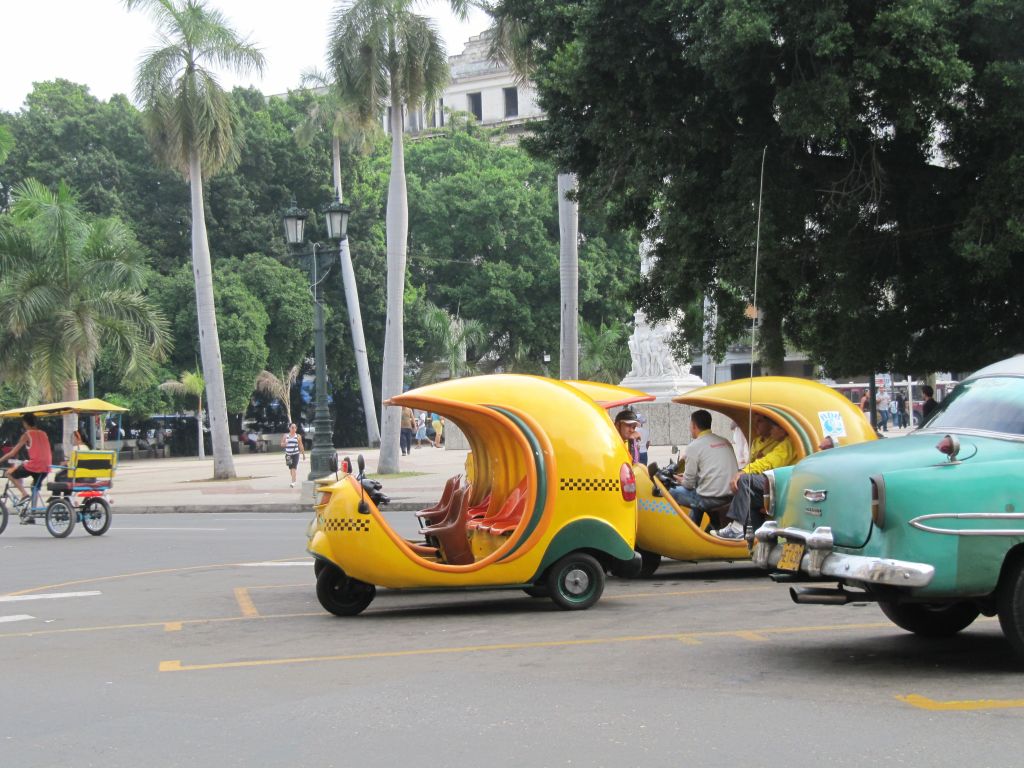
Old Cars: Havana would be the place to make a 1950’s movie. The cars are all from that period. They are kept running beautifully. On our walk we saw an old locomotive parking lot. In the States, that would be a scrap metal lot, not here. They are all being restored.
Cienfuegos:
We took a day trip to Cienfuegos. We walked along their Prado (a street with the center being like a park), which was lined with craft stores. We stopped to admire the Palacio de Valle, which was built early in the 20th century as a private home.
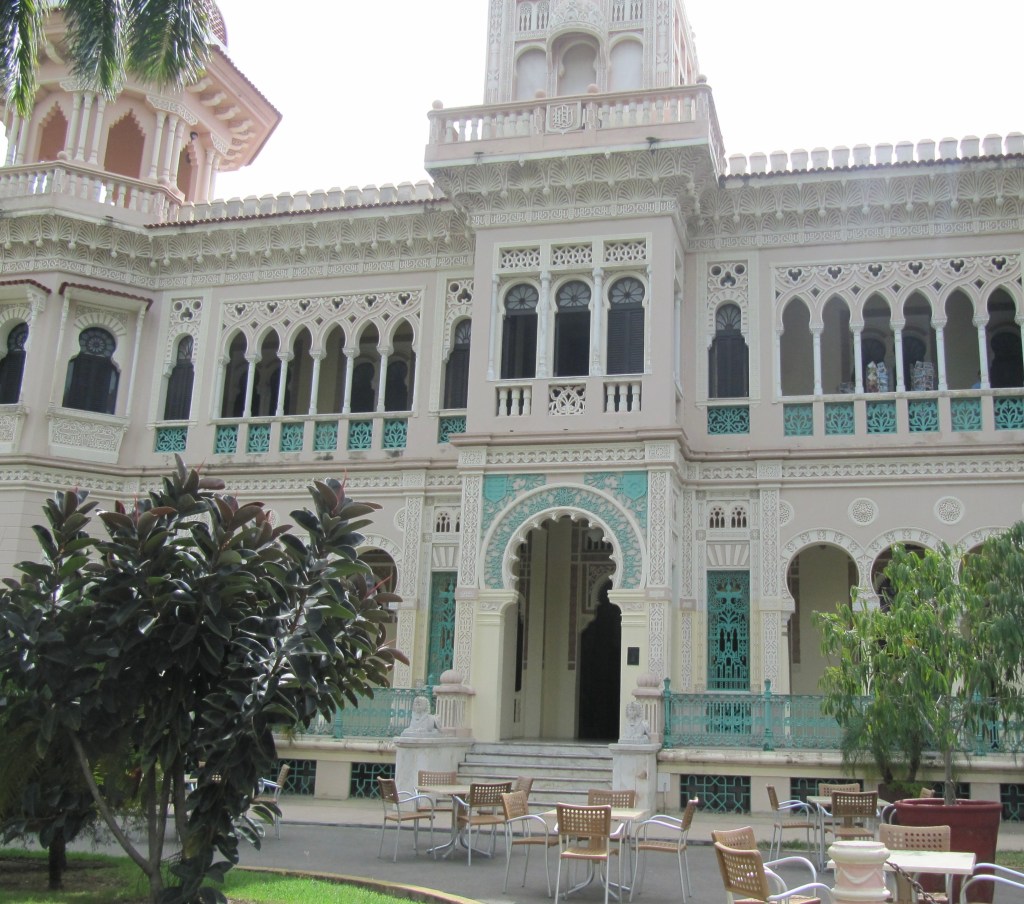
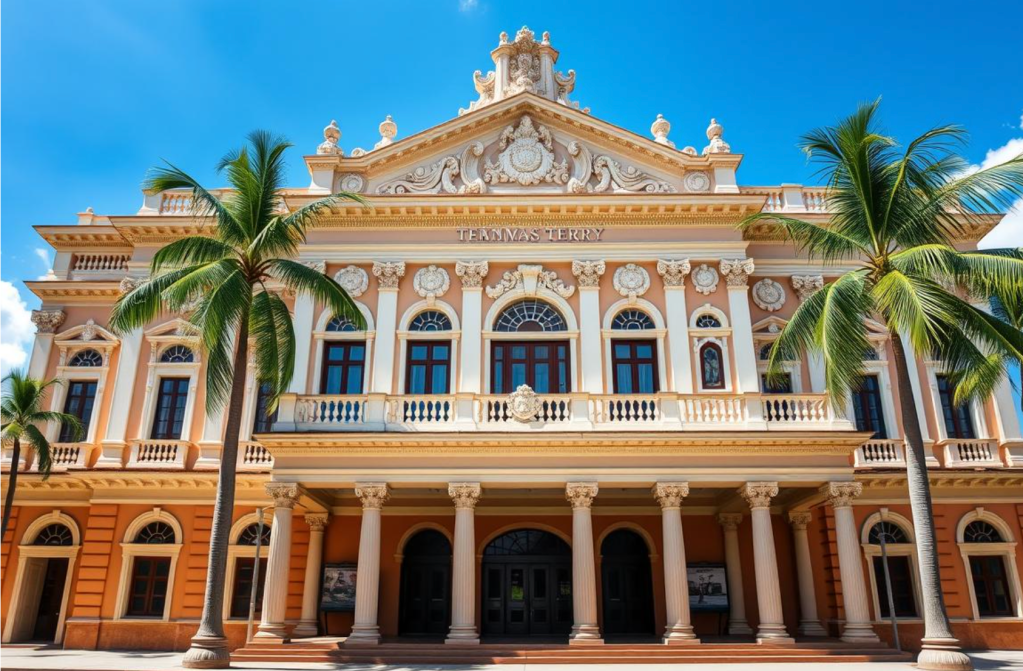
We also visited the main opera house of the town. It is a beautiful gem, built at the end of the 19th century and looks like the European opera houses.
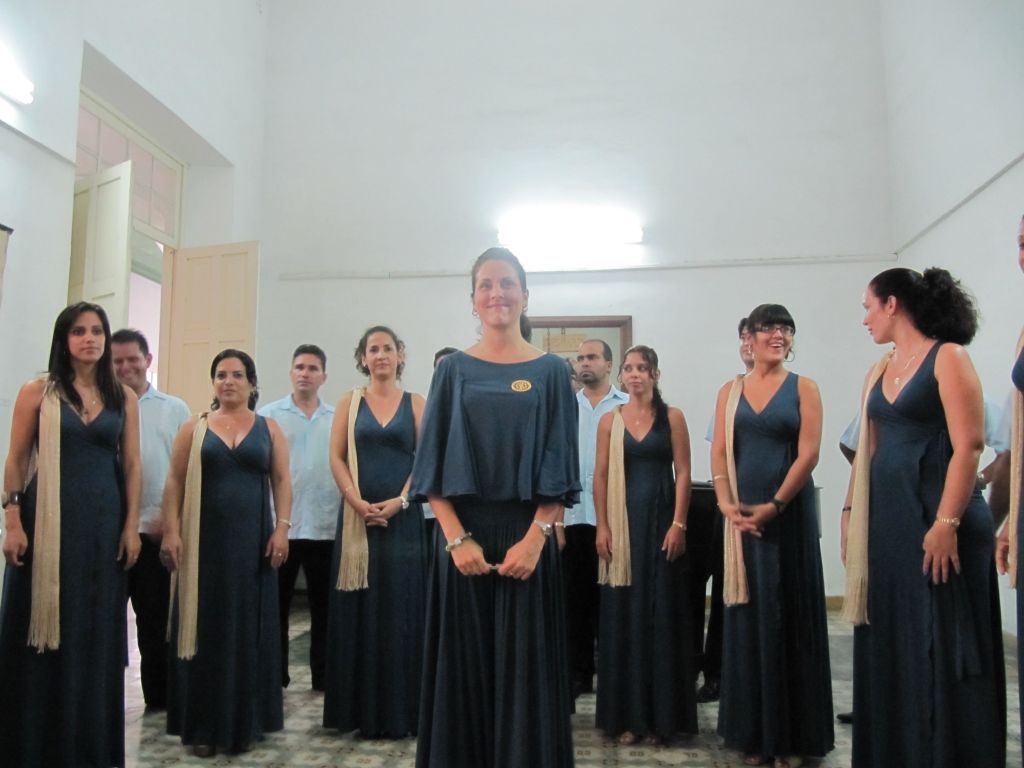
However, our main treat, though was the a cappella choir concert arranged for us. The choir sang selections from the Classics, American folk songs and Cuban music. They did an arrangement of Shenandoah that was the best I ever heard. It was worth the 3 ½ hours each way in the bus just to hear that.
But a day is never complete without adventures. Bathrooms in struggling countries are usually a challenge. At least there are no Asian toilets here (hole in the ground). But toilet seats are rare except in the hotels and top restaurants. At the museum, there were no toilet seats but that was not a big deal. There were also no doors on the stalls inside the bathroom. So those passing the open stall just had to ignore the ones on the toilet. Luckily we were not too shy.
Fuster:
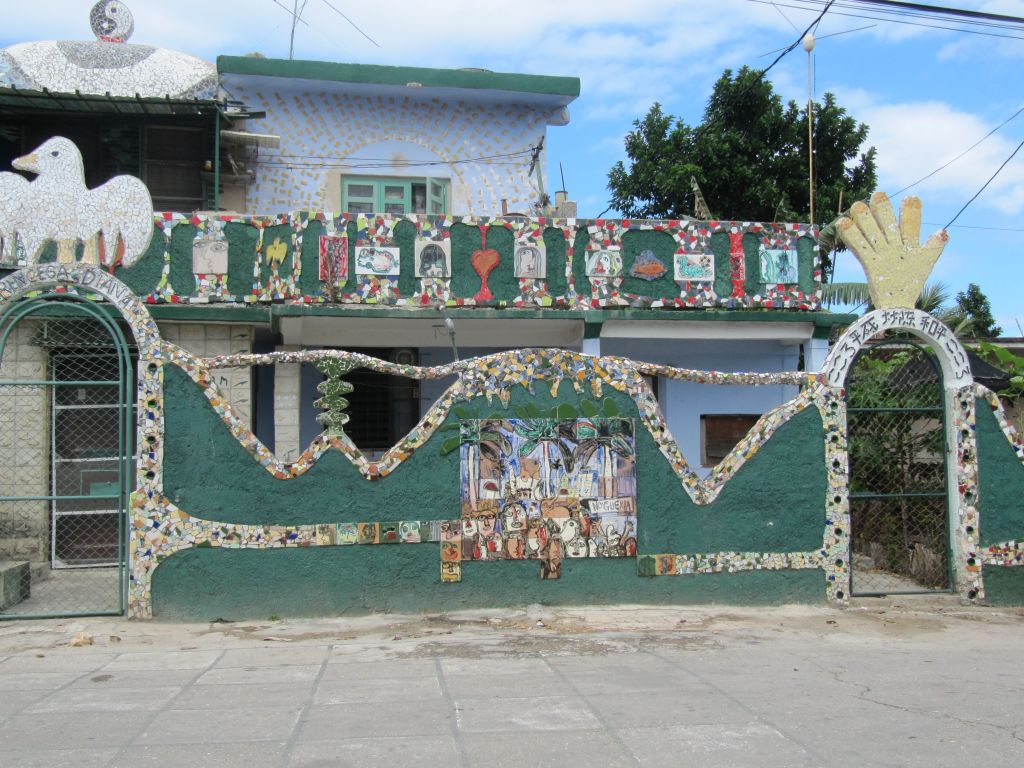
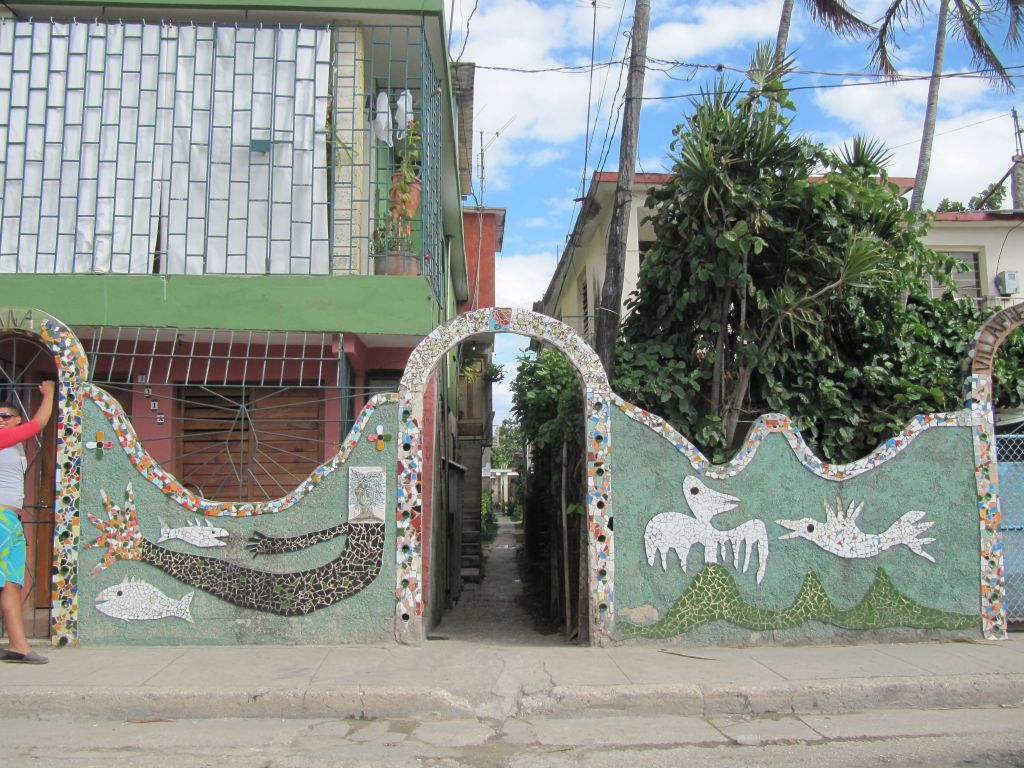
Another fantastic experience was visiting the Fuster house. He is a wonderful mosaic artist. For the last 18 years he has been having fun putting mosaics on just about all surfaces in his house and all over his neighborhood. The mosaics reminded me of Gaudi Park in Barcelona. We had lunch at his house under these wonderful designs.
Ballet night:
This is one for the books!! During the Havana city bus tour, our guide, Yaritza, mentioned that the ballet was in town. I love ballet, therefore, I asked how we could get tickets. She said that they are probably sold out but to check with the concierge. The concierge said that he had tickets for Wednesday evening. Others from the tour heard that we had tickets for the ballet, they wanted to go too and got tickets from the concierge. By the way, each ticket was $30.
Then on Wednesday, when we arrived at the opera house, our guide, who did not have a ticket, showed us the general area of our seats. It is hard to really describe the ensuing chaos but I will try. About 15 of us were in the first balcony and the rest in the back of the orchestra. I was in the balcony, which was actually divided into boxes with three rows of 2 seats– like Carnegie Hall. There was one usher and for some reason she couldn’t figure out where we were supposed to sit. We trooped down one aisle and then another aisle. Then she told some of us to go into a box but there were 8 of us and only 6 seats. I saw 2 seats in the second row of the box to the left and commandeered them. It was now about 8:30, (starting time), therefore I felt safe about being able to stay in the seats. However, people kept coming into the box and standing behind us, then leaving. Two people in the box to our left were kicked out of the seats. Even after the ballet started, people kept re-sorting themselves into seats. There were probably half a dozen people who came in and out of our box. The guy in the next box was taking pictures with a large camera, which was a bit distracting and I could only see 2/3 of the stage. But other than that ….
The program was made up of many short pieces by different ballet companies including the American Ballet Theatre. Some of the dancing was wonderful and some of it not so much. But I am glad I went. I think that the concierge gave us phony tickets because one in our group was told that his ticket was counterfeit and he went back to the hotel. The concierge then called the theater and he was told he could go back. It seems likely to me that there was funny business because 1. No one could seat us properly and 2. how did the concierge come up with 23 tickets to a sold-out event? But since it seems to be squatters’ rights in most cases, it didn’t seem to matter.
Final Comments
- Just a 45-minute flight and a whole world away.
- On a humanitarian visit, you can do a great deal of good while having an adventure.
- I did not get hassled in the street by vendors. A taxi driver might ask you if you want a taxi, but if you say no, he will say “have a nice holiday”. They don’t ask “where are you from?” in order to sell you something, but because they are really curious. If you say, U.S. or N.Y., they are very welcoming.
- The music in most of the restaurants and on the street was fantastic.
- Cuba is a poor country. Even at our 4* hotel, the lights would flicker, the breakfast hot plate broke, two of the three elevators didn’t work (but not always the same two).
- Beautiful Havana and the 1950s cars are well worth visiting
 Nili's Adventure
I
LikeLike