
After reading a book about Galapagos, and its importance in Darwin’s theory of evolution, I decided that it would be my next destination. I booked with Galapagos Travel company (GT), which ran 11-day boat cruises (not just 7-day ones like most companies). Then I added 3 nights in Quito. GT arranged for a guide during our two full days in Quito.
Ecuador -Quito:
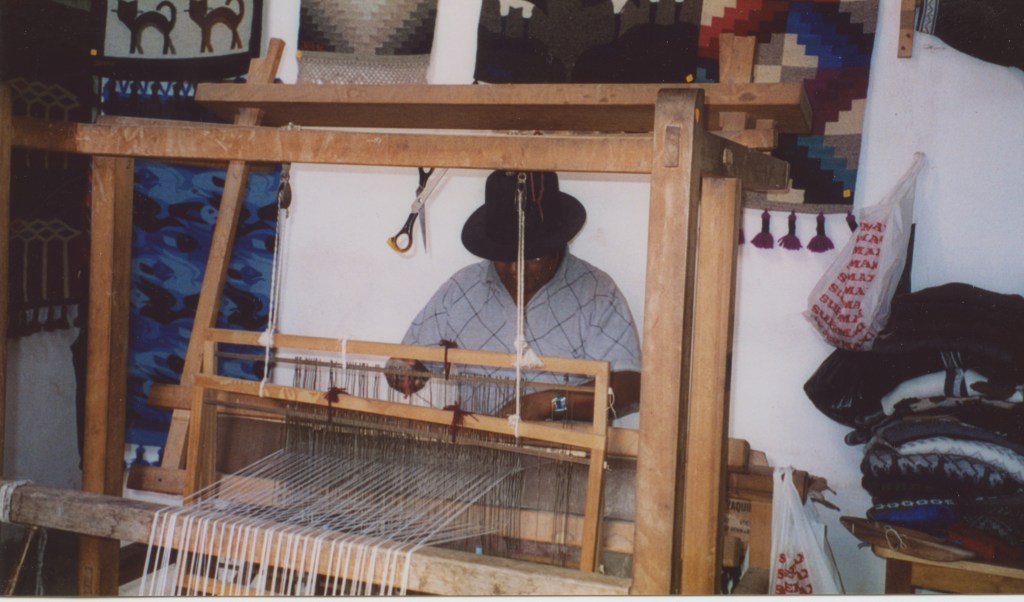
On our first day of sightseeing, we drove to the small towns north of Quito, each specializing in a craft. This was set up by the Spanish so that they could monitor the outflow of goods and tax them properly. One town specialized in pigs, another wood carvings, another in baked goods, another in leather etc. We stopped by a weaver called Jose (see above) and bought a beautiful wall hanging. On our second day we went south to the Cotopaxi Volcano. There are 45 volcanos in the area, of which 33 are active. Cotopaxi is 19,700 feet high, and we were at 12,870 at its foot. It was cold and very windy. We watched a hummingbird clasps itself to the flower because otherwise the wind would sweep it away before it could get the nectare. Cotopaxi did not cooperate, and we only saw some glimpses of it.
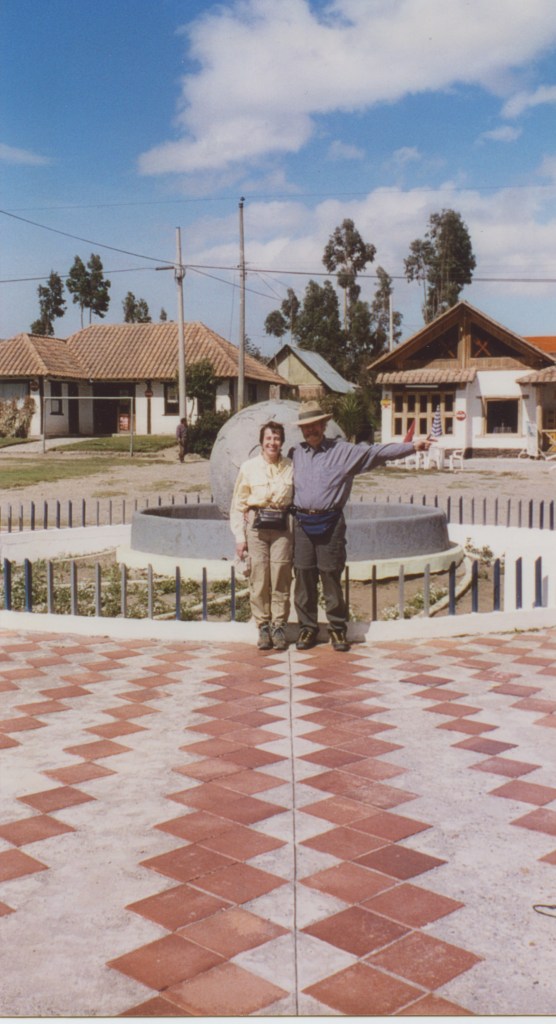
We also made a stop at the Equator. Here we are, each of us on a different side of the equator. We crossed the Equator many times during our Galapagos cruise. (In Finland we were to the Arctic Circle, and later in 2007 we went to Antarctica).
Galapagos:
We flew from Quito to Baltra (Galapagos) and boarded the Tip Top III boat, which held 14 passengers, 2 guides and the crew. We visited many islands, sometimes two per day. Each island was unique both in geology and animal life. Landings were either dry or wet. A dry landing meant that the boat came along some natural rocks (usually slippery) and we jumped off. A wet landing meant that we would land on a beach and the boat would get as close as it could to shore, then we would wade in. The wet landings were usually easier than the dry landings.
The time on the boat was wonderful, relaxing and full at the same time.
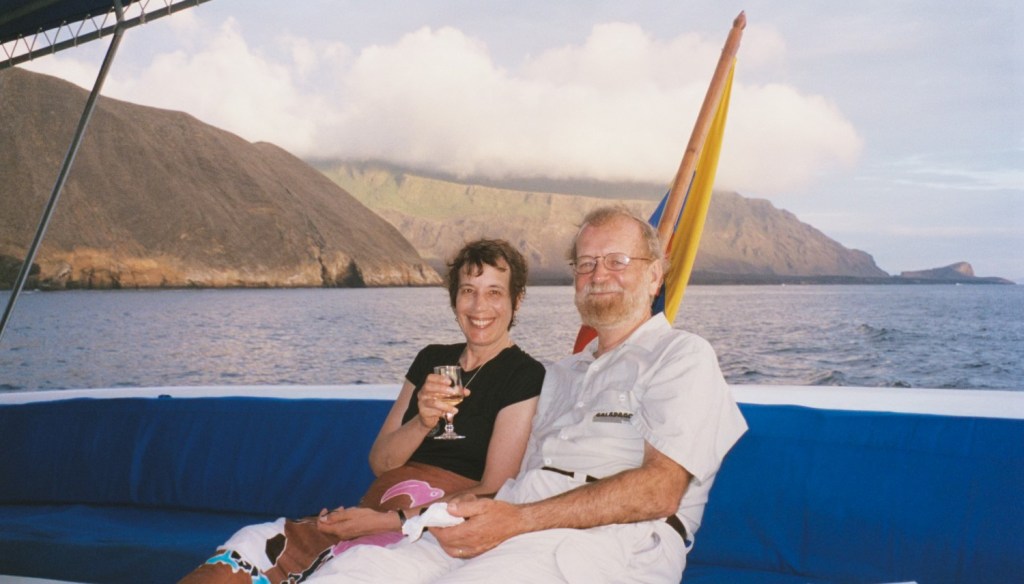
We usually went on one or two hikes and one or two snorkels. Also, sometimes went on a Panga ride when landing was not possible but there were animals to see on an island. There was also lots of time to rest while we moved to a different island or part of island mid day. I took advantage of those breaks to sit on deck and “read” (meaning sleep) or write up my adventures.
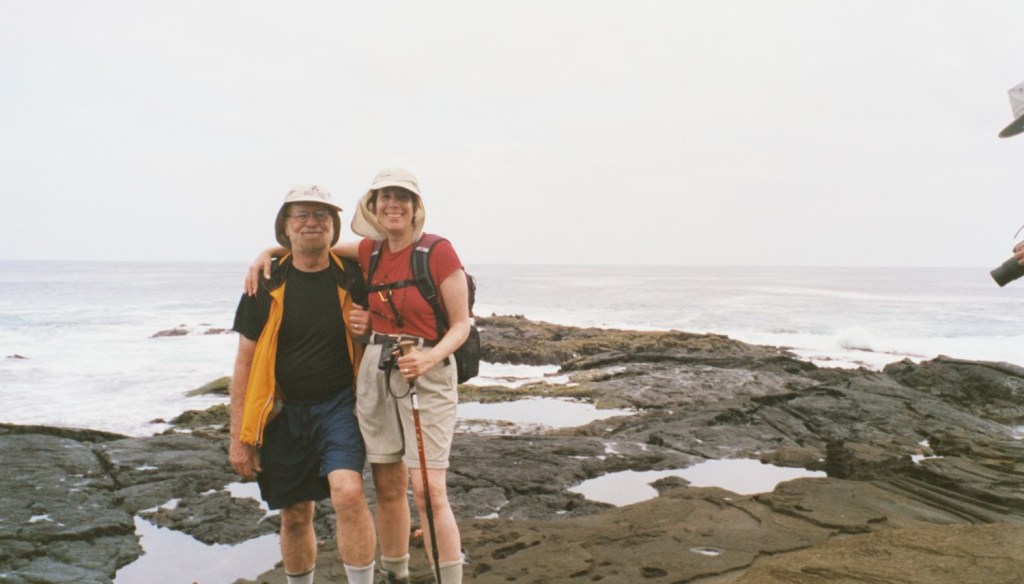
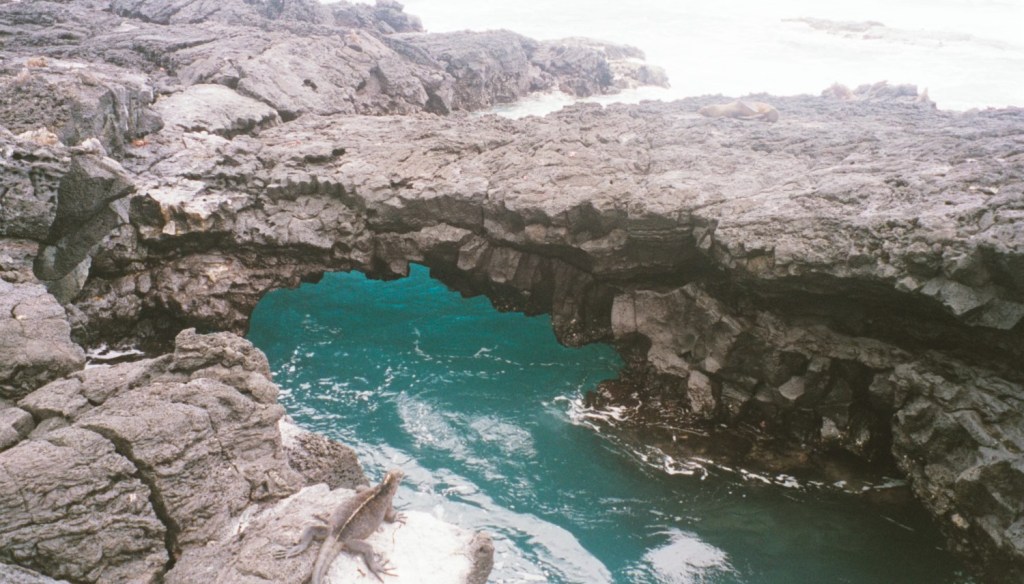
Our first landing on South Plaza was a wow!! experience. It was a dry landing on lava rocks.
A large number of sea lions were sunning themselves at our landing spot and our guide had to shew them away. How magical is that? Everything we saw on that island excited me, from the lava rocks, the sea lions, the iguanas, the birds and more.
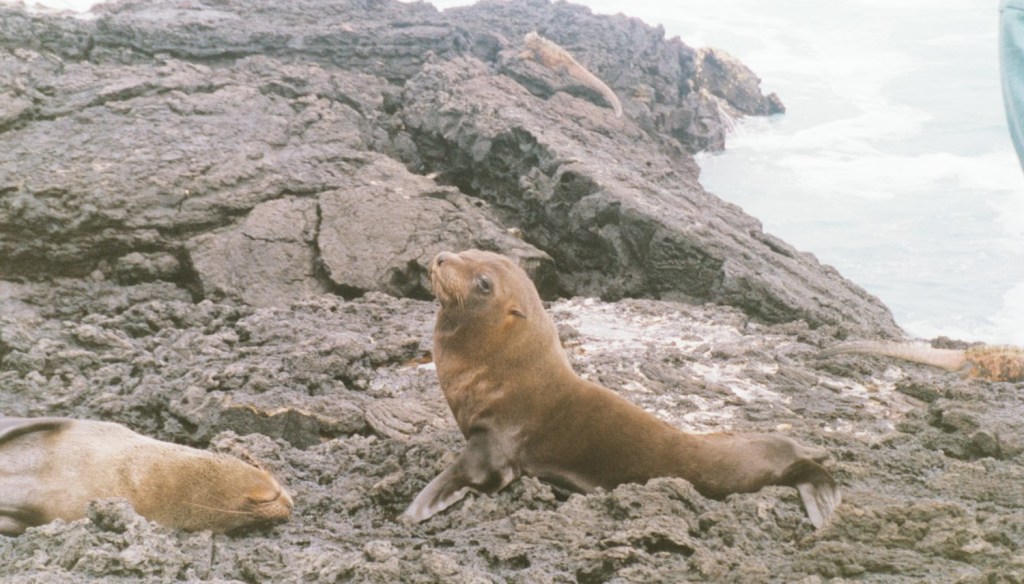
It would be tedious for me to go island-by-island; therefore, I will only write about the highlights we encountered. We saw sea lions on many of the islands and in some cases with babies. Some came very close to us and some stayed away. We were told to stay 8 feet from them, but they didn’t follow instructions 😊
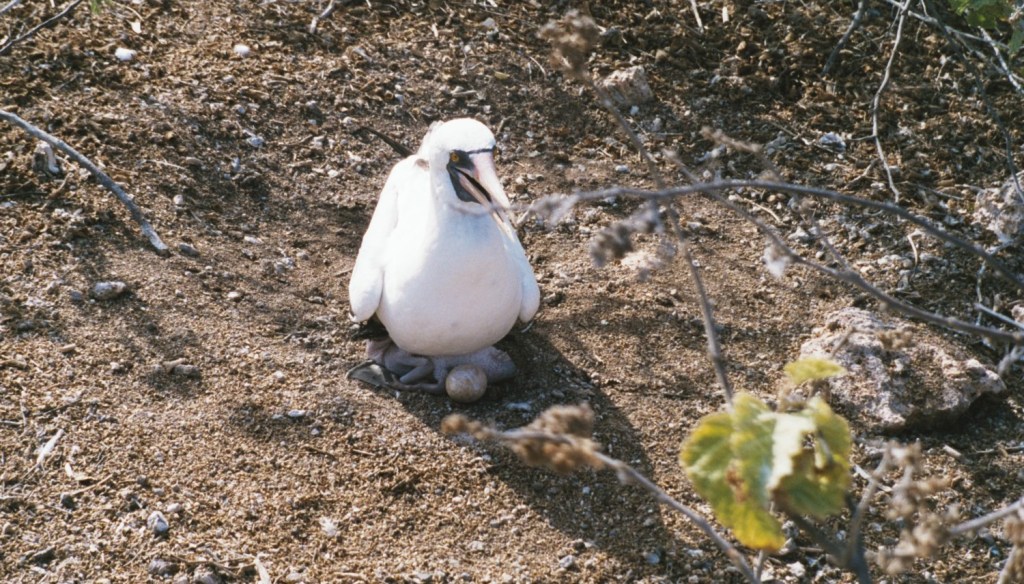
What else did we see during our hikes? We saw fur seals (so cute), marine and land iguanas, blue boobies, red footed boobies, Nazca boobies – with cute fuzzy babies, owls, flamingos, and albatrosses in their nesting grounds.
The terrains differed greatly. Sometime we walked on lava rocks, sometimes on sand or next to vegetation such as cacti or lush bushes. Sometimes we hiked up hills, other times we skirted the shore.
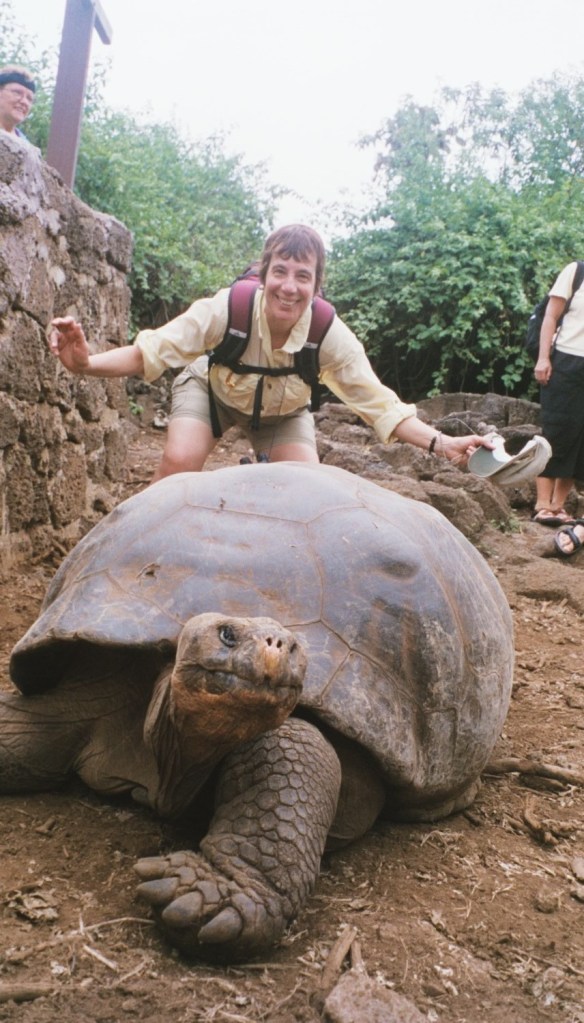
A word about Turtles and Tortoises: The ones on land are Tortoises, those that live in the ocean are Turtles and the fresh water ones are Terrapins. The Giant tortoises are the big draw in the Galapagos. Those tortoises on the different island have differing DNAs. On some islands they are extinct. In others they were in danger of being extinct. We learned a great deal about them on the day we spent on Santa Cruz Island, at the Charles Darwin center. The center is raising endangered tortoises.
What happened to the them? The sailors in the 1800s used to catch them to put on board because they can live some 6 months with out food or water. This gave the sailors fresh meat. Of course, they took the young ones because they were easier to carry, which depleted the population even more. On one island the tortoises were down to 3 males and 11 females. Now there are over 1,000 of them and they have begun to reproduce in the natural surrounding. When I was at the center, I saw Lonesome George who was the last of his kind. They had no success in mating him to females of similar but not identical DNA. (Note: Lonesome George has since died). When we went to the highlands of the island, we saw the tortoises in their native habitation. It really is amazing to stand next to a giant tortoise.
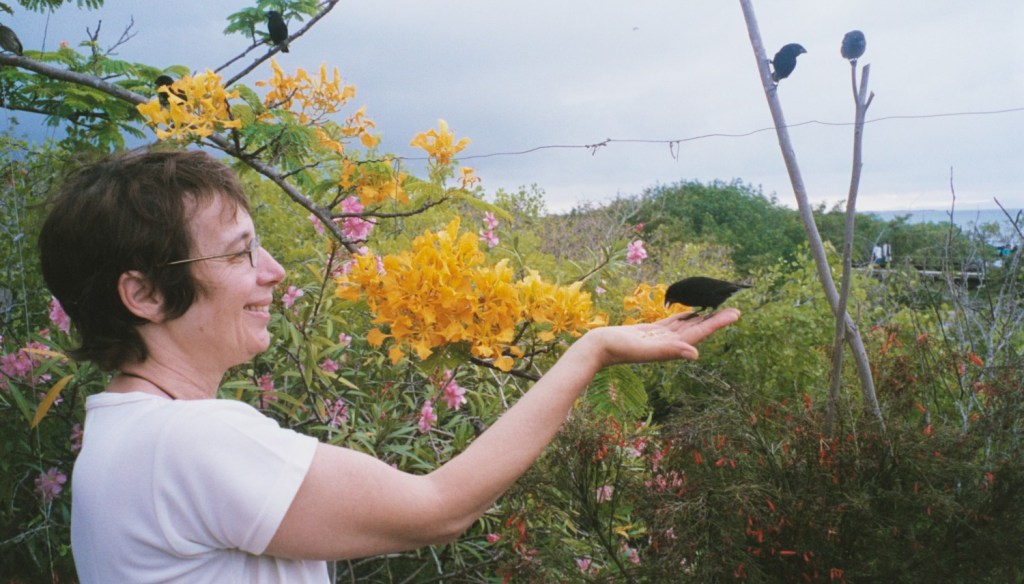
Another awesome experience on Santa Cruz Island was visiting Mrs. De Roy, who moved to Santa Cruz in 1955. She taught the finches to eat from her hand. This was feeding time for about 100 finches. I had them eating from my hand. Pretty exciting.
The snorkeling experiences were incredible. I am not a good swimmer and probably would have never snorkeled if my daughter hadn’t “forced” me to on a cruise that we went on a dozen years earlier. I did enjoy the snorkeling as long as I wore a life jacket and had one hand on my husband’s shoulder. Some of the snorkeling was with the current, sometimes the water was calm and sometimes not.
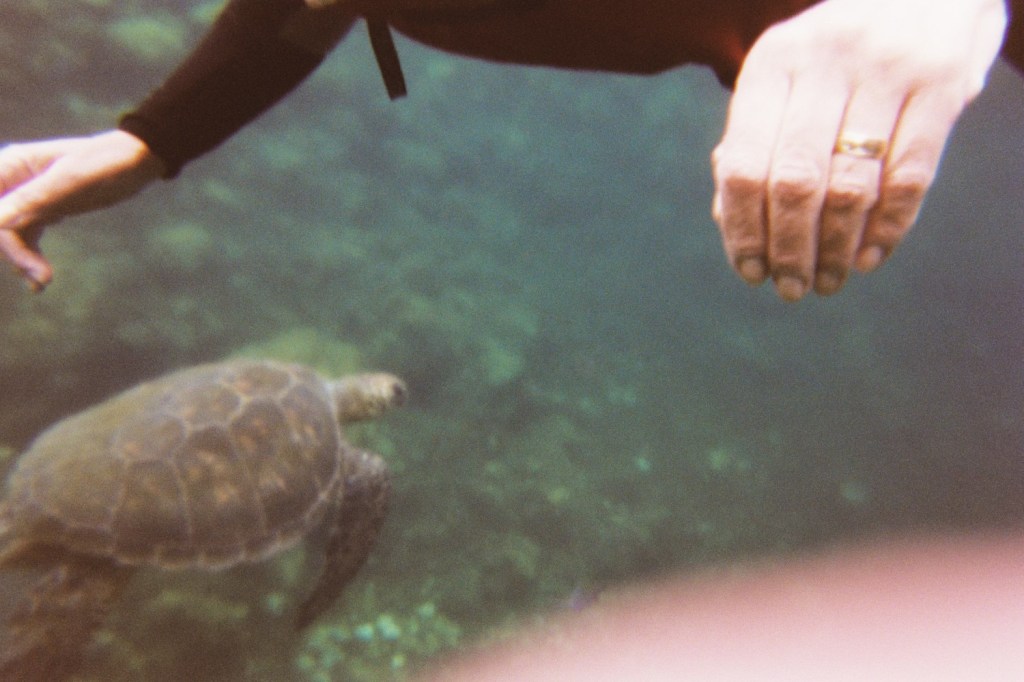
On one occasion we swam in Turtle Pond and as you can imagine, we swam with giant turtles, rays and with sea lions. The fish we saw were beautiful. Although we were at the equator, the water was too cold to stay in it for an hour or so without a wet suit.
On Panga rides we saw penguins. I did not realize that penguins lived around the equator. We also saw a variety of birds, iguanas, and sea lions.
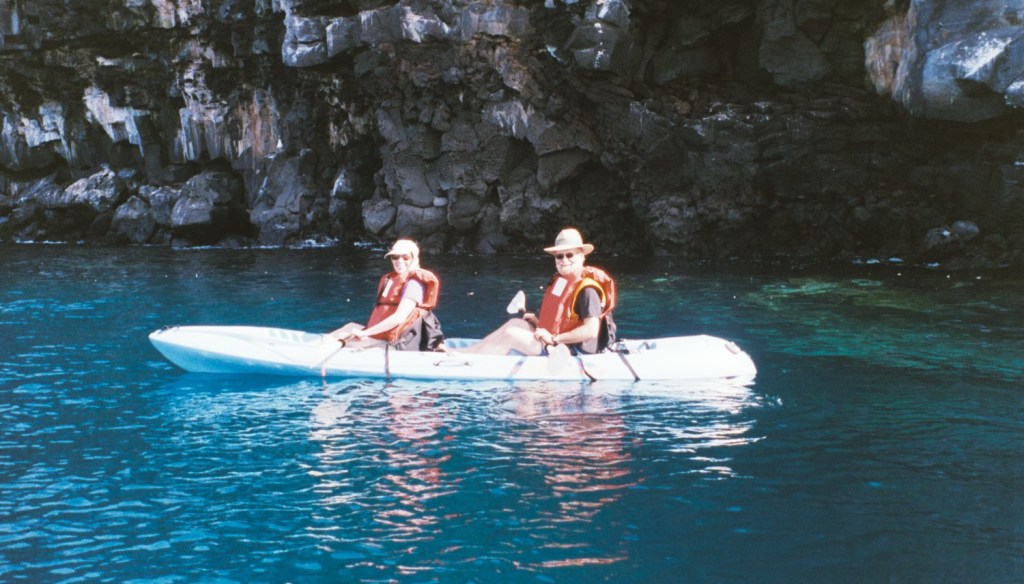
One day when the water was calm, we canoed all around a cove and saw frigates in a mating demonstration. The male puffed up with a red front to attract his lady.
We learned a great deal in the lectures on board and during the hikes. For instance; the Nazca boobies usually lay two eggs. If both eggs hatch, one is usually 3 weeks or so ahead of the other. The mother often abandons the second egg if the first baby is healthy. If the second egg does hatch and survives the first couple of weeks, the older sibling usually kills it. This is to ensure that there will be enough food.
The final experience was at Post Office Bay on Floreana Island. This island has an unofficial post office started in the late 18th Century by whaling ships. In the old days, the whalers were often homesick, but communication was a problem because they were at sea for so long. They devised a clever solution: they left letters in a box on Floreana, and when passing ships stopped there on their way back to England, the USA or wherever their home port was, they would pick up all the letters destined for that place and deliver them. In some cases, letters would take years to deliver! The place on Floreana where the letters were left became known as Post Office Bay.
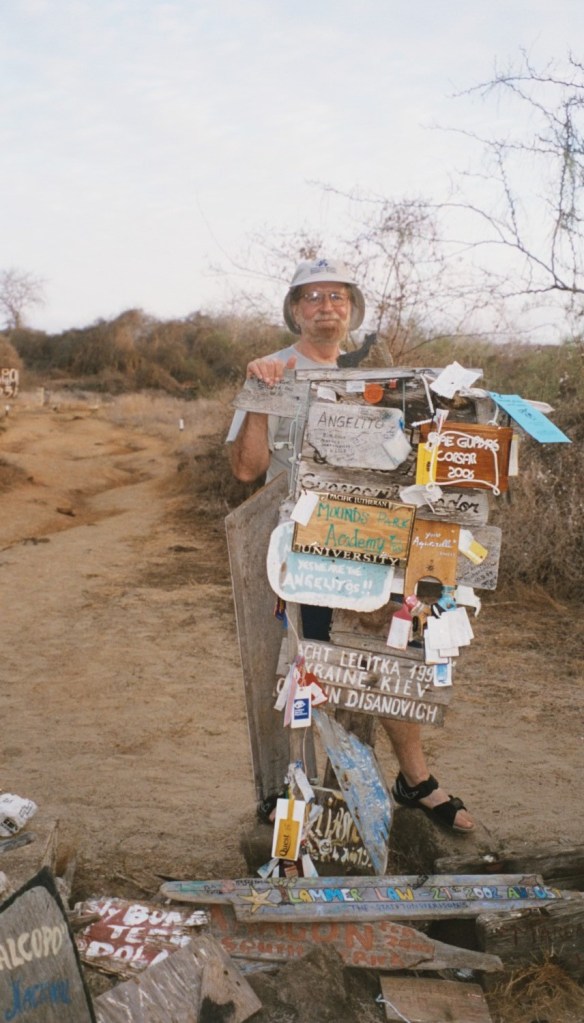
Today visitors look for cards that are from their hometown and deliver them and leave a card to be delivered. There was nothing for NY but we left a card. Two weeks after we returned home the card we left at Post Office Bay was returned to us at our apartment by a young lady named Emily. Incidentally, all the cards we sent through the official post office, both on Santa Cruz and Quito were never delivered. I presume the stamps were taken off and re-sold.
Final comments:
- The right travel company makes a huge difference. GT specializes in the Galapagos and knew their stuff
- A small travel company’s customer service is very personal
- Choosing a small boat rather than a larger ship, might be less luxiourious but it provides a better experience on land and in snorkeling.
- For me – longer is better. I was only sorry I chose the 11-day cruise rather than the 14-day one.
 Nili's Adventure